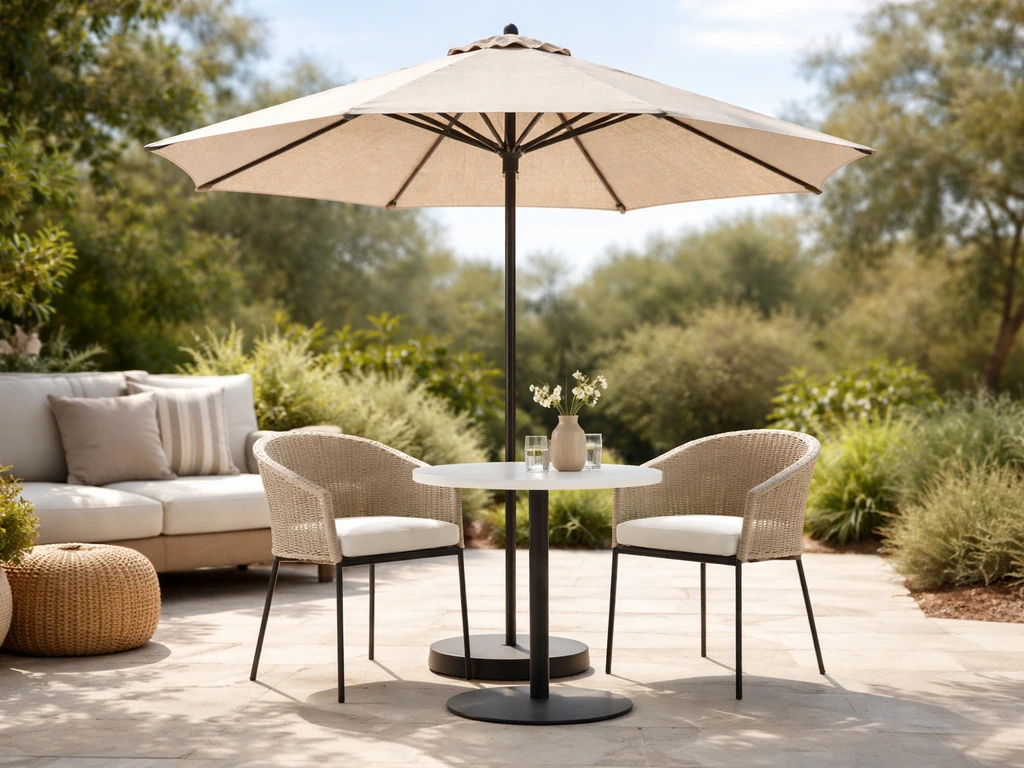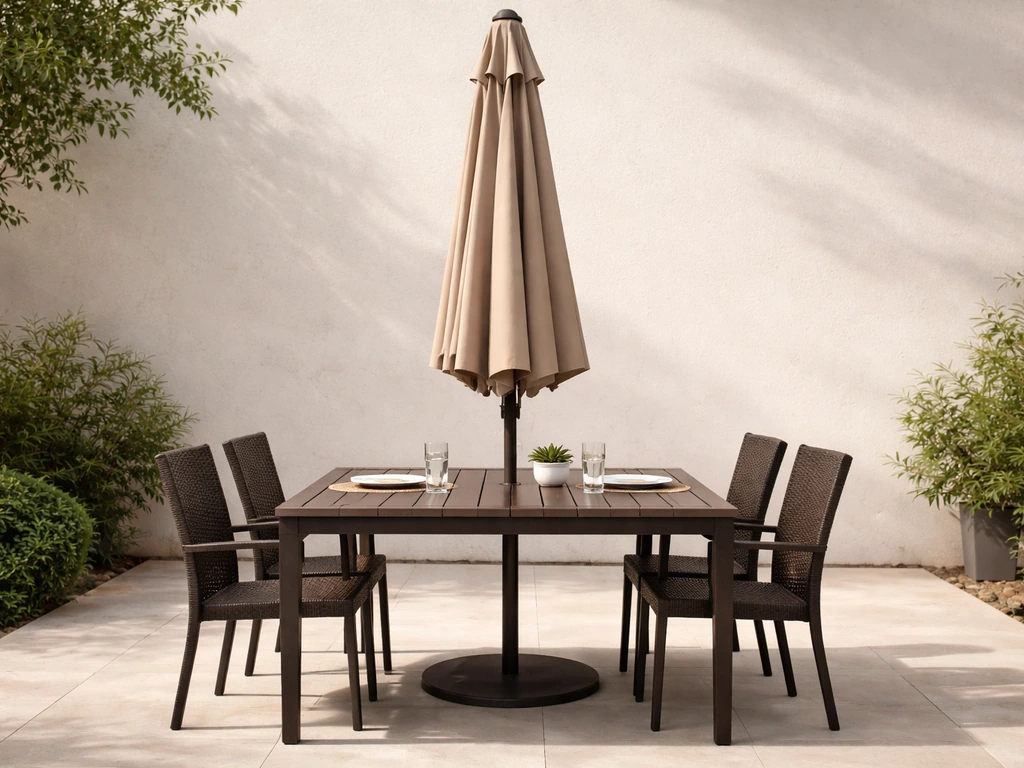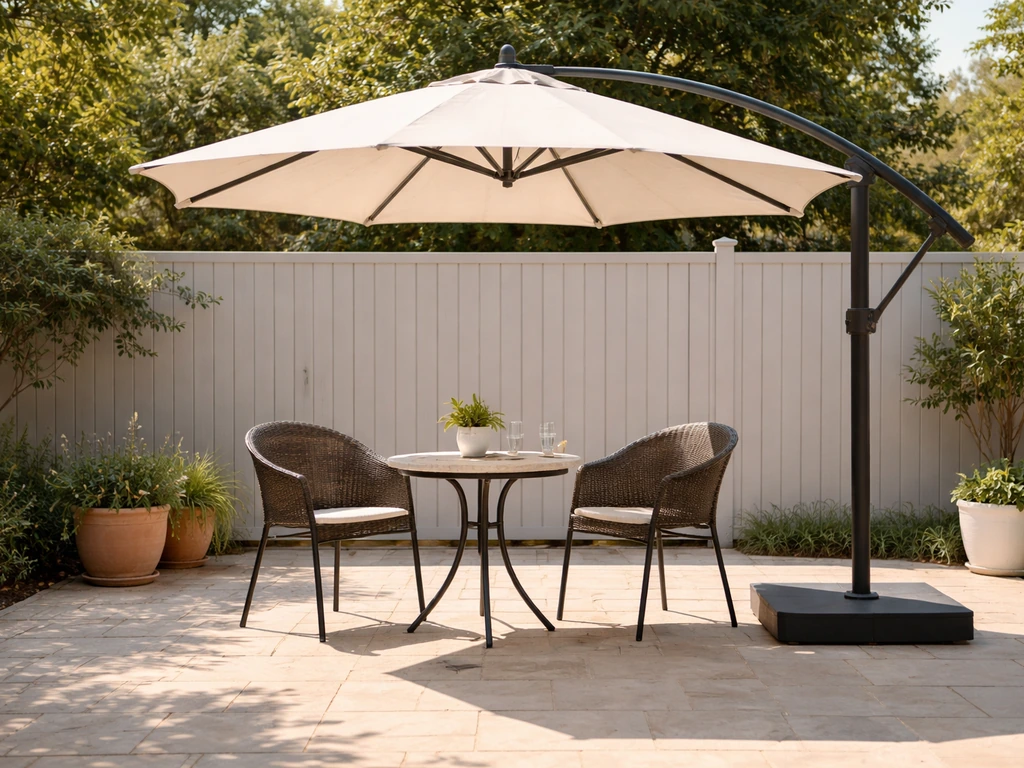
The best outdoor patio table umbrella for most people is a 9-foot aluminum-frame market umbrella with a fiberglass-rib canopy, solution-dyed acrylic fabric rated UPF 50+, and a 50-pound weighted base. That setup handles a standard 4-to-6 person dining table, blocks over 98% of UV rays, holds up in everyday wind without constant fussing, and won't look washed out after two summers. But the right answer really depends on where your table sits, how exposed your yard is, and whether a pole through the center of your table works for you. Here's how to work through all of it.
Best Outdoor Patio Table Umbrella: Choose Size, Style, Durability

Kent Lang
5 Jul 2026
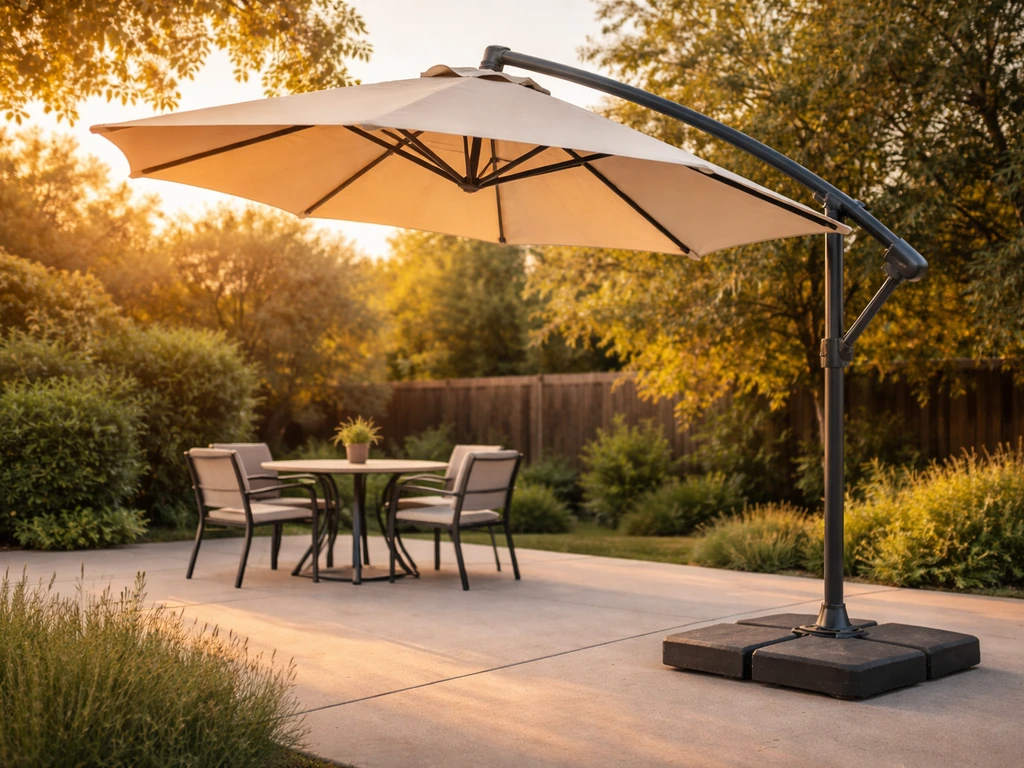
Market, offset, or cantilever: picking the right style for your space
The style you choose matters more than almost any other decision, because it determines where the pole goes, how much clearance you get, and whether the umbrella actually fits your furniture layout.
Market umbrellas (center-pole)
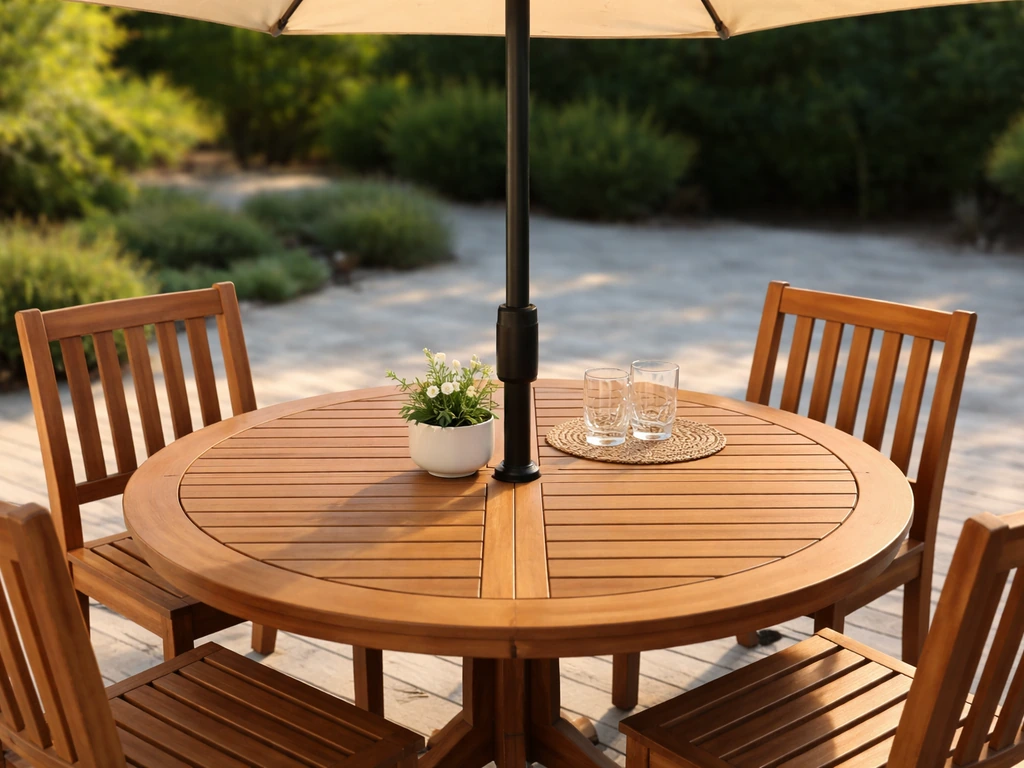
A market umbrella has a single center pole that runs straight up through a hole in your patio table. This is the classic style, and it works great if your table is already designed for it (most dining sets are). It's the most stable geometry for wind because the pole anchors directly into a base or table stand with no leverage arm.
The trade-off is that you need a table with a center hole, and the pole can feel like it's in the way when you're trying to serve food or have a conversation across a wider table. Market umbrellas typically top out at a Beaufort 4 wind rating when used without extra anchoring, so they're suited for moderately sheltered yards rather than wide-open, exposed patios.
Choosing the best made patio umbrellas also means prioritizing stability features and real wind ratings, not just style.
Offset and tilt umbrellas
An offset umbrella has a pole that comes up beside the table and extends an arm over it, so there's no center pole interrupting your seating. These are excellent for lounge chairs, sectional sofas, or situations where you don't have a table hole. Many offset models include a tilt mechanism so you can angle the canopy as the sun moves. The downside is that the offset design creates a lever arm, which means wind pushes against the canopy with more rotational force. You need a heavier base and ideally a sheltered location to compensate.
Cantilever umbrellas
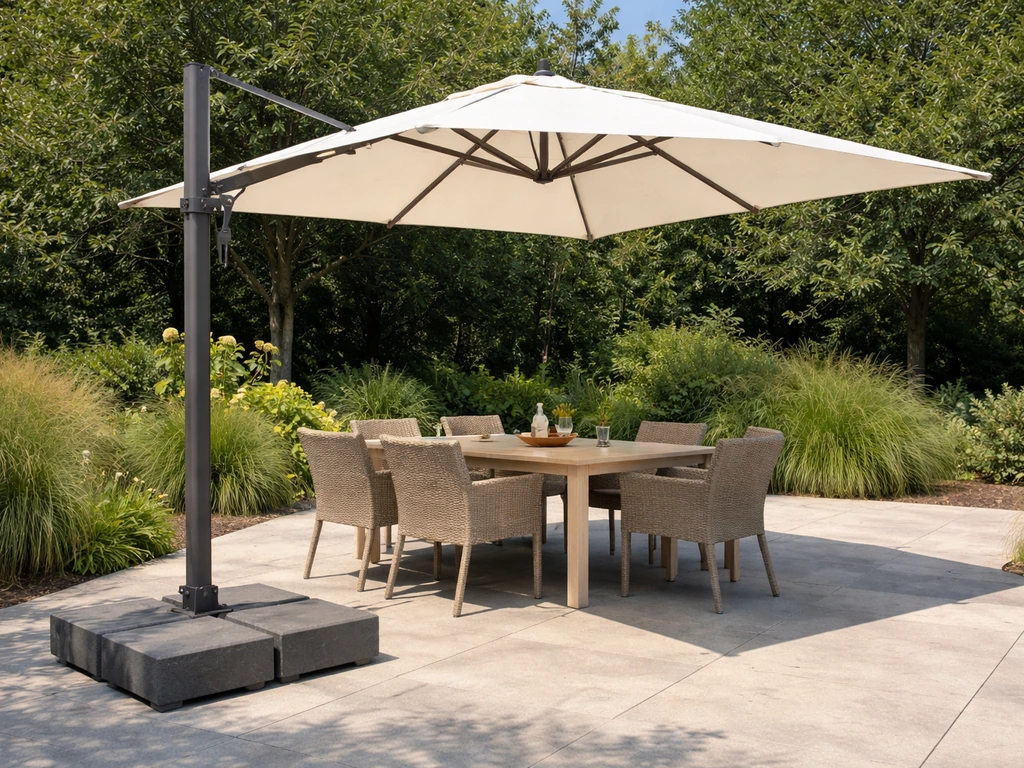
Cantilever umbrellas are the premium version of the offset concept. The canopy hangs from a side pole with a counterweight base, giving you 360-degree rotation and maximum flexibility. Models like the Frankford Eclipse are engineered to handle sustained 30 mph winds (and up to 35 mph with the included wind stabilization kit), and commercial-grade options like the Shademaker Polaris 340RT carry a Beaufort 6 rating (31 mph). Cantilevers cover larger areas and suit lounging setups, pools, and bigger outdoor seating arrangements. They cost more and require a more serious base setup, but they're the right tool when you want shade that moves with you, not just shade over a fixed table.
| Style | Best For | Wind Performance | Price Range | Key Trade-off |
|---|---|---|---|---|
| Market (center-pole) | Dining tables with center hole | Beaufort 4 (standard) | $50–$400 | Pole through the table center |
| Offset/Tilt | Lounge furniture, no-hole tables | Beaufort 4–5 with good base | $150–$600 | Needs heavier base; lever arm effect |
| Cantilever | Large areas, pools, flexible shade | Beaufort 5–6+ (commercial) | $400–$2,000+ | Higher cost, serious base required |
Getting the size right: diameter, overhang, and clearance
The rule of thumb that actually works: your umbrella should extend at least 2 feet beyond each side of your table. So a 48-inch (4-foot) round dining table needs a canopy that reaches 4 feet out in every direction, which puts you at a minimum 9-foot diameter umbrella. For a 6-person rectangular table, you're usually looking at a 10- to 11-foot umbrella. Going bigger than you think you need is rarely a mistake because shade coverage shrinks fast once the sun angles in.
Clearance underneath the canopy matters too. For a patio dining setup where people are sitting and standing, you want at least 84 inches (7 feet) of clearance from the ground to the lowest edge of the canopy. If you're mounting near a wall or fence, leave a minimum of 6 inches on all sides between the canopy edge and any obstruction. Cantilever and offset styles need extra measuring because the arm reach isn't the same as the canopy diameter. Factor in where the pole actually sits versus where the shade lands.
- 4-ft round table (seats 4): 9-ft umbrella minimum
- 5-ft round or small rectangular table (seats 4–6): 10-ft umbrella
- Large rectangular table (seats 6–8): 11-ft umbrella or cantilever
- Lounge/sectional area: cantilever with 11–13 ft arm reach
- Minimum clearance height: 84 inches from ground to canopy edge
- Clearance from walls/fences: 6 inches minimum on all sides
Wind resistance, frame materials, and what actually holds up outside
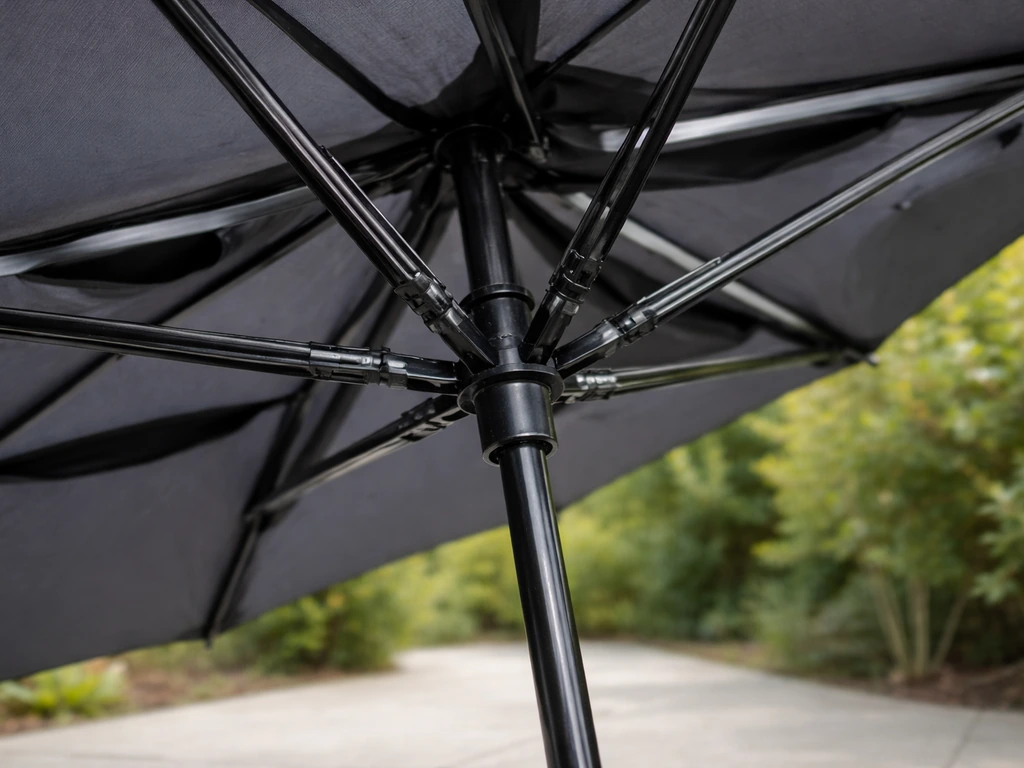
This is where a lot of buying decisions go wrong. 'Wind resistant' on a product listing is nearly meaningless without a number attached to it. What you want is a Beaufort rating or a specific mph rating from a test, not a marketing claim. A standard market umbrella rates around Beaufort 4. Anything you're going to leave in a moderately exposed yard should be Beaufort 5 or better (27–31 mph). For really exposed spaces or commercial use, Beaufort 6 (31+ mph) is worth the investment.
Even with a solid wind rating, the manufacturers themselves tell you to close your umbrella when sustained winds exceed 25 mph. Frankford's guidance is explicit: their products have been tested in winds up to 40–50 mph, but they still strongly recommend closing at 25 mph sustained. That's not a cop-out, it's reality. An open umbrella in a gust acts like a sail, and the whole system (canopy + pole + base) behaves like a lever. A heavy gust that catches a tilted or improperly anchored umbrella will move it regardless of the rating.
Frame and rib construction
For the frame, aluminum is the standard choice at most price points because it's corrosion-resistant, lightweight, and strong enough for residential use. Steel is heavier but prone to rust if the coating gets scratched. Wood frames (teak, eucalyptus) look beautiful but require more maintenance and aren't ideal for wet climates. For ribs specifically, fiberglass is the upgrade worth paying for. Fiberglass ribs flex under wind pressure instead of snapping, which is why commercial-grade umbrellas like the Galtech 715 and FiberBuilt's market umbrellas spec them out. A standard 9-foot umbrella with 8 fiberglass ribs handles real-world gusts significantly better than one with 6 aluminum ribs.
Hardware and venting
Stainless steel hardware at the hub and runner points is a small detail that separates umbrellas that last five years from ones that rust and seize up in two. Also look for a double-vented canopy: that gap at the top lets wind escape rather than lift the whole canopy, which meaningfully improves stability in gusts. Venting doesn't replace a good base setup, but it's a real feature, not just cosmetic.
UV protection, fabric choices, and keeping it looking good
For UV protection, look for UPF 50+ fabric, which filters more than 98% of UVB rays. That's the number used by Sunbrella, CSC Shade, and most quality manufacturers, and it's verified, not just a claim. The fabric technology behind UPF 50+ performance is solution-dyed acrylic: instead of dyeing the finished fabric, the color is added to the fibers during manufacturing, so it literally cannot fade from the outside in. Sunbrella describes their fabrics as saturated to the core with UV-stabilized pigments. It's also why solution-dyed fabrics are more mildew and stain resistant than printed or surface-dyed alternatives.
Polyester fabrics are cheaper and widely used at the entry-level price point. They're fine for light shade duty in mild climates, but they fade noticeably faster than solution-dyed acrylic and are more vulnerable to UV degradation over time. If you're spending more than $150 on an umbrella you plan to use for several seasons, solution-dyed acrylic is worth the upgrade. Many quality canopies also add a fluorocarbon finish over the acrylic fibers to improve water repellency, so rain beads off instead of soaking in.
Maintenance: the routine that actually extends life
The single best thing you can do for a fabric canopy is hose it off monthly with plain water. Sunbrella specifically recommends this as a routine because dirt and debris sitting on the fabric is what allows mildew to take hold, not the fabric itself. For regular cleaning, mix mild soap (Dawn or Woolite) with water and use a soft bristle brush. Don't scrub hard.
For mildew that has already set in, a solution of 1 cup of bleach plus 1/4 cup of mild soap per gallon of water applied gently and then rinsed thoroughly will handle it without damaging Sunbrella-type fabrics. At the end of the season, do one final clean before you store or cover the umbrella. Storing a dirty canopy is the fastest route to mildew problems the following spring.
Base weight, anchoring, and the mistakes people make
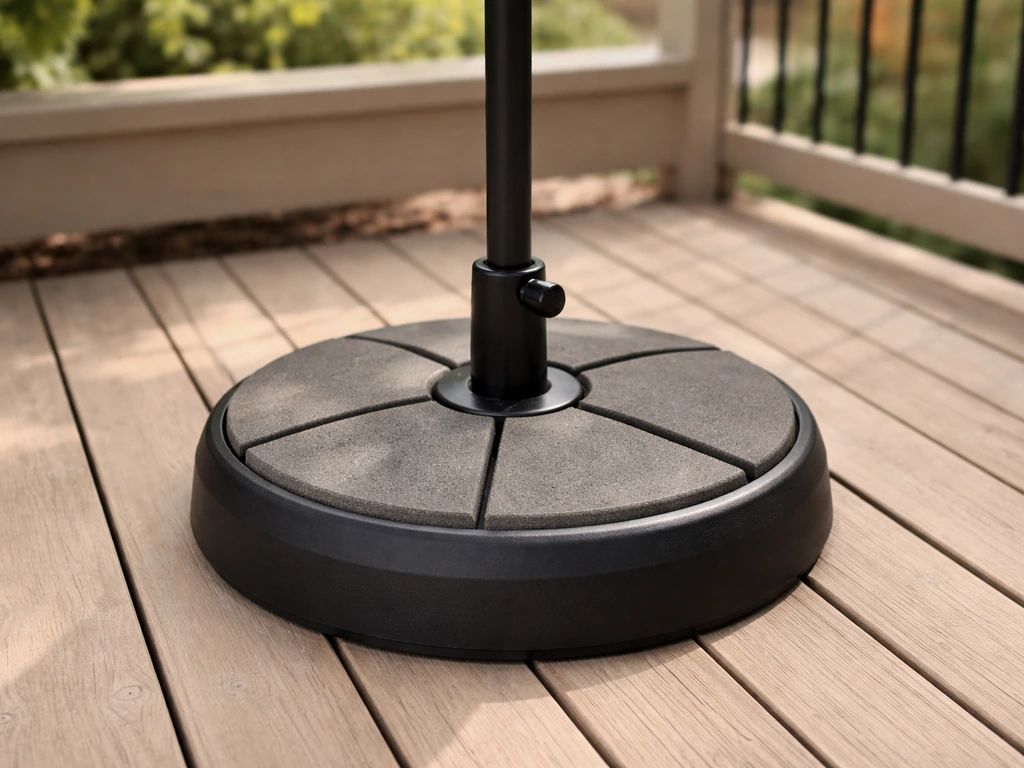
The base is where more patio umbrella setups fail than anywhere else. An undersized or improperly filled base is the number one reason umbrellas tip over and get damaged. For a 9-foot market umbrella over a standard 4-person dining table, a 50-pound sand-filled base is the appropriate minimum. Sand-filled bases are more stable than water-filled ones at the same weight. For anything larger, an offset design, or a windier location, go heavier. A 75-pound base is a better starting point for an 11-foot or offset umbrella.
A few things that affect base requirements beyond just umbrella size: how exposed your yard is to prevailing wind, whether your patio is elevated (wind speeds up at elevation), and whether you tilt the umbrella (tilting increases wind load significantly). For cantilever umbrellas, the base is essentially a counterweight system, and manufacturers specify the weight requirements precisely. Do not go lighter than the manufacturer's minimum for cantilevers.
Common setup mistakes
- Using a base that's too light: a 25-lb base is not enough for a 9-ft umbrella in any real wind
- Partially filling a sand or water base: a half-filled 50-lb base only weighs 25 lbs
- Leaving the umbrella open and unattended during storms or sustained wind above 25 mph
- Tilting the umbrella without accounting for the increased leverage on the base
- Placing a cantilever umbrella on an uneven or soft surface (pavers that shift, soft soil)
- Not tightening the canopy crank or strap at the hub, which lets the canopy flap and stress the ribs
Best picks by budget and use case
Rather than naming specific models that may change in availability, here's how to find the right umbrella for your situation based on the specs that actually matter. If you are trying to decide what are the best outdoor patio umbrellas for your space, start by comparing style, size, wind rating, and UV-protective fabric. Look for these combinations:
Under $150: small dining table or occasional shade
At this price, you're looking at a 7.5-to-9-foot polyester or basic acrylic market umbrella with an aluminum frame. It will do the job for light use in a sheltered yard. Check that it has at least 6 ribs, a tilt mechanism if you need angle adjustment, and a crank open/close (push-button tilt is fine at this price point). Don't expect it to last more than 2-3 seasons in harsh sun or wind. Pair with a 35-to-50-lb base. For a quick shopping starting point, you can narrow your search to the top 5 patio umbrellas for your budget and typical wind conditions.
$150–$400: the sweet spot for most homeowners
This is where you start finding 9-to-10-foot market umbrellas with aluminum frames, fiberglass ribs, double-vented canopies, and solution-dyed acrylic or Sunbrella-grade fabric. Look for 8 ribs minimum, UPF 50+ fabric rating, stainless steel hardware at the hub, and a canopy weight around 8-9 oz per square yard (heavier fabric holds color longer and resists tearing better). A 50-lb sand-filled base is the right pairing. This range covers most 4-to-6 person dining table scenarios well.
$400–$800: windier yards or larger coverage needs
Here you're getting into offset umbrellas with Beaufort 5 ratings, larger 10-to-11-foot market umbrellas with commercial-grade construction, and entry-level cantilevers. To find the best patio furniture with umbrella, focus on offset styles with higher wind ratings and coverage that fits your seating layout. Look for verified wind ratings (not just 'wind resistant'), marine-grade solution-dyed acrylic fabric, heavy-gauge aluminum or powder-coated steel frames, and manufacturer-specified base requirements that you can actually meet. A cantilever in this range should include a wind stabilization kit. Budget for a 75-lb base or in-ground mount if you go cantilever.
$800 and up: serious coverage, serious durability
At this level you're buying umbrellas like the Frankford Eclipse or Shademaker Polaris 340RT with documented Beaufort 6 ratings, marine-grade canopies sewn from 9 oz solution-dyed acrylic, and engineering specifically designed for wind performance. If you want a quick shortcut, check a guide to the best rated patio umbrellas for your space and budget. These are appropriate for open or elevated patios, large entertaining areas, or anyone who wants to stop replacing umbrellas every few years.
The base costs are significant (often $200+ for the right counterweight base), but the total system lasts. If you're comparing options in this category, focus on: documented wind rating (Beaufort level and mph), canopy fabric weight (oz/sq yd), rib material and count, warranty length for both canopy and frame, and whether the wind stabilization system is included or an add-on.
| Budget | Best Use Case | Key Specs to Prioritize | Minimum Base Weight |
|---|---|---|---|
| Under $150 | Small table, sheltered yard | 6+ ribs, aluminum frame, tilt function | 35 lbs |
| $150–$400 | 4–6 person dining, standard yard | 8 ribs, fiberglass preferred, UPF 50+, solution-dyed acrylic | 50 lbs |
| $400–$800 | Larger tables, windier spots, offset/cantilever entry | Verified Beaufort 5 rating, marine-grade fabric, stainless hardware | 75 lbs |
| $800+ | Open/elevated patios, large entertaining, long-term buy | Beaufort 6+ rating, 9 oz fabric, wind stabilization kit included | Manufacturer-specified counterweight |
Putting it all together: your next step
Start by measuring your table and the space around it, then decide whether a center pole works for your setup or whether you need an offset or cantilever. From there, size the canopy for 2 feet of overhang on every side and confirm you have 84 inches of clearance underneath. Match the umbrella style and wind rating to how exposed your yard actually is, not how exposed you think it might be.
Get the right base weight, fill it completely, and plan to close the umbrella any time sustained wind exceeds 25 mph. If you prioritize UV protection and want the fabric to still look good in year four, the upgrade to solution-dyed acrylic with UPF 50+ is worth every penny over basic polyester. Hose it off monthly, clean it properly at the end of summer, and store it clean.
That combination of right sizing, right style, right materials, and right maintenance is what separates a patio umbrella that disappoints from one you genuinely use and keep. If you want a quick shortcut, look for the best outdoor umbrellas patio buyers recommend for your yard’s wind level and your seating layout.
FAQ
What if my outdoor dining table doesn’t have a center hole for a market umbrella?
If your patio table has no center hole, you generally cannot use a market umbrella safely. The practical alternatives are an offset umbrella (side pole) or a cantilever (side pole with rotation). Before buying, confirm that your tabletop allows the pole through without cutting into glass or weakening a decorative insert, and measure the pole location relative to the seating so the arm does not block serving traffic.
How do I prevent my patio umbrella from tipping or wobbling?
Most tables feel stable with a heavy base, but the umbrella can still tip if the base is underfilled or not seated flat. Use the base weight guidance as the minimum, fill it to the top, and make sure the umbrella’s stand plate fully contacts the base (no wobble between parts). For uneven patios, add shims so the base sits level, then re-check wobble after tightening.
At what wind speed is it actually safe to leave the umbrella open?
You should not rely on the “recommended wind” language alone. Look for a documented Beaufort rating or an mph test result, then follow the manufacturer’s close threshold for sustained wind (the article notes many recommend closing around 25 mph sustained). Also consider that tilting increases wind load, so if you tilt while it is breezy, you should close earlier than you would with the canopy flat.
Does a UPF 50+ patio umbrella guarantee full shade for people under it?
UPF rating usually refers to the fabric itself, but you still want enough canopy overlap and correct placement. Aim for at least 2 feet of overhang beyond the table on each side (so the sides are shaded when the sun angles) and confirm clearance so the canopy edge does not sit too low, which can reduce shade coverage over seated positions.
Do I still need to clean the frame and hardware, or just the canopy fabric?
Not necessarily. If your umbrella uses solution-dyed acrylic, it can handle regular rinsing better than many printed fabrics, but the frame and hardware still need attention. Clean pollen and debris from seams and around the hub, dry the canopy before storage when possible, and check that the runner and tilt mechanism move smoothly so salt air and grime do not freeze it.
Can I mount or anchor a patio umbrella to the ground or my deck instead of using a heavy base?
Yes, but only if the umbrella and base are designed for it. Cantilever systems often require a specific counterweight type and amount (the article emphasizes manufacturer-specified base requirements). For market and offset styles, use a base sized for the canopy and your exposure, then verify that any anchoring hardware matches the base’s connection points.
How do I size a cantilever or offset umbrella if the canopy doesn’t sit centered over the table?
For cantilever and many offset designs, canopy size is not the same as “shade footprint” because the arm positions the canopy relative to the seating. Measure where the pole sits, then confirm that the canopy edge covers the seating area you care about, using the overhang rule (2 feet beyond the table) as a target for the shaded area, not the pole.
What should I look for if my umbrella is in full sun most of the day?
If your umbrella is frequently in harsh sun or gets direct afternoon exposure, base your choice on heavier canopy fabric and UV-stable solution-dyed acrylic, not just brand name. The article notes canopy fabric weight around 8 to 9 oz per square yard is a helpful indicator, and also that solution-dyed fabrics resist fading from the outside in more effectively than basic polyester.
How can I tell whether a listing’s “wind resistant” claim is reliable?
“Wind resistant” marketing terms are not enough for decision-making. Use a Beaufort number or a specific mph test claim, then cross-check it against your yard’s exposure (open, elevated, or near barriers). If a listing lacks any measurable rating, treat it as a red flag and plan for lower wind tolerance.
Does tilting the umbrella require a bigger base or more caution?
Base weight is only part of the equation, location and tilt matter too. Elevated patios can increase wind speeds, and tilting changes the aerodynamics, increasing load. If you plan to tilt often, choose the next base size up from the minimum pairing and avoid leaving it open during sustained breezes.
What’s the best way to remove mildew without damaging solution-dyed fabric?
If mildew appears, the fastest way to avoid spread is to treat only affected areas first and follow a gentle cleaning approach. The article’s guidance uses a dilute bleach and mild soap mix for already-set mildew, applied gently and rinsed thoroughly, then fully dried before storage. Avoid scrubbing hard enough to damage the fabric surface coating.
What warranty details should I prioritize when comparing umbrellas?
A shorter warranty can be fine for entry-level use, but you should compare what it covers separately for canopy, ribs/frame, and hardware. For the premium category, also check whether the wind stabilization kit is included or an add-on, since the article notes it can be required for higher wind performance claims.