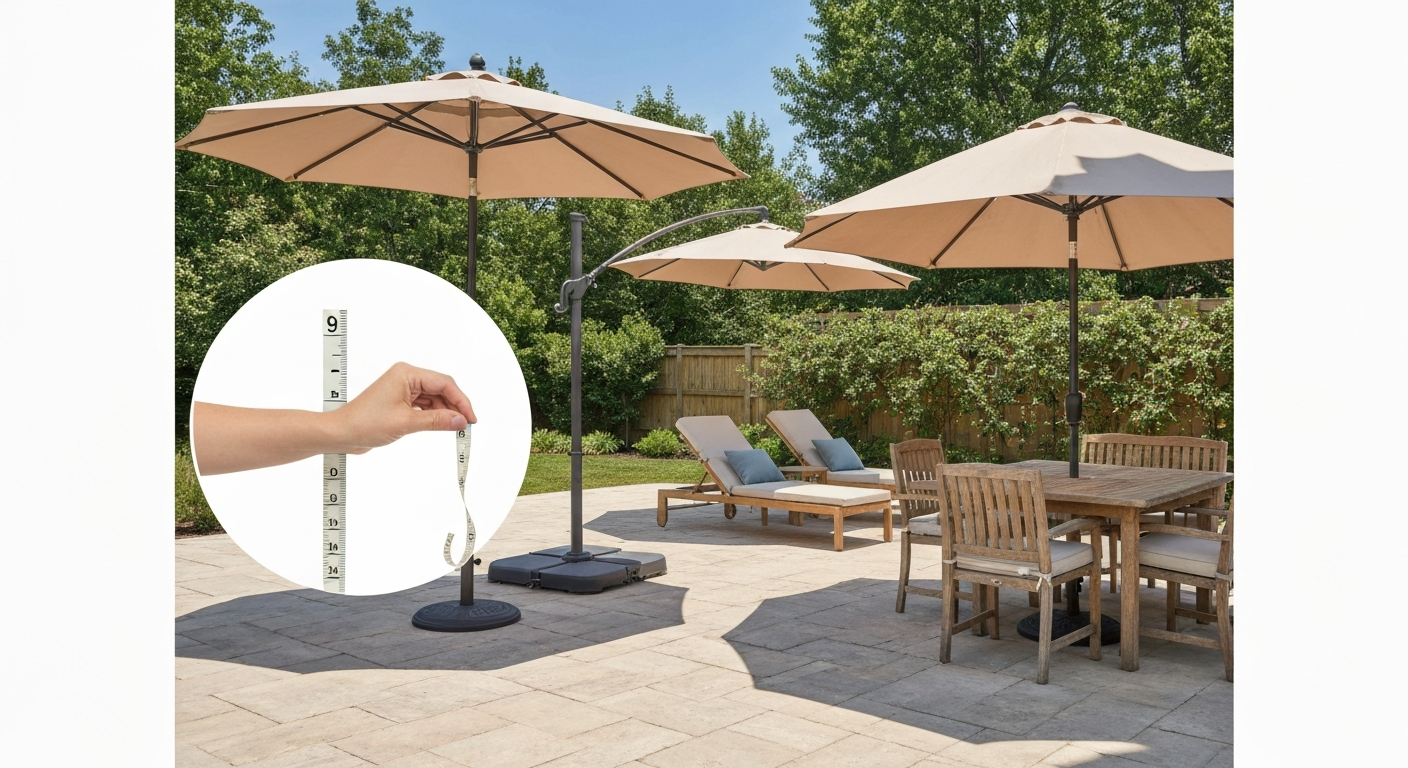
For most patios, the best combination is a solution-dyed acrylic fabric (like Sunbrella) paired with a powder-coated aluminum frame. If you want the best fabric for a patio umbrella, solution-dyed acrylic is typically the top pick for year-round outdoor use. That pairing gives you the strongest fade resistance, the best mold and UV protection, and a frame that won't rust or corrode even after years outdoors. If budget is tight, a high-quality solution-dyed polyester with a powder-coated aluminum frame is a solid runner-up. Wood frames look beautiful but need real maintenance. Steel frames are heavy and prone to rust unless coated and cared for. The fabric almost always matters more than people expect, so start there.
Best Patio Umbrella Material: Fabric and Frame Guide

Kent Lang
12 May 2026
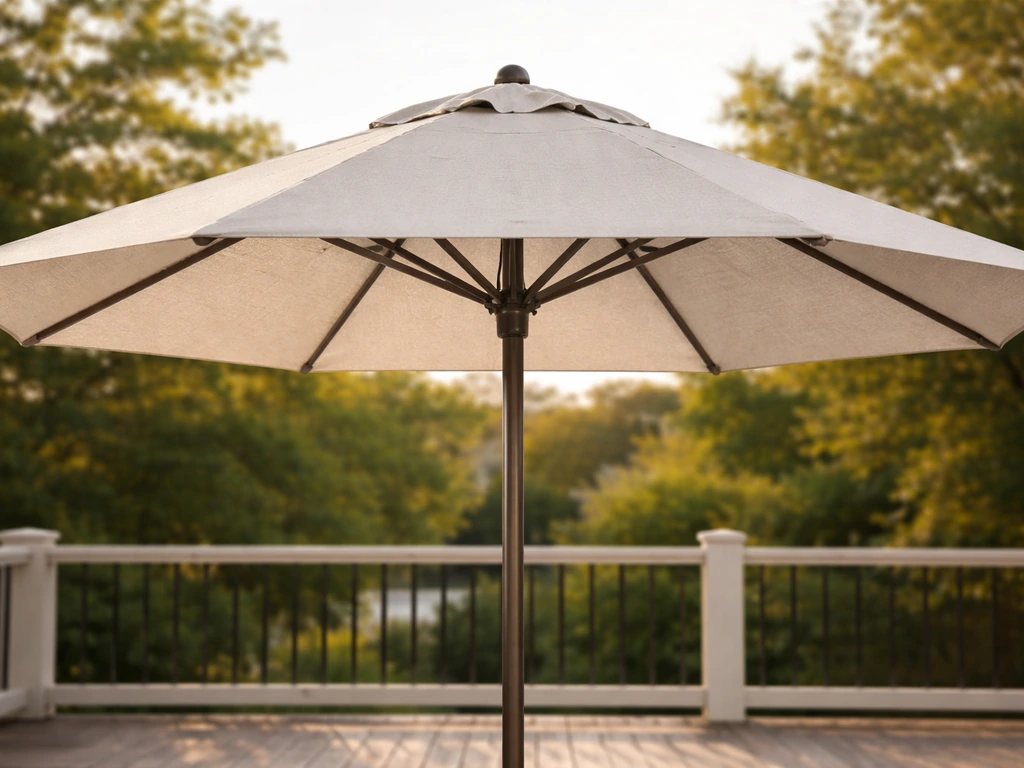
Best patio umbrella material by use-case
Not every patio has the same needs, so here's the quick breakdown before we go deeper. Match your situation to the right material from the start and you'll save yourself money and frustration.
| Use-Case | Best Fabric | Best Frame |
|---|---|---|
| Full-time outdoor use, sunny climate | Solution-dyed acrylic (e.g., Sunbrella) | Powder-coated aluminum |
| Coastal or salt-air environment | Solution-dyed acrylic | Marine-grade powder-coated aluminum or 316 stainless hardware |
| High-humidity or rainy climate | Solution-dyed acrylic or solution-dyed polyester | Powder-coated aluminum |
| Occasional/seasonal use, stored in winter | Solution-dyed polyester or olefin | Powder-coated aluminum or wood |
| Aesthetics-first, low-sun patio | Canvas or natural fabric | Teak or eucalyptus wood |
| Budget pick, moderate climate | Solution-dyed polyester | Powder-coated aluminum |
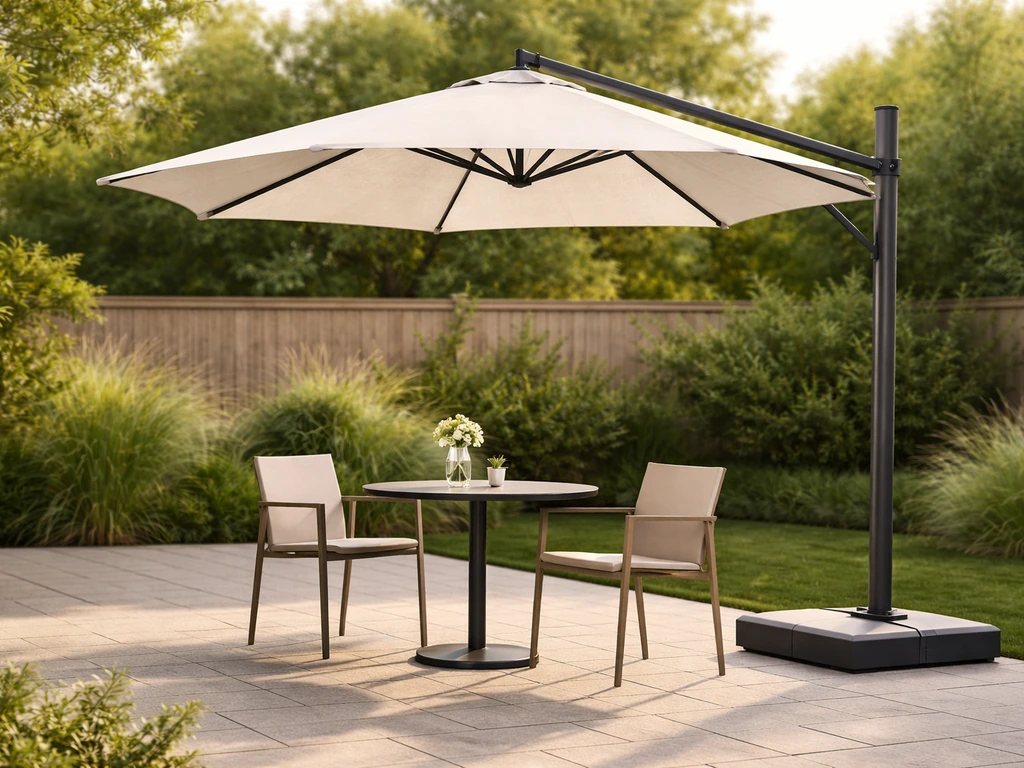
| Cantilever/offset umbrella, windy spot | Solution-dyed acrylic | Fiberglass ribs + aluminum pole |
Umbrella fabric options and how they actually perform outdoors
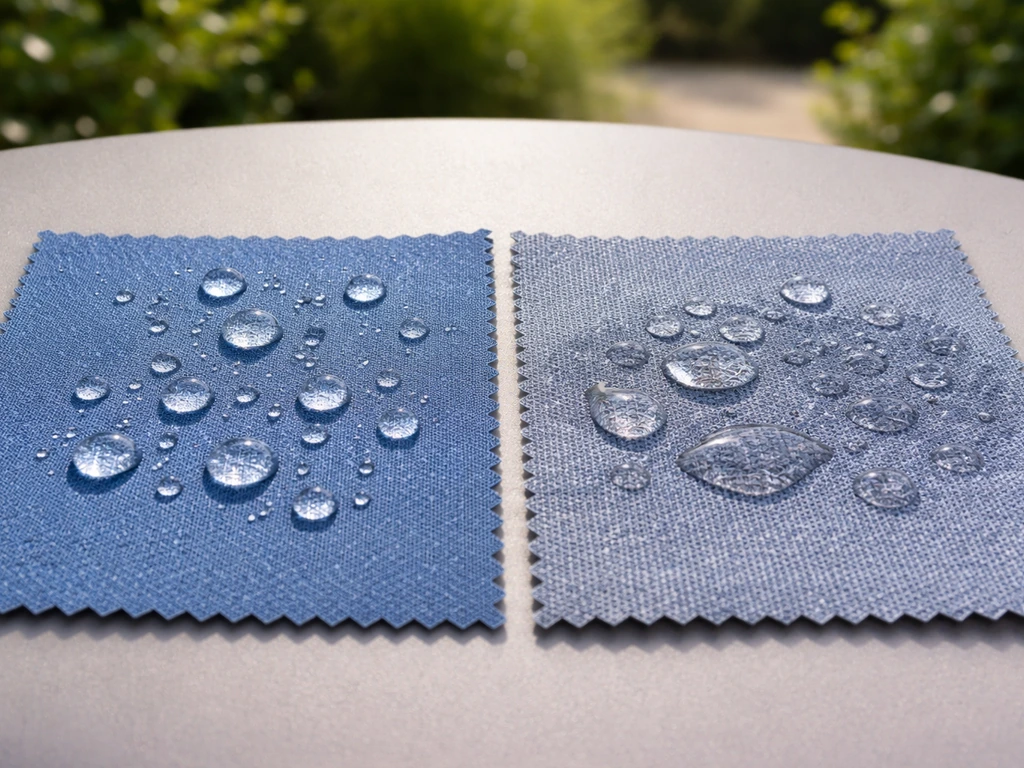
The fabric is the part of your umbrella that takes the most punishment. It faces direct sun, rain, bird droppings, pollen, and humidity every single day it's open. Here's what the main options give you and where each one falls short.
Solution-dyed acrylic
This is the gold standard for outdoor umbrella fabric, and Sunbrella is the brand name most people associate with it. The reason it outperforms everything else comes down to how it's made: the color is baked into the acrylic fibers before they're even woven, so there's no surface dye to wash out or fade. That's what "solution-dyed" means.
UV light can't strip the color the way it does with surface-printed fabrics because the pigment runs all the way through the fiber. The result is a fabric that holds its color for years of direct sun exposure, [resists mold and mildew (because acrylic doesn't absorb moisture the way natural fibers do)](https://www. sunbrella. com/media/pdf/marinefabricatorhow_to-choose-the-right-marine-fabric.
pdf), and cleans up easily. Sunbrella's own cleaning guidance calls for a bleach-and-soap solution (1 cup bleach and 1/4 cup mild soap per gallon of water) for stubborn mildew, and the fabric handles that without damage.
The downside is cost: genuine solution-dyed acrylic costs noticeably more than polyester. But if your umbrella is going to live outside year-round, it earns that premium back in lifespan.
Solution-dyed polyester and olefin
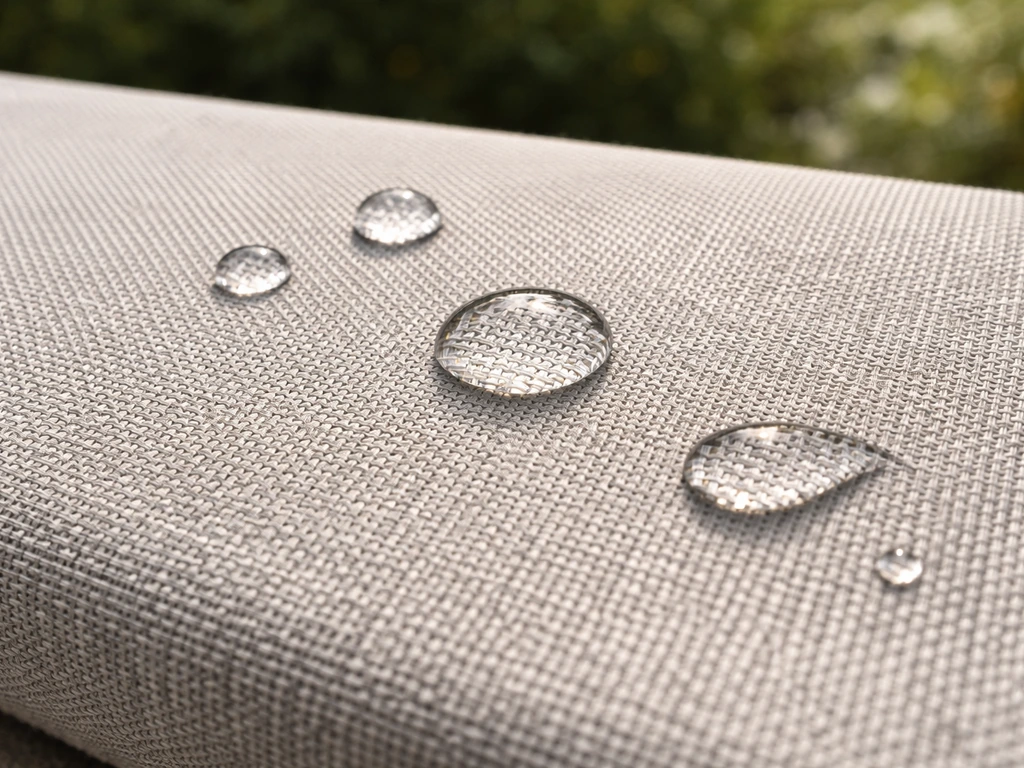
Solution-dyed polyester is the practical middle ground. Like acrylic, the color goes into the fiber before weaving, so it holds up much better than standard coated polyester. It's not quite as UV-stable as acrylic over a five-plus year period, but for seasonal use or shadier patios it performs very well. Olefin (also called polypropylene) sits in a similar tier: it's solution-dyed, inherently hydrophobic (it doesn't absorb water at all), and resists staining well.
Both are meaningfully cheaper than acrylic. If you're comparing olefin and polyester side by side for an umbrella, the performance difference is close enough that price and color selection often drive the decision more than material specs. If you're trying to choose between olefin and polyester patio umbrellas, compare UV stability, stain resistance, and your expected season length olefin vs polyester patio umbrellas.
Standard coated polyester
A lot of budget umbrellas under $100 use standard woven polyester with a surface coating for water repellency and UV resistance. The coating works initially, but it degrades with UV exposure, washing, and general use. Within one to three seasons you'll typically see fading, color shift, and the water-repellent effect weakening. It's not worthless, but it's the fabric category where you're most likely to be disappointed if you expect longevity. If you're buying a backup or a short-term solution, fine. If you want something that lasts, step up to solution-dyed.
Canvas and natural fabrics
Canvas has a classic look that works beautifully with wood-frame umbrellas. The problem outdoors is that cotton canvas absorbs moisture, which leads to mildew if the umbrella isn't allowed to dry completely before closing. It also fades faster than synthetics under strong UV. Treated canvas (with paraffin wax or acrylic coatings) performs better but still requires more maintenance than synthetic options. Canvas is best for covered patios, shaded settings, or situations where you're diligent about drying and storage. It's not the right choice for full-time sun or high-humidity climates.
Knitted shade fabric
Brands like Coolaroo use a knitted HDPE (high-density polyethylene) fabric rather than a traditional woven canopy. These fabrics are designed to let air and some light pass through, which actually reduces wind load on the umbrella significantly. Coolaroo's Xceltex fabric, for example, is marketed with up to 90% UV block and high water repellency. This style works well for shade cloth applications and certain market-style umbrellas, but the open weave means you'll get some dappled light and less rain protection than a tightly woven canopy. It's a legitimate option for hot, sunny climates where airflow matters.
Frame and hardware materials that determine how long your umbrella lasts
The frame is what holds the whole thing up and open. Rust, corrosion, cracked ribs, and wobbly joints are almost always frame failures rather than fabric failures. Here's how the main frame materials compare.
Aluminum
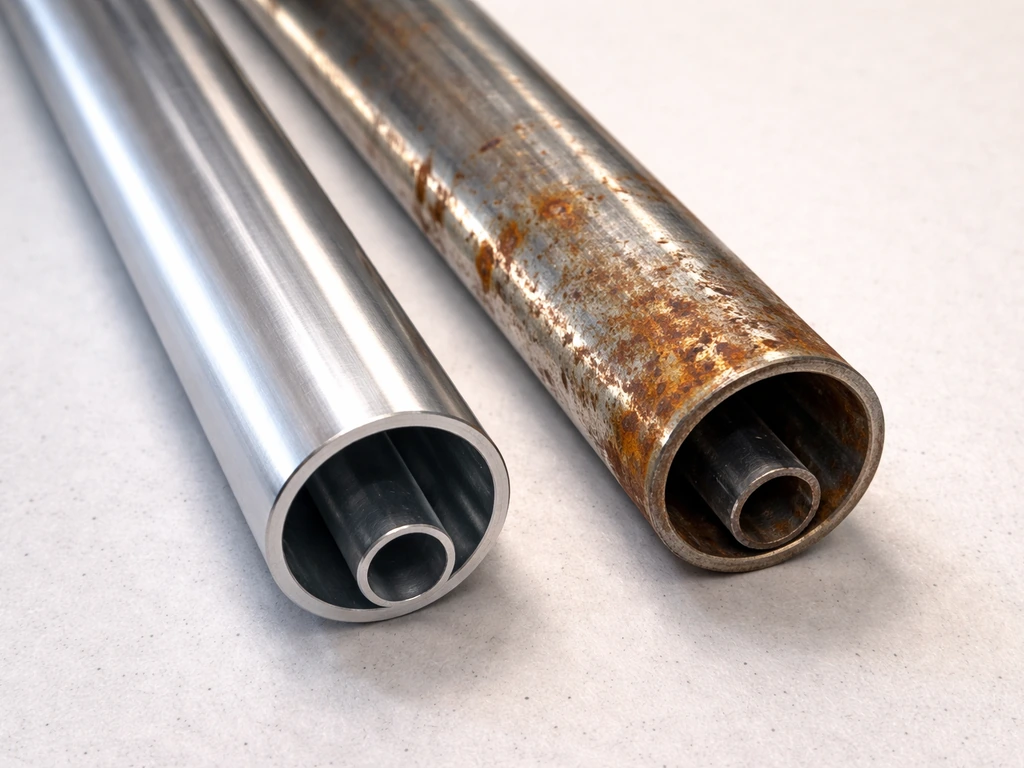
Aluminum is the most practical frame material for most people. It doesn't rust, it's lightweight (which makes opening, closing, and repositioning easy), and when it's powder-coated it handles years of outdoor exposure very well. Powder coating can provide meaningful protection against salt spray, with some coatings rated for thousands of hours in salt spray testing. For coastal locations, look specifically for powder-coated aluminum frames and check that the hardware (screws, rivets, tilt mechanisms) is also corrosion-resistant. The main weakness of aluminum is that thinner-gauge poles can bend or crack under extreme wind or impact, and it doesn't have the visual warmth of wood. But for pure practicality, it's hard to beat.
Steel
Steel frames are heavier than aluminum, which can actually help with stability. The problem is rust. Unless a steel pole is properly powder-coated and that coating stays intact, moisture will find its way in and corrosion starts. In humid, coastal, or rainy climates, steel frames degrade noticeably faster than aluminum. For inland patios with dry climates or for fully covered spaces, a quality powder-coated steel frame can work fine. But aluminum is almost always the better default choice outdoors because it removes the rust variable entirely. The steel vs. aluminum question comes up especially with heavy commercial-style market umbrellas, where the extra weight of steel provides a sturdier feel.
Fiberglass
Fiberglass shows up most often in the ribs of cantilever and offset umbrellas rather than the main pole. The reason is flex: fiberglass ribs can bend under wind load and spring back without breaking, while aluminum ribs can kink or crack under the same stress. If you're in a spot that gets gusty afternoons, a cantilever umbrella with fiberglass ribs is noticeably more wind-tolerant than one with aluminum ribs. The tradeoff is cost, since fiberglass hardware adds to the price. For market-style umbrellas in calm locations, aluminum ribs are perfectly sufficient.
Wood (teak, eucalyptus, and others)
Wood frames, especially teak, have a warmth and elegance that no metal matches. Teak in particular is naturally oil-rich and resists rot and insects well compared to cheaper woods. The honest catch is maintenance: wood frames need to be oiled or sealed periodically to maintain their appearance and structural integrity. Untreated teak will weather to a silvery gray, which some people love and others hate. Cheaper woods used in budget umbrellas can crack, warp, and rot within a couple of seasons if left outside unprotected. Wood frames are best paired with covered or partially shaded spaces, or with owners who genuinely enjoy caring for outdoor furniture. If you want zero-maintenance, wood is not your answer.
Hardware details that matter more than people think
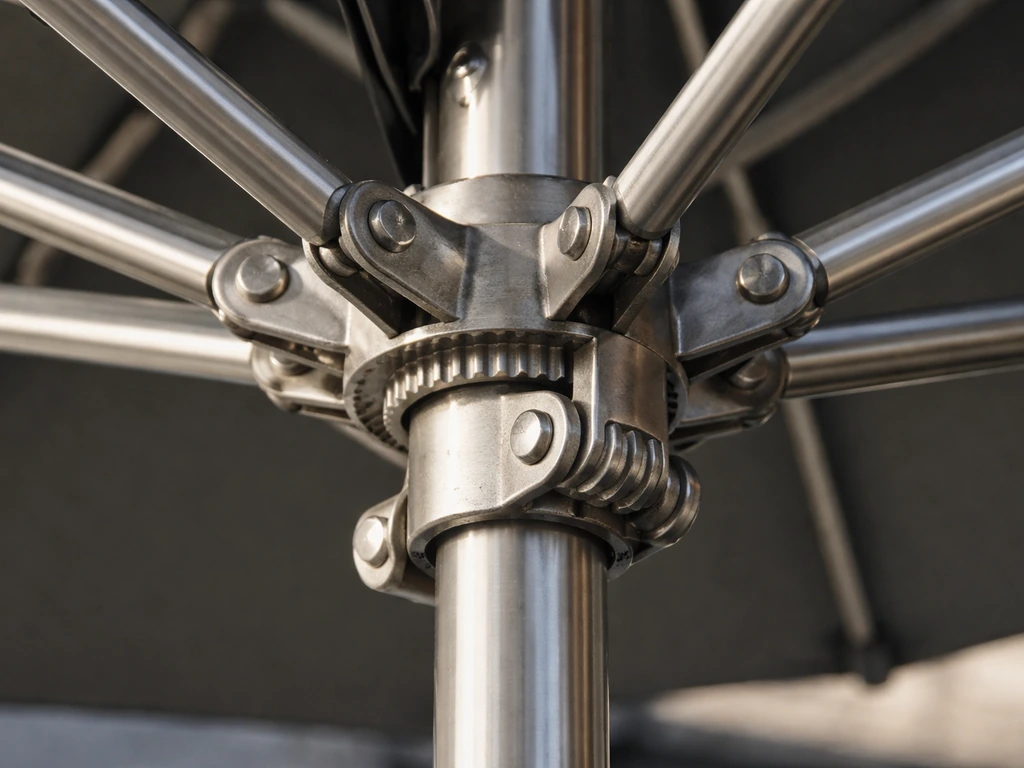
The frame material of the pole and ribs is only part of the story. The small hardware (hub connectors, tilt mechanisms, crank gears, rivets, and bolts) can be the first things to fail. For coastal environments, hardware marked as 316 stainless steel is the right spec: 316 grade is specifically formulated for saltwater and corrosive environments and outlasts standard 304 stainless significantly. On any umbrella, look at the joints and connection points. Plastic hubs that are exposed to UV will eventually become brittle. Metal hubs with quality plating hold up much better.
How to choose the right material for your climate and patio setup
Climate is the single biggest factor that should drive your material choices. Here's how to think through it practically.
Hot, sunny climates (Southwest US, Southern states, etc.)
UV degradation is your primary enemy. Solution-dyed acrylic fabric is the clear winner here because the color is inside the fiber, not on the surface. Standard polyester fades visibly within a season or two under intense sun. For the frame, aluminum with a quality powder coat handles heat well and won't corrode. If your umbrella is a cantilever style in an open, sunny yard, consider fiberglass ribs for wind-flex resilience on those hot afternoon gusts.
Humid, rainy climates (Southeast US, Pacific Northwest, etc.)
Mold and mildew are the main concerns. Importantly, mildew doesn't actually grow on synthetic fabric fibers themselves. It grows on the dirt, pollen, and organic matter that accumulates on the surface. That means the solution is regular cleaning, not just buying mold-resistant fabric. That said, solution-dyed acrylic and solution-dyed polyester dry faster and give mildew less to cling to than canvas or untreated natural fibers. Always let the canopy air dry completely before closing the umbrella: closing it wet is the fastest way to end up with a mildew problem. For frames, aluminum is especially smart in high-humidity regions because rust isn't a factor.
Coastal and salt-air environments
Salt air accelerates corrosion on almost every metal. If you're within a mile or two of the ocean, you need to take this seriously. Use powder-coated aluminum for the frame and look for 316 stainless steel hardware on all the connectors, bolts, and mechanical parts. Avoid bare steel entirely. Solution-dyed acrylic fabric handles salt air fine. Rinse the whole umbrella periodically with fresh water to remove salt buildup, especially on hardware.
Windy locations
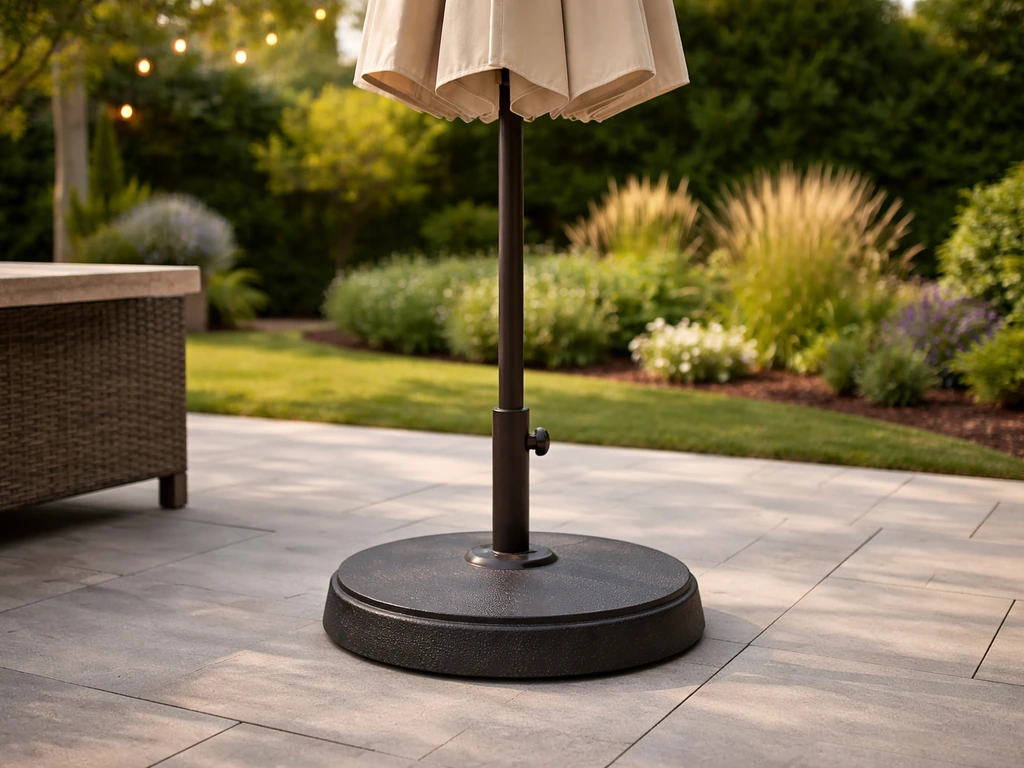
Wind puts stress on ribs and the attachment points between ribs and the hub. For market umbrellas in consistently windy spots, a vented canopy (which lets air escape upward through a gap at the top) dramatically reduces the lifting force. For cantilever umbrellas, fiberglass ribs flex and recover rather than kinking. Base weight matters enormously too: an undersized base is a bigger safety hazard than any frame material choice. A cantilever umbrella base needs to be weighted and secured properly regardless of what the frame is made of.
Matching material to umbrella style
Market umbrellas (center-pole style) are generally more forgiving of frame material choices since the load path is direct and simple. Cantilever and offset umbrellas put more lateral stress on the frame and ribs because the canopy hangs out to the side, so fiberglass ribs and heavier-gauge aluminum poles earn their place here more than on a standard market umbrella. Wood frames work beautifully on market-style umbrellas in covered or shaded spaces but are rarely used on large cantilever designs for practical weight and maintenance reasons.
What to look for in product listings and on labels
Marketing copy on umbrella listings is full of vague claims. Here's how to read past the hype and find the specs that actually matter.
- "Solution-dyed" vs. "fade resistant": These are not the same thing. Solution-dyed means the color is in the fiber itself. "Fade resistant" on a polyester fabric often just means a surface treatment that will degrade. Look for "solution-dyed acrylic" or "solution-dyed polyester" specifically, not just a fade-resistance claim.
- UV protection ratings: Legitimate UV block percentages (like Coolaroo's "up to 90% UV block" claim on their shade cloth) are tied to measurable test results. Generic "UV resistant" with no percentage or test standard behind it is not meaningful. Look for UPF ratings or specific percentage UV block figures.
- Waterproof vs. water-repellent: Most outdoor umbrella fabrics are water-repellent (water beads and runs off) rather than truly waterproof (no moisture passes through at all). Water-repellent is fine and appropriate for an umbrella canopy. "Waterproof" claims on fabric should be viewed skeptically unless they're backed by a specific coating and test method.
- Colorfastness test references: Well-spec'd fabrics reference standardized test methods for color stability under light (like AATCC TM16) and moisture exposure (like AATCC 107 for water or AATCC TM186 for combined UV and moisture). If a brand cites these in its fabric specs, that's a good sign it's taking performance claims seriously.
- Frame finish: "Powder-coated" is better than "painted" for outdoor use. Powder coating is applied electrostatically and baked on, giving a thicker and more durable finish than liquid paint. Look for this spec on the frame description.
- Hardware material: Look for stainless steel hardware specifically. For coastal use, look for 316 stainless. For inland use, 304 stainless is acceptable. "Metal hardware" without a spec is a sign the manufacturer isn't proud of what they used.
- Warranty terms: A genuine performance warranty on the fabric (not just a replacement warranty for manufacturing defects) tells you the brand is confident in the material. Sunbrella-fabric umbrellas, for example, often carry multi-year fade and warranty coverage backed by Sunbrella's own fabric warranty.
Real tradeoffs: cost, maintenance, cleaning, and storage
Every material choice involves tradeoffs. Here's an honest look at how the main options stack up across the practical day-to-day factors that actually affect ownership.
| Material | Upfront Cost | Maintenance Level | Cleaning | Store in Winter? |
|---|---|---|---|---|
| Solution-dyed acrylic (Sunbrella) | High | Low | Bleach + soap solution safe; air dry before closing | Optional in mild climates; recommended in freeze/snow |
| Solution-dyed polyester/olefin | Medium | Low | Mild soap and water; air dry before closing | Recommended for longevity |
| Coated/standard polyester | Low | Low-medium | Mild soap; coating degrades over time | Yes, to extend lifespan |
| Canvas | Medium | High | Spot clean; must dry fully; re-treat periodically | Yes, always |
| Aluminum frame (powder-coated) | Medium | Very low | Rinse periodically; inspect coating for chips | Optional |
| Steel frame (powder-coated) | Low-medium | Low-medium | Rinse and inspect coating; repair chips promptly | Recommended |
| Teak/wood frame | High | High | Clean and re-oil or seal annually | Yes, or cover |
| Fiberglass ribs | Higher | Very low | Wipe down; no corrosion concern | Optional |
When to cover and when to store
Even the best outdoor materials benefit from a UV-resistant cover when the umbrella isn't in use for extended periods. A cover doesn't replace quality materials, but it adds years to any fabric's life by cutting its total UV exposure hours. In climates with hard freezes or snow, bringing the umbrella inside (or at minimum removing and storing the canopy) is genuinely worth the effort. Freezing temperatures can crack plastic hub components and work water into frame crevices where it expands and damages joints. Solution-dyed acrylic is tough, but it's not bulletproof against physical damage from ice.
The one cleaning habit that extends any umbrella's life
Regardless of fabric type, never close a wet umbrella and leave it closed. Mildew forms when moisture is trapped against the fabric in a folded, dark environment. It doesn't even need to attack the fiber directly: it colonizes the pollen and dust sitting on the surface, and then you have a stain and smell problem. The fix is simple: open the umbrella and let it dry fully before closing it, every time. This single habit extends fabric life more than most material upgrades.
Your material checklist before buying
Run through this before you pull the trigger on any umbrella. It takes two minutes and saves a lot of regret.
- Confirm the fabric is solution-dyed (acrylic or polyester), not just "fade resistant" with a surface coating.
- Check whether the UV protection has an actual number (UPF rating or % UV block) behind it, not just a marketing phrase.
- Confirm the frame is powder-coated aluminum for most situations, or powder-coated aluminum with 316 stainless hardware if you're near the coast.
- If it's a cantilever or offset umbrella in a windy location, verify the ribs are fiberglass or at least heavy-gauge aluminum.
- Look at the hardware specs: stainless steel bolts and hub components, not unspecified "metal."
- Check the warranty: a multi-year fade or performance warranty on the fabric is a meaningful signal of quality.
- Decide now whether you'll store it seasonally or leave it out year-round, and match the material to that honest answer.
For most people reading this, the right answer is straightforward: solution-dyed acrylic canopy plus powder-coated aluminum frame, sized and based correctly for your space. If that's over budget, solution-dyed polyester over powder-coated aluminum is a genuine step down but still a smart buy. The material choices on the fabric and pole are the decisions that determine whether your umbrella looks good in year three or year five, so it's worth getting right once rather than replacing a cheap umbrella every other season.
FAQ
Is solution-dyed acrylic always the best patio umbrella material if I get freezing temperatures?
If you live where winters dip below freezing, prioritize a frame and hardware spec that survives expansion and moisture, not just the canopy fabric. Bring the umbrella indoors during freezes when possible, or at minimum remove and store the canopy separately, because ice can crack plastic hubs and force water into the frame joints even when the umbrella fabric is UV-resistant.
What details matter most for the best patio umbrella material near the ocean?
For coastal areas, the “material” win only holds if the hardware matches. Look for 316 stainless steel on screws, bolts, tilt mechanisms, and connectors, and confirm the powder coating covers both the pole and the hardware surfaces, not just the visible tube. Rinse the umbrella with fresh water after windy salt days to prevent salt buildup from working into seams.
Can I choose a cheaper patio umbrella material if my patio gets limited direct sun?
If your patio is mostly shaded, you can often save money by choosing solution-dyed polyester or olefin (polypropylene) rather than paying for acrylic. The key is to still avoid standard coated polyester, because surface coatings fade and lose water repellency even in less intense sun.
Does mold resistance mean I never need to clean a patio umbrella canopy?
Yes, but only if you manage cleaning and drying, because mildew originates from dirt and organic residue on the surface, not from synthetic fibers themselves. Use regular rinsing and brush off pollen, then air-dry fully before closing. A fabric rated for UV can still smell or stain if it stays closed when damp.
What patio umbrella material choices do people get wrong, and where do umbrellas fail first?
No. The most common longevity failure point is the frame hardware and joints, especially where tilt cranks and hub connectors are exposed to UV and moisture. Check whether hubs are metal or UV-stabilized plastic, inspect screws and rivets for corrosion or loosening, and tighten or replace fasteners before wobble turns into structural stress.
What’s the best patio umbrella material setup for a windy patio?
For wind-prone yards, the best combination depends on umbrella type. A vented canopy helps market (center-pole) umbrellas reduce lift, while cantilever umbrellas benefit from fiberglass ribs that flex and recover. Also choose a base size that matches the umbrella model, because an underweighted base can be dangerous regardless of the material used.
How should I think about choosing between canopy fabric and frame materials?
The best approach is to treat the canopy and frame as separate purchasing decisions. If you want the “best fabric” choice, go solution-dyed acrylic or solution-dyed polyester/olefin depending on budget and sun exposure. Then select aluminum for the pole and ribs wherever possible, and only add fiberglass where cantilever wind-flex is important.
Do I need a cover if I buy the best patio umbrella material?
An outdoor cover helps, but it does not replace proper storage habits. Use a breathable cover when the umbrella is off-season, and still open the umbrella and dry it fully if you get unexpected rain. Trapping moisture under a tight cover can create mildew even if the canopy material is high quality.
How can I tell if a listing is really describing the best patio umbrella material, or just marketing terms?
You should avoid relying on “colorfast” marketing without checking the construction. Solution-dyed fabrics have pigment through the fiber, so color is less likely to wash out or fade compared with surface-printed or coated fabrics. If a listing only mentions UV protection or water resistance without the “solution-dyed” style construction, treat it as a shorter-lifespan option.
What’s the safest way to clean the best patio umbrella material without damaging it?
For cleaning, test any product on an inconspicuous seam first, and follow the fabric’s intended method. For solution-dyed acrylic, stubborn mildew can often be handled with a diluted bleach-and-soap solution, but never assume that will be safe for all coated or treated canvases. After cleaning, rinse thoroughly and let the umbrella dry completely before closing.