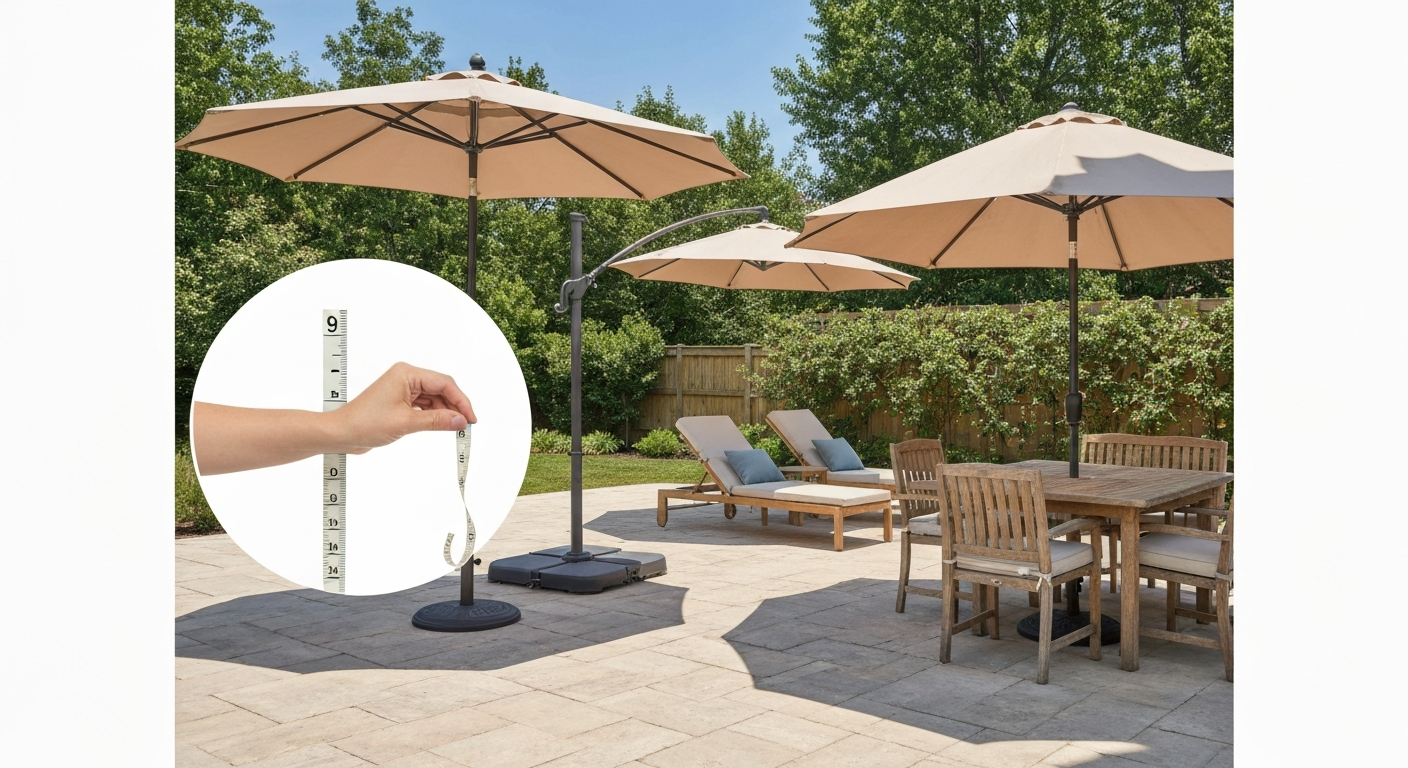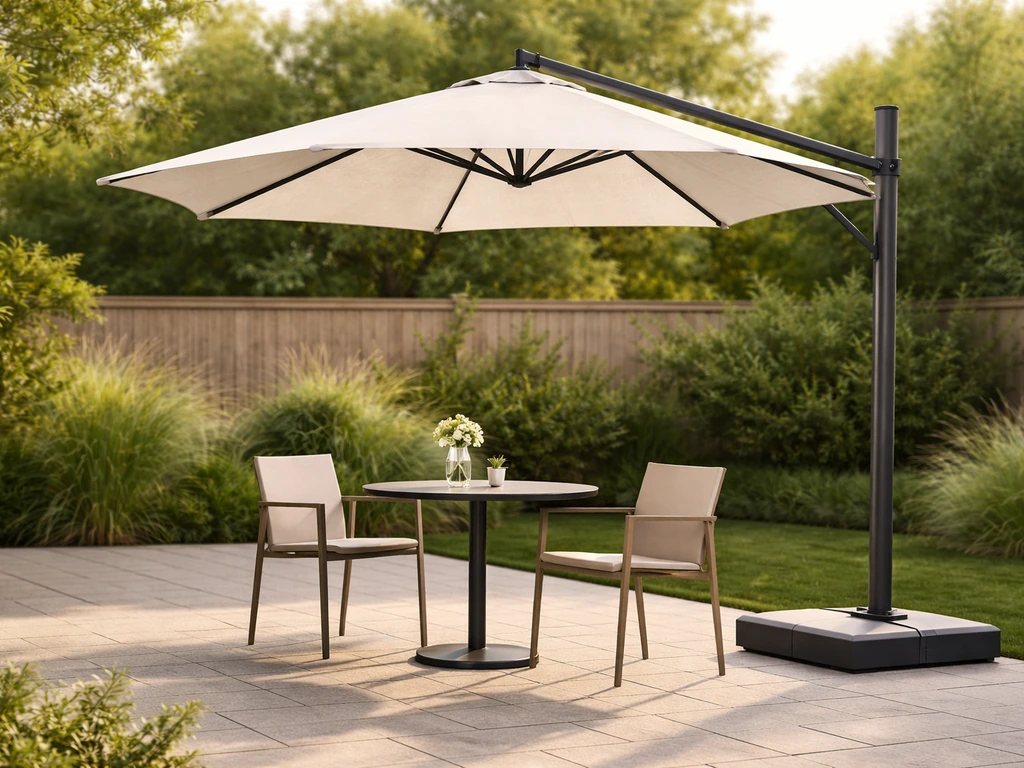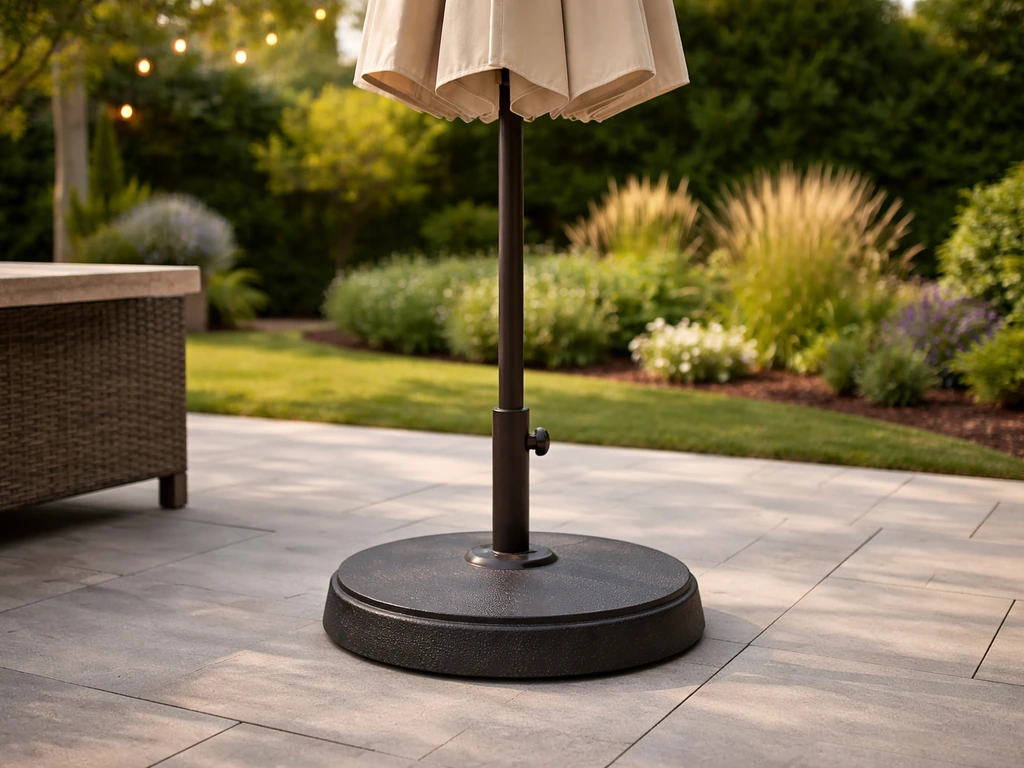
The best patio umbrella stand for your setup is the one that matches your pole diameter exactly, weighs enough to resist tipping in wind, and suits the surface you're planting it on. For a typical 9-foot market umbrella, that usually means a freestanding base around 50 pounds with a sleeve sized for a 1.5-inch pole. For a 10-foot cantilever, you're looking at a minimum of 140 pounds, and some commercial-grade setups push that to 480 pounds. Get those numbers wrong and no stand is going to do its job safely.
Best Patio Umbrella Stands Guide: Choose the Right Stand

Kent Lang
14 May 2026
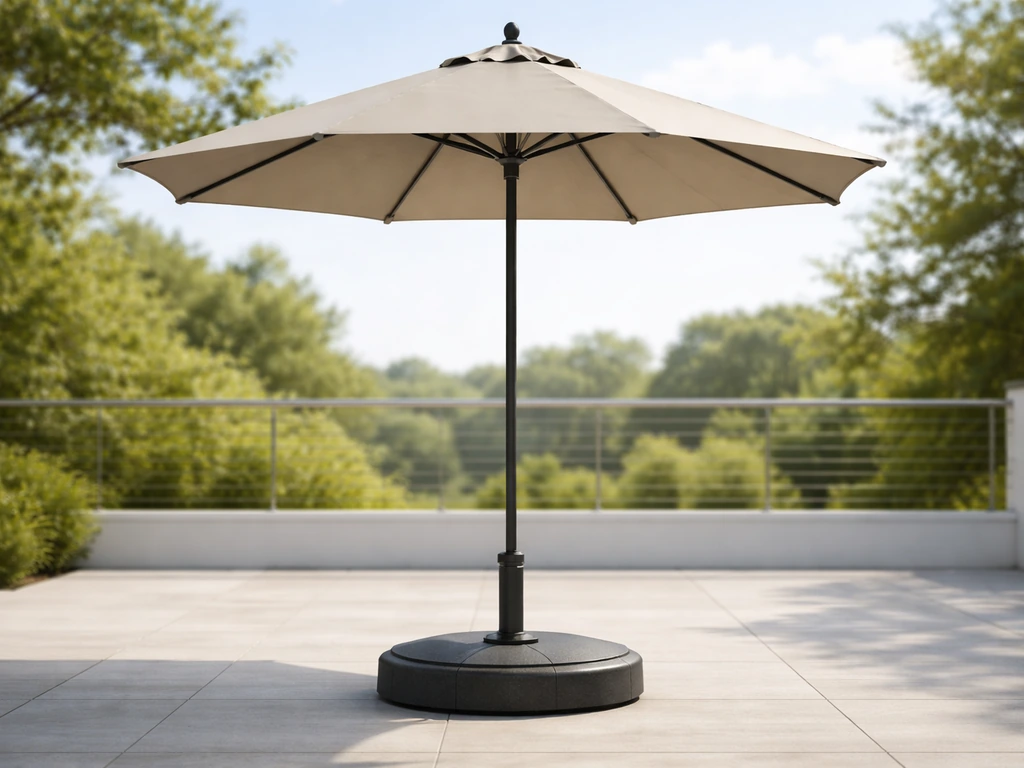
Before going any further, it's worth clarifying what you're actually shopping for. Some people are looking for a standalone base to stabilize an umbrella they already own. Others are searching for an umbrella-plus-stand package and want to know if the bundle is any good. Both paths are covered here, but the compatibility rules are the same either way: pole size, base weight, and stand type all have to line up with your umbrella and your patio.
What to look for in an umbrella stand
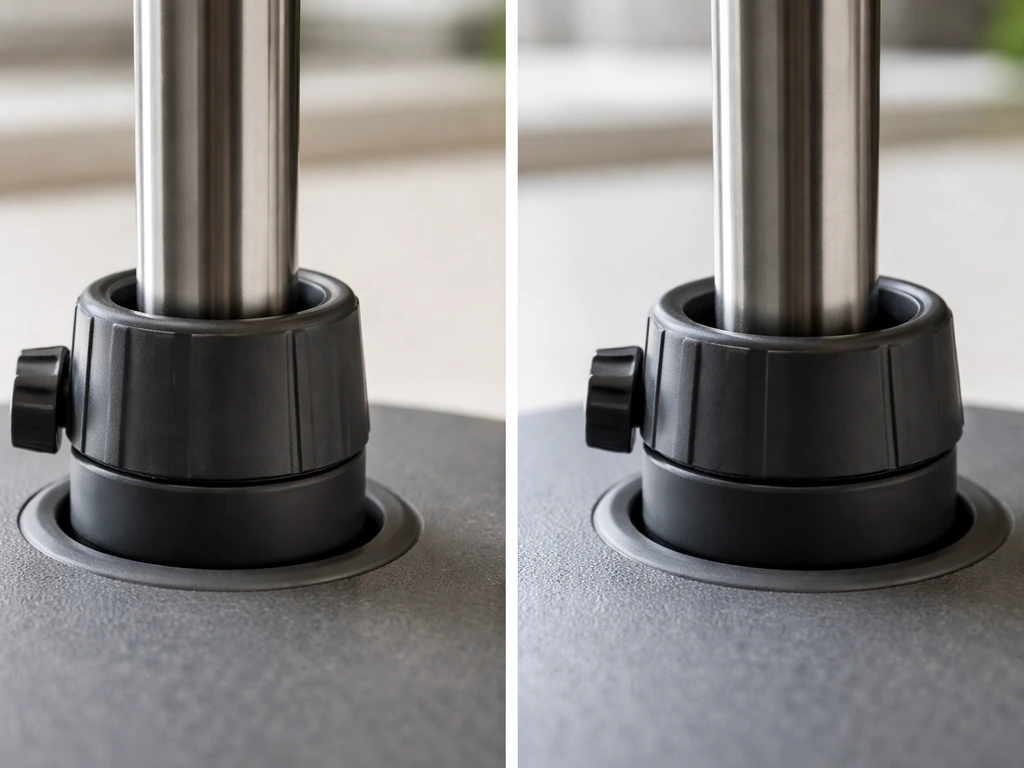
A good umbrella stand does one job well: it keeps the umbrella from tipping over when wind hits it. Everything else, looks, price, fill material, is secondary. The four things that actually determine whether a stand is good or not are pole fit, base weight, footprint stability, and material durability. Nail those four and you've got a solid stand. Miss on any one of them and you've got a safety hazard.
- Pole fit: The stand's sleeve or collar needs to match your umbrella's pole diameter closely. A sloppy fit causes wobble even when the base is heavy enough.
- Base weight: Heavier is always more stable. The minimum weight should be roughly 10 times the canopy width in feet, so a 9-foot umbrella needs at least 90 pounds.
- Footprint: A wider base resists tipping better. A typical market umbrella base runs about 20 inches in diameter as a starting point.
- Material and finish: Steel-covered concrete, cast iron, and anodized aluminum all hold up outdoors, especially when powder-coated or rust-resistant treated.
- Fill type (if applicable): Water-filled bases are easier to move but weigh less than sand-filled ones. Sand is heavier per volume and the better choice in windier spots.
One thing worth repeating: adapter rings exist, but they are a compromise. Best Patio Umbrella also notes that adapter sleeves let you fit a smaller pole into a larger base opening, but that matching the pole diameter directly is always better than relying on an adapter adapter sleeves (also called reducer rings) let you fit a smaller pole into a larger base opening. If your pole is 1.5 inches and the stand's sleeve is 2 inches, you can use a reducer ring to close the gap, but a direct match is always more stable. Adapter rings are fine for light-wind situations, but if you're in an area that gets afternoon gusts, match the pole diameter directly.
Stand types and compatibility with patio umbrellas
Not every stand works with every umbrella style. The two umbrella types you'll encounter most often are center-pole (market) umbrellas and cantilever (offset) umbrellas, and they have completely different base requirements.
Center-pole (market) umbrellas
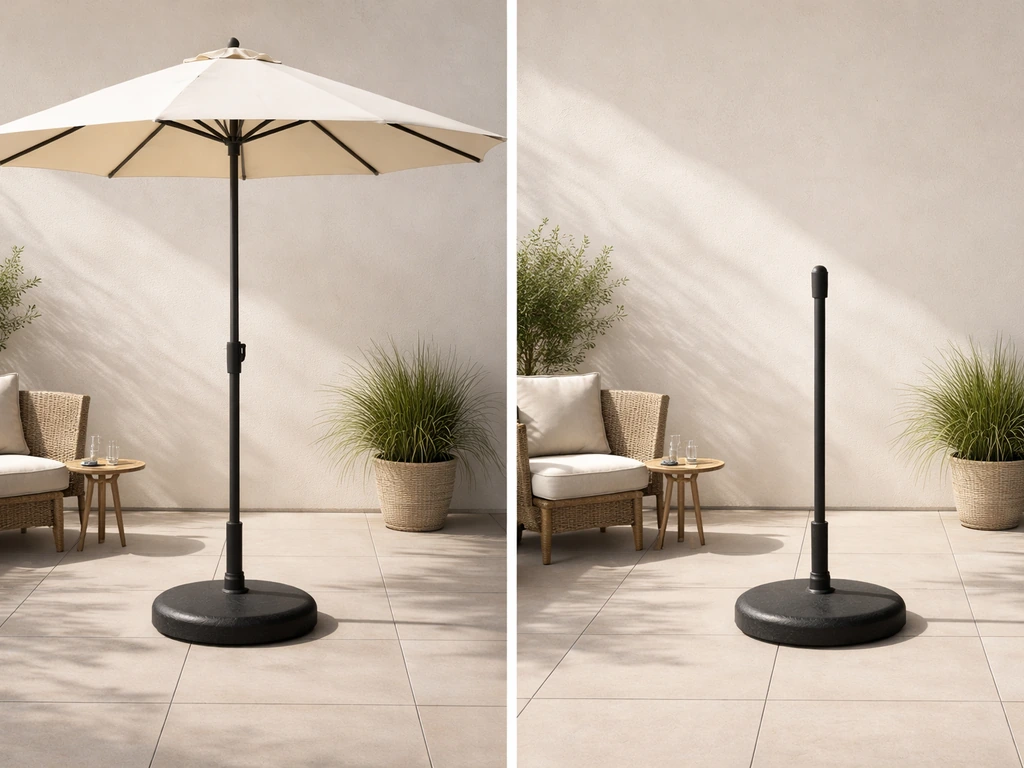
Market umbrellas have the pole running straight up through the center of the canopy. This is the most forgiving design for bases because the weight load is distributed evenly through the center. Almost any standard freestanding base works here as long as the pole sleeve matches and the base is heavy enough. The pole on most residential market umbrellas runs between 1.5 and 1.75 inches in diameter, with some going to 2 inches on larger models. Check your umbrella's spec sheet or measure the pole before buying.
Cantilever (offset) umbrellas
Cantilever umbrellas have the pole off to one side with the canopy extending out over the space. That offset geometry creates a significant lever effect, which is why cantilever bases need to be substantially heavier than you'd expect. A 10-foot cantilever umbrella needs at least the base weight of a 13-foot center-pole umbrella at minimum. Some cantilever setups require dedicated weighted bases with paver systems; one well-known manufacturer specifies adding 12 pavers (16x16 inches each) to hit the 480-pound target for their large cantilever. If you're buying a cantilever umbrella, do not try to use a standard market umbrella base with it.
Sizing and weight capacity: diameter, pole size, and wind loads
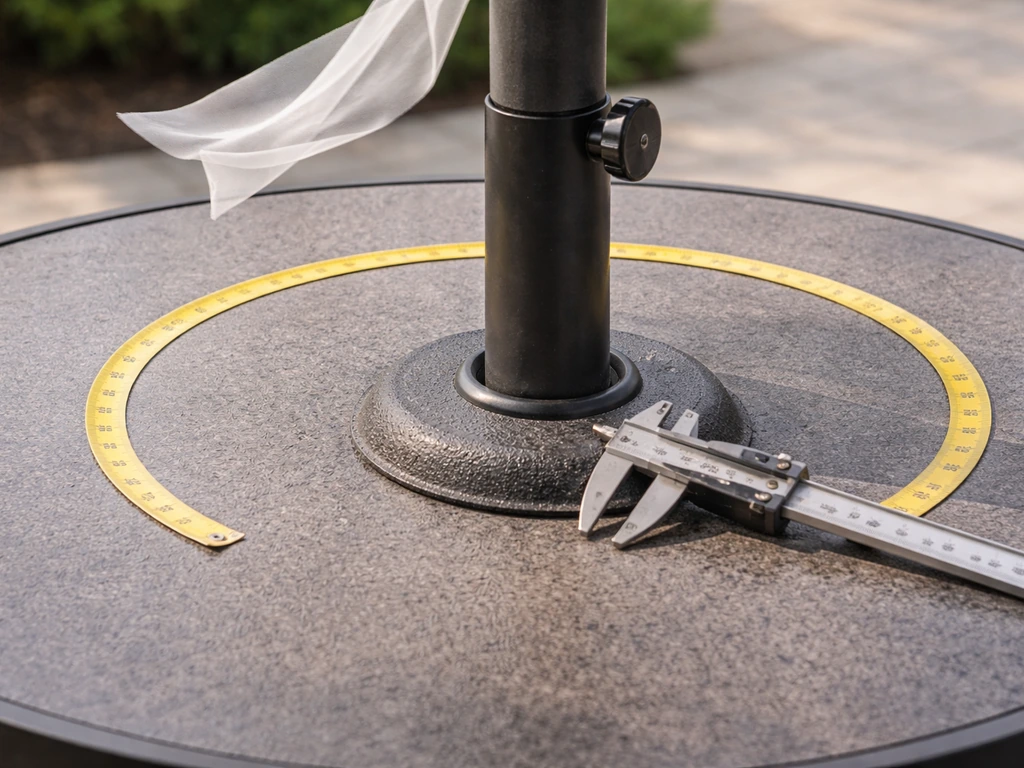
Sizing a stand comes down to three measurements: canopy diameter, pole diameter, and wind exposure. Get all three right and you have a stable setup. Miss one and you're guessing.
| Canopy Diameter | Umbrella Style | Minimum Base Weight | Typical Pole Diameter |
|---|---|---|---|
| 7–9 ft | Market/Center-pole | 70–90 lbs | 1.5 in |
| 10–11 ft | Market/Center-pole | 100–110 lbs | 1.5–2.0 in |
| 10 ft | Cantilever/Offset | 140 lbs minimum | 1.5–2.0 in |
| 11–13 ft | Cantilever/Offset | 200+ lbs recommended | 2.0–2.5 in |
| 13+ ft (commercial) | Cantilever/Offset | 480 lbs (with pavers) | 2.5+ in |
The quickest sizing formula to remember: multiply your canopy width in feet by 10 to get the minimum stand weight in pounds. So a 9-foot umbrella needs at least 90 pounds, a 10-foot needs 100, and so on. That's the minimum for calm to moderate conditions. If you live somewhere that gets regular afternoon winds or you're near the coast, add 20 to 30 percent more weight than the formula gives you.
Pole diameter compatibility is the other measurement people get wrong most often. Typical residential poles run 1. 5 to 1. 75 inches, while larger or commercial umbrellas step up to 2 inches or more.
Frankford, for example, lists a standard pole at 1. 5 inches (3. 8 cm). If your stand's sleeve is designed for a 2-inch pole and your umbrella is 1.
5 inches, the fit will be sloppy unless you use a reducer ring. Umbrella Source also recommends matching the stand’s neck or sleeve diameters to the umbrella’s center pole diameter, and notes that a slightly larger neck or sleeve can help support smaller poles match the stand’s neck or sleeve diameters.
If you do use a reducer ring, make sure it's rated for outdoor wind conditions, not just indoor or decorative use.
Base options: freestanding vs. weighted vs. built-in mounts
There are three main ways to anchor a patio umbrella, and each has a real-world use case. Choosing the wrong one for your setup is one of the most common and most fixable mistakes people make.
Freestanding bases
These are the classic weighted stands you fill with sand or water and set on your patio. They're portable, require no drilling, and work on any flat surface. The trade-off is that their stability is entirely dependent on their own mass, which means you need to be disciplined about weight. Water-filled bases are lighter and easier to move around in storage season but offer less stability than sand-filled versions of the same size. If portability matters to you, go water-fill and size up in weight. If it's a permanent spot, go sand-fill. For any large cantilever, supplement with pavers placed on or around the base.
Surface-mount bases
Surface-mount bases bolt directly to your deck, patio slab, or even a rooftop surface using a mounting plate and bolts. They're a solid middle-ground option: you get much better stability than a freestanding base without digging into the ground. They're especially useful on wood decks where an in-ground install isn't practical. The downside is the commitment; you're drilling into your surface, and removal leaves holes that need to be patched. For balconies or rooftops, some surface-mount systems are specifically designed to avoid piercing waterproof membranes, so look for that if it's relevant to your situation.
In-ground bases
In-ground bases offer maximum stability with the lowest profile. The socket is set into the ground or a concrete slab, and the umbrella pole drops straight in. This is the cleanest look and the most secure option, but it only works if you're willing to commit to a fixed location permanently. Anodized aluminum in-ground systems are popular because they're rust-resistant and water-resistant, which matters when a fitting is buried in soil or embedded in concrete year-round. If you're landscaping or building a new patio, plan the in-ground sleeve into the project from the start.
Wind stability, material, and durability considerations
Here's something that surprises people: umbrella wind ratings are not a guarantee. Even manufacturers with published wind ratings explicitly say that in any high-wind or sudden extreme weather, all umbrellas should be closed and never left unattended in the open position, regardless of base weight. The base's job is to keep the umbrella upright in the normal range of outdoor wind, not to survive a storm. When the wind picks up seriously, close the umbrella. Full stop.
That said, the right base material makes a real difference in how long your setup stays functional season after season. Here's how the common materials compare in real-world outdoor conditions:
| Material | Weight | Rust/Corrosion Resistance | Durability | Best For |
|---|---|---|---|---|
| Steel-covered concrete | High | Good (powder-coated) | Excellent | Permanent freestanding setups |
| Cast iron | High | Moderate (needs coating) | Very good | Decorative heavy-duty bases |
| Anodized aluminum | Low-medium | Excellent | Very good | In-ground, coastal, wet areas |
| Plastic/resin (fillable) | Low (empty) | Excellent | Good | Portable, budget-friendly setups |
| Concrete (raw) | Very high | Excellent | Excellent | DIY in-ground or slab-set installs |
Steel-covered concrete bases are a popular choice for good reason: they're heavy, sturdy, and rust-resistant when powder-coated. Cast iron works similarly but needs periodic inspection for rust if the coating chips. Anodized aluminum is the go-to for in-ground systems and anything in a coastal environment where salt air accelerates corrosion on unprotected steel. Plastic fillable bases are genuinely useful for people who need to move the umbrella around or store it seasonally, just know that a water-filled plastic base in a windy spot is working at its limits.
One durability point that often gets overlooked: uneven surfaces cause wobble and accelerate wear on the base sleeve and pole connection. If your patio surface isn't level, address that before you blame the base. Even a great cantilever base will rock and loosen up faster on an uneven deck.
How to choose the best umbrella stand for your setup
Follow these steps in order and you'll end up with a stand that actually works for your specific situation, not just one that looked good in a product photo. If you are also wondering what is the best patio umbrella stand for your space, start by matching the stand type and base weight to your umbrella’s pole size and expected wind choose the best umbrella stand.
- Identify your umbrella type. Is it a center-pole (market) umbrella or a cantilever (offset) umbrella? This determines the base category you're shopping in. Do not mix them.
- Measure your umbrella's pole diameter. Grab a tape measure and measure across the pole. Write it down: 1.5, 1.75, or 2+ inches. This is the spec you'll match to the stand's sleeve or collar.
- Calculate your minimum base weight. Multiply the canopy diameter in feet by 10. Add 20 to 30 percent if you have regular wind exposure or are near the coast. This is your floor, not your target.
- Decide on your base type. Freestanding if you need portability or don't want to drill. Surface-mount if you want serious stability on a deck or slab. In-ground if you're building something permanent and want the cleanest look.
- Check your patio surface. Concrete and pavers can handle any base type. Wood decks limit you to freestanding or surface-mount. Grass or gravel almost always requires a freestanding base with extra weight.
- Confirm the sleeve fit. Find the stand's listed sleeve or collar diameter and match it to your pole measurement. If you need a reducer ring, buy one rated for outdoor wind conditions and make sure it doesn't add significant slop to the fit.
- Verify the base footprint. For market umbrellas, a 20-inch diameter base is a common starting point. Wider is more stable. Make sure the base footprint doesn't create a trip hazard in your specific layout.
- Consider assembly and stem length. Some manufacturers specify minimum stem lengths for freestanding applications. If the instructions say to use the full stem, use it. Shortcutting stem length is a documented stability issue.
If you're shopping for an umbrella-plus-stand bundle, apply the same checklist to verify the included base is actually sized correctly for the included umbrella. Many budget bundles pair an adequately sized canopy with an underweight base. A good heavy-duty option to look for is the best heavy-duty patio umbrella, especially if your area sees gusty wind. Check the base weight spec on the listing, not just the overall product weight.
Buying checklist and common mistakes to avoid
Before you click buy on any stand, run through this checklist. These are the mistakes that show up in nearly every forum thread and product review about umbrella bases tipping over or wobbling.
The buying checklist
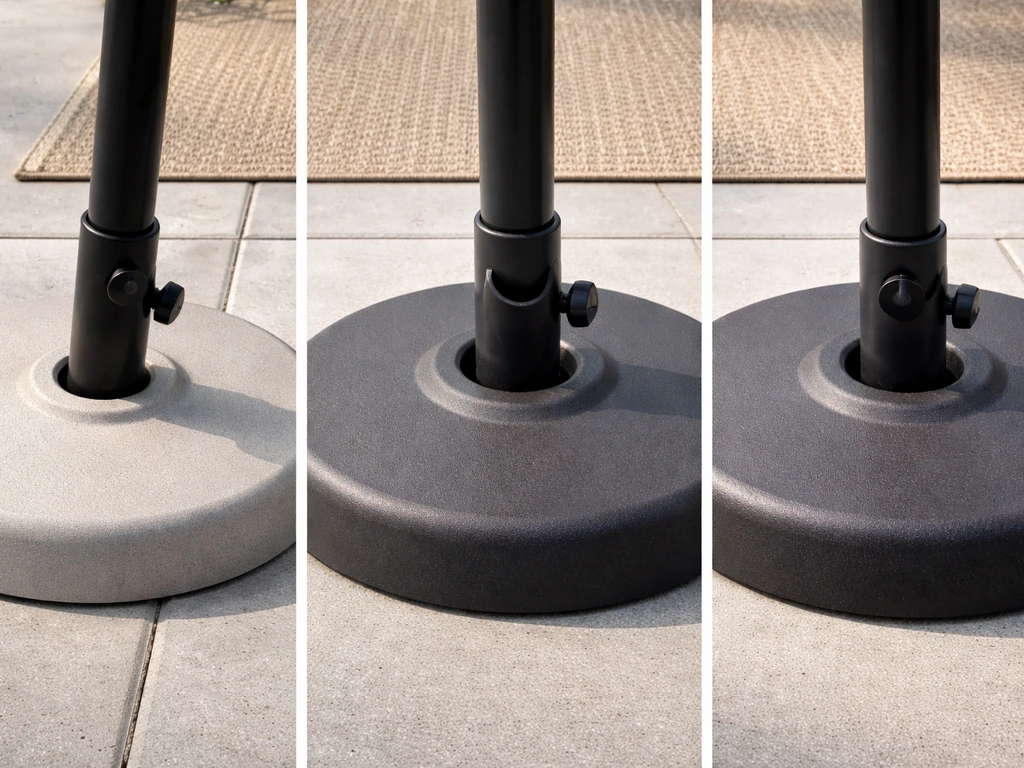
- Confirmed umbrella type: center-pole or cantilever
- Measured pole diameter (in inches) and matched it to the stand's sleeve spec
- Calculated minimum base weight (canopy feet x 10) and verified the stand meets or exceeds it
- Added 20 to 30 percent to base weight if you're in a windy location or coastal area
- Chosen base type (freestanding, surface-mount, or in-ground) that suits your patio surface
- Confirmed the base footprint won't create a trip hazard in your space
- Checked that adapter rings (if needed) are rated for outdoor wind conditions
- Verified that the stand material is weather-rated for your climate (powder-coated steel, anodized aluminum, or UV-stable resin)
- Read any manufacturer stem-length requirements and planned to follow them
- Planned where you'll close and secure the umbrella when high wind or storms arrive
The most common mistakes
- Underweighting: This is the number-one mistake. A base that's technically compatible but underweight will tip in moderate wind. Always check the math before buying.
- Wrong pole diameter: Buying a stand without checking the sleeve size leads to a loose fit, wobble, and early wear on both the pole and the base collar.
- Using a market umbrella base with a cantilever: These are not interchangeable. A cantilever creates a lever effect that requires significantly more base weight and a dedicated base design.
- Relying on adapter rings in windy conditions: Reducer rings are fine for light use, but they add a potential weak point. If your setup sees regular wind, match the pole diameter directly.
- Skipping surface prep: Placing a base on an uneven surface causes rocking, loosens connections, and accelerates wear. Level the surface or use shims before setting the base.
- Ignoring stem length requirements: Some bases require a minimum stem length for safe freestanding use. Skipping the stem or using a shorter one voids the stability math.
- Leaving the umbrella open in wind: No base, regardless of weight or type, makes an open umbrella safe in high wind. Close it when conditions change.
One last thing worth mentioning: if you're also thinking about the umbrella itself and not just the base, the stand question connects directly to choices around freestanding umbrellas, heavy-duty designs, and weighted base packages. A good heavy-duty patio umbrella base is the difference between a stable setup and a wobbling one when breezes pick up heavy-duty designs.
If you're trying to pick the best free standing patio umbrella, start by matching the stand type and base weight to your umbrella's pole diameter and wind exposure. The right base for a heavy-duty or commercial umbrella is a different conversation than the right base for a standard residential 9-foot market umbrella. If you're aiming for the best heavy-duty patio umbrella, make sure the base and pole compatibility match the umbrella's size and wind exposure.
Know which category you're in before you shop, and the rest of the decision gets much simpler.
FAQ
How do I measure my umbrella pole diameter if I do not have the spec sheet?
Measure the outside diameter of the pole with a caliper or a tape measure, then compare that number to the stand sleeve size in the product listing. If the pole is slightly tapered or the umbrella uses a collar, measure the section that actually inserts into the stand, not the widest decorative section.
My pole size does not match the stand exactly, is a reducer ring always safe?
A reducer ring can improve fit, but it can also reduce stability if the sleeve does not fully clamp the pole. Only use a reducer that is explicitly intended for outdoor wind use, and prefer a stand whose sleeve length fully engages the pole instead of one that relies on a short adapter section.
What is the biggest mistake people make when choosing the stand weight?
They use the minimum weight formula for calm conditions even when their setup faces stronger wind (coast, open patios, upper floors). If you routinely see gusts, plan to exceed the minimum and consider a heavier base or added ballast rather than trusting the rating alone.
Should I buy a water-filled base or a sand-filled base for the best patio umbrella stands?
If you want maximum steadiness in windy weather, sand-filled versions usually hold position better because they retain more mass under normal movement. Choose water-filled if you truly need easier portability, but size up in weight and be realistic about performance in gusty conditions.
Can I use a freestanding market umbrella base for a cantilever umbrella if it is heavy enough?
Not reliably. Cantilever umbrellas create a lever load that places higher stress on one side, so many market bases will not resist that torque even if they seem heavy. For cantilever, use a base designed for that offset geometry, and follow the manufacturer’s recommended ballast method if provided.
What footprint factors matter if two bases have the same weight?
Footprint shape and how the base contacts the surface matter. A wider or flatter base resists tipping more effectively than a tall, narrow one, especially on slightly uneven patios. Also check for leveling pads or feet that help the sleeve stay upright on irregular stone or pavers.
How can I tell if my patio surface is causing wobble even with the right stand?
Do a quick test: set the umbrella and base, then try to gently rock the base in multiple directions. If the sleeve-to-pole connection moves or you see gaps under the base, the surface is uneven. Fix it with shims or a leveling base plate before replacing the stand.
Are wind ratings on umbrella stands meaningful?
They are meaningful only for typical outdoor wind. Manufacturers still advise closing the umbrella in high-wind or sudden extreme conditions, because the base is not designed to function as storm protection. Use wind ratings as a baseline, not permission to leave the umbrella open during gusts.
What is the difference between anchoring and just using a heavier stand?
Anchoring (surface-mount or in-ground) reduces movement at the base, which helps prevent loosening over time and improves performance on windy sites. A heavier freestanding stand can resist tipping, but it still allows micro-movement that can wear the sleeve connection and loosen components.
Can I install an in-ground base on an existing patio without major construction?
Often you can, but it depends on the substrate. If the patio is concrete, you may need core drilling or breaking to set the sleeve, and that is usually a bigger commitment than choosing a surface-mount or freestanding solution. If you want to avoid drilling, surface-mount or well-leveled freestanding ballast is usually the simpler path.
What base material should I choose if I live near the coast or get salt air?
Anodized aluminum and properly coated steel components generally perform better in salt conditions because they resist corrosion longer. If you consider cast iron, inspect it periodically for coating chips and rust around edges, since damage accelerates corrosion.
For an umbrella-plus-stand bundle, what should I verify before buying?
Verify the included stand sleeve matches your pole diameter and check the listed stand weight, not just the bundle’s overall shipping weight. Bundles can pair a nicely sized canopy with an underweight base, and that mismatch often shows up as wobbling in normal breezes.
How should I maintain the sleeve and connection so my umbrella stays stable?
Periodically inspect the sleeve for debris, corrosion, or deformation, then tighten any set screws or collars as the manufacturer specifies. After storms or heavy use, re-check the fit and confirm the base is level, since repeated movement can wear contact points.