The best price on a patio umbrella is rarely the lowest number you see listed. Once you add a required base, account for shipping, and factor in how long the umbrella will actually last before fading or snapping in a gust, the $59 special can easily end up costing more than a $180 umbrella that holds up for five seasons. To find the true best price right now, you need to compare total delivered cost against the features that matter for your specific space, then hit the right retailers at the right time. If you're trying to land on the best value patio umbrellas, comparing total delivered cost against longevity, base needs, and returns is the quickest way to avoid paying for the wrong deal. If you want the best patio umbrella for the money, focus on the total delivered cost and the features that prevent early fading or wind damage.
Best Price on Patio Umbrellas: How to Buy Smart

What "best price" actually means
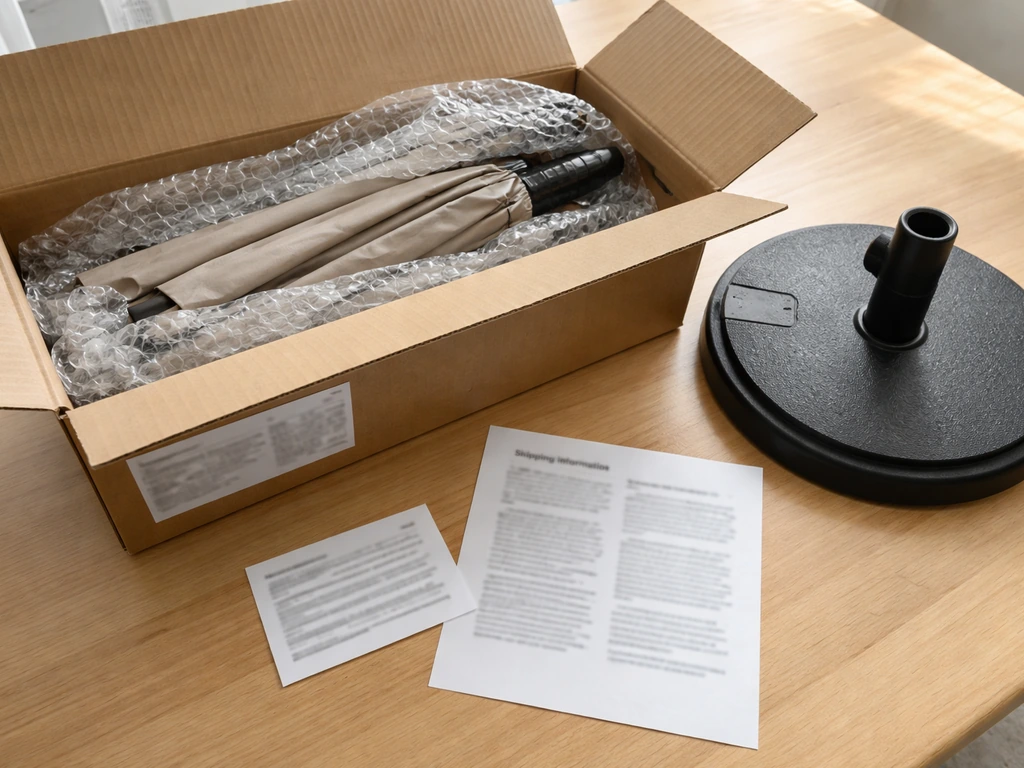
Sticker price is just the starting point. The real number you should be comparing includes: the umbrella itself, the base or stand (which is almost never included), any shipping or delivery fees, and a reasonable estimate of how many seasons you'll get out of it. A $100 umbrella that lasts two years costs $50 per year. A $220 umbrella that holds up for six years costs under $37 per year and you're not dealing with a wobbly pole or a canopy that fades to a sad beige after one summer. That math matters, and it's the fastest way to cut through a page of options sorted by "lowest price."
Return policy is part of the price calculation too. If something arrives damaged or isn't what you expected, a retailer with a 90-day return window (like Home Depot) or Costco's satisfaction guarantee with free warehouse returns is genuinely worth something. Wayfair accepts returns within 30 days for most items. Knowing this before you buy means you're not locked in if the color or size is off.
Lock in your requirements before you shop
The single biggest mistake people make is shopping by price first and specs second. You end up with an umbrella that's too small, the wrong style for your furniture layout, or one that needs a base you don't own. Spend five minutes on this first and you'll save hours of comparing the wrong products.
Size and coverage
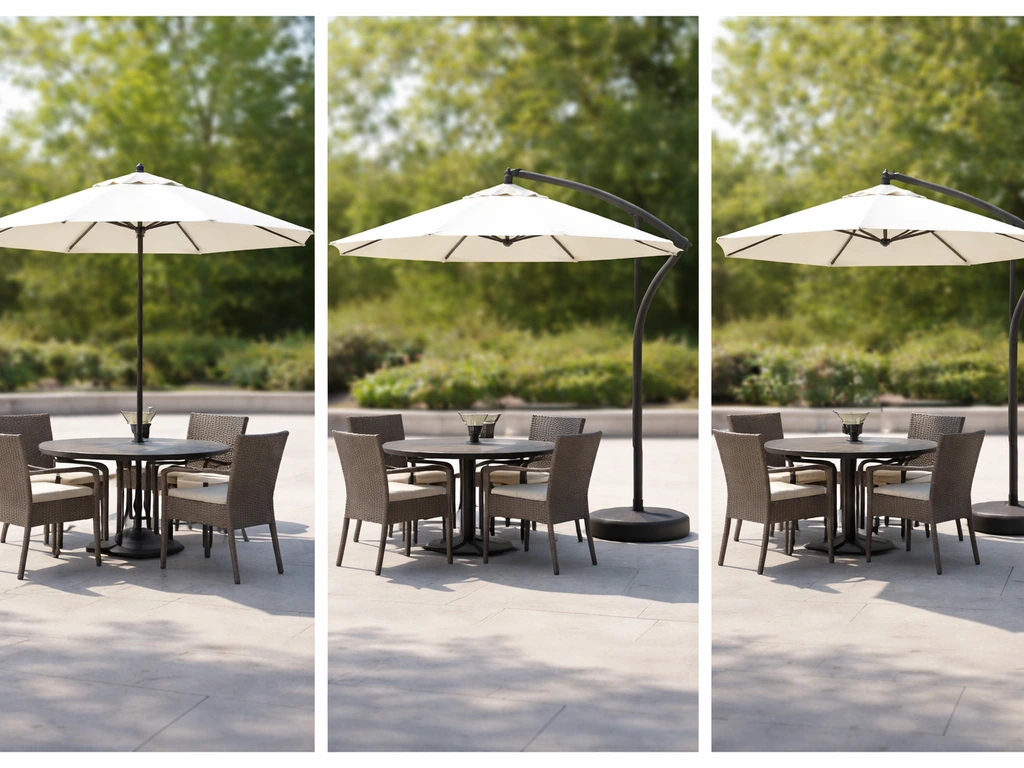
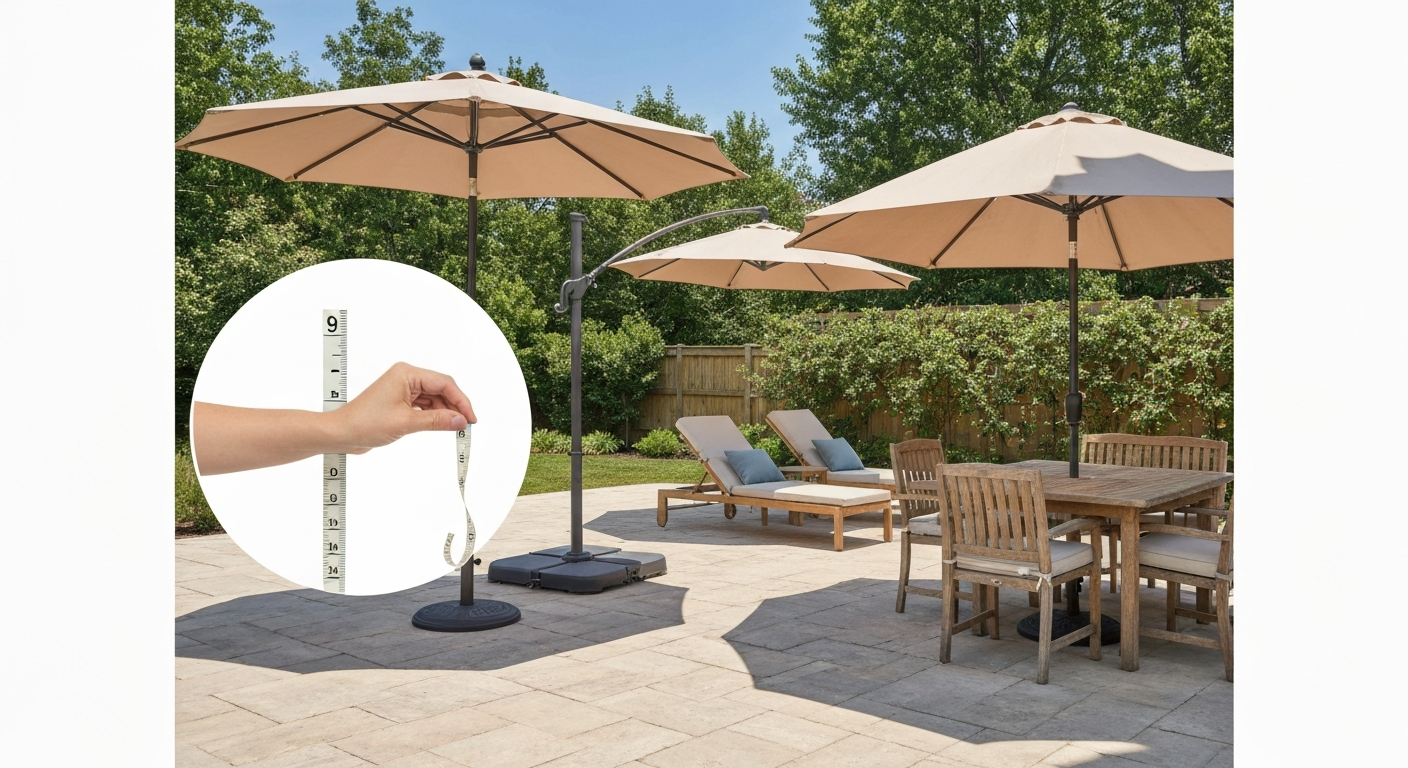
A good rule of thumb is that your umbrella should extend about two feet beyond the edge of your table on each side. For a standard 4-person patio table (roughly 48 inches across), a 9-foot market umbrella hits the sweet spot. For a larger 6-person table or a wide seating area, step up to an 11-foot or consider an offset/cantilever model. Going too small is the most common sizing mistake, and it's one you'll notice every time the sun shifts.
Style: market, cantilever, or offset
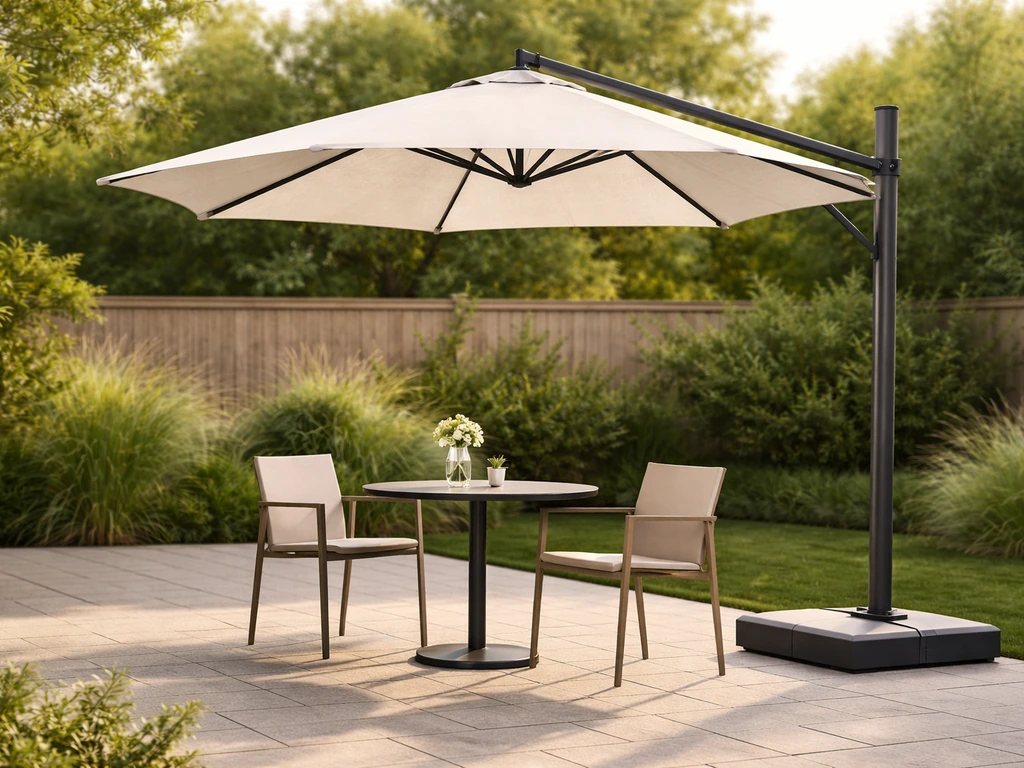
Market (center-pole) umbrellas are the most affordable and widely available option. They require a table with a center hole or a freestanding base, and they're easy to find in the $80 to $250 range. Cantilever and offset umbrellas have a side pole and hang the canopy out over your space, which is great for sectional sofas, loungers, or any area where a center pole would be in the way. They cost significantly more, typically $200 to $600 or more, and require a heavier, more expensive base. If you're comparing prices across styles, make sure you're comparing equivalent setups, not a bare-bones market umbrella against a cantilever with base included.
What drives price differences: materials and features worth paying for
Not every price difference reflects real quality. Some of it is brand markup, some is design, and some is genuinely better materials. Here's what actually matters.
Canopy fabric
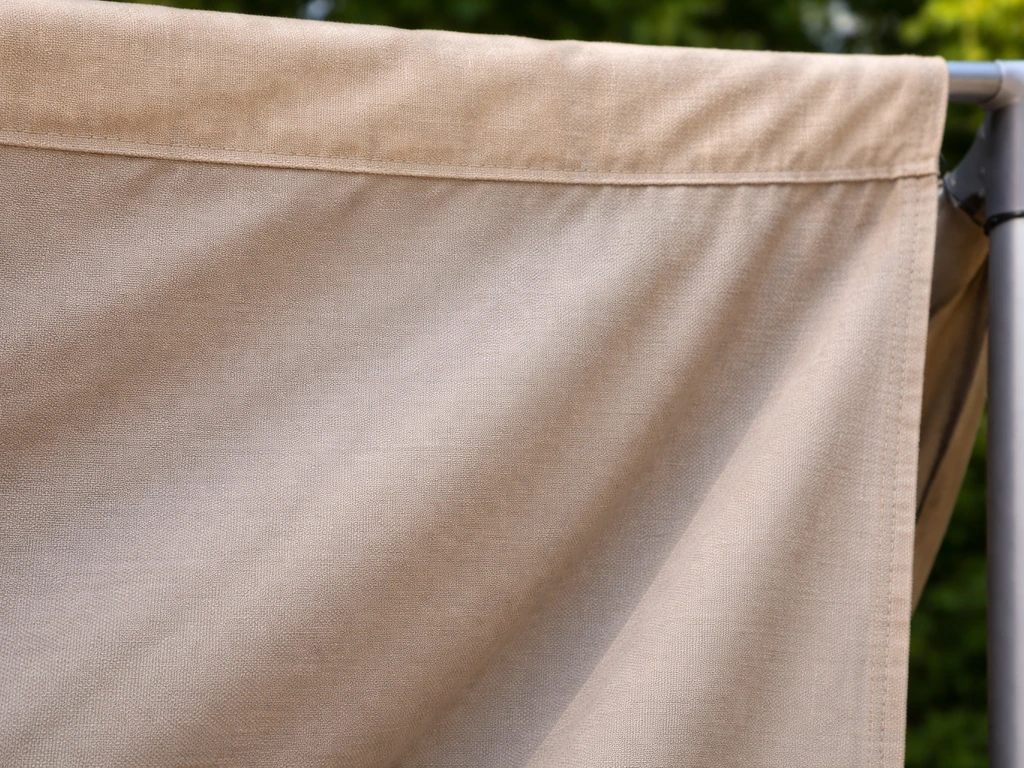
Fabric is the part that degrades first. Polyester is fine for occasional use and tight budgets, but solution-dyed acrylic fabrics (Sunbrella being the best-known brand) are woven with color throughout the fiber rather than dyed on the surface. That means the color holds up dramatically better under UV exposure and the fabric resists water without a chemical coating that washes away. You pay more upfront, but you're not replacing the canopy or the whole umbrella after two seasons. If you're looking at Sunbrella-specific options, that's a popular enough category that it's worth comparing prices there separately.
Frame material
Aluminum frames are the best combination of weight and corrosion resistance for most people. They're lighter than steel (which matters when you're repositioning or storing), they don't rust, and they hold up well in humid or coastal environments. Steel frames are heavier and cheaper but will eventually rust at joints and hardware points. Wood frames (teak, hardwood) look great and are naturally weather-resistant, but they cost more and need occasional maintenance. For pure price-to-performance, aluminum is the call.
UV protection rating
Look for a UPF (Ultraviolet Protection Factor) rating on any umbrella you're seriously considering. blank" rel="noopener noreferrer">UPF 50+ blocks over 98% of UV radiation and is the standard worth paying for if sun protection is a priority. Many budget umbrellas list no rating at all, which is a red flag. This spec is especially important if you're buying for a pool area, a south-facing patio, or anywhere you're sitting for long stretches.
Wind resistance and base costs: the part that surprises people
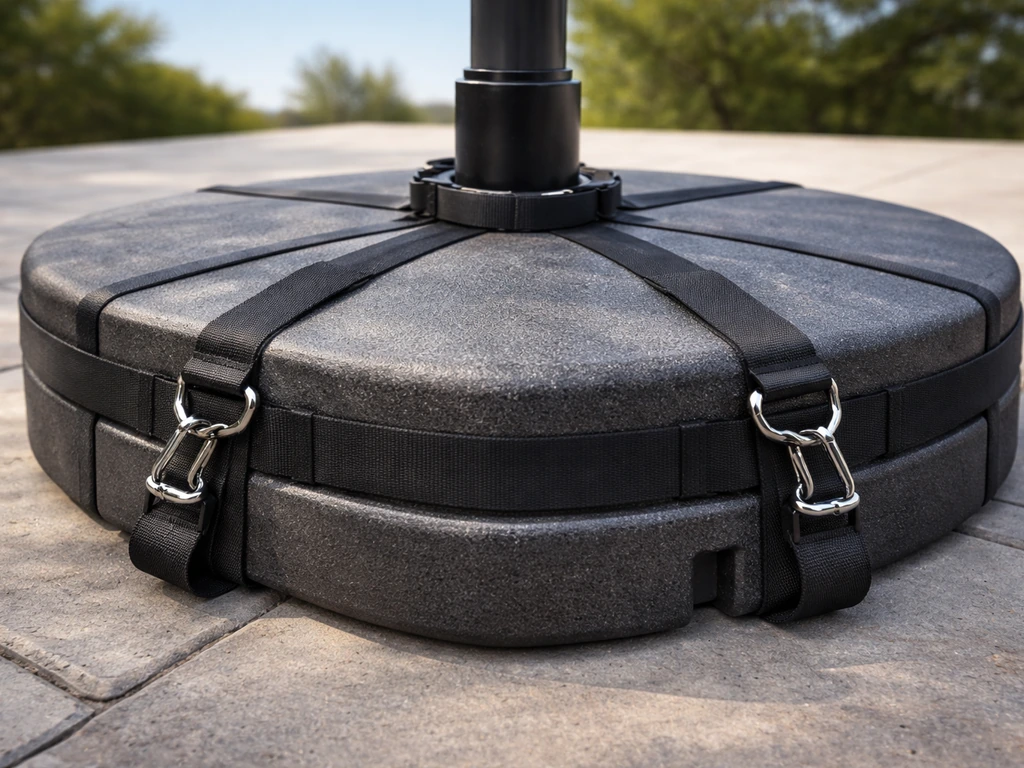
Wind is the number one reason patio umbrellas fail early, and it's where the hidden costs live. A good umbrella without a good base is a sail waiting to flip and break. And notably, most manufacturer warranties, including Treasure Garden's, explicitly exclude wind damage. That means if your umbrella tips over in a gust and cracks the pole or tears the canopy, you're buying a replacement out of pocket.
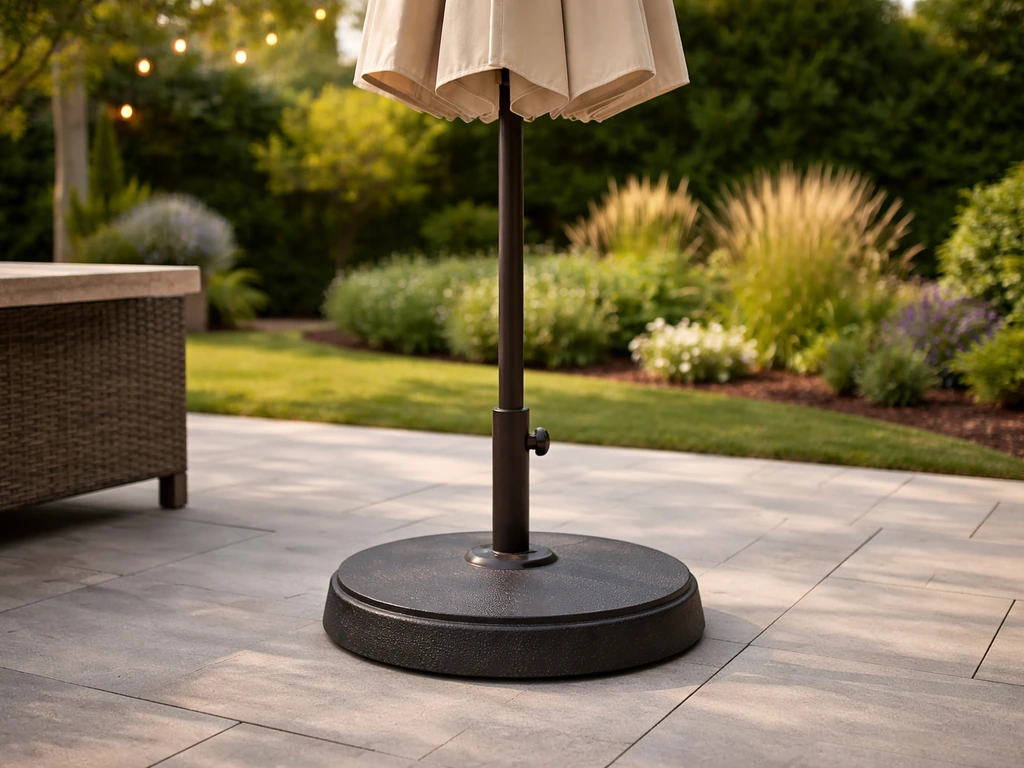
For a standard 9-foot market umbrella, you need a base that weighs at least 50 pounds, and 75 to 100 pounds is better in any area that gets regular afternoon winds. Cantilever umbrellas with their side-offset canopies create more torque and need bases of 100 to 150 pounds or more. Those bases can run $50 to $200 on their own, so when you see a cantilever listed at $199, always check whether a base is included (it usually isn't).
Vented canopy designs, where there's a secondary cap layer at the top that lets air escape upward, dramatically reduce the force a gust can apply to the canopy. This is a feature worth paying for if you're in a windy region. An umbrella with a vented canopy paired with a heavy base will outlast a cheaper non-vented umbrella by years in a wind-prone yard.
| Umbrella Type | Typical Umbrella Price Range | Minimum Base Weight Needed | Typical Base Cost | Best For |
|---|---|---|---|---|
| Market (center pole) | $80 to $250 | 50 to 75 lbs | $30 to $80 | Tables with center hole, standard patios |
| Offset / Cantilever | $200 to $600+ | 100 to 150 lbs | $80 to $200 | Sectionals, loungers, no-table areas |
| Tilt market (auto or push-button) | $120 to $300 | 50 to 75 lbs | $30 to $80 | Shifting sun angles, smaller spaces |
Where to find the best deal right now
Retailers worth checking
Home Depot and Lowe's are strong starting points because their return policies are generous (Home Depot offers 90-day returns on patio umbrellas), they carry a wide range of price points, and you can often pick up in-store the same day, which eliminates shipping costs entirely. If you want the logo patio umbrellas best price, compare total delivered cost from these big retailers first Home Depot and Lowe's. Costco is worth checking if you have a membership, particularly for larger or higher-spec umbrellas at competitive prices, and their satisfaction guarantee with warehouse returns for online orders adds real peace of mind. Wayfair has a broad selection and competitive prices but has a shorter 30-day return window and you'll be relying on delivery, so factor shipping time and any delivery fees into your cost comparison.
Local pickup vs. delivery
If you're searching locally, in-store pickup at a big-box retailer genuinely saves money and headaches. Umbrellas and especially bases are bulky and heavy, so delivery charges can add $20 to $50 or more to an online order. Picking up locally also lets you inspect before you take it home. Outdoor furniture specialty stores and garden centers sometimes have end-of-season or display clearance that's not listed online at all, so it's worth a quick call or visit.
When to buy for the lowest prices
Patio umbrella prices follow a predictable seasonal pattern. If you're shopping specifically for the best patio umbrella under $100, these timing and discount windows matter just as much as the model you pick Patio umbrella prices follow a predictable seasonal pattern.. The highest prices are typically in April through June when demand peaks. You'll start seeing meaningful discounts in late July and August as retailers clear inventory for fall merchandise. By September and October, remaining stock is often marked down 30 to 50 percent, though selection gets thin. If you need an umbrella now (it's May), you're at or near peak pricing, so your best move is to compare aggressively across retailers, look for bundle deals that include a base, and check whether any retailer has leftover last-season stock discounted. If you can wait until late summer for a secondary umbrella or a replacement, the savings are real.
How to size up a deal in under five minutes

When you find a promising listing, run through this quick checklist before adding it to your cart.
- Confirm the canopy diameter matches your coverage need (remember: table width plus roughly 4 feet total).
- Check whether a base is included. If not, add the cost of a compatible base to the price.
- Look for a UPF rating. UPF 50+ is the target. No rating listed is a warning sign.
- Identify the frame material. Aluminum is preferred; steel is acceptable for sheltered spaces.
- Check for a vented canopy, especially if your patio gets afternoon wind.
- Read the three most recent negative reviews specifically for mentions of fading, pole bending, or hardware breaking.
- Confirm the return window: 30 days (Wayfair), 90 days (Home Depot), or Costco's satisfaction guarantee are all acceptable. Under 30 days, be cautious.
- Check whether shipping is free or adds to the total cost.
On warranties: most patio umbrella warranties are limited to manufacturer defects, typically one year on structural components and one year on fabric threads or stitching. What they almost universally exclude is UV fading, normal weathering, and wind damage. A warranty is worth checking but it shouldn't be a major purchase driver on its own. A generous return policy from the retailer is actually more useful in the first 30 to 90 days when most issues show up.
Where to spend and where to save
If you're working with a limited budget, here's how to allocate it smartly rather than just buying the cheapest thing in every category.
Spend more on these
- The base: a heavier, well-made base protects the umbrella and your furniture. Don't cheap out here.
- Canopy fabric quality: if you're going to use it daily in a sunny spot, solution-dyed acrylic is worth the premium over basic polyester.
- Frame material: aluminum over steel if you're in a humid or coastal area.
- Vented canopy design: this extends the life of the umbrella in windy yards.
It's fine to save here
- Brand name on basic market umbrellas: a well-specced no-name umbrella with aluminum frame and UPF 50+ fabric can perform as well as a premium brand for a covered porch or low-wind yard.
- Extra accessories like lights, hanging hooks, or covers: these are nice but add cost without improving core performance.
- Going up in size beyond what you actually need: an 11-foot umbrella costs more and needs a heavier (more expensive) base. If a 9-foot covers your space, stick with it.
- Motorized or crank-tilt mechanisms on a budget umbrella: the mechanism is often the first thing to fail on lower-cost models.
The sweet spot for most homeowners is a mid-range aluminum-frame market umbrella with a solution-dyed polyester or acrylic canopy, UPF 50+ rating, and a vented top, paired with a 50-pound-plus base, bought from a retailer with at least a 30-day return window. That combination typically lands between $150 and $280 all-in (umbrella plus base), delivers solid durability, and gives you protection if something isn't right. That's where the best value on patio umbrellas tends to live, even if the sticker price isn't the absolute lowest on the page.
FAQ
How can I compare the “best price on patio umbrellas” when some listings include the base and others don’t?
Use an apples-to-apples “delivered setup” price: umbrella price plus base price (or subtract it only if explicitly included), plus shipping or delivery fees, plus any estimated sales tax. If the base is bundled, confirm the base weight in pounds, not just the model name, since a lightweight base can undermine the deal even when the bundle looks cheaper.
What should I do if the umbrella dimensions listed online don’t match my table or seating layout?
Measure the clearances where the pole or stand will sit. For center-pole market umbrellas, confirm you have a table hole or room for a freestanding base at the correct distance from the table edge. If the umbrella overhang you need would cover a walkway, measure how much of the closed umbrella footprint you have when guests enter and exit.
Is it worth buying a cheaper umbrella if I plan to use it only weekends or for part of the summer?
Sometimes, but focus on fabric and wind stability rather than overall brand. If use is sporadic, polyester can work, but you still want UPF 50+ if sun exposure is a concern and you should still use a properly heavy base so it does not fail in one bad gust. Durability math can still favor a higher upfront canopy if your area sees afternoon wind or long sun hours.
How do I tell whether an umbrella’s base will actually be heavy enough for my conditions?
Look for the base weight in pounds, then compare it to the umbrella size you’re buying. For a 9-foot market umbrella, aim for 50 pounds or more, and 75 to 100 pounds if winds are common. If it’s a cantilever or offset model, expect to need 100 to 150 pounds or more, and treat any listing that does not state base weight as incomplete information.
Do I need a vented canopy if I live somewhere with light wind?
If wind is truly rare and you keep the umbrella secured, a non-vented canopy may last through a season, but venting still reduces stress during heat and gusts. If your patio faces an open yard, near a driveway, or exposed to gusts from storms, venting plus a heavy base is the safer durability combination and often costs less than replacing a torn canopy.
Should I prioritize UPF 50+ over colorfastness or style?
If sun protection is part of the reason you’re buying, UPF 50+ should be a priority, but color retention is also a practical “value” factor. Solution-dyed acrylic tends to hold color through UV exposure better than surface-dyed options, so if you care about the umbrella looking good for several summers, pay attention to fabric type alongside the UPF rating.
What’s a realistic way to estimate cost per year for umbrellas with different lifespans?
Translate the price into annual cost using expected service life. For example, divide the total delivered price (umbrella plus base plus delivery) by the number of seasons you expect before fading, fraying, or mechanical issues. Use conservative lifespan assumptions for windy areas, since wind damage is frequently excluded from warranties.
Can I rely on the warranty to cover wind damage or fading?
Usually not. Many warranties exclude wind damage and often do not treat UV fading as a defect. Instead of treating warranty language as protection for those issues, rely on a heavy base, vented canopy for wind-prone areas, and a return window that lets you address problems early if the umbrella arrives damaged or wrong.
What are common “hidden cost” mistakes when buying the cheapest umbrella?
Buying a frame or canopy without the correct base, choosing a canopy size that overhangs your space poorly, and skipping delivery fees during comparison are the big three. Another frequent mistake is assuming the listed umbrella price is the final price when shipping, assembly, or oversized delivery charges can add noticeable cost.
When is it best to buy, if I need the umbrella now versus if I can wait?
If you need it now, you are usually shopping near peak pricing (spring to early summer), so focus on delivered setup comparisons and bundle deals that include a base. If you can wait, late July and August discounts and September to October markdowns often reduce price materially, but selection can shrink, so check your minimum sizing and fabric requirements before you delay.
How can I reduce the hassle of delivery issues for large umbrella orders?
Prefer retailers that allow in-store pickup for umbrella bases and frames when available, because you can inspect the item before leaving. If delivery is your only option, confirm the return window and whether returns are free for online purchases. Also check whether the listing includes accessories, like a tilt mechanism or replacement hardware, so you don’t discover missing parts after arrival.