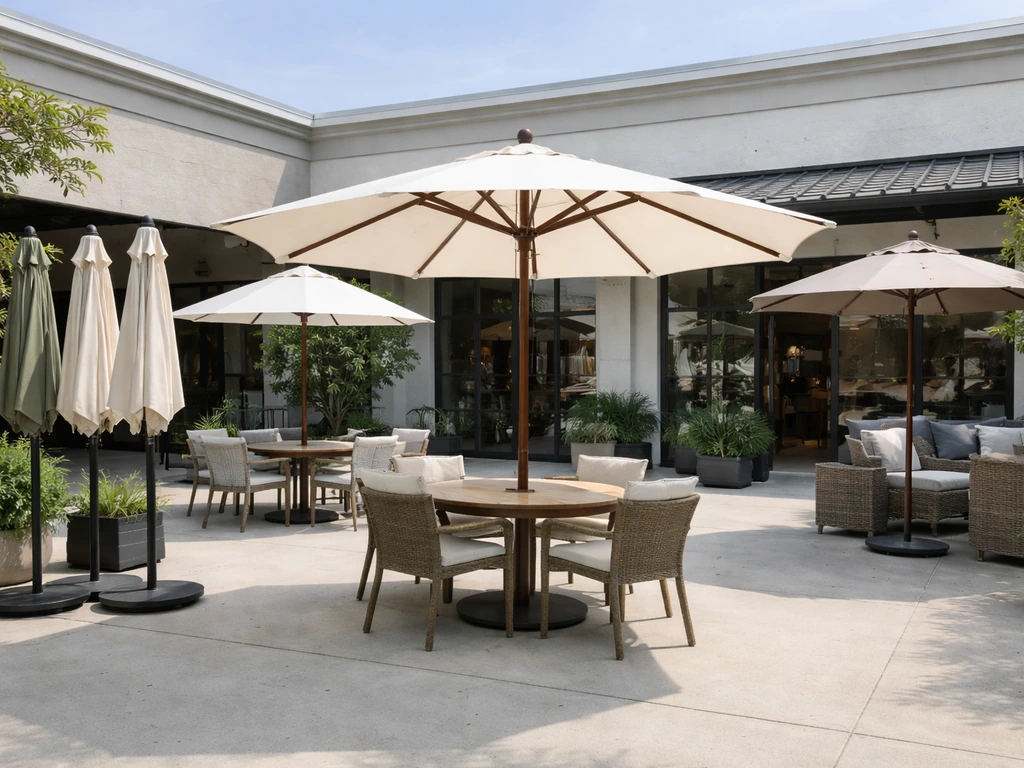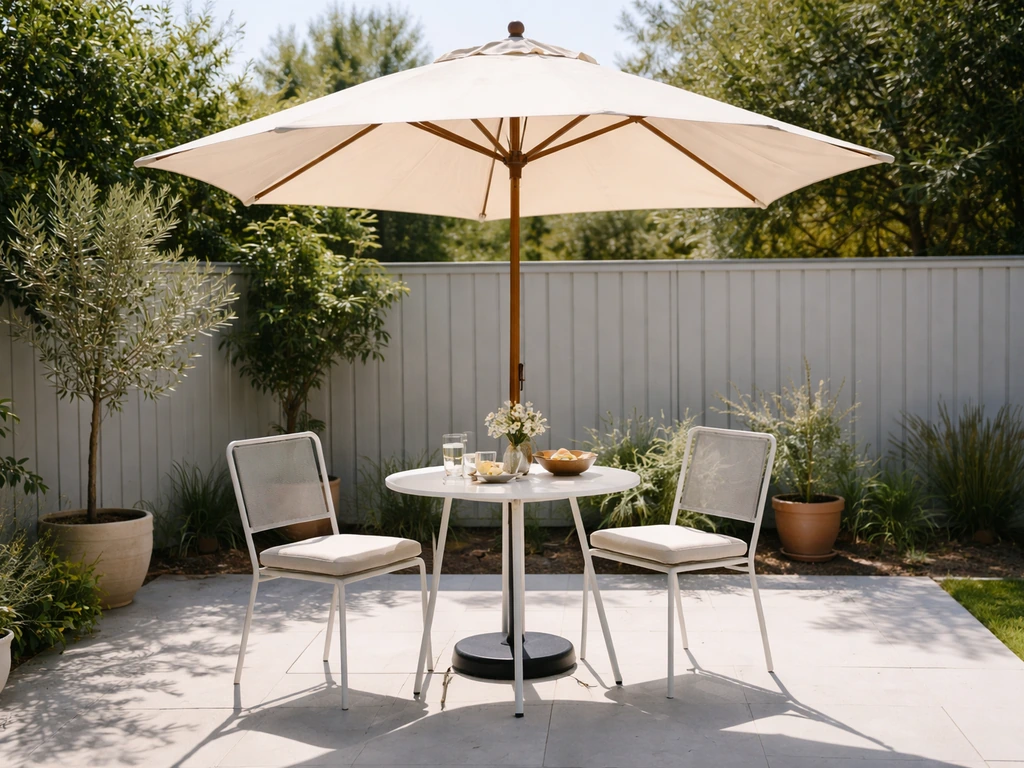
Most people spend between $50 and $300 on a patio umbrella, with a solid mid-range market umbrella landing around $80 to $150. You can often find patio umbrella availability updated today through major retailers, so checking current listings can help you get the model you want faster. Cantilever and offset styles cost more, typically $200 to $600, because of the engineering involved. If you want a large commercial-grade or premium cantilever setup with a base included, budget $400 to $800 or more. Those numbers are just for the umbrella itself. Factor in a base, cover, and any accessories, and your real out-of-pocket cost can easily run $100 to $400 higher depending on the style you pick.
How Much Are Patio Umbrellas? Price Ranges and Costs

Kent Lang
22 Jun 2026
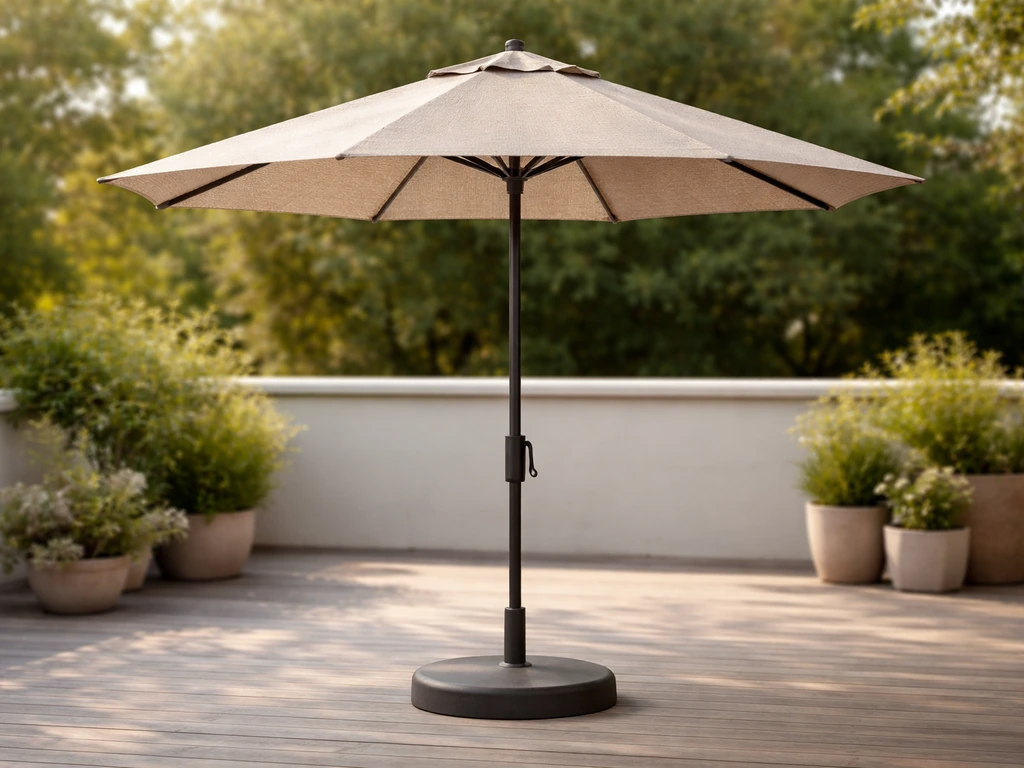
Patio umbrella price ranges: what most people actually pay
Here is a straightforward breakdown of what you can expect to spend at each tier in 2026, based on real retailer listings across Wayfair, Home Depot, Walmart, Target, Costco, Lowe's, and Best Buy.
| Price Tier | Typical Price Range | What You Get |
|---|---|---|
| Entry-level | $30–$80 | Basic 6–7.5 ft polyester canopy, steel or basic aluminum pole, push-open, no tilt, minimal UV protection |
| Mid-range | $80–$250 | 9 ft market umbrella, aluminum or fiberglass-ribbed frame, olefin or solution-dyed fabric, crank lift, push or collar tilt, UPF 50+ |
| Upper mid-range | $250–$500 | 11 ft offset or cantilever, aluminum frame, fade-resistant fabric, 360-degree rotation, crank or hand-wheel open, may include base |
| Premium | $500–$1,000+ | Large cantilever (11–13 ft+), heavy-duty frame, commercial-grade fabric, full 360 rotation, built-in lighting options, base often included |
A good example of the mid-range sweet spot: a California Umbrella 9 ft aluminum push-tilt model with olefin fabric at Home Depot, or a similar Threshold 9-foot market umbrella at Target. Both land in the $100 to $180 range and give you real features without overpaying. At the premium end, something like the SunVilla 13 ft round 3-tier cantilever at Costco represents the kind of value you can find if you time your purchase right. If you want to see what Costco currently carries, it can be a useful comparison point as you price out similar patio umbrella options does costco have patio umbrellas.
Why the price varies so much: the factors that really matter
Size
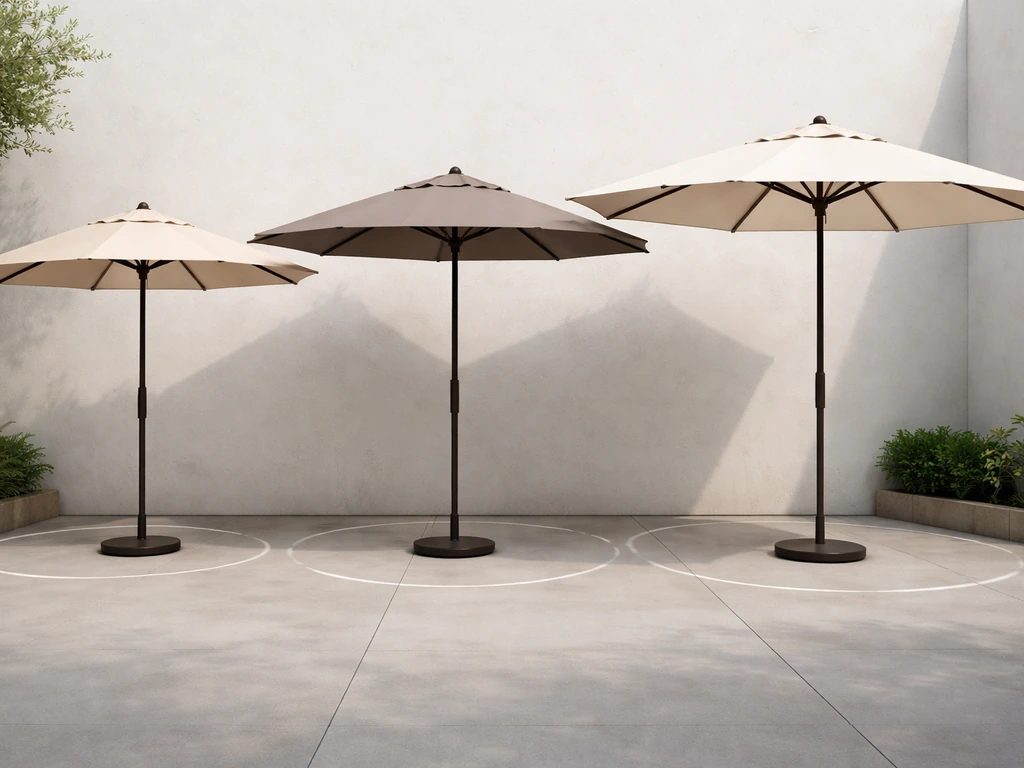
This is the single biggest price driver. A 7.5 ft umbrella uses significantly less material than a 9 ft one, and a 9 ft costs meaningfully less than an 11 or 13 ft model. For a standard 4-person dining table, a 9 ft canopy is usually the right call. For a larger seating area or a spot where you want side-coverage rather than overhead coverage, you move into 11 ft territory and the price jumps accordingly.
Frame material and construction
Steel poles are cheap but rust. Aluminum poles resist rust but vary in wall thickness and quality. Fiberglass ribs cost more than steel ribs but flex rather than snap in wind, which is a real durability advantage. Premium cantilever models use heavy-gauge aluminum or powder-coated steel arms with geared or pulley-based opening systems. The ASTA Cantilever Umbrella manual for the AG65 includes safety guidance and context around protection and shade use alongside ASTA wind rating concepts for cantilever umbrellas. A Wayfair listing for the Latitude Run 9 ft 3-tier olefin umbrella specifically calls out fiberglass ribs and rust-resistant materials as selling points, and that is exactly the kind of construction detail worth checking before you buy.
Canopy fabric
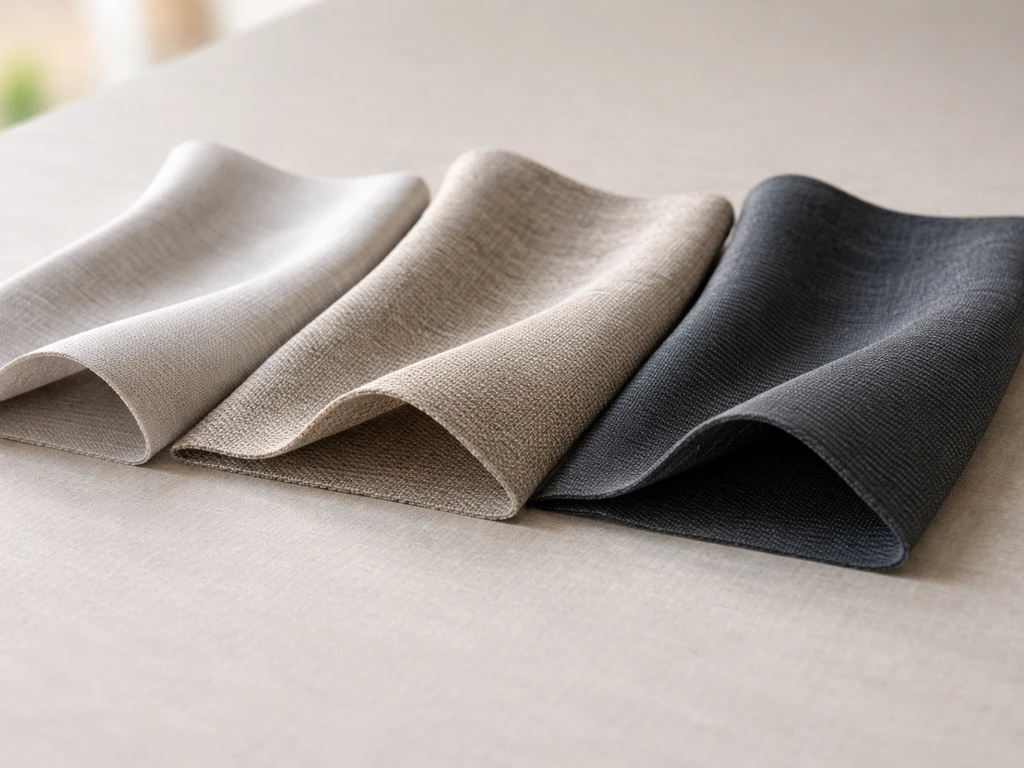
Standard polyester is the cheapest option and fades the fastest. Olefin (also called polypropylene) is the step up you'll find on most mid-range umbrellas. It's solution-dyed, meaning the color goes all the way through the fiber rather than sitting on the surface, so it holds up much better against UV degradation. Solution-dyed acrylic (like Sunbrella) is the top tier: extremely fade-resistant, mold-resistant, and worth the premium if the umbrella will be out in direct sun for years.
UPF 50+ fabrics block at least 98% of UV rays, which matters both for fabric longevity and for the people sitting under it. Most mid-range and higher umbrellas now advertise UPF 50+, but it's worth confirming in the specs rather than trusting the packaging alone.
Wind resistance
This is where a lot of buyers get surprised. A Lowe's instruction manual for an 11 ft patio umbrella explicitly states: never open or operate this umbrella in wind conditions greater than 5 mph. That is not a typo. Most residential patio umbrellas are not designed to stay open in any meaningful wind. Vented canopies (with a second tier or vent at the top) reduce uplift by letting air escape, which adds some wind tolerance, but no standard residential umbrella is truly windproof. Fiberglass ribs flex instead of breaking, which helps in brief gusts. If you live somewhere consistently windy or coastal, this matters more than any other spec.
Market vs cantilever vs offset: which style fits your budget and space
These three terms get used somewhat interchangeably in retail listings, so here is what they actually mean and what each costs.
| Style | How It Works | Typical Size | Price Range (umbrella only) | Best For |
|---|---|---|---|---|
| Market (center-pole) | Pole goes through the center of your table or into a freestanding base | 7.5–11 ft | $50–$250 | Dining tables, budget shoppers, simple setups |
| Offset (side-pole) | Pole is off to one side, arm extends over the coverage area | 9–11 ft | $150–$500 | Lounge chairs, sectionals, areas where a center pole is in the way |
| Cantilever | Pole is fully to the side with a horizontal or angled arm; often rotates 360° | 10–13+ ft | $250–$800+ | Large patios, maximum flexibility, premium setups |
Market umbrellas are the most common and the best value for most people. If you want to buy quickly, look for who has patio umbrellas in stock at retailers that list current availability for your size and style. If you have a table with a standard umbrella hole, start here. Offset umbrellas make sense when you have a seating area without a table hole, or when the arm placement of a cantilever feels like overkill.
True cantilever models, like the Purple Leaf 11 ft octagon at Best Buy or Lowe's, or the Arlmont & Co. Furio 11 ft offset cantilever on Wayfair, offer the most flexibility but cost the most and need the heaviest bases. The Purple Leaf listings often include a base in the bundle, which affects the sticker price but can actually represent good value compared to buying separately.
Budget for more than just the umbrella
Bases: the cost most people forget
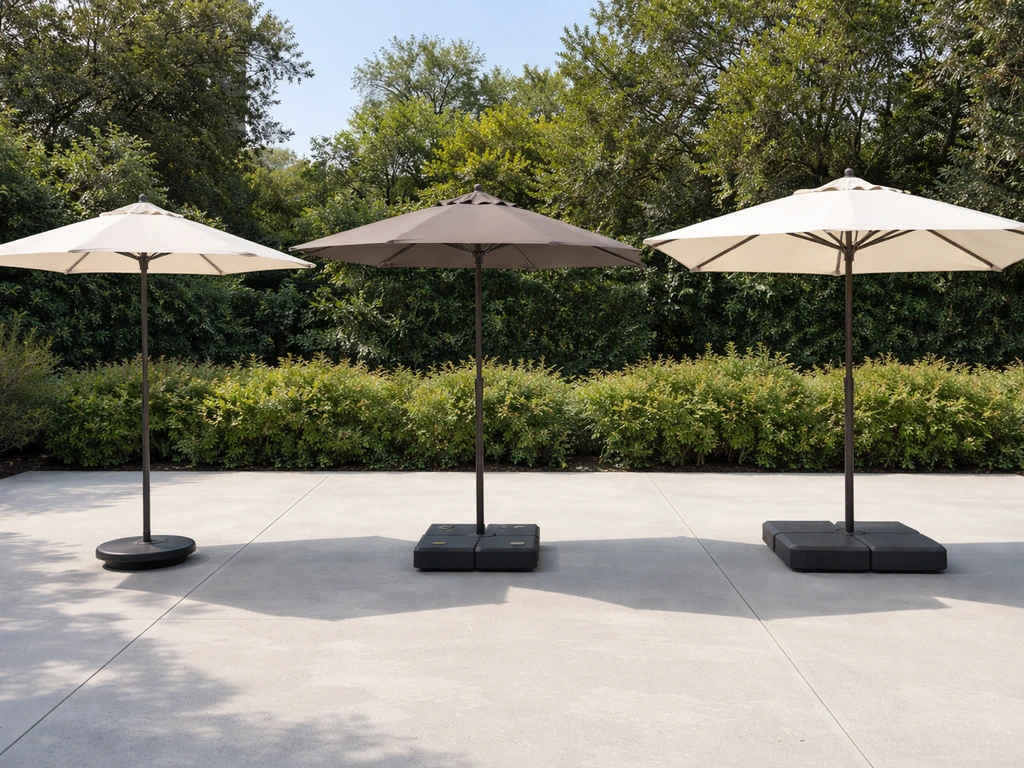
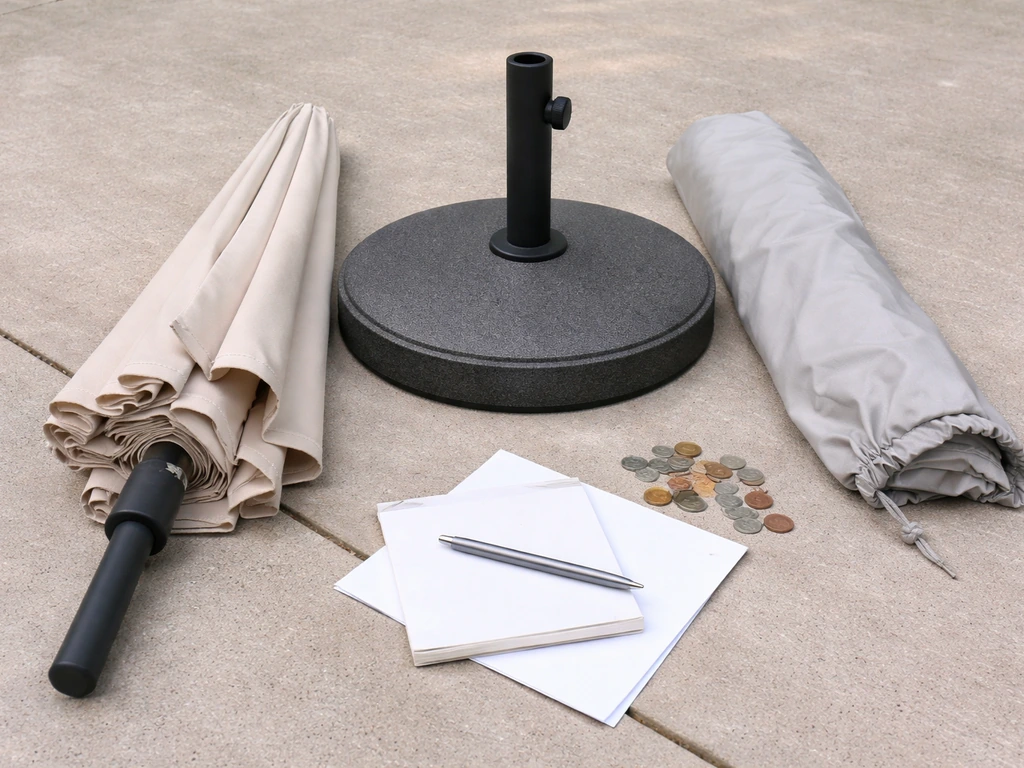
A market umbrella needs a base if it is not going through a table. For a standard 9 ft umbrella, a good rule of thumb from outdoor gear retailers operating in windy climates like Colorado is at least 75 to 100 pounds of base weight. Budget $30 to $80 for a decent weighted base for a market umbrella. For cantilever and offset umbrellas, the required base weight jumps dramatically.
Fillable bases designed for cantilever use, like the Purple Leaf water-and-sand fill base listed at Target, can reach up to 200 pounds when fully filled. For example, the WebstaurantStore “Cross Base for Cantilever Umbrella” spec sheet lists dimensions of [39 x 39 inches](https://www. webstaurantstore. com/documents/specsheets/crossbaseforcantileverumbrella.
pdf) and specifies a spigot height of 4. 125 inches, along with the base weight. Coolaroo's heavy-duty fillable cantilever base uses four 51x51 cm sections filled with sand or water to reach similar stability. These larger bases run $80 to $200 on their own, and skipping a proper base is the number one reason cantilever umbrellas tip over and break.
Covers
A cover extends the life of your canopy significantly by protecting against UV exposure, bird droppings, and mildew when the umbrella is closed. Expect to pay $25 to $75 for a decent cover. Purpose-built covers for cantilever umbrellas, which have an unusual shape, tend to be more expensive. A specialty cantilever umbrella cover like the AKZP model from Peters Billiards runs around $72. For a standard market umbrella, a basic cover in the $25 to $40 range works fine.
Tilt mechanisms and lighting
Most mid-range and up umbrellas include a crank lift and some form of tilt, either a push-button or collar tilt. If a listing you are looking at does not mention tilt, assume it does not have it. That matters because being able to angle the canopy toward the afternoon sun is a practical daily feature, not just a nice-to-have.
If you are hunting for a deal, you can sometimes pair mid-range patio sun umbrellas with a promo offer like a coupon code to bring the price down afternoon sun. LED umbrella lights, either battery-powered strings that clip to the ribs or solar-powered integrated options, add $20 to $60 to your budget if purchased separately. Some higher-end models include lighting, so check the specs before buying an add-on.
Rough total cost by setup type
| Setup Type | Umbrella | Base | Cover | Estimated Total |
|---|---|---|---|---|
| Basic 9 ft market (table hole) | $80–$130 | $0 (table anchors it) | $25–$40 | $105–$170 |
| 9 ft market (freestanding base) | $80–$150 | $40–$80 | $25–$40 | $145–$270 |
| 11 ft offset/cantilever | $200–$400 | $100–$200 | $50–$75 | $350–$675 |
| 13 ft premium cantilever | $400–$700 | $150–$250 (or included) | $60–$80 | $610–$1,030 |
How to pick the right umbrella for your budget
Start by measuring your space. A 9 ft canopy covers roughly a 5 ft radius from the pole, which works for most standard dining tables. If your seating area is larger or you want overhang coverage on a lounger, move up to 11 ft. Do not buy based on the umbrella diameter alone. Check the coverage area the manufacturer lists and compare it to your actual furniture footprint.
Match your climate to your materials. If you are in a coastal area or anywhere with strong afternoon UV, skip the basic polyester. Olefin at minimum, solution-dyed acrylic if you can stretch the budget. Fiberglass ribs over steel if wind is a concern at all. For hot, sunny climates, UPF 50+ is non-negotiable as both a sun protection and a fabric longevity feature.
Think honestly about how much you want to deal with the base. Cantilever umbrellas look great but they require a serious base, take more setup effort, and are harder to move around once positioned. If you just want to put something up over your table and not think about it, a mid-range market umbrella with a crank, tilt, and olefin canopy is genuinely the smarter buy for most households. A quick way to narrow down options is to shop today’s patio umbrellas with your desired size, materials, and wind tolerance in mind. Save the cantilever budget for a larger patio where side-post coverage actually solves a real problem.
- Under $150 total budget: A 9 ft market umbrella with olefin canopy and crank tilt, placed in a table hole. Skip the separate base and cover for now.
- $150–$300 total budget: Same umbrella plus a proper weighted base (75–100 lbs) and a cover. This is the most common and practical homeowner setup.
- $300–$600 total budget: An 11 ft offset or entry-level cantilever with a fillable base included in the bundle. Look for fiberglass ribs and vented canopy.
- $600+ total budget: A 13 ft premium cantilever with full 360-degree rotation, heavy-duty base, and quality fabric. Only worth it if you have the space and will use the flexibility.
Where to buy and how to time it right
In late June 2026, you are right at the start of summer clearance season. Retailers like Walmart, Target, Home Depot, and Lowe's typically mark down patio furniture and umbrellas starting mid-summer, with the deepest cuts in August and September. If you need something this weekend, those four stores plus Costco are the best bets for same-day pickup. If you can wait a few weeks, the same umbrella you are looking at today will likely be 20 to 40 percent cheaper by August. The sibling topics on this site covering where to find umbrellas in stock today, who has sales right now, and same-day pickup options are worth checking if timing or local availability matters to you.
For online purchases, Wayfair consistently has a wide selection and frequent site-wide sales. The downside is that you cannot check the fabric feel or pole sturdiness before it arrives. Home Depot and Lowe's give you the option to buy online and pick up in-store, which is useful if you want to see it in person first. Costco is a solid source for large cantilever models, often bundled with accessories at a price that beats buying components separately.
One thing to watch for in retailer listings: a low sticker price on a cantilever umbrella that does not include a base. A $199 cantilever umbrella that needs a $150 base is not actually a budget buy. Read the product description carefully, check what is and is not included, and compare the total landed cost rather than the headline price.
The best-value setups are usually the ones where a retailer bundles the base into the price, like some of the Purple Leaf and SunVilla configurations, even if the sticker price looks higher at first glance. You can often find patio umbrellas at Walmart, but availability and bundle details depend on the specific model and season retailer bundles the base into the price.
FAQ
Are the prices for patio umbrellas just for the canopy, or does the base cost extra?
Most headline prices cover the umbrella frame and canopy only. If it is a market umbrella, you usually need a separate weighted base (often $30 to $80). For cantilever or offset units, bases are frequently $80 to $200 or more, so always check what is included before comparing two products by sticker price.
How much should I budget for a complete 9 ft umbrella setup for a dining table?
A realistic all-in budget is typically $150 to $350 total, depending on fabric tier and whether you buy a weighted base and cover. If you choose mid-range olefin, add a compatible base and a $25 to $40 cover, and you will usually land in that range.
What is the cheapest patio umbrella I can buy that still won’t fade quickly?
Avoid polyester-only options if your umbrella will sit in strong sun. For better value, budget for solution-dyed olefin (commonly mid-range) or solution-dyed acrylic if you want maximum fade resistance. The extra fabric cost is usually smaller than replacing a faded canopy next summer.
Do vented umbrellas cost more, and do they really handle wind better?
Vented or double-tier designs can cost more, but the improvement is mainly reduced uplift. They are still not meant to be left open in strong wind. If your area sees gusts, prioritize fiberglass ribs and a stable base over relying on ventilation alone.
What base weight should I use if I want to keep the umbrella in place most of the season?
For a standard 9 ft market umbrella, a practical rule is at least 75 to 100 pounds of base weight. For cantilever or offset models, base requirements can be dramatically higher (often up to around 200 pounds when properly filled), because tipping risk increases with the overhang.
How do I tell if a listing’s “low price” is a trap?
Look for whether the base is included and whether the umbrella is market vs cantilever vs offset. A low cantilever price is often paired with an excluded base, so compare the total of umbrella plus base plus any required cover designed for that shape.
Does a larger umbrella diameter always mean proportionally higher cost?
Not always proportionally, but canopy size is still one of the biggest drivers. Moving from 7.5 ft to 9 ft usually costs more mainly because of added materials, while jumping to 11 ft or 13 ft can increase price faster due to size, arm length, and the need for heavier bases in many setups.
Should I buy a cover even if I store the umbrella under a roof?
Yes, if it stays outdoors even occasionally. A cover helps with UV exposure and also protects against mildew and bird droppings when the umbrella is closed. Just make sure the cover matches the umbrella type, especially for cantilever models with unusual shapes.
Are crank and tilt features worth paying for?
They are often worth it for daily use. Without tilt, you may not be able to redirect shade for afternoon sun, which can reduce how useful the umbrella is even if it is the right size. If a listing does not mention tilt, assume it is not included and plan accordingly.
If I want to add lights, what is a reasonable extra budget?
If lights are not included, plan roughly $20 to $60 for add-on lighting depending on whether it is battery clip-on strings or solar or integrated options. Check whether lights require separate power management, because some designs add complexity beyond the umbrella itself.
When is the best time to buy if I want patio umbrella deals?
Mid-summer through late summer clearance is usually the best window, with deeper discounts often in August and September. If you can wait a few weeks, the same model can drop by 20% to 40%, but availability for popular sizes can change quickly.
What should I measure before buying so I don’t end up with the wrong size?
Measure your furniture footprint and confirm the manufacturer’s stated coverage area, not just the umbrella diameter. A 9 ft canopy typically covers about a 5 ft radius from the pole, which may leave ends exposed on larger seating setups or loungers.