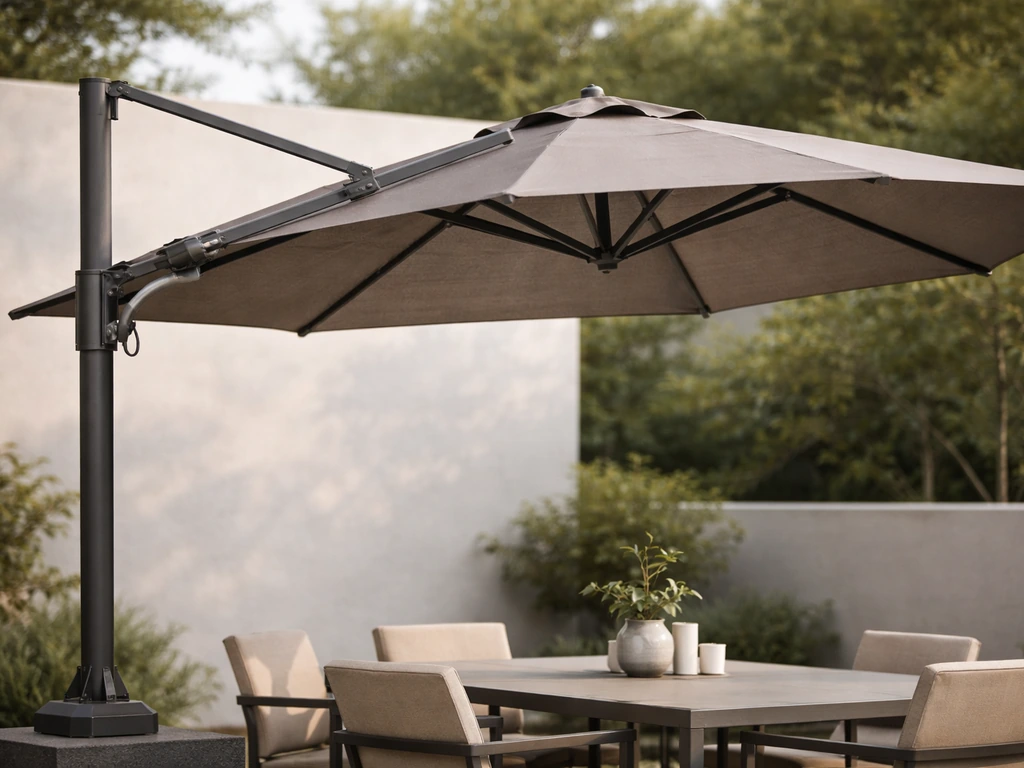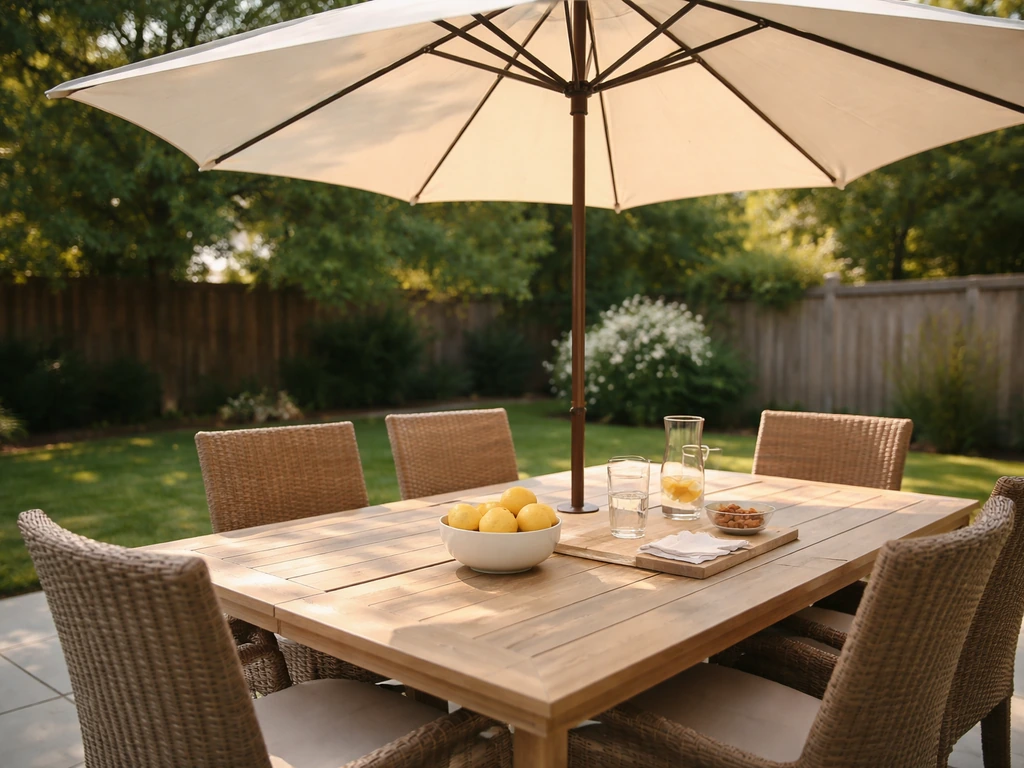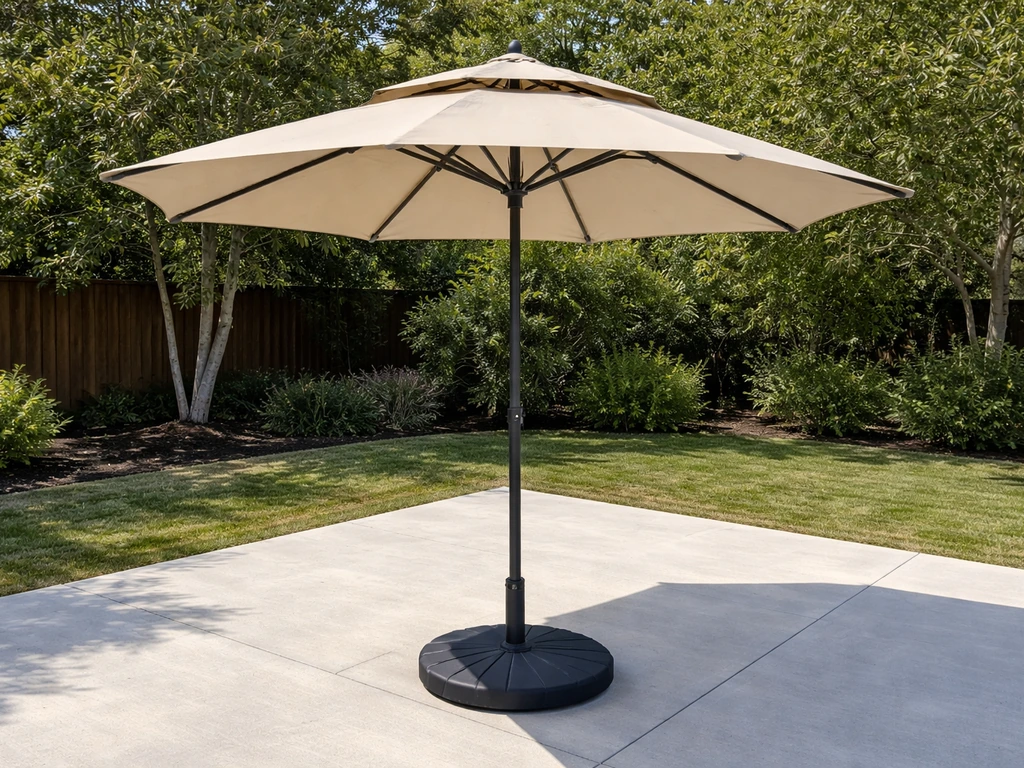
For most homeowners, the best patio umbrella brands right now are Treasure Garden, Frankford, Tuuci, and California Umbrella. Treasure Garden covers the widest range of styles and budgets, Frankford excels at cantilever engineering, Tuuci is the go-to for premium durability in harsh coastal or wind-exposed settings, and California Umbrella hits a reliable mid-range sweet spot. Which one is actually best for you depends on your umbrella style (cantilever, market, or offset), your patio size, how much wind and sun you deal with, and what you're willing to spend. If you want a high quality patio umbrella that performs year after year, match the style, materials, and warranty terms to your wind, sun, and budget.
Best Brand of Patio Umbrella: Top Picks by Style

Kent Lang
3 May 2026
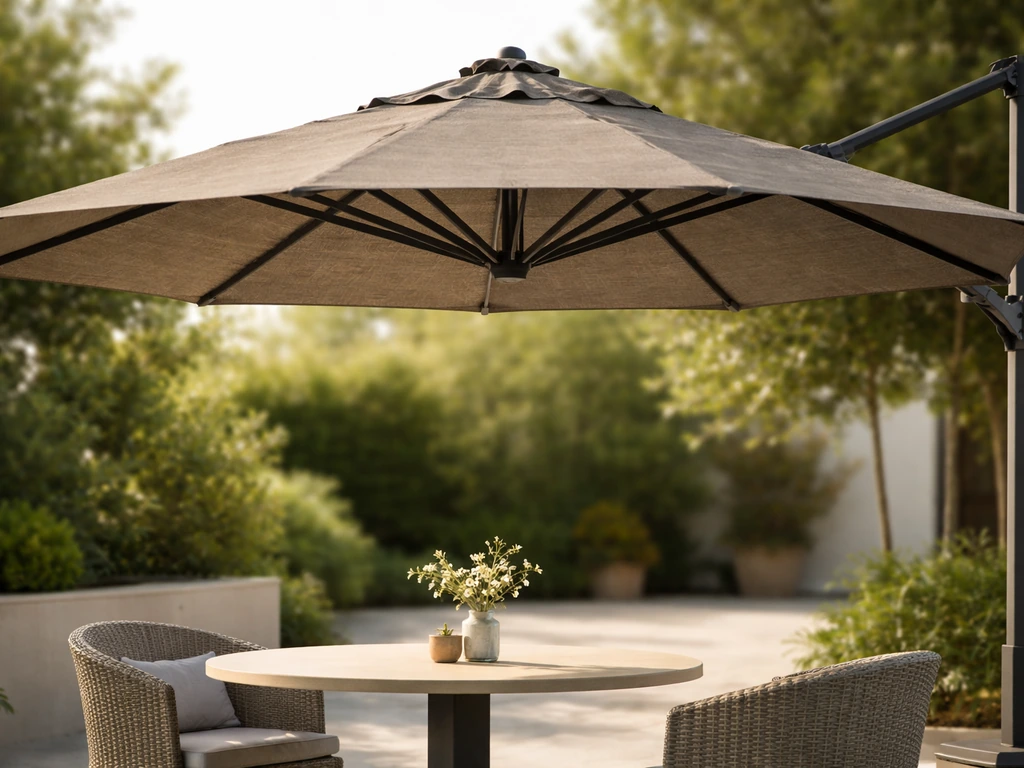
What 'best' actually means for a patio umbrella
Marketing language on outdoor furniture sites can make any umbrella sound bulletproof. Here's what to actually look for when you're trying to define quality for your situation.
- UV protection: Look for solution-dyed acrylic fabric (Sunbrella is the most recognized brand). The pigment goes all the way through the fiber, so it doesn't wash or fade off the surface. Sunbrella rates its fabrics using a colour fastness UV test at 1,000 hours of outdoor exposure, which gives you a real benchmark rather than a vague marketing claim.
- Wind resistance: No consumer-grade patio umbrella is truly windproof, and most major brands explicitly exclude wind damage from their warranties. What separates good brands from average ones is rib construction (fiberglass ribs flex without snapping where aluminum ribs can bend), pole diameter, and how well the canopy vents. Always close your umbrella if wind picks up past 20–25 mph.
- Frame durability: Powder-coated aluminum is the standard for corrosion resistance. If you're near a pool or coast, pay attention to how the powder coat is applied and what the warranty says about it. Frankford, for example, warrants its aluminum mast powder coat against chipping, peeling, and fading for 3 years, but explicitly notes that rust from salt/chloride exposure isn't covered unless you maintain the finish.
- Mechanism quality: Crank tilts, auto tilts, and push-button tilts vary a lot in how they hold up over seasons. Cheaper mechanisms strip or seize. The best brands use housing that protects the crank from UV and moisture.
- Warranty depth: A real warranty covers the frame, ribs, canopy seams, and finish. Treasure Garden's warranty breaks coverage down by component and fabric type, offering up to 5 years on Sunbrella and similar premium fabrics. A 1-year blanket warranty on everything is a red flag.
- Style fit: The best umbrella is one that actually works with your space, whether that's a center-pole market umbrella over a dining table or a cantilever that clears the table entirely and lets chairs move freely.
Top patio umbrella brands by category and use case
Here's how the main brands stack up when you sort them by where they genuinely perform best.
Treasure Garden
Treasure Garden is the most versatile brand in this space and probably the one most homeowners should start with. They make market, offset, and cantilever umbrellas in sizes from 7.5 to 11 feet, using powder-coated aluminum frames and 100% solution-dyed acrylic fabrics with strong fade resistance. Their auto-tilt line is a standout for everyday usability since you can adjust sun angle without getting up. Warranty claims route through dealers, which matters if you're buying through a local retailer. Wind damage is explicitly excluded from their warranty, so this brand, like all the others here, is not the right choice if you plan to leave your umbrella open in gusty conditions unattended.
Frankford Umbrellas
Frankford is best known for its cantilever line, particularly the Aurora, which uses fiberglass ribs and powder-coated aluminum construction. Fiberglass ribs are genuinely better in wind than aluminum because they flex rather than permanently deform. Their base guidance is unusually thorough: they publish a dedicated base guide, specify minimum installation area (at least 40 inches in diameter for the Aurora's base), and are clear that using the wrong anchoring method can void your warranty. If you want a cantilever umbrella and you're trying to make a practical, well-engineered choice without going full commercial-grade, Frankford is where I'd point you.
Tuuci
Tuuci is the premium tier, designed for commercial environments, coastal settings, and buyers who genuinely need long-term durability over cost savings. Their fabrics use UV-stable pigments and, for wind-driven water environments like docks and boardwalks, include premium Sunbrella options with a polyurethane undercoating for water resistance. Their frame finishes, including the proprietary Aluma-TEAK finish, are covered under a 5-year warranty, and some cantilever collections carry up to 15-year structural coverage. Labor for warranty repairs is not included, worth knowing upfront. If you have a high-end outdoor space and you're tired of replacing umbrellas every few years, Tuuci earns its price. If you're treating your patio as a premium living area, choosing the best high-end patio umbrella for wind, sun, and shade coverage is the fastest way to avoid replacement cycles high-end outdoor space.
California Umbrella
California Umbrella is the dependable mid-range pick. They offer solid construction at accessible price points and are widely available. Warranty coverage is component-specific: umbrella frames get 1 year, fiberglass ribs get 3 years. The warranty service process requires an RMA request with proof of purchase, which is standard but worth noting. If you need a reliable market or center-pole umbrella for a covered patio or a spot with moderate sun and wind, California Umbrella delivers without overcharging.
Cantilever vs. market vs. offset: which brands do each best
These three umbrella styles solve different problems, and not every brand is equally strong across all three.
| Style | Best Brands | Why It Works | Best For |
|---|---|---|---|
| Market (center-pole) | Treasure Garden, California Umbrella | Wide size range, strong fabric options, auto-tilt mechanisms | Dining tables, moderate sun, everyday residential use |
| Cantilever / Offset | Frankford (Aurora), Tuuci, Treasure Garden | Fiberglass ribs, robust base systems, engineered arm geometry | Spaces where a center pole would block seating or movement |
| Premium / Coastal | Tuuci | UV-stable pigments, polyurethane undercoating, long structural warranties | Docks, beachfront, pools, high-UV or wind-exposed environments |
If you're shopping for the best offset patio umbrella specifically, cantilever and offset models overlap significantly in how they're engineered and marketed. The key difference is the arm geometry and rotation range. Frankford's Aurora and Tuuci's Ocean Master MAX Manta are strong options if you want a cantilever that rotates 360 degrees and can cover a larger seating zone. Treasure Garden's cantilever line gives you more entry-level price flexibility. For buyers who want more detail on offset-specific comparisons, digging into dedicated offset and cantilever buying guides alongside this one will give you a fuller picture. For more guidance on choosing and comparing offset models, this article on the best offset patio umbrellas can help you narrow down the right fit.
What to look for in any brand or model: the real buying checklist
Fabric
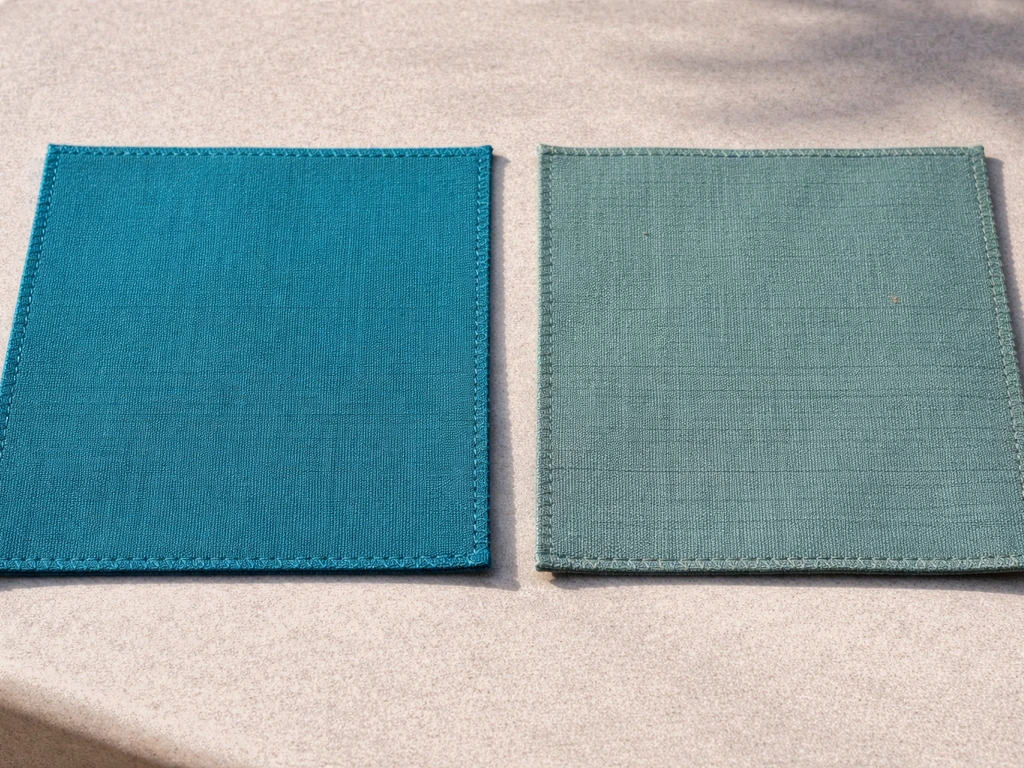
The fabric is the part that fades, mildews, and wears out first if you choose poorly. Solution-dyed acrylic, whether it's branded Sunbrella, Outdura, or Bella-Dura, is the standard you want to match. The dye runs through the fiber, not just the surface, so UV and washing don't strip it. Treasure Garden explicitly calls out 100% solution-dyed acrylic in their fabric guides and notes you should re-apply a water repellent treatment like 303 Hi-Tech Fabric Guard periodically to maintain performance. That's honest maintenance advice most brands gloss over.
Frame and ribs
Powder-coated aluminum is the right choice for most residential buyers: it's light, corrosion-resistant, and holds up well away from saltwater. Near pools or coastal environments, check how the powder coat is warranted and what maintenance voids that coverage. Fiberglass ribs are worth paying for if wind is a real concern on your property, since they return to shape after flexing where aluminum ribs can permanently deform.
Tilt and crank mechanisms
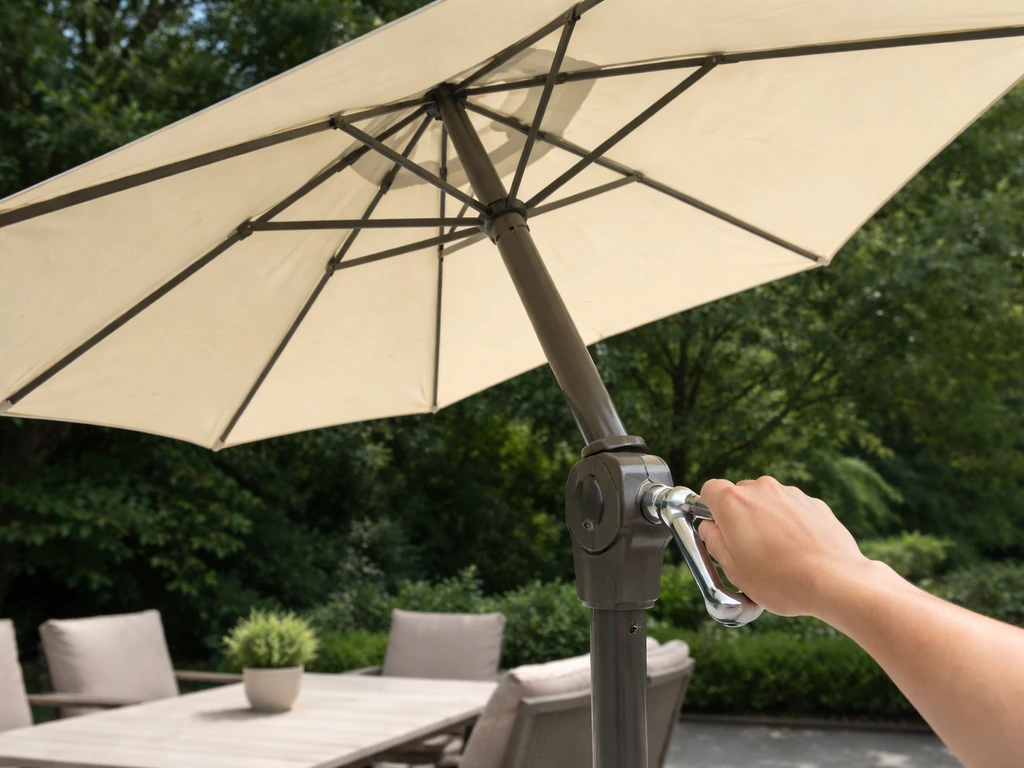
Auto-tilt (where you keep cranking past open to tilt the canopy) is the most convenient mechanism for daily use. Push-button tilt is common on mid-range models and works fine but can loosen over time. Avoid models where the tilt mechanism is purely plastic housing with no UV protection; these tend to crack and seize faster. Treasure Garden's auto-tilt line uses powder-coated aluminum throughout, which is the durability baseline you want.
Warranty: what good coverage actually looks like
A credible warranty names specific components and periods, not just a single blanket term. Treasure Garden covers powder coat finish, frame, ribs, finial, tilt, cord, crank handle, housing, canopy, and rib pocket seams during the warranty period, with up to 5 years on premium fabrics like Sunbrella. Tuuci offers 5 years on frame finishes and up to 15 years structural on select cantilever collections. California Umbrella is more limited: 1 year on frames, 3 years on fiberglass ribs. Any warranty from any brand will exclude wind damage, so read those exclusions before you assume you're covered.
Sizes, bases, and the stuff that actually determines whether your umbrella stays put
Getting the brand right is only half the job. If your base is too light or your umbrella is too large for your space, the best-engineered product in the world becomes a liability.
Sizing your umbrella to your table or space
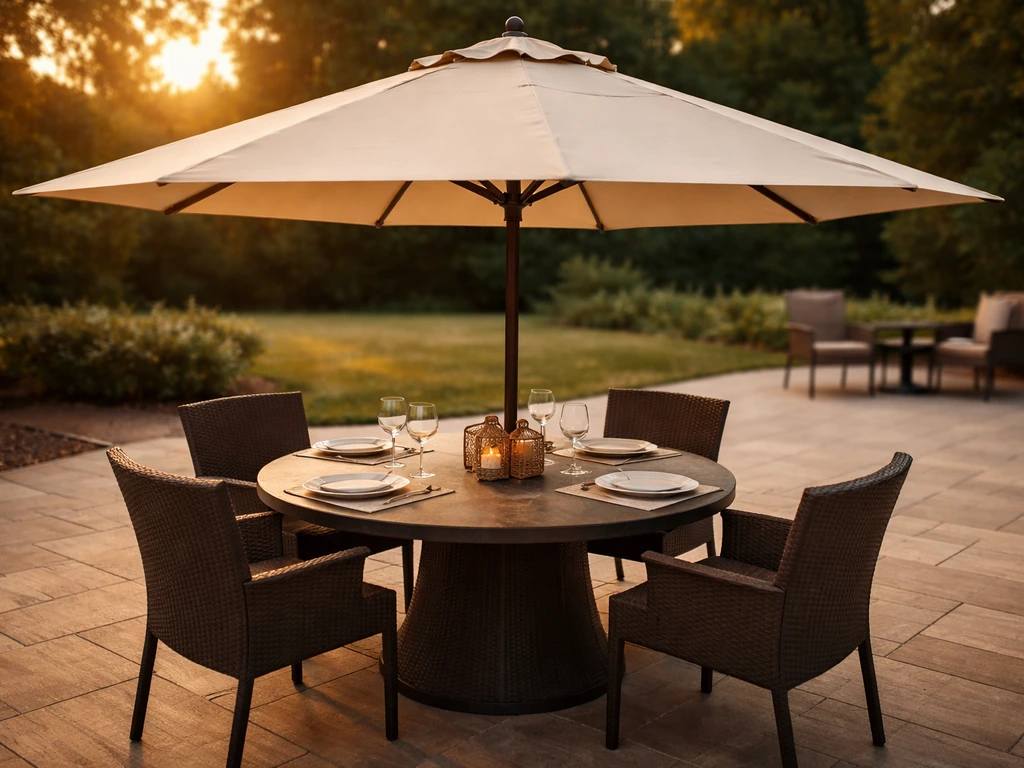
A good rule of thumb: your umbrella canopy should extend 2 feet beyond each side of your table. For a standard 4-person outdoor dining table (roughly 48 inches across), a 9-foot umbrella is typically the right call. For a larger 6-person table or a lounge area you want fully shaded, step up to 11 feet. Treasure Garden's cantilever range runs 7.5 to 11 feet, which covers the full spread of common residential patio sizes.
Base weight: the most underestimated spec
The rule from Umbrella Source is simple and worth memorizing: multiply your canopy width in feet by 10 to get minimum base weight in pounds. A 7.5-foot umbrella needs at least a 75-pound base. A 9-foot umbrella needs at least 90 pounds. For cantilever and offset models, you need considerably more because the canopy weight is off-center. Treasure Garden's 2026 catalog lists a minimum base weight of 400 pounds for certain cantilever bucket base configurations. That's not a typo. Cantilever umbrellas create significant lever forces on the base, and under-weighting the base is how they tip over and cause property damage or injury. Treasure Garden's cantilever assembly manuals explicitly warn that letting the umbrella flap in wind is a personal injury risk.
Installation space
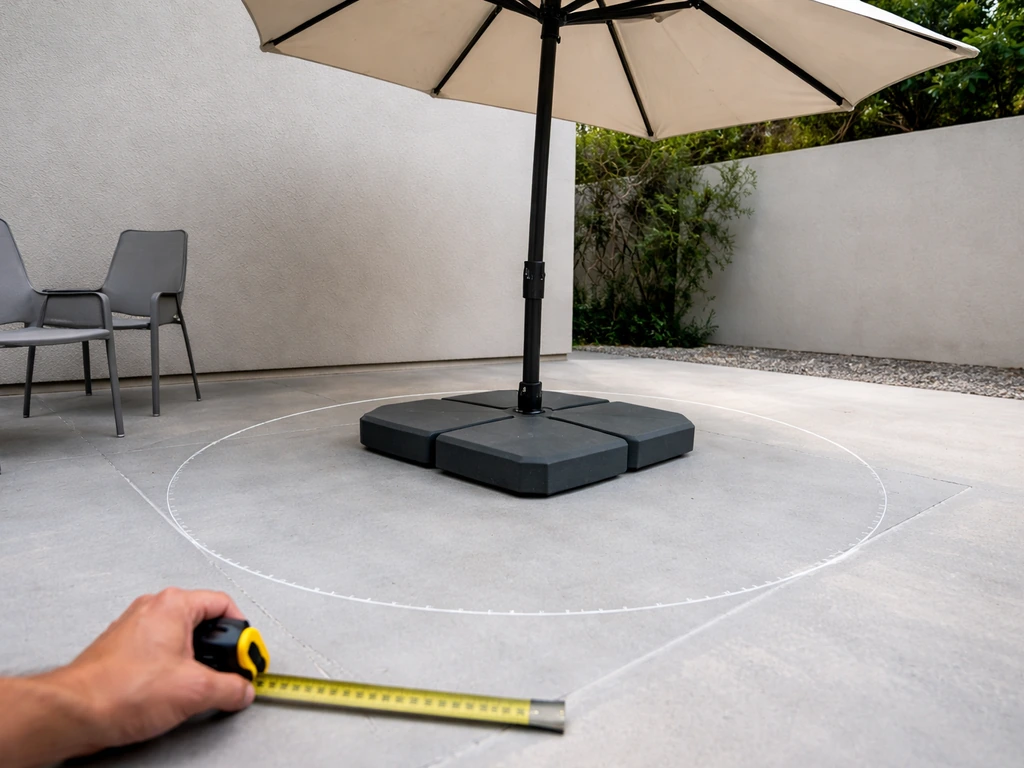
For freestanding umbrellas like the Frankford Aurora cantilever, you need enough clear space around the base. Frankford specifies at least a 40-inch diameter area for the base to sit properly. This matters more than people realize: cramped base placement on uneven surfaces leads to instability, and Frankford notes that using the wrong anchoring method can void warranty coverage entirely.
Budget vs. premium: what you trade off at each price point
You don't always need to spend premium money, but you should know what you're giving up when you save.
| Price Tier | Representative Brands | What You Get | What You Give Up |
|---|---|---|---|
| Budget (under $150) | Generic / Amazon brands | Polyester canopy, steel pole, basic crank | UV resistance, corrosion protection, meaningful warranty |
| Mid-range ($150–$400) | California Umbrella, Treasure Garden entry lines | Solution-dyed acrylic options, aluminum frames, 1–3 year warranty | Premium fabric tiers, fiberglass ribs, long-term structural coverage |
| Upper-mid ($400–$800) | Treasure Garden premium, Frankford | Fiberglass ribs, auto-tilt, powder-coated aluminum, 3–5 year warranty | Commercial-grade durability, coastal material upgrades |
| Premium ($800+) | Tuuci | UV-stable pigments, Aluma-TEAK finish, polyurethane undercoating, 5–15 year structural warranty | Lower upfront cost; this is the tier where you stop replacing umbrellas |
The honest trade-off at the budget end is fabric life. Polyester canopies fade visibly within one to two seasons in a sunny climate. If you're in a shaded spot or only use the umbrella occasionally, budget options are fine. If your umbrella is in direct sun for six or more hours a day from May through September, the step up to solution-dyed acrylic pays for itself quickly.
For buyers who want to explore what premium construction looks like in more detail, the distinctions between high-end and luxury patio umbrella options are worth reviewing alongside this guide, especially if you're deciding between Tuuci and a Treasure Garden top-tier line.
How to choose the right brand and model right now
Run through this quick decision sequence and you'll land on the right direction in under five minutes.
- Pick your style first. Do you need a center pole, or does it need to be out of the way? If you have a table with an umbrella hole, go market/center-pole. If you want the pole completely clear of the seating area, go cantilever or offset. This decision narrows your brand list immediately.
- Match size to your space. Measure your table or the zone you want shaded. Add 2 feet per side for coverage. That gives you your target canopy size: 7.5, 9, or 11 feet for most residential situations.
- Check your sun and wind exposure honestly. Full sun all day in a windy yard? Don't cheap out on fabric or ribs. Go solution-dyed acrylic and fiberglass ribs at minimum. Coastal or poolside? Tuuci is worth the premium. Moderate sun with low wind? California Umbrella or Treasure Garden mid-range handles it fine.
- Set your base before you buy the umbrella. Use the canopy-width-times-10 rule for market umbrellas. For cantilever and offset, budget for a substantially heavier base, often 200 to 400 pounds depending on the model. Factor this into your total cost.
- Match brand to budget and warranty expectations. Everyday use, moderate conditions, $200–$500 budget: Treasure Garden or California Umbrella. Cantilever focus with serious construction, $500–$800: Frankford Aurora line. Premium durability, coastal or high-UV, willing to invest $800 and up: Tuuci.
- Verify the warranty before purchasing. Check what components are named, what the period is per component, and confirm the exclusions (especially wind damage). If a brand won't tell you exactly what's covered, that tells you something.
If you're still deciding between a market and an offset umbrella and aren't sure which style fits your space, working through a dedicated offset comparison will help you nail that down before you commit to a brand. If you specifically want an offset model, use a dedicated buying guide to compare canopy size, crank coverage, and base weight so you get the best offset patio umbrella for your patio offset umbrella. The style choice and the brand choice work together, and getting the style wrong first makes even the best brand feel like a disappointment.
FAQ
Can I leave my patio umbrella open in windy weather and still be covered by warranty?
Yes. Most brands cover components, not overall performance, and nearly all exclude wind damage. If you want coverage after gusts, you still need to use the correct base weight, anchoring method, and closure habits (for example, closing during unattended high-wind periods), or your claim may be denied.
If I choose solution-dyed acrylic, will it also resist mildew and stains?
Do not assume “solution-dyed” automatically means mildew-safe or stain-proof. Even with fade resistance, you can still get mildew in humid shade if the umbrella stays wet. Plan to rinse off salt or pollen and keep fabric dry where possible, especially for coastal use.
What tilt or crank feature details should I look for to avoid breakage?
When you see “plastic housing” for tilt or crank parts, that usually indicates faster wear, especially under heat cycling. Prioritize tilt or crank housings that are described as metal or UV-protected and confirm the spare-part availability, since labor costs can be high if you have to replace a mechanism.
Do the base-weight rules apply the same way to cantilever and offset umbrellas?
Yes, the base matters more than the brand once you switch to cantilever or offset. For these styles, the correct base weight depends on lever forces and varies by model and bucket configuration, so follow the manual’s listed minimums instead of using only the general canopy-width rule.
How do warranty claims work if I bought through a retailer instead of directly from the brand?
An RMA process is a common requirement, but the bigger gotcha is what counts as proof of purchase and where coverage is handled. If you buy from a local dealer, confirm whether the dealer files claims on your behalf, and ask what information they need (order number, photos, serial/model).
What should I check for warranty validity when my umbrella is near a pool or saltwater?
If the umbrella is going to sit near a pool or salt air, check two things: whether the powder-coat finish has a specific corrosion warranty, and whether rinsing and cleaning practices are part of “maintenance” that keeps coverage valid. Aggressive cleaners or unapproved chemicals can sometimes void finish coverage.
Is auto-tilt always worth it, or are there situations where it’s a weak choice?
Yes. Auto-tilt is mainly about convenience, but the real quality check is how the tilt range is engineered and how it’s protected from grit. If your patio is sandy or coastal, look for sealed housings and simple, serviceable adjustment points.
How do I ensure the umbrella will shade the seats at the right times of day?
Don’t buy purely by diameter. Measure the viewing angle of the seating area, then confirm the umbrella can rotate or tilt enough to cover the times you actually use the space (morning vs late afternoon). A 9-foot umbrella can still shade poorly if the rotation range is limited.
Do covers replace good wind practices, or do I still need to close the umbrella?
A practical test is to look for wind-lock or closure guidance in the manual, plus any instruction about securing during storms. If the brand’s guidance still discourages leaving it open in gusts, plan to close it and consider a protective cover only as supplemental protection, not a substitute for safe closure.
How should I compare fabric warranties if some brands require re-treatment for best performance?
If you’re deciding between brands with different fabric warranties, weigh both fade coverage and water-repellent upkeep. Solution-dyed acrylic helps with fading, but water repellency often needs periodic re-treatment, and neglecting that can make you think the “fabric warranty” failed.