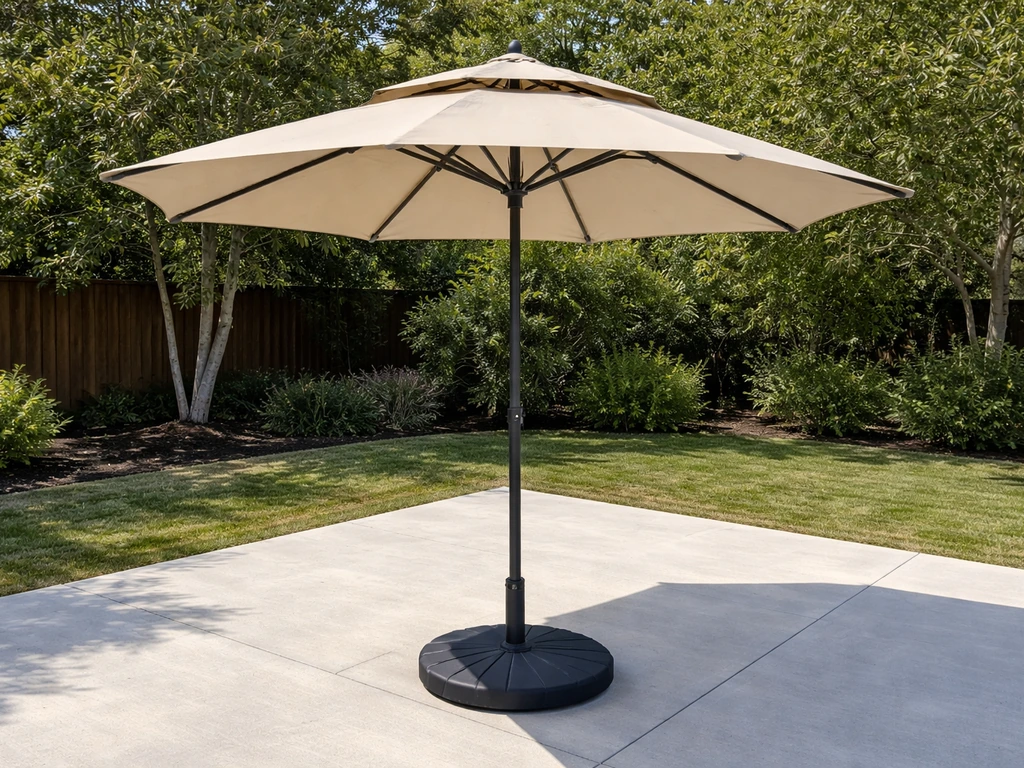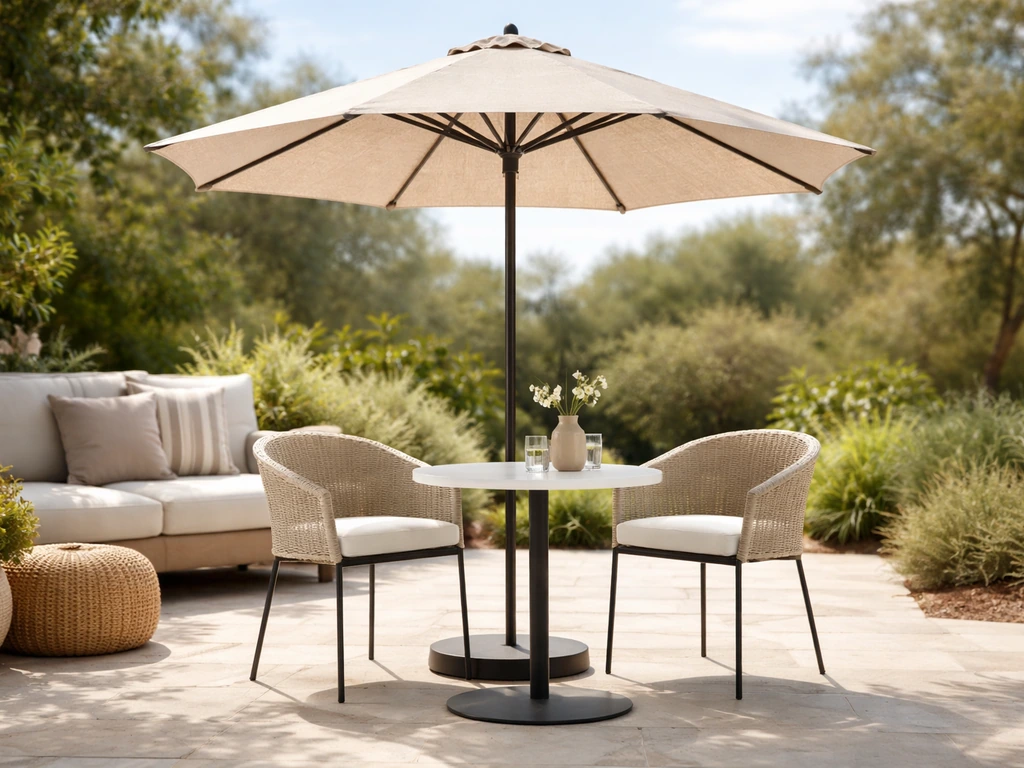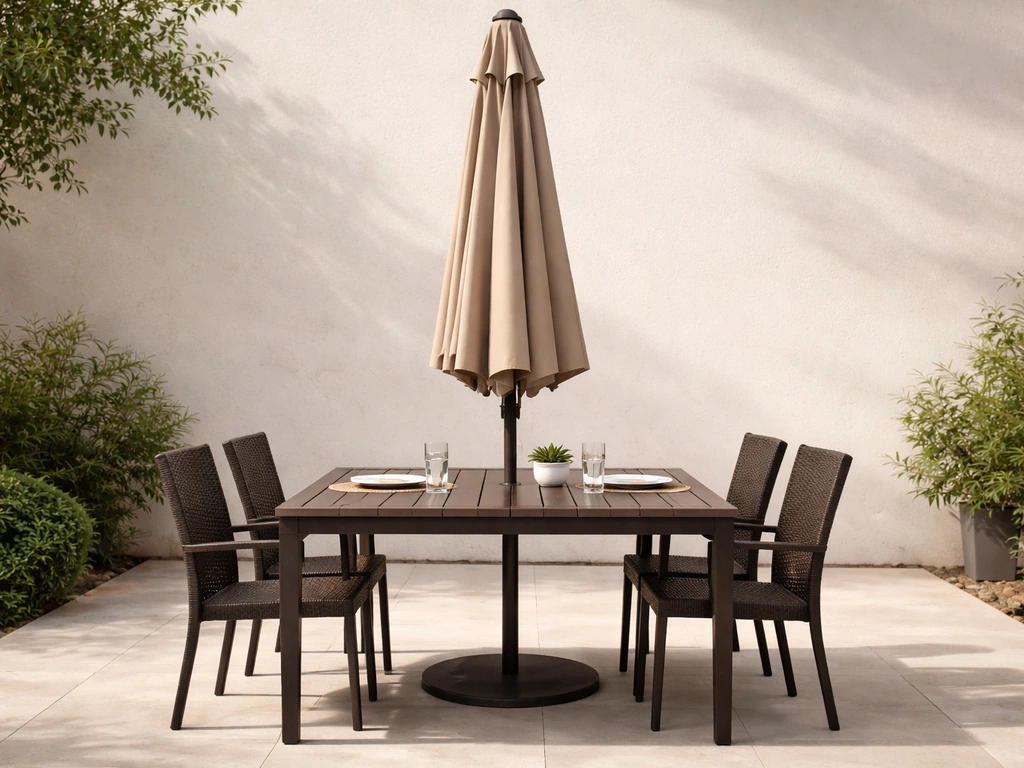
A high quality patio umbrella has an aluminum or rust-resistant steel frame with 8 or more ribs, a solution-dyed acrylic or high-GSM polyester canopy (aim for at least 200–240 g/m²), powder-coated hardware at 60–120 microns thick, and a base heavy enough to match the umbrella size (roughly 75 lbs minimum for a 9–10 ft market umbrella, around 180 lbs for a cantilever). Those aren't arbitrary numbers, they're the measurable differences between an umbrella that survives three seasons and one that's in a dumpster after the first summer storm.
High Quality Patio Umbrella Guide: How to Choose a Cantilever

Kent Lang
30 Apr 2026
What 'high quality' actually means for a patio umbrella
Marketing copy on umbrella listings is full of words like 'premium,' 'heavy-duty,' and 'commercial-grade,' but none of those terms have enforced definitions. What you actually want to look for are testable, physical characteristics. High quality means the frame won't corrode, the canopy won't bleach out or delaminate, the opening mechanism won't jam or snap, and the whole thing stays put in a real gust rather than becoming a sail.
ASTM F3512-21 is the voluntary standard that covers wind safety and durability testing for market-style umbrellas, and it evaluates both the umbrella and its anchor system together. That's worth knowing because it tells you that quality isn't just the canopy or just the pole, it's the complete system. An umbrella that passes wind-safety testing without an adequate base is still dangerous. ASTM notes directly that umbrellas can be broken, dislodged, or become airborne if improperly designed, installed, or maintained. That framing should shape how you shop.
Key features to look for in frame, fabric, and hardware
Frame and rib construction
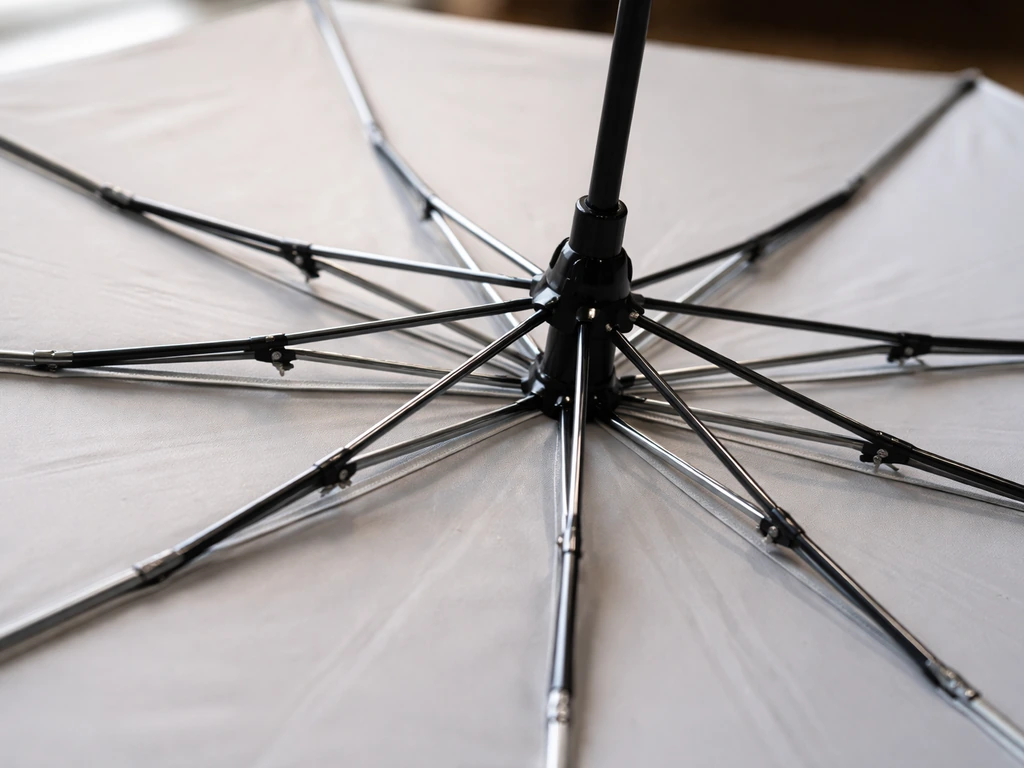
The frame is the skeleton, and the ribs are what hold the canopy under load. Eight ribs is a practical minimum for a quality umbrella, more ribs mean more evenly distributed tension and less flapping or inverting in wind. Look for aluminum-alloy frames for the best strength-to-weight ratio, especially on cantilever models where the canopy arm extends out from a single pole. On market umbrellas, fiberglass ribs are worth paying for because they flex under wind pressure instead of snapping.
Canopy fabric weight and UV protection
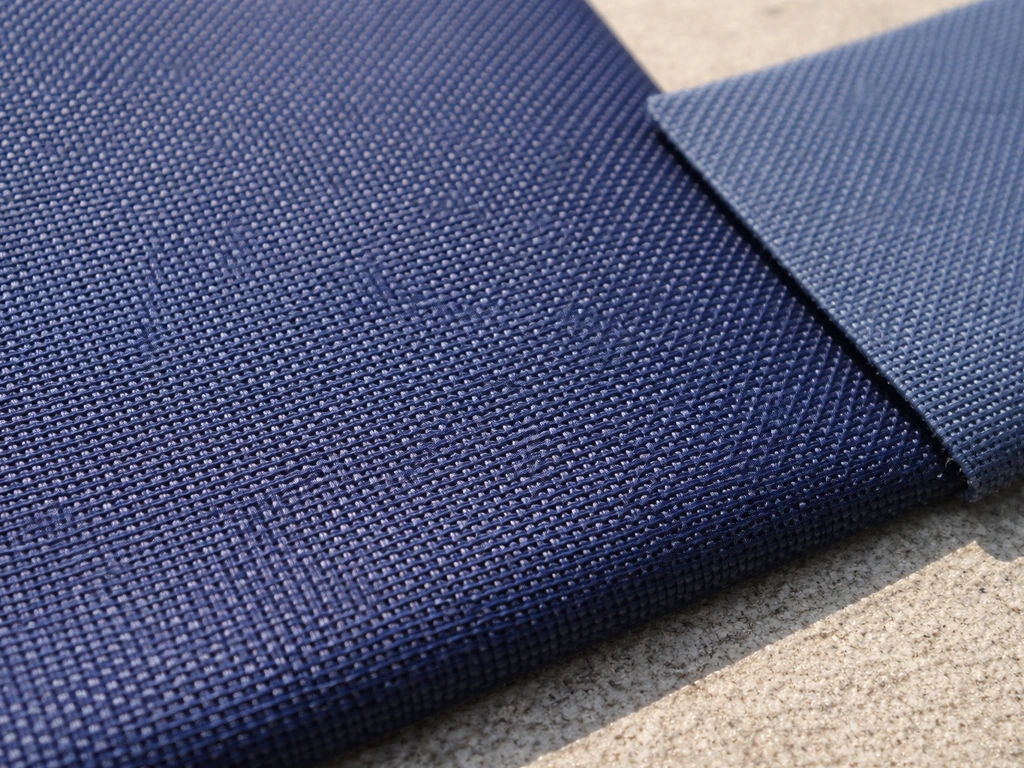
Canopy fabric is where budget umbrellas cut corners most aggressively. Solution-dyed acrylic (Sunbrella is the best-known brand) is the gold standard: color is added to the yarn before the fiber is made, which means UV rays have nothing to bleach out. That's why quality acrylic fabrics can claim roughly 98% UV protection and genuinely resist fading year after year. Solution-dyed polyester is a more affordable alternative that still outperforms plain polyester or nylon, but it won't hold color quite as long under direct sun exposure. For canopy weight, target 200–240 g/m² or higher. Lighter fabrics stretch, sag, and wear out faster.
Water resistance and seam quality
Water resistance is tested using AATCC 22, which measures how quickly water beads and runs off the fabric surface. Look for fabrics that pass a 10-minute spray test. But the coating alone isn't enough if the seams are weak, water infiltrates through needle holes first. Quality umbrellas use double-stitched or heat-welded seams, and the thread should be UV-stabilized polyester so it doesn't break down before the fabric does. Seam tape on the inside is a bonus sign of real build quality.
Hardware, pole, and opening mechanism
Powder coating on the frame and hardware is your primary corrosion defense. A proper outdoor powder coat runs 60–120 microns thick, thin coatings chip, rust starts, and from there it spreads fast. Corrosion resistance is formally tested using ASTM B117 (salt spray/fog testing), so if a manufacturer references that standard in their specs, it's a meaningful signal. For the opening mechanism, crank-lift systems beat push-button pulley systems for longevity. The crank should turn smoothly with no grinding, and the locking collar at the top should click firmly into place.
Wind resistance and stability: bases, anchoring, and canopy design
Wind is the reason most patio umbrellas fail prematurely. A canopy that's not anchored properly, or an umbrella whose base is undersized, will eventually tip, invert, or take flight. The CPSC has tracked this as a real safety concern, which is why ASTM F3512-21 addresses the anchor system as part of the wind-safety evaluation, not just the umbrella itself.
Base weight requirements
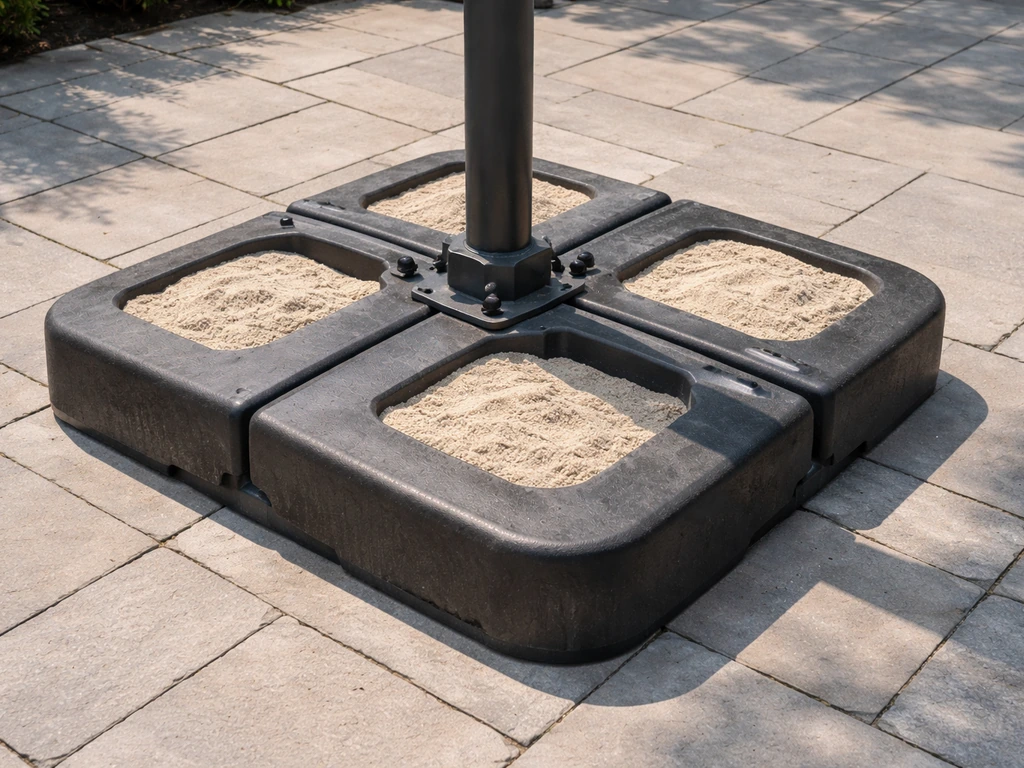
The rule of thumb used by most outdoor furniture professionals is a minimum of 75 lbs for a 9–10 ft market umbrella, and approximately 180 lbs for a cantilever umbrella of the same canopy size. Cantilevers need dramatically more base weight because the arm extending outward creates significant torque, the physics are similar to holding a weight at arm's length versus close to your body. Some manufacturers, like Kozyard with their 11 ft cantilever, recommend counterweights around 180 lbs specifically in their product listings. If you're shopping for a cantilever and the recommended base weight isn't stated, that's a red flag.
Anchoring options for cantilever umbrellas
Portable ballast bases (typically filled with sand or water) work for renters or people who need to move the umbrella seasonally, but they're the lowest-stability option. Bolting the base to a concrete pad or setting it in an in-ground footing is far more secure and is the right move for any cantilever over 10 ft or in a consistently windy location. A commercial cantilever is only as stable as its anchor, that's not just a slogan, it's a structural reality.
Vented canopies and tilt mechanisms
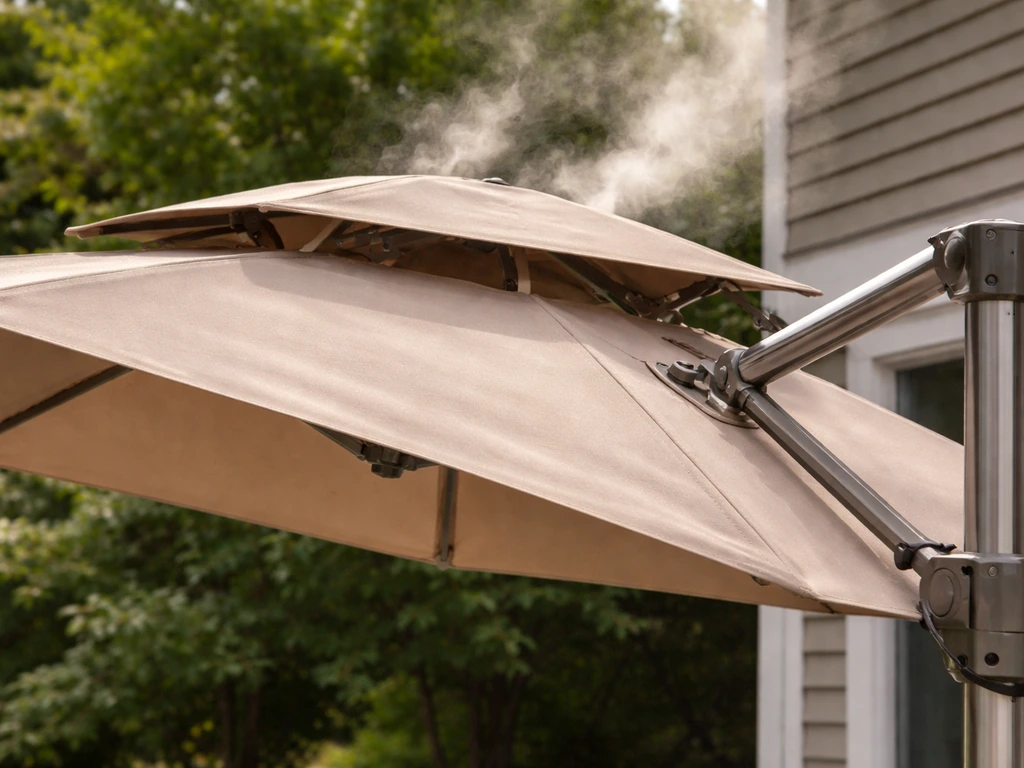
A double-vented canopy is one of the most effective wind-management features you can get. The vent allows air to escape upward rather than build pressure underneath, which reduces lift and dramatically lowers the chance of inversion. For wind performance specifically, a canopy fabric around 240 g/m² combined with a vented design and aluminum-alloy frame with 8+ ribs produces measurably better stability. Tilt mechanisms (Crank-Auto-Tilt or collar tilt) let you angle the canopy to follow the sun without repositioning the base, and on a cantilever they're usually built into the rotating arm, make sure the tilt locks firmly and doesn't drift.
Choosing the right size, shape, and style
Getting the right umbrella type for your layout matters as much as build quality. A beautifully made umbrella that's the wrong size or style for your patio will either leave half your table in the sun or dominate the space awkwardly.
Market umbrellas
Market umbrellas are the classic center-pole design. They're the most affordable, easiest to find, and simplest to set up. A 9 ft octagonal market umbrella covers roughly 57–63 square feet of shade, which comfortably covers a 4–6 person dining set. The center pole sits through a hole in your patio table, which limits flexibility, you can't slide chairs to the far edge, but the stability trade-off is worth it for most dining setups.
Offset and cantilever umbrellas
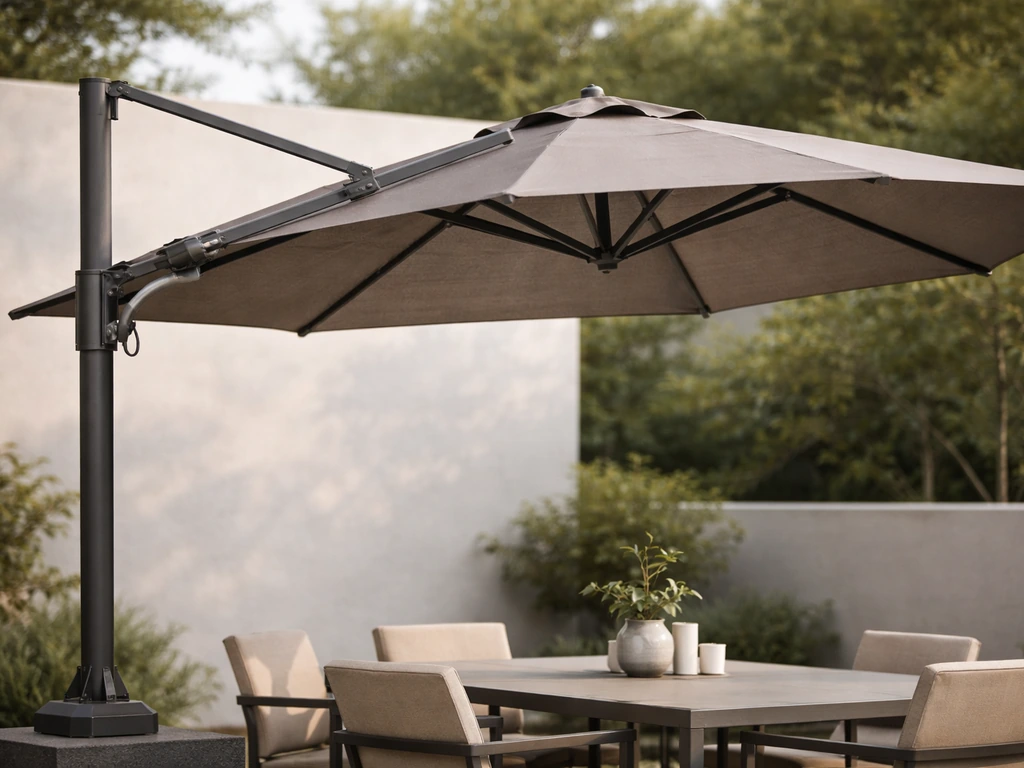
Offset (cantilever) umbrellas have a side pole that positions the canopy overhead without a center post blocking your table or lounger. If you're trying to narrow down options, this guide on what is the best offset patio umbrella can help you compare models more confidently Offset (cantilever) umbrellas. A 10 ft cantilever covers roughly 71 square feet and gives you unobstructed seating underneath. This is the right choice for lounge chairs, sectional sofas, or any furniture arrangement where a center pole would be in the way. The trade-off is cost and base requirements, a quality cantilever setup will run more than a comparable market umbrella, and the base investment is substantial. If you're exploring specific offset models in depth, there's solid guidance on the best offset and best quality offset patio umbrellas worth reading alongside this guide. For more targeted picks, look for the best quality offset patio umbrellas that match your space and wind conditions. If you want the smoothest, most premium experience overall, focus on what makes the best high-end patio umbrella perform in wind, sun, and everyday use best offset and best quality offset patio umbrellas. If you want unobstructed seating and stronger wind performance, the best offset patio umbrellas are the ones that back up their claims with real wind durability testing and a properly sized, heavy base. If you want the most reliable option, focus on what makes a model earn the title of best brand of patio umbrella, not just the price tag.
Size pairing guidelines
As a practical sizing rule, add about 2 ft to each side of your table to get the minimum umbrella diameter. A 4 ft wide table needs at least an 8 ft umbrella, and a 6 ft table needs a 10–11 ft canopy. Umbrellas sized below your furniture leave chairs exposed and cause people to constantly shift position, which leads to people simply not using the umbrella.
| Style | Best for | Shade coverage (approx.) | Minimum base weight | Key trade-off |
|---|---|---|---|---|
| Market (9 ft) | Dining tables, 4–6 people | 57–63 sq ft | 50–75 lbs | Center pole limits seating flexibility |
| Market (11 ft) | Large dining sets, 6–8 people | 75–85 sq ft | 75–100 lbs | Needs a wider table with center hole |
| Cantilever (10 ft) | Lounge chairs, sectionals, no center pole | 71+ sq ft | 180 lbs | Higher cost and heavy base required |
| Cantilever (13 ft) | Large outdoor seating areas | 100+ sq ft | 200+ lbs | In-ground or concrete anchor recommended |
Comparing materials and build quality
Not all frames and fabrics are equal, and the differences show up within the first two seasons. Here's how the main options stack up.
| Material | Pros | Cons | Best application |
|---|---|---|---|
| Aluminum alloy frame | Lightweight, corrosion-resistant, strong | Can dent under heavy impact | Cantilever arms, large market umbrellas |
| Steel frame (powder-coated) | Very strong, affordable | Heavier, can rust if coating chips | Budget market umbrellas, secondary poles |
| Fiberglass ribs | Flexible under wind, won't snap | More expensive than steel ribs | Market umbrellas in windy areas |
| Solution-dyed acrylic canopy | Best fade resistance, UV-blocking, long life | Higher cost (Sunbrella-tier pricing) | Any umbrella used year-round |
| Solution-dyed polyester canopy | Good fade resistance, lighter weight | Shorter lifespan than acrylic in direct sun | Seasonal or partially shaded setups |
| Standard polyester canopy | Low cost | Fades and degrades quickly in UV | Only acceptable for covered or shaded areas |
For rib construction specifically, fiberglass beats steel in wind performance but is harder to find at the budget end of the market. If a listing just says 'steel ribs' without mentioning coating or gauge, assume they're on the thinner side. Powder coat thickness on the frame is hard to verify without a spec sheet, but reputable brands will reference ASTM B117 corrosion testing in their documentation, that's the salt-spray fog test, and passing it means the coating can handle real outdoor conditions.
Real-world durability and how to maintain it
A quality umbrella that's ignored will deteriorate much faster than an average umbrella that's well maintained. Durability isn't just about what you buy, it's about what you do with it between uses.
Preventing fading and fabric breakdown
Solution-dyed fabrics resist fading because the pigment is part of the fiber, not a surface coat. But even the best acrylic canopy benefits from being closed and covered when it's not in use. UV exposure accumulates, an umbrella left open in direct sun 12 hours a day will fade measurably faster than one that's only open when you're outside. Get a snug-fitting cover and use it. It takes about 30 seconds and extends the useful life of the canopy by years.
Cleaning schedule and methods
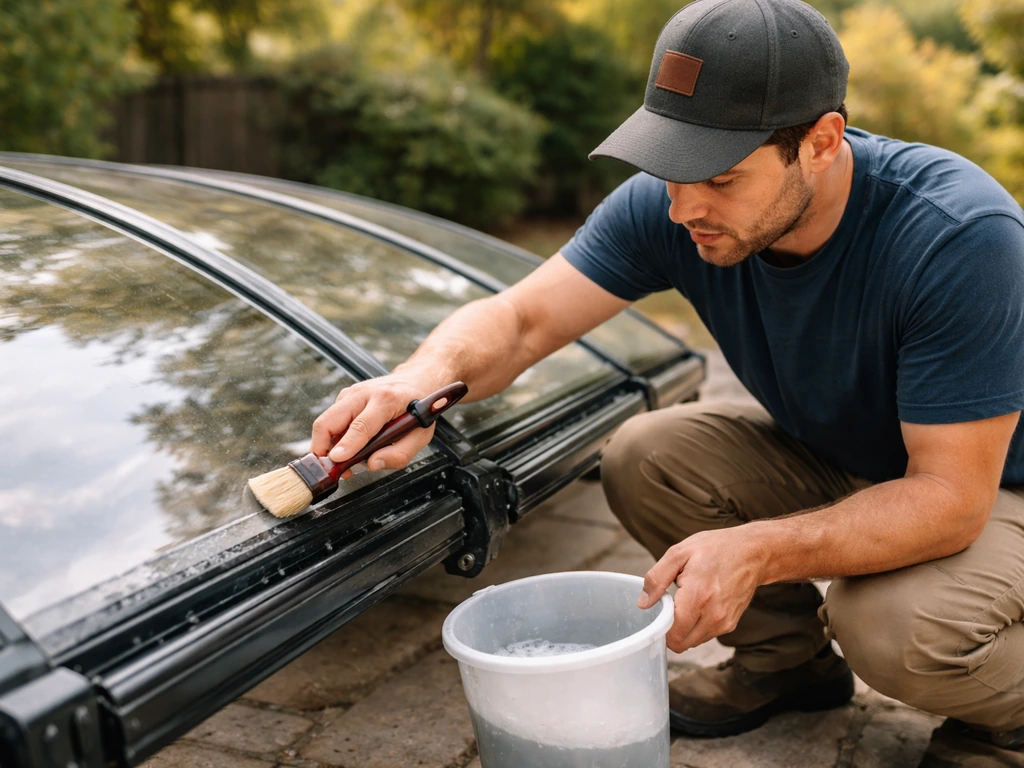
Clean the canopy at least once a month to remove dust, pollen, and organic debris. Use warm water and a mild soap or detergent, avoid bleach on acrylic fabrics unless you're treating mold and the fabric manufacturer specifically allows it. Rinse thoroughly with clean water to remove all soap residue (residue left behind attracts dirt faster), then let it air dry completely before closing or covering. Closing the canopy while it's still wet traps moisture and is how mold and mildew get started. For the frame and hardware, dry with a lint-free cloth after cleaning to keep water off any joints or pivot points.
Rust prevention and hardware care
Rust on a powder-coated frame almost always starts at a chip or scratch in the coating, not on intact surfaces. Inspect the frame annually and touch up any bare metal spots with a rust-inhibiting primer before the season starts. On cantilever models, pay particular attention to the pivot joints and the cross-base welds, those areas collect water and flex repeatedly under load, which is where coating wear happens first. Aluminum frames largely sidestep this problem since aluminum forms a self-protecting oxide layer, but the hardware connecting components (bolts, pins, cranks) can still corrode if they're steel.
Seasonal storage
If you're in a climate with hard winters or extended rain seasons, storing the canopy indoors is the single biggest durability decision you can make. Fabric left outside in freeze-thaw cycles degrades much faster regardless of quality. Even in mild climates, a storage cover during off-seasons keeps the canopy clean, dry, and out of UV exposure, all three of which extend life. Some homeowners store just the canopy panels inside and leave the frame assembled, which is a reasonable middle ground when the base is too heavy to move.
Your buying checklist and next steps
Before you buy, run through these checkpoints. They'll filter out the under-built options fast.
- Frame material: aluminum alloy preferred for cantilevers; powder-coated steel acceptable for market umbrellas if coating thickness is specified (60–120 microns) or ASTM B117 testing is referenced.
- Rib count and material: 8 ribs minimum; fiberglass ribs preferred in wind-exposed settings, steel ribs acceptable if gauge is listed.
- Canopy fabric: solution-dyed acrylic for maximum durability; solution-dyed polyester as a solid second choice. Avoid fabrics labeled only as 'polyester' or 'nylon' with no dye or UV specification.
- Canopy weight: target 200–240 g/m² or higher. If GSM isn't listed, ask or skip that product.
- UV and water resistance: look for references to UPF 30+ or higher and AATCC 22 water-repellency testing.
- Vented canopy: a double vent is a meaningful wind-safety feature, especially for cantilever models.
- Base weight: 75 lbs minimum for 9–10 ft market umbrellas; 180 lbs minimum for cantilevers. Don't buy the umbrella without confirming the base you plan to use meets this.
- Anchoring plan for cantilevers: confirm whether you'll use a portable ballast, bolt to concrete, or install an in-ground footing before purchasing. The umbrella's wind rating is meaningless without the right anchor.
- Opening and tilt mechanism: crank-lift should turn smoothly; tilt lock should hold firmly without slipping.
- Warranty: a quality umbrella should carry at least a 1-year warranty on the frame and fabric. Brands that offer 3–5 years are putting real confidence behind their build.
For cantilever models specifically, don't skip the anchoring research. The cantilever category has the widest quality spread of any umbrella type, the best models are genuinely outstanding for lounging and flexible shade, but the worst are dangerously under-built for anything beyond a still day. If you're comparing specific brands or leaning toward the upper end of the market, there's detailed coverage in the best brand and best high-end patio umbrella guides worth using alongside this checklist.
Finally, be realistic about your environment. A backyard in a consistently windy coastal area needs a different setup than a sheltered urban balcony. Match the spec to your actual conditions, not the best-case scenario in the product photography.
FAQ
Is a higher patio umbrella weight always better for high quality, or can it be a drawback?
Heavier usually correlates with better stability, but only if the weight is in the right place. For cantilevers, base mass matters, but so does rigidity of the center-bearing and pivot joints. A very heavy base with loose hardware can still wobble and stress the canopy arm, so check for solid locking collars and smooth, consistent crank operation.
What wind rating should I look for on a high quality patio umbrella, and what if there isn’t one listed?
Look for wind-safety testing tied to an anchor system, not just a generic “wind resistant” claim. If no testing or standard is referenced, treat the umbrella as a lower-confidence buy and plan to close it during gusty weather. Also verify whether the product is meant for “open in light breeze” versus “safe during storms,” since marketing language often blurs the two.
Can I use a lighter base if I anchor the patio umbrella to a wall or railing instead?
Sometimes, but it depends on the umbrella’s load path. Many cantilevers are designed to distribute torque through the base and pivot, so wall or railing attachment may not match that engineering. If the listing does not provide approved mounting/attachment details, don’t assume a retrofit is safe, because a mismatch can increase tipping or pivot wear.
Are fiberglass ribs always worth paying for compared with aluminum ribs?
Fiberglass ribs can flex under wind pressure and resist snapping, which helps in gusts. Aluminum-alloy frames often provide a strong strength-to-weight balance, especially for cantilevers. The best choice depends on the full build, look for at least 8 ribs, good canopy tensioning, and hardware that doesn’t bind, because rib material alone cannot fix an under-built opening or base system.
How do I tell if a canopy fabric is truly high quality acrylic or just “acrylic blend” marketing?
Avoid relying on the word “acrylic” by itself. High quality listings usually specify solution-dyed acrylic and provide a target canopy weight range (for example, 200 to 240 g/m² or higher). If the listing lacks both dye type and fabric weight, treat it as a weaker signal and expect faster sagging and fading.
What should I check on the opening mechanism to avoid a high quality patio umbrella that jams later?
Before buying, operate the crank from open to close a few times and listen for grinding or uneven resistance. Confirm the locking collar clicks firmly and engages the same way each time. If the mechanism feels “sticky” on the first few turns, that often indicates alignment or component tolerance issues that get worse with age.
Is a vented canopy always better, or are there situations where it is not ideal?
A double-vented canopy is generally a stability upgrade because it reduces lift under wind. The potential downside is that vents can let a bit more airflow in, which may be less desirable if you are trying to block breeze or rain-driven splatter. If you mainly need sun coverage on a low-wind patio, a solid canopy can still perform well, but under gusty conditions vented design is usually the safer bet.
Do double-stitch or heat-weld seams matter if the fabric has a good water-repellent finish?
Yes, seams are a primary failure point because water infiltrates through needle holes and along stress points. For high quality, look for double-stitching or heat-weld construction, UV-stabilized thread, and ideally inside seam tape. A good spray rating on the fabric does not guarantee the umbrella will stay leak-free at the seams.
What’s the fastest way to spot poor powder coating on a new umbrella?
Inspect corners, edges, and the areas around moving parts, especially the pivot joints and where hardware fastens. If you see thin spots, rough texture, or any exposed bare metal at welds or drilled holes, that’s a red flag. Since coating chips are where rust starts, even small defects can shorten lifespan dramatically if you do not address them early.
How should I clean a high quality patio umbrella without damaging solution-dyed fabric?
Use warm water with a mild soap, then rinse thoroughly to remove residue. Avoid bleach unless the fabric manufacturer explicitly approves it, because residue buildup can attract more dirt and make the fabric look faded sooner. Always air dry fully before closing, closing a damp canopy is one of the quickest paths to mildew.
Where does rust typically start on a powder-coated umbrella, and what should I do when I find it?
Rust usually begins at scratches and chips in the coating, not on intact areas. If you find exposed metal, touch it up before the start of the season with a rust-inhibiting primer and then allow it to cure. On cantilevers, pay extra attention to pivot points and cross-base weld areas because repeated flexing wears coating first.
Should I remove and store the entire cantilever umbrella, or can I store only the canopy?
Storing the canopy indoors is the biggest durability move in winter climates or extended wet seasons because freeze-thaw and prolonged moisture degrade fabric faster. If the base is too heavy, storing only the canopy panels is a reasonable compromise, but make sure the canopy is fully dry before storing and keep it covered to prevent UV exposure during the off-season.
What’s a common mistake when buying size for a high quality patio umbrella?
Choosing a diameter that matches the table but leaves no margin for real seating movement. A practical rule is to add about 2 feet to each side of the table when calculating umbrella diameter. If you underestimate, people end up shifting and the umbrella gets less use, which increases wear and reduces perceived value.
Is it safe to leave a patio umbrella open during light rain or windy weather?
For quality umbrellas, the goal is risk reduction, not immunity. Even with durable fabric and seams, waterlogged canopies add weight and can stress ribs and mechanisms. In gusty conditions, keep the umbrella closed and secured. If you live where sudden gusts are common, plan to close it during weather changes instead of “waiting it out.”
How can I confirm a cantilever base is adequately sized if the brand doesn’t provide a number?
Treat missing base weight guidance as a red flag for cantilevers. A common benchmark is roughly 180 lbs of counterweight for a cantilever in the 9 to 10 ft canopy range, and more for larger sizes. If no base spec is provided, compare against the manufacturer’s maximum intended wind conditions and consider only models with clear stability documentation or tested anchor-system claims.