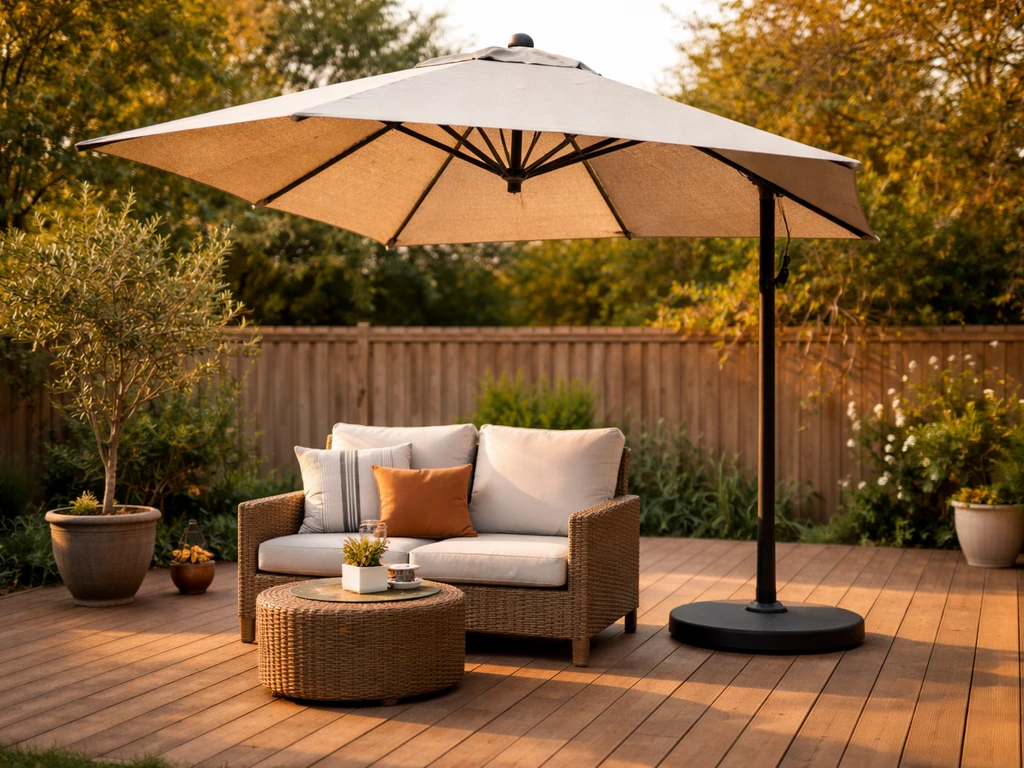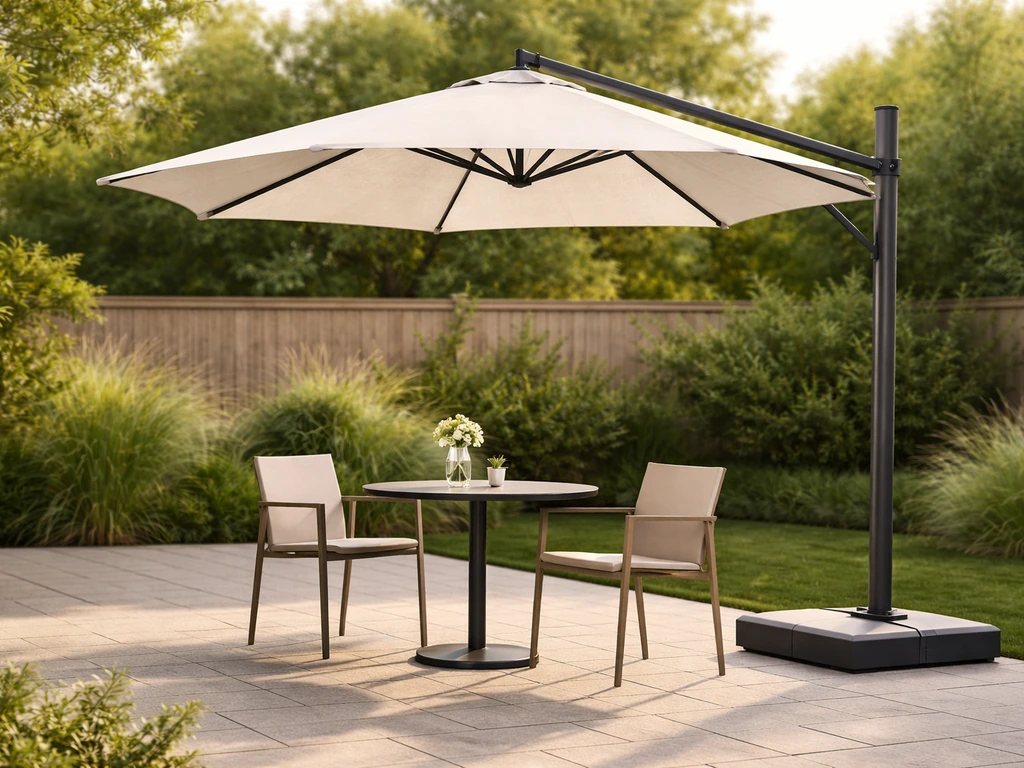
The Best Choice Products 10ft offset hanging outdoor market patio umbrella gives you a 10-foot canopy mounted on a side arm instead of a center pole, so there's nothing in the middle of your table or seating area. It covers roughly 79 square feet of shade, sits 91.5 inches tall at the top, and clears 79 inches from the ground at its lowest point when open. It runs on a hand-crank lift with an easy-tilt adjustment, weighs 29 lbs, and requires a base with at least 100 lbs of weight to be safe. That last part is non-negotiable and is the one thing most buyers skip past until it's too late.
Best Choice Products 10ft Offset Market Patio Umbrella Guide

Kent Lang
5 May 2026
What this umbrella actually is (and who it makes sense for)
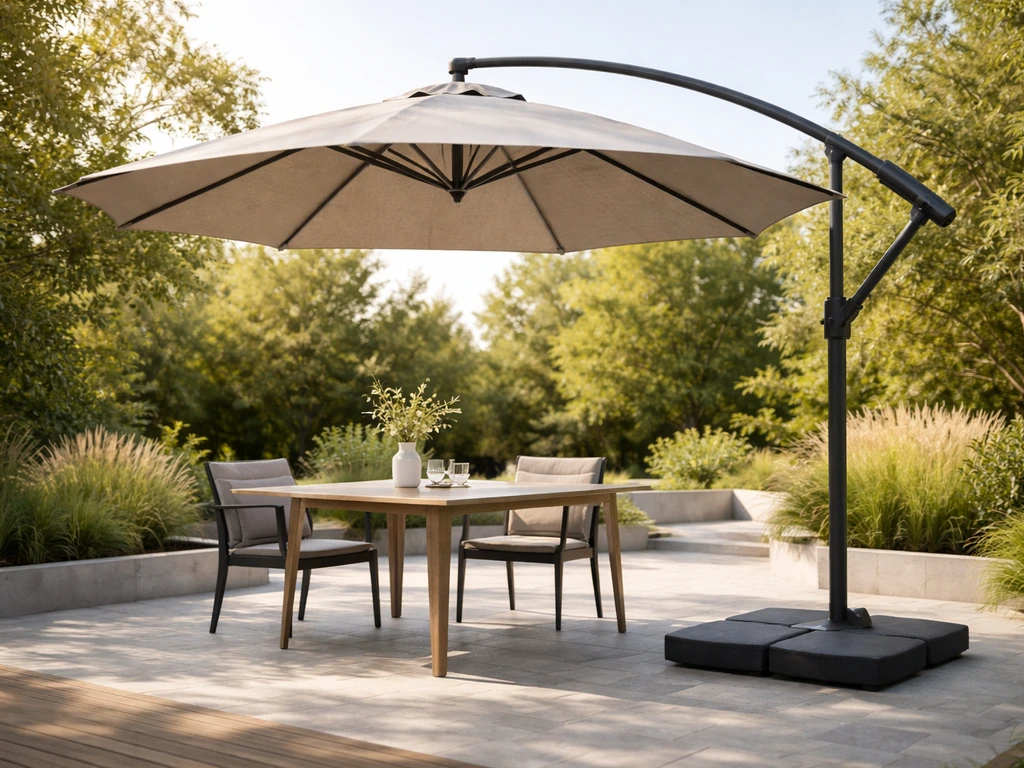
This is an offset cantilever-style umbrella, not a classic center-pole market umbrella. The difference matters more than most listings let on. A center-pole market umbrella has the pole going straight up through the middle of your table, which means your table needs a hole and your shade is fixed directly above. An offset umbrella mounts the canopy on a horizontal arm that extends out from a side pole, leaving your table completely clear underneath. You can also angle it to follow the sun as it moves.
Best Choice Products markets this as an outdoor market patio umbrella, which is a slightly blended term. It behaves like a cantilever offset: the canopy hangs to the side of the base, not above it. That makes it ideal for seating areas without a center hole in the table, lounge chair setups, and spots where you want shade without a pole in the way. It suits decks, patios, and pool areas equally well. It's not the right choice if you have a table with a pole hole and want a traditional market umbrella look.
The 10ft size works well for a standard 6-person patio dining set or a pair of lounge chairs. If you're covering a large sectional or a 10-person table, you'll want to look at the Best Choice Products 8x11ft rectangular patio umbrella or a larger cantilever option, because 79 square feet fills up fast when you add chairs around the perimeter.
How to measure your patio before ordering
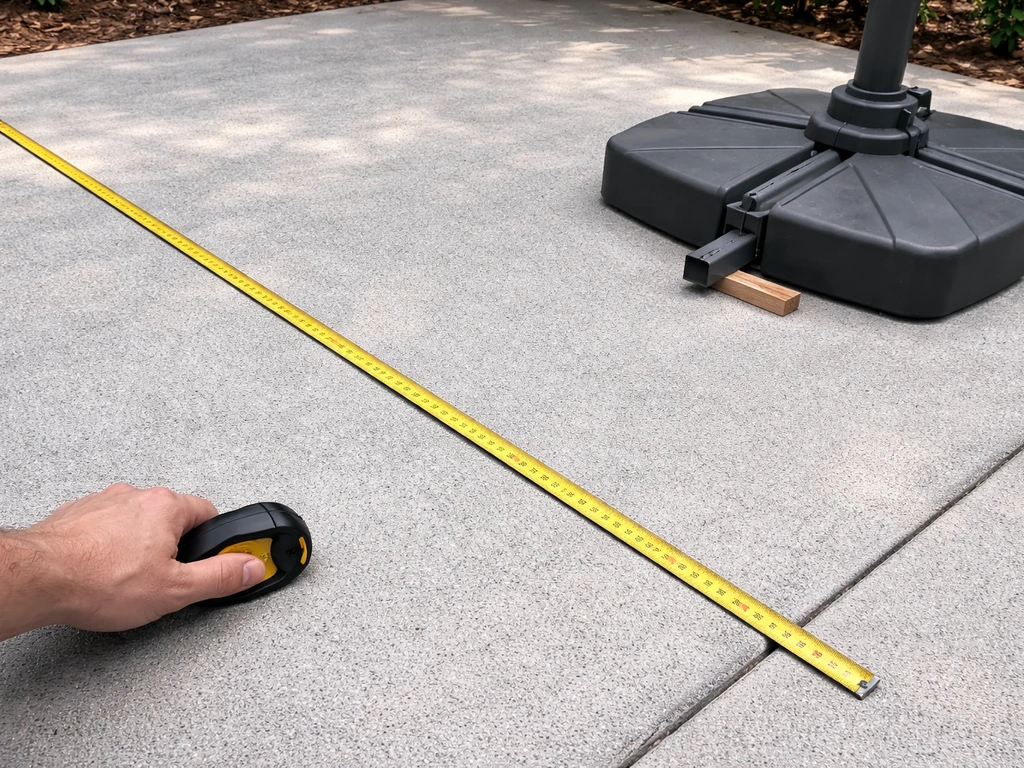
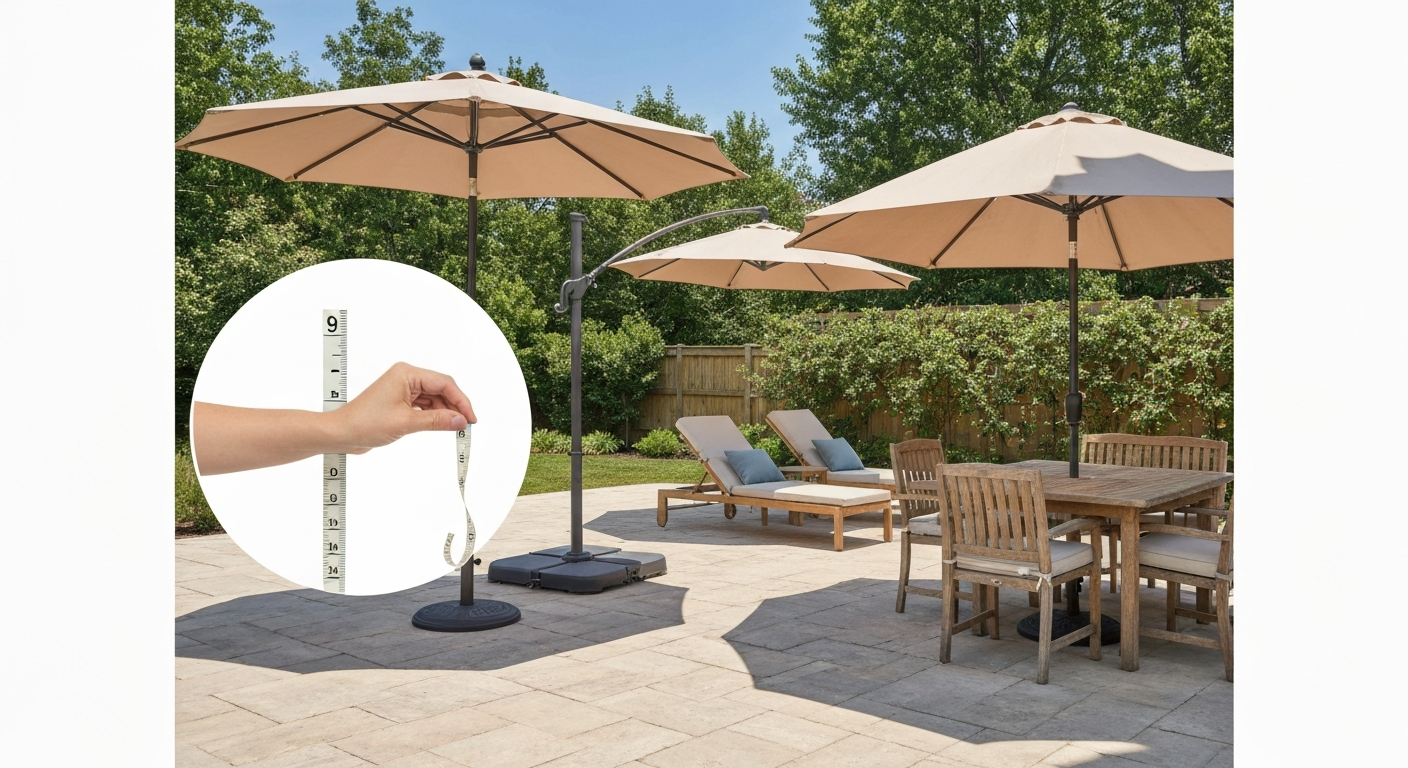
Pull out a tape measure before you click buy. The canopy is 10 feet (120 inches) in diameter and the full footprint of the unit, including the base and arm, is 120 inches wide by 120 inches long. That means you need a clear square roughly 10 feet by 10 feet for the canopy itself, plus a few extra feet on the base side where the pole and cross base sit. The cross base footprint is 39.5 inches wide, so budget at least 3.5 feet of clear floor space off to one side for the stand.
Clearance is the other measurement people miss. The lowest point of the open canopy sits 79 inches (about 6 feet 7 inches) off the ground. That clears most adults walking underneath, but it's worth checking if you have taller family members or if the canopy will hang over a walkway where guests are frequently moving through. If that 79-inch clearance is tight for your setup, you may want to look at a larger offset umbrella with a higher arm height.
For shade coverage, measure your seating area and compare it to the 79 square feet this canopy covers. A rough guideline: a 10-foot circular canopy shades a zone about 8 feet in effective usable diameter once you account for sun angle and the canopy edge tapering. Mark the center of your intended shade zone on the patio, then measure 5 feet in each direction to confirm the canopy reaches where you need it. Remember the pole will be off to one side, so the center of shade shifts away from the base, not directly above it.
Key specs to know for this exact model
Here's what the listing confirms and what each spec actually means for daily use.
| Spec | Listed Value | What It Means for You |
|---|---|---|
| Canopy diameter | 10 ft (120 in) | Covers a 6-person dining set or two lounge chairs comfortably |
| Overall dimensions | 120 x 120 x 91.5 in | Needs a 10x10 ft clear zone; total height just over 7.5 ft |
| Low-point clearance | 79 inches | About 6'7" — comfortable walking clearance for most adults |
| Shade coverage | 79 sq ft | Good for one seating zone, not a large sectional |
| Base footprint | 39.5 in cross base | Budget 3+ ft of clear floor on the pole side |
| Product weight | 29 lbs | Manageable to move, but base weight is the real number that matters |
| Canopy fabric | 210g polyester | Mid-weight; UV and weather-resistant to reduce fading |
| Lift mechanism | Hand crank | Smooth open/close; no pulley rope to fray or tangle |
| Tilt adjustment | Easy-tilt system | Lets you angle the canopy to track the sun through the day |
| Frame material | Steel pole and ribs | Rust-resistant treatment; heavier and more stable than aluminum at this price |
The 210g polyester canopy is a mid-range fabric weight. It's not the thick 250g+ canvas you'd find on a premium shade sail or a commercial-grade cantilever, but it's denser than the flimsy 180g fabric on bargain umbrellas. The UV and weather-resistant coating will hold up through several seasons with basic care. Expect some color fading after two to three years of constant sun exposure, especially in intense climates like Arizona or Florida. The platinum colorway tends to show fading less than saturated colors like red or teal.
The steel frame is a trade-off compared to aluminum. Steel is heavier (which helps stability) but more prone to surface rust if the protective coating gets scratched or chipped. Check the pole and rib joints at the start of each season for any rust spots and touch them up with rust-inhibiting spray before they spread. The ribs on an offset umbrella take more flex stress than a center-pole design because the canopy is hanging to the side rather than sitting symmetrically over the pole, so inspect the rib-to-hub connection points each spring.
Wind performance: honest expectations
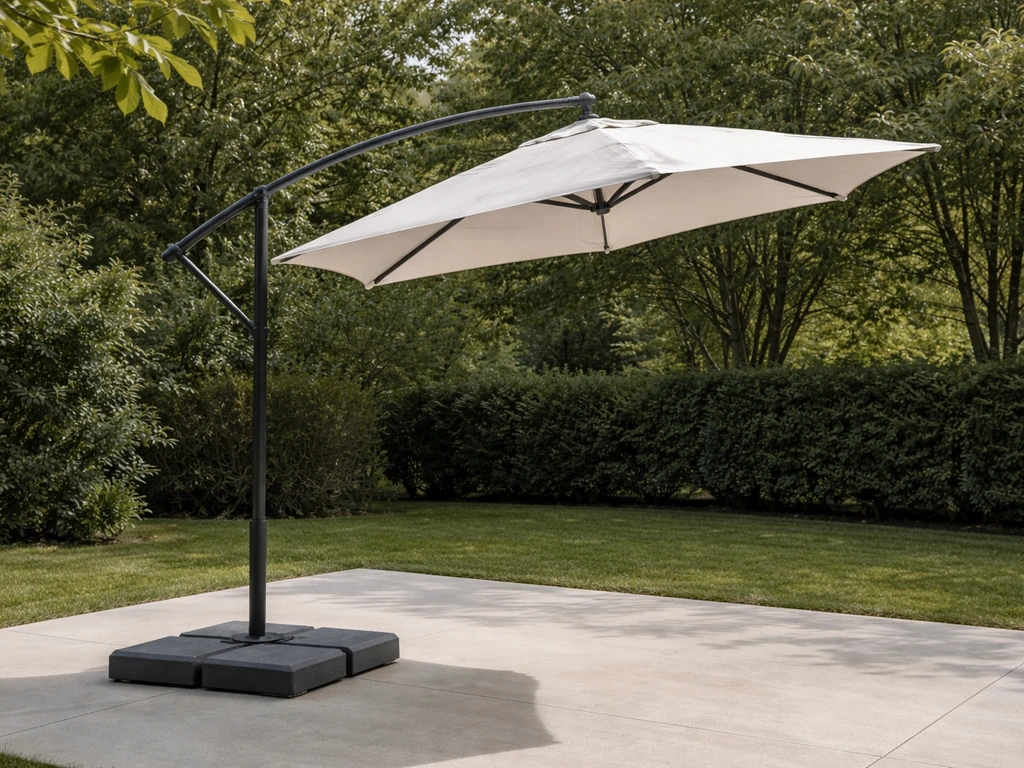
Offset umbrellas face more wind torque than center-pole designs because the canopy is extended out from the side rather than balanced over the base. Best Choice Products addresses this in two ways: a large wind vent at the top of the canopy that lets air escape upward instead of lifting the whole canopy, and two pole knobs on the cross base that let you lock the arm position when wind picks up. Both features help, but they don't replace a properly weighted base.
In light breezes (under 15 mph) with a proper base, this umbrella handles well. In gusty conditions (20-25 mph), you should tilt the canopy to reduce the surface area catching the wind or close it entirely. A cantilever wind guidance source also recommends closing the umbrella when wind speeds approach or exceed about 20 mph, and points to wind vents as a safety-relevant feature close it entirely at 20-25 mph. Above 25 mph, close it and secure it. The manufacturer is direct about this: do not use the umbrella without base weights, and the recommended minimum is 100 lbs. That's not a suggestion you can fudge. An unweighted or under-weighted offset umbrella in a moderate gust can tip, fall, and cause serious damage or injury.
If your patio regularly sees afternoon gusts or you live somewhere with unpredictable wind patterns, factor in the time it takes to crank the umbrella closed. The hand crank is fast, but you do need to be home and available. A good habit is to close it any time you're leaving for more than an hour or the forecast shows wind gusts above 20 mph.
Base and stand: don't skip this part
The base is not included. That's spelled out in the user manual and implied by the product weight: the umbrella itself is 29 lbs, but you need a base system that hits at least 100 lbs of anchoring weight. For an offset umbrella specifically, you're not just supporting a vertical pole. You're counterbalancing a horizontal arm with a 10-foot canopy hanging off the end, so the base needs to handle significant lateral torque, not just vertical load.
Your options for achieving 100+ lbs of base weight are either a purpose-built umbrella base (typically a heavy concrete or sand-filled plastic base rated for offset umbrellas) or a cross-base stand with weight bags or plates added on top. The cross base that comes with this umbrella is 39.5 inches wide. You'll want to fill it with compatible weight bags to hit that 100-lb minimum. Some buyers use multiple 50-lb sandbags draped over the cross base arms, which works well and makes seasonal storage easier since you can empty them.
One thing to confirm before ordering: make sure the base pole sleeve matches the umbrella pole diameter. This model uses a steel pole, and the sleeve opening on a third-party base needs to be a compatible fit. When in doubt, buy a base that's purpose-designed for offset umbrellas in the 10-foot range, rather than a generic center-pole base, since the weight distribution requirements are different.
Setting it up correctly (and the mistakes most people make)
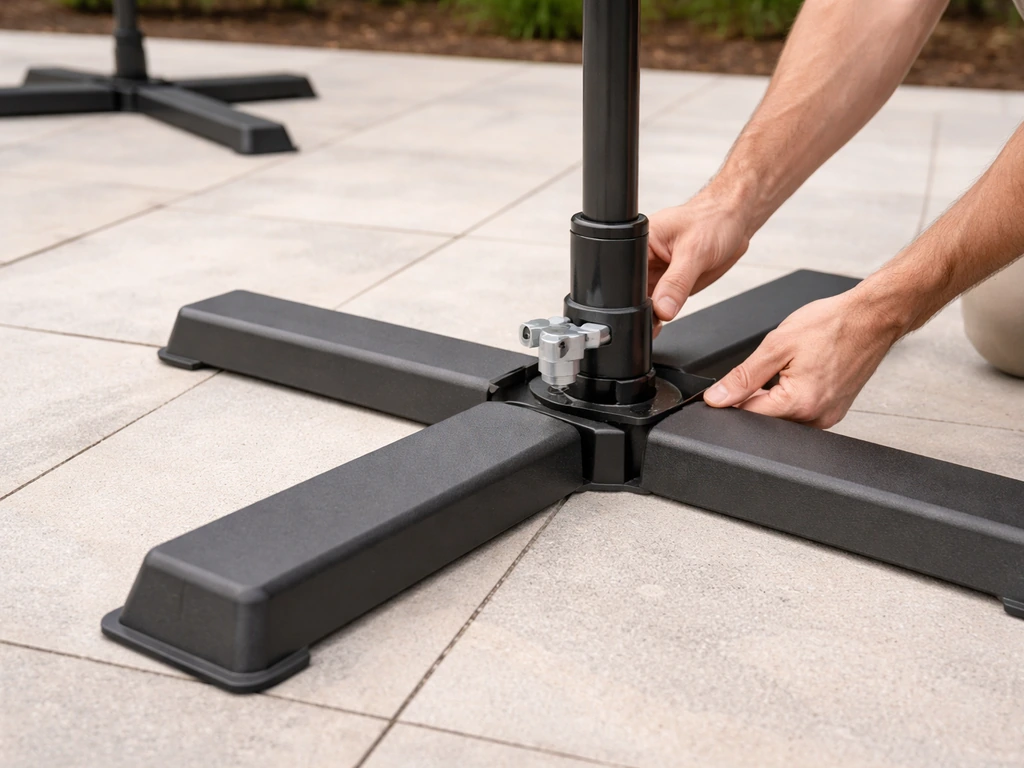
The pole and crank are detachable, which makes storage easier but also means assembly is required when you take it out. Here's the order that works best and where people typically go wrong.
- Position the cross base where you want the umbrella before adding any weight. Once you've loaded 100 lbs onto it, moving it is a two-person job at minimum.
- Add your weight bags or plates to the cross base arms before inserting the pole. This stabilizes the base while you work.
- Insert the lower pole section into the base sleeve and tighten the pole knobs firmly. Loose knobs are one of the most common causes of wobble and arm drift.
- Attach the upper arm section and canopy assembly. Have a second person hold the arm level while you secure the connection point.
- Thread the crank mechanism and do a test open/close before positioning the canopy over your furniture.
- Angle the tilt to your preferred shade position and confirm the canopy clears any furniture or walkways underneath.
The most common mistakes are skipping the base weight and then wondering why the umbrella rocks, not tightening the pole knobs enough (causing the arm to drift in the wind), and opening the canopy fully before confirming clearance over the furniture. That last one causes the canopy edge to scrape chair backs or table corners on the first open, which can damage the fabric hem.
Also worth knowing: the detachable pole is a feature, not a bug. If you're storing the umbrella over winter or need to move it into a shed during a storm, the pole separates cleanly. Keep the hardware together in a labeled bag so nothing gets lost between seasons.
Keeping it in good shape year after year
The manual says to store the umbrella in a dry, sheltered place like a garage or basement during high winds, rainy periods, and off-season. That's the single highest-impact thing you can do for longevity. Leaving a polyester canopy out through a wet winter causes the coating to break down faster, the stitching to loosen, and the steel frame to begin rusting at joints.
Before storing each fall, clean the canopy with mild soap and warm water, rinse it thoroughly, and let it dry completely before folding it. Storing a damp canopy causes mildew that's almost impossible to fully remove. A storage bag (often not included) helps keep the canopy protected from dust and pests during off-season storage.
- Inspect rib joints and the pole connection point each spring for rust, cracks, or loose rivets.
- Wipe down the steel frame with a dry cloth after rain to prevent water sitting in crevices.
- Spray any exposed metal with a light coat of rust-inhibiting spray if the protective finish is scratched.
- Close the canopy fully when wind gusts exceed 20 mph, even temporarily.
- Check the crank mechanism for debris or grit and lightly lubricate the gear with silicone spray annually.
- Inspect the canopy hem stitching for fraying at the start of each season and re-seal with fabric sealant if needed.
- Never store the umbrella open or partially open, even in calm conditions, as UV exposure accumulates faster with extended open time.
Before you order: checklist and when to consider something different
Run through this list before completing your purchase. These are the things most buyers wish they had checked first.
- You have at least a 10x10 ft open zone for the canopy plus 3.5 ft of clearance on the base side for the cross stand.
- The 79-inch low-point clearance works for everyone who will walk or sit under the canopy.
- You have a plan for 100 lbs of base weight (weight bags, concrete base, or ballast plates) before the umbrella arrives.
- You can confirm the base pole sleeve diameter matches this umbrella's steel pole.
- You have a storage location (garage, shed, basement) for off-season and high-wind days.
- Your patio's typical wind conditions are under 25 mph for the majority of the day.
When a different umbrella style makes more sense
This offset market umbrella is a strong value-tier choice for a single seating zone with moderate sun and wind. But it's not the right tool for every situation. If your table has a center pole hole and you want the classic look, a traditional center-pole market umbrella (like the Best Choice Products 10ft patio umbrella) is simpler and less expensive to weight correctly. If you need shade for a longer table or a rectangular sectional, the Best Choice Products 8x11ft rectangular patio umbrella covers significantly more area in a shape that matches the furniture better. If you want solar-powered LED lighting built in, the Best Choice Products 7.5ft outdoor solar patio umbrella trades coverage size for that feature.
For buyers with consistently higher winds, a heavier-duty aluminum-frame cantilever from brands like Abba Patio or California Umbrella in the 9-11ft range will outperform this steel-frame offset in durability over time, though at a higher price. If you also want built-in lighting like the Best Choice Products 7.5ft outdoor solar patio umbrella, compare how the extra features may affect your wind and placement needs before choosing this steel-frame offset. The trade-off is honest: Best Choice Products delivers solid shade coverage and a clean offset design at a budget-friendly price, but premium wind resistance and commercial-grade fabric require spending more. If your patio is a high-wind zone or you want a 10-year lifespan without much fuss, budget up. If you want solid seasonal shade for a typical suburban deck or backyard, this umbrella delivers real value as long as you take the base weight requirement seriously.
FAQ
Do I need a special offset umbrella base, or can I use a generic market umbrella base?
You can use a third-party base only if it matches the umbrella’s pole diameter sleeve and is rated for offset cantilever loading. A generic center-pole base is often underbuilt for the lateral torque an offset arm creates, even if it hits a similar weight number.
What’s the best way to measure whether the canopy will clear my furniture when fully opened?
Measure the canopy’s lowest edge at 79 inches, then add clearance for chair backs and table corners on the side where the arm extends. Open the umbrella with the crank at a slow pace while standing to the side, and stop if the hem comes within a few inches of any rigid surface.
How should I position the umbrella if my goal is shade over the center of the table?
With an offset design, shade is shifted away from the base. Mark your desired shade center point, then measure 5 feet outward in the direction you want to cover, confirming you do not need the canopy to sit over the table centerline.
Is 100 lbs of base weight enough if the umbrella is used on a deck or patio with smooth flooring?
100 lbs is the stated minimum, but smooth surfaces can increase sliding risk under torque. If your patio is slippery, use a heavier-than-minimum weight and consider adding an anti-slip pad between the base and the floor to reduce movement.
What wind speed should I use as a rule of thumb to close or tilt it?
Use three practical steps: keep it properly tilted in light breezes under about 15 mph, tilt or reduce canopy exposure around 20 mph gusts, and close and secure it above 25 mph. If you cannot stay nearby, default to closing when gusts are forecast above 20 mph.
Can I leave the umbrella outdoors overnight or during light rain?
It is better not to. Polyester can degrade faster when it stays wet for long periods, and mildew risk increases if it is stored damp. If rain happens, dry it thoroughly before folding and storing it, ideally in a dry sheltered area.
How do I prevent rust on the steel frame over time?
Inspect the pole and rib-to-hub joints at the start of each season, especially around any scratches. If you see early surface rust, treat it promptly with rust-inhibiting spray, and avoid letting water sit in the joints.
Will the umbrella’s fabric fade differently depending on color?
Yes. Heavily saturated colors tend to show fading sooner under constant sun, while lighter or less saturated shades generally hold up better visually. If your patio is in intense sun, expect noticeable color change after a couple of seasons.
What base storage setup is easiest for seasonal changes?
Using removable weight bags (or plates) on top of the cross base makes spring and fall transitions simpler. If you use sandbags, you can empty and store them indoors, which also reduces mess and improves longevity of the base components.
How do I avoid damaging the canopy hem when opening for the first time each season?
Start with the canopy not fully extended, open slowly, and verify clearance over furniture before reaching full spread. Make sure the pole knobs are tightened so the arm position does not drift, since drift can bring the hem into contact with chair backs or table edges.
Is the tilt feature useful for everyday use, or only for sun tracking?
It helps beyond sun tracking. Use tilt to reduce how much of the canopy’s surface catches wind, which can be useful when conditions are borderline. If you cannot stabilize it comfortably with tilt and tightening, close it rather than pushing through.
Do I need to detach the pole for storage, and what’s the safest way to do it?
Detaching the pole can make storage easier, and it also reduces strain during winter storage. Keep the crank, knobs, and pole hardware together in a labeled bag so reassembly is quick and the arm locking points are not missed when you set it up next season.