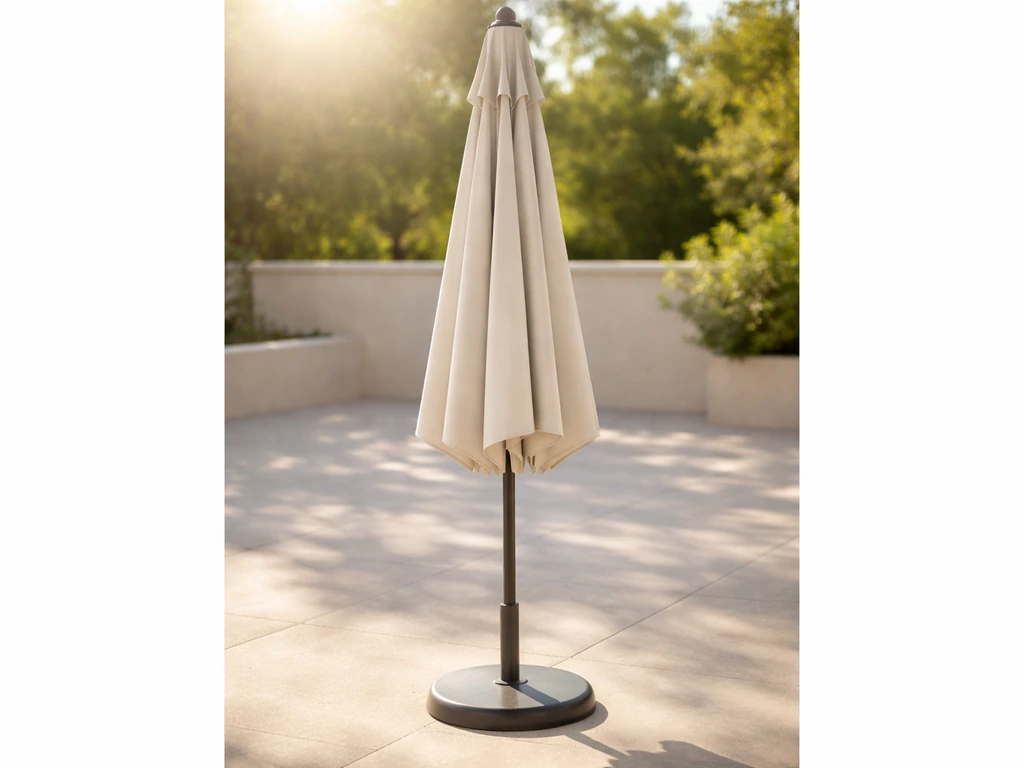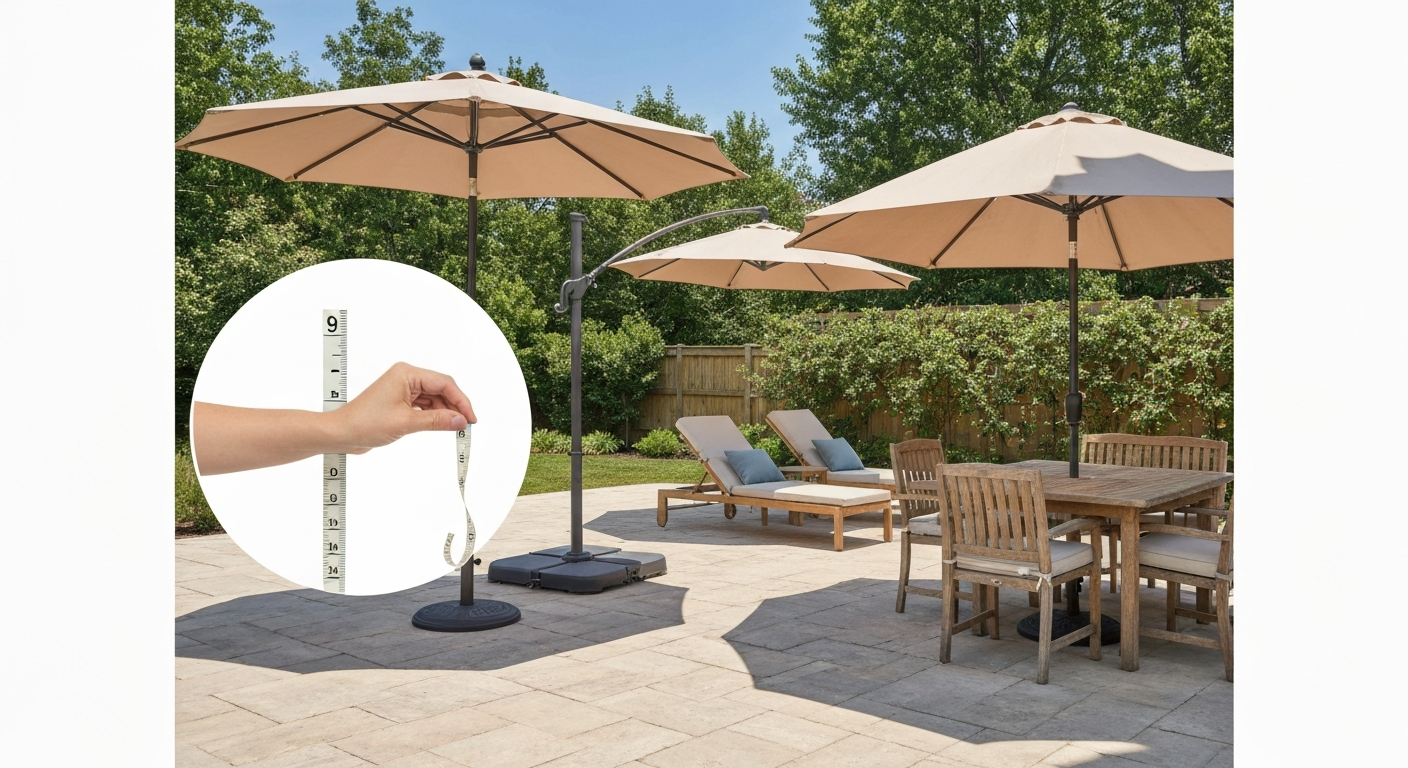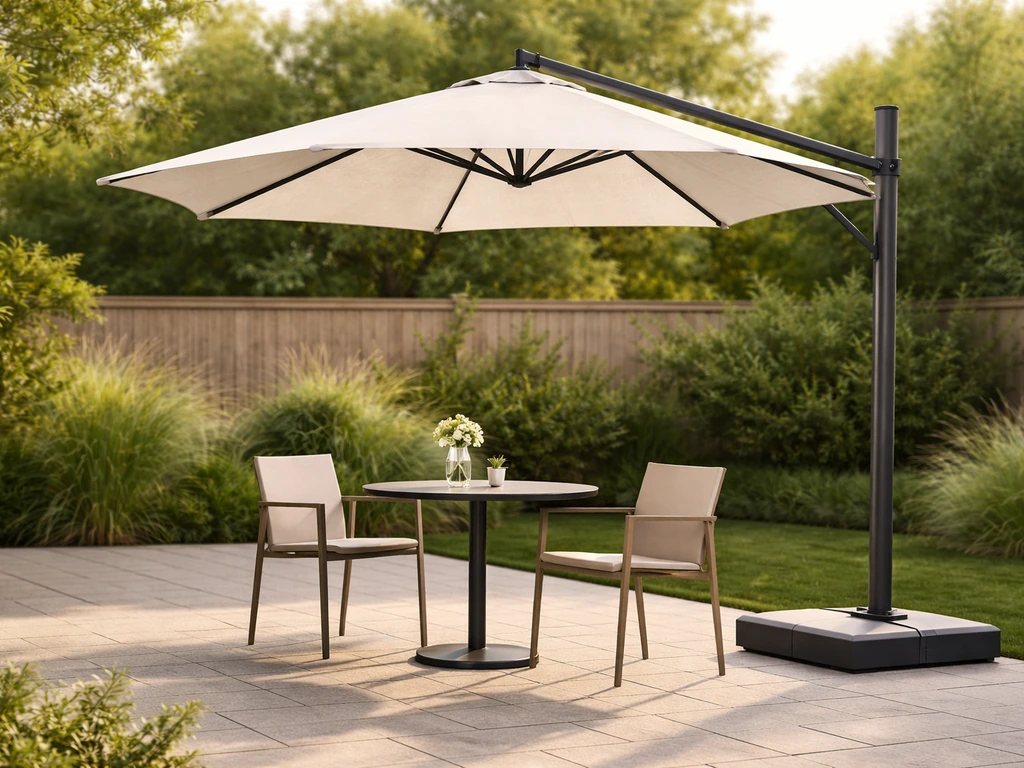
The best fade-resistant patio umbrellas are made with solution-dyed acrylic fabric, and that single spec matters more than any other marketing claim on the box. Solution-dyed means the color is baked into the fiber itself during manufacturing, not printed or coated on the surface, so UV rays have almost nothing to attack. Brands like Sunbrella and Outdura build their entire product reputation on this process, and both back it with multi-year warranties (Sunbrella offers a 10-year limited warranty on shade fabrics). If you're buying a patio umbrella and want the color to still look good in three to five years, start and end your search with solution-dyed acrylic.
Best Fade-Resistant Patio Umbrellas: How to Choose

Kent Lang
20 May 2026
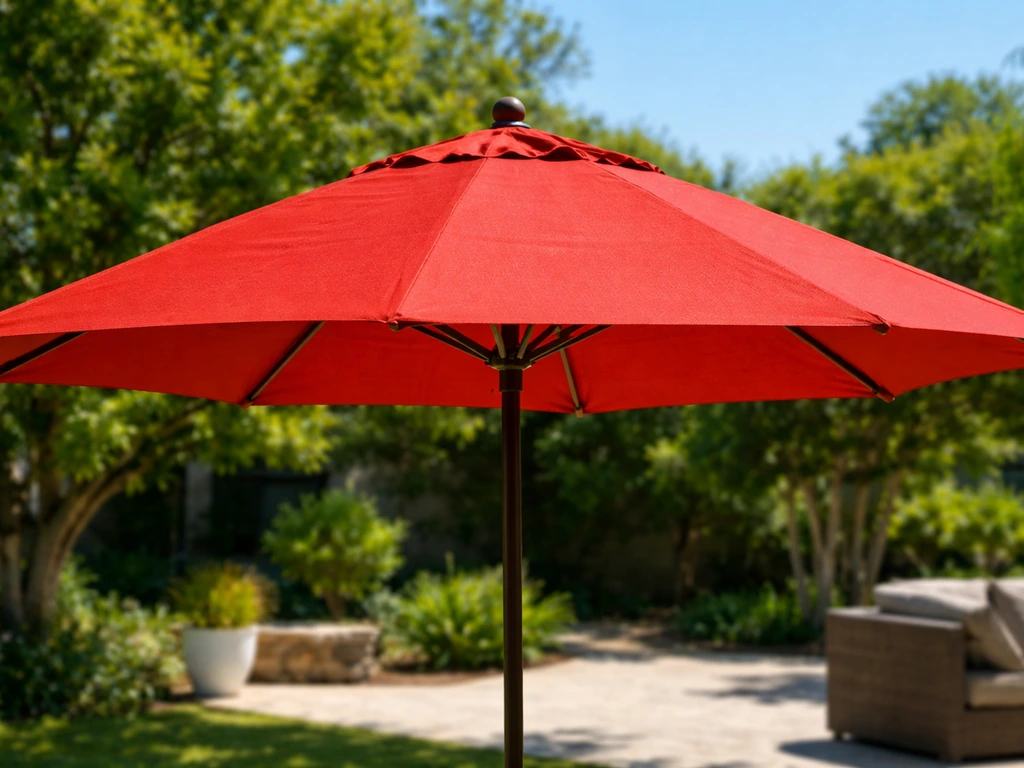
What "fade-resistant" should actually mean
The outdoor industry throws the word "fade-resistant" around loosely, and it can mean almost anything. On a cheap polyester umbrella, it might just mean the fabric was treated with a surface UV coating that wears off in a season. On a premium acrylic canopy, it means the dye is integrated at the yarn level and is structurally resistant to UV degradation. Those are completely different things, and the price gap between them reflects it. If you want a complete, step-by-step way to compare options beyond fade resistance, see how to choose patio umbrella for the full checklist.
The honest version of "fade-resistant" should come with two things: a verifiable manufacturing process and a warranty that actually covers color fading. Solution-dyed acrylic passes both tests. Sunbrella explicitly states that its 100% solution-dyed acrylic fabrics are "inherently fade resistant" because the color is integrated in the yarn rather than applied at the surface. Outdura makes the same process claim, calling their fabrics "exceptionally resistant and colorfast" for the same reason. A warranty that covers fading under normal exposure is the manufacturer putting money behind that claim.
What should raise a red flag: warranties that exclude color fading from long-term sun exposure. Some brands, including Coolaroo, explicitly list color fading from UV as a warranty exclusion on their umbrella products. That doesn't necessarily mean their umbrellas are bad, but it does mean you're accepting the fading risk yourself. Read the warranty before you buy, not after.
The specs that actually prevent fading
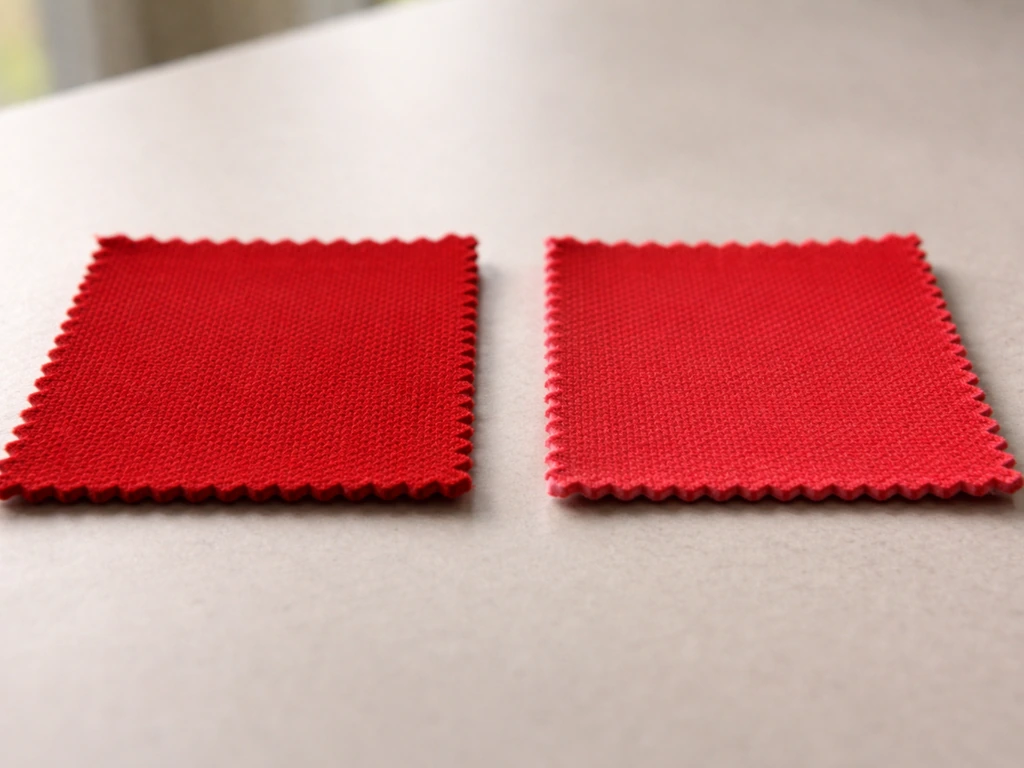
Solution-dyed vs. surface-dyed fabric
This is the foundational spec. In solution-dyed acrylic, the pigment is added to the liquid polymer before it's extruded into fiber. The color runs all the way through the strand, so even if the surface is abraded or UV-degraded, the color below is the same. In surface-dyed or printed fabrics, the dye sits on the outside of the fiber and fades as that outer layer degrades from sun exposure. For full-sun patios, solution-dyed acrylic is not optional if you want multi-year color retention.
Colorfastness ratings: what to look for
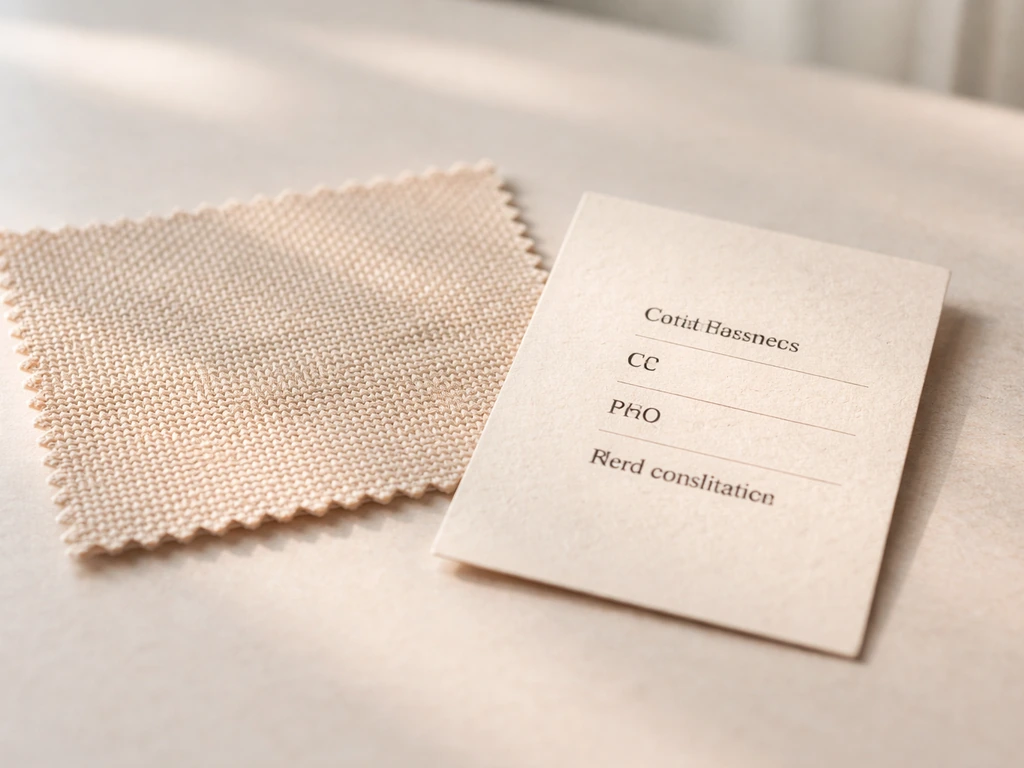
If you want to go deeper than marketing language, look for colorfastness testing references on the product or manufacturer's website. The standard tests used in the textile industry are ASTM G155 (xenon-arc weathering simulation), AATCC 16.3 (colorfastness to light via xenon-arc), and ISO 105-B02 (color fastness to artificial light). These tests simulate extended sun exposure and measure how much the color changes. Not every retailer publishes these results, but premium fabric brands often reference them. If a brand can't tell you how their fabric was tested, treat it as an unknown.
UV protection and UPF ratings
UV protection and fade resistance are related but different. Fade resistance is about what the sun does to the fabric's color. UV protection (measured as UPF, Ultraviolet Protection Factor) is about how much UV radiation passes through the fabric to the people sitting under it. The test standard for measuring UV transmittance through fabric is AATCC TM183, and UPF labeling follows ASTM D6603.
This is measured using AATCC TM 183, which evaluates transmittance or blocking of UV radiation through fabric, a key spec category buyers can request for UV and UPF claims AATCC TM 183 is used for measuring transmittance or blocking of UV radiation through fabric. A fabric can block UV from reaching you without being fade-resistant, and vice versa.
For a patio umbrella you want both: high UPF for shade quality and solution-dyed construction for color longevity. Choosing the right patio umbrella color, like solution-dyed fabric, helps maintain sun protection and reduces fading over time For a patio umbrella you want both: high UPF for shade quality and solution-dyed construction for color longevity. . Most quality acrylic canopies score well on both.
Construction details that matter
Fabric is the biggest factor, but construction contributes too. Double-stitched or UV-stabilized thread prevents seam degradation that can cause the canopy to fail even when the fabric itself is still intact. A larger canopy diameter creates more shade and reduces the angle at which direct sun hits the fabric edges, which are the areas that typically fade first. Aluminum frames won't rust and won't trap moisture against the canopy fabric the way some steel frames can. These details separate umbrellas that last a decade from ones that look worn after two seasons.
Matching style and size to your sun exposure
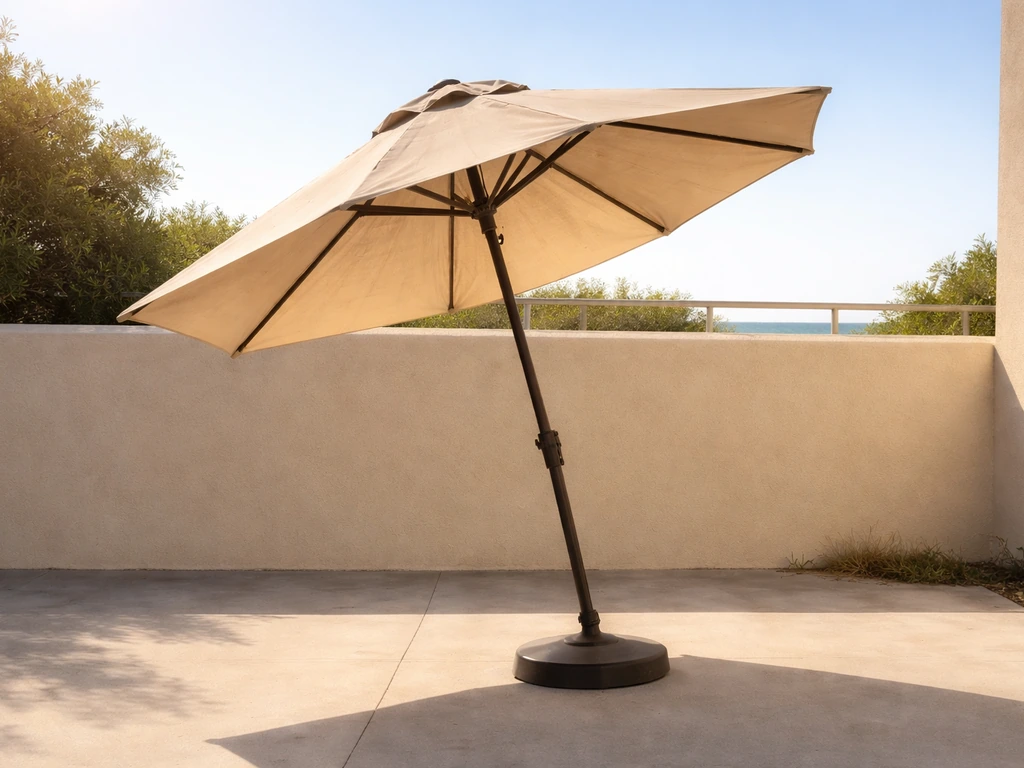
How you use the umbrella directly affects how fast it fades. An umbrella that's open eight hours a day in direct coastal sun is going to age faster than one used for a few hours in partial shade, regardless of fabric quality. If you're trying to pick the what color patio umbrella is coolest for your space, focus on fade-resistant fabric first so the color actually stays cool-looking over time.
Choosing the right style and sizing it correctly to your space both play a role in how hard the sun works on your canopy. When picking the right shade for your patio, focus on how the color will look over time and choose a fabric that supports long-lasting color how to choose patio umbrella color.
Market umbrellas (center-pole)
Market umbrellas are the classic center-pole style. They're straightforward, widely available in Sunbrella and other performance fabrics, and tend to be the most cost-effective entry point for fade-resistant options. For a standard dining table (36 to 48 inches wide), a 9-foot canopy is the common fit. For larger sectional seating or a bigger dining set, step up to 11 feet. The rule of thumb is to add 2 feet to each side of what you're shading: a 6-foot table needs roughly a 10-foot umbrella.
Cantilever and offset umbrellas
Cantilever umbrellas hang the canopy to the side from an offset post, which lets you cover seating that can't accommodate a center pole. They're popular for lounge chairs and sectionals. Because they extend farther and often stay open longer (people tend to leave them up while relaxing rather than closing them for meals), the canopy is in the sun more hours per day on average. For a cantilever, fade-resistant fabric is even more important, not less. Look for 10 to 13-foot canopy spans depending on coverage area, and verify the fabric spec before anything else.
Sun angle and positioning
If your patio faces south or west, you're dealing with the most intense afternoon sun. That's where fabric degradation is fastest. A tilting canopy mechanism lets you angle the canopy to follow the sun's path, which keeps shade where you need it but also means the fabric takes more direct UV hits at different angles over the day. In high-exposure settings like this, solution-dyed acrylic isn't a premium upgrade, it's a baseline requirement.
How to compare umbrellas and cut through the marketing
When you're looking at product listings and trying to figure out what's actually worth buying, use this framework to evaluate any umbrella you're considering.
- Check the fabric spec first. Does it say "solution-dyed acrylic"? If it just says "polyester" or "fade-resistant polyester" without specifying the dyeing process, treat it as a lower-tier option regardless of price.
- Look for a named fabric brand. Sunbrella and Outdura are the two most recognizable solution-dyed acrylic brands with documented performance track records. "Sunbrella-grade" or "similar to Sunbrella" is not the same thing as actual Sunbrella fabric.
- Read the warranty carefully. A 10-year fade warranty (like Sunbrella's shade fabric warranty, and what California Umbrella offers on Sunbrella-canopy models) is a meaningful commitment. A 1-year fade warranty on an olefin fabric line (as California Umbrella notes for some of their olefin options) is a shorter commitment. No fade coverage means no guarantee.
- Ask about colorfastness test standards. If a manufacturer references ASTM G155, AATCC 16.3, or ISO 105-B02, they've at least had the fabric tested against an objective benchmark. If they don't mention any testing, the claim is marketing-only.
- Compare color choices strategically. Darker colors and saturated hues show fading contrast more visibly than lighter, neutral, or natural-toned colors, even if the underlying fabric has the same fade resistance. If long-term color retention appearance matters to you, lean toward mid-tone or earthy colors. This connects to a broader question about which colors perform best visually over time, which is worth thinking through separately when you're finalizing a shade choice.
- Check frame material. Aluminum frames are lighter, rust-proof, and won't trap moisture. Powder-coated steel is fine but needs more maintenance. Wood adds aesthetic appeal but requires seasonal sealing to prevent splitting and warping, which can degrade the canopy attachment points over time.
| Fabric Type | Fade Resistance | Typical Warranty | Price Range | Best For |
|---|---|---|---|---|
| Solution-dyed acrylic (Sunbrella, Outdura) | Excellent, color in the fiber | Up to 10 years (shade fabric) | $$$ | Full-sun patios, coastal exposure, long-term use |
| Solution-dyed olefin | Good, better than polyester | 1 to 3 years typically | $$ | Moderate sun, budget-conscious buyers |
| Surface-dyed or printed polyester | Fair to poor, degrades with UV | Often 1 year or less, fading excluded | $ | Occasional use, partial shade only |
| Sunbrella-type acrylic (generic) | Variable, no verified standard | Varies widely | $$ | Risky without independent verification |
Keeping the color from fading: maintenance that actually helps
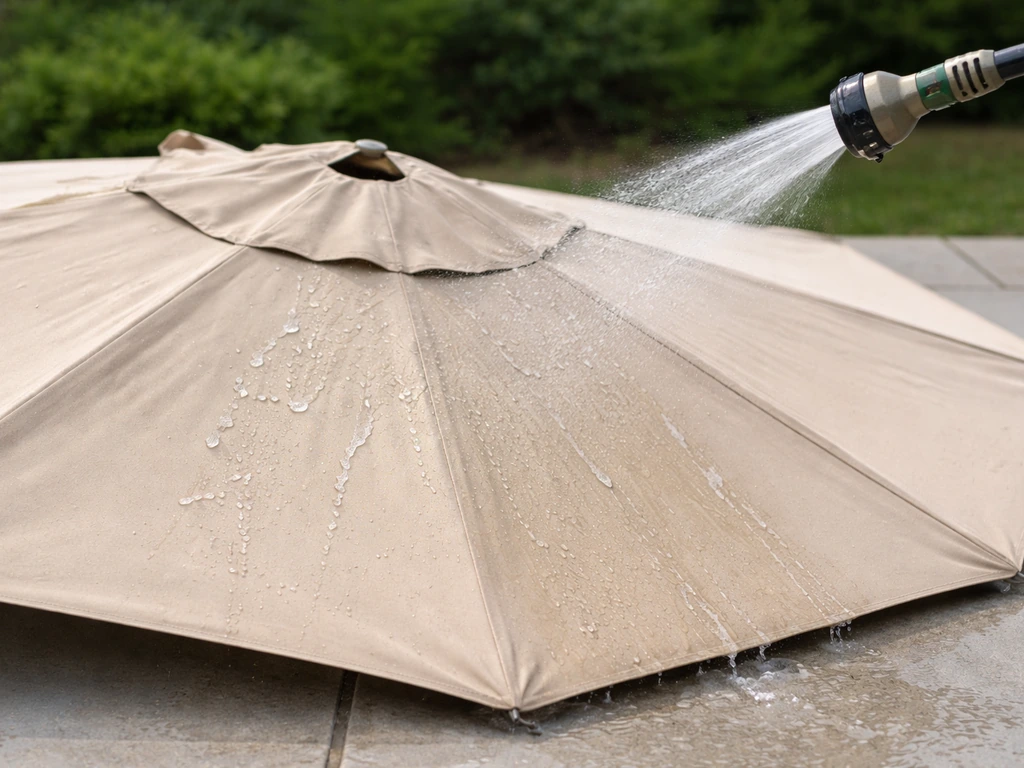
Even the best solution-dyed acrylic will look worse over time if you neglect it. Dirt, pollen, and mildew build up on the fabric surface and chemically interact with the dye over time. Regular cleaning isn't just about aesthetics, it's part of preserving the color.
Routine cleaning
Sunbrella recommends hosing off shade fabrics regularly, roughly monthly during active use seasons, using clear water to rinse off surface buildup before it becomes embedded. For general cleaning, mild soap and water applied with a soft brush, then thoroughly rinsed, is the standard approach for most performance acrylic fabrics. Outdura's care guidance follows a similar protocol. The key word is mild: harsh detergents with optical brighteners can interact with dye chemistry and accelerate fading even on solution-dyed fabrics.
Handling mildew
Mildew is the most common canopy problem in humid climates, and it's where people make the mistake of reaching for straight bleach. Sunbrella actually does allow diluted bleach for severe mildew cases, but with a specific protocol: diluted bleach solution with mild soap, applied carefully, then rinsed thoroughly. Consumer Reports recommends a similar bleach-and-detergent approach for mildew removal. Consumer Reports provides practical details for mixing bleach with detergent and rinsing thoroughly to remove mildew from patio umbrellas Consumer Reports recommends a similar bleach-and-detergent approach for mildew removal.. The critical step everyone skips is the thorough rinse. Bleach residue left on acrylic fabric will degrade the color. Rinse until the water runs completely clear.
Storage and operational habits
How you use and store the umbrella matters as much as how you clean it. Close it during windy conditions and rain, not just to prevent damage but because wet fabric trapped in a folded position is a mildew incubator. Before collapsing or covering any canopy, make sure it's completely dry. Storing a damp canopy is one of the fastest ways to grow mildew, and mildew remediation is harder on colors than clean fabric ever is. A breathable umbrella cover for off-season storage protects the canopy from UV when it's not in use, which genuinely adds up over a decade of seasons. Avoid plastic covers that trap moisture.
Durability tradeoffs: wind, water, and long-term longevity
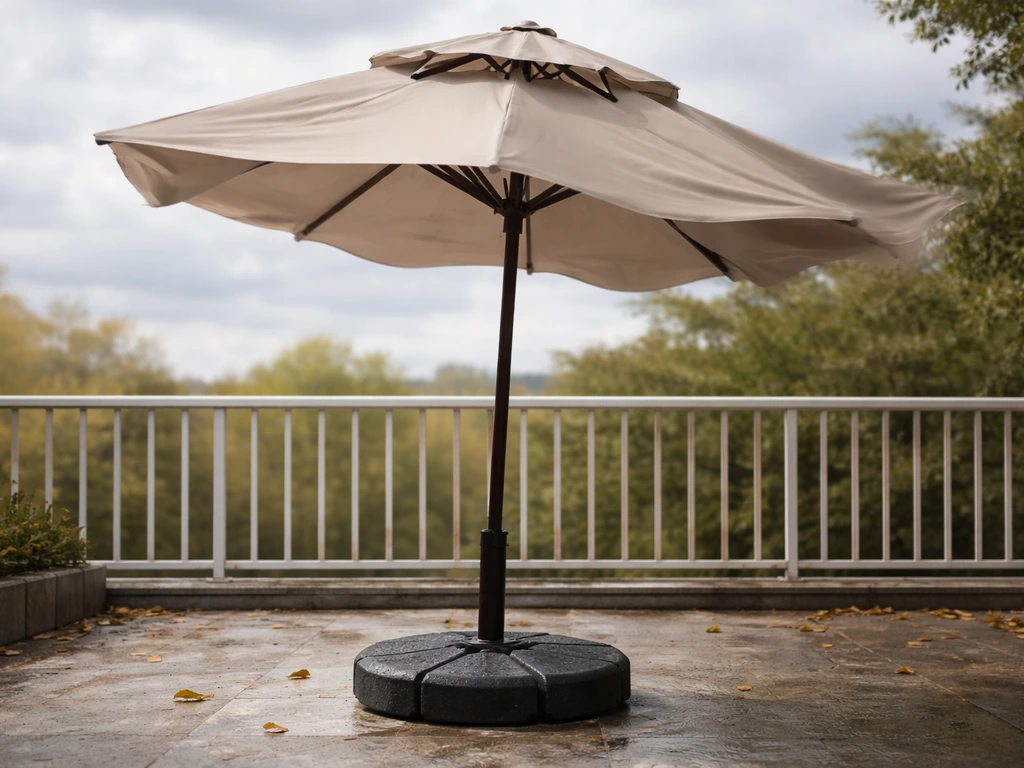
Fade resistance is one pillar of umbrella durability, but it's not the only one. A canopy that holds color perfectly won't help if the frame bends in a windstorm or the fabric delaminates because it wasn't designed for wet environments. Here's how the major durability factors interact.
Wind resistance
Wind is the most common cause of catastrophic umbrella failure, and it's often overlooked when buyers are focused on fabric quality. Vented canopies (with a secondary smaller canopy or mesh vents at the top) allow wind to pass through rather than catching the whole umbrella like a sail. For coastal areas or open yards with regular afternoon breezes, a vented canopy is important. The frame material and pole diameter matter too: a 1.5-inch aluminum pole handles moderate wind better than a thinner pole on a budget umbrella. If you're in a consistently windy area, budget for a heavier base and prioritize a vented design before anything else.
Water resistance
Solution-dyed acrylic is water-resistant but not waterproof. The weave of the fabric determines how much water penetrates, and most performance acrylics are designed to repel light rain and dry quickly rather than function as a waterproof cover. Leaving a wet canopy closed or covered accelerates mildew and can cause color bleeding in lower-quality fabrics. If you need a waterproof canopy, look for products that specify waterproof coating or construction, but understand that some coatings can crack or peel over time with heavy UV exposure, potentially affecting appearance.
The cost-longevity tradeoff
A Sunbrella-canopy umbrella with a quality aluminum frame runs $300 to $600 or more at retail for a market-style 9 to 11-foot version, and cantilever models in the same fabric tier push higher. A budget polyester umbrella might run $80 to $150. Over five years, the math on replacing cheap umbrellas versus maintaining one quality umbrella usually favors the investment in solution-dyed acrylic, especially if the alternative is buying two or three replacement canopies as colors fade and seams wear out. That said, if your patio is in partial shade and the umbrella is only open a few hours a day, a mid-tier solution-dyed olefin option in the $150 to $250 range is a reasonable compromise.
The practical bottom line: buy the best fabric tier your budget allows, match the size to your actual seating footprint, choose a style based on your table or lounge configuration, close it when you're not using it, and clean it before mildew gets a foothold. A patio umbrella that will not fade relies on solution-dyed acrylic, plus care habits like regular rinsing and proper drying. Do those things with a solution-dyed acrylic canopy and the color will still look good when you're replacing the base hardware years from now. For many people, the best color for patio umbrella choices is the one that stays colorfast the longest, which starts with solution-dyed acrylic construction solution-dyed acrylic canopy.
FAQ
If an umbrella has a high UPF rating, will it definitely resist fading?
Not always. A high UPF rating only tells you how much UV reaches people, it does not guarantee long color retention. If you want the “best fade-resistant patio umbrellas” outcome, confirm the fabric is solution-dyed (or at least yarn-dyed/colorfastness specs) and then check the warranty wording for whether it covers fading from sunlight.
Can solution-dyed acrylic still fade unevenly on my patio?
Yes, you can still get uneven fading. Even with solution-dyed acrylic, sun angle, canopy tightness, and how often you rotate or adjust the umbrella can create light and dark zones over time, especially on cantilever models that sit at an angle for hours.
How do I verify whether a warranty actually covers color fading?
It depends on warranty language. Some brands cover replacement costs only if the fabric fails, and others exclude any color change regardless of cause. Before buying, look for terms like “colorfastness,” “light/fade,” “normal exposure,” and whether the exclusion is specific to UV from sun.
What’s the best way to tell if “fade-resistant” on a listing is actually solution-dyed?
Check the fabric spec, not just the umbrella description. Retailers sometimes label the whole product as “fade-resistant” even when the canopy fabric is surface-treated. Look for explicit manufacturing wording (solution-dyed, yarn-dyed) and, if available, whether colorfastness testing results are referenced.
Can I use straight bleach to remove mildew so the color stays looking new?
Avoid it. Even mild bleach can cause color shifts if it is not the brand-approved dilution and if rinsing is incomplete. If the canopy has mildew, follow a controlled diluted bleach protocol and rinse until no residue remains, then let the fabric fully dry before storing.
Is it okay to cover the umbrella with a plastic cover during the off-season?
Yes, but only if the cover is breathable and the fabric is completely dry first. Non-breathable plastic covers can trap moisture against the canopy, which promotes mildew that can stain and dull color even if the dye is fade-resistant.
What should I change when buying a fade-resistant umbrella for coastal weather?
Coastal environments and heavy breezes increase both UV exposure hours and mechanical wear. If you are near salt air, prioritize a vented canopy plus corrosion-resistant hardware, and choose a thicker base to reduce motion that abrades the fabric edges over time.
How much does my daily schedule affect fading, even with premium fabric?
If your umbrella is open most of the day, especially on south or west exposures, the “best fade-resistant patio umbrellas” choice matters more than anything else. Also consider practical exposure reduction, like closing earlier, using side shade when available, and using the correct canopy size so fabric edges are not constantly in direct sun.
Will frequently opening and closing an umbrella make fade resistance worse?
Often yes, because abrasion can reveal color loss at the surface and accelerate appearance change where the canopy rubs hardware. Close and secure the umbrella when windy, avoid dragging it across rough surfaces, and make sure the canopy is dry before closing to reduce stress and grime buildup.
Do I still need to clean a solution-dyed acrylic umbrella to keep it from fading?
Usually. Solution-dyed acrylic is designed to resist UV-based color loss, but color still changes from dirt, pollen, and pollutants interacting with the surface over time. Regular gentle rinsing helps preserve the true color by preventing buildup that can dull the fabric.
Does fade resistance matter if the seams or stitching are failing first?
In many cases, yes, but you should match the thread and construction claims to your usage. UV-stabilized thread and reinforced seams reduce failures that happen before the fabric fully fades. If you’re seeing seam separation or fraying, the umbrella may need repair or replacement regardless of fabric color performance.
Can I reduce fading by adjusting a tilting cantilever umbrella’s position?
Sometimes. If you have to move seating frequently or the umbrella canopy position changes throughout the day, you can manage fading by keeping the canopy angle consistent when possible, and by ensuring the fabric is not constantly exposed to direct afternoon rays. For high-exposure patios, choosing solution-dyed acrylic remains the baseline.