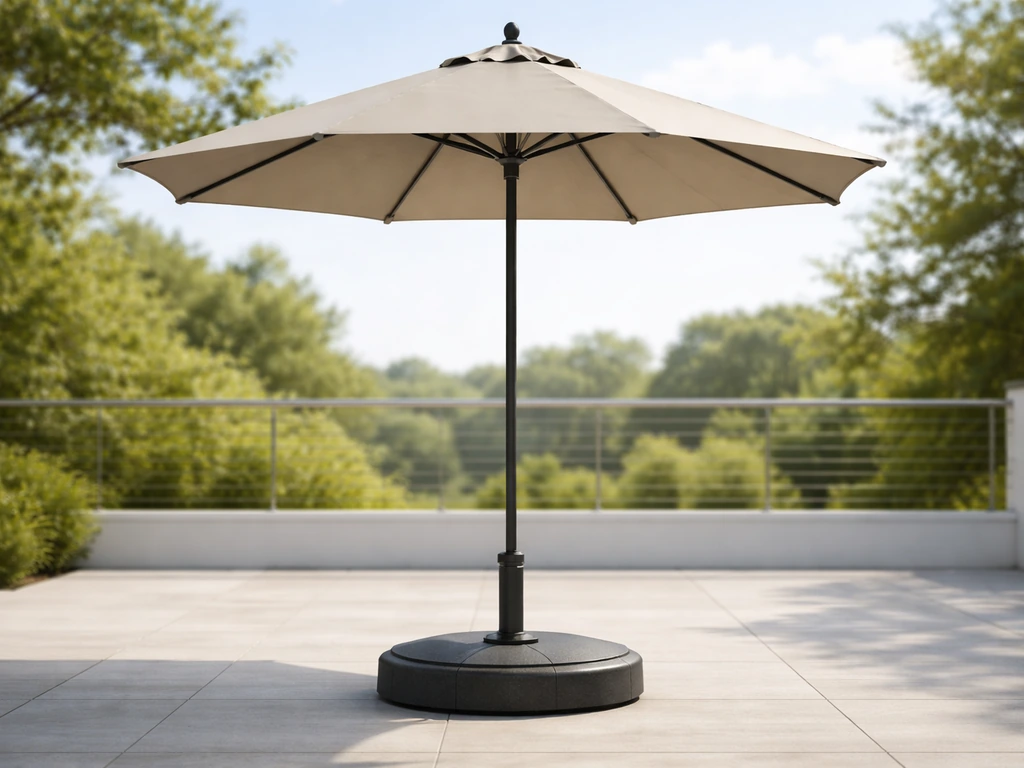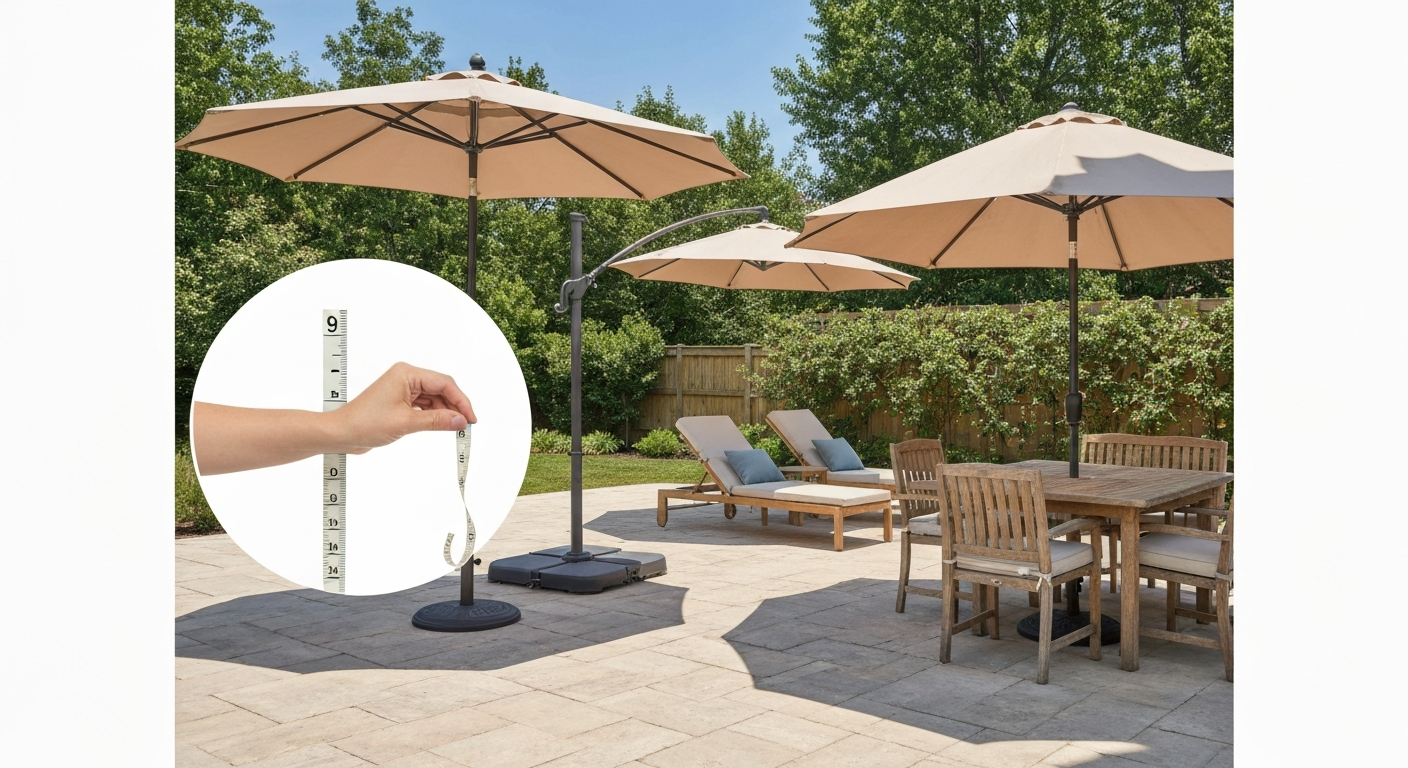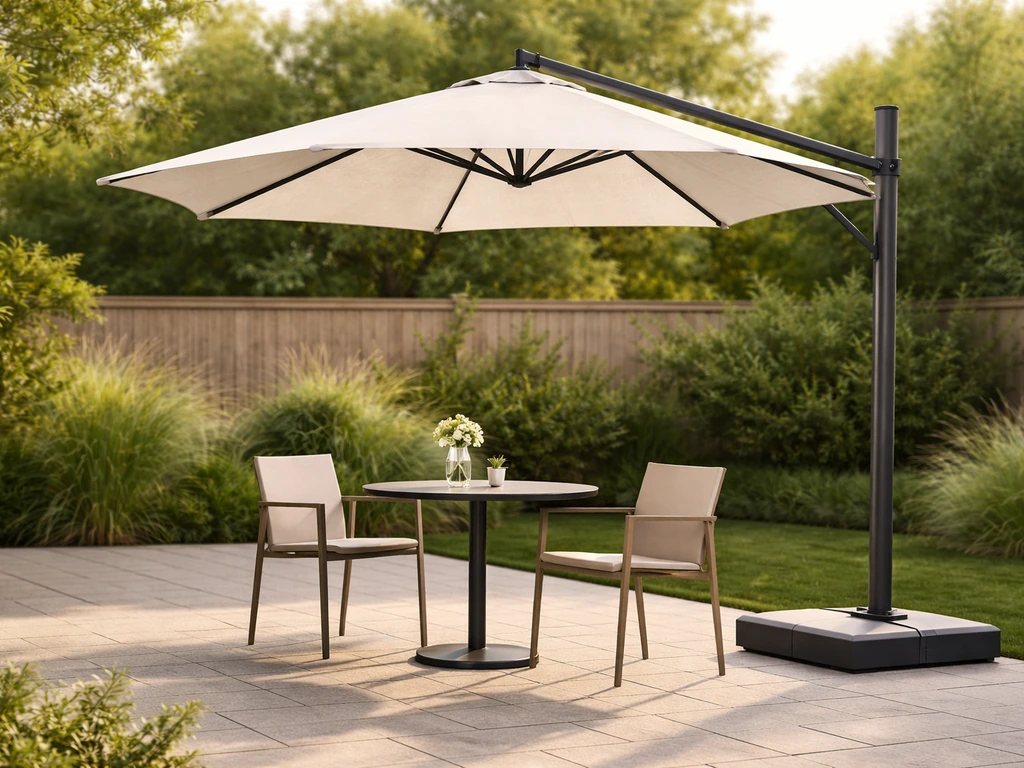
For a genuinely heavy-duty patio umbrella, you want a powder-coated aluminum or fiberglass-rib frame of at least 1.5 inches in pole diameter, a double-vented canopy in solution-dyed acrylic (Sunbrella or equivalent, 200+ gsm), and a base that weighs at least 50 lbs for table use or 100 lbs-plus for free-standing setup. The best overall market umbrella pick is the Treasure Garden 11-foot Auto Tilt with a double wind vent and aluminum frame. For cantilever or offset use, step up to a steel-base cantilever like the Treasure Garden AG25T series with its dedicated heavy-duty base. Either way, no umbrella is wind-proof: most quality models are designed to handle up to 20 mph sustained winds in operation, and the smarter ones tell you to lay the canopy flat or remove tilt above 10-15 mph to prevent damage.
Best Heavy-Duty Patio Umbrella Guide for Wind and Stability

What 'heavy-duty' should actually mean for patio umbrellas
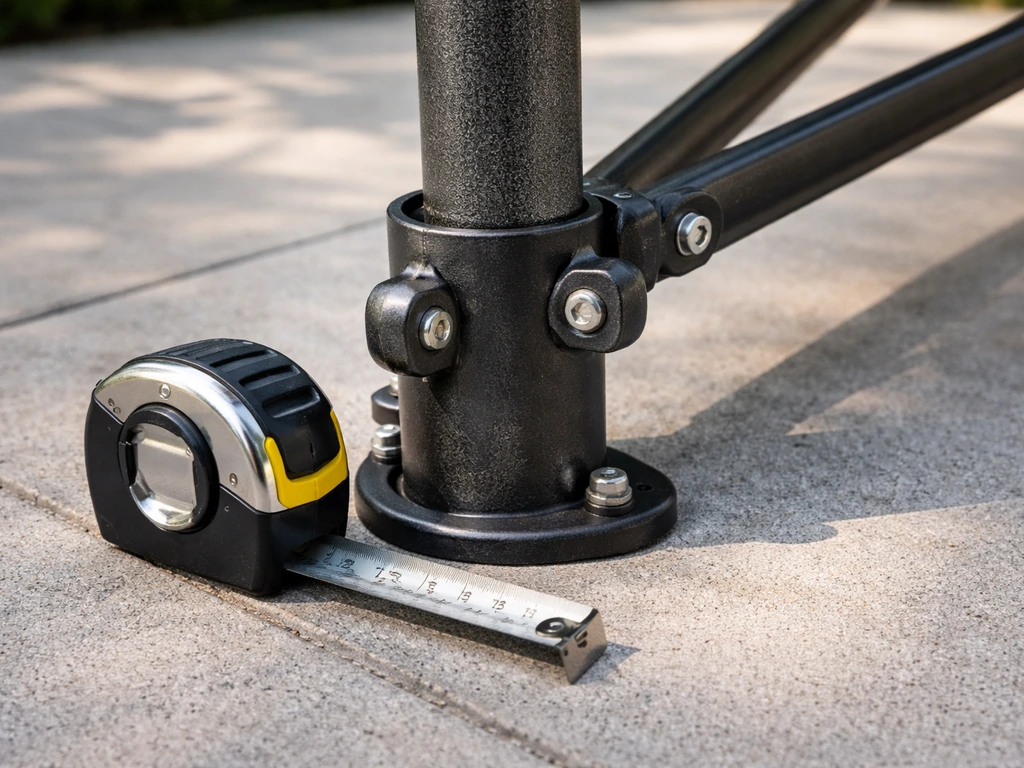
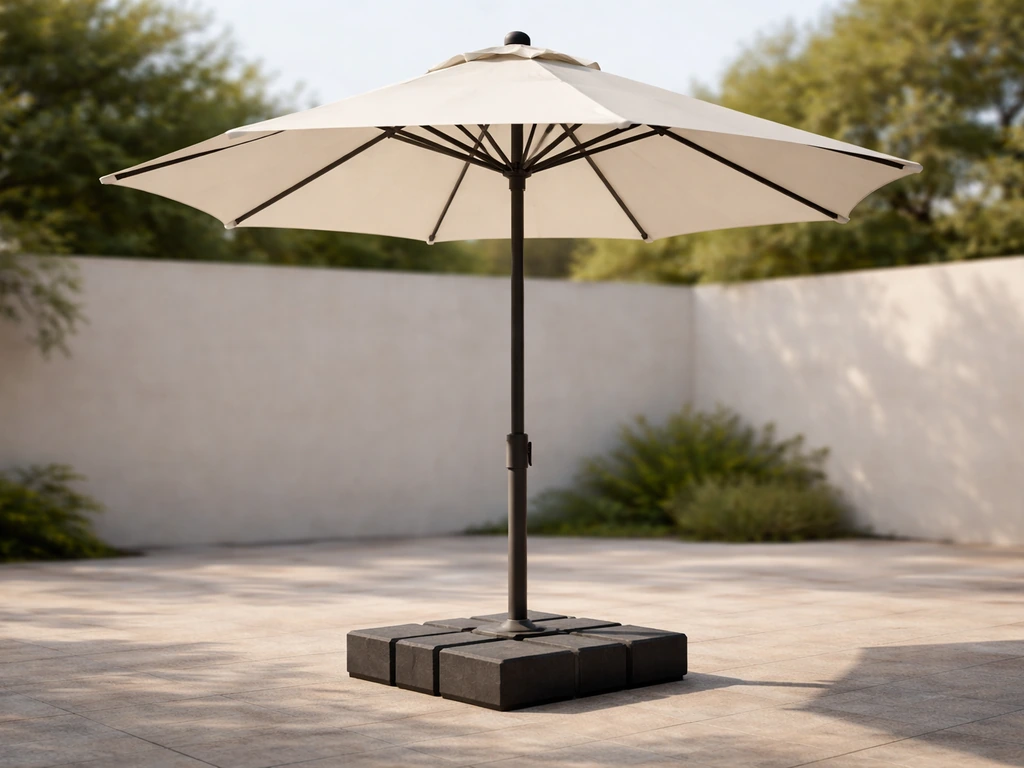
The term gets slapped on a lot of products that don't deserve it. When I look at a patio umbrella and call it heavy-duty, I mean it has to check four real boxes: frame strength, hardware quality, canopy fabric resilience, and stability under weather loads. If even one of those is weak, the umbrella fails in the field.
- Frame strength: Pole diameter of 1.5 inches or more for market umbrellas; heavy-gauge aluminum or steel construction. Ribs should be either thick aluminum (0.6 inch / 17mm or larger) or fiberglass, which flex under gusts rather than snapping.
- Hardware quality: Stainless steel or marine-grade hardware at all connection points. Cheap zinc castings crack after one winter.
- Canopy fabric resilience: Solution-dyed acrylic (like Sunbrella) at 200+ gsm, rated UPF 50+, mildew-resistant, and colorfastness-tested to ISO standards. Thinner or printed fabrics fade and tear within a season in high-UV climates.
- Stability under weather loads: This is a system requirement. The umbrella frame plus the base/anchor system together must pass stability demands, not just the canopy alone. ASTM standard F3512-21 actually evaluates umbrella and base mounting components as a combined system.
ASTM F3512-21, the standard test method for evaluating wind safety and durability of market umbrellas, is worth knowing about because it's one of the few objective benchmarks in this space. It includes a wind-tunnel procedure that produces real-world pressure data. Not every umbrella on the market is tested to it, but if a manufacturer references it, that's a meaningful signal. ASTM has also flagged clearly that an improperly designed, installed, or maintained market umbrella can break, dislodge, or become airborne in wind. That's not a scare tactic: it's a design reminder that 'heavy-duty' is a system, not a label.
Wind resistance: features that actually hold up
Wind resistance is where marketing claims diverge most from reality. Here's what the specific design features actually do, and which ones matter most.
Vented canopy design
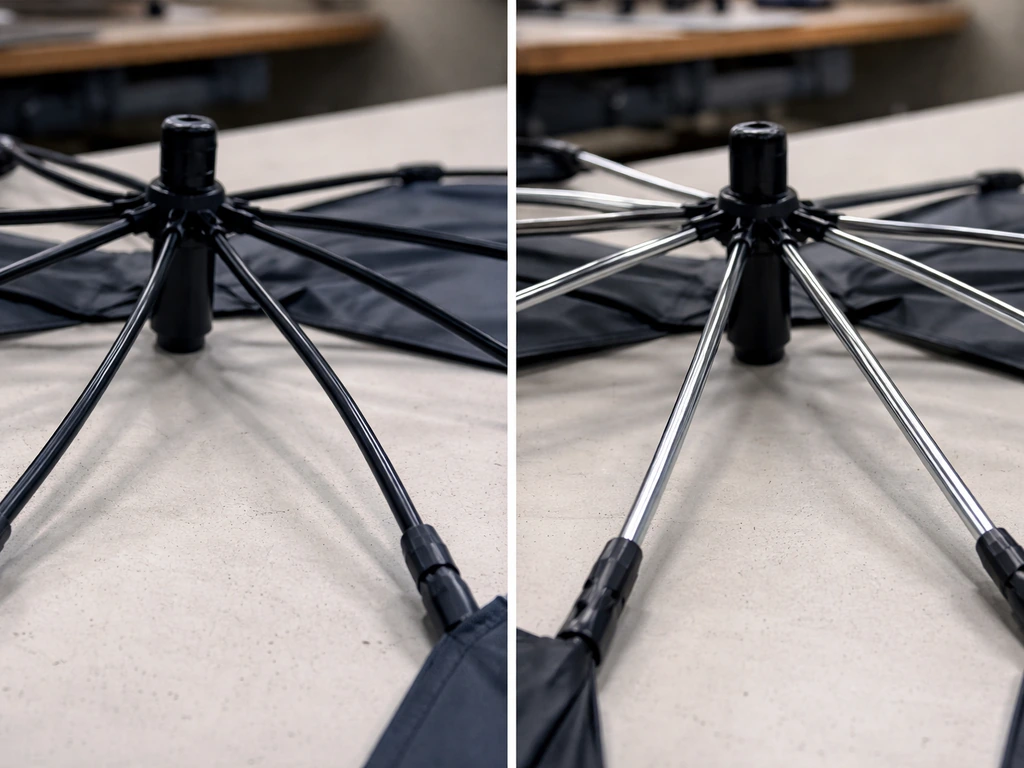
A vented canopy is one of the biggest practical upgrades you can make. Wind vents allow air to escape upward through the canopy instead of catching beneath it like a sail. Treasure Garden offers both single wind vent (SWV) and double wind vent (DWV) configurations across their market and cantilever lines. The double vent is worth the small price premium in genuinely windy locations. An 11-foot Treasure Garden market umbrella with a single vent already improves significantly on non-vented designs. The AG25T cantilever uses a double wind vent and weighs in at 72 lbs on its own frame, which is a meaningful signal of structural commitment.
Rib material: fiberglass vs. aluminum
Fiberglass ribs flex and return to shape under gusts. Aluminum ribs are stiffer but can kink or snap under repeated load if the gauge is too thin. FiberBuilt and OutsideModern both lean on fiberglass ribs as a defining feature of wind-resistant umbrellas, and the logic holds: commercial beach and restaurant umbrellas almost universally use fiberglass ribs for exactly this reason. That said, a thick-gauge aluminum rib from a brand like Treasure Garden (17mm+) still performs well in residential conditions. Fiberglass is the safer pick if you're in a coastal or consistently breezy location.
Wind speed limits and how to read them
Stay Put Umbrellas' Libra 27S is advertised as designed to withstand wind speeds between 62 and 74 mph, which is exceptional and refers to structural survival, not comfortable operational use. Their own instructions still tell you to remove the tilt when winds hit 10-15 mph to prevent damage. That distinction matters: a frame can survive a gust that would still shred a canopy or bend hardware if the umbrella is tilted or poorly anchored. FiberBuilt makes the same point, warning against tilting when gusts exceed 15-20 mph. Bob Vila's guidance for windy conditions sets a useful general rule: take the umbrella down or close it at around 20 mph or the manufacturer's stated limit, whichever is lower. Treat the manufacturer's wind rating as an operational ceiling, not a daily target.
Tilt mechanism and wind interaction
Auto-tilt systems (like Treasure Garden's, which offer infinite tilt adjustment) are convenient for shade positioning, but they increase wind exposure by angling the canopy. The rule is simple: the more you tilt the canopy into the wind, the more lift and torque you're creating at the pole base. When wind picks up, return the canopy to level. This applies whether you have a crank tilt, push-button tilt, or auto-tilt.
Heavy-duty base and patio umbrella stand requirements
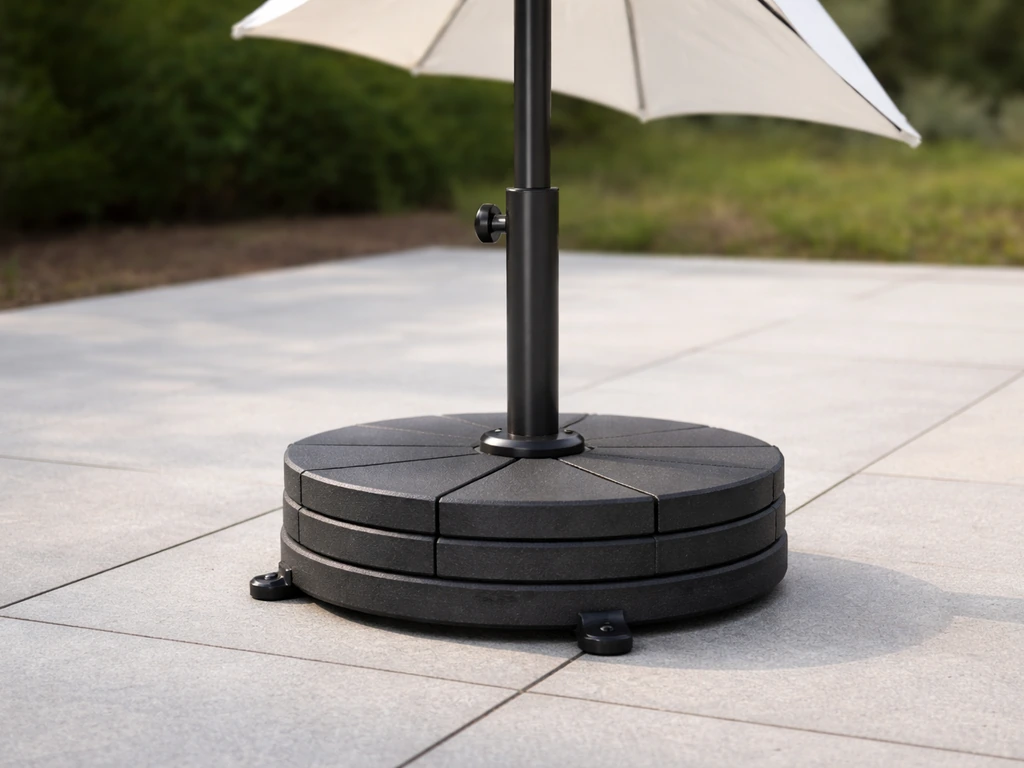
The umbrella is only half the system. A premium frame on an undersized or improperly installed base will tip, wobble, and eventually damage itself or something nearby. Treasure Garden's own base manuals flag that flapping in the wind can cause injury and property damage and explicitly tie that risk to loose or undersized base installations.
How much base weight do you actually need?
For a market umbrella used through a table hole, a 50 lb base is the common starting point. Treasure Garden's Classic 50 lb base is designed for that use case but recommends adding an optional 30 lb add-on weight for free-standing use, bringing total ballast to 80 lbs. A weighted base helps keep the pole steady, limits wobble, and reduces the risk of the umbrella tipping or breaking in windy weather optional 30 lb add-on weight. For larger or free-standing setups, some fillable bases hit approximately 250 lbs after sand is added. That's not overkill for an 11-foot free-standing umbrella in a moderately windy yard. A general rule of thumb: 50 lbs for in-table use, 80-100+ lbs for free-standing market umbrellas, and 150+ lbs for larger cantilevers. For free-standing setups, the best free standing patio umbrella choices often include dedicated ballast and a design that matches your wind exposure. To pair that ballast with stability, you also want the best patio umbrella stands that keep the pole secure and prevent wobble.
Cantilever-specific base needs
Cantilever and offset umbrellas create lateral torque that market umbrella bases aren't designed to handle. Treasure Garden makes a dedicated heavy-duty steel base, the AKZ13, specifically for larger cantilevers. This style-specific base pairing isn't optional: using a generic freestanding base with a cantilever is one of the most common stability failures I see. If you're going cantilever, confirm the manufacturer's recommended base before you buy the umbrella.
Installation tightness matters too
Even the right base at the right weight fails if the pole fits loosely. Treasure Garden's base assembly manuals spend real page space on stem/collar tightening procedures because pole wobble in the base socket is a primary real-world failure mode. Treasure Garden’s Z-Plate Base manual includes assembly and correct installation steps, including stem and collar operations, that help prevent looseness stem/collar tightening procedures to prevent looseness. If your base has an adjustment collar or set screw, use it, and check the fit periodically. A loose pole magnifies every wind load and accelerates frame fatigue.
If you're deep in the base-sizing question, the topics of best heavy-duty patio umbrella bases, best patio umbrella stands, and how much weight a patio umbrella base actually needs are worth exploring separately since the right base pairing is its own decision.
Best overall picks by umbrella style
The three main styles handle wind and heavy-duty conditions differently. Here's how they compare and where each one wins.
| Style | Wind Performance | Best Use Case | Base Requirement | Trade-off |
|---|---|---|---|---|
| Market (center pole) | Good, especially vented models | Table coverage, smaller patios | 50 lbs (table) / 80-100 lbs (free-standing) | Pole bisects seating area |
| Cantilever / Offset | Good if properly based; lateral torque is a risk | Larger seating areas, pools, no center obstruction | 150+ lbs, style-specific base | Heavier, more expensive, needs dedicated base |
| Freestanding market | Good with adequate ballast | No table, flexible placement | 80-100+ lbs | Needs serious base weight to stay put |
Best market umbrella pick
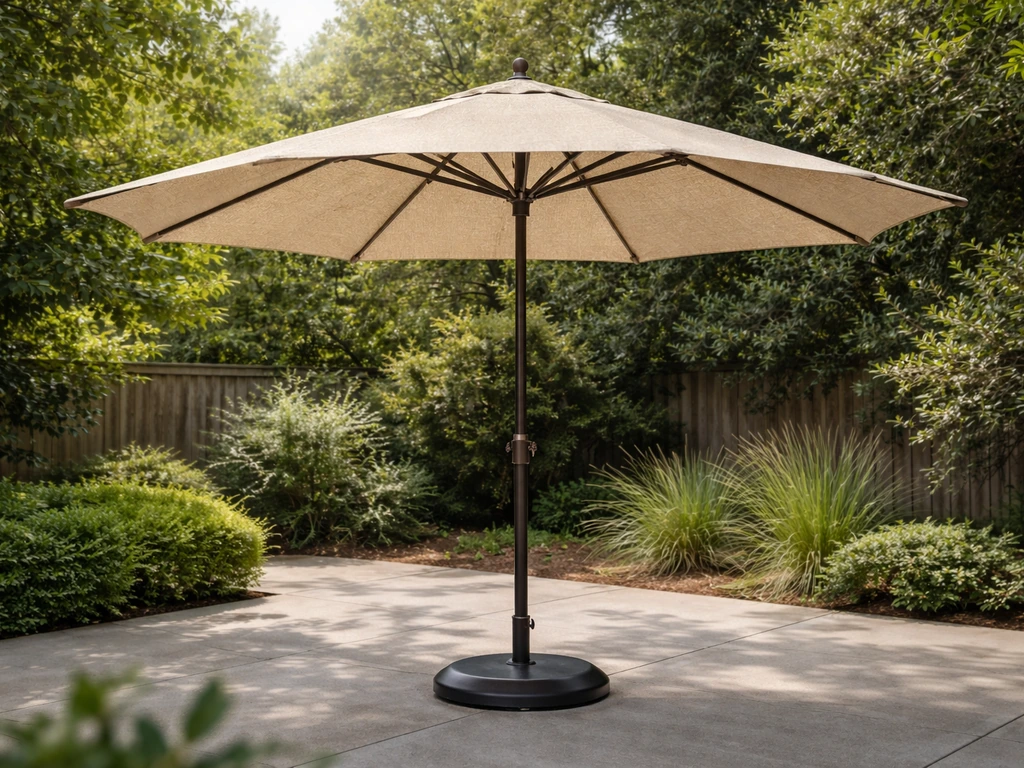
The Treasure Garden 11-foot Auto Tilt market umbrella (model UM812 and similar) is the benchmark for residential heavy-duty use. If you want the best sturdy patio umbrella-style option in this guide, the Treasure Garden 11-foot Auto Tilt market umbrella is a strong benchmark to compare against. Key specs: aluminum frame, 1.5-inch pole (per Forbes Vetted's review of the 9-foot version at 1.5 inches), single or double wind vent depending on model, and Sunbrella canopy option with a 5-year warranty. The 11-foot version gives you 95 square feet of shade coverage, which is right for a 6-person dining table. If you want the fiberglass-rib path, FiberBuilt's commercial-grade 7.5 to 9-foot options are worth considering for windier climates, with ribs tested specifically for gust flex.
Best cantilever pick
Treasure Garden's AG25T cantilever is a solid residential-to-commercial crossover. It uses a double wind vent, weighs 72 lbs on the frame alone (a good sign of structural density), and is compatible with the AKZ13 dedicated steel base. California Umbrella's 10-foot cantilever is a worthwhile comparison at a lower price point, with a documented pole diameter and single wind vent. The Treasure Garden is the better long-term value if you're in a consistently windy region. For heavily exposed locations (coastal, open hillsides), look for commercial-grade cantilevers with fiberglass ribs specifically.
Which style wins for wind resistance?
Market umbrellas with a center pole have a structural advantage in wind: the pole transfers load straight to the base with minimal torque. Cantilevers create lateral leverage that multiplies the base load under gusts. For pure wind resistance with the simplest setup, a vented market umbrella wins. For flexibility and aesthetics without a center pole, a cantilever with the right base can match it, but it requires more base investment and careful installation.
Size, materials, and frame construction for durability
Frame material: aluminum vs. steel vs. wood
Powder-coated aluminum is the best all-around choice for residential heavy-duty umbrellas. It's corrosion-resistant, lightweight enough to handle without help, and strong enough for sustained residential use. Steel is heavier and stronger but requires more maintenance against rust in humid or coastal climates unless it's galvanized or powder-coated steel. Wood (teak, eucalyptus) looks great but needs seasonal maintenance and offers no corrosion resistance advantage. For anything near salt air or in a wet climate, aluminum is the default answer.
Pole diameter and rib thickness
For a market umbrella, 1.5 inches is the residential standard. Commercial umbrellas step up to 2 inches or more. For ribs, Treasure Garden's 17mm (0.6-inch) aluminum rib is a published benchmark for mid-to-high-end residential models. Fiberglass ribs don't have a standard diameter comparison, but flex-and-return behavior under gust load is the performance spec to ask about.
Canopy fabric: what to look for
Solution-dyed acrylic is the material standard for heavy-duty canopies. Sunbrella is the most widely available name brand, and it genuinely earns its reputation: the dye is embedded in the fiber during manufacturing (not printed or coated on top), which is why colorfastness holds up under ISO testing and why the fabric resists mildew and fading. Most Sunbrella fabrics achieve UPF 50+, which is the highest practical UV protection rating. Fabric weight matters too: 200+ gsm blocks more UV and resists wear better than the 140-160 gsm fabrics you'll find in budget models. Treasure Garden's 5-year warranty for Sunbrella/Outdura/Tempotest canopies in their 2026 catalog is a useful durability signal: budget canopy fabrics typically carry 1-2 years at most.
Size matching to your space
The standard guidance is to size the umbrella canopy 2 feet larger than the table diameter on each side. A 48-inch round table needs at least a 9-foot umbrella; a 60-inch table needs 11 feet. For free-standing use without a table, add another foot of canopy diameter to account for seating that extends past the table edge. Cantilevers often run 10-13 feet because they're covering a larger zone without a center pole restriction.
Buying checklist: what to verify before you buy
Run through this before you click buy or head to a store. It takes ten minutes and prevents the most common mismatches.
- Measure your space: Record your table diameter (or seating zone dimensions), the distance from any walls or obstructions, and available clearance above the seating area. This determines your umbrella diameter and minimum pole height.
- Assess your wind exposure honestly: Is your yard open or sheltered? Do you see sustained winds above 15-20 mph regularly? If yes, prioritize fiberglass ribs, a double wind vent, and a fillable heavy base. If the yard is sheltered, a standard aluminum-rib vented model is fine.
- Choose your umbrella style first: Market (center pole) for simplicity and best wind stability; cantilever for no-center-pole coverage over larger areas. Confirm you have space for a cantilever base footprint, which extends well beyond the canopy edge.
- Match the base to the umbrella style and size: Use the manufacturer's recommended base for your specific model. For free-standing market use, plan for 80-100+ lbs of ballast. For cantilevers, get the dedicated base the brand recommends (e.g., AKZ13 for Treasure Garden large cantilevers). Do not mix base styles across umbrella types.
- Check pole diameter compatibility: If you're using a table, confirm the pole hole diameter matches (most standard tables take 1.5-inch poles, but verify). If the fit is loose, get a pole ring adapter or the base will wobble under load.
- Verify canopy fabric and warranty: Look for solution-dyed acrylic at 200+ gsm, UPF 50+, and a minimum 3-5 year canopy warranty. Sunbrella, Outdura, and Tempotest are the fabrics worth paying for.
- Confirm frame specs: Aluminum frame with powder coat, 1.5-inch minimum pole diameter for residential use, ribs at 17mm+ aluminum or fiberglass. Look for at least a single wind vent; double vent if you're in a consistently breezy area.
- Review the manufacturer's wind limit and operating instructions: Know the rated wind speed limit and the lower operational threshold (typically 10-20 mph for tilt removal or closure). Plan your use habits around those numbers, not the top-line marketing claim.
- Budget for the full system: A quality 11-foot market umbrella plus a proper weighted base runs $400-$800 total for residential-grade heavy-duty setups. Cantilever systems with dedicated bases typically start at $600-$1,200. Anything significantly cheaper usually trades off on fabric weight, rib quality, or hardware grade.
One final practical note: no umbrella lasts forever if you leave it open in every storm. The brands that make the best heavy-duty umbrellas all include operating instructions that tell you to close or take down the umbrella at certain wind speeds. Following those instructions is what separates a 10-year umbrella from a 3-year one. The frame and canopy quality buys you durability; your habits buy you longevity.
FAQ
How often should I tighten the pole-to-base connection on a heavy-duty patio umbrella?
If your umbrella is the kind that uses an adjustment collar or set screw at the base, make it a habit to check snugness after windy days (and after moving or repositioning). Even a small amount of stem looseness can turn normal gust loads into wobble, which accelerates rib fatigue and can damage the canopy hardware over time.
Does a high “wind speed rating” mean I can keep the umbrella open in storms?
A high advertised maximum wind speed usually means structural survival when the umbrella is managed properly, not that you should leave it open and “test” the limit. Treat the manufacturer’s number as a last-resort ceiling, and plan to close or remove the umbrella when gusts approach 10 to 15 mph above your comfort level or whenever the manual specifies.
Can I use a generic heavy umbrella base for a cantilever model if it’s heavy enough?
You can usually use an in-table umbrella base only if the pole goes straight down and the umbrella design is meant for table-hole stability. For cantilever or offset umbrellas, a generic free-standing base is often underbuilt for lateral torque, even if it seems heavy enough, so verify the exact base model or at least the manufacturer’s required ballast and mounting method.
What are the most common reasons a heavy-duty umbrella still flaps or wears out quickly?
If the canopy feels loose, flutters more than it should, or the vent area rips or stretches sooner than expected, check the canopy-to-frame tie points and the tilt mechanism first. Many “not heavy-duty” complaints come from misaligned hardware that changes how the venting works, especially when the umbrella is partially tilted during windy use.
Which rib type is best for coastal or high-wind locations, aluminum or fiberglass?
For coastal or consistently breezy yards, prioritize fiberglass ribs plus a double-vent canopy, and choose a frame finish designed for corrosion resistance (powder-coated aluminum). In these locations, even premium aluminum ribs can perform well, but fiberglass gives more flex-and-return behavior under repeated gust cycles.
What should I check about my yard layout or obstructions before buying the best heavy-duty patio umbrella?
If you cannot get the umbrella fully plumb and stable in your setup, choose a model that matches your installation constraints rather than trying to “make it work.” For example, if you need to mount under an overhang or near a wall, clearance affects how the canopy catches wind and how you can level the canopy during gusts.
Do wind straps or anchoring kits make up for an underweight patio umbrella base?
Yes, wind-management accessories can help, but they do not replace correct base sizing and manufacturer guidance. Look for solutions that let you keep the canopy level in gusty conditions and add secure anchoring when you use a fillable base, especially for free-standing placements.
How do I choose the right base weight for a free-standing (not table-hole) umbrella?
For a true free-standing setup, favor bases that are fillable to reach roughly 80 to 100+ lbs for typical 11-foot market umbrellas, and increase from there as exposure rises. If you use sand or fill with a mix, keep the base level and periodically inspect seams and the fill cap, because settling can create wobble.
Is auto-tilt safe in wind if I only tilt a little?
Yes, tilt creates more lift and torque at the pole base. The safe operational approach is to return the canopy to level when winds pick up and to follow the manual on removing tilt at specific wind thresholds, since some auto-tilt designs expose more risk when angled into the wind.
How can I tell whether a heavy-duty umbrella claim is meaningful or just marketing?
If you’re comparing two “heavy-duty” options, confirm whether the manufacturer references an objective wind-safety or durability test method and whether they publish operational instructions that specify closure or take-down thresholds. Ratings that focus only on maximum survival without clear operating limits are harder to use safely day-to-day.