If you're shopping for a high-end patio umbrella, the short version is this: spend your money on a solution-grade canopy fabric (solution-dyed acrylic like Sunbrella is the benchmark), a powder-coated aluminum or stainless steel frame rated for at least 35 mph winds, and a base that weighs no less than 50 lbs for a 9-foot umbrella or 75 lbs or more for an 11-foot or cantilever model.
Best High-End Patio Umbrella: How to Choose Luxury

Kent Lang
24 Jun 2026
The CPSC instructs shoppers to look for an ASTM F3681 label showing compliance for beach umbrellas and anchor systems for wind speeds up to 30 mph solution-grade canopy fabric. Style matters too, a cantilever gives you unobstructed shade over seating areas, while a center-pole market umbrella suits a table with a center hole.
Get those three things right and the premium price is absolutely justified. Get any one of them wrong and even a $1,000 umbrella becomes a liability.
What 'high-end' should actually mean in real performance
A luxury price tag should translate into measurable, tangible performance, not just a prettier frame finish or a fancier retail box. When I evaluate whether an umbrella earns its premium cost, I'm looking at four specific things: canopy fabric longevity, frame integrity under wind load, hardware smoothness and durability, and how well the design holds up over multiple seasons without fading, corroding, or warping.
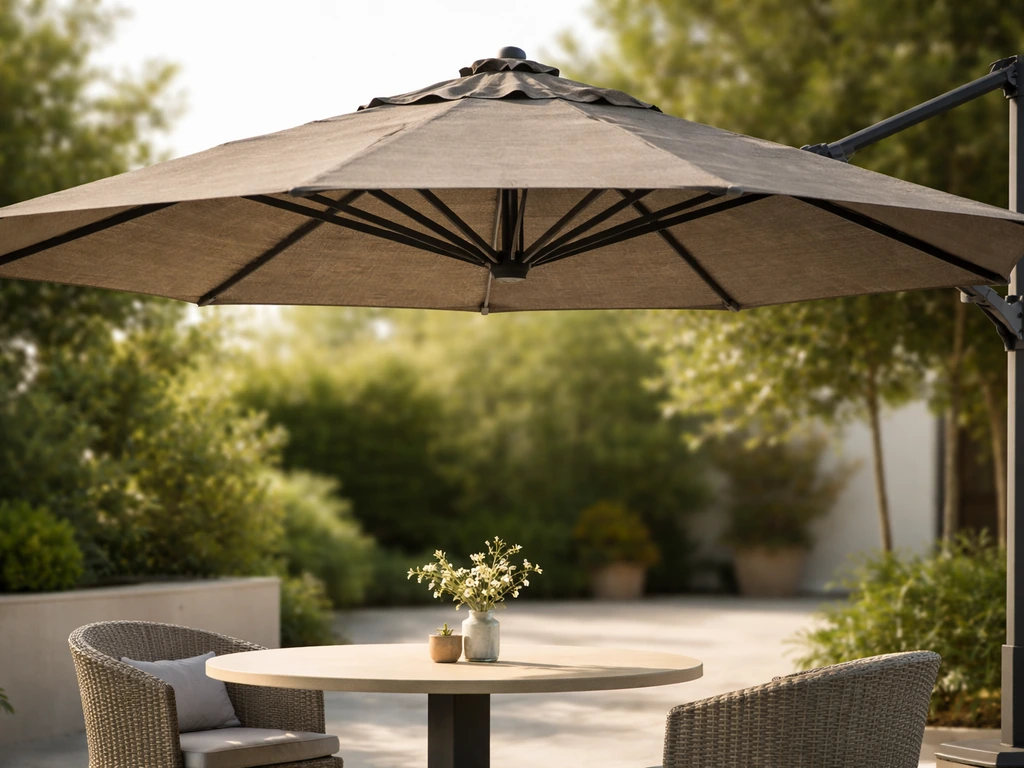
On the canopy side, solution-dyed acrylic (Sunbrella being the most recognized brand) is the gold standard. The color is baked into the fiber itself, not applied as a surface coating, so it resists UV fade for 5 years or more under daily sun exposure. Look for a fabric with a UPF rating of 50+, that blocks 98% of UV rays, which matters both for your skin and for the fabric's own longevity. Budget umbrellas use polyester with a UV coating that degrades within a season or two. High-end ones don't.
For frames, powder-coated aluminum is the workhorse of the premium segment: it's lightweight, rust-resistant, and strong enough for residential use. Stainless steel hardware at the joints and hub adds another layer of corrosion resistance, especially important if you're near a coast or use your umbrella in a humid climate. At the very top end, teak and fiberglass frames show up, teak looks stunning but requires more maintenance, while fiberglass pole construction is common in high-end cantilever systems where flex resistance matters most.
Hardware quality is often where you feel the difference most. A premium umbrella opens with a smooth crank or push-button lift and has a tilt mechanism (auto-tilt or collar-tilt) that locks firmly without wiggling. If the crank feels gritty or the tilt collar slips under a light breeze, that umbrella has not earned a high-end designation regardless of price. Check the rib count too: 8 ribs is the minimum for a quality canopy; higher-end models often use 8 heavy-gauge ribs rather than 12 thin ones, which is actually more stable.
Choosing the right style: cantilever vs market vs offset
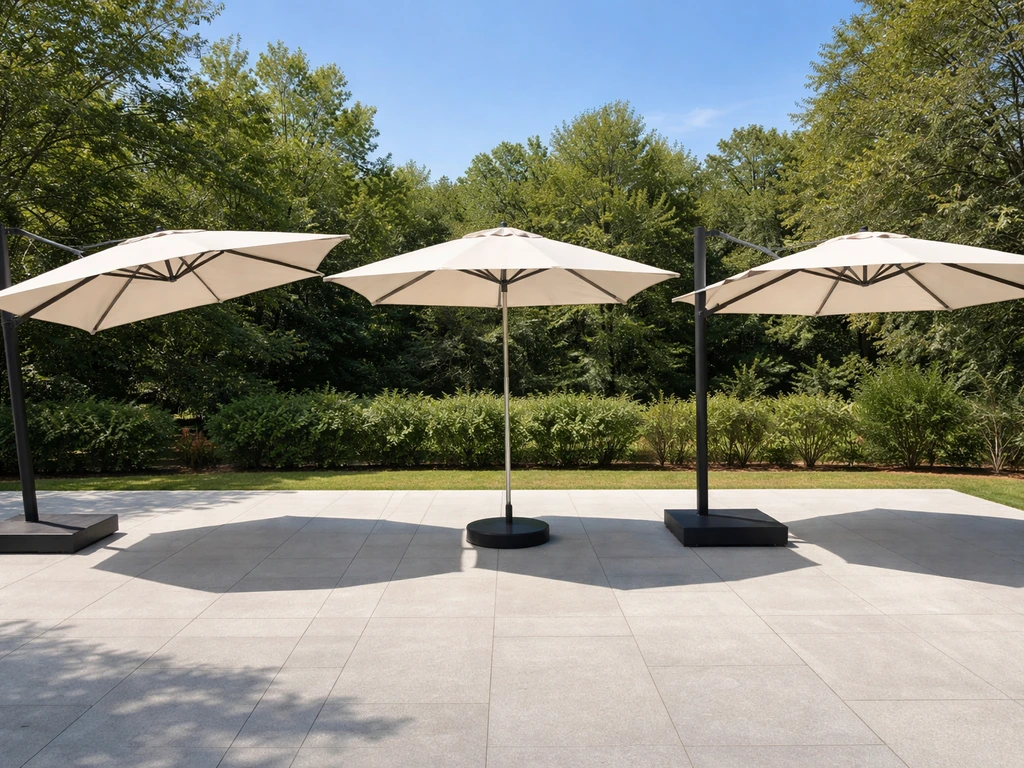
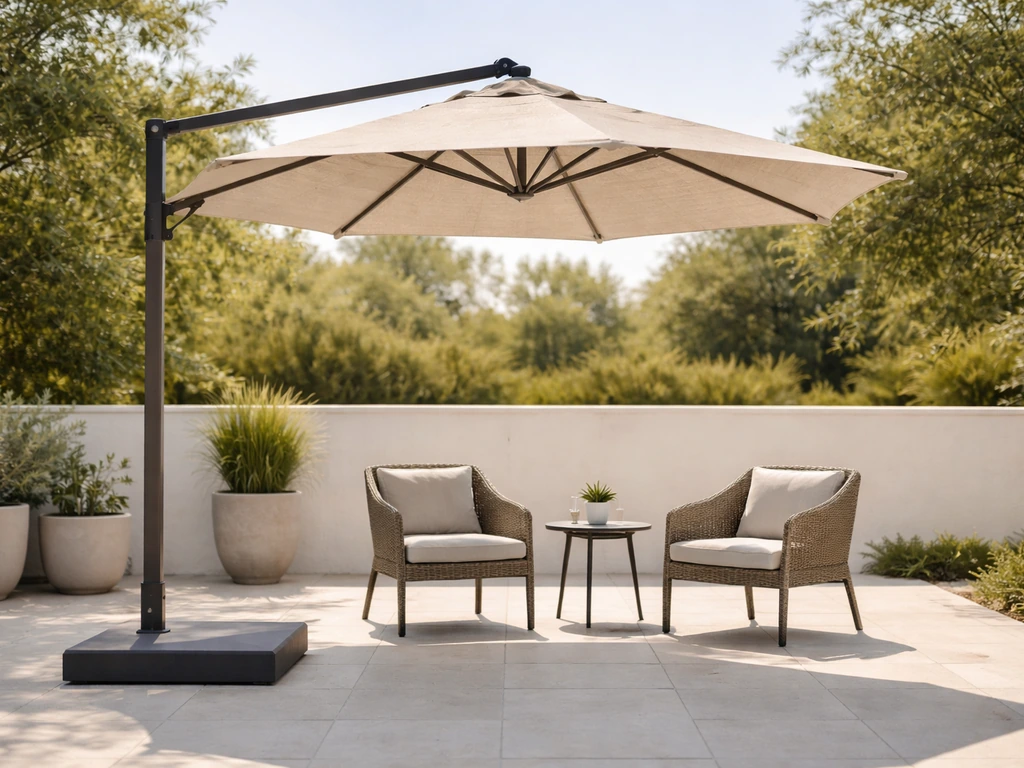
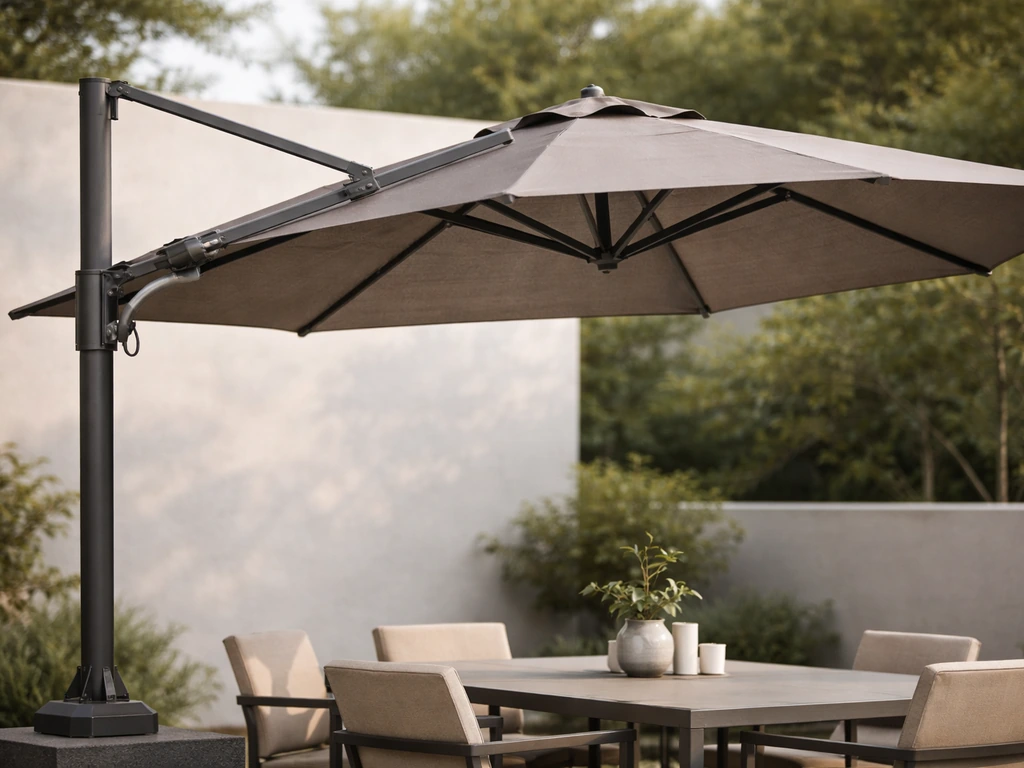
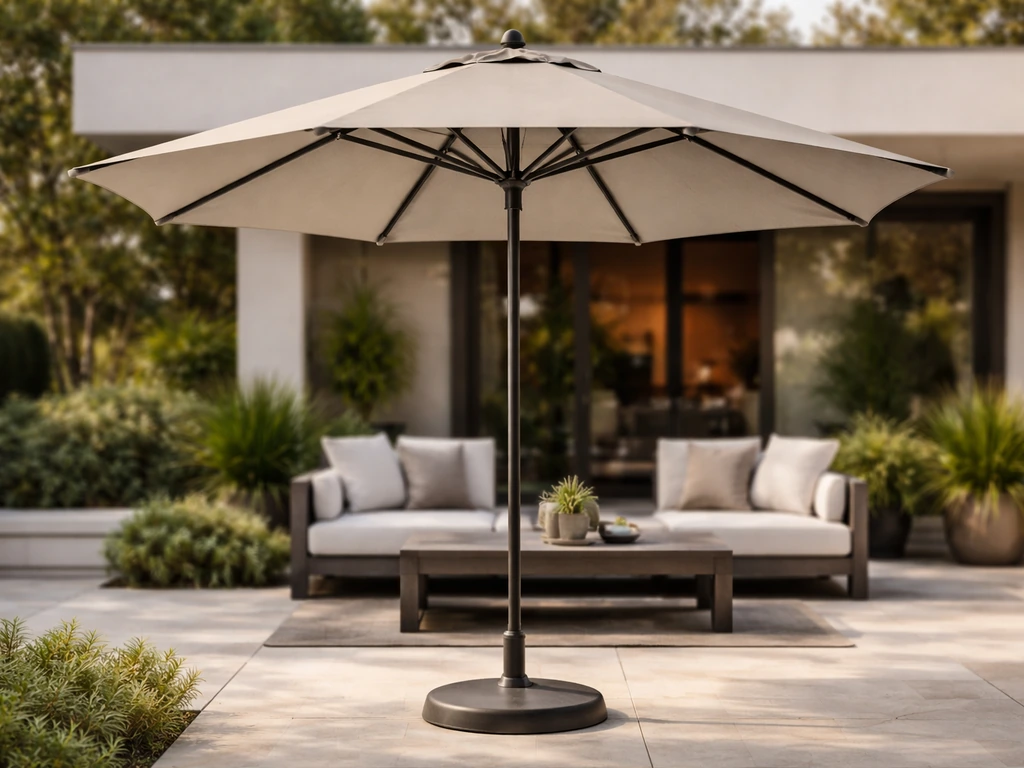
These three terms get used loosely and it causes real confusion. A market umbrella (also called a center-pole umbrella) has a straight pole running through the center of the canopy. It sits in a base or through a table hole and is the most traditional style. An offset umbrella has a pole that's positioned off to one side, holding the canopy out to the side. A cantilever umbrella is technically a type of offset design, but the pole extends upward and the canopy hangs out from the side on a lateral arm, usually allowing for much more clearance underneath, and sometimes allowing full 360-degree rotation.
In the high-end market, the cantilever is the most popular premium configuration because it maximizes usable space. There's no center pole interrupting your seating arrangement, and you can position the shade precisely where you need it without rearranging furniture. That said, cantilevered designs have real trade-offs: they require significantly heavier bases (often 150 to 250 lbs worth of ballast), and they catch more wind because the lever arm creates torque at the base. If you're in a consistently windy area, a well-anchored market umbrella is actually more stable than an expensive cantilever with an undersized base.
A center-pole market umbrella in the 9 to 11-foot range is the right call if you have a dining table with a center hole, want maximum wind stability for a given price, or are working with a smaller patio footprint. It's also easier to find premium market umbrellas in unusual colors or custom canopy configurations. If you're debating between offset and market styles more broadly, the offset or cantilever wins when you need shade over a lounge area, a sofa grouping, or a pool deck where a center pole would be in the way. If you need that kind of shade flexibility, focus your search on the best quality offset patio umbrellas and match the arm reach to your lounge layout.
| Style | Best For | Wind Stability | Base Requirement | Typical High-End Price Range |
|---|---|---|---|---|
| Market (center-pole) | Dining tables, smaller patios | Best (lowest profile) | 50–75 lbs | $300–$900 |
| Offset | Lounge areas, asymmetric layouts | Moderate | 75–150 lbs | $500–$1,500 |
| Cantilever | Large seating areas, pool decks | Most demanding | 150–250+ lbs | $800–$3,000+ |
Sizing and coverage: measuring before you buy
Getting the size right is non-negotiable, and it's one of the most common mistakes I see, people buy a 9-foot umbrella for a 10-person seating area and wonder why half the group is squinting into the sun. The general rule is that your umbrella's diameter should be 2 feet larger than the furniture you're shading on each side. For a standard 48-inch round dining table, that means a 9-foot umbrella works well. For a 60-inch table or a rectangular 6-person setup, step up to an 11-foot model.
For cantilever and offset models, measure the reach of the arm, not just the canopy diameter. If you're specifically comparing offset patio umbrellas, the same principles on fabric longevity, frame strength, and base weight apply, with extra attention to the arm reach and wind leverage For cantilever and offset models. A 13-foot cantilever with a 5-foot offset arm needs to clear your furniture by at least 2 feet on each side for effective shade. Also check the clearance height, most cantilevered canopies hang at 7.5 to 8.5 feet off the ground, which is fine for standing but can feel low if you're under it at a tall bar-height table.
One measurement people skip: afternoon sun angle. If your patio gets direct western sun from 3 pm onward, your umbrella's shade footprint shifts dramatically from noon. A tilting canopy (auto-tilt or collar-tilt) can compensate by up to 30 to 45 degrees, which effectively extends your shaded time by 2 to 3 hours. On a high-end umbrella, that tilt mechanism should be smooth and lockable, if it drifts back to vertical in a breeze, it's not doing its job.
Materials and build quality: what the frame, fabric, and hardware should look like
Canopy fabric
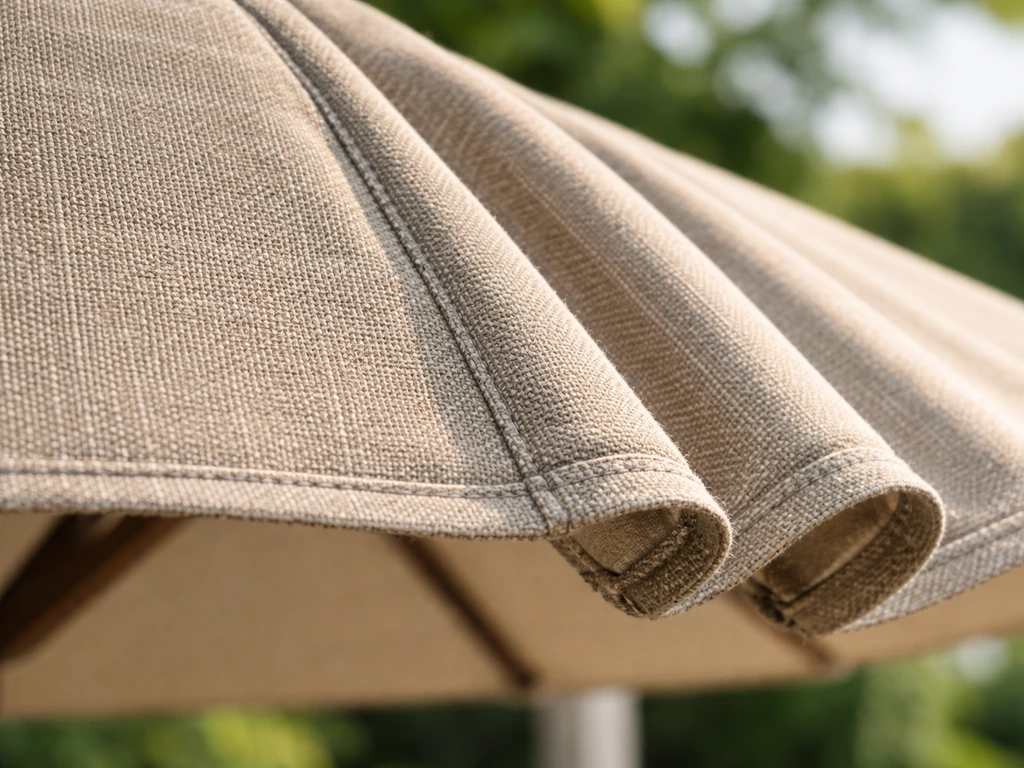
Solution-dyed acrylic is the target. Sunbrella is the most widely referenced brand, but other solution-dyed acrylics from companies like Outdura or Agora can perform comparably. If you want the best brand of patio umbrella, start by prioritizing solution-dyed acrylic canopies and wind-ready frames, then compare candidates that consistently meet those specs. What you're looking for on the spec sheet is UPF 50+, mold and mildew resistance, and solution-dyed construction (as opposed to yarn-dyed or printed). Some high-end umbrellas also use olefin fabrics, which are softer and slightly less expensive but still UV-stable. Avoid anything described only as 'polyester with UV coating' on a premium-priced umbrella, that's a red flag.
Frame and pole
For market umbrellas, look for a pole diameter of at least 1.5 inches (38mm), larger poles flex less in wind. Premium models often run 2-inch poles in heavy-gauge aluminum. The wall thickness of the pole matters as much as the diameter; thin-walled poles can fold in a gust even if the outer diameter looks substantial. For cantilever frames, fiberglass is worth the premium because it handles lateral flex without cracking the way aluminum can over time. All metal joints and hardware should be stainless steel or marine-grade zinc, not plain zinc or plastic.
Ribs and hub
The hub is the central connector where all ribs meet at the top of the canopy. On cheap umbrellas it's plastic. On quality umbrellas it's cast aluminum or stainless steel. The ribs themselves should be fiberglass or heavy aluminum, fiberglass flexes without breaking, which is why it performs better in gusty conditions. Inspect the rib-to-hub connection points; any plastic pins or thin stamped metal brackets are a weak point that will eventually fail.
Wind resistance and stability: what the specs mean and how to set up right
Wind resistance is where marketing claims diverge most sharply from reality. Many brands claim their umbrellas are 'wind resistant up to 35 mph' without reference to any third-party testing. ASTM International developed the ASTM F3512-21 standard ('Standard Test Method for Evaluating Wind Safety and Durability of Market Umbrellas') specifically to create a repeatable, verifiable procedure for testing wind safety and durability in market umbrellas.
If a premium umbrella cites compliance with ASTM F3512-21, that's a meaningful indicator, it means the performance claims were tested against a defined methodology, not just self-reported. The CPSC also highlights label language such as “MEETS ASTM F3681 FOR WIND SPEEDS UP ... ” when umbrellas are designed to address wind hazards, which provides additional context for evaluating wind-related claims [compliance with ASTM F3512-21](https://www. cpsc.
gov/s3fs-public/SafetyAlert3000BeachUmbrellas_052024. pdf? VersionId=uvcwD1Mh727J2TYzS2QguVDXLy1AIiwN).
That said, real-world wind behavior is rarely as clean as a lab test. Reddit users who've gone through multiple umbrella replacements consistently report that placement relative to walls, fences, and building corners makes an enormous difference, turbulence from a nearby wall or corner can amplify effective wind load significantly compared to open-air conditions. If your patio has any of those features, treat the manufacturer's wind rating as a baseline, not a guarantee, and plan your base weight and anchoring accordingly.
Practically, here's how to think about wind ratings: a 25 mph sustained rating is adequate for sheltered urban patios; 35 mph is what you want for a more exposed suburban deck; anything consistently over 35 mph warrants a permanent in-ground anchor or weighted base system in the 150+ lb range, regardless of the umbrella's own rating. And the most important habit you can build: close the umbrella when you leave the patio, even if it looks calm. Gusts are the primary cause of tipped umbrellas and damaged frames, and they rarely announce themselves.
Bases, anchoring, and accessories: the stuff that actually keeps everything standing
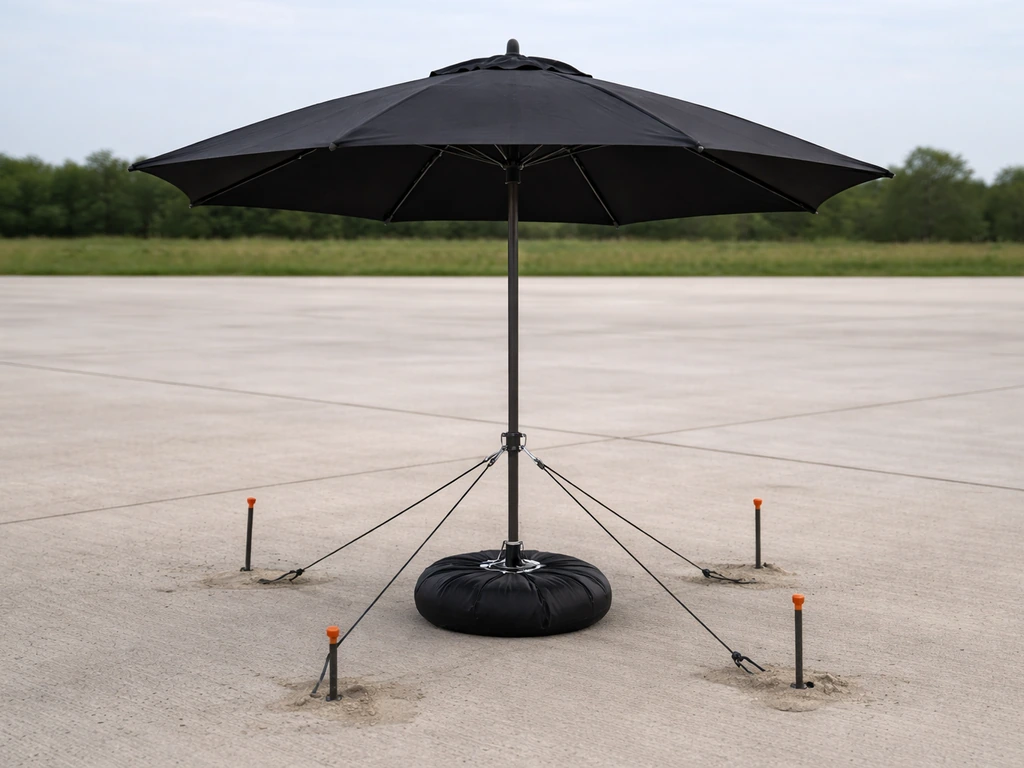
A high-end umbrella with an undersized base is just an expensive projectile. Base weight is the single most underestimated factor in patio umbrella shopping. The rule of thumb: 50 lbs minimum for a 7.5 to 9-foot market umbrella, 75 lbs for a 10 to 11-foot market umbrella, and 150 lbs or more for most cantilevered or offset designs. Some manufacturers sell proprietary bases matched to their frames, when that's an option, use it, because the pole socket diameter and weight distribution are calibrated together.
For permanent installations, an in-ground mount sleeve is the most secure option. These are 4 to 6-inch diameter galvanized steel sleeves set in concrete, with a removable insert that matches your pole diameter. You get the benefit of a lightweight above-ground footprint with the stability of a fixed anchor. This is worth the installation effort if you have a fixed outdoor dining setup or a pool deck where the umbrella location isn't going to change season to season.
For freestanding base setups, look for bases with fillable reservoirs (for water or sand ballast) rather than fixed concrete-filled bases, they're far easier to move at the end of the season and still achieve adequate weight when filled. Pair any freestanding base with a base stand or weighted anchor ring for cantilever models. And add a cover: a high-quality weatherproof umbrella cover (not a flimsy polyester sleeve) extends canopy and frame life by 2 to 3 seasons, particularly over winter or extended periods of non-use.
One accessory worth calling out: umbrella lighting. Many premium cantilever systems now offer integrated LED lighting in the hub or ribs, it's a genuinely useful feature, not just a gimmick, since it extends evening usability without requiring additional outdoor fixtures. Look for solar-powered or rechargeable options to avoid running cables.
How to pull this all together and buy with confidence
Before you start comparing specific models, work through these decisions in order. Style first, then size, then materials, then base. Most people do it in reverse, they find a canopy color they like and work backward, and that's how you end up with a beautiful umbrella on a base that's 30 lbs too light for your actual wind exposure.
- Decide on style: center-pole market umbrella for dining tables and tighter spaces; cantilever or offset for lounge seating and pool areas. If wind is a regular concern, lean toward market/center-pole first.
- Measure your space: umbrella diameter should extend at least 2 feet beyond the furniture on each side. For cantilever models, confirm the reach of the arm and the canopy clearance height.
- Check the canopy: look for solution-dyed acrylic (Sunbrella or comparable), UPF 50+ rating, and mold/mildew resistance. Avoid surface-coated polyester on anything above $300.
- Verify the frame: aluminum pole at least 1.5 inches diameter (2 inches preferred), fiberglass ribs, and stainless steel or cast aluminum hub and joints. No plastic structural hardware.
- Confirm the wind rating and whether it references ASTM F3512-21 testing. If you have any wall, fence, or building turbulence on your patio, add a safety margin to the stated rating.
- Match the base to the umbrella size and style using the weight minimums above. Don't buy the umbrella and then buy a base separately — confirm compatibility for pole diameter and weight before purchasing.
- Add a cover and a closing habit: close the umbrella any time you're not actively using it, and cover it during extended periods of non-use or storms.
If you're still narrowing down specific styles, the offset and cantilever category deserves deeper attention, those designs have their own nuances around base sizing, rotation range, and structural quality that are worth exploring on their own. Similarly, if brand reputation is a deciding factor for you, the differences between top manufacturers in the premium segment come down to warranty terms, replacement parts availability, and how the company handles fabric or hardware failures over time, which is worth its own comparison.
The bottom line: a genuinely high-end patio umbrella is one that performs well for 7 to 10 seasons with basic maintenance, not just one that costs a lot at the register. Get the style, size, fabric, frame, and base right as a matched system and you'll have a setup that earns its price every year.
FAQ
How should I clean a best high-end patio umbrella to keep it looking new?
No. Even with the “solution-dyed acrylic” spec, you still need to clean pollen, food residue, and grime off the canopy and ribs. Use a mild soap solution and rinse thoroughly, because mildew stains often start where dirt holds moisture, and they can reduce water repellency over time.
What’s the best way to protect a luxury patio umbrella in winter?
For winter storage, leave the umbrella closed, dry, and covered with a real umbrella cover that breathes (it should not trap constant condensation). If you store it outdoors, keep the base off damp ground or use a stand pad to prevent moisture wicking into the pole socket.
Can I use the tilt feature in windy weather to keep shade without closing it?
If the umbrella is cantilever or offset, you should not rely on tilt alone for wind safety. Use the tilt function mainly for shade positioning, but close the canopy completely before any sustained breeze or when you leave the patio, because lever-arm designs increase torque at the base.
How do I choose size if my patio furniture is lounge-style instead of a dining table?
Measure the actual shade requirement, not just the table size. The article’s 2-foot-overhang rule works for dining, but for lounge seating you also need arm reach clearance (offset/cantilever) and headroom, typically around 7.5 to 8.5 feet for many cantilever models, to avoid the canopy feeling too low.
What should I check for long-term durability beyond the canopy fabric?
Look for documented pole and hub hardware materials, then verify that replacement parts are available for your specific model. For example, fragile rib-to-hub connections (plastic pins or thin stamped brackets) are a common failure point, and high-end brands usually have clearer replacement-part pathways and better warranties for those components.
If I buy a high-quality umbrella cover, do I still need heavy base weight for wind?
A weatherproof cover can help, but it should not be treated as a substitute for proper anchoring. Covers do not stop wind gusts from creating torque, they mainly reduce UV and precipitation exposure, so the umbrella still needs an appropriate base weight or in-ground sleeve.
Can I use a different brand’s base if it fits the pole diameter?
Yes, but only if the pole socket and base are engineered for that umbrella type. Many proprietary bases match pole diameter and weight distribution, and mixing a different brand can lead to poor fit, wobble, or stress on the hub and tilt mechanism during gusts.
How do I choose between market vs cantilever if my patio is often windy?
Start by matching your geography and patio layout to the wind assumptions. Use sheltered urban patios as “25 mph adequate,” exposed areas as “35 mph target,” and if you face frequent gusts above 35 mph, plan on an in-ground anchor or a weighted base approach, and treat the umbrella rating as a baseline not a guarantee.
What’s the quickest way to spot a low-quality hub or rib system at a showroom?
Pay attention to the rib count and rib gauge, but also the rib-to-hub connection method. A “looks solid” umbrella can still be a problem if those connection points use weak plastics or thin stamped metal, because that is where flex concentrates first.
How can I tell if the tilt mechanism is actually high-end-quality?
If the umbrella drifts back toward vertical or the tilt does not hold position firmly, do not ignore it. A high-end tilt collar or auto-tilt should lock without slipping under light breeze, otherwise you are paying for shade that you cannot reliably position.
What maintenance tasks should I plan for during the season?
For frequent daily use, expect basic maintenance to include periodic rinsing, removing debris from rib channels, checking for loose fasteners at the joints, and inspecting the crank and tilt lock for smooth operation. If you notice gritty movement, stop forcing the mechanism and clean it, because grit often turns into wear on the hardware.
What changes if I’m buying a luxury patio umbrella for a coastal or humid climate?
If you live near the coast or have high humidity, prioritize corrosion-resistant hardware upgrades like stainless-steel or marine-grade zinc at joints and the hub. Even powder-coated frames can be undermined by failing small metal components, and that can turn into wobble before you see obvious rust.
Are integrated LED umbrellas worth it, and what should I verify before buying?
Yes, but be deliberate. Integrated lighting can be useful, but confirm whether the light system is rechargeable or solar, and check how cables route on the hub or ribs so they do not chafe under folding, tilting, or repeated seasonal setup.