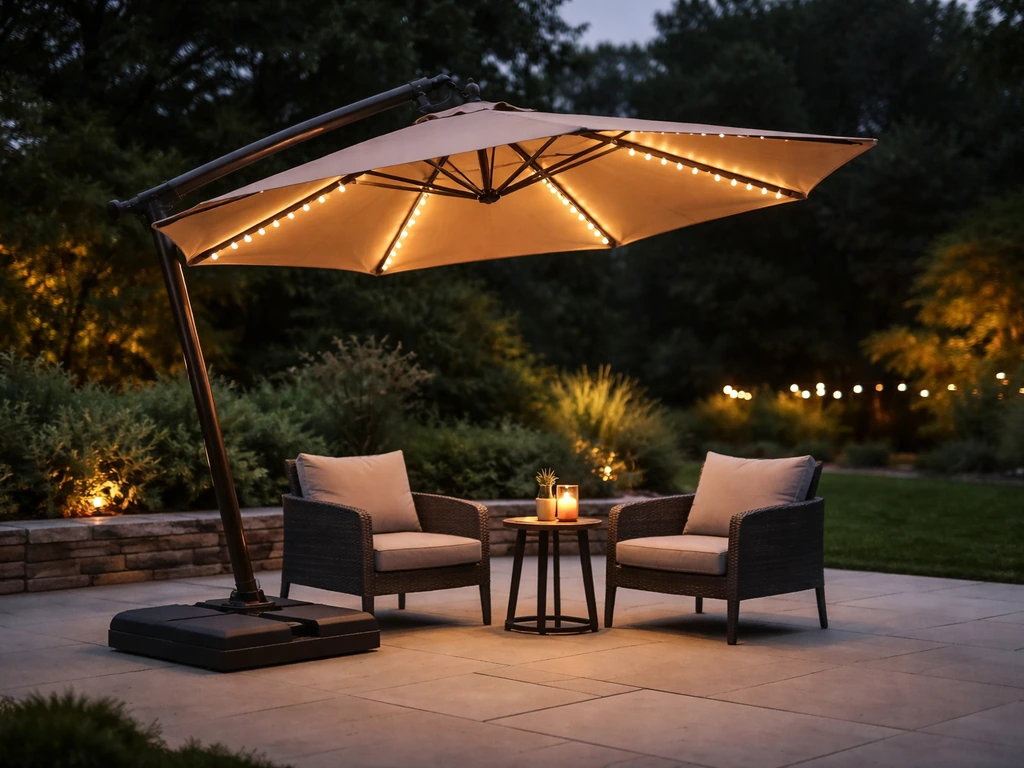
The best lighted patio umbrella combines integrated LED lighting built directly into the canopy or pole with solid weather resistance, a stable base, and controls you'll actually use. If you want ambient light that disappears into the umbrella design rather than a clip-on gadget you'll regret, look for umbrellas with LEDs embedded along the ribs or canopy interior, a minimum IP44 weather rating, and a power setup that matches your patio's outlet situation. Size, wind rating, and base weight matter just as much as the lights themselves.
Best Lighted Patio Umbrella Guide: Size, LED Control, Weather

Kent Lang
22 May 2026
What 'lighted' actually means and when it makes a difference
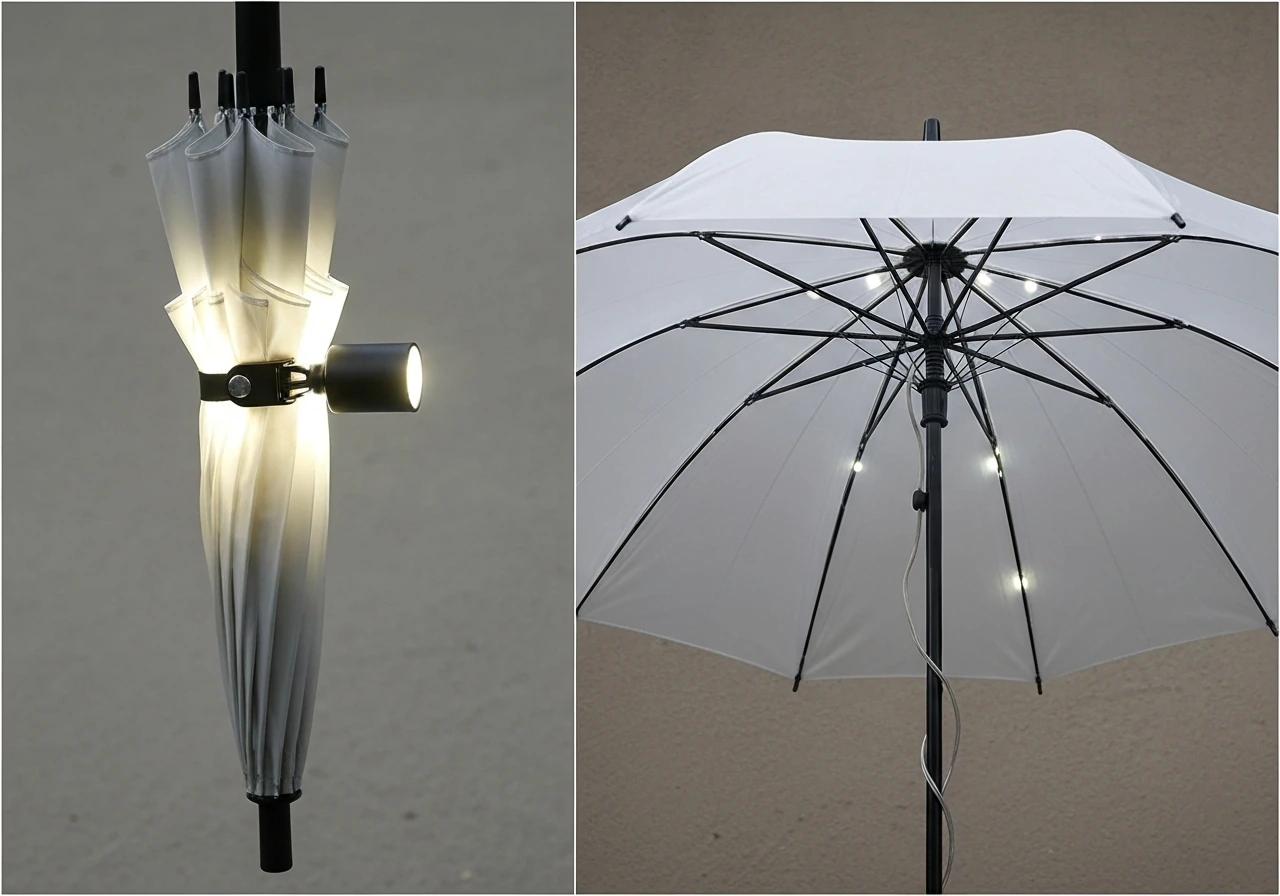
There are two very different products that get called 'lighted umbrellas,' and mixing them up leads to disappointment. The first is a blank" rel="noopener noreferrer">clip-on or clamp-on light fixture that you add to any existing umbrella. These are small LED units that clamp onto the pole or snap onto rib tips, like the blank" rel="noopener noreferrer">20-bulb clamp-on LED units you'll see at hardware stores. They work fine as a quick add-on, but the light distribution is uneven, cables dangle, and nothing about the umbrella itself is designed to accommodate them.
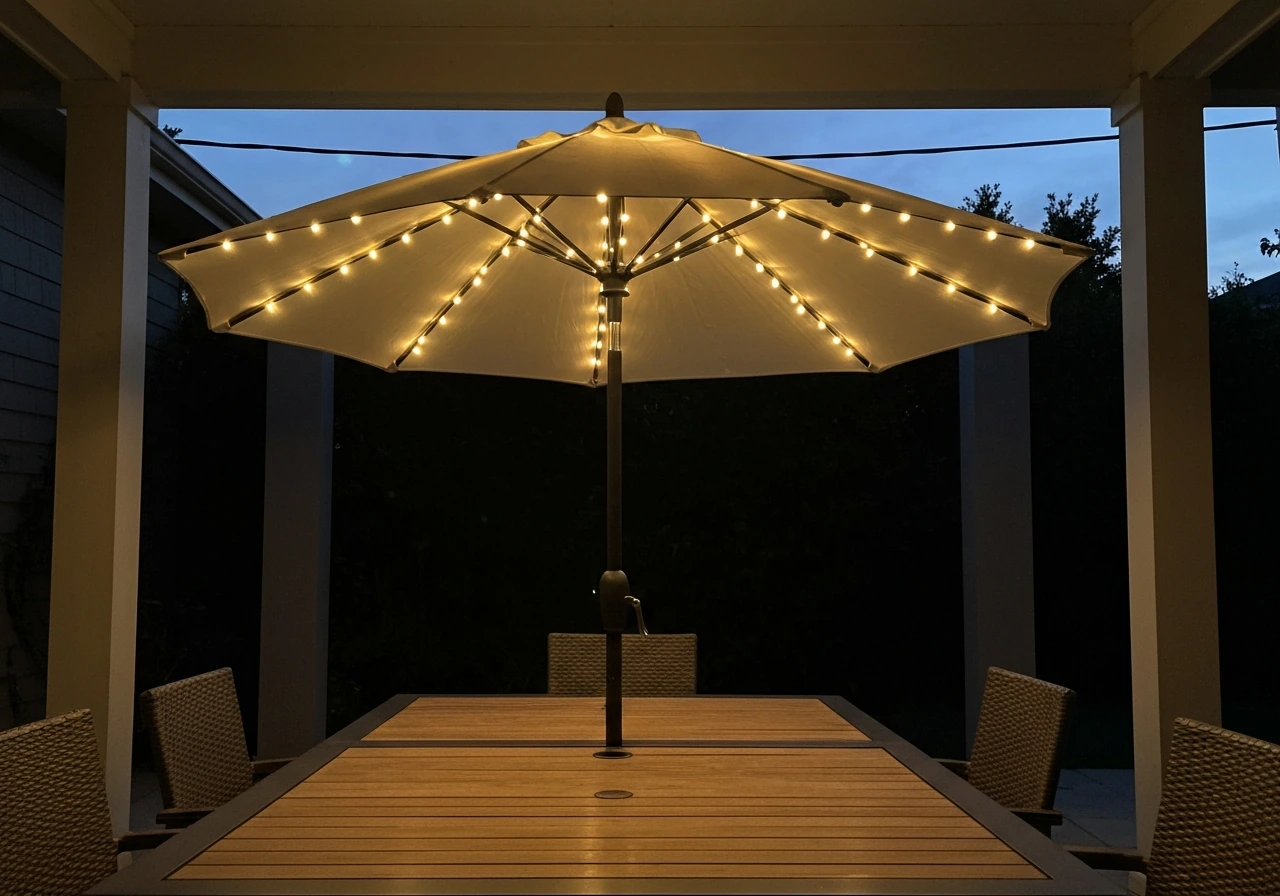
The second type is a genuinely integrated lighting system, where LEDs are embedded or strung along the interior canopy surface, wired through the pole, and controlled via a dedicated switch or remote. This is what most people picture when they search for the best lighted patio umbrella. The light wraps the underside of the canopy evenly, it looks intentional, and the wiring is protected within the structure. This guide focuses on that second type, because that's where the buying decisions actually get complicated.
When does integrated lighting matter most? Any time you use your patio after sunset or in the early evening, integrated LEDs let you extend that time without setting up separate string lights or lanterns. It's particularly useful around dining tables where you want overhead ambient light without a cord running across the patio. If you only sit outside in full daylight, a standard umbrella does the job fine and the lighting premium isn't worth it.
Matching the umbrella to your space (size, height, coverage)
A lighted umbrella that's too small for your table creates a dim ring of light at the edges and leaves the seating area in shadow. The general sizing rule still applies here: your umbrella diameter should extend at least 2 feet beyond the table edge on all sides. For a standard 48-inch round patio table, that means a 9-foot umbrella is the practical minimum. A 10- or 11-foot canopy gives better coverage and, since the LEDs are spread across more canopy area, produces noticeably more even ambient light.
Height matters for both clearance and light quality. Most market-style lighted umbrellas open at around 7 to 8 feet of clearance at the canopy edge, which is comfortable for standing adults. If you're buying a cantilever or offset model, the arm height and arc of the canopy affect where the light falls. A lower, tilted canopy concentrates light on the table; a higher, flat canopy spreads it more broadly. For dining, lower and directed is usually better. For lounge areas where people move around, higher spread works well.
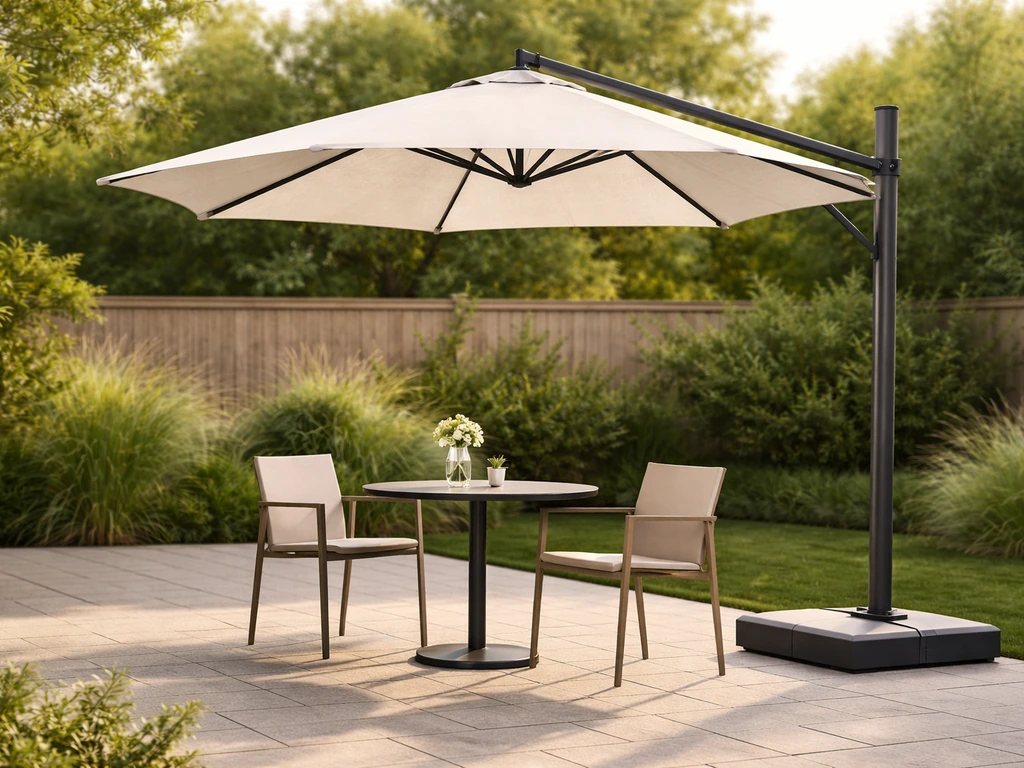
For large patios or L-shaped seating areas, a single 11-foot market umbrella often isn't enough, and a cantilever with a wider offset reach makes more sense. Some buyers in this situation use two smaller lighted umbrellas, but the cabling and base management doubles. A single large cantilever (13 to 15 feet) with integrated LEDs covering the full seating zone is usually the cleaner solution.
Power options and controls: what you'll live with day to day
Battery vs. plug-in power
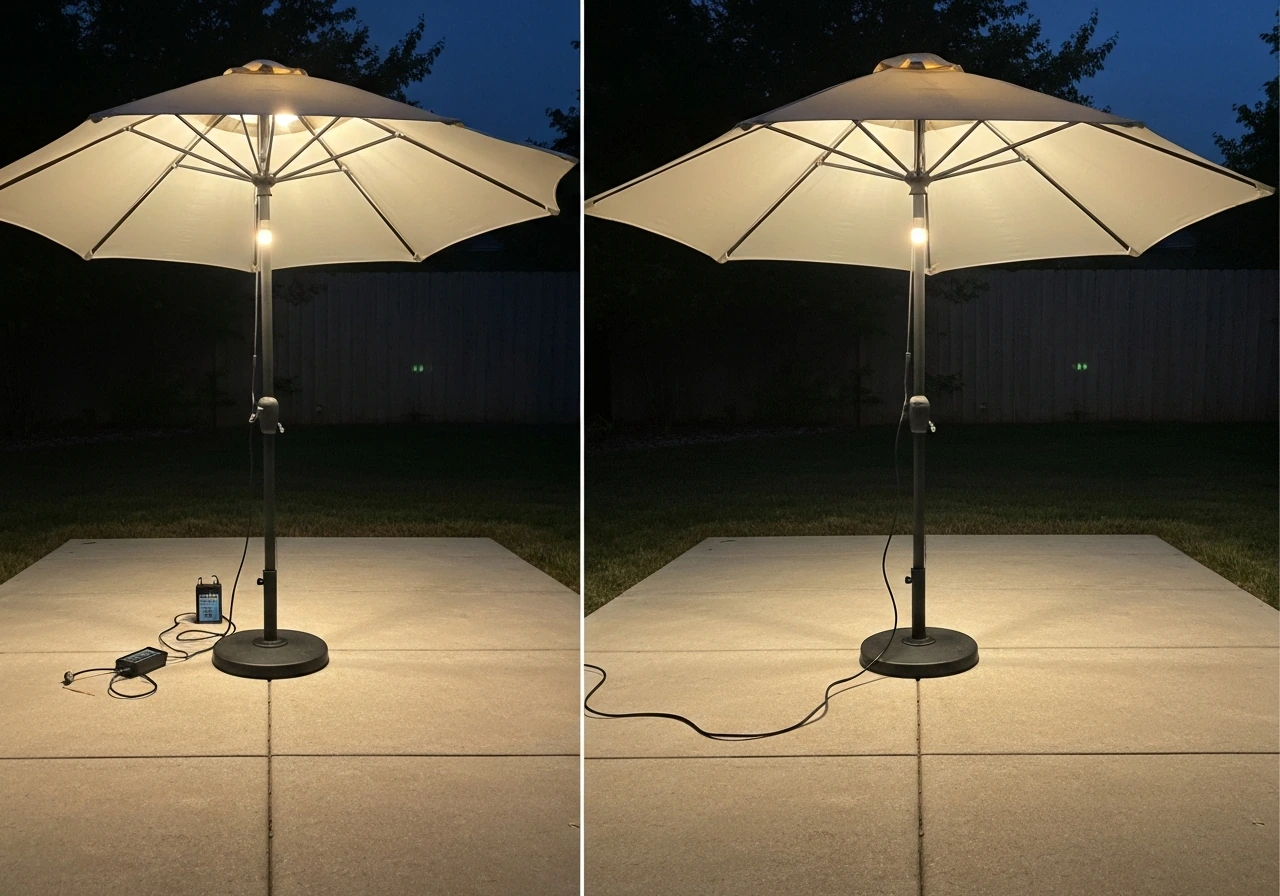
Battery-powered lighted umbrellas (including solar-charged models) are the easiest to set up because there's no cable management. If you want the best mix of convenience and ambience, focus on a better homes and gardens patio umbrella with solar lights that charges in direct sun and runs reliably in the evening solar-charged models. The downside is that brightness tends to be lower, typically in the 150 to 300 lumen range for battery LED systems, and run time varies widely. A good rechargeable LED umbrella should give you 6 to 10 hours on a full charge at medium brightness. Solar-charged versions work well if the umbrella is in direct sun for several hours a day, but in a shaded spot or a heavily overcast climate, the solar panel struggles to keep up. If you want to see what solar patio umbrella lights reviews say about real-world charging, pay close attention to how long the tests last in shade solar-charged versions. When you shop for the best patio umbrellas with solar lights, pay attention to how many hours the solar system needs and how it performs in shade Solar-charged versions.
Plug-in (corded) systems deliver consistent, brighter output, often 400 to 800 lumens or more, and you never worry about charge levels. The trade-off is cable routing. The cord runs down the pole and then needs to reach an outdoor outlet. This means planning for a covered, GFCI-protected outlet nearby. Running a cord across a walkway is a trip hazard, so if your nearest outlet is more than 15 to 20 feet away or awkwardly placed, a battery or solar setup is genuinely the better practical choice even if the lumens are lower.
Controls, brightness settings, and weather safety
Look for at least two brightness levels (dim for ambient mood lighting, bright for functional task light over food or games). A remote control is a real convenience feature when the umbrella is open and the switch is up inside the canopy. Some models include a built-in timer, which is worth having if you tend to forget the lights on. Dimmer functions help a lot with ambiance and battery conservation.
For weather safety, any plug-in connection point should be rated for outdoor use and kept off the ground. The control box or battery pack should carry at minimum an IP44 rating, meaning it's protected against splashing water. If you're in a climate with frequent heavy rain, push for IP55 or higher on all electrical components. GFCI protection on the outlet circuit is non-negotiable for plug-in setups. Never leave a corded lighted umbrella plugged in during a storm when the umbrella is closed and lying flat.
Durability and weather performance
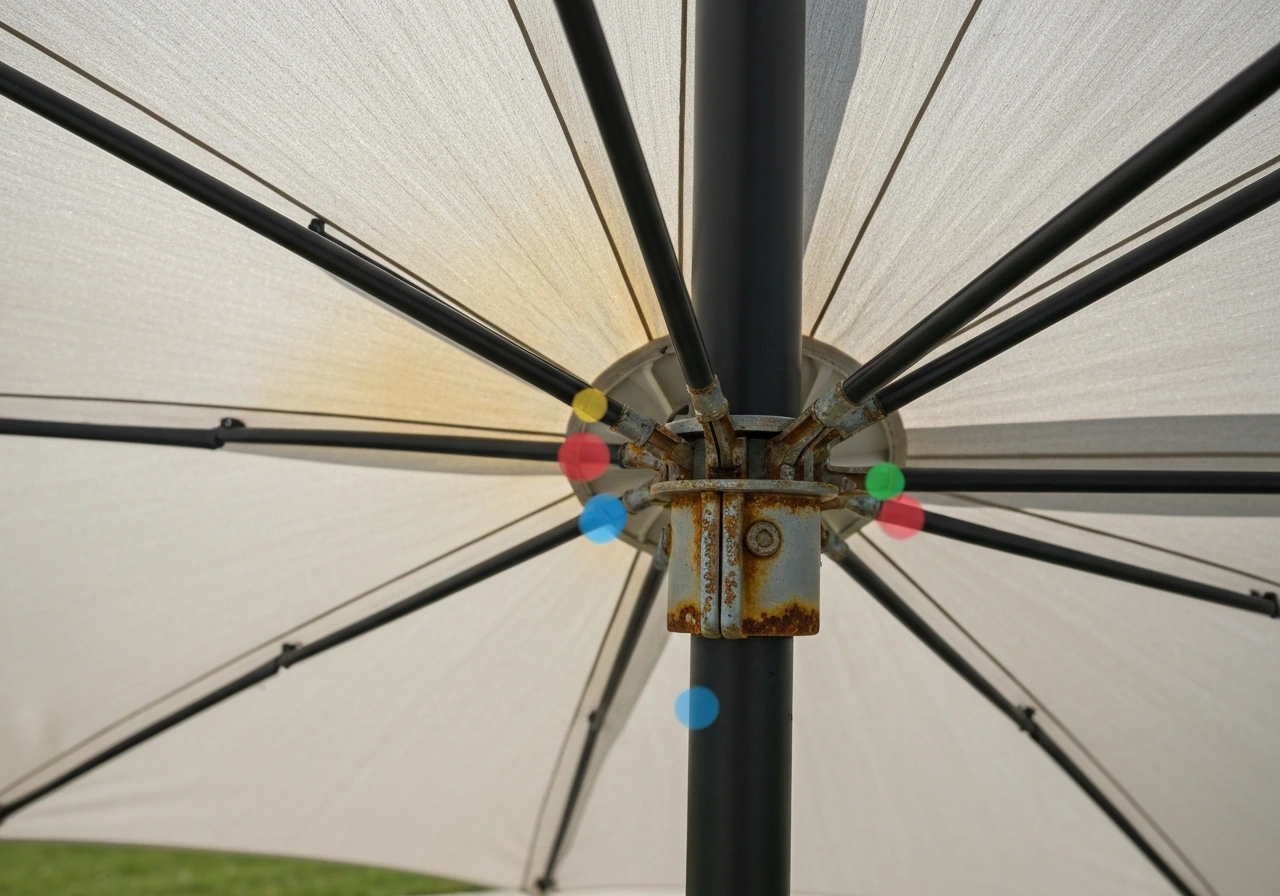
A lighted umbrella that fades, rusts, or loses its structural integrity in one season is a bad investment regardless of how good the lights are. There are four things to check here: fabric quality, frame material, wind resistance, and the IP/water rating of the electrical system.
Fabric and UV protection
Solution-dyed acrylic (brands like Sunbrella are the benchmark) is the gold standard for canopy fabric. The color is dyed into the fiber rather than printed on the surface, so it resists UV fading far better than polyester alternatives. Look for a fabric with a UPF 50+ rating and at least 2,000 hours of UV resistance in test data if the brand provides it. Cheaper polyester canopies on lighted umbrellas tend to fade within one to two seasons, which makes the whole unit look tired fast.
Frame materials and corrosion resistance
Aluminum frames are the best all-around choice: lightweight, rust-proof, and strong enough for most residential use. Powder-coated aluminum resists surface oxidation well. Steel frames are heavier and stronger, but require a quality powder-coat finish or they'll rust where the finish chips. Wood frames (teak, eucalyptus) look beautiful but need seasonal maintenance and are vulnerable to moisture if the finish isn't maintained. For lighted umbrellas where the pole carries wiring, aluminum is preferred because it doesn't corrode around wire entry points the way steel can.
Wind resistance
Most residential market umbrellas are rated for winds up to 25 to 35 mph when properly anchored. That covers typical breezy days but not storm-level gusts. Look for a vented canopy, where the top of the canopy has a second smaller layer that lets wind pass through. A vented design meaningfully reduces uplift force. Cantilever umbrellas are more vulnerable to wind than center-pole models because of the leverage the arm creates, so base weight becomes even more critical there. Close and secure any lighted umbrella when winds are forecast above 35 mph.
Base, installation, and stability
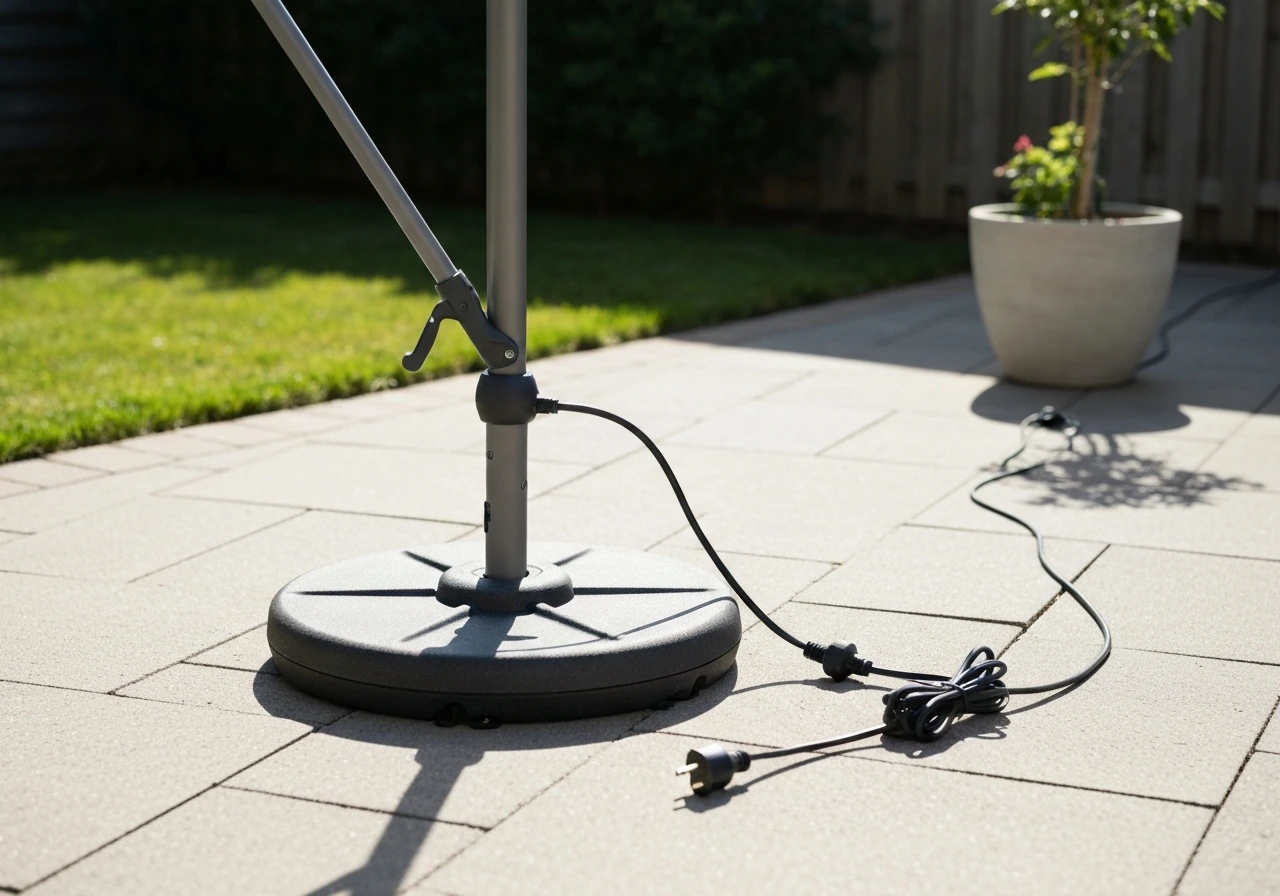
This is the part buyers underinvest in most often. A lighted umbrella is often heavier than a standard umbrella due to the LED hardware and wiring, which raises the center of gravity slightly. For a 9-foot market umbrella, a minimum 50-pound base is a reasonable starting point. A 7.5-foot umbrella can work with a 35 to 40-pound base in a sheltered spot. Go heavier if your patio is exposed or if you're in a windy region: 60 to 75 pounds for a 9 to 11-foot umbrella is more comfortable.
Cantilever and offset umbrellas with integrated lighting need substantially heavier bases because the arm extends the leverage distance. Most quality cantilever bases in the 13 to 15-foot range call for 150 to 200 pounds of ballast. Some bases have fillable reservoirs for sand or water; sand is heavier and doesn't freeze-crack the base, so it's the better fill material in cold climates.
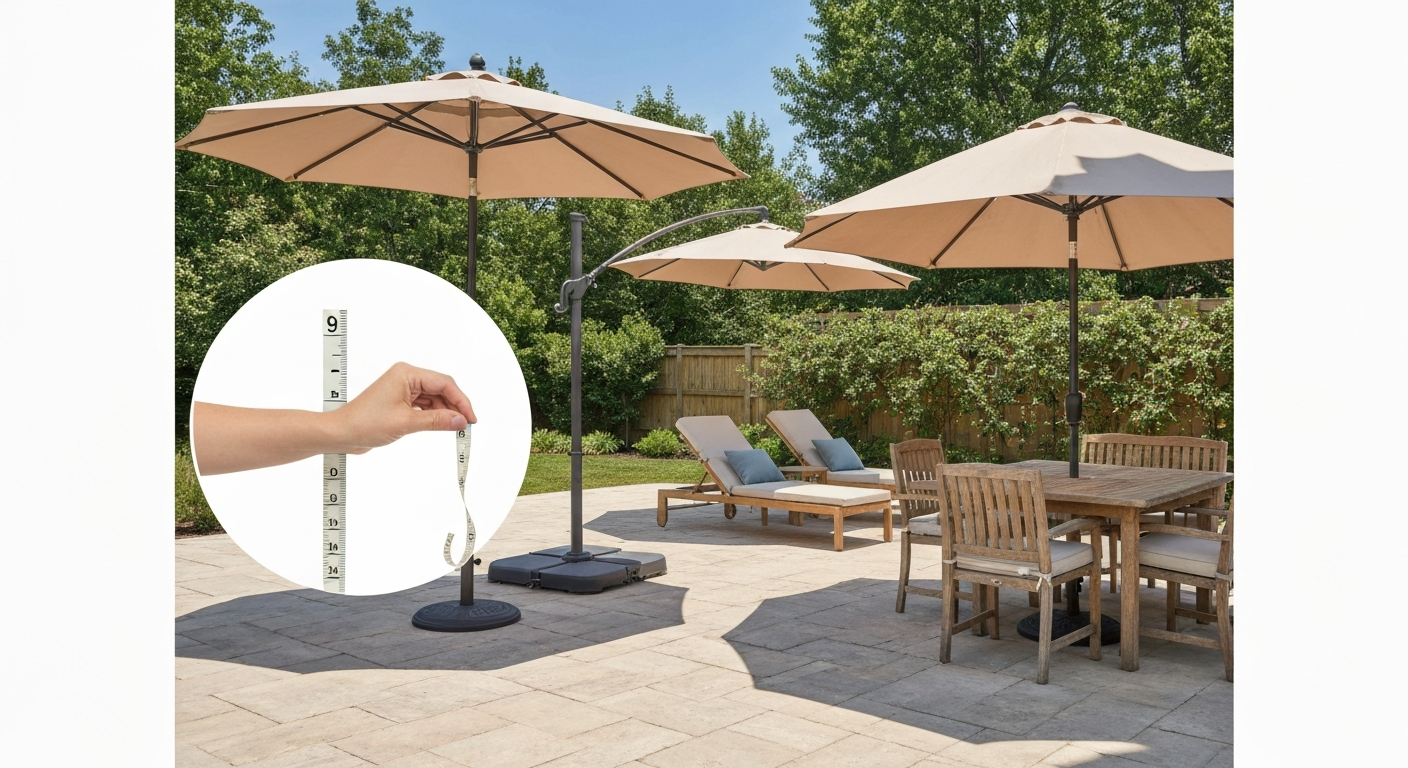
For installation, the pole-to-base fit is critical. The pole diameter needs to match the base receiver exactly, typically 1.5 inches or 2 inches for most residential umbrellas. Measure before buying if you're adding a lighted umbrella to an existing base or table with a center hole. In-ground mount sleeves are an option for permanent installations and provide the most rock-solid stability, but they commit you to a location.
One practical tip: when threading wiring down through the pole on a plug-in lighted umbrella, make sure there's a stress relief fitting or grommet where the cord exits the pole at the bottom. Without it, the cord can fray from movement over time. Good-quality lighted umbrellas handle this in the factory; cheaper ones don't.
Style, materials, and what the lighting actually looks like
Market vs. cantilever vs. offset
Market umbrellas (center pole, round or octagonal canopy) are the most common lighted umbrella format because the pole provides a natural conduit for wiring and the canopy is symmetrical, which makes LED placement simple and even. They work best when the table has a center hole for the pole. Cantilever and offset umbrellas free up the table center and allow more flexible placement, which is useful for sectional sofas or pool loungers, but the lighting wiring runs through the arm and requires more robust engineering to stay weathertight. Offset models with integrated LEDs tend to cost significantly more for equivalent quality.
Lighting look: ambient vs. task, beam spread, and canopy design
Most integrated LED patio umbrellas produce a warm white light (2700K to 3000K color temperature) that sits toward the amber end of the spectrum. This gives a comfortable, relaxed mood but isn't great for reading or detailed tasks. Some models offer tunable white or cool white options (4000K+), which are brighter-feeling and more functional but can feel clinical in an outdoor lounge setting. For most residential patios, warm white at 300 to 500 lumens is a pleasant all-purpose choice.
The canopy fabric color affects perceived brightness noticeably. A white or light beige canopy reflects light back down into the seating area efficiently. A dark navy or forest green canopy absorbs more of the LED output, so you need a brighter LED array to achieve the same under-canopy illumination. If you're choosing between canopy colors and lighting is a priority, lighter fabrics give more practical light output.
Some lighted umbrellas place LEDs at the rib tips pointing outward and downward, giving a pendant-light-style look. Others embed LED strips along the inner canopy surface for a diffused glow. The strip approach is more attractive from below and produces softer shadows. The tip-mounted approach produces more defined pools of light and looks better from a distance. Neither is objectively better; it comes down to whether you want the umbrella to look like a lighting fixture or simply to be softly illuminated.
How lighted umbrellas compare at a glance
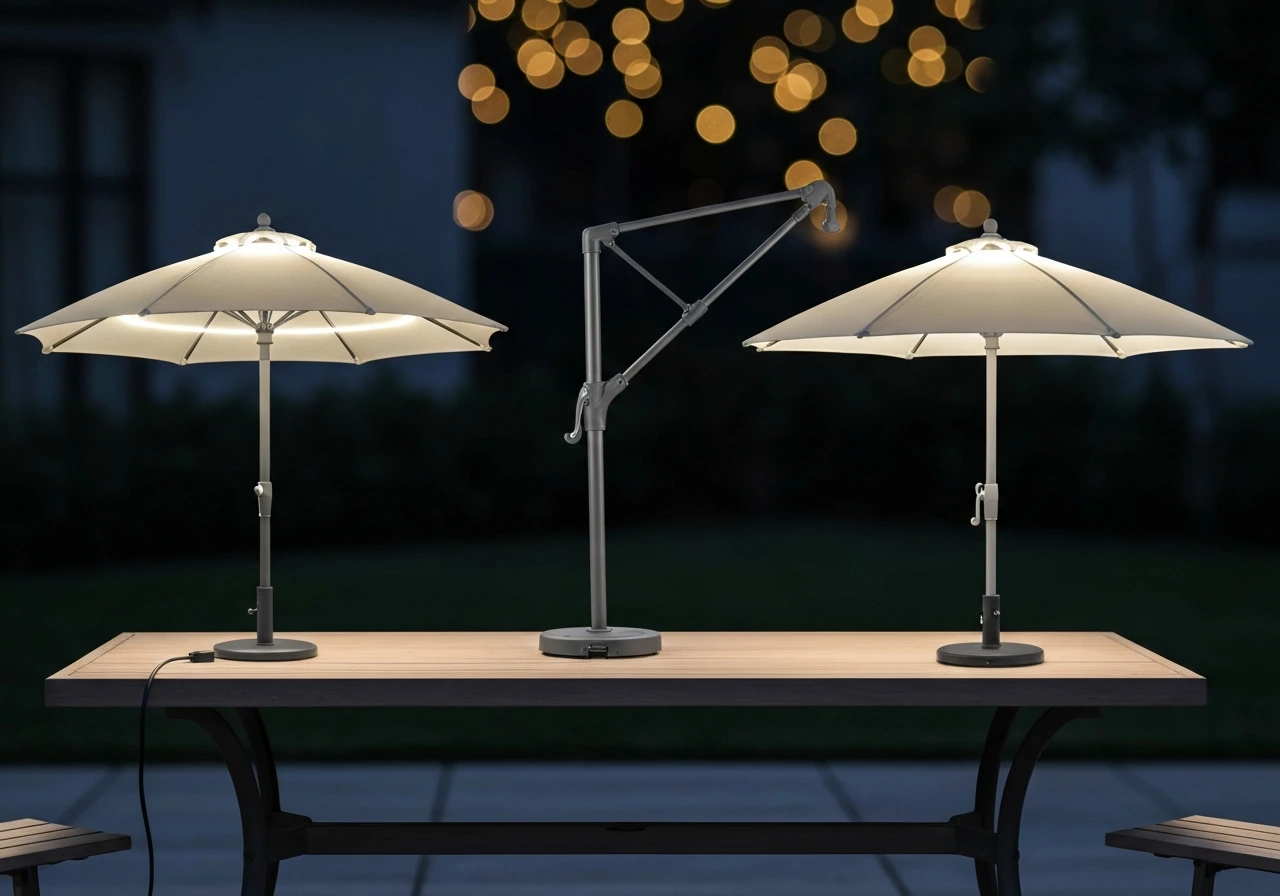
| Type | Lighting Integration | Typical Lumens | Power Option | Best For | Key Limitation |
|---|---|---|---|---|---|
| Market (center pole) | Integrated LED via pole | 200-600 lm | Battery or plug-in | Dining tables, defined seating areas | Pole takes up table center hole |
| Cantilever / Offset | Integrated LED via arm | 300-800 lm | Plug-in or rechargeable | Open seating, no center pole needed | Heavier base required; higher cost |
| Solar market umbrella | Solar-charged LED | 150-350 lm | Solar/battery | Areas with good sun exposure | Dim in shade; inconsistent output |
| Clip-on add-on light | External clamp fixture | 50-200 lm | Battery | Upgrading any existing umbrella | Uneven light; cables exposed |
Your shopping checklist before you buy
Run through these criteria for every lighted umbrella you're seriously considering. If a product listing doesn't provide clear answers to most of them, that's a signal to look for a brand that's more transparent.
- Size and coverage: Does the canopy diameter extend at least 2 feet beyond your table or seating area on all sides? For dining tables, 9 feet is the realistic minimum; 10 to 11 feet is better.
- Lighting type: Are the LEDs integrated into the canopy (embedded strips or rib-tip mounted), or is this a clip-on accessory? Confirm it's a purpose-built lighted umbrella, not a bundled add-on.
- Lumen output and color temperature: Is the brightness specified? Look for 300+ lumens for practical ambient use. Check whether warm white (2700-3000K) or cool white is available.
- Controls: Does it include a remote, dimmer, or timer? Is there a multi-brightness setting? Confirm the switch location (pole-mounted vs. remote).
- Power source: Battery/solar or plug-in? If plug-in, is there a GFCI-protected outdoor outlet within 15 feet? If battery, what's the rated run time at full brightness?
- IP/weather rating: Is the control box or battery pack rated at least IP44? IP55 or higher for wet climates. Check that the cord entry point on the pole is sealed.
- Wind rating and canopy venting: Is there a wind rating specified (aim for 25 mph minimum, 35 mph is better)? Does the canopy have a vent to reduce uplift?
- Frame and fabric materials: Aluminum or powder-coated steel frame? Solution-dyed acrylic (or equivalent) canopy fabric? Confirm UPF 50+ if UV protection matters to you.
- Pole diameter: Measure your table hole or base receiver before ordering. Most residential poles are 1.5 or 2 inches; mismatch is a common return reason.
- Base requirements: What does the manufacturer recommend for base weight? Is a compatible base sold with the umbrella or separately? For cantilever models, confirm ballast weight needed.
- Warranty: A reputable lighted umbrella should carry at least a 1-year warranty on the electrical components and frame, and ideally longer on the canopy fabric.
The honest trade-off is this: a genuinely well-built lighted umbrella with quality integrated LEDs, a durable aluminum frame, and solution-dyed acrylic fabric is going to cost $200 to $600 for a market style and $400 to $1,200 or more for a cantilever. Budget versions under $150 almost always cut corners on the electrical sealing, the fabric durability, or both. If you're going to invest in a patio umbrella with lighting built in, the lights are only as good as the rest of the umbrella, and a cheap frame that wobbles or a canopy that fades in one summer makes the whole thing a waste. Buy the best umbrella you can afford, and the integrated lighting is a long-term asset. A well-reviewed best pool patio umbrella also balances light quality, wind stability, and weatherproof electrical components so it stays reliable season after season. If you're comparing options, start with the best solar patio umbrellas for your sun exposure and desired brightness.
FAQ
If a lighted patio umbrella has a timer, does it keep working reliably if I unplug it or the power flickers?
Check whether the “timer” is controlled by the remote or only by a local setting, and whether it resets every time the umbrella is powered off. If the timer is internal, you can usually leave the umbrella on an outlet, but remote-only timers often behave differently when power is cut, which affects nightly schedules.
Can I use an integrated LED patio umbrella in light rain, or is it only safe in dry weather?
Yes, but only if the illumination circuit is designed for outdoor wet use. Look for specifications that state the LEDs and wiring are encapsulated and that the remote or switch area is rated for splashes, then keep any plug connection above puddle level and avoid charging or operating if the pole area is actively wet inside.
Why does my lighted umbrella look dimmer than expected, even though the LEDs are working?
Warm white often looks dimmer through darker canopies because absorption reduces under-canopy output. If you have a dark fabric umbrella, consider either a higher-lumen LED system or a diffused inner strip layout, since diffusion makes the light feel more even even when total lumens are the same.
How do I choose umbrella size for a dining setup if my chairs stick out farther than normal?
Start with the umbrella diameter relative to the tabletop, but also consider the seating depth. If chairs extend close to the umbrella edge, you may need extra diameter beyond the “2 feet beyond the table edge” rule to avoid shadowing behind seats, especially with rib-tip LED designs.
Can I use an outdoor extension cord with a corded lighted umbrella if my outlet is far away?
It depends on placement and cable routing. If the base is far from the outlet, you can use an outdoor-rated extension only if it is short, properly routed, and plugged into a GFCI outlet, but many manufacturers still recommend using the umbrella’s intended outdoor outlet setup to reduce cord stress.
Do integrated LED umbrellas perform worse in wind than non-lit umbrellas?
Venting helps for wind uplift on market-style umbrellas, but integrated LEDs can create extra weight near the canopy and can slightly worsen wobble if the pole fit and base are not correct. If your umbrella feels bouncy in breezes, re-check anchoring and base weight before assuming the light system is the issue.
What’s the real-world limitation of solar-charged lighted umbrellas in shade or cloudy climates?
If your umbrella must stay in a shaded spot all day, battery or solar performance will usually drop. For solar models, aim for multiple hours of direct sun where the umbrella will sit, and expect reduced runtime on cloudy days even if the charge indicator looks full.
How should I clean and maintain the electrical parts and canopy without damaging the LEDs?
Yes, especially with plug-in models that have a removable control box or battery pack. Make sure the control housing stays closed during cleaning, avoid pressure washing the pole seam or cord exit, and wipe fabric only with gentle soap to protect the solution-dyed acrylic coating.
My lighted umbrella remote stopped working, what should I check first?
Remote controls can fail if the remote sensor is blocked by the canopy structure or if batteries are weak. As a quick diagnostic, test the LEDs using any local switch (if present) and replace remote batteries, because repeated remote failures can be mistaken for electrical damage.
Will integrated LED umbrellas be covered under warranty if they fail due to wind or moisture?
Not all warranties treat wind and water the same. If the listing mentions “proper anchoring” or base weight requirements, your warranty may not cover damage from inadequate anchoring, and water-related claims often require that cords and connections were kept off wet surfaces as specified.
How can I tell if the cord or wiring is at risk of fraying around the pole?
For plugs, the key is the cord exit and stress relief at the bottom of the pole. A grommet or strain relief prevents fraying, so if you see exposed wire or a bent cord, stop using it immediately and confirm the model uses factory stress relief before attempting any DIY repairs.
What should I compare between two lighted umbrellas if one lists lumens and the other lists runtime?
Compare three things: lumen rating (or equivalent brightness), the claimed runtime at a specific brightness mode, and whether the LEDs can dim. If a solar model claims high lumens but only runs at one fixed level for a short time, it may not feel bright in the evening.
Can I adjust the light distribution by changing umbrella tilt, or is it fixed once installed?
Placement angle changes how the light spreads. For dining, you usually want the canopy positioned to concentrate light toward the table, while lounge areas benefit from a more level or higher canopy to reduce glare and brighten walkways.