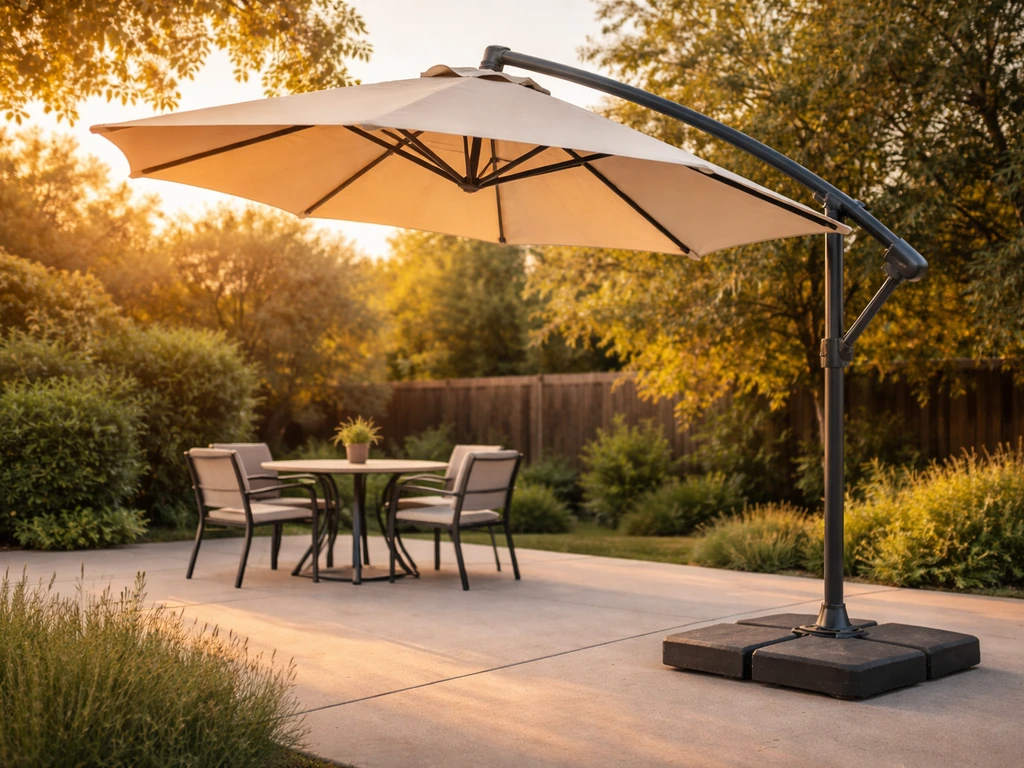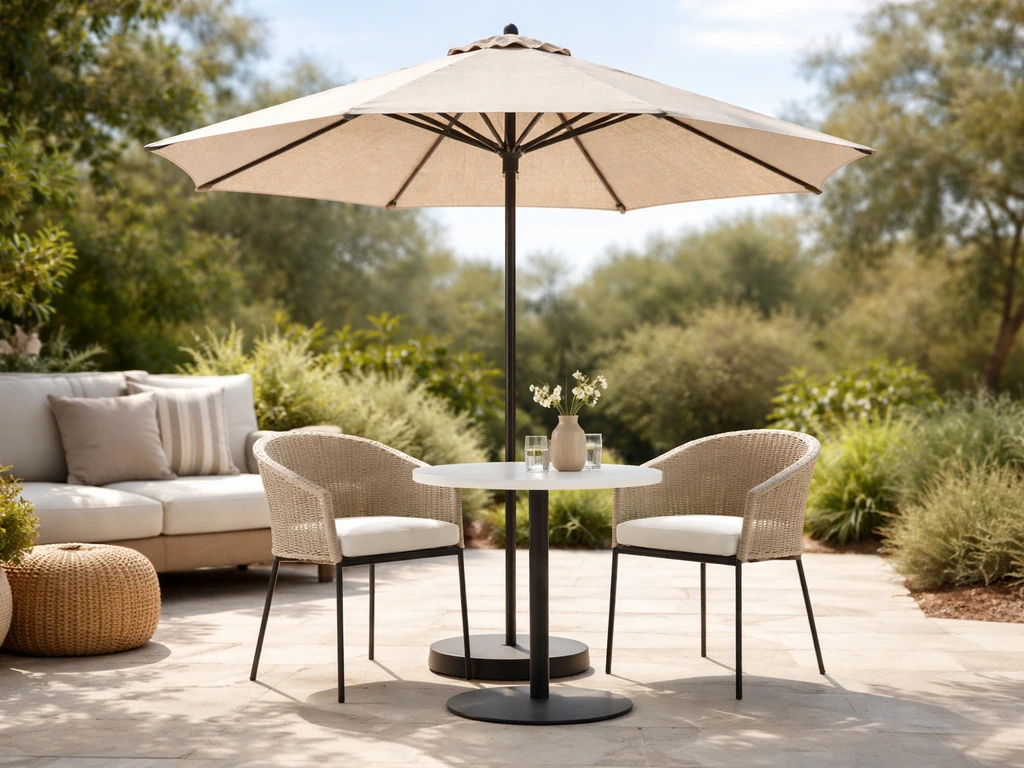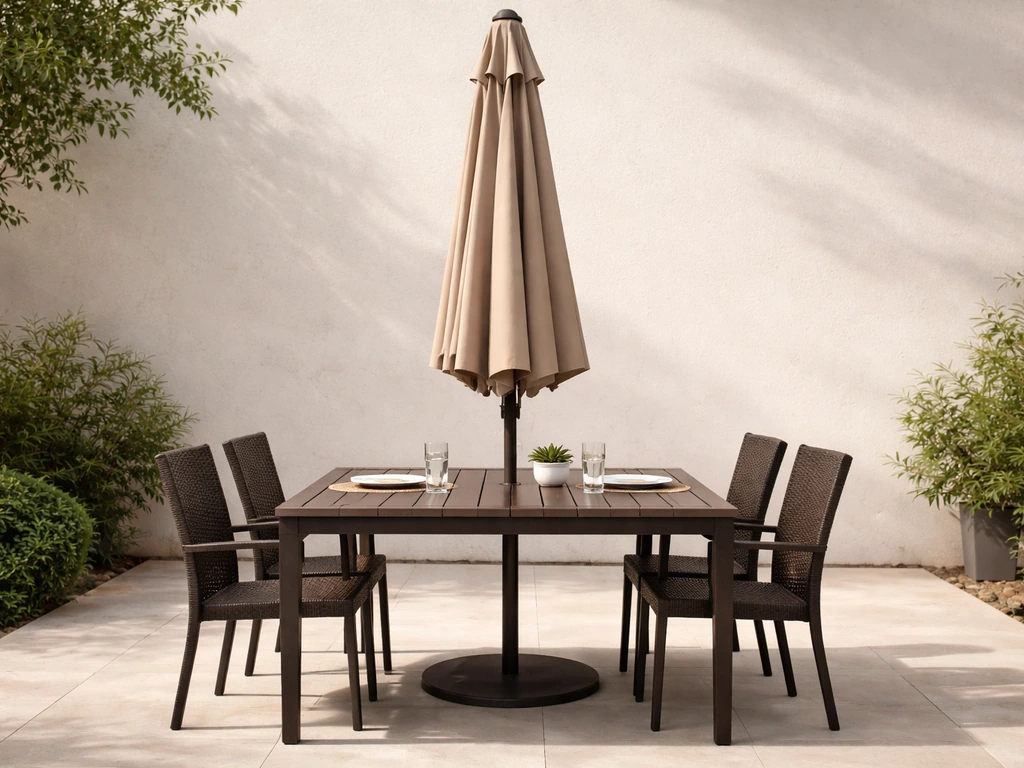
After testing and researching dozens of options, the five patio umbrellas that consistently stand out are the Treasure Garden 9' Market Umbrella (best overall), Best Choice Products 10' Market Umbrella (best value), Purple Leaf 10' Cantilever (best for wind), Abba Patio 9' Market Umbrella (best for table use), and Tuuci Ocean Master Manta (best cantilever/offset). Each earns its spot for different reasons, and the right one for you depends on your space, your furniture setup, and how seriously you want to take sun and wind protection.
Top 5 Patio Umbrellas: Best Picks for Sun, Wind & Value

Kent Lang
16 Jul 2026
What this guide covers and who it's for
This guide is built for homeowners and renters who are tired of wading through vague roundups that recommend everything without explaining anything. Whether you have a compact apartment balcony, a wide backyard deck, a poolside lounge area, or a six-person dining set, the needs are different enough that one umbrella simply won't serve everyone well. Here we focus on five specific categories: best overall, best value, best for windy conditions, best for table use, and best cantilever/offset design. For each pick, you get real specs, honest pros and cons, base requirements, and the exact scenarios where each umbrella earns its keep. There's also a buying guide at the end covering fabrics, frame materials, UV protection, and wind resistance so you can make sense of the numbers you'll see on any product page. For more options and detailed comparisons of good patio umbrellas, see our extended review.
Top 5 patio umbrellas at a glance
| Pick | Model | Size / Style | Canopy Material | UPF Rating | Typical Price | Verdict |
|---|---|---|---|---|---|---|
| Best Overall | Treasure Garden 9' Market Umbrella | 9 ft / Center-post market | Sunbrella acrylic or O'bravia polyester | UPF 50+ | ~$200–$350 | Multi-season proven performer with premium fabric options |
| Best Value | Best Choice Products 10' Market Umbrella | 10 ft / Center-post market | Polyester | UPF 50+ | ~$50–$80 | Hard to beat at this price; best bang-for-buck in roundups |
| Best for Wind | Purple Leaf 10' Cantilever | 10 ft / Offset cantilever | 240 g/m² yarn-dyed polyester | UPF 50+ | ~$150–$250 | Dual-vent canopy and reinforced frame handle up to ~30 mph |
| Best for Table Use | Abba Patio 9' Market Umbrella | 9 ft / Center-post market | 180 g/m² polyester | UPF 50+ | ~$60–$110 | Slim pole, push-button tilt, pairs cleanly with standard dining tables |
| Best Cantilever/Offset | Tuuci Ocean Master Manta | Up to 11'+ / Offset cantilever | Sunbrella or equivalent solution-dyed acrylic | UPF 50+ | ~$1,500–$3,000+ | Marine-grade build, 15-year frame warranty, for those who buy once |
How to read these picks and match them to your patio
Each 'best' label here is tied to a specific use case, not a universal ranking. Best overall means the Treasure Garden performs well across the widest range of situations: good fabric, reliable mechanism, and a track record of lasting more than one season. Best value means the Best Choice Products umbrella gives you functional sun coverage and a decent feature set at a price where you won't lose sleep if a bad storm damages it. Best for wind doesn't mean indestructible; the Purple Leaf's dual-vent canopy and reinforced frame genuinely outperform standard market umbrellas in breezy conditions, but you still need to close it above 30 mph. Best for table use focuses on pole size, tilt angle, and canopy geometry that work with a standard 9-person or 6-person dining set. Best cantilever/offset is about pole-free shade coverage, rotation flexibility, and premium build quality that a serious outdoor living investment deserves.
One more thing worth saying upfront: the umbrella is only part of the equation. If you're also shopping for seating and bases that pair well with an umbrella, see our guide to the best patio furniture with umbrella for matched sets and compatible bases. The base matters as much as the canopy and frame. A quality umbrella on an undersized base becomes a projectile in even moderate wind. Throughout each pick below, base weight requirements are listed specifically, and those numbers are worth taking seriously.
Best overall: Treasure Garden 9' Market Umbrella
Treasure Garden is one of those brands that keeps showing up in multi-season testing because the product actually holds up. Wirecutter tested the 9' Deluxe/Auto-Tilt and push-button variants across multiple seasons and named it the top overall market umbrella. The reasons are practical: the push-button tilt mechanism is intuitive and doesn't strip out after a few weeks, the Sunbrella fabric option resists fading far better than entry-level polyesters, and the aluminum frame handles typical residential wind without warping. It's not cheap, but it sits in a range where the build quality justifies the spend for anyone planning to keep it for three or more seasons.
Key specs
| Spec | Detail |
|---|---|
| Canopy diameter | 9 feet |
| Style | Center-post market umbrella |
| Canopy material | Sunbrella solution-dyed acrylic (or O'bravia polyester variant) |
| UPF rating | UPF 50+ (blocks ~98% UV radiation) |
| Wind handling | Aluminum frame; recommended to close above moderate wind; auto-tilt feature reduces wind catch |
| Minimum base weight | ~70–75 lb for freestanding use; ~50 lb when used through a table |
| Typical price | $200–$350 depending on fabric and tilt mechanism |
| Warranty | Sunbrella canopy carries a ~5-year fade warranty; Treasure Garden covers defects in materials and workmanship; O'bravia variant has ~4-year fade guidance |
Pros and cons
- Pros: Multi-season durability backed by independent testing; Sunbrella fabric resists fading far better than standard polyester; push-button tilt is smooth and reliable; available in a wide range of colors and fabrics; replacement canopies and parts available through Treasure Garden's support network
- Cons: Higher upfront cost than value picks; still needs a proper 70–75 lb base for freestanding use; Sunbrella version adds cost over the O'bravia variant; not a cantilever, so the center pole limits furniture arrangement
Ideal use cases
This umbrella is the right call for homeowners who want a reliable, attractive market umbrella for a patio dining set or freestanding lounger area and plan to keep it for multiple seasons. It suits medium-sized patios (9' covers a 6-person table comfortably), and the fabric options make it easy to match existing outdoor furniture. If you're buying your first serious patio umbrella and don't want to replace it in two years, start here.
Best value: Best Choice Products 10' Market Umbrella
The Best Choice Products 10' market umbrella is the pick for anyone who needs functional shade at a price that doesn't require a long deliberation. Forbes, BobVila, and several other 2025-2026 buyer roundups consistently flag this model as the best bang-for-buck option, and the thousands of customer reviews at major retailers back that up. See The Best Patio Umbrellas 2026 (Forbes vetted picks) for a vetted roundup that includes this Best Choice Products model. At $50–$80, it's not a premium product, and you shouldn't expect it to last a decade, but it delivers a vented canopy, crank lift, and 10 feet of coverage at a price point where replacing it every few seasons is still cheaper than buying up once.
Key specs
| Spec | Detail |
|---|---|
| Canopy diameter | 10 feet |
| Style | Center-post market umbrella |
| Canopy material | Polyester |
| UPF rating | UPF 50+ |
| Wind handling | Vented canopy helps reduce wind load; standard aluminum/steel frame; close in high winds |
| Minimum base weight | ~50–70 lb recommended depending on use (freestanding vs. table-mounted) |
| Typical price | $50–$80 |
| Warranty | Varies by retailer and SKU; typically limited manufacturer warranty; check current listing |
Pros and cons
- Pros: Extremely competitive price; 10-foot canopy is genuinely large for the cost; vented canopy is a real wind-resistance feature at this tier; crank-open mechanism is simple and functional; widely available at major retailers
- Cons: Polyester canopy will fade faster than Sunbrella or solution-dyed alternatives; frame and crank mechanism are not built to premium tolerances; less color selection than premium brands; long-term durability is modest; replacement parts are harder to source than from a brand like Treasure Garden
Ideal use cases
This is the right pick for renters who don't want to invest heavily in outdoor furniture, homeowners outfitting a secondary patio or guest area, or anyone who needs quick, affordable shade coverage for a season or two. It's also a reasonable first umbrella if you're not yet sure how much you'll use your patio. If you're covering a 4-person or 6-person table on a budget, 10 feet of canopy at this price is hard to argue with.
Best for windy conditions: Purple Leaf 10' Cantilever Umbrella
Most patio umbrellas struggle in anything above a light breeze, but the Purple Leaf cantilever is specifically engineered to manage wind better than a standard market umbrella. The dual-top double-vent canopy is the core feature here: the two vents allow air to pass through rather than pushing against the canopy like a sail. BobVila's 2026 hands-on testing called it out as a wind-resistant cantilever pick, and Purple Leaf's own product documentation and manuals consistently state a recommended closure threshold of around 30 mph. That number is realistic and worth respecting. The reinforced alloy and aluminum frame construction adds rigidity that cheaper cantilever designs lack, and the offset arm means no center pole to work around.
Key specs
| Spec | Detail |
|---|---|
| Canopy diameter | 10 feet (rectangular and larger variants also available up to 13') |
| Style | Offset cantilever |
| Canopy material | 240 g/m² yarn-dyed polyester |
| UPF rating | UPF 50+ |
| Wind features | Dual-top double-vent canopy; reinforced alloy/aluminum frame; manufacturer recommends closing above ~30 mph |
| Base requirements | Heavy fillable base required; Purple Leaf sells compatible fillable bases and in-ground mounting options for larger sizes; heavier ballast recommended in windier regions |
| Typical price | $150–$250 |
| Warranty | Limited manufacturer warranty; check current listing for terms |
Pros and cons
- Pros: Dual-vent design genuinely reduces wind load compared to standard single-canopy umbrellas; no center pole means flexible furniture arrangement; 240 g/m² canopy fabric is denser than typical budget polyesters; available in multiple sizes including rectangular formats; compatible heavy bases and in-ground mounting options available from the same brand
- Cons: Still needs to be closed above 30 mph — no patio umbrella is truly wind-proof; yarn-dyed polyester won't match the fade resistance of Sunbrella; the fillable base adds cost and setup time; cantilever design requires more lateral space for the support arm than a market umbrella
Ideal use cases
This umbrella earns its spot for patios in coastal areas, elevated decks, or open backyard spaces where afternoon breezes are a regular reality. The cantilever design also makes it practical for seating areas that don't have a center-table hole, like lounge chairs or a sectional sofa. If your area sees sustained winds between 15 and 30 mph fairly often, the dual-vent design will noticeably outlast a standard market umbrella in those conditions.
Best for table use: Abba Patio 9' Market Umbrella
The Abba Patio 9' is built around the most common residential use case: a standard outdoor dining table with a center umbrella hole. The 38 mm (roughly 1.49 inch) pole diameter fits most standard table hole sizes, the push-button tilt gives you angle flexibility without fumbling with a collar, and the 8-rib frame keeps the 9-foot canopy taut and predictable. It's not a luxury product, but it's thoughtfully proportioned for table use in a way that makes it easier to live with day to day than a heavier, more elaborate umbrella.
Key specs
| Spec | Detail |
|---|---|
| Canopy diameter | 9 feet |
| Style | Center-post market umbrella |
| Canopy material | 180 g/m² polyester |
| UPF rating | UPF 50+ |
| Tilt / venting | Push-button tilt; vented canopy on most variants |
| Pole diameter | ~38 mm (~1.49 in) — fits standard table umbrella holes |
| Base / table compatibility | Designed for table-hole use; ~50 lb base recommended for freestanding use |
| Typical price | $60–$110 |
| Warranty | Limited manufacturer warranty; check current listing |
Pros and cons
- Pros: Standard pole diameter fits most outdoor dining tables without adapters; push-button tilt is smooth and easy to adjust; 9-foot canopy is the right size for 4–6 person dining tables; 8-rib frame provides even canopy tension; price sits in a practical mid-range
- Cons: 180 g/m² polyester canopy is lighter than ideal for heavy sun exposure; fade resistance won't match solution-dyed acrylic; not suited for freestanding use without a proper base; pole length and design limit it to table or base mounting rather than in-ground installation
Ideal use cases
The Abba Patio 9' is the practical choice for a standard outdoor dining setup. If you're hunting specifically for the best outdoor patio table umbrella, look for models sized for table-through use with a pole diameter that fits your table and a base of at least 50 lb for stability. If you have a 4-person or 6-person table with a center hole and want a clean, functional umbrella that opens and tilts reliably without overcomplicating things, this is the one to buy. It also works well for smaller patio setups where a 10' or 11' canopy would overhang the surrounding area uncomfortably. Pair it with a 50 lb base if you're not using it through a table.
Best cantilever/offset: Tuuci Ocean Master Manta
The Tuuci Ocean Master Manta is in a different category from every other pick on this list, and the price reflects it. This is a marine-grade cantilever parasol built for people who want a permanent outdoor shade solution that won't degrade, won't wobble, and won't need to be replaced in five years. Tuuci uses materials and tolerances closer to what you'd find on a yacht than a backyard deck. The frame warranty on Ocean Master configurations reaches up to 15 years on some models, which tells you everything about how seriously the company stands behind the construction. If the other picks are practical tools, the Tuuci is a long-term investment in your outdoor space.
Key specs
| Spec | Detail |
|---|---|
| Canopy size | Up to 11'+ (multiple configurations available; rectangular and round formats) |
| Style | Offset cantilever parasol |
| Arm / rib material | Marine-grade aluminum and engineered alloy |
| Canopy material | Sunbrella or equivalent solution-dyed acrylic |
| UPF rating | UPF 50+ |
| Rotation / tilt | Full 360-degree rotation and multi-angle tilt depending on configuration |
| Base requirements | Purpose-built Tuuci bases or in-ground anchoring; base weight/anchoring requirements vary by canopy size — consult Tuuci spec sheets |
| Typical price | $1,500–$3,000+ depending on configuration |
| Warranty | Up to 15-year frame warranty on Ocean Master configurations; Sunbrella canopy carries ~5-year fade warranty |
Pros and cons
- Pros: Marine-grade construction is genuinely in a different durability tier from residential umbrella brands; 15-year frame warranty backs that claim; Sunbrella canopy resists fading and degradation better than polyester alternatives; full rotation and multi-angle tilt give precise shade positioning throughout the day; replacement canopies and modular parts available through official Tuuci channels; suitable for commercial or semi-commercial use as well as residential
- Cons: Price is substantially higher than any other pick here — this is a premium commitment; requires a purpose-built base or in-ground anchor, not a standard fillable base; larger footprint and arm swing radius require meaningful outdoor space; overkill for seasonal or light-use patios
Ideal use cases
The Tuuci Ocean Master Manta is the right choice for poolside installations, large deck lounge areas, or any permanent outdoor living space where you want professional-grade shade without a center post getting in the way. It's particularly well-suited for homes in sunny climates where the umbrella stays in place year-round, coastal properties where salt air and UV exposure degrade lesser materials quickly, and homeowners who are finishing an outdoor space they intend to use for many years. If you're building or renovating an outdoor entertaining area and treating the umbrella as a design element rather than an afterthought, this is where to spend the money.
Buying guide: what actually matters when choosing a patio umbrella
Style: market, cantilever, or table umbrella
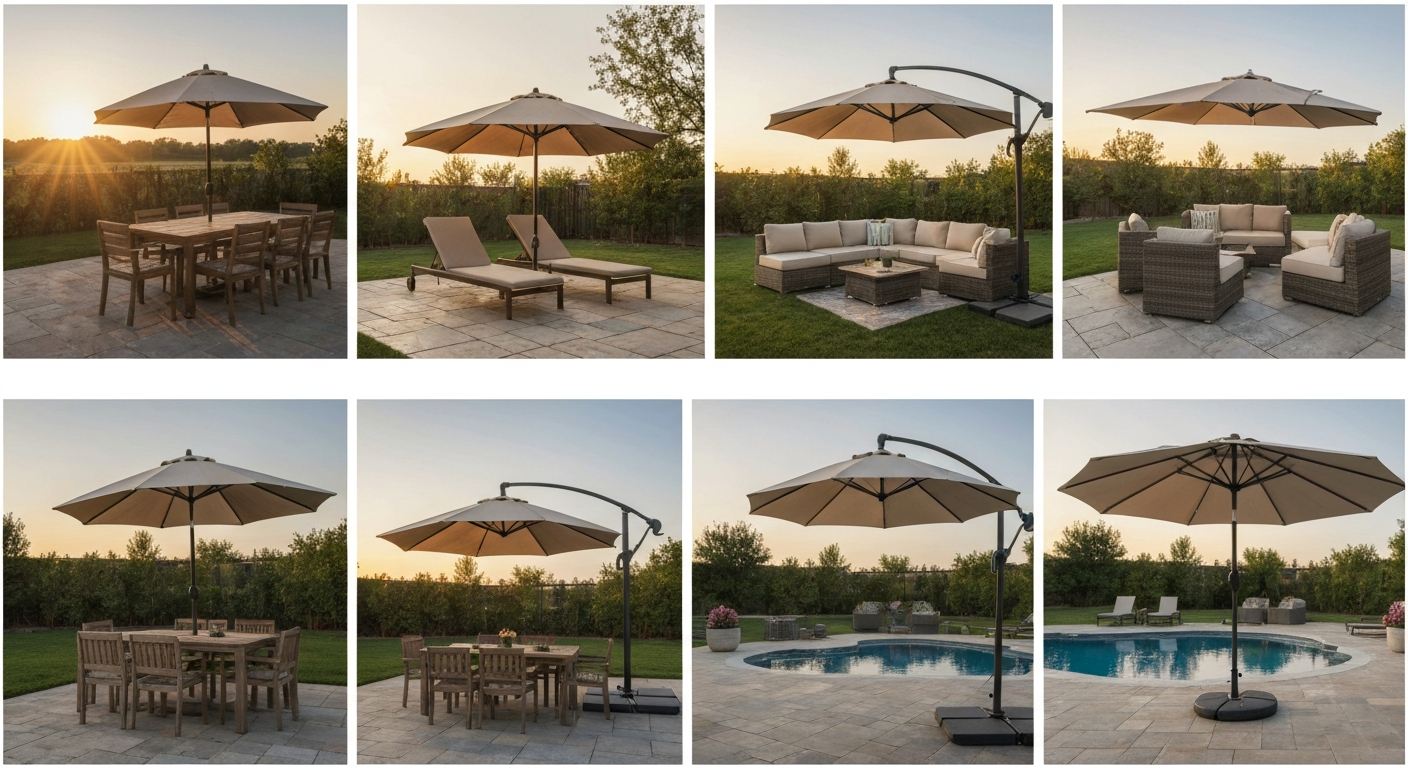
The style choice comes down to your furniture layout and how much flexibility you need. A center-post market umbrella (like the Treasure Garden, Best Choice, or Abba Patio) goes through a hole in a dining table or into a freestanding base. It's the most common type, least expensive, and simplest to set up. A cantilever or offset umbrella (like the Purple Leaf or Tuuci) mounts the canopy on an extended arm so there's no pole in the middle of your seating area. That's a meaningful advantage for lounge chairs, sectionals, or pools where a center post would be in the way. The tradeoff is that cantilever designs need heavier or more elaborate bases and take up more lateral space.
Canopy fabric and UV protection
UPF 50+ is the standard you want on any canopy: it blocks roughly 98% of UV radiation, verified by textile test methods like AATCC TM-183 in the U.S. or AS/NZS 4399 internationally. Most umbrellas in this guide meet that threshold. What varies is how long the fabric maintains that protection and its color. Sunbrella solution-dyed acrylic is the benchmark: the pigment is baked into the fiber at the manufacturing stage, not applied as a surface coating, so it doesn't wash or bleach off. Treasure Garden backs Sunbrella canopies with a ~5-year fade warranty. Their O'bravia polyester is a high-performance alternative with ~4-year fade guidance. Standard polyester (like what you get on the Abba Patio or Best Choice models) will fade noticeably faster in direct sun, especially in warmer climates. For anyone in the Sun Belt or a coastal region, upgrading to a solution-dyed acrylic canopy is worth the premium.
Frame materials and durability
Aluminum is the standard for quality residential patio umbrellas: it's lightweight, corrosion-resistant, and strong enough for typical residential use. Steel frames are heavier and can rust without proper powder coating. Wood frames (typically teak or hardwood) look elegant but require seasonal maintenance. The Tuuci Ocean Master uses marine-grade aluminum and engineered alloy specifically because those materials hold up against salt air and prolonged UV exposure in a way that standard residential aluminum won't over a decade-plus of use. For most homeowners, a quality aluminum frame is the right balance of weight, durability, and cost.
Wind resistance: vents, ribs, and closure habits
Vented canopies are the single most useful wind-resistance feature in a residential patio umbrella. A double-vent design (like the Purple Leaf's dual-top canopy) lets air pass through rather than building pressure against the canopy. More ribs (8 is common; some premium models use 12) help keep the canopy taut and distribute wind load more evenly. That said, no residential umbrella is designed to stay open in high winds. The Purple Leaf's 30 mph closure guidance is an honest benchmark: above that, you're risking rib damage, crank failure, or the whole umbrella tipping over regardless of how heavy your base is. Building the habit of closing your umbrella when a storm approaches is more effective than chasing wind ratings.
Base weight: the most overlooked spec
Wirecutter's testing guidance puts minimum base weights at around 50 lb for an umbrella used through a table and 90 lb or more for a freestanding center-post umbrella in a typical yard. Treasure Garden's own catalog specifies ~70–75 lb minimum for a freestanding 9' umbrella and ~80 lb for an 11'. In windier regions, those numbers should go up, not down. The most common umbrella failure mode isn't the canopy or the frame, it's an undersized base that tips over in a gust and takes the rest of the umbrella with it. A 55 lb concrete base (like the Article Paima that Wirecutter pairs with the Treasure Garden) is a reasonable starting point for table use; for freestanding, go heavier. Fillable bases work well when fully loaded with sand or water, but check the filled weight, not the empty weight, when comparing options.
Size matching: cover what you need, not more
A simple rule: your umbrella canopy should extend at least 2 feet beyond the edge of your table or seating area on each side. A standard 4-person dining table (roughly 36–42 inches wide) pairs well with a 9' umbrella. A 6-person table needs 9'–11'. A lounger or chaise setup benefits from a cantilever with at least a 10' canopy. Going bigger isn't always better, a large canopy on a small base or through a narrow table creates a leverage problem that makes the whole setup unstable. Bigger canopy means more wind catch, which means you need a proportionally heavier base.
Common failure modes to watch for
Real-world reviews across major retailers show a predictable set of failure modes in mainstream patio umbrellas: crank and lift mechanisms that seize or strip after one or two seasons, broken ribs or rib joints (especially after a wind event), pole bending on oversized canopies with undersized bases, canopy seam or valance tears along stress points, and color fade complaints on standard polyester canopies. Example user reports include crank failures on a Sunbrella aluminum umbrella (Home Depot, customer review citing crank failure (example)) Home Depot — customer review citing crank failure (example). These aren't reasons to avoid all umbrellas, they're reasons to buy from a brand that sells replacement parts and honors warranty claims. Treasure Garden and Tuuci both maintain parts networks and support channels. At the budget end, plan to replace rather than repair.
Maintenance basics that extend umbrella life
- Close the umbrella when not in use, especially overnight and before any predicted wind event — this single habit prevents more damage than any other measure
- Clean the canopy with mild soap and water (avoid bleach on solution-dyed acrylic or Sunbrella fabrics); rinse thoroughly and let it dry fully before closing to prevent mildew
- Inspect ribs and rib joints at the start of each season; minor cracking at rib tips is often repairable with replacement rib end caps before it becomes a full rib failure
- Store the canopy (or the full umbrella) in a protective bag during winter or extended off-season periods in climates with freezing temperatures or heavy snow
- Check your base weight annually — water in fillable bases can evaporate over the season, reducing effective ballast significantly
- Lubricate the crank mechanism and tilt collar with a silicone-based lubricant at the start of each season to prevent seizing
Quick decision guide: which pick fits your situation
| Your situation | Best pick |
|---|---|
| You want a reliable, multi-season market umbrella and are willing to spend for quality | Treasure Garden 9' Market Umbrella (Best Overall) |
| You need affordable shade coverage for a season or two without a large investment | Best Choice Products 10' Market Umbrella (Best Value) |
| Your patio is exposed to regular afternoon breezes or coastal winds | Purple Leaf 10' Cantilever (Best for Wind) |
| You have a standard outdoor dining table with a center hole and want clean, tiltable shade | Abba Patio 9' Market Umbrella (Best for Table Use) |
| You want a permanent, pole-free shade solution for a pool, lounge, or large deck — budget is secondary | Tuuci Ocean Master Manta (Best Cantilever/Offset) |
The honest truth about patio umbrellas is that the best one for your space is the one that fits your furniture layout, your local wind conditions, your sun exposure, and your willingness to maintain it. A $300 Treasure Garden on a proper base, closed every night, will outlast a $200 budget umbrella that gets left open in every storm by several seasons. For a deeper list of choices and long-term durability comparisons, see our roundup of the best made patio umbrellas. For a curated list of top-rated options, see our round-up of the best sun umbrellas for patio. If you're still weighing which style suits your layout best, or trying to understand the difference between market and cantilever designs in more depth, the broader resources on this site covering outdoor umbrella styles, rated options across price tiers, and table-specific umbrella guidance are worth a look before finalizing your decision. For a broader comparison of options across sizes and budgets, see our guide to the best outdoor umbrellas for patios.
FAQ
What size patio umbrella do I need for my table or seating area?
Measure the table or seating footprint first. For a dining table, choose an umbrella diameter 2–3 feet larger than the table length/width so chairs stay shaded (e.g., 48" table → 7.5'–9' umbrella). For a lounge area, pick a canopy that fully covers the primary seating cluster; 9' is a common versatile size, 11'+ for larger sectional layouts. If using a cantilever/offset umbrella, ensure the canopy span plus the offset arm reach covers the area when the pole is placed out of the way.
How much base weight do I need for a center‑post umbrella or a cantilever umbrella?
Base requirements depend on umbrella size and whether it’s table‑mounted or freestanding. Common guidance: table use – minimum ~40–60 lb base; freestanding center‑post – ~70–90+ lb; large/11'+ umbrellas or open yards – 90–150 lb or more. Cantilever umbrellas often need heavier ballast or specialized fillable bases (and sometimes in‑ground sleeves) because the offset arm creates more torque. Always follow the manufacturer’s recommended minimum base weight and use heavier ballast in windier locations.
Can I use an umbrella through my dining table or do I need a separate base?
You can use a table‑through umbrella if your table has a center hole and the table is sturdy. Tables typically provide some ballast, so smaller umbrellas (7.5'–9') can work with a ~40–60 lb base or the table’s weight when properly secured. For larger umbrellas, or if the table is light, use a heavy base or a freestanding base to meet the manufacturer’s minimum ballast recommendations.
What fabric should I choose for sun protection and durability (Sunbrella vs polyester)?
Solution‑dyed acrylics (e.g., Sunbrella) offer superior fade resistance, mildew resistance, breathability and commonly carry longer fade warranties (≈5 years). High‑quality solution‑dyed polyesters (e.g., O’bravia or 240 g/m² polyester) can be cost‑effective and perform well short‑term but usually have shorter UV/fade warranties. Look for a verified UPF rating (UPF 50+ preferred) and check the testing standard if provided. For seaside or high‑sun environments, prioritize solution‑dyed acrylic.
How wind‑resistant are patio umbrellas and what features improve wind handling?
Wind tolerance varies widely. Many consumer umbrellas are rated to ≈20–30 mph and should be closed above those speeds. Features that improve wind handling: vented/double‑vent canopies, sturdy multi‑rib frames (8 ribs or more), thicker pole diameters, reinforced rib joints, and heavier bases or in‑ground mounts. Premium cantilever lines (Tuuci, Purple Leaf) use stronger frames and vents but still require closing at high gusts; never rely on an umbrella alone in sustained high winds.
Are replacement canopies and parts available if something breaks?
Availability depends on the brand. Premium brands (Treasure Garden, Tuuci) maintain parts networks and sell replacement canopies, ribs and components. Many mid‑range brands sell replacement canopies through retailers or the manufacturer. Check the brand’s parts/warranty page before buying if easy replacement is important; generic, low‑cost umbrellas are less likely to have long‑term parts support.