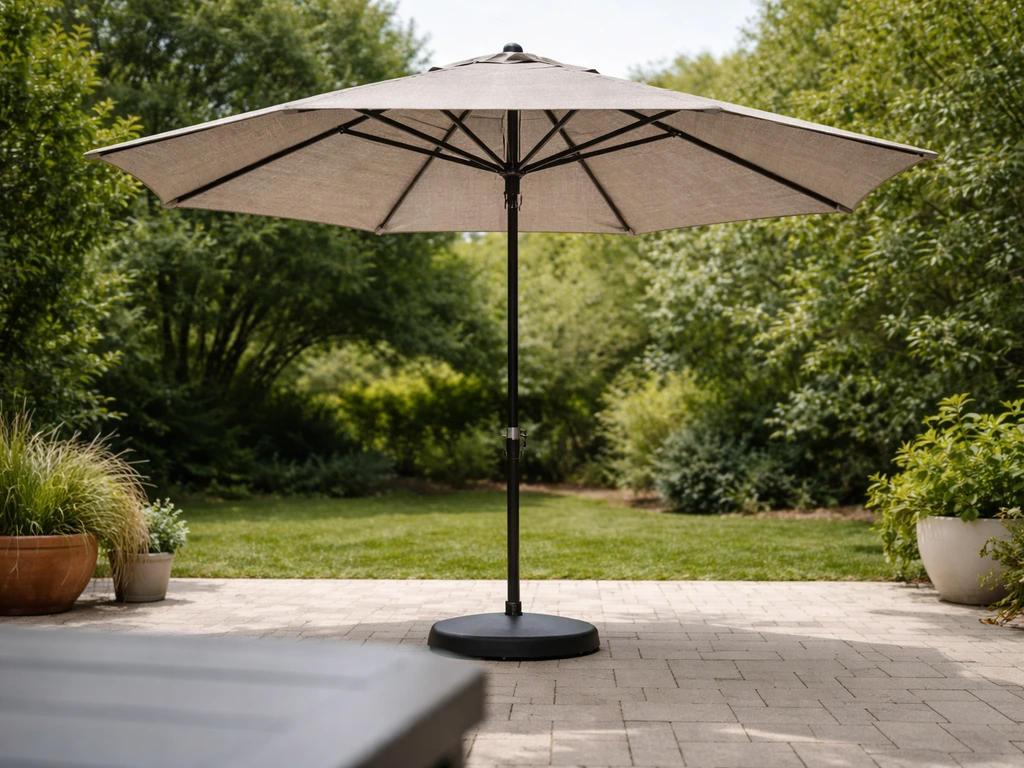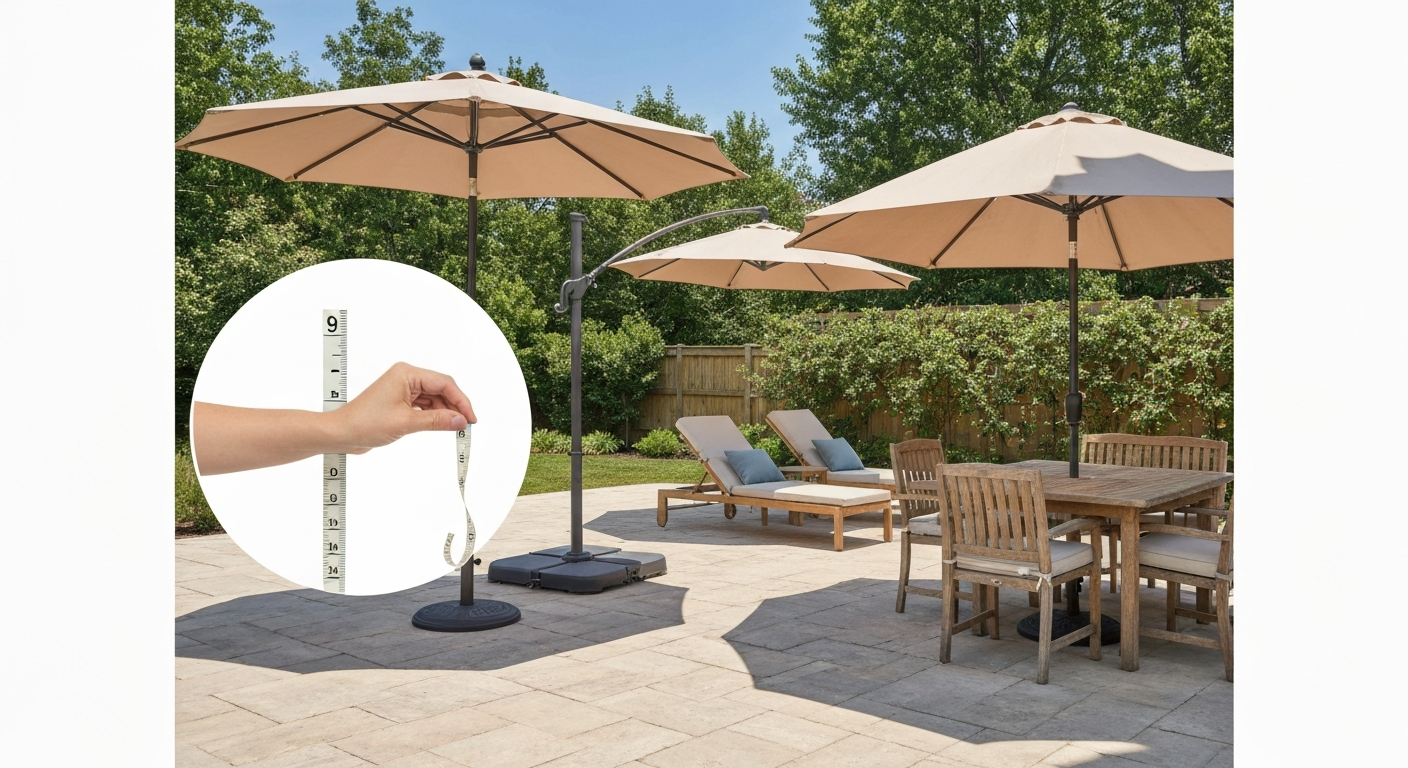
For most patios, a 9-foot market umbrella in the $50–$100 range is the best affordable starting point. You get enough canopy to cover a standard 4-person dining set, a pole-and-crank setup that's easy to use, and enough frame quality to last a few seasons with basic care. The honest truth is that under $100 you're making tradeoffs on fabric longevity and frame durability, but if you pick the right size, match it to a proper base, and store it when wind picks up, an affordable umbrella will do the job well.
Best Affordable Patio Umbrella Guide: Value, Fit, Wind

Kent Lang
5 Jun 2026
How to pick the best affordable patio umbrella today
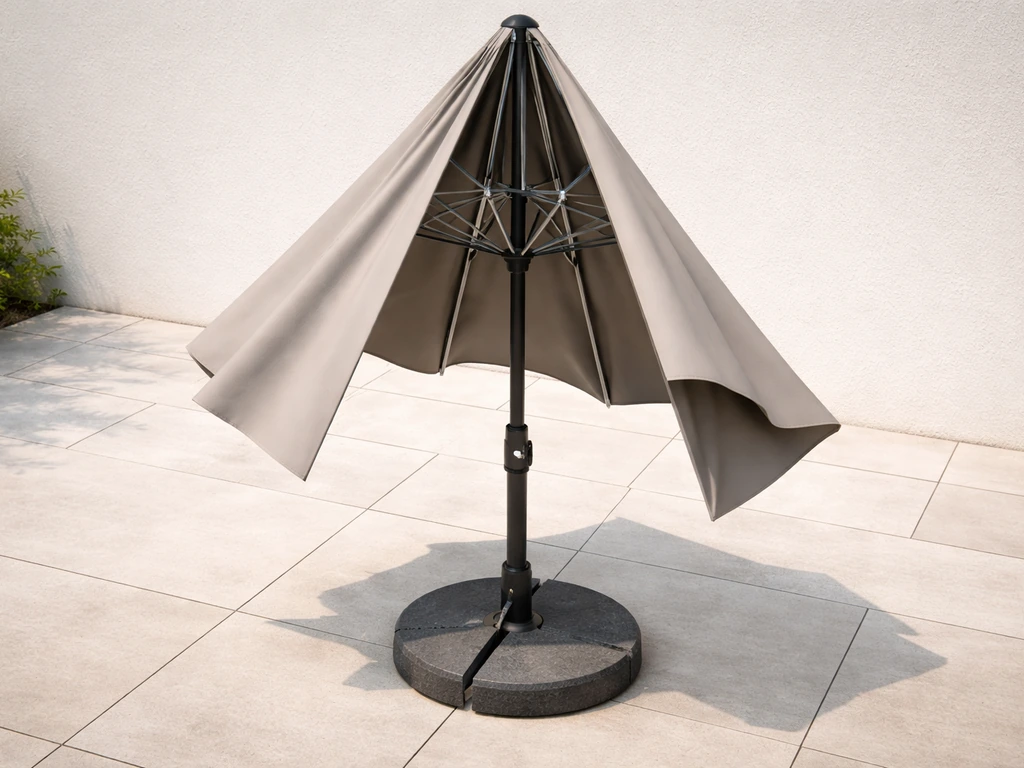
Shopping for a budget patio umbrella is mostly about avoiding the common mistakes: buying the wrong size, skipping the base, or assuming every canopy blocks UV rays equally. Get those three things right and the price point matters a lot less. Here's the short version of what to do before you click 'add to cart':
- Measure your table (or space) and add at least two feet on each side to find your minimum canopy diameter.
- Decide on style first: market umbrella (pole through the table) or cantilever/offset (freestanding, arm extends over the space).
- Check the UPF rating. Look for UPF 50+ if sun protection matters to you.
- Budget for a base separately. Most affordable umbrellas don't include one, or include one that's too light.
- Look for a vented canopy. It's one of the cheapest ways manufacturers add wind resistance without raising the price much.
- Read the warranty. Even budget umbrellas sometimes offer 1-year fade-resistant canopy coverage, which tells you something about the fabric quality.
The sections below walk through each of these in detail so you can match the right umbrella to your specific patio setup.
Measure your space first, then pick your size
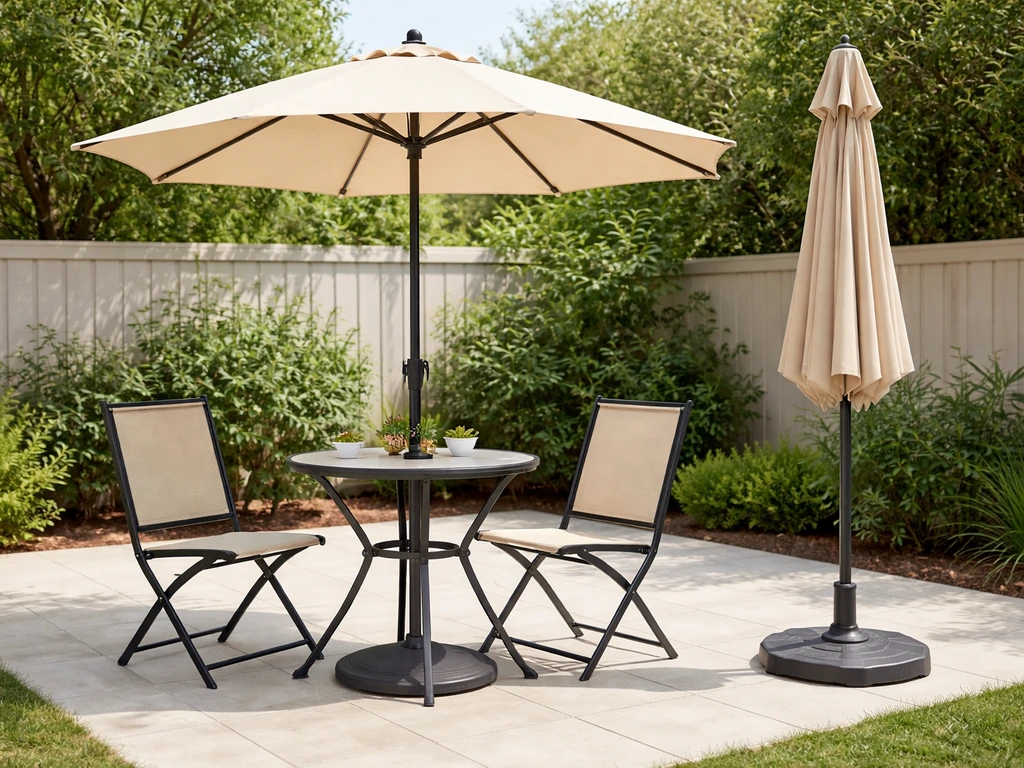
Umbrella sizing is one of those things that feels obvious until you get it wrong. The standard rule is to extend the canopy at least two feet past the edge of your table on every side. That means if you have a 48-inch (4-foot) table, you need a canopy that reaches at least 8 feet in diameter. A 9-foot umbrella covers that comfortably and is the most common affordable size you'll find.
Here's a practical size reference based on table diameter:
| Table Diameter | Recommended Umbrella Size | Common Use Case |
|---|---|---|
| 30–36 inches | 6–8 feet | Bistro table or small 2-person set |
| 38–48 inches | 9–11 feet | Standard 4-person dining table |
| 54–60 inches | 11 feet minimum | Large dining set or 6-person table |
If you're shading a seating area without a table, like a couple of lounge chairs or a daybed, measure the footprint of the space and add two feet per side the same way. A 9-foot canopy covers roughly a 5-foot circle of ground when accounting for umbrella angle, so size up if you're unsure. It's also worth noting that round canopies are the most common affordable option. Square and rectangular canopies exist at budget prices but they're less common and the ribs are sometimes a weak point at lower price tiers.
What affordable umbrellas actually give you: UV, fabric, and frame specs
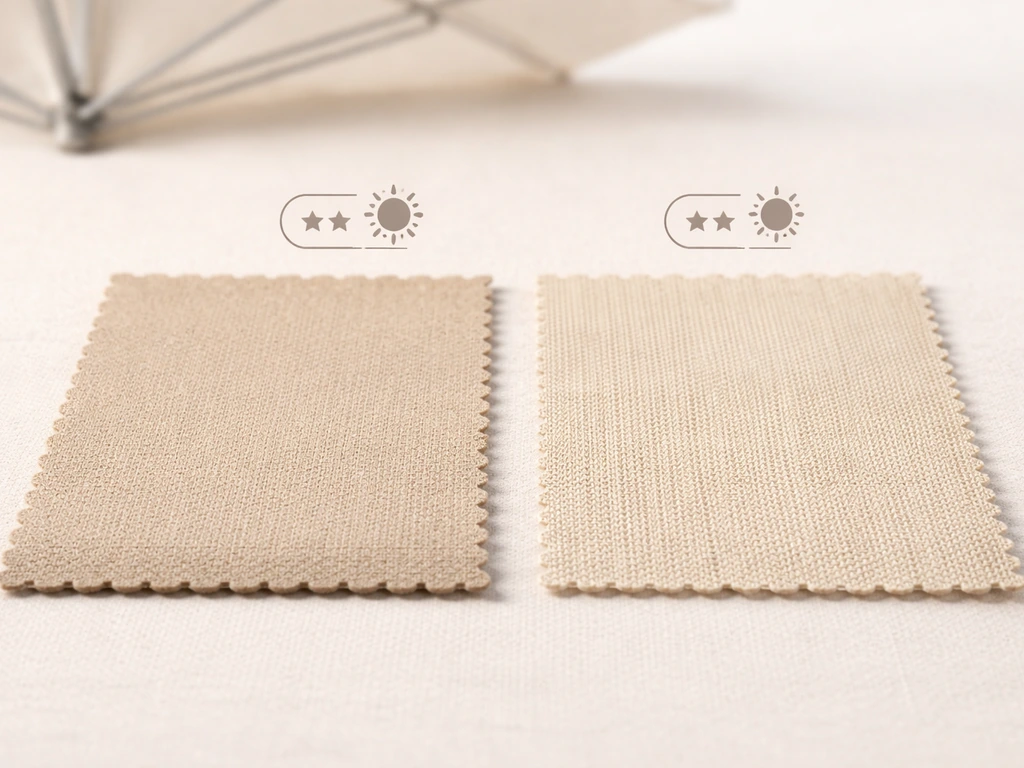
UPF 50+ is the rating you want for real sun protection. It blocks roughly 98% or more of UV rays and is the standard associated with quality solution-dyed acrylic fabrics like Sunbrella. The problem is that at budget prices, most canopies use polyester rather than solution-dyed acrylic, and polyester's UV-blocking performance can degrade as the fabric fades and thins over time. Some budget umbrellas do carry a UPF 50+ label, but it's worth checking whether that rating comes from actual laboratory testing or just a marketing claim. A fade-resistant warranty on the canopy, even if it's only one year, is a decent signal that the manufacturer is at least standing behind the fabric quality.
For frames, you'll mostly see three options at the affordable price tier:
- Steel pole with steel ribs: Heaviest, most prone to rust over time, but often the cheapest option and reasonably sturdy.
- Aluminum pole with fiberglass or aluminum ribs: Lighter, rust-resistant, and the best balance of durability and price at the $60–$120 range.
- Plastic/resin pole: Usually found at the very low end (under $40). Avoid these for anything larger than a 7-foot canopy.
At the budget tier, you're realistically looking at a lifespan of 2–4 seasons with normal use. Umbrellas priced under $100 are sometimes described as near-disposable, and that's not unfair if you leave them up year-round without covers. But if you close them when not in use, store them during winter, and keep the canopy clean, a well-chosen budget umbrella can last longer than that. If you want to land on the best patio umbrella for the money, focus on the size, UV rating, and a base that prevents tipping in breezes best value patio umbrellas. The honest tradeoff is that premium fabrics like Sunbrella-grade solution-dyed acrylic cost more upfront but hold their UV protection and color years longer. If you want the sunbrella patio umbrellas best price without sacrificing sun protection, compare UPF ratings, fabric warranties, and frame materials side by side. If you're comparing options across price points, it's worth knowing what the best value patio umbrellas at slightly higher price tiers offer before you commit.
Wind stability and base requirements: where cheap umbrellas fall short
This is the section most people skip, and it's where budget umbrellas cause the most frustration. An umbrella without the right base will tip over in a moderate breeze, and a tipped umbrella can scratch furniture, damage the canopy, or hurt someone. Never use an umbrella without a proper base, full stop. Most manufacturers include this warning explicitly, and in some cases it's a warranty condition.
The practical rule for base weight is about 10 pounds per foot of umbrella diameter. A 9-foot umbrella needs at least 90 pounds of base weight. An 11-foot umbrella needs at least 110 pounds. Water-fillable or sand-fillable bases are a cost-effective way to hit these numbers. A water-fillable round base, for example, can reach around 37 pounds when filled, which may be enough for a small 7-foot umbrella but isn't sufficient on its own for a 9-footer. For a 9-foot umbrella, you often need to pair a heavier sand-fill base or use a base that integrates with your table's center hole.
Also check pole diameter compatibility before buying a base separately. Bases list their fit range, often covering poles at 1.5-inch, 1.625-inch, and 2-inch diameters. A universal-fit base is usually the safest affordable choice if you're not sure what diameter your umbrella pole is.
On wind speed: most budget umbrella manuals recommend taking the umbrella down at very low wind speeds, sometimes as low as 5 mph for crank-operated models, and never using the tilt function in any wind at all. Bob Vila's guidance suggests bringing umbrellas in when winds hit around 20 mph, which is consistent with what most manufacturers say. A vented or two-tier canopy design helps by allowing wind to pass through rather than pushing against the full canopy face. Budget options like 9-foot market umbrellas with a 2-tier vented top and 8 heavy-duty metal ribs do exist in the $60–$80 range and are worth prioritizing over non-vented canopies at the same price. Cantilever umbrellas with a larger canopy arm have more leverage, meaning base weight becomes even more critical, and budget cantilever bases are often the weakest link.
Market vs cantilever: which style fits your budget and your space
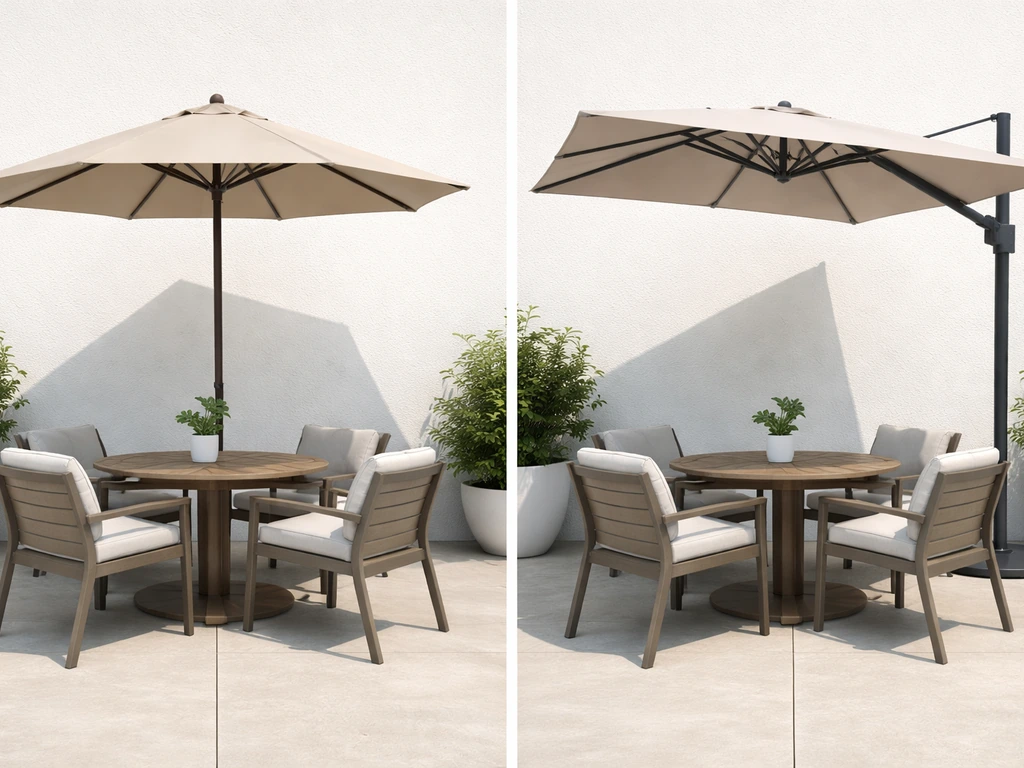
The two main styles you'll shop at affordable prices are market umbrellas (the classic center-pole design) and cantilever or offset umbrellas (where the pole sits to the side and an arm extends over the space). Each has real tradeoffs at the budget tier.
| Feature | Market Umbrella | Cantilever/Offset Umbrella |
|---|---|---|
| Price range (affordable) | $40–$100 | $80–$150 |
| Pole position | Center (goes through table hole) | Off to the side, arm overhead |
| Base requirement | Weighted standalone base or table-mount | Heavier cross or 4-square base, often sand/water-fill |
| Wind risk | Lower (closer to center of gravity) | Higher (more leverage on the arm) |
| Flexibility | Fixed position | Can rotate and tilt without moving furniture |
| Ease of use | Simple crank or push-up open | Crank open, tilt adjustment with locking mechanism |
| Best for | Dining tables, defined seating areas | Lounge areas, pools, spaces without a center table |
Market umbrellas are the safer buy at the affordable price tier. They're simpler mechanically, the crank-lift systems are more reliable at lower price points, and the base requirements are easier to meet. If you're covering a dining table, a 9-foot market umbrella with an aluminum frame and vented canopy is the best affordable default.
Cantilever umbrellas at the budget tier are more of a tradeoff. You get the useful overhead coverage without a center pole in the way, but you're dealing with a heavier base requirement, more mechanical parts that can fail (the tilt locking mechanism especially), and a higher sail-like surface area that catches wind. Some affordable cantilever options come with a 4-square weighted base that can hold up to 200 pounds when filled with sand, which is adequate for a 10-foot arm. The tilt adjustment process on these also involves an unlock-and-lock mechanism, which is more involved than a simple crank on a market umbrella. That said, a 10-foot aluminum crank cantilever in the $100–$150 range with a fabric warranty of 3 years and a pole warranty of at least 1 year is a reasonable value if you need that style.
How to make a budget umbrella last longer
The biggest factor in how long an affordable umbrella lasts is how you treat it when it's not in use. Closing the canopy every time you leave the patio, especially overnight, reduces UV degradation, wind stress on the ribs, and moisture buildup that leads to mildew. Mildew can grow even on mildew-resistant fabrics if dirt and organic debris sit on the surface and trap moisture, so keeping the canopy clear of leaves and debris matters.
For cleaning, a simple monthly rinse with a garden hose removes surface dust and pollen. For mildew spots, a solution of 1 cup bleach and a quarter cup of mild soap per gallon of water is effective on most canopy fabrics. Test on a small area first, especially on colored canopies, since bleach can affect dyes on cheaper polyester more aggressively than on solution-dyed acrylic. Rinse thoroughly afterward and let the canopy dry fully before closing it, since folding a damp canopy is one of the fastest ways to get mildew started.
For frames, a light coat of car wax or spray lubricant on metal ribs and the pole at the start of each season slows rust on steel frames. Aluminum frames don't rust but the joints can corrode or seize; a little silicone spray on the opening mechanism and tilt joint keeps them moving smoothly. At the end of the season, store the canopy in a bag or cover it. Most budget umbrellas come with a canopy sleeve; use it. Replacing a canopy is sometimes possible but not always easy at the affordable price tier since the rib count and pole diameter has to match exactly.
Best picks by scenario and what to check before you buy
Rather than listing a single 'best' umbrella (which changes as inventory shifts), here's how to match the type to your situation:
| Scenario | Best Style | Target Size | Budget Range | Key Feature to Prioritize |
|---|---|---|---|---|
| Small bistro or cafe table | Market, push-up or crank | 6–7.5 feet | $40–$65 | Light aluminum frame, UPF 50+ canopy |
| Standard 4-person dining table | Market, crank-lift | 9 feet | $60–$100 | Vented 2-tier canopy, 8-rib aluminum frame |
| Lounge chairs or no-table setup | Cantilever/offset, crank | 10–11 feet | $100–$150 | Heavy sand-fill base, tilt lock mechanism |
| Large 6-person outdoor dining | Market or cantilever | 11 feet | $120–$160 | Base weight min 110 lbs, vented canopy |
Budget market umbrellas in the 9-foot range from brands commonly found at major retailers consistently show up as top picks across review sites, with options like vented 9-foot aluminum crank models in the $60–$80 range representing the sweet spot for most homeowners. At the very low end, under $50, you're essentially buying a seasonal umbrella with limited UV protection claims and a shorter expected lifespan. TechGearLab’s “best on a tight budget” picks identify the blank" rel="noopener noreferrer">Sunnyglade 9-Foot patio umbrella (market-style) as a top category-wise budget choice. If your main goal is the best price on patio umbrellas right now, that tier can work, but set realistic expectations and budget for a proper base on top of the umbrella cost. A similar approach can help you find logo patio umbrellas best price options that still match your space and wind needs best price on patio umbrellas. If you focus on the right size and a heavy enough base, you can often find the best price on patio umbrellas without sacrificing stability or coverage.
Before you buy: quick checklist
- Measure your table or seating area and confirm the canopy will extend at least 2 feet past each edge.
- Check the frame material: aluminum is better than steel at the same price point for rust resistance.
- Look for a vented or 2-tier canopy design, especially if your area gets afternoon wind.
- Confirm UPF 50+ if sun protection matters (and check whether it's a tested rating or a marketing label).
- Add a base to your budget. Use the 10 lb per foot rule to find the minimum base weight you need.
- Check the pole diameter on both the umbrella and the base to confirm they're compatible.
- Read the warranty: even a 1-year canopy fade-resistant warranty tells you something about fabric quality.
- Plan to close the umbrella when you're not outside, and store it or cover it at end of season.
The best affordable patio umbrella is one that's sized right, paired with a proper base, and treated like the seasonal outdoor gear it is. You don't need to spend premium prices to get a good result. You just need to buy smart and maintain it consistently.
FAQ
If my umbrella is slightly smaller than the table rule, is it better to angle the canopy or size up next time?
Size up if you can. Angling helps shade in one direction, but it increases exposed edges and can leave the table corners unprotected. If you must choose smaller, aim to cover the table widest dimension plus at least 1 to 1.5 feet on each side, then prioritize a darker, vented canopy for better practical coverage.
Do I need a vented or two-tier canopy for sun protection, or is ventilation just about wind?
Ventilation is mainly for wind performance, not UV. For UV, focus on UPF 50+ and fabric type (polyester can fade faster, even if it starts with a labeled UPF rating). A vented canopy can still reduce wind stress, which indirectly helps the fabric last longer.
What’s the best way to know my umbrella pole diameter before buying a base?
Measure the pole with a caliper if possible, or with a tape measure and a ruler for accuracy. If you are between sizes, buy the base that clearly lists fit ranges including your exact diameter, since clamp-style adapters may be sold as “universal” but can slip or wobble under load.
Can I use an umbrella base from a different brand if it claims “universal fit”?
You can, but only if the base fit range matches your pole diameter and the crank and tilt mechanics do not require a specific adapter. Look for fit-range dimensions on the base, not only the umbrella diameter. Also confirm the base has enough stand-off clearance so the pole doesn’t contact the table or patio furniture center hardware.
How do I calculate the right base weight if I have a cantilever umbrella with an arm?
Use the same concept, but treat base weight as non-negotiable and err higher. Cantilevers create more leverage, so the effective load can be higher than the umbrella diameter suggests. If a base says it supports a filled weight target, assume it is most reliable when filled close to max and the umbrella is used at low tilt.
Is a water-fillable base enough for a 9-foot affordable umbrella if I’m in a sheltered backyard?
Often not by itself. A filled water base may not reach the 10 pounds per foot target consistently, especially if it is only partially filled or you drain it seasonally. If you are sheltered but still get breezes, use sand or a heavier base design so you meet the stability target even when the umbrella fabric is fully extended.
Should I keep the tilt feature on even when the umbrella is windy?
No. Most budget umbrellas advise against using tilt in wind because it changes the canopy angle and increases the “sail” effect. If the wind picks up, close fully and lower or bring it down rather than relying on tilt to reduce stress.
My UPF is listed on the label, but should I trust it on a budget umbrella?
Use the label as a starting point, then look for supporting signals. A fade-resistant canopy warranty is a good sign, and higher-quality fabrics typically retain performance better. Also check whether the label specifies UPF testing standards or uses vague language, since some “UPF” claims may not reflect lab-tested durability after fading.
How can I prevent mildew if I sometimes leave the umbrella out overnight?
Close it and keep it dry as best you can, and avoid leaving it shut when it is damp. If you get dew overnight, open it in the morning briefly to let trapped moisture escape before closing again. Monthly rinsing and keeping leaves and pollen off the fabric also reduces the organic buildup that triggers mildew.
What’s the safest way to clean a colored or patterned canopy without ruining the dye?
Avoid bleach as a first try. Start with a hose rinse and mild soap, then spot-test any stronger cleaner on an inconspicuous area. If you do use bleach, rinse thoroughly and dry fully before closing, because trapped cleaner residue can weaken fibers and speed fading on cheaper polyester.
Can I store the umbrella canopy in the same bag or sleeve year-round?
Store it dry. The canopy sleeve is for covering during the season, but long-term storage should be in a way that prevents moisture entrapment. If you live in humid climates, allow the canopy to dry completely and consider a breathable cover rather than an airtight wrap.
How do I reduce rust or corrosion if my umbrella has steel ribs?
At season start, lubricate joints and rib attachments, then wipe off any salt residue if you are near the ocean. After cleaning, make sure the metal parts dry fully before operating the crank or tilt, since water trapped in joints can accelerate corrosion and cause sticking.
Is it worth replacing just the canopy if the frame is still good?
Sometimes, but budget frames can have proprietary rib counts or specific pole and hub designs. Before buying, verify canopy compatibility by matching rib count, pole diameter, and the hub attachment method. If compatibility is unclear, replacement costs can end up close to buying a new umbrella.