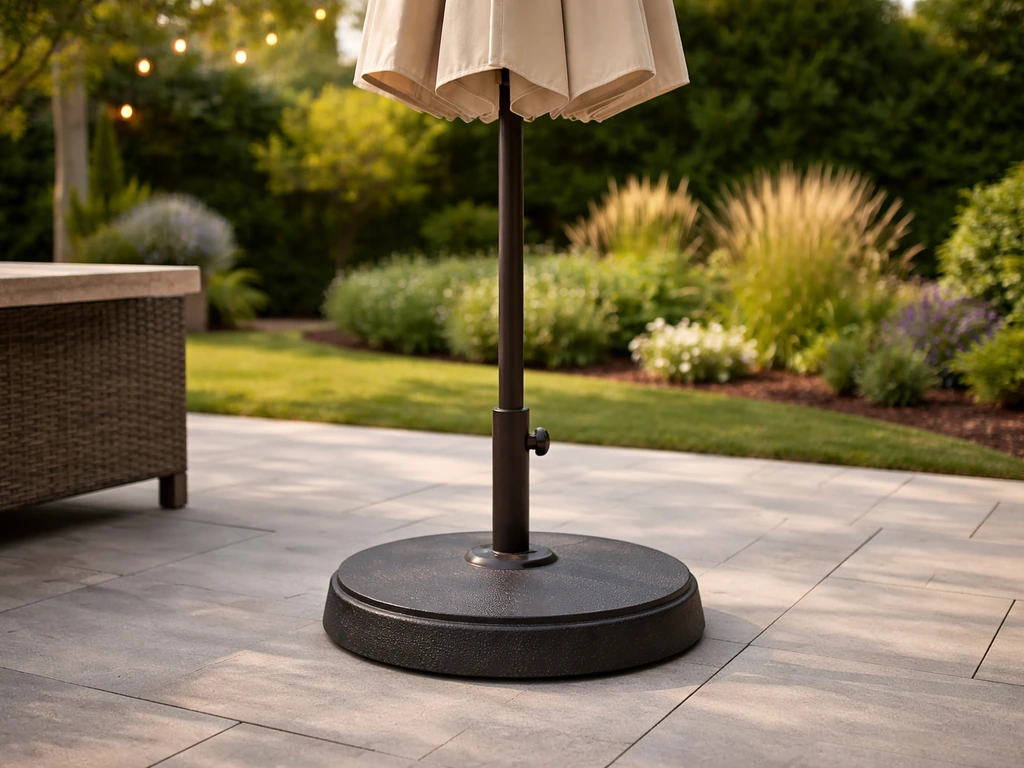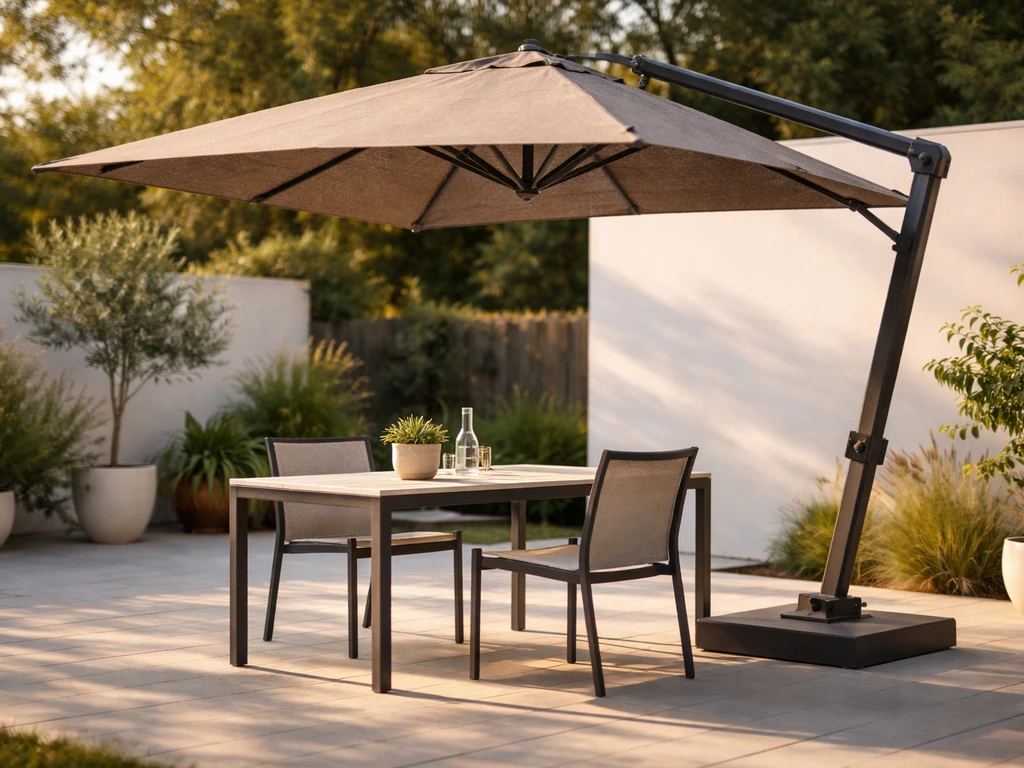
You can buy an offset (cantilever) patio umbrella from Home Depot, Lowe's, Target, Walmart, Wayfair, Amazon, Costco, and specialty outdoor retailers like Midtown Umbrellas or Tropitone. For most people in 2026, the best starting point is Home Depot or Lowe's for in-store pickup and easy returns, or Wayfair and Amazon for the widest online selection. The catch: almost every offset umbrella ships without a base, so budget for that separately before you click buy. If you want patio umbrella bases near you, check the same retailers you plan to buy the umbrella from first, then compare local availability using the retailer store or pickup pages.
Where to Buy an Offset Patio Umbrella: Best Places

Kent Lang
8 Jul 2026
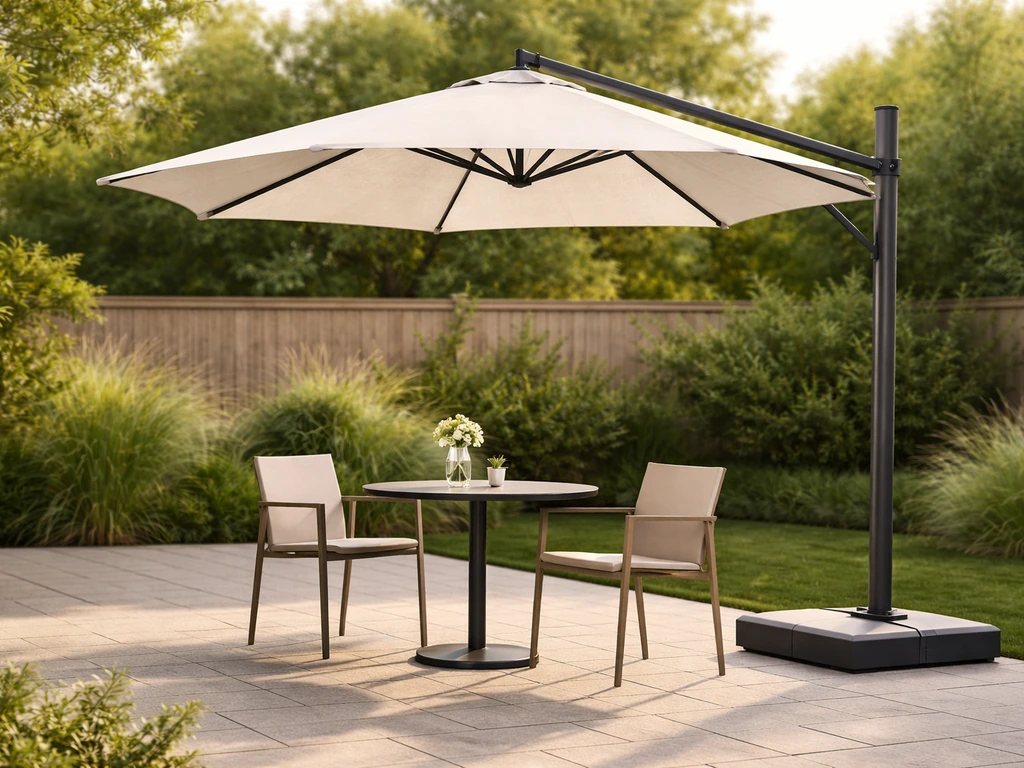
Best places to buy an offset patio umbrella right now
Not all retailers are equal when it comes to offset umbrellas. Here's a practical breakdown of where to actually shop, what each does well, and what to watch out for.
Big-box stores (Home Depot, Lowe's, Target)
Home Depot and Lowe's both carry a solid range of 9 ft to 11 ft cantilever umbrellas, usually with same-day pickup or fast delivery. Lowe's product pages sometimes note that the umbrella and base ship separately, so check each listing carefully. Home Depot's assembly instructions explicitly require a base weighing at least 140 lbs (filled with pavers or ballast), which they sell alongside the umbrella. blank" rel="noopener noreferrer">Target carries offset models too, but their listings typically state that bases are sold separately and that the umbrella requires adult assembly with no tools needed. All three have reasonable in-store return windows, which matters for a purchase this size.
Online marketplaces (Amazon, Wayfair, Overstock)
Amazon has the broadest selection across price tiers, fast Prime shipping, and a return process most people are already comfortable with. Wayfair is worth browsing for mid-range and designer options, but read the return policy carefully before purchasing: real buyers have flagged that Wayfair's return process for large items can come with unexpected costs and label complications. Overstock (now part of Beyond) carries cantilever umbrellas and usually reminds you on the product page to add a base separately.
Mass retailers (Walmart, Costco, Best Buy)
Walmart's selection leans budget-friendly. Their Best Choice Products 10 ft offset cantilever is a popular entry-level option that covers about 79 square feet of shade. Costco rotates patio umbrella inventory seasonally (usually spring through midsummer), so availability right now in July may be limited in-store, though their website sometimes carries items longer. Best Buy has started carrying outdoor brands like Purple Leaf: their 10 ft square cantilever listing shows around $419.99 with a 3-year fade-resistant polyester canopy, which gives you a solid mid-range benchmark.
Specialty outdoor and patio retailers
If you want quality above the big-box tier, specialty retailers are worth the extra effort. If you want treasure garden patio umbrellas, you can start by checking major online marketplaces and specialty patio retailers that carry the brand. Midtown Umbrellas sells cantilever models like their Grande Round (10 ft canopy, 8. 5 ft height, 79 sq ft shade area, 50 lbs) that are built for longevity and wind resistance.
Tropitone is another established outdoor brand with 10 ft square cantilever options. At the premium end, Janus et Cie's TITAN TILT starts at over $9,000, which tells you the ceiling on this category. Frankford Umbrellas is worth a look for commercial-grade durability, with rotation systems that lock into 16 positions. These brands don't often show up in search results alongside budget picks, but if you're furnishing a permanent outdoor living space, they're worth the investment.
Local options
Local patio furniture showrooms and garden centers often carry cantilever umbrellas you can see in person before buying. If you are wondering where to buy patio umbrellas near me, start with local showrooms or garden centers, then compare inventory with online retailers for the quickest match local showrooms and garden centers. This matters more for offset umbrellas than for standard market-pole styles because the pole arm, rotation mechanism, and crank all need to work smoothly. Seeing it in person saves surprises. Local shops are also more likely to stock matching bases and can advise on what weight you actually need for your area's wind conditions.
How to choose the right offset umbrella for your space
Offset umbrellas work differently from center-pole market umbrellas: the pole stands to the side and the canopy hangs over your seating area from a horizontal arm. That design gives you unobstructed table space underneath, but it also means sizing and placement math are different.
Size and coverage
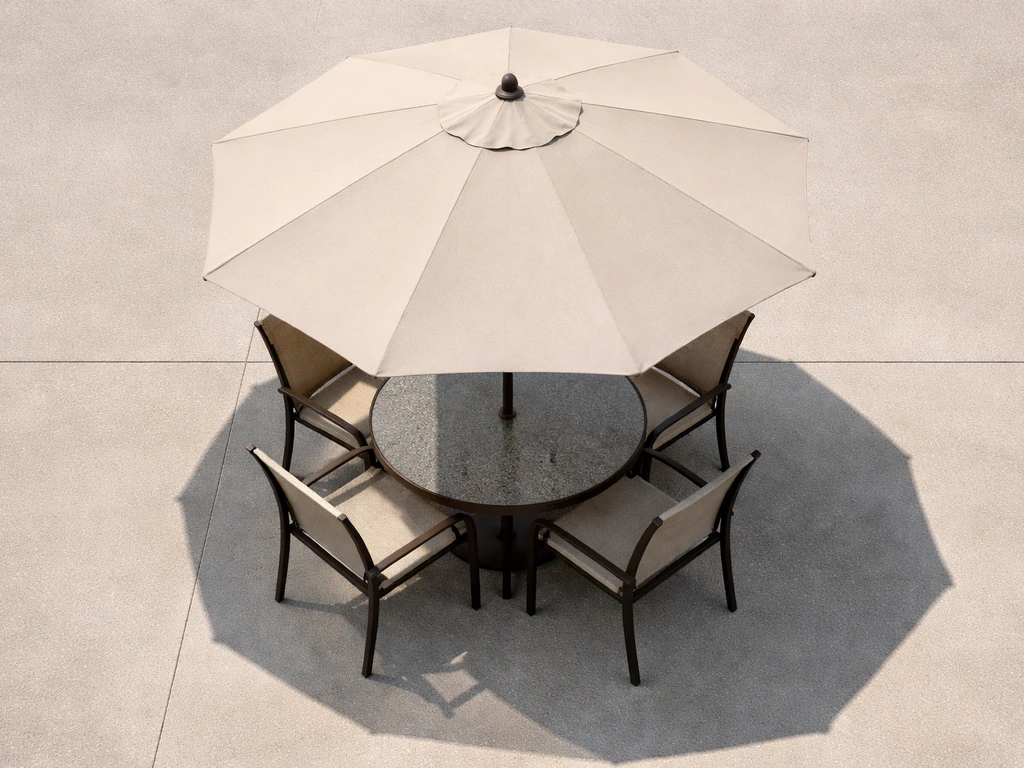
For a standard 4-person patio table, a 10 ft round or 10x10 ft square canopy is the most common fit. Aim to extend the canopy at least 2 to 3 feet beyond your table edges on each side for practical shade coverage. A 10 ft round canopy covers roughly 79 square feet, which works well for most residential setups. Going up to 11 or 13 ft makes more sense if you're covering a larger sectional, a dining table for six or more, or a pool lounge area.
Pole placement and clearance
The base sits outside your seating footprint, which means you need to account for where the pole arm extends and where the base anchors. You also need to think about vertical clearance. Comfortable standing clearance under a cantilever canopy is 8 ft minimum, with 9 to 10 ft recommended when the umbrella is tilted. When you're measuring your patio, make sure there's enough overhead clearance at the canopy's lowest tilt angle, not just when it's fully raised. The crank and rotation mechanism shown on most models also sweeps a small arc when you adjust position, so leave a few feet of open space around the pole arm during operation.
Rotation and tilt
Most cantilever umbrellas rotate 360 degrees so you can track the sun throughout the day. Some models (like Frankford's Aurora) lock into 16 different positions for precise placement. Tilt adjustability is equally important: a good tilt mechanism lets you block low-angle morning or late-afternoon sun that a fixed canopy can't catch. Check whether the model you're considering has an independent tilt and rotation function or whether both move together, since that affects how useful the umbrella actually is across a full day.
Base and wind considerations before you buy
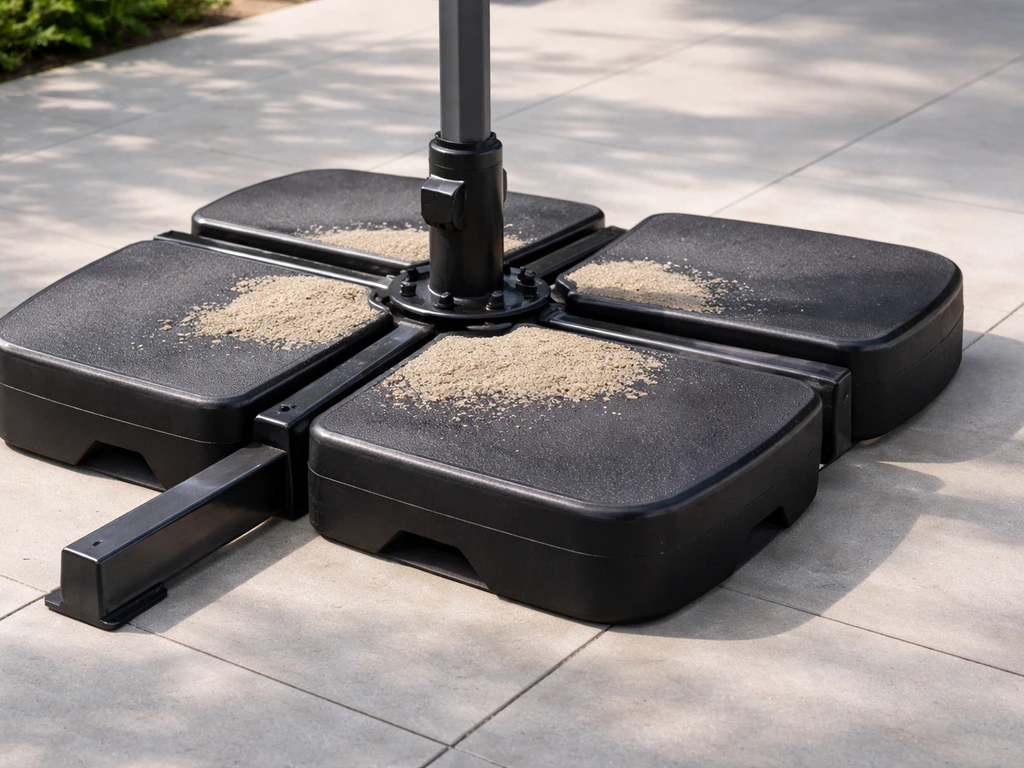
This is the part most buyers underestimate, and it's where offset umbrellas get a bad reputation for tipping over. The side-mounted pole creates a lever-arm effect, which means you need significantly more base weight than a center-pole umbrella of the same size.
How much base weight you actually need
As a general rule, cantilever umbrella bases require roughly double the ballast weight of a comparable center-pole design. For a standard 10 ft offset umbrella, 100 to 120 kg (220 to 265 lbs) is a starting minimum, and a cement-filled or floor-anchored base is the more reliable choice for anything 3 meters (about 10 ft) or wider. Home Depot's own assembly instructions call for at least 140 lbs of base weight, filled with pavers or weighted ballast. Lowe's sells a base that holds up to 130 lbs of sand plus water, reaching a total of 350 lbs at maximum fill, which is a solid option for moderate wind exposure. Do not skip the base weight spec when comparing options.
Base types
- Cross bases with fillable weights: Most common, sold separately, filled with sand or water. Portable but must be filled completely to be safe.
- Cement-filled bases: Heaviest and most stable option. Best for permanent outdoor setups or high-wind areas.
- In-ground anchoring: Bolts into a concrete patio slab. Maximum stability but not practical for renters or decks.
- Rolling weighted bases: Convenient for moving the umbrella around but typically not heavy enough for larger canopies in wind.
Wind ratings
Offset umbrella wind resistance is tested under standards like UNE-EN 13561, which classifies performance from Class 0 (lowest) to Class 3 (highest wind speed while open). Most residential cantilever umbrellas don't advertise a formal class rating, but you should always close and secure your umbrella when wind picks up, regardless of how it's rated. The standard advice is to never leave a cantilever umbrella open and unattended in gusty conditions. If you live in a consistently windy area (coastal, hilltop, open yard), prioritize a heavier base fill, a lower-profile canopy, and a locking mechanism that keeps the canopy from rotating freely in gusts.
Base is almost never included
Out of all the retailers and brands listed here, the base is sold separately in almost every case. Target, Lowe's, Home Depot, Purple Leaf, Midtown Umbrellas, and Overstock all list bases as separate purchases. Macy's is one exception where some SKUs include a base, but that's explicitly noted in the product listing. For the specific Macy’s SKU that lists an offset/cantilever umbrella with base, the product details show “Base included” and “Assembly Required: Yes.
” Base included and Assembly Required: Yes.
Always check the product detail page before checkout, and if you're unsure, assume the base is not included and search for it separately. If you still need general guidance on where to find patio umbrellas in-store or online, use this same retailer checklist before you place your order. Budget an extra $50 to $200 depending on the weight capacity you need.
Materials, UV coverage, and weather durability
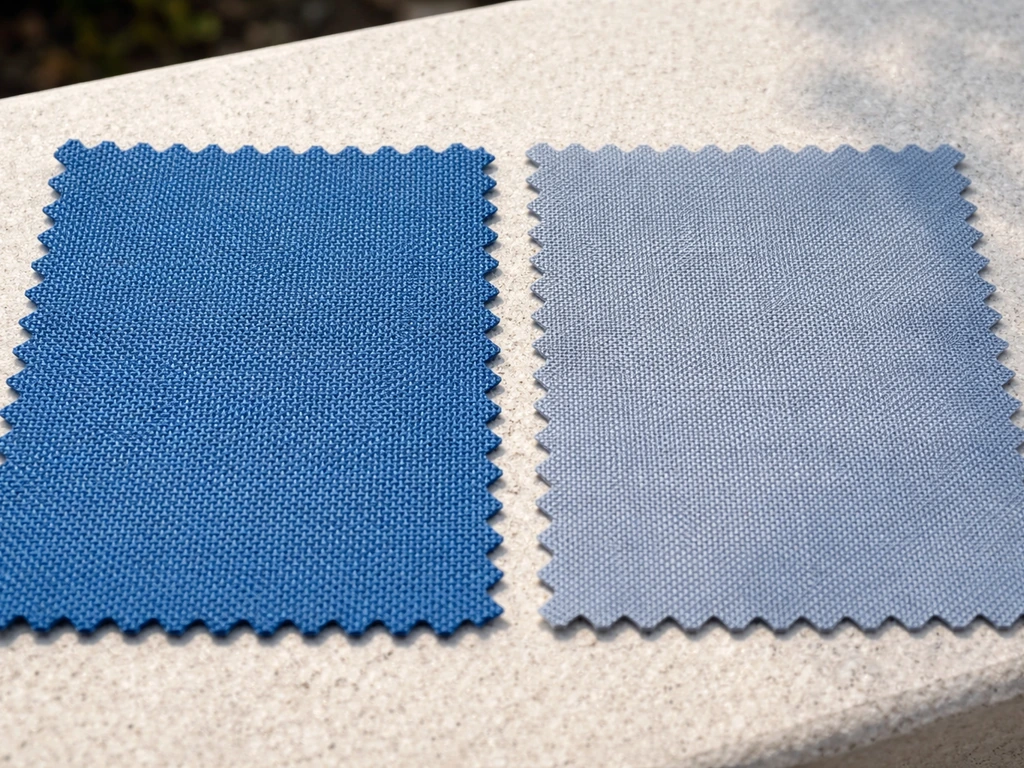
Fabric is one of the biggest quality differentiators in this category, and the gap between entry-level polyester and performance-grade acrylic is real.
Sunbrella vs. polyester canopies
Sunbrella is the benchmark for outdoor canopy fabric. It's 100% solution-dyed acrylic, which means the color runs through the fiber rather than sitting on the surface. That makes it genuinely fade resistant (not just rated for a season), UV protective, and resistant to mold, mildew, and staining. Standard dyed polyester, used in most budget and mid-range canopies, fades faster, holds moisture longer, and typically needs replacing sooner. Purple Leaf's mid-range listing at Best Buy, for example, uses 3-year fade-resistant yarn-dyed polyester, which is a reasonable lifespan for the price point but well short of what a Sunbrella canopy delivers over 5 to 10 years.
| Feature | Sunbrella Acrylic | Solution-Dyed Polyester | Standard Dyed Polyester |
|---|---|---|---|
| Fade resistance | Excellent (color through fiber) | Good (multi-year) | Fair (2-3 seasons) |
| UV protection | High (inherent) | Moderate | Low to moderate |
| Mold/mildew resistance | High | Moderate | Low without treatment |
| Water repellency | High (maintained with 303 Fabric Guard) | Moderate | Low after weathering |
| Typical lifespan | 7-10+ years | 3-5 years | 2-3 years |
| Price tier | Mid to premium | Mid-range | Budget |
Keeping fabric performing over time
Even Sunbrella fabric benefits from maintenance. Sunbrella endorses 303 Multi-Surface Cleaner for regular cleaning and 303 Fabric Guard for reapplying water repellency after heavy use or washing. The key is to clean before you protect, since applying a fabric guard over dirt or mildew locks it in rather than removing it. If you're investing in a quality canopy, spending a few extra dollars on these products and doing a seasonal refresh extends its life significantly.
Frame and pole materials
Aluminum poles are the standard for residential cantilever umbrellas. They're lightweight, rust-resistant, and hold up well in most climates. Steel frames are heavier and can rust if the coating is damaged, so they're less ideal for coastal or high-humidity environments. Fiberglass ribs (the arms that hold the canopy open) are more flexible than aluminum, which helps in wind because they bend instead of snap. For a permanent outdoor setup, look for powder-coated aluminum poles and fiberglass or reinforced ribs as a baseline.
Shipping, returns, and setup tips when ordering online
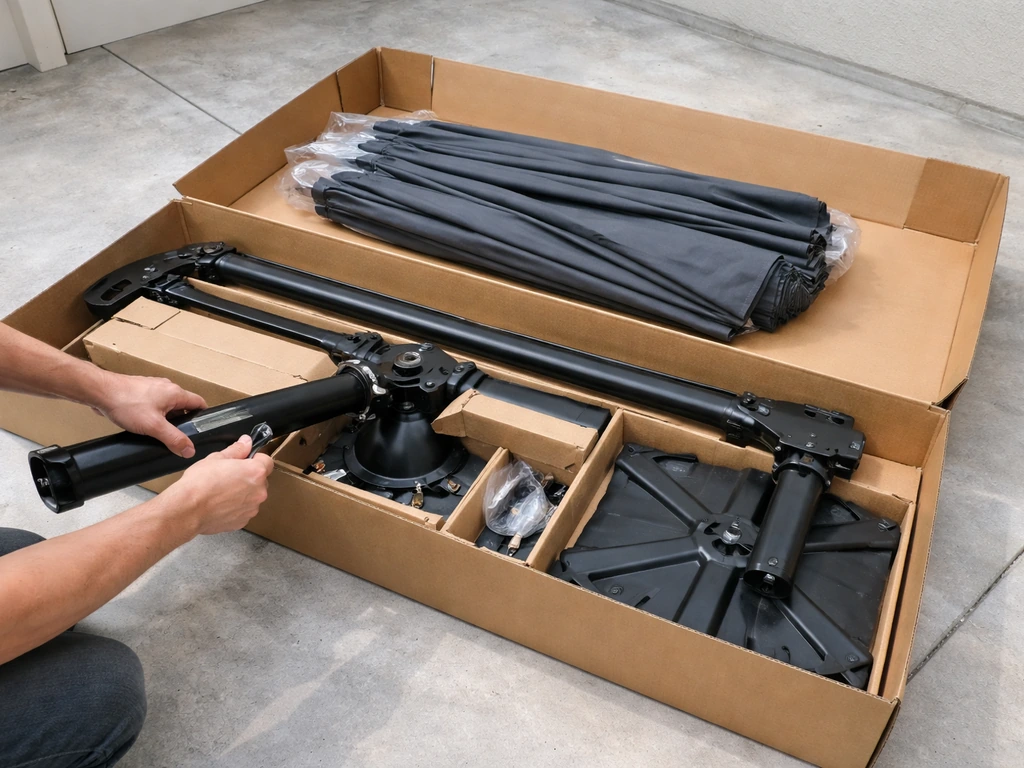
Offset umbrellas are large, heavy shipments. Understanding how they ship and what returns actually look like protects you from a frustrating experience.
What to expect with shipping
Most 10 ft cantilever umbrellas ship in one or two large boxes via ground freight or standard parcel. Lowe's specifically notes on some listings that the umbrella and base ship separately, which means two different delivery windows. If you're ordering from Amazon or Home Depot with Prime or standard shipping, delivery is typically within a few days to a week for in-stock items. Wayfair's delivery estimates can be longer for larger outdoor items. Check whether curbside vs. threshold delivery is included, especially for heavier base shipments.
Return policies matter more than you think
Returning a large outdoor umbrella is not like returning a shirt. Some retailers charge return shipping fees for oversized items, and in some cases the return cost can rival the original shipping cost. Wayfair has received real buyer complaints about unexpected return label costs and policy confusion on large items. Lowe's marketplace listings (items sold through Lowe's site but shipped by a third-party seller) can have different return policies than standard Lowe's stock, and the difference isn't always obvious at checkout. Before buying online, look for the return policy section on the product page and confirm whether return shipping is free or at your cost if the umbrella doesn't work for your space.
Assembly expectations
Almost every offset umbrella requires assembly. Target describes theirs as adult assembly required with no tools needed. Purple Leaf's instruction manual (updated for 2026) covers multi-step assembly for their cantilever models, and they mention optional third-party assembly services if you'd rather not do it yourself. Purple Leaf's 2026 cantilever instruction manual PDF includes the brand-specific assembly and installation expectations for that model, including how the mechanism should be set up Purple Leaf's instruction manual. Home Depot's instructions include a specific operational tip: always return the umbrella to fully upright before closing it, which prevents mechanism damage. Budget about 30 to 60 minutes for assembly on a standard residential model, more if you're assembling a heavy cement base.
Replacement parts and long-term support
One underrated factor when choosing where to buy: can you get replacement parts later? Canopy fabric wears out before frames do on quality umbrellas. Specialty retailers like Midtown Umbrellas, Frankford, and Tropitone are more likely to offer replacement canopies, whereas budget brands sold through mass retailers often don't. If you're spending $300 or more, check whether a replacement canopy is available for that model before you buy. It can double or triple the useful life of the frame.
Budget, sizing, and what to look for in reviews and specs
Offset umbrellas span a wider price range than most outdoor furniture categories. Here's how to think about tiers and what the spec sheet is actually telling you.
Price tiers in 2026
| Tier | Price Range (umbrella only) | What you get | Example brands |
|---|---|---|---|
| Budget | $80–$200 | Standard polyester canopy, basic tilt, cross base often included | Best Choice Products, Costway, Homver |
| Mid-range | $200–$600 | Solution-dyed polyester, 360° rotation, better crank/tilt, base sold separately | Purple Leaf, Best Selling Brands at Target/Lowe's |
| Premium | $600–$2,000 | Aluminum frame, fiberglass ribs, Sunbrella or equivalent fabric, strong wind resistance | Frankford, Midtown Umbrellas, Tropitone |
| Luxury | $2,000+ | Commercial-grade construction, custom sizing, designer fabrics, multi-year warranty | Janus et Cie, TUUCI, Glatz |
The $200 to $600 mid-range is where most homeowners land for a solid residential setup. Below $200, you're accepting compromises in fabric longevity and mechanism quality. Above $600, you're buying durability and often access to replacement parts, which matters if you're furnishing a space you plan to keep for years.
Specs that actually matter on the product page
- Canopy size and shape: 10 ft round vs. 10x10 ft square vs. rectangular. Match to your table or seating footprint.
- Shade area in square feet: A 10 ft round covers about 79 sq ft. Compare this to your seating area.
- Clearance height: Look for the height under the canopy when open, ideally 8 ft minimum, 9–10 ft preferred for comfortable standing.
- Fabric material: Sunbrella acrylic vs. solution-dyed polyester vs. standard polyester. This determines fade resistance and lifespan.
- Pole/frame material: Aluminum (best for most uses) vs. steel (heavier, rust risk).
- Rotation: Does it rotate 360°? Does it lock in multiple positions?
- Tilt: Independent or combined with rotation? Can it block low-angle sun?
- Base included or sold separately: Check this every time, even if you assume it's included.
- Base weight capacity: If buying a base separately, confirm it can reach 140–350 lbs when filled, depending on your wind exposure.
How to read reviews for offset umbrellas
Search reviews for mentions of stability (wind, base tipping), mechanism durability (does the crank or tilt lock hold after a season?), and fabric fading. Complaints about the base are common because buyers often underweight it or skip it entirely, which isn't the umbrella's fault. Filter for reviews that mention the base weight used: those are the most reliable stability data points. Also look for reviews left in the second or third year of ownership, not just post-delivery, to get honest durability feedback. For fabric fade, reviewers who live in high-UV climates (Southwest US, coastal areas) give you the most realistic picture of how quickly a polyester canopy degrades.
A quick pre-purchase checklist
- Measure your patio: note seating area dimensions, available space for the base pole outside the seating zone, and any overhead clearance limits.
- Decide on canopy size: 10 ft round or square for most standard setups; 11–13 ft for larger areas.
- Check your wind exposure: consistently windy areas need heavier bases and ideally a locking mechanism.
- Confirm whether the base is included in the listing or sold separately, and budget for it.
- Choose a fabric tier based on how long you want the canopy to last: polyester for 3–5 years, Sunbrella-grade acrylic for 7–10+.
- Review the return policy before checkout, especially for marketplace listings on Lowe's or third-party sellers on Wayfair.
- Check replacement canopy availability if buying above $300.
If you want to compare general patio umbrella options beyond the offset style, or you're also searching for bases to pair with what you buy, those are separate but related decisions worth researching alongside this one. The offset umbrella itself is only as good as the base under it and the fabric over it, so getting both right from the start is what makes the difference between a purchase you're happy with three years from now and one you replace after a single season.
FAQ
If I buy an offset umbrella online, how can I tell whether the base is included before checkout?
Check the product title and the first lines of the description for keywords like “base included” or “with base,” then scroll to the “what’s in the box” or “includes” section. If the listing only shows the canopy and arm dimensions, assume the base is sold separately (most are). Also compare the SKU between “umbrella” and “base” listings, sometimes the base is available on a different item page even if it’s from the same brand.
What’s the safest way to measure clearance for a cantilever umbrella so it won’t hit a ceiling or pergola?
Measure at the canopy’s lowest tilt angle, not just when it’s upright. Many models drop the canopy closer to the ground when tilted, and the crank mechanism can sweep an arc that also risks contact. If you have overhead lights, fans, or beams, leave extra margin on both the height and the side swing radius during rotation.
How much base weight is actually “enough” for my location, beyond the umbrella size?
Use two inputs together: canopy size (for example, 10 ft) and your local wind exposure. Even if a base “holds enough” for the typical day, gusty areas (coastal, hilltop, open yards) need the heavier fill range and a locking mechanism that reduces unwanted rotation. If you’re unsure, prioritize bases that specify a maximum fill capacity and use that maximum, not just the minimum suggested weight.
Are 10 ft offset umbrellas still appropriate for a 4-person table if we frequently tilt them?
Often yes, but tilting changes the effective coverage and clearance. Make sure you still meet the recommended canopy overhang beyond the table edges (at least a couple of feet per side) at the tilted position, and confirm your seating area still stays unobstructed under the arm. If tilting causes the canopy to shift off the table, consider moving up a size or choosing a model with a more generous tilt range.
What return problems should I watch for when buying an offset umbrella from big marketplaces?
Oversize return shipping fees and complicated return labels are the biggest surprises, especially for large base and umbrella shipments. Before you buy, confirm whether the retailer provides a pre-paid label, who pays return pickup, and whether partial returns are allowed if the umbrella and base arrive separately. Also check whether the return policy differs for third-party marketplace sellers listed on the same storefront.
If my umbrella ships in two deliveries, how should I plan installation timing?
Plan to receive and inspect each box before assembling anything. Because umbrella and base may arrive on different dates, measure the anchor area once the base arrives, then assemble the canopy when the arm and rotation hardware are all together. If you live in a high-wind area, consider waiting to fully assemble until you can keep the unit stable during assembly and final positioning.
Can I use a standard patio umbrella base with an offset cantilever umbrella?
Usually no. Cantilever bases are designed for a side-mounted lever arm and typically require much more ballast than center-pole bases of the same canopy size. Many retailers sell dedicated base weights and shapes specifically for the cantilever arm and crank setup, and using the wrong base can increase tipping risk. If you’re reusing an older base, verify compatibility by model number, not just by “umbrella diameter.”
Do I need tools for assembly if I buy from retailers like Target or Home Depot?
Some brands list “adult assembly required, no tools needed,” but others still require assembly steps like tightening hardware, aligning ribs, and securing the crank and tilt mechanism. Even if tools aren’t required, set aside time to read the manual and confirm all fasteners are fully secured. Also check whether your base is filled or needs filling at delivery, since that affects how long you’ll spend getting to a safe, usable setup.
Is it worth buying a replacement canopy later, and how do I check availability?
It can be a major value unlock if the frame is durable, because fabric commonly wears out before the mechanism. Before you buy, look for whether the exact model has replacement canopy listings (same fabric name and dimensions) and whether they’re sold by the manufacturer or a specialty retailer. If you cannot find a replacement for your model within a few minutes of searching, treat it as a red flag for long-term ownership.
What should I prioritize in reviews to judge wind and stability honestly?
Filter for reviews that mention base fill level or ballast weight used, not just “it feels sturdy.” Stability feedback is most reliable when the reviewer describes the fill (for example, sand plus water versus pavers) and whether the umbrella remained stable during gusts. Also look for comments made after months of use, not only immediately after delivery, since mechanisms and fittings can loosen slightly over time.