The best deal on a patio umbrella is not the cheapest one in the cart. It is the umbrella that costs the least per year of actual use, and that means matching the right style, size, materials, and base to your specific patio before you compare a single price tag. A $120 umbrella that fades in one season costs more than a $280 one that lasts eight years with a replaceable canopy. This guide walks you through every factor that separates a real deal from a regrettable purchase. You can also narrow down the best value patio umbrellas by comparing total cost over time, not just the sticker price.
Best Deal Patio Umbrella Guide: Get Value, Not Just Cheap

Kent Lang
24 May 2026
How to spot the true best deal: your value checklist
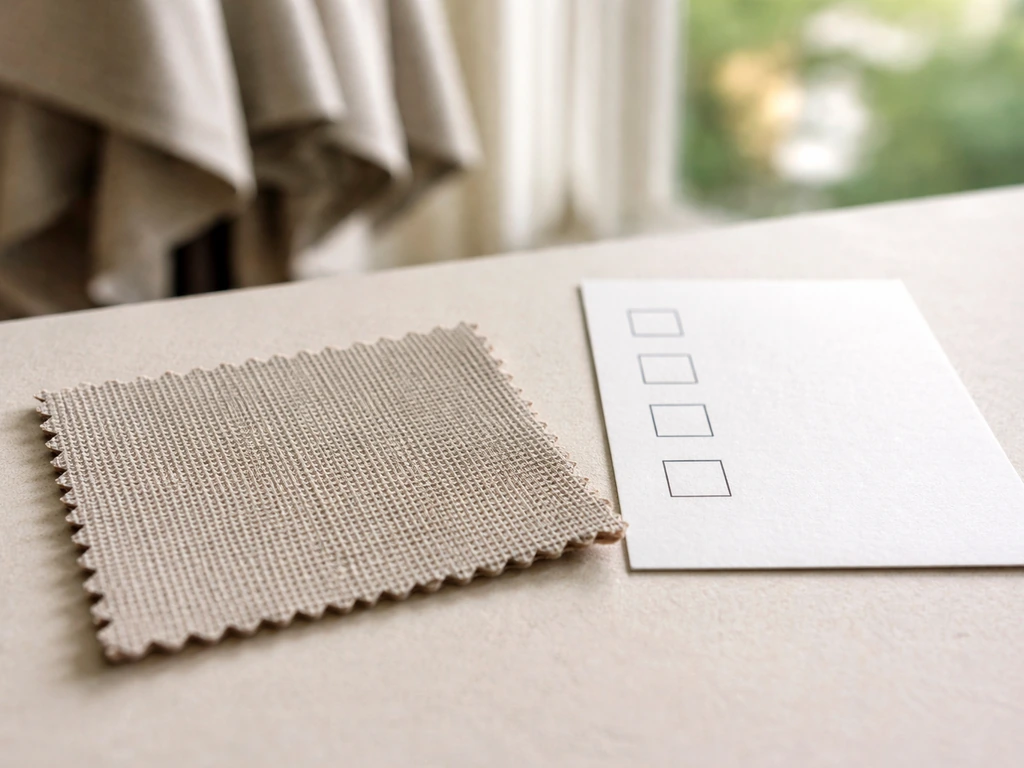
Before you open a single product page, run every umbrella candidate through this checklist. If a listing cannot answer all of these questions, it is not a deal, it is a gamble. To find the best patio umbrella for the money, compare the canopy material, UV protection, and base weight against the total price real best deal.
- Fabric type: Is it 100% solution-dyed acrylic (like Sunbrella, Outdura, or Bella-Dura)? Solution-dyed fibers resist fading because the color runs through the fiber, not just the surface. Brands like Treasure Garden back these fabrics with a 5-year limited warranty on color and strength loss.
- UPF rating: Does the listing show a specific UPF number? UPF 50+ blocks roughly 98% or more of UVA and UVB rays. If the product just says 'UV resistant' with no number, treat that as a red flag and look elsewhere.
- Frame material: Powder-coated aluminum is the best all-around frame for most buyers — lightweight, rust-resistant, and durable. Steel or cast iron is heavier (which helps with base stability) but can corrode over time, especially in coastal or humid climates.
- Lift mechanism: Crank-lift systems are easier and more reliable over time than pulley-and-pin systems. If you will open and close the umbrella daily, this matters more than most people expect.
- Tilt mechanism: Check whether the tilt is auto/collar-tilt or a simple fixed-tilt crank. Auto-tilt is more convenient; fixed-tilt on cheaper models can develop collar weakness in wind.
- Vented canopy: A vent at the top of the canopy lets wind pass through instead of lifting the umbrella. It is a small feature that makes a real stability difference on gusty days.
- Warranty coverage: Check what is actually covered and for how long. A strong warranty covers fabric separately from the frame and base. Treasure Garden, for example, gives 5 years on Sunbrella/Outdura fabric, 2 years on aluminum poles, and 1 year on bases. High-end fabrics like Helux's solution-dyed acrylic can carry a 10-year canopy warranty.
- Replacement parts availability: Can you buy a new canopy or replacement ribs if something breaks? Brands like Treasure Garden publish full replacement parts lists. An umbrella with an ecosystem of parts is worth more than one you will have to throw away in year three.
- Return policy: Factor in the retailer's return window. Home Depot and Walmart both have return policies worth checking before you buy, especially for large items that may arrive damaged.
Choose the right umbrella style for your patio
Style is not an aesthetic preference here, it determines whether the umbrella physically works in your space. Getting this wrong means returning a product or living with inadequate shade.
Market umbrellas (center pole)
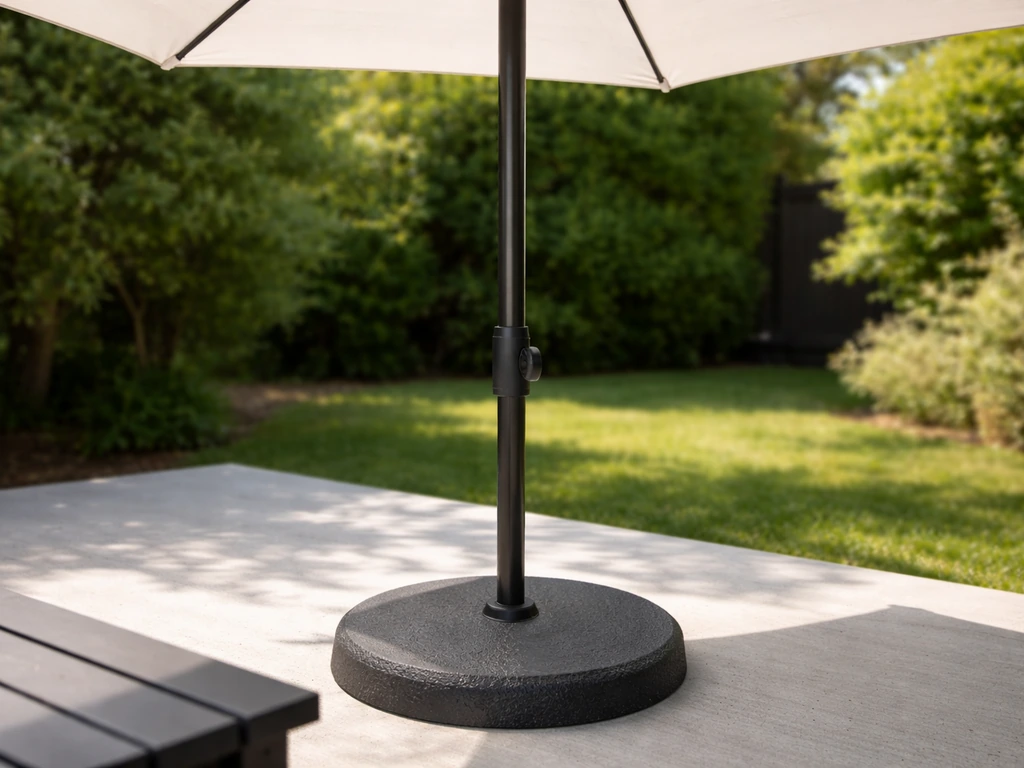
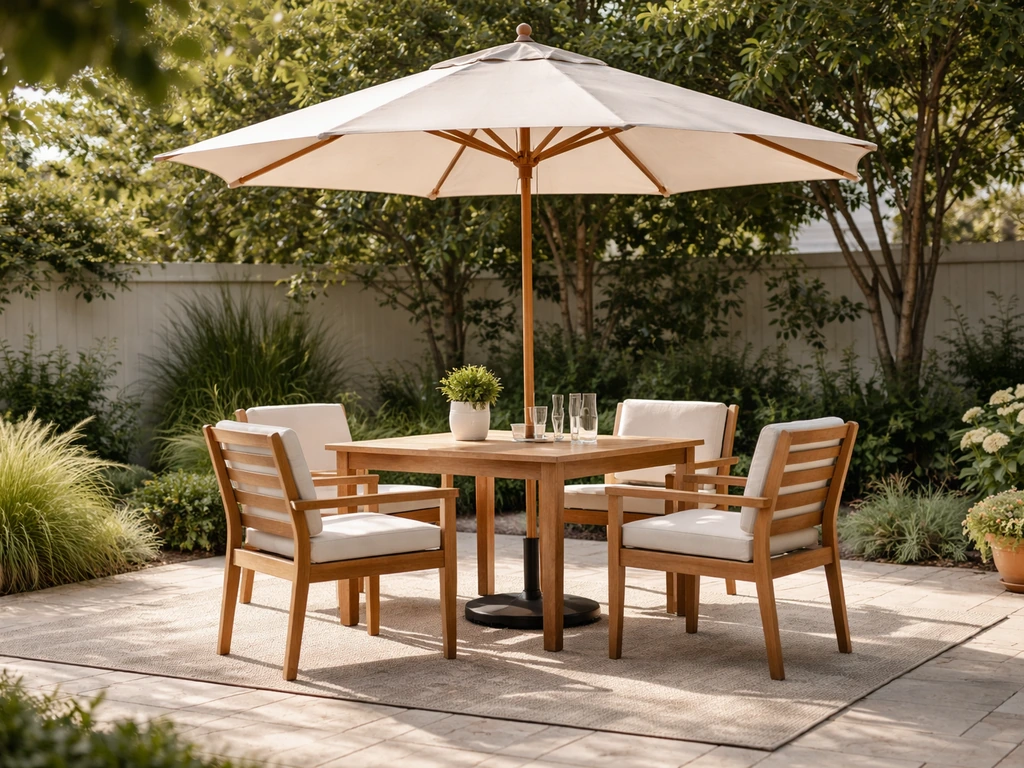
The classic style: a center pole that runs straight through the middle of your table (if the table has an umbrella hole) or stands alone in a freestanding base. Market umbrellas are the most affordable option, they are widely available in 7.5-foot to 11-foot canopy diameters, and replacement canopies are easy to find. The trade-off is that the center pole is in your way, it occupies space at the table and limits how you arrange seating. If you have a dining table with an umbrella hole, this is your most cost-effective starting point.
Cantilever and offset umbrellas (side pole)
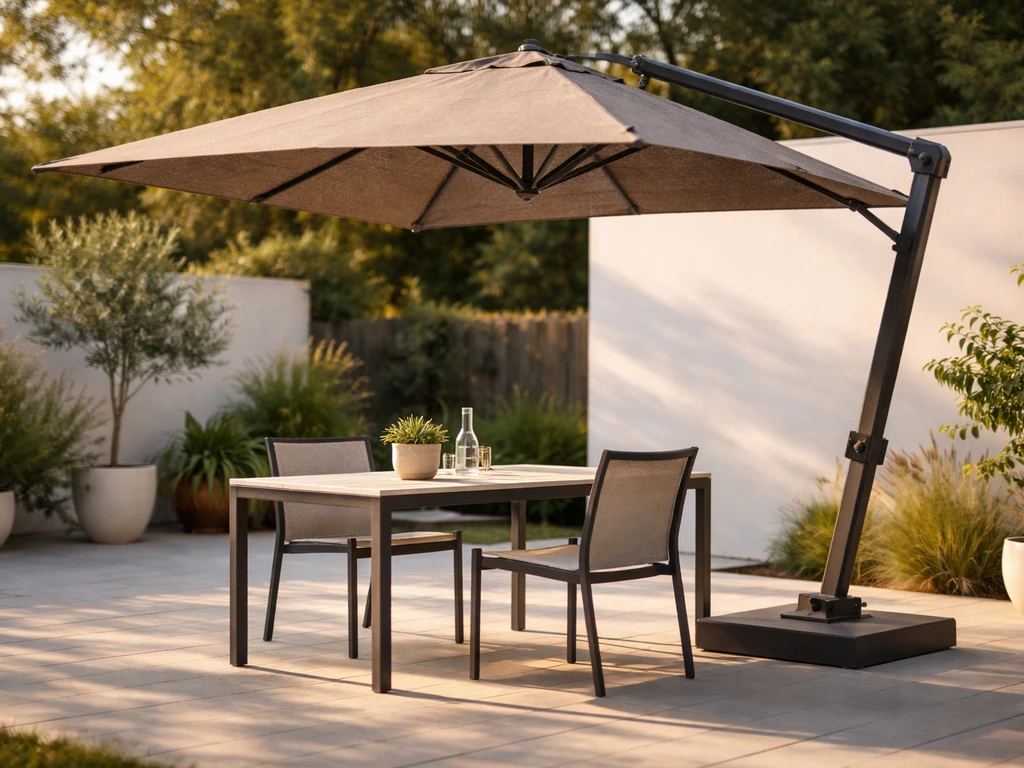
A cantilever umbrella uses a side-mounted pole with the canopy suspended from a horizontal arm overhead, sometimes called a side-post or offset umbrella depending on the retailer. There is no pole in the middle of your space, which makes it ideal for deep seating sets, lounge chairs, or anywhere you want unobstructed shade over a larger area. An 11-foot cantilever can cover a full sectional sofa. The catch: these umbrellas require heavier, more substantial bases (often weighted base plates or in-ground anchors), they cost more, and they need more open space around them for the arm to pivot. Consumer Reports' testing skews toward cantilever styles in the mid and high quality segment, which tells you something about where most of the serious engineering lives.
| Style | Best For | Typical Price Range | Main Trade-off |
|---|---|---|---|
| Market (center pole) | Dining tables with umbrella hole, smaller patios | $50–$300 | Pole in the center limits seating flexibility |
| Cantilever / Offset | Lounge areas, large patios, deep seating | $200–$800+ | Needs heavier base, more space, costs more |
| Freestanding market | Anywhere without a table hole, poolside | $80–$350 | Needs a solid base; can tip if base is undersized |
Sizing, coverage, and fit tips
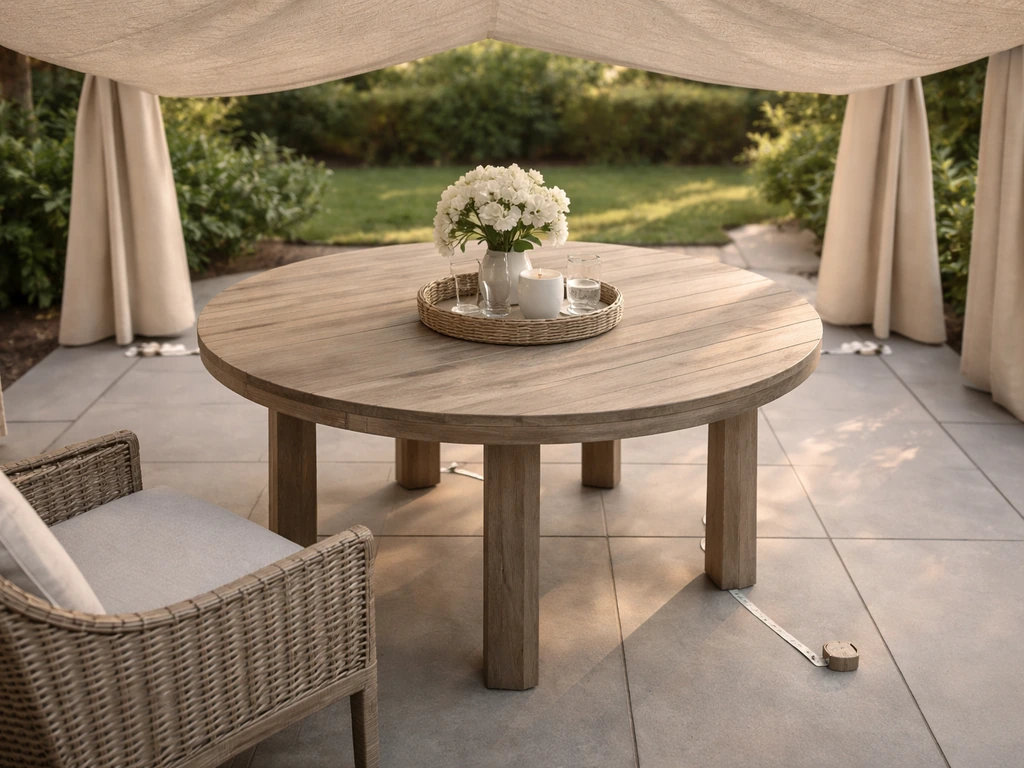
A good rule of thumb: the canopy should extend about 2 feet beyond the edge of your table or seating area on each side. So if you have a 48-inch (4-foot) round dining table, you want roughly an 8-foot canopy diameter to cover everyone seated around it. For a 6-foot rectangular table, a 9-foot or 10-foot canopy is usually the right call. Most residential patio umbrellas range from 7.5 to 11 feet in canopy diameter, pick based on your furniture footprint first, then verify the price.
Height matters just as much as width, especially if you have a pergola, roof overhang, or low-hanging branches. Most umbrellas stand between 7 and 10 feet tall when open. The clearance under the canopy, the space between the ground and the lowest edge of the fabric, is typically 6.5 to 7 feet. If you have an overhead structure, measure the clearance before buying. Also remember that tilting the umbrella changes its effective height: when tilted toward the sun, the canopy drops lower on one side, which can cause clearance problems under a pergola that looked fine when the umbrella was straight up.
- Add 4 feet total (2 feet per side) to your table or seating diameter to find the minimum canopy size
- Measure from the ground to your overhead structure and subtract at least 12 inches for canopy clearance
- For bar-height tables, check whether you need a pole extender or a taller market umbrella model
- For cantilever umbrellas, also account for the arm length and pivot radius when measuring your open space
Wind stability and base requirements
This is the section most buyers skip, and it is the one that causes the most regret. An undersized base is the single most common reason a patio umbrella ends up broken, blown over, or returned. The practical starting point: figure on roughly 10 pounds of base weight for every foot of umbrella diameter. A 9-foot market umbrella needs about 90 pounds of base weight. A large 13-foot cantilever can need 150 to 200 pounds or more, manufacturers publish their specific requirements, so always check the product documentation.
For center-pole market umbrellas, a heavy freestanding base (cast iron, steel, or fillable sand/water bases) does the job. For cantilever and offset umbrellas, you typically need weighted base plates that bolt or stack around the pole, or in some cases an in-ground anchor system. The arm-and-canopy of a cantilever create a significant lever effect in wind, a base that looks big enough in photos is often not. Treasure Garden's own guidance specifically recommends against leaving umbrellas open and unattended, which is honest advice: even a well-anchored umbrella should be closed when you step away for more than a few minutes in windy conditions.
A vented canopy helps here too. The vent at the top of the canopy lets a gust pass through rather than catching the full force like a sail. It will not replace a proper base, but it genuinely reduces the load on the pole and frame during moderate wind.
Materials, UV protection, and weather durability
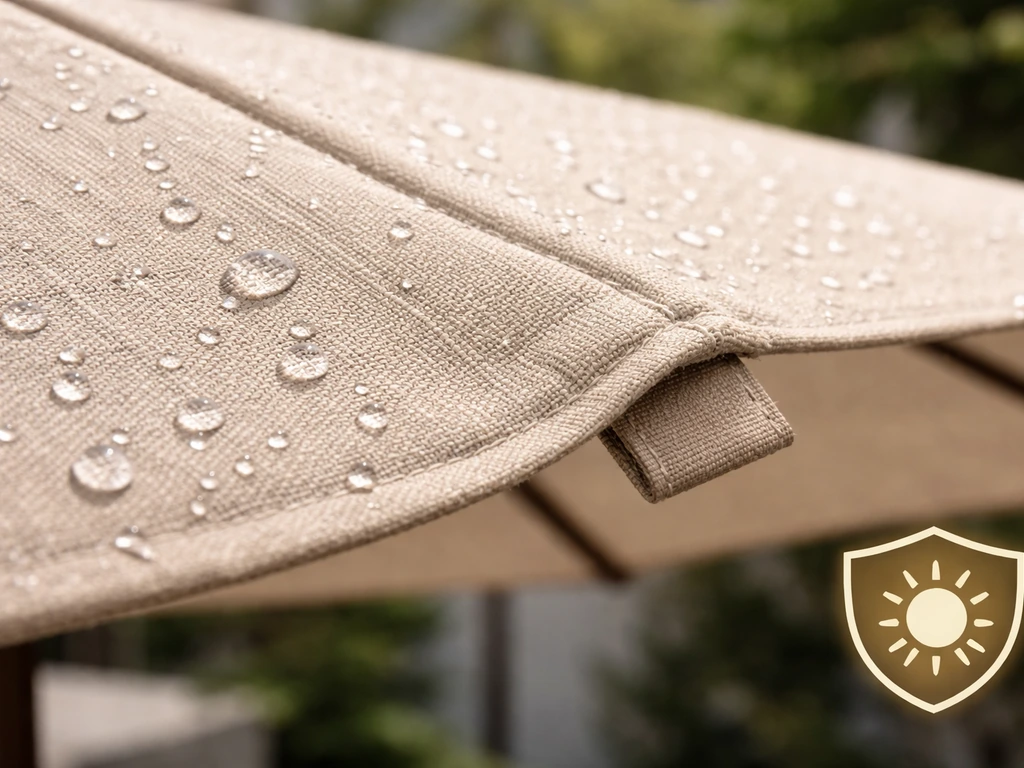
The canopy fabric is where the most dramatic quality differences live, and it is where the cheapest umbrellas cut the most corners. The gold standard for outdoor umbrella fabric is 100% solution-dyed acrylic. In solution-dyed fabric, the color is part of the fiber itself rather than applied to the surface, which means UV light cannot strip it away the same way. Sunbrella is the most recognized brand name, but Outdura, Bella-Dura, and Tempotest are also respected solution-dyed acrylics that major umbrella makers use with similar warranty backing. The warranty language tells you a lot: Treasure Garden's 5-year limited warranty on these fabrics covers loss of color and strength. Some premium canopies, like Helux's solution-dyed acrylic, carry a 10-year warranty. Compare that to an unbranded polyester canopy with no warranty, and the 'cheaper' umbrella looks a lot less appealing.
For UV protection specifically, require a UPF number. UPF 50+ is the threshold that blocks 98% or more of UVA and UVB radiation. If a product listing says only 'UV resistant' without a number, that claim is unverifiable and probably not meaningful. Paying more for a confirmed UPF 50+ canopy is not a luxury add-on, it is the whole point of sitting under an umbrella.
On the frame side: powder-coated aluminum is the best choice for most residential buyers. It is light, does not rust, and the coating holds up well against moisture and sun. Steel and cast-iron poles are heavier (useful for base stability in large umbrellas) but will eventually rust if the coating chips, especially in humid or coastal environments. Stainless hardware on all connection points is a plus if you can confirm it in the specs.
Compare prices smartly: what the specs actually tell you
Two 9-foot patio umbrellas listed at $180 and $260 are not the same product. Here is what to look for when you are side-by-side comparing on any retailer's site:
- Fabric type: Solution-dyed acrylic vs. polyester or olefin. The fabric alone explains most of the price difference between mid-range and premium umbrellas.
- UPF rating: Is a specific number listed? UPF 50+ is the bar to meet.
- Lift mechanism: Crank-lift vs. pulley/pin. Crank-lift is meaningfully better for daily use and holds up longer.
- Tilt type: Auto/collar-tilt vs. fixed-position tilt. This affects both convenience and durability under wind stress.
- Vent: Present or absent. A vented canopy is a small feature with a real effect on stability.
- Frame material and pole diameter: A thicker-diameter pole (1.5 inches and up for market umbrellas) is generally more rigid than a thinner one. Check if the frame is aluminum, steel, or mixed.
- Warranty length and scope: What is covered, for how long, and does it separate frame, fabric, and base?
- Replacement parts availability: Can you order a new canopy in two years, or is this a throwaway product?
- Base included or separate: Many listings show a price without a base. Make sure you are comparing total costs, not just the umbrella alone.
Seasonality changes prices significantly. Patio umbrella prices are highest in late spring (April through June) when demand spikes, and lowest in late summer and fall (August through October) when retailers clear inventory. If you can wait, buying in September can mean 30 to 50 percent off on the same product you would have paid full price for in May. End-of-season deals on premium Sunbrella-fabric umbrellas are often the best price-to-quality ratio you will find all year. If you want the logo patio umbrellas best price, focus on comparing the same canopy fabric, size, and base requirements across retailers before you buy. Memorial Day and Labor Day sales are also reliable discount windows, though the deepest cuts usually come after Labor Day when the season is clearly winding down.
Where to shop and when to buy
For most buyers, the best combination of selection, return policy, and price competition is across Home Depot, Wayfair, Amazon, and Lowe's for mid-range options ($100 to $400), and specialty outdoor retailers (Hayneedle, PatioLiving, Umbrella Source) for premium or commercial-grade umbrellas where knowing exactly what you are getting is worth paying for. Costco carries seasonal patio umbrellas with solid value on Sunbrella or similar fabrics, but availability varies and they sell out quickly in spring.
Return policies are part of the deal calculation. Home Depot and Walmart both have structured return processes for large outdoor items, but the practical window matters: if your umbrella develops a problem in month three, you want to know whether you are dealing with a warranty claim through the manufacturer or a straightforward return through the retailer. Always verify the return window before you buy, especially on clearance items where return eligibility may be limited.
Delivery logistics are a real cost for larger and heavier items. Cantilever umbrellas and heavy bases are often shipped via freight, with delivery windows that can stretch a couple of weeks. If you need the umbrella for a specific date, order three to four weeks early. Also check whether assembly is required and what tools are needed, some cantilever systems take 30 to 60 minutes to set up, and you may need a second person for the base.
Best sale timing at a glance
| Time of Year | What to Expect | Best For |
|---|---|---|
| March–April | New inventory arrives, full price, widest selection | Buyers who need it now and cannot wait |
| Memorial Day (late May) | 10–25% off at most major retailers | Good balance of selection and savings |
| July 4th sales | Mid-season deals, still decent inventory | Mid-range buyers looking for a quick discount |
| Labor Day (early Sept) | 25–40% off, inventory starts thinning | Best value if you can wait and store off-season |
| October–November | Clearance pricing, 40–60% off, limited sizes/colors | Bargain hunters who are flexible on style and color |
Quick recommendations by budget and patio type
Use these as starting points, not rigid rules. If you are trying to stay near the best patio umbrella under $100, use the tips above to balance size, fabric quality, and base weight. Every patio is different and the checklist above always comes first.
| Budget / Patio Type | Recommended Style | Key Specs to Prioritize | What to Watch Out For |
|---|---|---|---|
| Under $100 / Small balcony or bistro table | 7.5–9 ft market umbrella | Crank-lift, UPF 50+, aluminum frame | Polyester fabric fades fast; avoid if you use it daily |
| $100–$200 / Mid-size dining table | 9 ft market umbrella | Crank-lift, olefin or polyester-acrylic blend, vented canopy | Check base weight requirement separately — often not included |
| $200–$400 / Dining set, moderate wind | 9–10 ft market or small cantilever | Solution-dyed acrylic or Sunbrella fabric, auto-tilt, vented, 5-yr fabric warranty | Budget for a 50+ lb base if buying cantilever |
| $400–$700 / Deep seating or large patio | 11 ft cantilever/offset | Sunbrella or Tempotest fabric, 360-degree rotation, weighted base plates included or budgeted | Confirm arm clearance and base weight for your space |
| $700+ / Large outdoor living space | 13 ft cantilever or commercial-grade market | Commercial-grade solution-dyed acrylic (6–10 yr warranty), heavy-duty aluminum frame, in-ground mount option | Factor in professional installation for in-ground anchors |
If you are shopping on a tighter budget, the best-value move is usually a 9-foot aluminum market umbrella with a solution-dyed or high-quality olefin canopy and a crank-lift mechanism, paired with a separately purchased base that matches the weight requirement for your umbrella diameter. Spending an extra $40 on the right base instead of using the flimsy one that came in the box will extend the life of the whole setup significantly. For anyone sitting between budget tiers, note that end-of-season pricing on a premium umbrella often lands squarely in the range of a mid-grade umbrella at full spring price, which is why timing your purchase is part of finding the real best deal.
One last thing worth mentioning: if you are specifically eyeing a Sunbrella-fabric umbrella or want to dig into price comparisons on value-tier options or affordable picks across different budgets, those are genuinely different searches with different tradeoffs, and worth looking at separately once you have locked in the style, size, and base requirements that fit your actual space.
FAQ
What if I do not have an umbrella hole in my dining table, which style is the best deal patio umbrella choice?
If your table has no umbrella hole, prioritize a center-pole market umbrella that stands in a dedicated freestanding base, or choose a cantilever if you need unobstructed space for legs and dining chairs. A common mistake is buying a model meant to be table-mounted, then realizing you need an additional base or a different mounting method.
How do I know the base weight estimate is realistic for my umbrella model?
Use the article’s base weight rule of thumb only as a starting point, then confirm the manufacturer’s base requirements for that exact diameter and style. Base needs change with pole thickness, crank lift design, and whether the umbrella is designed to be tiltable or left closed in wind.
Should I buy a base from the same brand to get the best deal patio umbrella value?
Not always, but matching the base weight and compatibility is essential. If you mix brands, verify the pole size (diameter), mounting type (spigot vs insert), and hardware threads, because a “heavy enough” base can still be unusable if the connection does not fit.
What UPF number should I look for if I want the umbrella to actually protect skin and furniture?
Look for a listed UPF value, ideally UPF 50+. If the listing only says “UV resistant,” you cannot confirm the protection level, and you may end up with fabric that blocks less UV than expected, leading to quicker fading of cushions and rugs even if the shade looks fine.
Is a vented canopy worth it, or does it just cost more?
A vented canopy can be worth the extra cost if you live in a windy area or your umbrella is often tilted, it reduces pressure on the frame during moderate gusts. It does not replace having the right base and should not be treated as wind-proof if the umbrella rules recommend closing when unattended.
How do I prevent clearance problems when I have a pergola or roof overhang?
Measure the clearance with the umbrella in the position you will use most, not just fully open and straight up. If your umbrella tilts, test the lowest fabric edge height in the tilted position, because tilting can drop one side into areas that were clear when the umbrella was vertical.
Do solution-dyed acrylic warranties matter if I am buying the best deal patio umbrella on sale?
Yes, because warranties are your best signal for long-term fade resistance and fabric strength. A sale price is more meaningful when the listing includes a clear warranty period for color loss and fabric deterioration, while unbranded polyester with no warranty often becomes a short-lived deal.
Can I replace just the canopy to extend the life of the umbrella?
Often you can with market umbrellas designed for replacement canopies, but replacement availability varies by brand and model year. Before buying, confirm that the canopy replacement is sold separately and that the mounting system is compatible, otherwise you may have a near-finished umbrella that still cannot be refreshed.
What should I check about crank-lift or tilt mechanisms before buying?
Look for a listed crank-lift type and ensure it is paired with the correct canopy diameter and pole model. Mechanisms are a common failure point, so a warranty that covers parts or components beyond fabric can be a deciding factor when choosing between two similarly sized umbrellas.
How much earlier should I order for a cantilever umbrella if I need it for a specific date?
Order 3 to 4 weeks early if freight shipping or assembly is involved, and build extra time if a base requires bolts or stacking. A frequent mistake is assuming standard shipping timelines will apply to heavy cantilever bases, which can lead to missing the season you wanted.
What are the biggest reasons people end up returning a patio umbrella even when they bought it on sale?
The most common issues are choosing an undersized base for the umbrella diameter, wrong canopy coverage for the seating area, and clearance surprises under pergolas when tilting. Returns also spike when buyers do not verify return windows for large items, especially on clearance.
Citations
Sunbrella’s warranty information differentiates between end-product warranties and the fabric component warranty, indicating that Sunbrella is typically covered as a component (e.g., umbrella fabric) rather than only as the full umbrella unit.
https://www.sunbrella.com/warranty
Sunbrella provides specialty “5-Year Limited Warranty” documentation (PDF) for Decorative Shade and related categories, specifying a multi-year limited warranty timeframe for certain Sunbrella uses (relevant when an umbrella canopy is made with Sunbrella fabric).
https://www.sunbrella.com/media/pdf/sunbrella-specialty-5-year-limited-warranty-en-us.pdf
Treasure Garden’s published warranty terms (as summarized by a retailer) include: 2 years for aluminum center pole market umbrellas; 5 years for Sunbrella/Outdura/Tempotest fabric coverage; and warranty coverage that also addresses repair/replace at their option.
https://www.mcdonaldgardencenter.com/programs/warranties/umbrella-warranty
Treasure Garden states it provides a warranty for Sunbrella/Outdura/Bella-Dura/Tempotest type fabrics (5-year limited warranty) and also notes that bases have their own shorter warranty period (e.g., 1 year in the warranty PDF).
https://d23zy84q2vn4qy.cloudfront.net/PDF/TreasureGardenPDFs/Treasure-Garden-Warranty.pdf
For value-checklist criteria, Consumer Reports distinguishes crank-lift systems (hand-turning a crank on the pole) as easier to use than pulley lifts (string/pin mechanism), which is a concrete mechanism-quality criterion to compare across listings.
https://www.consumerreports.org/home-garden/outdoor-living/buying-guide/
Consumer Reports notes that premium canopies may include a vent at the top, which can improve stability in windy conditions (a concrete spec/feature to check for on product pages).
https://www.consumerreports.org/home-garden/outdoor-living/buying-guide/
For wind/stability setup, Treasure Garden’s warranty/care guidance emphasizes not leaving umbrellas open unattended in open position (a practical safety/stability expectation buyers should plan around).
https://treasuregarden.com/downloads/2026_Treasure_Garden_Catalog.pdf
Sunbrella-grade/solution-dyed acrylic fabric is repeatedly associated with long fade/wear performance; Treasure Garden’s “Fabric/Canopy Information” PDF states their grade fabrics include 100% solution-dyed acrylic and cite a five (5) year warranty covering loss of color or strength from those fabrics.
https://d23zy84q2vn4qy.cloudfront.net/PDF/TreasureGardenPDFs/TG%20Canopy%20Info.pdf
Treasure Garden’s maintenance/care PDF specifically calls out “100% Solution-Dyed Acrylic Fabrics” and references limited warranty duration (5 years) for Sunbrella/Outdura/Bella-Dura fabric categories, making warranty-backed fabric type a confirmable criterion.
https://d23zy84q2vn4qy.cloudfront.net/PDF/Maintenance%26CarePDFs/OT01510_Maintenance-Care-PDFs_Treasure-Garden.pdf
UPF is a numeric UV-protection spec you can require in your checklist: UPF 50+ indicates ~98%+ of UVA/UVB is blocked (use this to discount listings that say only “UV resistant” without a UPF number).
https://uv-blocker.com/blogs/sun-protection/uv-umbrella-buying-guide-how-to-choose-the-right-sun-protection
A caution on spec transparency: if an umbrella doesn’t list a specific UPF number, the buyer should be skeptical that it provides real UV protection (reinforces the “require UPF rating” checklist rule).
https://uv-blocker.com/blogs/sun-protection/uv-umbrella-buying-guide-how-to-choose-the-right-sun-protection
Consumer Reports’ umbrella testing emphasis includes many offset cantilever styles, reflecting that these are common in the mid/high quality segment and are a useful reference for value comparisons.
https://www.consumerreports.org/home-garden/outdoor-living/buying-guide/
Aosom explains cantilever (offset) umbrellas use a side-mounted pole with a canopy suspended from a horizontal arm, which creates different clearance/space needs vs a center pole market umbrella.
https://www.aosom.com/blog-cantilever-vs-market-umbrella-which-is-best-for-your-space.html
UmbrellaSource describes offset umbrellas as “side-post” umbrellas (a terminology bridge) which helps shoppers compare products consistently across retailers.
https://www.umbrellasource.com/articles/side-post-umbrellas
For typical measurement-based sizing, one guidance source states umbrella sizing should extend about 2 feet (61 cm) beyond the table or seating area on each side—useful as a concrete rule-of-thumb for choosing canopy diameter.
https://ornatehome.com/blogs/outdoor-furniture/patio-umbrella
BBQGuys provides a practical sizing approach: choose umbrella size based on table shape/dimensions and notes a range example (e.g., bar sets needing bar-height umbrellas or pole extenders), supporting “rules + corrections” for clearance and fit.
https://www.bbqguys.com/a/28834/learn/outdoor-living/buying-guides/umbrellas/sizes
UPF rule-of-thumb for numeric validation: UPF 50+ is a standard that blocks ~98%+ of UVA/UVB rays (can be used as a checklist threshold in your “best deal” criteria).
https://uv-blocker.com/blogs/sun-protection/uv-umbrella-buying-guide-how-to-choose-the-right-sun-protection
Patiowell’s measurement guide states that “majority of patio umbrellas range from 7 to 10 feet in height” (helpful for vertical-clearance planning) and instructs to measure canopy clearance when installing under roofs/pergolas.
https://www.patiowell.com/blogs/tips-how-tos/how-to-measure-patio-umbrella
Aosom’s measurement guide (and/or umbrella guide pages) include a practical rule: for cantilever umbrellas, use weighted base plates or in-ground anchors—key anchoring guidance that changes by umbrella style.
https://www.aosom.com/blog-the-complete-guide-to-measuring-patio-umbrellas.html
Aosom’s measurement tip also provides a numeric clearance range it calls out as “Clearance Under Canopy | 6.5–7 feet,” which can be used for quick buyer clearance checks (especially under pergolas/overhangs).
https://www.aosom.ca/blog-tired-of-wrong-sizes-how-to-measure-patio-umbrellas.html
A practical base-weight heuristic appears in one sourcing thread: ~10 pounds of base weight for every foot of umbrella diameter (use as a starting checklist, but validate per product instructions).
https://www.reddit.com/r/LivingEssentials/comments/1ludwyy
Consumer Reports notes that vented canopies can provide added stability on windy days, which gives you a feature-based stability criterion to compare across listings.
https://www.consumerreports.org/home-garden/outdoor-living/buying-guide/
A concrete example of umbrella manufacturer guidance on replacement parts ecosystem: Treasure Garden’s replacement canopy category and parts pages exist, which supports the “replacement canopy availability” value criterion.
https://www.treasuregardenproducts.com/c/replacement-canopies
Treasure Garden maintains an official replacement parts list PDF for umbrella components (ribs, canopy screws, etc.), supporting the checklist criterion to look for replacement-part ecosystems rather than throwaway umbrellas.
https://treasuregarden.com/images/cmscategory/2023_Replacement_Parts_AG28.pdf
East Coast Umbrella’s warranty page identifies what is covered and highlights that “Sattler awning-grade (marine) fabrics (100% solution-dyed acrylic) are backed by a 6-year limited warranty,” giving a concrete fabric+coverage spec to compare in your checklist.
https://eastcoastumbrella.com/warranties/
East Coast Umbrella’s same warranty page indicates the frame/mechanism coverage scope includes components like the tilt mechanism/crank-to-lift mechanism and canopy fabric, which is directly relevant to a checklist requiring warranty coverage for mechanisms (not just fabric).
https://eastcoastumbrella.com/warranties/
A retailer summary of Treasure Garden warranty emphasizes separate coverage periods (e.g., bases vs Sunbrella/Outdura/Tempotest fabric), which is a concrete point to check on product pages for “what is actually covered.”
https://www.mcdonaldgardencenter.com/programs/warranties/umbrella-warranty
For comparing retailers on “best price,” a key spec field to ask for is mechanism type (crank-lift vs pulley lift). Consumer Reports states crank-lifting systems are easier to use than pulley lifts with string/pin.
https://www.consumerreports.org/home-garden/outdoor-living/buying-guide/
For comparing wind stability, Consumer Reports’ guidance implies features like vents and sturdy pole/arms are important; vented canopies are a concrete feature that affects stability in gusts.
https://www.consumerreports.org/home-garden/outdoor-living/buying-guide/
Walmart’s corporate return-policy page includes details about returnability windows and where to start returns; while not umbrella-specific, it provides baseline return process expectations shoppers can factor into total value (especially if warranty support is limited).
https://corporate.walmart.com/about/policies
The Home Depot has a centralized return-policy page, useful for checking return rules that can affect your “deal value” calculation when a warranty claim is slow or shipping is required.
https://www.homedepot.com/c/Return_Policy
Treasure Garden’s published warranty PDF says Sunbrella/Outdura/Bella-Dura/Tempotest fabrics carry 5 years, while bases carry a 1-year workmanship warranty—this difference should be part of your value model (price vs how much of the umbrella is covered).
https://d23zy84q2vn4qy.cloudfront.net/PDF/TreasureGardenPDFs/Treasure-Garden-Warranty.pdf
A specialty canopy/fabric warranty example: Helux umbrella canopy warranty PDF explicitly states “Solution Dyed Acrylic Canopy – 10 Year Warranty,” giving a clear high-end durability/value reference point for comparing premium fabrics.
https://currentluxury.com/wp-content/uploads/2025/01/HeluxUmbrellaCanopy-Warranty.pdf
Practical style recommendation example: Forbes Vetted notes cantilever (offset) umbrellas (e.g., a 11-foot option) can provide unobscured shade over larger patio areas or deep seating, implying better fit/value for larger layouts than a center pole market umbrella.
https://www.forbes.com/sites/forbes-personal-shopper/article/best-patio-umbrella/
The same Forbes Vetted segment emphasizes tilt mechanisms (crank vs simple adjustments) as relevant to daily use quality and value comparisons.
https://www.forbes.com/sites/forbes-personal-shopper/article/best-patio-umbrella/
Counterpart buying-guide insight: Palm Casual’s wind-resistance advice highlights that mechanism design (auto-tilt vs fixed tilt) and possible collar weaknesses in wind can change stability—supporting a checklist requirement to verify tilt mechanism type, not just “it tilts.”
https://palmcasual.com/patio-umbrella-buying-guide-size-style-wind/
For patio umbrella clearance/open-space planning, PatioWell’s guide states you must consider adequate space available for the umbrella to open under roofs/pergolas/branches, and that umbrellas typically are 7–10 feet tall—useful in value decisions to avoid buying an umbrella that can’t be used year-round.
https://www.patiowell.com/blogs/tips-how-tos/how-to-measure-patio-umbrella
Umbrella sizing geometry rule-of-thumb: Ornate Home suggests +2 feet beyond the table edge on each side (so the canopy should be roughly table diameter + 4 feet total width) to cover seating with margin—use this to compute correct canopy diameter before comparing prices.
https://ornatehome.com/blogs/outdoor-furniture/patio-umbrella
Aosom’s measuring guide indicates the importance of measuring canopy height when tilted (tilt changes clearance), which matters for buyers who have overhead structures and want to avoid short-lived usability.
https://www.aosom.com/blog-the-complete-guide-to-measuring-patio-umbrellas.html
A manufacturer-level practical safety note from Treasure Garden’s 2026 catalog: they recommend not using umbrellas while unattended and also note wind-damage and rust aging behavior of steel/iron, supporting a stability/corrosion checklist approach rather than relying on marketing claims.
https://treasuregarden.com/downloads/2026_Treasure_Garden_Catalog.pdf
For replacement-canopy value, Treasure Garden provides an official “Replacement Canopies” shopping section, making it more likely the umbrella can be repaired instead of replaced—key for avoiding paying for short-lived quality.
https://www.treasuregardenproducts.com/c/replacement-canopies
For discount-timing and deal-finding in 2026: the sources gathered so far do not include authoritative month-by-month promotion calendars specific to 2026 patio umbrella sales; you’ll likely need retailer calendar lookups (Home Depot/Wayfair/Amazon/Lowes) or historical promotion data to complete this target accurately.
https://www.consumerreports.org/home-garden/outdoor-living/buying-guide/