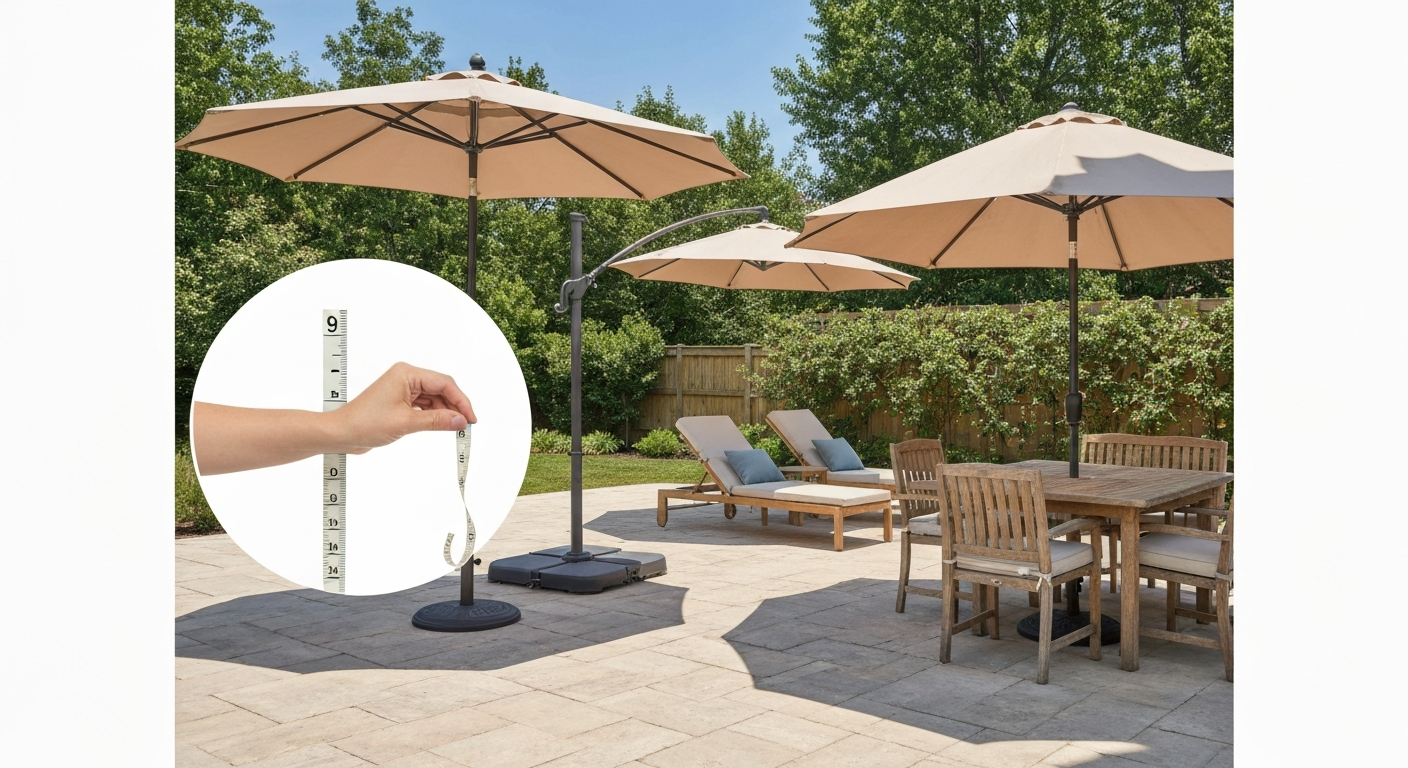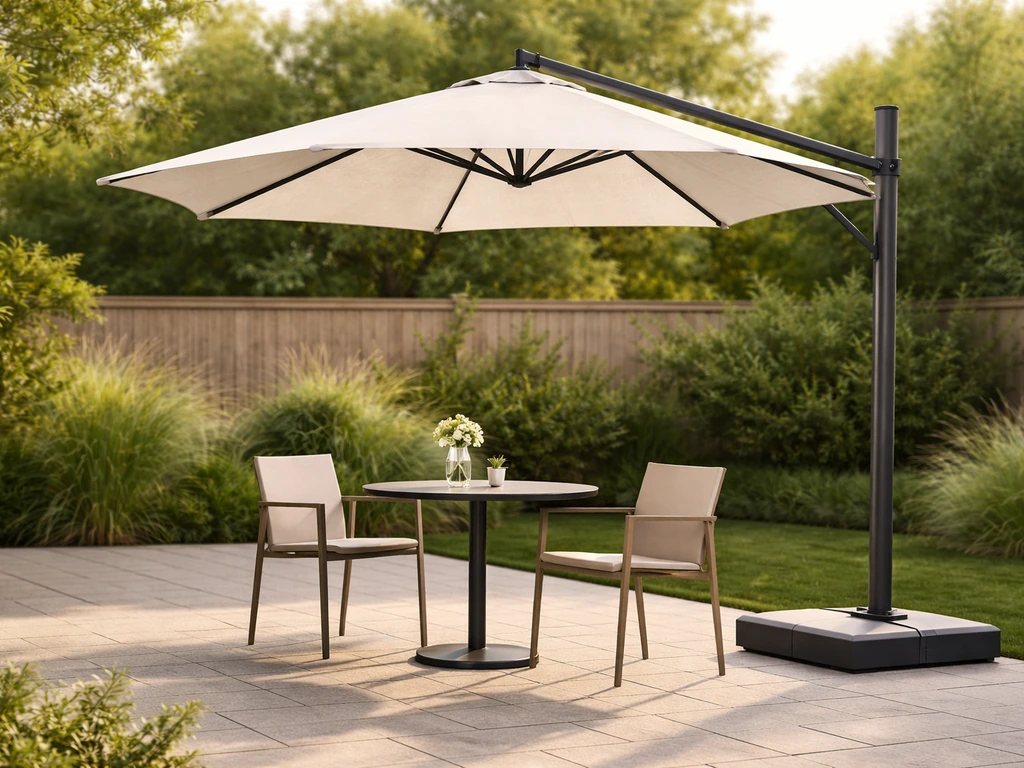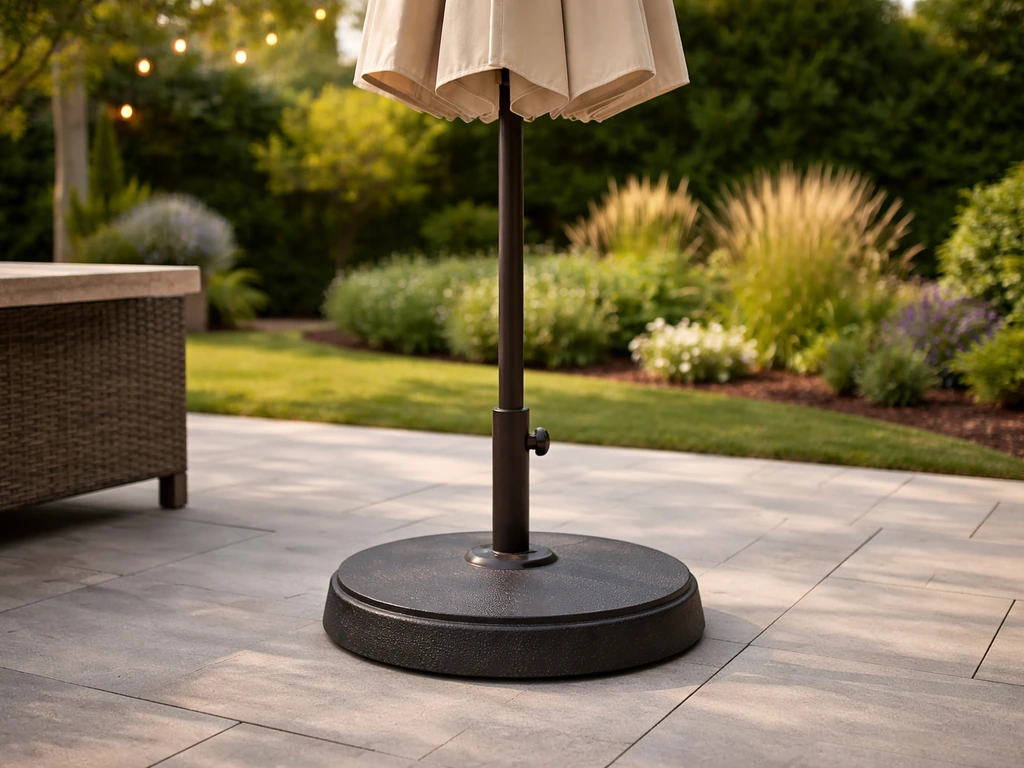
For most patios, the best large umbrella is a 10- to 11-foot market-style or cantilever umbrella with a solution-dyed acrylic canopy, an aluminum or powder-coated steel frame, a smooth crank-and-tilt mechanism, and a base weighing at least 50 to 75 pounds. If your seating area is centered under a table, go market style. If you want shade without a pole in the middle of your space, or you're covering a lounger, go cantilever. Size, base weight, and fabric quality are the three things that separate umbrellas that last five-plus years from ones that fade and wobble after a single season.
Best Large Patio Umbrellas: Sizes, Styles, and Buying Guide

Kent Lang
1 May 2026
How to choose a large patio umbrella
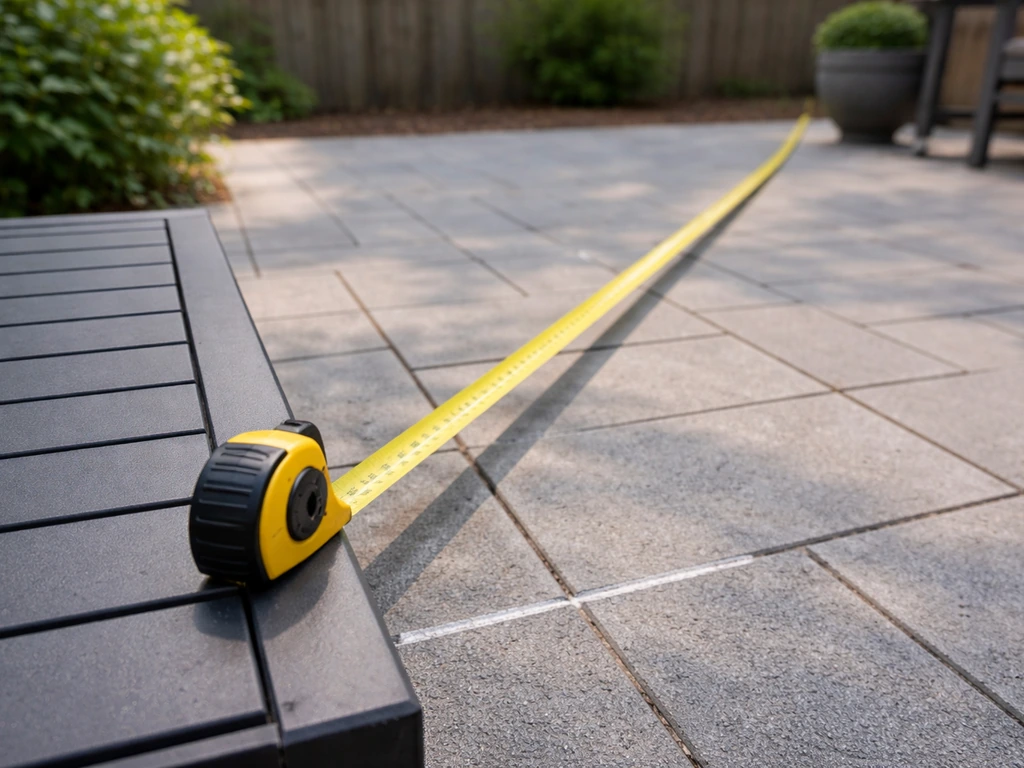
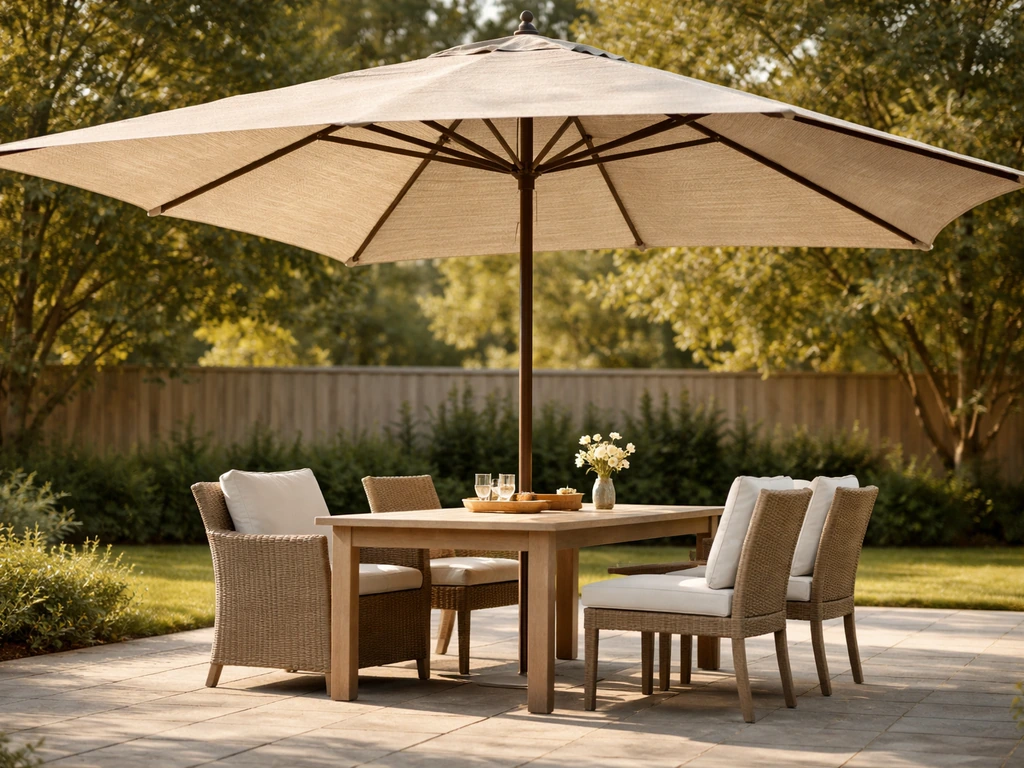
Start by measuring your seating area, not just your table. A good rule of thumb: the canopy should extend at least 2 feet beyond the edge of your table on every side. That means a 48-inch round dining table needs at least a 9-foot umbrella, but a 10- or 11-footer gives you noticeably more breathing room for chairs and people. Consumer Reports echoes this 2-foot rule, and in practice, bigger coverage is almost always worth it if your space allows.
Height matters almost as much as diameter. Most patio umbrellas open to a height somewhere between 7 and 9 feet at the center of the canopy. The crank mechanism sits partway down the pole, and if it lines up with dining-table height (typically 28 to 30 inches), it can block seated guests or interfere with table legs. Measure crank height against your furniture before you buy. For lounge seating, you have more flexibility, but the canopy edge still needs to clear people's heads comfortably.
Canopy diameter is the number you'll see advertised, but actual shade coverage varies with canopy shape and sun angle. As a rough benchmark, a 9-foot octagonal market umbrella covers around 57 square feet of shade at midday. A 13-foot cantilever can push 120 square feet or more. If you're covering a 6-person dining set or a couple of loungers side by side, plan for at least a 10- to 11-foot canopy.
Market, offset, and cantilever: which style fits your patio?
These three styles cover almost every outdoor seating scenario, but they're genuinely different products. Choosing the wrong one creates real annoyances, so it's worth understanding what each one does well.
Market umbrellas
A market umbrella has a center pole that goes straight through a table's umbrella hole or into a freestanding base. It's the most stable design per dollar spent, easiest to find in large sizes, and the widest selection of colors and fabrics lives here. A 9- to 11-foot market umbrella is the right call for a standard outdoor dining table and is the most cost-effective way to get serious shade. The trade-off is that the center pole limits seating flexibility and doesn't work at all over lounge chairs or furniture without a pole hole.
Offset and cantilever umbrellas
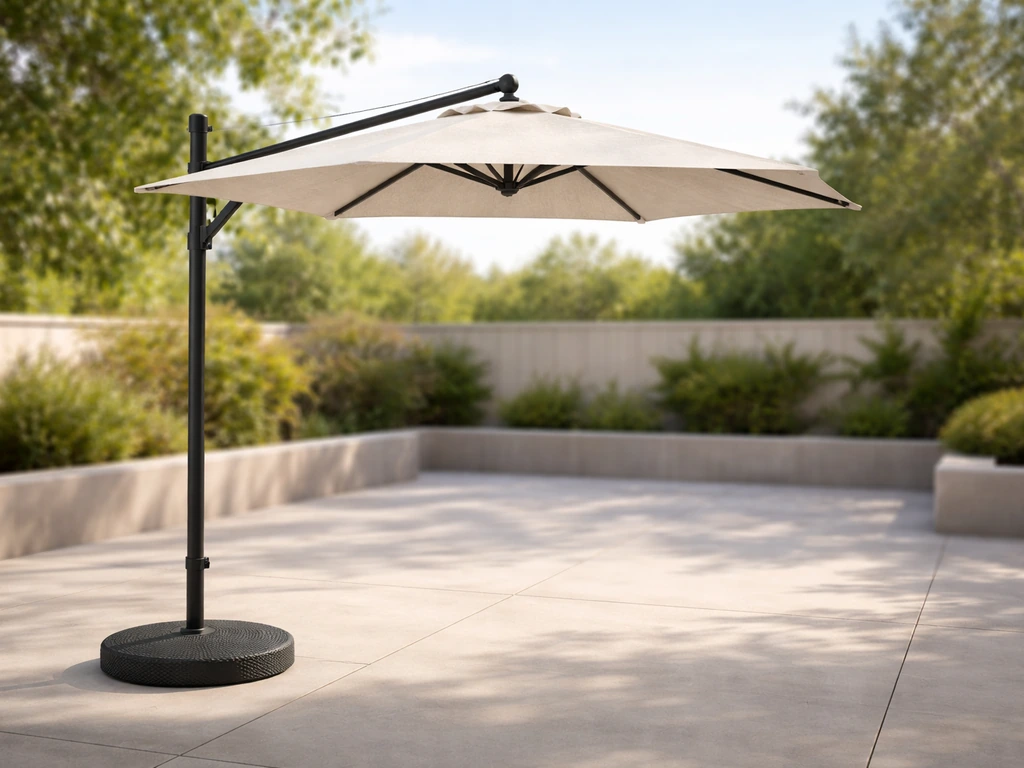
Offset and cantilever umbrellas are essentially the same category: the pole sits to one side and a horizontal arm extends over your seating area. This is the go-to choice when you want unobstructed shade over lounge furniture, a sectional sofa, or a pool deck without a center pole in the way. They typically come in 10- to 13-foot canopy sizes and can rotate 360 degrees in better models, letting you chase the sun throughout the day.
The catch: they need a heavier and bulkier base, cost more, and need open space behind the pole for the arm to swing. Plan for 4 to 6 feet of clearance behind the base. If you're shopping specifically for this style, there's a lot more detail worth reading in a dedicated large cantilever umbrella guide.
Quick comparison
| Style | Best For | Typical Size Range | Base Weight Needed | Key Trade-off |
|---|---|---|---|---|
| Market (center pole) | Dining tables, covered patio | 9–11 ft | 50–75 lbs | Pole through center limits seating layouts |
| Offset/Cantilever | Loungers, sofas, open decks | 10–13 ft | 75–100+ lbs | More expensive, needs arm clearance behind pole |
| Freestanding market | Flexible placement, no table hole | 9–11 ft | 50–75 lbs | Takes up base footprint in usable space |
Fabric, UV protection, and frame features that actually matter
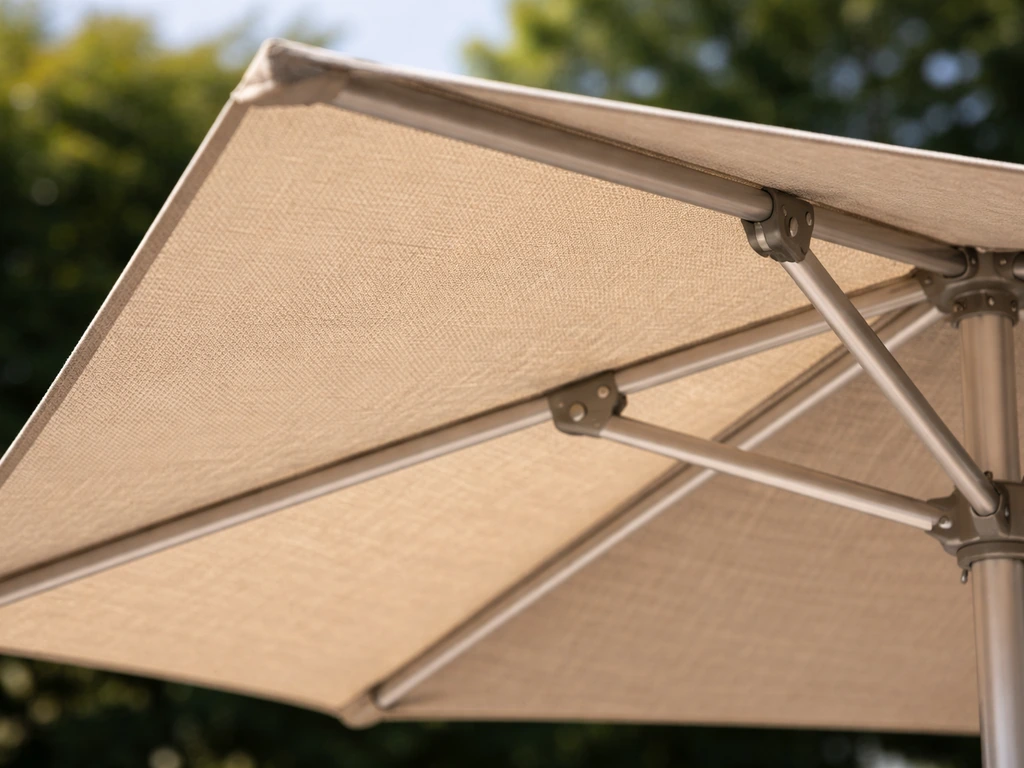
The single most important material decision is fabric. Solution-dyed acrylic is the standard to look for. In this process, the color goes into the fiber itself during manufacturing rather than being applied as a surface dye, which means it resists fading dramatically better than cheaper alternatives. Brands like Sunbrella and Outdura both use 100% solution-dyed acrylic. Outdura's fabric, for instance, carries a UPF 50+ rating and blocks around 97.5% of harmful UV rays, which is about as good as outdoor fabric gets. Sunbrella fabrics receive a fluorocarbon finish treatment that helps water bead off and adds mildew resistance. Both are meaningfully better than polyester canopies, which fade faster and hold more moisture.
For the frame, aluminum is the best all-around choice for most homeowners. It doesn't rust, is lighter than steel, and handles weather well over many years. Powder-coated steel is slightly more affordable and can be fine if the coating is intact, but once it chips, rust follows quickly. Avoid frames described only as "iron" or "steel" without any mention of coating or rust treatment.
On mechanisms: a smooth crank is far more practical than a pulley lift, especially on a large canopy that's heavy when the fabric is damp. Tilt is worth paying for if your patio gets direct afternoon sun. One thing to check: on some market umbrellas, only the canopy fabric tilts, not the ribs and frame, so confirm what actually moves when the tilt is engaged. A double-vented canopy is also worth seeking out. The vent allows wind to pass through the top rather than lifting the whole canopy, which measurably reduces strain on the frame and base in breezy conditions.
- Fabric: look for solution-dyed acrylic (Sunbrella, Outdura, or comparable). Avoid unlabeled polyester if longevity matters.
- UV rating: UPF 50+ is the highest rating and blocks 97.5%+ of UV rays.
- Water repellency: fluorocarbon or similar finish helps water bead off and slows mildew growth.
- Frame: aluminum is best for most uses; powder-coated steel is acceptable if the finish is quality.
- Lift: crank-and-tilt is more practical than rope pulley on large canopies.
- Venting: double-vented canopies reduce wind uplift and are worth the slight premium.
Wind stability and getting your base right
An undersized base is the number-one reason large patio umbrellas tip over or take flight. Frankford, one of the most respected umbrella manufacturers in the commercial space, recommends closing your umbrella when sustained winds exceed 25 mph. That's not a marketing caveat, it's a practical limit for nearly every freestanding umbrella on the market regardless of price. The CPSC frames this clearly: an unsecured open umbrella in a gust is a projectile, not just an inconvenience. CPSC safety materials advise securing umbrellas properly, and warn that wind can turn an unsecured open umbrella into a projectile an unsecured open umbrella in a gust is a projectile.
Base weight should scale with canopy diameter. For a 9- to 11-foot market umbrella, a 50-pound base is the minimum and 75 pounds is strongly recommended on any exposed patio. For a 10- to 11-foot cantilever or offset umbrella, go 75 pounds minimum, and in breezy climates, 100 pounds or more is worth the investment. Some brands sell wind stabilizer kits as add-ons that can push rated performance to around 40 mph, though no freestanding base setup eliminates the need to close the umbrella in real storms.
If you have a covered porch or can route the pole through a table with an umbrella hole, you're adding significant passive stability. For open patios or decks in high-wind areas, consider in-ground anchoring. The standard method is to pour a concrete footing into a sonotube, insert the ground anchor flush, and then mount the umbrella pole into the anchor with the provided hardware. This setup is permanent but dramatically more stable than any freestanding base. If you're mounting on a wood deck, use washers under the surface plate to let water escape underneath and prevent rot.
| Canopy Size | Minimum Base Weight | Recommended Base Weight | High-Wind Area |
|---|---|---|---|
| 9 ft market | 50 lbs | 50–75 lbs | In-ground anchor or 75+ lbs |
| 10–11 ft market | 50–75 lbs | 75 lbs | In-ground anchor or 100 lbs |
| 10–13 ft cantilever | 75 lbs | 100 lbs | In-ground anchor strongly advised |
Size guide: what "large" actually means in practice
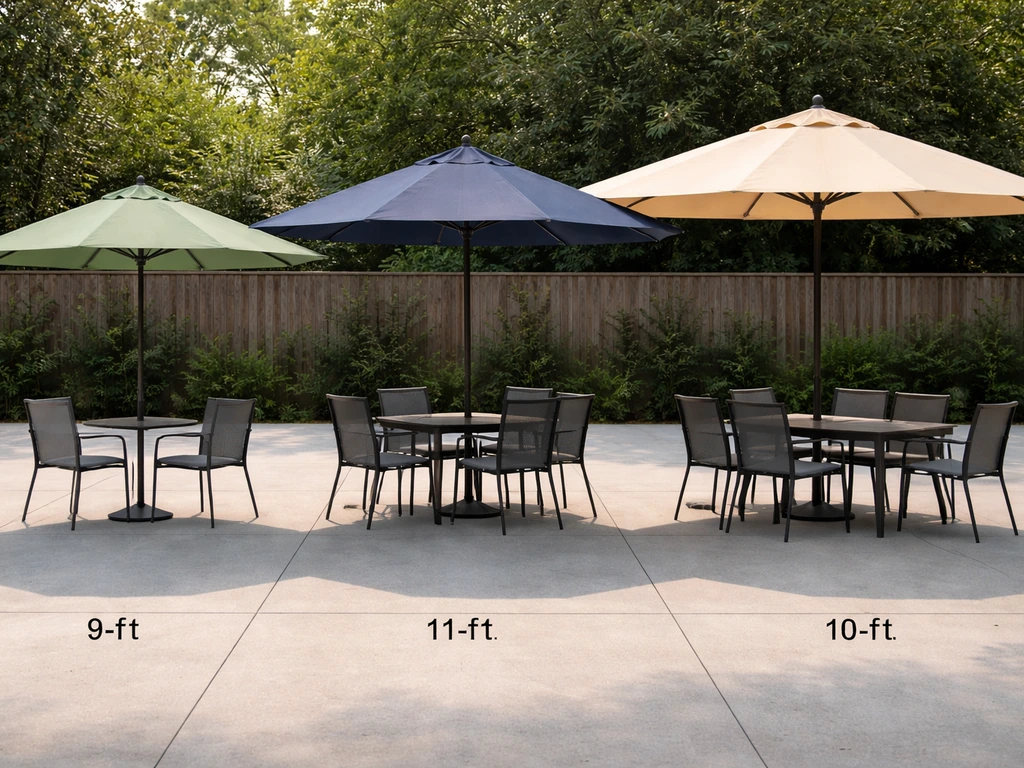
The umbrella industry doesn't have a universal definition of "large," but in practice, 9 feet is the entry point for a large patio umbrella and 11 to 13 feet is what most people mean when they say extra-large. Here's how the common sizes map to real patio situations.
| Canopy Diameter | Shade Coverage (approx.) | Best Table/Seating Match | Category |
|---|---|---|---|
| 9 ft | ~57 sq ft | Up to 48-inch round table, 4 chairs | Large |
| 10 ft | ~78 sq ft | Up to 54-inch round table, 4–6 chairs | Large |
| 11 ft | ~95 sq ft | 60-inch table, 6 chairs or small sectional | Extra-large |
| 13 ft (cantilever) | ~120+ sq ft | Full lounge sets, 6–8 person dining | Extra-large |
A few clearance rules to keep in mind when planning placement. Allow at least 6 inches between the canopy edge and any wall or structure so the umbrella can open fully without getting stuck. For cantilever umbrellas, allow 4 to 6 feet of open space behind where the pole sits, because that's how far the horizontal arm extends. If you're in a tight courtyard or against a fence, a market-style center pole is usually the more practical fit.
Top picks by budget: what to actually buy
Here's how to think about the market by price tier. None of these are marketing-tier claims; they reflect what the feature sets and materials actually look like at each spending level.
Budget tier: $80–$150
You can get a functional 9-foot market umbrella in this range, but fabric and frame quality are the compromises. Most umbrellas here use polyester fabric and steel poles that are prone to rust within a couple of seasons if left outdoors. If you're covering a small table on a screened porch, or you only need it for occasional use, this range works. Do not expect it to survive multiple years of daily outdoor exposure. Look for any mention of UPF rating and coating on the pole; if neither is listed, assume they're minimal.
Mid-range: $150–$400
This is where you start getting real quality for the money. A solid 10-foot aluminum-pole market umbrella with a solution-dyed polyester or entry-level acrylic canopy, a crank lift, and a push-button tilt lives here. For most homeowners with a standard outdoor dining set, this range hits the sweet spot. The Grand Patio 10-foot umbrella is a common recommendation in this tier. Pair it with a 50-pound base (sold separately, usually $40–$80). For a mid-range cantilever, 11-foot models with a cross base appear in the $250–$400 window, though the base weight on many bundled sets is marginal for windy conditions.
Premium tier: $400–$900+
At this level you're getting solution-dyed acrylic fabric (Sunbrella or Outdura), a finished aluminum frame with more robust rib construction, and smooth mechanisms that hold up to daily use for five-plus years. Bob Vila's 2026 tested roundup highlights the Grand Patio Deluxe Napoli Cantilever at 11 feet as a top extra-large pick, and Forbes Vetted's 2026 cantilever guide identifies models in this range featuring 360-degree rotation, finished aluminum, and solution-dyed acrylic as the best-performing long-term options. For a premium market umbrella in the 10- to 11-foot range, look for "solution-dyed acrylic" and "aluminum" in the spec sheet before anything else. At this price, demand a double-vented canopy and a crank-and-tilt at minimum.
Commercial/high-end: $900+
Frankford and a handful of other commercial-grade brands sit here. These are built for restaurants and hotel pools, which means they're overbuilt for residential use in the best way. Canopy fabrics are Sunbrella or equivalent, frames are heavy-gauge aluminum, and wind accessories like stabilizer kits are available as official add-ons. If you're outfitting a full outdoor kitchen or entertainment area and want something that genuinely lasts a decade, this is where to look. If you're comparing canvas-style fabrics at this level, there's a deeper dive into canvas umbrella performance worth exploring separately.
Setup, care, and making your umbrella last
Setup mistakes are common and easy to avoid. For a cantilever, assemble the base first and fill it completely (sand or water) before attaching the pole and canopy. The base needs to be fully weighted before the umbrella goes vertical. Mount the canopy last after the arm is secured. For in-ground installation, center your anchor carefully before the concrete sets because there's no fixing a crooked anchor after it cures.
Day-to-day care is straightforward but skipping it shortens the lifespan significantly. Close the umbrella whenever you're not using it, not just in storms. UV degradation and wind-induced flex stress happen cumulatively even in calm weather. When it's open and winds pick up past 20 to 25 mph, close it before it has a chance to invert or tip.
Cleaning solution-dyed acrylic is simple: a mild soap-and-water solution with a soft brush, then rinse thoroughly and let it dry open before closing. Do not fold or store a damp canopy; that's how mildew establishes itself even on treated fabrics. Sunbrella and similar fabrics are mildew-repellent, not mildew-proof. For polyester canopies, this matters even more.
At the end of the season, or when a stretch of bad weather is coming, bring the umbrella inside or use a fitted cover. Leaving an aluminum-frame umbrella outdoors through winter is usually fine if the canopy is stored separately, but leaving a steel-frame umbrella outdoors in wet climates accelerates rust at any chip or scratch in the coating. Check the frame annually for paint chips and touch up with rust-inhibiting paint before corrosion spreads. Pole joints and the crank mechanism benefit from a light spray of silicone lubricant once a season to keep them operating smoothly.
The bottom line: buy the largest canopy your space allows, pair it with a heavier base than you think you need, choose solution-dyed acrylic over polyester if longevity matters to you, and close it when you're not outside. Do those four things and a quality large patio umbrella will deliver solid shade for many summers without drama. If you want the best canvas patio umbrella for years of shade, focus on solution-dyed fabric quality and a heavy, stable base. If you want maximum shade with no center pole, a large cantilever patio umbrella is usually the best match.
FAQ
What base type is better for the best large patio umbrellas, cross base, single pedestal, or filled stand-alone units?
For large diameters, cross bases and properly weighted pedestal bases both work, but the key is weight distribution and stability on your surface. If you only have a single pedestal and it has limited footprint, tipping risk rises on sloped or uneven patios. For cantilevers, prioritize bases designed for that arm geometry, since the counterbalance needs to match the swing range.
How do I calculate the umbrella size if my table is not centered over the seating area?
Use the seating spread, not the tabletop alone. Extend the canopy at least about 2 feet beyond the outer edges where people sit or stand, then check that the crank height and any furniture legs do not collide. If your seating is asymmetrical, consider choosing a slightly larger canopy or positioning the umbrella so the pole clears the widest furniture gap.
Can I leave a large patio umbrella open under light rain?
You can, but it accelerates fabric stretching and frame strain, especially on larger canopies that catch wind-driven spray. If your umbrella will be open for more than a few hours, close it and dry it out when practical. Also avoid storing it damp, even if the fabric is mildew resistant.
What is the best way to prevent wobble if my base is heavy but the surface is uneven?
Level the contact surface first, then confirm the base sits flat and fully seated on the patio. Shim with exterior-rated leveling pads (not temporary blocks) so the umbrella pole remains vertical. If the umbrella still rocks, the base may be the wrong model for the canopy weight, or the pole joint may need tightening.
How much clearance do I really need around the umbrella so it can open fully?
Allow at least the small gap you can measure at the canopy edge, plus extra for fabric drop and tilt. For market umbrellas, plan for space at the wall side and also at the crank side, since tilted canopies can move slightly. For cantilevers, keep more clearance behind the base because the arm swings farther than most people expect.
Is UPF rating alone enough to choose a canopy for sun protection?
UPF helps, but coverage and orientation matter too. A higher UPF fabric on a smaller canopy gives less real shaded area than a larger canopy with slightly lower UPF. Also check whether the umbrella provides adequate shade at the time you use it most, usually afternoon, since sun angle reduces effective coverage.
Do I need to treat a solution-dyed acrylic umbrella canopy with water-repellent spray?
Usually no, because many solution-dyed acrylics already have a finish that beads water and resists mildew. Adding aftermarket sprays can sometimes reduce breathability or alter how the canopy dries, which increases mildew risk if you leave it closed while damp. If you do apply anything, test a small area and only use products labeled for outdoor acrylic fabrics.
How do I lubricate the crank and tilt without attracting dirt or making it worse?
Use a light silicone lubricant sparingly on the moving metal joints where friction is highest, then wipe off any excess so grit does not build up. Avoid soaking the underside of the canopy ribs, since residue can transfer to fabric. After lubrication, open and close a few times to ensure smooth motion before full outdoor use.
What should I do if only the canopy tilts, not the ribs, on a large market umbrella?
That design can still work, but it changes how much shade you get at seated head height. Before buying, verify the exact tilt mechanism and watch how the canopy edge moves when tilted, ideally in a store or with a video review. If you need targeted shade for dining, partial tilt may be less effective than true tilt that changes rib angle.
When is it worth anchoring a large patio umbrella instead of using a heavy base?
Anchor if you have persistent wind, a raised or slippery surface, or frequent use where you do not want to manage tipping risk. In-ground anchors are also a good choice if you want a truly fixed placement over a dining set. If you rent or plan to change layouts often, consider a heavy base plus a wind-rated stabilizer kit instead of permanent anchoring.
What is the safest practice during strong gusts with the best large patio umbrellas?
Close the umbrella when sustained winds approach the manufacturer’s threshold, and never leave it unattended when gusts exceed safe use limits. Secure the canopy fabric first, then close fully, since partially open umbrellas can whip and loosen joints. If your umbrella inverts even once, inspect the ribs and crank mechanism before reusing it.
How do I store a large patio umbrella between seasons without damaging it?
Store it closed and dry, ideally under a fitted cover that keeps moisture from collecting. If you cannot fully dry it before storage, rinse off salt or dirt, dry open until no dampness remains, then close for storage. For winter, keeping the aluminum frame outdoors is typically fine, but protect against salt air and remove any debris that can trap moisture at joints.