The best outdoor patio umbrella for you comes down to three things: how much shade you actually need, how windy your spot gets, and whether you want a pole through your table or a freestanding arm that swings over it. To find the best rated patio umbrellas, compare wind resistance, sun protection, and coverage before you buy outdoor patio umbrella. These best made patio umbrellas choices emphasize the same performance factors, so you can pick with confidence instead of guesswork best rated patio umbrellas. Get those three right, and the rest of the decision falls into place quickly. If you want good patio umbrellas, you should prioritize the features that match your wind, sun, and coverage needs. Get them wrong, and you end up with a wobbly umbrella that's too small, too flimsy, or completely wrong for your setup.
Best Outdoor Umbrellas Patio: Choose the Right One Fast

What 'best' actually means for a patio umbrella
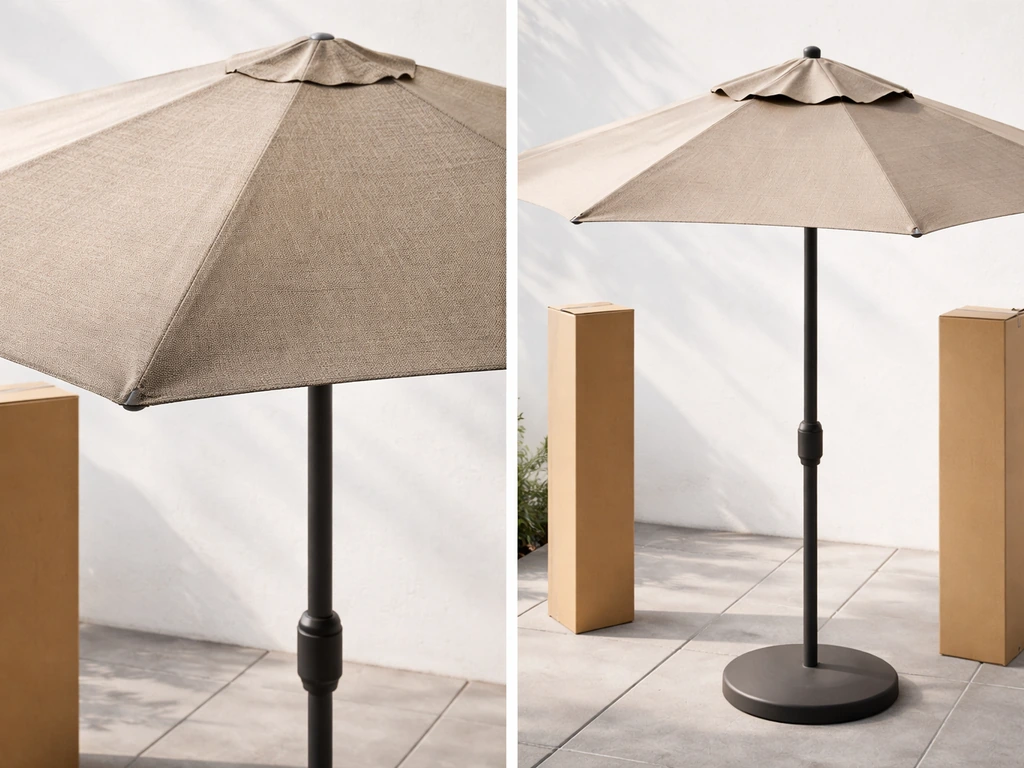
Marketing copy on every umbrella box says 'durable,' 'weather-resistant,' and 'UV-blocking.' That tells you almost nothing useful. When you're shopping for the best outdoor umbrella for a real patio, 'best' has to be defined by three concrete performance categories: wind resistance, sun protection, and coverage area. Everything else, color, style, crank mechanism, is secondary.
Wind resistance matters more than most buyers realize. A lot of offset/cantilever models come with manual warnings not to operate them in winds over 5 mph (8 kph). That's barely a breeze. If your patio is exposed, an umbrella rated that low will either collapse on you or spend half its life closed. You need to honestly assess your location before buying.
Sun protection is where UPF ratings come in. UPF (Ultraviolet Protection Factor) is the fabric-side equivalent of SPF for sunscreen. A canopy rated UPF 50+ blocks roughly 98% of UV radiation, meaning only about 1 out of every 50 units of UV passes through. That's categorized as 'Excellent' protection. If you're buying an umbrella specifically to protect kids, older adults, or anyone who burns easily, UPF 50+ isn't a bonus feature, it's the minimum standard worth buying.
Coverage is simpler: the umbrella canopy needs to reach every seat at your table, plus a bit more. A common mistake is buying a 9-foot umbrella thinking it's massive, then realizing it only throws about a 7-foot shadow at peak afternoon sun angles. We'll get into the sizing math below, but the short version is: buy bigger than your instinct says.
Market umbrella vs. cantilever: pick your style first
There are really two umbrella families worth knowing: market (center-pole) umbrellas and cantilever (offset) umbrellas. Everything else is a variation of one of these two. Choosing the wrong style for your patio layout is the single most common buying mistake.
Market umbrellas (center-pole)
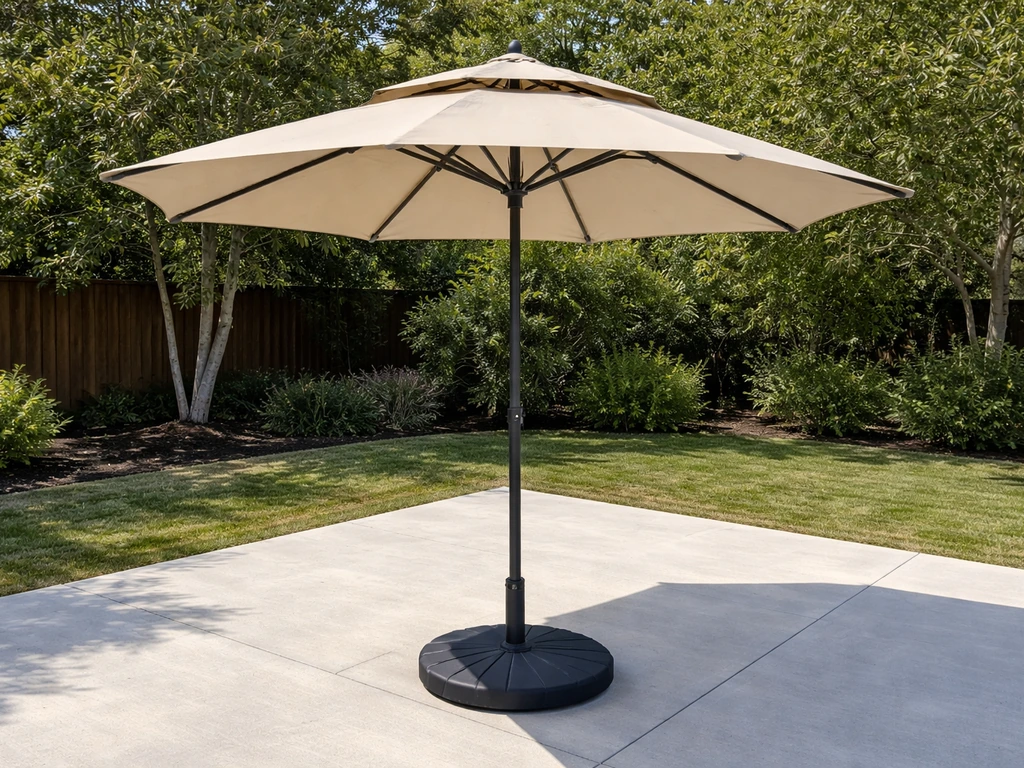
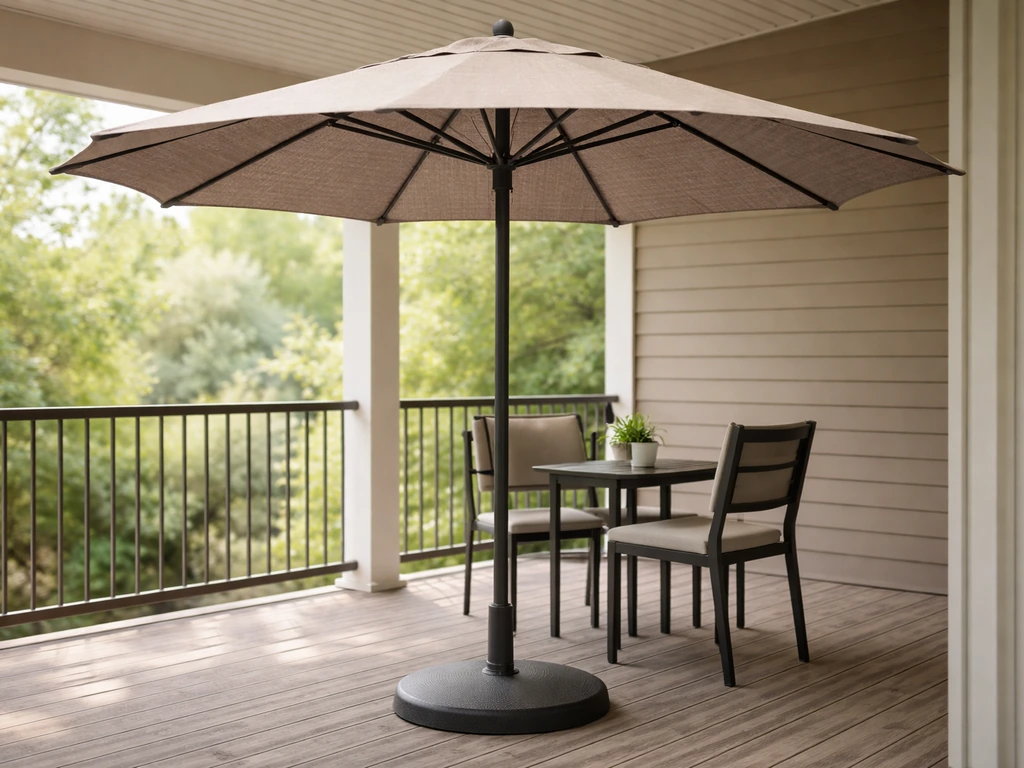
A market umbrella has a single pole running straight up through the center of the canopy. Most patio dining tables have a center hole sized for exactly this, typically 1.5 to 2 inches in diameter. This style is more stable, easier to find bases for, and generally more affordable. The downside is obvious: the pole is always in the middle of your table, which gets in the way of food, conversation, and sight lines. For a standard 4- to 6-person dining setup, a market umbrella is usually the right call. It's reliable, wind-stable relative to its price, and the pole-through-table mounting adds inherent stability.
Cantilever (offset) umbrellas
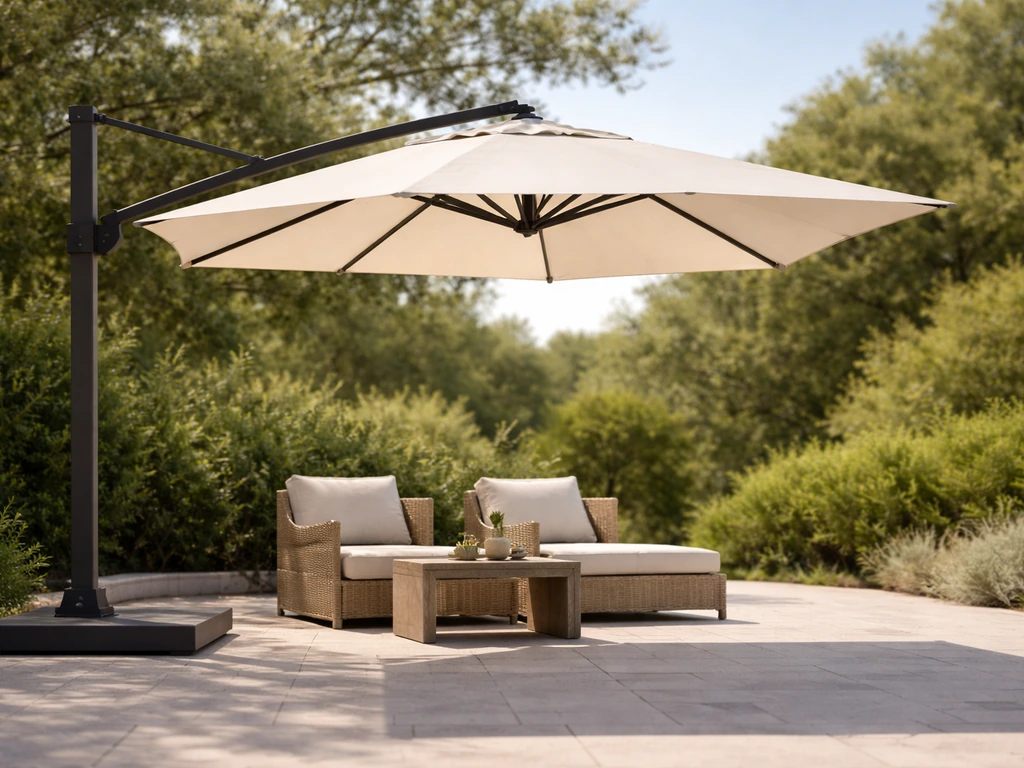
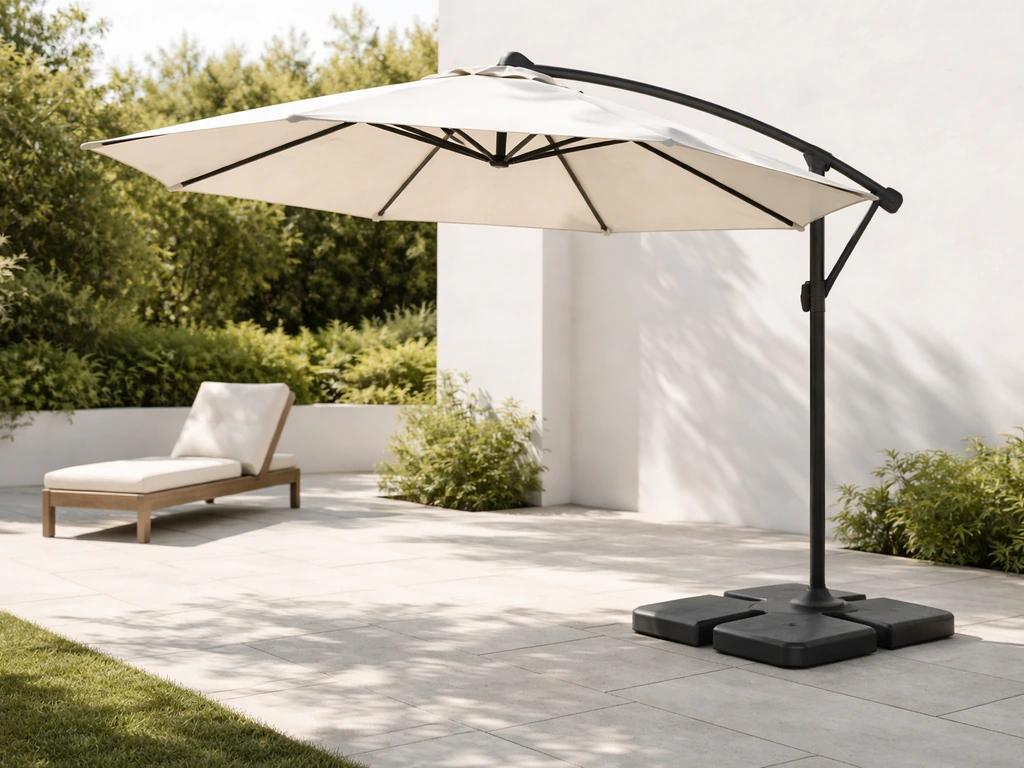
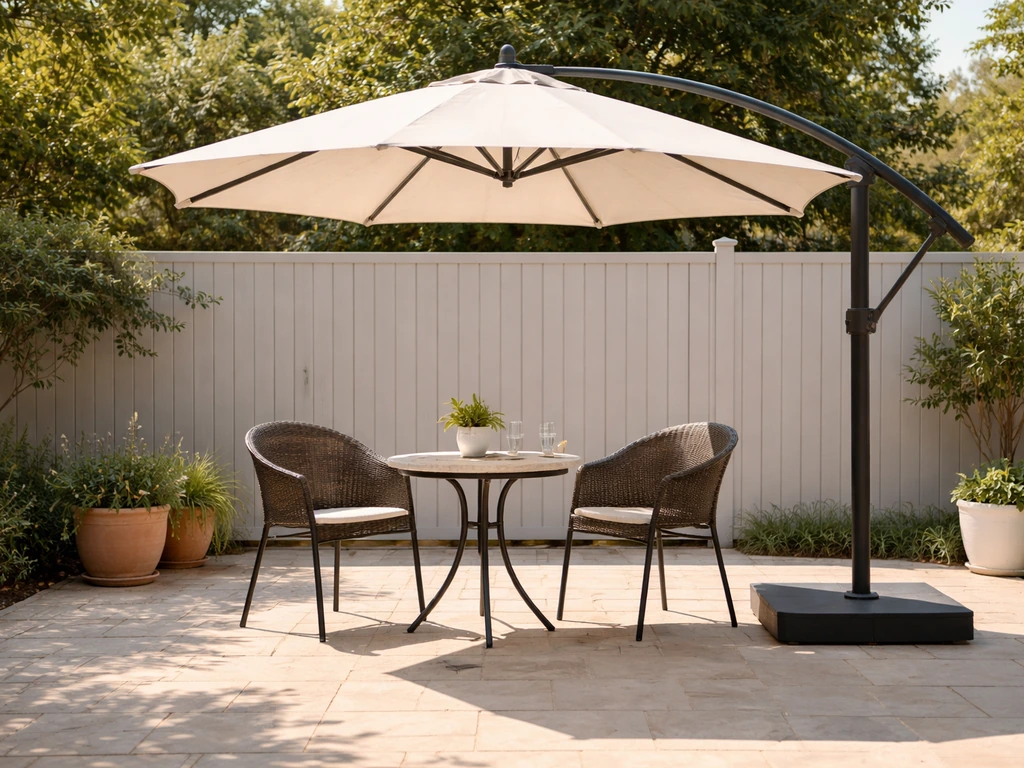
A cantilever umbrella puts the pole off to the side and extends a horizontal or angled arm over the seating area, leaving the space underneath completely clear. This is the right choice for lounge seating, sectionals, pool decks, or any setup where there's no center table hole. The arm mechanism also lets you rotate and tilt the canopy to follow the sun throughout the day. The trade-offs are real though: cantilevers are heavier, more expensive, require bigger and heavier bases to stay upright, and, as mentioned, can be more wind-sensitive at the arm-extended position. A quality cantilever that handles wind reliably typically starts around $300 to $400 and climbs from there.
| Feature | Market (Center-Pole) | Cantilever (Offset) |
|---|---|---|
| Pole position | Center of canopy | Side-mounted, arm extends over space |
| Best for | Dining tables with center hole | Lounge seating, pool areas, no-table setups |
| Wind stability | Higher (pole anchors through table) | Lower at arm extension (needs heavy base) |
| Price range | $50–$400+ | $200–$1,000+ |
| Base weight needed | 50–100 lbs typical | 100–200+ lbs typical |
| Tilt/rotation | Limited (tilt only) | Full rotation + tilt on most models |
| Pole obstruction | Yes, through table center | None under canopy |
If you're genuinely torn between the two, think about what your patio life actually looks like. Eating dinner at a table most nights? Market umbrella. Lounging on a sectional or reading by a daybed? Cantilever. There's no universally better style, only better fits for specific setups.
Getting the size right: canopy dimensions and coverage
Umbrella size is listed as canopy diameter, but the actual shade footprint is smaller, especially when the sun is at a low angle. A 9-foot canopy provides roughly 6 to 7 feet of usable shade coverage at midday. A 11-foot canopy covers closer to 8 to 9 feet. Here's a practical sizing guide based on table size and seating:
| Table/Space Size | Recommended Canopy Diameter | Style Notes |
|---|---|---|
| Up to 36" bistro or small table | 7–8 ft | Market umbrella works well |
| 4-person (48"–54" table) | 9 ft | Most common size; market or cantilever |
| 6-person (60"–72" table) | 10–11 ft | Go cantilever or large market |
| 8+ person or sectional lounge | 11–13 ft or double cantilever | Large cantilever; check base weight |
One rule that works consistently: add at least 2 feet of overhang on each side of your table or seating area. If your table is 60 inches (5 feet) wide, you want at least a 9-foot canopy to cover it properly. Going up one size from what feels right is almost never a mistake.
For cantilever umbrellas specifically, pay attention to the 'reach' spec, not just the canopy diameter. Some 10-foot cantilevers have a 5-foot arm offset, meaning the center of shade shifts significantly from the pole base. Make sure that offset clears your seating area completely before you buy.
Materials and UV/water resistance: what actually lasts outdoors
Canopy fabrics
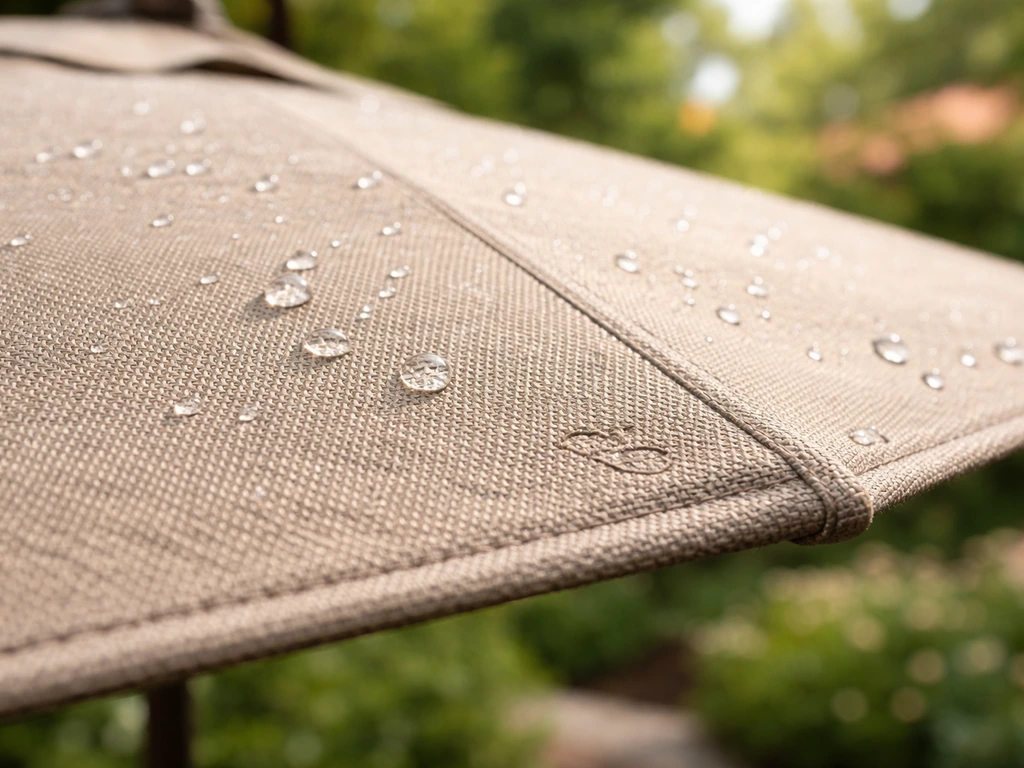
The canopy is the part that takes the most abuse from sun, rain, and wind, so it's worth understanding what the fabric is actually made of. There are three main categories you'll encounter: solution-dyed acrylic (the gold standard), polyester (budget-friendly but fades faster), and olefin (a middle-ground synthetic). Solution-dyed acrylic, of which Sunbrella is the most recognized brand, holds color better than any other outdoor fabric and is built to handle years of UV exposure without fading or cracking. Sunbrella fabrics range across a spectrum from water-resistant to waterproof depending on the specific product line, so it's worth checking which you're getting. For most patios, a high-quality water-resistant acrylic canopy performs excellently.
On UV protection, look for canopies rated UPF 50+. That rating means about 98% of UV radiation is blocked at the canopy level, which is rated as 'Excellent' protection. Most premium fabric umbrellas hit UPF 50+; budget polyester options often don't list a UPF rating at all, which is telling. If sun protection is a real priority for your household, make UPF 50+ a hard requirement, not a nice-to-have.
Pole and frame materials
The frame determines how long the umbrella holds its structure. Aluminum poles are the most popular choice: lightweight, rust-proof, and strong enough for most residential use. Fiberglass ribs (the arms holding the canopy shape) are more flexible than aluminum ribs, which matters in wind because they bend rather than snap. Wood poles, typically teak or eucalyptus, look beautiful but need annual oiling or sealing to prevent cracking. Steel poles are heavy and strong but will rust at joints over time if not properly powder-coated and maintained. For most people, an aluminum pole with fiberglass ribs is the practical sweet spot: lightweight, rust-resistant, and flexible enough to handle gusts without cracking.
- Aluminum pole: rust-proof, lightweight, best overall value
- Fiberglass ribs: flexible under wind load, won't crack like aluminum ribs
- Wood pole (teak/eucalyptus): premium look, requires annual maintenance
- Steel pole: very strong but prone to rust at joints over time
- Solution-dyed acrylic canopy (e.g., Sunbrella): best UV and color retention
- Polyester canopy: lower cost, fades faster, shorter lifespan outdoors
Wind stability and base requirements: the part most people underestimate
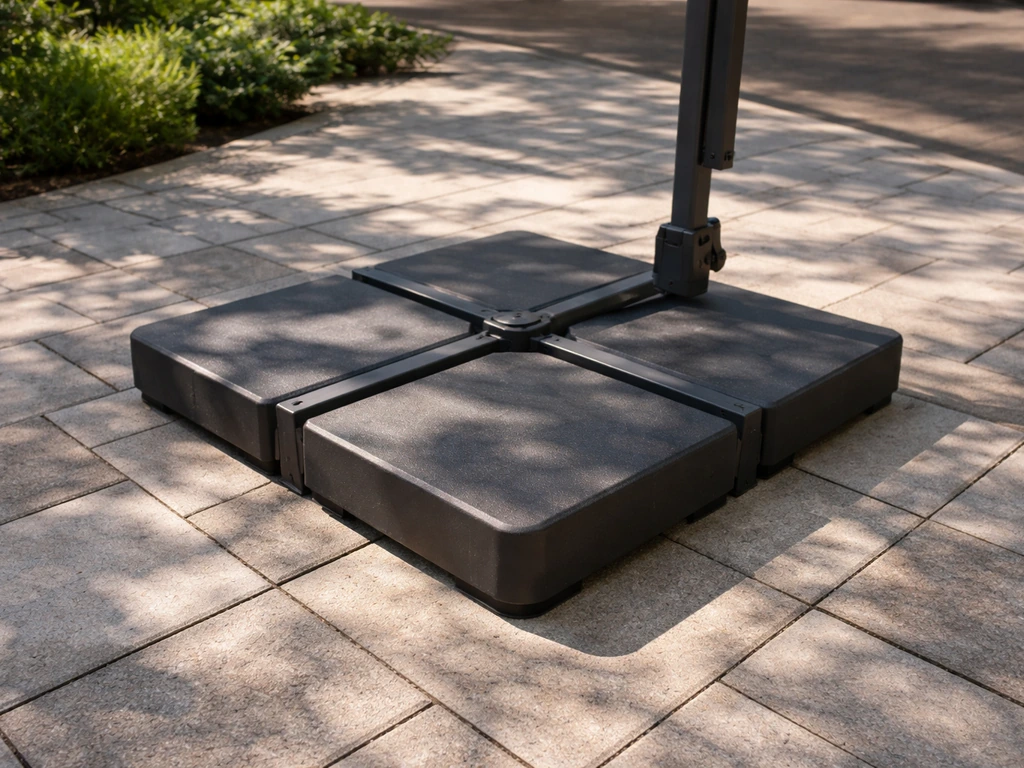
An umbrella without the right base is an accident waiting to happen. This is especially true for cantilever models where the arm creates significant leverage that works against the base in any wind. Getting the base right isn't optional, it's part of what you're buying.
How much base weight do you actually need?
For a standard 9-foot market umbrella, a base in the 50 to 75 lb range handles most calm to moderate-wind residential settings. Go up to 100 lbs if you're in a consistently breezy location. For cantilever umbrellas, the math changes dramatically: the offset arm creates a lever effect, and most 10 to 11-foot cantilevers need at least 100 to 150 lbs of base weight, sometimes more. Several cantilever manufacturers sell paired bases for exactly this reason, and it's worth buying the manufacturer-recommended base rather than guessing.
If you're mounting a market umbrella through a patio table with a center hole, the table itself adds meaningful stability, but you still want a standalone base in case the umbrella is used without the table, or for the times the table shifts.
Wind ratings and real-world expectations
Most umbrella specs include a wind rating, but read these carefully. Some offset umbrella product manuals specify that the umbrella should not be opened or operated in winds over 5 mph (8 kph). That's a very low threshold. Even a quality mid-range cantilever might only be rated for 20 to 25 mph when closed properly or tilted. If you live somewhere with regular afternoon gusts, a heavy-duty commercial-grade umbrella with a weighted base and locking tilt mechanism will dramatically outlast a residential-grade option. An umbrella that survives 3 to 4 seasons in a windy spot is a better value than replacing a cheap one every year.
A few practical wind-stability habits extend umbrella life significantly: always tilt the canopy into the wind to reduce surface area, close it when you're not outside, and close it entirely when wind picks up above 15 to 20 mph regardless of rating. No patio umbrella is designed to be left open overnight or in a storm.
Base types and mounting options
- Freestanding weighted base: most common, works with market and cantilever, fillable (sand/water) bases are convenient but lighter than solid concrete or cast-iron
- In-ground sleeve mount: most stable option for permanent installs, the pole slides into a ground-set sleeve; best for high-wind locations
- Table center-hole mounting: used with market umbrellas only; adds stability but requires a matching pole diameter (usually 1.5" or 2")
- Cross-base with filler: common for cantilevers; fill cavities with sand or use solid cast options for maximum weight
How to compare top umbrellas fast: checklist and price tiers
Once you know your style (market vs. cantilever), size, and site conditions, narrowing down to specific options gets much faster. Use this checklist when evaluating any umbrella, whether you're reading a review or standing in a store.
Quick comparison checklist
- Canopy diameter: does it cover your table/seating with at least 2 ft overhang per side?
- UPF rating: is it UPF 50+? If not listed, assume it's not.
- Canopy fabric: solution-dyed acrylic (preferred) or polyester (budget)?
- Frame material: aluminum or fiberglass ribs for longevity; wood only if you'll maintain it
- Wind rating: what's the actual mph limit? Does that match your location?
- Base weight: is the manufacturer's recommended base weight listed? Does it match your style (cantilever needs 100+ lbs)?
- Tilt mechanism: does it tilt, rotate, or both? Is the lock reliable?
- Pole diameter: for market umbrellas, does it match your table hole (measure before buying)?
- Warranty: quality umbrellas offer 1–5 year warranties on frame and fabric; no warranty is a red flag
- Price: see tiers below
Price tiers and what to expect
| Price Tier | Typical Range | What You Get | Best For |
|---|---|---|---|
| Entry | $50–$150 | Polyester canopy, steel or basic aluminum pole, no UPF rating, lighter base | Occasional use, covered patios, calm locations |
| Mid-range | $150–$400 | Acrylic or solution-dyed canopy, aluminum pole, UPF 50+, crank + tilt, better base | Most homeowners; daily use, moderate sun/wind |
| Premium | $400–$800 | Sunbrella or equivalent fabric, fiberglass ribs, robust tilt/rotation, heavy base included | Full-sun exposed patios, frequent use, windy areas |
| Commercial/High-end | $800+ | Commercial-grade frame, full 360° rotation, in-ground or 150+ lb base, multi-year warranty | Permanent installs, high-wind zones, large coverage needs |
For most homeowners using their patio regularly through spring, summer, and fall, the mid-range to premium tier ($200 to $600) hits the right balance. A quality umbrella in that range, with a proper base and a solution-dyed acrylic canopy, will realistically last 5 to 8 years with basic care. The entry-level options aren't necessarily bad for occasional use or sheltered patios, but for a primary outdoor living space, spending more upfront usually means spending less over time.
Before you finalize anything, think about whether you're shopping for a table umbrella specifically (in which case the best outdoor patio table umbrella angle matters) or a complete outdoor furniture setup. If you’re also shopping for the rest of the set, the best patio furniture with umbrella helps you match shade coverage with comfort and layout. If you are shopping for a table umbrella, focus on the best outdoor patio table umbrella angle that fits your seating and sun patterns table umbrella specifically. If you're outfitting a whole patio, the umbrella and furniture should be planned together so the pole diameter, table height, and coverage area all align from the start.
Quick maintenance habits that double umbrella lifespan
The best umbrella you buy today only stays the best if you take basic care of it. Close the canopy when you're not outside, especially overnight. Clean the fabric a couple of times per season with mild soap and water to prevent mildew buildup. If you have a wood pole, apply teak oil or a UV-protective sealant once a year before the season starts. Store the umbrella (or at minimum use a UV-resistant cover) during winter months or extended periods of non-use. A quality protective cover with its own UPF 50+ fabric rating adds a meaningful layer of protection when the umbrella is closed but still outside. These steps take maybe an hour per season total and can add several years to the umbrella's life.
Your next step: narrow it down in 5 minutes
Here's the decision path that gets most people to the right umbrella without getting lost in endless options. If you want a quick starting point, review a curated list of the top 5 patio umbrellas before you compare materials, size, and wind ratings. Answer these four questions in order, and the choice gets obvious fast:
- Style: Do you have a center-hole dining table? Market umbrella. Lounge setup or no table hole? Cantilever.
- Size: Measure your table or seating area, add 2 feet on each side. That's your minimum canopy diameter.
- Wind: Is your patio sheltered (fence, walls, trees) or exposed? Sheltered means mid-range is fine. Exposed means go premium and get a heavy base.
- Budget: Under $200 is entry-level for occasional use. $200–$500 covers most serious residential needs. Over $500 buys you commercial-grade durability and full-rotation cantilevers.
Once those four are answered, run any specific umbrella you're considering through the 10-point checklist above. If you want to narrow choices quickly, focus on the canopy coverage and sun protection that match your patio layout best sun umbrellas for patio. If it checks 8 or more boxes for your situation, it's the right call. The best outdoor patio umbrellas aren't the ones with the most features or the highest price tag: they're the ones that fit your specific patio, survive your local weather, and hold up long enough to be worth what you paid.
FAQ
What should I measure on my patio to choose the right “best outdoor umbrellas patio” size?
Measure the table width plus how far the farthest seat sits from the table edge. Then add at least 2 feet of overhang per side for usable shade, and consider the time of day you use the patio most (late afternoon usually needs more coverage than midday).
How do I tell if a 9-foot or 11-foot canopy will really protect my seating area?
Use the canopy diameter only as a starting point. For planning, expect less effective shade when the sun is low, and aim for a canopy that gives you 1 to 2 feet of buffer past your seating rather than covering the table alone.
If my umbrella is rated for wind, can I leave it open in gusty weather?
No. Treat any wind spec as maximum operating conditions, not “safe to leave out.” If gusts regularly rise above the manual threshold, close and tilt into the wind, and close fully by the time wind reaches about 15 to 20 mph.
What’s the biggest cause of a patio umbrella wobbling at home?
Usually it is a base that is too light for the umbrella size and type, especially for cantilever models where the offset creates leverage. Verify the base weight and make sure the base is the manufacturer-recommended one if you cannot meet the stated weight range.
Can I mount a market umbrella in any patio table center hole?
Not always. Table center holes must match the pole diameter and should be reinforced if the tabletop is thin. If your table hole is oversized, the umbrella may not seat securely, which increases wobble and stress on the frame.
Do cantilever umbrellas need a different type of base setup than market umbrellas?
Yes. Many cantilevers require higher base weight because the arm position shifts stress to one side. In practice, also make sure the base is positioned so the arm swing does not hit nearby furniture, railings, or planters.
What UPF rating should I buy if sunburn risk is a concern for kids or older adults?
Aim for UPF 50+ as a hard requirement, not a preference. Also remember UPF only applies to the canopy fabric, so if you want full skin coverage, you may still need additional coverage strategies like positioning the umbrella to reduce side exposure.
Is solution-dyed acrylic always better than polyester for outdoor umbrellas?
For long-term color stability, yes. Polyester often works for light, occasional use or very sheltered patios, but if your umbrella will be a main daily shade source, solution-dyed acrylic is the better value because it resists fading over multiple seasons.
What does “reach” mean for cantilever umbrellas, and why does it change shade?
Reach is the horizontal extension from the pole to the edge of the canopy. Two umbrellas with the same canopy diameter can shade differently because the arm offset shifts where the center of shade lands relative to your seating.
How should I tilt or rotate an umbrella for best sun coverage?
Tilting into the sun direction (and into the wind when conditions are gusty) helps reduce stress on the canopy. If your model supports tilt, set it so the canopy edge covers the farthest seat rather than centering only over the table.
What cleaning routine prevents mildew without damaging the fabric?
Clean the canopy a couple times per season using mild soap and water, then allow it to fully dry before closing and covering. Avoid harsh cleaners that can degrade the water resistance and reduce the fabric’s ability to repel moisture.
Should I store my umbrella indoors or use a cover outside?
If you can, store it indoors or in a dry protected area. If it must stay outside, use a breathable cover with its own UV-rated fabric, and ensure the umbrella is closed and dry first to reduce trapped moisture.
How do I know whether to buy an umbrella or an entire “patio furniture with umbrella” setup?
If your shade plan depends on multiple seating pieces (sectional placement, lounges, bar height), plan the umbrella together with the furniture. Align umbrella pole and coverage with table height and your seating layout, since changing one piece later often forces a mismatched shade solution.
What should I look for when comparing frame materials for longevity?
Prefer aluminum poles for rust resistance, and check rib material if the listing mentions it. Fiberglass ribs generally flex in wind rather than snapping, and wood poles need annual sealing to prevent cracking and water damage.