For maximum sun protection on a patio, you want a <a data-article-id="2191FDF8-31B6-4595-8514-3CD378615B22"><a data-article-id="513189F3-F2FD-400C-BD85-E830F1D82D4B">cantilever or offset umbrella</a></a> with a UPF 50+ solution-dyed acrylic canopy, at least 10 to 11 feet in diameter, a tilt and rotation mechanism, and a base heavy enough that a gust won't send it into your neighbor's yard. That combination gives you real UV blocking (not just shade), the flexibility to follow the sun throughout the day, and enough coverage to actually keep your seating area out of direct light from morning to late afternoon. If you want a single best buy, compare these sun-blocking basics against the best patio furniture with umbrella so you get the right combination of shade and seating coverage.
Best Sun Umbrellas for Patio: Shade and UV Guide

What actually makes a patio umbrella good for sun protection
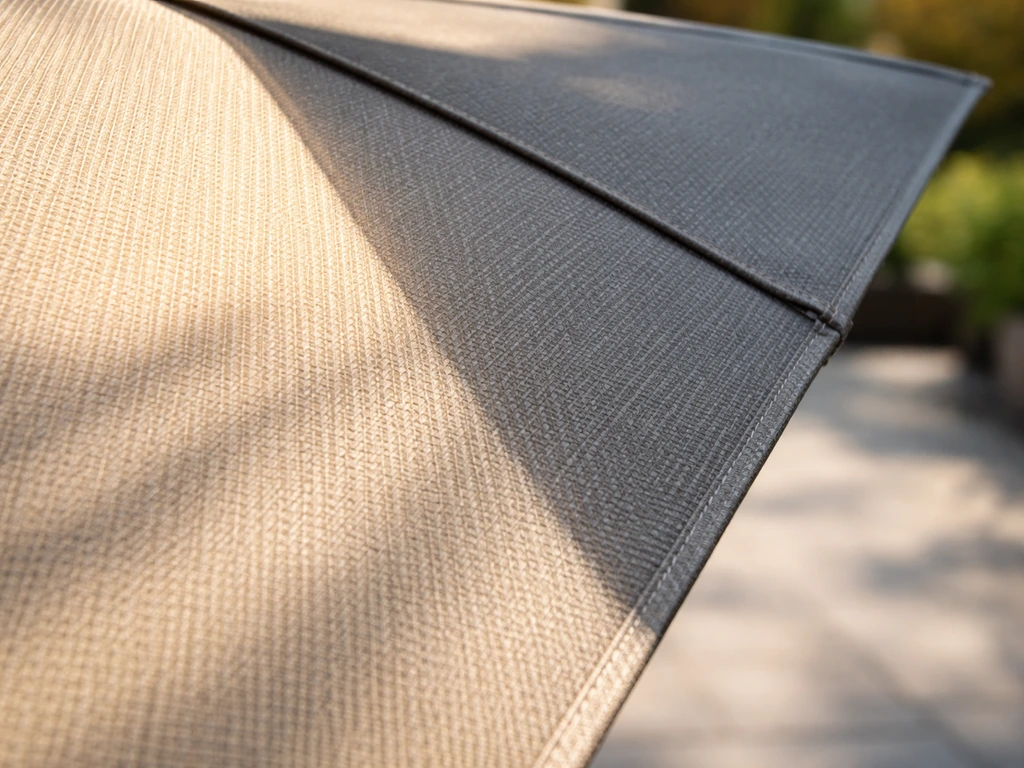
There's a meaningful difference between shade and UV protection, and it matters when you're shopping. Shade just means the direct sun isn't hitting you. UV protection means the fabric itself is blocking ultraviolet radiation, including the indirect UV rays that bounce in from the open sky around the umbrella. Research on beach umbrellas shows that sitting under a shade structure without UPF-rated fabric still exposes you to a significant amount of UV because indirect rays come in from the visible sky on all sides. The more sky you can see from under the umbrella, the more UV you're still receiving.
This is why the fabric rating matters so much. UPF (Ultraviolet Protection Factor) is calculated under AATCC Test Method 183, which measures how much erythemally weighted UV radiation passes through the fabric itself, not just whether the canopy casts a shadow. A cheap light polyester canopy might rate UPF 5 to 15, which is essentially just a physical barrier to direct sun. A solution-dyed acrylic canopy, the kind used in Sunbrella-grade fabrics, typically achieves UPF 50+, which blocks 98% or more of harmful UV rays. That's the number you're looking for. Anything below UPF 30 is barely worth considering if sun protection is your main goal.
Beyond the fabric, coverage angle matters a lot. A fixed umbrella only blocks the sun when it's directly overhead. As the sun moves across the sky, your shade shifts, shrinks, and eventually disappears. A good sun umbrella needs a tilt mechanism and ideally full rotation so you can reposition the canopy to follow the sun. That tilt function alone can extend effective coverage by roughly 15 to 20 percent across the course of a day.
Cantilever, market, and offset: which style actually blocks the sun best
Style choice has a bigger impact on sun coverage than most people realize before they buy. Here's how the three main types compare for sun blocking specifically.
Cantilever umbrellas
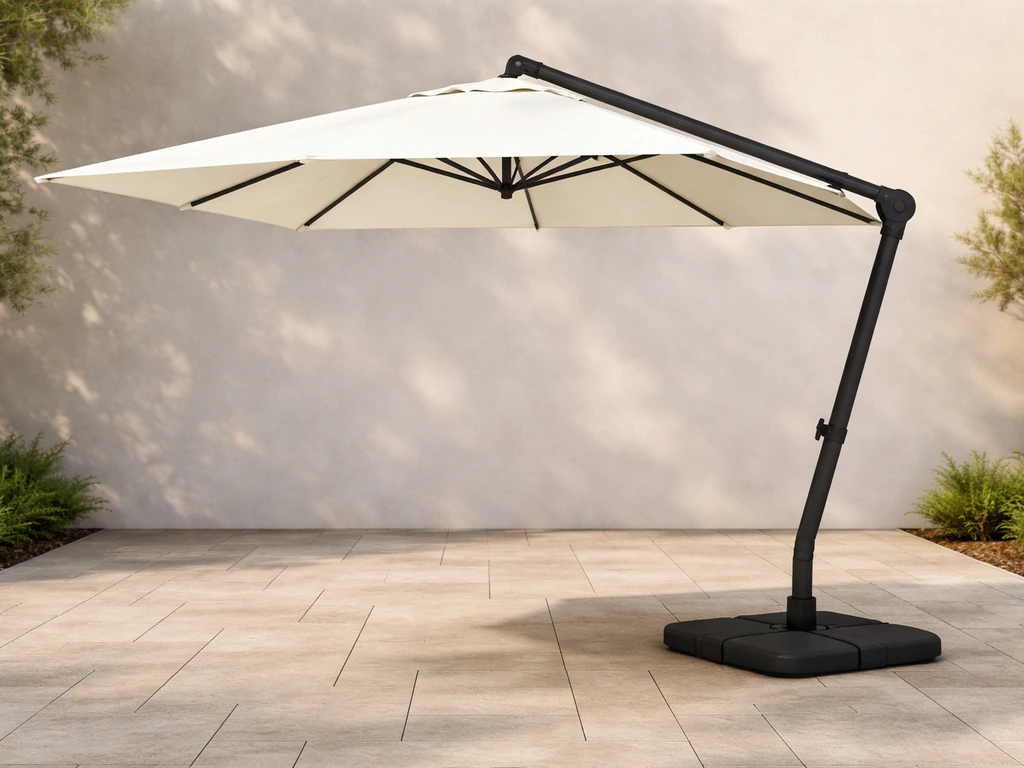
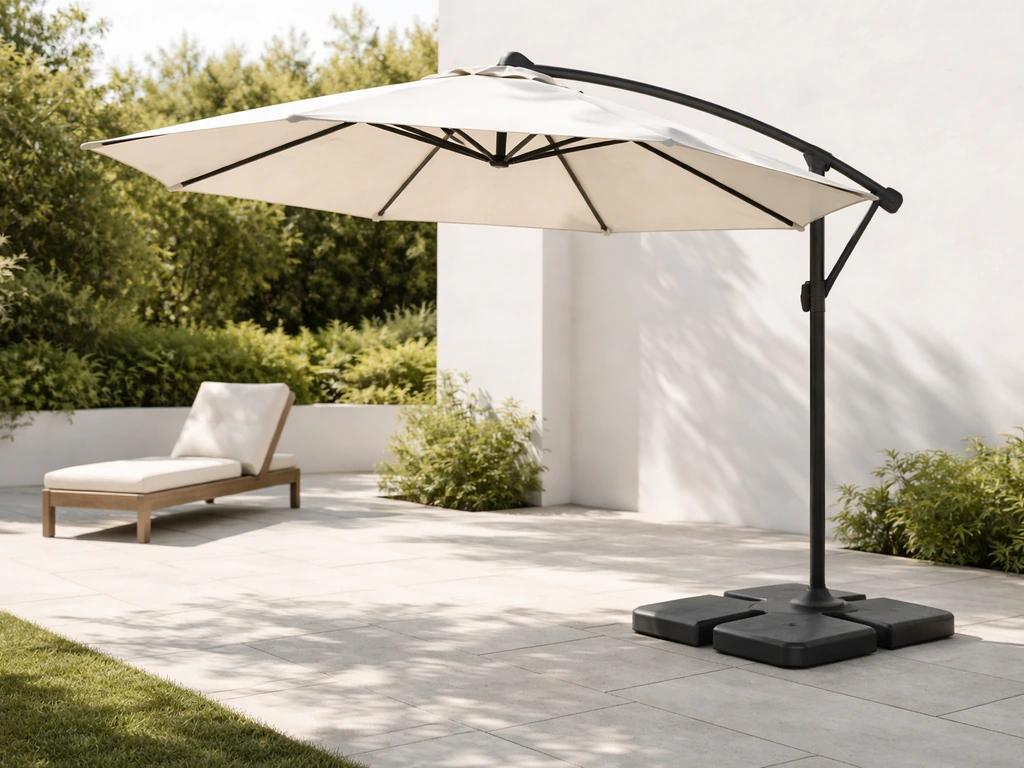
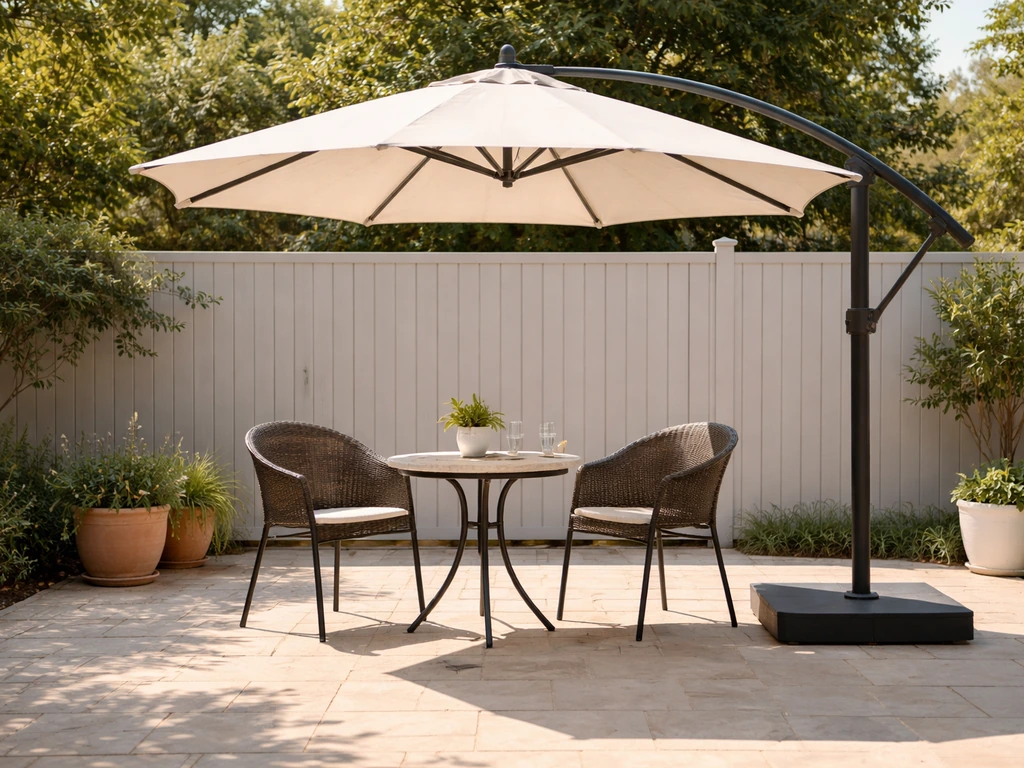
Cantilever umbrellas, also called offset umbrellas, have the pole off to the side with the canopy suspended overhead by an arm. For sun protection, this is the most versatile option. There's no center pole in the way, so the entire canopy area is usable shade. The best cantilever models offer 360-degree rotation plus a full tilt (sometimes marketed as an 'infinity tilt') so you can angle the canopy precisely toward wherever the sun is coming from. If you're chasing shade throughout the day across a large patio or over a dining set, a cantilever is hard to beat. The tradeoff is cost and base weight requirements, both of which are significantly higher than a standard market umbrella.
Market umbrellas
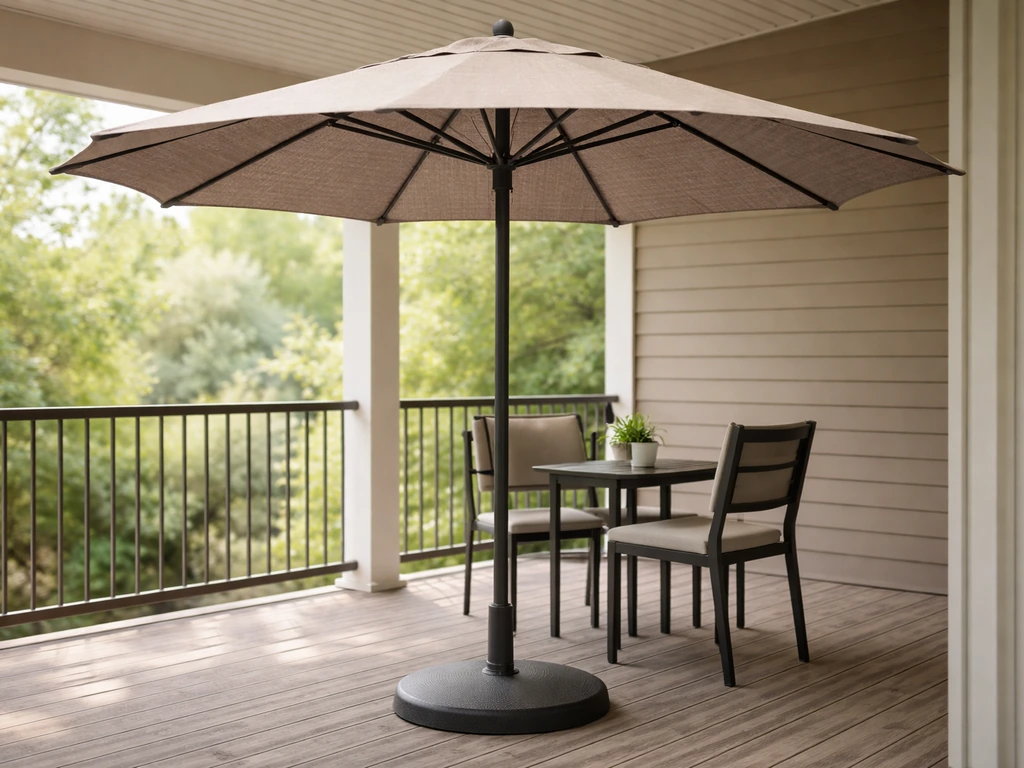
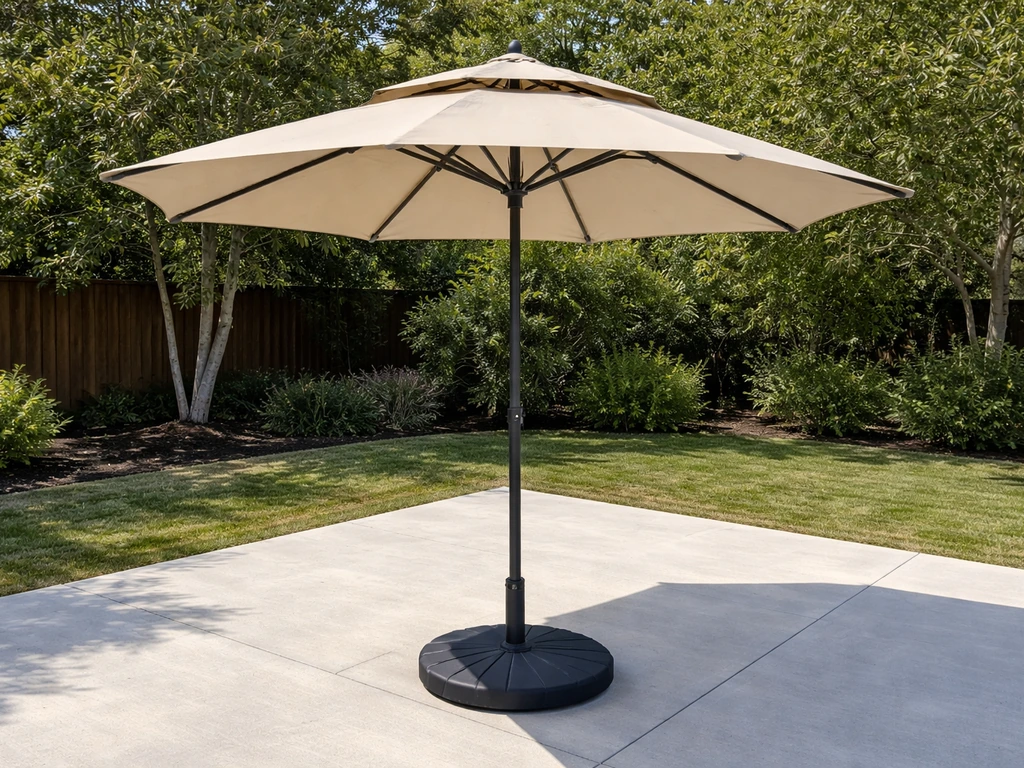
Market umbrellas are the classic center-pole style that fits through a hole in a patio table. They're more affordable, easier to find in UPF 50+ fabrics, and work well if your main goal is midday shade directly over a table. The center pole limits how you can angle the canopy, and without rotation you're somewhat at the mercy of where the sun lands. A crank tilt mechanism helps, but it's still more limited than a cantilever. If you have a fixed table setup and mostly need shade during lunch hours, a quality 9 or 11-foot market umbrella with a tilt mechanism and UPF 50+ canopy does the job well for the money.
Offset umbrellas
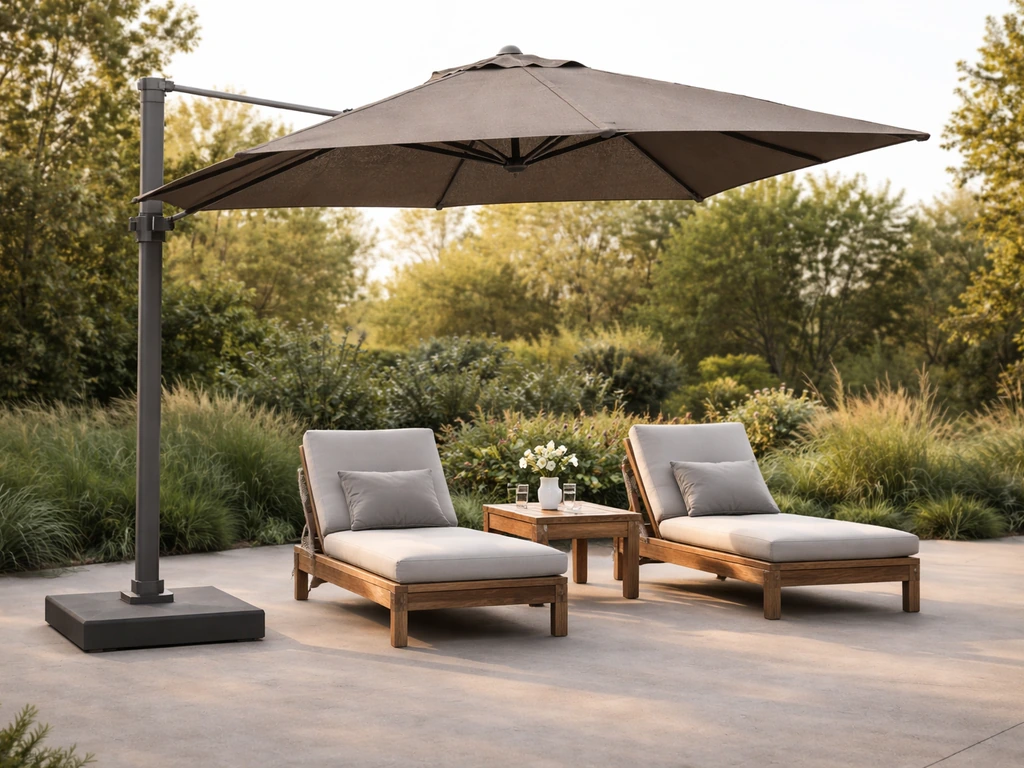
Offset umbrellas are essentially a category of cantilever designs where the pole is positioned to one side rather than directly under the canopy center. Models like the Shadowspec SU4 are purpose-built tilting offset umbrellas explicitly rated at UPF 50+, designed to track the sun at different times of day. They sit between a basic market umbrella and a full cantilever in terms of complexity and price. If you want better sun-tracking than a market umbrella but don't need the full 360-degree rotation of a high-end cantilever, an offset model is a solid middle-ground pick.
| Style | Best For | Sun Tracking | No Center Pole | Relative Cost |
|---|---|---|---|---|
| Cantilever | Large patios, lounging areas, all-day shade | 360° rotation + full tilt | Yes | Highest |
| Market | Table dining, midday shade, smaller spaces | Limited tilt only | No | Lowest |
| Offset | Flexible shade without full cantilever complexity | Tilt + partial rotation | Yes | Mid-range |
Size, coverage, and placement: how to actually get real shade
Umbrella size is one of the most common places people underestimate their needs. A standard 9-foot market umbrella covers roughly a 6-foot diameter area of usable shade when the sun is high. That's borderline adequate for a small bistro table, but it leaves chairs at the edges exposed. For a full 4 to 6 person dining set, you need at least an 11-foot canopy, and 13 feet is better if you can accommodate the base.
A reliable sizing rule is that your umbrella canopy should extend at least 2 feet beyond each side of the area you want to shade. That buffer accounts for the sun's angle during peak hours when the shadow falls at a slant rather than straight down. So if your seating area is 8 feet wide, you want a minimum 12-foot canopy diameter.
Placement matters too. For cantilever and offset styles, the base needs to be positioned so the arm extends fully over the seating area without the pole crowding furniture or foot traffic. Most cantilever bases sit 2 to 4 feet outside the shaded zone. Leave enough clearance around the base for people to walk without tripping, and make sure there are no overhead obstructions like a pergola beam or low roof overhang that would prevent full tilt. When tilting is in play, check the tilt height (the height of the canopy at its lowest tilted point) against any ceiling or structure above.
Canopy materials, colors, and UV features worth paying for
Solution-dyed acrylic is the gold standard for patio umbrella canopies, and the reason is durability of UV protection rather than just initial performance. In solution-dyed construction, pigment is embedded through the fiber itself during the manufacturing process, not applied as a surface coating. This means the fabric doesn't fade and lose its UV-blocking properties as it weathers. A solution-dyed acrylic canopy rated UPF 50+ from day one will still be performing close to that rating years later. A coated polyester canopy may start at a similar UPF rating but degrades faster as the coating wears away, especially under daily sun and rain exposure.
Color matters more than most buyers expect. Darker colors absorb more UV radiation and generally test at higher UPF ratings than lighter ones. A navy or dark green solution-dyed acrylic canopy will typically outperform a pale beige or white version of the same fabric in raw UV blocking. That said, darker colors also absorb more heat, which can make sitting under them feel warmer. Many people land on a mid-tone color like charcoal, slate blue, or forest green as a practical balance between UV performance and comfort.
Features to look for on the canopy itself include ventilation panels (a double-vent or single-vent top that lets hot air escape and wind pass through) and a protective finish that repels water and soil. Sunbrella-style fabrics come with a protective finish built in that keeps the canopy cleaner and extends its effective life. Skip canopies labeled only as 'water resistant' or 'UV stabilized' without a stated UPF rating. 'UV stabilized' just means the fabric resists fading, not that it blocks UV reaching your skin.
- Look for a stated UPF 50+ rating, not just 'UV resistant' or 'UV stabilized' language
- Prioritize solution-dyed acrylic over coated polyester for long-term UV protection
- Choose mid to dark colors for better UV blocking performance
- Ventilation panels help the canopy survive wind and reduce heat buildup underneath
- A protective finish (soil and water repellence) extends canopy life significantly
Wind stability, bases, and durability: what you can't skip
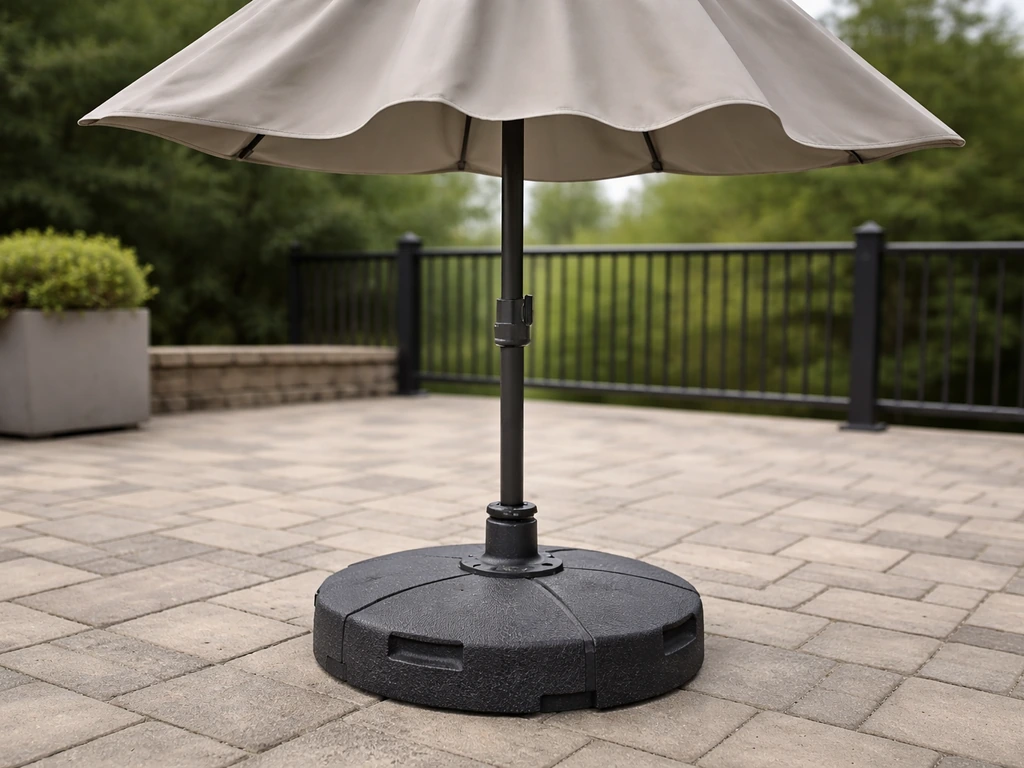
The base is where a lot of buyers make expensive mistakes. With a standard market umbrella, a 50-pound base is usually adequate in moderate conditions. With a cantilever, the canopy offset from the pole puts significant leverage on the base, and any wind multiplies that force dramatically. Manufacturer specs tell the story: the Homecrest Sol cantilever calls for a base properly weighted to 480 pounds. A product from Suntastic Outdoor claims wind resistance at Beaufort Force 9 (that's roughly 55 mph equivalent gusts) only when paired with a 208-pound base. The general principle from people who've tested these in the real world is that with cantilever umbrellas, you genuinely can't overdo the base weight.
For wind resistance of the umbrella frame itself, look for products with stated tested wind ratings. The Homecrest Sol is engineered for 25 mph winds, with an included stabilizer kit that extends that to 30 mph. If you live somewhere that regularly sees afternoon gusts or coastal winds, that kind of specification matters. Vented canopy tops reduce uplift force significantly and are worth prioritizing in any windy environment.
Frame material separates budget umbrellas from ones that last. Extruded aluminum for the mast and critical joints, stainless steel hardware throughout, and fiberglass ribs in the canopy frame are the markers of a well-built umbrella. Powder-coated steel is cheaper and heavier, and it will eventually rust at nicks and scratches. Wood frames look beautiful but require seasonal maintenance and won't hold up to years of rain and UV without oil or sealant. For a sun umbrella that lives outdoors from spring through fall, aluminum and fiberglass is the most practical combination.
How to narrow down your choice quickly
You don't need to evaluate every umbrella on the market. Work through this short set of criteria and your options shrink to a manageable shortlist fast.
- Decide on style first: Do you have a table with a center hole (market umbrella), a freestanding seating area needing flexible coverage (cantilever), or a middle-ground situation (offset)? Style determines everything else.
- Set your minimum canopy size: Measure your seating area, add 2 feet on each side, and that's your minimum canopy diameter. Round up, not down.
- Require UPF 50+ with solution-dyed acrylic: If the product page doesn't state both a UPF rating and the fabric construction, move on. 'Fade resistant' and 'UV stabilized' are not substitutes.
- Check for tilt and rotation: For all-day shade tracking, you need a tilt mechanism. For cantilever umbrellas, 360-degree rotation is worth the price premium.
- Verify the base weight requirement: Find the manufacturer's stated base weight and buy that base. Don't assume a generic 50-pound base will work for an 11-foot cantilever.
- Check the frame specs: Aluminum mast, stainless hardware, and fiberglass ribs are the combination worth paying for. Avoid steel-frame umbrellas for year-round outdoor use.
- Look for a wind rating: Any reputable manufacturer of a quality outdoor umbrella will publish a tested wind resistance spec. If it's not there, that's a flag.
How to measure your patio and avoid common buying mistakes
Before you order anything, take four measurements. First, measure the full length and width of your seating area (all chairs extended, as they would be when occupied). Second, measure the vertical clearance from the ground to the lowest overhead obstruction, whether that's a pergola beam, roof overhang, or ceiling on a covered patio. Third, if you're buying a cantilever, measure how much floor space you have outside the seating area for the base. Fourth, if you're buying a market umbrella for a table, measure the diameter of the pole hole in the table to confirm fit (most are 1.5 to 2 inches).
When you have a canopy size in mind, check the tilt height spec for that model: that's the height from the base to the top of the canopy when the canopy is tilted to its lowest position. That number needs to be lower than your vertical clearance, with some room to spare so you're not grazing a beam every time you adjust the angle.
The most common buying mistakes are worth flagging directly. Buying too small is the most frequent error, usually because shoppers compare the flat canopy diameter to the furniture size without accounting for sun angle. Going with a 9-foot umbrella for an 8-person table almost always results in disappointment. Buying the umbrella but skipping on the base is the second most expensive mistake, especially with cantilever models where an undersized base tips over in the first windstorm. And choosing fabric based on color or price without checking the UPF rating means you're getting shade, not sun protection. Those are different things and it's worth repeating.
If you're weighing options across different patio setups, a lot of the same guidance applies whether you're looking at the <a data-article-id="E2E3830F-617E-4BC4-ACF8-CF35EC242496">best rated patio umbrellas</a> overall, comparing outdoor patio table umbrella sizes, or evaluating top-tier models for durability. The fundamentals stay the same: UPF 50+ rated fabric, a canopy large enough to cover your actual seating with a buffer, a style that lets you track the sun, and a base heavy enough to stay put. Get those four things right and the rest is personal preference. If you want a quick starting point, look for guides that call out the best outdoor umbrellas for a patio based on UPF, coverage, and wind stability best outdoor umbrellas patio. If you're comparing choices, a roundup of the top 5 patio umbrellas can help you narrow to the best picks for your space and sun exposure. If you're still narrowing down options, our guide to what are the best outdoor patio umbrellas can help you pick the right style, size, and UPF rating.
FAQ
Is a lighter, cheaper umbrella fabric okay if I just want shade on my patio?
If you care about UV blocking, no. Shade can still leave you exposed to indirect UV coming from the surrounding sky, so you need a stated UPF rating on the canopy fabric (target UPF 50+). If the listing only says “UV stabilized” or “water resistant,” it usually does not guarantee UV protection.
How do I know if the umbrella will fit under my patio roof or pergola?
Check two clearances, the lowest overhead obstruction to the canopy at its most tilted-down position (tilt height), and also the minimum height when the umbrella is fully tilted for sun tracking. A model can clear when open normally, but graze a beam once you angle it.
Should I measure my seating area using chair dimensions, or just the table size?
Use the full seating footprint, chairs extended as they would be while occupied. For reliable coverage, also apply the buffer rule (about 2 feet beyond each edge of the area you want to shade), otherwise the outside chair positions will be exposed at peak sun angles.
What base weight should I use for a cantilever or offset umbrella?
Do not rely on generic “50 lb is enough” guidance. Cantilever leverage increases wind force dramatically, so follow the manufacturer’s base requirement for that exact model. If you are missing specs, choose a substantially heavier base than you think you need and verify wind rating claims.
Can I buy just any umbrella and use it with my existing base?
Often you should not. Bases vary by fit, center of gravity, and how they distribute load, especially for offset/cantilever designs. Confirm the base is rated for the umbrella model and that it matches the attachment method and footprint.
Do ventilation panels actually help with sun protection?
Ventilation panels mainly improve airflow and reduce uplift risk by letting hot air escape and reducing wind pressure under the canopy. That helps stability in gusts, which indirectly protects your UV coverage since the umbrella stays positioned instead of shifting or closing.
Is UPF measured the same way for every umbrella brand?
Not automatically, which is why you should look for a specific UPF value from a fabric test standard rather than vague marketing terms. A stated UPF like UPF 50+ indicates the fabric itself blocks UV, while “shade cloth” language usually does not quantify UV performance.
Will a darker umbrella keep me cooler or warmer?
Darker colors typically test better for UV blocking, but they also absorb more heat. If you want comfort as well as protection, consider mid-tone colors (like charcoal or slate blue) as a balance rather than going very dark.
What’s the simplest way to check if my umbrella will track the sun effectively?
Prioritize a tilt mechanism plus rotation for your layout. A fixed-angle canopy only covers effectively when the sun is overhead, so for dining and lounging you generally want both tilt and (ideally) rotation to follow the sun across the day.
How do I avoid buying a 9-foot umbrella that won’t cover my group?
Do not compare canopy diameter to table size only. Apply the buffer rule and account for peak sun angle, for example a 9-foot umbrella often leaves edge seating exposed for larger groups. If you need reliable coverage for multiple chairs, size up (commonly 11 feet or larger for a 4 to 6 person dining set).
What wind rating should I plan for if I live in a gusty or coastal area?
Use stated tested wind ratings for the umbrella frame, and match the base requirement to the manufacturer’s wind conditions. If the product only gives general “wind resistant” language, assume performance is less certain and choose a model with explicit mph or Beaufort-style testing plus the recommended stabilizer.