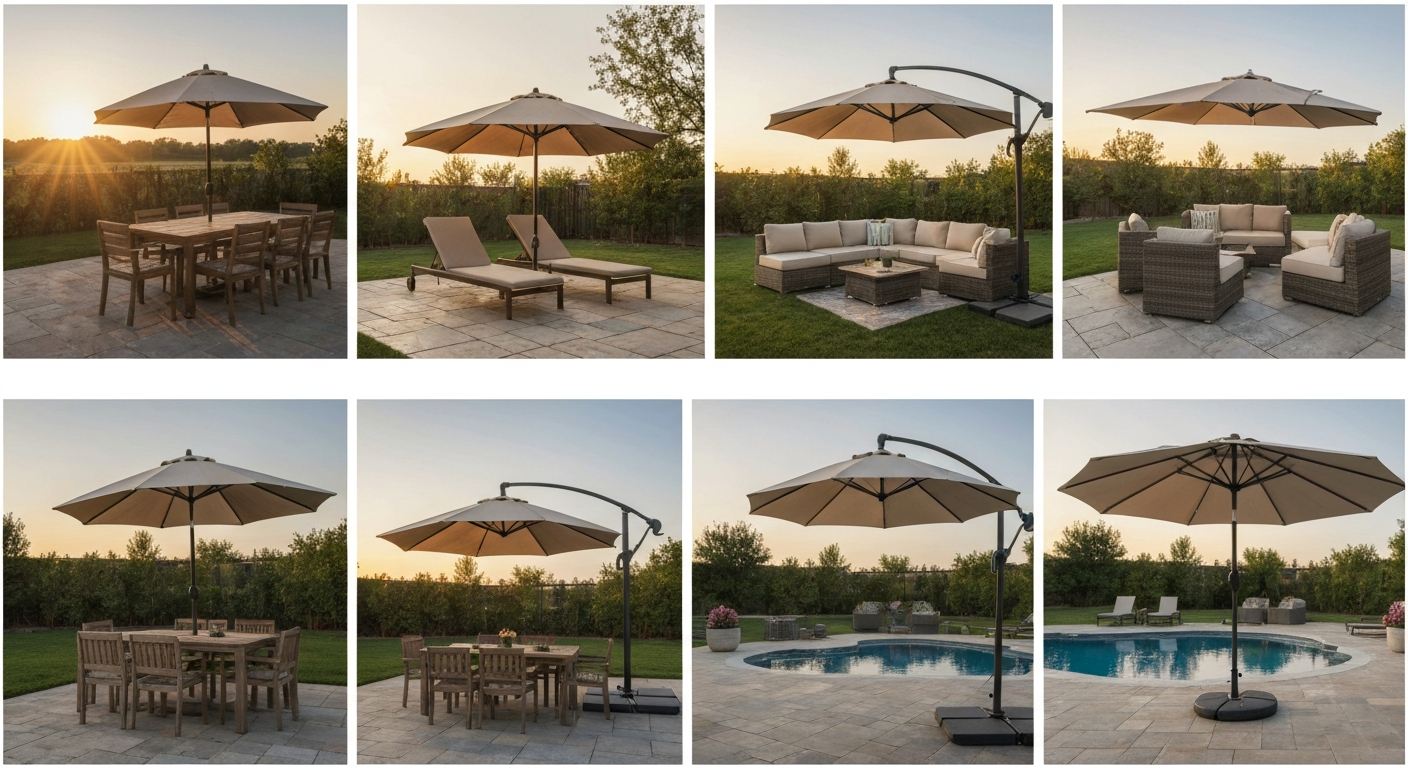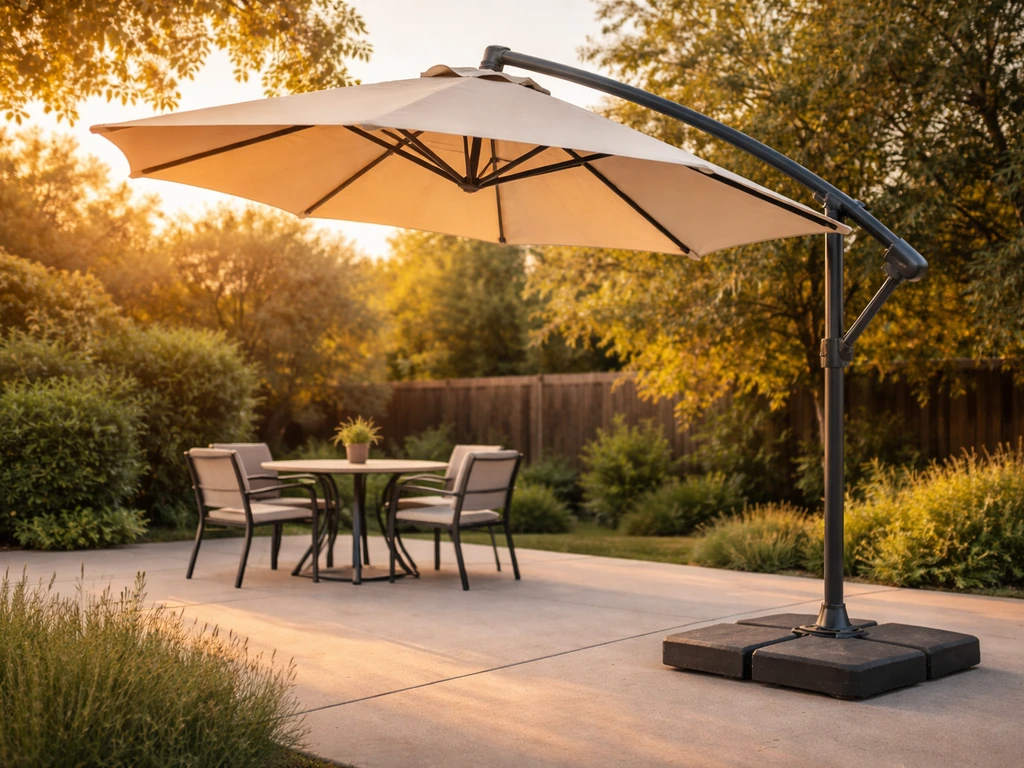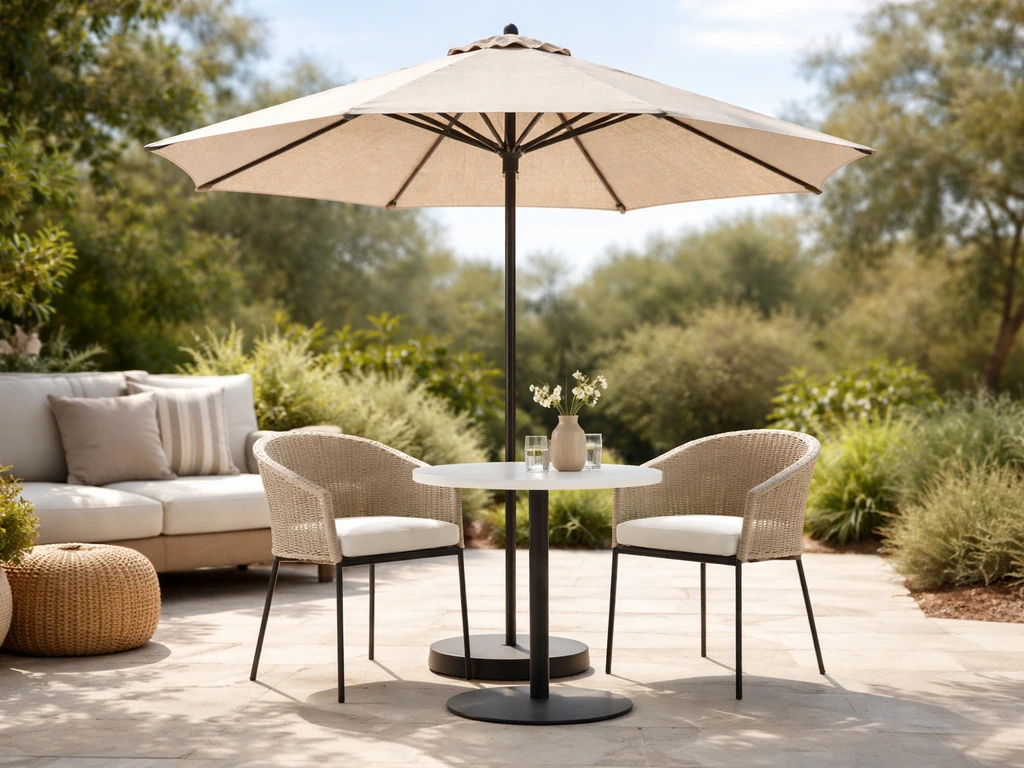
The best patio furniture sets with umbrella pair durable, properly sized shade with a table or seating group that actually fits it. For most homeowners, that means a 9-foot aluminum-pole market umbrella with a crank-and-tilt mechanism over a 4-6 person dining set, backed by at least 50 lb of base weight, a solution-dyed acrylic canopy rated UPF 50+, and vented ribs that handle gusts without inverting. If you want shade that floats over a conversation grouping or sectional without a center pole in the way, a cantilever offset umbrella requires a minimum of 100-200 lb of ballast and a larger footprint but delivers far more flexibility. This guide walks through five concrete picks across styles and budgets, explains how to size and match an umbrella to any furniture configuration, and covers the base weights and materials that actually determine whether yours survives next season. For a broader comparison of top-quality options, see our guide to best made patio umbrellas. For more product-specific options, see our roundup of the best outdoor patio umbrellas.
Best Patio Furniture with Umbrella: Top 5 Sets & Buyer Guide

Who this guide is for
This is for homeowners who want to buy a patio furniture set that includes an umbrella, or who need to pair a new umbrella with existing furniture they already own. If you have ever bought a cheap combo set only to watch the crank strip out in the first month, or purchased a beautiful cantilever umbrella and then discovered it needed 200 lb of ballast you had no plan for, this guide is the one you needed before those purchases. You will come away knowing which umbrella styles work for which furniture layouts, what specs actually matter, what base weight to budget for, and where it makes sense to spend more versus save.
Quick top 5 picks by category
These five picks cover the range of real-world use cases, from a budget-friendly table umbrella to a high-end cantilever for a premium outdoor living space. Full breakdowns follow in the next section. For direct product links and concise buying guidance, see our full list of top 5 patio umbrellas. For a broader list of best rated patio umbrellas across more sizes and budgets, see our expanded recommendations.
- Best budget market umbrella: Hampton Bay 9 ft Aluminum Crank and Tilt (around $89) — solid entry-level pick for a 4-person dining set
- Best mid-tier market umbrella: Midtown Umbrellas 9-10 ft Terylast — 43 mph wind rating, 10-year fade warranty, excellent value step-up
- Best cantilever for dining sets and conversation groups: Treasure Garden AG25T Series — engineered for residential use, 200 lb base minimum, two-year parts warranty
- Best premium cantilever: Frontgate Altura Cantilever — Sunbrella canopy, 360-degree swivel, resort-grade build, $2,209-$2,634
- Best for small-space or bistro setups: 7.5 ft aluminum tilt market umbrella with integrated table hole mount — lightweight, easy storage, pairs with bistro and café sets
Top 5 detailed picks
1. Hampton Bay 9 ft Aluminum Crank and Tilt, best budget pick
The Hampton Bay 9 ft market umbrella (roughly $89 at Home Depot) is the most accessible entry point for anyone furnishing a new patio on a tight budget. The pole is aluminum at approximately 1.5 inches diameter, the canopy is a standard polyester weave, and the crank-and-tilt mechanism keeps setup simple. At this price, you get functional shade and that is mostly what you get. Consumer review data shows recurring complaints about crank mechanism wear, rib breakage after moderate wind events, and canopy fading within one to two seasons, which is consistent with commodity polyester and thin steel fittings. Think of this as a starter umbrella you may replace in two or three years rather than a long-term investment. It fits any table with a standard 1.5-inch center-hole cutout and requires a 35-50 lb base at minimum.
- Pros: Very low cost, widely available, easy to assemble, fits standard table cutouts
- Cons: Polyester canopy fades quickly, crank and rib failures reported, not suitable for exposed or windy sites
- Best use: Budget 4-person dining sets in sheltered patios, seasonal or rental use
2. Midtown Umbrellas 9-10 ft Terylast, best mid-tier market umbrella
This is the umbrella I recommend to most homeowners who want a genuine step up from entry-level without crossing into premium pricing. The Terylast canopy is a solution-dyed polyester with a published 43 mph wind rating and a 10-year fade warranty, which puts it in a different league from commodity polyester. Solution-dyed fabrics lock color into the fiber during manufacturing rather than applying a surface coating, so they do not peel or bleed. The 43 mph wind rating is a meaningful spec that very few sub-$300 market umbrellas can match. The pole and rib construction are heavier gauge than budget options, and the overall assembly is noticeably more solid. Pair it with a 50-75 lb base on an open or moderately exposed patio.
- Pros: Published wind rating, 10-year fade warranty, solution-dyed canopy, durable build
- Cons: Higher upfront cost than entry-level, Terylast is not as breathable as Sunbrella acrylic
- Best use: 4-6 person outdoor dining tables, patios with moderate wind exposure, homeowners who want multi-year reliability
3. Treasure Garden AG25T Cantilever, best residential cantilever
The Treasure Garden AG25T is one of the most well-documented cantilever umbrellas in the residential market. Treasure Garden's own installation manual specifies a minimum freestanding base ballast of 200 lb for this model, which is not a suggestion but a structural requirement. The canopy options include Sunbrella acrylic fabrics with a UPF 50+ rating, and the model carries a two-year residential parts warranty. The cross-arm design allows full 360-degree positioning, so you can track sun movement throughout the day without moving furniture. Because the pole sits outside the table footprint, it works over sectionals, conversation sets, and dining tables that lack a center hole. Budget for a substantial HDPE fillable base (filled cross bases from brands like Treasure Garden and others reach 130-220 lb) or a paver/slab anchor system.
- Pros: No center pole required, full rotation, Sunbrella canopy available, engineered ballast specs published, two-year parts warranty
- Cons: 200 lb minimum base is a serious logistical and cost commitment, higher price point, arm takes up patio footprint
- Best use: Conversation groups, sectionals, dining sets without center holes, homeowners who want long-term shade investment
4. Frontgate Altura Cantilever, best premium option
At $2,209 to $2,634 depending on configuration, the Frontgate Altura is built to resort-grade standards and priced accordingly. Frontgate lists the Altura Cantilever Umbrella with Base – Frontgate (product page & pricing) showing configurations priced from $2,209 to $2,634. The canopy is Sunbrella solution-dyed acrylic with UPF 50+ protection and Sunbrella's multi-year fabric warranty (frequently marketed with a 10-year limited fabric warranty through distributors). The frame and pivot mechanism are engineered for repeated daily use, and the 360-degree swivel is smooth enough that one person can reposition it easily. Frontgate recommends paver or concrete anchoring, not a portable ballast base, which reflects the arm size and wind load this model generates. This is the pick for homeowners treating their outdoor space as a serious extension of the home and wanting minimal maintenance over many years.
- Pros: Sunbrella fabric with multi-year warranty, resort-grade build quality, 360-degree swivel, minimal UV degradation over time
- Cons: Requires paver or concrete anchoring (not a portable solution), very high price, professional installation recommended
- Best use: Premium outdoor living spaces, pool surrounds, large dining terraces, homeowners investing in a permanent shade structure
5. 7.5 ft aluminum tilt market umbrella, best for small spaces and bistro sets
A 7.5-foot market umbrella threads a needle that larger options cannot: it provides meaningful shade for a 2-person bistro set or small café table, stores easily in a narrow space, and typically comes in at $50-$120 depending on canopy quality. The smaller canopy diameter means lower wind load, so a 35-50 lb base is sufficient for most sheltered patios. Look for a push-button tilt and fiberglass ribs if you can get them at this size, as the extra rib flexibility dramatically reduces storm damage risk compared with steel ribs. The pole diameter on most 7.5-foot umbrellas is 1.5 inches, which fits standard bistro table cutouts. This is not the umbrella for a six-person dining set, but for a morning coffee corner or compact balcony, it is the right size and the right price.
- Pros: Lightweight, easy to open and close, fits bistro and café table cutouts, low base weight requirement, affordable
- Cons: Limited shade coverage, not suitable for groups larger than two, lower canopy height limits use with tall furniture
- Best use: 2-person bistro sets, small balconies, secondary seating areas, rental properties
At-a-glance comparison: top picks and standalone umbrellas
| Umbrella | Size | Style | Canopy Material | Base Needed | Price Tier | Best For |
|---|---|---|---|---|---|---|
| Hampton Bay 9 ft Crank & Tilt | 9 ft | Market/Table | Polyester | 35-50 lb | Budget (~$89) | Sheltered patios, budget dining sets |
| Midtown 9-10 ft Terylast | 9-10 ft | Market/Table | Terylast solution-dyed polyester | 50-75 lb | Mid ($150-$300) | 4-6 person dining, moderate wind exposure |
| Treasure Garden AG25T Cantilever | 11-13 ft | Cantilever/Offset | Sunbrella acrylic (UPF 50+) | 200 lb min. | Mid-premium ($400-$900) | Conversation sets, sectionals, no-hole tables |
| Frontgate Altura Cantilever | 11-13 ft | Cantilever/Offset | Sunbrella acrylic (UPF 50+) | Paver/concrete anchor | Premium ($2,200+) | Luxury outdoor spaces, permanent installations |
| 7.5 ft Aluminum Tilt Market | 7.5 ft | Market/Table | Polyester or solution-dyed poly | 35-50 lb | Budget ($50-$120) | Bistro sets, small balconies, 2-person setups |
Why a patio furniture set with umbrella makes sense
The most practical reason to buy a patio furniture set that includes an umbrella, or to choose furniture and umbrella together, is compatibility. A dining table sold with a matching umbrella already has the correct center-hole diameter cut for that pole. The umbrella's canopy diameter is sized to the table's footprint. The base, if included, is rated for that specific canopy. When you mix and match from separate purchases, you spend time confirming pole diameter compatibility, figuring out base weight requirements, and potentially discovering that your table's 1.5-inch pole hole does not fit the 2-inch pole on the umbrella you already bought.
Beyond compatibility, a covered outdoor space simply gets used more. UV radiation is a documented driver of both skin damage and furniture degradation, and a UPF 50+ canopy blocks more than 98 percent of UV rays reaching the seating area below. For families with young children, a shaded dining area is not a luxury but a practical health consideration. Umbrellas also meaningfully reduce surface temperatures of furniture cushions and tabletops, making midday use comfortable in warm climates. Combine these factors and the umbrella is not an accessory but a functional component of the space.
Umbrella styles explained: which one fits your setup
Market and table umbrellas
A market umbrella is the classic center-pole design: a straight aluminum or wood pole runs up through the center hole of a table and into a base beneath it, supporting a canopy above. They range from 7.5 to 11 feet in diameter, work with any table that has the right center hole, and are the most widely available and affordable option. The center pole is also the main limitation, since it occupies the middle of your table and limits how you arrange place settings for larger groups. Crank mechanisms make opening and closing easy, and tilt features (push-button or auto-tilt) let you angle the canopy to track the sun. This is the right style for traditional patio dining sets and rectangular tables with center holes.
Cantilever and offset umbrellas
A cantilever or offset umbrella places the support pole to the side of the seating area, leaving the space underneath completely clear of a center post. The canopy hangs from an extending arm, which can typically rotate 360 degrees to track sun position. This design works over sectionals, conversation groups, loungers, and any furniture without a center hole. The trade-off is substantial: cantilever umbrellas require significantly more ballast than market styles, with engineered specs like the Treasure Garden AG25T calling for a minimum 200 lb of base weight. The arm structure also takes up a larger patio footprint. A rule of thumb for ballast is roughly 10 lb per foot of canopy diameter as a starting point, increased for cantilever arms and exposed sites. At an 11-foot canopy that starting point is 110 lb, and most real-world installations require more.
Integrated table umbrellas
Some combo furniture sets include a table with a built-in umbrella mechanism, where the pole housing is part of the table frame rather than a freestanding base. This offers a clean look and eliminates the separate base footprint. The downside is that you cannot easily swap out the umbrella for a different style or size later, and if the table itself is replaced, the umbrella may not fit new furniture. These work well when you are buying a set and planning to keep it for years without changes.
Freestanding umbrellas
A freestanding market umbrella uses a standalone base rather than threading through a table hole, placing the canopy over adjacent furniture or a lounging area. The pole sits in a weighted base beside or near the seating, and the canopy can often be tilted to direct shade. This is useful when your furniture has no center hole and a cantilever is not in the budget. Stability is more dependent on base weight than the table-through-pole setup, so do not undersize the base. Freestanding setups work well for chaise loungers, side seating areas, and sofas on a covered deck where you want shade in a specific zone.
| Style | Center Pole Required | Works Over Any Furniture | Base Weight Needed | Typical Price Range | Main Trade-off |
|---|---|---|---|---|---|
| Market/Table | Yes (through table hole) | Only tables with center hole | 35-75 lb | $50-$400+ | Pole in center of table |
| Cantilever/Offset | No | Yes (sectionals, sofas, loungers) | 100-250+ lb | $250-$2,600+ | Heavy base, large footprint |
| Integrated Table | Built into table | Only matching table | None separate | Varies (part of set price) | Cannot swap umbrella independently |
| Freestanding | Yes (beside furniture) | Yes (positioned adjacent) | 50-100 lb | $80-$500+ | Less stable than table-through design |
Step-by-step sizing and compatibility checklist
Getting sizing wrong is the most common and most avoidable mistake. Here is the sequence I walk through before recommending any umbrella-furniture pairing.
- Measure your table's center hole diameter. Most standard patio tables use a 1.5-inch hole, but premium tables may use 2-inch or even 2.5-inch holes. Write this number down before you shop, because pole diameters must match the hole or you will need an adapter ring.
- Measure your seating area's total footprint. Include chairs pulled out from the table — typically 2 feet of clearance per side. A 4-person dining set with chairs extended usually covers roughly 8 feet x 8 feet.
- Add 2 feet of canopy overhang per side to your footprint measurement. A seating area 8 feet wide needs at least a 9-foot diameter canopy. A 6-person table with a 10-foot footprint wants an 11-foot canopy.
- For cantilever umbrellas, measure the arm clearance zone. The support arm typically extends 5-8 feet horizontally beyond the base pole, so the pole will sit 5-8 feet outside your table edge. Make sure that zone is clear of walls, fencing, and overhead structures.
- Check canopy height above your seated guests. Most patio dining chairs seat at about 17 inches; adding a seated adult brings eye level to roughly 48 inches. A canopy rim at 6.5 to 7 feet off the ground is comfortable; lower is restrictive and higher reduces shade effectiveness.
- Confirm tilt direction matches your sun exposure. If your patio faces west and afternoon sun is the problem, make sure the umbrella's tilt mechanism allows westward angling. Some cheap tilt systems only allow one fixed direction.
- For cantilever installations, map out your base position on the patio surface. HDPE fillable bases and cast-iron plate bases work on most hard surfaces; in-ground anchor kits work in concrete or paver patios; grass and soft soil require in-ground mount hardware, not portable ballast.
- Verify clearance from the house or structures. Local codes in some municipalities require umbrellas to be set back from building walls or overhangs, particularly for fire-rated structures. Check before installing a permanent anchor base.
Matching umbrellas to different furniture setups
Different furniture configurations create different shading challenges, and umbrella style choice should follow the furniture layout, not the other way around.
Dining sets
A traditional 4-6 person rectangular or round patio dining set with a center-hole table is the natural home for a 9-foot or 11-foot market umbrella. The pole runs through the table, the canopy covers the guests, and the base under the table keeps everything stable. Matching canopy diameter to table size is the key calculation: a 48-inch round table pairs well with a 9-foot canopy; a 72-inch rectangle wants 11 feet. For dining sets without a center hole, a cantilever or freestanding umbrella is the only option.
Conversation groups and sectionals
L-shaped sectionals and conversation groupings typically have no center table hole, and even when a coffee table is present, threading a pole through the middle of a deep sofa configuration creates clearance problems. A cantilever umbrella is the right tool here. Position the base at the corner or end of the grouping, rotate the arm to center the canopy over the seating, and ensure the 200-plus lb base is in place before use. HDPE cross-bases filled with sand or water are the most common portable solution; filled cross-bases from major manufacturers reach 130-220 lb when filled, which covers most residential cantilever requirements.
Small-space and bistro sets
A bistro table for two typically has a 24-28 inch top with a standard 1.5-inch center hole. A 7.5-foot market umbrella in that hole provides ample shade for two people without overwhelming the space visually or creating wind resistance problems on a small balcony. The smaller canopy area means less wind load, which is genuinely important on elevated balconies and rooftop spaces where gusts are more intense. Stick with a 35-50 lb base and choose fiberglass ribs over steel ribs if the option is available at your price point.
Base and anchoring requirements
The base is where most homeowners underinvest and later regret it. An umbrella that tips over in a moderate gust is a safety hazard, not just an annoyance. The general starting heuristic is 10 lb of base weight per foot of canopy diameter, but this is a floor, not a ceiling. A 9-foot canopy needs at least 90 lb by this rule, and most experienced installers recommend 50-75 lb for a sheltered residential site as a minimum. For exposed patios, rooftops, or hillside properties, add 50 percent more weight.
Cantilever umbrellas require significantly more. The offset arm creates lever forces that portable ballast has to counteract, which is why Treasure Garden's published spec for the AG25T is 200 lb minimum, not a guideline range. Fillable HDPE cross-bases are the most common portable answer, reaching 130-220 lb when filled with sand (denser than water, preferred for maximum ballast in minimum volume). Cast-iron add-on weight plates, like Treasure Garden's 30 lb modular plates, let you increase ballast incrementally without replacing the base. For permanent installations, paver-set or in-ground anchor bases are the most stable option and are explicitly recommended for premium cantilevers like the Frontgate Altura.
| Umbrella Style | Canopy Size | Minimum Base Weight | Recommended Base Type | Surface Compatibility |
|---|---|---|---|---|
| Market/Table (through hole) | 7.5 ft | 35-50 lb | Cast iron or filled resin base | All hard surfaces, deck mounts |
| Market/Table (through hole) | 9 ft | 50-75 lb | Cast iron or filled resin base | All hard surfaces, deck mounts |
| Market/Table (through hole) | 11 ft | 75-100 lb | Heavy cast iron or filled cross-base | All hard surfaces, deck mounts |
| Cantilever/Offset | 11-13 ft | 200 lb+ | Filled HDPE cross-base or paver/concrete anchor | Hard surfaces; soft ground needs in-ground mount |
| Freestanding Market | 9-11 ft | 75-125 lb | Filled cross-base or weighted resin base | All hard surfaces |
Wind resistance and UV protection: what the specs actually mean
Wind rating and UV protection are the two performance specs most commonly inflated in umbrella marketing, so it is worth being precise about what they mean. Consumer Reports testing published in March 2026 identified vented canopies and sturdy ribs as the two most important structural features for wind performance, with stability also heavily dependent on correct base weight and installation. Independent reviews and lab tests (Wirecutter, Forbes, and Consumer Reports) consistently find that vented canopies, stronger ribs (fiberglass or heavier aluminum), and solution‑dyed acrylic canopies materially improve wind resistance and UV/fade performance compared with commodity polyester Independent reviews and lab tests (Wirecutter, Forbes, and Consumer Reports) consistently find that vented canopies, stronger ribs (fiberglass or heavier aluminum), and solution‑dyed acrylic canopies materially improve wind resistance and UV/fade performance compared with commodity polyester.. Vented canopies allow air pressure to escape through a gap at the crown, reducing the lifting force on the canopy. A 9-foot umbrella without a vent in a 35 mph gust puts substantially more force on the ribs and base than the same canopy with a double vent.
Most consumer market umbrellas do not publish tested wind ratings. The ones that do, like the Midtown Terylast at 43 mph, are worth noting because they reflect actual engineering rather than marketing language. Commercial and contract umbrellas from hospitality-spec manufacturers often publish ratings up to 50 mph (~80 km/h). Residential cantilever umbrellas typically fall in the 25-43 mph range when tested. Regardless of rating, all manufacturers including Treasure Garden explicitly instruct users to lower and close the umbrella in wind events, and warranty exclusions for storm damage are standard across all price tiers. A wind rating describes operational performance in controlled conditions, not a permission to leave it open in a storm.
UV protection is measured using the AS/NZS 4399 standard or equivalent protocols (EN 13758, AATCC/ASTM methods), which classify fabrics in UPF bands: UPF 15 (good), UPF 30 (very good), UPF 50 and 50+ (excellent). A UPF 50+ rating means the fabric transmits less than 2 percent of UV radiation. Sunbrella solution-dyed acrylic is rated UPF 50+ and backed by a multi-year warranty (typically marketed as a 10-year limited fabric warranty through distributors). Standard polyester canopies from budget umbrellas often carry no UPF certification or a lower rating that degrades significantly within the first two seasons as the fabric breaks down under UV exposure.
Canopy materials compared
The canopy material is the single biggest determinant of long-term umbrella performance. Here is how the main options stack up against each other.
| Material | UV Performance | Fade Resistance | Durability | Typical Warranty | Price Impact |
|---|---|---|---|---|---|
| Standard polyester | Low-moderate (no UPF cert common) | Poor (1-2 season fade) | Low | 1 year or none | Lowest cost |
| Terylast solution-dyed polyester | Good (rated fabrics available) | Excellent (10-year fade warranty) | Good | Up to 10 years (fade) | Mid-tier |
| Sunbrella solution-dyed acrylic | Excellent (UPF 50+) | Excellent (multi-year warranty) | Excellent | Up to 10 years (fabric) | Premium |
| Olefin/solution-dyed olefin | Good (UPF 50 in quality grades) | Very good | Good-very good | 3-5 years typical | Mid-tier |
Frame materials: aluminum, steel, wood, and fiberglass
Aluminum poles and ribs are the dominant choice in mid-to-premium umbrellas for good reason. Aluminum forms a natural protective oxide layer that resists atmospheric corrosion without any coating, which means it holds up well in rain and humidity. In coastal environments with chloride-heavy air, pitting and crevice corrosion are still a concern for aluminum, so look for powder-coated finishes on poles used near salt air. Steel poles at the budget end rust quickly when coatings scratch, which is the primary reason for the corrosion complaints in entry-level product reviews.
Fiberglass ribs are the best choice for wind performance at any price point. Fiberglass flexes under load rather than bending permanently or snapping, so a gust that would break a cheap steel rib passes through a fiberglass rib without lasting damage. Hardwood poles (eucalyptus, teak) are aesthetically appealing and structurally sound but require annual oiling or sealing to maintain integrity, which adds maintenance overhead. For most homeowners, aluminum poles with fiberglass ribs and a Sunbrella or Terylast canopy is the combination that delivers the best performance-to-maintenance ratio.
Installation and care tips that actually extend lifespan
The most effective thing you can do to extend umbrella life costs nothing: close it when you are not outside. Every hour of unnecessary UV exposure degrades the canopy faster; every unattended wind event risks rib damage or a tip-over. This sounds obvious, but most umbrella damage happens not during intentional use but during periods when the umbrella was left open unattended. Treasure Garden's installation manual, like those from most premium manufacturers, explicitly states that the umbrella must be lowered and closed during wind events, and that wind damage is excluded from warranty coverage.
For canopy cleaning, mild soap and cold water is sufficient for Sunbrella and most solution-dyed fabrics. Do not use bleach on acrylic canopies as it degrades the fibers over time, even though Sunbrella does permit diluted bleach for mold or mildew under specific protocols (check the manufacturer's guidance directly). Rinse thoroughly after cleaning and allow to dry fully before folding and storing, since mildew growth in a stored damp canopy is a common and preventable failure mode.
At the end of each season, remove the canopy if possible and store it indoors in a dry bag or bin. Clean the pole connections and lightly lubricate the crank mechanism with a silicone spray rather than oil, which attracts dirt. Check rib connections and tighten any loose hardware before the first use of the next season. For cast-iron bases, inspect for rust and apply a rust-inhibiting paint if surface oxidation appears. These are 20-minute annual tasks that meaningfully extend the service life of a mid-to-premium umbrella from 5 years to 10-plus years.
Spend more vs. save: where the price tiers actually matter
Budget umbrellas in the $50-$150 range are built to a price, and the compromises show up within one or two seasons: faded canopies, stripped cranks, and bent ribs are the consistent failure modes in consumer review data. They are appropriate as temporary or seasonal-rental solutions, but if you are furnishing a patio you plan to use for years, they are often false economy. The mid tier ($150-$400) is where meaningful durability and performance gains start to appear, particularly in canopy fabric quality (solution-dyed fabrics) and rib materials (heavier aluminum or fiberglass). The Midtown Terylast is a genuine example of a mid-tier umbrella that delivers premium-level longevity at a reasonable price.
Premium umbrellas ($400-$2,600+) make sense when the patio is a serious investment space and you want minimal maintenance, maximum UV protection, and professional-grade wind performance. The Frontgate Altura is not for everyone, but for a homeowner who has spent $10,000 on a premium outdoor kitchen and furniture suite, spending $2,200 on an umbrella that will last 15 years with routine care is proportionate. The most common mistake is mixing price tiers in the wrong direction: buying premium furniture and pairing it with a budget umbrella, which fades in two years and makes the whole setup look neglected.
Final recommendations by scenario
If you are buying your first patio dining set on a limited budget and your patio is sheltered, the Hampton Bay 9 ft Crank and Tilt gets you functional shade for under $100, with the understanding that you may replace the canopy within a few years. If you want a market umbrella that will last a decade without a lot of fuss, step up to the Midtown Terylast: the 43 mph wind rating and 10-year fade warranty are real differentiators and the price is still reasonable. For a reliable market-style option that fits most tables, see our guide to the best outdoor patio table umbrella. For a broader comparison of top-rated canopies and practical buying tips, see our guide to the best sun umbrellas for patio. For a broader comparison of models and buying guidance, see our guide on what are the best outdoor patio umbrellas. For a broader selection of good patio umbrellas across price points, see our curated buyer's list. For a conversation group or sectional without a center table hole, budget the full 200 lb base requirement before you buy the Treasure Garden AG25T, because undersizing the base is the most common and most dangerous installation mistake for cantilever umbrellas. If you are designing a premium outdoor space with a large budget and want a permanent shade solution, the Frontgate Altura with paver anchoring is the top-of-market pick. And if your space is a small balcony or bistro corner, a 7.5-foot aluminum tilt umbrella is the right-sized and right-priced tool for the job.
FAQ
Which patio furniture sets and standalone umbrellas offer the best overall combination of durability, wind resistance, UV protection, compatibility, ease of installation/maintenance, and value across price tiers?
Top choices vary by budget and style. Low‑budget: 9‑ft aluminum market umbrellas paired with budget wicker or powder‑coated steel dining sets—good value but limited wind/UV longevity. Mid‑tier: solution‑dyed polyester or Terylast market umbrellas (vented canopy, reinforced ribs) with aluminum or teak‑look frames—better wind tolerance and fade resistance. High‑end: Sunbrella or other solution‑dyed acrylic canopies on fiberglass or heavy‑gauge aluminum ribs (market or cantilever), paired with teak, all‑aluminum welded frames, or high‑quality wicker—best durability, UV protection, and wind performance. For cantilever/offset needs pick engineered cantilevers (e.g., Treasure Garden, Frontgate Altura) with specified ballast or anchored bases.
What are the main umbrella styles and the pros/cons of each (market/table, cantilever/offset, tilt, vented)?
Market/table umbrella (center pole): Pros—simple, affordable, fits most table cutouts, easy to install and store. Cons—limited reach, pole may interfere with seating. Cantilever/offset: Pros—unobstructed shaded area, greater coverage and adjustability. Cons—requires much heavier or anchored base, more complex installation, higher price. Tilt umbrellas (crank/tilt): Pros—angle adjustment for sun tracking. Cons—tilt mechanisms can fail in low‑cost models. Vented canopies: Pros—improve wind behavior and reduce uplift. Cons—slightly more cost, small light loss of shade.
How do I choose between using the table cutout (center pole) versus an offset/cantilever umbrella?
Checklist: 1) Table type—if table has a center umbrella hole, a market umbrella is simplest. 2) Shade coverage needed—for large lounging areas or when you want unobstructed seating, choose cantilever. 3) Ground/base constraints—if you can install heavy ballast or an anchored footing, cantilever is feasible; if not, center‑pole is safer. 4) Wind exposure—offset umbrellas need larger ballast; consider local wind and nearby obstructions. 5) Budget and maintenance—cantilevers cost and maintain more. Follow a sizing compatibility check: measure canopy diameter, confirm pole diameter fits table cutout, ensure the cantilever arm reach covers the seating footprint and that base weight meets manufacturer specs.
How heavy should the umbrella base be for different umbrella sizes and types?
Use conservative ballast guidance: market/table umbrellas (6–9 ft): ~35–75 lb typical for normal residential use. Larger market umbrellas (10–11 ft) and exposed sites: 75–150 lb. Cantilever/offset umbrellas and large 10–13 ft canopies: 100–250+ lb or anchored/concrete footing—manufacturers for some cantilevers specify minima around 200 lb. A common rule‑of‑thumb starting point is about 10 lb per foot of canopy diameter; increase recommended weight for windier/exposed sites and cantilever designs. Always follow the specific manufacturer/manual ballast specs.
What materials should I prioritize for canopy and frame for best UV protection, wind resistance, and corrosion resistance?
Canopy: solution‑dyed acrylic (Sunbrella) or high‑quality solution‑dyed polyester/Terylast for best UV resistance, colorfastness, and warranties. Look for published UPF ratings or 10‑year fade warranties where available. Frame/ribs: fiberglass ribs flex and resist breakage; heavy‑gauge aluminum offers good stiffness and corrosion resistance; avoid thin steel unless powder‑coated and intended for low‑exposure use. For coastal locations prioritize marine‑grade aluminum, stainless fasteners, and fiberglass ribs to limit corrosion and salt damage.
How much does canopy fabric and construction affect wind and UV performance?
Significantly. Vented canopies and sturdy ribs reduce wind uplift and improve survivability. Solution‑dyed acrylics (Sunbrella) and high‑grade polyesters (Terylast) resist fading much better than commodity polyester and often carry UPF and multi‑year fade warranties. Thicker fabric with tight weave improves UPF and longevity; reinforced stitching and covered seams extend life. Lab tests and editorial reviews consistently show higher‑grade fabrics and rib designs materially improve both wind tolerance and UV/fade performance.