For most homeowners in 2022, the best all-around patio umbrella is a 9-foot market umbrella with a Sunbrella or solution-dyed acrylic canopy, a sturdy aluminum or fiberglass pole, and a base weighing at least 50 pounds. That combination gives you reliable UV protection, weather durability, and enough wind resistance to survive a typical backyard gust without constant babysitting. If you have a table and four chairs, that setup covers you well. If you need shade without a center pole in the way, step up to a cantilever or offset umbrella. The right choice depends on your patio layout, how exposed your yard is to wind, and what you can spend. If you want the current best options for 2024, focus on models that balance shade coverage, UPF fabric, and wind stability for your setup best patio umbrellas 2024.
Best Patio Umbrella 2022: Top Picks by Style, Size, Wind

How to pick the best patio umbrella for your 2022 setup
The 2022 market for patio umbrellas is saturated, and the range from a $40 big-box special to a $800 commercial-grade cantilever is enormous. The gap in quality is real. What you want to focus on before looking at any product listings: what type of umbrella fits your space, what size actually covers your seating area, what fabric and frame materials hold up in your climate, and whether you have a plan for wind. Get those four things right and the rest is just color and style preference.
A quick note on the 2022 timeframe: the core umbrella categories, materials, and buying criteria have not changed dramatically year over year. What shifts is pricing and availability. If you found this guide while researching older or newer model years, the same framework applies. Guides covering the best patio umbrellas for 2024 and 2025 will point you toward the same fundamental criteria, so treat this as a durable buying framework rather than a snapshot of one season. For the most up-to-date picks, you can also check lists of the best patio umbrellas 2017 and compare them to the newer models in this guide.
Market, cantilever, or offset: match the type to your patio
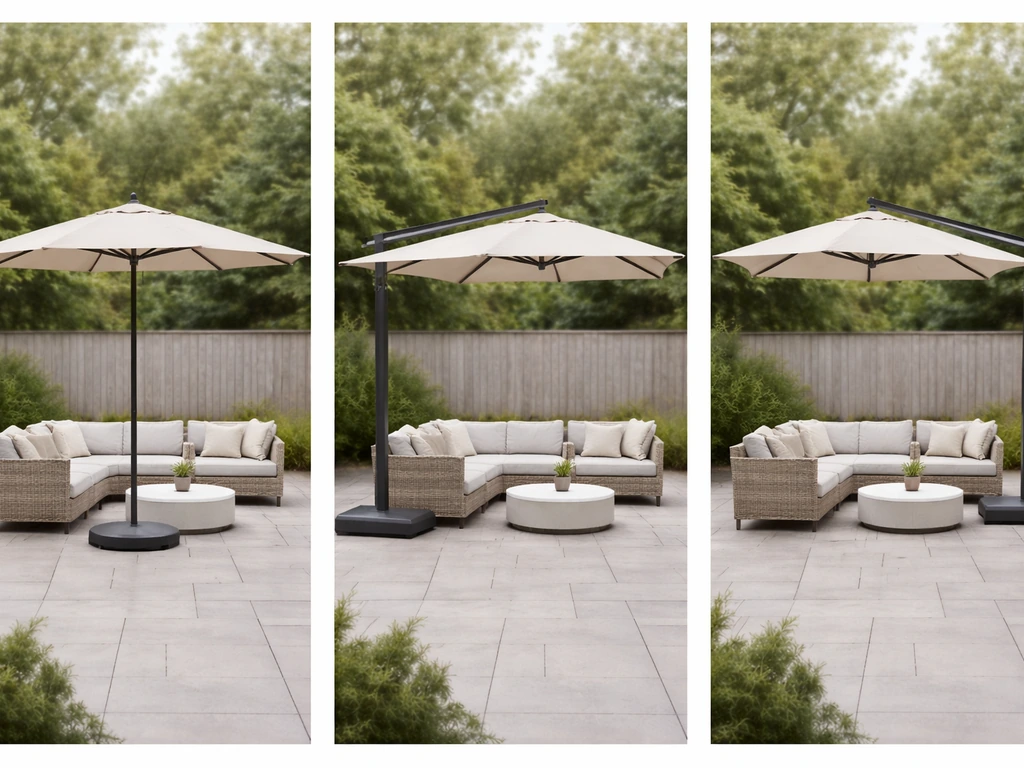
This is the first decision to make, and getting it wrong means buying something that physically does not work in your space. There are three main umbrella styles worth knowing.
Market (center-pole) umbrellas
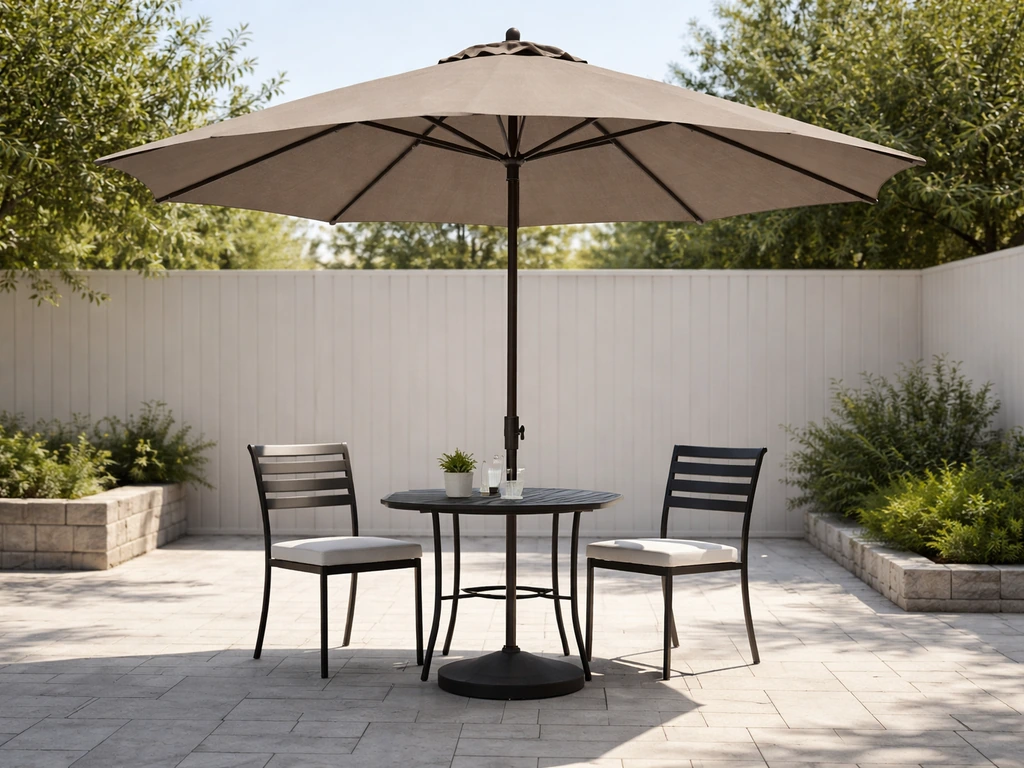
This is the classic style: a single pole running straight through the center of a round or octagonal canopy. It fits through the hole in most patio tables, which is the main reason it is so popular. Market umbrellas are the most affordable, easiest to find replacement parts for, and generally the most stable in moderate wind when properly weighted. The trade-off is that the center pole is in the way. If you want to reach across a table or you have a seating area without a table hole, it becomes awkward. Best for: a standard dining table setup, decks, and patios where the table does the organizing.
Cantilever (offset) umbrellas
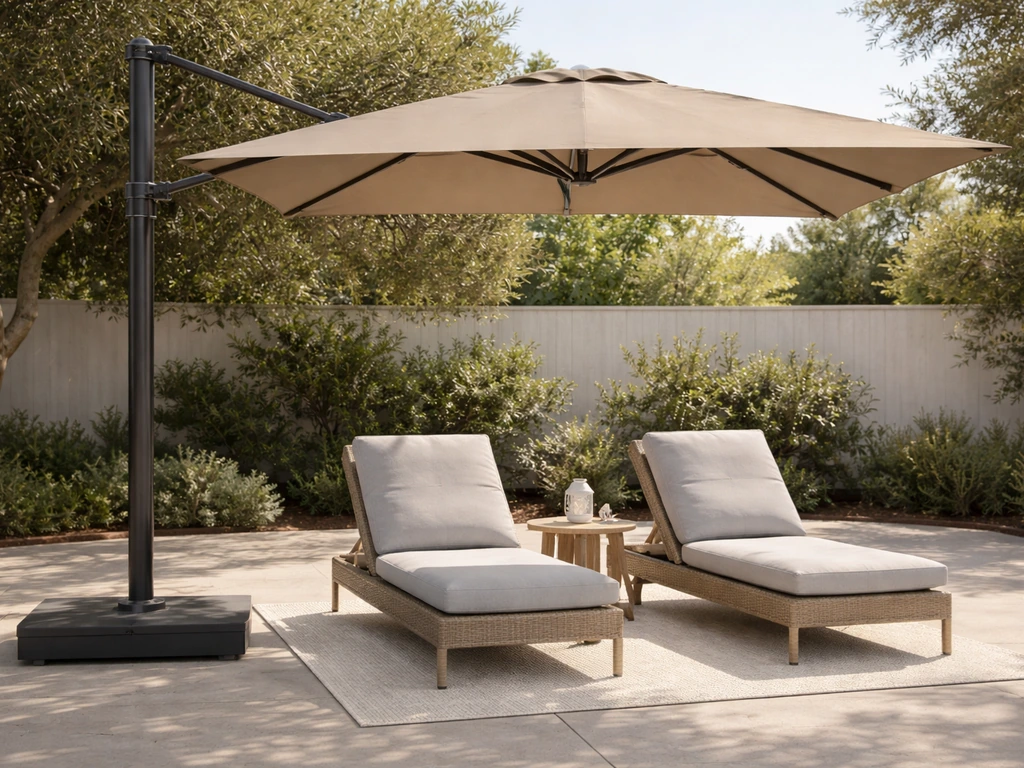
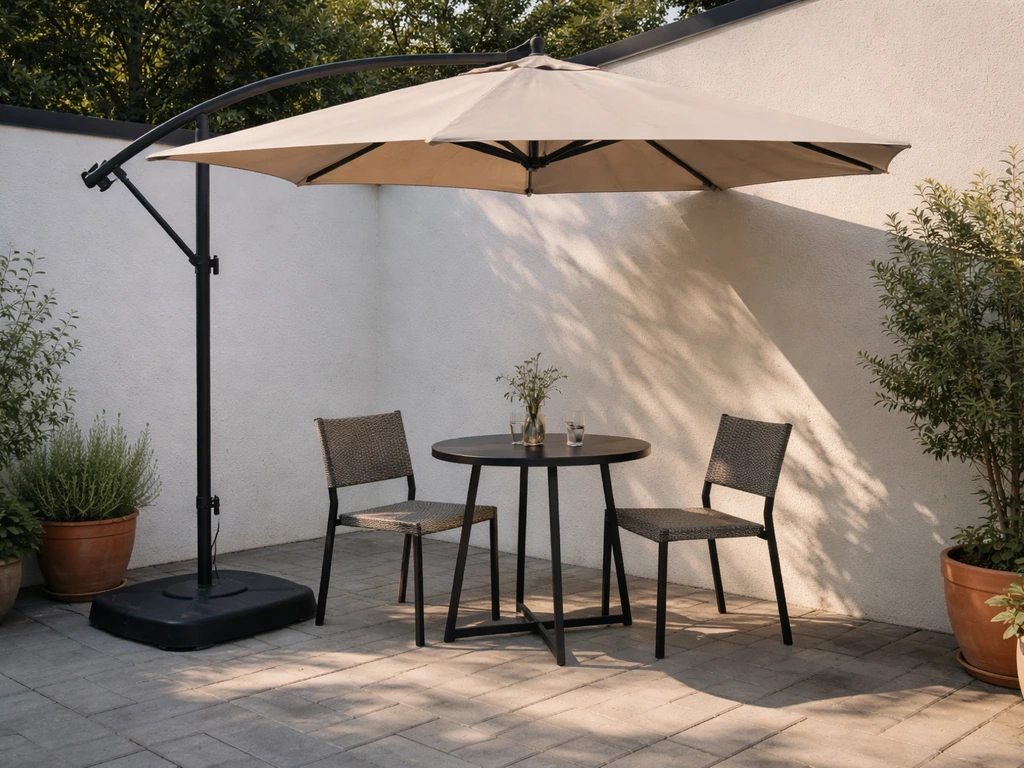
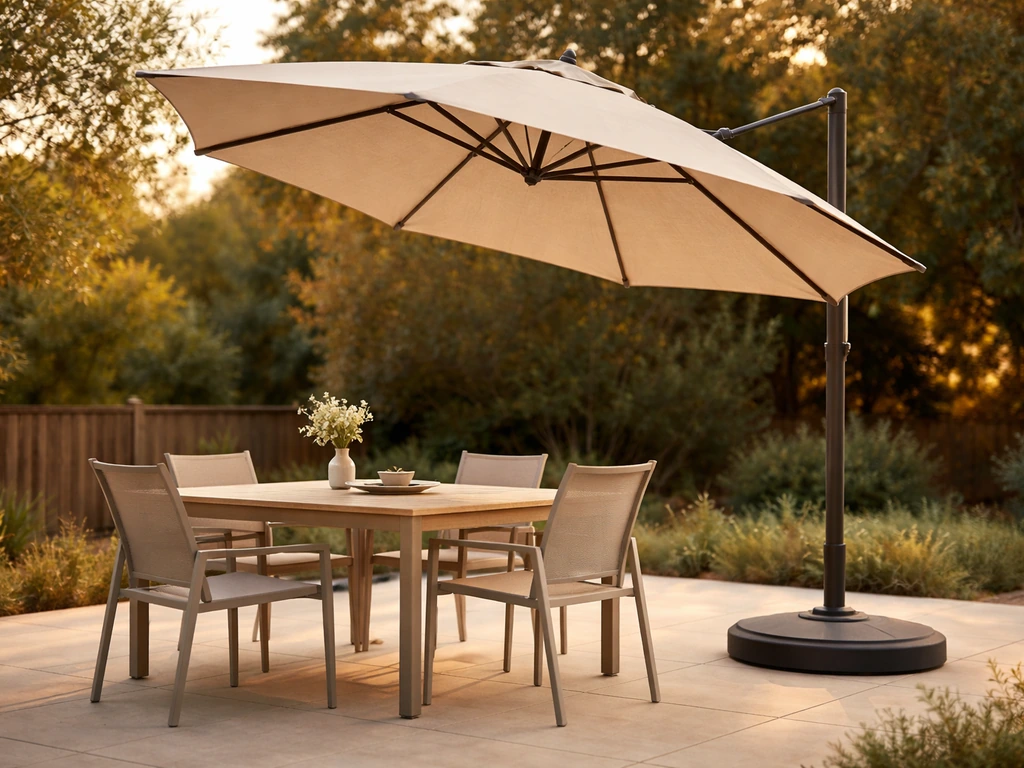
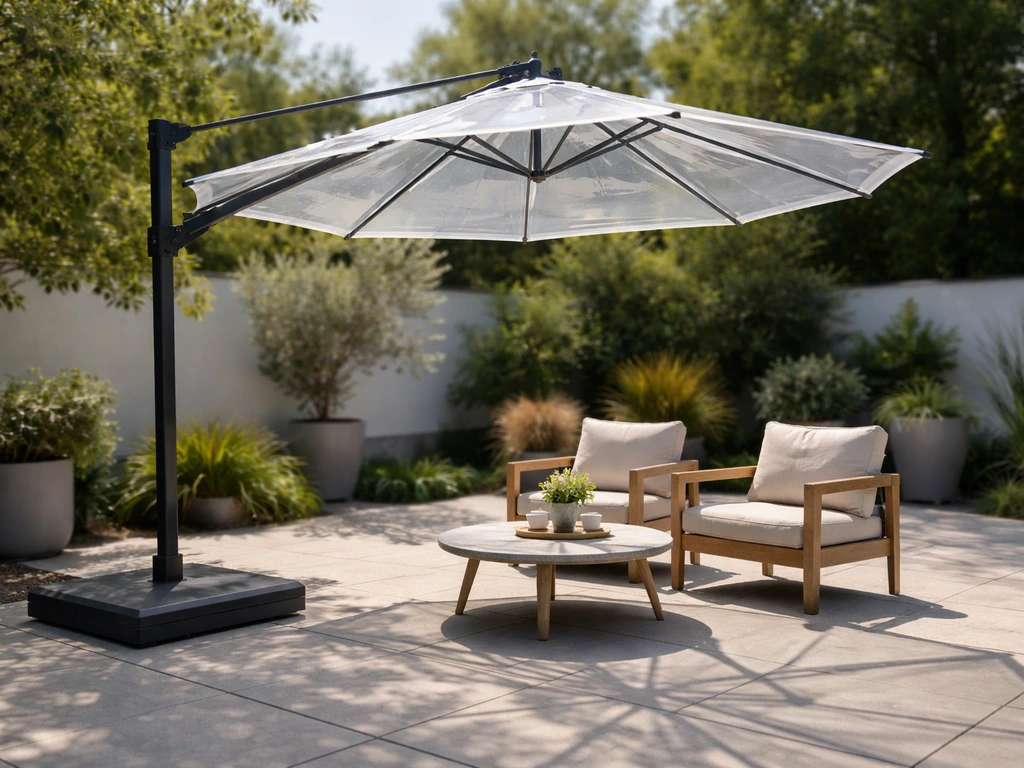
A cantilever umbrella has its pole to one side, with the canopy suspended outward over your seating area. No pole in the middle means you get unobstructed shade over lounge chairs, sofas, a hot tub, or any arrangement that does not have a table with a hole. Most cantilever models also rotate and tilt, so you can chase the sun throughout the day. The downsides are real: they cost more (quality ones start around $200 and jump quickly from there), they require a much heavier base to counterbalance the offset load (often 150 to 250 pounds), and the mechanical arms and joints are more complex. Best for: lounge areas, sectionals, pool decks, and any spot where a center pole would be in the way.
Tilting market umbrellas
This is a hybrid worth mentioning. A standard market umbrella with a tilt mechanism (either a crank-tilt, push-button tilt, or collar tilt) lets you angle the canopy to block low-angle sun in the morning or late afternoon. It is not a full cantilever, but it solves the 'the sun is too low for a flat canopy' problem at a fraction of the cost. If you have a table setup and want flexible shade angles, a tilting 9-foot or 11-foot market umbrella is often the sweet spot for most homeowners.
| Type | Best For | Typical Cost Range | Base Weight Needed | Main Drawback |
|---|---|---|---|---|
| Market (center-pole) | Dining tables, standard patios | $50 to $300 | 40 to 60 lbs | Pole obstructs seating area |
| Tilting market | Tables + angled shade needs | $80 to $400 | 50 to 75 lbs | Limited range of motion vs. cantilever |
| Cantilever / offset | Lounge areas, sectionals, pools | $200 to $900+ | 150 to 250 lbs | Higher cost, heavy base required |
Size and shade coverage: measure before you buy
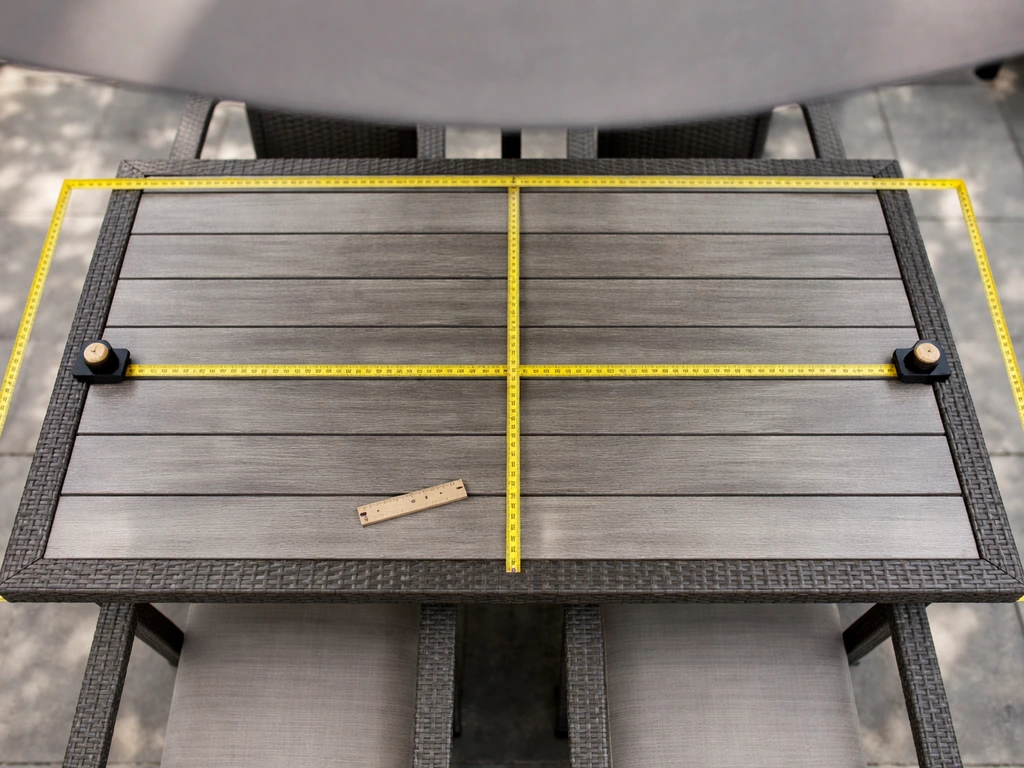
The most common sizing mistake is going too small. A 7.5-foot umbrella over a 6-person dining table leaves people on the edges in full sun. The general rule is to add 2 feet on each side beyond your table or seating footprint. So a 4-foot-wide bistro table needs at least an 8-foot canopy; a 48-inch round table with chairs pushed out needs a 9-footer at minimum. For a 6-foot rectangular table, a 10- or 11-foot umbrella is a better fit.
Round canopies are measured by diameter. For cantilever umbrellas, the measurement is the span of the canopy, and you also need to account for the pole placement behind the furniture. Leave at least 18 to 24 inches behind the seating area for the base and pole assembly. Square canopies (common in higher-end cantilevers) shade a larger effective area at the same listed size than round canopies, because the corners cover more ground.
- Bistro table or 2-seat setup: 7.5 to 8 feet
- Standard 4-person dining table: 9 feet
- 6-person dining table or larger sectional: 10 to 11 feet
- Large lounge or pool deck area: 11 to 13 feet (cantilever recommended)
- Cantilever overhang: measure clearance for the base, not just the canopy
Materials and UV protection: what actually holds up season after season
The canopy fabric is the first thing to wear out on any umbrella, so it is worth understanding what you are buying. Solution-dyed acrylic fabrics, with Sunbrella being the most recognized brand name, are genuinely worth the premium for outdoor use. The dye is embedded throughout the fiber rather than applied to the surface, which means fading and bleaching from UV exposure happens much more slowly. A Sunbrella canopy can last 5 to 10 years with basic care; a cheap polyester canopy might start looking washed out in a single season in a sunny climate.
Polyester canopies are not all bad. A 160-gram or higher density polyester with a UV-resistant coating performs reasonably well at the entry-level price point and is fine if you are in a less sun-intense climate or if you store the umbrella during off-season months. Avoid canopies listed only as 'water-resistant' without a UPF rating. Look for UPF 50+ as a baseline standard, which blocks at least 98 percent of UV radiation.
For the frame and pole, aluminum is the best default choice for residential use. It does not rust, it is lightweight enough to reposition easily, and quality aluminum poles (1.5-inch diameter or larger) hold up well. Fiberglass ribs (the arms that support the canopy) are a meaningful upgrade over cheap steel or thin aluminum ribs because fiberglass flexes under wind load rather than bending permanently. On cantilever umbrellas, a powder-coated steel or aluminum cross base is standard. Avoid wooden pole umbrellas unless you are committed to regular oiling and off-season storage indoors.
| Material | Durability | UV Resistance | Maintenance | Cost Impact |
|---|---|---|---|---|
| Solution-dyed acrylic (Sunbrella) | Excellent (5-10 years) | UPF 50+ | Low (wipe clean, air dry) | Adds $50 to $200 to canopy cost |
| Coated polyester (160g+) | Good (2-4 years) | UPF 50+ if rated | Low to moderate | Budget-friendly |
| Basic polyester | Fair (1-2 years) | Often unrated | Moderate (fades quickly) | Cheapest option |
| Aluminum pole | Excellent | N/A | Minimal | Standard pricing |
| Fiberglass ribs | Excellent (flex under wind) | N/A | None | Moderate premium |
| Wood pole | Fair (needs maintenance) | N/A | High (annual oiling) | Mid-range |
Wind stability and base requirements: how to stop the blown-over problem
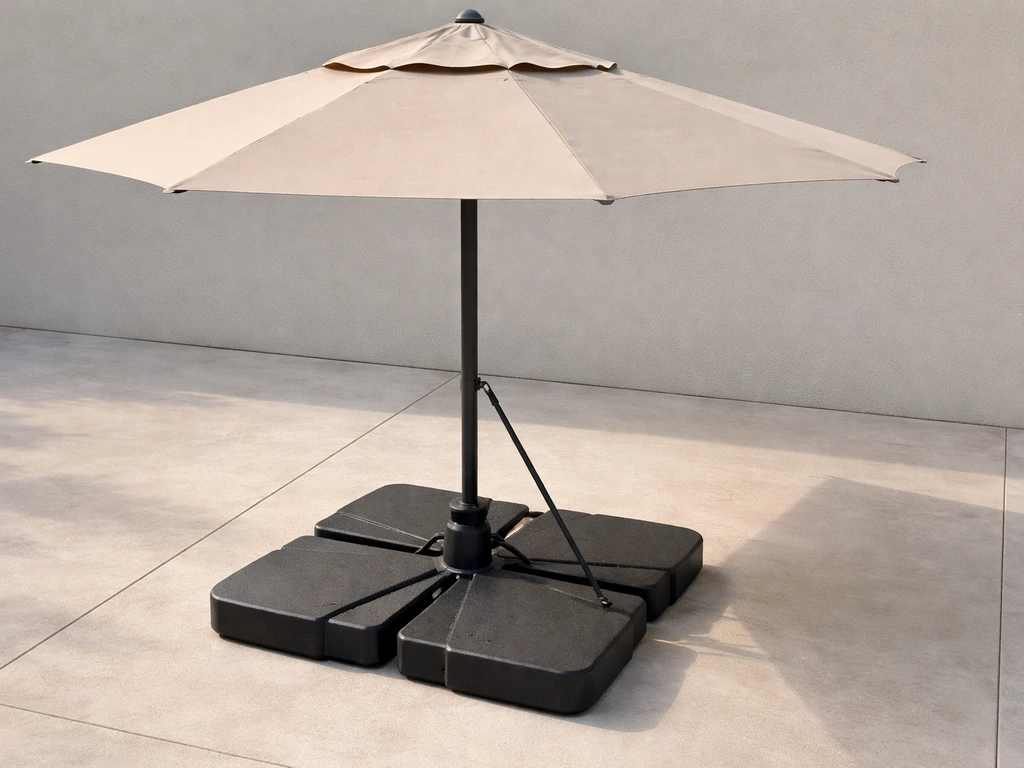
Wind is the number one reason patio umbrellas get damaged or become dangerous. A falling umbrella can break furniture, hurt people, and destroy the canopy in one gust. Wind stability is not just about base weight, though that matters a lot. It is also about canopy ventilation, pole thickness, and whether you actually close the umbrella when you are not using it.
A vented canopy makes a real difference. A double-vent design (two layers of fabric with a gap between them) or even a single vent at the top allows air to flow through rather than catching like a sail. Consumer Reports specifically calls out venting as a key stability feature, and in practice a vented canopy can stay upright in breezes that would topple a non-vented version of the same size. Consumer Reports highlights vented patio umbrella canopies as a key stability feature, helping air flow through rather than acting like a sail in windy conditions venting as a key stability feature. It is one of the easiest upgrade criteria to check on any model you are considering.
Base weight is non-negotiable. For a 9-foot market umbrella, do not go below 50 pounds. For a 10- or 11-foot umbrella, 75 pounds is a safer minimum. For cantilever umbrellas, you need significantly more counterweight. A 10-foot cantilever with a long arm generates enormous torque when wind hits the canopy; 150 to 200 pounds is a realistic minimum, and many quality cantilever bases take weight plates so you can add more. Bases filled with sand are available but typically underperform poured concrete or steel plate bases in actual wind conditions.
- Always close the umbrella when you leave the patio or when wind picks up above 20 mph
- Choose a base with a locking collar that grips the pole firmly, not just a loose friction fit
- For in-ground or deck-mount setups, a sleeve anchor rated for the umbrella size is more secure than a freestanding base
- Double-vent canopies handle gusts much better than single-layer, non-vented designs
- Fiberglass ribs flex and recover; steel ribs bend and stay bent after a hard gust
Budget tiers: what you get and what to prioritize at each level
Patio umbrella pricing falls into three practical tiers for homeowners. Knowing what each tier actually buys you helps you decide where to spend and where to save.
Under $100: entry-level market umbrellas
At this price point you are getting a functional umbrella with a coated polyester canopy, a basic aluminum or steel pole, and steel or aluminum ribs. It will work for a season or two in moderate climates if you are diligent about closing it in wind and storing it in winter. Prioritize: a UPF 50+ canopy rating, a crank-open mechanism (push-button open mechanisms are flimsier), and a pole diameter of at least 1.5 inches. Do not expect the frame to survive a real windstorm. Factor in base cost separately (add $30 to $60 for a basic 50-pound base).
$100 to $300: the sweet spot for most homeowners
This is where the quality jump is most noticeable. You can get a Sunbrella or solution-dyed acrylic canopy paired with a solid aluminum pole and fiberglass ribs in this range, especially at the upper end. Tilt mechanisms become more reliable. This tier is the right target for most homeowners with a standard dining setup. A $200 to $250 9-foot market umbrella with a Sunbrella canopy and a $75 to $100 cast-iron or steel base is probably the single best value combination in 2022. When shopping online, you can use this sweet spot to narrow down the best patio umbrella on amazon that fits your size, fabric, and base weight needs.
$300 and up: cantilevers, commercial-grade build, and premium features
Above $300 you start getting into quality cantilever umbrellas, commercial-grade aluminum frames, LED lighting integration, and 360-degree rotation. Brands like Treasure Garden, Frankford, and Galtech occupy this space. The durability difference at this tier is real and worth it if the umbrella is going to see heavy daily use or live through multiple seasons without storage. The Forbes Vetted team notes that stability at this level depends on design details like canopy ventilation systems and stability hardware, not just brute weight or price. If you are spending $400 or more, verify the base weight requirements and make sure you budget for the base, which is often sold separately at this tier and can add $150 to $300 to the total.
| Budget Tier | Best Umbrella Type | Canopy Material to Target | Key Feature to Prioritize | Watch Out For |
|---|---|---|---|---|
| Under $100 | 9ft market umbrella | UPF 50+ coated polyester | Crank open, 1.5" pole | Thin ribs, no vent, weak base |
| $100 to $300 | 9-11ft market or tilting market | Solution-dyed acrylic or Sunbrella | Fiberglass ribs, double vent | Base sold separately |
| $300 and up | Cantilever or premium market | Sunbrella or equivalent | Ventilation system, rotation, LED | Heavy base adds $150-300 extra |
Your pre-buy checklist and next steps
Before you add anything to your cart, run through this checklist. It takes five minutes and prevents returns. If you want crowd feedback, search for the best patio umbrella Reddit threads to see which models people actually keep using patio umbrellas.
- Measure your seating area and add 2 feet on each side to get your minimum canopy diameter.
- Decide on type: center-pole market umbrella for a table setup, cantilever or offset for a lounge area without a table hole.
- Check for a UPF 50+ canopy rating. Look for solution-dyed acrylic or Sunbrella if your budget allows.
- Confirm the pole diameter is at least 1.5 inches and the ribs are fiberglass or heavy aluminum.
- Look for a vented canopy (single or double vent) if your yard gets any real wind.
- Price out the base separately. You need at least 50 lbs for a 9-foot market umbrella, and much more for a cantilever.
- Check whether the base fits your pole diameter. Common sizes are 1.5 inches and 2 inches but they vary by brand.
- Plan where you will store or cover the umbrella when not in use. An umbrella cover costs $15 to $30 and meaningfully extends canopy life.
The best patio umbrella for 2022 is not one specific model; it is the one that fits your actual patio dimensions, accommodates your furniture layout, uses a durable fabric that handles your local sun and rain load, and sits on a base heavy enough to stay put. For most people reading this, that means a 9-foot tilting market umbrella with a Sunbrella canopy, fiberglass ribs, and a 50- to 75-pound base lands in the $200 to $350 total range and will outlast two or three cheap alternatives. Spend once, cover it when you are not using it, and you will still be happy with it long after the 2022 buying season is a memory.
FAQ
Do I need a tilt umbrella if my patio gets shade most of the day?
If you rarely have low-angle sun hitting you, a non-tilt market umbrella can be fine. Tilt mainly helps in morning and late-afternoon glare, so if your seating stays shaded at those times, prioritizing venting, UPF 50+ fabric, and base weight usually matters more than adding tilt hardware.
What base type is safest for wind, poured concrete, steel plates, or sand filling?
If you have a choice, poured concrete or a steel-plate base generally performs better than sand in real wind because it holds weight with less shift and compaction over time. If you do use sand, make sure the base is fully sealed to reduce settling, and check it at the start of each season.
How do I measure whether a canopy will clear my chairs or loungers?
Use not only the canopy diameter or span, but also the overhang and pole position. Leave at least 18 to 24 inches behind the seating for the pole and base assembly, then confirm the umbrella height clears chair backs and headrests when tilted, especially for cantilevers where the arm location can shift shade angles.
Is polyester always inferior to solution-dyed acrylic, or are there good polyester options?
Polyester can be a solid value when it is dense (about 160 grams or higher) and has a UV-resistant coating with a real UPF rating. The key difference is longevity under intense sun, so if you cannot verify UPF 50+ and canopy density, solution-dyed acrylic becomes the safer bet.
What does UPF 50+ mean for umbrella fabric in practical terms?
UPF 50+ blocks at least 98 percent of UV radiation through the fabric under tested conditions, but coverage depends on canopy size and whether the fabric reaches over your seating footprint. For best results, choose the correct umbrella size and close it during high UV hours when wind would otherwise force you to leave it partially open.
Should I buy replacement canopies or replacement ribs instead of a whole umbrella?
If the frame and pole are still straight and the mechanism works smoothly, replacing a canopy or ribs can be cheaper than starting over. Before buying parts, confirm compatibility by model number and confirm the rib attachment style, because some umbrella manufacturers use non-standard arm geometries.
How heavy should my umbrella base be if I live in a windy area?
Use the minimums as a floor, not a goal: for a 9-foot market umbrella, target at least 50 pounds, and for 10- to 11-foot models, at least 75 pounds. In consistently gusty areas, going above the minimum can reduce rocking, but also plan to close the umbrella quickly when gusts rise.
What’s the biggest mistake people make when shopping for the best patio umbrella 2022?
Buying too small is the most common. If the canopy does not extend about 2 feet beyond each side of your seating footprint, people end up in full sun at the edges. Measure your table and chair placement, then round up rather than matching the umbrella to the tabletop width only.
Can I leave the umbrella outside year-round?
You can in mild climates, but in most locations it still shortens fabric and mechanism life. Plan to close it in wind and store it during off-season months or at least use a breathable cover, because trapped moisture can accelerate wear even when the canopy fabric is water-resistant.
How do I prevent the umbrella from becoming a safety risk in storms?
Treat wind as the deciding factor, close the umbrella when not in use, and do not rely on weight alone. Choose a vented canopy to reduce sail effect, regularly inspect pole joints and the tilt mechanism, and have a plan to secure the umbrella when weather apps show gusts increasing.