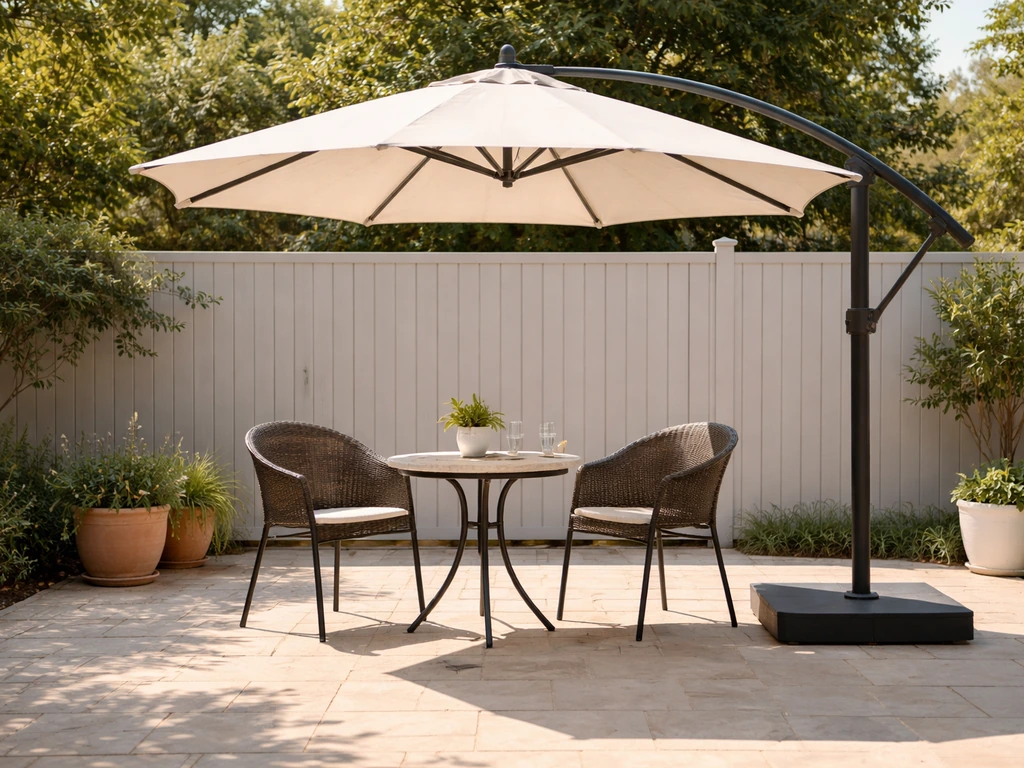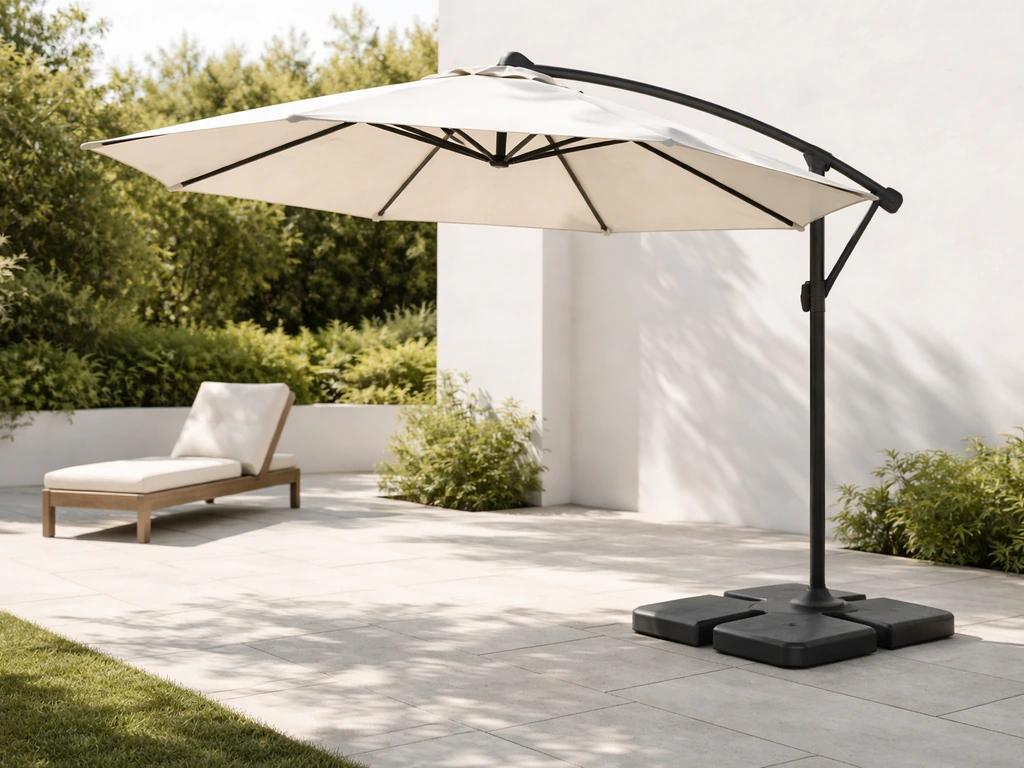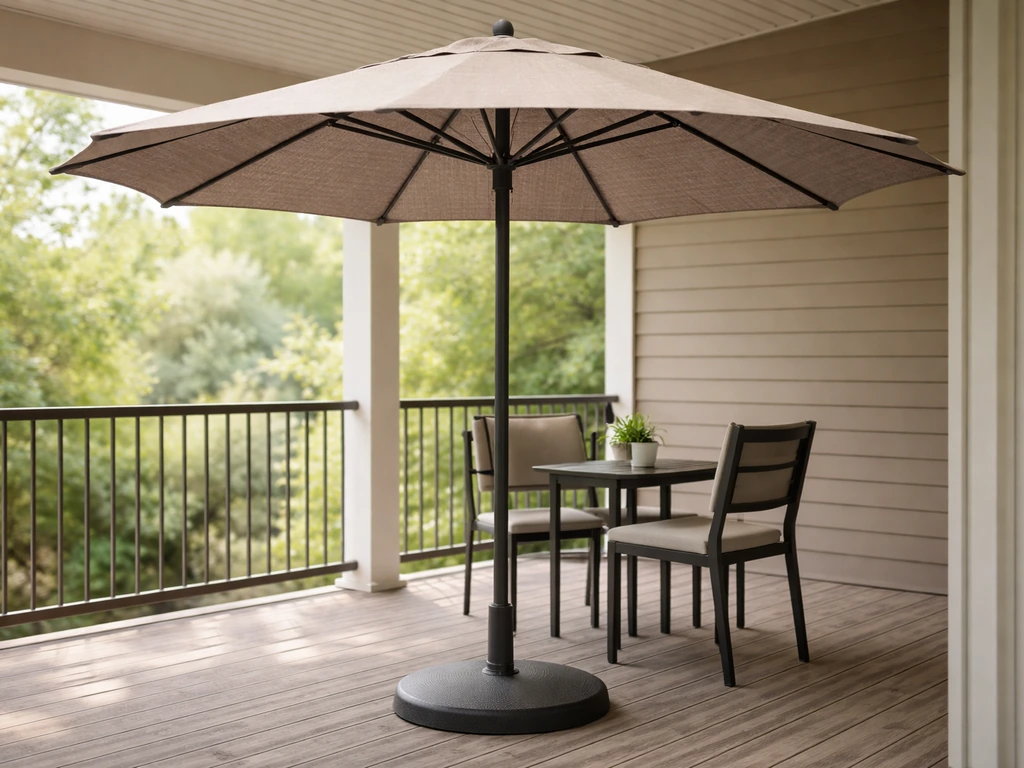
A good patio umbrella comes down to three things: the right size for your table, a frame and fabric built to handle real outdoor conditions, and a style that actually fits how you use your space. If you're comparing options for what are the best outdoor patio umbrellas, use the same three-point checklist: size, weather-ready materials, and a style that matches your routine. For most people with a standard 4- to 6-person dining set, a 9-foot center-pole (market) umbrella with fiberglass ribs, a solution-dyed acrylic canopy rated UPF 50+, and a base weighing at least 50 pounds is the practical sweet spot. If your setup doesn't have a center hole in the table, or you want shade that moves with the sun, a cantilever (offset) umbrella is the better call, though it costs more and needs a heavier base.
Good Patio Umbrellas Buyer’s Guide for Patio Tables

What actually makes a patio umbrella "good"

Marketing copy for patio umbrellas is full of vague language like "UV resistant" and "weather-ready," which tells you almost nothing. Here's the checklist I'd run through before buying anything, whether you're spending $80 or $800.
- Frame material: Fiberglass ribs are the gold standard for strength and flexibility. Aluminum poles are lightweight and rust-resistant. Steel is heavier and can corrode over time unless powder-coated well. Avoid plastic ribs entirely.
- Canopy fabric: Solution-dyed acrylic (Sunbrella is the best-known brand) is the top tier. The color runs through the fiber, so it doesn't fade off the surface. Standard polyester will fade noticeably within a season or two in direct sun.
- UPF rating: Look for a stated UPF 50+ rating, not just "UV resistant." UPF 50+ blocks over 98% of UV radiation. A specific number is a testable claim; vague language is not.
- Vented canopy: A double-vent or single-vent top lets wind pass through instead of lifting the whole canopy. This is one of the most practical wind-resistance features you can get.
- Tilt and crank mechanism: A push-button tilt or auto-tilt lets you angle the canopy to follow the sun without getting up. A crank handle opens the umbrella cleanly without tangling. Both should feel smooth and solid, not wobbly.
- Warranty terms: Quality brands back their canopy fabrics with multi-year no-fade warranties. Some solution-dyed acrylic products carry a 10-year no-fade warranty. Read the fine print: virtually every brand, even the best, excludes wind damage from warranty coverage.
- Base weight: More weight is always better for stability. A 50-pound base is a reasonable floor for a 9-foot umbrella. Cantilever umbrellas need significantly more, often 100+ pounds, because of their offset geometry.
One honest reality check: no patio umbrella is meant to stay open in strong wind, full stop. Even FiberBuilt, whose fiberglass ribbed umbrellas have reportedly passed wind tests above 50 mph, explicitly states that wind damage isn't covered under warranty and recommends closing the umbrella in strong winds. Shademaker USA says the same. Close it when you're not outside. That single habit extends the life of any umbrella more than any construction feature will.
Market umbrella vs. cantilever: which one fits your space
This is the first decision to make, and getting it wrong is an expensive mistake. The two main styles work very differently.
Market (center-pole) umbrellas
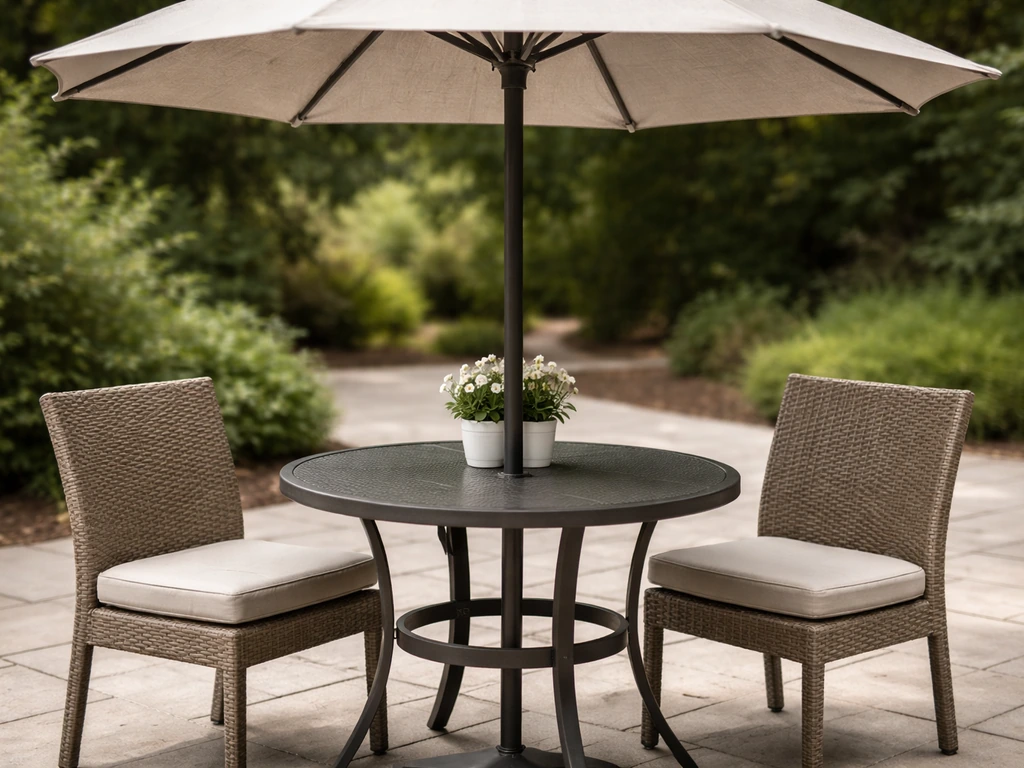
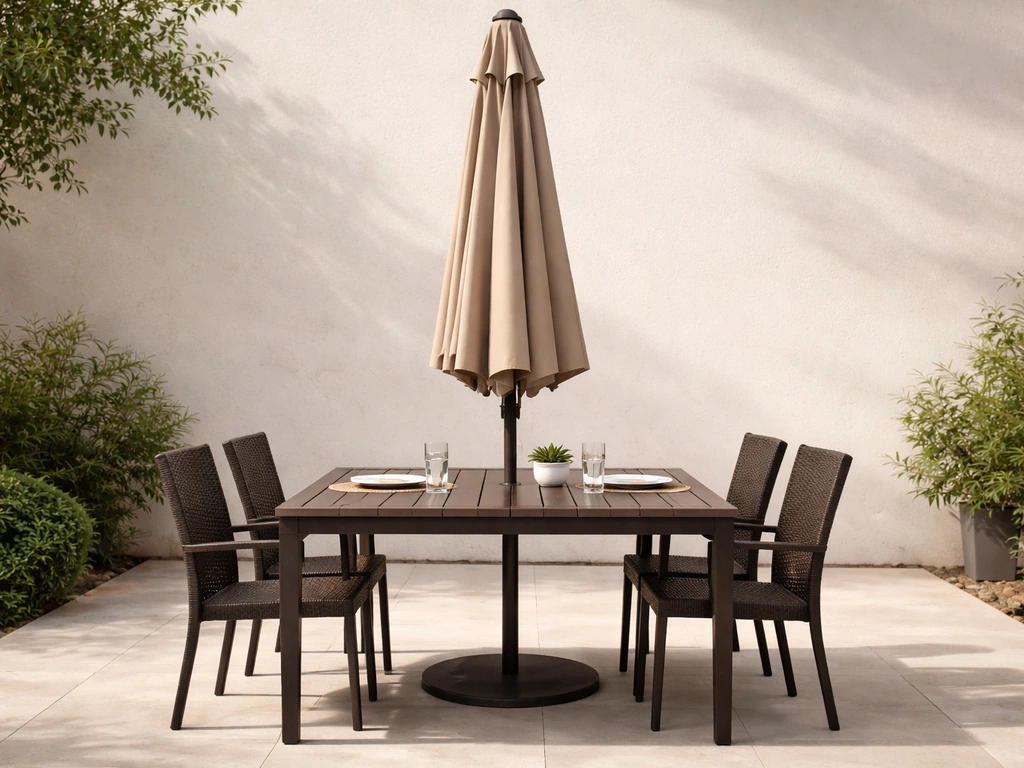
A market umbrella has a center pole that runs straight through the middle of the canopy and, usually, through a hole in your patio table. It's the classic design. It's also more affordable, easier to find, simpler to set up, and generally more stable per dollar because the weight sits directly under the canopy. If your table has a center umbrella hole (most dining sets do), a market umbrella is the practical default. The downside is the pole itself: it sits right in the middle of the seating area, which can feel intrusive at a smaller table.
Cantilever (offset) umbrellas
A cantilever umbrella suspends the canopy from a side arm, with the pole positioned to the side of the table rather than through it. This leaves the entire seating area completely clear, which is genuinely better for comfort and sightlines at a dining table. It also lets you shade areas without a center hole, like a lounge chair setup or a sofa section. The tradeoff is cost, complexity, and base requirements. Because the canopy is side-loaded rather than directly over the base, the leverage forces are much greater. Cantilever umbrellas need heavier, more robust bases, and the mechanics (rotation, tilt, locking arms) are more complex. Budget cantilever umbrellas tend to feel flimsy; this is a category where spending more actually matters.
| Feature | Market (Center-Pole) | Cantilever (Offset) |
|---|---|---|
| Pole position | Center of table/canopy | Side-mounted, offset arm |
| Table compatibility | Requires center umbrella hole | Works with any table or furniture |
| Seating obstruction | Pole visible at table center | Completely clear underneath |
| Stability | Very stable; weight directly below | Requires heavier base due to side-loading |
| Price range | Lower entry point ($50–$400+) | Higher entry point ($200–$1,000+) |
| Best for | Standard dining tables | Lounge areas, tables without center holes, flexible shading |
For most people shopping for a patio table umbrella specifically, a market umbrella is the right starting point. Go cantilever if you have a specific layout reason: no center hole, multiple seating zones, or you want the flexibility to rotate the shade across the day.
Getting the size right for your patio table
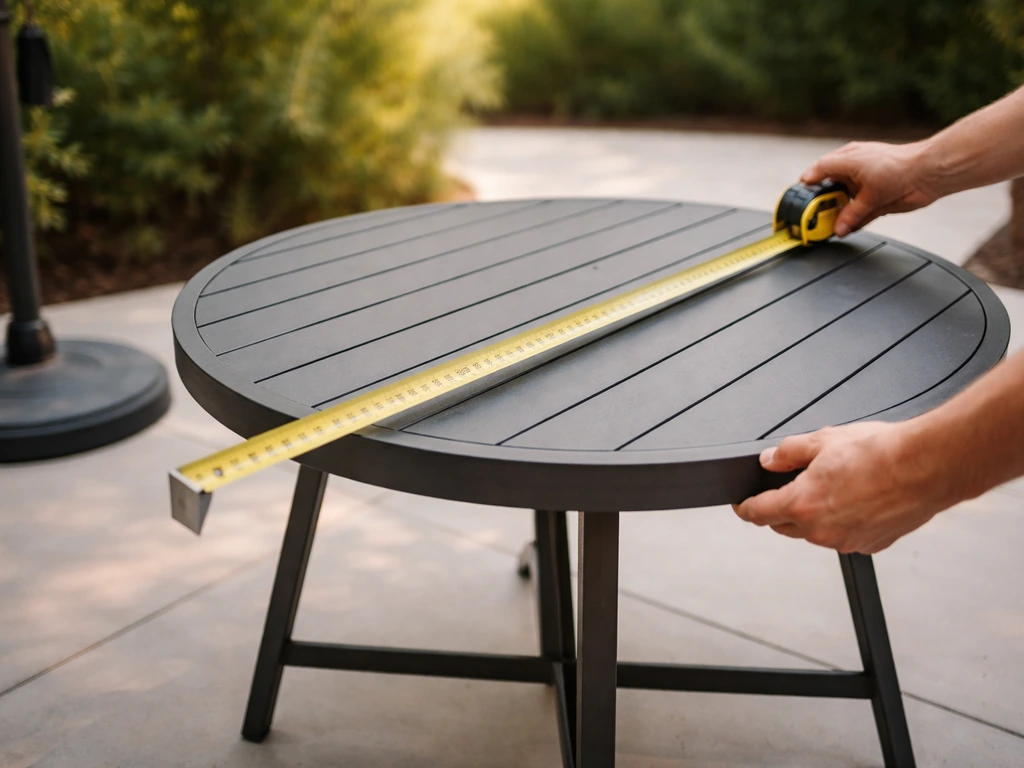
Umbrella sizing is where a lot of people go slightly wrong, and the fix is simple math. The canopy needs to extend past the edge of the table far enough that seated guests actually get shade, not just the tabletop. A rough rule: add 2 feet to the table diameter to get the minimum umbrella diameter you should consider, then round up.
| Table Size / Seating | Minimum Umbrella Size | Recommended Umbrella Size |
|---|---|---|
| Up to 36" round / 2 people | 7.5 ft | 9 ft |
| 48" round / 4 people | 9 ft | 9–10 ft |
| 54–60" round / 4–6 people | 9 ft (tight) | 10–11 ft |
| Rectangular 6–8 person dining | 9 ft | 11 ft or rectangular canopy |
| Large patio / 8+ people | 11 ft | 13 ft or multi-umbrella setup |
A 54-inch table at the edge of a 9-foot umbrella's coverage gets shade, but there's not much buffer. If you're in a sunny climate or your table gets direct afternoon sun, go to 10 or 11 feet for real comfort. The extra foot or two of canopy makes a bigger difference in actual shade than it looks on paper.
Height and tilt clearance matter too. Before you buy, check the pole length against your table height. Standard dining tables sit at about 30 inches; a market umbrella pole typically clears that comfortably, but compact or low-clearance designs can be snug. If the umbrella has a tilt feature, make sure there's enough clearance around the canopy perimeter to operate it without hitting a nearby wall, fence, or pergola post. Measure before you order.
Wind resistance and stability: what actually helps
Wind is the main way patio umbrellas get damaged or become a hazard. The good news is that a few specific construction features make a real difference, and they're easy to check in a product listing.
Frame construction
Fiberglass ribs flex under wind load instead of snapping. This is the single most important structural upgrade from basic aluminum or steel ribbed umbrellas. Brands like FiberBuilt have built their reputation on fiberglass rib construction, and it shows in real-world durability. An aluminum pole is fine for the main shaft; where fiberglass matters most is in the ribs that hold the canopy open. Look for "fiberglass ribs" explicitly in the specs, not just "aluminum frame" (which often refers only to the pole).
Vented canopy design
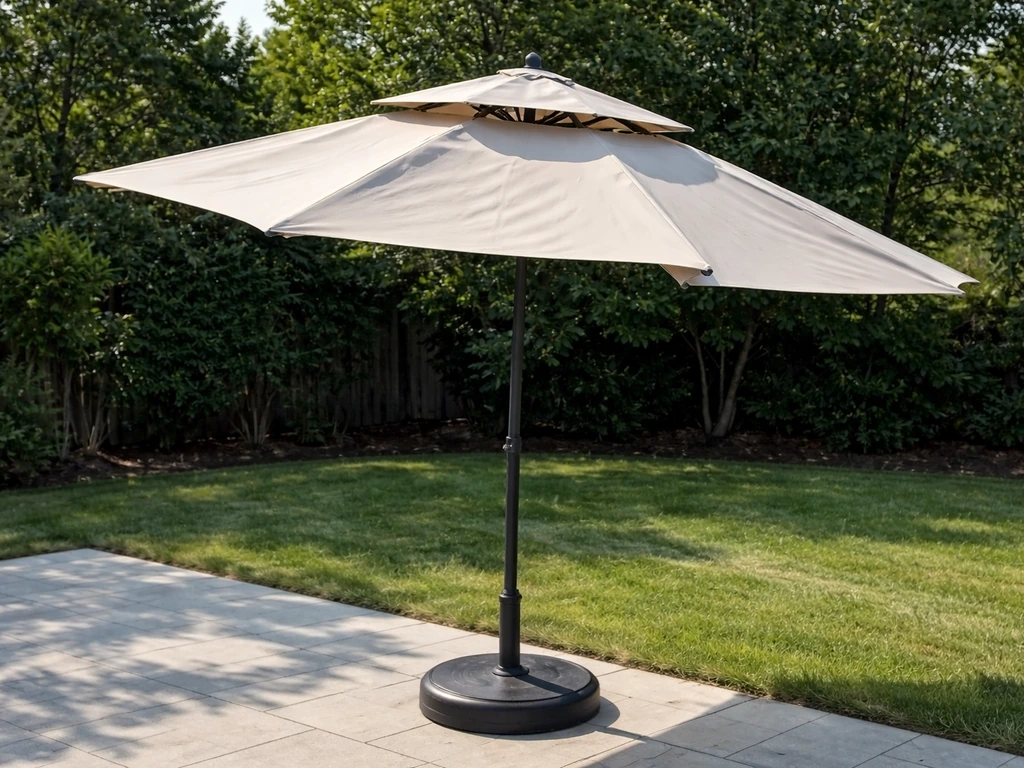
A vented or double-vented canopy has an opening at the top that allows wind to escape upward instead of pushing the whole umbrella like a sail. This reduces the lifting and tipping force significantly in gusty conditions. If you live somewhere with regular afternoon breezes, a vented canopy is worth prioritizing, not just a nice-to-have.
Base weight
Some product documentation recommends not opening a patio umbrella in winds above 5 mph, which is unrealistically cautious for everyday use, but the underlying point is real: the base must be heavy enough to counterbalance the canopy in the conditions you actually experience. For a 9-foot market umbrella, 50 pounds is a workable minimum in mild conditions; 75 pounds is more reassuring if you get regular wind. Cantilever umbrellas can require bases of 100 to 150 pounds or more, depending on the canopy span and arm length. Check the manufacturer's base recommendation, and when in doubt, go heavier.
UV protection, weather durability, and fabric choices
This is where the long-term value of a patio umbrella lives. A canopy that fades, cracks, or goes mildewy after two seasons isn't a good deal at any price.
Solution-dyed acrylic vs. polyester
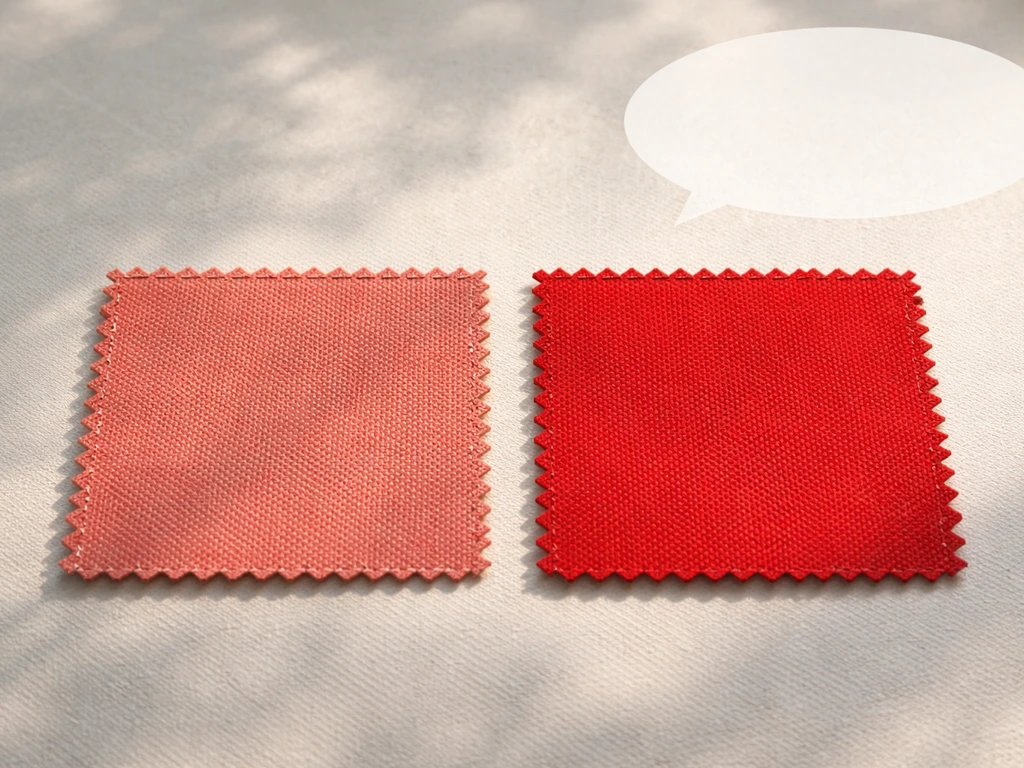
Solution-dyed acrylic fabric (Sunbrella being the most recognized name) is where the color is embedded into the fiber during manufacturing rather than applied to the surface afterward. That means there's no color to fade off the surface because the pigment runs all the way through. In independent testing and real-world use, solution-dyed acrylic significantly outperforms solution-dyed polyester and especially standard dyed polyester for fade resistance. It's also more resistant to mildew and easier to clean. The Sunbrella brand offers a 10-year limited warranty on fade for certain shade fabrics. If the product listing says "polyester" canopy without specifying solution-dyed construction, expect visible fading within a few seasons.
UPF ratings: the number that actually matters
UPF (Ultraviolet Protection Factor) is the fabric's tested rating for blocking UV radiation. UPF 50+ means over 98% of UV rays are blocked. "UV resistant" without a number is essentially unverifiable marketing language; a stated UPF rating is a real, testable spec. When comparing umbrellas, look for UPF 50+ in the product specs, not just in the headline copy. Solution-dyed acrylic canopies typically achieve UPF 50+ easily; cheaper polyester canopies often don't, or the manufacturer doesn't bother testing.
Frame and hardware corrosion resistance
Powder-coated aluminum is the most common frame material for mid-to-high quality umbrellas, and it handles moisture and humidity well as long as the coating isn't scratched through. Stainless steel hardware (bolts, hub components) resists rust better than zinc-plated steel. If you're in a coastal or high-humidity environment, marine-grade aluminum and stainless hardware are worth the extra cost. Check that the hub (the center piece where ribs connect to the pole) is solid, because that's where cheap umbrellas fail first.
How to compare top patio umbrellas before you buy
There are genuinely good patio umbrellas at multiple price points right now, but the specs you verify before buying matter more than the brand name on the tag. Here's the practical comparison checklist to run on any umbrella you're considering.
- Confirm the canopy material: solution-dyed acrylic vs. polyester. If it's polyester and the listing doesn't specify "solution-dyed," assume average fade resistance at best.
- Check for a stated UPF rating: UPF 50+ is the threshold. If no UPF number is listed anywhere in the specs, that's a yellow flag.
- Look at rib material: fiberglass ribs are the upgrade worth paying for. If the listing just says "aluminum frame" without mentioning ribs specifically, dig into the specs.
- Check for vented canopy design: single or double vent is better than no vent for wind performance.
- Verify the recommended base weight from the manufacturer, then check what bases are actually available for that model. Some umbrella-and-base sets are undersized.
- Read the warranty terms: look for how long the canopy fabric is covered and whether the frame has a separate warranty. Note that wind damage is excluded by virtually every brand.
- Measure your table before ordering: diameter, height, and the center hole size (standard is 1.5 to 2 inches, but check your table).
In terms of a quick shortlist by category: for best overall value on a market umbrella, look at mid-tier brands using Sunbrella or equivalent solution-dyed acrylic canopies with fiberglass ribs in the 9- to 11-foot range (typically $200 to $500). For a cantilever umbrella, budget at least $400 for a model with a solid locking mechanism and a heavy enough base; below that price point the hardware tends to be the weak point. For a table-specific setup with a standard dining hole, a 9-foot crank-and-tilt market umbrella with a fiberglass rib frame and UPF 50+ solution-dyed acrylic canopy covers the vast majority of everyday patio dining needs.
If you're weighing specific product picks side by side, our guides on <a data-article-id="3DF30F15-20A9-4F70-BD2D-E2E059469338"><a data-article-id="E2E3830F-617E-4BC4-ACF8-CF35EC242496">best rated patio umbrellas</a></a> and best outdoor patio table umbrellas go deeper on individual models with hands-on notes. For a quick starting point, you can also use a top 5 patio umbrellas list to narrow your options fast. If you want a tighter short list for buying, see our take on best made patio umbrellas as a related option to compare. If you want the best patio furniture with umbrella setup, look for an umbrella system that matches your table size and wind needs top 5 patio umbrellas. For anyone focused on maximum sun protection specifically, the best sun umbrellas for patio guide breaks down UPF performance across current options in more detail.
Common mistakes to avoid
- Buying a base that's too light: the umbrella may look fine on a calm day and tip over the first afternoon it's breezy. Match the base weight to the manufacturer's recommendation, then go one step heavier if you can.
- Assuming all acrylic is solution-dyed: some cheaper canopies use acrylic fiber that's surface-dyed rather than solution-dyed. Check the product specs or contact the brand directly if it's unclear.
- Ignoring tilt clearance: a tilting umbrella needs room to operate without hitting nearby structures. Measure the radius plus extra at tilt angle before buying.
- Leaving the umbrella open when unattended: this is the most common cause of wind damage, and it voids the warranty on every major brand. Build the habit of closing it when you go inside.
- Over-buying on cantilever without the base budget: a $300 cantilever umbrella with a $40 base is a bad investment. Budget the base into the total cost from the start.
FAQ
How do I confirm a good patio umbrella will fit my patio table’s umbrella hole?
Measure the inside diameter of your table's umbrella hole (not the listed umbrella diameter), then confirm the umbrella pole will fit through it and that the crank or tilt mechanism clears the table rim. Also leave a little gap for water swelling or seasonal misalignment, especially with larger 10 to 11 foot canopies.
Is it safe to leave a patio umbrella open when I’m not outside, even if it’s calm where I’m standing?
If your patio is enclosed, wind can still build up when doors are open or during gusts, so the same rule applies: close it in strong wind. For storage, keep the umbrella dry and folded, and avoid leaving it tight-packed for long periods while wet, since trapped moisture accelerates mildew in the canopy seams.
What matters more for gusty areas, a vented canopy or fiberglass ribs?
If a vented canopy is available, it helps most in gusty conditions because it releases pressure from the top. If you can’t find vented, focus on base weight and rib flexibility (fiberglass ribs) and consider a more conservative canopy size so the umbrella creates shade without turning into a sail.
Can I use a heavier aftermarket base than the one recommended for a good patio umbrella?
Yes, but only to a point. Many umbrellas need a specific base bracket or center-pole clearance, and adding weight that’s too small in footprint can tip the umbrella. Match the base to the manufacturer’s required pole and use a base with a stable shape (wide stance or integrated tray), not just heavier materials.
Will a solution-dyed acrylic canopy fade unevenly where it folds?
Solution-dyed acrylic typically hides color wear better, but any fabric can show stress fading at the folds. To reduce uneven fading, rotate umbrella orientation occasionally if your model allows it, and close it during the brightest periods when you are not actively using it.
Does UPF 50+ guarantee I will get full sun blocking shade at any umbrella angle?
UPF is measured for the fabric itself, not for the whole umbrella assembly, and coverage changes with tilt angle. Check that the UPF rating is for the canopy material (not a generic “UV protection” claim), then test coverage by watching how much light hits guests at your typical tilt setting.
How much space do I need around the umbrella to use tilt and crank features safely?
If your umbrella has a tilt, you must ensure the tilt arcs clear nearby posts, pergola beams, and fence lines. The easiest method is to dry-fit by lowering and rotating it without fully seating it, then mark the closest contact points with painter’s tape.
What’s a common spec-reading mistake when shopping for good patio umbrellas?
Look for the umbrella’s rib material in the specs, not only the pole material. A common mistake is buying “aluminum frame” thinking it applies to the ribs; verify “fiberglass ribs” explicitly or expect more brittle failure under repeated wind loads.
Can I get moving shade without a center hole, and what should I watch for on cantilever umbrellas?
If you want moving shade, cantilever is the practical choice, but confirm your wall and furniture clearance because the canopy’s rotation path is larger than the pole location. Also ensure the locking mechanism is robust, since cheap locks can loosen over time under repeated rotation.
Are umbrella covers and tie-downs worth it, and can they damage the umbrella?
You can, but the canopy fabric and hardware need to be compatible with the accessories. Verify the umbrella system supports your shade clips or cover size, and confirm the umbrella can be closed and secured without forcing the canopy, which can damage the ribs or tilt mechanism.