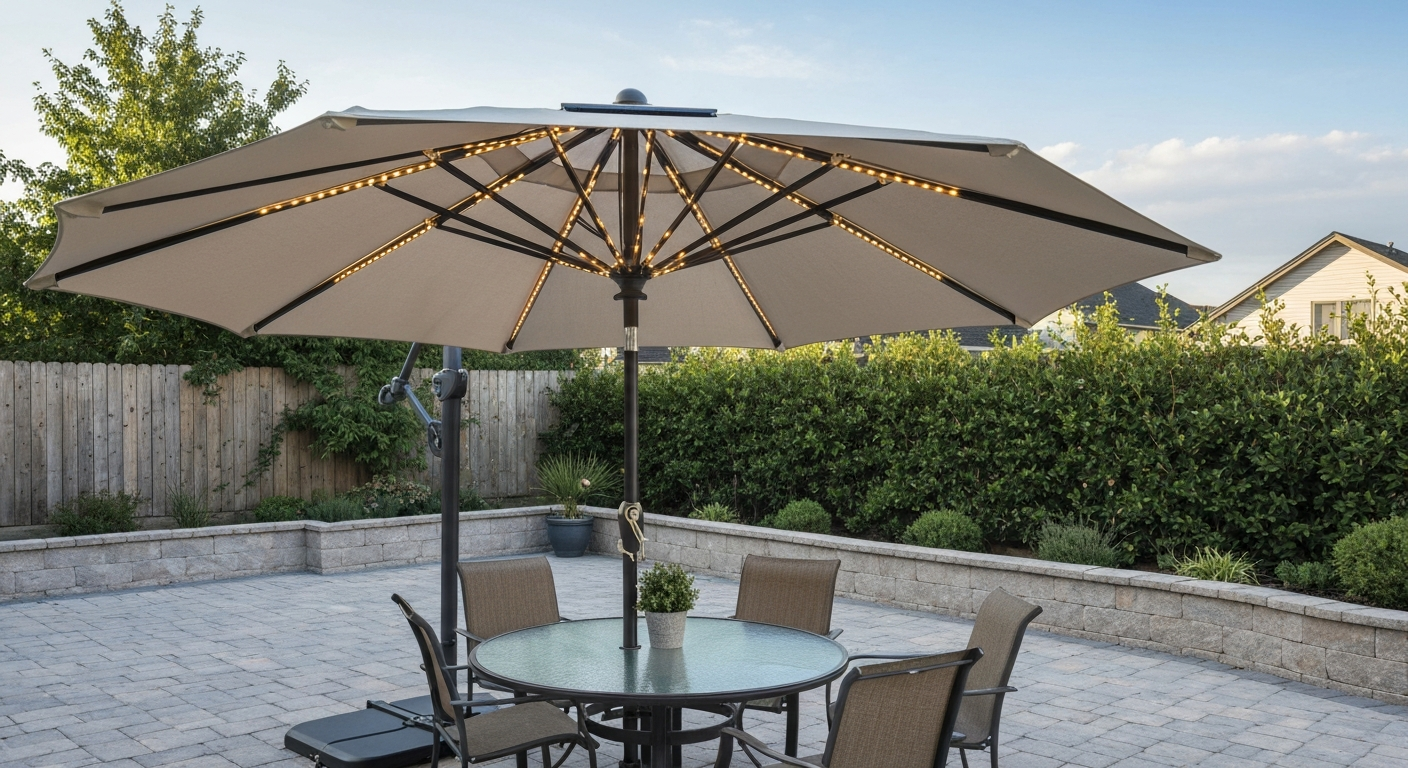
You can buy a patio umbrella today at big-box stores like Home Depot, Lowe's, and Target (in-store or online), through furniture and home retailers like Wayfair, Pottery Barn Outdoor, and IKEA, or directly from specialty brands like Treasure Garden and Umbrella Source. If you need it fast, Home Depot and Lowe's are your best bets for same-day pickup. If you want the widest selection and the best chance of finding a quality canopy fabric like Sunbrella, shop online and budget a little more time for shipping and inspection.
Where to Buy Patio Umbrella: Best Online and Local Places

Kent Lang
2 May 2026
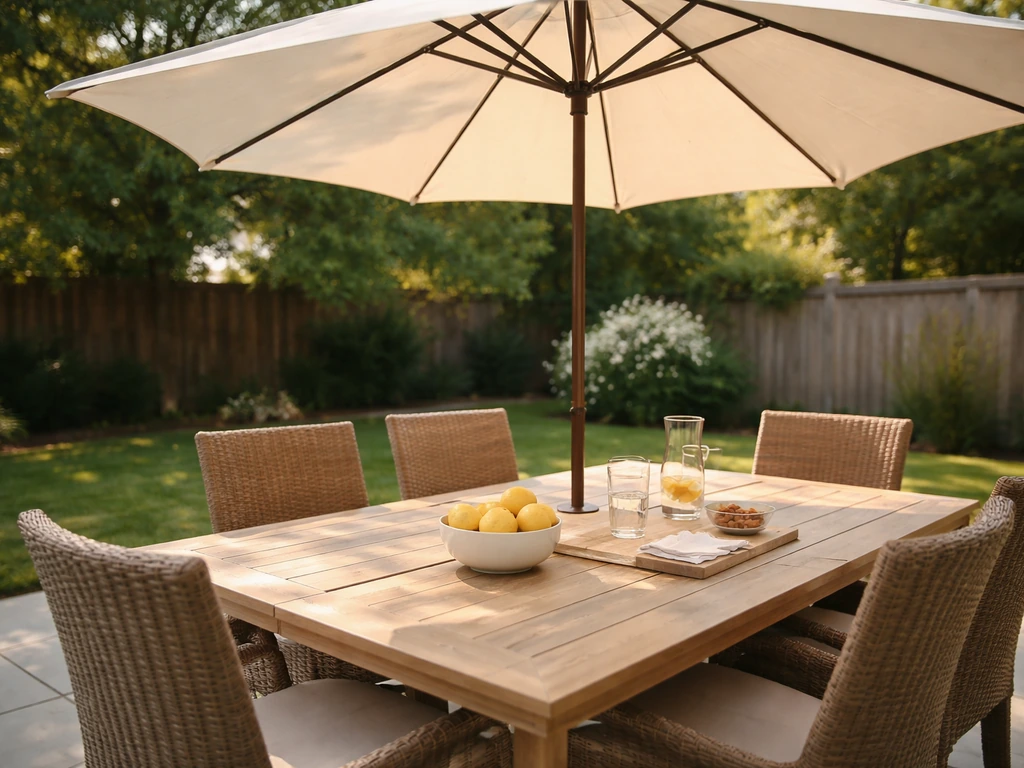
Best places to buy patio umbrellas: online vs. local
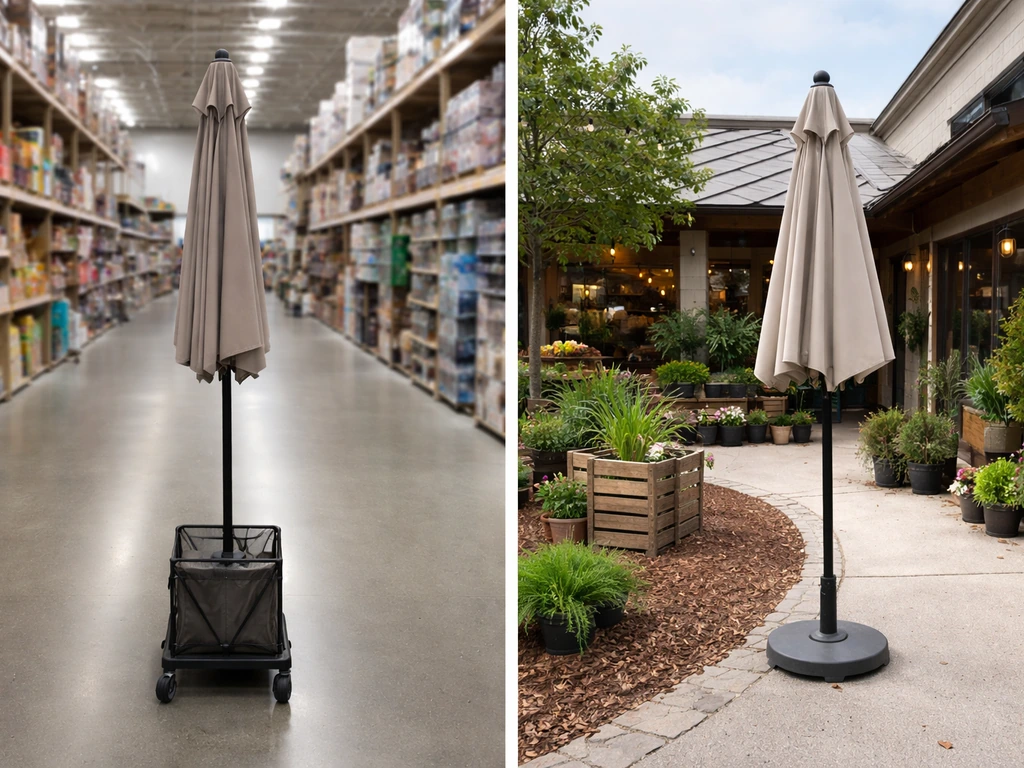
Both online and local options have real strengths, and the right pick depends on how quickly you need the umbrella, how much you care about seeing it in person, and how specific your requirements are. Here's how the main channels shake out:
| Retailer / Channel | Best For | Watch Out For |
|---|---|---|
| Home Depot (in-store + online) | Same-day pickup, budget to mid-range market umbrellas | Limited premium fabric options in store |
| Lowe's (in-store + online) | Same-day pickup, occasional special orders | Special orders may carry restocking fees on returns |
| Wayfair (online) | Huge selection, frequent sales, all price ranges | $50 return shipping charge on large items; refunds can take up to 2 weeks |
| Target (in-store + online) | Affordable, trendy styles; easy returns | Mostly entry-level quality |
| IKEA (in-store + online) | Budget-friendly basics, 365-day return window on unopened items | Limited style range; delivery scheduling varies |
| Treasure Garden (specialty) | High-end market and cantilever umbrellas, Sunbrella fabric | Higher price point; typically ships from specialty dealers |
| Umbrella Source / specialty online | Premium solution-dyed acrylic fabrics, commercial-grade builds | Longer lead times; less hand-holding for first-time buyers |
| Pottery Barn Outdoor / similar | Design-forward mid-to-premium umbrellas | Premium pricing; sales are worth waiting for |
If you're buying a basic 9-foot market umbrella for a standard patio table, Home Depot or Lowe's can have you sorted in an afternoon. If you're buying a cantilever or offset umbrella, or anything with a Sunbrella-grade fabric, going online through a specialty retailer will get you a far better product, even if it takes a few extra days. If you want Sunbrella-grade fabric, look specifically at retailers that carry Sunbrella patio umbrella options and can verify fabric details before you buy. Wayfair sits in the middle: great prices and selection, but factor in that large-item returns come with a $50 shipping charge, and refunds aren't instant.
Choose your style and size before you start shopping
Picking the wrong style or size is the most common and most frustrating mistake buyers make. You end up with an umbrella that doesn't fit the table, doesn't clear the seating, or looks awkward on the patio. Spend five minutes here before you open any product listing.
Market (center-pole) vs. cantilever (offset): which one do you actually need?
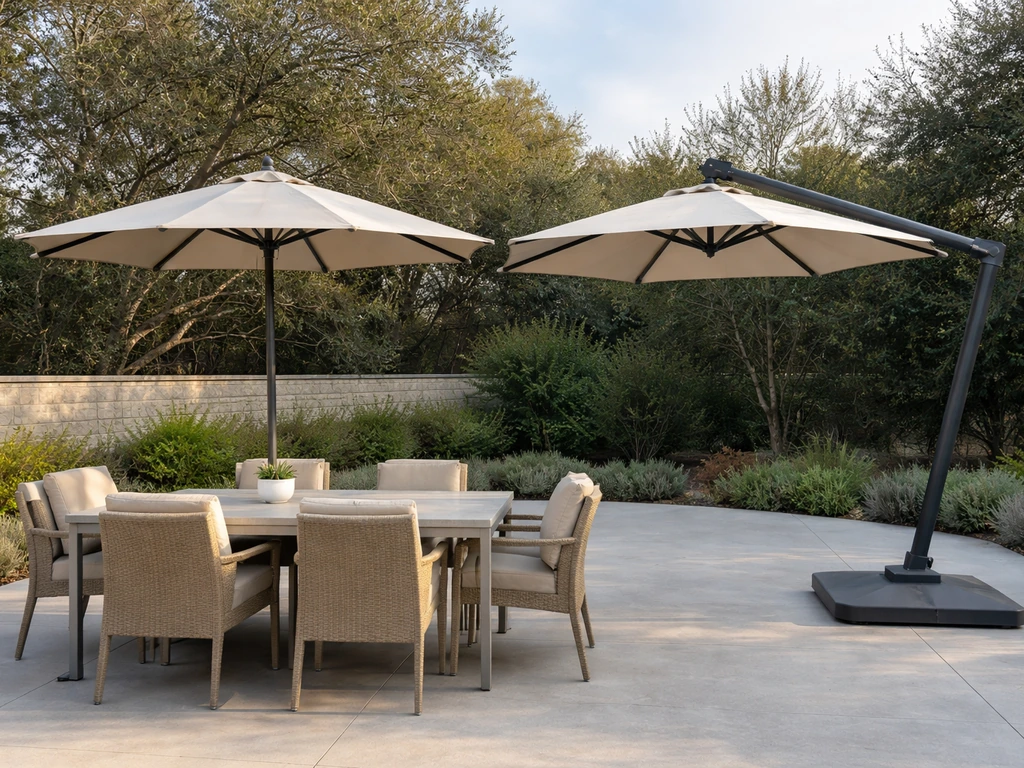
A market umbrella has a center-set pole that runs straight up through the middle of the canopy, and typically through a hole in your patio table. It's the classic look, it's the most affordable option, and it works well for a standard dining setup. The trade-off is that the pole sits right in the center of the table, which can be awkward when you're trying to pass dishes or have a large centerpiece.
A cantilever or offset umbrella suspends the canopy from a side-mounted arm, so there's no pole in the middle of your seating area at all. That's a big deal for lounge chairs, sectionals, or any area where you don't have a center-hole table. Cantilever umbrellas also tend to tilt and rotate, so you can track the sun. The honest trade-off: they cost significantly more, need a heavier weighted base, and take up more floor space with the base on the side. If you're specifically looking at offset options, that's a whole category worth exploring in detail on its own.
Getting the size right
The rule of thumb is simple: the umbrella canopy should extend about 2 feet beyond the table on each side. So if you have a 48-inch (4-foot) round dining table, you want at least an 8-foot umbrella, and a 9-footer is a more comfortable fit. For a 6-foot rectangular table, a 9-foot or 10-foot umbrella is the minimum. Cantilever umbrellas in the 9 to 11 foot range are typically sized for larger dining layouts or lounge groupings.
- Small bistro table (2-person, ~30" round): 7–7.5 ft umbrella
- Standard 4-person dining table (~48" round or square): 9 ft umbrella
- Large 6-person dining table (~60"–72"): 10–11 ft umbrella
- Sectional or chaise lounge area: 10–13 ft cantilever umbrella
Shopping online: how to vet listings, brands, and return policies
Online shopping gives you more options at every price point, but product listings can be vague or misleading. Here's what to actually check before you click buy.
What to look for in a listing
- Frame material: aluminum is ideal (lightweight, rust-resistant, durable); steel is heavier and can rust; wood looks great but needs more maintenance
- Fabric type: look for 'solution-dyed acrylic' (like Sunbrella or O'bravia) for best UV and fade resistance; polyester is cheaper but fades faster
- Pole diameter: the listing should specify 1.5-inch or 2-inch diameter so you can match it to a compatible base
- Opening mechanism: crank lift is convenient; push-button tilt is a nice-to-have for adjusting shade angle
- Vent design: a top wind vent (or double vent) is worth paying for if your patio gets any real wind
- Brand reputation: Treasure Garden, Sunbrella-fabric models, and commercial-rated brands tend to hold up; no-name budget brands at rock-bottom prices usually don't
Return policy reality check
Patio umbrellas are large, awkward items to return, and retailers know it. Home Depot return-policy documentation says “Most new, unopened merchandise” can be returned within 90 days of purchase, unless noted Patio umbrellas are large, awkward items to return. Wayfair charges a $50 return shipping fee on large items, and refunds to your original payment method can take up to two weeks. Lowe's special-order products may be subject to restocking fees or return refusals depending on the configuration. IKEA is actually the most generous here: new and unopened products can be returned within 365 days for a full refund, which takes the pressure off if you're unsure about a size. The practical takeaway: measure twice, read the return policy before you order, and if you're buying anything over $200, make sure you understand exactly what returning it would cost you.
Buying in-store: what to actually inspect before you load it in the car
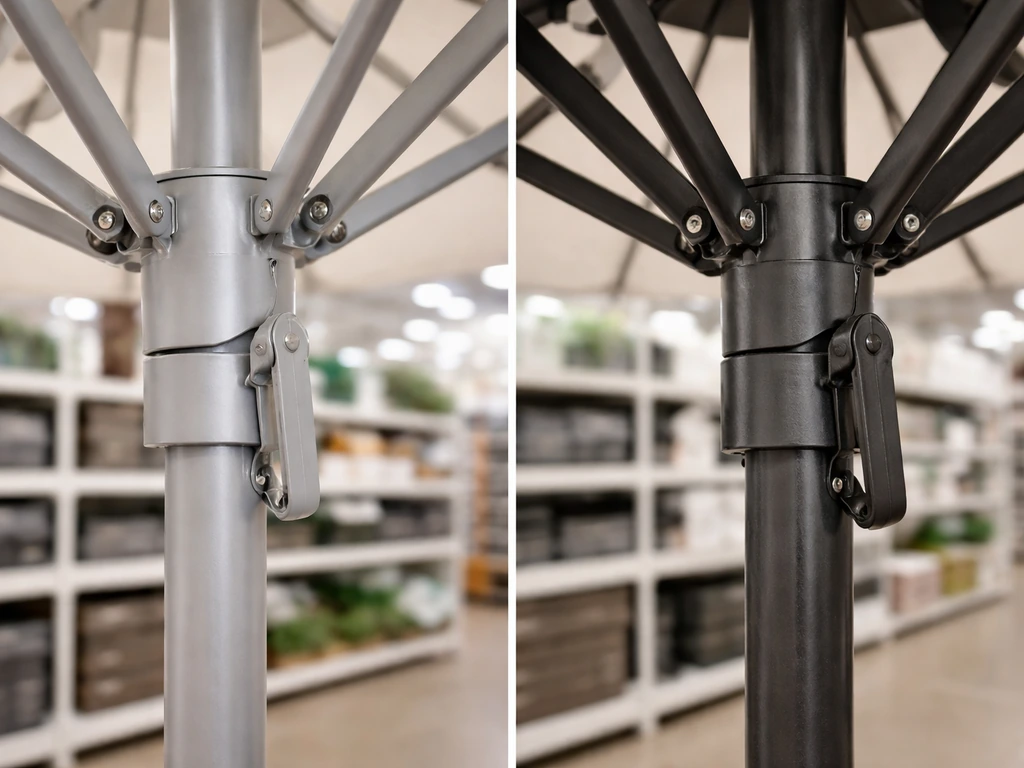
Buying in-store means you get to touch the product, which matters more than people realize with patio umbrellas. Here's what to check when you're standing in the aisle.
Frame and pole
Pick up a display model if you can. Aluminum frames feel notably lighter than steel but should still feel solid, not flimsy. Look at the pole joints and the ribs that hold the canopy panels open. Cheap umbrellas have thin, stamped metal ribs that flex too easily. Better ones have thicker ribs with reinforced tips. Check that the pole diameter is stamped or labeled on the packaging so you can match it to a base.
Fabric
Rub the fabric between your fingers. Quality outdoor fabric feels substantial and tightly woven, not thin or papery. If the display is set up and exposed to direct sun, look at the color: solution-dyed fabrics hold their color all the way through the fiber, so they don't show fading or wear at the edges. Polyester canopies will start fading in one to two seasons in a sunny climate; solution-dyed acrylic can last five or more years with basic care.
Opening mechanism and tilt
Open and close the umbrella if the display allows it. The crank should turn smoothly without grinding or sticking. If there's a tilt mechanism, engage it and make sure it locks firmly. A sloppy tilt that droops under the weight of the canopy is a sign of a lower-quality build.
Patio table umbrellas: getting the fit right
If you're buying a market umbrella specifically to use with a dining table, you've got a few compatibility details to nail down before you buy. Getting this wrong means drilling holes in your table or sending the umbrella back.
Center hole diameter
Most patio tables designed for umbrella use have a center hole of about 1.5 to 2 inches in diameter. The umbrella pole needs to fit through that hole. Common umbrella pole diameters are 1.5 inches (38 mm), 1.9 inches (48 mm), and 2 inches (51 mm). Measure your table's hole before you shop. If the pole is slightly smaller than the hole, you can usually fix it with a rubber umbrella ring insert. If the pole is too big, you have a problem.
Base compatibility
Even with a table that holds the pole upright, you'll usually still need a base under the table for weight and stability, especially in any breeze. A standard market umbrella base is typically around 20 inches in diameter. The base collar needs to match the pole diameter, and most quality bases will specify exactly which pole sizes they accommodate, for example '1.5-inch poles' or 'poles up to 1.5 inches in diameter.' If you're buying a base separately, those specs are the ones to match. For offset and cantilever umbrellas, base sizing is more critical since there's no table to help hold the pole, and the weight requirements are considerably higher.
Canopy size relative to the table
As mentioned in the sizing section: plan for at least 2 feet of canopy overhang on each side of the table. A 6-foot table needs at least a 10-foot umbrella for full coverage of the chairs. Most people underestimate this and end up with an umbrella that shades the food but not the people sitting at the edges.
Wind resistance, UV protection, materials, and durability: what actually matters
Marketing copy on patio umbrella listings is aggressive. Every umbrella claims to be durable and weather-resistant. Here's how to cut through that and identify what's actually built to last.
Wind resistance
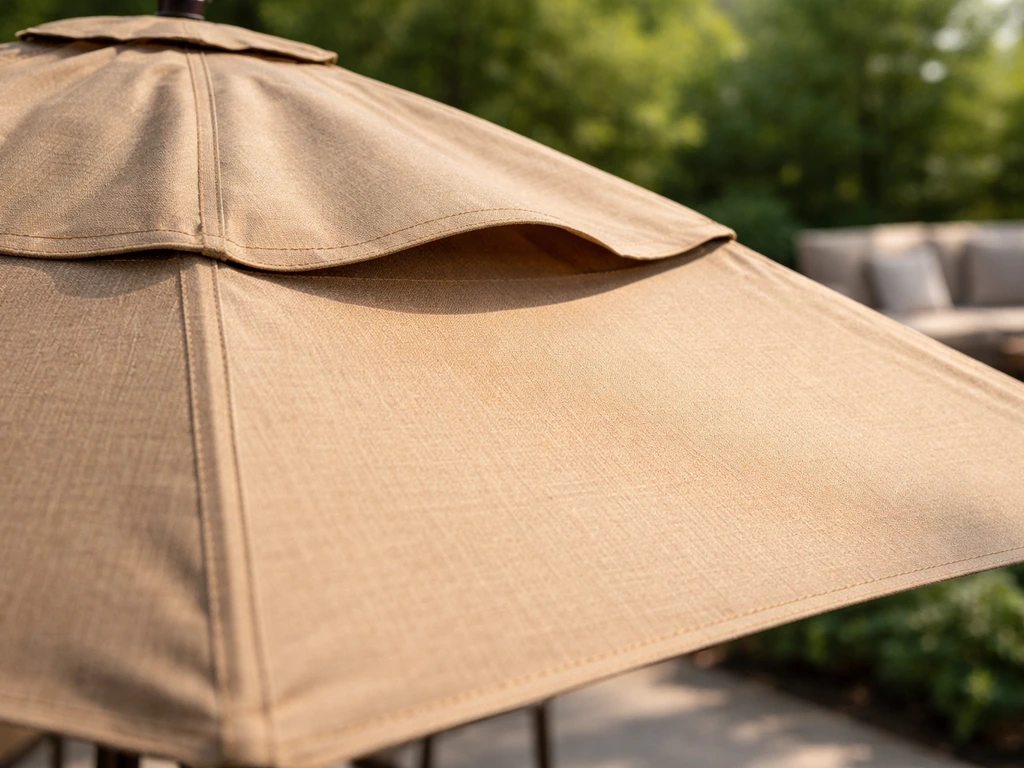
Think of a patio umbrella canopy as a large fabric sail: it catches wind, and if there's nowhere for that wind to escape, the umbrella inverts or tips over. A top wind vent (an opening at the peak of the canopy) lets wind pass through instead of catching it. Double-vented designs work even better. If you live somewhere with regular afternoon gusts or coastal breezes, a vented umbrella isn't optional. It's also worth looking at the base weight: a heavier base, typically 50 pounds or more for a standard 9-foot market umbrella, is essential for keeping things grounded on a breezy day. Close the umbrella when you're not using it or when wind picks up. No umbrella is designed to survive a real storm open.
UV protection
Look for a UPF rating on the canopy. Most quality patio umbrellas list a UPF rating of 50+ which blocks more than 98% of UV rays. The fabric type drives this more than the color: solution-dyed acrylic fabrics like Sunbrella hold their UV protection over years of sun exposure because the color and protective properties are baked into the fiber itself, not applied as a coating that washes or fades off. Sunbrella help documentation explains that Sunbrella’s fibers are infused with color and UV-stable pigments before being spun into yarns and woven, which contributes to fade-resistant, UV-protected fabric performance Solution-dyed acrylic fabrics like Sunbrella hold their UV protection over years of sun exposure. Polyester canopies may start with decent UV ratings but lose them faster as the fabric degrades.
Frame materials compared
| Frame Material | Weight | Rust Resistance | Durability | Best For |
|---|---|---|---|---|
| Aluminum | Light | Excellent | High | Most patios; best all-around choice |
| Steel (powder-coated) | Heavy | Moderate | Moderate | Budget builds; avoid in humid/coastal areas |
| Fiberglass ribs | Light | Excellent | High | Wind-prone areas; ribs flex instead of snapping |
| Wood (teak/hardwood) | Heavy | Low (needs sealing) | High with maintenance | Classic aesthetic; higher maintenance commitment |
For most homeowners, a 100% aluminum frame with solution-dyed acrylic fabric is the sweet spot. It's lightweight enough to move around, won't rust, and paired with a quality canopy fabric, it will hold up for five or more seasons. Fiberglass ribs on an aluminum frame is the best wind-resistance combination you can get in a residential umbrella.
Durability vs. price: the honest trade-off
Under $100 umbrellas exist and serve a purpose: they're fine for occasional use, covered patios, or situations where you'll store them most of the season. Expect one to two seasons of regular outdoor exposure before fading and mechanism wear become obvious. In the $150 to $300 range, you start getting aluminum frames, better fabrics, and crank mechanisms that actually last. Above $300, you're into Sunbrella-grade fabrics and commercial-quality frames that can realistically last five to ten years with basic care. If you're buying for a space you use every day through a full outdoor season, spending more upfront saves money over a few-year horizon.
Your buying checklist: what to do right now
Before you open a single product listing, run through this checklist. It takes five minutes and saves you from a return trip or a return shipping charge.
- Measure your table: note the length or diameter, and measure the center hole diameter if it has one
- Measure your patio space: make sure there's room for the umbrella canopy at full open (add 2 feet per side beyond the table) and, for cantilever models, room for the side base
- Decide on style: market/center-pole if you have a table with a center hole; cantilever/offset if you need unobstructed seating coverage or don't have a hole table
- Set your budget: under $150 for occasional use, $150–$300 for regular seasonal use, $300+ for daily use and maximum longevity
- Check pole diameter: target 1.5-inch or 2-inch and confirm your table hole and base collar match
- Look for solution-dyed acrylic fabric (Sunbrella or O'bravia are the benchmark names) and UPF 50+ rating
- Confirm a wind vent is included if your patio gets any breeze
- Read the return policy before checkout: note any restocking fees, large-item return shipping charges, and refund timelines
- After delivery: open and inspect the umbrella fully before assembling it completely so you can still return it if there's a defect
For quick searches today, try these terms: '9ft aluminum patio umbrella crank tilt Sunbrella,' 'offset cantilever patio umbrella 10ft aluminum base included,' or 'market umbrella 1.5 inch pole solution-dyed acrylic.' Adding the pole diameter and fabric type to your search cuts out a lot of the low-quality results fast. If you're shopping for a specific brand, Treasure Garden is one of the most respected names in the space and their products are available through specialty dealers both online and locally. If you need help narrowing down where to buy offset patio umbrella options near you, focus on retailers that carry true cantilever and offset models, plus replacement parts and compatible bases specialty dealers. If you're comparing near-me options or want to narrow down where to find patio umbrellas locally this weekend, that's worth a focused look as its own step, since availability varies a lot by region and season. If you also need the right support, search for patio umbrella bases using the same near-me approach so you can match the pole diameter and base weight to your umbrella near-me options or want to narrow down where to find patio umbrellas locally this weekend. If you're not sure where to find patio umbrellas near you, start by checking local home improvement stores and patio furniture shops for in-stock options this weekend.
FAQ
Can I buy a patio umbrella and the base later, or do I need to match them first?
Match them first. The base collar must match your umbrella pole diameter (common options are 1.5, 1.9, and 2 inches), and cantilever or offset setups usually need a heavier base than what works for a table-mounted market umbrella. If you buy the umbrella without the right base, you may not be able to stabilize it even if the pole fits.
What if my patio table hole is a different size than the umbrella pole?
Measure the hole and compare it to the umbrella’s listed pole diameter. If the pole is slightly smaller than the hole, a rubber umbrella ring insert can take up the gap. If the pole is larger, you typically cannot fix it safely without replacing the umbrella or modifying the tabletop, which is why it’s worth confirming before you order.
Do I really need a wind-vented umbrella, or is that only for coastal areas?
If you get regular afternoon gusts, a vented or double-vented canopy is still the better choice even inland. The vent lets air pass through so the umbrella is less likely to invert or tip. In any region, the safest practice is to close the umbrella when winds rise or you are not home.
How do I tell if an outdoor fabric is truly fading-resistant before buying online?
Look for a stated UPF rating and the fabric type, solution-dyed acrylic is more reliable for long color life than polyester that relies on surface treatments. Also check whether the listing describes the canopy as solution-dyed or references a brand fabric line, then budget time to verify details if the seller only shows generic photos.
Is the $50 return fee worth it if I’m buying from a site like Wayfair?
It can be, but only if you’re confident about sizing and pole diameter. Because returns on large umbrellas can take weeks for refunds and include shipping fees, it’s smart to double-check measurements first, then consider ordering the correct base at the same time so you avoid a second compatibility issue.
What’s the biggest mistake people make when choosing umbrella size?
They size for the table, not the people. The canopy should extend roughly 2 feet beyond the table on each side so edge seats get coverage. A common failure is buying the table-to-umbrella size ratio and ending up with shade over food but not over the far chairs.
What should I test in-store besides looks, to avoid a crank or tilt that fails quickly?
Operate the crank and tilt fully, you want smooth movement without grinding or sticking. If it has a tilt mechanism, confirm it locks firmly under load, not just when the umbrella is partially opened. Also inspect the joint points and ribs for stiffness, thin stamped metal flex is a warning sign.
Are there practical clues that an umbrella base is too light for my setup?
Yes, if the base is underspecified or the listing doesn’t mention weight requirements, treat it as a red flag. For standard market umbrellas, many setups expect around 50 pounds for breezy conditions, and offset or cantilever models usually require much more because the canopy’s leverage increases the tipping force.
Will a UPF rating guarantee the umbrella blocks UV every year?
It helps, but it’s not a guarantee. Fabric degradation over time can reduce UV protection, that’s why solution-dyed acrylic paired with a high UPF rating generally holds up better than polyester in strong sun. If you’re in a high-UV area, prioritize fabric type and confirm the product is designed for outdoor exposure.
How can I reduce the odds I’ll need to return an umbrella ordered online?
Confirm three things before you buy: canopy diameter or length for your overhang needs, umbrella pole diameter versus your table hole, and base weight or base compatibility. If you’re unsure, use the retailer’s return terms and avoid ordering near a busy holiday period when inspections and return shipping can take longer.
If I want to shop local this weekend, what’s the best approach when stores don’t have my exact model in stock?
Ask whether the store can special order the same model and whether assembly or hardware is included. Also check if they can provide replacement parts like the crank mechanism and tilt hardware, that matters with higher-end umbrellas. In-season availability varies a lot, so focusing on compatible parts and return policy is safer than relying on a single in-stock display.