Most patio umbrellas are water-resistant, not waterproof. There's a real difference, and it matters. A water-resistant umbrella sheds light rain reasonably well, but given enough time or heavy downpour, water will eventually work through the seams, needle holes, or a worn coating. A truly waterproof fabric would need to be completely impervious to water under pressure, which almost no patio umbrella canopy is designed to be. So the honest answer is: your umbrella can handle a passing shower, but it's not a substitute for a roof.
Are Patio Umbrellas Waterproof? Rain Test and Buying Guide

Kent Lang
13 Jun 2026
What "waterproof" actually means for patio umbrellas
In technical fabric testing, "waterproof" means a material is impervious to water even under pressure. Labs measure this with a hydrostatic head test, which pushes a column of water against the fabric and records how much pressure (in millimeters) it takes before water penetrates. A fabric is generally considered waterproof around 10,000 mm. Most outdoor upholstery and canopy fabrics are nowhere near that rating. They're treated with a finish to repel water at the surface, but they're not engineered as a sealed barrier the way a rain jacket or tent floor might be.
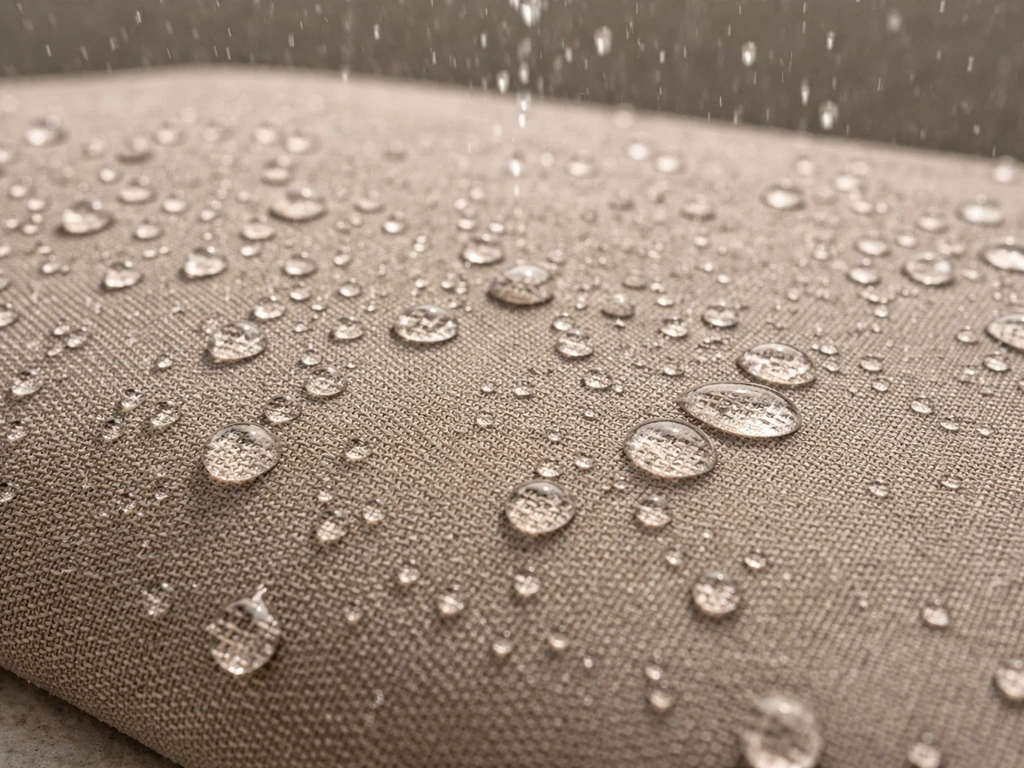
There's also a spray test called AATCC TM22, which simulates rain-shower exposure and grades how well a treated fabric resists surface wetting. This test is more relevant to patio umbrellas than hydrostatic head testing, because a canopy mostly needs to shed light-to-moderate rain quickly, not withstand sustained water pressure. If a fabric scores well on the spray test, water beads up and rolls off rather than soaking in. That's what "water-repellent" means in practical terms, and it's the best you'll get from most umbrella fabrics.
How different umbrella fabrics actually handle rain
The fabric your umbrella canopy is made from is the single biggest factor in how it performs in wet weather. Here's how the most common options compare.
| Fabric Type | Water Handling | Durability in Rain | Notes |
|---|---|---|---|
| Solution-dyed acrylic (e.g., Sunbrella) | Very good water repellency via DWR finish | High, but finish wears over time | Industry benchmark; breathable; resists mildew well |
| Solution-dyed polyester (e.g., olefin) | Good with coating applied | Moderate; coating degrades faster than acrylic | Lower cost; fades faster than acrylic |
| Standard polyester | Fair; absorbs water without treatment | Lower; prone to mildew if stays wet | Budget canopies; re-treat frequently |
| Canvas (cotton-blend) | Poor unless heavily treated | Low in sustained rain | Absorbs water, heavy when wet, mildews easily |
| PVC-coated/vinyl | Excellent; near-waterproof surface | High for water, but cracks over time | Breathability is low; risk of mold underneath |
Solution-dyed acrylic is the gold standard for a reason. The color is locked into the fiber during manufacturing, not printed on top, which means fading and degradation from UV and moisture happen much more slowly. Brands like Sunbrella use a fluorocarbon-based DWR (durable water repellent) finish on top of the acrylic weave to make water bead up and roll off. It works well for years, but it does wear off. That's not a defect; it's just how DWR finishes behave on any outdoor fabric.
One thing worth knowing about fully waterproof coatings like PVC or laminated fabrics: they can actually create mildew problems. If water sneaks in through a seam or needle hole (which it will), it has nowhere to go on a non-breathable fabric. The moisture gets trapped between layers and sits there. That's actually why Phifer and other outdoor fabric manufacturers often recommend water-repellent fabrics over fully waterproof ones for canopy applications.
How to tell if your umbrella has water-resistant treatment
The quickest test is the simplest one: pour or spray a small amount of water on the canopy. If it beads up and rolls off, the finish is working. If the water soaks in and darkens the fabric, the treatment has worn off or was never there to begin with. Sunbrella specifically uses this as the homeowner's diagnostic: if water soaks in, it's time to clean and re-treat.
Beyond the bead test, here's what to look for on labels and product specs:
- Look for terms like "solution-dyed acrylic," "water-repellent finish," "DWR coating," or specific brand names like Sunbrella, Phifertex, or Outdura on the hang tag or product listing.
- Check for a UPF or UV protection rating. Fabrics engineered for UV protection are usually also treated for moisture repellency since both come from the same finishing processes.
- Look at the seams. Better-quality canopies use double-stitched or heat-welded seams, which reduce water intrusion through needle holes. Budget umbrellas often use single-stitch seams with no seam sealing.
- Look for a vent or ventilation hole at the top of the canopy. A vent helps the canopy breathe and reduces wind load, but it also means rain can drip through the center. Some higher-end models use a double-layer vent that sheds water better.
- Check whether the product description specifies a water-repellency rating or references AATCC spray testing. Brands that do this are usually more transparent about actual performance.
If you bought a budget polyester umbrella with no specific fabric branding, assume it has minimal or no treatment. You can still improve its performance by applying a fabric water repellent spray (more on that below), but you're starting with a less durable base material.
What to do during and after rain
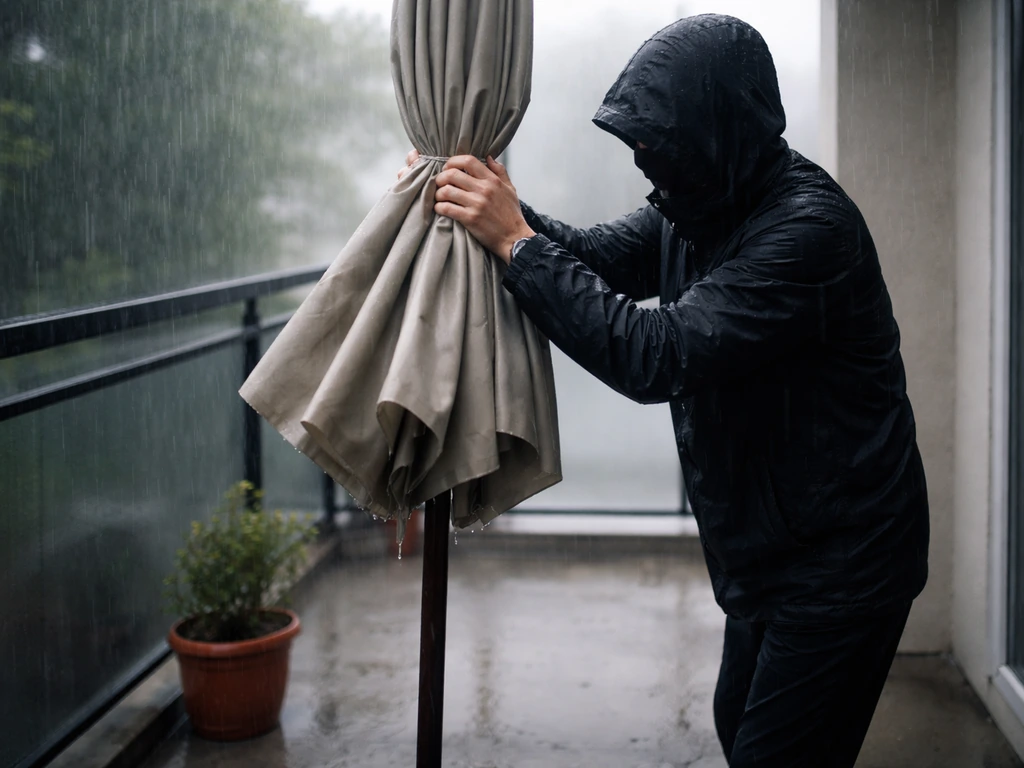
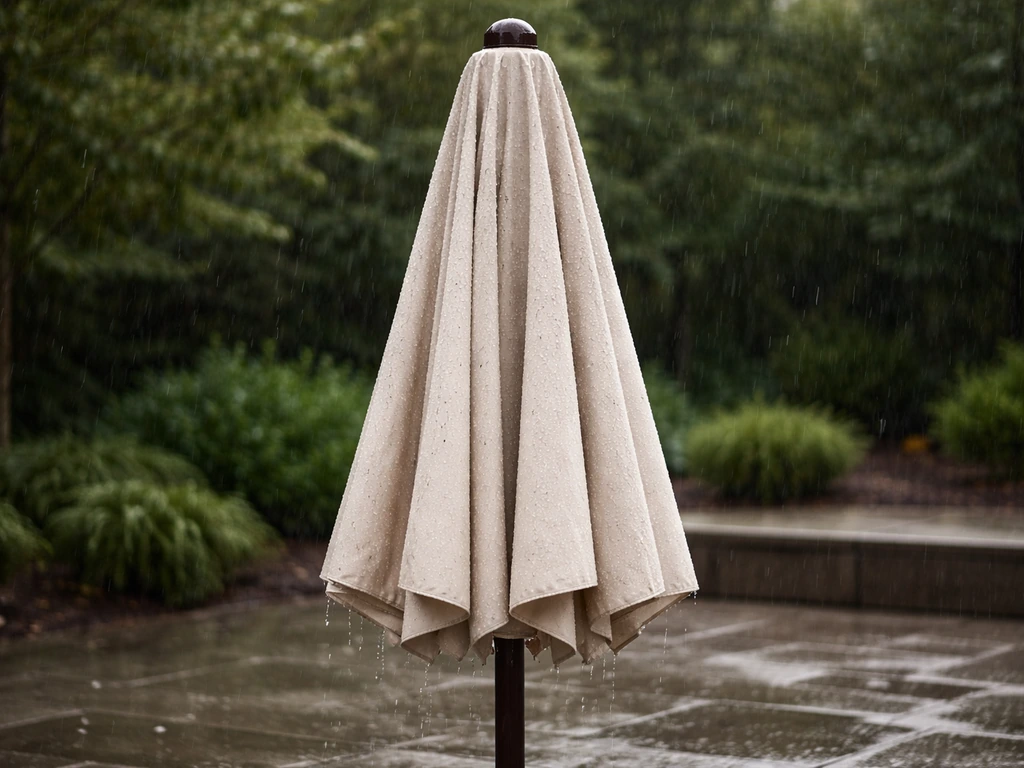
The most protective thing you can do in heavy rain is close the umbrella. This is the official guidance from most manufacturers and isn't just about water: an open umbrella in a storm is a wind hazard, even with a good base. Heavy rain combined with wind will drive water under and through the canopy at angles the fabric was never designed to handle, and sustained pooling in the canopy panels stresses the ribs and fabric over time.
During rain
- Close the umbrella if rain is heavy or if any wind is present. This is the single most effective thing you can do to extend canopy life.
- If you choose to leave it open during a light shower, make sure the canopy is tilted so water runs off rather than pools. Cantilever umbrellas should be angled slightly.
- Do not let water pool and sit in the canopy panels. This stresses seams and saturates the fabric, which is exactly the condition that leads to mildew.
After rain
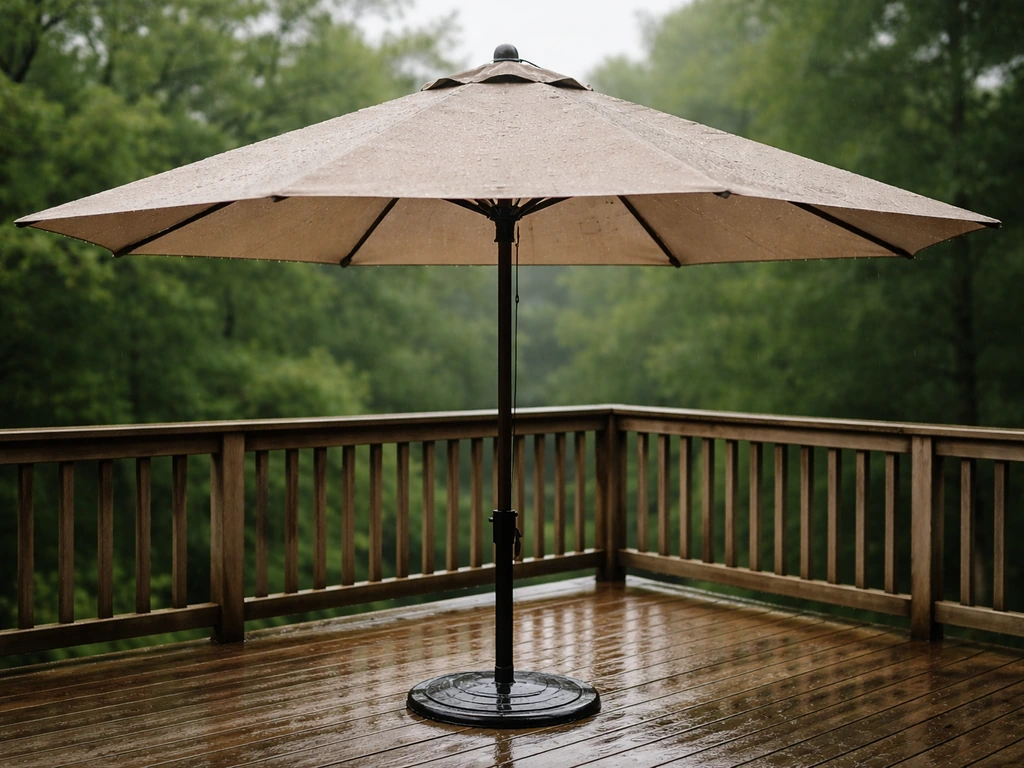
- Open the umbrella back up and let it air dry fully before closing it for storage. Folding a wet canopy traps moisture and is one of the most common causes of mildew and odor.
- Check the pole and frame joints for standing water. If your umbrella base is hollow, check that as well. Consumer Reports specifically flags checking for pooled water inside stands after rain.
- If the canopy has absorbed water noticeably (i.e., no beading), that's your signal to clean and re-treat once the fabric is dry.
- If you're using an umbrella cover, make sure it's fully air-dried before zipping it closed. A sealed wet cover is just as bad as a sealed wet canopy.
What to look for when buying a rain-tolerant umbrella
If rain tolerance is a priority for you, these are the features worth paying attention to when shopping.
- Fabric: Go for solution-dyed acrylic with a named brand. Sunbrella is the most recognized, but Outdura, Phifertex, and similar brands use comparable processes. Avoid vague terms like "weather-resistant polyester" with no further spec.
- Canopy construction: Look for double-stitched seams and, ideally, seam sealing or heat-welded seams. Even the best waterproof-coated fabric leaks at needle holes without seam treatment.
- Frame material: Aluminum frames handle rain far better than steel ones. Powder-coated aluminum resists corrosion well. Untreated or cheaply coated steel will rust at the joints over time, and that rust bleeds onto the canopy.
- Vent design: A double-layer vented canopy handles wind and sheds rain better than a single-layer canopy with a basic hole. The double layer lets air escape upward while blocking most rain from coming straight through.
- Drain/water management: Some cantilever and large market umbrellas include drainage channels in the center pole. If you're in a rainy climate, this is a useful feature.
- Umbrella cover: Any quality outdoor umbrella should come with a matching cover, or you should buy one separately. A fitted cover rated for outdoor use significantly extends canopy life when the umbrella is closed for extended periods.
On the frame question: aluminum costs more than steel but pays for itself in longevity for anyone dealing with regular rainfall. It's a similar trade-off to the UV protection question, where spending more upfront on better materials avoids replacement costs down the road.
Cleaning and re-treating to keep water resistance working
DWR finishes don't last forever. Even on premium Sunbrella fabric, Glen Raven (the manufacturer) recommends re-treating after years of rain exposure and cleaning cycles. The good news is that restoring water repellency is straightforward and doesn't require professional help.
Cleaning the canopy first
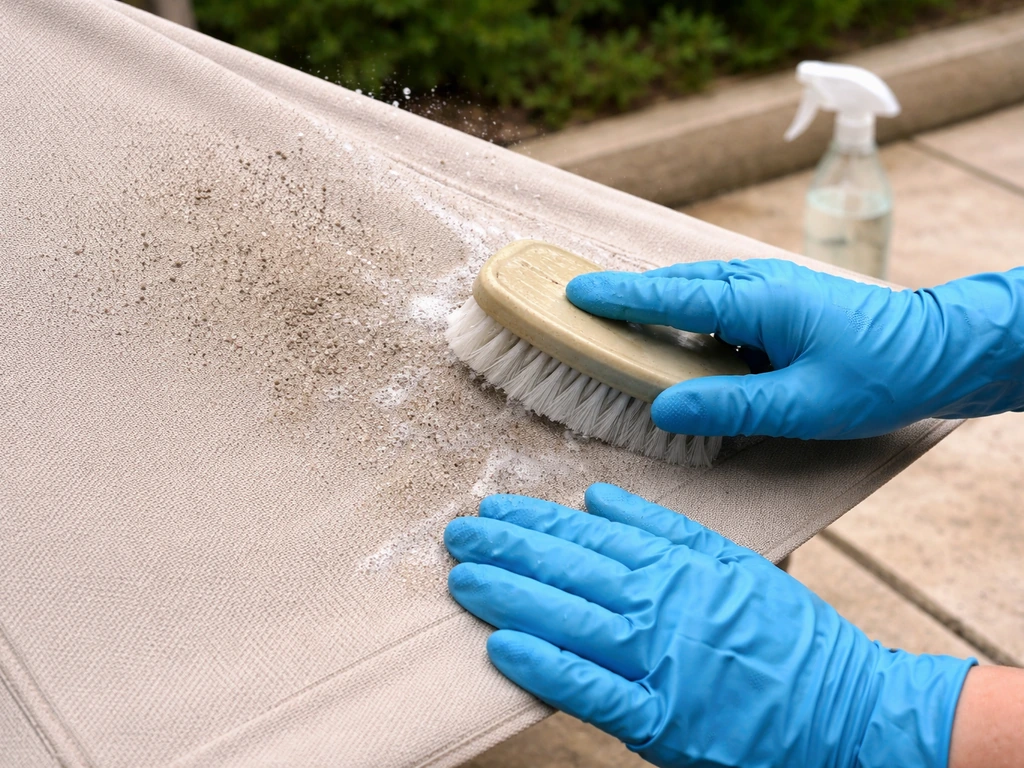
Before re-treating, clean the canopy thoroughly. Dirt, sunscreen residue, bird droppings, and mildew all interfere with how well a repellent treatment bonds to the fabric. For most solution-dyed acrylic canopies, a mild soap and warm water scrub works well. For mold or mildew, a diluted bleach solution (always check the fabric care label first) or a dedicated mold/mildew fabric cleaner is the right tool. Rinse completely and let the canopy dry fully in open air before applying any treatment.
Re-applying water repellent
- Use a water repellent designed for outdoor fabric, such as Sunbrella Restore or 303 Fabric Guard. General waterproofing sprays designed for tents or jackets can work in a pinch but may not be optimized for woven canopy fabrics.
- Apply evenly to a clean, dry canopy. Most spray-on repellents work best when sprayed from about 6 to 8 inches away in even, overlapping passes.
- Allow full cure time before exposing to rain. Sunbrella Restore specifically notes protecting the fabric from rain and dew until it fully cures, typically 24 to 48 hours. Treating right before a storm is counterproductive.
- Re-treat as needed. On a frequently used umbrella in a rainy climate, this might mean once a year. On a lightly used umbrella in a dry climate, every two to three years may be enough. Use the bead test to judge.
One more note on cleaning: if you use a pressure washer or aggressive scrubbing on the canopy, you'll strip the DWR finish faster. Hand washing with a soft brush and mild soap is gentler on the coating. Deep cleaning is fine when necessary, but Sunbrella's guidance is that thorough cleanings can reduce repellency, which is exactly why they sell Restore as a follow-up product. Protect the treated canopy from rain or dew until it is fully cured, since Sunbrella’s Restore guidance ties exposure timing to coating longevity.
Myths, realistic limits, and when to just put the umbrella away
There are a few things worth saying plainly, because marketing language around outdoor umbrellas can create unrealistic expectations.
Myth: "Weatherproof" means you never have to close it
No umbrella is designed for year-round, all-weather deployment without maintenance. "Weatherproof" in product listings typically refers to the materials surviving weather exposure over time, not the umbrella performing perfectly in any condition indefinitely. An open umbrella in a heavy storm is a structural risk. High winds combined with rain can bend ribs, crack the pole, and tear canopy fabric at seam attachment points. Close it when conditions get serious.
Myth: More expensive umbrellas don't need covers
Premium fabrics resist degradation better, but they don't eliminate the need for a cover during extended non-use. UV exposure, bird droppings, pollen, and mildew from trapped moisture all degrade canopy fabrics over time regardless of quality. A good cover, used consistently when the umbrella is closed for the day or during off-season storage, is one of the best things you can do to extend canopy life.
Myth: Seams don't matter if the fabric is coated
This is a big one. Every time a needle passes through fabric during sewing, it creates a small hole. On a non-seam-sealed canopy, those holes are potential entry points for water even when the fabric itself is shedding rain perfectly. Seam tape or heat-welded seams close those gaps. On a budget umbrella without seam sealing, you'll often see the first signs of water intrusion at seam lines, not across the open panels.
Realistic expectations for leaving an umbrella outdoors
A quality solution-dyed acrylic umbrella with a good frame, stored under a cover when not in use and re-treated every year or two, can last eight to twelve years even in a wet climate. Consumer Reports recommends following the manufacturer’s instructions and also checking for pooling water inside the stand after rain, and using a slipcover or other protection and closing the umbrella when not in use during the off-season. A budget polyester umbrella left open year-round without treatment might look rough in two seasons. The gap between those outcomes is almost entirely about material choice, basic maintenance, and the habit of closing it when you're not using it. That's not a complicated routine, but it does require actually doing it.
If you're also thinking about sun protection alongside rain performance, those two goals are more complementary than competing. The same solution-dyed acrylic fabrics that resist water best also tend to offer the strongest UV blocking, so choosing for one often means you get both. For shade seekers who want both weather resistance and comfort, you’ll also want the best UV protection patio umbrella that uses UV-blocking fabric and stays durable over time. Fabric color plays a separate role in heat absorption, but that's a different consideration from waterproofing. To understand heat buildup, it helps to know whether black patio umbrellas attract heat compared with lighter colors Fabric color plays a separate role in heat absorption. For more on how umbrella color affects temperature, see whether a black patio umbrella makes it hotter heat absorption.
FAQ
If the canopy beads water, does that mean the patio umbrella is fully waterproof?
Not usually. Most canopies are water-repellent, so they bead and roll off for a while, but seams and needle holes are still weak points. If rain is windy or long-lasting, expect some water to eventually work through, especially if the umbrella stays open and the fabric becomes saturated.
Where does water usually get into an umbrella if it is supposed to repel rain?
Check for seam sealing or heat-welded construction. If the umbrella does not mention sealed seams or seam tape, water intrusion often shows up first along seam lines, even when the open-panel fabric looks like it is shedding rain.
Why do some umbrellas advertise “waterproof” using lab terms like hydrostatic head, but still aren’t rainproof?
A hydrostatic head number is mainly useful for comparing true waterproof materials, but most umbrella fabrics are rated for spray resistance, not pressure resistance. That means a fabric can look good in a rain-spray test while still failing under sustained water pressure or pooling conditions.
Can I treat a budget polyester patio umbrella to make it more water-resistant?
You can improve performance, especially on untreated budget polyester. Use a fabric water repellent spray designed for outdoor fabrics, apply it evenly, and let the canopy fully cure before exposing it to rain. Do not rely on repellent spray as a substitute for seam sealing.
What should I do if my umbrella stops beading water after rain?
If water soaks in and darkens the fabric after you rinse, the DWR (water repellent finish) may have worn off or never bonded well. Try a re-clean and re-treatment first, because dirty or contaminated fabric can prevent repellent from working as intended.
Is it safe to use a pressure washer to clean a rain-damp patio umbrella?
Avoid pressure washing. High-pressure water strips DWR faster and can force cleaner deeper into seams. For most owners, hand washing with a soft brush and mild soap, then complete air drying, preserves repellency better.
Should I cover the umbrella when it is raining or after a storm?
Yes, and it is also practical. A dry canopy is less likely to grow mildew, and a cover reduces trapped moisture from dew and drizzle. Make sure the umbrella is fully dry before closing and covering, otherwise you can trap moisture underneath.
Why can “fully waterproof” canopy materials lead to mildew?
Water in trapped layers is the bigger problem with fully waterproof or non-breathable systems. If water finds a way in through a seam, needle hole, or damaged area, it can remain trapped, increasing mildew risk compared with breathable water-repellent fabrics.
What label details should I look for if I want the best chance of rain resistance?
Look for a fabric specification that mentions solution-dyed acrylic and an outdoor water repellent finish (DWR). If the product listing does not identify the canopy fabric or does not mention a repellent treatment, assume you have minimal protection and plan on earlier re-treatment or more careful storage.
How do wind and heavy rain change what “waterproof” should mean for my umbrella?
For longer rain exposure, you can close it earlier than you think. If rain is heavy and wind is present, an open umbrella can force water into seams from angles and also increases the risk of structural damage, like bent ribs or torn attachments.
How can I tell if my umbrella has a problem beyond normal water repellency loss?
Don’t wait until you see mildew to act. If you notice dark spots, musty odor, or persistent wet-looking patches after drying, clean and treat promptly, and inspect the seam areas and stitching for damage or gaps.
How often should I re-treat a patio umbrella for rain performance?
Yes. Mix of rain and sun speeds down coatings and contributes to fading and degradation, so re-treatment timing depends on exposure, not just how often it rains. In many cases, an annual or every-few-years re-treatment schedule, paired with regular cleaning, maintains the beading effect longer.