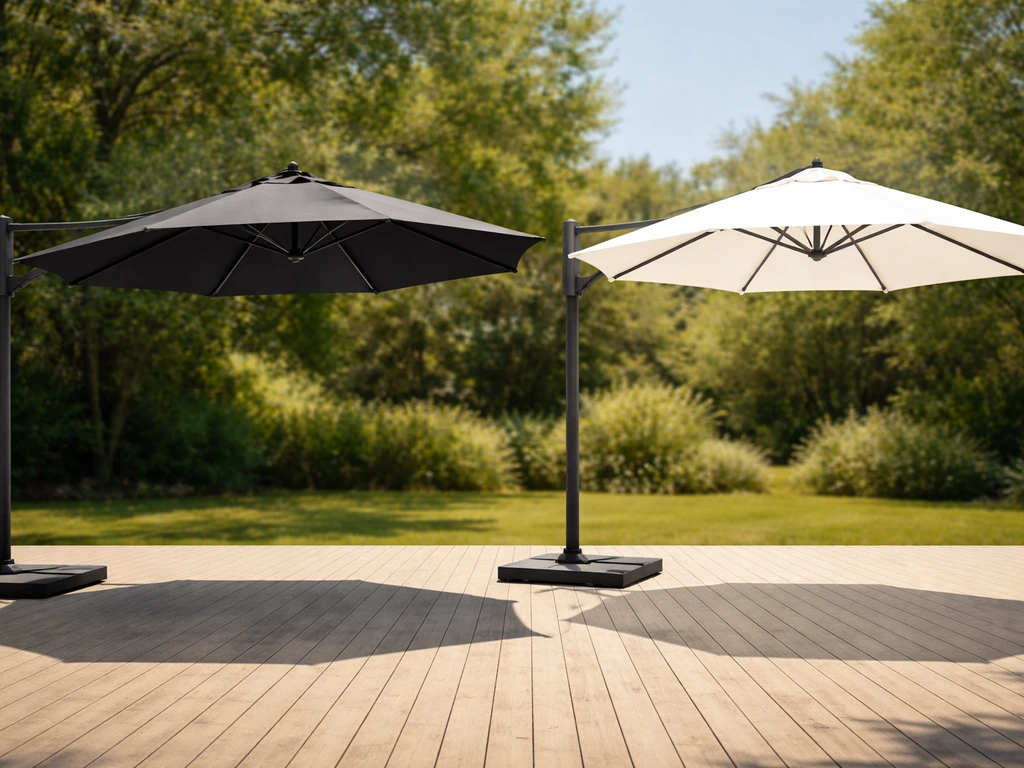
Yes, a black patio umbrella does make the canopy surface itself hotter, and it radiates more heat downward than a white or light-colored umbrella would. But how much hotter it feels underneath depends on more than just color. Wind, umbrella placement, fabric type, and canopy ventilation all play a bigger role in your actual comfort than color alone. If you already own a black umbrella, there are real steps you can take right now to reduce the heat it adds.
Does a Black Patio Umbrella Make It Hotter?

Kent Lang
11 Jun 2026
Does umbrella color actually affect how hot it feels underneath?
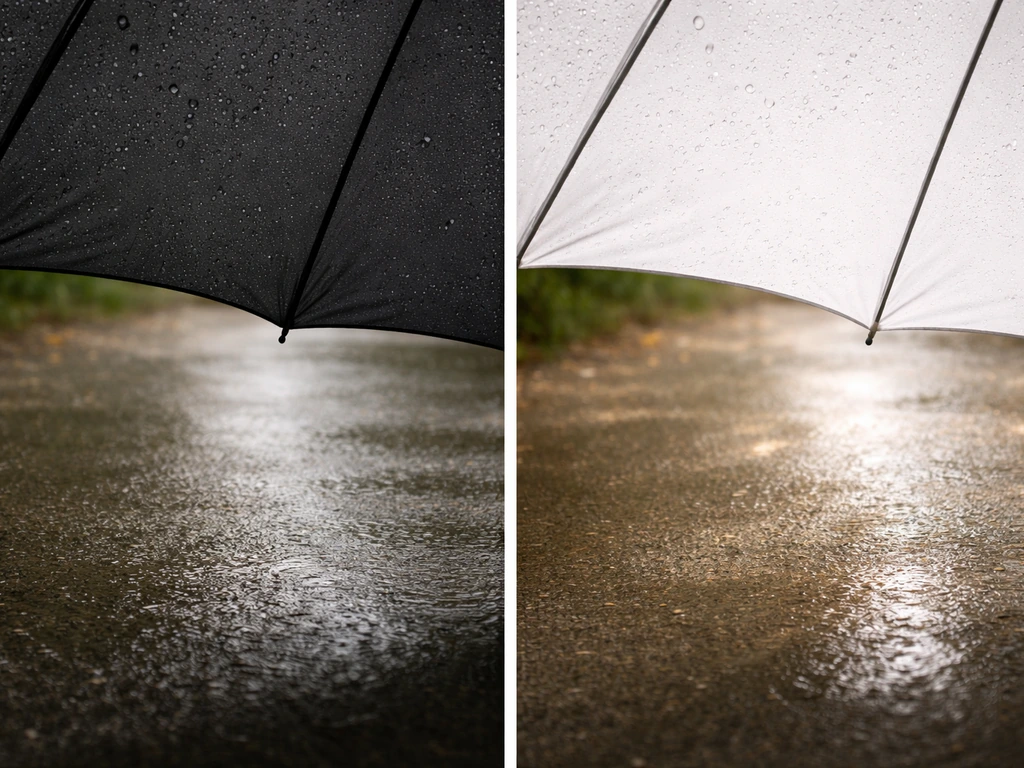
It does, but not in the way most people expect. The air temperature a foot below your umbrella canopy is not going to swing 10 degrees just because you switched from white to black. What changes is something called mean radiant temperature (MRT): the heat your body absorbs from surrounding surfaces radiating energy at you. A hot canopy surface directly overhead radiates that absorbed heat back downward, and your skin picks it up. Research measuring radiation under parasols found that black canopies generate larger downward long-wave radiation fluxes compared to white ones, meaning more thermal energy is bouncing off the underside of a dark canopy and hitting whoever is sitting beneath it. You may not feel a dramatic difference in air temperature, but you will feel warmer because your body is absorbing more radiant heat from above.
Why black umbrellas run hotter: heat absorption vs. reflection
Dark colors absorb a much larger portion of the solar spectrum than light colors do. A white or silver canopy reflects a lot of that incoming radiation back upward, so the fabric stays relatively cool. A black canopy absorbs the energy instead, and the canopy surface temperature climbs. Studies on solar reflectance show that increasing solar reflectance from around 0.2 (typical of dark surfaces) to near 0.96 (very reflective light surfaces) can cut mean surface temperature by roughly 10°C. The same physics applies to umbrella fabric. Optical property testing of shading fabrics confirms that color is one of the most significant factors affecting shading coefficient, direct solar reflectance, and solar transmittance. In plain terms: a black canopy soaks up heat, gets hot, and then radiates that heat outward in all directions, including downward onto you.
The fabric weave matters here too. A tightly woven black fabric blocks more direct sunlight than an open-weave one, which sounds good, but the energy that does not pass through still has to go somewhere: it goes into heating the fabric itself. An open-weave or vented black canopy at least allows some airflow to carry that heat away instead of trapping it.
What actually gets hotter: the canopy or the air you breathe?
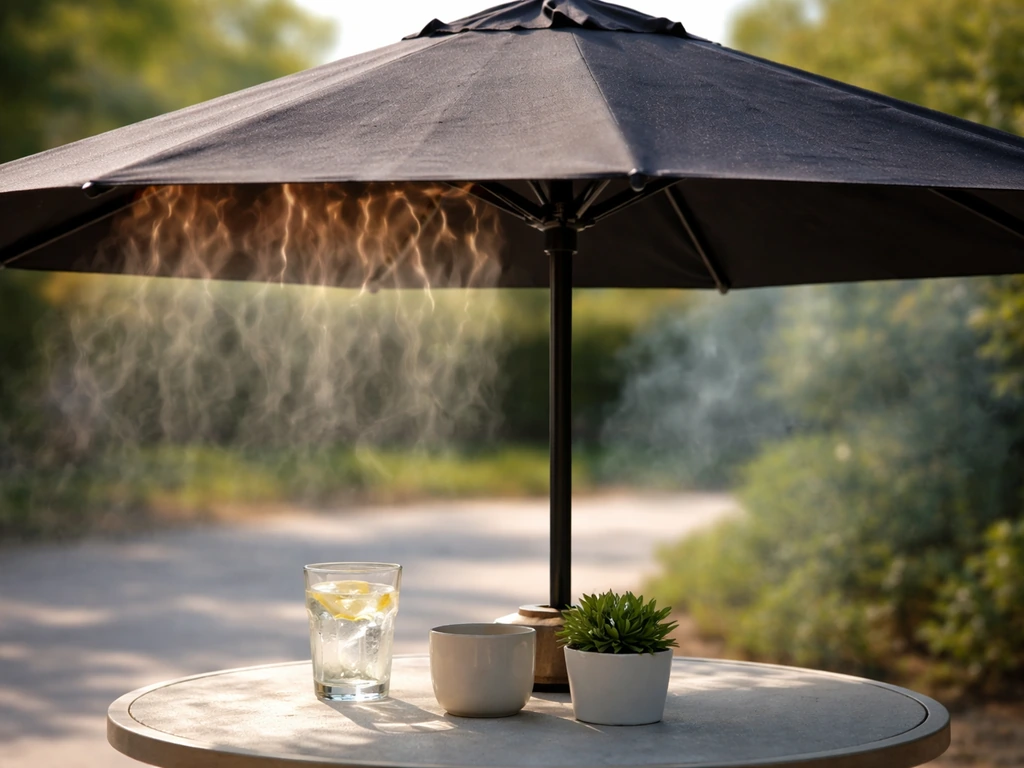
The canopy surface gets noticeably hotter with a black umbrella, but the ambient air temperature in the shaded zone changes very little by comparison. The real comfort difference shows up in radiant heat load. Your body temperature regulation responds to both air temperature and radiant temperature, which is why sitting under a hot metal awning can feel suffocating even on a relatively mild day. Mean radiant temperature (MRT) is commonly derived from a globe-temperature heat balance, and it depends strongly on radiation exchange rather than only air temperature, as discussed in MDPI’s analysis of MRT measurement. One parasol study found that a white parasol reduced mean radiant temperature by 18.3°C compared to being in full sun. A black parasol still reduces MRT significantly compared to no shade at all, but the downward radiant load from the heated black canopy offsets some of those gains. So you are still better off under a black umbrella than in direct sun, but meaningfully less comfortable than under a white or cream one, particularly on high-radiation days.
How big is the real-world difference? Sun angle, season, placement, and wind all matter
The gap between a black umbrella and a light one is largest in these specific conditions: midsummer, midday sun (10am to 3pm), low wind, and direct overhead placement. At noon in July, your black canopy is catching maximum solar radiation from the highest sun angle, absorbing it, and sitting directly above your head. That is the worst-case scenario. Rotate that same umbrella to a spot with partial afternoon tree shade, add a 10 mph breeze, and the difference between black and white shrinks considerably because convective airflow carries heat off the canopy surface before it can radiate downward significantly.
Measurement studies on parasols confirm that wind velocity under the canopy is one of the key variables alongside radiation fluxes when assessing comfort. Early morning and late afternoon sessions under a black umbrella are also much more manageable because solar radiation intensity is lower and sun angles are shallower, meaning the canopy absorbs less energy to begin with. Season matters too: the same black umbrella that feels punishing in August is fine in May or September. Time of day and placement give you more practical leverage than you might think.
How to keep a black umbrella from making it feel too hot
If you love the look of a black umbrella or already own one, you are not stuck with an uncomfortable setup. Can you use a patio umbrella at the beach can you use a patio umbrella at the beach? how to decide for beach use. These are the most effective adjustments you can make:
- Choose a double-vented canopy design: Vented canopies allow hot air rising off the canopy surface to escape instead of pooling underneath. Double-vented designs increase airflow through the canopy noticeably and also improve wind resistance as a bonus.
- Use the tilt function aggressively: Most market and cantilever umbrellas have a tilt mechanism. Tilt the canopy to block low-angle afternoon sun rather than leaving it flat overhead. This also means a smaller portion of the canopy faces directly skyward and absorbs peak radiation.
- Optimize placement for natural airflow: Position the umbrella where prevailing breezes can move under and around the canopy. Avoid tucking it into corners or against walls that block air movement.
- Look for a light-colored or reflective interior lining: Some black umbrellas are made with a lighter (often white or silver) inner lining. The interior color is what radiates down onto you, so a black-outside, white-inside canopy performs much closer to a white umbrella in terms of radiant comfort.
- Pair with a secondary shade source: A pergola, sail shade, or overhead structure nearby reduces how much direct solar radiation reaches the umbrella canopy in the first place, which means the canopy absorbs less heat overall.
- Time your outdoor use: Plan meals and long sitting sessions for early morning or after 4pm when solar radiation is lower. A black umbrella in late afternoon is a different experience than at noon.
- Keep the canopy clean: Dust and grime on dark fabric can slightly increase heat absorption and also degrades fabric performance over time. A quick rinse helps maintain the fabric's original optical properties.
Black vs. light colors: which umbrella color should you buy?
If you are still in the shopping phase, color is a real factor worth weighing. Here is how the main color categories compare across comfort, aesthetics, and durability considerations:
| Color | Radiant Heat Downward | Solar Reflectance | Perceived Comfort (Hot Days) | Fading/Durability Notes |
|---|---|---|---|---|
| Black | High | Low | Warmest underneath | Holds color well but absorbs maximum UV degradation |
| Navy / Dark Gray | Moderate-High | Low-Moderate | Warmer than neutrals | Good colorfastness; still absorbs significant solar energy |
| Tan / Beige / Cream | Low-Moderate | Moderate-High | Noticeably cooler | Can show dirt; lighter colors fade less from UV-caused bleaching |
| White / Off-White | Low | High | Coolest underneath | Shows dirt and staining more easily; needs more frequent cleaning |
| Gray (medium) | Moderate | Moderate | Good middle ground | Practical balance of heat performance and stain concealment |
If cooling comfort is your top priority, white, cream, or a light tan will give you the best results. Research on shade cloths confirms that light-colored options reduce temperature underneath more than dark ones do. Navy and charcoal are popular because they look sharp and hide grime, but they perform closer to black than to white in terms of heat. A medium gray is a decent compromise if you want a neutral that is easier to keep clean than white but cooler than navy.
Whatever color you choose, the fabric matters just as much. Solution-dyed acrylic is the best material for long-term outdoor umbrella canopies because the color is baked into the fiber rather than applied to the surface. That means it holds its reflectance properties longer as it ages. Dip-dyed polyester fabrics fade faster, and as a black or dark fabric fades to a patchy gray, its optical properties change unpredictably. A solution-dyed acrylic canopy in any color is a better investment for heat performance over time. Look for fabrics with a UPF or UV protection rating (UPF 50+ is ideal) because tightly woven, UV-rated fabrics also tend to have more consistent solar shading performance.
Buying and setup tips for the coolest shade possible
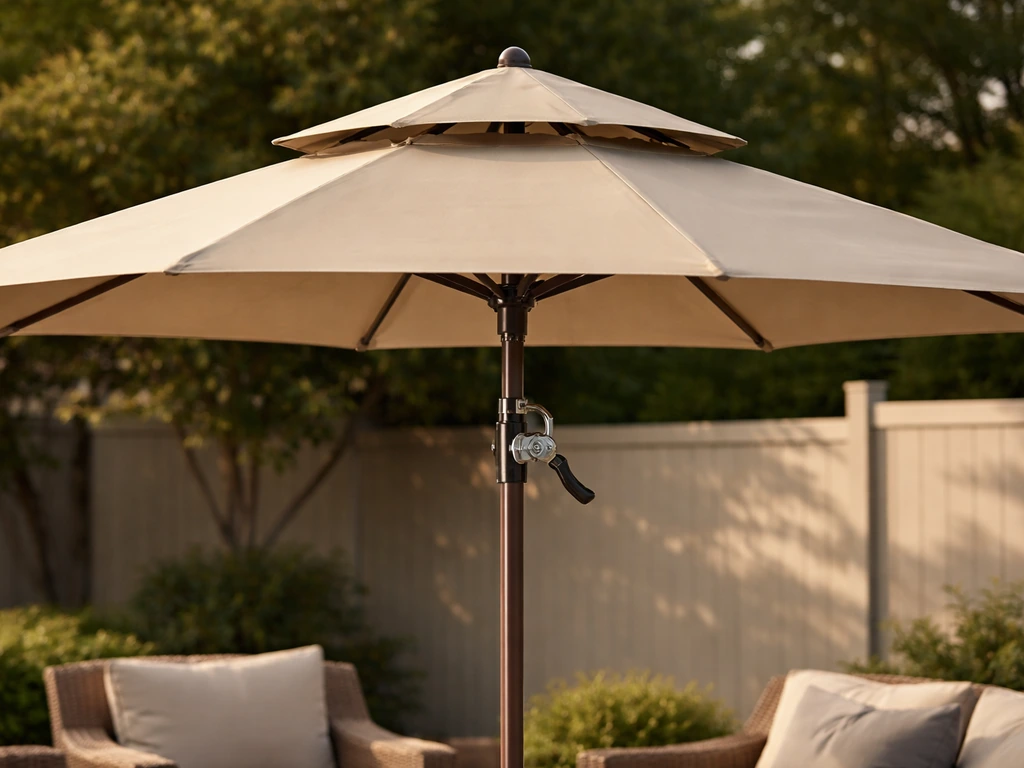
Canopy design features to prioritize
- Double-vented canopy: The single most effective structural feature for heat management. Vents let rising hot air escape and pull cooler air from below.
- Tilt mechanism: Crank-tilt or push-button tilt lets you angle the canopy toward the sun at low angles, reducing peak solar exposure on the canopy.
- Open-weave or breathable fabric: Slightly open weaves allow some airflow through the fabric itself rather than trapping all heat in the canopy material.
- Light interior lining: If you want a dark exterior for aesthetics, look for models with a lighter-colored inner canopy surface.
Placement and base setup
A heavier base is not just about stability: it lets you position the umbrella exactly where you need it without the pole wandering. A base of at least 50 lbs for a 9-foot market umbrella (or 75 lbs or more for an 11-foot cantilever) gives you the freedom to experiment with placement without worrying about tip-overs. For cantilever umbrellas especially, the ability to offset the pole and position the canopy without any post in the middle of your seating area means you can orient the shade precisely over your table and track the sun through the day.
Placement strategy makes a bigger difference than most people realize. Set up near a wall, fence, or landscaping on the west side of your patio so you get natural afternoon shade supplementing the umbrella. If your goal is to keep a patio cooler, consider shading strategies like positioning the umbrella where it blocks the most direct sun throughout the hottest parts of the day. Avoid placing the umbrella in a corner where airflow is blocked. If you have a cantilever style, rotate it throughout the day to keep the canopy tracking the sun rather than sitting statically overhead while the sun shifts position.
Maintenance habits that preserve cooling performance
Canopy condition affects heat performance over time. A faded, dirty fabric loses some of its designed optical properties, and solution-dyed acrylic resists this degradation far better than dip-dyed alternatives. Clean the canopy with mild soap and water at the start and end of each season. To help you choose the right umbrella for real outdoor use, also check whether the patio umbrella fabric and seams are truly waterproof or at least water-resistant are patio umbrellas waterproof. Close the umbrella when it is not in use, especially during peak sun hours when you are not sitting under it: a folded canopy absorbs less cumulative UV radiation, which slows fading and material breakdown. If you are storing the umbrella for winter, a breathable cover protects the fabric from UV exposure and keeps the canopy in better condition for the following season.
The bottom line: a black umbrella is not a deal-breaker for comfortable outdoor living, but it is the least optimal color choice for pure heat comfort on hot summer days. If you are buying new and comfort in full sun is the priority, lean toward cream, light gray, or white and pair it with a UV-rated, solution-dyed acrylic canopy with ventilation built in. If you already own a black umbrella, focus on the setup: add venting if possible, tilt strategically, pick shady placement, and plan your prime outdoor time for the cooler parts of the day.
FAQ
If the air temperature under my umbrella doesn’t change much, why does a black umbrella still feel warmer?
Yes, it can feel hotter under a black canopy even when the air temperature doesn’t rise much. The main change is the radiation your body absorbs from the underside of the umbrella (mean radiant temperature), which increases with a hotter dark surface overhead.
How can I tell whether my black umbrella is actually worse than a light one in my yard?
Test it by using a consistent location and time window, then compare comfort with two umbrellas (black vs light) while keeping wind level similar. If you only swap color but leave the umbrella in a spot with different sun angles or airflow, the results can be misleading.
Does wind always help with a black umbrella, or can it make things worse?
High wind can be counterintuitively important because it helps move heat away from the canopy surface before it radiates downward. If your umbrella repeatedly flaps or is loosely positioned, you may get more airflow but also more shifting shade, so adjust placement first, then evaluate comfort.
What happens to heat comfort when a black umbrella fabric fades or gets dirty?
If you see the fabric aging into gray, patchy fading, or a dull surface, expect the shading performance to drift. Dark fabric can also heat up more over time as its optical properties change, so consider replacing or re-focusing on lighter colors if comfort is your priority.
Does umbrella tilt or height matter more than color?
For the same umbrella size, a flatter, more horizontally aligned canopy can increase direct radiation hitting people beneath. Tilting or adjusting height to reduce direct overhead exposure during peak sun typically improves comfort more than minor color changes.
Is there an ideal clearance between me and the underside of a patio umbrella?
Yes. If the umbrella canopy is too low, close to heads and shoulders, radiant heat feels stronger. Raising it slightly and keeping a small buffer between the canopy and people can reduce how intensely the hot underside “bakes” onto skin.
How much does canopy ventilation change the comfort difference between black and white umbrellas?
If the umbrella has little or no venting and is tightly enclosed, heat can build more on the fabric surface. In practice, choosing a vented canopy (or an umbrella designed to allow airflow) reduces the radiant load you feel under a dark umbrella.
I want a black umbrella for style, what should I buy or configure to minimize the heat?
If you must use dark colors, prioritize solution-dyed acrylic, UV-rated and tightly woven fabrics for more stable performance, and plan placement for afternoon sun blocking. Also consider using a lighter interior liner or a reflective underside if your model includes it.
Why does my black umbrella feel much hotter in one spot than another?
Avoid placing it in a corner or tight recess where airflow is reduced, especially on the west side during late afternoon. If the canopy can’t “breathe,” the hot underside radiates more steadily downward.
Should I close my umbrella when I’m not sitting under it, especially if it’s black?
Close it during peak sun when nobody is underneath. That reduces the total solar energy the fabric absorbs and helps slow fading, which helps maintain the umbrella’s designed shading behavior across the season.
What placement strategy works best for keeping a patio area cooler with a black umbrella?
Yes, but the goal is blocking the most intense sun on the specific seating area, not just shading “somewhere near.” If you can, combine umbrella shade with another passive shade source (wall, fence, nearby trees) and adjust where you sit so you remain under the darkest part of the canopy during peak hours.
Can a light-colored umbrella still feel hot if it’s not covering properly?
Even a lighter umbrella will feel warmer than full shade if the canopy is thin, very open weave, or badly fitted so sun leaks around the edges. Look for good coverage and optical performance, not just a pale color.