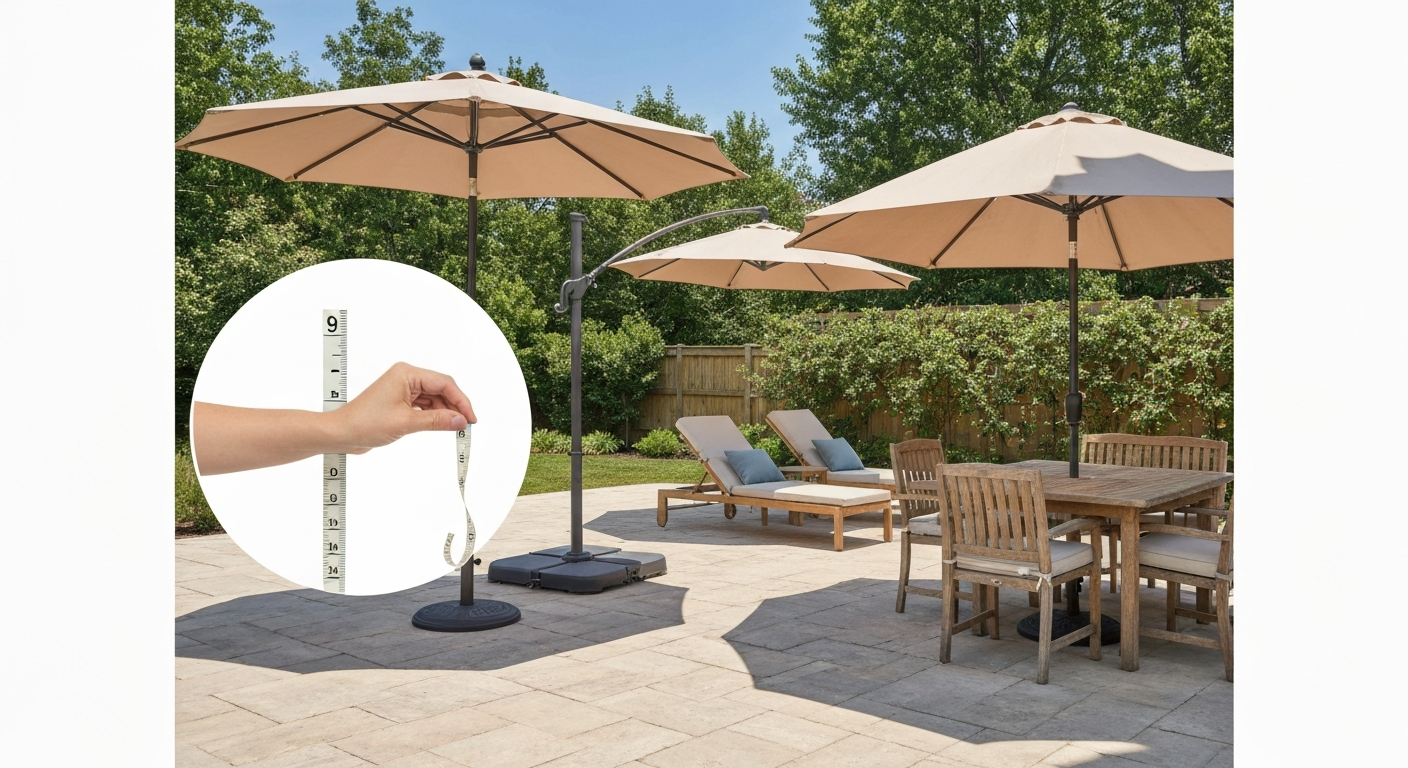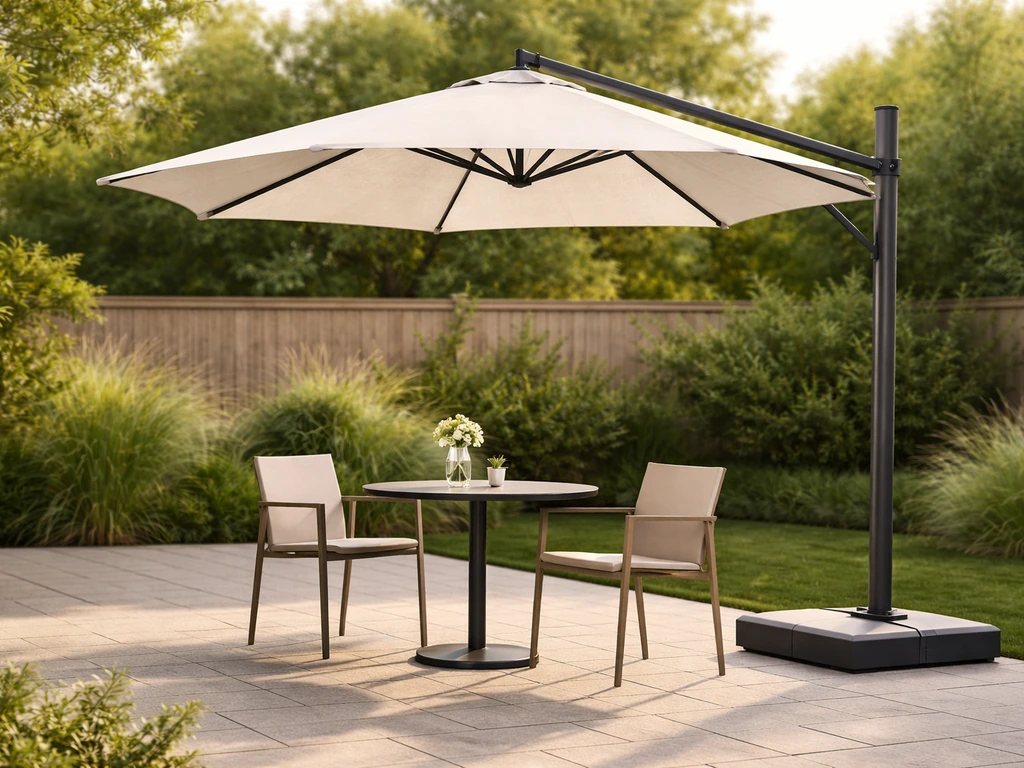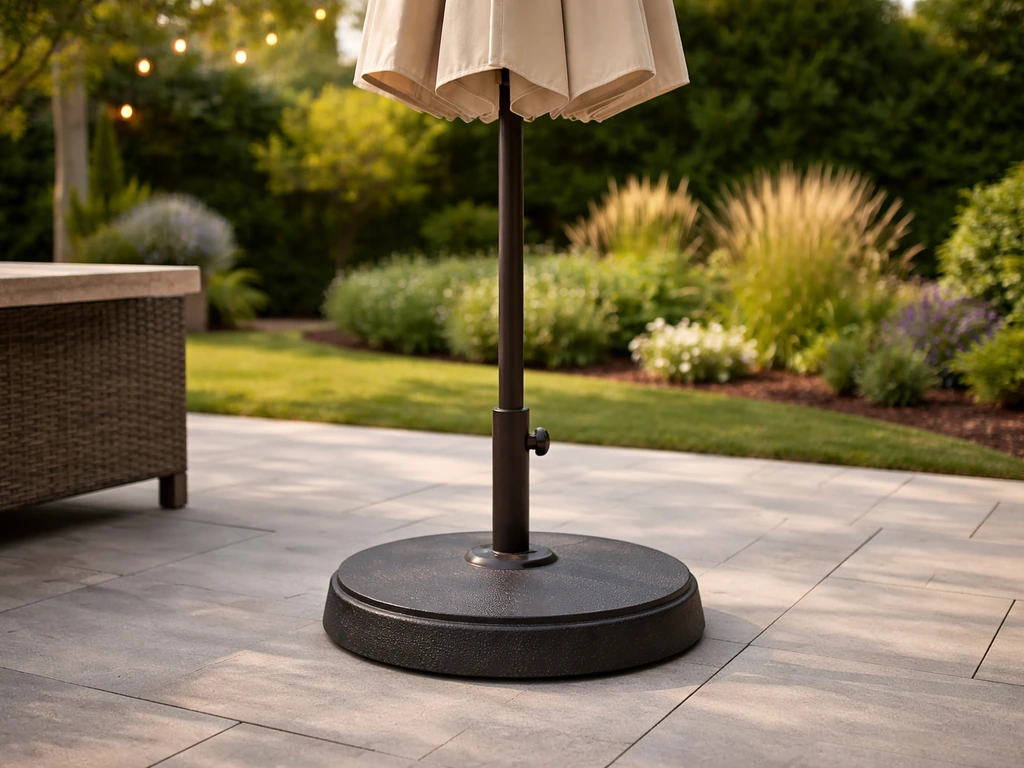
The best patio umbrella for UV protection has a UPF 50+ rated canopy made from solution-dyed acrylic or coated polyester, a canopy diameter of at least 9 feet (ideally 11 feet for tables and seating groups), and a tilt or rotation mechanism so you can chase the shade as the sun moves. A cantilever or offset design gives you the most flexible coverage without a pole in the middle of your sitting area. If you want a single recommendation to start: look for a cantilever umbrella with a verified UPF 50+ fabric rating, a canopy 10 to 13 feet across, and a base rated for at least 50 pounds. That combination handles the vast majority of residential patio setups.
Best UV Protection Patio Umbrella: Buyer Guide

Kent Lang
27 May 2026
What UPF and UV ratings actually mean for an umbrella
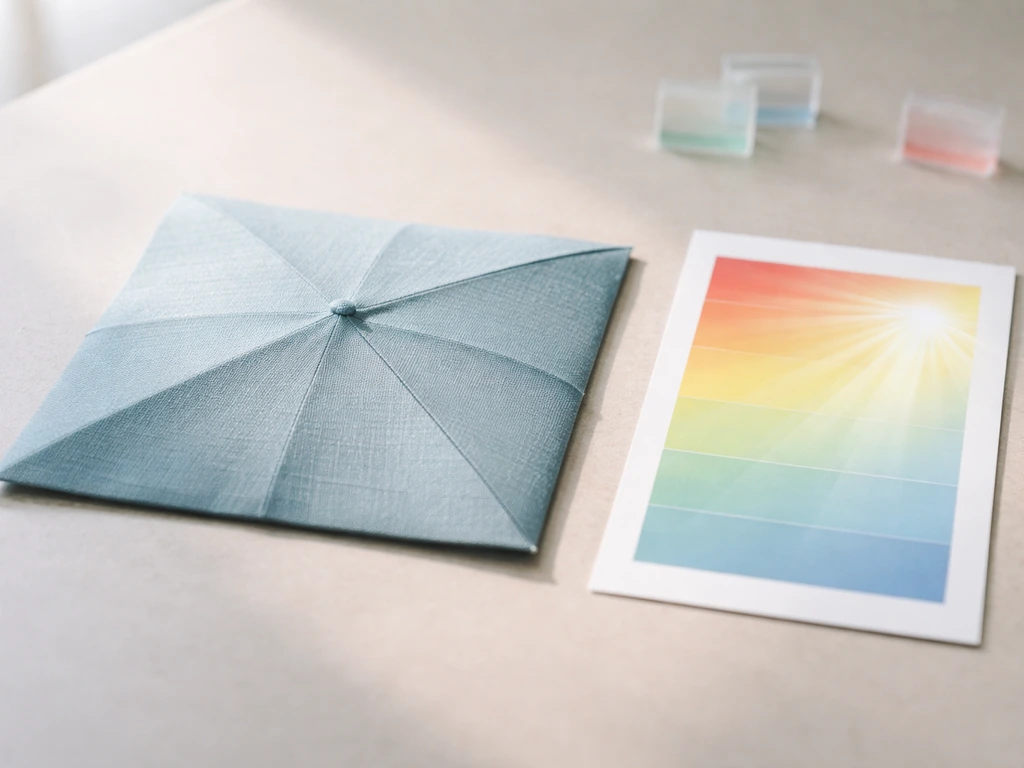
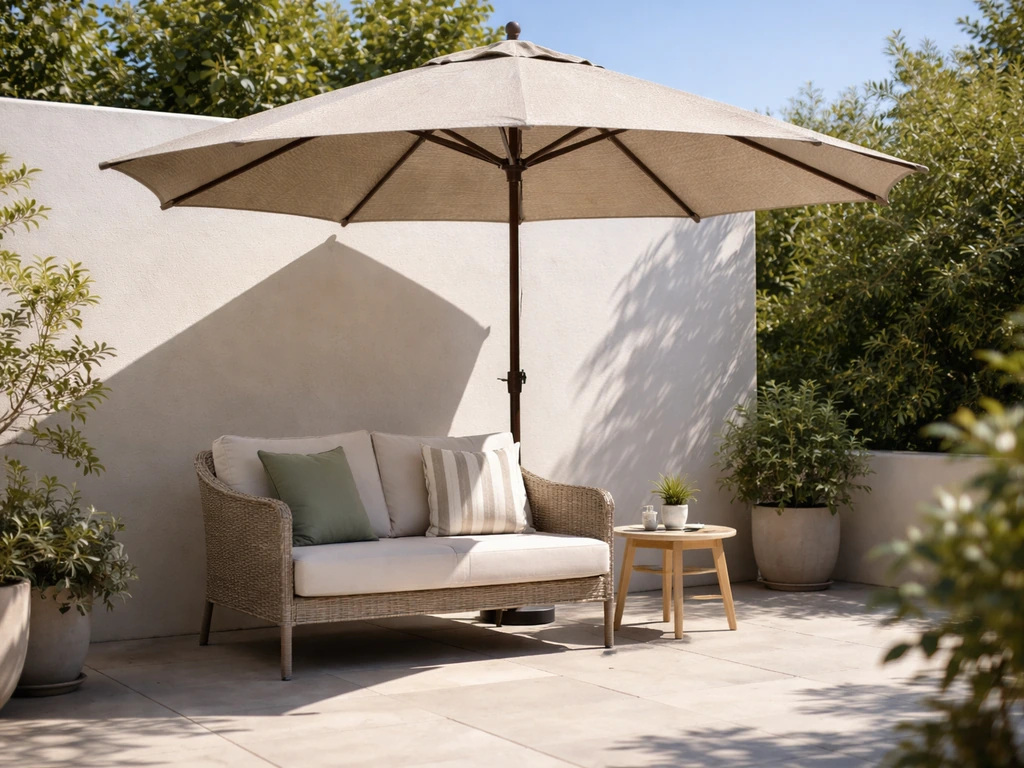
UPF stands for Ultraviolet Protection Factor, and it works the same way for umbrella fabric as it does for sun-protective clothing. It is a lab-measured value based on how much UV radiation actually transmits through the material, weighted against the spectral composition of sunlight and human skin sensitivity. A UPF 50+ rating means less than 2% of UV radiation passes through the fabric. The testing standards behind that number include AS/NZS 4399, blank" rel="noopener noreferrer">EN 13758-1, and AATCC TM 183. When a manufacturer references one of those standards, or cites ASTM D6603 (the labeling guidance for UV-protective textiles), the claim has at least some scientific grounding. When a listing just says 'UV protection' without a UPF number or a referenced test standard, treat it as unverified.
UPF categories to know: UPF 15-24 is considered 'good,' UPF 25-39 is 'very good,' and UPF 40-50+ is 'excellent. Solar Light provides a sample UPF report format that demonstrates how UVA and UVB transmission and calculated UPF labeling categories are documented UPF categories to know. ' For a patio umbrella, you want UPF 40 at minimum, and UPF 50+ is the standard worth targeting. Some fabrics test even higher (UPF 80 is achievable in certified textiles), but 50+ is the ceiling of what most manufacturers label, because the incremental skin protection difference beyond that point is negligible in practice. The number cannot be determined reliably just by looking at the fabric or how opaque it appears, which is why a referenced test standard matters when you are comparing products.
One thing to watch: UV blocking claims sometimes describe UVA and UVB separately. A product like the Classic Accessories Montlake with FadeSafe fabric, for example, is listed as UPF 50+ and as blocking up to 100% of both UVA and UVB rays. Both claims can be true simultaneously because they are describing the same phenomenon (high UV absorption) from different angles. The UPF number is the more standardized metric, so if you have to choose one figure to trust, use that.
How much shade coverage you actually get
Canopy diameter is listed in two ways by manufacturers: folded length and open canopy diameter. Those numbers are not the same thing. What matters for coverage is the open canopy diameter, measured across the span of the fully open umbrella. Market umbrellas typically range from 6 to 11 feet in open diameter. For a standard 4-person patio table (roughly 48 inches across), a 9-foot canopy is considered the practical minimum. For a 6-person table or a lounger arrangement, go to 11 feet or larger.
A useful rule of thumb: the canopy edge should extend at least 2 feet past the table edge on all sides. That overhang accounts for the shifting sun angle throughout the day. At noon, a centered canopy provides near-perfect overhead shade. By mid-afternoon, the sun has moved and the shade footprint shifts, potentially leaving the west side of your table exposed. This is not a flaw in the umbrella, it is geometry. A tilt mechanism, crank-and-tilt, or fully rotating canopy lets you reposition shade without getting up and moving furniture. If your umbrella has no tilt at all, expect to lose meaningful coverage for several hours of the day, even if the UPF rating is excellent.
Canopy shape also affects coverage. An octagonal canopy covers more area than a square canopy with the same diagonal measurement. Hexagonal and octagonal shapes are the most common for residential market umbrellas and provide the most even shade distribution around a central table. Rectangular canopies suit rectangular furniture arrangements better but are more common in cantilever designs.
Which umbrella style gives you the best UV coverage
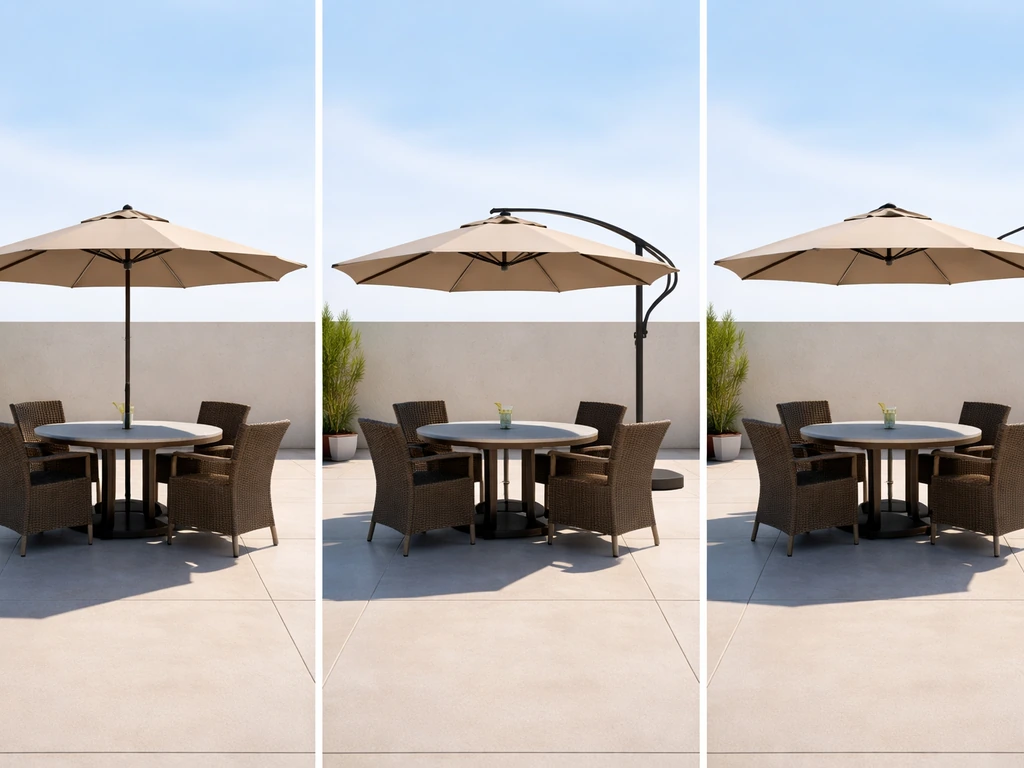
The three main styles are market (center-pole), offset, and cantilever. They each have a different relationship to UV coverage, and the right choice depends on your furniture layout and how much of the day you actually need shade.
Market umbrellas
A market umbrella sits on a center pole that runs through the middle of your patio table. It is the most common and least expensive style. Coverage is symmetrical and centered, which works well at midday. The limitation is the fixed pole: you cannot push the canopy to one side to compensate for a low sun angle. Many market umbrellas now include a push-button or crank tilt that angles the canopy off-center, which helps in the late afternoon. For UV protection specifically, a tilting 9-foot or 11-foot market umbrella is a solid and affordable option if your patio is table-centered.
Cantilever and offset umbrellas
Cantilever (also called offset) umbrellas mount the canopy on a lateral arm extending from a side pole, which keeps the entire shaded area open with no center pole interruption. This makes them far more flexible for UV coverage: you can rotate the canopy to follow the sun, angle it without repositioning furniture, and cover irregular seating arrangements like a sectional or a row of loungers. The tradeoff is cost and complexity. Cantilever tilt mechanisms have more moving parts and can wear faster over time with heavy use. They also require a heavier, more substantial base to counteract the off-center load. That said, for maximizing UV protection across a full day, a cantilever with a 10- to 13-foot canopy and 360-degree rotation is the most effective option available in the residential market.
| Style | Best coverage scenario | Tilt/rotation options | Typical canopy size | Relative cost |
|---|---|---|---|---|
| Market (center-pole) | Centered table, midday use | Push-button or crank tilt | 6 to 11 feet | Low to mid |
| Cantilever/Offset | Full-day coverage, loungers, irregular layouts | Full rotation + multi-angle tilt | 10 to 13 feet | Mid to high |
| Fixed/Umbrella with no tilt | Shaded pergola supplement | None | 7 to 9 feet | Low |
Fabric and materials: what actually blocks UV long-term
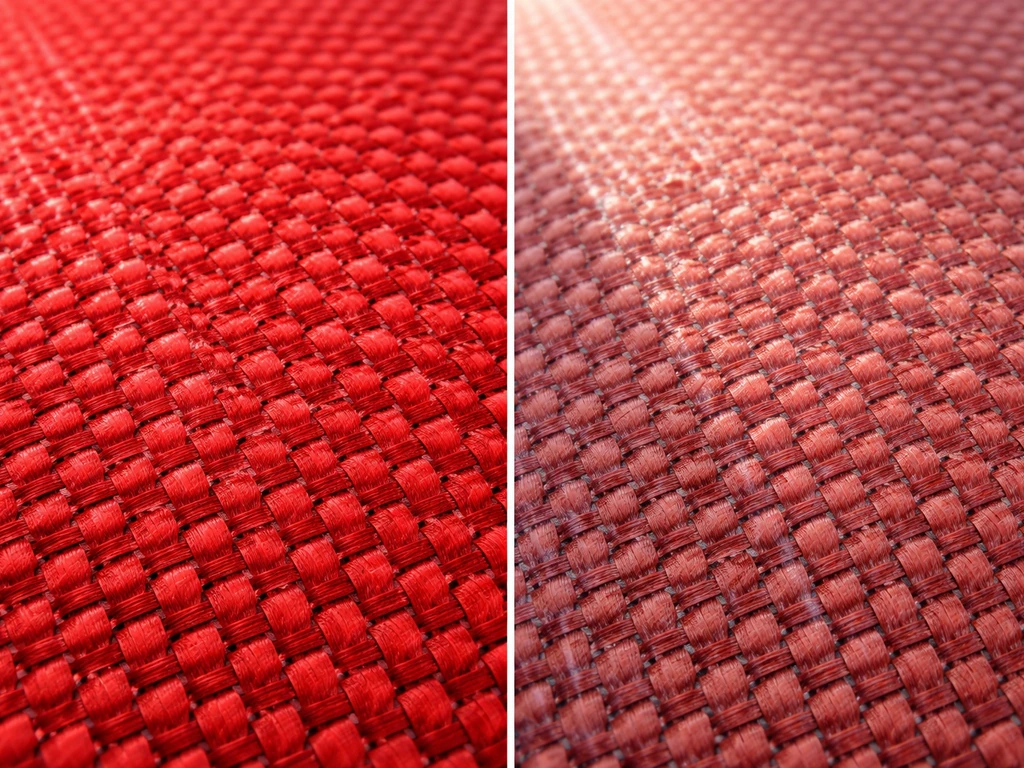
The fabric is where UV performance lives, and it degrades over time if the material is not up to the job. Two categories dominate quality patio umbrella canopies: solution-dyed acrylic and coated polyester.
Solution-dyed acrylic
This is the premium choice for long-term UV performance. Sunbrella is the most recognized brand in this category. Solution-dyed acrylic means the color pigment is locked into the fiber during manufacturing rather than applied as a surface coating afterward. The result is UV resistance that does not fade out at the surface. Sunbrella fabrics have been tested at over 1,000 hours under artificial weathering (ISO 105 B04) and in some product lines to 4,000 hours of UV resistance testing. The 100% acrylic construction also means the UPF rating holds up across years of outdoor exposure rather than degrading after one or two seasons. Technical data for UPF-rated acrylic awning fabric (tested to AATCC 183-2014) commonly shows UPF 50+. If you are buying a mid-to-high-end umbrella and plan to keep it for more than a few years, a Sunbrella or equivalent solution-dyed acrylic canopy is worth the price premium.
Polyester with PU or UV coating
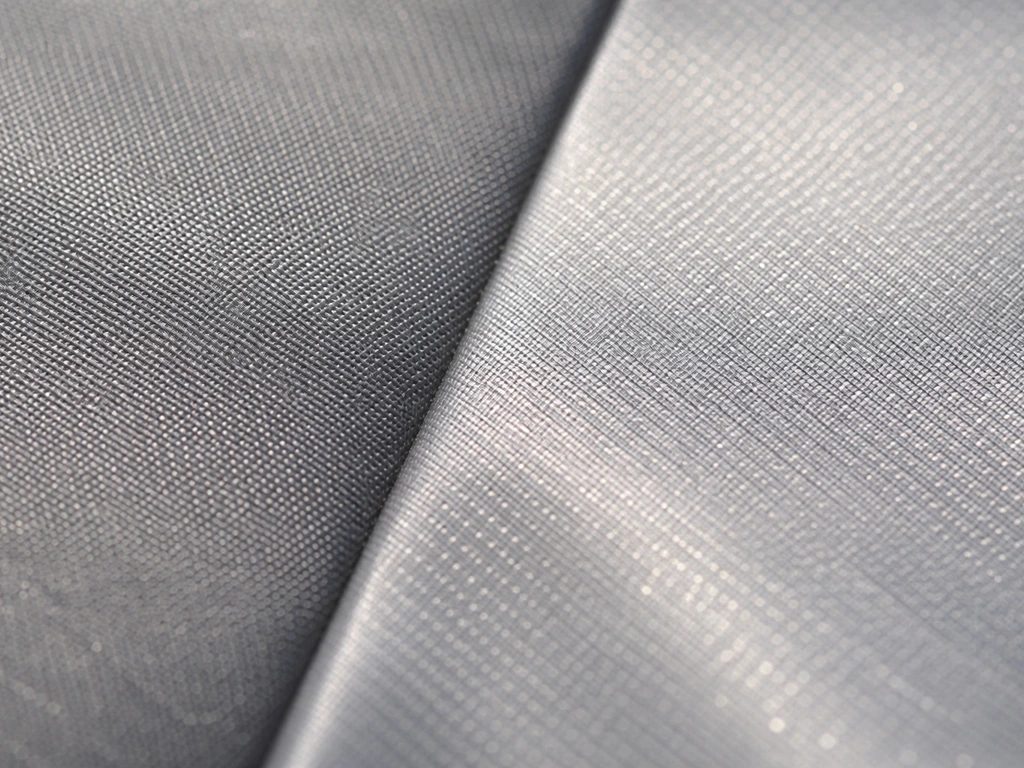
Budget and mid-range umbrellas typically use polyester canopies, often with a polyurethane (PU) coating that boosts UV blocking and adds water resistance. Even if the canopy is water-resistant, it helps to keep your patio umbrella closed or covered during heavy rain to avoid wet fabric and mildew water resistance. A well-specced polyester canopy, such as the 180 gsm polyester with PU coating used on several Outsunny cantilever models, can genuinely achieve UPF 50+ at the time of purchase. The caveat is longevity: surface coatings degrade faster than solution-dyed fibers. After two or three seasons in direct sun, the UPF performance of a coated polyester canopy will be meaningfully lower than its original rating. If your budget is in the $150 to $300 range, polyester with PU coating is fine, but plan to replace the canopy (or the whole umbrella) sooner than you would with acrylic. Storing the umbrella under a cover when not in use extends the effective life noticeably.
Fabric weave density also matters. A tighter weave means less UV passes through regardless of coating. Look for canopy weight expressed in GSM (grams per square meter): 180 gsm is the common entry point for UV-rated polyester; 250 gsm and above signals a denser, more durable weave. Acrylic canopies tend to run heavier (around 300 gsm) and feel more substantial than budget polyester. Avoid any canopy described as 'sheer' or used for decoration: those provide almost no meaningful UV blocking even if they carry a vague 'UV resistant' label.
Color and heat
Darker canopy colors (navy, charcoal, forest green) block more UV because they absorb more of the solar spectrum. However, they also absorb more heat and can make the space under the umbrella feel warmer. This is a genuine tradeoff worth thinking about. Light or white canopies reflect more heat but may allow slightly more UV transmission. Light or white canopies can reflect more light and heat, but you should still focus on the umbrella’s UV-blocking performance when deciding whether to use it reflect more heat. Mid-tones like tan, terracotta, or medium blue offer a reasonable balance. If heat retention under the umbrella is a concern, some cantilever models include a ventilation opening at the top of the canopy that allows hot air to escape without meaningfully reducing UV coverage.
Wind stability and base requirements
UV protection only works if the umbrella stays where you put it. Wind is the primary reason umbrellas fail, tip over, or get damaged, and it is underrepresented in most product listings. Here is what the numbers actually look like from manufacturers who publish them.
Most residential market and cantilever umbrellas are rated for sustained winds in the 25 MPH range. Frankford's guidance, for example, recommends closing the umbrella when sustained winds exceed 25 MPH. Their Eclipse cantilever is engineered to withstand 35 MPH winds, and adding the optional wind stabilizer kit pushes that to 40 MPH. The Homecrest Sol cantilever is rated at 25 MPH with a +5 MPH improvement from the included stabilizer kit. Coolaroo's Ventus cantilever, which is designed for an in-ground mount, is lab-tested to 60 km/h (approximately 37 MPH) when properly installed. These are among the more wind-capable options in the residential market.
For base weight, a center-pole market umbrella in the 9-foot range needs at least 50 pounds of base weight to stay stable in normal wind conditions. An 11-foot market umbrella should have at least 75 pounds. Cantilever umbrellas require significantly more because the offset load creates leverage on the base: a 10- to 13-foot cantilever typically needs 100 to 150 pounds of ballast, or an in-ground anchor system. If you are buying a cantilever umbrella, check what base is included or recommended, because an underpowered base is the most common reason cantilevers tip.
- 9-foot market umbrella: 50 pounds base minimum
- 11-foot market umbrella: 75 pounds base minimum
- Cantilever 10 to 13 feet: 100 to 150 pounds base, or in-ground mount
- Close all umbrellas when sustained winds exceed the manufacturer's rated threshold
- Wind stabilizer kits are available for many cantilever models and add 5 MPH or more to the rated tolerance
How to compare products fast: specs checklist and red flags
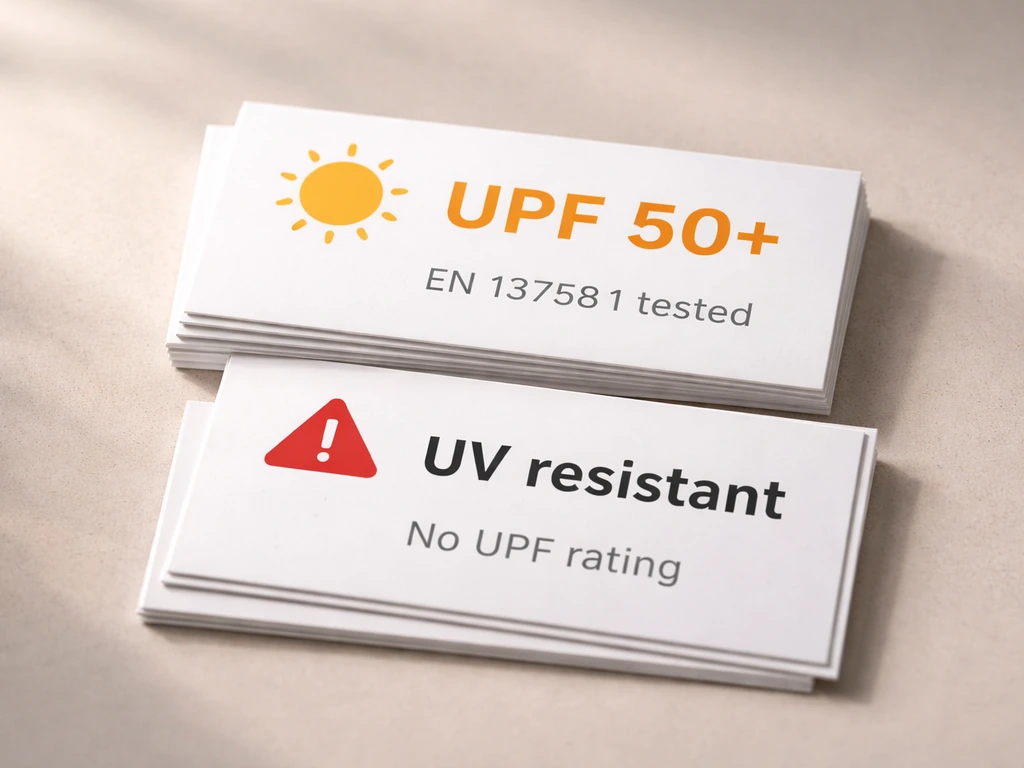
When you are moving through product listings, most of the relevant information is either buried or missing. Here is what to look for and what should give you pause.
The checklist to run on any product
- UPF rating: Is it UPF 40+ or UPF 50+? Is a test standard cited (AATCC 183, EN 13758-1, AS/NZS 4399)? If the listing says 'UV resistant' with no number, skip it.
- Fabric type and construction: Solution-dyed acrylic (best), coated polyester (acceptable), or unspecified fabric (avoid). Check GSM if available.
- Open canopy diameter: Confirmed open, not folded or packed size.
- Tilt mechanism: Push-button, crank, or full rotation. No tilt means limited daily coverage.
- Wind rating: Is a specific MPH or km/h figure stated? Is it for sustained wind or gusts? Does the brand recommend closing at a specific threshold?
- Base requirement: What base weight is required or included? For cantilevers, is the base adequate for the arm length?
- Pole material: Aluminum poles resist corrosion; steel is heavier and can rust without a protective coating.
- Warranty: What does it cover and for how long? Fade resistance warranties (some brands offer no-fade guarantees) signal confidence in fabric quality.
Red flags to watch for
- 'UV protection' or 'UV resistant' with no UPF number and no referenced standard
- Size listed as 'overall height' or 'folded length' rather than open canopy diameter
- Cantilever umbrella sold without a base, or with an obviously undersized base (under 50 pounds)
- No mention of wind rating or wind guidance anywhere in the product listing
- Fabric described only by color and no material composition (polyester, acrylic, olefin) disclosed
- Very low GSM values (under 150 gsm) for polyester canopies claiming high UV protection
How to shortlist the right umbrella for your budget and setup
Start with your patio layout, not the product listings. If you are wondering whether you can use a patio umbrella at the beach, focus on UV rating, stability in wind, and using the right base for the sand and conditions can you use a patio umbrella at the beach. Measure your table or seating area, then add 2 feet on each side to get your minimum canopy diameter. If your space is table-centered and you mostly use it at midday, a tilting market umbrella in the 9- to 11-foot range is the practical and cost-effective pick. If you use your patio in the morning and afternoon, have a lounger setup, or want shade to follow the sun without rearranging furniture, a cantilever is worth the extra investment.
Under $250
At this budget, look for a 9-foot polyester market umbrella with a verified UPF 50+ rating and a crank tilt. The Classic Accessories Montlake line (FadeSafe fabric, UPF 50+) is one of the more honestly specced options in this range. Budget $30 to $60 more for a 50-pound base if it is not included. Avoid cantilevers under $200: the bases are almost always insufficient, and the tilt mechanisms wear out quickly.
$250 to $600
This range opens up 11-foot market umbrellas with better pole construction (aluminum over steel), and entry-level cantilevers with adequate bases. For a market umbrella, this is where solution-dyed acrylic canopies start to appear. For a cantilever, look for models rated at 25 MPH or above with an included or available stabilizer kit. The Outsunny 9.5-foot cantilever with 180 gsm polyester and PU coating (UPF 50+) sits in the lower end of this range and is a reasonable starting point, though the polyester canopy will need replacement faster than acrylic.
Over $600
This is the tier where you get durable solution-dyed acrylic (Sunbrella or equivalent), heavy-duty aluminum frames, 360-degree rotation on cantilevers, and serious wind ratings. The Frankford Eclipse cantilever at 35 MPH wind tolerance (plus 5 MPH with the stabilizer kit) is a benchmark in this range. The Homecrest Sol is another well-documented option in the commercial-adjacent residential category. These umbrellas are designed to last 7 to 10 years with proper care, making the per-year cost competitive with replacing a budget umbrella every two to three seasons. If you are in a windy region or use your patio daily through peak UV months, this is where to spend.
Your next steps today
- Measure your patio seating area and add 2 feet per side to find your minimum canopy diameter.
- Decide on style: market umbrella if your use is mostly midday and table-centered; cantilever if you want all-day coverage or have a lounger layout.
- Set your budget bracket and identify two or three candidate models with a stated UPF number and a referenced test standard.
- Confirm the open canopy diameter (not folded size), the fabric material and GSM, and the wind rating for each candidate.
- Check the base requirement for your chosen style and verify the base weight is sufficient, especially for cantilevers.
- If you are in a windy area, confirm whether a stabilizer kit is available or included and factor in the installation requirements.
- For long-term performance, budget for a canopy cover to store the umbrella when not in use, which meaningfully extends the life of both polyester and acrylic canopies.
One last note worth keeping in mind: no umbrella, regardless of UPF rating, blocks UV rays that bounce off reflective surfaces around you, like concrete, light-colored decking, or water. The Coolaroo Ventus manual, for example, recommends combining shade with clothing and sunscreen for comprehensive protection. That is good advice for any umbrella, even the best one on this list. A UPF 50+ canopy blocks direct overhead UV extremely well, but it is one layer of sun protection, not the whole strategy.
FAQ
Is UPF 50+ always enough for a patio umbrella, even if it is hot or sunny all day?
For direct overhead UV it is generally excellent, but you still need coverage geometry. If your umbrella cannot be tilted or rotated, you may lose shade on one side for several hours as the sun angle changes. Also remember UPF is measured through fabric when the canopy is in use, not when it is barely over your seating area.
What should I do if the listing shows UPF but not the test standard or lab certification?
Prefer products that include a UPF number plus an identified test method or standard reference. If it only says “UV protection” without a UPF value, treat it as unverified and assume the real performance could be substantially lower, especially after sun exposure and washing.
Can I rely on canopy color to choose UV protection without checking UPF?
Color helps, darker tones often absorb more UV, but it is not a substitute for a measured UPF value. Two umbrellas in the same color can have different UPF depending on fabric type, weave density, and coating, and darker colors can also increase under-umbrella heat.
Should I choose solution-dyed acrylic or coated polyester if my umbrella will be stored outdoors year-round?
Solution-dyed acrylic is usually the safer pick for longevity because the pigment is locked into the fiber and tends to keep UV performance longer. Coated polyester can test well at purchase, but surface coatings degrade faster in direct sun, so you should plan more frequent replacement or invest in storage under a cover.
How often do I need to replace an umbrella canopy to keep the UV protection effective?
There is no universal timeline, but coated polyester typically loses UV performance sooner than solution-dyed acrylic, often noticeable after a couple of direct-sun seasons. A practical approach is to inspect fade speed and canopy condition, keep the umbrella closed when not in use, and treat a “like new” UPF claim as meaning “at time of purchase.”
Does an umbrella with UPF 50+ still help if my patio has lots of reflective surfaces?
Yes for direct overhead UV, but it will not control UV that reflects off light concrete, decking, or water nearby. If your space is highly reflective, use additional protection like sunscreen and clothing, and position the umbrella so it reduces exposure from those reflected directions as much as possible.
What wind rating should I trust, and what should I actually do when it gets breezy?
Use the manufacturer’s stated sustained wind rating as guidance, and follow their closure recommendation. In practice, umbrellas should be closed before winds reach that number, because gusts and sail-like fabric behavior can exceed the test conditions, especially if the base is undersized or the umbrella is not square to the wind.
Is the base weight the only factor for preventing tipping?
No. Base weight matters, but design details do too, like the umbrella’s leverage from an offset arm, the frame stiffness, and how well the base matches the pole diameter. For cantilevers, also check whether an included stabilizer kit or in-ground anchoring is recommended, because underpowered bases are a common tipping cause.
How do I choose the right canopy diameter for my table, especially if I have a 6-person or lounger layout?
Use open canopy diameter, not the folded length. Then aim for at least about 2 feet of overhang beyond the tabletop edge on each side. If you have a 6-person table or lounging group, move closer to the 11-foot range or larger to maintain coverage as the sun shifts.
What is the difference between a push-button tilt and a true 360-degree rotating cantilever for UV coverage?
A push-button tilt changes the canopy angle but does not fully reorient the canopy to follow the sun sideways, so some regions of your seating may still get less shade. A rotating cantilever lets you reposition shade across a broader arc, which is helpful in the morning and afternoon when the sun swings to the side.
Are there any mistakes that make UV protection worse even with a great canopy?
Leaving the umbrella open in wind or not using the correct base can damage the frame and also stretch or misalign the canopy over time. Another common mistake is buying a canopy that only barely covers the table, when the sun angle later exposes side seating, making the effective protected area smaller than expected.
Can I use a patio umbrella for beach use and still keep good UV protection?
The UV fabric matters, but beach conditions add two risks you should plan for, wind gusts and sand compatibility. Look for strong wind capability, a base or anchoring system appropriate for sandy conditions, and an umbrella style that minimizes leverage issues, cantilevers often require more robust ballast for safe operation near the coast.