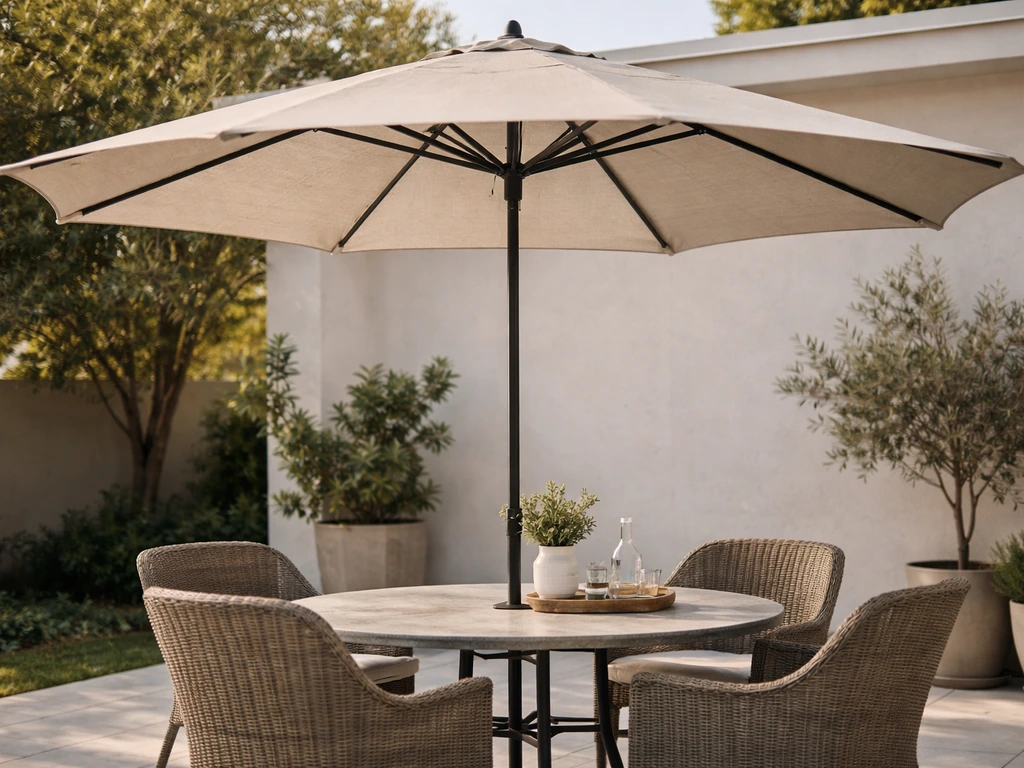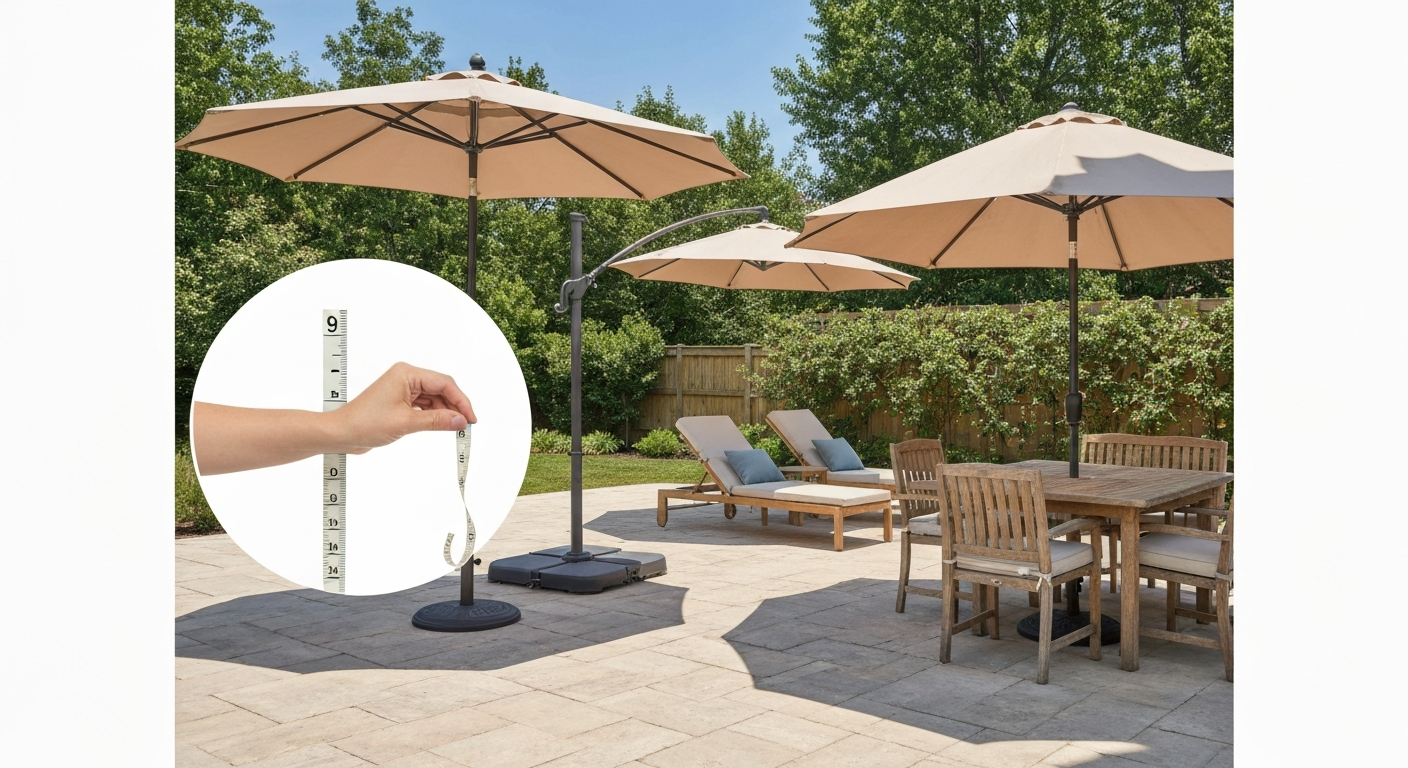
A 10-foot patio umbrella hits the sweet spot for most homeowners: big enough to shade a 4- to 6-person dining set, small enough to manage without heavy commercial hardware. The best ones in 2026 are the Abba Patio 10 ft Market Umbrella (best budget), the California Umbrella 10 ft Sunline (best mid-range market), the Treasure Garden FLEX 10 ft (best wind-rated market), the Purple Leaf 10 ft Cantilever (best cantilever overall, recognized by Forbes Vetted testing), the Abba Patio 10 ft Offset (best budget offset), the Sunnyglade 10 ft Offset with cross base (best value offset), the Bluu Fabriek 10 ft Cantilever (best mid-range cantilever), the Frankford Umbrellas 10 ft Market (best premium market), the Treasure Garden 10 ft AG28 Offset (best premium offset), and the Bambrella 10 ft Lever (best premium eco-market). Which one is right for you depends on your table layout, wind exposure, and how much you want to spend, so read on for the full breakdown. If you want the fastest way to compare options, use this guide to the top 10 patio umbrellas in 2026.
Best 10 Patio Umbrellas: Market, Offset, Cantilever Picks


How to choose the right 10 ft umbrella before you buy
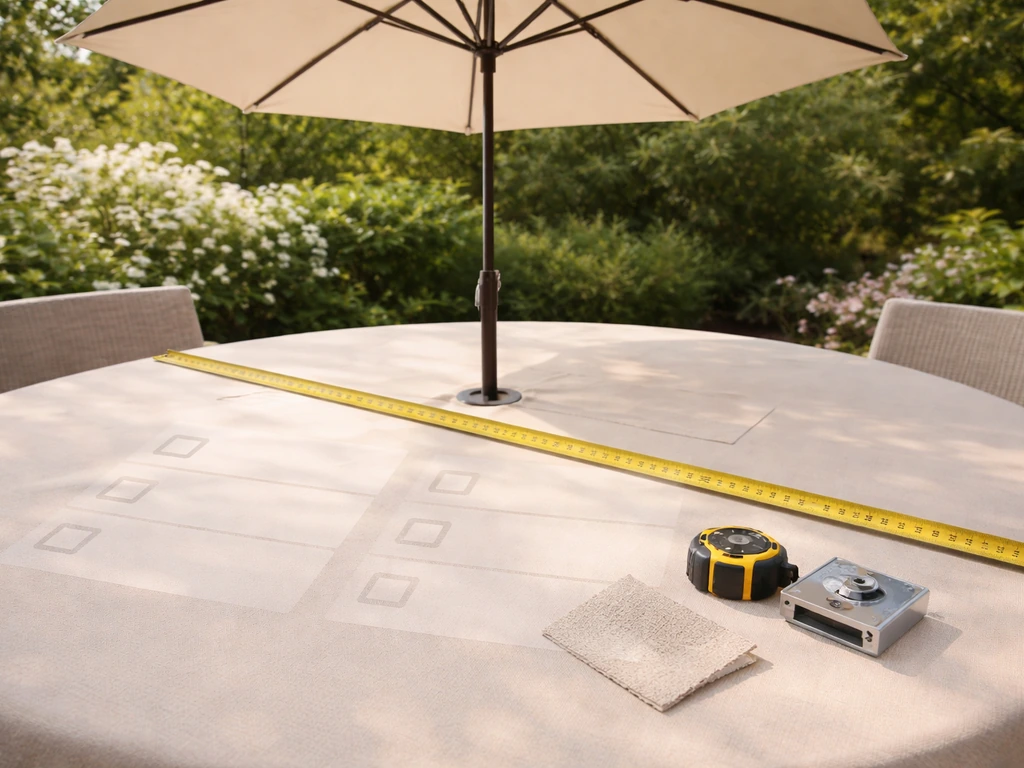
Before you scroll through product listings, a quick checklist saves you from buying the wrong thing. Ten feet sounds specific, but the style, base, and fabric can vary enormously at that diameter. Run through these questions first.
- Does your table have a center pole hole? If yes, a market (center pole) umbrella works. If not, an offset or cantilever is easier.
- How much clearance do you have? Cantilever arms need 2 to 3 feet of side clearance beyond the canopy edge to mount their base.
- How windy is your location? Coastal or exposed yards need heavier bases, fiberglass ribs, and vented canopies.
- Do you want to tilt? A tilt mechanism (crank-and-tilt or push-button) lets you block low-angle sun without moving the table.
- What base weight do you need? A freestanding 10 ft umbrella needs at least 50 lbs of base weight; go 75 lbs or more in windy spots.
- What fabric do you want? Solution-dyed acrylic lasts the longest outdoors; polyester is cheaper but fades faster.
- What is your budget? Budget starts around $60 to $120, mid-range runs $150 to $350, and premium starts at $400 and goes up steeply.
- Do you want UV protection rated UPF 40 or UPF 50+? UPF 50 blocks 98% of UV radiation; UPF 40 blocks 97.5%, both meaningful differences from unrated fabric.
The 10 best patio umbrellas in 2026
Here are the top picks organized by style. Market umbrellas go through the center of your table or into a freestanding base; offset umbrellas mount to a side pole so the canopy floats over your seating area; cantilever umbrellas use a freestanding arm that extends over furniture without any pole in the way. Each style solves a different problem.
Market (center pole) umbrellas

Market umbrellas are the most stable and the most affordable style. The pole goes straight through the table or into a base, which means the weight is centered directly under the canopy. They are straightforward to operate and easy to find replacement canopies for.
- Abba Patio 10 ft Market Umbrella: Best budget pick. It comes with a push-button tilt, a crank lift, and a polyester canopy with a built-in vent. Expect the fabric to fade faster than acrylic after two or three seasons, but at under $100 it is hard to beat for occasional use.
- California Umbrella 10 ft Sunline Series: Best mid-range market umbrella. Sunbrella or Pacifica fabric (solution-dyed acrylic), an aluminum pole, and a quality crank mechanism. This is the umbrella to buy if you want something that holds its color for five-plus years without much fuss.
- Treasure Garden FLEX 10 ft: Best for windy yards. It uses fiberglass ribs rather than aluminum, which flex under gusts instead of snapping, paired with a crank lift system for smooth operation. If you are in an exposed backyard, the fiberglass rib construction is worth the price step up.
- Frankford Umbrellas 10 ft Market: Best premium market pick. Frankford builds with solution-dyed acrylic, marine-grade hardware, and aluminum or fiberglass frames that are built for commercial patio use. These run $400 to $600 but routinely last a decade with proper care.
Offset (side pole) umbrellas
Offset umbrellas work when you do not have a table with a pole hole, when your seating area is against a wall, or when you want the freedom to angle the canopy without touching the furniture. The trade-off is that they need a heavier weighted base and more floor space for that base.
- Abba Patio 10 ft Offset: Best budget offset. Cross base included, 360-degree rotation, and a tilt adjustment. Polyester canopy fades over time but it is functional and affordable for a shaded lounge area.
- Sunnyglade 10 ft Offset with Cross Base: Best value offset. The cross base is a notable inclusion at this price point since many budget offsets sell the base separately. Good crank operation, a double-vented canopy for wind relief, and solid reviews for casual home use.
- Treasure Garden 10 ft AG28 Offset: Best premium offset. Heavy-duty aluminum frame, Sunbrella fabric, and a reliable tilt mechanism. This is the offset umbrella you buy when you want it to outlast the patio furniture underneath it.
Cantilever umbrellas
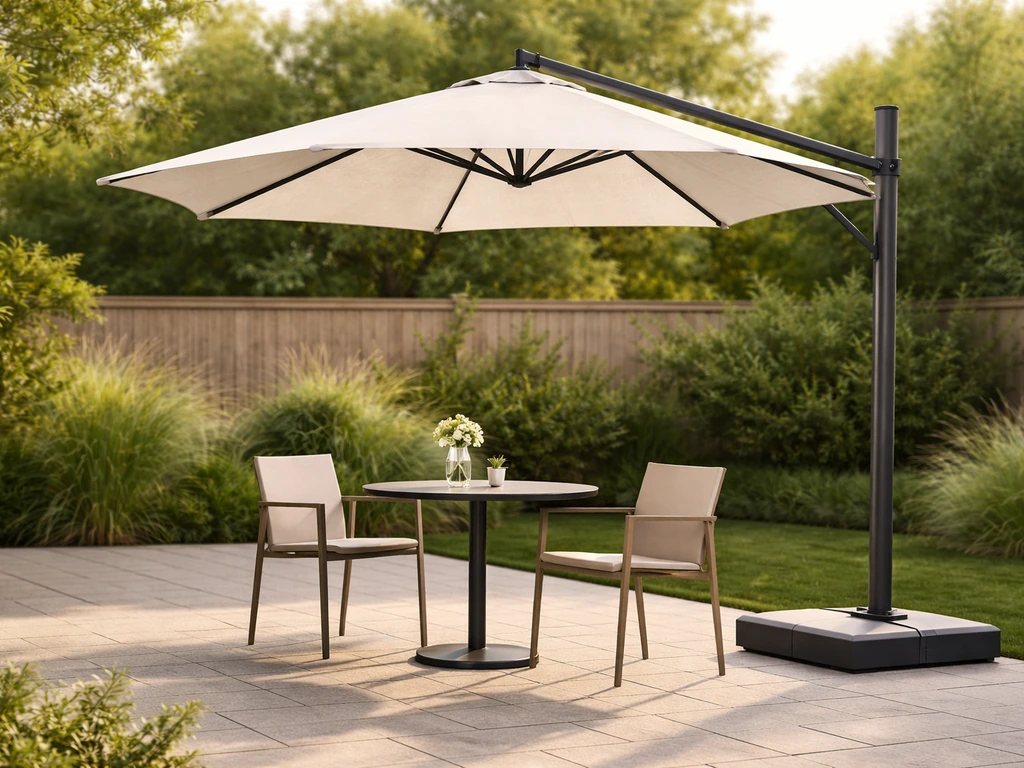
Cantilever umbrellas share DNA with offset umbrellas but use a freestanding arm design that extends the canopy further out from the base. They are ideal for loungers, sectional sofas, or pool decks where a center or side pole would get in the way. They also tend to be the most expensive category.
- Purple Leaf 10 ft Cantilever: Best cantilever overall. Forbes Vetted named it the cantilever winner in their 2025 testing. It offers 360-degree rotation, a cross base with fill slots for sand or water to add weight, a smooth crank system, and a durable canopy. It sits at the higher end of mid-range pricing but delivers close to premium performance.
- Bluu Fabriek 10 ft Cantilever: Best mid-range cantilever. Aluminum frame, a strong tilt and rotation system, and a dense polyester canopy. Good option if you want cantilever convenience without Purple Leaf's price tag.
- Bambrella 10 ft Lever: Best premium eco-market (also available in cantilever configuration). Bambrella uses FSC-certified bamboo poles and high-grade Sunbrella fabric. It is an unusual material choice that actually performs well outdoors, and it looks great on a well-designed deck. Price reflects the craftsmanship.
Size, height, and coverage: measuring your space correctly

A 10-foot umbrella has a canopy diameter of 10 feet, which gives you roughly 78 square feet of shade coverage. When you compare 9 ft vs 10 ft patio umbrellas, the right size depends on how much overhang you need for your table and how strong the wind exposure is 10-foot umbrella. That covers a standard 48-inch round table or a 60-inch rectangular dining table with 4 to 6 chairs comfortably. If you have an 8-person outdoor dining set or a large sectional sofa, you may want to look at an 11-foot option instead, since coverage scales up significantly at that size.
For measuring: add at least 2 feet of canopy overhang past the table edge on all sides for real shade. A 10-foot canopy over a 48-inch (4-foot) table leaves about 3 feet of shade on each side, which is enough to cover seated guests. For a 6-foot rectangular table, a 10-foot canopy is tight but workable if the umbrella tilts toward the sun's angle. If your table runs longer than 6 feet, consider a 9-foot-plus rectangular canopy style or two umbrellas.
Height matters more than most people realize. Most 10-foot market umbrellas peak at 8 to 8.5 feet above the ground when opened, which is comfortable clearance for standing adults. Cantilever arms vary more: some position the canopy at 8 feet, others at 9 feet. Measure your space and check the product spec sheet for the actual opened height, not just the canopy diameter.
Wind resistance and stability: bases, ribs, and tilt features
The weakest link in most patio umbrella setups is the base, not the umbrella itself. A 10-foot umbrella in a freestanding setup needs at least a 50-pound base, and in exposed or breezy yards you should target 75 to 100 pounds. If you want a quick shortcut, look for the best 11 patio umbrella options that match your space and wind conditions.
Frontgate's buying guidance notes that 11-foot umbrellas need 100 pounds or more in freestanding configurations; a 10-foot umbrella sits just below that threshold but the same principle applies: more wind exposure means more base weight. Frontgate advises freestanding base weights of about 50 lb for a 7-1/2 ft or 9 ft umbrella, and 100 lb+ for an 11 ft umbrella, excluding table-mounted setups Frontgate's buying guidance on freestanding base weights.
Frame ribs make a bigger difference than most product descriptions admit. Aluminum ribs are light and affordable but they can bend or snap under a strong gust. Fiberglass ribs, like those used in the Treasure Garden FLEX line, flex with wind pressure rather than fighting it, which extends the life of the canopy significantly in breezy climates. If you live somewhere with regular afternoon gusts, fiberglass ribs are worth paying for.
Vented canopies help too. A double-vent design creates an escape route for wind pressure, reducing the lift force that tips umbrellas over. For market umbrellas that sit in a table hole, the table itself provides a lot of stabilization. Offset and cantilever umbrellas depend entirely on their base, so if you are going with either of those styles, invest in the base as seriously as you invest in the umbrella.
Tilt mechanisms (push-button, collar tilt, or crank-and-tilt) let you angle the canopy to follow the sun without repositioning furniture. They do not directly affect wind resistance, but a tilted umbrella in high wind catches more surface area and becomes unstable faster. If you are in a windy spot, use the tilt sparingly and keep the canopy as vertical as possible when gusts pick up.
Materials and weather protection: what actually holds up outside
Canopy fabric
Solution-dyed acrylic (Sunbrella is the most recognized brand, but Outdura, Dickson, and Recacril are equally good) is the best outdoor fabric for patio umbrellas. The color is embedded into the fiber during manufacturing, not printed on the surface, so it resists fading even under heavy UV exposure for five to ten years. Polyester fabric is significantly cheaper but the dye sits on the surface, which means it fades noticeably within two to three seasons of sun exposure.
UV protection ratings matter if you are buying an umbrella partly for sun protection. UPF 50 fabric blocks 98% of the sun's UV radiation, while UPF 40 blocks 97.5%. Both are certified against standards like AATCC 183 and ASTM D6603, and both are meaningfully better than unrated fabric. Most quality umbrella canopies at mid-range and premium price points are rated UPF 50+; budget polyester canopies often carry no rating at all.
Frames and poles
Aluminum poles are the most common and offer a good balance of weight, rust resistance, and cost. Steel poles are heavier and stronger but rust faster without proper coating. Wood poles (teak, eucalyptus, or bamboo like Bambrella uses) look great but require seasonal oiling and are not ideal for constantly wet climates. Fiberglass poles and ribs are the most wind-resilient option but add cost. For most homeowners, a powder-coated aluminum pole with fiberglass ribs is the best practical combination.
Budget vs. mid-range vs. premium: what you actually get
| Price Tier | Typical Price Range | Fabric | Frame/Ribs | Mechanism | Expected Lifespan |
|---|---|---|---|---|---|
| Budget | $60 to $130 | Polyester, often unrated for UPF | Steel or aluminum pole, aluminum ribs | Basic crank, push-button tilt | 2 to 3 seasons |
| Mid-Range | $150 to $350 | Solution-dyed acrylic or quality polyester, UPF 40 to 50+ | Aluminum pole, aluminum or fiberglass ribs | Smooth crank lift, collar or auto-tilt | 4 to 6 seasons |
| Premium | $400 and up | Sunbrella or equivalent acrylic, UPF 50+ | Heavy-gauge aluminum, fiberglass, or hardwood pole and ribs | Commercial-grade crank, precision tilt, marine hardware | 8 to 12+ seasons |
The honest summary: budget umbrellas are fine for occasional weekend use in a sheltered yard. Mid-range is where most homeowners should land, because the jump in fabric quality from polyester to solution-dyed acrylic alone justifies the price difference over a few seasons. Premium makes sense if you use your patio heavily, live in a sunny or coastal climate, or simply want to buy once and not think about it again for a decade. Frankford, Treasure Garden's commercial line, and Bambrella are where the premium market lives in 2026.
How to keep your umbrella in good shape (and when to close it)
Cleaning the canopy
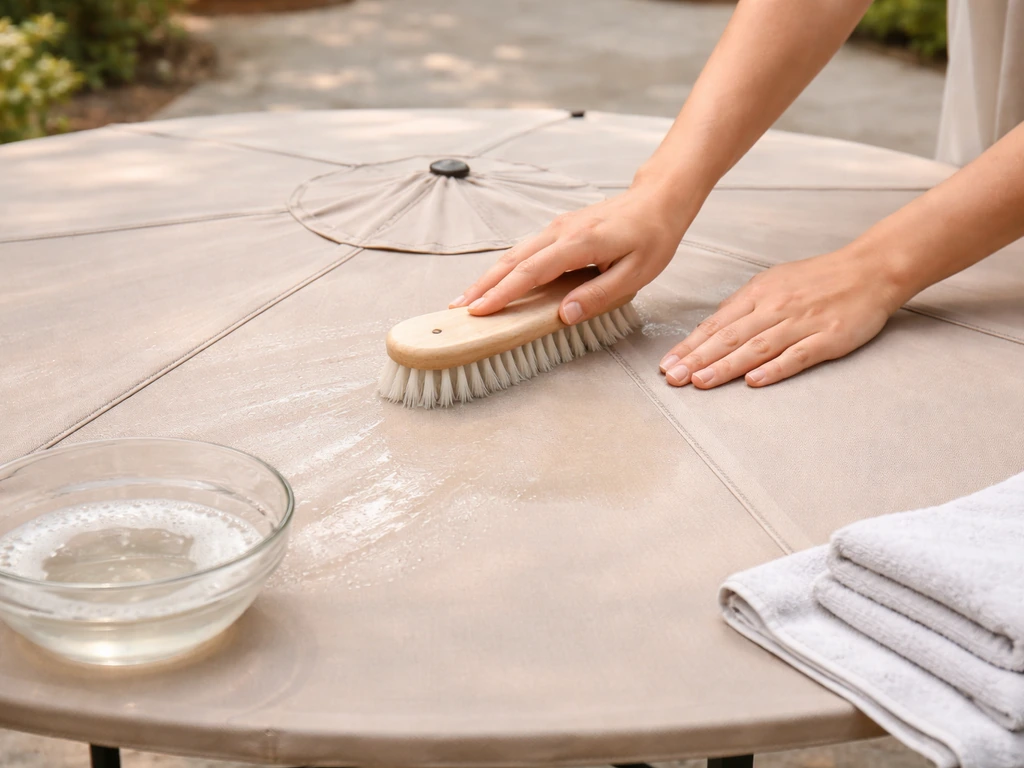
Clean acrylic or polyester canopies with a solvent-free soap solution in warm water, keeping the temperature at or below 100 degrees Fahrenheit. A soft brush works well for bird droppings or mildew spots. Rinse thoroughly and, critically, let the canopy dry completely in the open position before closing it. Closing a damp canopy traps moisture against the fabric and stitching, which is the fastest path to mildew. Frankford's care guidance specifically calls this out for solution-dyed acrylic fabrics: moisture sealed against the fabric can cause crazing, a surface degradation that looks like fine cracking.
Closing in wind and seasonal storage
Close your umbrella any time sustained winds exceed about 20 to 25 mph. A gust at 30 mph on an open 10-foot canopy generates enough lateral force to tip a 50-pound base. If you live somewhere with regular afternoon thunderstorms or sea breezes, build a habit of closing the umbrella whenever you leave the patio, not just when a storm is obviously coming. Most umbrella damage happens when no one is watching.
For winter or extended off-season storage, remove the canopy if possible and store it flat or hanging in a dry space. If you store the whole umbrella assembled, use a fitted cover and keep it in a garage or shed rather than leaving it outdoors. UV degradation continues even when the umbrella is closed, and fabric covers degrade faster than canopy fabric, so check your storage cover annually.
Extending the life of the mechanism
The crank and tilt mechanism is the most common failure point after the fabric. Spray the crank housing with a silicone-based lubricant once a year, avoid forcing the crank if it feels stiff (disassemble and clean it instead), and check the rivet connections at the rib tips annually. Loose rivets let ribs flap under wind and eventually tear the canopy fabric from the inside.
Matching the right umbrella to your exact setup
If you are comparing a 10-foot umbrella to nearby sizes, the differences are meaningful in practice. A 9-foot umbrella covers a 4-person table cleanly but struggles with 6-seat sets, while an 11-foot umbrella provides noticeably more coverage but requires heavier base weights and more clearance. If you are specifically looking for the best 9 patio umbrella, focus on coverage for your table size, plus a base weight that matches your wind exposure. The 10-foot size is genuinely the most versatile option for a standard backyard dining area, which is why it is the most-sold size in the US market.
For style decisions: choose a market umbrella if your table has a pole hole and your yard is reasonably sheltered. Choose an offset if you want shade over a lounge chair, sectional, or a table against a wall. Choose a cantilever if you want total pole-free clearance over your seating area and are willing to invest in a heavy, stable base. The Purple Leaf cantilever is the best starting point for most buyers in that category, while the California Umbrella Sunline series is the go-to mid-range market recommendation.
Whatever you buy, get the base weight right from the start. It is the single most common mistake homeowners make, and a tipped umbrella on a windy afternoon can damage furniture, injure people, or simply ruin the umbrella before its second season. Spend appropriately on the base and you will get far more value out of whichever umbrella you choose.
FAQ
What base weight should I choose for a 10-foot patio umbrella if I plan to keep it up most weekends?
If you only open it occasionally in a sheltered yard, 50 pounds can be workable, but if you leave it open for long stretches or your area gets regular gusts, target 75 to 100 pounds. The key is matching base weight to your exposure, not just the umbrella size, because offset and cantilever designs rely on the base even more than market models.
Can I use a lighter base if I’m using an offset or cantilever umbrella with a tilted canopy?
Avoid doing that. Tilting increases how much sail area the canopy presents to wind, so a base that feels “fine” in calm conditions can become unsafe when gusts hit. Keep the umbrella as vertical as possible during breezy periods and do not downsize the base just because you are using tilt.
How do I figure out whether a 10-foot umbrella will block sun for my specific table shape and time of day?
Use overhang, not just diameter, as your first filter. Add at least 2 feet past the table edge on all sides, then consider whether you need the canopy angled for afternoon sun. If you have a long rectangular table, a 10-foot canopy may feel tight, so two umbrellas or a slightly larger canopy style can cover guests more evenly.
Is UPF 50 really necessary if I mainly want shade, not skin protection?
UPF still matters even when shade is your main goal. UPF 50 blocks slightly more UV than UPF 40, and if you have children or you spend extended time outdoors, the difference can be meaningful. Also, look for a fabric with a stated UPF rating, because some budget polyester canopies have no rating and may offer less consistent UV protection.
What’s the difference between solution-dyed acrylic and polyester in real life, beyond color fading?
Solution-dyed acrylic keeps color stability under UV because the pigment is embedded into the fiber, so it usually holds up for years. Polyester tends to fade sooner since the dye is on the surface, which often means your umbrella looks washed out quickly even if the fabric still feels intact.
How often should I clean a patio umbrella, and what’s the safest method for stubborn mildew?
A quick rinse and periodic soft-brush cleaning is usually enough, then clean more thoroughly after pollen season or heavy rain. For mildew spots, use warm water and a solvent-free soap solution, keep the temperature at or below 100°F, and rinse thoroughly. Do not close the umbrella damp, since trapped moisture is what accelerates mildew.
Should I close the umbrella during a wind advisory even if there’s no storm yet?
Yes, especially if winds are sustained around 20 to 25 mph or you expect gusts near that level. Umbrellas can be tipped by gust-driven lateral force even when skies look calm, and most damage happens when people assume they’ll have time to react.
Is it better to store the umbrella fully assembled or remove the canopy for winter?
If possible, remove the canopy and store it flat or hanging in a dry space. As a general rule, continuing UV exposure and fabric stress still occur even while closed, and storage covers can wear faster than canopy fabric. If you must store assembled, use a fitted cover and keep it indoors or in a garage or shed.
My crank feels stiff occasionally, is that a sign I should stop using the umbrella immediately?
Don’t force it. If the crank feels stiff, stop and inspect, then clean and lubricate the mechanism rather than continuing to operate it. A common fix is applying a silicone-based lubricant to the crank housing, once per year, and checking for resistance before you open the umbrella again.
How can I tell if my umbrella base is the wrong size before the first season ends?
Watch for wobble when the canopy is tilted and during light gusts, and check for any shifting or loosening where the base sits. If you notice movement, your base may be underweighted for your conditions, especially for offset and cantilever models. Reconfirm base weight and positioning early, because the risk escalates quickly with gusts.
Do I need a vented canopy if I live in a breezy coastal area?
A double-vent canopy helps reduce lift force, which can improve stability in wind, and it is especially useful when the umbrella depends on a freestanding base. While no vent fully eliminates wind risk, venting is a practical feature for breezy climates when combined with correct base weight and proper usage.