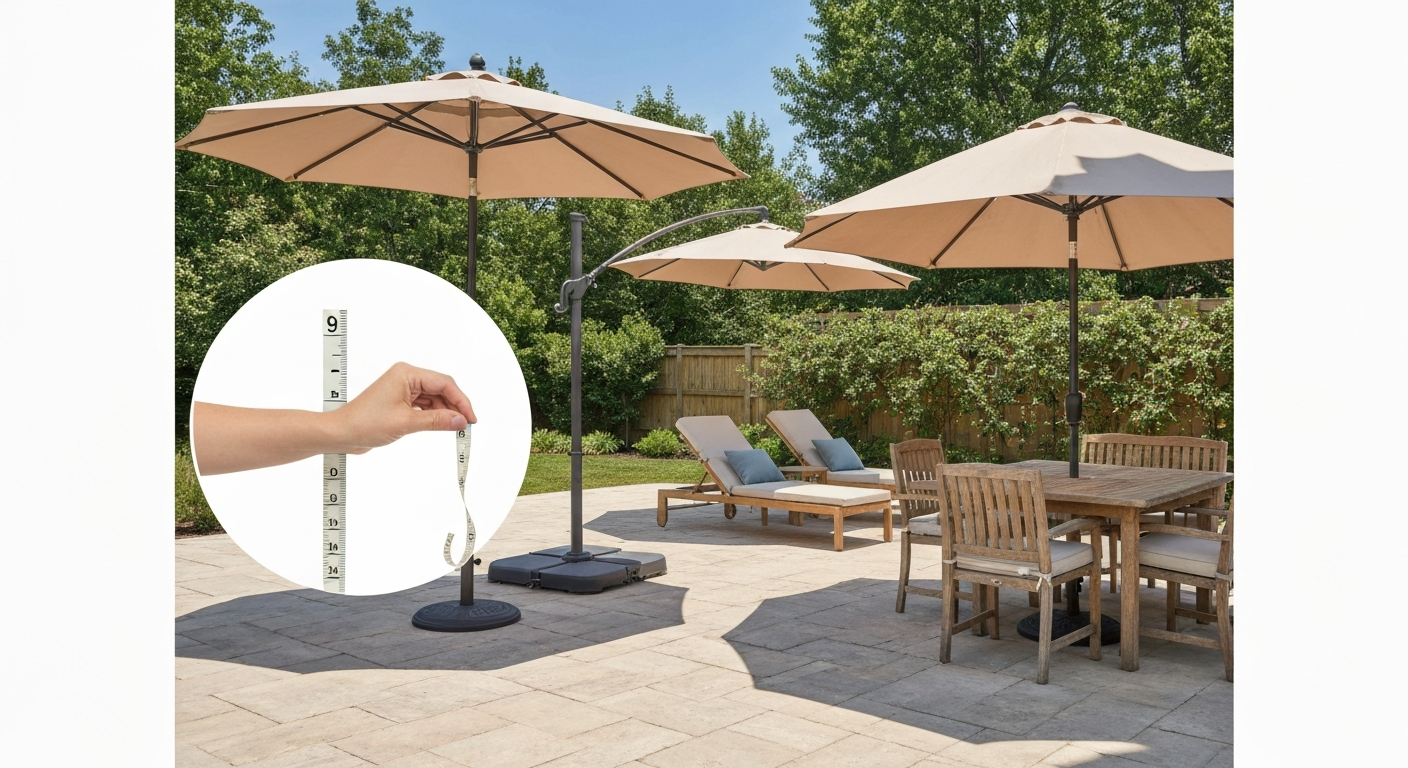
A 9-foot patio umbrella is the single most popular size for residential outdoor dining, and for good reason: it covers a standard 42–48 inch round or square dining table with enough overhang to actually shade the people sitting around it. The best ones pair a 100% solution-dyed acrylic canopy (Sunbrella is the benchmark) with an aluminum frame, fiberglass ribs, and a base that weighs at least 90 pounds. Get those three things right and you have an umbrella that will look good, stay put in moderate wind, and last for years without fading or rusting.
Best 9 Patio Umbrella Guide: Styles, Size, Specs, Wind

Kent Lang
18 Jun 2026
How to Choose the Best Patio Umbrella for Your Space
Before you look at a single product listing, answer three questions: What size table are you shading? How exposed is your patio to wind? And do you need the pole out of the way, or is a center pole fine? Those three answers will narrow the field from dozens of options to just a handful, and they determine which style, size, and base weight you actually need.
The "9" in 'best 9 patio umbrella' almost always refers to a 9-foot canopy diameter. Occasionally a listing will show a 9 ft x 11 ft cantilever, where 9 ft is one dimension of a rectangular canopy rather than the full round diameter, so always check the spec sheet for both dimensions before buying. A true 9-foot round canopy covers roughly 63 square feet of shade at peak sun, though real-world coverage shifts as the sun moves across the sky.
For most homeowners, a 9-foot market umbrella is the right starting point. It's beginner-friendly, widely available, and pairs naturally with the dining sets most people already own. If you have a sectional, a lounge area, or a table you want to view from multiple sides without a pole in the way, a cantilever is worth the extra cost. If you're comparing sizes and wondering whether to size up, a 10-foot or 11-foot canopy becomes relevant once your table exceeds 54 inches or your seating extends beyond six chairs.
Top Picks by Umbrella Style
Market Umbrellas (Center Pole)
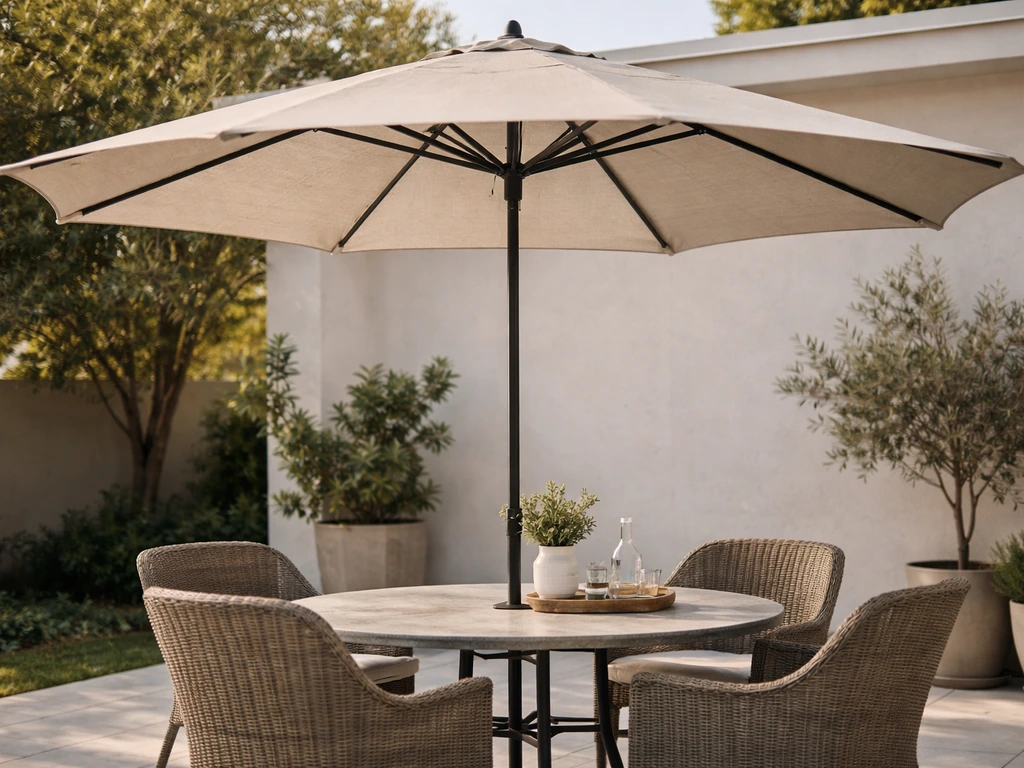
Market umbrellas are the classic style: a single center pole runs through or alongside the table, and the canopy opens above it. They're the easiest to set up, the most affordable, and mechanically the simplest to maintain. In the 9-foot round market category, the California Umbrella with crank lift and auto-tilt stands out for its combination of features: an all-aluminum rust-free frame with stainless steel hardware, a built-in wind vent, ties-to-close, and a canopy that measures 108 inches across. That wind vent is not just a styling detail; it allows air pressure to escape upward instead of lifting the entire canopy in a gust.
For premium fabric on a market umbrella, the D.W. Gilbert commercial-grade 9-footer and the EliteShade 9 ft round are both worth looking at. Both use 100% solution-dyed acrylic with a 5-year non-fading warranty, and both specify aluminum frames. The Shademaker Libra goes with an octagon centerpost design and uses both Sunbrella and O'Bravia solution-dyed acrylic woven fabrics, which gives it a slightly more refined aesthetic while keeping the UV performance high. If you want a design-forward option with contract-grade durability, West Elm's 9-foot round aluminum frame umbrella is a solid pick, though you'll pay more for the aesthetic.
For operation, crank lift with auto-tilt is the most practical choice for everyday use. A pulley system (as found on the Ratana 9-foot with its 38mm two-section aluminum pole and fiberglass ribs) is simpler mechanically and easier to repair, but you do need to tie off the cord. Auto-tilt lets you angle the canopy to follow the sun without closing it first, which is a genuine quality-of-life upgrade if you're outside for long stretches.
Cantilever and Offset Umbrellas
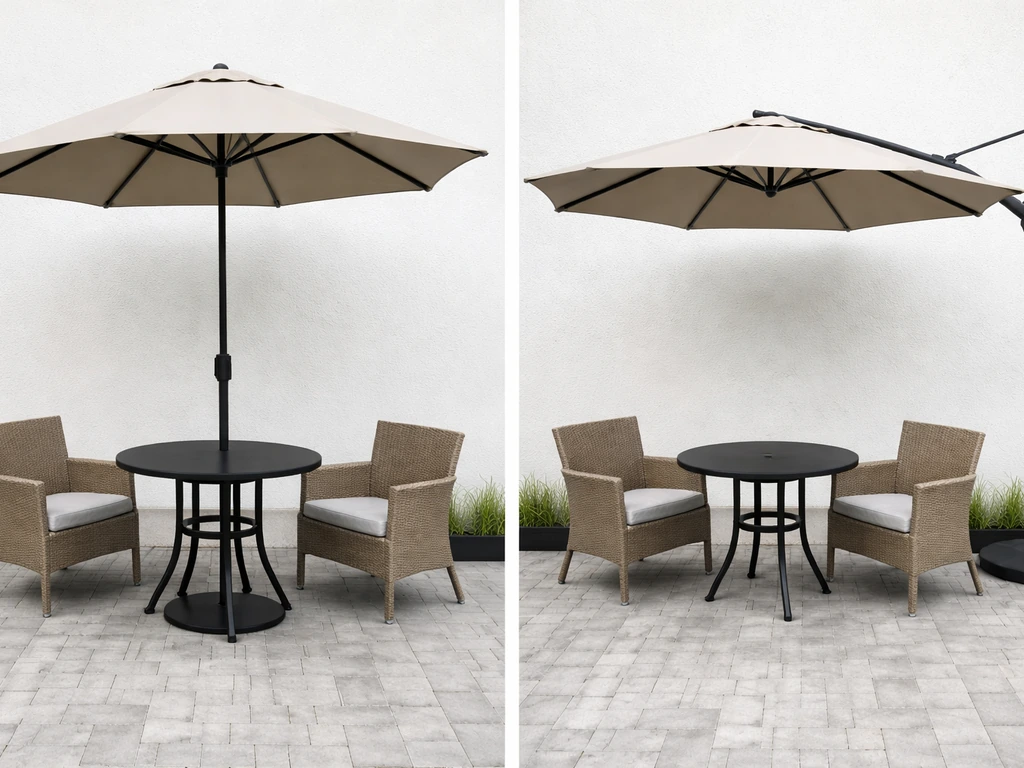
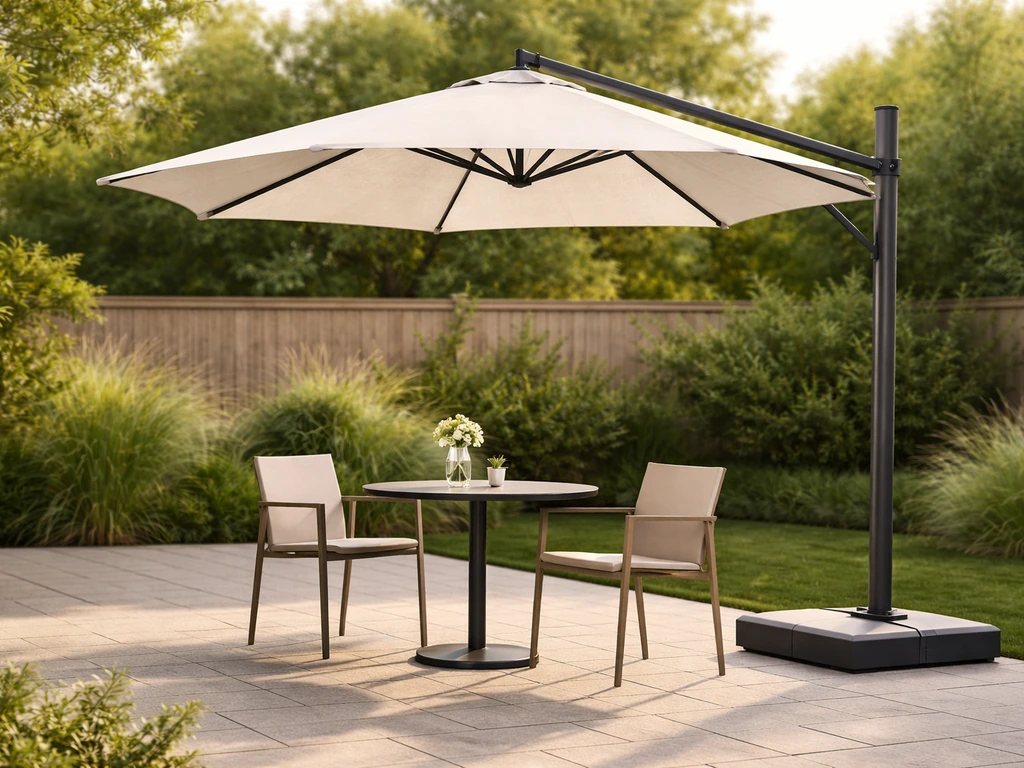
A cantilever suspends the canopy from an angled arm attached to a side post, which means zero obstruction underneath. No pole through your table, no pole to work around when you pull a chair out. This is a real advantage over a center-pole market umbrella, especially for lounge seating or sectionals. The tradeoff is that cantilevers cost more, require significantly heavier bases, and have more moving parts that need maintenance.
In the 9-foot cantilever category, the Pellebant 9 ft x 11 ft aluminum solar LED model from Home Depot is a good example of a double-top cantilever design with a crank system and multiple tilt positions. Note that its 9 ft x 11 ft dimensions make it rectangular, not round, so verify which dimension aligns with your seating layout. The ShadeUSA 9-foot aluminum cantilever uses an olefin canopy rather than solution-dyed acrylic. Olefin is softer and less expensive, but it doesn't match solution-dyed acrylic for fade resistance or long-term UV performance. It's a reasonable budget compromise, but if you're in a high-sun climate, spring for the acrylic.
Hanging and Specialty Styles
Hanging patio umbrellas are a subset of the cantilever category, typically designed to suspend from overhead pergola or arbor structures rather than from a freestanding side pole. They work beautifully in covered outdoor rooms but require a solid overhead anchor point rated for the canopy weight plus wind load. If you have a pergola and want clean sight lines, they're worth exploring, but they're a niche choice compared to the market and cantilever options that dominate the 9-foot size.
Size, Shape, and Coverage: What a 9-Foot Canopy Actually Covers
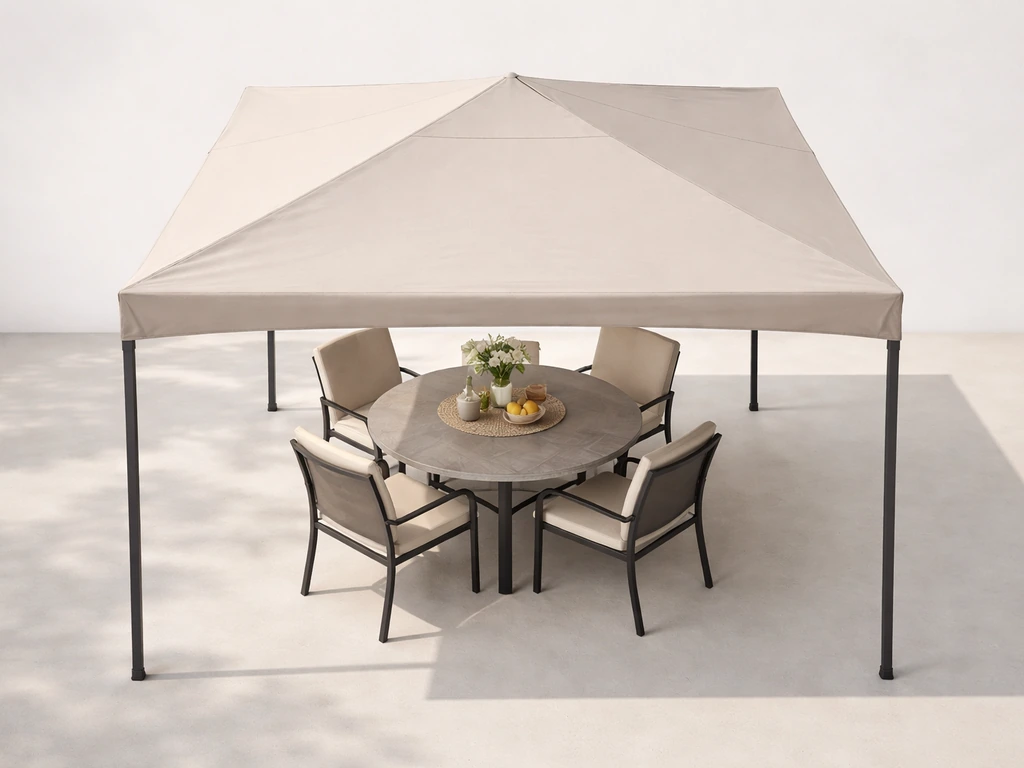
A 9-foot canopy is the right match for a 40–48 inch round or square dining table with four to eight chairs. The general rule is to extend the canopy at least 2 feet beyond the table edge on each side, which puts a 40–44 inch table comfortably in the center. For 36–42 inch tables, you could get away with a 7.5-foot umbrella, but 9 feet gives you the full coverage you want when the sun is at an angle rather than directly overhead.
| Table Diameter | Recommended Canopy Size | Seats |
|---|---|---|
| 36–42 inches | 7.5–9 ft | 4–6 people |
| 42–48 inches | 9 ft | 6–8 people |
| 48–54 inches | 9–10 ft | 6–8 people |
| 54 inches and up | 10–11 ft | 8+ people |
For canopy shape, round and octagon are the two most common options in the 9-foot market umbrella category. Round canopies give even coverage in all directions, which works well when your seating is centered under the umbrella. Octagon canopies have eight evenly spaced panels that can create slightly different shade angles depending on how you orient the umbrella, which some people find useful for angling shade toward a specific side of the table as the sun shifts. Practically speaking, the difference is minor for most homeowners.
Height and clearance matter more than most buyers expect. Plan for a minimum of 7 feet of clearance from the ground to the lowest point of the open canopy so people can walk and stand without ducking. A standard 9-foot market umbrella on a typical pole height will clear this for most adults, but always check the listed pole height and canopy drop before assuming. If you're mounting through a table with a shorter pole setting, measure carefully.
Materials and Durability: What to Look For in the Frame and Fabric
The two materials that most determine how long your umbrella lasts are the canopy fabric and the frame. Everything else flows from those choices.
Canopy Fabric
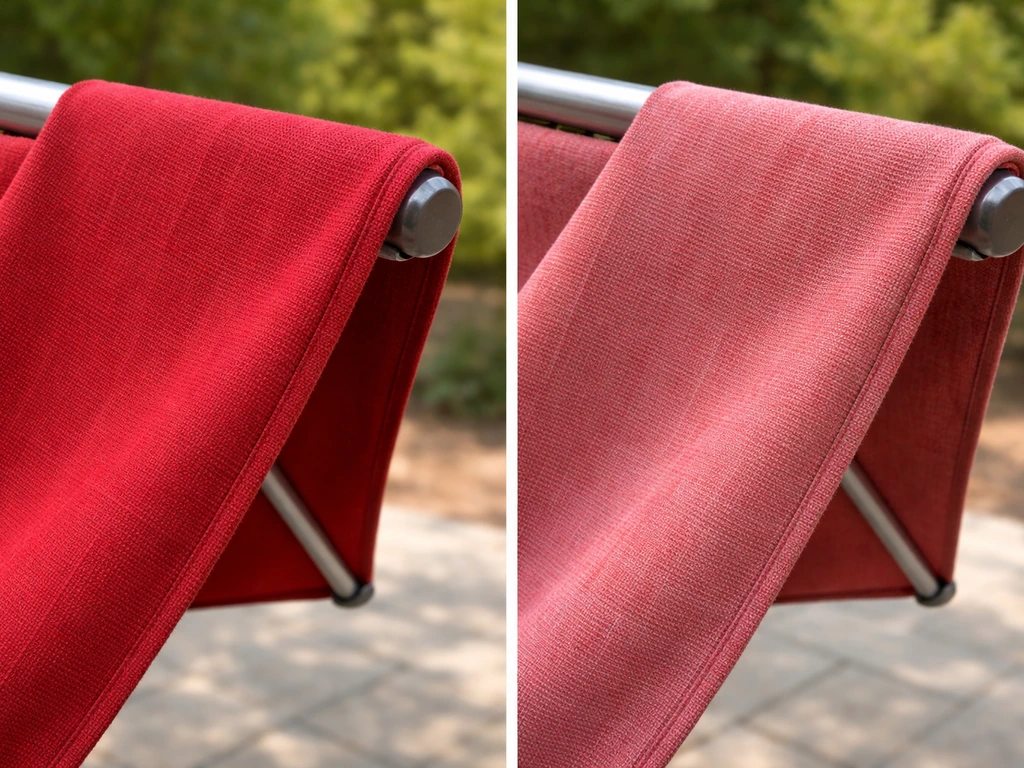
Solution-dyed acrylic is the gold standard for outdoor umbrella fabric. In solution-dyed construction, the color is added to the fiber before it's spun into thread, which means the color runs all the way through the fiber rather than sitting as a surface dye. Sunbrella is the best-known brand and the benchmark: it's 100% solution-dyed acrylic, tests at UPF 50+ (blocking at least 98% of UV rays), and carries a 5-year non-fading warranty on most umbrella applications. Several of the 9-foot picks above use Sunbrella or equivalent solution-dyed acrylic, and that warranty is a real indicator of confidence in the fabric's performance.
Olefin (also called polypropylene) is the budget alternative. It's soft, lightweight, and cheaper, but it fades faster under sustained UV exposure and doesn't shed water as cleanly as solution-dyed acrylic. If your umbrella will be out every day in a sunny climate, the faster fade cycle means you'll be replacing the canopy (or the whole umbrella) sooner. Olefin makes more sense for covered patios or very shaded yards where UV exposure is lower.
Frame and Rib Materials
Aluminum frames are the right call for most outdoor umbrellas. Aluminum doesn't rust, handles moisture well, and is light enough to manage easily. Look for stainless steel hardware (screws, bolts, and hinges) on the joints and fittings, because even on an aluminum frame, low-quality steel hardware will corrode. The California Umbrella and D.W. Gilbert commercial model both specify rust-free aluminum frames with stainless hardware, and that combination is what you want.
Ribs are the internal spokes that hold the canopy open, and their material affects both durability and how the canopy behaves in wind. Fiberglass ribs are more flexible than aluminum ribs, which means they bend rather than snap when a gust hits. The Ratana 9-foot umbrella explicitly specifies fiberglass ribs paired with an aluminum frame and pole, and that's a smart combination: rigid where it counts (the pole and hub) and flexible where you want it (the ribs). For lower-cost umbrellas that only specify generic 'ribs,' assume they're aluminum and factor in slightly more breakage risk in consistently windy conditions.
| Material | Best For | Watch Out For |
|---|---|---|
| Solution-dyed acrylic (Sunbrella) | High UV exposure, long-term fade resistance | Higher upfront cost |
| Olefin | Budget buyers, low-sun or covered patios | Faster fading, weaker UV blocking over time |
| Aluminum frame | Rust resistance, lightweight handling | Check that hardware is also stainless |
| Fiberglass ribs | Wind flexibility, durability | Less common in budget models |
| Aluminum ribs | Widely available, stiff | Can snap under sharp wind gusts |
Wind Performance and Stability: Bases, Weights, and What Wind Ratings Really Mean
Wind is where a lot of buyers get caught off guard. You pick a nice umbrella, set it up with a light base, and the first breezy afternoon it either tips over or takes flight. The umbrella's wind resistance is only as good as the system holding it down, and manufacturer wind claims (like '40 mph sustained wind resistance' on the Frankford Monterey) come with implicit assumptions about how the umbrella is installed and how tight the canopy is cranked. Homecrest's own 2026 engineering notes specifically call out that wind performance depends on variables like pin placement height, crank tautness, and fabric weight, meaning the same umbrella can behave very differently depending on how it's set up.
How Much Does Your Base Need to Weigh?
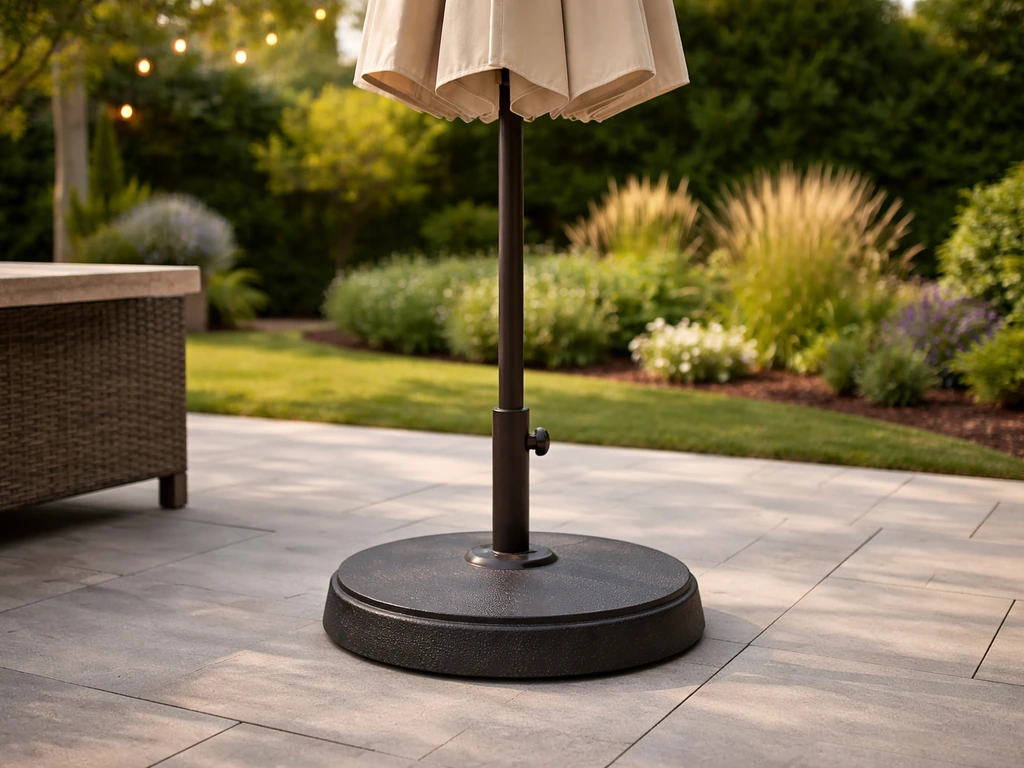
The standard rule of thumb is 10 pounds of base weight per foot of canopy diameter. For a 9-foot umbrella, that means a minimum base weight of 90 pounds in low-wind conditions. In moderately windy locations, bump that to around 115 pounds. A sand-filled resin base in the 50-pound range is fine if your umbrella goes through a table hole (the table adds significant stabilizing mass), but if the umbrella is freestanding on a base alone, you need the heavier option.
Cantilever umbrellas need significantly heavier bases because the canopy is offset to one side, creating a lever effect. A 9-foot offset cantilever realistically needs a weighted cross base in the 150–200 pound range for real-world wind stability. Some cantilever systems include galvanized steel bases (as noted in Homecrest's spec sheet), which help, but always verify the included base weight against these benchmarks before assuming the bundled base is sufficient.
Stability Features to Look For
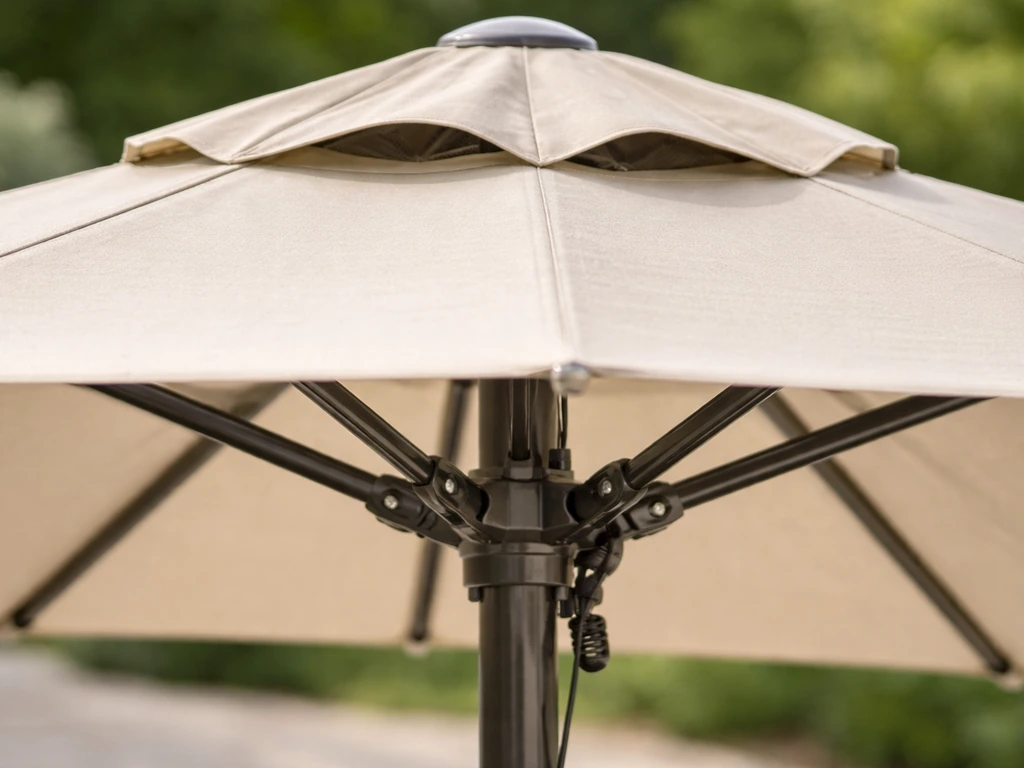
- Wind vent: A double-layer vent at the top of the canopy lets air escape upward instead of building pressure that lifts the canopy. This is one of the most effective passive wind-resistance features and is present on the California Umbrella ATA908 and several other quality 9-foot options.
- Ties-to-close: Straps that secure the folded canopy when the umbrella is closed. This matters a lot when a storm rolls in and you need to close the umbrella quickly and leave it out temporarily.
- Tilt mechanism: Auto-tilt lets you angle the canopy to block lower sun angles without closing it, but check that the tilt lock is firm and doesn't slip under load.
- Pole diameter: A 38mm two-section pole (as on the Ratana) is a good mid-range spec. Thicker poles (40mm+) are common on commercial-grade umbrellas and add stiffness.
- Surface anchor option: For beach use or very exposed patios, anchoring the base to the surface is safer than relying on weight alone. ASTM standard F3681-24 is the safety evaluation benchmark for umbrella and anchor systems in wind conditions.
The practical advice: close your umbrella whenever you're not actively using it, especially when wind picks up or a storm is approaching. No base weight or vent design fully eliminates the risk of tip-over in high gusts, and even a quality umbrella can be damaged if it goes over when open.
UV Protection, Water Resistance, and How to Make Your Umbrella Last
UV Protection
If UV protection is a priority, stick to solution-dyed acrylic fabrics rated UPF 50+. Sunbrella-type fabrics block at least 98% of UV rays and maintain that rating as long as the fabric remains clean and intact. The UV inhibitors are built into the fiber, not added as a coating that wears off, which is the key advantage of solution-dyed construction over cheaper alternatives. A single vent at the canopy peak doesn't meaningfully reduce UV blocking because the mesh in quality vents is still rated for UV protection.
Water Resistance
Solution-dyed acrylic sheds light rain well, but it's not waterproof in a sustained downpour. A tightly woven canopy with closed stitching pockets (as described on the Frankford Monterey) resists water penetration better than loosely woven fabrics. If you're in a rainy climate, look for canopies with a water-repellent treatment applied at the factory. The wind vent at the top should also have a layered or overlapping design so rain doesn't just funnel straight through the opening.
Cleaning and Maintenance
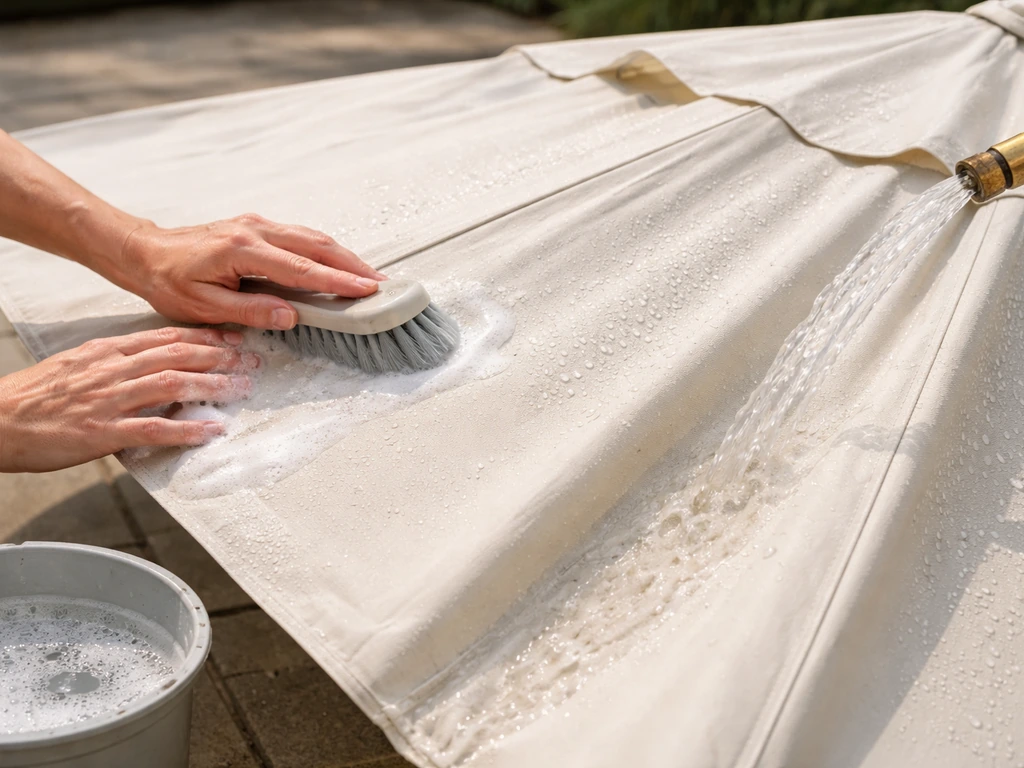
Cleaning a 9-foot canopy doesn't need to be complicated. Mix mild soap or detergent in lukewarm water, scrub gently with a soft brush, and rinse thoroughly. Do this at least once a season, or more often if the umbrella is under trees or in a high-pollen environment. Mildew doesn't actually feed on the acrylic fiber itself, but it will grow on dirt and organic debris that collects on the surface, so keeping the canopy clean is the best mildew prevention.
- Clean the canopy with mild soap and lukewarm water at the start and end of each season.
- Rinse thoroughly after scrubbing to remove all soap residue, which can attract dirt if left on the fabric.
- Lubricate the crank mechanism and tilt joint with silicone lubricant once a year to keep the hardware operating smoothly and prevent seizing.
- Store the umbrella indoors or under a quality cover when not in regular use, especially through winter months.
- Inspect the ribs, hub, and pole connections at the start of each season for cracks, corrosion, or loose hardware before first use.
- Replace worn ties and vent mesh before they fail, as both are inexpensive replacement parts that affect wind performance and water resistance.
Storage is where most umbrella lifespans get cut short. Leaving a quality umbrella outside through a wet winter, even with a canopy cover, accelerates frame corrosion at the joints and degrades the fabric faster than UV exposure alone. If you can bring it inside for the off-season, you'll easily add years to its life. At minimum, use a fitted umbrella cover that breathes enough to prevent moisture buildup underneath.
The Bottom Line: What to Actually Buy
For most homeowners with a 42–48 inch dining table and a reasonably protected patio, a 9-foot round market umbrella with a solution-dyed acrylic canopy, aluminum frame with stainless hardware, fiberglass ribs, a wind vent, and a crank-lift auto-tilt mechanism is the right call. Pair it with a base that weighs at least 90 pounds freestanding, or use a lighter base if the pole runs through the table. The California Umbrella, Ratana, and EliteShade options all hit the key specs in this category.
If your space is a lounge area or a sectional where a center pole would be in the way, budget for a cantilever. Expect to spend more on both the umbrella and the base, and be realistic about the base weight you'll need (150–200 pounds for a 9-foot offset in moderate wind). The olefin cantilever from ShadeUSA is a budget entry point, but if you're investing in the style, the upgrade to solution-dyed acrylic fabric is worth it for durability.
One last sizing note: if you find that a 9-foot canopy is right at the edge of covering your table or seating area, it's worth comparing against 10-foot options before committing. Comparing a 9 ft vs 10 ft patio umbrella is especially useful if your table is near the upper end of what a 9-foot canopy comfortably covers. The coverage difference between 9 and 10 feet can be meaningful when the sun is at a low afternoon angle, and the price gap between sizes is usually smaller than you'd expect.
FAQ
Can I use a lighter base if my 9-foot umbrella pole goes through the table?
If your dining table has a hole (or you are placing the umbrella directly on a stand), you can use a lighter freestanding base than you would for a fully freestanding setup. Still, check that the pole collar sits securely and that the table material can handle the load without wobble. If the umbrella base is truly standing alone on the floor, stick closer to the 90 lb minimum for a 9-foot umbrella (and more in wind).
How should I interpret manufacturer claims like “40 mph wind resistance”?
Do not rely on the listed wind rating if the setup differs. Wind performance changes based on canopy tightness (how hard it is cranked), how far the fabric overhangs, and how high the pin or canopy sits, so two identical umbrellas can behave differently. If you cannot reproduce the install conditions, treat the rating as an optimistic limit and size up the base.
What clearance should I measure so the 9-foot umbrella doesn’t interfere with foot traffic?
Measure not just canopy diameter, measure the canopy drop and the pole height in the closed and open positions. In practice, the umbrella can cover well but still force shorter clearance when tilted or when the canopy is not fully cranked open. Plan for at least about 7 feet of vertical clearance at the lowest point while open, and double-check when people are seated and moving around.
Should I choose round or octagon if I want shade for a specific side of my table?
For a market umbrella, you usually want a symmetrical look, so round or octagon is often simpler. For a cantilever, orienting the side arm can shift shade coverage, so test your seating layout at a few times of day if you have space. The best “shape” depends more on where you want the shadow to fall than on which canopy is round versus octagon.
What’s the safest way to cover a patio umbrella during off-season storage?
If you need to protect the umbrella year-round, choose a breathable fitted cover and keep the umbrella dry before covering it. The goal is to reduce rain and dust, but also avoid trapping moisture against the fabric and joints. Do not seal it airtight, because trapped condensation accelerates corrosion and mildew on accumulated debris.
How often should I clean a solution-dyed acrylic 9-foot umbrella canopy?
At typical spring to fall use, cleaning once per season may be enough for most solution-dyed acrylic umbrellas, but frequency should increase if you are under trees, near pollen, or near sprinklers. A quick rinse after heavy particulates (bird droppings, tree sap, pollen) reduces grime buildup that mildew likes to colonize.
Is olefin acceptable if my patio is sunny most days?
If you are in a high-sun climate or your umbrella is out daily, solution-dyed acrylic is the better long-term choice. Olefin can be fine on covered patios or very shaded yards because UV stress is lower, but it tends to fade sooner under sustained intense exposure. If your umbrella has to look good for years, prioritize fabric rated for strong UV performance.
Can a hanging patio umbrella work on my pergola, or do I need professional mounting?
Yes, but only if the overhead structure is rated for the additional load, including wind uplift. Hanging patio umbrellas shift the stress to the pergola or arbor anchor points, so flimsy posts or undersized beams can flex and cause unsafe movement. If you cannot confirm structural rating, a freestanding market umbrella is typically the safer DIY choice.
Which is better for daily convenience, crank lift with auto-tilt or a pulley lift?
A pulley-style mechanism is often simpler and easier to service, but it can require tying off the cord or managing slack. Crank-lift with auto-tilt is usually the more convenient everyday experience, especially when you want to angle shade without fully closing. If you frequently adjust during long outdoor meals, prioritize auto-tilt over simpler lift systems.
How can I improve stability if my 9-foot umbrella still flutters in moderate wind?
If you crank the canopy harder to reduce flutter and lift, your wind stability usually improves, but you should still avoid over-cranking to the point that it strains hardware. Also, check that the fabric is evenly tensioned and that the wind vent is unobstructed. If the umbrella still feels loose, the fix is usually base weight and installation quality, not just tighter cranking.