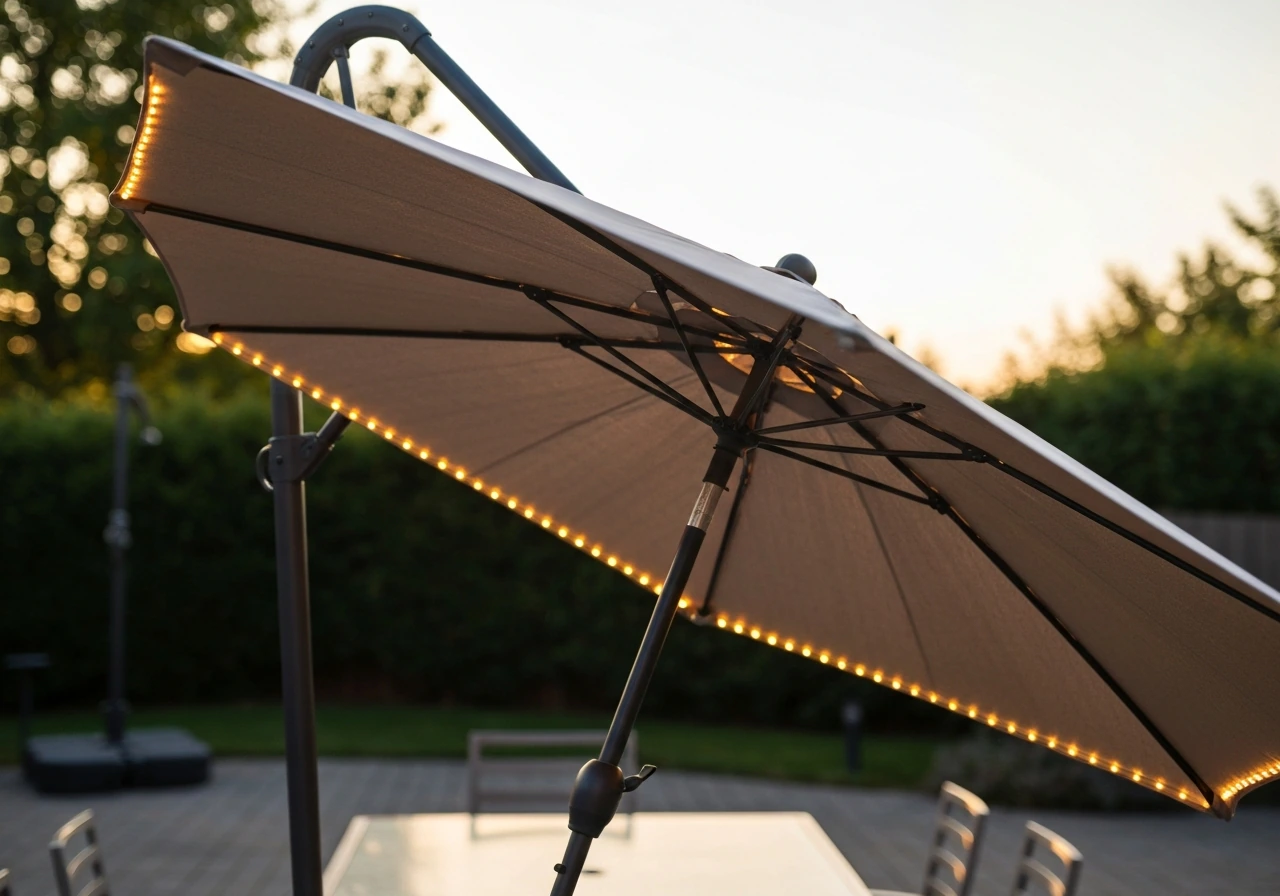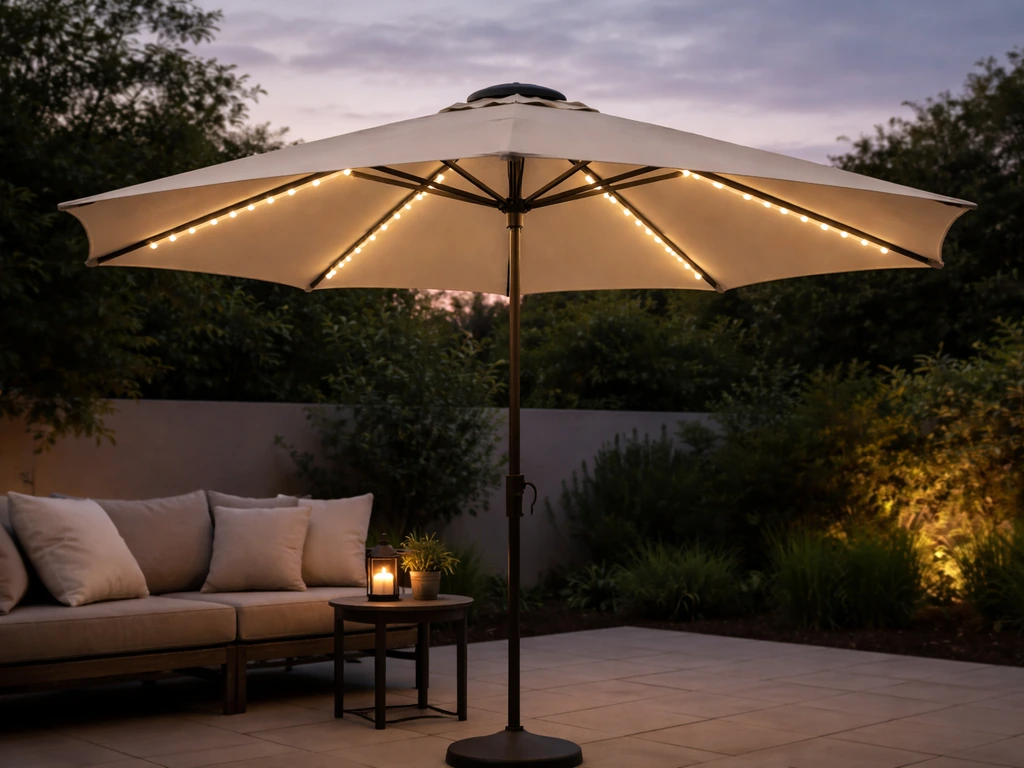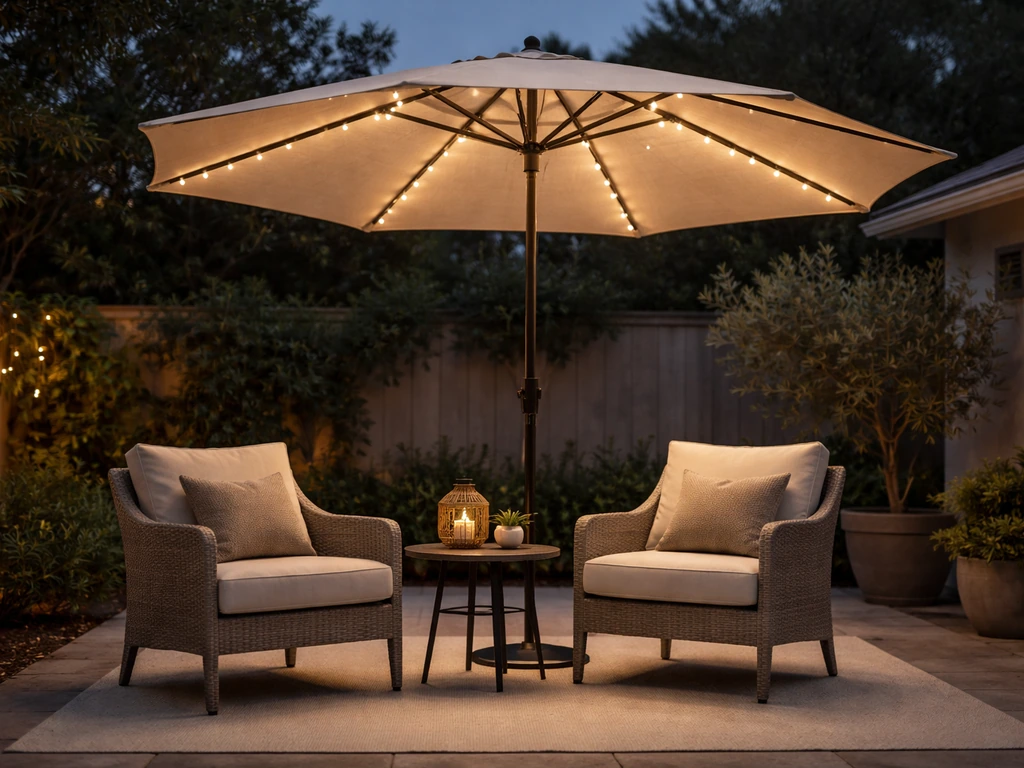
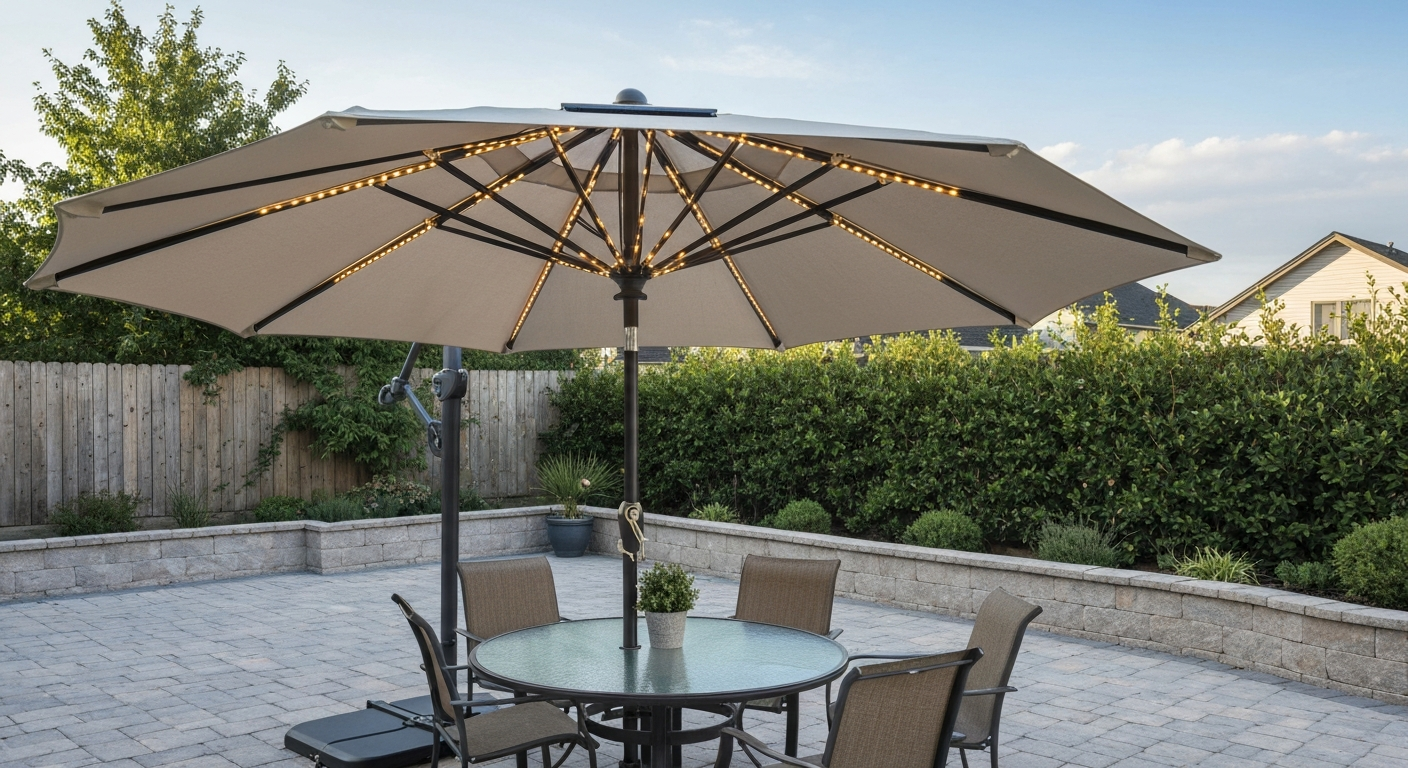
The best 3-tier patio umbrellas combine a stacked, vented canopy design with a solid frame and practical features like solar LED lighting and push-button tilt. For most homeowners, the Best Choice Products 10 ft 3-tier solar LED umbrella (around $100-$117 depending on retailer) hits a genuine sweet spot of price, features, and verified specifications. See the Best Choice Products 10ft 3 tier solar patio umbrella for detailed specs, model comparisons, and the manufacturer’s replacement parts list. If you want something more durable for a windy site or plan to use it year-round, stepping up to a solution-dyed acrylic canopy on an aluminum/fiberglass frame is worth the extra investment. This guide covers exactly how to evaluate those choices, what specs actually matter, and how to set up, maintain, and troubleshoot whatever you buy.
Best 3 Tier Patio Umbrella: Top 7 Durable, Wind‑Resistant Picks

Quick Summary and Top Picks
Here is a short list of standout 3-tier patio umbrellas across different price points and styles. Each one earns its place for a specific reason, which I break down in full detail further below.
- Best Choice Products 10 ft 3-Tier Solar LED (SKY9759 / SKY8638): Best overall value for homeowners who want LED lighting, tilt, and a vented canopy under $120. Polyester canopy, steel frame, 24 solar-powered LEDs, crank lift, push-button tilt. Widely available at Home Depot ($116.99), Best Buy ($99.99), and Lowe's.
- Best Choice Products 10 ft 3-Tier Solar (SKY7774): Slightly leaner variant without LED lighting on some configurations; great if you just want the tiered venting and solar panel at a lower price point.
- California Umbrella 9 ft / 11 ft Sunbrella Canopy (aluminum pole, fiberglass ribs): Best mid-to-high-end pick for durability and UV protection. UPF 50+ canopy, powder-coated aluminum pole, fiberglass ribs for wind flex. Higher upfront cost but multi-year fade warranty.
- Frankford Monterey 9 ft Fiberglass Market Umbrella: Top pick for consistently windy locations. Fiberglass ribs plus aluminum pole combination is the commercial-grade standard for wind resilience and corrosion resistance.
- Offset/Cantilever 10 ft 3-Tier with Crank and Cross Base: Best for patios without a center table hole. More flexible shade positioning, though requires a heavier base (typically 100+ lb recommended for larger cantilever models).
What '3-Tier' Actually Means
The term '3-tier' describes a canopy built from three overlapping, stacked fabric layers. Each layer creates a gap between it and the one above, so hot air and wind pressure have somewhere to escape rather than building up underneath and lifting the whole umbrella. Think of it like a ventilated roof: the gaps act as pressure-relief vents. Manufacturers market this as improving airflow and reducing the risk of your umbrella flipping or tipping in a breeze, and that claim is mechanically sound. A tiered canopy genuinely does reduce uplift compared to a single flat canopy with no venting.
That said, you will also see 'double-vented' or 'triple-vented' umbrellas that use a single canopy with separate sewn vent panels near the top rather than full separate tiers. Both approaches reduce wind uplift, but a true 3-tier design has three distinct fabric layers stacked from pole tip to outer edge. When a product page says '3-tier' but shows a single canopy with a small vent flap, that is marketing language, not a structural tier. Look at the product photos and check whether three separate canopy layers are visible. The Best Choice Products 3-tier models, for example, show clearly stacked layers in their manual illustrations.
Umbrella Styles: Which Type Fits Your Patio?
Before you zero in on a 3-tier model, make sure you are buying the right style for your setup. The style determines how the umbrella is supported, where the shade lands, and what kind of base or mounting you need.
Market (Center-Pole) Umbrellas
This is the most common backyard umbrella: a single pole runs straight up through the center of the canopy. Most 10 ft 3-tier models, including the Best Choice Products range, are market-style. They go through a hole in the center of a patio table or sit in a freestanding base. They are relatively affordable, easy to find replacement parts for, and straightforward to assemble. The tradeoff is that the pole is always in the center of whatever it is shading, which can be awkward for dining tables where you want unobstructed seating underneath.
Cantilever/Offset Umbrellas
A cantilever umbrella has its pole off to the side, connected to a cross-base or weighted stand, with an arm that extends the canopy over the seating area without any center post in the way. This is a better choice for lounge chairs, sectional sofas, or any space where you do not want a pole interrupting the layout. The mechanical complexity is higher (more joints, more potential failure points), and they need significantly heavier bases to stay stable. A 10 ft cantilever umbrella typically needs 100 lb or more of ballast. Some 3-tier canopies are available in cantilever configurations, but they are less common than market-style.
Table-Through and Wall-Mount
Table-through umbrellas pass through a dedicated hole in the table (usually 1.5 to 2 inches in diameter) and anchor into a base underneath. They are very stable for their weight because the table itself adds lateral support. Wall-mount umbrellas attach to an exterior wall bracket and project outward; these are useful for small balconies or spaces with no room for a freestanding base, but installation requires mounting hardware rated for the load and checking wall construction. Both are niche options compared to standard market and cantilever styles.
Size Guide: How Much Shade Do You Actually Get?
The canopy diameter is the single most important size measurement, and 10 ft is by far the most popular size for home use. A 10 ft market umbrella shades roughly 60 to 80 square feet directly underneath, which comfortably covers a 42-inch round or 48-inch square patio table with four chairs. If you have a larger rectangular table (say, 6 ft or longer with 6 to 8 chairs), look at an 11 ft or 13 ft canopy instead. For a single chaise lounge or two-person bistro set, a 9 ft canopy is often enough and costs less to replace.
To measure your coverage need, add roughly 2 feet to each side of the furniture group you want to shade. A 48-inch (4 ft) square table with chairs extending roughly 18 inches out on each side gives you a footprint of about 7 ft x 7 ft, so a 9 ft canopy just covers it and a 10 ft canopy gives you comfortable margin. For a rectangular 6 ft table with chairs, your footprint is closer to 9 ft x 5 ft, and you want at least a 10 ft or 11 ft canopy to cover it properly in the mid-afternoon sun angle.
| Canopy Diameter | Approximate Shade Area | Best For |
|---|---|---|
| 7.5 ft | ~44 sq ft | Bistro sets, 2-person tables |
| 9 ft | ~63 sq ft | Small round/square tables, 4 chairs |
| 10 ft | ~78 sq ft | Standard patio tables, 4-6 chairs |
| 11 ft | ~95 sq ft | Larger tables, 6-8 chairs |
| 13 ft | ~133 sq ft | Big dining sets, lounge areas |
The Best Choice Products 10 ft 3-tier models measure 10 ft in canopy diameter and stand approximately 8 ft tall when fully open. That height works well for most adults seated or standing nearby.
Key Features to Evaluate Before You Buy
Canopy Fabric
Fabric choice affects UV protection, fade resistance, and how long the canopy lasts before it needs replacing. There are three practical tiers. A concise fabric taxonomy and practical tradeoffs are summarized in Patio canopy fabric comparisons, Peak Home Furnishings (buyer/retailer guide) Patio canopy fabric comparisons — Peak Home Furnishings (buyer/retailer guide). Solution-dyed acrylic (Sunbrella is the most recognized brand, O'bravia is another) is the gold standard: the pigment is baked into the fiber rather than printed on top, so it resists fading, mildew, and moisture for years. These fabrics typically carry a UPF 50+ rating (blocking around 98% of UV radiation) tested to standards like AATCC TM183 or AS/NZS 4399, and Sunbrella backs its fade resistance with multi-year warranties. Cost is higher, but canopy replacement on a quality frame is a real option rather than replacing the whole umbrella. Mid-range solution-dyed polyester and olefin sit in the middle: better than basic polyester but not quite as durable as acrylic. Standard polyester (which is what most budget 3-tier models including the Best Choice Products line use) is fine for a few seasons, fades faster, and does not resist mildew as well. If you live somewhere with intense sun or high humidity, upgrading the canopy fabric is the single best way to extend the umbrella's life.
Frame and Rib Materials
Aluminum poles are lighter and naturally corrosion-resistant, making them the preferred choice for most homeowners and the standard for higher-end umbrellas. Powder-coated or anodized finishes extend their life further. Steel poles are stronger and less expensive but need good galvanization or powder coating to resist rust, especially in coastal or wet climates. For ribs (the spokes that hold the canopy open), fiberglass is the best choice for wind resilience: it flexes under gusts and springs back without cracking, and it does not rust. Commercial umbrella suppliers like Frankford and East Coast Umbrella consistently recommend fiberglass ribs paired with an aluminum pole as the preferred combination for outdoor durability. Steel ribs are common on budget umbrellas (including the Best Choice Products models) and work fine in calm environments, but they can bend permanently in a significant gust or develop rust spots over time.
Venting and Tilt
Beyond the tiered canopy design itself, look for a push-button tilt or collar tilt mechanism. Tilt lets you angle the canopy to follow the sun as it moves across the sky, which dramatically extends the time the umbrella is actually useful each day. Push-button tilt is the most common and easiest to operate (the Best Choice Products SKY9759 uses this system). Collar tilt (where you rotate the pole to set the angle) gives finer adjustment but requires more effort. One firm caution from the manufacturer: never use the tilt function when there is any wind. Tilting reduces canopy stability significantly even at low wind speeds.
Solar LED Lighting
Solar LED umbrellas have a small photovoltaic panel at the top of the canopy that charges a battery pack during the day, then powers LED lights in the ribs or canopy at night. The Best Choice Products SKY9759 has 24 LEDs and runs roughly 6 to 7 hours after a full charge. The battery pack in that model uses three AA NiMH cells (1.2V, 800 mAh each), which are standard and user-replaceable following the steps in the manual. This is an important distinction from lithium-ion battery systems: in June 2022, the CPSC issued a recall of SunVilla 10 ft solar LED market umbrellas sold at Costco because the lithium-ion battery packs overheated and in some cases caused fires. When evaluating any solar LED umbrella, verify what battery chemistry is used and check for any active recalls at CPSC.gov before purchasing.
UPF and UV Protection
A UPF 50+ rating means the fabric blocks at least 98% of UV radiation. For context, an untreated cotton shirt typically rates around UPF 5. Legitimate UPF ratings on umbrella canopies should reference a test method (AATCC TM183, AS/NZS 4399, or ISO 13758 are the common ones). Budget polyester canopies often claim UPF 50+ but may not back that up with third-party test data. If sun protection is a priority, look for solution-dyed acrylic fabrics with documented UPF claims or go with a brand that references specific test standards.
Wind Performance: What the Specs Actually Tell You
Wind resistance is the area where marketing claims and reality diverge the most. As of the research for this guide, there is no single mandatory wind-rating standard for residential patio umbrellas in the U.S. CPSC staff have been engaged with ASTM on a voluntary standard (referenced under ASTM F3512) covering wind safety and durability testing for market umbrellas, but it has not produced a universally adopted consumer-facing rating system yet. CPSC FY2023 VSTAR Annual Report, notes on ASTM F3512 and market‑umbrella wind testing documents CPSC staff engagement with ASTM on F3512 for market‑umbrella wind‑safety and durability testing CPSC FY2023 VSTAR Annual Report — notes on ASTM F3512 and market‑umbrella wind testing. So when a product page says 'wind resistant,' that is a general claim, not a certified test result.
The Best Choice Products manual is notably conservative: it warns users to never open or operate the umbrella in wind conditions greater than approximately 5 mph (8 kph) and to never use tilt in any wind at all. That is a very low threshold, and it reflects a real engineering reality: a large canopy acts like a sail. Consumer Reports, which tests patio umbrellas for assembly, adjustability, and resistance to frame movement, recommends vented or tiered canopies specifically because they measurably reduce uplift compared to flat single-layer canopies. But even a well-vented 3-tier canopy should be closed and secured when wind picks up beyond a gentle breeze.
Practical wind-resistance tips that actually work:
- Always close and tie down the canopy when not in active use, especially overnight.
- Use a heavier base than the minimum spec (more on that below).
- Fiberglass ribs flex under gusts and return to shape; steel ribs can bend and stay bent.
- A tiered/vented canopy significantly reduces the sail effect compared to a flat canopy.
- Never tilt the canopy in wind, even a light breeze. The tilted angle increases uplift dramatically.
- Position the umbrella so it is not in a wind tunnel created by gaps between buildings or fences.
Bases, Anchoring, and Installation by Style
Getting the base right is non-negotiable for safety. An undersized base is one of the most common reasons umbrellas tip over and cause injuries or property damage. The technical sheet for the Best Choice Products 10 ft LED umbrella (from the Home Depot static file) specifies a minimum base weight of 31 lb (14 kg) when used through a table hole (because the table adds lateral support) and a minimum of 78 lb (35 kg) as a freestanding base. Those are manufacturer minimums, not generous targets. In practice, going heavier than the minimum is the right call for any site that gets afternoon gusts.
| Umbrella Style | Minimum Base Weight (typical) | Base Type Options | Notes |
|---|---|---|---|
| Market, through-table | 31 lb (14 kg) | Weighted base under table, table umbrella stand | Table provides lateral support; reduce minimum only in calm sites |
| Market, freestanding | 78 lb (35 kg) for 10 ft | Fillable plastic base, cast iron/steel base, concrete anchor | Heavier always better; 50 lb minimum for 9 ft in calm areas |
| Cantilever/Offset 10 ft | 100–150 lb | Cross-base with fill, in-ground sleeve | Side-loaded geometry requires much more ballast |
| Wall-mount | N/A (wall anchors) | Lag bolts into studs or masonry anchors | Verify wall construction and anchor load rating before install |
For fillable bases (the most common type for freestanding market umbrellas), fill with sand rather than water. Sand is roughly 50% heavier per unit volume than water and does not freeze, crack the base, or evaporate. If you need to move the umbrella occasionally, a two-wheel dolly designed for umbrella bases makes transporting a 50-plus-pound filled base manageable.
Maintenance, Seasonal Care, and Simple Repairs
A patio umbrella that is cleaned and stored properly will last two to three times longer than one left out year-round. Here is a practical maintenance routine that actually makes a difference.
Regular Cleaning
For polyester canopies (standard on budget 3-tier models), brush off loose dirt first, then wipe down with a solution of mild dish soap and lukewarm water using a soft brush or sponge. Rinse thoroughly and allow to dry completely before closing. Never store a damp umbrella: mildew sets in fast on polyester and is very difficult to remove once established. For solution-dyed acrylic (Sunbrella-type) fabrics, the same gentle soap-and-water method works well; for stubborn stains or mildew, a diluted bleach solution (1 cup bleach per gallon of water) with mild soap is safe to use per Sunbrella's own cleaning guidelines, provided you rinse completely. For metal frames, wipe down with a damp cloth and dry. If you notice any rust spots on a steel frame, address them early with a rust-converting primer and touch-up paint before the corrosion spreads.
Seasonal Storage
At the end of the outdoor season (or before any extended period of non-use), close the canopy, tie or velcro it shut, and store it in a breathable umbrella cover or a storage bag. Avoid airtight plastic bags, which trap moisture. Bring the canopy indoors or into a dry shed if possible; steel frames in particular benefit from being out of the freeze-thaw cycle. Remove and store any detachable solar LED panels or battery packs indoors during winter, as cold temperatures degrade NiMH batteries. For the Best Choice Products models, the instruction manual notes that the solar panel connection is modular, making seasonal removal straightforward.
Simple Repairs
Crank stiffness is the most common mechanical complaint on market umbrellas. The fix is simple: clean any grit or debris from the crank housing and apply a small amount of silicone lubricant (not WD-40, which attracts dirt). The Best Choice Products troubleshooting guide specifically recommends this. For LED lights that stop working, the first check is solar panel exposure: the panel needs several hours of direct sun to achieve a full charge. If the panel is oriented correctly and lights still fail after a full-sun day, check the internal battery connections and, if needed, replace the three AA NiMH cells following the step-by-step procedure in the manual. If a rib bends, check whether the manufacturer sells replacement rib kits before scrapping the whole umbrella. The Home Depot product page for the Best Choice Products SKY8638 model links to a replacement parts list from the manufacturer.
Top Picks: Specs Compared Side by Side
| Model | Size | Canopy Material | Frame/Ribs | Lighting | Tilt | Approx. Price | Warranty |
|---|---|---|---|---|---|---|---|
| Best Choice Products SKY9759 / SKY8638 (3-Tier Solar LED) | 10 ft dia., ~8 ft H | Polyester, 8 ribs | Steel pole, steel ribs | 24 solar LEDs, ~6-7 hr runtime, 3x AA NiMH | Push-button | $100–$117 | 60-day limited |
| Best Choice Products SKY7774 (3-Tier Solar) | 10 ft dia. | Polyester, 8 ribs | Steel pole, steel ribs | Solar LED (fewer LEDs, model-dependent) | Push-button | ~$99 | 60-day limited |
| California Umbrella w/ Sunbrella (9-11 ft) | 9–11 ft dia. | Solution-dyed acrylic, UPF 50+ | Aluminum pole, fiberglass ribs | None (standard model) | Push-button or collar | $200–$400+ | Varies, fabric multi-year fade warranty |
| Frankford Monterey 9 ft Fiberglass | 9 ft dia. | Solution-dyed acrylic or polyester options | Aluminum pole, fiberglass ribs | None (standard) | Push-button | $250–$350 | Commercial-grade, varies |
| Generic 10 ft Cantilever 3-Tier | 10 ft dia. | Polyester (typical) | Steel or aluminum, steel ribs | LED optional on some models | 360° rotation, crank | $150–$300 | Varies, often 30-90 days |
Pros and Cons for Each Top Pick
Best Choice Products 10 ft 3-Tier Solar LED (SKY9759 / SKY8638)
- Pros: Affordable entry point ($100-$117), genuine 3-tier vented canopy, 24 LEDs with 6-7 hour runtime, push-button tilt, widely available (Home Depot, Best Buy, Lowe's), replacement parts list available from manufacturer.
- Cons: Polyester canopy fades faster than acrylic; steel ribs can bend in strong gusts; 60-day warranty is very short; NiMH battery performance degrades in cold weather; manufacturer wind threshold of 5 mph is very conservative.
Best Choice Products 10 ft 3-Tier Solar (SKY7774)
- Pros: Slightly lower price (~$99), same tiered venting and push-button tilt, widely available.
- Cons: Same durability limitations as above; LED configuration varies by variant; still a 60-day warranty.
California Umbrella with Sunbrella Canopy
- Pros: UPF 50+ solution-dyed acrylic resists fading and mildew for multiple seasons; fiberglass ribs flex rather than bend; aluminum pole will not rust; multi-year fabric fade warranty adds real long-term value.
- Cons: Considerably higher upfront cost; no integrated lighting; requires separate purchase if solar LEDs are wanted.
Frankford Monterey 9 ft Fiberglass
- Pros: Commercial-grade fiberglass rib and aluminum pole combination is best for wind resilience and corrosion resistance; purpose-built for long-term outdoor use; replacement parts readily available.
- Cons: 9 ft canopy may be too small for larger tables; premium price; no lighting option.
Generic 10 ft Cantilever 3-Tier
- Pros: No center pole improves sight lines and usability for lounge areas; 360-degree rotation useful for afternoon sun tracking; some models include LED options.
- Cons: Requires very heavy base (100+ lb); more moving parts mean more potential failure points; quality varies widely by brand; always verify base weight specs before purchasing.
Buyer's Checklist Before You Order
- Size: Measure your table/furniture footprint and add 2 ft per side. Confirm the canopy diameter covers it with margin.
- Wind resistance: Look for a tiered or double-vented canopy; prefer fiberglass ribs over steel if you get afternoon gusts.
- Base weight: Find the manufacturer's minimum base weight for freestanding use and plan to meet or exceed it. For a 10 ft umbrella, 78 lb minimum freestanding is a real spec.
- Tilt: Push-button tilt is the easiest to use; confirm it is included if you need afternoon shade flexibility.
- Lighting: Decide if solar LED adds enough value for evening use. Verify battery chemistry (prefer NiMH over lithium-ion) and check CPSC.gov for any active recalls on the model.
- Canopy material: Budget a bit more for solution-dyed acrylic if you are in a high-UV region or want a canopy that lasts more than 2-3 seasons.
- Frame material: Aluminum pole preferred; fiberglass ribs preferred for windy sites.
- Warranty and parts: A 60-day warranty (common on budget models) is short. Check whether the brand offers a replacement parts list before buying, so you know repairs are possible.
Step-by-Step Setup and Troubleshooting
Assembly
- Lay all parts out and compare to the parts list in the manual before starting.
- Attach the pole sections together; most Best Choice Products models use a slip-and-pin system. Ensure pins click firmly into place.
- Attach the hub/canopy assembly to the top of the pole before inserting the pole into the base or table hole.
- Insert the pole into the base and secure with the locking pin or set screw.
- Partially open the canopy using the crank before attaching any final canopy clips or ties.
- Fully crank open and check that all ribs are seated in their sockets and the canopy layers are spread evenly.
- For solar LED models: orient the solar panel to face south (in the Northern Hemisphere) or as close to unobstructed sky as possible. Charge in full sun for at least 6-8 hours before first use.
Solar and LED Troubleshooting
- Lights do not turn on: Check that the on/off switch (usually on the pole or battery housing) is in the ON position. Confirm the solar panel has had a full charge day. Inspect the wiring connection between the panel and battery pack for any loose or pinched connector.
- Lights dim or only last 1-2 hours: Battery capacity is degraded. Replace the three AA NiMH cells (1.2V, 800 mAh each) following the procedure in the Best Choice Products manual. Use quality NiMH cells, not alkaline (alkaline batteries will not charge from the solar panel).
- Solar panel not charging: Make sure nothing is shading the panel. Wipe the panel surface clean with a damp cloth (dust and pollen reduce output). Check that the panel is connected to the battery housing.
- Lights flicker: Usually a loose wire connection at the panel-to-battery junction. Reseat the connector firmly.
Tilt Mechanism Troubleshooting
- Tilt does not engage: On push-button tilt models, the button must be pressed and held while repositioning the pole angle. If the button depresses but the canopy does not tilt, check for debris in the tilt collar.
- Tilt will not hold angle: The tilt pin or locking mechanism may be worn. Check whether the manufacturer sells a replacement tilt collar as a part.
- Crank is stiff: Clean the crank housing of grit, then apply silicone lubricant sparingly. Do not use petroleum-based lubricants, which attract dirt.
Warranty, Replacement Parts, and Safety
The 60-day limited warranty on Best Choice Products 3-tier umbrellas is genuinely short compared to mid-range and premium alternatives. It covers manufacturing defects but not damage from wind, improper use, or normal wear. Before purchasing any umbrella, search the exact model number at CPSC.gov to confirm there are no active recalls. The 2022 SunVilla recall (lithium-ion battery fire risk) is a concrete example of why this check matters for solar LED models specifically.
For the Best Choice Products 10 ft models, the Home Depot product page links to a manufacturer replacement parts list and an installation guide, which means individual components (ribs, crank assembly, tilt collar, canopy) can potentially be sourced rather than replacing the whole umbrella. Always review this parts availability before buying, especially for a budget model where the frame may outlast a single canopy.
A few safety practices worth repeating: never leave an open umbrella unattended in wind; always use a base that meets or exceeds the manufacturer's minimum weight spec; and for solar LED models, store the battery pack indoors in cold climates. If the umbrella shows visible rib or pole damage after a storm, retire it rather than continuing to use a compromised structure.
Which Umbrella Is Right for Your Situation?
Different patios have genuinely different needs. Here is a quick decision breakdown by common use case:
| Use Case | Best Pick | Why |
|---|---|---|
| Budget-friendly dining table shade with evening use | Best Choice Products 10 ft 3-Tier Solar LED (SKY9759/SKY8638) | Best value for LED + vented canopy + tilt under $120 |
| Windy coastal or hillside patio | California Umbrella or Frankford Monterey with fiberglass ribs | Fiberglass ribs flex in gusts; aluminum pole resists corrosion |
| Lounge chairs / sectional with no table hole | 10 ft Cantilever 3-Tier | No center pole; flexible shade positioning |
| Maximum UV/sun protection, long-term durability | Any umbrella with Sunbrella (UPF 50+, solution-dyed acrylic) | Documented UPF 50+, multi-year fade warranty, mildew-resistant |
| Evening ambiance on a budget | Best Choice Products 10 ft 3-Tier Solar LED | 24 LEDs, 6-7 hr runtime, ~$100-$117, easy setup |
| Small balcony or wall space only | Wall-mount umbrella (verify wall construction) | No floor footprint; requires proper anchoring |
Next Steps: Measure, Choose, Buy, Maintain
Start by measuring your furniture footprint and adding your 2-foot buffer per side. That tells you the minimum canopy diameter you need. From there, decide whether evening LED use, tiered venting, or long-term fabric durability is your top priority, because those choices drive you toward different price points and models. For most homeowners with a standard dining table and moderate sun exposure, the Best Choice Products 10 ft 3-tier solar LED models deliver genuine value at a real-world price. See the Best Choice Products solar LED lighted patio umbrella with tilt for full specs, solar charging details, and assembly tips. If you are on a windier site or want a canopy that lasts through five or more seasons without fading, budget for solution-dyed acrylic on a fiberglass-ribbed frame. Once you have the umbrella, fill your base heavier than the spec minimum, charge the solar panel for a full day before first use, and close it down every time you leave the patio. That habit alone will add years to whatever you buy. For more detail on specific Best Choice Products solar LED variants, their solar charging setup, and LED troubleshooting, the instruction-specific guides for these models go deeper on the solar panel orientation and battery replacement steps. See the Best Choice Products 10ft solar LED patio umbrella instructions for model-specific solar charging and battery-replacement steps. See the Best Choice Products 10ft solar LED patio umbrella for model-specific setup and troubleshooting.
FAQ
What does “3‑tier” mean on a patio umbrella?
A “3‑tier” umbrella describes a canopy built with three stacked/overlapping vented layers (a triple or three‑tier vented top). The stacked vents let hot air and wind escape through the canopy instead of catching beneath it, which reduces uplift and improves stability in breezy conditions compared with an unvented single canopy.
Are 3‑tier umbrellas more wind‑resistant than regular market umbrellas?
Yes—vented or tiered tops reduce sail effect by allowing air to pass through the canopy, so they are generally more wind‑resistant than single‑layer canopies. Wind performance also depends on frame materials (fiberglass ribs and aluminum poles perform better), construction quality, and proper anchoring (adequately heavy base or bolted mount). No umbrella is wind‑proof; follow manufacturer wind limits and close the umbrella in stronger gusts.
What materials should I look for for durability and UV protection?
For long life and UV protection, look for solution‑dyed acrylic fabrics (e.g., Sunbrella) which typically deliver UPF 50+ and superior colorfastness. Midrange options include solution‑dyed polyester or olefin. Basic polyester is least expensive but fades and degrades faster. For frames, choose fiberglass ribs (flexible, return to shape) with an aluminum pole (corrosion‑resistant) or well‑coated steel if you need extra stiffness.
How much base weight or anchoring do I need for a 10‑ft 3‑tier umbrella?
Base requirements vary by manufacturer, but common guidance for 10‑ft market umbrellas is a minimum of ~31 lb (14 kg) if used through a table, and ~78 lb (35 kg) or more if freestanding. In windy zones or for heavy canopies, choose heavier cast‑iron/concrete bases or bolt the pole into a deck/ground sleeve. When in doubt, increase base weight rather than risk tipping.
Are solar or LED lights integrated into umbrellas safe and reliable?
Solar/LED systems can be convenient and safe when designed correctly, but they require proper components and installation. Follow the manufacturer charging and battery replacement instructions—some umbrellas use NiMH AA cells which are replaceable, while others used lithium packs that have led to recalls in the past. Charge panels in direct sun before first use, check wiring, and replace batteries with manufacturer‑specified types. If you see signs of overheating, replace the unit and contact the seller/manufacturer immediately.
What common safety warnings should I follow?
Always secure the umbrella with the recommended base weight or an anchored sleeve. Never leave the umbrella open during strong winds or storms; many manuals advise closing the umbrella in winds over a very low threshold and not using tilt in windy conditions. Keep flame sources away from fabric. For solar/LED models, follow battery and charging guidance and discontinue use if batteries overheat or the unit emits smoke or unusual heat.