If you want a solar LED patio umbrella with a tilt that actually works in the evening, Best Choice Products' 10ft center-pole model (24 LEDs, push-button tilt, 6–7 hour runtime) covers most standard patio tables well and costs less than $100. The offset cantilever version adds positioning flexibility and a crank tilt but requires a 100-lb base minimum. Both are solid starting points, but the right pick depends on your table size, patio layout, how much shade angle you need, and whether you actually want the lights for ambiance or for serious illumination. Here's how to sort it out.
Best Choice Solar LED Lighted Patio Umbrella With Tilt Buyer Guide

Kent Lang
11 Jul 2026
What a solar LED tilt patio umbrella actually is (and why the tilt matters)
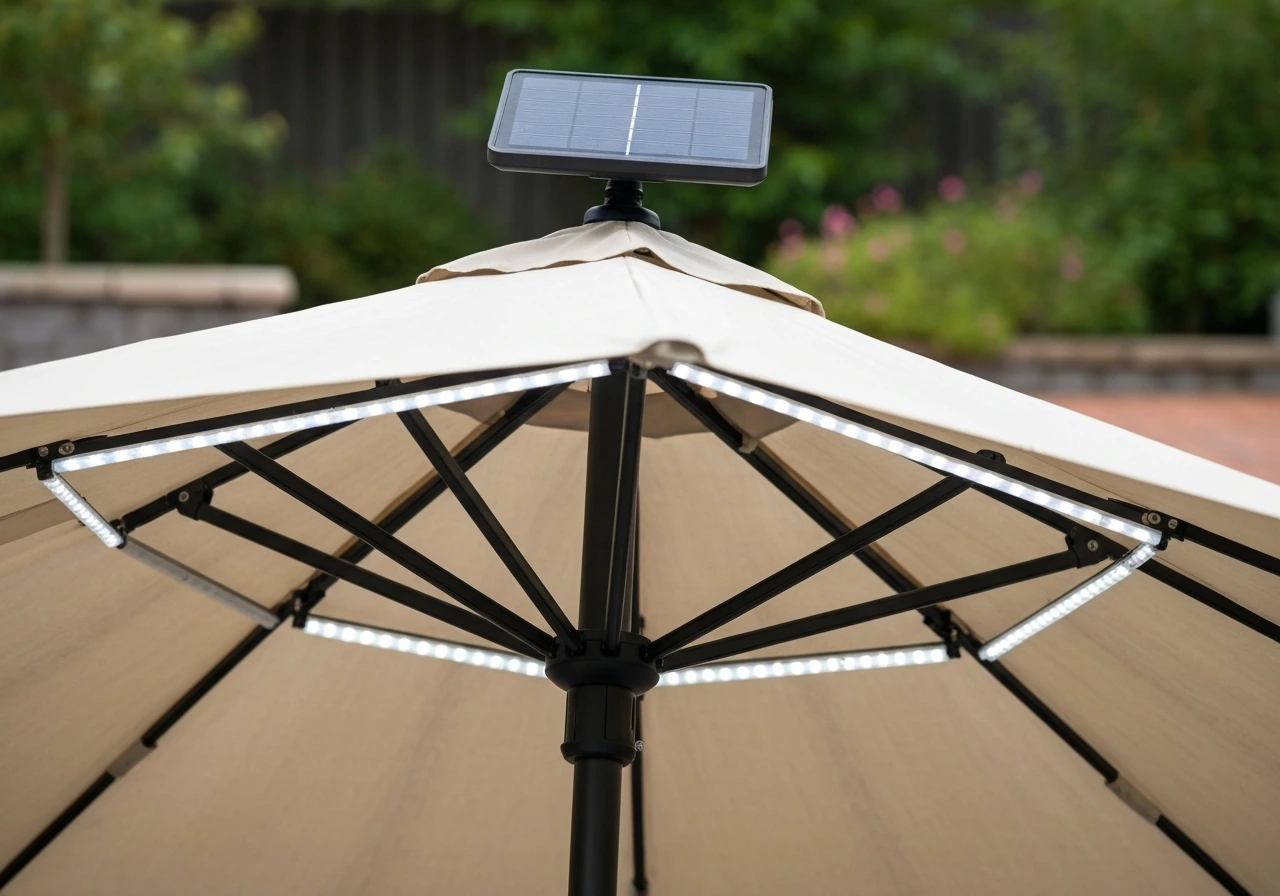
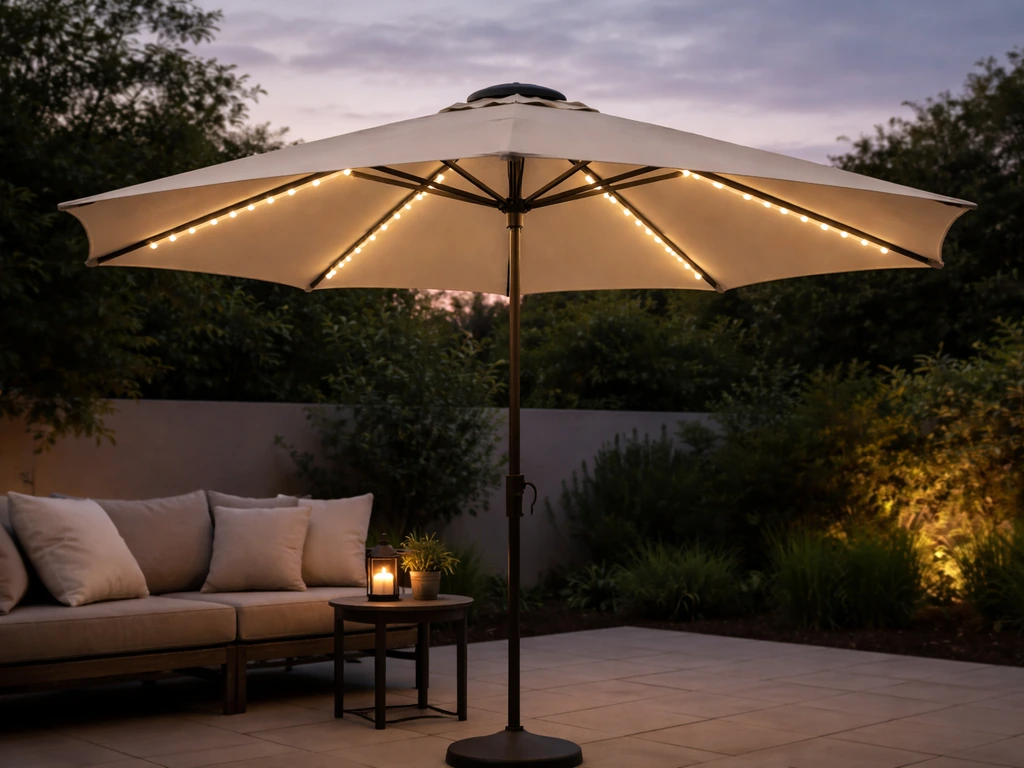
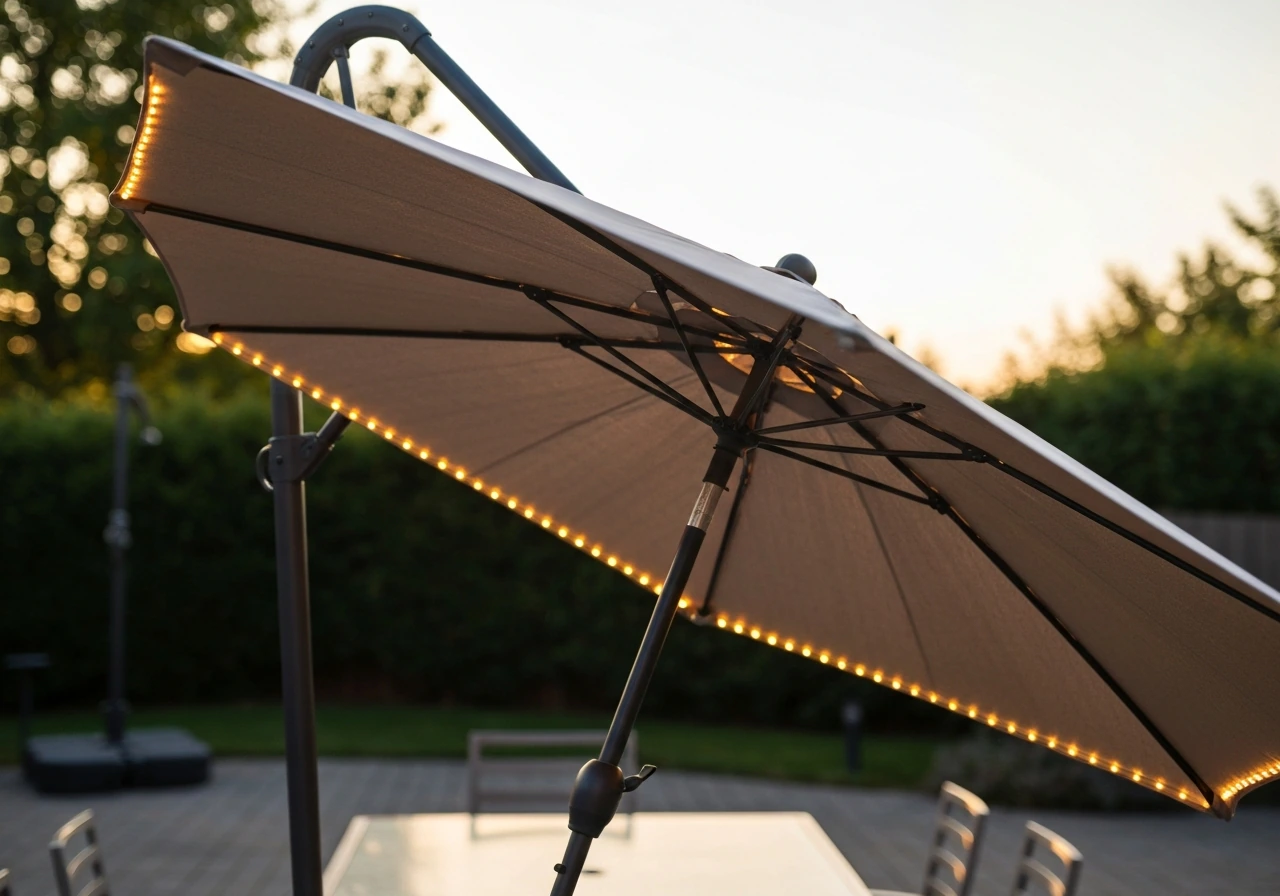
A solar LED lighted patio umbrella combines three features into one product: a standard shade canopy, a built-in solar panel (usually on top of the pole or canopy center) that charges an internal battery during the day, and LED lights wired through the ribs that illuminate the space underneath at night. The tilt mechanism lets you angle the canopy off-vertical, which lets you block low-angle morning or afternoon sun without moving the whole umbrella. That sounds simple, but it changes how useful the umbrella actually is across a full day.
Without tilt, a center-pole market umbrella only blocks overhead sun, which means it is useless for that brutal late-afternoon angle that hits your face directly. With a push-button tilt (common on Best Choice Products' center-pole models) or a crank tilt (found on their offset models), you can lean the canopy 35 to 45 degrees toward the sun. That is a meaningful difference in practical shade coverage. The 3-tier Best Choice Products model uses a pivot-and-lock system that tilts to roughly 45 degrees, while the offset/cantilever version specifies up to 35 degrees of tilt via the crank. Neither is infinitely adjustable, but both cover the typical sun angles you need on a residential patio.
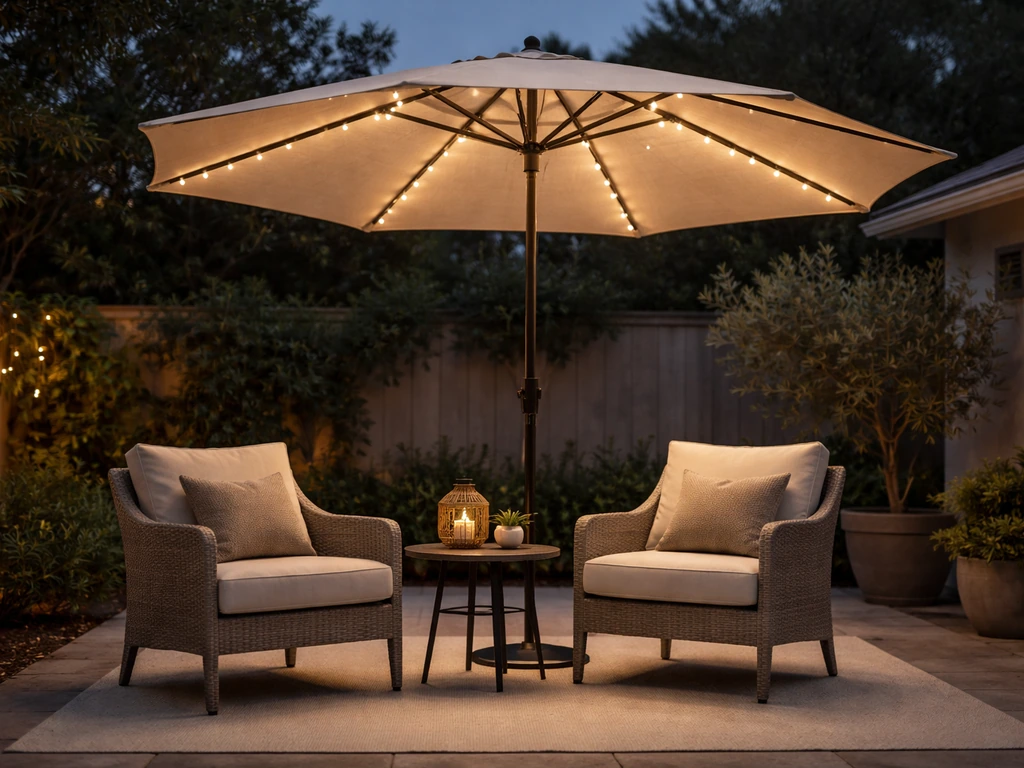
The LED lighting side of things flips the umbrella from a daytime-only tool into an evening seating setup. Best Choice Products' LEDs are solar-powered, so there is no wiring involved and no outdoor outlet required. The lights sit along the ribs (3 per rib on 8-rib models, for 24 total), which creates downward-facing ambient light over the table. This is genuinely useful for outdoor dinners or casual evenings, though you should go in with clear expectations about brightness levels, which we cover in the solar and LED section below.
The key criteria that actually separate a good solar tilt umbrella from a mediocre one
Not every product that calls itself a 'solar LED tilt umbrella' delivers on all three of those features equally. Here is what to evaluate before buying, in rough order of importance.
Tilt range and mechanism quality
The tilt mechanism is the most likely thing to fail or feel cheap on an entry-level umbrella. Push-button tilt is the simplest: you press a button near the crank, tilt the canopy to the angle you want, and release. It locks in place but can sometimes slip under wind load. Crank tilt (found on the Best Choice Products offset models) is smoother to operate and tends to hold position more reliably. The 3-tier model uses a pivot-and-lock system that is intuitive once you read the manual. When evaluating any model, check that the tilt locks securely and does not creep back to vertical under light wind.
Canopy size and coverage
A 10ft canopy is the most common size across Best Choice Products' solar LED tilt lineup. To make setup easier, follow the manufacturer guidance in the 10ft solar LED patio umbrella instructions for your Best Choice Products model [best choice products 10ft solar led patio umbrella instructions](/best-choice-products-10ft-solar-led-patio-umbrella-instructions). For a standard 48-inch (4ft) round patio table with 4 to 6 chairs, a 10ft umbrella provides about 2 to 3 feet of shade overhang on each side when positioned directly overhead.
That is adequate for most residential patios. If your table is larger (60 inches or more) or you want shade to cover a full sectional seating area, look at 11ft or larger options, or consider an offset cantilever model that can be positioned off to the side and cover more usable area without a center pole in the way.
Light spread and LED placement
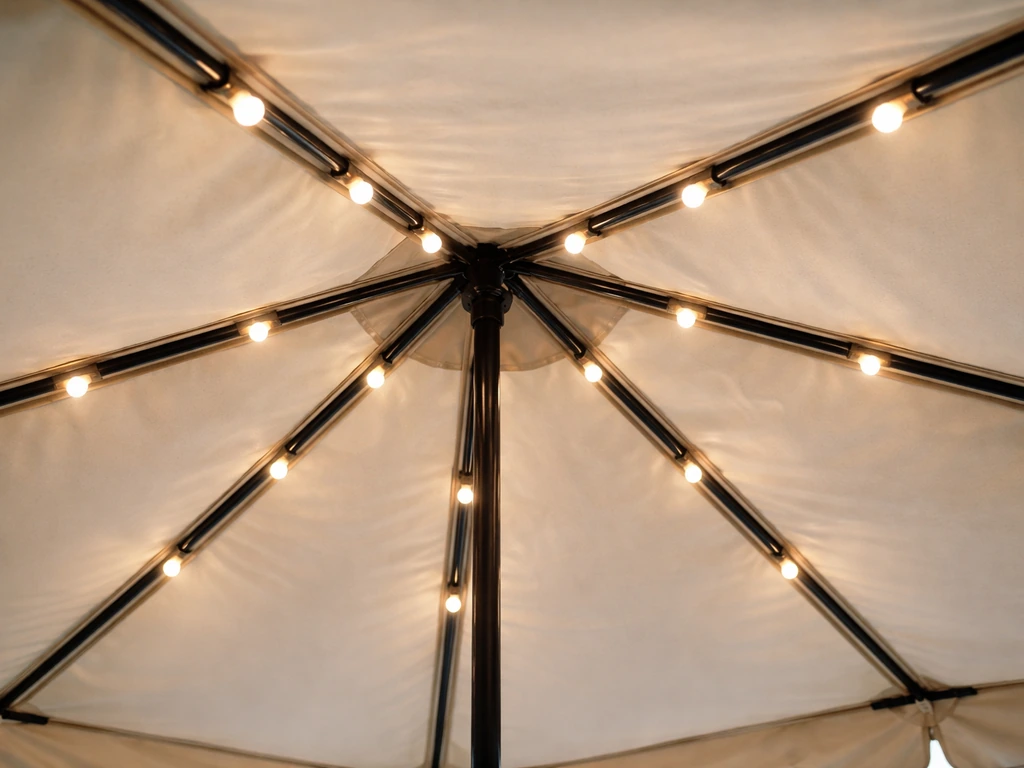
Best Choice Products' 10ft center-pole model places 3 LEDs per rib across 8 ribs, for 24 total lights. That layout distributes light evenly over the canopy interior and down onto the table. The LEDs are white and are not dimmable (it is on/off only, controlled by a switch near the crank). That is worth knowing upfront: you cannot dial down the brightness for a softer mood. What you get is clean white ambient illumination that works well for eating and conversation but will not replace a dedicated outdoor lamp if you need to read by it.
Solar power and LED performance: what the specs actually mean for real use
Best Choice Products states a charge time of 6 to 7 hours and a run time of 6 to 7 hours for their 10ft solar LED center-pole tilt model. That is a roughly 1:1 ratio, which means a full sunny day of charging gives you a full evening of light. In practice, that is enough for most patio sessions, but there are a few things that can cut into that runtime.
- Partial sun or heavy cloud cover during the day will result in an incomplete charge, reducing your evening runtime proportionally.
- The solar panel sits on top of the canopy and must face the sun directly. If the umbrella is under a pergola, tree shade, or deep awning for most of the day, it will not charge adequately.
- When you tilt the canopy, the solar panel angle changes too. Tilting away from the sun during charging hours reduces panel efficiency, so try to keep the umbrella vertical during peak daylight charging.
- The battery in these entry-level models is not designed for year-round outdoor storage. Bringing it in or disconnecting the battery during winter extends its lifespan significantly.
- LEDs are white only and operate as a simple on/off switch. There is no color-changing mode or dimming on current Best Choice Products models.
For most homeowners using the umbrella from late spring through early fall, the 6–7 hour runtime is practical. You open the umbrella around 10am, it charges through the afternoon, and you have lights from dusk until roughly 11pm or midnight. That aligns well with typical outdoor entertaining hours. If you want longer runtime, look for models with a larger solar panel or a supplemental USB charging port as a backup, though Best Choice Products' current lineup does not prominently feature USB backup charging.
Auto-dusk vs. manual activation
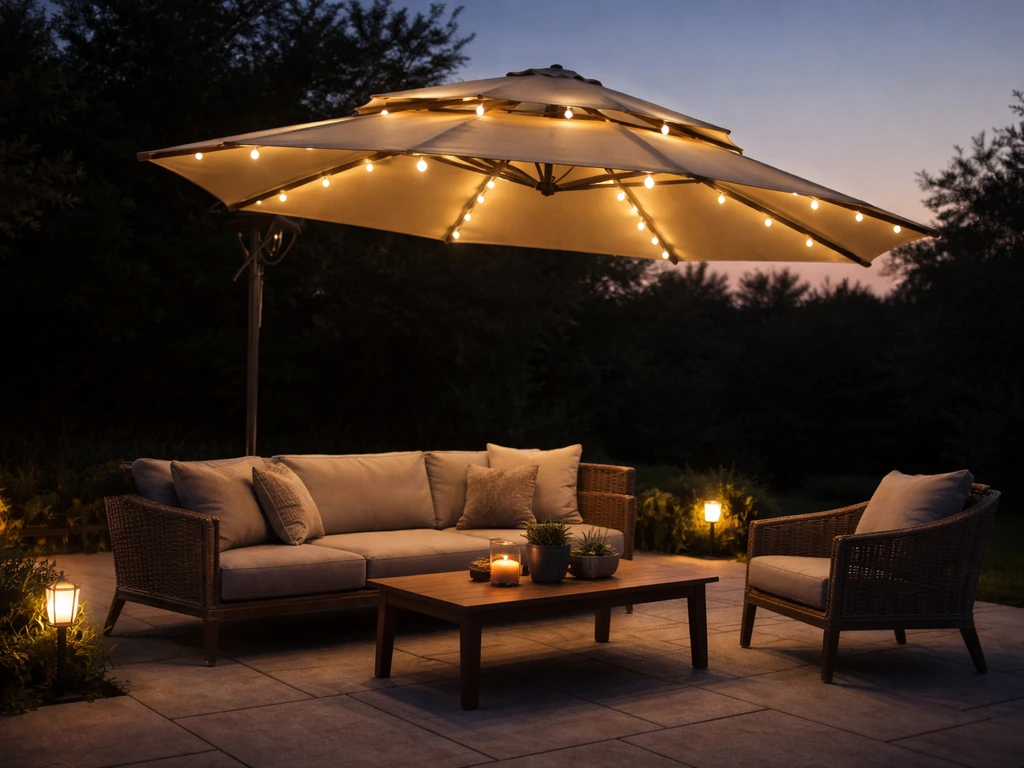
The 3-tier Best Choice Products solar umbrella (model SKY9759) offers both auto-dusk activation (lights turn on automatically when it gets dark) and manual switch control near the crank. The center-pole tilt model uses a manual switch. Auto-dusk is genuinely convenient if you forget to flip the lights on, but it also means the lights run even on nights you are not using the patio, which drains the battery. If battery longevity matters to you, manual control is actually the more efficient option day-to-day.
Construction and durability: what holds up and what wears out
Best Choice Products uses polyester canopy fabric with aluminum and steel in the frame. That is a standard combination at this price point, and it works, but it is worth understanding the trade-offs of each material.
Canopy fabric
The polyester canopy on Best Choice Products' solar umbrellas is listed as water-resistant and UV-resistant, and care instructions specify hand washing only (no machine washing, no harsh chemicals). Polyester is lighter than solution-dyed acrylic fabrics like Sunbrella, fades faster under intense UV exposure, and degrades more quickly if left wet repeatedly. That said, for a product in this price range, it holds up reasonably well for 2 to 4 seasons with proper care, meaning closing it when not in use and bringing it in during heavy rain or winter storage.
Frame and pole materials
The combination of aluminum and steel means part of the frame is rust-resistant (aluminum) and part is not (steel). Steel components, especially the internal tilt mechanism parts and fasteners, can develop surface rust over time if exposed to moisture repeatedly. This is a known trade-off in budget umbrella construction. To slow this down, keep the umbrella closed during rain, wipe down metal parts at the end of the season, and store it indoors or under an umbrella cover during winter months.
Tilt mechanism durability
The push-button tilt on center-pole models is a simple plastic-and-metal pivot point. It works fine under normal use but can wear over time, particularly if the umbrella is frequently tilted and returned to vertical. The crank tilt on offset models is generally more durable because the load is distributed through the crank mechanism rather than a single pivot button. If you expect to adjust the tilt daily, the crank tilt offset version is the better long-term choice.
Stability and wind safety: this is where it gets serious
A tilted open umbrella acts like a sail. The more you tilt the canopy, the more wind load it catches from one side, and the more torque it applies to the base and pole. This is the most important safety consideration with any tilt umbrella, and it is especially important with offset/cantilever models where the canopy is already positioned off-center from the base.
Best Choice Products' offset solar LED umbrella (model SKY5713) requires a base weight of 100 lbs or more, and the product documentation explicitly warns not to use the umbrella without base weights in place. The Lowe's listing for the same model repeats this warning. If you are looking at Lowe’s listing for the Best Choice Products 10ft solar LED offset hanging umbrella, it specifies a recommended weight of 100 lbs or more and cautions not to use it without umbrella base weights Lowe’s listing for the same model repeats this warning. That 100-lb minimum is not a suggestion, it is a safety threshold. A lighter base in a gust can topple the whole setup and cause injury or property damage.
Wind vents and canopy design
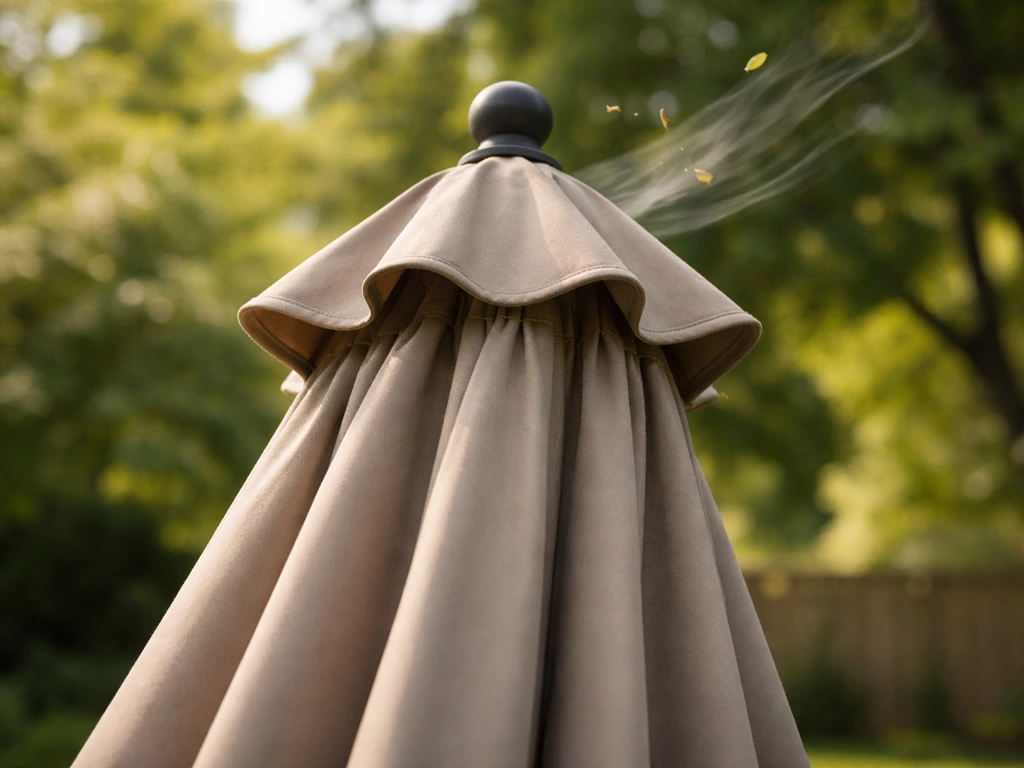
Both the offset and 3-tier Best Choice Products models include a wind vent at the top of the canopy. The vent allows air to pass through rather than building pressure underneath the canopy, which meaningfully reduces uplift force in moderate breezes. The 3-tier design (with its stacked canopy tiers) also allows air to escape between tiers, which helps in gusty conditions. Neither design makes the umbrella wind-proof, but the vent is a legitimate functional feature, not just aesthetic.
When to close it
Every Best Choice Products umbrella manual is consistent on this point: close and secure the umbrella during strong winds, storms, and any adverse weather. This is non-negotiable. A closed umbrella in a base is stable. An open umbrella in 30 mph gusts is a projectile. Make closing the umbrella part of your daily routine if you live in an area with afternoon thunderstorms or regular coastal winds.
Base requirements by umbrella type
| Umbrella Type | Minimum Base Weight | Base Style | Additional Stability Notes |
|---|---|---|---|
| Center-pole market (10ft tilt) | 50–75 lbs typical | Table insert or freestanding weighted base | Lower wind load than offset; tilt increases load slightly |
| Offset/cantilever (10ft crank tilt) | 100 lbs minimum (per Best Choice Products manual) | Cross base with ground stakes or weighted cross base | Cross base + ground stakes included; heavy fillable base recommended |
| 3-tier center-pole (10ft) | 50–75 lbs typical | Table insert or freestanding weighted base | Wind vents reduce uplift; still close in strong winds |
Matching the umbrella to your actual patio space
Getting the size and placement right is honestly more important than any single spec on the product page. Here is a simple framework based on common patio setups.
Table size to umbrella diameter
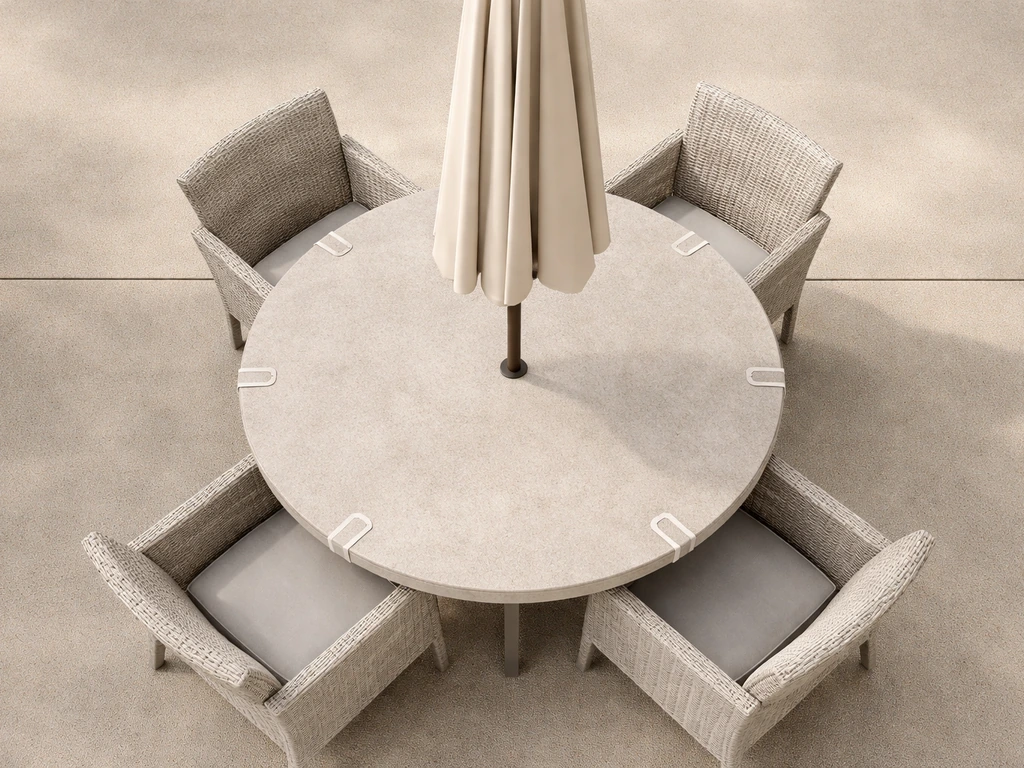
The standard rule is to add at least 2 feet to each side of your table when sizing a canopy. So a 4ft (48-inch) round table needs at least an 8ft canopy, and a 10ft umbrella gives you comfortable 3ft overhangs. A 10ft canopy is also a common sweet spot when you are shopping for the best choice products 10ft 3 tier solar patio umbrella 10ft umbrella. A 60-inch (5ft) table needs a 10ft minimum, with an 11ft preferred. For rectangular tables over 72 inches, a single 10ft umbrella will leave the ends unshaded, and you would either need an 11–13ft umbrella or two separate umbrellas.
Center-pole vs. offset placement
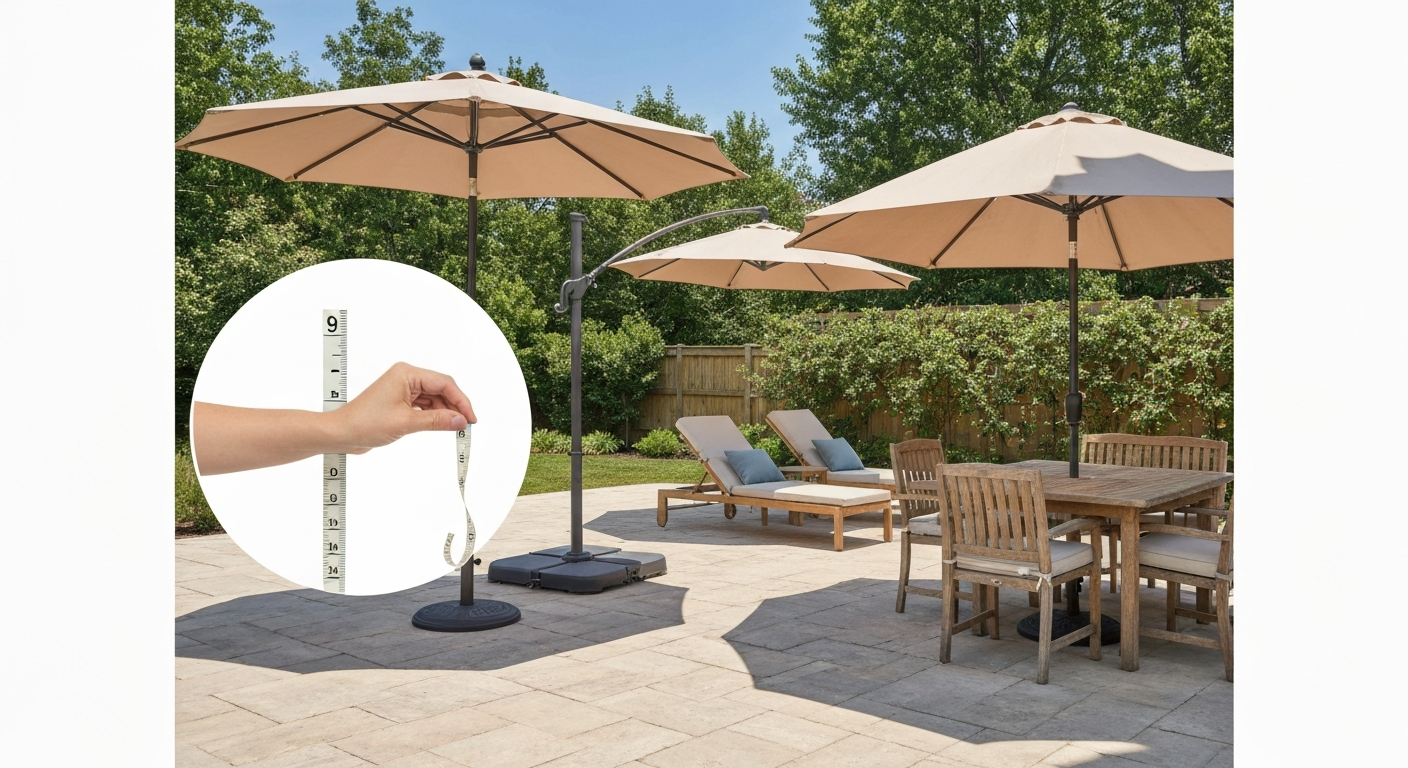
Center-pole umbrellas fit through a table hole (typically 1.5 to 2 inches in diameter) and position the shade directly overhead. This works perfectly for round and square tables but requires a table with a center hole. If your table does not have a hole, or if you have a sectional sofa or irregular seating area, an offset/cantilever umbrella is the better solution because it mounts to the side and swings the canopy over the seating area. The 360-degree rotating cantilever model from Best Choice Products is especially useful for covering an L-shaped or non-square seating arrangement.
Height and clearance
Most 10ft Best Choice Products umbrellas have a pole height of around 7.5 to 8 feet at the center, which gives seated adults roughly 6.5 to 7 feet of clearance under the tilted canopy edge. That is comfortable for most people standing near the table. If you have taller guests or want to walk freely under the canopy while it is tilted, check the clearance on the low side before buying.
Sun angle and the solar panel
Placement matters for the solar charging side too. Position the umbrella where the canopy top gets unobstructed direct sunlight for at least 6 hours daily. If your patio is partially shaded by a tree, overhang, or building shadow during peak hours, the battery will undercharge and your evening runtime will be shorter. South-facing placement works best in the Northern Hemisphere.
Comparison checklist and recommended picks by scenario
Before you buy, run through this quick checklist to confirm the model you are looking at actually fits your situation.
- Table size: Is the canopy diameter at least 2ft larger than your table on each side?
- Table hole: Does your table have a center hole for a market-style pole, or do you need an offset model?
- Tilt type: Do you want simple push-button tilt (easier, cheaper) or crank tilt (smoother, more durable)?
- Base weight: Do you have or plan to buy a base that meets the minimum weight requirement (100 lbs for offset models)?
- Sun exposure: Will the canopy top get 6+ hours of direct sun daily for reliable charging?
- Lighting needs: Are you happy with on/off white LEDs for ambiance, or do you need dimmable/color options (which would require a different product)?
- Storage plan: Do you have a place to store the umbrella during off-season months to protect the battery and canopy?
Best picks by scenario
| Scenario | Best Match | Why |
|---|---|---|
| Best overall for a standard round table | Best Choice Products 10ft center-pole solar LED tilt (push-button) | 24 LEDs, 6–7hr runtime, straightforward tilt, fits standard 48–60in tables, lower cost |
| Best for flexible/off-center seating | Best Choice Products 10ft offset cantilever solar LED (crank tilt) | Positions canopy without center pole, crank tilt more durable, covers non-table seating areas |
| Best for windy areas | Best Choice Products 10ft offset with wind vent + 100-lb base | Wind vent reduces uplift, heavy cross base adds stability, close during strong gusts regardless |
| Best for maximum lighting coverage | Best Choice Products 10ft 3-tier solar LED (push-button tilt) | Multi-tier canopy with LED ribs, dusk auto-activation option, even light distribution |
| Best for small patios (under 4ft table) | Best Choice Products 10ft center-pole (standard tilt) | 10ft is the smallest practical size with solar LED tilt; position tightly over table to maximize shade |
The 3-tier variant is worth a closer look if evening lighting is your primary motivation, since the tiered canopy design paired with the LED rib layout creates a more visually distinctive light pattern. That model is covered in more detail in the dedicated 10ft 3-tier solar patio umbrella guide if you want a deeper dive.
Next steps before you buy
Measure your table and patio space first, then confirm your base situation. If you already own a weighted patio umbrella base, check its listed weight capacity before assuming it works for an offset model. For center-pole market umbrellas, a 50lb fillable base works for most calm to moderate wind conditions, but 75lbs is safer if you live somewhere with regular afternoon gusts. Order the base at the same time as the umbrella so you are not using it without adequate weight while you wait for shipping.
If you are comparing Best Choice Products to other brands in this space, the honest truth is that this product line sits in the value tier: good enough for 2 to 4 seasons of regular residential use with proper care, not a premium product that will outlast multiple sets of patio furniture. For most homeowners who want solar lighting without the wiring hassle and a canopy that tilts to block afternoon sun, the 10ft Best Choice Products center-pole tilt model is a sensible, low-risk buy. The offset version is the better choice if your seating layout or table situation calls for it, as long as you take the base weight requirement seriously.
FAQ
Will the solar LEDs stay bright if my patio gets only partial sun during the day?
Not reliably. Solar runtime depends on full, unobstructed charging (the article calls out roughly 6 hours of direct sun). If your umbrella top spends peak hours behind a tree, awning, or building shade, expect shorter evening lighting, dimmer output, or both, because the battery cannot recharge to full capacity.
Is the tilt only for afternoon sun, or can it help with early morning angles too?
It helps with low-angle sun in general, not just late afternoon. Tilting off-vertical lets you block sunlight that would otherwise hit faces when the sun is low, but the exact benefit depends on whether you can tilt toward the sun side without bumping furniture or seating placement.
Can I use the umbrella at night with the canopy tilted, and will wind still be an issue?
Yes, but treat a tilted canopy as higher wind risk. Tilting increases sail-like load, so even moderate breezes can increase torque on the base and pole. If you are in a gusty area, plan to close the umbrella earlier at night rather than waiting for storms, especially if you have the offset/cantilever model.
Does auto-dusk mode reduce battery life compared with manually switching the lights on?
Typically, yes. Auto-dusk can run the lights on nights you are not using the patio, which drains the battery more than manual control. If you care about maximizing total runtime over many evenings, use the manual switch near the crank instead of relying on dusk activation.
Can I replace the non-dimmable LEDs with brighter or smart bulbs later?
Probably not in any simple way. The LEDs are an integrated, on/off system controlled by a switch near the crank, so swapping to different brightness or smart bulbs would require major parts replacement and may void warranty or create fit and wiring issues. If brightness is your priority, compare models that advertise higher LED counts or better output rather than planning an upgrade.
What base should I buy for the offset tilt model if I do not have a 100-lb base already?
You need a base that meets the model’s stated 100-lb minimum. Using a lighter base is a safety threshold, not a recommendation, because the offset design increases the chance of tipping in gusts. If you are filling a base with sand or water, confirm the target weight once filled, and do not assume shipping weight or empty weight matches the requirement.
Is a center-pole umbrella automatically better than an offset umbrella?
No, they solve different layout problems. Center-pole umbrellas work best for tables with a center hole (often 1.5 to 2 inches diameter) and when you want shade directly overhead. Offset/cantilever umbrellas can cover seating without a center pole obstruction, but they require heavier bases and careful wind safety.
If my table is rectangular, can one 10ft umbrella shade the whole seating area?
Often not. The article notes that for rectangular tables over about 72 inches, a single 10ft umbrella can leave the ends unshaded. Practical options include choosing an 11 to 13 ft umbrella, adding a second umbrella, or using an offset/cantilever style to shift coverage where people sit.
How do I know if I have enough clearance under the tilted umbrella for taller guests?
Check the low-side height, not the center height. The article estimates about 6.5 to 7 feet of clearance near the tilted canopy edge for typical pole heights, but the low side is the limiting factor. Measure from your patio surface to the canopy edge when tilted toward your main seating area.
What is the easiest way to reduce rust risk on the frame?
Minimize repeated wet exposure and keep metal parts clean. The article suggests closing it during rain and wiping metal components at season end. Using an umbrella cover and storing indoors during winter months also slows rust, especially on steel portions near the tilt mechanism.
How should I position the umbrella for solar charging if my patio is east or west facing?
Solar performance depends on direct charging during peak light hours. The article notes south-facing placement tends to work best in the Northern Hemisphere and that at least about 6 hours of direct sun is ideal. For east- or west-facing patios, rotate your setup if possible and watch for long shaded periods from buildings or overhead structures.