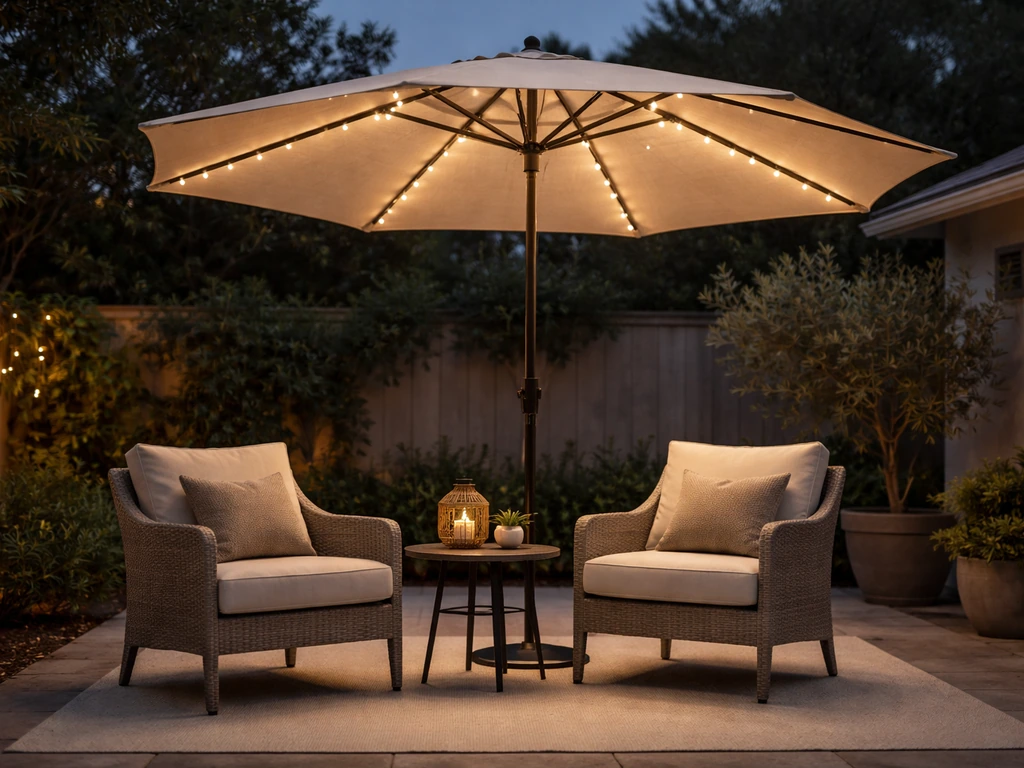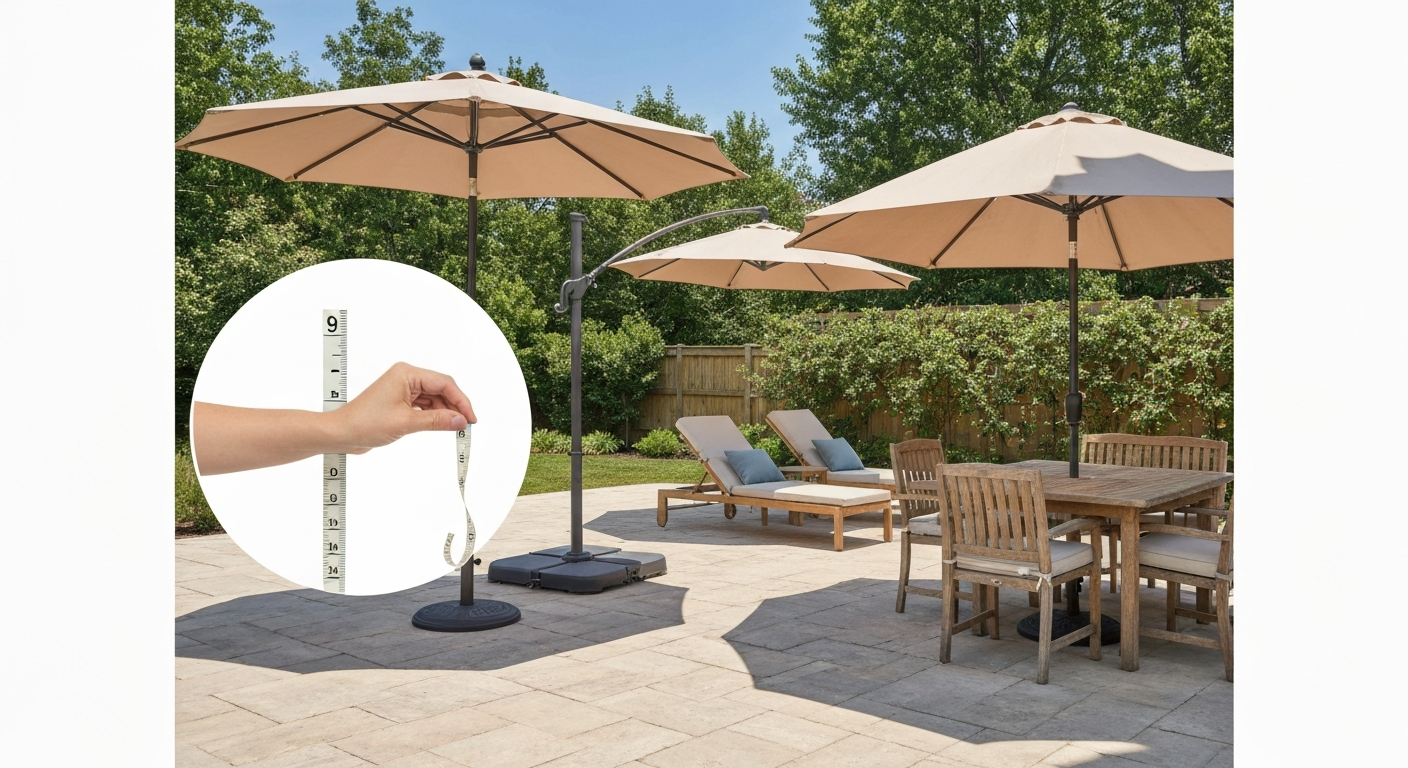
[The Best Choice Products 10ft solar LED patio umbrella](/best-choice-products-10ft-solar-led-patio-umbrella) is a solid mid-range pick for covering a dining table or lounging area, and once you know the setup steps, getting it running takes less than 30 minutes. You need a base weighing at least 100 lbs, a spot that gets 6 to 7 hours of direct sun to charge the 24 built-in LEDs, and a clear understanding of the push-button tilt and crank system. This guide walks you through choosing the right style, setting it up correctly, operating the solar lights, and fixing the most common problems people run into.
Best Choice Products 10ft Solar LED Patio Umbrella Instructions

Kent Lang
7 Jul 2026
How to pick the best 10ft solar LED patio umbrella for your space
Best Choice Products sells several 10ft solar LED umbrella variants, and they fall into two main styles: the standard center-pole market umbrella (models like SKY3297, SKY3298, SKY3790, SKY3791, SKY5846, and others) and the offset or cantilever version (SKY5713 family). The right choice depends on how your furniture is arranged and where you want the pole to go.
The center-pole market style is the most common. The pole runs straight up through the middle of the canopy, which means your table needs a center hole to thread the pole through. It's more stable, lighter overall (around 15 lbs for the canopy and pole), and easier to secure in a weighted base. If you have a standard patio table with a center umbrella hole, this is the version to get.
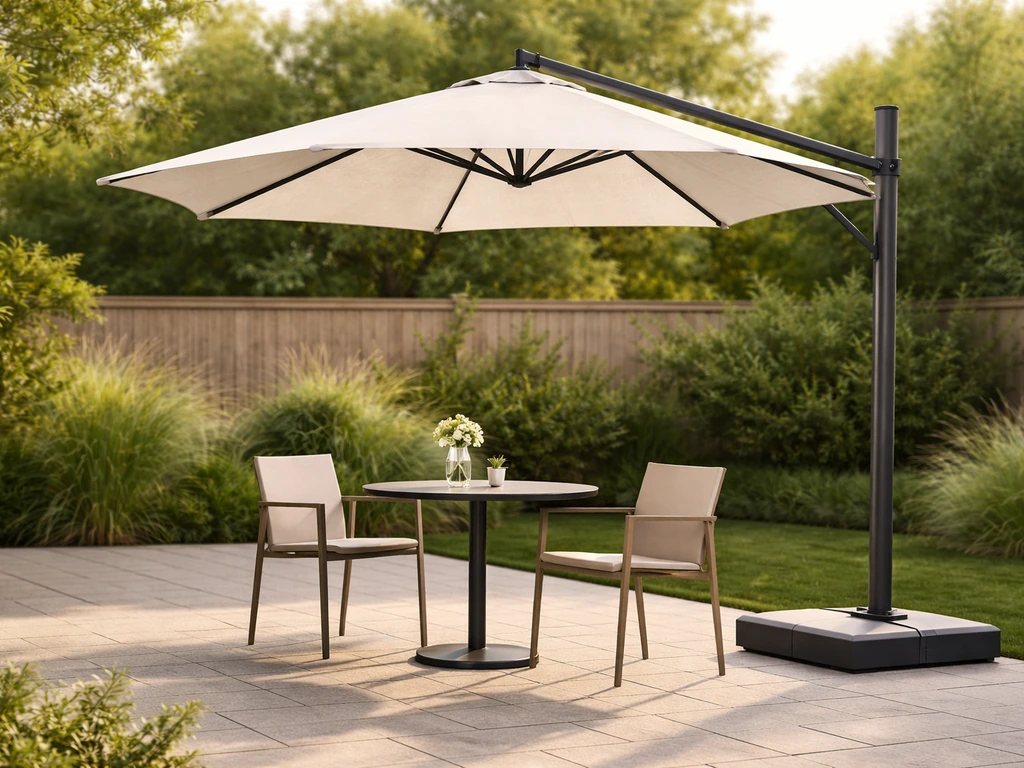
The offset style (SKY5713) has the pole positioned to the side, with the canopy hanging out over your seating area. That's great for sectionals, chaise lounges, or any setup where you don't want a pole in the middle of your space. The trade-off is real: offset umbrellas are top-heavy by design, and several owners have reported tipping issues in wind. You'll need a heavier, purpose-built cantilever base and you should never leave it open in anything beyond a light breeze.
Within the market umbrella family, BCP also offers a 3-tier version (SKY9759) with a tiered ventilated canopy designed to let heat and wind escape. If you're somewhere hot or gusty, that design is worth considering separately. For most standard backyard setups, though, the standard tilt market umbrella covers the most use cases at the best price.
| Style | Best For | Key Trade-off | Base Requirement |
|---|---|---|---|
| Center-pole market (SKY3297, SKY3790, etc.) | Patio tables, dining sets, small decks | Pole runs through center of table | 100+ lbs weighted stand |
| Offset/cantilever (SKY5713) | Sectionals, loungers, pole-free spaces | Top-heavy, higher wind risk | Heavy cantilever base required |
| 3-tier market (SKY9759) | Hot or windy climates, larger patios | Bulkier, slightly different LED setup | 100+ lbs weighted stand |
Key specs that actually matter
Wind stability
BCP's own manual language is clear: these umbrellas are suitable for rain showers and light wind only. Do not leave any 10ft BCP solar umbrella open in strong wind, full stop. The canopy is 120 inches (10 feet) in diameter, which catches a lot of air. The center-pole models have a wind vent near the top of the canopy that helps reduce lift, but that's a safety feature, not a permission slip to use it in a storm. If you live somewhere with frequent afternoon gusts, make closing the umbrella part of your daily routine.
UV fabric and fade resistance
The fabric on BCP's 10ft solar LED tilt models is UV-resistant and, on certain SKUs like the SKY7718, carries a UPF 50 certification. UPF 50 blocks about 98% of UV rays, which matters both for how long the fabric lasts and for how much sun protection you actually get sitting under it. If you're buying mainly for shade and comfort during peak afternoon sun, confirm the specific SKU you're ordering carries the UPF 50 rating. Not every color option or retailer listing includes that detail upfront.
Frame and pole
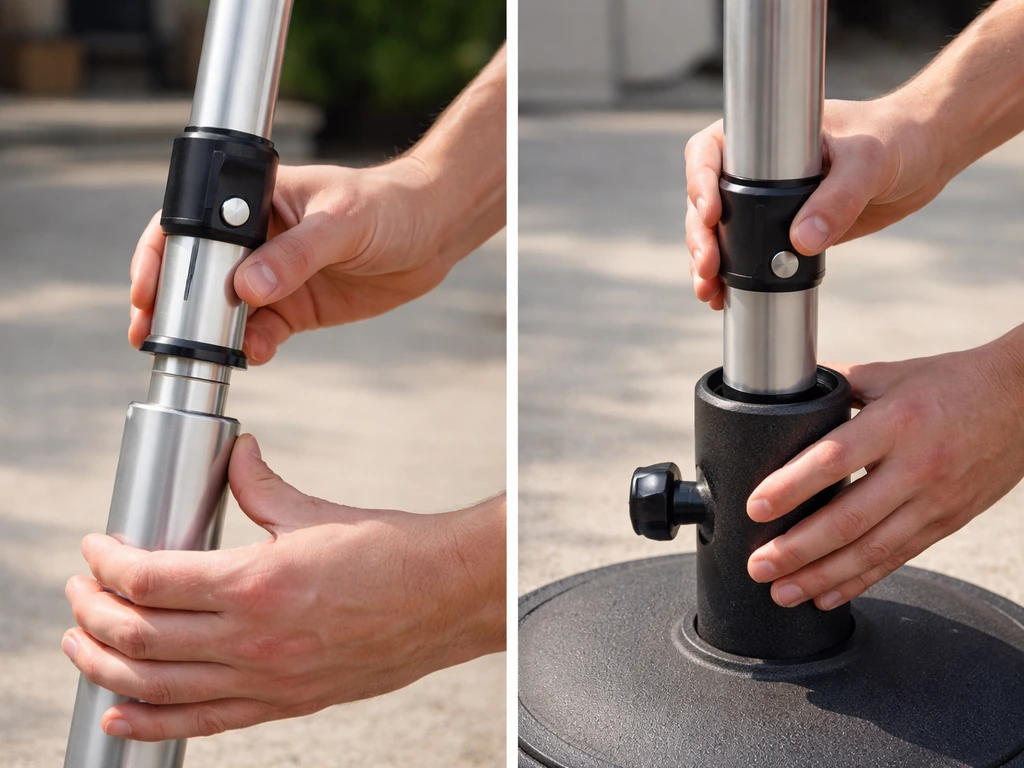
The pole diameter is 1.5 inches across all the standard 10ft BCP solar LED market models. That's an important number because your base's pole socket needs to match. Most patio umbrella bases designed for 10ft umbrellas accommodate a 1.5-inch pole, but double-check before you buy. The overall umbrella height when open is 96 inches (8 feet), which is enough clearance for most adults to walk under without ducking, especially once you account for the tilt.
Solar lights and battery runtime
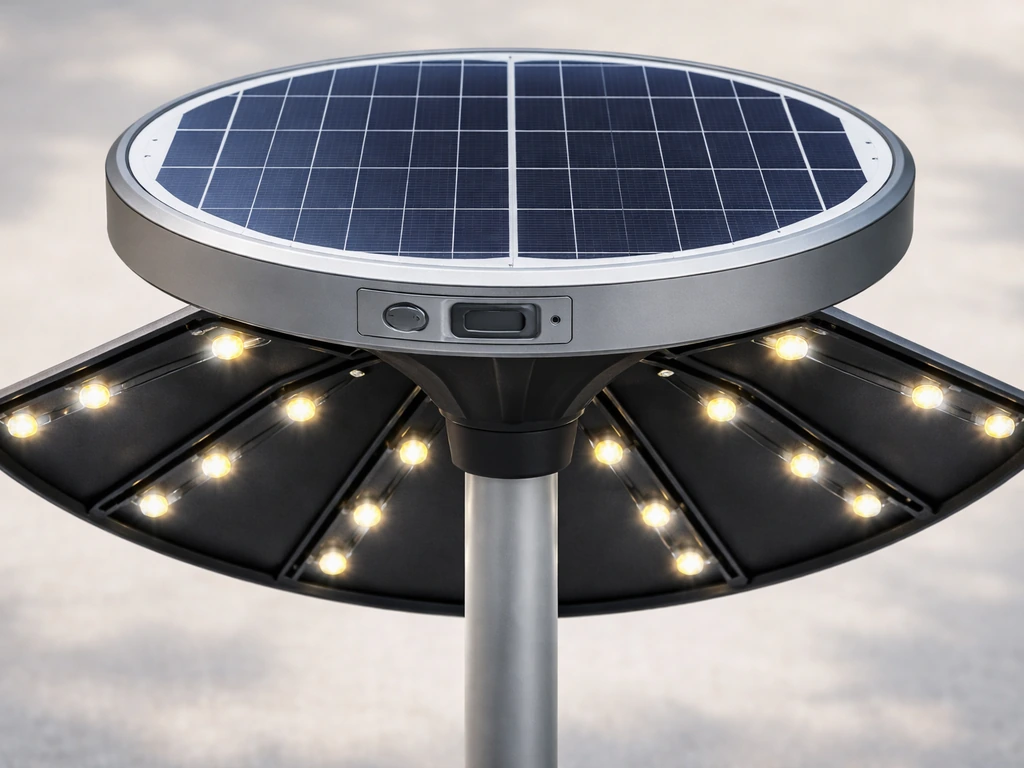
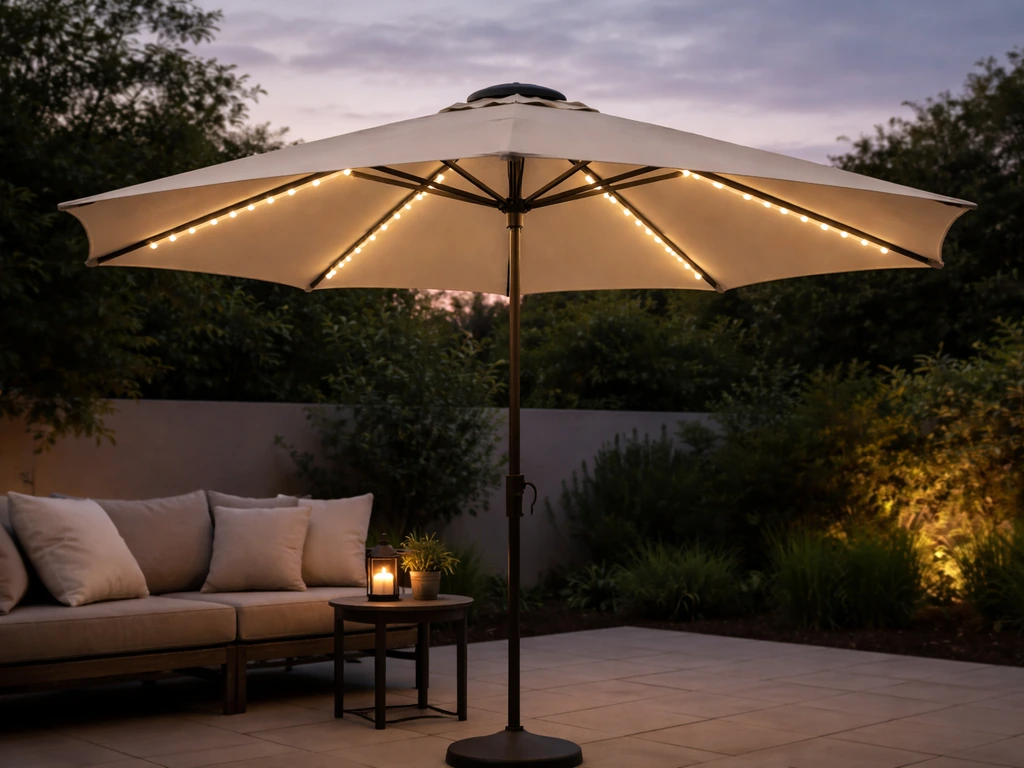
Every 10ft BCP solar LED model in this family uses 24 LED lights, with 3 LEDs placed on each of the 8 ribs of the canopy. The solar panel sits on top of the pole and charges a built-in rechargeable battery. A full charge takes 6 to 7 hours of direct sunlight and gives you 6 to 7 hours of run time. The Best Choice Products Ver.
8 “10-Foot Solar LED Patio Umbrella” instruction manual also states that the solar panel needs 6, 7 hours of direct sunlight to fully charge A full charge takes 6 to 7 hours of direct sunlight.
That's enough for an evening on the patio after a sunny day, but on overcast days you'll get noticeably shorter light output. The lights are ambient, not bright task lighting. They create a warm glow for atmosphere, not enough to read by.
Getting the sizing and placement right
A 10ft umbrella is designed to cover a seating area of roughly 8 feet in diameter once you account for the canopy overhang. For a round dining table, the standard guidance is to add 2 feet on each side of the table, so a 10ft umbrella pairs well with tables up to 6 feet in diameter. For rectangular tables, a 10ft round canopy works best over tables in the 4 to 6-foot range. If you have a large sectional or a sprawling lounge setup, a single 10ft umbrella won't cover the whole thing. You'd need either multiple umbrellas or to look at a larger offset design.
For clearance, remember that the umbrella top sits at 96 inches (8 feet) when fully open and vertical. If you're tilting the canopy to block afternoon sun from the side, the lower edge of the canopy will drop below that height on the tilt side. Measure from your patio surface to where the canopy edge will land when tilted, and make sure it clears anyone walking underneath. On a standard patio deck with no overhead structure, this isn't an issue, but if you have a pergola or awning nearby, check before you position the base.
Solar charging placement is just as important as shade placement. The solar panel is fixed on top of the pole, so the umbrella needs to sit in a location that gets unobstructed direct sun for most of the day. A spot that's shaded by a tree or roof overhang for most of the afternoon will charge the battery slowly or not at all. If your ideal shade spot doesn't get good sun, you may need to move the umbrella to a sunny spot during the day and reposition it in the evening, though that's not a practical long-term solution.
Step-by-step setup: opening, adjusting, and securing the umbrella
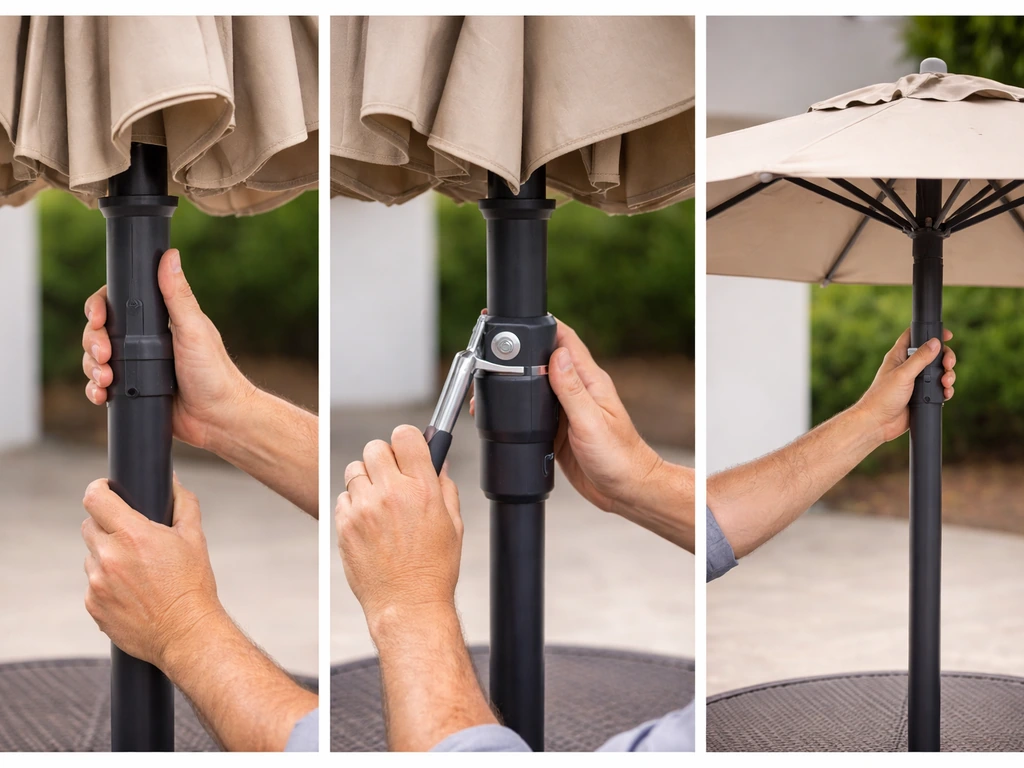
- Assemble the pole sections by sliding them together and securing any locking collars or pins before inserting the pole into your base.
- Insert the assembled pole into the base socket and tighten the base's securing knob or bolt firmly so the pole doesn't wobble.
- Attach the canopy to the pole ribs if it shipped separate. Most BCP models ship with the canopy pre-attached but folded.
- Slowly turn the crank handle clockwise to open the canopy. Turn gradually, especially the first time, so the ribs extend evenly without catching.
- Once fully open, verify all 8 ribs have clicked or locked into the open position and the canopy is taut.
- To adjust the tilt, gently press and hold the lock button on the pole (it's usually a push-button located near the top of the inner pole), tilt the canopy to the angle you want, then release the button. It locks automatically when you let go.
- To close, reverse the tilt first (return canopy to vertical), then turn the crank counter-clockwise slowly until the canopy is fully folded and secure.
- Periodically check and re-tighten all bolts, screws, and knobs, especially after wind or rain, as hardware can loosen over time.
One thing people get wrong is cranking too fast. If you rush the opening process, the ribs can catch on the canopy fabric and stress the connection points. Slow and steady is the right approach, especially on the first few opens while the fabric is still stiff.
Solar LED instructions: charging, turning lights on and off, and confirming it's working
Initial charging
Before you use the lights for the first time, give the solar panel a full 6 to 7 hours of direct sunlight with the umbrella open and positioned in full sun. Don't skip this step thinking the battery shipped partially charged. A first full charge sets the baseline capacity. During this charge, the power switch for the LEDs should be in the OFF position.
Turning the lights on and off
There's a power switch located near the crank handle area on the pole. Flip or press it to turn the LEDs on. That's it. On the 3-tier model (SKY9759), the lights can also activate automatically at dusk, but on the standard tilt market models, the switch is a manual on/off. Turn it off when you're done to preserve battery charge for the next evening. A 3-tier patio umbrella also needs the right weighted base and safe placement to avoid tipping in wind.
Orienting the solar panel for best charging
The solar panel is mounted on top of the pole and faces skyward, so canopy orientation matters less for charging than you might think. What matters is that the umbrella is placed in a spot with maximum sky exposure during daylight hours. Don't position the umbrella under a tree or against a wall where surrounding structures cast shadows over the top of the pole. Even partial shade on the solar panel significantly reduces daily charge accumulation.
Confirming it's charging properly
There isn't a visible charge indicator on most BCP 10ft solar models, so you verify charging by result: after a full sunny day, the lights should run for close to 6 to 7 hours at normal brightness. If they're dimming after an hour or two, the panel either didn't get enough direct sun or the rechargeable battery is starting to degrade. Keep the solar panel surface clean (more on that in the troubleshooting section) and make sure the umbrella is actually in direct sun, not filtered light through a shade cloth or tree canopy.
Base and safety requirements
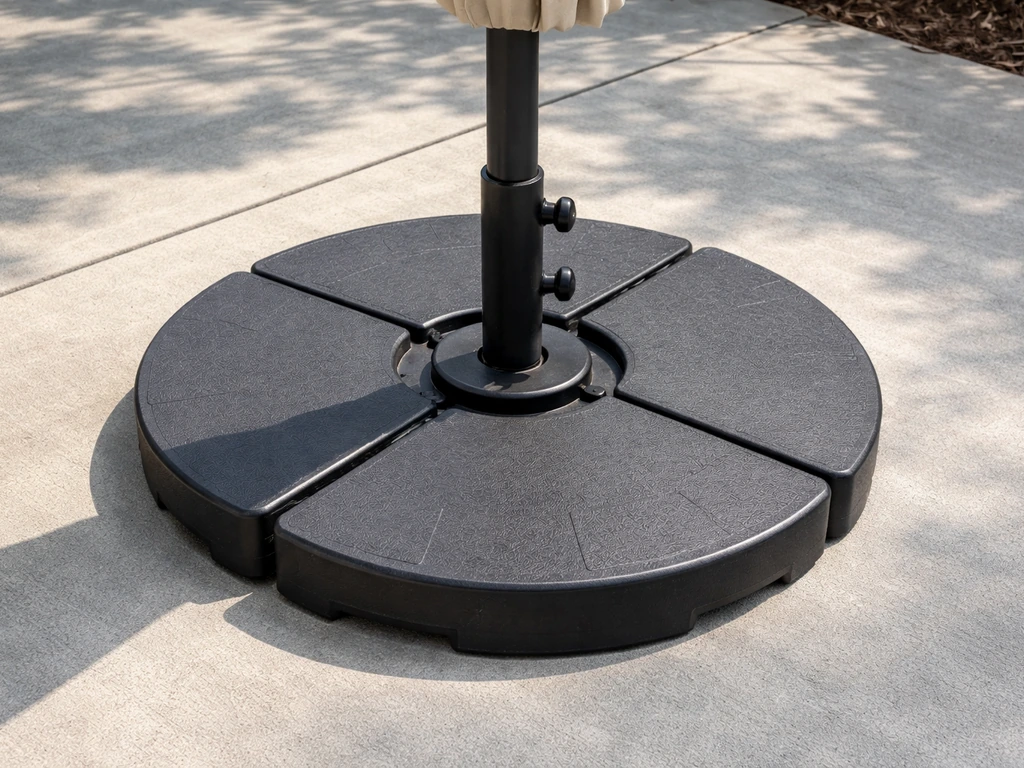
This is the part most people underestimate. The SKY3297 manual explicitly states that the umbrella must not be used without umbrella base weights, and specifies greater than 100 lbs as the minimum. A 10ft canopy in any breeze acts like a sail. If your base isn't heavy enough, the umbrella will tip. That's not a maybe situation, it's a when.
For the center-pole market models, a 100 to 150 lb weighted umbrella base with a 1.5-inch pole socket is the right spec. Many weighted bases are made to be filled with sand or water after purchase, which keeps shipping weight manageable. Fill them completely. A half-filled base may technically hold the umbrella upright on a calm day but will fail in wind.
For the offset SKY5713, you need a purpose-built cantilever base that matches the offset pole design. Standard market umbrella bases won't work and aren't safe substitutes. Offset bases are typically heavier and wider for obvious reasons. Given the reported top-heavy stability concerns with the SKY5713 from actual owners, erring toward the heaviest compatible base you can find is the right move.
- Minimum base weight for center-pole models: 100 lbs (filled with sand or water if applicable)
- Pole socket size: 1.5 inches to match BCP's standard 10ft pole diameter
- Offset models: use only a cantilever-specific base, not a standard round market base
- Always close the umbrella when leaving the patio unattended, especially overnight
- Re-tighten the base knob and any pole fasteners after rain or wind events
- Never leave the umbrella open in strong wind, regardless of base weight
Maintenance and troubleshooting
Lights won't turn on
Start with the obvious: confirm the power switch is in the ON position. Then check whether the umbrella actually got full direct sun that day. Overcast skies, partial shade, or a placement that only gets a few hours of direct sun will leave the battery too low to power the LEDs. If the switch is on and the umbrella was in full sun all day and the lights still won't turn on, clean the solar panel surface with a damp cloth to remove dust, pollen, or debris. Buildup on the panel is a surprisingly common cause of charging failure.
Lights are dim or cut out quickly
Dim or short-lived light output almost always means the battery isn't holding a full charge. Try placing the umbrella in unobstructed direct sunlight for a full 6 to 8 hours (longer than the standard 6 to 7 hours can help on marginal days) and test again. If it's still dim after multiple full charge days, the rechargeable battery has likely degraded and needs replacement. Most BCP solar LED models use standard rechargeable AA or AAA NiMH batteries in the battery compartment near the solar panel housing. Check your specific model's manual for the exact battery type and replacement access. Batteries typically last 1 to 2 seasons with regular use before capacity drops noticeably.
Water resistance and weather care
The umbrella is rated suitable for rain showers, not heavy storms. In heavy rain, close and secure the umbrella. The canopy fabric will repel light rain but prolonged soaking and then storage while wet leads to mildew. If the canopy gets wet, open it after the rain to let it dry completely before closing and storing. For off-season storage, remove the canopy from the ribs if possible, or at minimum use an umbrella cover to protect both the fabric and the solar panel from UV degradation and debris.
Cleaning the canopy and solar panel
For the canopy fabric, use mild soap and lukewarm water with a soft brush. Avoid bleach or harsh detergents, which degrade UV-resistant coatings over time. Rinse thoroughly and let the canopy air-dry in the open position. For the solar panel, a damp cloth once every few weeks is enough to remove surface dust. Don't use abrasive cleaners or rough scrubbers on the panel surface.
Hardware check routine
Make it a habit to inspect all pole connections, base fasteners, and rib connections at the start of each season and again mid-season. Outdoor hardware loosens with temperature swings and wind stress. A loose rib connection or a poorly tightened base knob turns a minor gust into a real problem. This takes five minutes and prevents most of the structural failures people blame on the umbrella itself.
Your pre-use checklist
Before you declare the umbrella fully set up and ready to use, run through these steps to confirm everything is working and safe. If you want the best choice products 10ft 3 tier solar patio umbrella, compare the center-pole vs offset style, then match the base weight and pole socket size to the model you pick.
- Measure your intended placement spot and confirm the 10ft canopy footprint (120 inches diameter) fits your seating area with 2 feet of overhang on each side.
- Confirm your base weighs at least 100 lbs and has a 1.5-inch pole socket (center-pole models) or matches the offset pole system (SKY5713).
- Place the umbrella in full direct sun and charge for at least 6 to 7 hours before testing the lights.
- Open the canopy slowly using the crank and verify all 8 ribs lock into the open position.
- Test the tilt mechanism: press the lock button, tilt to desired angle, release, and confirm it holds.
- At dusk, flip the power switch and verify all 24 LEDs illuminate.
- Check that the base knob and all pole fasteners are firmly tightened.
- Confirm you can close the umbrella smoothly by cranking counter-clockwise, and make a habit of closing it any time you leave the patio unattended.
FAQ
Can I use any 10ft umbrella base with the Best Choice Products solar LED patio umbrella?
Yes, but only if your base and pole socket match the umbrella’s 1.5-inch pole diameter and the base is rated for a 10ft canopy. Never tighten the socket on an adapter sleeve, use shims, or “make it fit” with a different pole size, because that can stress rib joints when you crank or tilt.
What’s the best way to confirm the battery is actually charging if there’s no charge indicator?
Don’t rely on the lights to diagnose charging, because you can still get a partial charge that runs briefly. If the LEDs are dim, place the umbrella in unobstructed direct sun for 6 to 8 hours with the switch OFF first, then turn it ON at dusk and confirm it runs close to the expected duration.
What should I use to clean the solar panel, and what cleaners should I avoid?
Use the solar panel surface as a “no-scratch” zone, wipe with a damp, soft cloth, then dry. Avoid spray cleaners with alcohol or solvents, they can haze the panel coating and reduce charging over time.
What should I do if the shadiest seating spot is not in direct sun, can I charge it while it’s parked over there?
If you must reposition for afternoon shade, do it by moving the entire umbrella, not by leaving the solar panel partially shaded while the canopy is in the target location. Constant partial shade reduces daily charge, so the easiest long-term rule is to always prioritize maximum sky exposure on top of the pole.
After a gusty day, what quick checks should I do before opening the umbrella again?
After any strong wind event, close and inspect before re-opening. Check for any misalignment at rib-to-fabric connection points and confirm all base knobs and pole connection joints are snug, then do one slow opening to ensure nothing catches.
Is it okay to leave the umbrella open during rain, and what’s the right way to handle wet storage?
For heavy rain, close it. For light rain, you can leave it open briefly, but don’t store it wet. After a wetting event, open it until fully dry, then close and store to reduce mildew risk on UV-resistant fabric and protect the solar housing from trapped moisture.
What’s the most common mistake when opening or tilting, and how do I fix it if it feels stuck?
Start with “manual tilt only,” then avoid forcing the crank if resistance feels higher than normal. Rushing can snag fabric on ribs, and that snag can stretch connections. If something feels off, close fully, re-seat the canopy, and reopen slowly.
How much runtime drop is normal on cloudy days, and when should I suspect a battery issue?
You should expect shorter light runtime on overcast or consistently shaded days, even with a fresh battery. If you get significantly less runtime than usual after multiple full-sun days, that’s when you clean the panel again and then consider battery replacement rather than repeatedly recharging without addressing charging conditions.
If my patio table has no umbrella hole, can I still use the center-pole version safely?
For center-pole market models, a center umbrella hole is required for a clean pole-through setup. If your table has no hole, don’t drill or improvise mid-use. Choose a matching base-and-table configuration first, otherwise the pole alignment can be unstable.
Why can’t I use a standard market umbrella base for the offset SKY5713-style model?
Offset (cantilever) models require the correct purpose-built cantilever base, standard market umbrella bases are not safe substitutes. Also, treat offset units as higher-risk in wind, even if the canopy has a vent, and use the heaviest compatible base you can find.
What’s the best off-season storage approach for the solar LEDs and canopy fabric?
To extend life, use an umbrella cover during off-season and keep it protected from constant UV exposure and debris. If possible, store the cover in a breathable way so moisture does not stay trapped against the solar panel and fabric.