The Best Choice Products 10ft solar LED patio umbrella is a solid pick if you verify the right specs before buying. Look for a canopy that covers at least 65 to 79 square feet, a 200-lb compatible base (or a dedicated weighted base), an LED system rated for 6 or more hours of runtime on a full charge, and a rust-resistant aluminum or steel pole with a reliable crank-and-tilt mechanism. Whether you're looking at an offset/cantilever version or a center-pole market style, those four things separate a comfortable backyard upgrade from a frustrating return.
Best Choice Products 10ft Solar LED Patio Umbrella Guide

Kent Lang
7 Jun 2026
What a 10ft solar LED patio umbrella actually is (and what "best choice" means here)
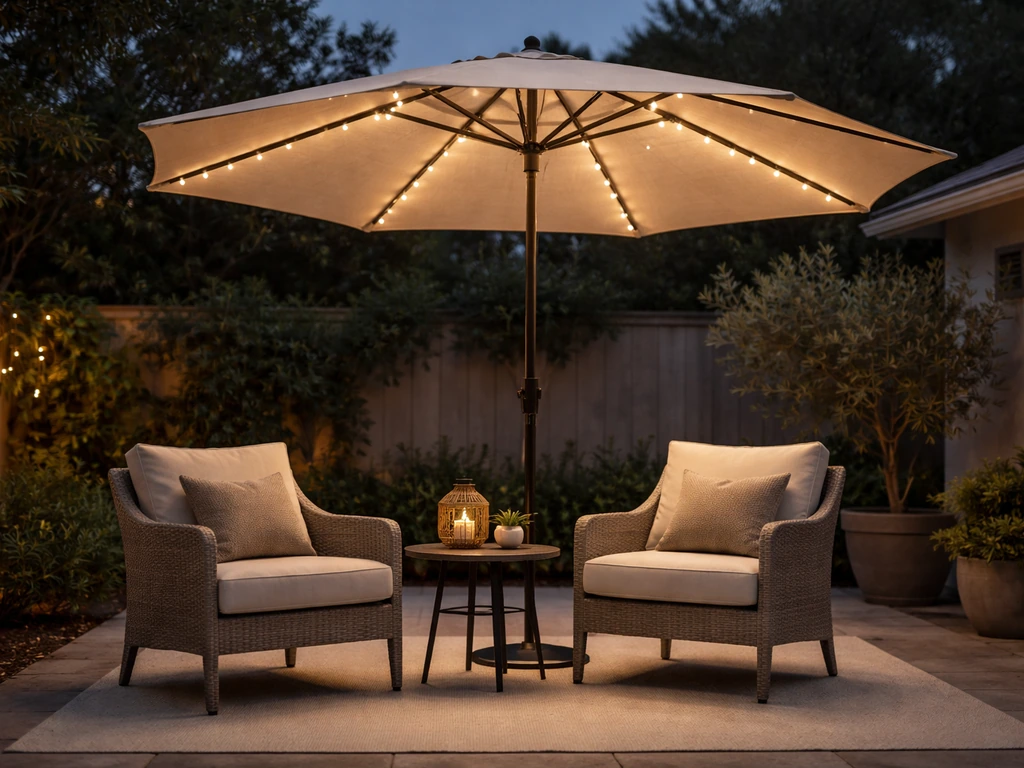
A 10ft solar LED patio umbrella combines three things: a canopy sized at roughly 10 feet in diameter, an integrated solar panel (typically mounted at the top of the pole or canopy frame), and LED string or strip lights woven into the ribs or canopy edge. The solar panel charges a battery pack during the day, and the lights run off that stored power at night. No extension cords, no outlet required.
Now, about "best choice" in the search phrase: it can mean two things. Best Choice Products is an actual brand that sells several 10ft solar LED umbrella models, including the SKY4042 (a market-style tilt umbrella) and the SKY6410 (an offset/cantilever design explicitly marketed for 79 sq ft of shade with an off-center hanging pole). The SKY6410 is marketed as an offset/cantilever umbrella with an off-center hanging pole to provide 79 square feet of shade SKY6410 (an offset/cantilever design explicitly marketed for 79 sq ft of shade with an off-center hanging pole). But many people typing this search just want the best available option in this product category, not necessarily that specific brand. This guide covers both angles: what the Best Choice Products models offer and how to evaluate any comparable 10ft solar LED umbrella against the same checklist.
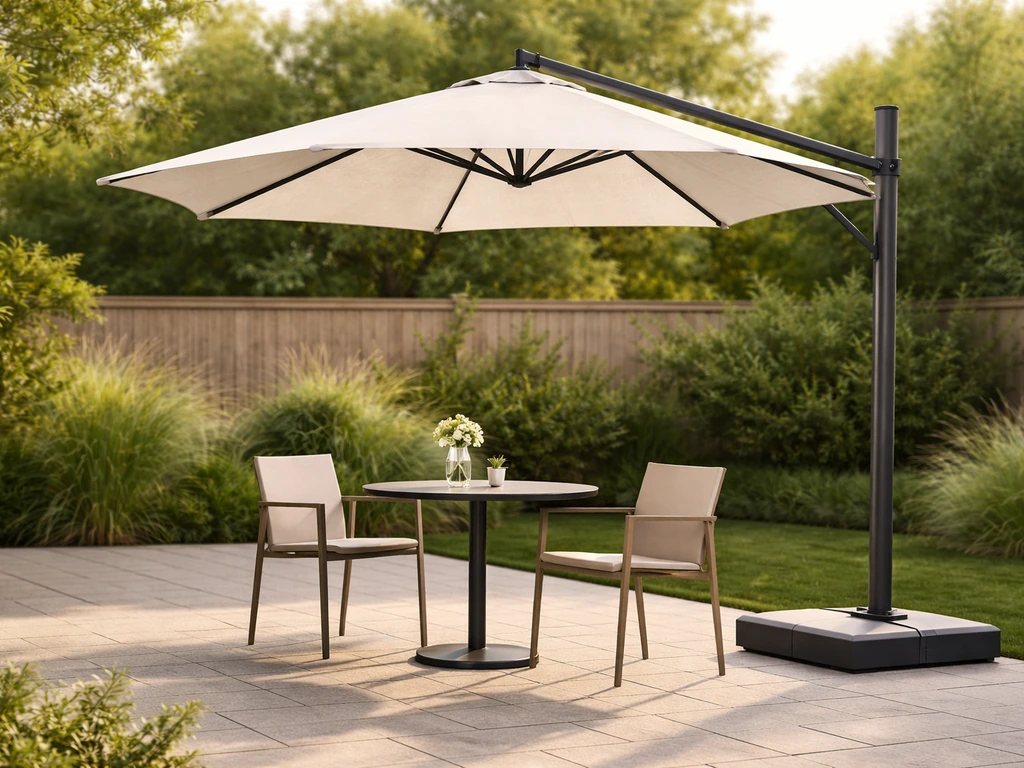
It's also worth clearing up a terminology tangle that shows up across product listings. Best Choice Products calls both their offset and center-pole versions "market" umbrellas in some listings, which causes real confusion. In standard umbrella terminology, a market umbrella has a center pole that goes through the middle of a table. An offset or cantilever umbrella has a side pole that holds the canopy out to the side, leaving the space underneath completely clear. The SKY6410 is the true offset/cantilever version. If you want a pole-free seating area, you want the offset style. If you already have a patio table with an umbrella hole, the market/center-pole version fits better.
Size, style, and coverage: matching the umbrella to your space
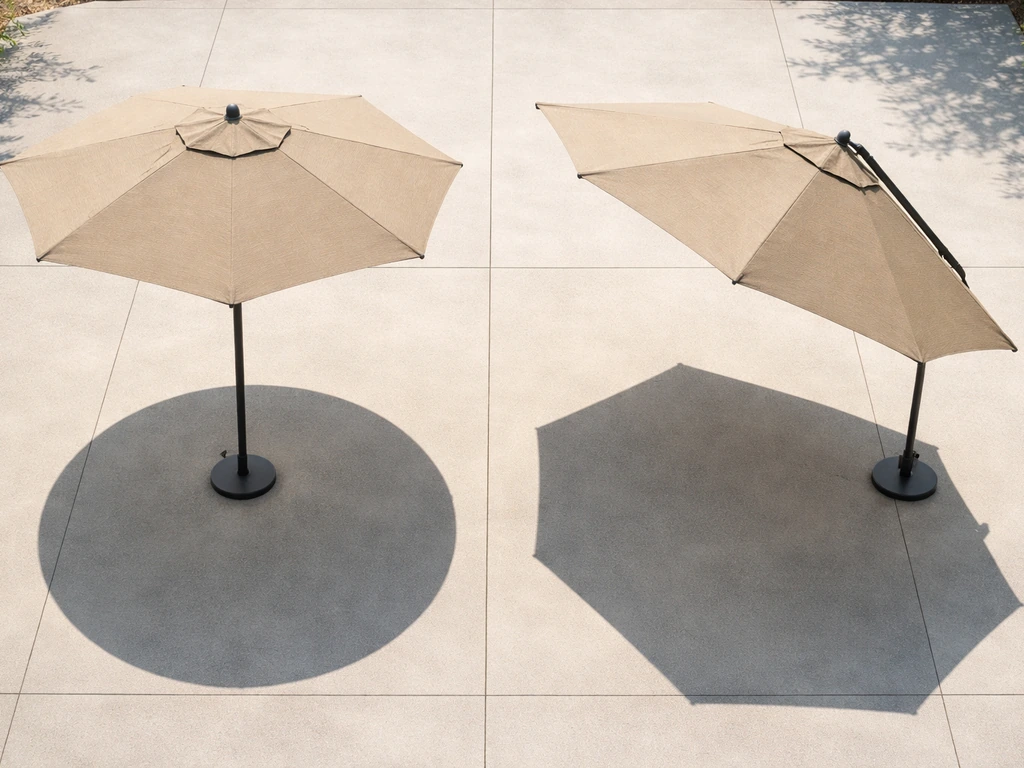
A 10ft canopy diameter sounds generous, and it is, but the usable shade area depends heavily on which style you pick and whether it has tilt. Consumer Reports measured the Best Choice Products 10ft solar LED offset umbrella at 65 square feet of canopy area, while the SKY6410 marketing claims 79 square feet. The difference comes from canopy shape and how the ribs stretch the fabric. Either way, a 10ft umbrella comfortably shades a 4-person dining set or a pair of lounge chairs, but it won't cover a large sectional on its own.
Height matters just as much as diameter. The same Consumer Reports data shows the Best Choice Products offset model stands 8.2 feet tall when open, 7.7 feet closed, and reaches 11.1 feet at full tilt extension. That 8.2-foot clearance is enough for most adults to walk under without ducking, but check that number against your pergola, awning, or covered patio ceiling before ordering. The tilt mechanism (more on that below) changes the effective reach of the shade throughout the day, which is a real practical advantage.
| Feature | Offset/Cantilever (e.g. SKY6410) | Center-Pole Market Style (e.g. SKY4042) |
|---|---|---|
| Pole position | Side pole, canopy hangs off-center | Center pole through table or stand |
| Under-canopy clearance | Completely open underneath | Pole takes up center space |
| Best use case | Lounge chairs, sectionals, no-table setups | Dining tables with umbrella hole |
| Tilt mechanism | Adjustable, often 360° rotation | Side-tilt or push-button tilt |
| Footprint | Larger base required off to one side | Base centered under pole |
| Shade coverage | Up to 79 sq ft (marketed) | Approximately 65 sq ft (measured) |
If you're still deciding between the offset and market style, the offset wins for flexibility and aesthetics in most backyard setups. The center-pole version is the better call only if you already have a table designed for it. For anyone comparing other configurations beyond 10ft, the three-tier ventilation design is worth a separate look if wind is a concern in your area.
Solar and LED lighting performance: what the specs actually tell you
The solar lighting system is the main reason people pay a premium for these umbrellas over a plain canopy, so it's worth understanding what you're actually getting. The solar panel sits at the top of the pole or on the canopy frame where it can collect direct sunlight. It charges a rechargeable battery (usually lithium or NiMH) during the day, and that battery powers the LED lights after dark.
Runtime and battery capacity
A quality 10ft solar LED umbrella should deliver at least 6 to 8 hours of LED runtime on a full day's charge. Some models advertise up to 10 hours, but real-world performance drops in overcast conditions or if the panel is partially shaded by nearby trees or structures. Ask or verify: what is the battery capacity in mAh, and what panel wattage supports it? A panel rated at 1 to 2 watts paired with a 1200 to 2000 mAh battery is a reasonable baseline. Anything significantly smaller will struggle to provide reliable evening lighting across a full season.
Brightness: lumens matter more than LED count
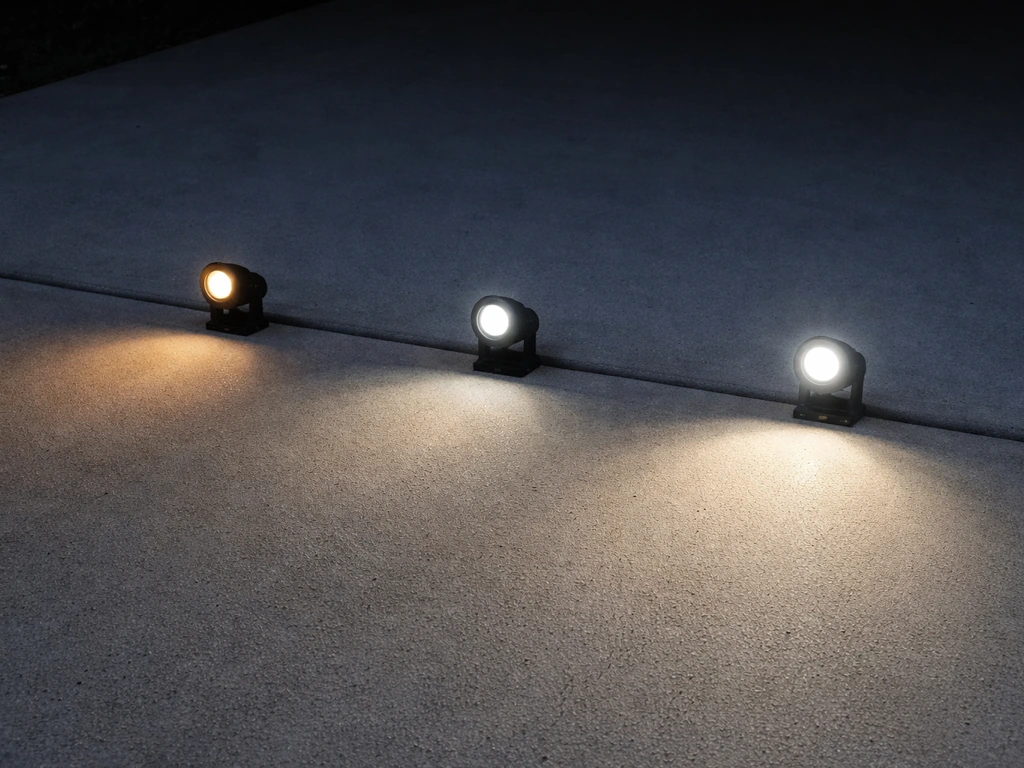
Retailers often advertise LED count ("24 LEDs!") rather than total lumen output, but lumens are what actually tell you how bright the light will be. For ambient patio lighting under an umbrella, 50 to 200 lumens is a reasonable range: bright enough to see your food and create atmosphere, but not so intense it kills the evening vibe. If a listing doesn't mention lumens at all, that's a yellow flag. The LEDs in most solar umbrella systems are warm white (around 2700K to 3000K color temperature), which works well for outdoor dining and relaxing.
Panel quality and real-world charging
Monocrystalline solar panels are more efficient than polycrystalline ones in the same panel size, especially in lower-light conditions. Most budget-to-mid-range solar umbrellas use polycrystalline panels, which perform fine in full sun but drop off faster on cloudy days. Check whether the umbrella has a charging indicator light or LED status indicator so you can actually tell when the battery is charged versus depleted. Some models also include a USB charging backup port, which is worth having as a fallback during cloudy stretches.
Weather resistance of the electronics
The solar panel and battery pack are exposed to outdoor conditions year-round if you leave the umbrella up. Look for an IP rating on the electronics: IP44 or higher means the components are protected against rain splash. The wiring connections between the panel, battery, and LEDs are the most common failure point in cheap solar umbrella systems, so read user reviews specifically for mentions of lights failing after a season or two. That pattern usually points to poor weatherproofing at the connectors.
Materials and durability: what holds up and what wears out
Frame: aluminum vs. steel
The Best Choice Products solar LED umbrella models typically use a powder-coated steel or aluminum pole. Aluminum is lighter and naturally rust-resistant, making it the better choice for coastal or high-humidity environments. Steel is heavier and stronger but needs quality powder coating to prevent rust, especially at joints and mounting points. Whichever material the frame uses, check that the ribs (the spokes supporting the canopy) are metal rather than fiberglass or plastic. Metal ribs hold up better under wind load and don't crack with UV exposure the way plastic does.
Canopy fabric: UV and water resistance
The canopy fabric on most 10ft solar LED umbrellas in this price range is polyester, typically at 180 to 220 GSM (grams per square meter). Higher GSM means denser, heavier fabric that blocks more UV and resists water better. Look for a UPF rating of 50+ if sun protection is a priority: UPF 50+ blocks over 98% of UV radiation. Water resistance is usually a coating rather than a waterproof weave, so expect the fabric to repel light rain but not to act as a full shelter in a downpour. Fade resistance matters for longevity: solution-dyed acrylic (like Sunbrella) is the gold standard, but it significantly raises the price. Most solar LED umbrella canopies use dip-dyed polyester, which fades faster but is perfectly acceptable if you close the umbrella when not in use.
Lift and tilt mechanisms
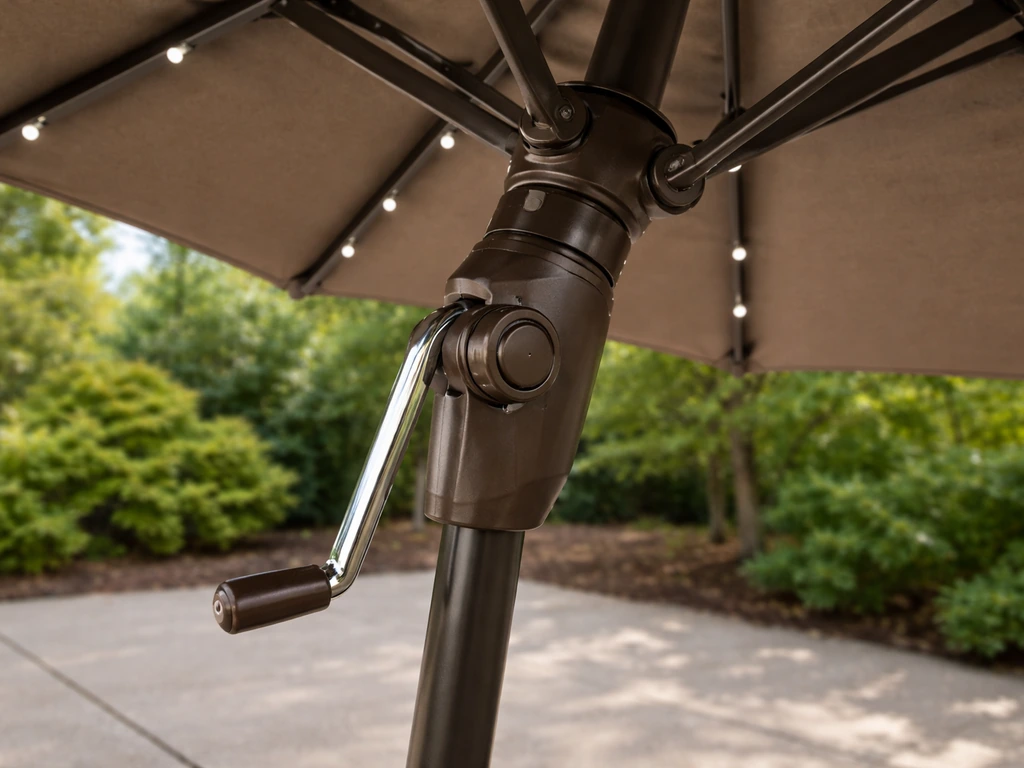
The crank lift is the standard on most 10ft umbrellas in this category, and it should feel smooth and gear-driven rather than loose or wobbly. A poor crank mechanism is one of the top complaints in user reviews, so specifically look for that in feedback. The tilt mechanism on the solar LED models (the Best Choice Products tilt versions include a push-button or collar-style tilt) lets you angle the canopy toward the sun to maximize shade as the sun moves. Make sure the tilt locks positively in place and doesn't drift down on its own when you let go.
Wind resistance and base requirements: keeping it upright
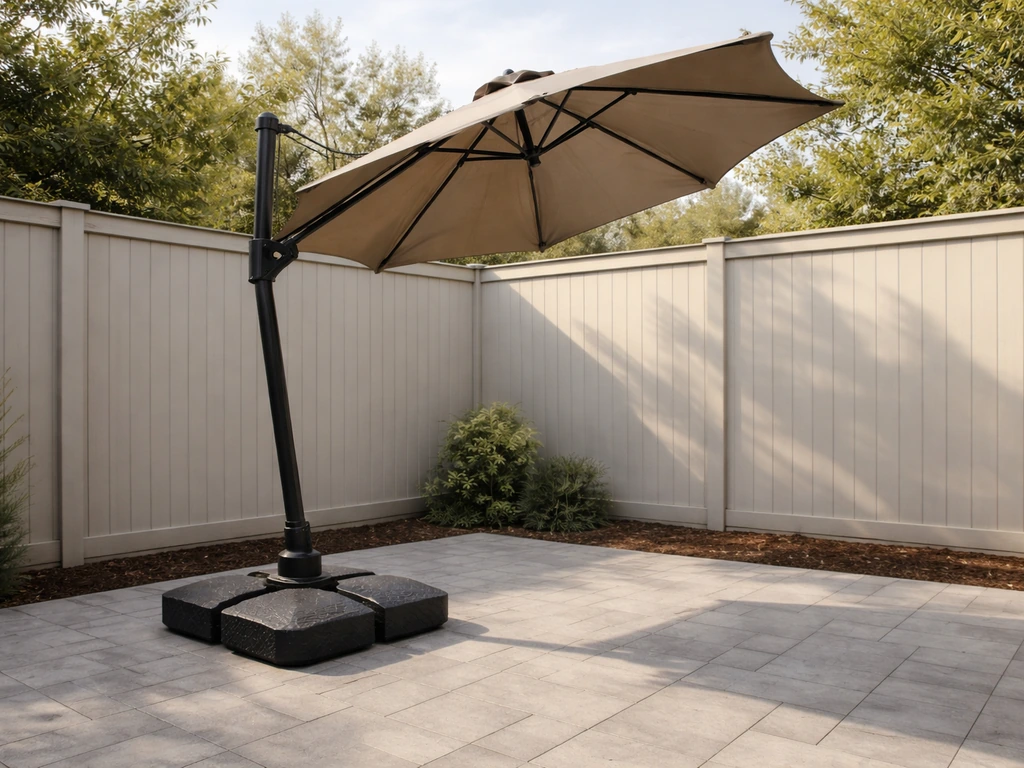
This is where a lot of buyers get surprised. A 10ft offset umbrella with a large canopy acts like a sail in the wind, and the offset pole design creates significant leverage that multiplies the force on the base. This is not a product category to cheap out on when it comes to the base and anchoring setup.
Base weight: heavier than you think
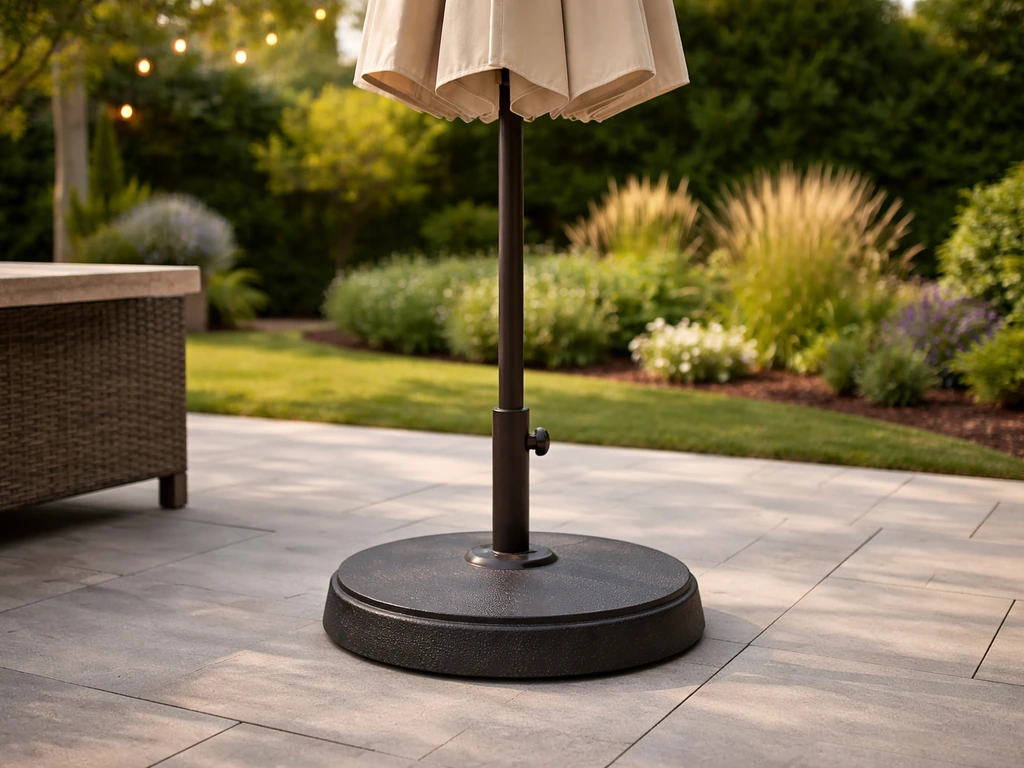
The Consumer Reports data for the Best Choice Products 10ft solar LED offset umbrella lists a total weight of 200 lbs (including a compatible base) and 47 lbs for just the umbrella itself. Consumer Reports lists the Best Choice Products 10ft solar LED offset umbrella test weights as 200 lb including a compatible base and 47 lb for the umbrella itself total weight of 200 lbs (including a compatible base) and 47 lbs for just the umbrella itself. That 200-lb figure is not the weight of the umbrella: it's the recommended base weight needed to safely anchor the offset pole. For a center-pole market umbrella, 50 lbs of base weight is often sufficient. For a 10ft offset/cantilever, you typically need 100 to 200 lbs of base weight because the canopy is hanging off to one side rather than being balanced over the center. If the listing ships with a lightweight or flimsy base, plan to either purchase a separate heavy base or anchor the existing base to a patio surface.
Pole design and wind stability
A thicker pole diameter (1.5 inches or more) and a cross-brace or dual-support arm on the offset pole significantly improve wind stability. Some offset umbrellas include a stabilizer bar that runs from the base up to the pole junction, which helps prevent rocking in gusty conditions. Ventilated canopy designs (where the top of the canopy has a gap or secondary layer that lets air flow through) also reduce wind load dramatically. If you live in an area that regularly sees winds above 20 mph, a vented canopy is worth prioritizing. The three-tier vented umbrella design is specifically engineered for this purpose and is worth comparing if wind is your main concern. If you want a match for that idea, the best choice products 10ft 3 tier solar patio umbrella is designed specifically around vented airflow and better wind performance three-tier vented umbrella design. The best 3 tier patio umbrella options are designed to vent air through multiple levels, which helps them handle breezier conditions without sacrificing shade.
What to do in a storm
No 10ft solar LED umbrella, regardless of base weight or pole design, should stay open in a storm. Close the canopy and, if possible, lower or remove the umbrella when winds exceed 25 mph or when severe weather is forecast. Many damaged umbrellas result from leaving them open overnight in conditions that turn windy. A simple habit of closing the canopy when you leave the patio extends the life of the umbrella by years and eliminates the tipping/damage risk entirely.
How to shop smart: your checklist and red flags
Whether you're evaluating the Best Choice Products SKY6410 or any comparable 10ft solar LED offset umbrella, run through this checklist before purchasing. If you need the steps, the best choice products 10ft solar LED patio umbrella instructions should walk you through setup, charging, and lighting modes checklist before purchasing. It catches the common problems that lead to buyer's remorse.
Specs to verify before buying
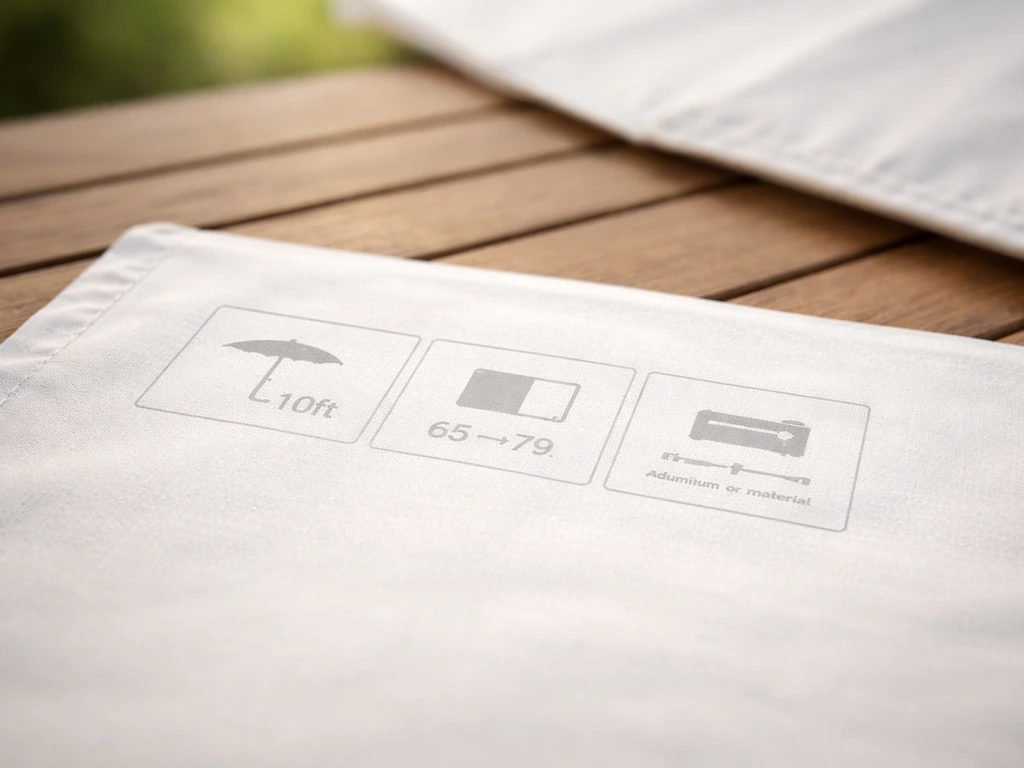
- Canopy diameter: confirm 10ft (some listings round up from 9.5ft)
- Canopy area in square feet: look for 65 to 79 sq ft depending on shape
- Frame material: aluminum preferred over steel for rust resistance
- Fabric weight/rating: 180 GSM or higher, UPF 50+ for sun protection
- Solar panel type and wattage: 1W minimum, monocrystalline preferred
- Battery capacity: 1200 mAh or higher for reliable 6+ hour runtime
- LED brightness: lumen rating listed, not just LED count
- IP rating on electronics: IP44 or higher for weather protection
- Base weight compatibility: confirm the included or recommended base reaches 100 to 200 lbs for offset styles
- Tilt mechanism type: push-button or collar tilt that locks positively
- Pole diameter: 1.5 inches or thicker for offset styles
Red flags to watch for
- No lumen rating or battery capacity listed anywhere in the product specs
- Base included weighs under 40 lbs for an offset/cantilever design
- Canopy fabric GSM not listed and no UPF rating provided
- User reviews mentioning the crank strips, sticks, or feels flimsy after one season
- Tilt mechanism described as slipping or not holding its angle
- No IP rating mentioned for solar panel or battery housing
- Listings that call an offset umbrella a "market" umbrella without clarifying the pole position
- Solar runtime claims of "up to 10 hours" with no panel wattage or battery spec to back it up
Decision workflow: picking the right model today
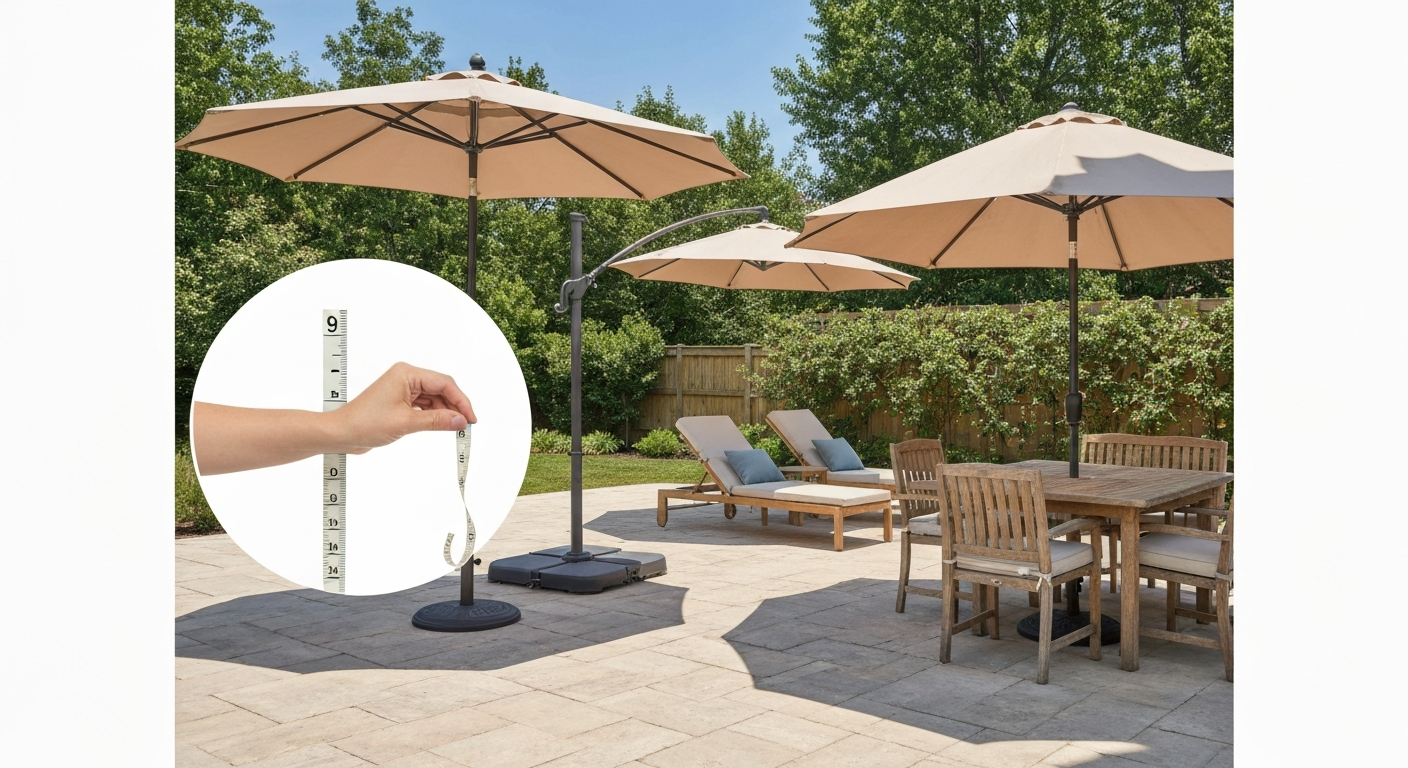
- Measure your space first. Confirm a 10ft canopy fits with at least 2 to 3 feet of clearance on all sides, and that the canopy height (minimum 8.2 ft open) clears any overhead structures.
- Choose offset vs. center-pole based on your furniture. No table hole or want a clear seating area? Go offset (SKY6410 style). Have a table with an umbrella hole? The market/center-pole version is simpler.
- Verify base requirements. For offset styles, budget for a 100 to 200 lb base separately if it's not included at that weight.
- Check the solar specs. If lumens, battery mAh, and panel wattage aren't listed, contact the seller or look at the actual product manual before buying.
- Read the 1-star reviews specifically. Look for patterns around the crank, tilt, solar lights failing, or stability issues. One or two complaints are normal; a pattern across dozens of reviews is a genuine warning.
- Confirm the return policy. Solar electronics and large umbrellas have higher-than-average return rates due to shipping damage and performance disappointment. A 30-day return window is the minimum worth accepting.
If the Best Choice Products solar LED offset model checks out on the specs above for your specific space and budget, it represents a reasonable value in the 10ft solar umbrella category. If you want to explore tilt-specific functionality in more depth, the solar LED lighted patio umbrella tilt configurations from the same product family are worth comparing directly. And if you're weighing whether a single canopy is enough coverage or whether a multi-tier ventilated design makes more sense for your climate, the three-tier options offer a genuinely different approach to wind resistance and shade distribution.
FAQ
How much base weight do I actually need for a 10ft offset (cantilever) solar umbrella if I already own one?
Check the base weight rating listed for that exact model and match the design style. For a 10ft offset, many setups need around 100 to 200 lb, especially if the canopy feels “sail-like” in your breeze, if the pole is long, or if the umbrella is used at full tilt. If your existing base is lighter than the umbrella’s recommended base weight, anchor the base to the patio (bolts or an included anchoring kit) rather than relying on weight alone.
Can I use the umbrella without direct sun every day, like on a covered patio or under tree shade?
You can, but you should expect shorter evening runtime. Solar umbrellas charge only when the panel gets meaningful light, so a partially shaded panel can cut charge time and reduce LED hours. If your space is shaded, look for (1) a charging indicator so you know it actually charged, and (2) models with a USB backup option so you can top up during cloudy stretches.
What does “6 to 8 hours runtime” mean in practice?
It usually assumes a full day of strong sun and a “best case” battery state (fully charged). Real-world performance drops in overcast weather, during cooler seasons with lower solar intensity, or if the panel is blocked for part of the day. To avoid disappointment, treat advertised runtime as the upper end, and verify battery capacity (mAh) and panel wattage together, not just the hours claim or LED count.
If a listing only gives LED count, how do I judge brightness?
LED count is not the main brightness metric. Prefer listings that provide lumens. For ambient patio use, aim for roughly 50 to 200 lumens range, then compare that to your expected distance from seating. If lumens are missing, use runtime plus battery and panel specs as your best indirect indicators, but expect less consistent brightness across days.
Is UPF 50+ necessary for a patio umbrella with solar lights?
It depends on how you use the area. If you are targeting sun protection for long outdoor meals or children, UPF 50+ is a strong baseline because it blocks most UV. If you mainly want evening ambiance after sunset, UPF matters less for immediate comfort, but it still affects canopy durability and how quickly the fabric degrades.
How do I choose between offset/cantilever and center-pole (market style) for my patio table?
Start by checking your table setup. If your patio table has an umbrella hole through the center, a center-pole option is usually the easiest fit. If you want completely clear space under the canopy, the offset/cantilever style is better because the pole sits to the side. Also consider how tilt will swing the canopy, since the offset pole changes how the shade shifts across your seating during the day.
What height clearance should I measure, especially if I have a pergola or awning?
Measure at the lowest point where the fabric will travel at maximum tilt, not only the “open” height. A 10ft umbrella can extend significantly when tilted, so confirm clearance to the ceiling and also check for overhead lights, fans, or gutter lines. If you are close to a ceiling, test by dry-fitting the umbrella position during setup before fully loading it with baskets or accessories.
What wind conditions are actually safe to use the umbrella in?
Use common-sense thresholds. Even with a strong base, offset umbrellas can rack under gusts because of leverage. Plan to close the canopy when winds approach your local “high wind” warnings, and avoid leaving it open overnight or during storms. If you often see gusts above about 20 mph, prioritize a ventilated (multi-layer) canopy and a thicker pole or stabilizer bar design.
Should I leave the umbrella outside year-round, since the solar panel and electronics are exposed?
Only if it is rated for outdoor weather and you can tolerate faster wear. Look for an IP rating on the electronics (IP44 or higher helps against rain splash), and check that connectors are protected. For best longevity, store or cover the umbrella during severe storms and consider keeping it closed and protected when not in use to reduce connector fatigue and fabric fading.
How can I tell if the tilt lock is reliable before it becomes a safety issue?
Test the tilt at both shallow and extended angles and check that it holds without drifting. Tilt collars or push-button systems should lock positively, with no slow “creep” when you release the mechanism. Also confirm smooth operation of the crank system, since a loose crank can make tilt feel unstable even if the lock works.
What should I inspect if the lights stop working after a season?
The most common failure is the wiring connections between the solar panel, battery, and LEDs. When checking reviews, search for repeated mentions of lights flickering or going out after months. After purchase, take a moment to verify the panel alignment for charging, and keep the umbrella fully dry before closing if possible, since moisture in connectors accelerates corrosion.