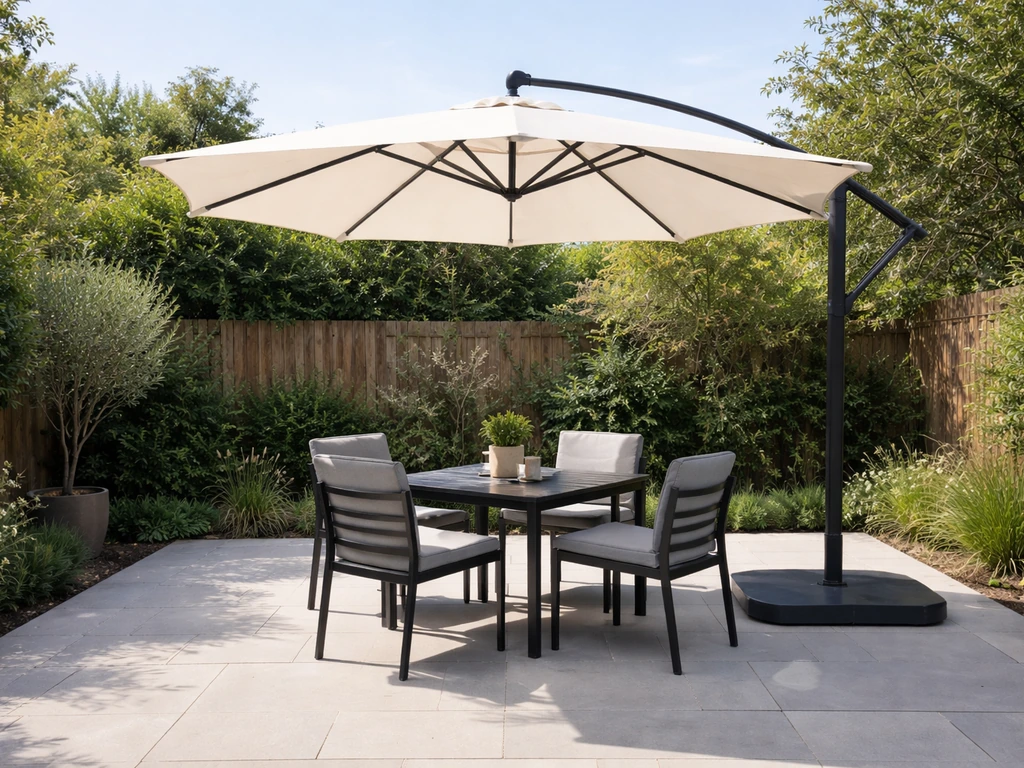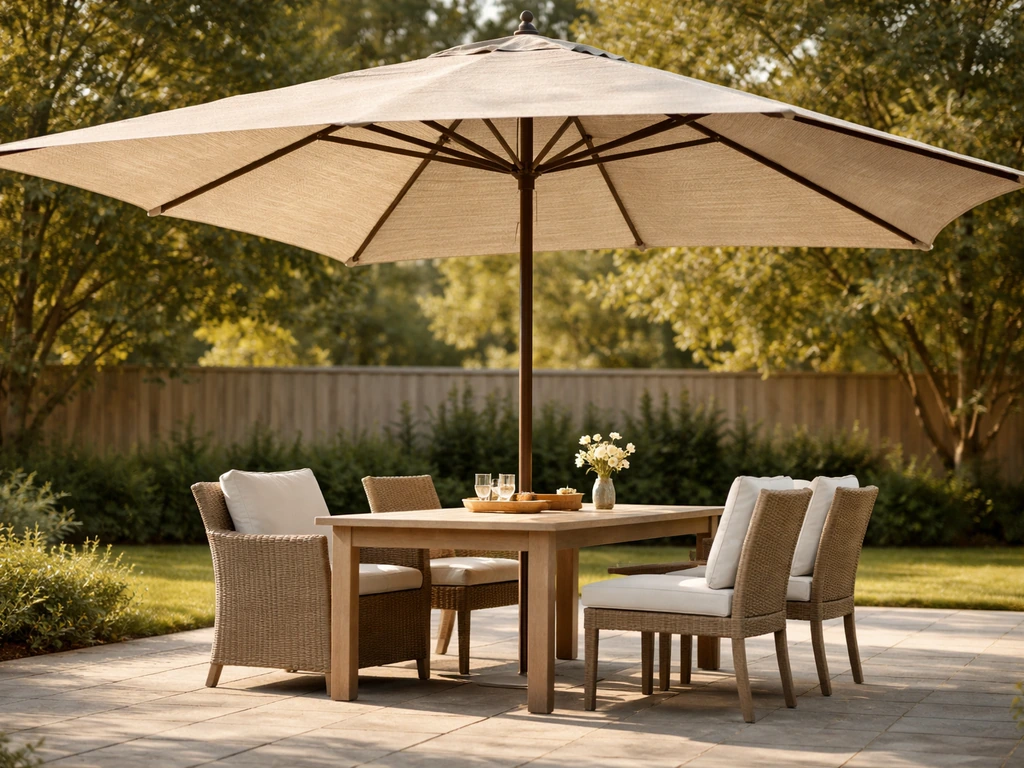
The best cantilever patio umbrellas from the 2022 era combine a sturdy aluminum or steel pole, a canopy rated at least UPF 50+, a base weighing 100 to 150 pounds, and a smooth crank-tilt mechanism that lets you chase shade without fighting the hardware. If you are shopping in the UK, use these specs as your starting point when you compare the best cantilever patio umbrella UK options for your garden. Models that consistently earned top marks in that window include the Treasure Garden 10-foot offset, the Abba Patio 10-foot cantilever, and the California Umbrella 11-foot ALTO series. Any of those will give a typical 10x10 or 10x12 patio deck solid coverage, real wind resistance in normal breezy conditions, and a frame that holds up season after season when you store it properly.
Best Cantilever Patio Umbrella 2022: Buyer Guide Picks

What 'best' actually means for a cantilever umbrella
People search 'best cantilever patio umbrella' and mean wildly different things. For most homeowners, best comes down to five things: whether it stays put in a 20 to 25 mph gust, how easy it is to open and position every day, how much shade it actually casts, how tall the clearance is so nobody ducks under the arm, and whether the materials survive a few summers without fading or cracking. Those five factors cut through the marketing noise faster than any star rating.
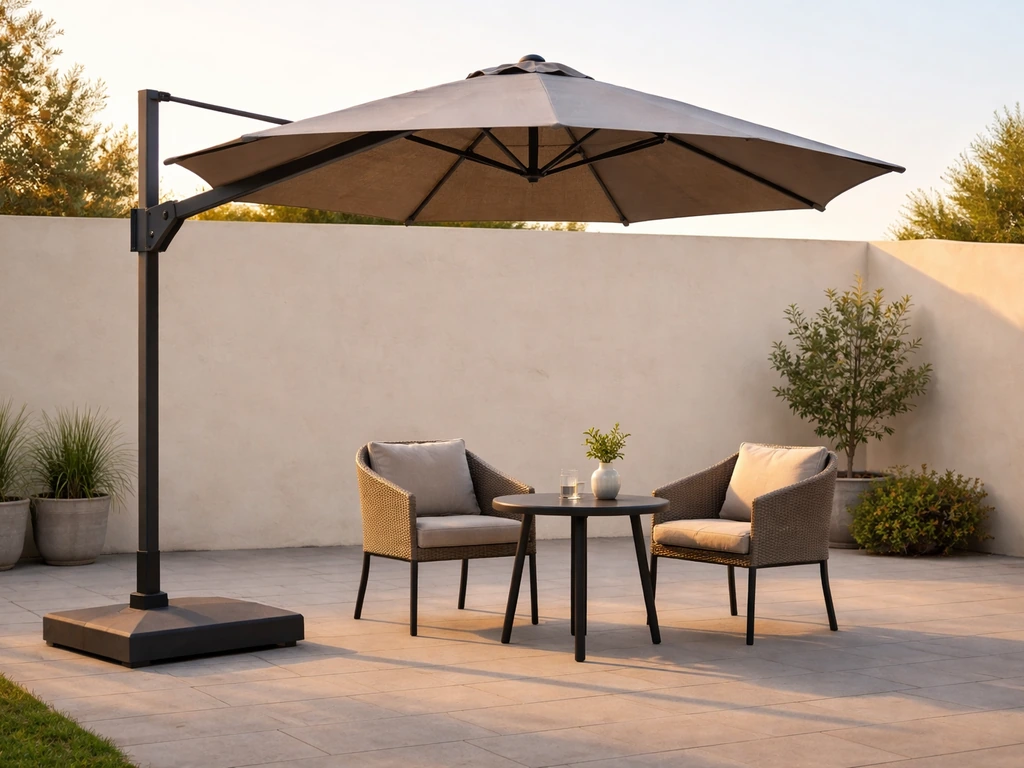
Cantilever (also called offset) umbrellas are a different beast from a center-pole market umbrella. The pole sits outside the seating area, the arm extends out over your table or loungers, and all that leverage means wind load acts differently on the frame. A cantilever that looks big and sturdy in a product photo can wobble dangerously if the base is underpowered or the arm joint is weak. That is why stability under wind load is the single most important spec to verify, not canopy color or brand name.
Top 2022-era picks, quickly compared
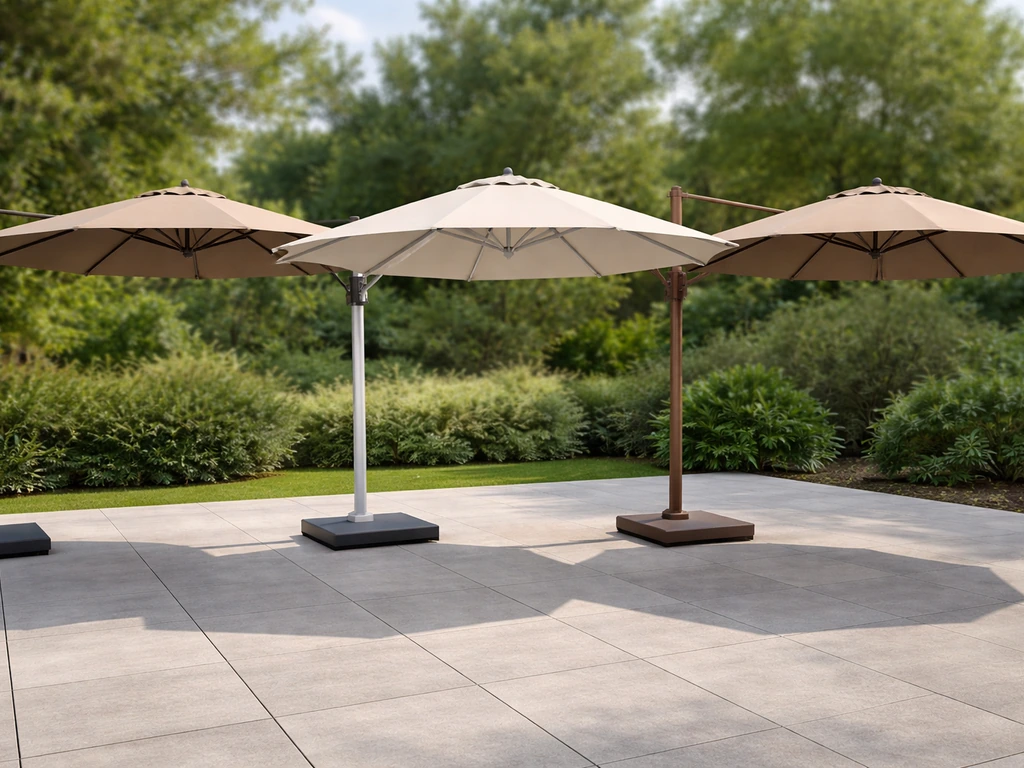
These are the models that showed up most consistently in testing and buyer feedback during 2022-era shopping. Availability and exact model numbers shift over time, so treat these as your reference points for what a quality cantilever umbrella looks like at each price level, not as a guaranteed in-stock list.
| Model | Canopy Size | Frame Material | Best For | Approx. Price Range |
|---|---|---|---|---|
| Treasure Garden 10 ft Offset (OGCPT) | 10 ft | Aluminum | Mid-range buyers who want solid build and easy crank-tilt | $350–$500 |
| California Umbrella 11 ft ALTO Series | 11 ft | Aluminum | Larger patios, premium feel, excellent UPF 50+ Sunbrella fabric | $500–$700 |
| Abba Patio 10 ft Cantilever | 10 ft | Steel | Budget-conscious buyers, smaller decks | $200–$300 |
| Sunnyglade 10 ft Offset | 10 ft | Steel | Entry-level, light use, covered or low-wind settings | $150–$220 |
| PURPLE LEAF 10–13 ft Double-Top Cantilever | 10–13 ft | Aluminum | High-wind areas, extra stability with double canopy | $400–$600 |
The Treasure Garden and California Umbrella entries are the ones I would put at the top of any shortlist. Both use aluminum frames (lighter than steel but more rust-resistant), both come with quality fabric options including Sunbrella in higher configurations, and both have crank-lift mechanisms that still feel smooth after years of use. The PURPLE LEAF double-top design deserves a mention if you live somewhere gusty, because the vented double canopy reduces the wind-sail effect that catches single-canopy offsets off-guard.
If budget is tight, the Abba Patio is a reasonable starting point for a covered patio or low-wind yard. Just pair it with a heavier base than the kit suggests, and do not leave it open in anything above a light breeze. The Sunnyglade is genuinely entry-level and works fine for occasional use, but the steel pole will show rust at the joints faster than aluminum if you leave it exposed to rain.
The features that actually matter (and a few that do not)
Wind resistance
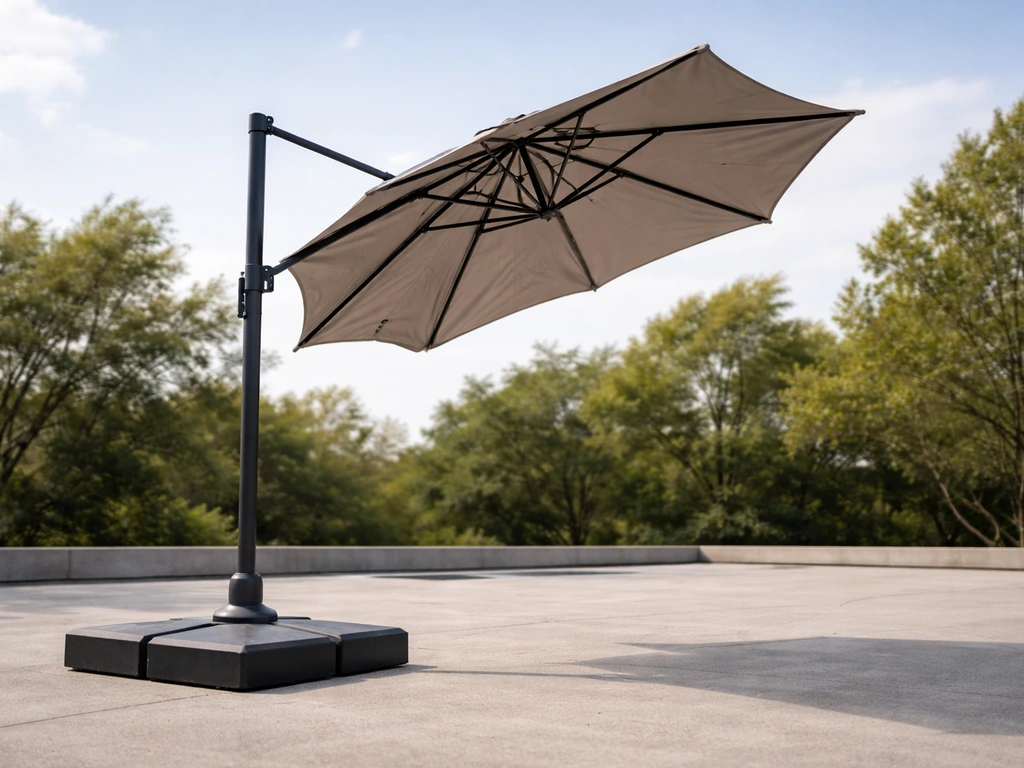
Wind is the number-one way a cantilever umbrella injures someone or destroys itself. ASTM F3512-21 is the formal standard for testing market umbrella wind safety and durability, and some manufacturers reference it (or similar testing) on their packaging. ASTM F3512-21 specifies procedures designed for testing and rating market umbrella wind-safety and durability performance for umbrellas and base mounting components blank" rel="noopener noreferrer">ASTM F3512-21 is the formal standard for testing market umbrella wind safety and durability. Look for that language rather than vague claims like 'wind-resistant.' A canopy that can handle 35 mph in a center-pole setup may handle only 20 mph when cantilevered, because the arm multiplies the torque on the base. Always close and secure the umbrella if a storm is coming. That is not optional advice.
One usability tradeoff worth knowing: TechGearLab's testing found that tilting a cantilever canopy too steeply vertical turns it into a wind sail. Keep the canopy at a moderate tilt angle in breezy conditions rather than pointing it straight up to track the sun. You get less shade efficiency but a lot more stability.
Tilt and rotation mechanisms
A good cantilever should let you rotate the canopy 360 degrees around the pole and tilt the angle of the canopy to block low morning or afternoon sun. Crank-lift systems (you turn a handle to open and close) are far easier to operate daily than push-button or pulley designs, especially on larger canopies. Consumer Reports specifically calls out ease of adjustment and tilt mechanism quality as key differentiators in patio umbrella testing. If you can, test the crank in person before buying, or read reviews specifically about how it feels after 50 open-close cycles, not just out of the box.
Coverage area
A 10-foot cantilever canopy casts roughly a 70 to 78 square foot circle of shade at peak sun (the pole is offset, so you get the full canopy over your seating without a pole in the middle). A 13-foot canopy jumps to roughly 130 square feet. The practical rule is that you want the canopy diameter to exceed your seating area by at least 2 feet on each side so guests on the edges are not half in the sun.
Clearance height
Most cantilever arms hang the canopy 7.5 to 9 feet off the ground at the lowest point of the canopy edge. If you are over 6 feet tall or have taller guests, confirm the minimum clearance spec before buying. Some 10-foot diameter models have a lower arm hang than 11 or 13-foot versions simply because of how the arm angle works. Clearance is listed inconsistently across product pages, so look for it in the detailed specs or customer Q and A sections.
Getting the size and layout right for your patio
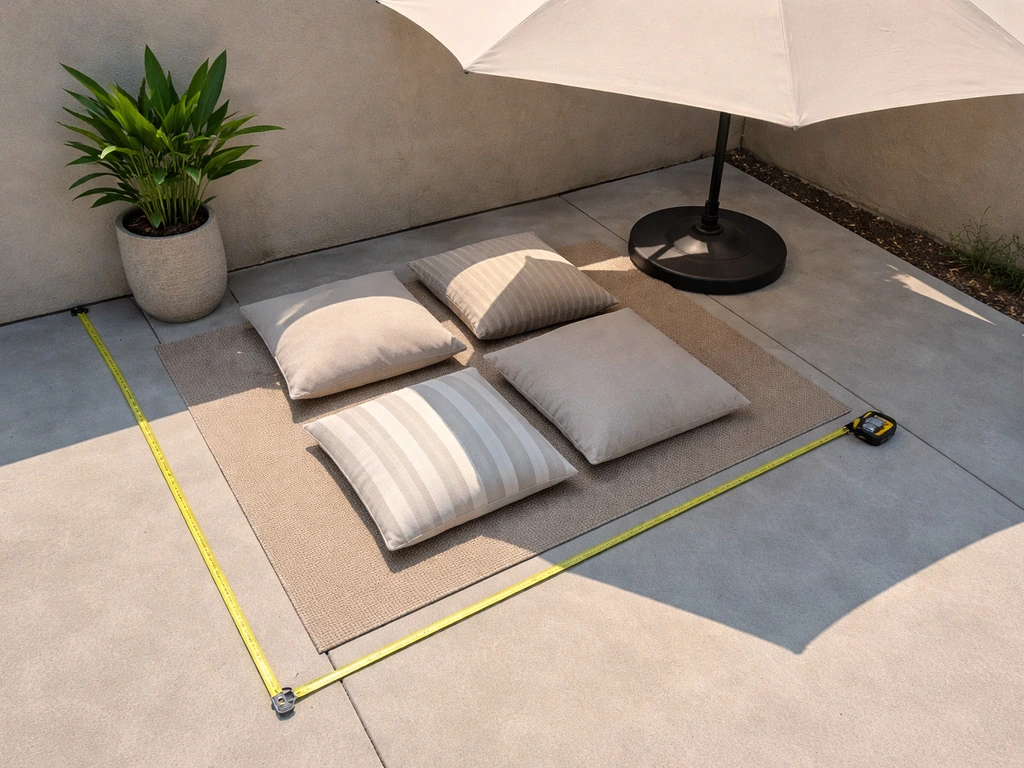
Before you look at a single product, measure your outdoor space and your furniture footprint. Write down the length and width of your seating area, and note where the sun hits hardest between 10 a.m. and 4 p.m. That measurement tells you the minimum canopy diameter you need.
- Measure the seating area you want shaded (length x width).
- Add 2 feet of buffer on each side to get your minimum canopy diameter.
- Check that the base location (where the pole sits) has at least 2 to 3 feet of clearance from walls, fences, or furniture.
- Verify overhead clearance: measure from your patio surface to the lowest obstruction (an overhang, string lights, pergola beam) to make sure the umbrella arm clears it.
- Note whether you have a hard surface (concrete, pavers) or soft ground, since that affects base type.
For a standard 6-person patio dining set (roughly 60 x 84 inches plus chairs), a 10-foot canopy is usually the minimum, and an 11-foot is more comfortable. A 13-foot canopy is better suited for a sectional sofa or a pool lounger arrangement where the shaded zone is wide and irregular. If you are comparing this to a large market-style umbrella, the key difference is that the cantilever's pole lives outside the table, so you get the full diameter as usable shade rather than losing the center to a pole.
Shape matters too. Round canopies are the most common and work well for circular or square tables. Rectangular cantilever canopies (typically 10x13 or 10x12 feet) shade a rectangular table or chaise lounge row more efficiently. If you are shopping for a larger patio, the guide on best large cantilever patio umbrellas goes deeper on the sizing trade-offs for 12-foot-and-up models.
Base and installation: the part most people get wrong
The base is where most cantilever umbrella failures happen. People buy a good umbrella and pair it with a base that is too light, and then they wonder why it tilts or tips in a breeze. A cantilever exerts significant leverage on its base because the canopy weight and wind load act at the end of an arm, not directly above the base. The physics demand a heavier base than you probably expect.
- For a 9 to 10-foot cantilever canopy: use a base weighing at least 100 to 130 pounds.
- For an 11-foot canopy: aim for 130 to 150 pounds minimum.
- For a 13-foot canopy: 150 to 200 pounds is a safer target, especially in exposed locations.
- Fillable bases (sand or water) are cheaper but less stable than concrete or cast iron. Water fills to about 60% of the base weight rating; sand fills to about 75%.
- Cross-base designs with four legs distribute load better than a single-column base on hard surfaces.
- If your patio has a concrete slab, anchor bolts or weighted umbrella base plates are the most stable long-term option for large canopies.
One thing to check on any cantilever you buy: whether the base is included or sold separately. Many mid-range and premium cantilever umbrellas are sold canopy-and-frame-only, and the base is an add-on. That is not inherently a problem, it just means you need to budget for it and buy the right weight class. A 50-pound base sold as a package with a 10-foot cantilever is almost always underpowered for real outdoor use.
Materials, UV protection, and how to judge durability
Frame and pole materials
Aluminum frames are the best all-around choice for cantilever umbrellas. They are lighter than steel (which matters when you are lifting and repositioning a 10-pound canopy on a 7-foot arm), they do not rust, and they hold up to UV exposure without degrading the way some plastic and lower-grade steel joints do. Powder-coated steel is a reasonable alternative if the coating is intact, but check the joints and collar hardware closely. That is where rust starts. Avoid frames with a lot of plastic structural components (as opposed to plastic accent pieces); plastic joints crack under UV and thermal cycling faster than metal.
Canopy fabric
UPF 50+ is the minimum you want for a patio umbrella canopy. That blocks 98% of UV radiation. Sunbrella is the gold standard fabric brand for outdoor use: it is solution-dyed acrylic, meaning the color goes all the way through the fiber rather than sitting on the surface. Solution-dyed fabrics resist fading dramatically better than surface-dyed polyester. The trade-off is price: Sunbrella canopies add $100 to $200 to the umbrella cost but last two to three times longer than budget polyester canopies in full sun exposure.
If you are shopping at the budget end, look for polyester with a stated UPF 50+ rating and at least 200 gsm fabric weight. Lighter polyester (under 160 gsm) fades and weakens faster, and you will be replacing the canopy within two to three seasons in a sunny climate. Canvas canopies are another option worth knowing about; they are thicker and feel more premium, though they are heavier and require more careful drying to avoid mildew. A good way to narrow your search is to compare these factors against the best canvas patio umbrella options.
Venting
A single or double vent at the top of the canopy is not just decorative. It reduces the pressure differential between the top and underside of the canopy in wind, which is exactly what causes a canopy to invert or a base to tip. Double-vented canopies (like the PURPLE LEAF double-top design mentioned earlier) handle gusts better than single-vent or no-vent canopies. If you are in a windy yard or coastal area, prioritize a vented design.
Budget vs. premium, and the mistakes to skip
You can spend $150 or $1,500 on a cantilever umbrella. Here is an honest breakdown of what the money buys.
| Price Range | What You Get | Where It Cuts Corners |
|---|---|---|
| Under $250 | Steel frame, basic polyester canopy, small included base | Weaker joints, faster fabric fade, underpowered base, limited tilt options |
| $250–$450 | Aluminum or powder-coated steel, UPF 50+ polyester, crank mechanism, better base weight | Fabric still not solution-dyed, base may still need upgrading for larger canopies |
| $450–$700 | Aluminum frame, Sunbrella or comparable fabric, 360-degree rotation, smooth crank, heavier base included or available | Premium price, but durability and daily use justify it for most homeowners |
| $700+ | Commercial-grade construction, heavy-duty aluminum or stainless steel, premium fabrics, longest warranty | Overkill for a home patio; better fit for a restaurant terrace or hotel pool deck |
For most homeowners, the $350 to $600 range is the sweet spot. You get an aluminum frame that will not rust, a canopy that will last five-plus seasons with basic care, and a crank mechanism that actually works smoothly every day. Spending under $250 is fine for a covered patio where wind and UV are limited, but do not expect it to perform like the mid-range models in an exposed backyard.
Common mistakes that ruin a good umbrella
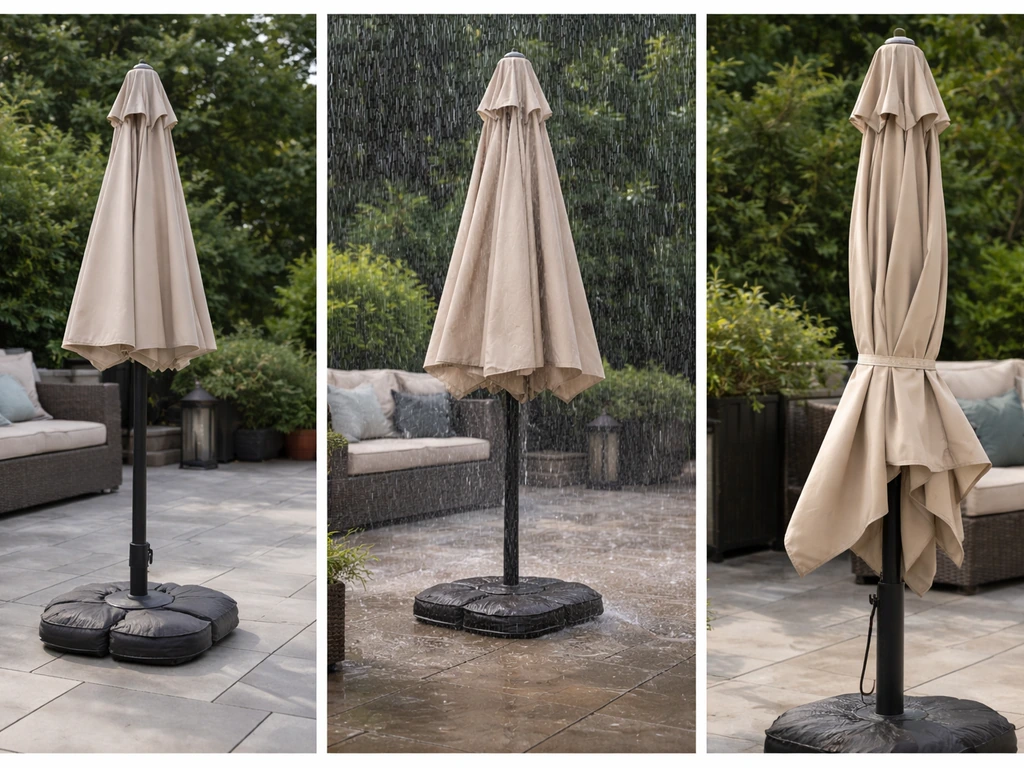
- Using a base that is too light: if the umbrella wobbles in a calm day, the base is wrong, not the umbrella.
- Leaving the umbrella open unattended during a storm: even a quality cantilever will tip, break an arm, or become airborne in a 40 mph gust. Close it.
- Buying based on canopy diameter without checking arm clearance height: tall people will not want to duck under a 7-foot edge every time they sit down.
- Skipping the cover: a UV-protective storage cover adds years to canopy life and costs almost nothing compared to a replacement canopy.
- Choosing a round canopy for a long rectangular seating area: match canopy shape to your furniture layout.
- Ignoring the pole placement: the base of a cantilever sits to the side of your seating. Measure whether you have room for it before ordering.
- Buying a steel-frame umbrella for a coastal or humid climate without checking the corrosion protection.
One more thing worth saying plainly: the 2022 models listed here represent the landscape as it stood then, and specific SKUs evolve. Treasure Garden and California Umbrella in particular update their line names periodically. When you shop today, use the specs from this guide as your checklist: aluminum frame, UPF 50+ solution-dyed fabric, 360-degree rotation with crank tilt, base weight appropriate to your canopy size, and a vent. Any model that hits those marks is worth serious consideration regardless of the year on the box.
If your priority is sheer size, the guides on best large patio umbrellas and best large cantilever patio umbrellas cover the 12-foot-and-up category in more detail. If you want the 12-foot-and-up category specifically, also check the best large cantilever patio umbrella options in this guide best large patio umbrellas. And if fabric choice is a major factor for you, the canvas patio umbrella comparison looks at how canvas holds up against acrylic and polyester for long-term outdoor use.
FAQ
Do I need to buy a separate weighted base for the best cantilever patio umbrella 2022 models, and how can I tell?
Check the product listing for “base included” versus “umbrella only.” Many mid-range cantilever setups sell the canopy and frame as a unit, then require you to add a base that matches the umbrella size. If the base weight is only shown as an option, not included, budget for it separately and verify the recommended base weight class before ordering.
What base weight is actually realistic for a 10-foot versus 13-foot best cantilever patio umbrella 2022 choice?
Instead of relying on a single number, use the canopy size to estimate the torque your setup will see in wind. A 10-foot cantilever typically needs a heavier base than most people expect from the package, and a 13-foot model usually calls for a further jump in base mass. If the seller does not publish a recommended base weight or wind rating for the exact canopy, treat the package base as a minimum only.
How do I confirm wind performance for a cantilever umbrella without getting misled by marketing terms?
Look for references to formal wind safety testing language rather than phrases like “wind resistant.” Confirm the stated wind speed is based on a cantilever configuration (not center-pole), and note whether the guidance assumes the umbrella is closed, tied down, or used only in specific conditions.
Is it safe to leave a cantilever patio umbrella open during rain or storms?
Rain is usually fine if the canopy is allowed to drain and dry properly, but storms are different. The cantilever leverage makes it more vulnerable when fully exposed, so follow the manufacturer instruction to close and secure before severe weather. For prolonged storms, do not treat “waterproof” fabric as an excuse to leave it open.
What should I do if the crank tilt feels stiff after a season?
Stiffness is often caused by alignment issues, grit at the gear or hinge, or lack of lubrication on the tilt mechanism. Clean the track area and remove debris, then use the lubricant type recommended by the manufacturer (avoid pooling oils on fabric). If the crank binds only at certain angles, check that the canopy is seated correctly in its rotation position.
How can I measure canopy clearance if the underside is listed inconsistently online?
Measure from the ground to the lowest canopy edge using your own height reference (and include your tallest guest). If the listing gives multiple numbers (minimum clearance, pole height, arm geometry), compare the “lowest edge” figure to real-life head-bumping risk. When clearance is missing, rely on customer Q and A photos from people of similar height rather than only the headline “height.”
Will UPF 50+ be enough for full-day sun, and does fabric thickness matter?
UPF 50+ blocks the vast majority of UV, but comfort depends on coverage and airflow too. Fabric thickness helps with durability, but shade effectiveness mostly comes from canopy size, tilt angle, and whether the sun hits the edges first. If you are in intense climates, prioritize solution-dyed acrylic or higher weight polyester (around 200 gsm or more) so the color and weave hold up.
Do double-vented canopies matter if my yard is mostly calm?
A double vent can still help, but it matters most when gusts create a strong “sail” effect. If you are in a sheltered area, single-vented canopies can be sufficient, as long as the base weight and tested wind guidance match your conditions. If you notice fluttering at the top, a vented design plus correct tilt is usually a bigger fix than changing fabric color.
What tilt angle should I use to avoid the cantilever acting like a wind sail?
Use a moderate tilt rather than pointing the canopy steeply upward in breezy conditions. When the canopy approaches near-vertical, wind can hit the panel more like a sail and increase load on the base and joints. If you want sun tracking, prioritize stability by reducing tilt during gusts and fully closing when conditions escalate.
Is a crank-lift mechanism always better than pulley or push-button for the best cantilever patio umbrella 2022?
Crank systems are usually easier for daily use and larger canopies, but “better” depends on the handle height and your comfort reaching it. If you have mobility limits, verify the crank placement and whether the crank requires significant force when the canopy is partially open. Also confirm there is enough clearance around the pole so the handle can rotate without obstruction.
Round versus rectangular cantilever: which is better for typical patios and furniture layouts?
Round canopies tend to shade circular or square seating more evenly, while rectangular versions (often 10x12 or 10x13) can align better with a straight table and chaise row. Choose based on where the sun strikes and the shape of your seating, not only the number of people you can fit under the umbrella.
How do I prevent rust or corrosion at joints even if the frame is aluminum?
Aluminum is more rust-resistant than steel, but joint hardware can still corrode if water stays trapped or the finish is damaged. Keep the frame clean, rinse off salt if you are near the coast, and store or cover the umbrella properly when not in use. Check collars and connection points each season, especially after windy weather.
How should I store a cantilever umbrella to make the UPF fabric last longer?
Close it fully, then keep it dry when storing. Avoid leaving the canopy fabric bunched in a way that traps moisture, and use a breathable cover if possible so condensation does not build up. If the umbrella has been wet, allow it to air-dry before covering to reduce mildew risk.
What are common mistakes that make even the best cantilever patio umbrella 2022 underperform?
The biggest mistakes are underweighting the base, using the umbrella in gusty conditions without closing it promptly, setting the canopy at an overly steep tilt, and skipping clearance checks so the arm sits too low. Also confirm whether the base is included, because buying a premium canopy paired with a light base causes most tipping issues.