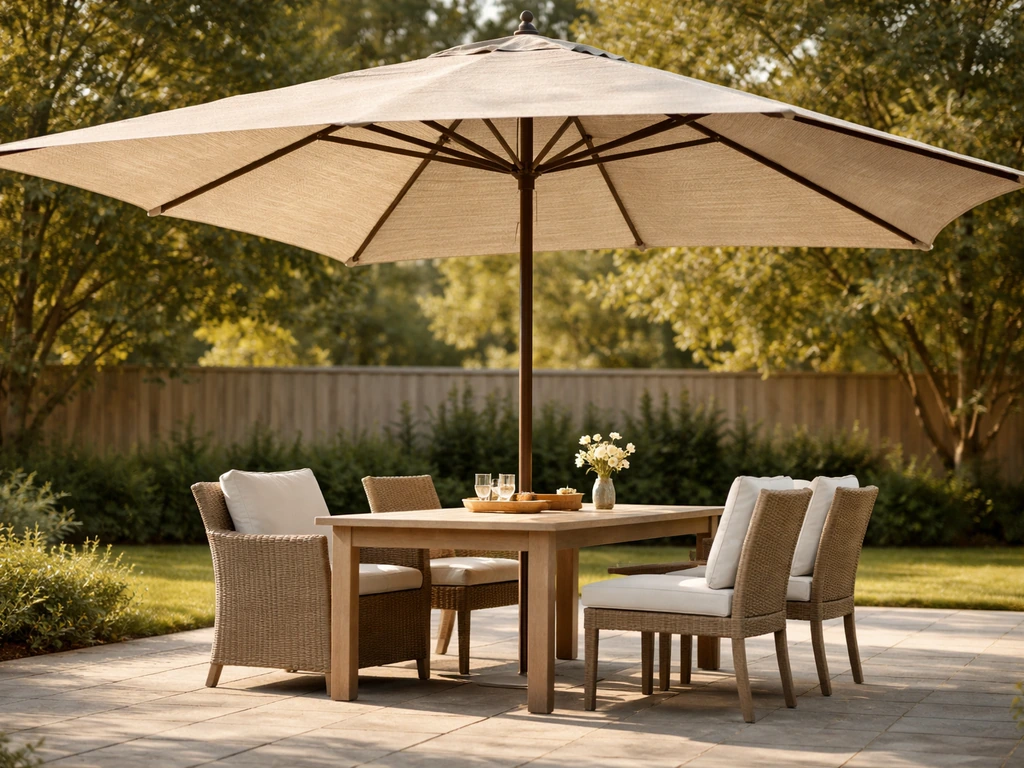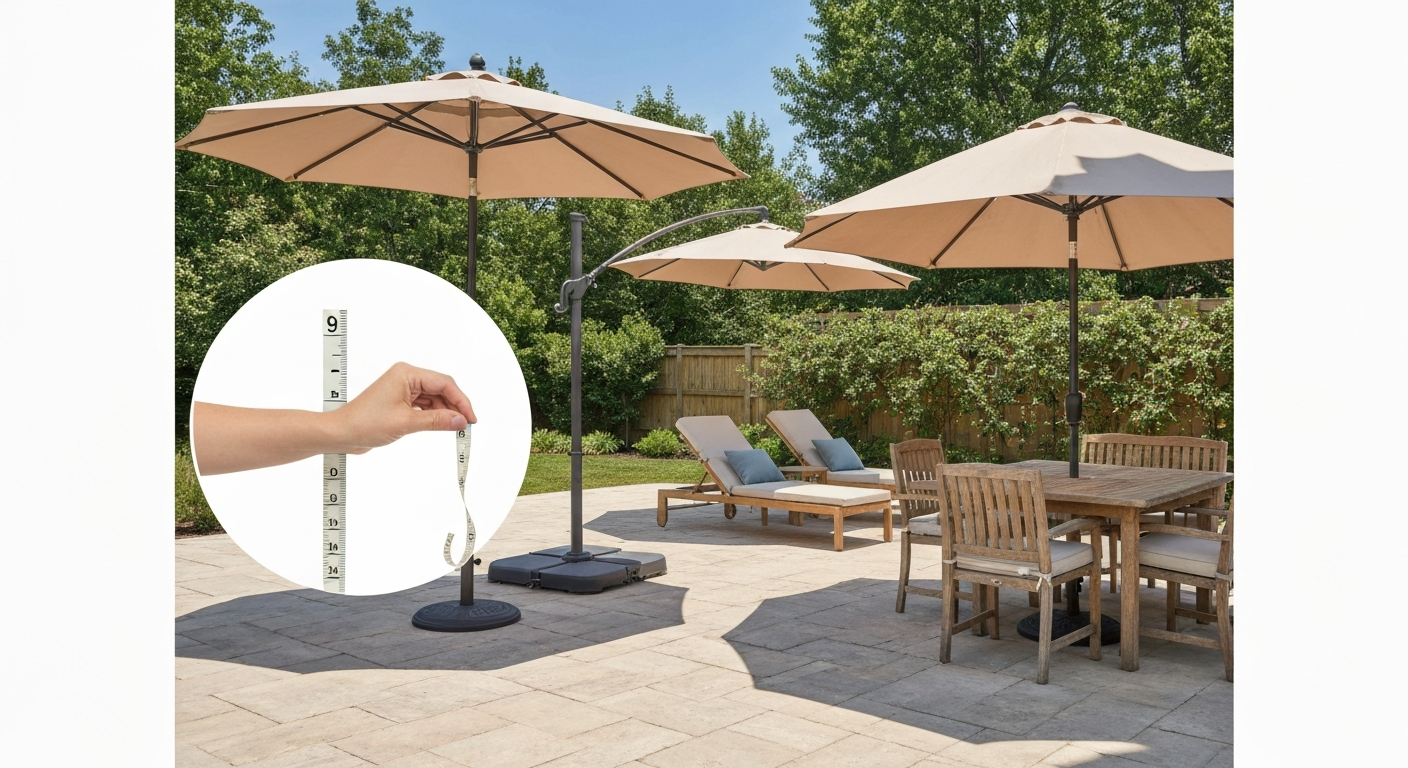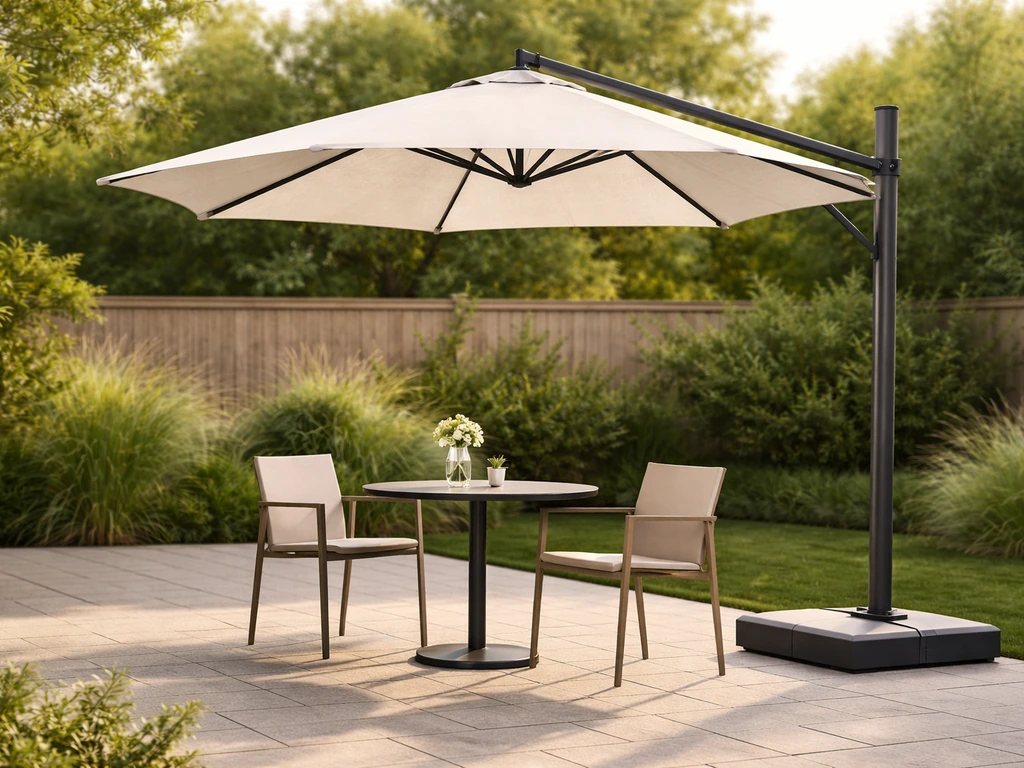
The best large cantilever patio umbrella for most homeowners is a 10- to 13-foot model with a solution-dyed acrylic canopy (Sunbrella is the benchmark), an aluminum or powder-coated steel frame with stainless steel hardware, a vented top for wind relief, and a base weighing at least 100 to 250 pounds depending on canopy size and your local wind conditions. That combination gives you serious shade coverage without a center pole blocking your seating area, and it holds up through years of real outdoor use rather than one or two seasons.
Best Large Cantilever Patio Umbrella: Buying Guide

Kent Lang
31 May 2026

What 'best' actually means for a large cantilever umbrella
Marketing copy loves words like 'premium' and 'commercial-grade,' but when you're spending real money on an oversized cantilever, 'best' needs to mean something specific. For a large or extra-large cantilever, the five things that separate a genuinely good umbrella from a frustrating one are: adequate shade coverage for your actual furniture layout, wind stability you can rely on (not just tolerate), fabric that resists fading and UV degradation for more than a season or two, a frame and hardware that won't rust or seize up, and a tilt/rotation mechanism you can actually operate smoothly by yourself.
The cantilever format specifically earns its place because the support pole sits to the side of your seating area, so nobody has to dodge a pole in the middle of the table. That's the core advantage over a center-pole market umbrella. But that offset arm also introduces mechanical complexity and wind-load physics that a standard pole umbrella doesn't have, which is why getting the specs right matters more with a cantilever than almost any other style.
Choosing the right size: how big is big enough?
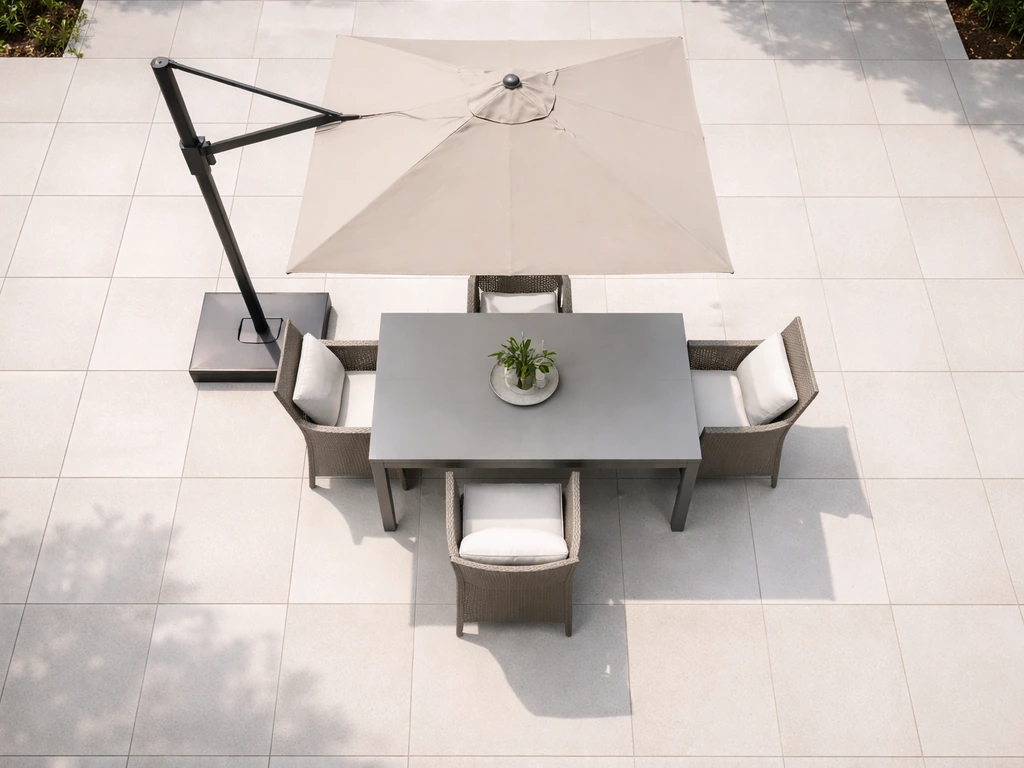
For most large outdoor dining or lounge setups, you're shopping in the 10- to 13-foot range. A 10-foot cantilever works well for 8 to 10 people around a large dining table. An 11-foot model handles extra-large dining tables and bigger conversation sets or outdoor sectionals. Step up to 12 or 13 feet and you're covering roughly 113 to 133 square feet of shade area, which is the right size for a large sectional, a dining set plus an adjacent lounge chair, or a poolside seating cluster.
The general sizing rule for any umbrella is to add 2 feet on each side beyond your table or furniture footprint. So if your dining table is 60 inches (5 feet) wide, you want a canopy diameter of at least 9 feet, and for a table seating 8 to 10 you're realistically looking at 11 feet minimum. For a large sectional that might be 8 or 9 feet across, a 13-foot canopy starts making sense. A table measuring 48 to 60 inches with up to 10 people typically calls for at least an 11-foot umbrella.
One thing specific to cantilever geometry: the canopy center sits offset from the support pole, so you need to factor in the arm reach, not just the canopy diameter. Check how far the canopy extends from the pole base, then verify that reach clears your furniture without requiring the pole or base to sit in an awkward or unsafe spot. Some oversized cantilevers also come in square configurations (a 10-foot square is common at the premium end), which can be a better fit than a round canopy for rectangular dining tables.
| Canopy Size | Approx. Coverage Area | Best Fit |
|---|---|---|
| 10 ft (round or square) | 78–100 sq ft | Large dining table, 8–10 seats |
| 11 ft | 95–115 sq ft | Extra-large dining table, large conversation set |
| 12 ft | 113–125 sq ft | Large sectional, dining + lounge combo |
| 13 ft | 130–133 sq ft | Big sectional, poolside cluster, commercial-style coverage |
How cantilever mechanics work (and why they matter)
A cantilever umbrella opens and closes via a crank handle, and most quality models use a clockwise-to-open, counterclockwise-to-close motion. The key thing to verify before buying is that the crank mechanism feels smooth and can be operated by one person without forcing it. Forcing the crank is the most common way to damage the mechanism early. Look for models that include clear instructions about gradual operation and correct engagement of the crank before turning.
Tilt is where large cantilevers get genuinely useful. A good tilt option lets you angle the canopy to block low-angle morning or afternoon sun, not just overhead noon sun. TUUCI’s Single Cantilever product page markets a “Tilt Option” designed to block sun or add privacy “at any angle,” using a multiple location locking system and a 360° base rotation [A good tilt option lets you angle the canopy to block low-angle morning or afternoon sun, not just overhead noon sun.
](https://www. tuuci. com/product/single-cantilever-with-tilt-option/). The best designs include a multiple-position locking system so the canopy stays exactly where you set it rather than drifting under wind load.
Combine that with 360-degree base rotation and you can position the shade wherever you need it throughout the day without moving furniture.
Clearance is a practical concern people overlook. The canopy on a large cantilever is elevated, but the arm and pole still need to clear anyone walking underneath the edge. Check the listed clearance height when the umbrella is open and at its lowest tilt angle. For a patio with mixed seating heights or people standing near the edge of the shade area, you want at least 7 feet of clearance at the canopy perimeter. Some oversized models let you adjust the lift height via the crank, which helps if you're working with lower-overhead situations like a pergola or covered patio area.
Wind stability: frame construction, canopy design, and base weight
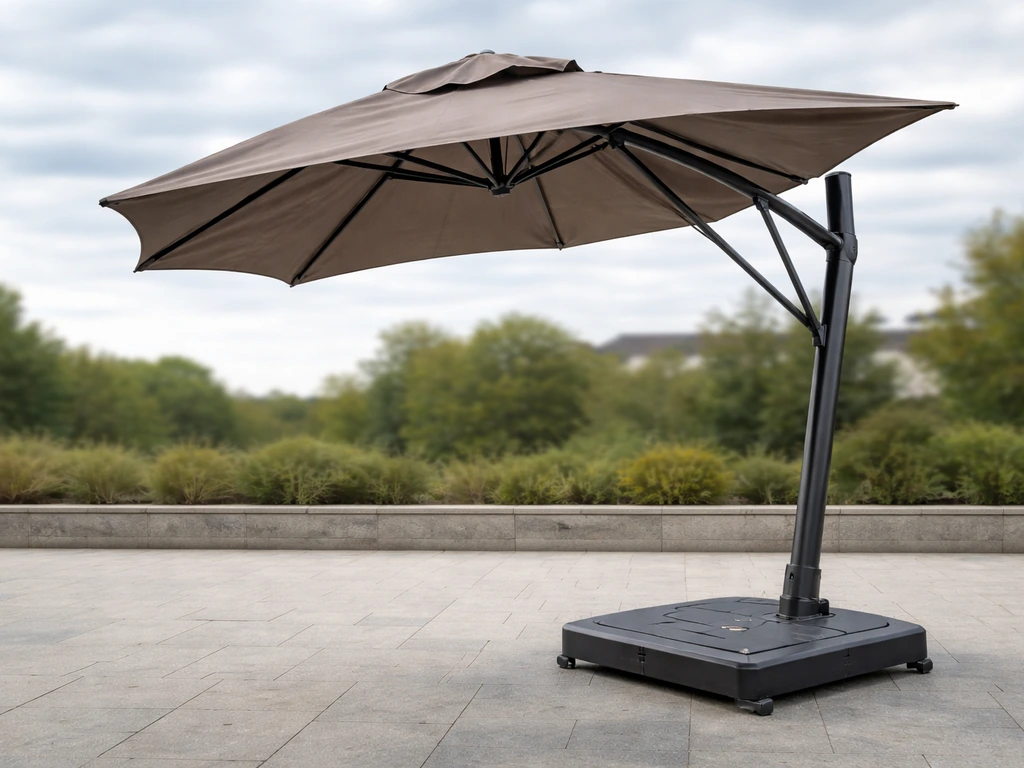
Wind is the factor most buyers underestimate, especially at large canopy sizes. A 13-foot canopy catches a lot of air, and an undersized base or a non-vented canopy will turn a moderately windy afternoon into a tipping risk or a broken frame. There are three things working together to keep a large cantilever stable: the frame construction, the canopy design, and the base weight.
Frame construction
For a large cantilever, aluminum is the preferred frame material. It's lightweight enough that the arm doesn't create excessive lever force on the base, but it's strong enough to handle real wind load when properly engineered. Stainless steel fasteners and hardware (rather than zinc or generic metal) make a significant difference in corrosion resistance, especially in coastal or humid environments. Some premium cantilevers use aluminum extrusions for both the canopy frame panels and the pole, with all fasteners in stainless steel, which gives you a genuinely corrosion-resistant structure rather than one that relies on paint alone.
Canopy design and venting
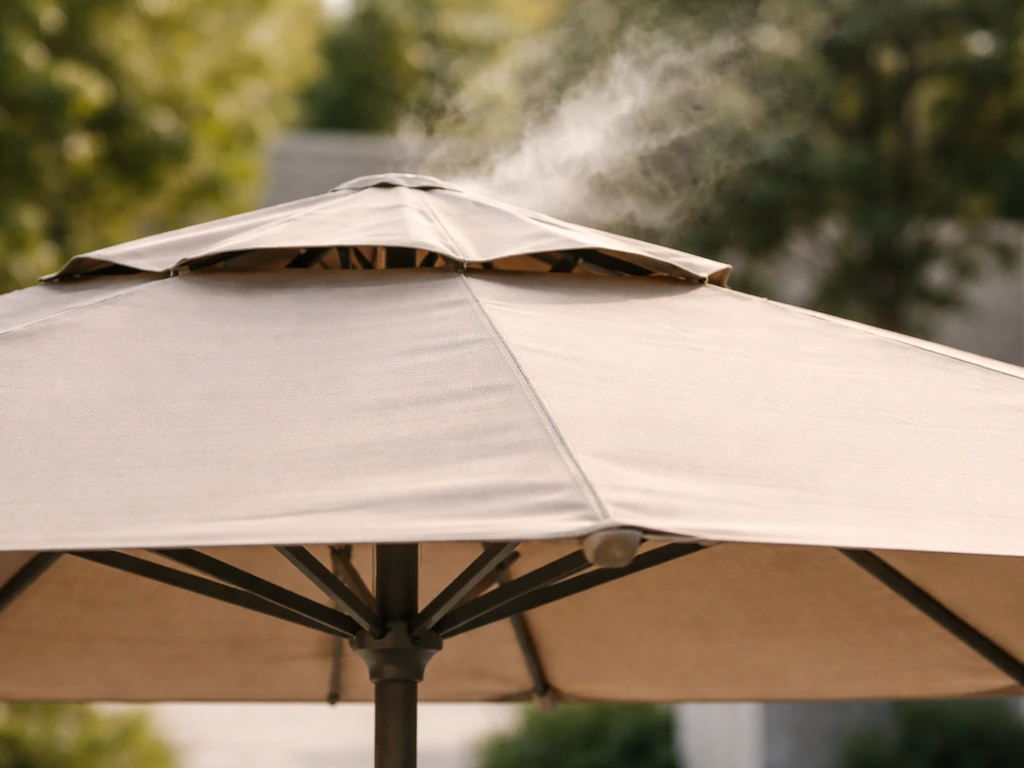
A vented canopy top is not a gimmick on a large umbrella. The vent allows air to escape upward rather than building pressure under the canopy, which directly reduces the lift force that causes tipping. Functional top venting is specifically designed to improve wind resistance, not just airflow comfort. Some canopy fabrics also flex slightly with gusts rather than holding rigid, which further reduces peak load on the frame. That flexibility is a feature, not a sign of flimsy material, as long as the base fabric is high-quality and properly UV-stabilized.
Most quality manufacturers recommend blank" rel="noopener noreferrer">closing your umbrella when wind exceeds 25 MPH (some high-performance models are rated to 45 MPH, but those are commercial-grade exceptions, not the norm for residential use). That's a practical operating guideline to keep in mind: a large cantilever is not a permanent fixture you leave open through storms. Treat it like outdoor furniture, bring it in or close it when conditions change.
Base weight requirements
This is where most buyers make a costly mistake. An undersized base on a large cantilever isn't just annoying, it's a safety hazard. For cantilever umbrellas in the 10-to-13-foot range, you need 100 to 250 pounds of base weight depending on canopy size and your local wind conditions.
TUUCI’s Ocean Master MAX Classic Cantilever product page references a “high wind” stabilisator designed for added strength and stability in hard wind For cantilever umbrellas in the 10-to-13-foot range, you need 100 to 250 pounds of base weight depending on canopy size and your local wind conditions. .
At the upper end of premium residential cantilevers, a filled granite-style base can reach 429 to 560 pounds total, which tells you how seriously the engineering accounts for leverage and wind load at this scale.
Many base options are designed to be filled with sand or water after delivery, which makes them manageable to move but brings them up to working weight once installed. Some manufacturers also offer plate anchors or in-ground security mounts as accessories for extra-large models, which is worth considering if you live in a consistently windy area or near the coast. The general minimum guidance for any cantilever parasol is at least 60 to 100 kilograms (130 to 220 pounds), with larger canopies requiring the higher end of that range.
Materials and durability: what to look for in fabric and frame
The canopy fabric makes the biggest difference in how long your umbrella actually lasts and how good it looks after a few seasons. The benchmark material is 100% solution-dyed acrylic, with Sunbrella being the most widely recognized brand. Solution-dyed means the color goes all the way through the fiber rather than sitting on the surface, so UV exposure doesn't bleach or fade it the way it does cheaper surface-printed or coated fabrics. This process makes the fabric inherently fade resistant and UV protective rather than relying on a coating that wears off. Marine-grade solution-dyed fabrics used by premium manufacturers share this construction and prioritize resistance to UV degradation as a core performance objective.
Water resistance matters too, but it's worth understanding that most quality acrylic canopy fabrics are water-repellent rather than fully waterproof. They shed light rain well, but after washing or heavy use over time, the water-repellent treatment can diminish. Reapplying a fabric protector spray after cleaning restores that performance. This is part of normal maintenance, not a defect, but it's something to build into your care routine.
For the frame, aluminum wins for most residential large cantilevers because it doesn't rust and its weight-to-strength ratio keeps the whole structure manageable. Look for powder-coated finishes on any steel components, and make sure all fasteners and hardware are stainless steel. Zinc or standard steel hardware will start showing rust at joints and pivot points within a season or two in any humid or coastal climate, which then compromises the crank mechanism and tilt locks over time. This is exactly the kind of hidden failure that leads to people replacing a 'durable' umbrella after just two or three years.
| Feature | What to Look For | Red Flag |
|---|---|---|
| Canopy fabric | 100% solution-dyed acrylic (Sunbrella or marine-grade equivalent) | Polyester or surface-printed fabric; no UV spec listed |
| Frame material | Aluminum extrusions or powder-coated steel | Uncoated steel; no rust-resistance mention |
| Hardware/fasteners | Stainless steel | Zinc, galvanized, or unspecified metal |
| Canopy vent | Functional top vent for wind relief | No vent on a 10ft+ canopy |
| Base weight | 100–250+ lbs depending on size | Under 100 lbs for any 10ft+ canopy |
| Tilt mechanism | Multi-position locking tilt | Single fixed position or no tilt option |
How to pick the right model for your budget and space
Once you know your size range and have a handle on the material specs, the next step is matching a specific model to your actual patio. Here's how to work through it quickly.
Measure first, then verify
- Measure your furniture footprint (length and width of the full seating area, not just the table).
- Add 2 feet on each side to get your minimum canopy diameter. For a 6-foot-wide sectional, that's a 10-foot minimum.
- Measure the available floor space for the base. Large cantilever bases are substantial (often 2 to 3 feet across). Make sure there's clear, flat space that doesn't block foot traffic.
- Check the arm reach spec on any model you're considering. Confirm the canopy center will sit over the middle of your seating area with the pole positioned where you have space for the base.
- Verify clearance height at the canopy edge, especially at the lowest tilt position. Compare it to your seated and standing heights.
- Confirm the base weight requirement for the specific model and verify you can fill or position a base that meets it.
Budget realities
A large cantilever umbrella at the quality level worth buying typically runs from around $400 to $800 for a solid residential model with a decent fabric and aluminum frame. Premium commercial-grade cantilevers with Sunbrella canopies, heavy-duty aluminum frames, stainless hardware, and full tilt/rotation systems can run $1,000 to $3,000 or more. The jump in price from mid-range to premium buys you meaningfully better fabric longevity, smoother and more reliable mechanics, and a frame that won't flex or corrode.
If you're in a high-wind or coastal area, or you want something that looks sharp for more than three seasons, the premium tier is worth the investment. For a sheltered urban patio with moderate sun and wind, a quality mid-range model with a Sunbrella-equivalent fabric and aluminum frame is perfectly adequate.
Common buying mistakes to avoid
- Underestimating wind load: A 13-foot canopy in a breezy yard needs a base in the 200-plus-pound range, not the 60-pound base that came with a smaller umbrella you already own.
- Buying a base separately and guessing the weight: Always check the specific base weight recommendation for the exact model you're buying. Manufacturers publish this for a reason.
- Ignoring arm reach when measuring: The canopy diameter alone doesn't tell you where the shade lands. Factor in how far the arm extends from the pole and where the pole base has to sit.
- Choosing polyester or mystery fabric to save money: Cheaper canopy fabrics fade, go brittle, and lose water repellency within one or two seasons. The fabric replacement cost often exceeds the savings.
- Skipping the tilt feature on a large canopy: On a 10-foot-plus cantilever, fixed-position shade is limiting. Morning and evening sun angles are low; without tilt you lose half the umbrella's usefulness.
- Not accounting for clearance at the canopy edge: The center of a large canopy may be 8 feet up, but the edge at a steep tilt angle can drop to 6 feet or lower, which is a head hazard for taller guests.
- Leaving the umbrella open in wind above 25 MPH: This damages the frame and canopy over time and creates a safety risk. Build the close-it-when-windy habit from day one.
Quick pre-purchase checklist
- Canopy size is at least 2 feet wider on each side than your furniture footprint.
- Canopy fabric is 100% solution-dyed acrylic with a documented UV protection spec.
- Frame is aluminum or powder-coated steel with stainless steel hardware throughout.
- Canopy has a functional top vent.
- Base weight meets or exceeds the manufacturer's recommendation for the specific model (100–250+ lbs for 10–13 ft canopies).
- Tilt mechanism has multi-position locking and the model includes 360-degree rotation.
- Arm reach positions the canopy center over your seating area with the pole base in a safe, unobtrusive location.
- Clearance height at the canopy edge is at least 7 feet at the lowest practical tilt angle.
- Crank mechanism operates smoothly with one hand (test in-store or verify from reviews).
If you're also weighing a large cantilever against a standard large patio umbrella with a center pole, the cantilever wins whenever pole-free seating space is a priority, but it does require more base investment and more attention to placement. If you want the best large patio umbrellas, focus on shade coverage, wind stability, and fade-resistant materials large cantilever. For UK buyers, local wind conditions and different retailer availability add some extra considerations worth exploring separately.
And if canvas fabric specifically appeals to you for its aesthetic, it's worth comparing canvas versus solution-dyed acrylic on UV and water performance before committing, since the differences in longevity are real. If you're trying to find the best canvas patio umbrella, focus on UV-resistant canvas and a corrosion-proof frame for long-lasting shade. If you’re shopping for the best cantilever patio umbrella UK, prioritize solution-dyed acrylic for fade resistance and dependable UV protection canvas versus solution-dyed acrylic.
FAQ
How can I tell whether a large cantilever will clear my furniture, not just cover it?
Measure from the pole base to the end of the canopy arm at both full extension and the lowest tilt you plan to use. Many umbrellas have enough diameter coverage but the arm reach crowds a sectional corner, bar cart, or lounge chair leg. If the manufacturer lists arm reach or “canopy offset,” prioritize that number over canopy diameter alone.
Should I prioritize 360-degree rotation or tilt if my main goal is morning and afternoon sun?
If you mostly fight low-angle sun, tilt is the primary feature, and rotation becomes the secondary adjustment to fine-tune shade direction. Rotation helps, but if the tilt positions are limited or the lock is weak, you will end up leaving the umbrella at a compromise angle rather than blocking glare when it matters.
What is the practical difference between solution-dyed acrylic and cheaper UV-coated fabrics?
Solution-dyed color penetrates the fiber, so fading tends to be slower and more even. With UV-coated or surface-printed fabrics, the coating can wear or crack at stress points, after which the fabric looks patchy and loses color faster even if it still blocks sun. If you expect more than two seasons outdoors, prioritize solution-dyed.
Can I leave my best large cantilever patio umbrella open during light wind or sudden weather?
No, you should close it when wind approaches the manufacturer’s guidance, commonly around 25 MPH for residential models. “Light wind” can spike into gusts that increase tipping risk, especially when the canopy is at a tilt angle that catches more wind. Treat closure like outdoor furniture handling, not a casual “wait it out” situation.
Do I need to replace the base weights right away if the umbrella arrives with sand or water-ready bases?
Plan for working weight installation, not shipment weight. Many bases are movable before filling, but tipping resistance only comes from the full load. After filling, recheck the umbrella is seated correctly and the base hardware is tightened before the first use.
Is a vented canopy always required, or can I choose a non-vented model for the look?
A vented top is a major stability advantage at 10 to 13 feet because it reduces lift forces from trapped pressure. If you pick a non-vented design, compensate with higher base weight, stronger frame engineering, and more conservative placement (farther from fences and wind corridors). In consistently windy areas, skip the non-vented option.
How do I choose a base type for a sloped or uneven patio surface?
Look for adjustable leveling or shimming options, and ensure the base sits flat on the ground plane. Sloped surfaces can cause uneven load on the arm and lead to wobble when the tilt is engaged. If the umbrella is for a patio deck with movement, consider anchoring accessories or in-ground mounts where allowed.
What maintenance actually prevents rust and “seized” tilt or rotation over time?
Rinse salt and grit regularly if you are near the coast, then keep pivot points clear and lightly lubricated using a manufacturer-approved outdoor lubricant. Do not over-tighten stainless hardware at assembly, and avoid forcing the crank when it feels resistant, since that usually indicates misalignment or debris in the mechanism.
How often should I reapply fabric protector on acrylic canopies?
A practical approach is to reapply after cleaning and then reassess seasonally based on water beading and spot staining. If water stops repelling or the canopy starts darkening unevenly, refresh the protector. Also store or cover the canopy when not in use, because long UV exposure accelerates performance loss even for solution-dyed acrylic.
What clearance height should I use if people stand on the patio near the edge of shade?
Use the manufacturer’s listed clearance height, then check it again at your lowest tilt setting, since tilt can reduce effective clearance near the perimeter. If you need safe walking space around the canopy edge, aim higher than the minimum comfort you think you need, especially if you have tall guests or frequent foot traffic.
Are there common mounting mistakes that make a cantilever umbrella feel unstable?
The biggest mistakes are placing it too close to walls or barriers that redirect wind toward the canopy, under-filling the base, and positioning the pole so the arm reach is working “against” furniture rather than over open space. Also confirm the crank mechanism is fully engaged, since partial engagement can allow unwanted movement under gusts.