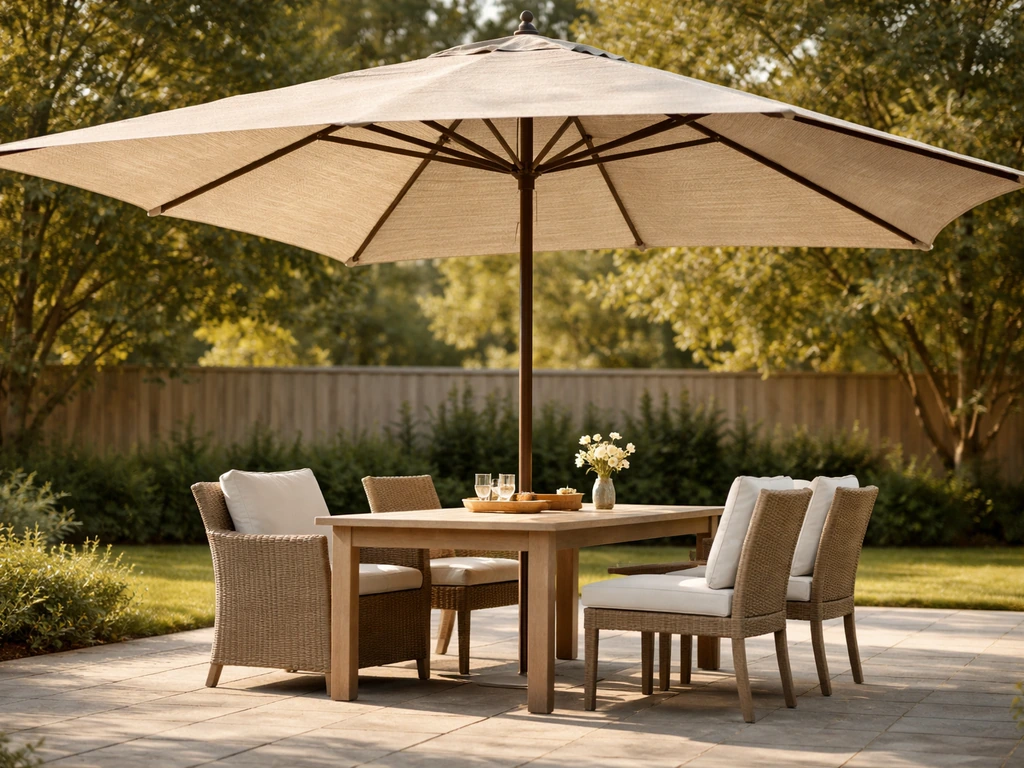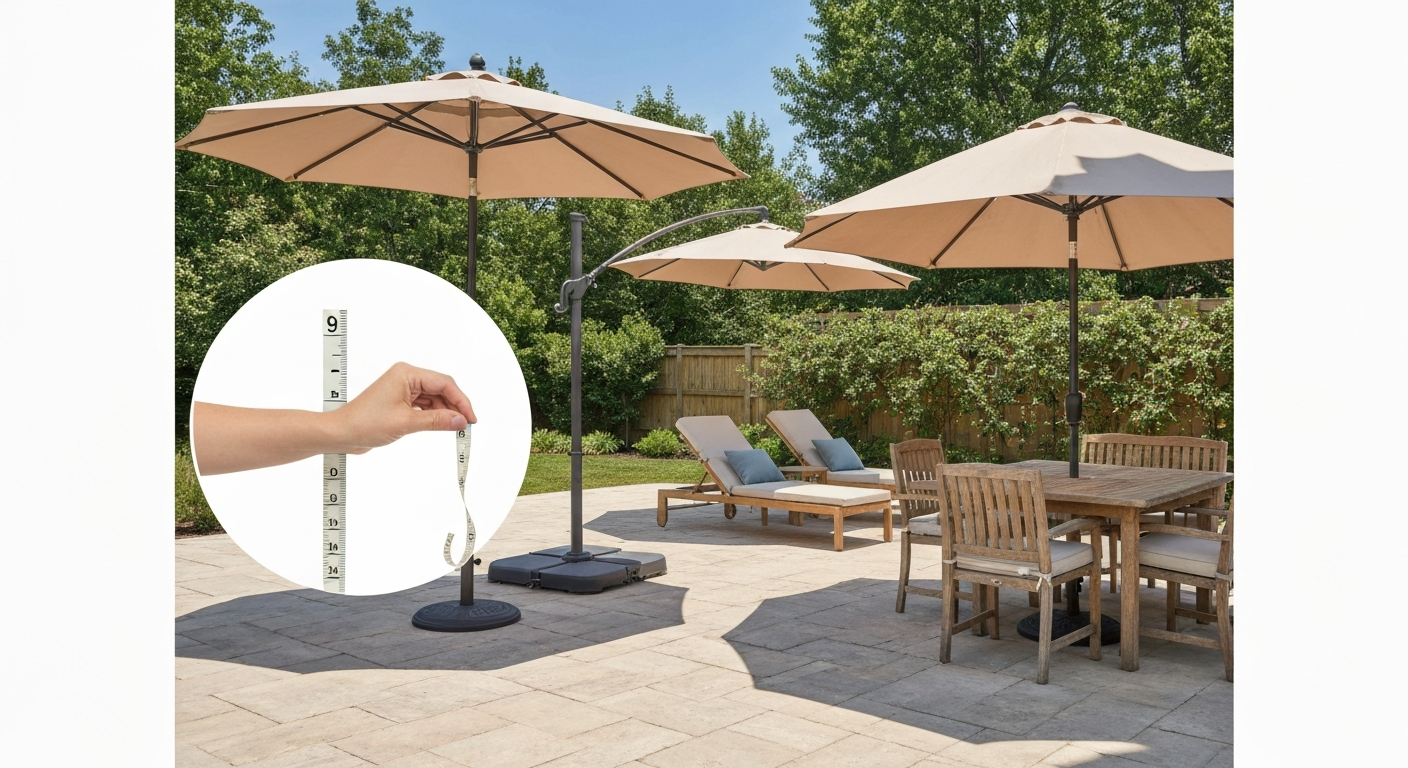
The best cantilever patio umbrella for a UK garden is one that covers your seating area comfortably, stays stable in a British breeze, uses weather-resistant materials that can handle rain as well as sun, and is easy enough to open and close daily without a fight. For most UK patios, a 3m to 3.5m round or square cantilever parasol with a powder-coated aluminium frame, a solution-dyed acrylic or polyester canopy with a top vent, and a weighted cross base of at least 60–100kg hits the sweet spot between practicality and value. What separates a good buy from a frustrating one is understanding exactly which checks to run before you click purchase.
Best Cantilever Patio Umbrella UK Guide: Choose Right

Kent Lang
25 Jun 2026
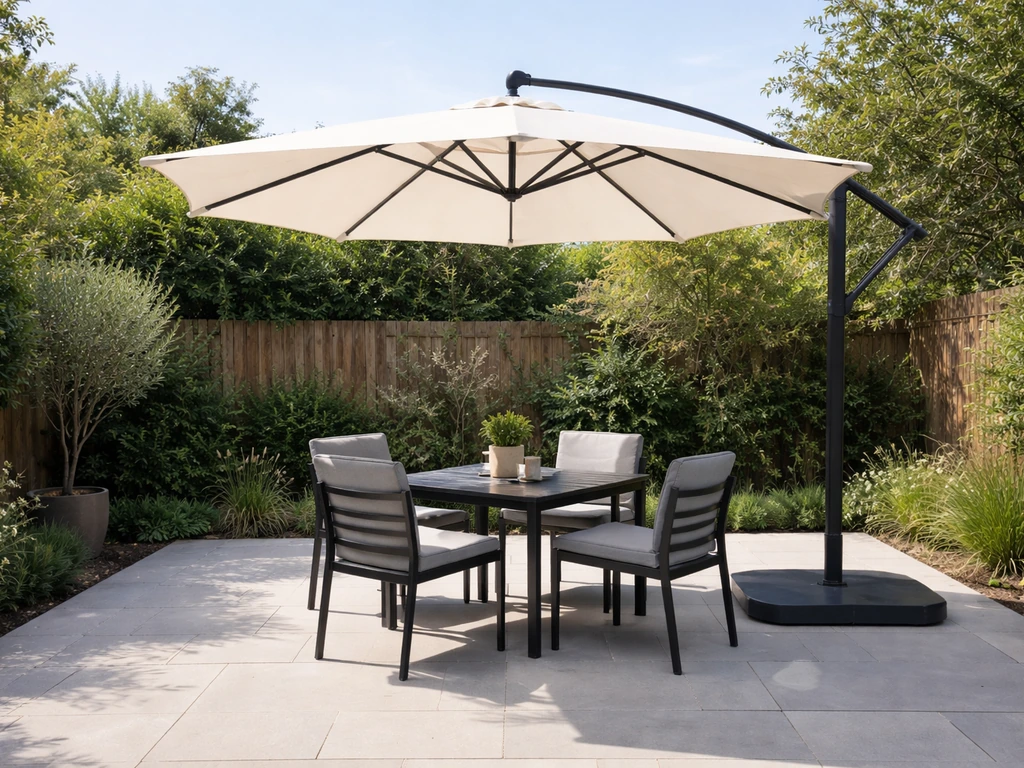
What actually makes a cantilever umbrella the 'best' for your garden
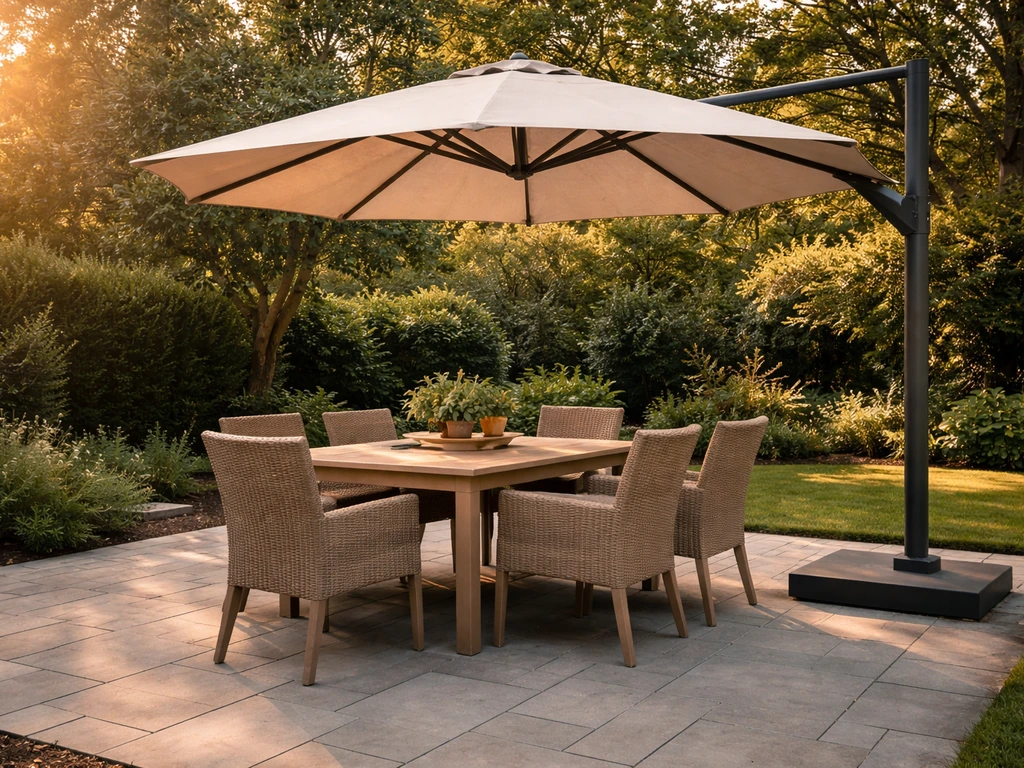
The cantilever design is worth choosing specifically because the offset arm keeps the pole out of the centre of your seating area. That one feature changes how you use your patio, since you can arrange furniture freely underneath without working around a centre pole. But not every cantilever delivers on its promise. The criteria that genuinely separate a great model from a cheap one come down to five things: canopy coverage and shape, wind performance, ease of daily operation, material durability in UK conditions, and honest value for what you actually get in the box.
- Canopy coverage: does the diameter or square footage actually match your furniture footprint, with enough overhang on all sides?
- Wind performance: frame stiffness, top venting, and base weight capacity all determine whether it stays put in a gust rather than acting as a sail on a lever arm.
- Ease of use: a crank system you can operate with one hand beats a fiddly pulley every time, especially if you're putting it up and down daily.
- Weather resistance: the frame finish, fabric type, and rib material dictate how well it handles UK rain, low sun angles, and UV exposure season after season.
- Value transparency: what's actually included (base, weights, cover, spares), the warranty length, and whether replacement parts are available in the UK.
It's also worth being realistic about marketing language. Claims like 'windproof' are almost always overstated. Wind resistance depends on the whole system acting together: frame rigidity, canopy venting, arm angle, and most critically, base weight. A premium canopy on an underweighted base will still topple in a moderate gust. Keep that in mind as you evaluate any model.
Getting the size right for a UK patio
UK gardens and patios come in all shapes, and cantilever umbrellas tend to run large, which is part of their appeal. The most common sizes are 2.7m, 3m, and 3.5m in diameter (or square). A useful rule of thumb is to aim for the canopy to extend at least 0.5m to 1m beyond your seating area on each side so that chairs pushed back from the table remain shaded. If you've seen advice suggesting at least five feet larger than the table on all sides, that's broadly right for maximising comfort but can be hard to achieve on smaller patios without the arm encroaching on a fence or wall.
Height clearance is the dimension most people forget to check. With a cantilever, the canopy bottom height matters more than total umbrella height, because the arm lifts the canopy above head level. Look for a canopy bottom height of at least 200cm if adults will be walking beneath it (Outsunny's round cantilever, for instance, lists a canopy bottom height of 200cm as a specific measurement). The overall height including the arm joint can reach 260–290cm on a 3.5m model, so check for overhead obstructions like pergola beams, wall lights, or sloped rooflines before buying.
For a standard 4–6 person garden dining set occupying roughly a 2m x 2m footprint, a 3m round or square cantilever is usually adequate. If you have a large L-shaped seating area or want to cover a sun lounger zone, step up to 3.5m. Going bigger than you actually need adds unnecessary weight to the base requirement and stresses the arm joint more in wind, so bigger is not always better.
Wind stability in the UK: what you actually need
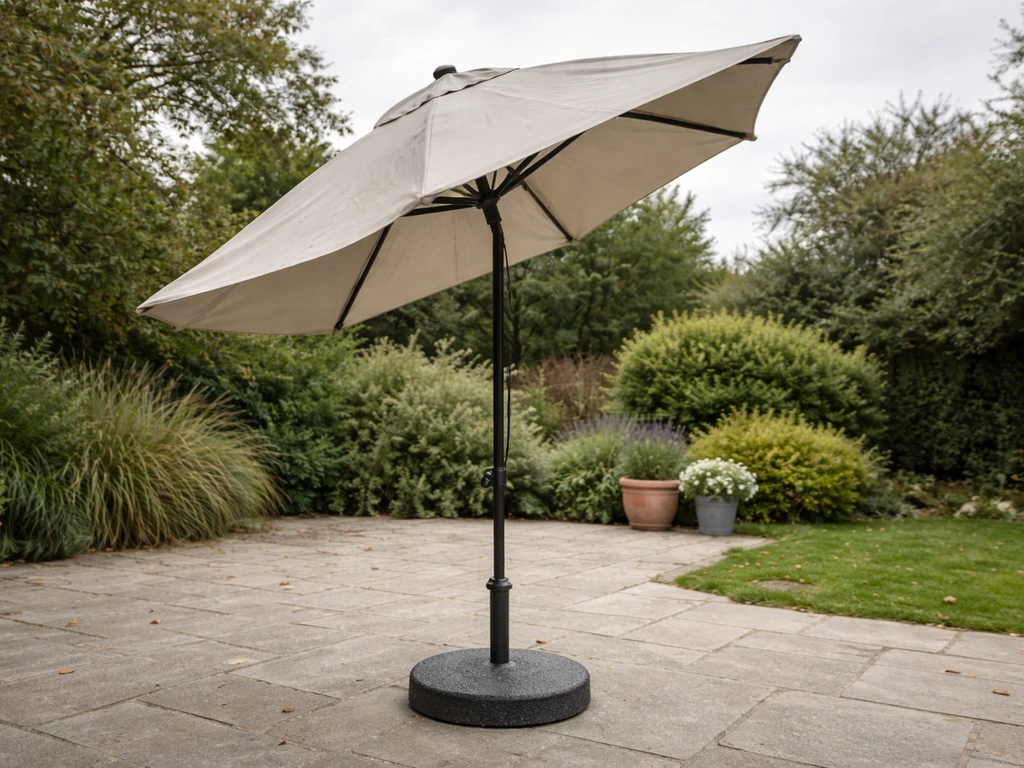
This is where UK buyers need to be especially careful. We don't get the constant blazing sun that justifies a massive shade structure, but we absolutely do get unpredictable gusts, and a cantilever umbrella acts as a large lever arm in wind. If you want the quickest way to narrow options for the best cantilever patio umbrella 2022, focus on base weight, wind venting, and canopy size first cantilever umbrella. The offset arm transfers force directly to the base, so a model that feels perfectly solid on a calm day can become a liability in a 30–40 km/h gust if the base isn't heavy enough.
Frame and canopy design
Look for an aluminium or steel frame with a thick-walled main pole (at least 48mm diameter is common on mid-range and above). Powder-coated finishes handle the moisture better than bare metal. Shock-resistant or fibreglass-reinforced ribs are worth paying for at the tips, since those are the first points to crack in wind stress. A vented canopy top, sometimes called a wind flap, is not just a styling feature: it lets air pass through rather than building pressure underneath, which meaningfully reduces lift force in a breeze. If a model doesn't have a top vent, it's worth questioning whether it belongs in a UK garden at all.
Base weight requirements
For a 3m cantilever, treat 60kg as an absolute minimum base weight in a sheltered position. For a 3.5m model or any exposed location, aim for 80–100kg. Some manufacturers (like Aosom UK and Outsunny) are explicit about this in their listings, stating that 60kg of weights are required even when a cross base frame is included in the box. The cross base frame itself is just the skeleton: the weight slabs or water-fillable bags you add are what actually anchor it. For more exposed positions, tiered base weight guides from UK retailers suggest going higher still. Position the base with weights distributed evenly across all four corner segments of the cross base for best stability. Follow i4ingenuity’s setup instructions for securing the base using suitable weights in each of the four corner segments, and make use of the wind flap at the top to help reduce movement in breezy conditions blank" rel="noopener noreferrer">wind flap at the top to reduce movement in breezy conditions.
If you're in a particularly exposed spot, a ground-mounted or in-ground socket installation (as used with Coolaroo's Ventus, which is lab tested to withstand winds up to 60 km/h when installed in its included in-ground mount) gives far better stability than any weighted base solution. For most patio situations, though, a well-weighted cross base is the practical choice.
Materials, UV protection, and maintenance in UK conditions
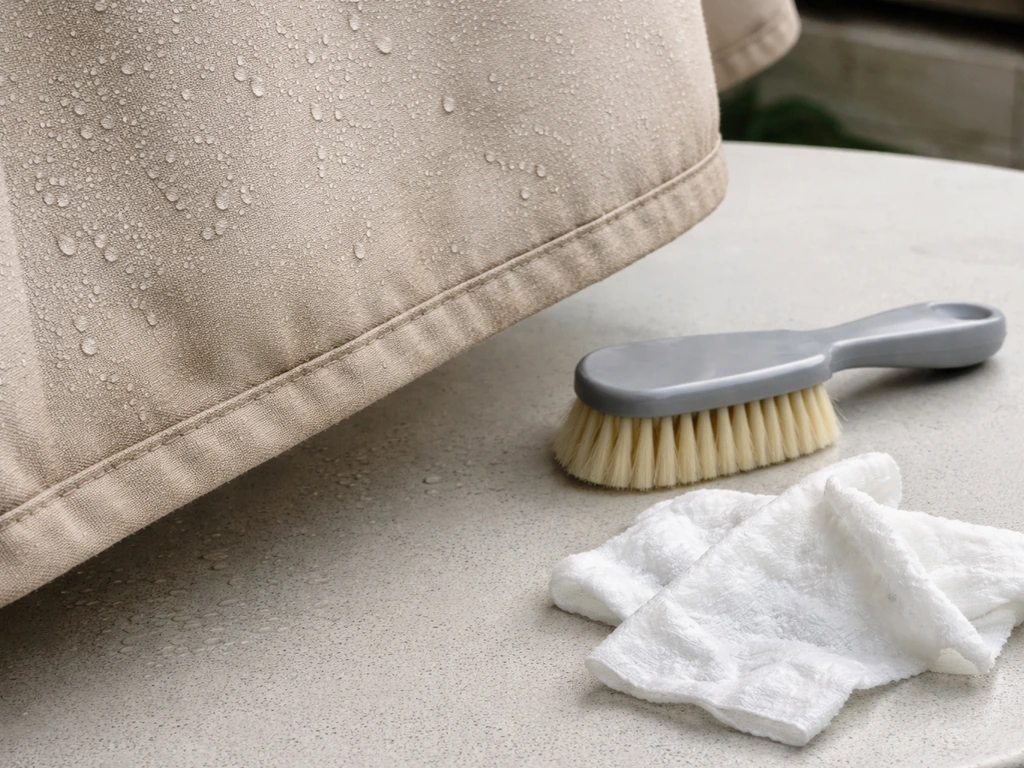
UK weather is less about blistering UV and more about the combination of damp, low-angle sun, and the occasional hot week that accelerates fading. The canopy fabric is what ages most visibly, so it's worth understanding what you're getting.
| Fabric Type | UV Protection | Fade Resistance | Water Resistance | Typical Warranty | UK Suitability |
|---|---|---|---|---|---|
| Solution-dyed acrylic (e.g. Sunbrella) | UPF 50+ | Excellent (dye locked in fibre) | Good (water-repellent, not waterproof) | Up to 10 years (fabric) | Best for longevity |
| Polyester (coated) | UPF 30–50+ | Moderate (surface dye fades) | Good if coated | 1–2 years typical | Fine for budget/mid-range |
| Olefin/polypropylene | UPF 50+ | Good | Good | 2–5 years | Good mid-range option |
| Canvas (natural cotton) | Variable | Poor (fades and mildews) | Poor unless treated | Rarely warranted | Not recommended for UK year-round use |
Solution-dyed acrylic is genuinely the best fabric for a UK cantilever umbrella that you want to last more than a couple of seasons. Uhlmann notes its canopies use 100% solution-dyed acrylic fabric designed to resist fading and tearing. The dye is added while the fibres are still in liquid form, meaning colour goes all the way through rather than sitting on the surface where rain and UV can strip it. Sunbrella is the benchmark brand, offering a 10-year limited warranty on certain fabric ranges. John Lewis specifies UPF 50+ canopies on their aluminium parasol range, which is the minimum rating worth accepting for any umbrella you plan to leave out regularly.
For the frame, powder-coated aluminium is the standard reliable choice: it resists corrosion, is light enough to handle, and doesn't rust in rain. Stainless steel hardware at the joints matters too, since those are the points where water sits and ordinary steel bolts will corrode within a season or two. When it comes to cleaning, most solution-dyed acrylic canopies can be brushed down with a mild soap solution and rinsed with a hose. Never machine wash a canopy while it's still attached to the frame. For longer storage in winter, a proper parasol cover keeps grime and moisture out of folded ribs and prolongs canopy life significantly.
Choosing the right mechanism: manual, crank, and tilt
The mechanism is something you'll interact with every single day you use the umbrella, so it deserves more thought than it usually gets at the point of purchase. Cantilever umbrellas generally come with one of three opening systems: a pulley and cord, a hand crank, or a motorised lift. For daily use, a crank-lifting system (where you turn a handle to raise and lower the canopy) is noticeably easier than a pulley system, which requires you to pull and lock a cord while managing the canopy tension. Crank systems are more intuitive and less likely to jam or fray over time.
Tilt functionality is a separate feature from the lift mechanism. On most cantilever models, you can adjust the arm angle to tilt the canopy toward the sun's position, which is genuinely useful in the UK where the sun sits low and to the south for much of the day. Look for models that offer both tilt and 360-degree rotation of the arm so you can chase the shade without moving the entire base. Some Outsunny models, for example, include a foot pedal to rotate the canopy and a hand crank to open and close it, which is a practical combination. Crank-tilt integration in a single mechanism is a bonus but adds complexity and more potential failure points, so check whether replacement parts are available before buying.
One practical note on daily use in the UK: always close the canopy if you're leaving the garden unattended or if the wind picks up. Even a well-weighted cantilever in a moderate gust will stress the arm joint if left open. Build the habit of closing it whenever it's not actively in use, and it will last years longer.
What to expect at each UK price point
The UK market for cantilever parasols runs roughly from around £80 at the budget end to over £1,000 for professional-grade garden furniture brands. Here's what you realistically get at each tier:
| Price Tier | Typical Price Range (UK) | What You Get | Where It Falls Short | Best For |
|---|---|---|---|---|
| Budget | £80–£200 | Polyester canopy, steel or thin aluminium frame, cross base frame included (no weights), basic tilt, 1-year warranty | Fades within 2 seasons, weaker arm joints, limited wind resistance, spares rarely available | Occasional use, sheltered gardens, renters who won't keep it long-term |
| Mid-range | £200–£500 | Coated polyester or olefin canopy (UPF 50+), powder-coated aluminium frame, top vent, crank+tilt, cross base included, 2–3 year warranty | May still need significant base weight purchase separately, fabric won't match solution-dyed acrylic longevity | Most UK homeowners with a typical patio and moderate wind exposure |
| Premium | £500–£1,000+ | Solution-dyed acrylic canopy (UPF 50+, 5–10 yr fabric warranty), heavy-duty aluminium or stainless steel frame, smooth crank/tilt rotation, 360° arm rotation, full cover included, spares available | Significantly heavier base still required, price can feel steep for infrequent use | Homeowners investing in an outdoor space, frequent users, exposed gardens where quality matters |
Specific models worth shortlisting in the UK right now: the Outsunny range at Homebase and Argos represents solid mid-range value with good mechanism transparency in their listings. Royalcraft's 3.5m solar LED cantilever (stocked at Argos) adds integrated lighting and sits at the upper end of mid-range, but note that the base weights are not included and need to be purchased separately. For premium quality, models using Sunbrella fabric or brands like Uhlmann (which uses 100% solution-dyed acrylic and emphasises tear resistance) are worth the investment if you want genuine 7–10 year canopy life. Coolaroo's Ventus 3.5m round is a specialist option for exposed positions, with lab-tested 60 km/h wind resistance and a 2-year warranty, best used with its in-ground mount for maximum stability.
If you want a larger canopy specifically, the considerations around sizing and base weight scale up significantly, and it's worth exploring the options in the large cantilever category separately, since a 4m+ model introduces different base requirements and mechanism loads. If you're specifically searching for the best large patio umbrellas, use these same sizing and base-weight checks to avoid stability problems once the canopy gets bigger larger cantilever category.
How to buy in the UK: what to check in every listing
Online listings for cantilever umbrellas in the UK vary wildly in how much useful information they provide. Here's a practical checklist to run through before committing to any purchase: If you want the best canvas patio umbrella, use this checklist to compare coverage, wind stability, and daily convenience across similar models.
- Canopy diameter or square dimensions: verify these are the canopy measurement, not the overall spread including the arm, since some listings conflate the two.
- Canopy bottom height: should be stated explicitly; 200cm is the practical minimum for adults walking underneath.
- Base included or not: cross base frame and actual ballast weights are often sold separately. The Royalcraft 3.5m on Argos, for example, explicitly states the weighted base is not included. Budget for 60–100kg of additional weight.
- Top vent: listed as a feature or not? If it's not mentioned, it likely doesn't have one.
- Mechanism type: crank, pulley, or motor? Does it tilt? Does the arm rotate 360 degrees?
- Frame material and finish: aluminium with powder coat, or painted steel? Check the pole diameter if listed (48mm+ is a good sign).
- Canopy fabric: polyester or acrylic? UPF rating? If the fabric type is not stated at all, assume it's basic polyester.
- Warranty: how long, and is it UK-redeemable? Who do you contact?
- Spares availability: can you get replacement canopies, ribs, or crank parts from the UK seller or manufacturer?
- Protective cover: included or extra? A cover matters for UK winters.
- Assembly requirements: some cantilever models require two people to set up safely; check the instructions are available in English before buying.
It's also worth checking whether the listing comes from a UK-based seller with local returns, or a marketplace third-party seller shipping from overseas. Warranty claims and returns on large garden items from overseas sellers can be genuinely difficult, especially if a frame component fails after one season.
Setup tips and mistakes to avoid
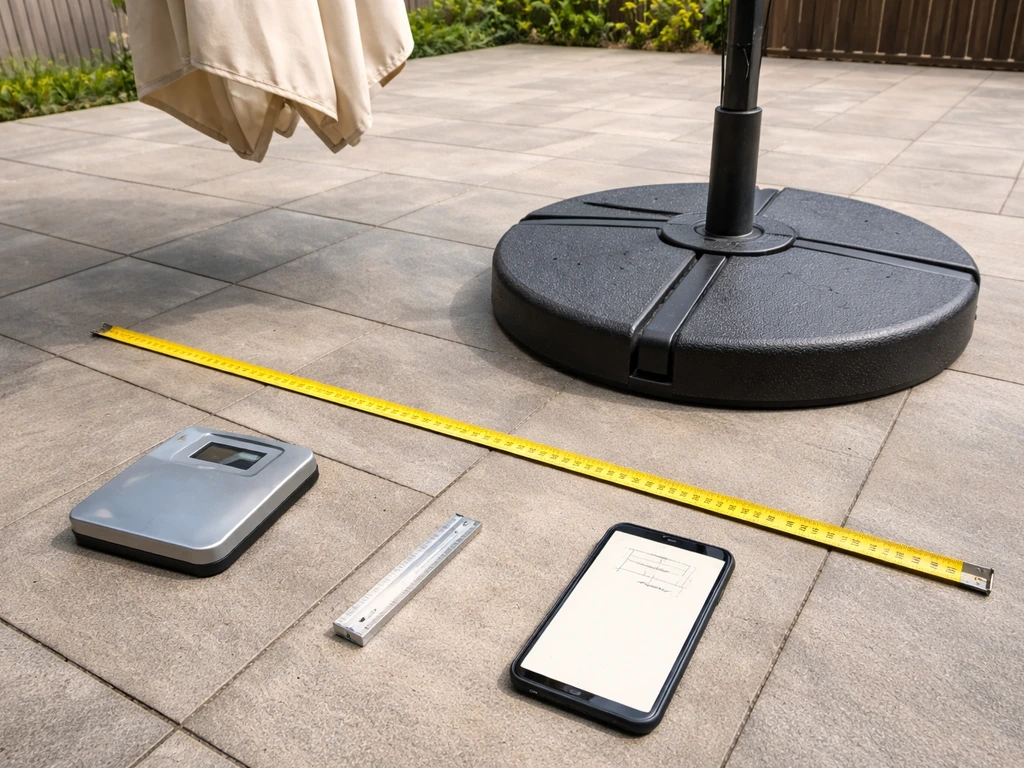
The most common and costly mistake is underweighting the base. If the listing says 60kg minimum, treat that as the figure for a sheltered position in calm weather. Add more if you're in an exposed spot or coastal area. Distribute the weight evenly across all four base segments rather than stacking it all on one side, which affects balance and can cause the whole assembly to tip awkwardly.
The second most common mistake is positioning the umbrella too close to a wall, fence, or overhead structure without accounting for the arm arc when you rotate or tilt the canopy. Measure your available clearance in all directions the arm might swing before you fix the base position. It sounds obvious but it's easy to overlook until the arm takes a chunk out of a nearby fence panel on the first rotation.
- Always assemble with two people: the arm and canopy together are awkward and heavy, and forcing joints alone can strip threads or crack sockets.
- Don't overtighten the crank mechanism: this is explicitly flagged in John Lewis's care guidance and applies to most crank systems. Over-tightening stresses the gear and is a common cause of early failure.
- Close the umbrella before you go inside: leaving a cantilever open and unattended in UK weather is how frames get bent and bases get knocked over.
- Store the canopy cover and protective storage bag from day one: UV and bird mess degrade fabric faster than anything else when it's not in use.
- Check the arm joint bolts after the first month: vibration from wind and daily use can work bolts loose, and a quick tighten at the start of each season adds years to the life of the arm joint.
- Read the assembly manual before starting: cantilever umbrellas have a specific sequence for attaching the arm and canopy that, done out of order, can make reassembly very difficult.
How to shortlist and finalise your choice
Start with your patio size and decide on diameter first: 3m for a standard 4–6 person dining set, 3.5m for larger or uncovered seating areas. Then check your height clearance and confirm the canopy bottom height works for your space. Once you've got size locked in, filter by mechanism: crank with tilt and 360-degree rotation is the practical benchmark. From there, decide your budget tier and check whether the fabric is polyester or acrylic, whether a top vent is included, and what the warranty covers.
Before finalising, make sure you've accounted for the base weight cost. If a model comes with a cross base frame but no weights, add roughly £40–£80 for a quality set of fillable weight bags or concrete slabs to reach the 60–100kg target. That's a real part of the total cost that listings often obscure. Buy from a UK retailer with a clear returns policy on large items, check that English-language instructions and UK-redeemable warranty contact details are available, and if possible look for a model where replacement canopies can be bought separately so that a worn fabric doesn't mean replacing the entire umbrella. Do those checks and you'll buy a cantilever parasol that actually performs through a British summer rather than becoming a garden liability by August.
FAQ
What base weight is actually enough for the best cantilever patio umbrella uk, and does it mean the umbrella is stable in real wind?
Treat the stated base weight as a target for your ground conditions, not a guarantee. For a sheltered patio, 60kg is a practical minimum, but if you are on decking, uneven paving, or a breezier corner of the garden, you should plan higher (80kg to 100kg for 3.5m) and ensure the weight is distributed evenly across all cross-base segments, not piled on one side.
Do I need a top vent (wind flap) for a cantilever umbrella in the UK, or is it mainly optional?
For UK gusts, a vented canopy is usually the difference between tolerable movement and heavy lift forces. If the listing does not specify a vent or top flap, consider it a red flag, because without pressure release the canopy can behave like a sail when the arm is offset.
How do I measure “canopy bottom height” correctly before buying a cantilever umbrella?
Measure from the ground to the canopy edge you will actually walk under, not to the overall umbrella height. Also check clearance for the arm joint, because the offset structure can sit higher near one side depending on tilt angle, so verify both the “center” walking line and the side where the arm drops.
Can I put a best cantilever patio umbrella uk right next to a wall or fence to save space?
Not reliably, unless you confirm the full swing path. Before fixing the base, simulate rotation and tilt with the arm in different positions, then add a safety gap so the canopy edge and arm do not hit fence panels, wall lights, or downpipes.
What opening mechanism is best for daily use in the UK, crank or pulley?
For everyday operation, a crank-lifting system is typically easier and less frustrating because it does not require managing cord tension and locking. Pulley setups can work, but they are more prone to fraying or stiffening over time, especially after months of damp storage.
Is tilt and 360-degree rotation worth paying extra for?
Yes if you care about shade across breakfast, lunch, and afternoon, because the UK sun angle changes a lot through the day. Rotation plus tilt lets you keep the base in place while shifting the shade, but make sure the arm arc still clears your fence and any overhead structures.
Should I leave the cantilever umbrella open when it’s windy or only when it’s raining?
Close it whenever you are leaving it unattended or when wind picks up, not just during storms. Even in moderate gusts the cantilever arm transmits force into the joint and base, so a habit of closing reduces stress and helps the umbrella last multiple seasons.
What fabric type is safest if I want colour to last in the UK, acrylic or polyester?
Solution-dyed acrylic is generally the longer-life option because the pigment penetrates the fibre rather than sitting on the surface. If a listing only mentions “polyester” without indicating solution-dyed or a strong warranty, expect faster fading during long wet summers and repeated low-angle sun exposure.
Can I machine wash the canopy once it gets dirty?
Avoid machine washing. Most canopies meant for outdoor use should be brushed down with mild soap and rinsed, and if you remove or clean the fabric, do it when the canopy is off the frame so hardware and joints are not soaking in detergent.
Do I really need a cover for winter storage in the UK?
A proper parasol cover is a big help, especially if you store the umbrella outdoors. It reduces grime and moisture on folded ribs and lowers mould risk on the canopy, which in turn makes it easier to clean before opening in spring.
If my base comes as a cross frame only, how do I budget for the missing weights?
Check whether weights are included or whether you must add slabs or fillable bags. Many listings show a cross-base frame plus a separate weight requirement, so budget extra (often around £40 to £80 for quality fillable sets) to reliably reach the 60kg to 100kg targets.
Are in-ground mounts worth it for stability, or is a weighted base always enough in the UK?
For very exposed patios, an in-ground socket or ground-mounted installation is often more stable than any weighted base because it removes base slip and reduces movement during gusts. If you cannot install, compensate by using higher base weight and placing it on a firm, level surface.
How can I tell if a “windproof” claim is marketing hype?
Look for specifics tied to the whole system, especially base weight requirements and whether the canopy is vented. If the brand claims windproofness without stating how heavy the base must be or how the top pressure is managed, assume the real performance depends on conditions and may not match your patio location.
Should I choose 3m or 3.5m if I’m unsure about patio size?
If you have a standard dining footprint around 2m by 2m, 3m is usually enough. If your seating area is larger, L-shaped, or includes a sun lounger zone, 3.5m helps cover more without needing the arm near boundaries, but confirm you can meet the higher base weight needed for stability.
What if I want the umbrella mainly for sun, not rain, can I skip rain-focused features?
In the UK, rain and damp still matter because moisture accelerates hardware corrosion and canopy soiling. Prioritise powder-coated or corrosion-resistant frames, stainless hardware at joints, and a canopy fabric with good drainage and cleanability.
Where should I buy from to avoid warranty issues on large cantilever umbrellas in the UK?
Prefer UK-based sellers with straightforward returns and clear warranty contact details. For overseas marketplace orders, replacement parts and warranty handling can be slow or expensive for large frames, so you should confirm how canopy-only replacements work before committing.
What should I check about replacement parts availability before buying?
Confirm whether the manufacturer sells replacement canopies and whether they are specific to your exact model and size. If canopy replacement is not available and the frame has to be replaced, the umbrella can become far more expensive over time even if the initial purchase price looked good.