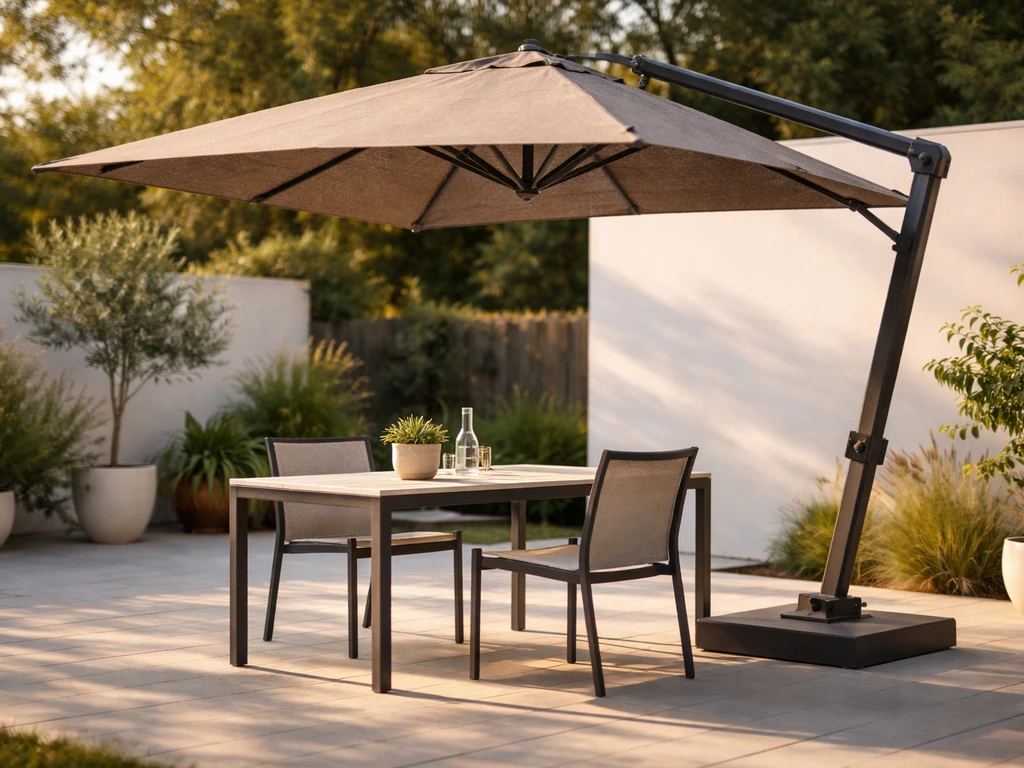
Your best bet for finding a patio umbrella base today is to check Home Depot, Lowe's, or Walmart first. All three carry bases in-store year-round (especially during spring and summer), and you can check local stock online before you make the drive. If you want an umbrella instead of just a base, search for where to buy patio umbrellas near me and filter by local pickup. Ace Hardware is another solid option that maintains a dedicated umbrella base department with in-store pickup available. If you need something more specific or want a wider selection, Wayfair and Target round out the online options and often offer same-day pickup or fast shipping. The key before you buy anywhere: know your umbrella pole diameter (almost always 1.5 inches or 1.9 inches) and the size of your umbrella canopy, because those two numbers decide everything else. If you want treasure garden patio umbrellas specifically, check the retailer sites above and match the umbrella model to the correct pole diameter and base type before ordering where to buy treasure garden patio umbrellas.
Where to Buy Patio Umbrella Bases Near Me Today

Quick checklist: what you need in a patio umbrella base
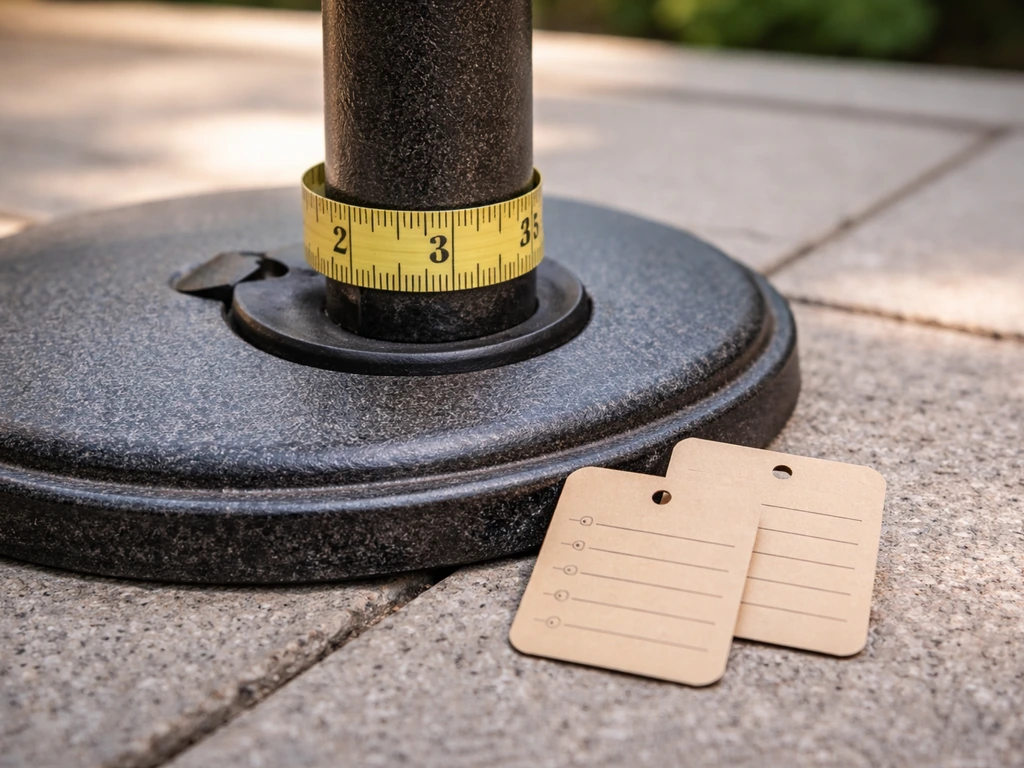
Before you walk into a store or add something to your cart, run through this short list. It will save you a return trip or a return shipment.
- Umbrella pole diameter: measure yours (most are 1.5 in / 38mm or 1.9 in / 48mm; some are 1.25 in or 1.3 in)
- Umbrella canopy size: diameter in feet, because larger canopies need heavier bases
- Base weight or fill capacity: a 9 ft umbrella generally needs at least 50 lbs, and an 11 ft or offset umbrella needs significantly more
- Base type: center-post/market style, or a weighted slab/cross base for offset/cantilever umbrellas
- Attachment method: tightening knob, clamp, or adapter ring (make sure the base secures your specific pole firmly)
- Mobility: do you need wheels or handles to move it? Fillable bases become very heavy once filled
- Material: resin/HDPE for light climates, cast iron or concrete for windy or coastal areas
- Patio surface: make sure the base footprint fits your table cutout if you're using a table umbrella
- Return policy of the store: check restocking fees and time limits before buying
Best places to buy near you (local stores and showrooms)
Home Depot and Lowe's are the most reliable first stops. Both carry a solid range of bases in the 30 to 50 lb pre-filled range, and their websites let you filter by 'available today' at your local store. At Lowe's, for example, you'll find adjustable-knob bases like the SUGIFT 31.5 lb model and a Slickblue 30 lb round base, both sized to fit 1.5 to 1.9 inch poles. Home Depot stocks PE fillable bases that top out at 66 lbs when filled with water or sand, plus HDPE options compatible with 1.49 and 1.9 inch poles. Search the store's site for 'patio umbrella base' and filter to your zip code to see what's physically on shelves.
Ace Hardware is worth checking if you have one nearby. They maintain a dedicated 'Umbrella Stands and Patio Umbrella Bases' department, which means inventory is intentional rather than seasonal overflow. For higher-end or design-forward options, local patio furniture showrooms and deck/outdoor living specialty retailers often stock bases that you won't find at big-box stores, and the staff can actually help you match a base to a specific umbrella pole. These shops are especially useful if you're buying an offset or cantilever umbrella that needs a cross base or weighted plate rather than a standard center-post base. If you’re trying to figure out where to buy an offset patio umbrella base, local patio retailers and specialty shops are a great starting point because they’re more likely to stock the cross base and weight plates these models require offset or cantilever umbrella.
Walmart stores carry umbrella bases too, though selection varies significantly by location. A quick search on Walmart.com with your zip code will show you which bases are available for same-day pickup. If you're in a rural area or the big-box options don't pan out, Atwoods is worth a look: they stock fillable umbrella bases with a 'Ready for Pickup in 4 hours' option in their network.
Online options you can order today (with delivery and pickup tips)
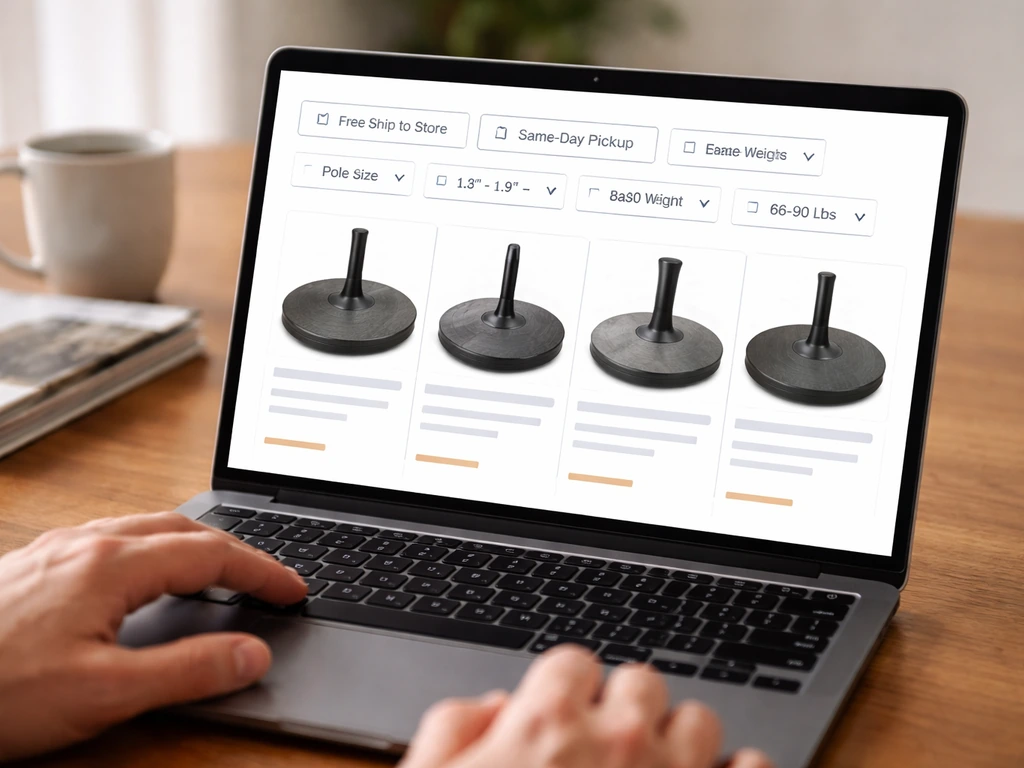
If local stores don't have what you need, online ordering is often the faster path to the right base. If you’re specifically shopping for Sunbrella patio umbrellas, check both local patio furniture showrooms and online retailers for current models and availability where to buy sunbrella patio umbrellas. Here's how to shop each platform efficiently.
- Home Depot online: filter by 'Free ship to store' or 'Same-day delivery' to get a base within 24 to 48 hours; their fillable PE bases with wheels are popular and ship quickly
- Lowe's online: similar filtering options; check for 'in-store pickup today' to skip shipping entirely
- Walmart.com: use 'pickup today' filter; most stores stock at least one or two base models even outside peak season
- Target: fillable bases that fit 1.3 in, 1.5 in, and 1.9 in poles with a 66 lb water / 88 lb sand fill capacity; available for same-day pickup or order pickup via Drive Up
- Wayfair: wider selection and heavier-duty options (their heavy-duty square fillable base reaches 88 lbs filled); standard shipping is usually 3 to 5 business days, so not the fastest, but selection is broader
- Best Buy: carries select patio brands like Gymax (fillable, 5.2 gal water / 51 lb sand capacity); useful if you've exhausted other options
- Amazon: fastest delivery if you have Prime, but verify pole compatibility carefully since listings vary in accuracy
One tip: if you order for in-store pickup, call the store to confirm the item is actually pulled and ready before you drive over. Inventory systems aren't always real-time accurate, especially at busy home improvement stores during summer.
How to choose the right base type and size for your umbrella
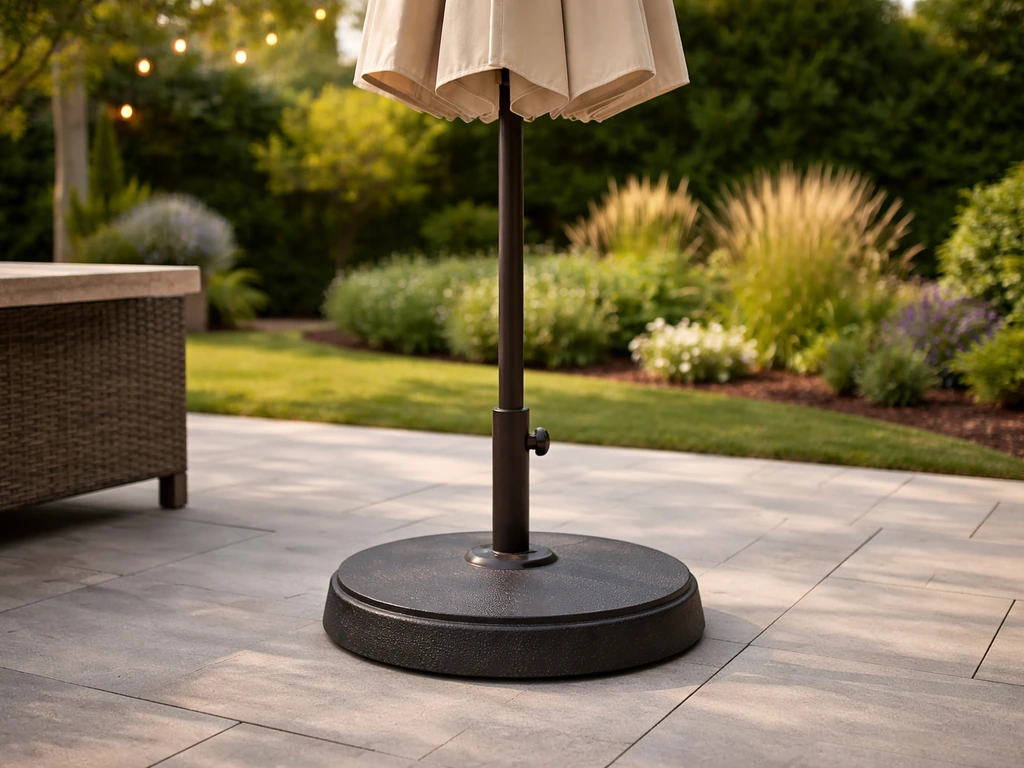
There are really two categories of umbrella base, and which one you need depends on your umbrella style. Center-post (market-style) bases are the classic weighted disc or cross-shaped stands with a hole in the center for a straight pole. Offset and cantilever umbrellas are a different animal: they need a wide, flat base or a cross base that sits well outside the umbrella footprint, and they typically require significantly more weight because the umbrella's center of gravity is off to one side. Don't assume a market-style base will work for an offset umbrella.
For canopy size vs. base weight, the general rule is: the bigger the umbrella, the heavier the base needs to be. A 7 to 9 foot market umbrella can get by with a 30 to 50 lb base in calm conditions, but a 10 or 11 foot umbrella should have 50 to 70 lbs minimum. If you're dealing with wind (more on that below), add weight. Fillable bases are popular because they ship light and empty, then you fill them with sand or water on-site. Sand is heavier: a Target fillable base, for instance, hits 88 lbs with sand vs. 66 lbs with water. Sand is also better because water can grow algae or evaporate over time.
The attachment method matters more than most people think. A simple tightening knob works fine for a pole that fits the hole well, but if the pole is even slightly thinner than the base opening, the umbrella will wobble. Look for bases with adjustable knobs, clamp-style fasteners, or adapter rings that actually grip the pole rather than just narrowing the opening. Many current bases accommodate 1.5 to 1.9 inch poles with a dual-knob or clamp system, which is a better design than a single set screw pressing into your pole.
Materials and durability for different climates and wind
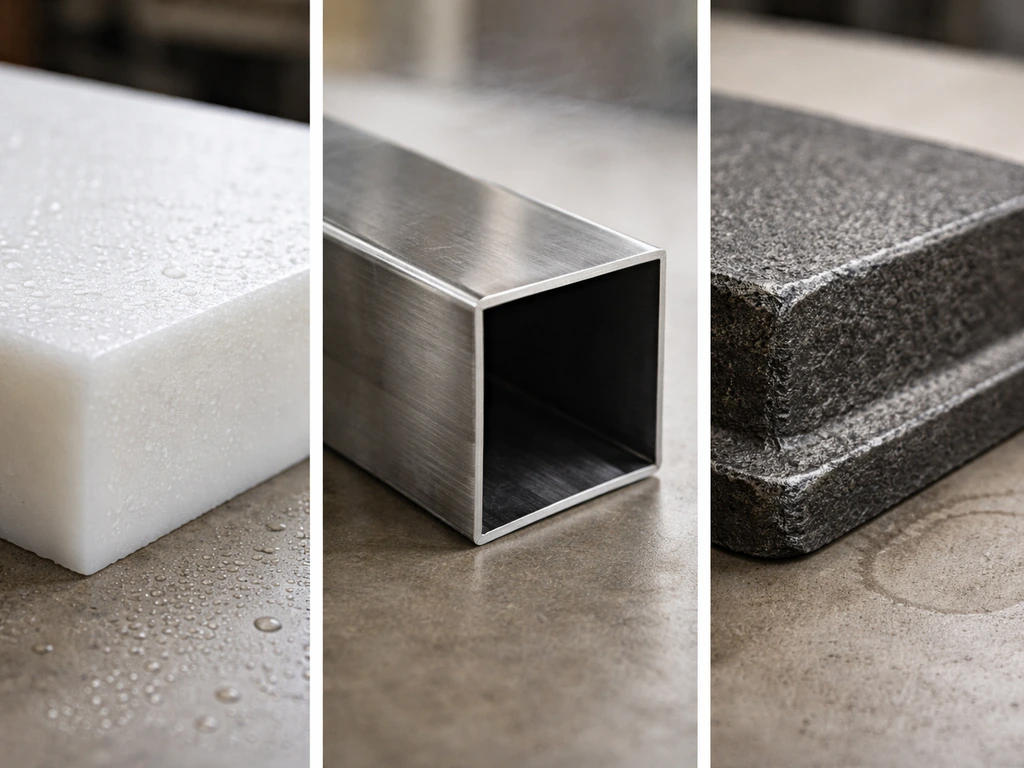
The material your base is made from determines how long it will last and how well it handles your specific weather. Here's a practical breakdown:
| Material | Best For | Durability | Weight | Notes |
|---|---|---|---|---|
| HDPE / PE Resin | Most climates, everyday use | Good (UV-resistant, won't rust) | Light empty, heavy when filled | Affordable, portable; fades over many years in intense sun |
| Cast Iron | Windy areas, permanent setups | Excellent (very heavy) | Very heavy (50+ lbs unfilled) | No filling needed; harder to move; may need rust protection over time |
| Concrete / Stone | Permanent or semi-permanent patios | Excellent | Very heavy | Best visual match for upscale patios; nearly impossible to move |
| Aluminum | Coastal or humid climates | Very good (corrosion-resistant) | Moderate | Lighter than iron; won't rust; costs more |
| Galvanized Steel | Windy, inland climates | Good to very good | Heavy | Stronger than resin; can rust in saltwater environments |
If you live in a windy area, go heavier regardless of material. A lightweight resin base that's undersized for your umbrella is one of the most common reasons umbrellas tip over and get damaged. If you're on a coast with salt air, avoid raw steel and cast iron unless they're coated or powder-coated. HDPE and aluminum hold up far better in salt environments. For most inland suburban patios with moderate wind, a good quality HDPE fillable base in the 50 to 75 lb filled range is the sweet spot of portability and stability.
What to measure before you buy (and how to avoid compatibility mistakes)
This is where most people go wrong, and it's easy to get right if you measure first. The single most important number is your umbrella's pole diameter. Reddit users in the r/LivingEssentials discussion emphasize measuring your patio umbrella pole diameter so it matches the base opening for compatibility and stability measure your umbrella's pole diameter. Get a tape measure and wrap it around the pole, then calculate the diameter. Or use a ruler across the cross-section of the pole end. Common sizes are 1.25 in (32mm), 1.5 in (38mm), and 1.9 in (48mm). Write it down before you shop.
- Measure pole diameter at the base of the umbrella pole (not the tip): this is your most critical number
- Check if your base includes adapter rings or reducer rings for multiple pole sizes: most modern bases include 35mm, 38mm, and 48mm adapters, but confirm before buying
- Measure the base hole diameter listed in the product specs and compare to your pole: even a quarter-inch mismatch creates wobble
- If you have a table with an umbrella hole, measure the table opening too: the base needs to fit under the table and align with the hole
- Note your umbrella's canopy diameter in feet: use this to cross-reference minimum recommended base weight
- Check the base footprint dimensions: a large cross base may not fit the space under your table or on your deck
- If you have an offset umbrella, note where the pole meets the base (offset angle): some bases are specifically designed for certain cantilever arm angles
Adapter rings are genuinely useful but require attention. Many bases come with multiple reducer rings (for example, 35mm, 38mm, and 48mm) that you insert to fit a smaller pole in a larger base opening. The key step, which is called out explicitly in assembly instructions from multiple major brands, is selecting the correct adapter before you tighten anything down. A seemingly 'close' fit without the right adapter will let the pole shift and can damage both the pole and the base over time. If a base doesn't list the pole sizes it fits, move on.
Budgeting and return policies (getting the right fit without regret)
Umbrella bases range from around $30 for a basic lightweight resin stand to $150 or more for heavy cast iron or high-end designer bases. For most 9 foot market umbrellas, a $40 to $80 fillable resin base does the job well. If you're buying a base for a large 11 foot umbrella or an offset/cantilever style, budget $80 to $150 and don't skimp on weight capacity. The price difference between a 40 lb base and a 75 lb base is often only $20 to $30, but the stability difference in a wind gust is significant.
On return policies: Walmart gives you 90 days for most items purchased in-store or online, though Marketplace-sold items (third-party sellers on Walmart.com) may only have 30 days, so check the seller before you buy. Lowe's has a solid return policy but note that some special-order products returned after 72 hours can carry a 20% restocking fee. Wayfair's return policy is listed in their help center and applies to most patio items. Home Depot generally allows 90-day returns on most products. The practical takeaway: buy from a retailer whose return policy covers a few weeks at minimum, keep your receipt and packaging until you've confirmed the base fits and holds up through a windy day. If you still need the umbrella itself, you can also use this guide alongside a broader search like where to buy patio umbrella for store options.
One last thing worth knowing: if you're also in the process of choosing the umbrella itself, base compatibility should factor into that decision, not just be an afterthought. Many umbrella manufacturers sell matched bases for their poles, and those pairings are tested to work together. If you already own a Treasure Garden or Sunbrella-fabric umbrella from a specific brand, check whether that brand sells a matched base first, since the fit and warranty may be better than a generic option. Buying umbrella and base together as a system is almost always the easiest path to a stable, compatible setup. Once you know what size and weight base you need, you can narrow down the best place to find patio umbrellas that match your setup where to find patio umbrellas.
FAQ
How do I confirm a patio umbrella base is truly available for pickup near me?
If you want to buy patio umbrella bases near you with pickup, start by searching the store site for “patio umbrella base” and then applying two filters: (1) “available today” and (2) “pick up in store.” After you see it listed, call the store before driving, because summer inventory updates can lag and some items show online even when they are not actually staged for pickup.
What should I double-check if I’m getting the wrong fit after buying a base?
Most bases are not one-size-fits-all because the pole diameter and the pole attachment style have to match. If your base uses adapter rings, verify the ring that corresponds to your exact pole size and tighten with the adapter installed. If the base does not list compatible pole sizes (or only says “fits most poles”), treat it as a red flag and look for a model with confirmed diameter compatibility.
Can I use a standard center-post umbrella base for an offset or cantilever umbrella?
For offset (cantilever) umbrellas, you usually need a base that sits wider than the umbrella footprint and often requires more weight. Do not substitute a standard center-post market base, even if the pole diameter seems to match, because offset designs place the center of gravity off to one side and need a cross base or wider weighted plate to stay stable.
Why does my umbrella wobble even though the pole diameter seems close?
If your pole is slightly smaller than the base opening, the umbrella can wobble even with an adapter, especially if the adapter is missing or the knob clamps loosely. Measure the pole end carefully and confirm the base opening supports that exact diameter, then prefer clamp-style fasteners or dual-knob systems that grip the pole rather than relying on a single set-screw pressure point.
What is better to fill a patio umbrella base with, sand or water, and why?
To prevent algae and faster deterioration, choose sand for fillable bases when possible, since sand stays stable and does not create the same growth issues that can happen with standing water. If you use water, plan for periodic emptying, cleaning, and refilling, and do not leave it sitting unattended through warm, humid stretches.
What materials should I choose for umbrella bases in coastal or high-salt areas?
If you live near the ocean or have salt air, avoid raw steel and uncoated cast iron because corrosion accelerates. Look for HDPE or aluminum bases, or metal options that are powder-coated or otherwise protected, and prioritize materials rated for outdoor exposure in coastal conditions.
How do I choose the right base weight if the exact umbrella size isn’t listed?
When you’re between sizes or between available weights, err on the heavier side for gusty locations. A practical approach is to use the umbrella’s diameter/height to choose a minimum base weight, then add extra weight if your area sees frequent wind or if the umbrella is partially deployed for longer periods.
Is it worth buying a matched umbrella and base from the same brand?
If the umbrella and base are bought separately, compatibility issues can also come from brand-specific matching. If your umbrella manufacturer offers a matched base, that pairing is typically designed for the correct pole diameter and attachment style, and it can reduce warranty disputes compared to using a generic base.
What return-policy details matter most when buying a base online for pickup?
Returns can vary widely by retailer and sometimes by third-party sellers. Before buying, check the return window and whether the item is from the retailer or a Marketplace-style third party, because third-party listings can have shorter return periods and different restocking rules.