The best Sunbrella patio umbrella for your space comes down to three things you need to match up before you look at a single product listing: the style (market, cantilever, or offset), the right size for your table and seating area, and a frame that can actually handle the weather where you live. Sunbrella fabric is genuinely excellent across all three styles, so the fabric itself rarely separates a good purchase from a bad one. What separates them is getting the geometry, the frame quality, and the base weight right for your specific setup.
Best Sunbrella Patio Umbrella Guide: Size, Style, Durability

Kent Lang
27 May 2026
How to choose the best Sunbrella umbrella for your space
Start by thinking about how your patio is laid out before you think about any product. The single biggest mistake people make is buying an umbrella that fits the table but not the space around it. You need clearance for the umbrella style you choose, and you need a surface and anchor point that supports the base weight required. Once you have those constraints mapped, picking the right Sunbrella umbrella becomes much easier.
Ask yourself these questions first: Do you have a table with a center hole, or open deck seating without a table? Are you close to a wall, pergola, or fence that would block an offset arm? How much wind does your patio see regularly? What is your realistic budget for the whole system, including the base? Answering these before you shop will save you a return trip or a wasted purchase. If you are specifically trying to figure out where to buy an offset patio umbrella, start by looking for retailers that list the base and arm specs, not just the canopy fabric.
One more thing worth knowing upfront: Sunbrella is a fabric brand, not an umbrella brand. When a listing says it has a Sunbrella canopy, that means the canopy fabric is made by Sunbrella. The frame, hardware, stitching, and base all come from the umbrella manufacturer. So when you are comparing two Sunbrella umbrellas, the fabric quality will be similar, but the frame and build quality can be worlds apart. That is where you need to look hard.
Market, cantilever, and offset: which style actually wins for your patio
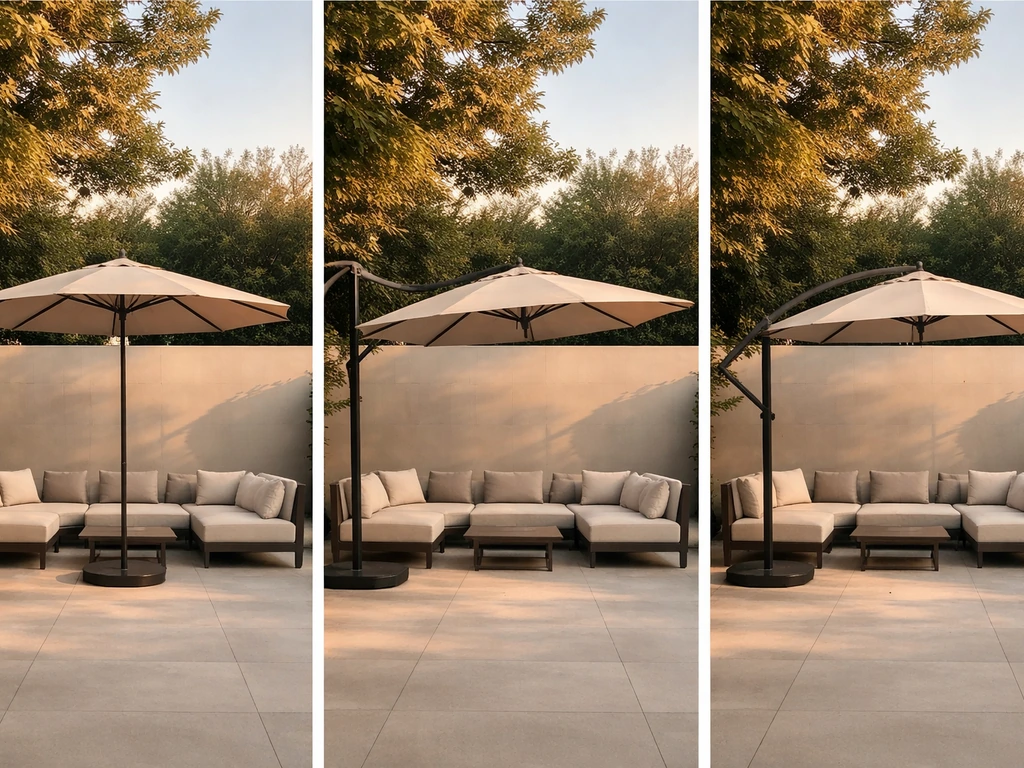
Each of these three styles solves a different problem, and none of them is universally the best. Here is how they break down in real use.
Market umbrellas: the reliable workhorse
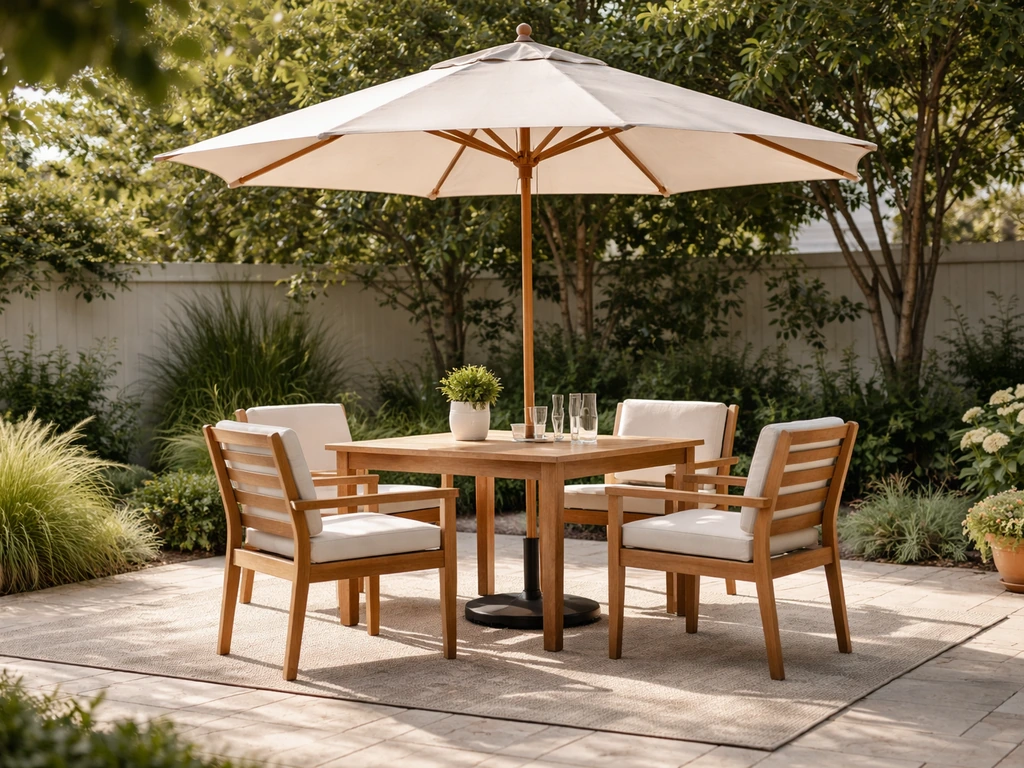
A market umbrella has a center pole that goes straight through the middle of your table, usually into a base underneath. It is the simplest design, the most affordable, and the easiest to find in Sunbrella fabric options. If you are wondering where to buy Sunbrella patio umbrellas, start by checking major patio retailers and search for listings that specify a Sunbrella canopy easiest to find in Sunbrella fabric options. If you have a dining table with a standard umbrella hole (typically 1. 5 to 2 inches), a market umbrella is almost always the right call.
The one detail to check: the pole diameter should fit your table hole with no more than about a quarter inch of extra space, or the umbrella will wobble and shift. Market umbrellas do well in moderate wind conditions and are much lighter on base requirements compared to offset styles, which keeps the total cost of the system lower.
Cantilever and offset umbrellas: better coverage, more planning required
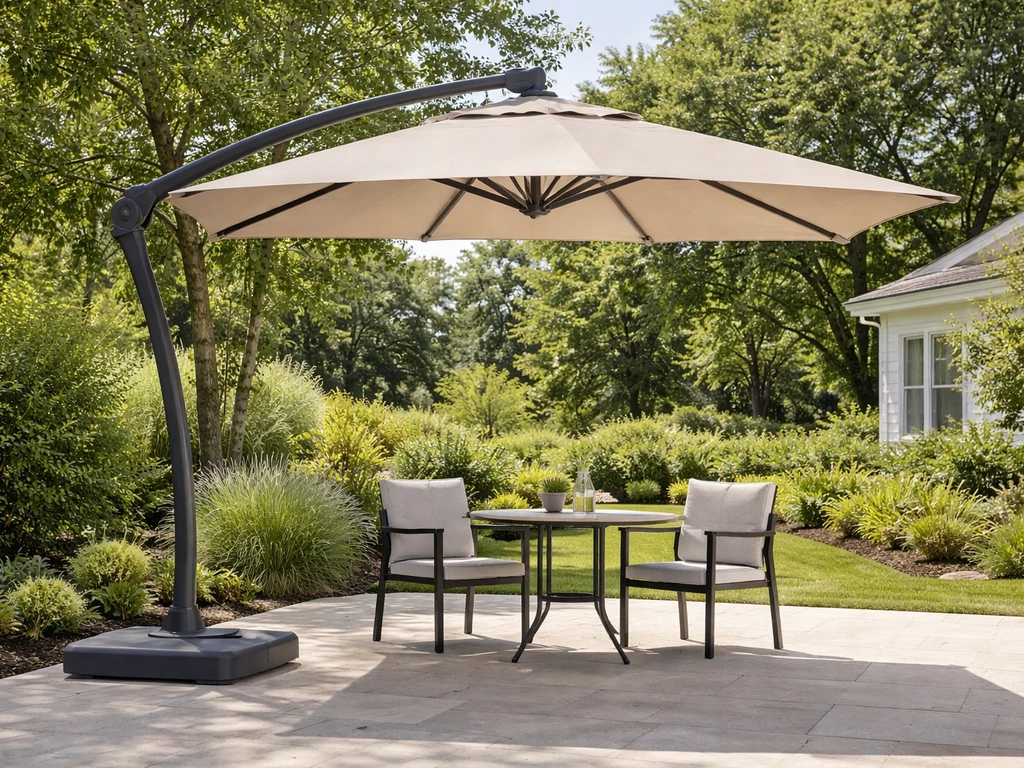
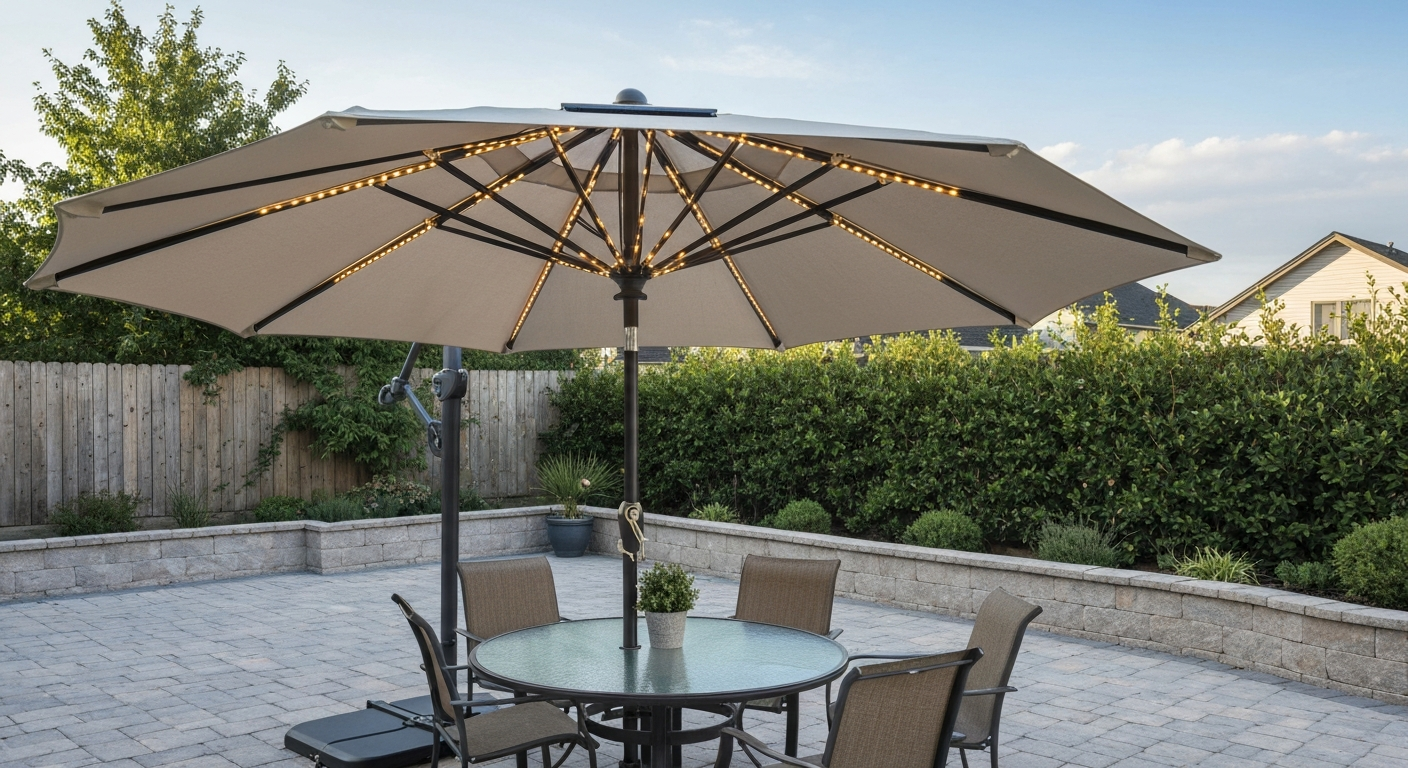
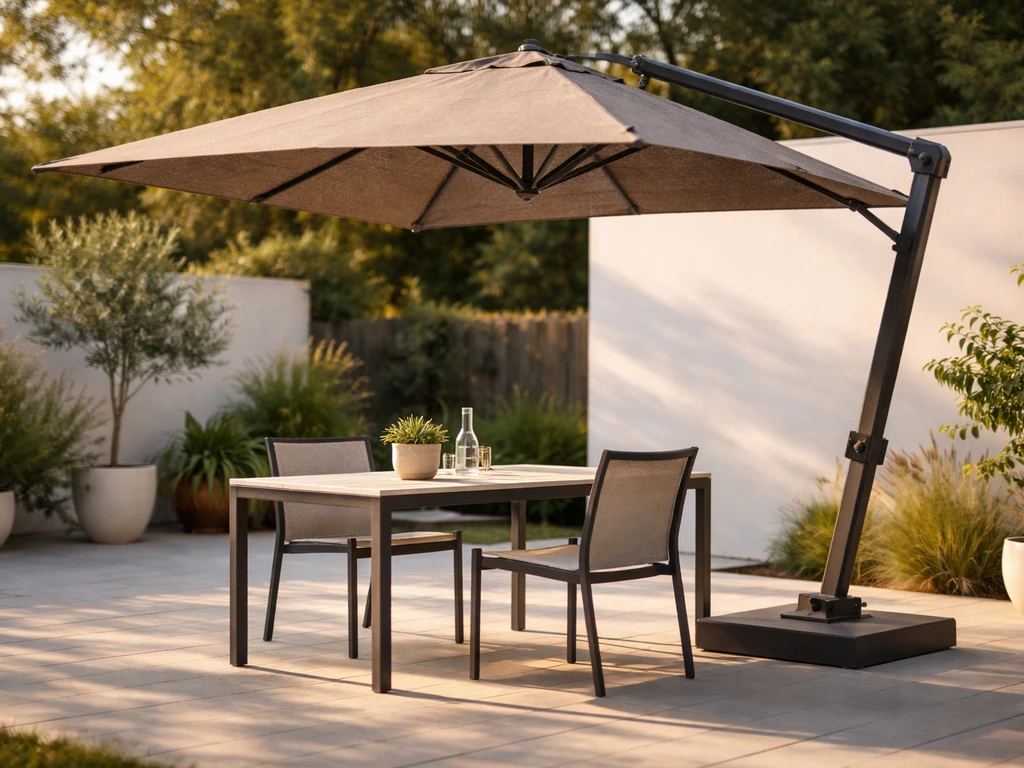
Cantilever and offset umbrellas solve the center-pole problem by hanging the canopy from an arm attached to a side post. This gives you completely open space underneath, which is ideal for lounge seating, sectionals, or any setup where a center pole would be in the way. The trade-off is that these designs require significantly more base weight to stay stable.
Retailer guidance for cantilever and offset umbrellas commonly notes they require more base stability, often meaning heavier bases, than market umbrellas because of the side-arm leverage more base weight to stay stable.
A 10-foot offset umbrella typically needs somewhere between 175 and 225 pounds of base weight, compared to roughly 50 pounds for a 10-foot market umbrella. That is a meaningful cost and logistics difference.
You also need to think carefully about clearance: the offset arm and canopy swing in a specific arc, and if you are close to a wall or fence, you can easily end up with an umbrella that blocks a doorway or scrapes a structure when you open or rotate it.
For most people with a traditional patio dining set, a market umbrella is the practical winner. For lounge areas or large open decks where you want shade without obstruction, a cantilever or offset style earns its premium price. Just be ready to invest in the heavier base the design demands.
| Style | Best For | Base Weight Needed | Key Trade-off |
|---|---|---|---|
| Market | Dining tables with center hole, budget-conscious buyers | ~10 lbs per ft of canopy diameter | Center pole limits furniture layout flexibility |
| Cantilever/Offset | Lounge seating, open decks, pole-free coverage | 175–225 lbs for a 10 ft model | Higher cost, heavy base, more clearance planning needed |
| Offset (rotating) | Large areas needing directional shade control | 175–225 lbs or more | Most complex to position, highest price point |
Getting the size right: shade coverage and table fit
Umbrella sizing is one of the most consistently underestimated parts of this purchase. Most people buy an umbrella that covers the table and then wonder why they are still squinting at 3 PM. The goal is to cover your seating zone, not just the tabletop.
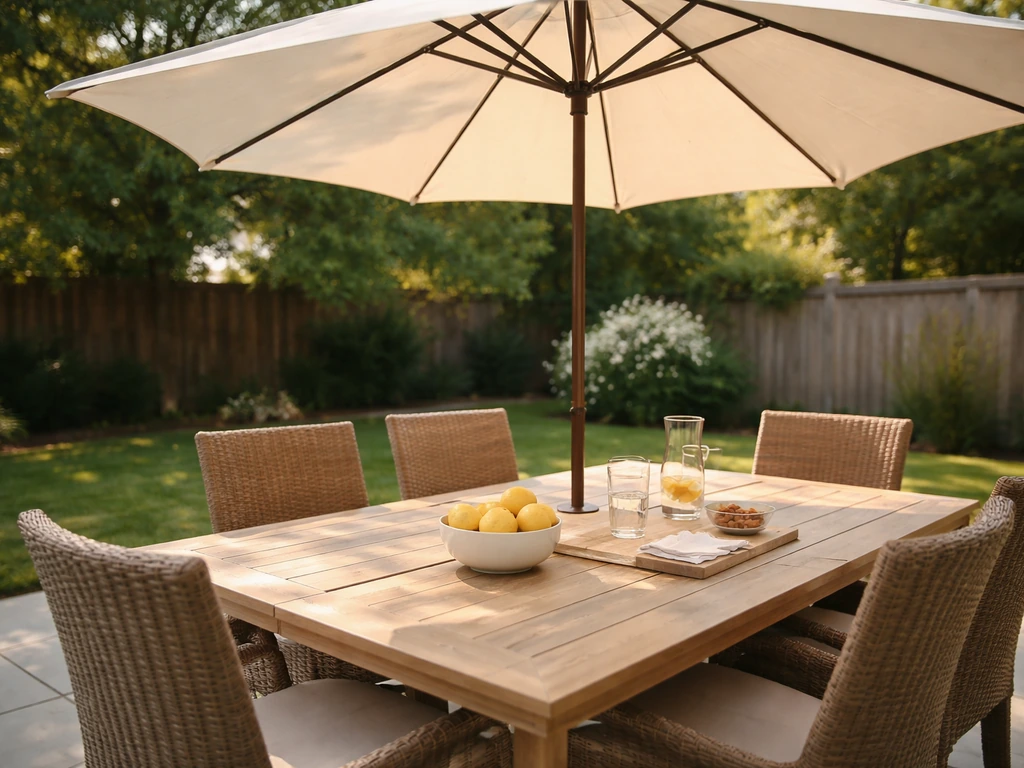
A practical rule that works well: choose an umbrella canopy that extends at least 2 feet beyond the edge of your seating area on each side. Another way to think about it is to aim for a canopy that is 4 to 5 feet larger in diameter than your table. So if you have a 60-inch (5-foot) round table, you are looking at a 9 to 11-foot umbrella, and leaning toward the 11-foot side if you want real coverage for the chairs around it. Many sizing charts confirm that a 54 to 60-inch round table pairs best with an 11-foot or larger canopy when seat coverage is the priority.
For rectangular tables, you generally want to match the longer dimension. A 6-foot rectangular table works well with an 11-foot market umbrella or a 10 by 12-foot rectangular cantilever canopy. When in doubt, go larger. An umbrella that is slightly too big is almost always more useful than one that is slightly too small.
What Sunbrella fabric actually does (and what it does not)
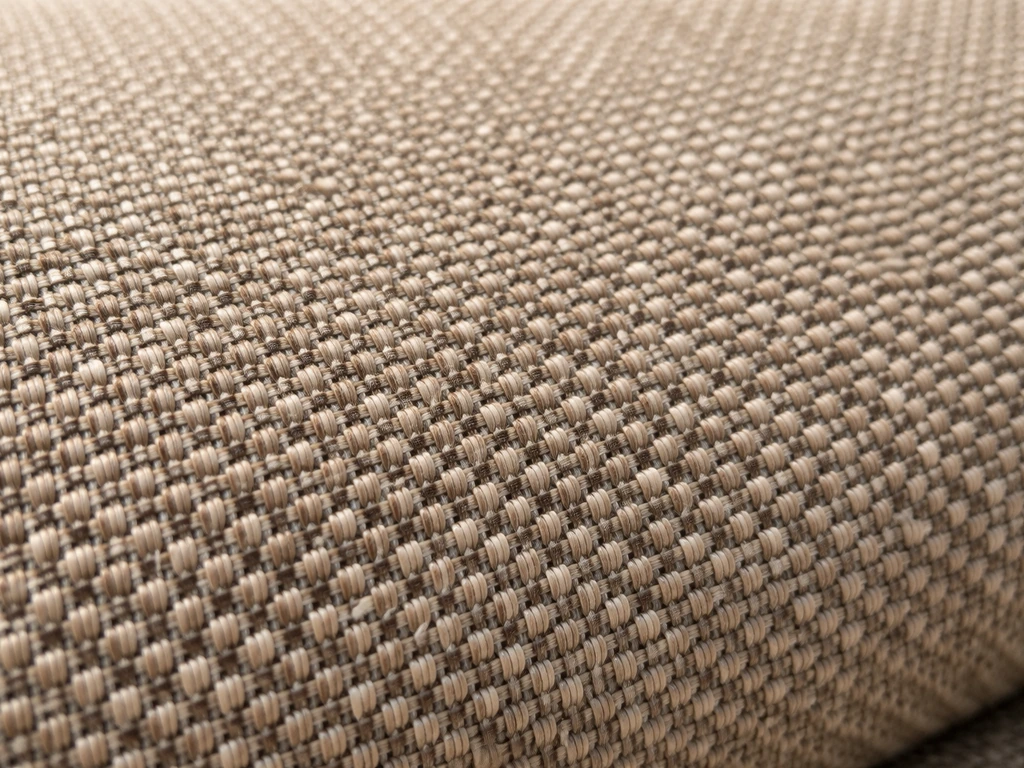
Sunbrella makes its outdoor fabric from 100% solution-dyed acrylic. That means the color is baked into the fiber itself during manufacturing, not applied to the surface after the fact. The practical result is that it does not fade from the outside in the way a surface-dyed or polyester fabric would. This is the real reason Sunbrella commands a premium and why it delivers on its fade-resistance reputation.
Fade resistance and UV protection
Sunbrella markets its solution-dyed acrylic as resistant to fading, stains, mold, and mildew, and UV protection is a core characteristic of the weave. In practical terms, a Sunbrella canopy will hold its color and structural integrity significantly longer than a budget polyester canopy under direct sun exposure. If you are in a region with intense sun and you plan to leave the umbrella up most of the season, Sunbrella fabric is worth the price difference on this factor alone.
Water resistance and mildew
Here is where a little nuance matters. Sunbrella fabric itself does not promote mildew growth, but mildew can still develop on dirt and other substances left on the fabric if it is not cleaned. Some Sunbrella fabrics have a water-resistant coating that causes water to bead and run off. After deep cleanings or extended seasons, that coating can wear down. Sunbrella makes a product called Sunbrella Restore Fabric Protector and Repellent specifically to reapply water repellency when that happens. It is worth having a bottle on hand after the first thorough end-of-season cleaning.
Cleaning: what Sunbrella actually recommends
Sunbrella's official guidance for shade fabrics is straightforward. Rinse the canopy with clean water monthly. For general cleaning, use a soft bristle brush with a solution of water and mild soap, or Sunbrella's own Clean multi-purpose cleaner. For mildew spots, a diluted bleach and soap mixture can be used for spot cleaning, but bleach is not a routine-cleaning product and can discolor some fabric lines if used carelessly. One important note: Sunbrella's care instructions vary by fabric line (Contour, Horizon, and others have their own care documents), so check the specific fabric line used in your umbrella and follow that guidance rather than assuming all Sunbrella canopies clean the same way.
Frame quality, wind resilience, and base requirements
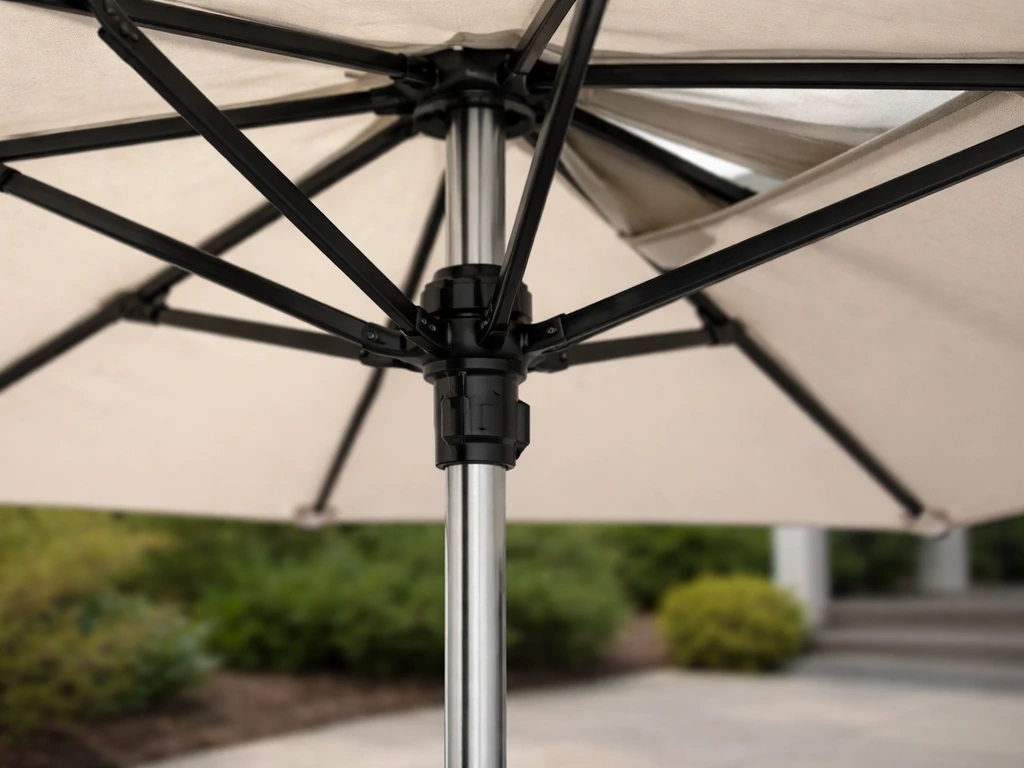
The Sunbrella fabric on a poorly built umbrella will outlast the frame by years. The frame is where quality differences really show up at different price points, and it is also what determines whether your umbrella survives a gusty afternoon or ends up in the neighbor's yard.
Frame materials to look for
Aluminum frames are the most common choice for outdoor umbrellas because they resist rust and are lightweight enough to open and close easily. Powder-coated aluminum is better than uncoated because the coating protects against oxidation and UV damage. Fiberglass ribs (the arms that hold the canopy out) are worth paying extra for: they flex in wind rather than snapping, which significantly extends the umbrella's life in breezy conditions. Steel poles are heavier and prone to rust if the finish is scratched, so they are a step down from quality aluminum in most outdoor situations.
Wind resilience: what the specs actually mean
Wind resistance in an umbrella is a system-level property, not just a canopy feature. The four things that work together are wind vents in the canopy (which let air pass through rather than lifting the whole umbrella), flexible ribs (fiberglass, as mentioned above), a sturdy and appropriately weighted pole, and adequate base weight. A canopy with a double-wind vent and fiberglass ribs on a lightweight pole with a 25-pound base is still going to tip over in a real gust.
The standard guidance from safety-focused sources is to close your umbrella when winds hit around 20 mph, or follow whatever threshold your manufacturer specifies in their manual. No patio umbrella is designed to stay open in sustained wind, and most umbrella warranties specifically exclude wind or storm damage. No patio umbrella is designed to stay open in sustained wind, and many [umbrella warranties specifically exclude wind or storm damage](https://global. sunbrella.
com/en-us/warranty).
Base weight: the most commonly underestimated factor
A widely used rule of thumb for base sizing is 10 pounds of base weight per foot of canopy diameter, and that is really a minimum for low-wind, calm-day use. A 9-foot market umbrella needs at least 90 pounds of base; a 10-foot offset umbrella can need 175 to 225 pounds because the leverage from the side arm multiplies the force on the base dramatically. If you are buying an offset or cantilever umbrella and the listing suggests a 50-pound base, treat that as a red flag. Underbasing a cantilever is one of the most common causes of umbrella tip-overs and damage.
What to check before you buy: a practical comparison checklist
Use this checklist when you are comparing specific umbrellas. It will help you cut through marketing language and evaluate what you are actually getting for the price.
- Confirm the Sunbrella fabric line: Ask or check the listing for the specific Sunbrella line (not just the word Sunbrella). Different lines have different care requirements and warranty terms. This matters for replacement canopy availability too.
- Check the frame material: Powder-coated aluminum with fiberglass ribs is the benchmark for quality. Steel frames cost less but rust faster. Plastic hardware on the hub and ribs is a sign of a budget build that will fail first.
- Verify the pole diameter fits your table: For market umbrellas, the pole should fit your table hole with no more than about a quarter inch of extra space. This prevents wobble and tipping.
- Size for the seating zone, not the table: Use the 2-feet-beyond-seating rule or the 4-to-5-feet-larger-than-table rule. Go bigger when in doubt.
- Match the base weight to the style: 10 lbs per foot of diameter for market umbrellas as a starting minimum; 175 to 225 lbs or more for 10-foot offset models.
- Look for wind vents in the canopy: Single or double vents reduce lift and pressure in gusts. This is a feature worth specifically filtering for in listings.
- Read the warranty terms carefully: Umbrella warranties (and Sunbrella's component warranty) often exclude wind and storm damage. Know what is and is not covered before you assume the price includes protection.
- Check for replacement canopy availability: Find out if the manufacturer sells replacement canopies by model number and what Sunbrella line they use. This lets you replace the fabric without replacing the whole umbrella frame when the canopy eventually wears.
- Evaluate the tilt and opening mechanism: Crank-and-tilt mechanisms are more durable than push-button tilts at similar price points. Test or read reviews specifically about the mechanism, since this is the most common failure point over time.
- Factor in total system cost: Add the umbrella price, base price, and any cover or storage costs together before comparing options. A cheaper umbrella with an undersized base and no cover is rarely cheaper in year three.
Price point trade-offs: where to splurge and where to save
At the entry level (roughly under $200 for the umbrella alone), you will find Sunbrella canopies on frames with plastic hubs, thinner poles, and push-button tilts. The fabric will still perform like Sunbrella fabric, but the frame will be the weak point. These are fine for covered patios or low-wind areas where the umbrella closes before every storm.
In the mid-range ($200 to $500), you start getting powder-coated aluminum poles, fiberglass ribs, and crank mechanisms that actually hold up through a few seasons. This is the sweet spot for most homeowners. At the premium level (above $500 and into the $800 to $1,500 range for cantilever systems), you get commercial-grade poles, 360-degree rotation, heavy-duty hardware, and umbrellas that are realistically designed to stay in place through a full season of regular use.
If you entertain regularly or have an exposed deck, the premium tier pays for itself in longevity.
One last practical note: if you are still working out where to buy a Sunbrella umbrella specifically, purchasing from a retailer that carries multiple Sunbrella umbrella brands will give you better side-by-side comparisons on frame specs than a single-brand store.
If you are wondering where to find patio umbrellas that match your setup, start with retailers that carry a range of styles and sizes, then confirm base and fabric options before you buy where to buy a Sunbrella umbrella specifically. If you’re specifically looking for an offset model, compare the base weight and arm clearance before you check out where to buy offset patio umbrella.
If you are specifically searching for where to buy patio umbrellas near me, look for retailers that stock multiple styles so you can compare frame specs in person. If you are shopping for where to buy a patio umbrella, compare local furniture stores, big-box retailers, and online listings to find the best match for size, style, and base where to buy a Sunbrella umbrella specifically.
It is also worth checking whether the retailer stocks bases and replacement canopies for the models they sell, since that is a real convenience when you need either down the road. Once you have your size and frame targets, you can narrow down options by checking where to buy Sunbrella patio umbrellas from retailers that stock replacement canopies and bases. If you are searching for where to buy patio umbrella bases near you, check whether the retailer you choose stocks compatible base models for the umbrella style and size you want where to buy Sunbrella patio umbrellas.
If you are searching for patio umbrella base options near you, check local home improvement stores and outdoor furniture retailers, then match the base size to your umbrella style and diameter retailer stocks bases.
FAQ
If an umbrella listing says “Sunbrella,” how do I know what’s actually Sunbrella and what isn’t?
Look for a label or spec that says the canopy is “Sunbrella fabric,” not just “Sunbrella umbrella.” The canopy can be Sunbrella while the frame, ribs, tilt mechanism, and base are from the umbrella maker, so you must compare frame materials (powder-coated aluminum, fiberglass ribs) and the stated base weight separately.
How can I tell whether a market umbrella will fit my table’s umbrella hole without wobble?
For market umbrellas, the pole should be close to your table hole with only a small clearance. If the spec says the pole is, for example, 1.9 inches and your hole is 1.5 to 1.75 inches, it will not fit smoothly and may wobble or bind. Measure your table hole diameter and compare to the pole diameter listed for the umbrella.
What should I do if the listing doesn’t clearly state the base weight for a cantilever or offset umbrella?
If you cannot see the base weight or it’s buried in the fine print, treat it as a risk, especially for cantilever or offset models. A true cantilever typically needs much more mass than most listings imply. When in doubt, ask the retailer for the exact pounds of base weight and the base part number before ordering.
Are all umbrella bases interchangeable, or do I need a specific base type for each Sunbrella style?
Umbrella bases come in different configurations, and not all are interchangeable. Make sure the base is designed for your umbrella style (market versus offset), matches the umbrella pole diameter, and provides the recommended total weight when filled or attached. Also confirm whether it uses a fill system (water/sand/weights) or fixed plates, since that affects stability.
What clearance checks should I do for an offset or cantilever umbrella near structures?
If you’re near a wall, pergola, fence, or door, measure the “open” arc, not just the canopy diameter. Offset and cantilever arms swing and can block openings when rotated or tilted. Check the listing’s rotation angle and tilt range, then test clearance with painter’s tape on the patio to visualize where the arm will travel.
How should I handle rain and wet seasons if I’m worried about stains or mildew?
Don’t rely on “canopy water resistant” claims alone. Sunbrella fabric can bead water early on, but coatings wear down after cleaning and time. Plan for routine rinsing, and keep the fabric dry between uses when possible to reduce staining and to slow residue that can lead to mildew.
Is bleach ever a good idea for mildew on Sunbrella fabric, and what’s the safest way to use it?
Yes, but do it carefully. Some owners use a dilute bleach mix for spot treatment, while others avoid it entirely because it can discolor certain fabric lines. If you try it, test on a hidden seam first, use only the minimum needed, and follow with a thorough rinse and mild soap wash.
Why might care instructions vary between Sunbrella fabric lines, and what should I do if my umbrella doesn’t say the fabric line?
Not all Sunbrella fabrics have identical care requirements. If your umbrella uses a specific Sunbrella line (the umbrella may list it), follow that line’s documented method for cleaning and mildew removal. Using a one-size-fits-all cleaner can affect color appearance and water repellency.
What are the most common reasons patio umbrellas tip over even when the canopy is high quality?
Most tip-over issues come from underbasing and improper setup, not from the canopy. Confirm your base meets or exceeds the minimum for the umbrella diameter and style, tighten all hardware, and ensure the base is level on the patio surface. If you use fillable bases, fill to the recommended level, not “mostly full.”
Can a Sunbrella patio umbrella safely stay open in windy weather?
If you plan to leave the umbrella up, choose a design with stronger wind features (vented canopy, flexible ribs, and a sufficiently heavy base) and use the manufacturer’s wind threshold. For gusty areas, keep a habit of closing the umbrella when conditions approach that threshold, because warranties typically exclude storm and wind damage.
If I’m between two umbrella sizes, which direction should I choose and what trade-offs come with going bigger?
If you’re between sizes, err larger for seating coverage, but also consider clearance. A bigger canopy can increase fabric sail area and, for offset styles, change how the arm clears nearby structures. Measure your usable shade zone and your clearance arc before choosing a larger diameter.
Should I prioritize replacement canopies or replacement bases when choosing the best Sunbrella patio umbrella?
Many premium frames are designed for long-term use, but replacement parts matter. When you shop, ask whether replacement canopies are available for the exact model and whether the base components can be repaired or swapped. This matters most if you expect regular seasonal exposure and want predictable long-term maintenance.