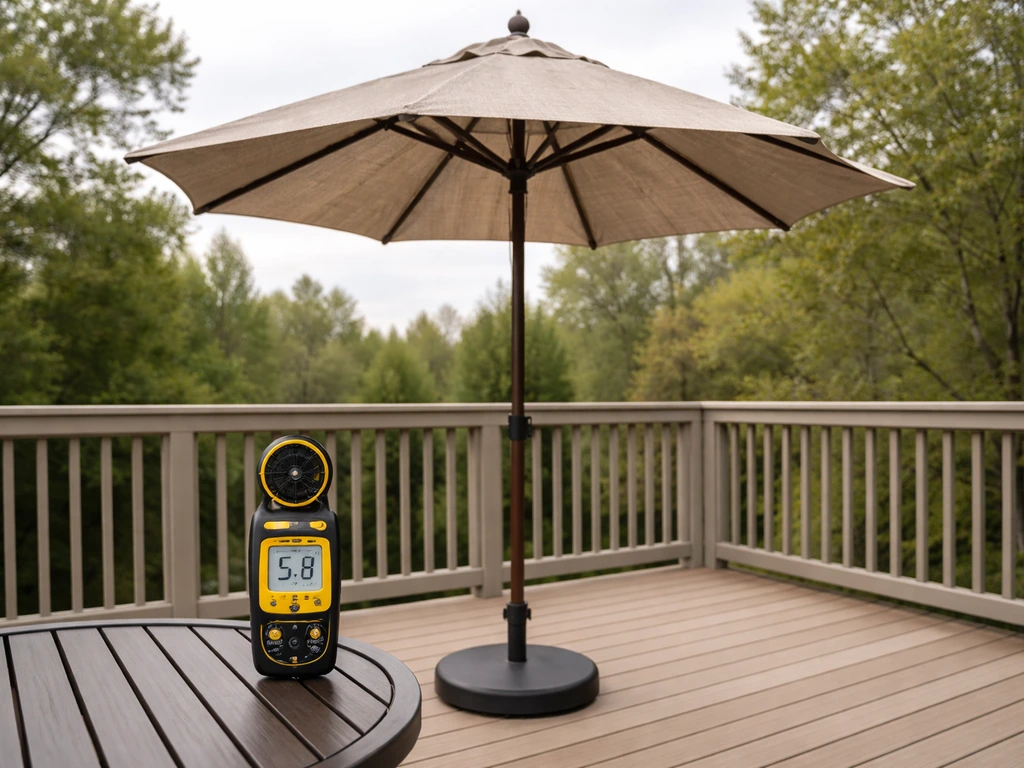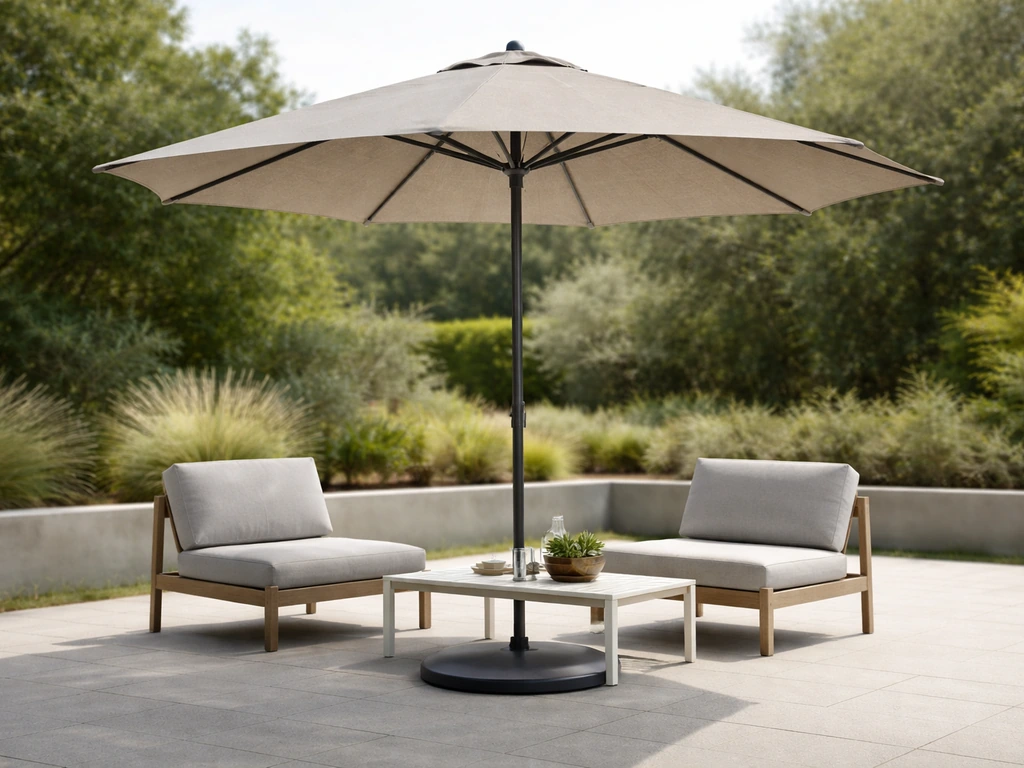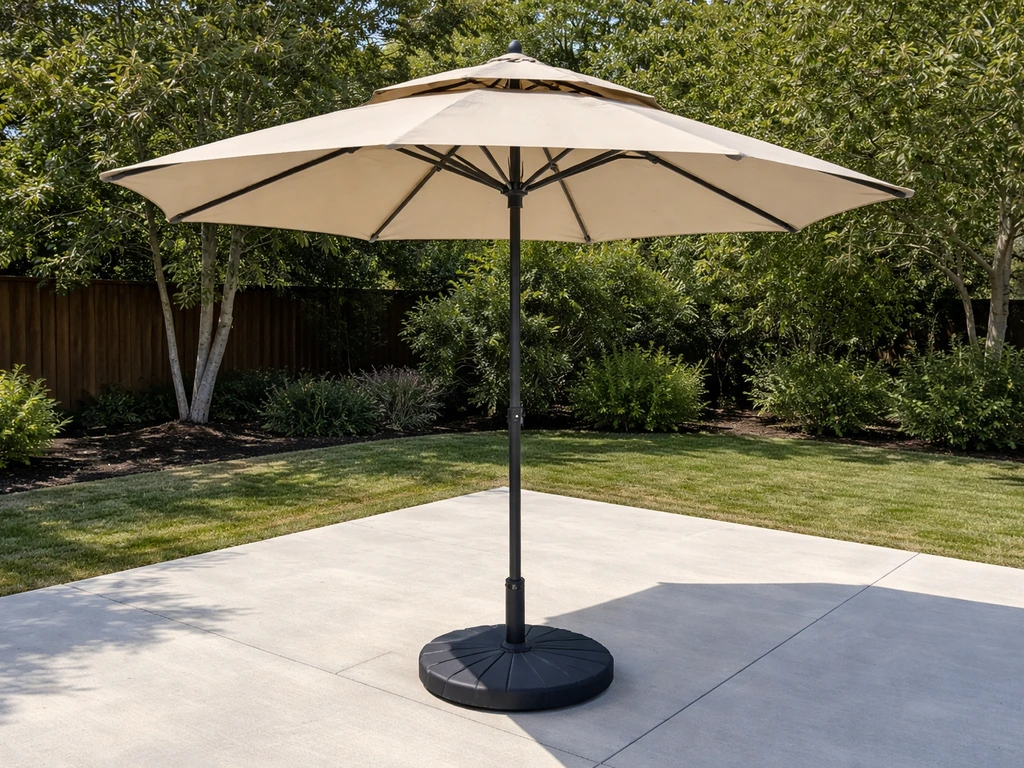
For rain and wind together, you want a patio umbrella with a solution-dyed acrylic or coated polyester canopy, sealed seams, a vented top (double-vented is better), fiberglass ribs, and a heavy base of at least 50 lbs for a 9-foot umbrella or 100-plus lbs for anything larger. Market-style umbrellas handle storms better than offset or cantilever designs, and no umbrella of any style should stay open in winds above about 20 mph. If you get that combination right, you'll have a canopy that sheds rain without soaking through and a frame that flexes in gusts instead of snapping or tipping.
Best Patio Umbrella for Rain: Wind-Ready Buying Guide

Kent Lang
4 Jul 2026
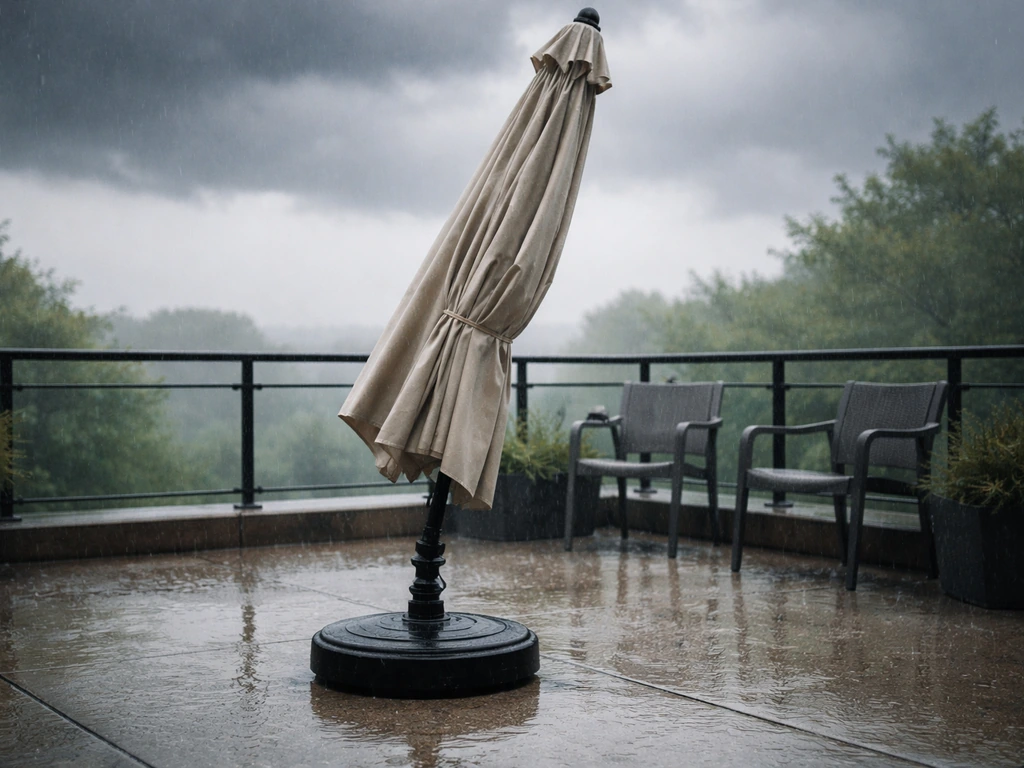
Why rain-ready and wind-ready umbrellas are different from regular ones
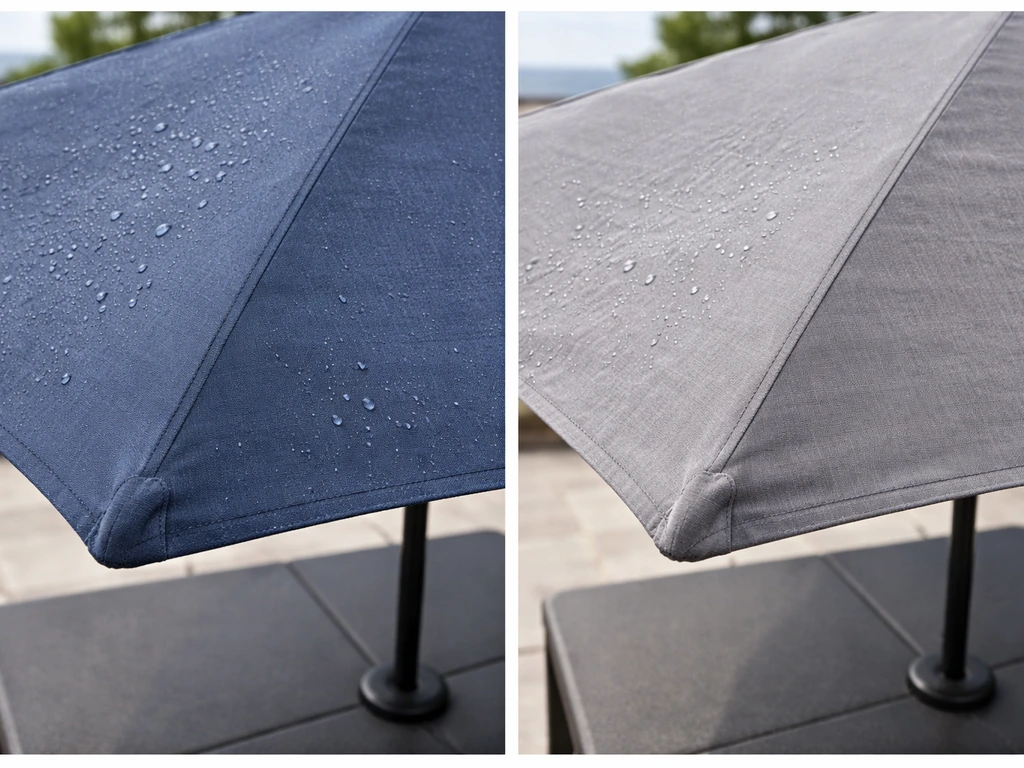
Most patio umbrellas sold at big-box stores are labeled water-resistant, and that's not a lie exactly, but it's not the whole story either. A standard solution-dyed acrylic or polyester canopy with a DWR (durable water repellent) finish will shed a light drizzle just fine. Hit it with a heavier sustained downpour, say 50 mm per hour, and that same fabric can wet through, especially along the seams where needle holes from stitching act as tiny leak points. A genuinely rain-ready canopy uses a higher hydrostatic resistance (one fabric spec from a quality solution-dyed acrylic clocks in at about 14 inches of water column) and, ideally, has taped or sealed seams rather than just stitched ones.
Wind adds a completely different layer of stress. A rain-shedding canopy that acts like a sail will rip off its frame or flip inside out in a gust. Wind-ready construction means flexible ribs that absorb gusts without snapping, a canopy that lets air flow through rather than catch it, and hardware at the tilt mechanism and runner hub that won't shear off under load.
Those two sets of requirements overlap but aren't identical, which is why a true all-weather umbrella needs to address both at the same time. If you've been shopping for wind resistance separately, the sibling topic covering the best patio umbrella for wind goes deeper on pure wind ratings and frame specs. If you want the most wind-resilient choice, focus on canopy venting, flexible fiberglass ribs, and a heavy base matched to your umbrella size best patio umbrella for wind.
The specs that actually matter for rain and wind performance
Canopy fabric
Solution-dyed acrylic is the gold standard. Brands like Sunbrella, Tempotest, and Sauleda use this construction, where the color is baked into the fiber rather than printed on top, which means the UV and water-resistant properties don't wash out over seasons. Look for a fabric with a stated water column value if you can find the spec sheet; 14 inches or above is a reasonable benchmark for rain performance. Coated polyester is a cheaper alternative that can be more waterproof out of the box but tends to crack and peel after a few seasons of UV exposure. For longevity in wet climates, solution-dyed acrylic wins.
Seam construction matters almost as much as the fabric itself. Stitched seams without any sealing are the most common leak point under steady rain. Better umbrellas use heat-taped seams or a thick overlock stitch with a water-repellent thread. When you're evaluating a specific model, look at how the canopy panels join at the top cap and along the ribs. If the product description doesn't mention seam sealing, assume it's basic stitched construction.
Ribs and frame
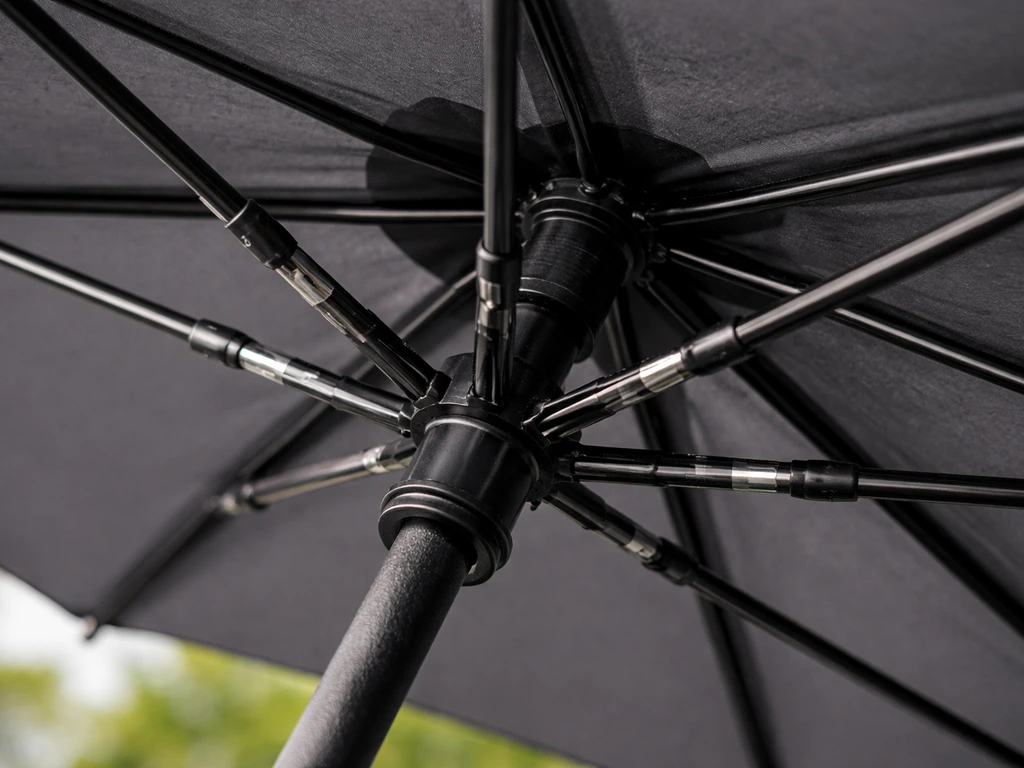
Fiberglass ribs are the right call for any umbrella you plan to leave out in variable or gusty conditions. If you want the same kind of wind-focused guidance, the next section on ribs and frame explains why fiberglass ribs are a strong choice for gusty conditions. They flex in a gust and spring back instead of bending permanently or snapping, which is what steel ribs do once they exceed their elastic limit.
Aluminum ribs sit in the middle: lighter than steel and more corrosion-resistant, but not as forgiving in wind as fiberglass. The minimum rib count you want is eight. More ribs mean each one bears less load in a gust, and the canopy stays rounder and more structurally stable instead of flopping between attachment points. A few commercial-grade models pair fiberglass ribs with reinforced aluminum for the main spreader arms, which is a solid combination.
The pole itself should be aluminum at minimum, ideally with a powder-coated or anodized finish to resist corrosion. Pole diameter is a structural indicator: thinner poles (under 1.5 inches) flex too much in heavier gusts and put more stress on the base connection. For a 9- to 11-foot umbrella in a windy area, look for a 1.5- to 2-inch pole diameter.
Venting
A vented canopy is non-negotiable for wind performance. To match real-world storm pressure, also check the patio umbrella wind rating and ensure you have a vented canopy that won’t lift in gusts. The vent at the top lets pressurized air escape upward instead of building under the canopy and lifting it. Single-vent designs help. Double-vent designs are measurably better because they create more consistent airflow through the canopy, reducing the lofting and inversion risk that destroys umbrellas in sudden gusts. If you're in a location with frequent afternoon thunderstorms or coastal winds, spend the extra money and get a double-vented canopy.
Tilt mechanisms and hardware
The tilt mechanism is one of the most common failure points in windy conditions. A Reddit user in r/fixit reported that their patio umbrella tilt mechanism snapped after a gust, with discussion pointing to low-grade cast parts and the value of locking hardware quality.
Cheap cast plastic or low-grade cast steel tilt collars can shear off in a single strong gust. Look for auto-locking tilt mechanisms that lock the canopy at a fixed angle with no slack, because play in the mechanism transfers directly into stress on the rib assembly every time the wind changes direction. A steel cable crank lift is more durable than a cord-and-pulley system, and the crank housing should feel solid when you test it in-store.
If you're buying online, check replacement part availability for the brand before purchasing; a serviceable umbrella from a brand like Treasure Garden or Galtech is worth more long-term than a cheaper unit you'll throw away when the tilt collar breaks.
Market vs. cantilever vs. offset: which type handles storms best

Style choice has a bigger effect on storm performance than most buyers realize. Here's a direct comparison.
| Umbrella Style | Wind Performance | Rain Performance | Storm Suitability |
|---|---|---|---|
| Market (center pole) | Best: base weight centered under canopy, direct load path to ground | Good: symmetric canopy sheds water evenly from center | Best overall for storms |
| Offset / Cantilever | Worst: cantilevered arm creates significant leverage against the base, multiplying tip-over force | Fair: asymmetric positioning can cause uneven pooling | Not designed for wind; close and secure in storms |
| Offset with heavy commercial base (350+ lbs) | Acceptable: heavy base compensates for arm leverage, but still lags market style | Fair to good | Usable with proper base, but still close in severe weather |
Market umbrellas win for storms, full stop. The center pole transfers wind load straight down into the base with minimal leverage. Offset and cantilever designs are engineered primarily for shade positioning flexibility, and at least one manufacturer's documentation explicitly states that offset umbrellas are designed for sun protection, not wind. In real-world terms, a 10-foot offset umbrella on a typical freestanding base becomes a lever arm of several feet working against that base in a gust. If you already own an offset umbrella, use the Velcro straps to secure the canopy whenever it's closed, and close it well before any storm hits.
Getting the size and placement right
Size affects both coverage and wind exposure. A larger canopy catches more wind, needs more base weight, and is harder to close quickly in a surprise storm. For most residential patios, a 9- to 11-foot market umbrella hits the right balance between usable shade and manageable wind resistance. A 13-foot canopy gives you excellent coverage for a large dining table but requires a substantially heavier base and is much harder to operate in variable conditions.
Placement matters as much as size. An umbrella positioned in a corner where two walls meet gets natural wind protection from two directions. The same umbrella on an open rooftop deck or at the edge of a balcony faces full unobstructed wind from any direction. If you want the best patio umbrella for balcony use, focus on a compact market style with strong rain-ready fabric, sealed seams, and a sturdy, wind-safe base edge of a balcony.
If your patio is exposed, go one size smaller than you think you need, use a heavier base than the minimum recommendation, and consider whether the patio layout itself can offer any natural wind breaks like a pergola, fence, or tall planters. Real-world umbrella survival is heavily influenced by turbulence patterns in your specific location, not just the umbrella's specs.
Base and anchoring: this is where most people underestimate
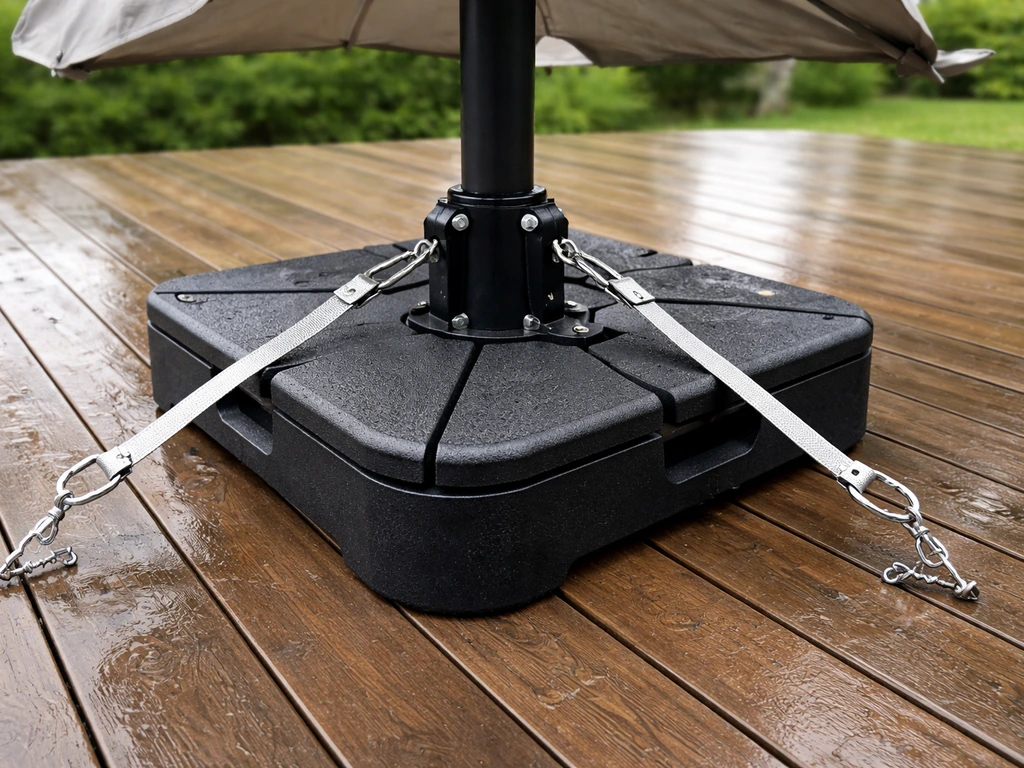
Underweighting the base is the single most common mistake patio umbrella buyers make. A general rule of thumb is about 10 lbs of base weight per foot of canopy diameter for a freestanding market umbrella. That means a 9-foot umbrella needs roughly 90 lbs of base, and an 11-footer needs about 110 lbs. For table-mounted umbrella bases, the rule drops to roughly 5 lbs per foot because the table itself adds friction and mass to the system.
In high-wind areas, heavier is always better. Treasure Garden's Z-Plate base comes in at 115 lbs and is explicitly sized for windy conditions with market umbrellas. For large cantilever umbrellas, some manufacturer listings specify bases of 350 lbs or more. If you're using fillable base bags, make sure you're actually filling them to their rated weight with sand rather than water; sand is denser and won't leak if the bag develops a small crack.
One safety point worth taking seriously: at least one manufacturer's operating documentation says to never open or operate a patio umbrella in wind conditions greater than 5 mph. That's a conservative number for liability reasons, but the underlying principle is sound. blank" rel="noopener noreferrer">National Weather Service guidance also calls for securing or bringing in unsecured patio objects when a wind advisory is issued. For severe thunderstorms, Canada.ca defines warning criteria at 90 km/h gusts or greater. The practical takeaway: close your umbrella before a storm, not during it. For Canadians searching for the best patio umbrella for wind conditions, use these limits and focus on wind-rated construction before you buy best patio umbrella for wind canada.
Durability and care when rain is a regular occurrence
Rust resistance in the frame
Aluminum poles and fiberglass ribs don't rust. If any part of your umbrella frame is steel (common in budget models for the hub, runner, and tilt hardware), look for powder-coated finishes and plan to inspect those parts annually. Rust at a joint weakens the connection before it's visually obvious, and a corroded runner hub can fail in a gust when it matters most. If you see surface rust on hardware, treat it promptly with a rust remover and rinse thoroughly before it spreads.
Cleaning and drying the canopy
After rain, open the umbrella and let it air dry completely before closing it. This is the single most effective thing you can do to prevent mildew. Closing a damp umbrella and leaving it folded for days creates exactly the conditions mildew needs: moisture, warmth, and no airflow. Real owners who skip this step report finding green or black spots on the inside of the canopy within a single season.
For routine cleaning, a mild soap solution and a soft brush work well for solution-dyed acrylic fabrics. For routine cleaning, Sunbrella recommends using a mild soap solution, rinsing thoroughly to remove soap residue, and then allowing the fabric to air dry mild soap solution and thorough rinsing. Rinse thoroughly because soap residue left in the fabric can actually break down the water-repellent finish over time. For mildew, a diluted bleach solution (check your specific fabric manufacturer's guidance since Sunbrella tolerates bleach but some coated polyesters don't) followed by a thorough rinse handles most cases. Wash the canopy at least once a season to maintain the water-repellent performance of the fabric.
End-of-season storage
Store the canopy dry and in a breathable cover or bag, not sealed in plastic. If the umbrella can't be brought inside, a high-quality outdoor cover with ventilation will slow UV degradation and reduce mildew risk significantly. Leaving a fabric canopy exposed through a full winter in a wet climate shortens its usable life noticeably, even with quality solution-dyed acrylic.
How to pick the right umbrella for your specific situation
Here's how to match the specs above to your actual scenario. This covers the most common situations buyers face.
| Scenario | Recommended Style | Key Specs to Prioritize | Base Weight Target |
|---|---|---|---|
| Small to medium patio, occasional wind and light rain | 9 ft market umbrella | Solution-dyed acrylic canopy, 8 fiberglass ribs, single vent, aluminum pole | 50–75 lbs |
| Medium to large patio, frequent afternoon storms or coastal location | 11 ft market umbrella | Double-vented canopy, 8+ fiberglass ribs, sealed seams, 1.5–2 inch aluminum pole, locking auto-tilt | 90–115 lbs (e.g., Treasure Garden Z-Plate) |
| Large dining table needing max coverage, moderate wind exposure | 11–13 ft market umbrella or large commercial cantilever with heavy base | Double vent, fiberglass ribs, commercial-grade hub and tilt hardware | 100–350 lbs depending on style |
| Balcony or rooftop with high wind exposure | 9 ft market umbrella, positioned against a wall or railing | Fiberglass ribs, double-vented, close at any sign of sustained wind, wall-anchor option if available | 75+ lbs, or wall/railing mount |
| Offset/cantilever already purchased | Keep but manage conservatively | Secure Velcro straps, close before any wind above 15–20 mph, inspect arm joints seasonally | 350 lbs or manufacturer-specified minimum |
If you're in a region with serious storm seasons, commercial-grade brands are worth the investment. Names like Treasure Garden, Shademaker, and California Umbrella offer serviceable frames with available replacement parts, which matters because a broken rib or tilt collar on a quality umbrella is a 20-dollar fix, not a full replacement. If you want to compare options across styles, materials, and storm-proofing features, check out the best patio umbrellas in Canada best patio umbrellas canada. Budget umbrellas often have no replacement part ecosystem at all.
One final practical note: no patio umbrella is a storm shelter. If you want a quick checklist, focus on canopy fabric, sealed seams, a vented top, a sturdy frame, and a heavy base what makes a good patio umbrella. Close it before severe weather, bring it inside or secure it flat if you're expecting high winds, and treat the umbrella as a fair-weather and moderate-weather tool rather than something that should stay open through a thunderstorm. The best umbrella for rain and wind is one that's well-built enough to handle daily variability and smart enough to be put away when real storms roll in.
FAQ
What spec matters most if I want the best patio umbrella for rain, hydrostatic rating or water-resistant wording?
For true rain readiness, look for a stated hydrostatic rating (water column in inches) and sealed or heat-taped seams, not just “water-resistant.” If the listing only says “water repellent” or shows a generic “resistant” label with no fabric spec, assume it will shed light drizzle but can wet through during sustained downpours.
Is solution-dyed acrylic really better than coated polyester for long-term rainy-weather use?
Solution-dyed acrylic usually outlasts coated polyester because the color and protective performance are built into the fiber rather than sitting on top. Coated polyester can start peeling or cracking after repeated UV exposure, which reduces both water shedding and appearance even if the umbrella still looks intact.
If the umbrella is rain-ready, can I still leave it open during a windy rainstorm?
Not opening it is as important as fabric. Even though the canopy may shed water, the umbrella can still experience stress and lofting in gusts. The safest routine is to close before wind picks up, and then let the canopy fully air dry before storing.
I have an offset umbrella, can I use it in rain if I strap it down?
Yes, but only if the tilt mechanism, pole, and base are built for it. If you use straps or a cover, make sure the umbrella is fully closed, secured so it cannot swing, and not wrapped in a way that traps moisture (damp covers can worsen mildew).
How can the wrong base make a “good” rain umbrella fail sooner?
A heavier base reduces tipping and uplift, but the fit matters too. If your base doesn’t match the umbrella’s pole and hub size, the connection can loosen and create wobble, which accelerates wear on the runner and tilt hardware.
Where do most rain leaks actually come from on patio umbrellas?
For frequent rain, prioritize sealed seams, vented canopy design, and a fabric with seam coverage across panel joins. Many leaks start at stitching paths and at the seam lines near the ribs and top cap, so two umbrellas with similar canopy fabric can perform very differently based on seam treatment.
What should I inspect after a windy rain event to make sure the umbrella is still safe?
If your umbrella ever gets trapped in wind while still open, check for deformation in ribs, loosened runner hub hardware, and stress marks around the tilt collar. A quick test is to open it indoors or on a calm day and look for wobble or uneven canopy shape before trusting it again outside.
What’s the best way to handle mildew that shows up on the inside of the canopy?
If the umbrella gets soaked and you notice mildew spots, you still want to air dry first, then clean using the fabric guidance. Don’t mix cleaning products or use harsh bleach on coated polyester unless the manufacturer explicitly allows it, because it can damage the water-repellent finish.
How can I “prep” my umbrella before the big rainy season?
Do a seam and fabric check before the rainy season: look for peeling coating, loose stitching, or gaps at the top cap and rib junctions. If the umbrella is used frequently, consider resealing seams only when replacement parts or repair kits are offered for that exact brand and model, since not all seams can be safely repaired with generic sealants.
Should I cover the umbrella during rain, or does it increase mildew risk?
A cover can help, but only if it stays breathable and the umbrella is dry before covering. If you cover a wet canopy or trap condensation, you raise mildew risk; use a ventilated cover and avoid sealed plastic wraps for long periods.
Does the base-weight rule change for table-mounted umbrella bases in rainy weather?
For tables, a base that’s too small is still the problem, even though the table adds friction. Verify the base weight and umbrella stability for your canopy size, and make sure the umbrella pole sits firmly in the table mount without rocking.
Is a double-vented canopy enough to handle coastal or balcony wind, or do I still need precautions?
Better venting reduces uplift, but the main “safety” decision is your wind exposure and how quickly you can close. Even a well-vented rain umbrella can lift if it’s too close to a turbulent edge, balcony wall, or planter that redirects wind upward.