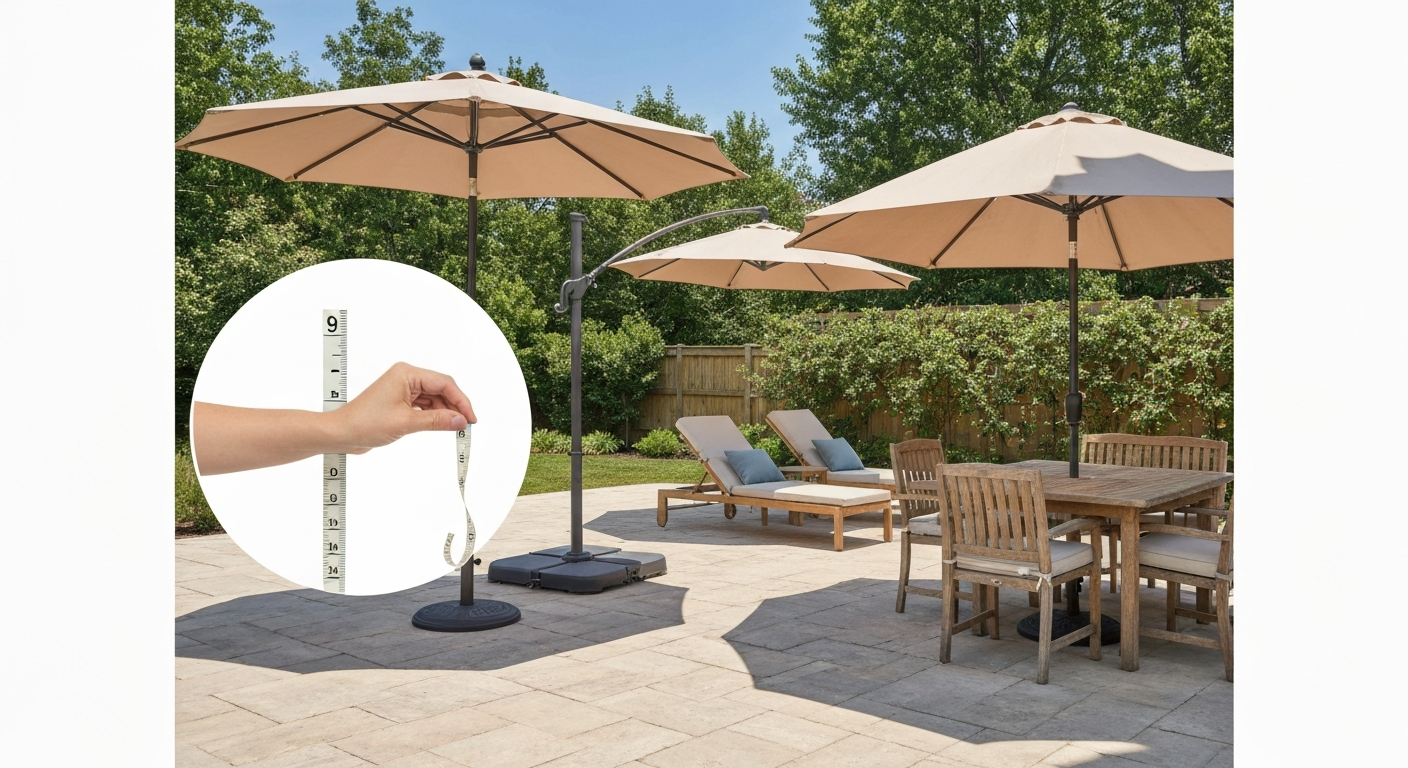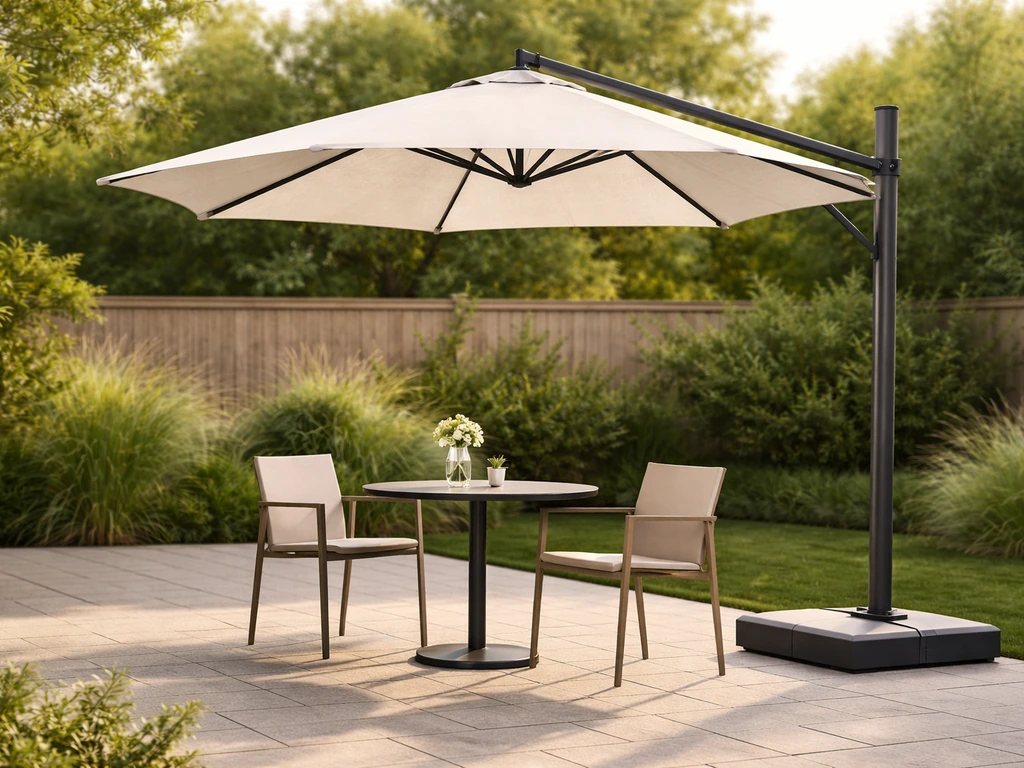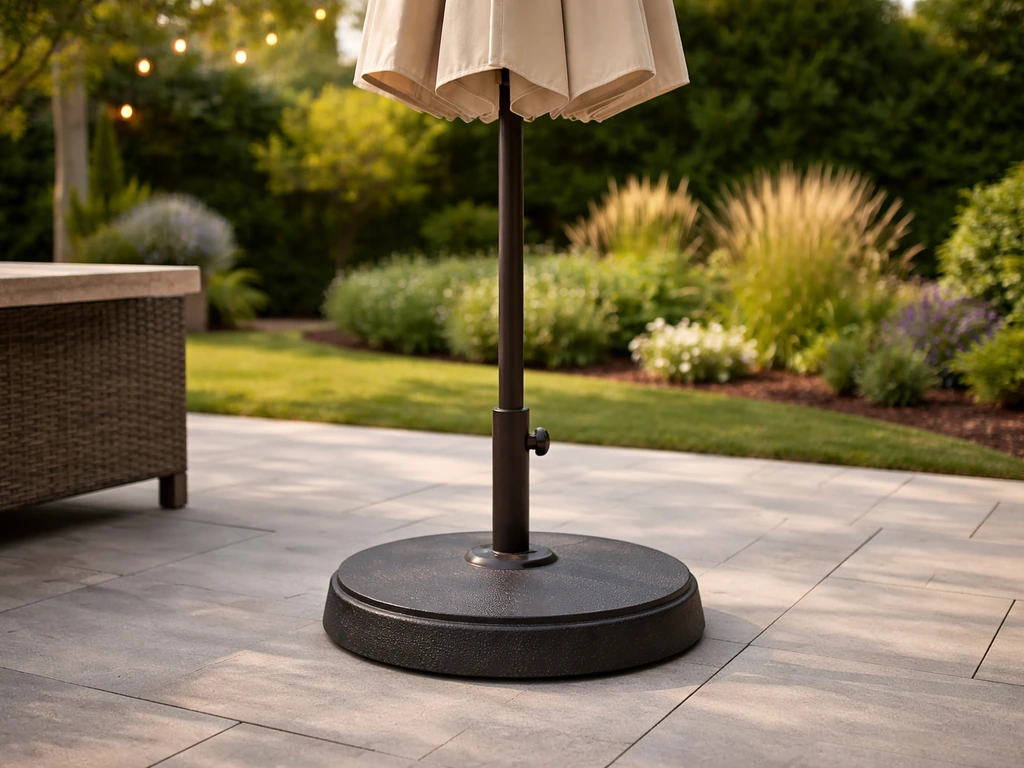
For most windy patios, a center-pole market umbrella with fiberglass ribs, a double-vented canopy, and a base weighing at least 50 lbs is your most reliable starting point. If you are shopping in Canada for the best patio umbrella for wind, prioritize fiberglass ribs, a vented canopy, and a base weight that matches your canopy size best patio umbrella for wind Canada. If you need a cantilever or offset umbrella, you can make it work in wind, but it demands a heavier counterbalance base and a vented canopy to avoid turning into a sail. The models that actually hold up in strong gusts share three things: flexible frames that bend instead of snap, canopy vents that let air pass through instead of trap it, and a base or anchoring setup that is genuinely heavy enough for the canopy size.
Best Patio Umbrella for Wind: Windproof Picks and Setup

Why patio umbrellas fail in wind
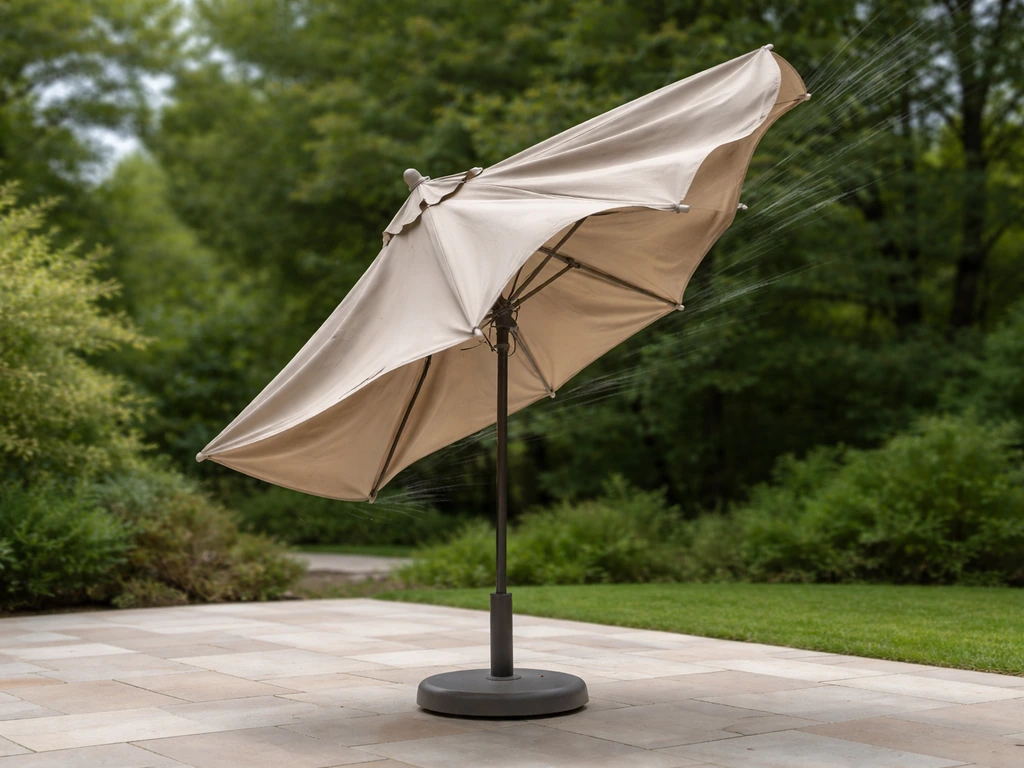
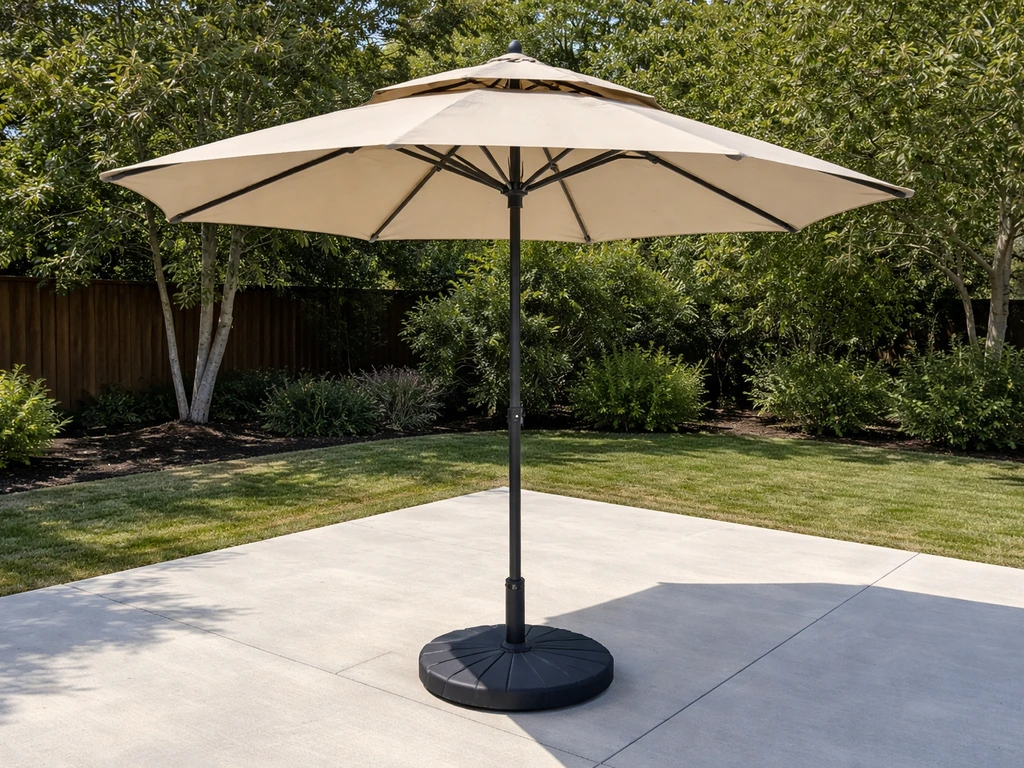
Most umbrella failures in wind come down to a handful of predictable problems, and once you understand them, shopping gets a lot easier.
- The sail effect: A closed, solid canopy traps air like a sail. When a gust hits, pressure builds underneath and can balloon the fabric upward, flip the canopy inside out, or lift the whole umbrella off its base.
- Rigid frames that snap: Aluminum and steel ribs resist flex, so when a sudden gust hits, the force has nowhere to go. The rib bends or cracks at the joint instead of absorbing the load.
- Under-weighted bases: The most common real-world failure. A 50-lb base that works fine on a calm day is nowhere near enough for a 13-foot cantilever in a 25 mph wind.
- Offset leverage on cantilever designs: Because the pole sits to the side rather than through the center of the canopy, the canopy acts more like a lever arm. Every pound of wind force gets amplified at the base, making tip-overs far more likely than with a center-pole umbrella the same size.
- Tilt abuse: Tilting the umbrella into the wind dramatically increases the surface area catching the gust. Many manuals specifically warn against this, but it is one of the most common ways people accelerate frame damage.
One thing worth knowing upfront: Frankford Umbrellas, one of the more credible commercial umbrella brands, explicitly states that wind damage is not covered under warranty because wind conditions are too variable. Surroundings, elevation, and gust patterns all change the real-world load on your umbrella. That means "wind rated" is a starting point for comparison, not a guarantee.
What to actually look for in a wind-resistant umbrella
Frame and ribs
Fiberglass ribs are the single most important frame feature for wind resistance. They flex under pressure and spring back instead of bending and staying bent. Aluminum ribs can work in moderate wind but are more prone to permanent deformation in strong gusts. TUUCI's Bay Master M1 Fiber-Flex is a good example of engineering done right: the flexible fiberglass struts are specifically designed to absorb sudden gusts rather than fight them. The pole itself should be thick-walled aluminum or stainless steel, and the hub hardware (the moving joint at the top) should feel solid, not plastic-clipped.
Canopy vents
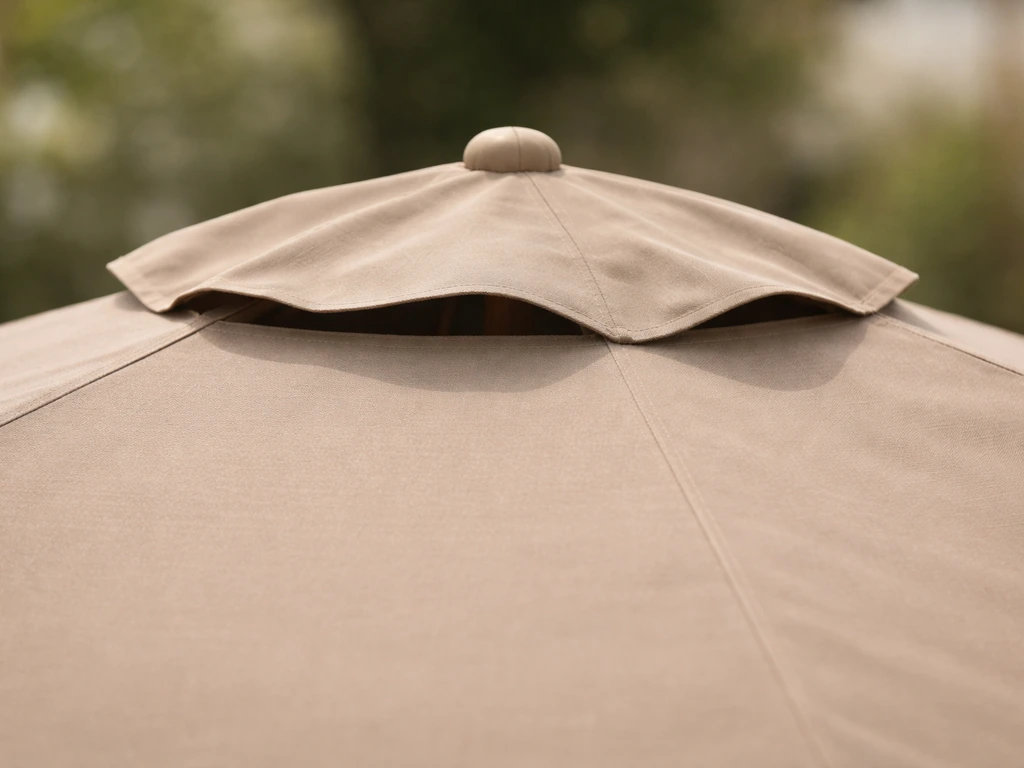
This is where you will see the clearest split between cheap umbrellas and genuinely wind-resistant ones. A vented canopy has one or two layered openings at the top that let air escape upward instead of building pressure underneath. Treasure Garden, one of the most widely distributed quality brands, explicitly categorizes their market umbrellas as Single Wind Vent (SWV) or Double Wind Vent (DWV). A double vent allows significantly more airflow and is the better pick if you are in a consistently windy area. TUUCI's fishtail profile canopies on certain Bay Master models include a double wind vent as a core design element, not an afterthought. If the product listing does not mention any vent, assume there is none.
Canopy fabric
Solution-dyed acrylic (Sunbrella is the most recognized brand) is the standard for quality outdoor fabric. It holds up to UV, sheds water, and does not stretch and deform the way polyester canopies do when they get repeatedly stressed by wind. Tighter weaves also reduce how much the fabric acts as a sail.
Hardware and opening mechanism
Crank-open umbrellas with a push-button tilt tend to have flimsier hardware than manual-lift or auto-tilt designs. For windy conditions, look for a locking mechanism that holds the canopy firmly open (not just resting in place), stainless or marine-grade hardware on all moving parts, and tie straps or velcro wraps to secure the canopy when you close it. Some manufacturers include tie straps specifically for this reason, and using them when winds pick up is genuinely effective at preventing damage.
Which umbrella style holds up best in wind
Style choice matters more for wind resistance than most buyers realize. Here is an honest comparison of the three main types.
| Style | Wind Resistance | Best For | Main Risk |
|---|---|---|---|
| Center-pole market umbrella | Best baseline stability | Dining tables, smaller patios | Canopy blocks table center if no tilt |
| Cantilever / offset umbrella | Can be good, but demands more from the base | Seating areas, lounges, no-pole setups | Higher tipping leverage, needs 1.5-2x base weight |
| Rectangular umbrella | Good when aligned with prevailing wind | Long dining tables, pergola-style coverage | More surface area = higher wind load if misaligned |
Center-pole market umbrellas
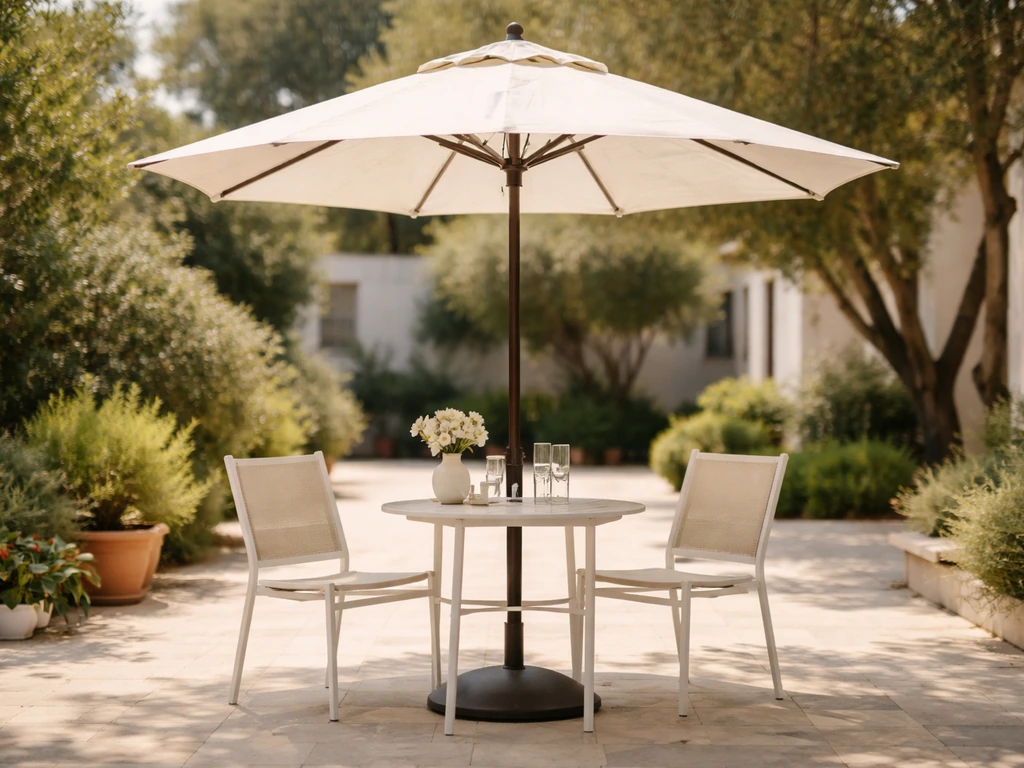
These are the most forgiving in wind because the pole runs straight through the center of the canopy, keeping the load balanced. A vented, 9-foot market umbrella with fiberglass ribs and a 50 to 60 lb base is the practical sweet spot for a standard patio in a moderately windy area. They are also easier to close quickly when a storm rolls in, which is the best wind strategy of all.
Cantilever and offset umbrellas
Cantilever umbrellas are genuinely useful because they provide shade without a pole in the middle of your seating area, but they are inherently more wind-sensitive. The offset design means the canopy's center of gravity is away from the base, so wind forces are amplified at the base connection point. A 10-foot cantilever needs roughly 1. 5 to 2 times the base weight you would use for a 10-foot center-pole umbrella.
Look specifically for cantilever models that include a vented canopy (Treasure Garden's AG25T, for example, explicitly offers single and double wind vent options) and a heavy, purpose-built base with wheels so you can reposition it easily. The Treasure Garden AG25T and TUUCI Bay Master cantilever are worth a look if you want commercial-grade durability.
Rectangular umbrellas
Rectangular canopies work well over long dining tables and can handle wind reasonably well if you orient them so the long axis runs parallel to the prevailing wind direction. When a rectangular umbrella is broadside to the wind, its larger surface area catches significantly more force than a round umbrella of comparable size. If your patio has wind coming from multiple directions, a round or octagonal canopy is a safer default.
Size and shape: bigger is not better in wind
This is a point most buyers get wrong. A larger canopy does not just mean more shade, it means dramatically more wind force at the same wind speed. Revolvashade's certified wind ratings show this clearly: a 3. Revolvashade’s 2025 warranty document frames wind ratings as certified “up to” a breaking or stress point, and it cautions that this does not mean the umbrella will remain undamaged at high winds. 6 m canopy is rated up to 92.5 km/h, while a 4.0 m canopy drops to 81 km/h, and a 4.5 m canopy is rated only to 60 km/h. The bigger the sail, the more the wind wins.
For a standard patio table (48 to 60 inches diameter), a 9-foot round market umbrella is the right size for both coverage and wind manageability. For a larger outdoor dining setup, a 10 to 11 foot umbrella is reasonable if you use a vented canopy and a properly weighted base. Going to 13 feet or larger requires serious base weight, permanent anchoring options, or accepting that you will need to close the umbrella in any wind above a moderate breeze.
A general industry rule of thumb is about 10 lbs of base weight per foot of canopy diameter for a center-pole umbrella. You should still compare the umbrella's wind rating alongside the base weight guidance and your local gust patterns to estimate how much wind the patio umbrella can realistically handle how much wind can a patio umbrella withstand. For a cantilever of the same size, plan on 1. 5 to 2 times that figure.
Round canopies are the most wind-efficient shape because they distribute force evenly in all directions. If your wind comes from a consistent direction (coastal properties often have this), a rectangular canopy oriented parallel to the wind can work well. If wind direction is unpredictable, stick with round or octagonal.
Getting the base and anchoring right
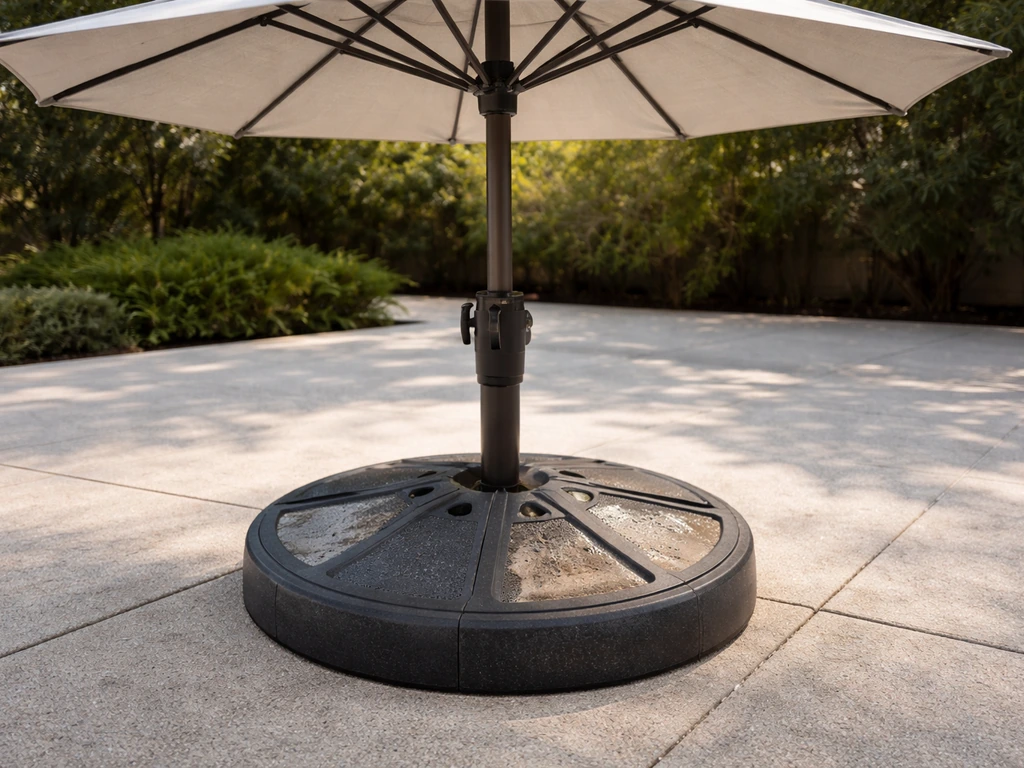
The umbrella frame and canopy get most of the attention, but the base is where a lot of real-world failures happen. A beautiful, vented, fiberglass-ribbed umbrella with a 35-lb base is going to tip over. Here is how to think through the base setup correctly.
Freestanding bases
For a 9-foot center-pole umbrella, aim for at least 50 lbs. For anything 11 feet or larger, 75 lbs or more. Fillable resin bases that you can add sand or water to are convenient but rarely get heavy enough on their own. Cast iron and concrete bases are heavier and more stable. If you plan to move the umbrella seasonally, look for a wheeled base so you are not tempted to use something lighter just because it is easier to move.
In-ground and deck mounting
Mounting the pole directly into an in-ground sleeve is the most wind-stable option available for a center-pole umbrella. The umbrella becomes part of the structure rather than sitting on top of it. Deck flanges that bolt through the decking are a similar step up from a freestanding base. If you go this route, make sure the sleeve or flange is rated for the pole diameter of your specific umbrella.
Cantilever base requirements
Purpose-built cantilever bases with wide, low footprints and heavy plate or concrete counterweights are not optional in wind, they are mandatory. A 10-foot cantilever umbrella can easily need 150 to 200 lbs of total base weight when the offset leverage is accounted for. Some cantilever systems allow you to fill hollow base chambers with sand or water, but weigh the result before trusting it to a windy afternoon. If you are on a balcony, the weight constraints become a real limiting factor, and this is a situation where a smaller, center-pole option or a wall-mounted umbrella bracket often makes more sense.
The closing habit is your best protection
No base or frame makes an umbrella truly windproof. Frankford recommends closing your umbrella when sustained winds exceed 25 mph, and that is solid practical advice regardless of brand or rating. A patio umbrella wind rating can also help you compare products, but you should still close the umbrella when winds get high. Using tie straps when the umbrella is closed, and not leaving it open unattended in gusty conditions, will extend the life of any umbrella dramatically more than spending extra on a premium frame that you leave open in a storm.
How to compare top-rated wind-resistant picks and choose confidently
"Top rated" in the umbrella world covers a huge range of quality, and wind-specific ratings can be marketing language or genuine engineering data. Understanding what makes a patio umbrella wind-resistant helps you read those wind-specific ratings more accurately. Here is a framework for cutting through it.
- Start with the canopy vent: Any umbrella you seriously consider for a windy patio should have at least a single wind vent, and a double vent is better. If the product page does not mention a vent at all, move on.
- Check the rib material: Fiberglass ribs are the right call. If the listing only says 'aluminum frame' without specifying rib material, ask or look for a spec sheet.
- Match base weight to canopy size: Use the 10 lbs per foot rule for center-pole, and multiply by 1.5 to 2 for cantilever. If the retailer does not sell a compatible base that hits that weight, keep looking.
- Read the actual wind rating carefully: A certified rating like Revolvashade's (which specifies wind speed by canopy size) is more trustworthy than a generic 'wind resistant' label. Larger canopies will always have lower thresholds.
- Look at the hardware spec: Marine-grade or stainless hardware on the hub, runner, and pole connection points means it will not corrode or seize after a season of use.
- Factor in where you live: If you are shopping in Canada or a coastal region, look specifically for models tested in those conditions. Wind resistance is not just about speed; gusts, humidity, and multi-directional wind all matter.
- Plan your closing routine before you buy: Make sure the umbrella you choose can be closed and secured quickly by one person. If it takes two people and a ladder, you will not do it before storms.
For specific model shortlisting, TUUCI's Bay Master line (particularly the M1 Fiber-Flex) is a strong benchmark for commercial-grade wind performance with its flexible fiberglass struts and double wind vent. Treasure Garden is a more accessible price point with clearly documented vent options (SWV and DWV) across both market and cantilever lines. For budget-conscious shoppers, checking retailer-specific wind-resistant categories (Home Depot and Walmart both have dedicated wind-resistant umbrella sections) can surface vented options at lower price points, though always verify the rib and base specs before buying.
If you want to go deeper on any one piece of this decision, understanding how wind ratings are actually measured and what they mean in practice is worth the extra reading before you spend money on a large umbrella for a consistently gusty space. The size of the canopy matters more than most people realize, and pairing the right canopy size with the right base is ultimately what separates an umbrella that lasts years from one that fails on its second windy afternoon. If you are still deciding which size and style fits your space, the best patio umbrellas canada guides can help you compare wind-ready options like center-pole and cantilever models.
FAQ
Is a higher “wind rating” enough, or do I still need a heavier base?
You still need a properly weighted base. Wind ratings often assume a specific mounting condition and set of hardware, but the base is what prevents tipping and bending at the connection point. Use the canopy size to choose base weight, then confirm the umbrella’s frame is fiberglass and its canopy is vented.
What should I do if my patio umbrella doesn’t list whether it has a vent?
Treat it as non-vented. If the product listing does not clearly state single or double wind vent (or shows an obvious vent design at the top), assume trapped pressure and plan to run a smaller canopy or increase base weight and close the umbrella earlier in gusty conditions.
Can I leave a wind-rated umbrella open during intermittent gusts?
Only if the gusts are mild and you can monitor it. Even strong frames can fatigue when left open unattended in repeated gusts. A practical rule is to close it when sustained winds climb past the manufacturer guidance (for example, many commercial brands recommend closing above about 25 mph).
Are fiberglass ribs always better than aluminum in wind?
Fiberglass ribs are the best choice for strong, gusty conditions because they flex and return. Aluminum ribs can work in moderate wind but are more likely to permanently deform after repeated stress, especially on cheaper umbrellas with lighter hub hardware.
Does a cantilever umbrella need anchors or is a heavy base enough?
Often a heavy base is necessary but not always sufficient. Cantilevers multiply leverage at the base, so even 150 to 200 lb of total counterweight may be needed for a 10-foot unit. If you cannot get the required weight due to space or balcony limits, consider a smaller center-pole umbrella or a wall-mounted bracket instead of trying to “make up” with lighter bases.
How do I choose the right canopy size for wind, not just shade?
Use canopy diameter as your wind variable. Larger canopies are not proportional in performance, they can lose wind resistance quickly as the “sail” grows. If you are between sizes, favor the smaller option and ensure you have a double vent and base weight that matches the canopy size guidance.
What is the best way to position a rectangular umbrella when wind changes direction?
If wind direction is unpredictable, avoid broadside exposure. Orient the long axis as parallel to the prevailing wind as you can, but if gusts rotate frequently, a round or octagonal umbrella is safer because it distributes load more evenly.
Should I prioritize “double vent” or “triple vent,” and does more venting help?
Double vent is a proven sweet spot for wind release, and listings that clearly document vent type are most helpful. More vents can help, but the key is whether air actually passes through the canopy top. If the design is unclear, don’t assume additional venting, verify the actual vent openings.
How can I tell if the hub hardware is solid enough for wind?
Check the moving joint feels rigid and not “plastic-clipped,” and look for marine-grade or stainless fasteners on moving parts. If you can wobble the hub by hand or the tilt mechanism feels light and springy, treat it as a weak point under gust loads, regardless of the marketing wind claim.
What’s the safest base type for windy patios: cast iron, concrete, or fillable resin?
Cast iron and concrete are more dependable because they are heavy without relying on how well you fill them. Fillable resin can be convenient, but it often stops short of the real weight you need once filled. If you go with fillable, test the actual filled weight and compare it to the canopy-based guidance before trusting it in gusts.
Is there a practical way to reduce wind risk without buying a new umbrella?
Close it earlier, use tie straps or wraps when the umbrella is closed, and avoid leaving it open unattended in gusty conditions. Also consider adding proper anchoring, using a mounting sleeve or flange for center-pole units, or switching to a wheeled base that helps you move to a sheltered spot when storms approach.