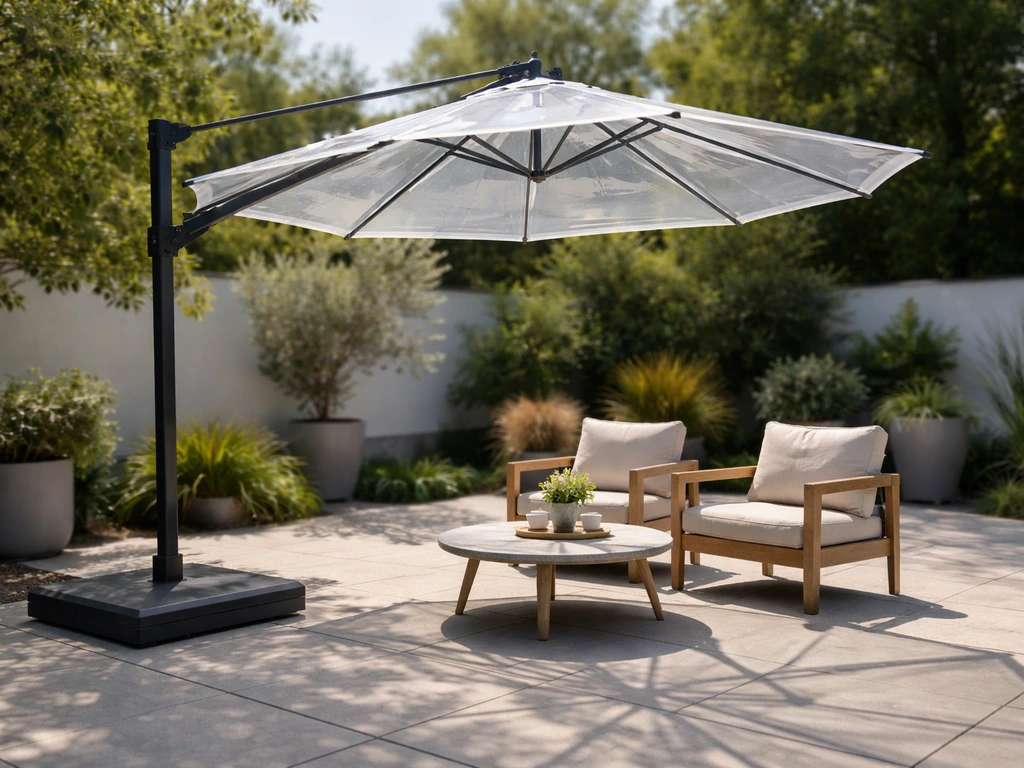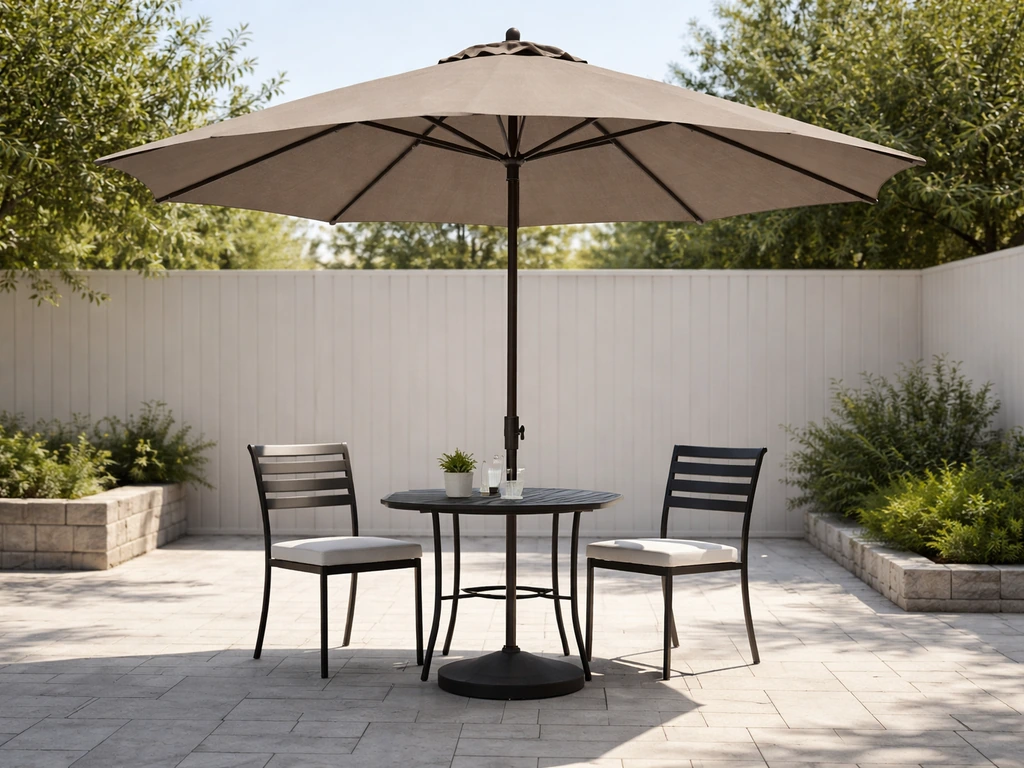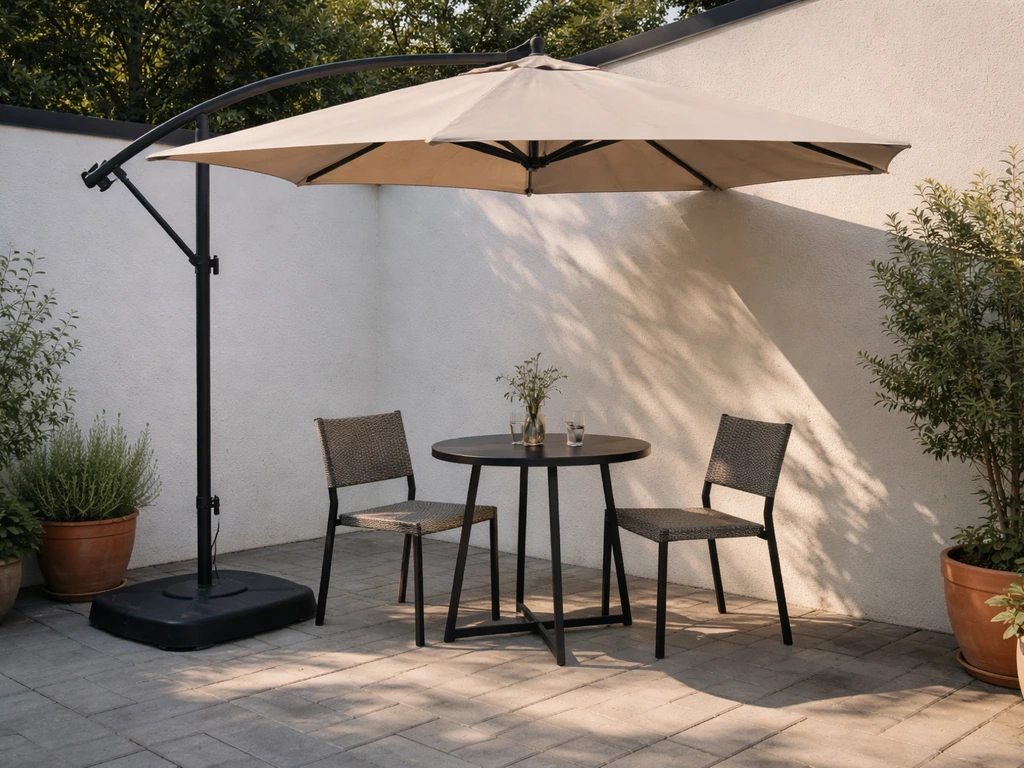
Around 2017, the patio umbrella market had settled into a few clear winners by category: a good 9-foot aluminum-pole market umbrella with a crank lift (think brands like California Umbrella, Treasure Garden, and Abba Patio) for most dining setups, and a heavy-base cantilever like the Sunnydaze or Abba Patio offset styles for lounging areas where you don't want a pole in the middle of things. Those same categories still hold up today. The names and model numbers have shifted, but the specs that made those picks reliable in 2017, solution-dyed acrylic fabric, sturdy aluminum or hardwood poles, and a base heavy enough to actually hold things in place, are exactly what you should still be shopping for right now.
Best Patio Umbrellas 2017: Sizes, Types, and Top Picks

Kent Lang
2 Jul 2026
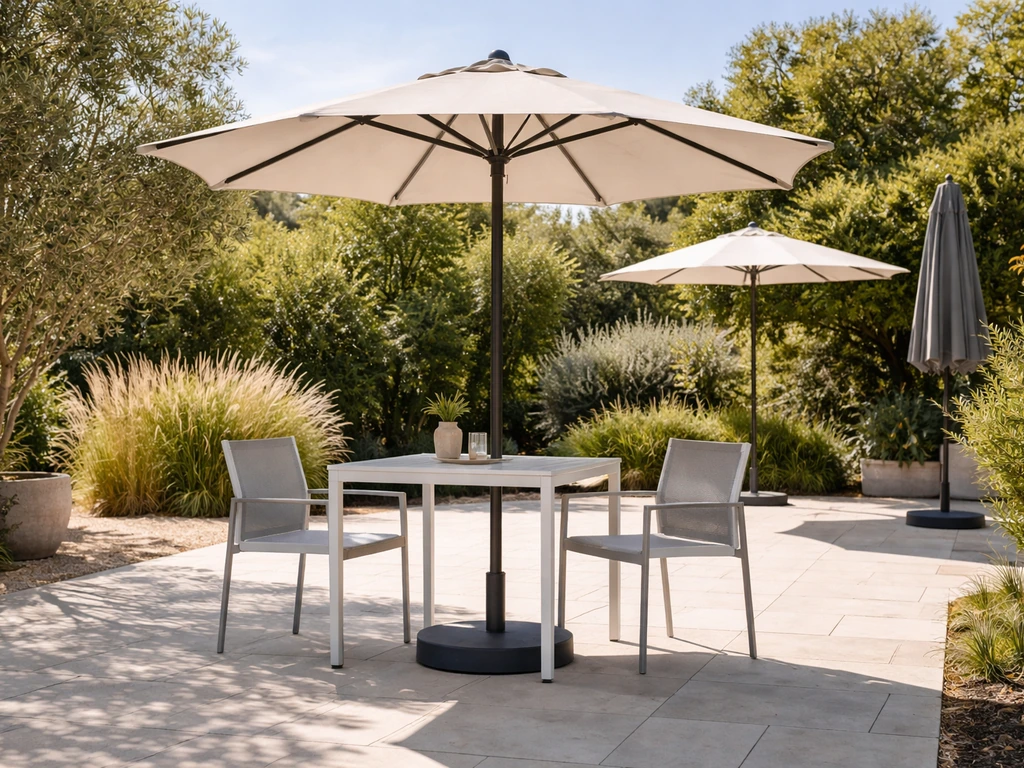
Best patio umbrellas shortlist by need
Rather than a rigid ranked list that ages badly, here are the categories that consistently produced the best-reviewed umbrellas around 2017 and their modern equivalents. Match your situation to the right slot and you'll cut your research time in half. If you want the most current picks, our guide to the best patio umbrellas 2024 covers the top options by type and size.
| Setup | Best umbrella type | Recommended size | What to look for |
|---|---|---|---|
| Small bistro table (under 30 in) | Center-pole market umbrella | 6–7 ft canopy | Crank lift, aluminum pole, UV-resistant fabric |
| Standard round dining table (42–54 in) | Center-pole market umbrella | 9 ft canopy | Solution-dyed acrylic, tilt mechanism, 35–50 lb base |
| Large dining table with 6–8 chairs (up to 44 in wide) | Center-pole market umbrella | 9–11 ft canopy | Hardwood or heavy-gauge aluminum pole, 50+ lb base |
| Lounge chairs or sectional (no center table) | Cantilever/offset umbrella | 10–13 ft canopy | 360° rotating base, 150–400 lb base weight, locking tilt |
| Tight deck or balcony near wall | Wall-mount or compact market | 7–9 ft canopy | 6 in+ clearance from walls, verify canopy opening radius first |
The 9-foot market umbrella earned its reputation as the default pick for good reason: it covers a standard 4-person table with proper overhang on all sides and fits most residential spaces without requiring a massive base. This is the kind of baseline sizing and durability you should use when shopping for the best patio umbrella 2025. If you're replacing an older umbrella today, start here unless your setup clearly calls for something else.
Market umbrellas vs. cantilever/offset: which one actually fits your space
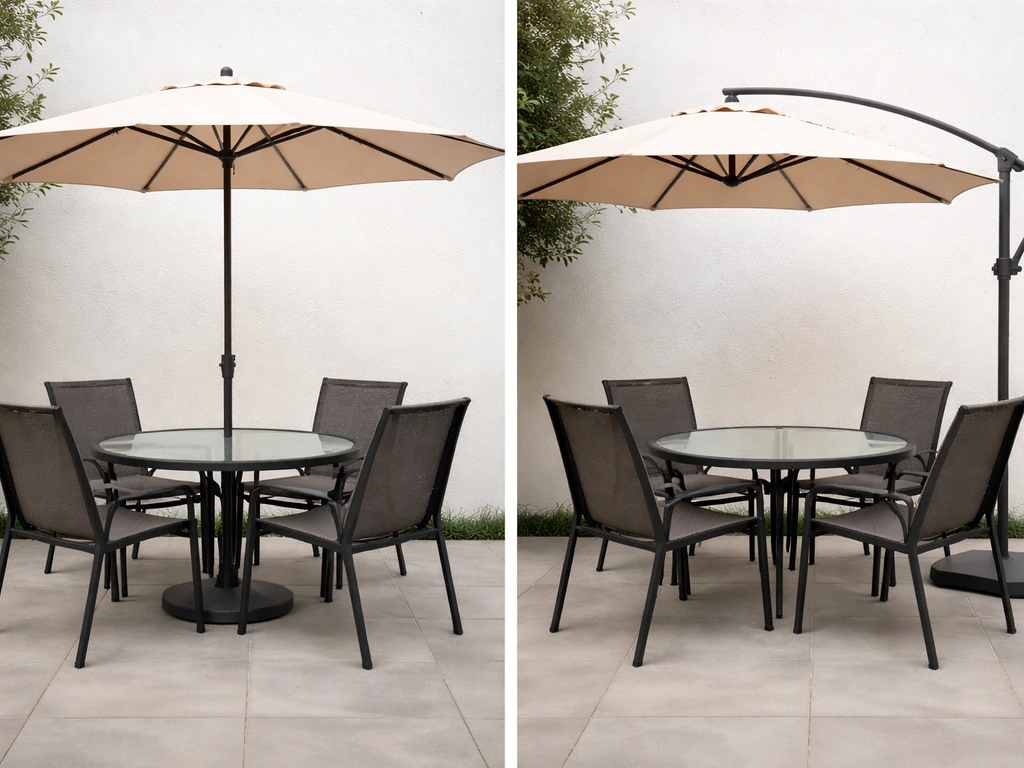
A market umbrella (also called a center-pole or standard umbrella) runs a vertical pole through the center of your table into a freestanding base. It's simpler, lighter, less expensive, and easier to set up. The trade-off is obvious: that pole has to go somewhere. If you have a table with a center hole, great. If you're trying to shade a sectional sofa or a lounge chair arrangement, a center pole planted in the middle of your seating area just gets in the way.
A cantilever or offset umbrella solves that by mounting the canopy on an arm extending out from a side pole, keeping the coverage overhead while the pole and base sit off to one side (or the rear). Cantilevers can span 8 to 13 feet wide and rotate 360 degrees on most quality models, so you can chase the sun across the day. The catch: they require significantly heavier bases because the canopy's weight and wind load sit off-center. A good cantilever setup often needs 150 to 400 pounds of base weight to stay planted safely. That's not a small commitment in terms of cost, space, and moving things around.
The practical rule: if you have a standard dining table with a center hole, go market umbrella. If you have a seating area without a center table, a pool deck, or a big sectional, go cantilever. Trying to force a market umbrella into a lounge setup, or a cantilever onto a small balcony, creates problems that no amount of shopping will fix.
Getting the size right: coverage, overhang, and clearance
The most common sizing mistake is buying an umbrella that's barely bigger than the table. You need real overhang, at least 2 feet of canopy extending beyond the table edge on every side, so the people sitting around the table are actually in the shade, not just the tabletop. A 42-inch round table sounds like it could get away with a 7-foot umbrella, but a 9-footer is the correct pairing because it puts the canopy edge well past the outer chairs.
- Tables under 30 inches wide: pair with a 6 ft canopy minimum (7 ft preferred)
- Tables 40–44 inches wide with up to 8 chairs: a 9 ft canopy is the sweet spot
- Larger rectangle or oval tables: step up to 10–11 ft or consider a dual-umbrella setup
- Lounge/sectional areas: measure the full seating footprint and choose a cantilever that covers it with 1–2 ft to spare
Before you order, use the rope or garden hose trick: lay out a circle (or rectangle) on your patio in the canopy's diameter and see how it actually fits. This catches clearance problems before they become return-shipping headaches. If your patio is near a wall or fence, leave at least 6 inches of space between the fully open canopy edge and any obstruction so the umbrella can deploy completely without binding.
One more measurement note: umbrella diameter is measured tip-to-tip across the top of the canopy, not along the fabric panels. For non-circular canopies (square, hexagonal, octagonal), this is the widest point. When comparing specs, make sure you're reading the actual canopy diameter and not the pole height or some other measurement that manufacturers occasionally use for product naming.
Fabrics, frames, and what actually holds up outdoors
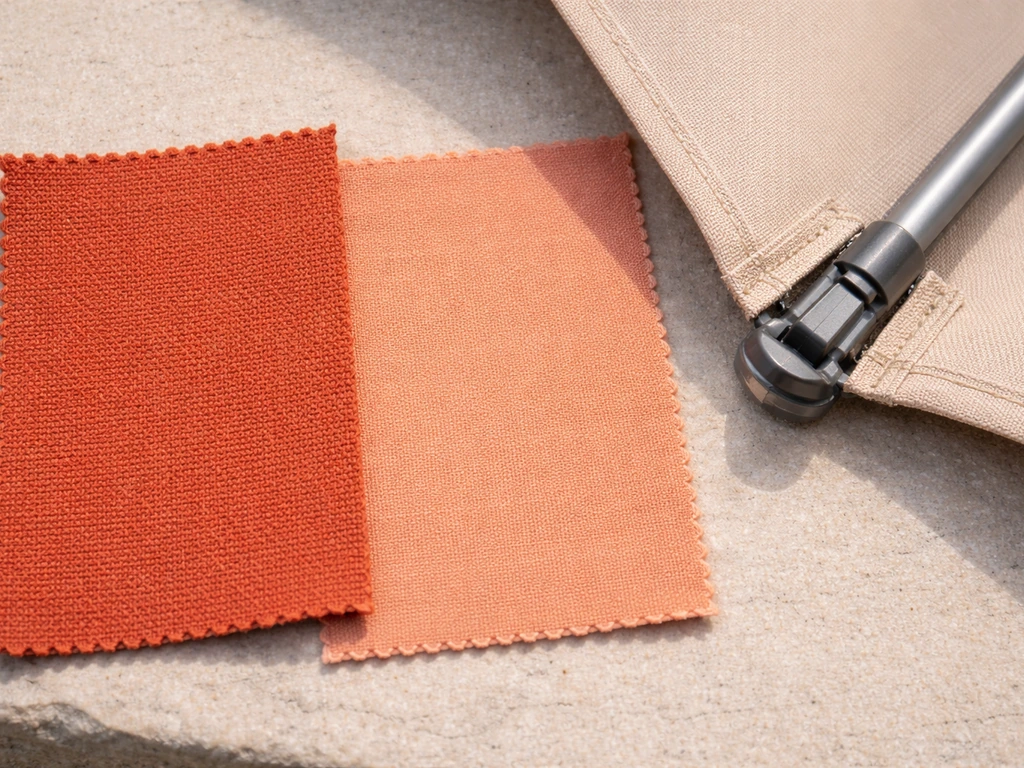
Canopy fabric
Solution-dyed acrylic is the gold standard for patio umbrella fabric, and Sunbrella is the most recognized brand name in that category. The 'solution-dyed' part matters: the color is embedded into the fiber before it's spun, not printed or coated on top, which means the fade resistance is built in rather than surface-level.
Quality solution-dyed acrylic typically achieves lightfastness grades of 7 to 8 on the ISO 105-B02 scale, which in practical terms means it should hold its color for years of direct sun exposure without going chalky or washed out. It's also naturally water-repellent and dries quickly, which matters in humid climates.
The trade-off is cost: a Sunbrella canopy adds meaningfully to the price, but if you're leaving the umbrella outside through a full season (or multiple seasons), it pays for itself in longevity.
Polyester fabric is the budget alternative. It's not terrible for lighter use or shaded patios, but it fades faster in direct UV exposure and tends to look tired after two or three seasons of hard use. If you're comparing two umbrellas at different price points, the fabric is almost always where the cheaper one cut corners first.
Frames and poles
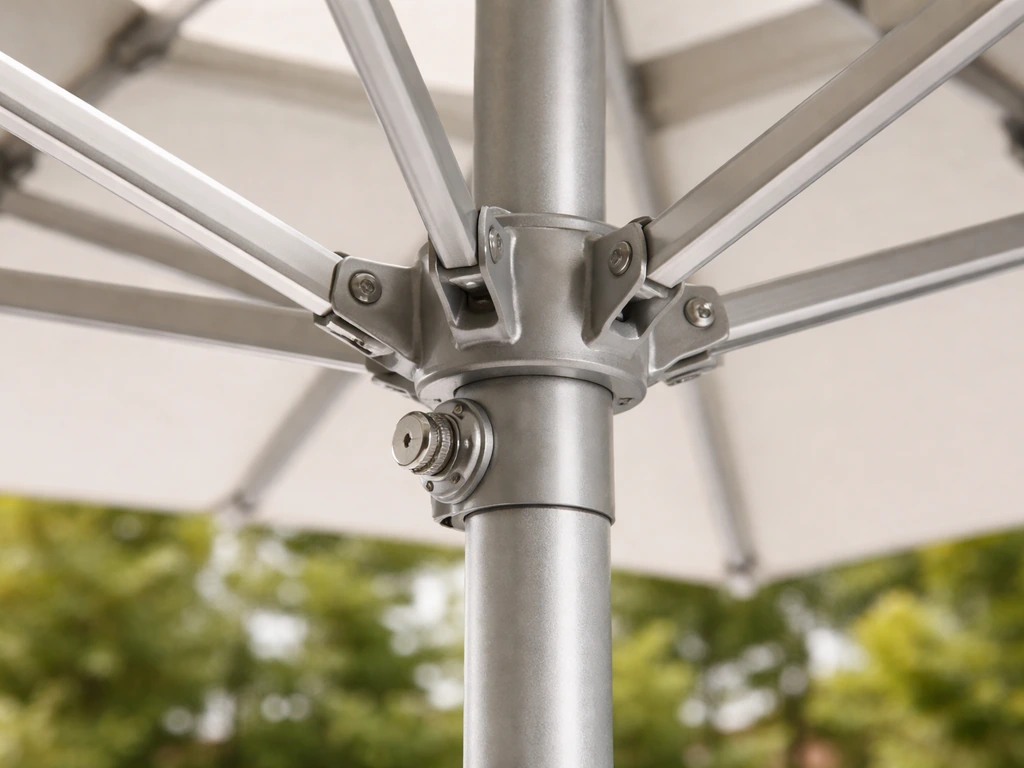
Aluminum poles are the practical choice for most buyers: they're lightweight, rust-proof, and widely available. Look for powder-coated finishes to protect against surface corrosion. Hardwood poles (teak, eucalyptus) are heavier and more expensive but have a more traditional look and hold up well if properly maintained with annual oil treatments. Fiberglass ribs (the spokes holding the canopy open) are better than aluminum ribs for wind resistance because they flex instead of bending or snapping under a gust. Many mid-range and better umbrellas use a fiberglass rib system even if the main pole is aluminum, and that's a good combination to look for.
Wind resistance and UV protection: what the specs actually mean
No patio umbrella is designed to stay open in a storm, and understanding that threshold helps you use one safely. Most manufacturers recommend closing your umbrella in sustained winds above roughly 40 kph (about 25 mph). For cantilever umbrellas specifically, even Beaufort Force 3 winds, around 20 km/h, are enough to leave unattended with the canopy open. blank" rel="noopener noreferrer">Sudden gusts are the real danger: they can tip an under-weighted setup or snap ribs on even a solidly built umbrella. The safest habit is to close and secure the umbrella any time you leave the patio for an extended period, especially if weather is unpredictable.
In the European market, outdoor umbrellas are tested to a wind resistance standard (UNE-EN 13561) with classes from 0 to 3, rated at the maximum sustained wind speed with the canopy open. US-market umbrellas don't always carry equivalent standardized ratings, so you often have to rely on manufacturer thresholds and construction cues like fiberglass ribs, vented canopy tops, and base weight to gauge real-world durability.
For UV protection, look for a UPF (Ultraviolet Protection Factor) rating on the canopy fabric. A UPF 50+ rating blocks roughly 98% of UV radiation. Solution-dyed acrylic consistently delivers in this range and maintains its UPF performance as it ages, unlike some coated fabrics that lose protective qualities as the coating wears. If the product listing doesn't mention a UPF rating at all, that's usually a signal the fabric is cheaper polyester.
Vented canopy designs (a double-layer top with a gap that lets wind pass through) noticeably improve stability in breezy conditions. The vent doesn't eliminate wind risk, but it reduces the 'sail effect' that makes solid canopies want to flip or topple. For anything over 9 feet or in an exposed yard, a vented canopy is worth prioritizing.
Bases, anchoring, and setup reality
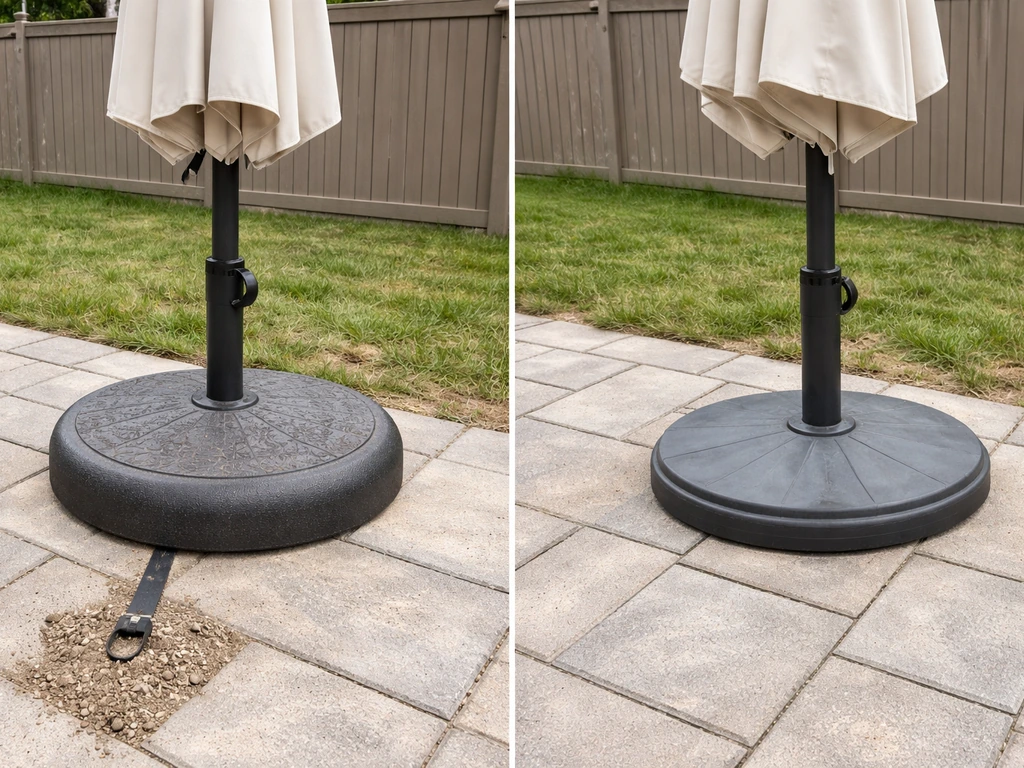
The base is the part most people under-budget and undersize, and it's also where a lot of umbrella setups fail. A vague 'compatible base' sold with a $60 umbrella might weigh 15 pounds. That's not enough for a 9-foot canopy on anything but the calmest days. As a practical guideline, a 9-foot market umbrella needs at least 35 to 50 pounds of base weight, and a larger 11-footer should have 50 or more.
For cantilevers, those numbers scale dramatically because the canopy is offset: many quality cantilever setups require 150 to 400 pounds of base weight to stay stable. Some cantilever bases are designed to be filled with sand or water to reach those weights, which makes them easier to ship and move.
Base material matters too. Resin bases filled with sand tend to be affordable and effective. Cast iron bases are heavy out of the box but can rust if the finish chips. Concrete-filled bases are durable but essentially permanent. If you're placing your umbrella through a table's center hole, the table itself provides some lateral stability, but you still need a base underneath heavy enough to prevent tipping when the canopy acts as a wind sail.
For open-space setups where no table is involved, or for large cantilevers, consider whether you can ground-anchor the base. Some heavier bases have anchor points for ground stakes, which adds significant wind resistance on soft ground or grass. On a hard patio surface, your only option is mass, so don't compromise on base weight in those situations.
Setup mechanics worth comparing: crank-lift systems (a handle you turn to raise and lower the canopy) are easier to operate than old-school pulley systems, especially for people who open and close the umbrella daily. Tilt mechanisms (push-button, collar-tilt, or auto-tilt) let you angle the canopy to block lower-angle sun without moving the whole base. These aren't luxury features; they make daily use dramatically more practical.
How to compare models and make a fast decision
Whether you're looking at 2017-era models still available on closeout, or their direct successors from current brands, the decision framework is the same. If you want to sanity-check these buying points against real owner experiences, a quick look at best patio umbrella reddit threads can help you spot common complaints and deal-breakers. Run through these checkpoints in order and you'll have a clear answer fast.
- Confirm your umbrella type first: market (center pole) for tables, cantilever for open seating areas. Don't let a great deal on the wrong type talk you into the wrong choice.
- Lock in the correct canopy size using the overhang rule: table width plus at least 2 feet on every side. For a 42-inch table, that's a minimum 9-footer.
- Check the fabric spec: solution-dyed acrylic (Sunbrella or equivalent) for serious outdoor use and multi-season longevity. Polyester is acceptable for covered patios or budget seasonal use.
- Look at the frame: aluminum or hardwood pole, fiberglass ribs if possible, powder-coated or otherwise protected finish.
- Verify the base weight: 35–50 lb minimum for a 9 ft market umbrella, scaling up significantly for larger canopies and cantilevers. If the listing doesn't specify base weight, ask or look elsewhere.
- Check the lift mechanism: crank lift is easier than pulley. Confirm a tilt mechanism is included if you want afternoon shade coverage.
- Run the canopy footprint test with a rope or hose before you order to confirm clearance on your actual patio.
One honest trade-off to keep in mind: durability costs more upfront. A $150 umbrella with polyester fabric and an aluminum rib set might last two or three seasons. A $350–$500 umbrella with solution-dyed acrylic and fiberglass ribs is realistically a 7–10 year investment if you close it during wind and store it over winter. If you want the best patio umbrella 2022 options, focus on the same core specs that hold up over time: solution-dyed acrylic fabric, solid pole construction, and a truly heavy base. Spread over its lifespan, the more expensive umbrella usually wins on cost per year, not just quality.
If you're cross-shopping year-tagged guides, the fundamentals here line up with what's covered in current buying resources for 2022, 2024, and 2025 umbrellas. The technology hasn't changed dramatically; the main evolution has been wider availability of solution-dyed acrylic at lower price points and better cantilever base designs. The core specs to prioritize have stayed consistent across all those years, so this framework applies regardless of which model year you're shopping. If you want the most straightforward place to start, look at the best patio umbrella on amazon and then verify it matches the fabric, pole, and base specs that matter.
Keeping your umbrella in good shape season after season
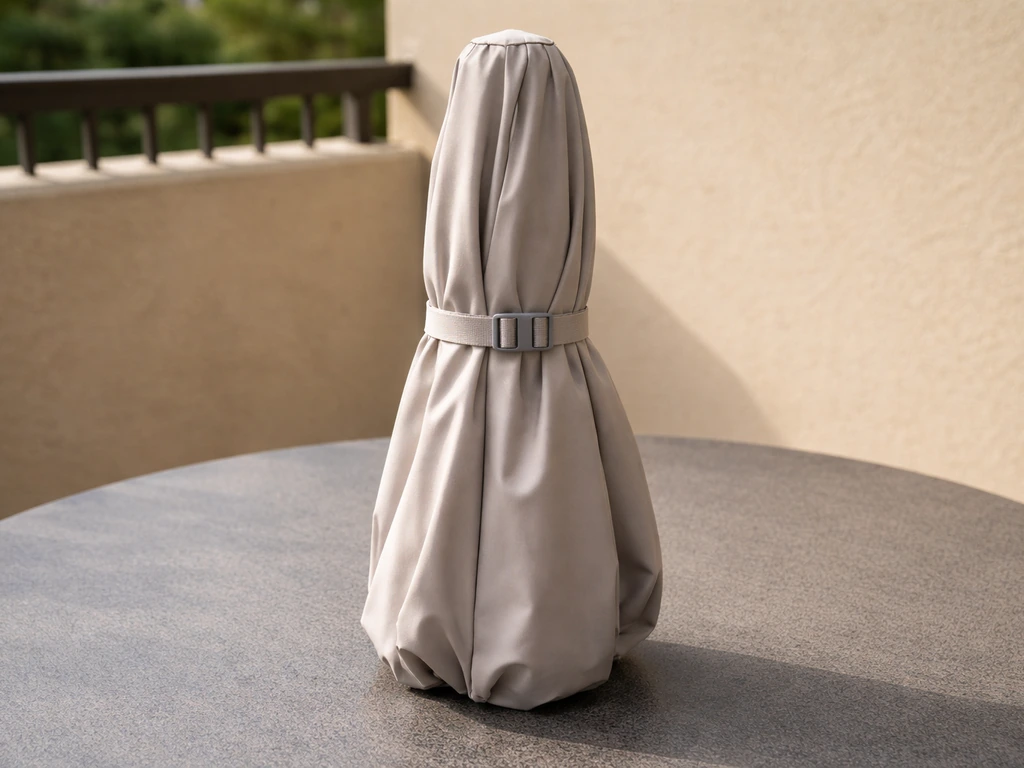
Even a quality umbrella will degrade faster than it should without basic care. Close it whenever you leave the patio for an extended period, especially if wind or rain is possible. Wipe down the canopy regularly to prevent mildew from setting in at the seam lines, solution-dyed acrylic resists mildew but doesn't make it impossible.
At the end of the season, clean the canopy with mild soap and water, let it dry fully before folding, and store it in a protective cover or indoors if possible. For hardwood poles, a light application of teak oil or similar wood treatment once a year maintains the finish and prevents cracking. These are small steps that add multiple seasons to what you paid for.
FAQ
Can I use weights like sandbags instead of the umbrella base that comes with the set?
Yes, as long as you match the needed total mass and keep it centered and stable. For a 9-foot market umbrella, aim for roughly 35 to 50 pounds total, with the weight distributed so the pole stays plumb. Avoid using loosely stacked bags that can shift when the umbrella is tilted.
How do I know if a cantilever umbrella’s base size will fit my patio layout and walkway space?
Check the full swing path of the canopy, not just the base footprint. Measure from the farthest point of the open canopy arc to fixed obstacles, then confirm the base is not blocking doors or walkways as you rotate it 360 degrees. If you share space with furniture, test rotation by extending the rope-and-circle method described in the article.
What’s the safest way to close a cantilever umbrella if it’s windy when I get back outside?
Close it as soon as you can with the canopy oriented to reduce sail effect, typically turning it so the fabric presents less surface to the wind. Do not try to “muscle it” open or closed in gusts, and always keep hands clear of pinching points at the arm and mast. If you cannot close it safely, leave it alone and secure the area.
Do I need a cover if I use solution-dyed acrylic fabric?
A cover helps, but it should not trap moisture against the canopy. Use a breathable outdoor cover or one that allows airflow, and make sure the umbrella is fully dry before covering. This reduces mildew risk at seam lines and around the ribs where water can stay longer.
Is UPF rating enough for sun protection, or should I still consider the umbrella’s coverage angle?
UPF helps with UV intensity, but coverage angle determines how much of your seating area is actually shaded. If you plan to sit at morning or late-afternoon angles, prioritize tilt capability or a larger canopy with adequate overhang, since a correctly tilted canopy blocks more UV than an upright canopy that misses people.
How should I measure my table and confirm the umbrella diameter so I don’t end up with the wrong size?
Measure the table top plus the space taken up by outer chair backs or armrests, then add the minimum overhang requirement, at least about 2 feet past each table edge for the seating to be shaded. Also confirm you are looking at canopy diameter tip-to-tip across the top, not pole height or marketing size terms.
What happens if my outdoor area gets a lot of rain, can solution-dyed acrylic be left outside year-round?
It can tolerate rain, but leaving it out through repeated seasonal wet and freeze-thaw cycles increases wear on joints, ribs, and base finishes even if the fabric resists fading and dries quickly. The best practice is to close during weather and store or cover in winter, especially where temperatures drop below freezing.
Should I prioritize fiberglass ribs over a specific pole material if I’m on a budget?
Usually yes. Fiberglass ribs improve wind survivability because they flex instead of snapping, and they often matter more than whether the main pole is aluminum or hardwood. If budget is tight, choose a sturdy rib system first, then decide between aluminum (low maintenance) and hardwood (more traditional look, more upkeep).
Can I mount a market umbrella through a center hole and still use the right base weight?
You still should. The table center hole adds some alignment, but it does not replace the base’s job of preventing tipping when the canopy acts like a sail. Use the same base weight guidelines from the article, and ensure the umbrella pole sits securely and vertically without wobble.
How do I clean a mildew spot on an acrylic canopy without damaging the fabric?
Use mild soap and cool to lukewarm water, gently scrubbing only affected areas, then rinse and dry completely before storing. Avoid harsh bleach or abrasive cleaners that can degrade coatings and stitching. If mildew returns quickly, it usually means the umbrella is staying damp between uses or storage.
What’s the biggest “gotcha” when comparing umbrellas that look similar in photos?
Base compatibility and actual base weight. Listings can show an umbrella but hide that the included base is too light for the canopy size, or they may refer to a separate base that costs extra. Always check the base weight in pounds (or the ability to fill it to a stated weight) before buying.