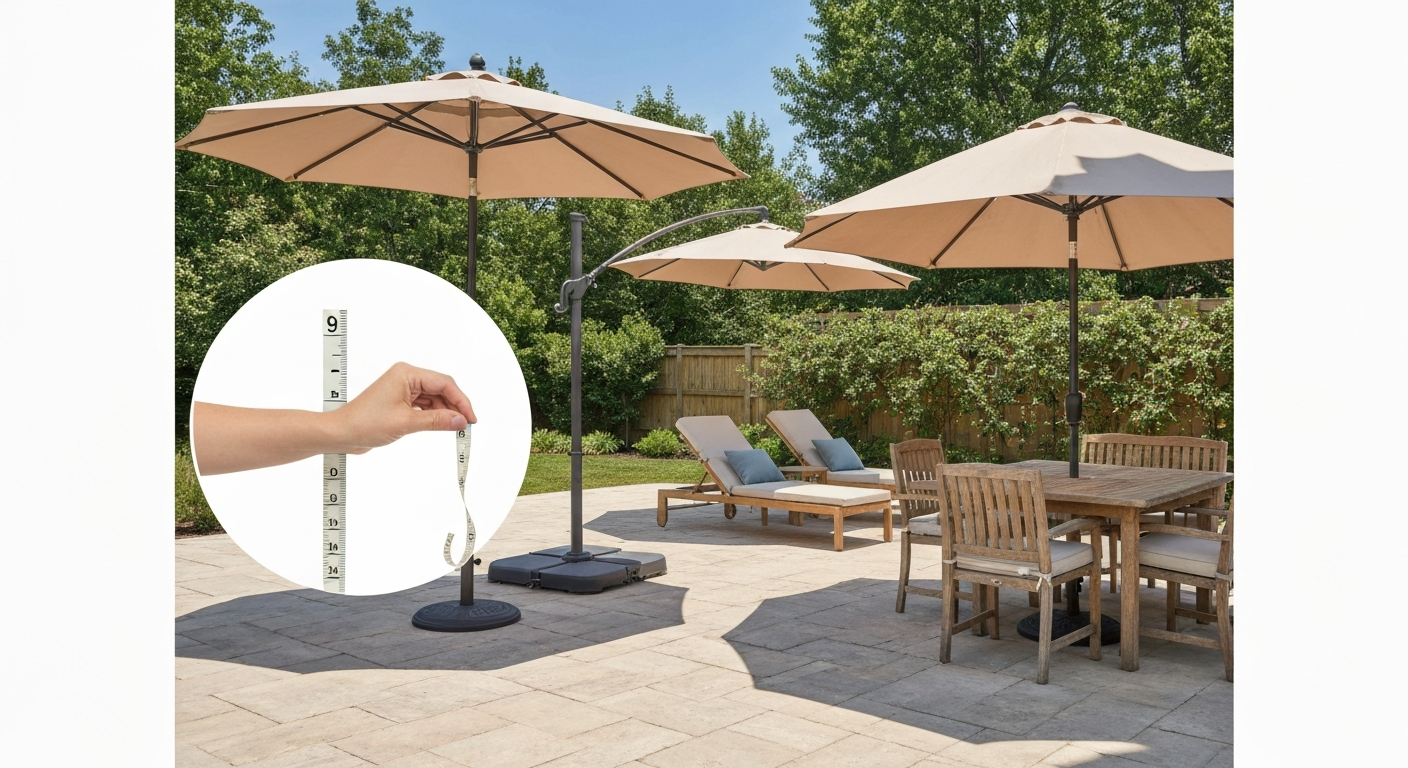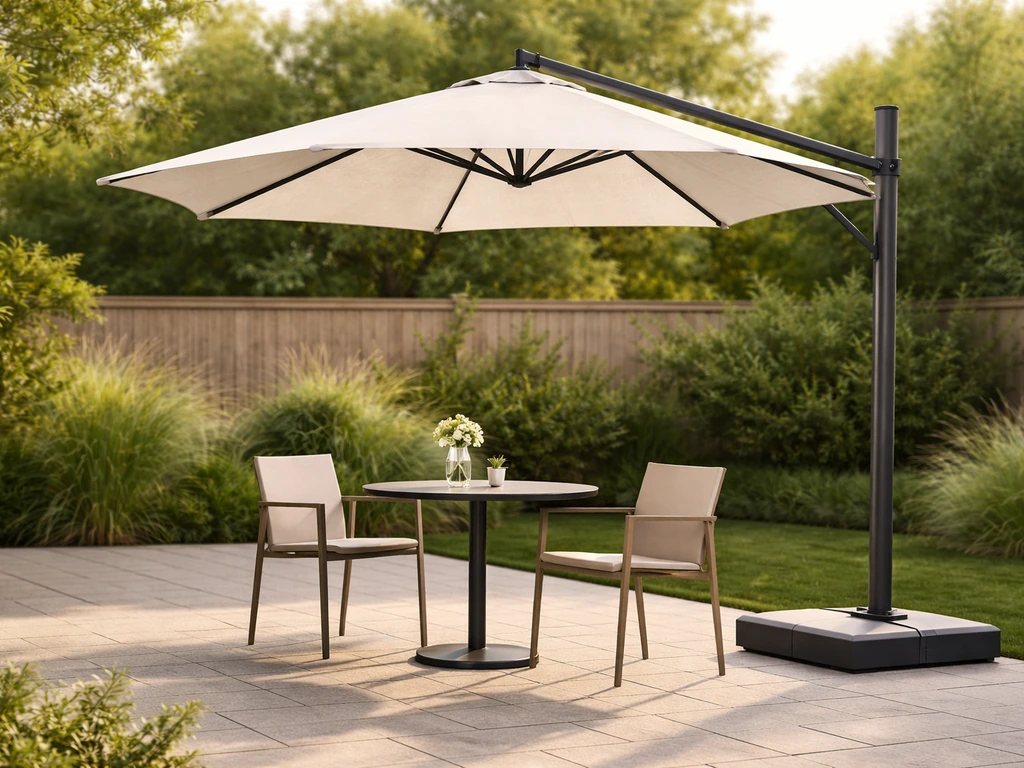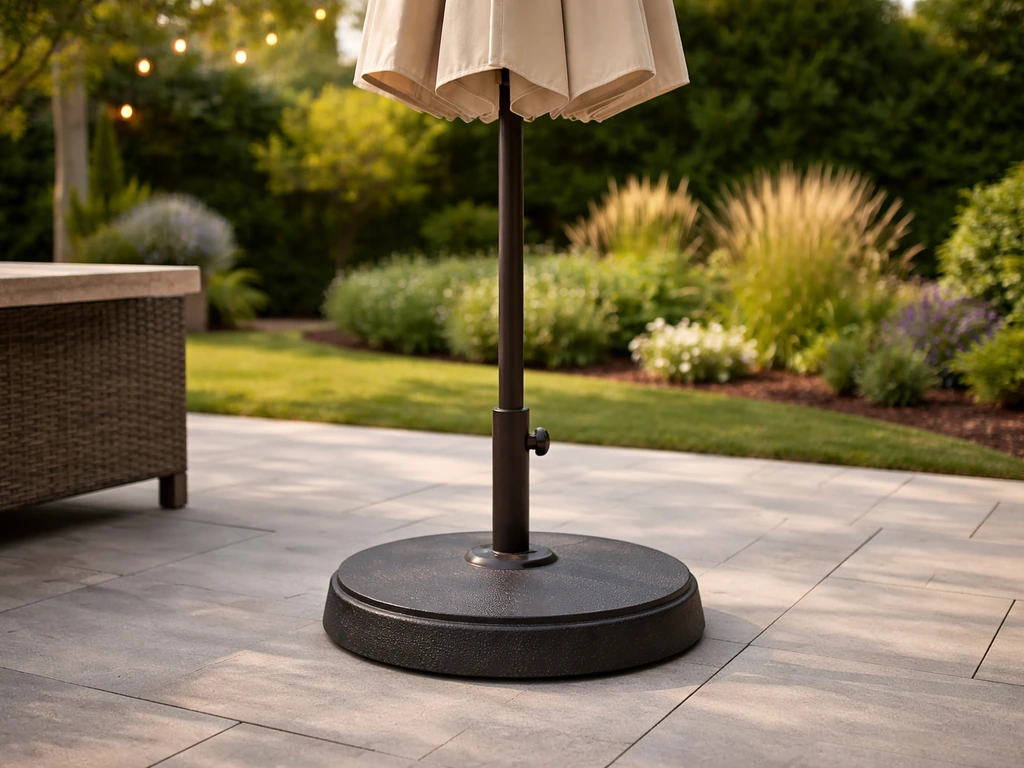
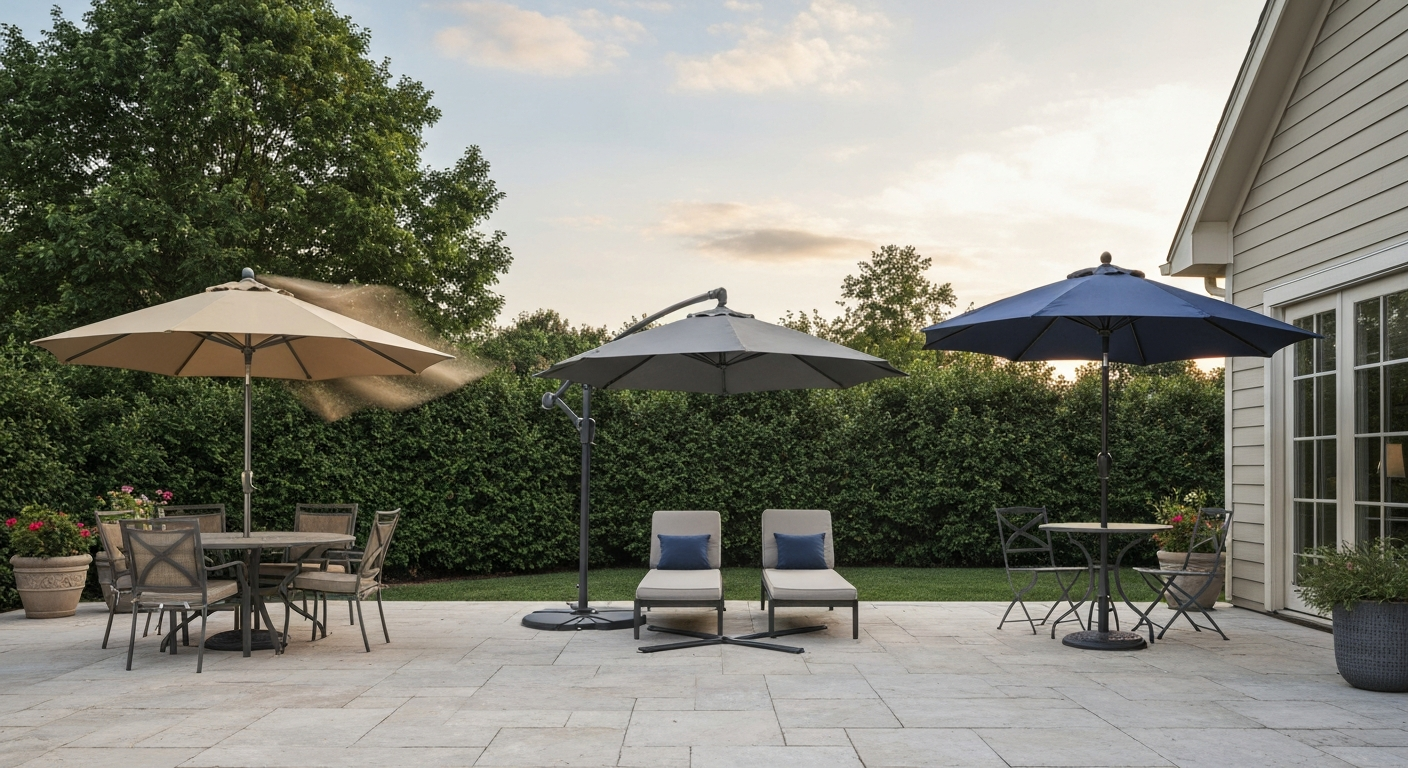
The best patio umbrella picks from 2018 still hold up for shoppers hunting clearance deals, buying used, or trying to source replacement parts for a model they already own. For a market (center-pole) umbrella, the California Umbrella CRCII 9-ft aluminum with Sunbrella canopy was the standout midrange choice that year. For cantilever coverage, the Treasure Garden 11-ft offset with a vented canopy led the pack. If you want a table-integrated or tilt model, the Abba Patio 9-ft auto-tilt was the best value under $100. All three are still findable on clearance or used marketplaces, and parts availability is reasonable for each.
Best Patio Umbrellas 2018: Top Picks by Style & Price Tiers
Kent Lang
18 Jul 2026
Who this guide is for
This guide is for homeowners who are looking at 2018 patio umbrella models on clearance racks, discount sites, or the used market, and who want to know which ones were actually worth buying then and still worth considering now. It is also useful if you own a 2018 umbrella and need to evaluate whether to repair it, find replacement parts, or replace it entirely. If you are shopping for the latest models, guides covering 2020, 2021, and 2023 picks will be more relevant to current retail stock. See our best patio umbrella 2021 guide for the top models and features from that year. But 2018 models show up constantly on Wayfair clearance, Facebook Marketplace, and estate sales, and this guide will help you evaluate exactly what you are looking at.
The article covers every major 2018 umbrella style (center-pole market, cantilever/offset, tilting and table-integrated), organizes picks by price tier within each category, explains the evaluation criteria used to rank them, and walks through buying and installation basics including base weight, size selection, and table compatibility. There is also a section on how 2018 models compare to what came out in subsequent years, so you can make an informed call on whether a 2018 unit is worth the money or whether paying a little more for a newer version makes sense.
Quick top picks at a glance
Here are the vetted 2018 picks by category. Prices reflect 2018 MSRP ranges based on retailer listings and deal-archive records from that period.
| Category | Model | Size | 2018 MSRP (approx.) | Best for |
|---|---|---|---|---|
| Market/Center-Pole – Budget | Abba Patio 9-ft Steel Market | 9 ft | $45–$65 | Basic shade, tight budget |
| Market/Center-Pole – Midrange | California Umbrella CRCII 9-ft Aluminum/Sunbrella | 9 ft | $180–$230 | Durability + UV protection |
| Market/Center-Pole – Premium | Treasure Garden 11-ft AG19 Aluminum | 11 ft | $320–$400 | Large coverage, long warranty |
| Cantilever – Budget | Sunnydaze 10-ft Offset Steel | 10 ft | $80–$110 | Side-mounted shade on a budget |
| Cantilever – Midrange | Abba Patio 11-ft Cross-Base Offset | 11 ft | $140–$180 | Cross base, 360° rotation |
| Cantilever – Premium | Treasure Garden 11-ft Cantilever/Vented | 11 ft | $400–$550 | Wind venting, parts availability |
| Tilt/Table-Integrated – Budget | Abba Patio 9-ft Auto-Tilt | 9 ft | $60–$90 | Crank + push-button tilt value |
| Tilt/Table-Integrated – Midrange | California Umbrella 9-ft Auto-Tilt Aluminum | 9 ft | $160–$210 | Solid tilt mechanism, Sunbrella option |
| Tilt/Table-Integrated – Premium | Telescope Casual 9-ft Fiberglass Auto-Tilt | 9 ft | $280–$380 | Wind flex, table-integrated fit |
Top center-pole market umbrellas from 2018, by price
Market umbrellas, also called center-pole umbrellas, run a single pole through the center of a table or stand alone in a weighted base. They are the most common type and were available in the widest range of prices in 2018. The canopy sits directly above the pole, so these work best when the table has a center hole, typically 1.5 to 2 inches in diameter to accept a standard 1.5-inch pole.
Budget: Abba Patio 9-ft Steel Market Umbrella (~$45–$65)
This was consistently the top-selling entry-level market umbrella at Home Depot and Walmart in 2018, with a verified-purchase review trail to confirm. The steel pole is 1.5 inches in diameter, the canopy is polyester (not solution-dyed acrylic), and the mechanism is a simple pulley with a tied rope. The canopy will fade noticeably within one to two seasons in direct sun because polyester is surface-dyed rather than solution-dyed through the fiber. That said, for a covered porch or a shaded yard where you just need rain and partial-sun protection, it does the job. Replacement ribs are available generically for under $10. Do not expect more than two to three seasons from the canopy in a high-UV environment.
Midrange: California Umbrella CRCII 9-ft Aluminum (~$180–$230)
This was the most consistently recommended midrange market umbrella of 2018, and it holds up well as a used buy today. The 1.5-inch aluminum pole is rust-proof, the frame uses eight fiberglass ribs (more flexible and wind-tolerant than steel ribs), and the canopy is available in Sunbrella solution-dyed acrylic. Sunbrella carries a 5-year limited fabric warranty for furniture-grade applications and a 10-year warranty on some shade-grade SKUs, and that warranty transfers on a prorated basis if you buy used. The crank lift is smooth and has been reliable in retailer reviews. California Umbrella's product pages confirm a UPF 50+ rating on Sunbrella-equipped models. The CRCII fits a standard 1.5-inch table hole. Minimum recommended base weight is 50 lbs for this 9-ft model, rising to 75 lbs in any area with regular wind above 15 mph.
Premium: Treasure Garden 11-ft AG19 Aluminum (~$320–$400)
Treasure Garden's 2018 catalog included the AG19 series as their flagship residential aluminum market umbrella. At 11 feet, it covers a 60-inch round or 60 x 84-inch rectangular table with reasonable shade margin. The frame uses a 1.5-inch aluminum pole and eight fiberglass ribs, with a bronze or black powder-coat finish. The crank mechanism is heavy-duty with a large handle. Treasure Garden's customer support page lists minimum base weight at 75 lbs for an 11-ft model and 100 lbs in windy regions. Canopy fabrics are available in Sunbrella and Treasure Garden's own solution-dyed acrylic (Grade A through Grade D depending on pattern complexity). The AG19 line was supported for parts through at least 2023 based on LuxeDecor's Treasure Garden parts listings, which include pole stems, rib sets, and crank components. The BBB complaint profile for Treasure Garden shows that warranty claims on defective poles or crank mechanisms are generally honored, though response times vary. This is the pick if you are buying used and want confidence that repair parts still exist.
Top cantilever and offset umbrellas from 2018, by price
Cantilever (offset) umbrellas mount the pole off to one side, so the canopy floats over your seating area with no pole in the middle. This makes them popular for loungers, sectionals, and oddly shaped seating arrangements. The trade-off is that they need significantly heavier bases, usually 100 to 150 lbs, because the canopy's weight and wind load are now acting as a lever arm rather than a straight downward load. In 2018, the category split clearly between cheap steel-frame models prone to tipping and better-built aluminum or fiberglass models with cross-base designs.
Budget: Sunnydaze 10-ft Offset Steel (~$80–$110)
The Sunnydaze offset was a widely purchased entry-level cantilever in 2018, appearing frequently in Home Depot and Amazon review data from that year. The steel pole and frame are heavy, which actually helps stability somewhat, but steel rusts if the powder coat is scratched. The single-leg base needs to be weighted to at least 100 lbs. The polyester canopy has a basic 180g/sqm weave. Do not expect long-term colorfastness. The main failure mode in retailer reviews was the canopy fading within one season in high-sun environments and the tilt mechanism loosening over time. For a porch in the Pacific Northwest or a shaded backyard in the Midwest, it works fine for two to three seasons. For Arizona or Florida conditions, look at the midrange or premium options.
Midrange: Abba Patio 11-ft Cross-Base Offset (~$140–$180)
The Abba Patio 11-ft cross-base offset was a strong value pick in 2018. The cross base (two intersecting base bars) is inherently more stable than a single-leg base because it distributes load in four directions. The canopy is a 180g/sqm polyester with UV coating, which is not Sunbrella but is better than the cheapest models. The 360-degree rotation feature lets you reposition shade as the sun moves. Abba Patio's retailer listings from 2018 confirmed an eight-rib canopy and a 1.5-inch aluminum pole on a steel cross base. Load the cross base with a minimum of 100 lbs of plate weights or sandbags. The main limitation is that replacement parts for Abba Patio models are not factory-sourced in the same way Treasure Garden or Telescope Casual parts are, so if the crank or tilt mechanism fails, you are looking at generic replacement parts or a new umbrella.
Premium: Treasure Garden 11-ft Cantilever Vented (~$400–$550)
This was the most repair-friendly and wind-capable premium cantilever of 2018. The vented canopy design adds an inner vent layer that lets wind pass through rather than lifting the entire canopy, which is the primary cause of cantilever tip-overs in gusty conditions. Treasure Garden's 2018 catalog confirmed the vented double-top construction on this model series. The aluminum arm and Sunbrella canopy mean the fabric warranty applies, and factory replacement parts are documented by Treasure Garden's dealer network. Minimum base weight per Treasure Garden's support page is 100 lbs on a standard cross base, but 130 to 150 lbs is strongly recommended for any region with afternoon gusts. If you are in a consistently windy zone, this is the one to buy. The 2018 Stardust shade design announced by Treasure Garden via PR.com was introduced on this series, adding a decorative valance option for buyers who wanted both function and visual detail.
Top tilting and table-integrated umbrellas from 2018, by price
Tilting umbrellas are center-pole market umbrellas with a joint mechanism that lets the canopy lean toward the sun's angle rather than sitting dead vertical. In 2018 there were three dominant tilt mechanisms: crank-and-tilt (you crank up, then a secondary lever tilts the canopy), push-button auto-tilt (tilts as you continue cranking past the fully open position), and collar-tilt (a collar on the pole that loosens and re-tightens). Push-button auto-tilt was the most common in the midrange and a strong convenience feature. Table-integrated simply means the umbrella fits through a standard 1.5-inch or 2-inch table hole, which all of these do.
Budget: Abba Patio 9-ft Auto-Tilt (~$60–$90)
This was the best value tilt umbrella of 2018 based on verified review volume at Home Depot. The push-button auto-tilt mechanism works by continuing to crank the handle past full open, which engages a cam inside the tilt joint. It is genuinely useful for blocking late-afternoon sun. The steel pole and polyester canopy are standard for this price point, and the usual caveats about fading apply. The tilt joint is the most common failure point in reviewed units: after two to three seasons, the cam loosens and the canopy will not hold its angle. Replacement crank assemblies are available generically for about $15 to $20. For a patio that gets a few hours of afternoon shade duty per season, this is a reasonable buy at clearance prices.
Midrange: California Umbrella 9-ft Auto-Tilt Aluminum (~$160–$210)
California Umbrella's auto-tilt aluminum model from 2018 used the same CRCII-grade frame as the standard market umbrella above, adding the push-button tilt joint. The Sunbrella canopy option is available here too, which is the main reason to step up from the budget model. The tilt mechanism on the California Umbrella version is built to tighter tolerances and has a better track record in retailer reviews for holding its angle after multiple seasons. At this price point you are paying for the combination of a Sunbrella canopy (fade and water resistance), an aluminum pole (no rust), and a tilt mechanism that holds reliably. This fits standard 1.5-inch table holes and needs a 50 lb base minimum.
Premium: Telescope Casual 9-ft Fiberglass Auto-Tilt (~$280–$380)
Telescope Casual's 9-ft fiberglass auto-tilt was the wind-rated premium tilt pick of 2018. The main differentiator is the fiberglass pole: fiberglass flexes under wind load and springs back rather than bending or breaking as aluminum can. Telescope Casual's frame ribs are also fiberglass. The canopy uses solution-dyed acrylic fabric. Telescope Casual's website provides a dedicated parts contact ([email protected]) for sourcing factory replacement components, which is a real advantage for a 2018 unit you are buying used. The tilt mechanism on Telescope Casual umbrellas consistently ranked among the smoothest and most durable in editorial test reports. The minimum base recommendation for this model is 50 lbs on a calm site, 75 lbs anywhere with regular afternoon wind.
How models were evaluated: the criteria behind these picks
These picks are based on a combination of manufacturer specification data, verified-purchase retailer reviews from 2018 and 2019, editorial test reporting (Consumer Reports' patio umbrella buying guide criteria formed the benchmark for what to test), and parts/warranty documentation. Here is what each criterion means in practice.
Canopy fabric and UV performance
The most important split in canopy fabrics is solution-dyed acrylic (like Sunbrella) versus surface-dyed polyester. Solution-dyed acrylic is colored through the fiber during manufacturing, so UV exposure cannot bleach out the pigment the way it strips surface dye from polyester. Sunbrella publishes a 5-year limited fabric warranty (10-year for some shade/marine grades) and backs it with prorated replacement. The standard test method for colorfastness to light is AATCC TM16, and accelerated UV weathering is run per ASTM G154 using fluorescent UV exposure apparatus. ASTM G154 – Standard Practice for Operating Fluorescent Light Apparatus for UV Exposure is the established standard for accelerated UV weathering tests used by labs that report canopy UV-resistance and colorfastness. When a canopy claims UPF 50+, it means that in standardized testing, the fabric transmits less than 2 percent of UV radiation. California Umbrella and Treasure Garden confirm UPF 50+ on Sunbrella-equipped models. Budget polyester canopies are rarely independently rated and should be treated as offering basic shade rather than meaningful UV blocking.
Frame material: aluminum, steel, fiberglass, and wood
Aluminum is the best all-round frame material for residential patio umbrellas: light, rust-proof, and widely available for pole replacement. Steel is heavier and cheaper but rusts if the powder coat is damaged. Fiberglass is the best for wind resistance because it flexes rather than bends permanently, and it does not corrode. Wood (typically teak or ash) is the premium aesthetic choice for classic looks but requires regular oiling and is more susceptible to cracking in harsh UV environments. For hot, dry climates like Arizona, wood is a poor choice without diligent maintenance. For humid coastal zones, aluminum or fiberglass beats steel every time.
Lift and tilt mechanisms
In 2018, crank-lift was the dominant mechanism in midrange and premium umbrellas, replacing pulley ropes that require tying off and are harder to operate one-handed. Push-button auto-tilt was the most user-friendly tilt option. Collar-tilt (loosening and tightening a collar) is functional but slower and harder to fine-tune. Pulley/rope systems are still common at the budget end and are easy to repair (replace the rope) but inconvenient to use. For older adults or anyone who opens and closes the umbrella frequently throughout the day, a crank with auto-tilt is meaningfully more convenient.
Wind resistance and venting
A vented canopy has an opening at the top (or a double-layer vent) that lets wind escape rather than building pressure under the canopy. For cantilever umbrellas especially, venting dramatically reduces the risk of tip-over in gusts. For market umbrellas, the vent helps but the center pole anchors the canopy more directly. The Consumer Reports evaluation framework scores patio umbrellas on stability in simulated wind conditions, and vented canopies consistently outperform unvented at the same weight. If you are in a coastal or open-yard location with regular afternoon gusts above 15 mph, a vented canopy is not optional: it is a safety feature.
Warranty and parts availability
Warranty matters differently for new versus used purchases. For a new clearance unit, the fabric warranty (if Sunbrella-equipped) is still valid from the purchase date. For a used unit, the Sunbrella fabric warranty is prorated from original purchase, and you can file a claim directly with Sunbrella if the original purchaser's date can be established. Frame warranties from manufacturers like Treasure Garden and Telescope Casual cover defects in materials and workmanship, typically for one to three years. For used 2018 units, the frame warranty has likely expired, so what matters instead is parts availability: Treasure Garden lists replacement pole stems, rib sets, and crank mechanisms through dealers like LuxeDecor. Consumer‑advocacy listings such as BBB Business Profile – Treasure Garden also document recurring warranty and after‑sales complaints that can signal reliability patterns for older models. Telescope Casual has a dedicated parts email. Abba Patio and Sunnydaze do not have the same factory parts infrastructure, so generic replacements are the fallback.
How 2018 umbrellas differ from 2020 to 2023 models
If you are comparing a 2018 model to what came out in later years, here are the meaningful differences rather than cosmetic refreshes.
- Solar LED lighting: Many 2020 and later umbrellas integrated solar-charged LED lights into the ribs or pole. This feature was essentially absent in 2018 at any mainstream price point. If patio lighting matters to you, a 2018 model will need a separate clip-on solution.
- Wind-rated frames: Post-2020 premium models increasingly advertise tested wind ratings (typically 35–50 mph) with documentation. In 2018, wind resistance was described qualitatively, not with standardized mph ratings. Newer models in the premium tier are easier to compare on this spec.
- Base compatibility improvements: Several 2020-and-later cantilever umbrellas introduced integrated base-weight systems (hollow bases that fill with water or sand) rather than relying on separate plate weights. 2018 offset umbrellas almost universally required separate base weights, which many buyers underestimated.
- Fabric technology: Sunbrella's core solution-dyed acrylic technology did not fundamentally change, but several brands introduced recycled-content canopy fabrics from 2021 onward that were not available in 2018.
- Smart or app-controlled tilt: Motorized or app-controlled umbrellas appeared in the market in 2019 and became more widely available by 2021 and 2023. No 2018 mainstream model offered this.
- Improved crank gearboxes: Consumer feedback compiled in retailer reviews shows that 2020 and later crank mechanisms from major brands had reduced failure rates compared to 2018 equivalents, partly due to redesigned internal gearboxes.
The practical takeaway: a 2018 Sunbrella-equipped aluminum umbrella from a brand with good parts availability (Treasure Garden, California Umbrella, Telescope Casual) is still a solid buy if priced at a meaningful discount from current-year equivalents. A 2018 polyester-canopy budget model is only worth buying if you are replacing it in two to three seasons anyway. If you want to see what the top picks look like for 2020, 2021, and 2023, those year-specific guides cover updated models with the new features above. For a direct comparison, see our best patio umbrella 2023 guide for current top picks and features. For a year-by-year comparison, see our best patio umbrella 2020 guide for the top models and features introduced that year.
Choosing the right size, base, and table fit: step by step
Getting the sizing and base right is where most patio umbrella purchases go wrong. Here is how to work through it in order.
- Measure your table or seating area first. For a market umbrella over a table, the canopy diameter should extend 2 feet beyond the table edge on each side. A 48-inch (4-ft) round table needs a minimum 8-ft canopy; a 60-inch (5-ft) table needs a 9-ft minimum; a 72-inch (6-ft) table needs at minimum a 10-ft umbrella, and an 11-ft model gives a comfortable margin.
- Check your table hole diameter. Standard patio tables have a 1.5-inch or 2-inch center hole. Most residential market umbrellas use a 1.5-inch pole. Some larger umbrellas use a 2-inch pole. Confirm before buying: a 2-inch pole will not seat in a 1.5-inch table hole, and a 1.5-inch pole will rattle in a 2-inch hole without a hole ring/plug (these are inexpensive and available at hardware stores).
- Choose base weight based on umbrella size and wind exposure. The rule of thumb from manufacturer guidelines (Treasure Garden catalog and support page) is: 9-ft market umbrella = 50 lbs minimum, 75 lbs in any regularly windy area; 11-ft market = 75 lbs minimum, 100 lbs in wind; 10–11-ft cantilever = 100 lbs minimum, 130–150 lbs in wind. For cantilever umbrellas, the base must physically prevent tipping in a lateral direction, so a cross base with four legs is safer than a single-leg base at the same weight.
- Confirm clearance height if using a tilting umbrella under a pergola, overhang, or low ceiling. A 9-ft umbrella with a standard pole length runs about 7.5 to 8 feet from ground to canopy underside when open. Auto-tilt adds a slight upward lean to one side. Measure before installing.
- Anchor the base to the patio surface if you are in a high-wind zone. Many umbrella bases have bolt-down holes or can be anchored with L-brackets to a concrete pad. This step is skipped by most buyers and is the first thing that matters after a strong windstorm.
- For cantilever umbrellas, keep the canopy closed when not in use and during any wind above 20 mph. The lever-arm physics mean that even a well-weighted base can tip if the canopy is open and a strong gust hits broadside. This is not a 2018-specific issue: it applies to all cantilever umbrellas at any price.
Regional considerations: hot and sunny climates
In high-UV, high-heat environments like Arizona, the desert Southwest, or South Florida, canopy fabric degradation is the fastest failure mode. A surface-dyed polyester canopy can fade visibly within one season in these regions. The only reliable option is solution-dyed acrylic (Sunbrella or equivalent) with a confirmed UPF 50+ rating. Frame material matters too: fiberglass ribs handle thermal expansion better than steel in extreme heat and will not rust during monsoon season. The best patio umbrella for Arizona article covers region-specific picks in more depth, but the 2018 models that hold up best in those conditions are the California Umbrella CRCII with Sunbrella canopy, the Treasure Garden AG19, and the Telescope Casual fiberglass auto-tilt covered above. All three use solution-dyed canopies and corrosion-resistant frames.
Evaluating and repairing a used 2018 umbrella
If you are buying a 2018 umbrella used, run through this checklist before committing.
- Open and close the canopy three times: the crank should turn smoothly without grinding. Grinding usually means the internal gearbox is worn or the cord inside the pole is fraying. Crank mechanisms can be replaced for $15–$30 with generic parts, but it is worth negotiating the price down if the crank is already failing.
- Inspect every rib at the hub joint and at the strut connection. Bent or cracked ribs are common after windstorms. Individual rib replacements are available generically for aluminum and fiberglass-rib umbrellas and cost about $8–$15 each. If more than two ribs are damaged, the structural integrity of the canopy in wind is compromised.
- Check the canopy for fading, tears, and delamination. Hold it up to the sky: if you see light through thin spots, the fabric has degraded and will not provide meaningful UV protection. A Sunbrella canopy with even fading is still structurally intact and can be cleaned; patchy or spotty fading indicates surface-dye polyester that has worn unevenly.
- Test the tilt joint if the model has one. Tilt to the furthest angle and release; it should hold without drifting back. A joint that drifts is either worn (the cam is rounded off) or just needs the set screw tightened. This is an easy repair with a screwdriver.
- Inspect the pole for bends, cracks, or rust streaks. A slight bend in an aluminum pole from a windstorm can usually be straightened with a pipe bender, but a sharp kink means the metal has stress-fractured and the pole needs replacement. Treasure Garden, California Umbrella, and Telescope Casual all list replacement pole sections, so a 2018 model from these brands is repairable even if the pole is damaged.
- Ask for the original receipt or order confirmation if buying from an individual. This matters for any remaining Sunbrella fabric warranty and helps confirm the model year and SKU, which you need to order correct replacement parts.
For common repairs, PatioFurnitureSCo's rib-replacement guide and similar how-to resources document the tools and steps for replacing a rib (typically a flathead screwdriver, needle-nose pliers, and a replacement rib with pin). Crank cord replacement requires threading a new cord through the pole, which takes about 30 minutes and a bit of patience. If you need factory-specific parts for a Treasure Garden model, LuxeDecor's Treasure Garden parts section lists current inventory. For Telescope Casual models, email [email protected] with the model number from the pole label. For California Umbrella, contact their support directly with the SKU from the original tag, which is often on a label sewn into the canopy hem.
Price versus durability: an honest comparison
The durability gap between a $60 budget umbrella and a $300 premium model is real and measurable in two concrete ways: canopy lifespan and parts availability. Here is how the tiers actually compare over a five-year horizon.
| Price Tier | Canopy Lifespan (full sun) | Parts Availability | Frame Life | Best Use Case |
|---|---|---|---|---|
| Budget ($45–$110) | 1–2 seasons | Generic only | 2–4 years (steel) | Occasional use, covered areas, seasonal replacement |
| Midrange ($140–$230) | 3–5 seasons (Sunbrella) | Limited factory + generic | 5–8 years (aluminum) | Daily residential use, most climates |
| Premium ($280–$550) | 5–10 seasons (Sunbrella warranty) | Full factory parts support | 8–15 years (aluminum/fiberglass) | Daily use, high-UV or windy climates, investment buy |
The midrange tier is where the value actually lives for most homeowners. You are getting a Sunbrella canopy with a real warranty, an aluminum frame that will not rust, and a crank that will last multiple seasons without repair. The premium tier earns its price mainly through fiberglass wind-flex, parts infrastructure, and heavier-duty mechanisms. If you are in a calm climate and the umbrella lives on a covered porch, the midrange is all you need. If you are in a windy or intensely sunny region, the premium tier pays back in avoided replacement costs.
For readers comparing 2018 picks against what editorial sources like the New York Times Wirecutter have recommended, it is worth noting that editorial roundups typically test current-year inventory and weight convenience features and out-of-box experience heavily. A 2018 model reviewed favorably in a 2018 roundup may now be superseded by a 2021 or 2023 version with a better crank or integrated lighting, even if the core frame design is unchanged. Use those editorial lists as a framework for brand and feature trust, then verify whether the specific 2018 model or its current successor is the better buy at the price you are seeing. See the New York Times best patio umbrella recommendations for an up-to-date editorial perspective on current-year models and features.
FAQ
What primary model and spec data are required to compile an accurate 2018 patio‑umbrella buyer’s guide?
Manufacturer 2018 product catalogs and spec sheets (model names, SKU, canopy dimensions, ribs, pole diameter, recommended minimum base weight, fabric codes, claimed UPF/warranty); 2018 press releases/product-intro notes to confirm year-of-introduction; retailer product pages with original MSRP and contemporaneous verified‑purchase reviews (timestamped 2018/2019) for user experience; replacement‑parts listings and parts diagrams to assess repairability.
Which authoritative standards and lab test references should be cited for fabric, UV, and colorfastness claims?
AATCC test methods (e.g., TM16 family) for lightfastness/colorfastness; ASTM G154 for accelerated UV/weathering procedures; Intertek or similar textile‑testing lab method pages for interpreting results; official UPF testing protocols used by accredited labs. Cite specific lab reports when available for a fabric or brand.
What evaluation criteria should be used to compare 2018 models (and how should they be weighted)?
Use objective categories: build quality/frame material (aluminum, steel, wood, fiberglass), canopy fabric and UPF/fade resistance, wind handling/venting and recommended base weight, mechanism quality (crank/pulley/push/auto‑tilt), size/shape/coverage, install/compatibility with tables and bases, availability of spare parts/warranty, real‑world durability from reviews. Weighting example: safety/stability 25%, fabric/UV durability 20%, mechanism/reliability 20%, fit/size/coverage 15%, repairability/warranty 10%, value/price 10%.
What factual sources demonstrate common failure modes and long‑term reliability for 2018 umbrellas?
Timestamped retailer reviews (Home Depot, Wayfair, Lowe’s) aggregated for common complaints (crank failure, ribs bending, canopy fade/leaks); Better Business Bureau or consumer‑complaint pages for warranty issue patterns; independent repair/how‑to guides documenting commonly replaced parts and repair feasibility; manufacturer warranty & customer support pages showing coverage and claim procedures.
What concrete information is needed to recommend fit and installation (size, base weight, table compatibility)?
Canopy diameter/shape and effective footprint; pole diameter and lower‑pole length to check table hole compatibility; manufacturer minimum base‑weight recommendation and pole‑diameter fit for bases; required base types (sand/filled vs. cast‑iron/concrete) and anchoring options (in‑deck anchors, surface mounts). Include formulas/tables for base weight vs. canopy size for windy regions (e.g., recommended minimum base weights by canopy area) and clearance height for clearance over tables.
Which sources support guidance on wind resistance, venting, and recommended anchoring?
Manufacturer engineering notes/specs that state venting features and recommended base weights; lab/standards documents for wind/load testing where available; retailer and editorial tests (Consumer Reports, specialty outdoor-magazine tests) showing performance in wind; regional building codes or local patio installers for anchoring best practices. Use aggregated field reports from user reviews for real‑world wind issues.