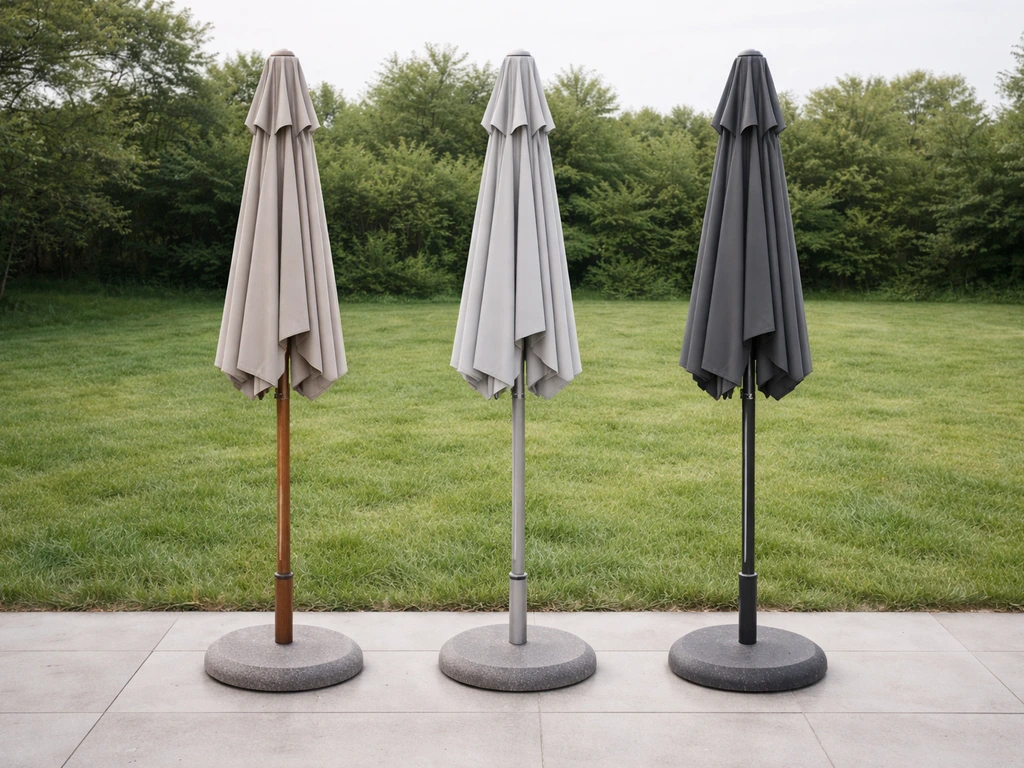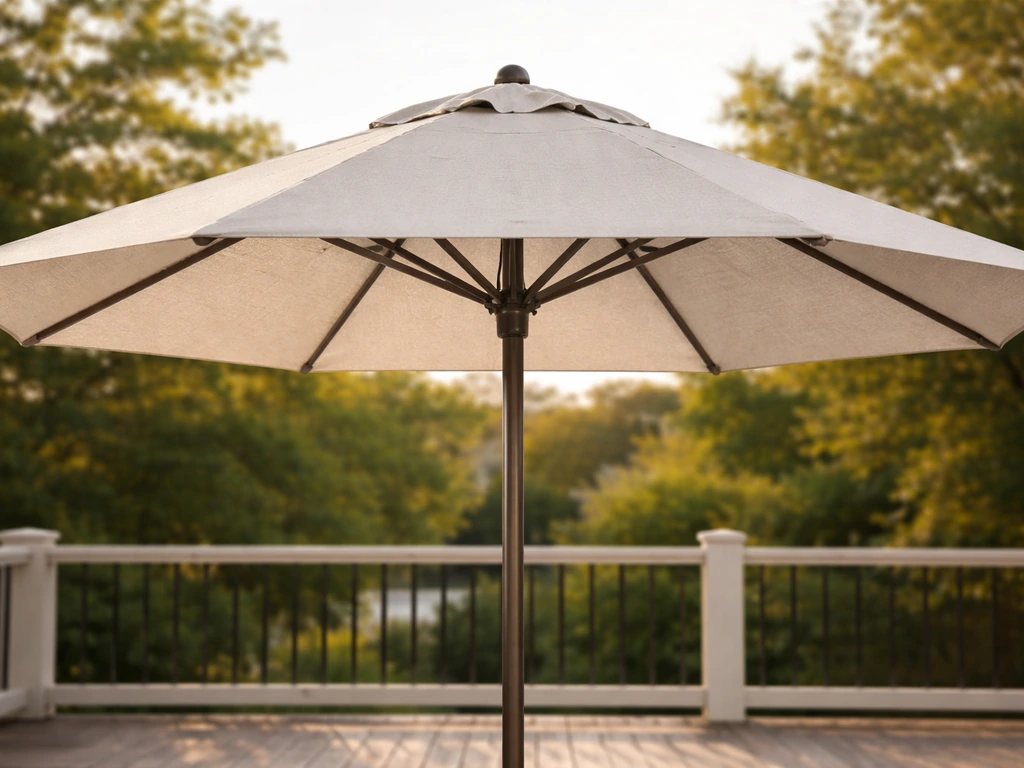
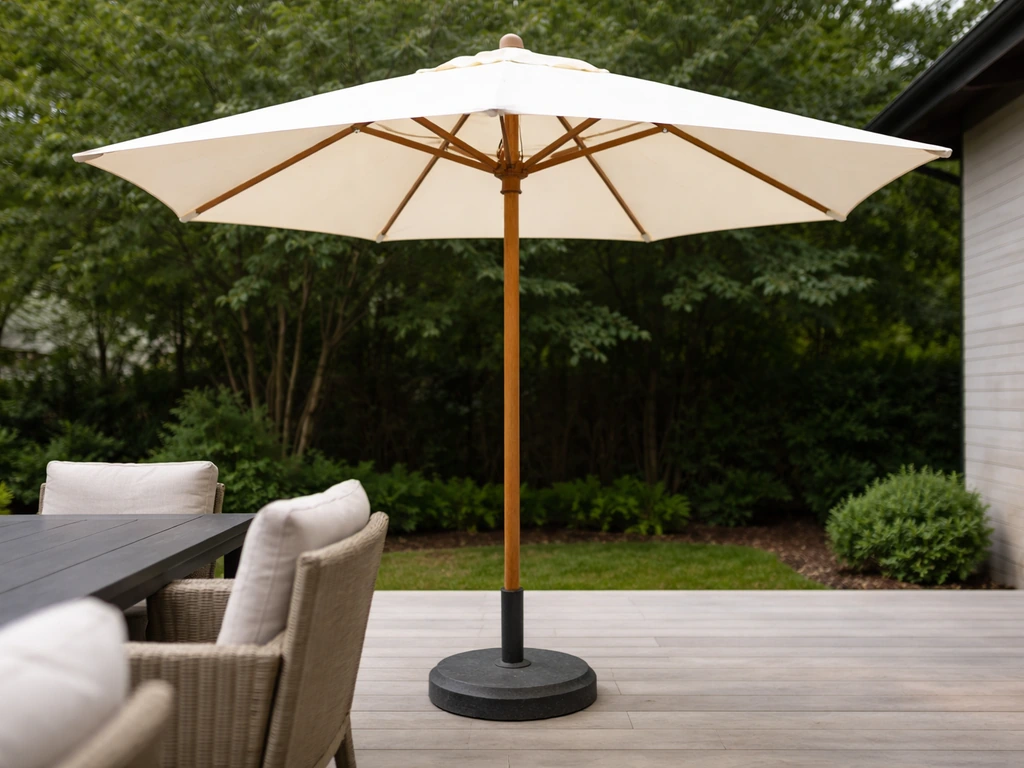
The best wood patio umbrella for most homeowners is a center-pole (market-style) umbrella with a laminated hardwood pole of at least 1.9 inches in diameter, stainless steel hardware, a solution-dyed acrylic canopy rated for UV protection, and a base weighing at least 50 pounds for anything 9 feet or larger. Wood poles look warm and natural in a way aluminum never quite matches, but they do require a little more care to stay in good shape. Get the construction right from the start, pair it with a heavy enough base, and a quality wood-pole umbrella will easily last a decade of outdoor seasons.
Best Wood Patio Umbrella Guide: Wood Pole, Fit, Stability

Kent Lang
28 Jun 2026
What actually makes a wood-pole umbrella "the best"
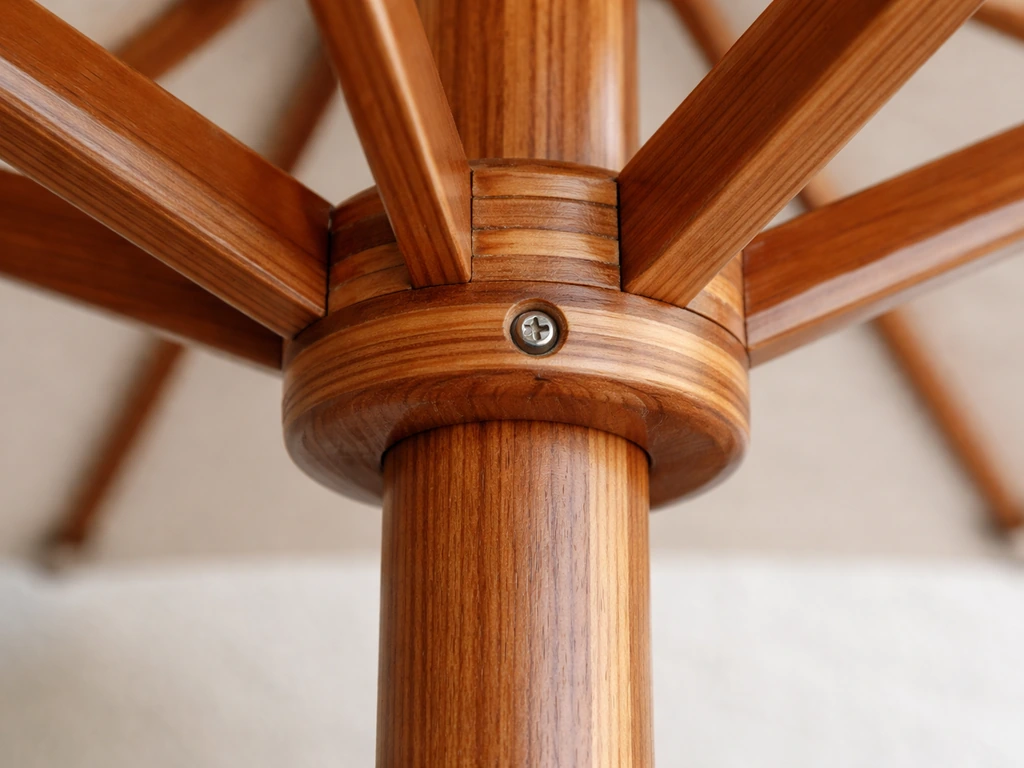
"Best" isn't a single spec. It's a combination of pole quality, hardware integrity, canopy performance, and how well the whole system holds up in real conditions. For a wood-pole umbrella specifically, the pole is the first thing to scrutinize. Woodline Shade Solutions, one of the more respected names in this category, uses laminated hardwood poles in three diameters: 1.
5 inches (38 mm), 1. 9 inches (48 mm), and 2. 4 inches (60 mm). Larger diameter means more rigidity and better wind resistance, so for a 9-foot or larger canopy, you want at least the 1.
9-inch pole. The Safari line from Woodline pairs those laminated hardwood poles with 304 stainless steel fittings, which is exactly the hardware pairing you want. Stainless resists rust where plain steel or zinc fittings eventually fail.
Beyond the pole, look at how the hub is constructed. A solid wood hub (Fiberbuilt's Bridgewater market umbrella, for example, uses a hub that's 5 inches tall by 3. 5 inches in diameter) distributes rib stress far better than a cheap plastic hub ever will. The ribs themselves don't have to be wood.
Fiberglass ribs with molded nylon joints are actually a great pairing with a wood pole because they flex slightly in wind rather than snapping. Fiberglass ribs are often paired with wood poles for flexibility, while aluminum-framed umbrellas are a different material choice with their own durability and maintenance trade-offs.
Stainless steel hardware throughout, a robust tilt mechanism, and a double-rib or bolted-rib canopy frame all add up to an umbrella that handles real-world use rather than just looking good in a showroom photo.
- Pole diameter: 1.5 in for compact 7–8 ft canopies, 1.9 in for 9 ft canopies, 2.4 in for 11 ft and commercial use
- Laminated hardwood construction over solid-sawn wood (more stable, less prone to warping)
- 304 stainless steel or marine-grade hardware on all fittings and bolts
- Solid wood or reinforced hub, not lightweight plastic
- Fiberglass or hardwood ribs with nylon or stainless steel joint connectors
- Functional tilt mechanism (crank-tilt preferred for ease of use)
- Wind vent in the canopy to reduce lofting risk
- Manufacturer warranty that explicitly covers mildew and rot exposure
Wood vs. aluminum vs. fiberglass: honest trade-offs
Wood poles have real aesthetic advantages. They look natural, feel premium, and age with a character that powder-coated aluminum just doesn't replicate. But they come with trade-offs you need to go in knowing. When deciding on patio umbrellas, the common question is whether steel or aluminum performs better, and it largely comes down to corrosion resistance and weight. blank" rel="noopener noreferrer">Consumer Reports is direct about it: moisture is the enemy of a wood pole, and over time that moisture can rot the wood. That's not a scare tactic, it's just physics. If you leave a wood umbrella open in rain repeatedly, skip seasonal treatments, and never store it during winter, the pole will deteriorate faster than aluminum or fiberglass ever would.
Aluminum poles need almost no maintenance. They won't rot, they don't need oiling or sealing, and they're lighter to move around. The trade-off is aesthetics and, in some cases, flex. Fiberglass poles are the most wind-flexible option and genuinely low-maintenance, but they lack the warm visual appeal of wood. If you're choosing between these materials and want a deeper comparison, the patio umbrella wood vs aluminum topic covers those trade-offs in more detail.
| Material | Durability | Maintenance | Weather Resistance | Aesthetics | Best For |
|---|---|---|---|---|---|
| Wood (laminated hardwood) | Good with care | Moderate (seasonal sealing, dry storage) | Moderate (rot risk if neglected) | Warm, natural, premium look | Design-focused patios, sheltered spots |
| Aluminum | Excellent | Minimal | Excellent | Clean, modern, neutral | All-weather, low-effort setups |
| Fiberglass | Excellent | Low | Very good | Modern, flexible | High-wind areas, commercial use |
The maintenance checklist for a wood pole isn't complicated but it is consistent. Keystone Ridge Designs' maintenance instructions list specific inspection targets: check the center pole for cracking, rotting, or bends, and the hub for cracking, wood rot, and lost hardware. Do that inspection at the start and end of each season. Clean with mild dish detergent and water, rinse thoroughly, and let the pole air-dry completely before closing the umbrella or putting on a cover.
For the best material for a patio umbrella pole, choose a laminated hardwood center pole if you want warmth and solid rigidity, especially in typical residential wind conditions best material for patio umbrella pole. Apply a teak oil or spar varnish (depending on the wood species) once or twice a year to maintain moisture resistance. It takes maybe 30 minutes a year. Neglect it and you'll be replacing the pole in three to four seasons.
Stay on top of it and ten-plus years is realistic.
Sizing your wood umbrella to your actual space
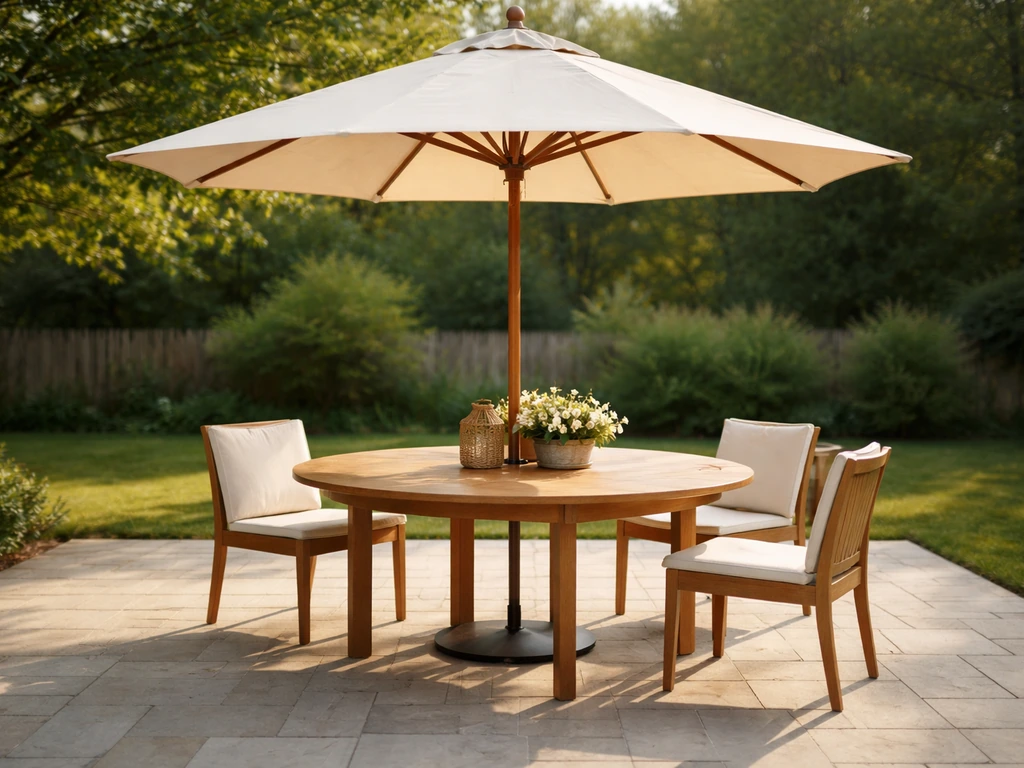
The most common sizing mistake is going too small. The most popular residential size is 9 feet, and for good reason: it covers a standard 42–48-inch round dining table with enough overhang to actually shade the people sitting around it, not just the tabletop. If your table is larger, say a 60-inch round or a 6-foot rectangular, you need to step up to an 11-foot umbrella. A practical rule of thumb is to add 24 inches to your table diameter to get the minimum umbrella diameter you need.
If you're not placing the umbrella over a table and instead want to shade a seating area or lounge section, measure the area you want covered and treat that like a "table" in the size calculation. A 10 by 10-foot lounge area needs at least an 11-foot umbrella, and even then, the shade moves with the sun. For standalone shade coverage without a table, a cantilever/offset umbrella is often the better tool, but those use different pole materials and base systems entirely.
| Table Size | Recommended Umbrella Diameter | Pole Diameter to Consider |
|---|---|---|
| Up to 36 in round | 7.5–8 ft | 1.5 in (38 mm) |
| 42–48 in round | 9 ft | 1.9 in (48 mm) |
| 54–60 in round | 11 ft | 1.9–2.4 in (48–60 mm) |
| 60 in+ or rectangular | 11–13 ft | 2.4 in (60 mm) |
Wind stability and build quality: what to actually check
Wind is the number one thing that breaks patio umbrellas. ASTM has a formal test method specifically for this: ASTM F3512, which evaluates the structural integrity of a market umbrella (pole, frame, canopy, and base together) using a wind tunnel. Not many consumer umbrellas go through that kind of testing, but when a manufacturer references wind-tunnel testing or formal wind ratings, that matters more than marketing phrases like "wind-resistant design." Woodline rates their umbrella lines to a specific wind classification (Moderate Breeze), which maps to a defined wind speed range. That's a concrete number you can compare, unlike "built for wind" phrasing that tells you nothing.
The European EN 13561 standard classifies umbrella wind resistance into four classes (0 through 3) based on the maximum wind speed the umbrella withstands while open. Class 2 or 3 is what you want for a patio in an exposed location. Even without a formal rating, you can do your own build-quality check before buying.
- Grab the pole near the top and apply lateral pressure: it should feel rigid, not flex noticeably with light hand pressure
- Check the rib-to-hub connection: individual ribs should lock in firmly with no play at the joint
- Count the ribs: 8 ribs is standard for a market umbrella; fewer than 8 means a less stable canopy frame
- Look at the canopy seams: double-stitched seams with reinforced stress points at each rib tip are a positive sign
- Check for a wind vent at the canopy crown: a single or double vent lets wind pass through instead of lifting the canopy
- Inspect all visible hardware: stainless steel or solid brass only; avoid any chrome-plated or painted metal on load-bearing points
- Open and close the tilt mechanism several times: it should move smoothly with no grinding or sticking
One thing Reddit home improvement communities consistently reinforce: even a well-built umbrella becomes unstable with an undersized base. A heavy, quality pole wobbling in its base because the base is too light is a real and common problem. The base is not the place to cut costs.
Canopy fabric and UV protection: what the specs actually mean
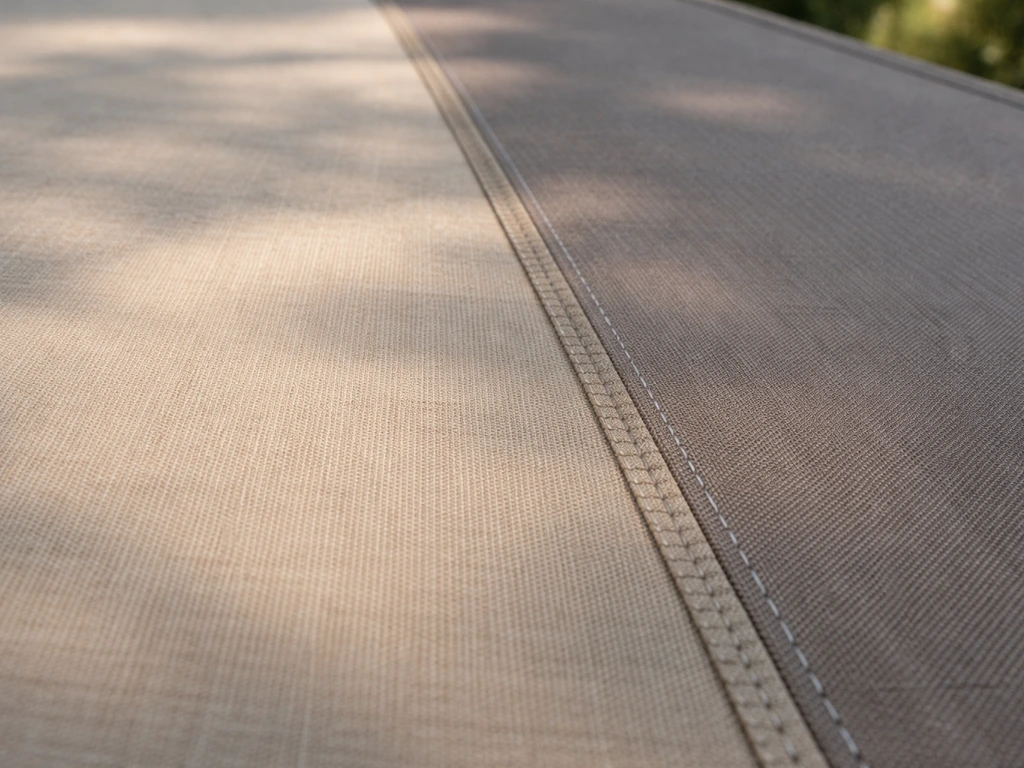
Solution-dyed acrylic is the canopy fabric standard you're looking for. Sunbrella is the best-known brand, but other manufacturers produce comparable solution-dyed acrylic. The key difference from cheaper polyester canopies is how the color is applied: with solution-dyed acrylic, the pigment goes into the fiber before it's spun, not printed or dyed onto the finished fabric afterward.
Because “olefin vs polyester patio umbrellas” often comes up in canopy shopping, it helps to compare how each fabric handles fading and color retention over time. That means UV light can't bleach the color out of the fiber surface because the color goes all the way through. Quality solution-dyed acrylics achieve light-fastness grades of 7–8 on the ISO 105-B02 scale. Cheaper piece-dyed fabrics often score 4 or lower, meaning visible fading within a single season.
On UV protection claims: be skeptical. A peer-reviewed Cureus study found that many umbrella products claiming UPF protection lacked any verifiable testing to back it up, and actual performance varied significantly from claimed performance. If a manufacturer lists a specific UPF rating (UPF 50+ is the meaningful threshold), look for evidence it was independently tested, not just stated on a product page. FiberBuilt and Woodline both publish specific canopy material and care guides, which is a good sign that they're being accountable for their fabric claims.
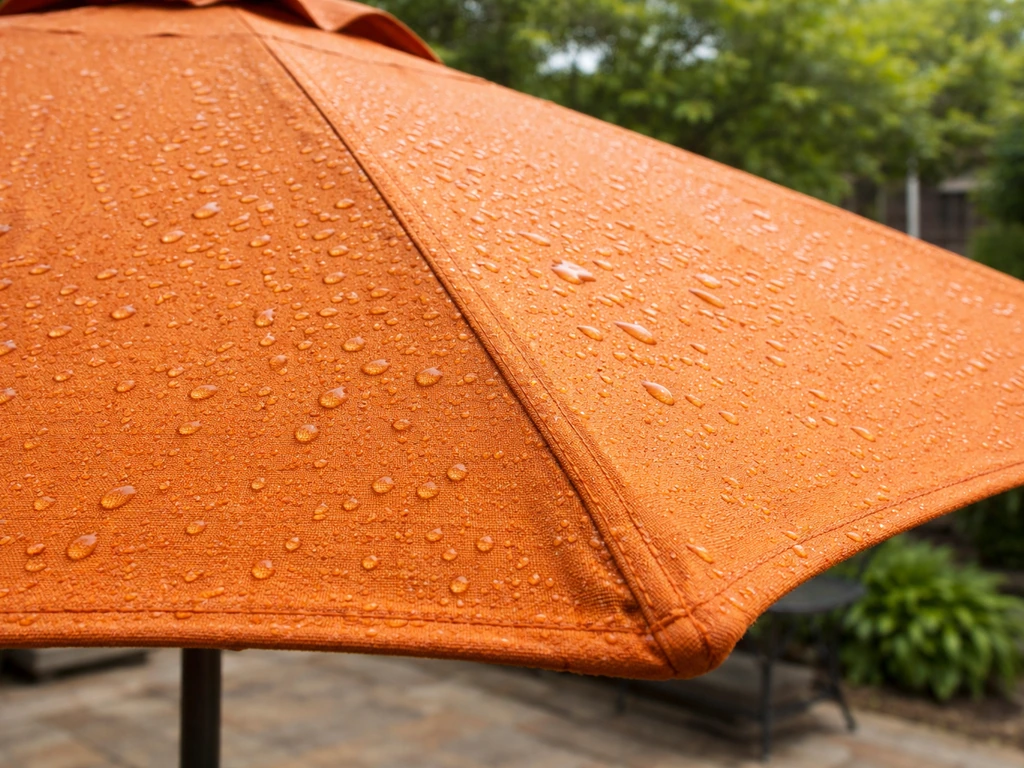
For canopy care: rinse with clean water regularly to remove pollen, salt, and debris. For deeper cleaning, use a mild soap solution, scrub gently, rinse thoroughly, and always air-dry the canopy fully open before closing the umbrella. Folding a damp canopy is one of the fastest ways to invite mildew. A canopy cover when the umbrella is stored is basic protection that extends fabric life significantly.
Getting the base right
Base weight is non-negotiable. For a wood-pole market umbrella with a canopy 7.5 feet or smaller, 25–50 pounds of base weight is the working range. For anything 8 feet and above, you need 50–75 pounds minimum. Those are the practical numbers from commercial patio guidance, and they hold up in real-world use. If you're in a consistently windy location, add more weight than the minimum.
Woodline's base options give a good picture of what engineered solutions look like. Their paver frame base is a hot-dipped galvanized metal frame that holds 16-inch square paver slabs, letting you add weight using standard masonry materials. For a permanent installation, they also offer reinforced concrete hexagonal base options. If you're going the bolt-down route, one installation spec for a Woodline Safari umbrella on a concrete surface requires bolting a round metal base plate with four concrete screw bolts into concrete at least 4 inches deep. That's a meaningful minimum: thinner concrete slabs can crack under load.
For freestanding setups on a deck or patio, a heavy fillable base (sand or water-fillable plastic bases) works for temporary placements, but a purpose-built weighted base matched to your specific pole diameter is the more reliable solution. Make sure the base sleeve diameter matches your pole diameter. A 1.9-inch pole in a sleeve designed for a 1.5-inch pole is a wobble waiting to happen.
How to shortlist and buy: a practical decision framework
Start by locking in your size requirement using your table or seating area dimensions. Then decide how much wind exposure your patio actually gets. A sheltered courtyard and a rooftop terrace are completely different environments. If you're in a regularly windy spot, lean toward a larger pole diameter (1.9 in minimum, 2.4 in for exposed areas) and plan for a heavier base. A wood pole with proper laminated construction handles moderate wind fine, but it's not the right choice for a genuinely exposed coastal or elevated setting where fiberglass poles have a real structural advantage. Fiberglass patio umbrellas are often chosen for their ability to handle sustained wind and harsher outdoor exposure with less maintenance than wood fiberglass poles.
Budget is real. A quality wood-pole umbrella with solution-dyed acrylic canopy, stainless hardware, and a proper base will run $400–$900 for a 9-foot residential model and can exceed that for 11-foot or commercial-grade versions. Since the canopy fabric matters for UV fading and durability, choose the best fabric for patio umbrella coverage that matches your climate and sun exposure. The cheaper market is flooded with wood-look finishes on hollow aluminum poles with polyester canopies. Those aren't bad products but they're not wood-pole umbrellas. Pay attention to what the pole is actually made of before purchasing.
Warranty coverage is a useful signal. Woodline's warranty explicitly covers fabric failure from normal exposure including sunlight, mildew, and rot, and gives two years on umbrella bases and tubes. A warranty that names mildew and rot specifically tells you the manufacturer has thought about real outdoor conditions, not just a generic product guarantee.
Quick comparison checklist before you buy
- Pole material confirmed as laminated hardwood (not wood-look aluminum or plastic)
- Pole diameter matches canopy size: 1.5 in for 7–8 ft, 1.9 in for 9 ft, 2.4 in for 11 ft+
- Hardware is stainless steel or solid brass at all load-bearing connections
- Canopy fabric is solution-dyed acrylic with a documented UPF rating (UPF 50+ preferred)
- 8 ribs minimum for a market umbrella canopy frame
- Wind vent present in the canopy
- Tilt and crank mechanism operates smoothly and has replacement parts available
- Base weight: 50–75 lb for canopies 8 ft and above
- Base sleeve diameter matches pole diameter exactly
- Manufacturer warranty covers mildew, rot, and UV fading explicitly
- Canopy cover included or available as an accessory
The material question doesn't end with the pole. Your canopy fabric choice, rib construction, and base all interact with the pole material to determine how the umbrella actually performs season after season. If you want to dig deeper into how wood compares to aluminum structurally, or how different canopy fabrics stack up on UV and longevity, those topics are worth exploring alongside this guide.
If you want to make the best choice for longevity and UV resistance, review the best patio umbrella material options for your climate and use case. The wood-pole umbrella category rewards buyers who take 20 minutes to verify specs before purchasing, because the quality gap between the best and the average options in this segment is genuinely large.
FAQ
How can I tell if a “wood” patio umbrella actually has a real wood pole and correct sizing?
Check whether the umbrella is truly market-style center pole with a fixed diameter mast, not a “wood look” finish on a hollow metal pole. If the manufacturer does not state the actual pole material and diameter (in inches or millimeters) and the base sleeve diameter, treat it as a higher risk purchase.
Is it okay to leave a wood patio umbrella in the rain if it’s covered?
Yes, but it changes expectations. A wood-pole umbrella can survive rain, as long as you can rinse off dirt, open it fully to dry, and apply finish on schedule. If you get repeated wetting without drying (covered only partially), consider a higher oil or varnish maintenance plan, or choose a non-wood pole for that environment.
What should I do if my best wood patio umbrella still feels wobbly?
For most 9-foot-class umbrellas, you should plan on a significant base, then fine-tune using observed wobble. If the pole shifts noticeably when you push the canopy edge by hand (with reasonable force), your base is effectively too light or incorrectly matched to the sleeve diameter, even if it meets a stated weight range.
How do I prevent mildew when I close and cover my wood patio umbrella?
Don’t store the umbrella in a closed, damp state. The correct routine is rinse, air-dry fully with the canopy open, then close and cover. If you already put it away damp and notice a musty odor or discoloration, clean again and dry longer before covering to reduce mildew spread.
What’s the best way to refinish or re-oil a laminated hardwood patio umbrella pole?
You can, but start by using the manufacturer’s finish guidance, then test in an invisible spot. Most wood poles need periodic oil or spar varnish, and applying the wrong product can leave sticky residue that traps moisture. Refinish only when the surface is clean and dry, and avoid heavy coats that can crack.
Does the 24-inch rule for the best wood patio umbrella diameter work for all table shapes?
For a 9-foot umbrella over common dining tables, the “table fit” depends on table size and overhang, but also on how far the pole sits from the edge. Measure clearance from the pole to seating, then confirm the canopy’s reach over where people sit, not just over the tabletop.
How do I choose a wood pole umbrella for windy patios without relying on marketing terms?
If you regularly get gusts or you’re in an exposed location, prioritize a formal wind rating or wind classification the manufacturer can map to a wind speed range. Without that, you’re more likely to underestimate loads, which shows up as slow loosening of hardware or canopy frame stress over time.
Should I cover a wood patio umbrella in winter, and does it matter if it’s fully dry first?
Use covers, but only after the umbrella is fully dry, and avoid covers that trap condensation. For long off-seasons, check the pole and hub under the cover once or twice, because trapped moisture can start rot even if the cover looks intact.
What warranty details matter most when buying the best wood patio umbrella?
If the warranty covers mildew and rot by name, it is often more meaningful for wood-pole owners than a generic “product defects” warranty. Also look for how the warranty defines “normal exposure,” since improper storage or missing maintenance can affect coverage.
Can I replace my umbrella base with a heavier one, or will I run into fit problems?
The base sleeve must match the pole diameter, and the base system must also match the umbrella type. A sleeve mismatch (for example, 1.9-inch pole into a sleeve meant for 1.5-inch) leads to wobble and uneven stress on the hub and tilt mechanism, even with the correct weight.