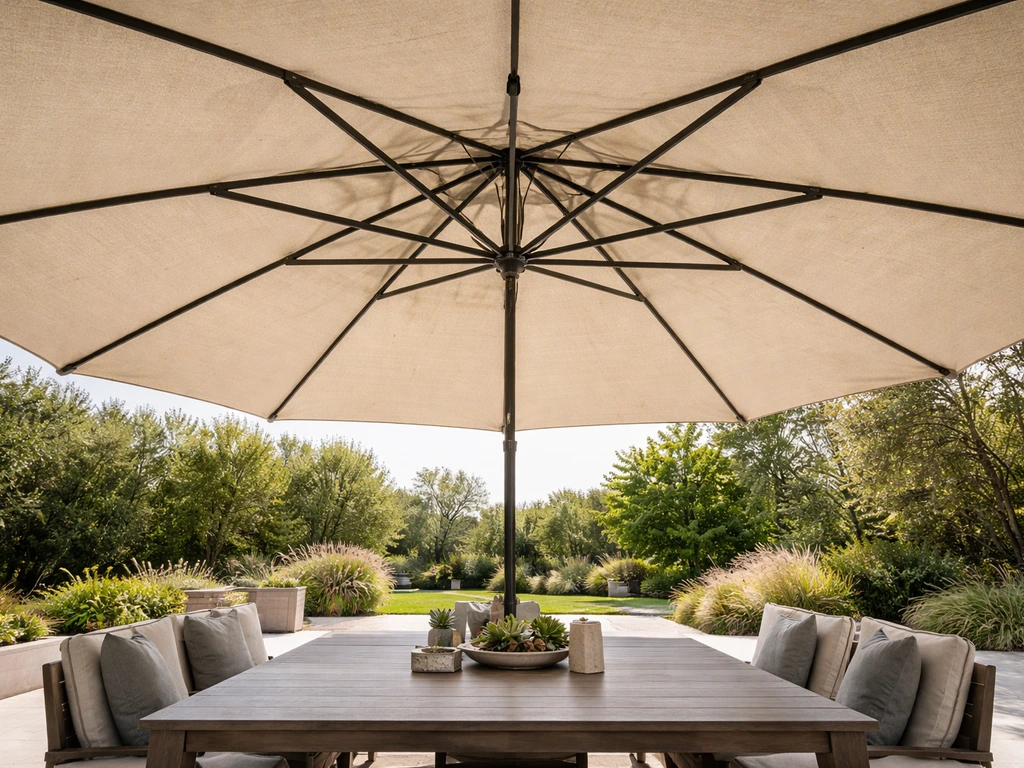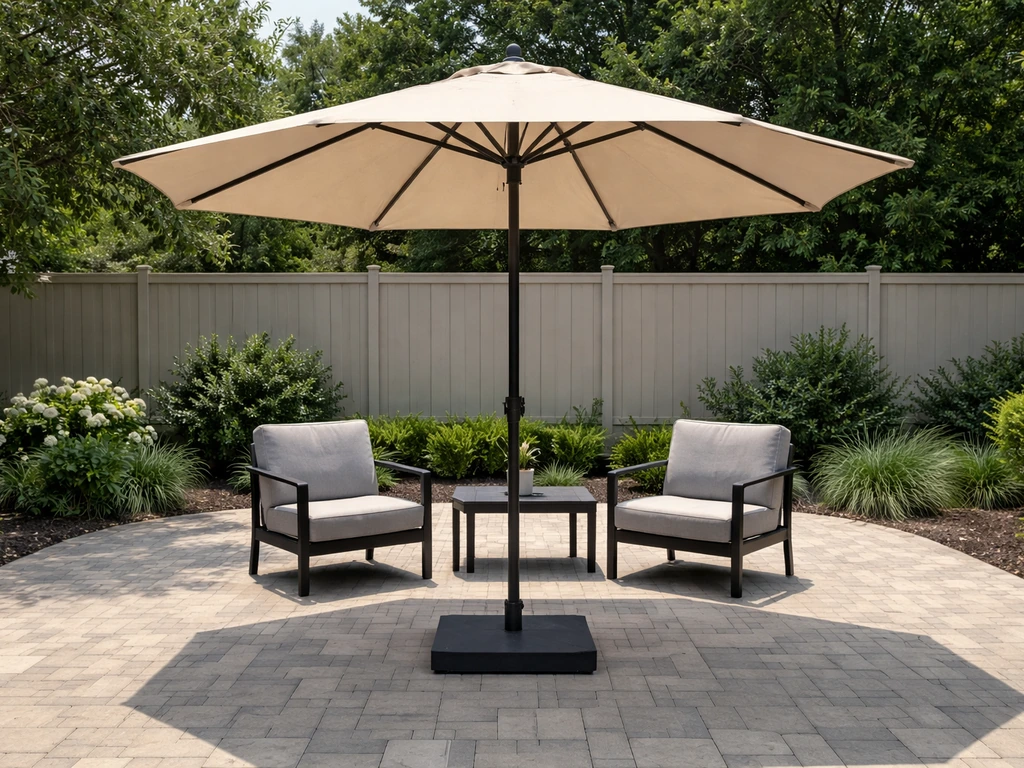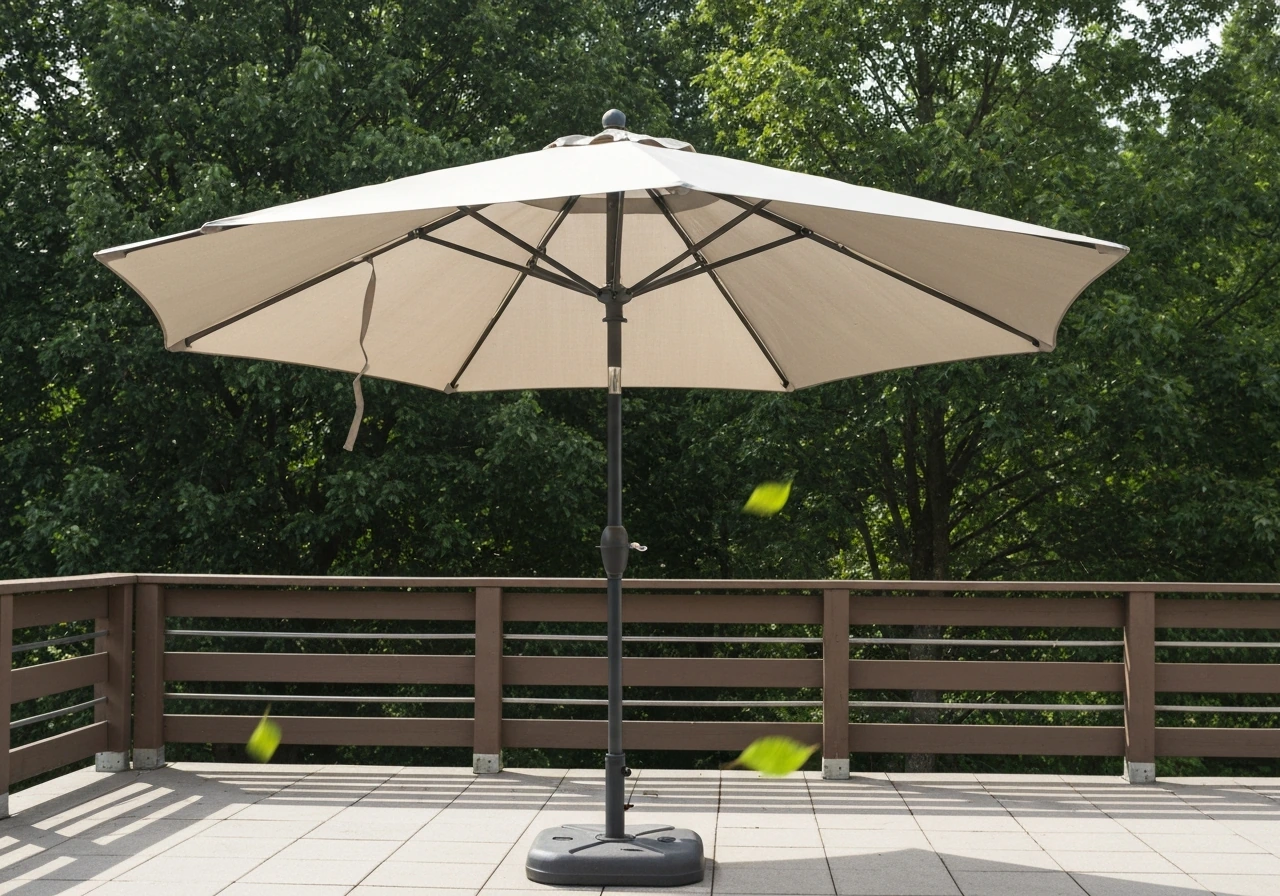
An 11 ft patio umbrella is the sweet spot for most residential patios: large enough to shade a 4-to-6-person dining set, small enough that a well-chosen base can keep it stable without bolting anything to your deck. The best one for your space depends on three things you need to nail before shopping: the umbrella's style (center-pole market, cantilever, or offset), the clearance and coverage your layout actually requires, and how much base weight and frame quality you need for your local wind conditions. If you want help choosing the best 11ft patio umbrella, focus on wind stability, base weight, and canopy coverage for your exact layout the best one. Get those three right and the rest of the decision is mostly budget and aesthetics.
Best 11 ft Patio Umbrella: How to Choose for Wind and Fit

Kent Lang
14 Jun 2026
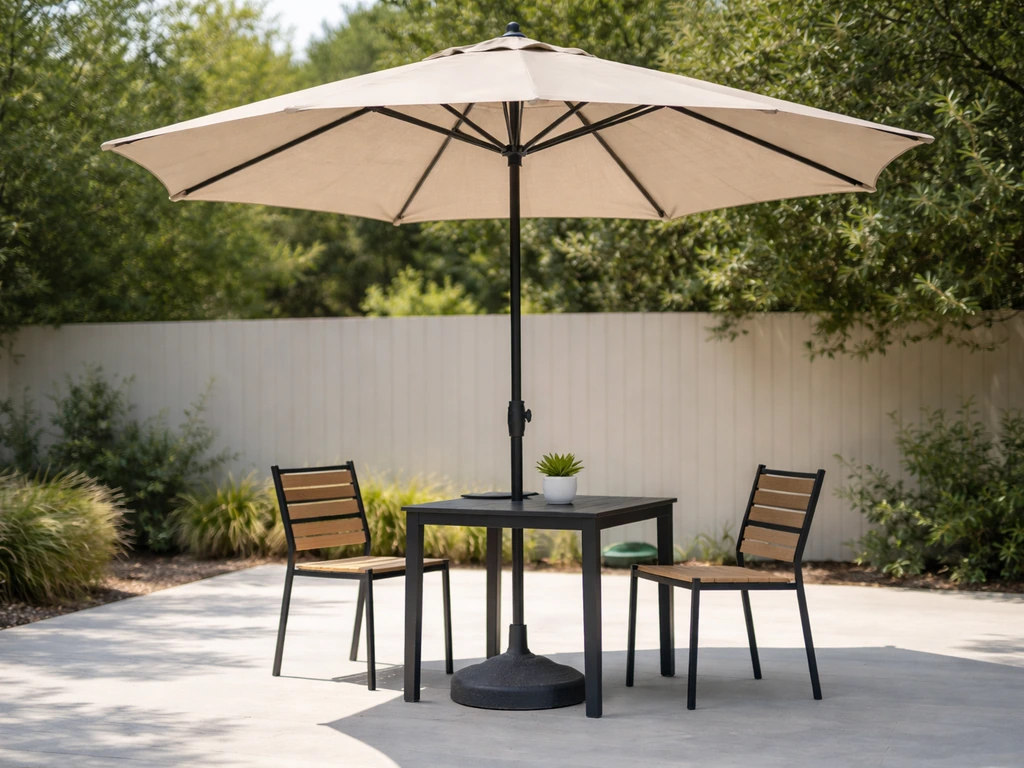
Market, Cantilever, or Offset: Picking the Right Style for Your Layout
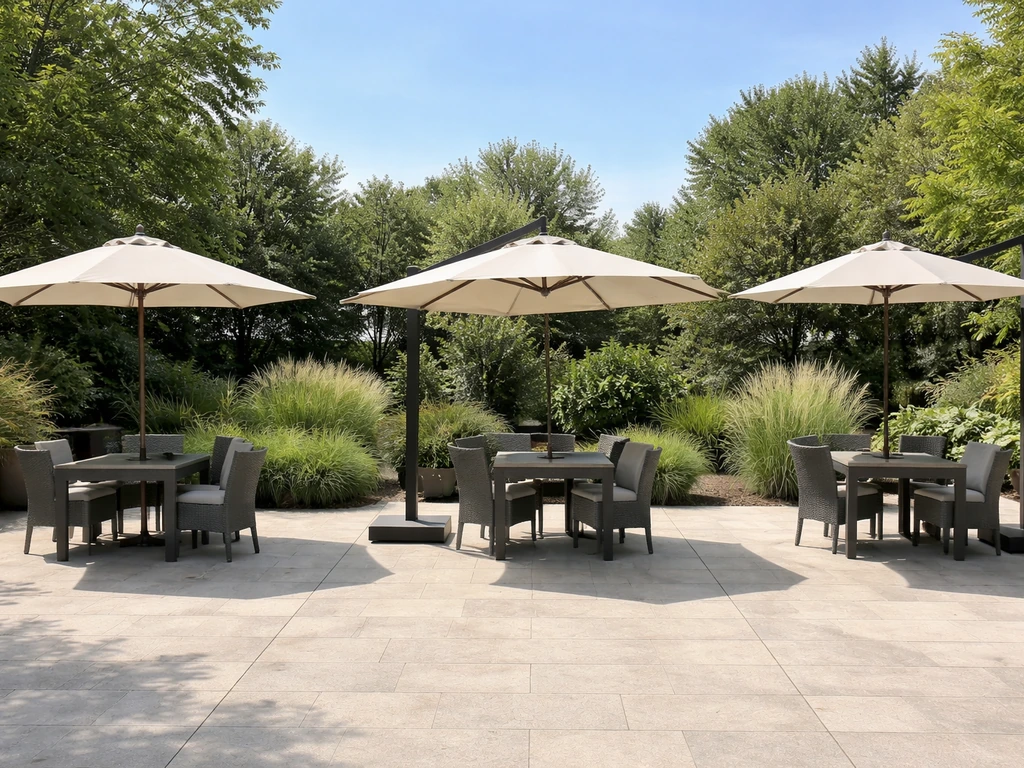
The style question matters more than most shoppers realize, because a wrong choice means the pole ends up exactly where you don't want it, or the canopy doesn't clear your outdoor furniture the way you imagined.
Market (center-pole) umbrellas
A market umbrella has a pole running straight through the center of the canopy. It's the classic, and for good reason: it's the most stable design for its size, the most widely available, and typically the most affordable. The trade-off is the pole itself, which needs to pass through a hole in your table or sit in a freestanding base at the table's center. If you have a solid dining table without an umbrella hole, or you want shade over a seating area where the center is occupied, a market pole gets in the way. For layouts with a traditional umbrella-hole table, this is the most wind-stable and cost-effective choice at the 11 ft size.
Cantilever and offset umbrellas
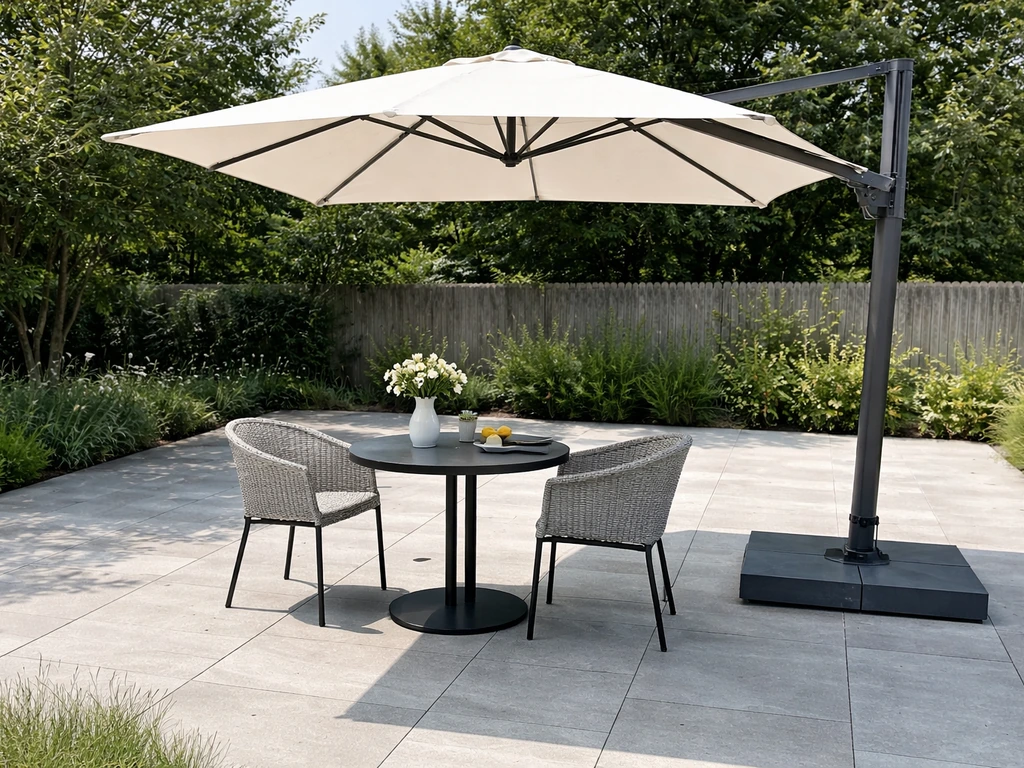
A cantilever (also called an offset) umbrella hangs the canopy from a side arm extending off a weighted slab or floor base, so there's no center pole under the shade. This design lets you shade sectional sofas, lounge chairs, hot tubs, or solid tables where a center pole would be useless. At 11 ft, a cantilever like Treasure Garden's AKZ Plus covers roughly 85 square feet of usable shade area, which is competitive with a center-pole umbrella of the same nominal size. The real advantages are flexibility (many cantilevers rotate 360 degrees) and pole-free seating space. The real disadvantages are cost, weight, and the need for a very heavy base. Cantilever bases typically need to be significantly heavier than market umbrella bases to compensate for the lateral force the offset arm creates.
| Style | Best For | Pole Placement | Base Requirement | Relative Cost |
|---|---|---|---|---|
| Market (center-pole) | Dining tables with umbrella hole, traditional setups | Center of canopy, through table or freestanding base | 80+ lbs for 11 ft | Low to mid |
| Cantilever / Offset | Solid tables, sofas, lounge areas, hot tubs | Off to one side on a weighted slab base | Often 150–250+ lbs | Mid to high |
| Freestanding market | Decks without table holes, poolside | Center pole, standalone weighted base | 80+ lbs for 11 ft | Low to mid |
If you're deciding between an 11 ft and a 10 ft umbrella, the coverage difference is meaningful but not dramatic. A 10 ft patio umbrella can still be a great choice if you want lighter coverage and a better fit for smaller tables 10 ft umbrella. An 11 ft canopy gives you about 95 square feet of shade (for a round, center-pole design) compared to roughly 78 square feet for a 10 ft version. That extra ring of coverage makes a real difference when you're shading a rectangular 6-person table rather than a small bistro set.
Measuring Your Space Before You Buy
The standard rule of thumb from most reputable retailers is to choose an umbrella that extends at least two feet beyond each side of your dining table. For a typical 48-inch (4 ft) round table, that means you want at least an 8 ft umbrella. For a 60-inch or 72-inch rectangular table, an 11 ft umbrella is often exactly right, extending the canopy 1.5 to 2.5 feet past the edges on each long side. That extra coverage keeps the afternoon sun off seated guests even as the sun's angle shifts.
Height clearance is the measurement people most often skip. A typical market umbrella hub (the top of the center pole where ribs spread) sits about 7 to 8 feet off the ground, and the canopy hangs down 6 to 12 inches from there. If you have a pergola, awning, or low overhang, measure the clearance carefully. Cantilever arms on large models can require even more vertical clearance depending on the rotation angle. If your patio is under a covered structure, measure from ground to the lowest point of the structure and compare it to the manufacturer's pole height specification before ordering.
For base placement, also think about the pole's footprint relative to your furniture. A freestanding market umbrella base sitting next to a table can eat into legroom or create a trip hazard. Some homeowners solve this by inserting the base under the table edge or using an in-ground sleeve anchor if they have a permanent installation. Cantilever bases often sit completely outside the furniture footprint, which is one of their practical advantages for tight spaces.
Wind Performance: What Actually Keeps an 11 ft Umbrella Standing
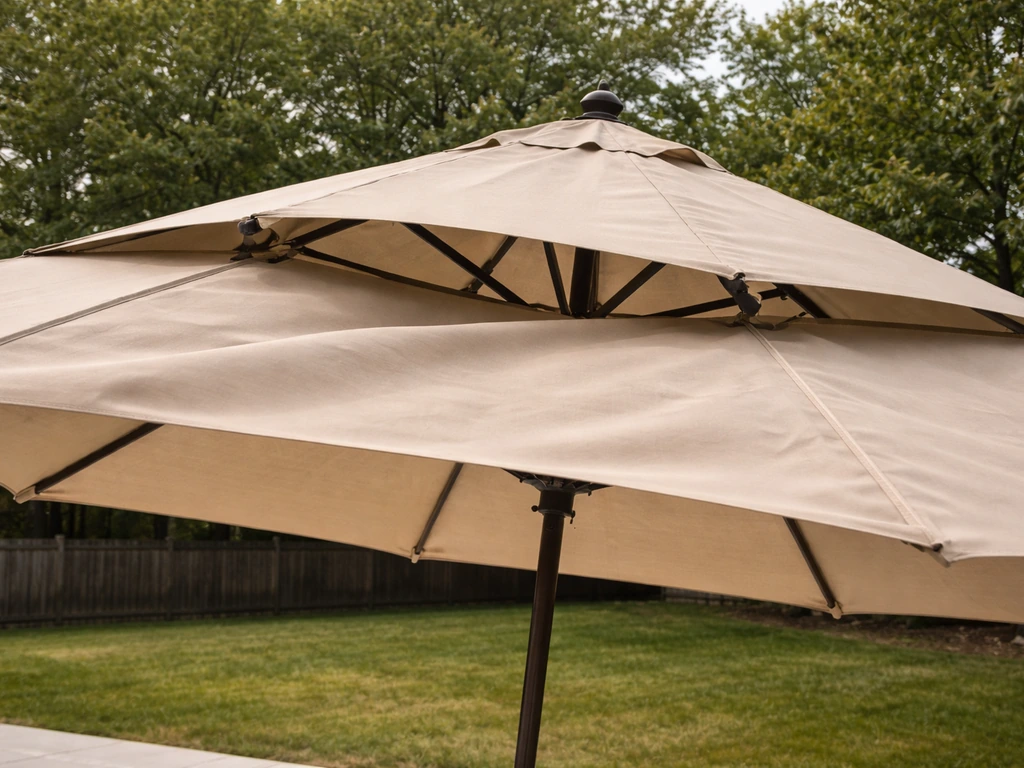
Wind is where cheap umbrellas fail catastrophically. At 11 ft, the canopy acts like a sail, and a gust of 20 to 25 mph can flip or launch an under-weighted or poorly built umbrella. Wind resistance isn't one feature you can point to on a spec sheet: it's a combination of frame material, rib design, fabric choice, venting, and base weight all working together. If you’re shopping specifically for the best 11 foot patio umbrella, use this wind checklist to narrow down models that stay stable in gusts.
Frame materials and rib design
Fiberglass ribs are the most wind-resistant option you'll find in quality patio umbrellas. Unlike aluminum ribs, fiberglass can flex under a gust and spring back without cracking or permanently bending. Treasure Garden's buying guide specifically calls out fiberglass ribs as the best choice for wind resistance, and that's consistent with what you see in practice: umbrellas with fiberglass ribs survive wind events that would destroy aluminum-ribbed models at the same price point. When comparing spec sheets, also look at rib diameter. A rib diameter of around 17mm (roughly 0.6 inches) is a good baseline for an 11 ft umbrella; thinner ribs flex too much under load and can snap. Most quality 11 ft market umbrellas have 8 ribs; some premium cantilevers also use 8 ribs with double-vented canopies.
Venting
A double-vented canopy (sometimes listed as DWV or dual wind vent) is one of the most practical wind-resistance features you can get. The vent at the top of the canopy allows air to pass through rather than build up underneath, reducing the lift force on the canopy during gusts. This isn't purely a marketing feature: it genuinely reduces the chance of the umbrella inverting in a sudden wind change. If you're in an exposed area, on an elevated deck, or in a region with afternoon thermal winds, prioritize double venting.
When to close it
No umbrella at this size should be left open unattended in wind. For wind-resistance, a buyer guide notes that features need to work together, including wind vents, flexible ribs, adequate base weight, and sturdy pole construction, and it advises closing during high wind to protect the warranty if frame defects occur wind-resistant umbrellas need features working together. Treasure Garden's own safety guidance states that no umbrella, regardless of size or weight, should ever be left unattended in the open position. A practical closure threshold for a standard residential 11 ft umbrella is roughly 15 to 20 mph sustained winds. At those speeds, even a well-built umbrella with a heavy base can shift, tip, or invert. Beyond the physical risk, leaving an umbrella flapping in wind is a fast way to damage the fabric and ribs, and wind/storm damage is specifically excluded from most manufacturer warranties including Treasure Garden's. Closing it during any wind event isn't overcaution: it's what the manufacturer requires to preserve your coverage.
Base Requirements for an 11 ft Umbrella
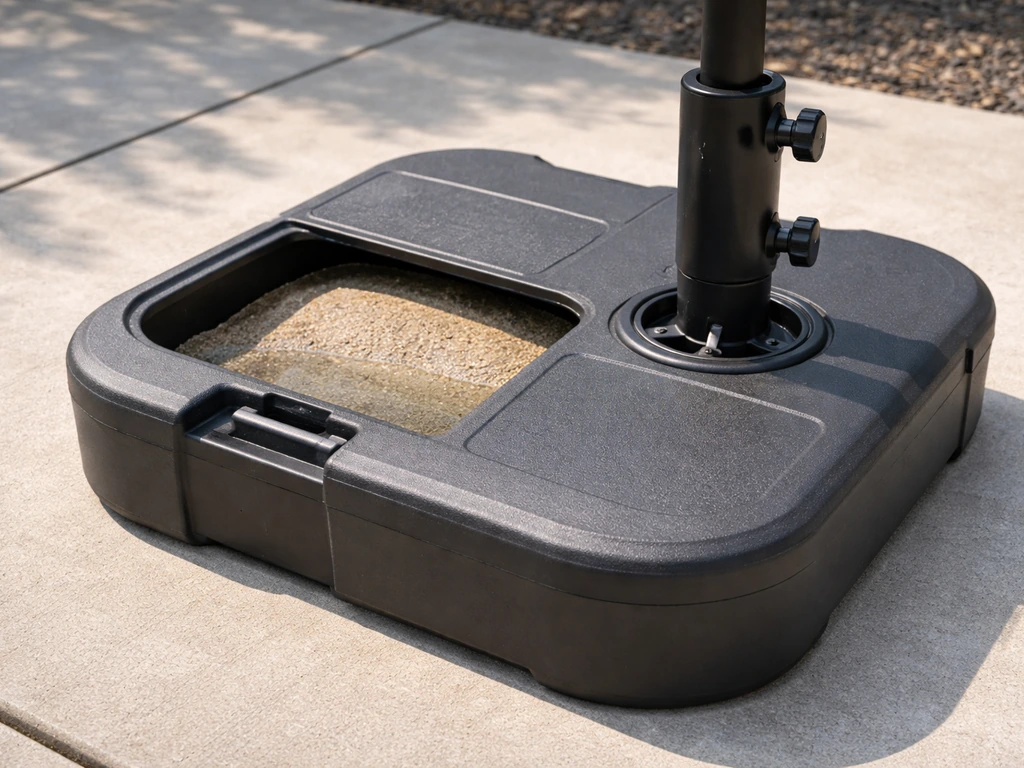
Base weight is the unglamorous spec that most shoppers underestimate. Treasure Garden's 2026 catalog lists a minimum base weight of 80 lbs for an 11 ft umbrella, and their FLEX umbrella manual repeats the same 80 lb minimum for the 11 ft size. That's a minimum, not a recommendation for exposed conditions. If your patio is on a second-floor deck, faces open canyon winds, or sits above 7,000 feet elevation, you should go heavier. A common guideline from outdoor retailers serving windy mountain regions is to select a base rated one weight increment heavier than the minimum when the site is exposed or elevated.
For a center-pole market umbrella, an 80 to 100 lb fillable base (typically filled with sand or water) is the practical minimum for most residential situations. Sand fills heavier than water and is the preferred fill for stability. For a cantilever umbrella, the base weight requirements are significantly higher because the offset arm creates lateral torque: expect to need 150 lbs or more, and follow the specific umbrella manufacturer's recommendation for that model. Mismatching a cantilever to an undersized base is one of the most common safety mistakes in outdoor furniture setups.
Also pay attention to pole diameter compatibility. Most 11 ft market umbrellas use a 1.5-inch or 1.9-inch pole diameter, and bases are not universal. If you're replacing an umbrella or buying a base separately, confirm the pole diameter before purchasing. Some retailers sell umbrella and base as a bundle, which removes the guesswork.
Materials and Features Worth Paying For
Fabric: solution-dyed acrylic vs. polyester
Fabric is the single biggest quality differentiator across price tiers. Solution-dyed acrylic, most commonly sold under the Sunbrella brand, is the standard for premium outdoor umbrellas. In solution-dyed fabrics, color is built into the fiber itself during manufacturing rather than printed or coated on top. The result is dramatically better UV and fade resistance: Sunbrella blocks over 98% of harmful UV radiation and is engineered to resist fading over years of sun exposure. Standard polyester canopies cost less upfront but fade noticeably faster, often within one to two seasons in full-sun exposure. If your umbrella is going to be in direct sun most of the day, the price premium for Sunbrella fabric is worth it over the product's lifespan. One maintenance note: Sunbrella's water-repellent treatment can weaken over time with regular cleaning, and may need periodic re-application with a fabric protector spray.
Tilt mechanisms
A tilt mechanism lets you angle the canopy toward the sun as it moves across the sky, which is essential for an 11 ft umbrella being used for afternoon shade on a west-facing patio. The two common types are collar tilt (twist the collar at the pole to angle the canopy) and push-button tilt (press a button at the pole to release the tilt lock). Collar tilt offers smoother infinite adjustment; push-button tilt is faster and simpler. At the 11 ft size, also look for crank-open mechanisms rather than hand-press ribs: opening a canopy this large manually gets tedious fast, and cranks put less stress on the hub over time.
Hardware and pole construction
Aluminum poles are the standard at this size: light enough to handle, strong enough for most conditions, and corrosion-resistant. Look for powder-coated finishes rather than bare painted aluminum, especially if you're near saltwater or in a humid climate. Hardware details like the hub quality, rib joints, and crank mechanism durability separate a $150 umbrella from a $350 one. Cheaper umbrellas often use plastic hub components that crack after a season or two; quality umbrellas use cast aluminum or reinforced polymer hubs that last considerably longer.
How to Compare Options Without Getting Overwhelmed
The market for 11 ft patio umbrellas runs from under $100 to over $800, and the difference is real. Here's how to frame your shortlist across budget tiers, and what to use as a practical checklist when comparing specific models.
Budget tiers
| Budget Tier | Price Range | What You Get | Trade-offs |
|---|---|---|---|
| Entry | Under $150 | Polyester canopy, aluminum or steel pole, basic crank, limited tilt options | Fades faster, hardware wears sooner, lighter ribs |
| Mid-range | $150–$350 | Better canopy fabric (olefin or low-grade solution-dyed), fiberglass or reinforced aluminum ribs, crank + tilt, quality hub | Good for moderate sun exposure and protected locations |
| Premium | $350–$600+ | Sunbrella or comparable solution-dyed acrylic, fiberglass ribs, double vent, heavy-duty hub and hardware, full warranty | Higher upfront cost pays off over 5–10 year lifespan |
| Professional / Cantilever | $600–$1,200+ | Commercial-grade cantilever, 360-degree rotation, heavy base included or available, marine-grade hardware | Requires larger footprint, heavy base, careful installation |
Shortlist checklist
- Canopy diameter confirmed at 11 ft (some listings stretch nominal sizes)
- Rib material: fiberglass preferred, especially for exposed or windy locations
- Rib count: 8 ribs minimum for an 11 ft canopy
- Rib diameter: 17mm (0.6 in) or larger for adequate rigidity
- Canopy fabric: solution-dyed acrylic for longevity; olefin as a mid-range compromise; avoid plain polyester for full-sun use
- Double wind vent: yes or no (yes strongly preferred in exposed locations)
- Tilt mechanism: collar or push-button tilt present
- Opening mechanism: crank-open vs. hand-press (crank preferred at this size)
- Pole diameter: confirmed compatible with your base or table hole
- Minimum base weight met or exceeded: 80 lbs minimum for 11 ft center-pole; significantly more for cantilever
- Warranty scope: confirm what wind/weather damage policy covers and excludes
If you're also considering sizing up or down, keep in mind that a 15 ft patio umbrella is a fundamentally different product category, typically requiring commercial-grade bases and hardware that most residential decks aren't built to handle. A 15 ft patio umbrella also needs a correspondingly heavier, more industrial base and hardware to stay stable in typical residential winds. The 11 ft size is genuinely the upper end of practical for most homeowners who want freestanding shade without permanent installation.
Setup, Daily Use, and Keeping It in Good Shape
Assembly and first setup
Most 11 ft market umbrellas assemble in under 30 minutes with two people: one to hold the pole steady and one to connect the ribs and attach the canopy. Read the assembly manual before starting, specifically the hub assembly instructions. Incorrect hub assembly is one of the most common causes of rib failure during the first opening. After assembly, open and close the umbrella a few times slowly to confirm the crank and tilt mechanisms move smoothly before applying full canopy tension.
Opening and closing in daily use
Open the umbrella slowly and fully each time. A half-open canopy under wind load puts stress on the hub and rib joints at awkward angles. Close it the same way: smoothly and fully, not partially lowered and left. At the first sign of wind picking up, collapse and secure the umbrella before walking away. This isn't just a safety recommendation from various manufacturers: it's the difference between an umbrella that lasts a decade and one that gets destroyed in its first summer storm.
Cleaning the canopy
For Sunbrella and other solution-dyed acrylic canopies, the standard cleaning method is a mild soap-and-water solution with a soft brush, rinsed thoroughly. blank" rel="noopener noreferrer">You don't need to remove the canopy from the frame for routine cleaning. Avoid bleach-heavy cleaners unless the manufacturer specifically permits them, and avoid pressure washing at close range, which can damage the fabric weave. After cleaning, allow the canopy to dry fully in the open position before closing it to prevent mildew. Reapply a fabric waterproofing spray (like 303 Fabric Guard) annually or after heavy cleaning to restore the water-repellent finish.
Storing for the off-season
When not in use, close the canopy and cover it with a protective cover sized to fit. Leaving an open or loosely covered umbrella through winter or extended rainy periods accelerates mildew growth, stresses the ribs, and fades the fabric faster. For longer storage or harsh winters, remove the canopy from the frame if possible and store it indoors. The pole and hardware can typically stay outside if powder-coated, but covering them prevents water intrusion into the crank mechanism. If you're leaving the umbrella outdoors through a storm system, close it, lower it, and if possible add tie-down straps around the furled canopy to prevent it from catching wind and rotating on the base.
FAQ
Do I need an umbrella base that’s “fillable,” or can I use a fixed weight base for the best 11 ft patio umbrella?
Fillable bases are usually more adjustable, especially if your patio is wind-exposed. For a center-pole 11 ft market umbrella, sand is typically the best fill for stability, and starting near the 80 lb minimum then adding weight if you notice any wobble is a safer approach than buying a lighter fixed base.
How can I tell if the 11 ft umbrella canopy will clear my outdoor furniture when it’s tilted?
Measure clearance twice: once for the canopy at full open, then again at the tilt position you’ll actually use (often in late afternoon). A tilt can lower one side of the canopy, so confirm the lowest edge stays above chair backs and won’t drag across railing or a nearby wall.
What’s the best way to prevent the base from sliding on a deck or patio surface?
Even with correct weight, bases can shift on smooth pavers, composite decking, or stone tiles. Use the correct base footprint pad (if included), make sure the base sits flat, and periodically check the umbrella’s pole is seated fully in the hub so it does not “work loose” under gusts.
Can I use an 11 ft cantilever umbrella base on the same patio surface I use for a center-pole umbrella?
Not automatically. Cantilever models place more force at the offset arm, so their bases are typically larger and require more clearance from the seating footprint. Before purchasing, verify you have the open floor space needed so the base does not block a walkway or interfere with furniture placement.
How do I choose between a 60-inch or 72-inch table and an 11 ft umbrella?
Use the “extra beyond the table edge” rule, then check shape fit. If your table is rectangular, an 11 ft round canopy often aligns well with the long sides, but if guests commonly sit at the short ends, a slightly larger effective overhang may be better than relying on only long-side coverage.
Is it safe to leave my best 11 ft patio umbrella open during light rain or drizzle?
Light rain is usually fine if you secure it properly, but mist can worsen mildew risk if the canopy dries slowly. Make sure it can fully dry in the open position after rain, and avoid leaving it open overnight or through extended wet periods, since fabric, ribs, and seams hold moisture.
What wind speed should trigger me to close the umbrella, if I’m not sure of the manufacturer’s guidance?
If you cannot find an exact threshold, use caution at the low end of the typical residential range. Many quality umbrellas start showing unacceptable movement as sustained winds approach the mid-teens mph, so closing when winds are around 15 to 20 mph sustained is a practical safety default for most homeowners.
How often should I retighten or inspect the ribs and hub after buying an 11 ft umbrella?
Do a quick check after the first few uses, then monthly during peak patio season. Look for rib joint looseness, hub play, and any wobble at the crank or tilt. Early tightening prevents stress on the frame that can lead to uneven opening or premature wear.
Does solution-dyed acrylic fabric (like Sunbrella) need special care beyond soap and water?
Yes, especially if you want long-term water repellency. After cleaning, dry fully, then consider reapplying a fabric protector annually (or after heavy cleaning) to restore beading and reduce dirt pickup, which also helps prevent stains from setting in UV-exposed fabric.
Can I store the canopy outdoors during winter if I have a cover?
A cover helps, but it is not the same as indoor storage. If your area has frequent freeze-thaw cycles or long rainy stretches, moisture can still accumulate under the cover. For best results, store the canopy indoors when possible, or at least ensure the canopy is completely dry and the cover fits snugly to reduce condensation.
What’s the most common mistake that leads to rib or canopy damage on an 11 ft umbrella?
Half-open operation. Opening or closing partially under load creates awkward angles at the hub and rib joints, which can bend ribs or stress the crank/tilt mechanism over time. Always open slowly and fully, close fully, and secure immediately when wind picks up.