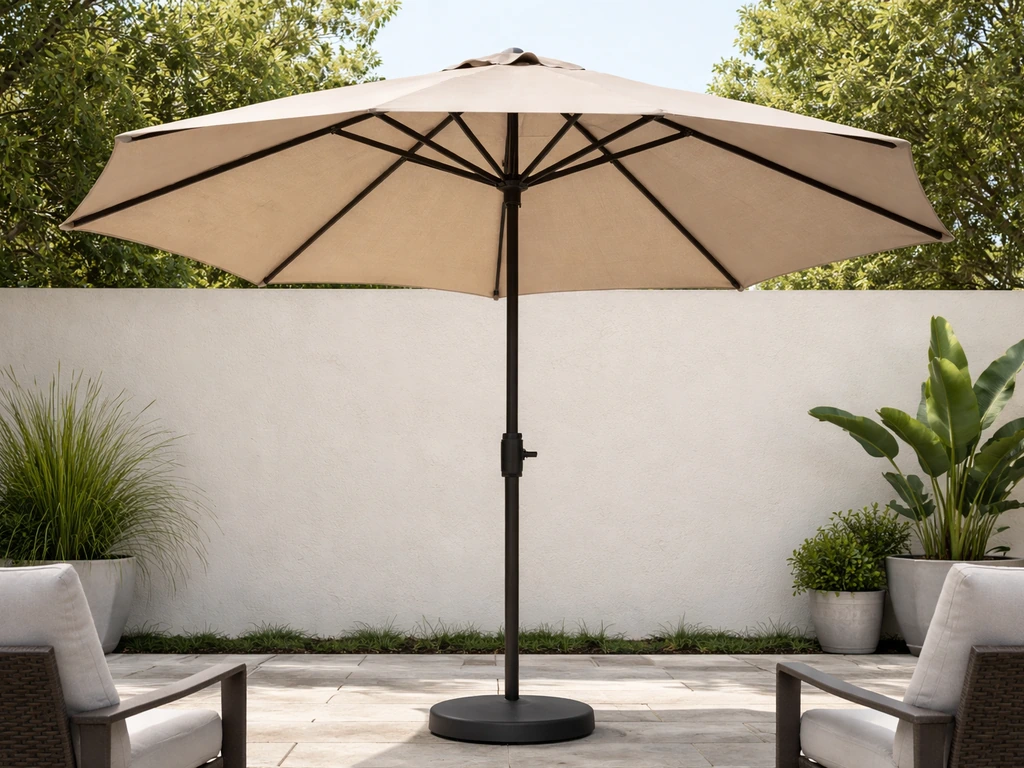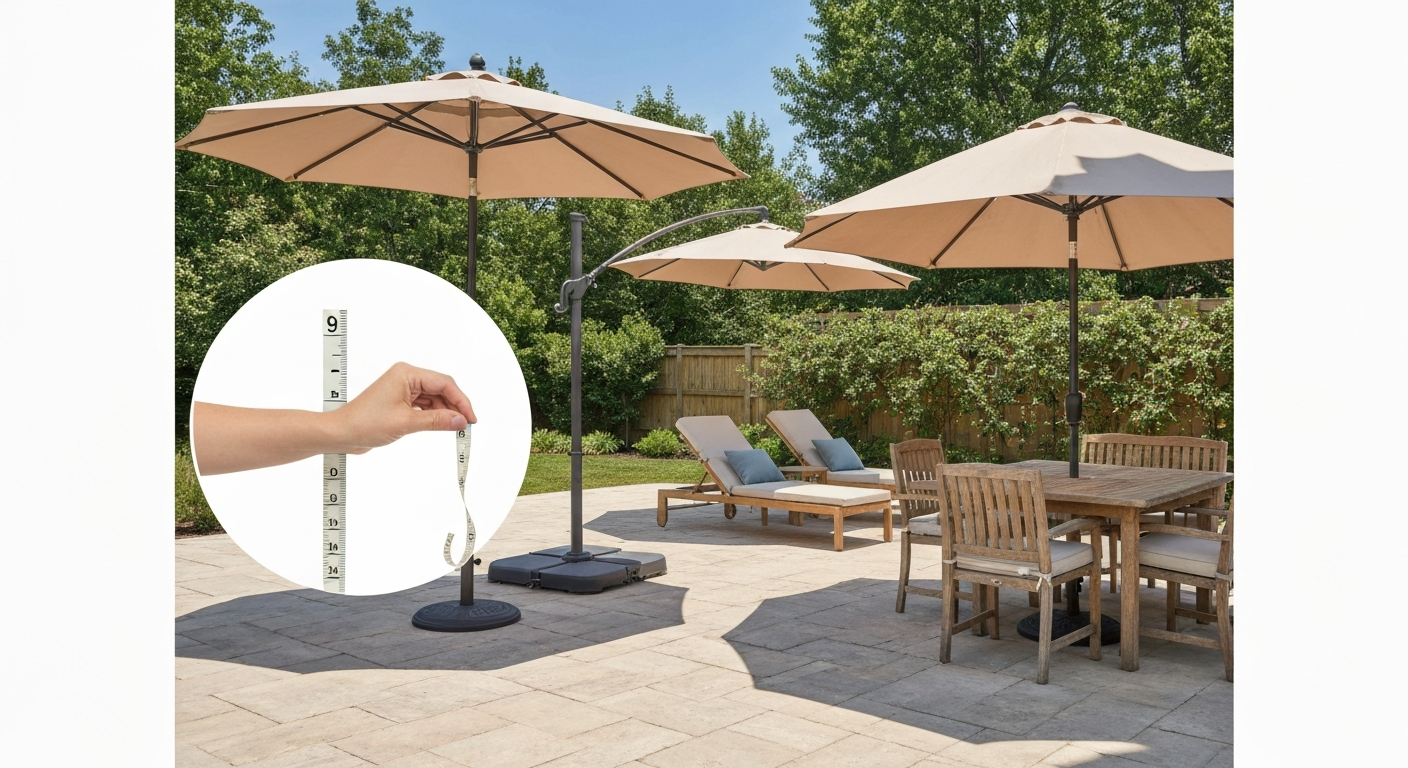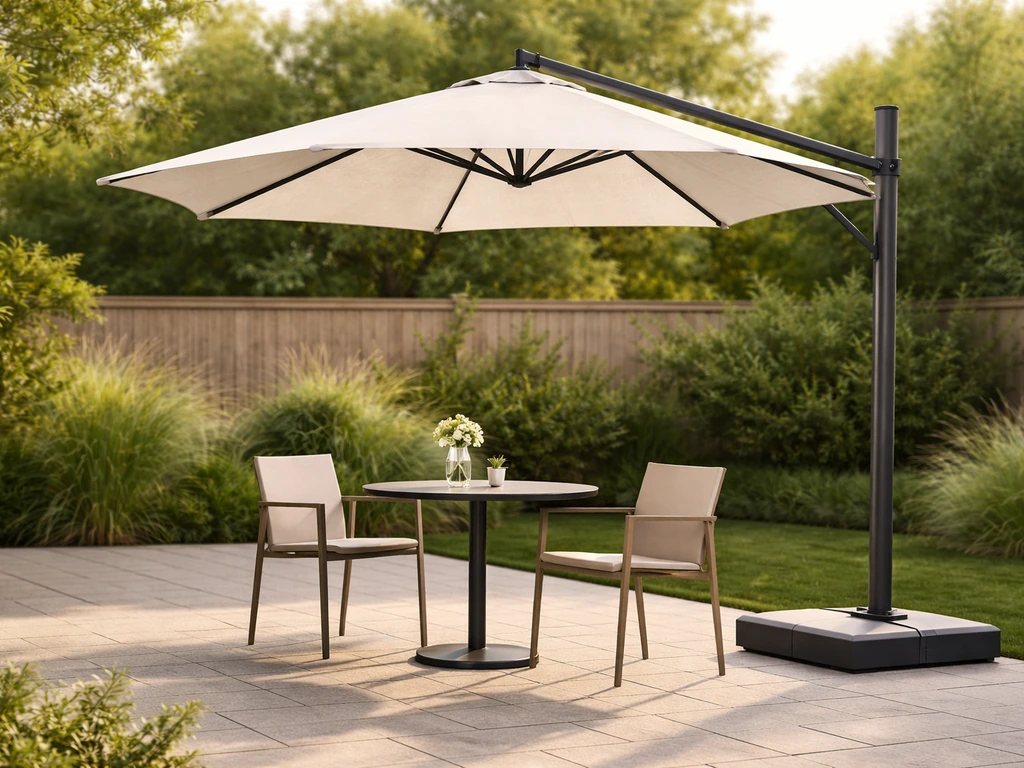
The best 11-foot patio umbrella for most homeowners is a solution-dyed acrylic market umbrella with a powder-coated aluminum frame, paired with an 80-pound-or-heavier base. That setup gives you genuine UV protection, mold resistance, and enough wind stability for everyday use. If your table sits against a wall or your space is tight, a cantilever (offset) version at the same 11-foot canopy size solves the pole-in-the-middle problem but needs a significantly heavier base, often 265 to 374 pounds of sand and water, to stay safe. The right choice comes down to your layout, your local wind conditions, and how much you want to spend on the base system.
Best 11 Foot Patio Umbrella: Buyer Guide for Wind and Shade

Kent Lang
1 Jun 2026
What "11 feet" actually means in practice
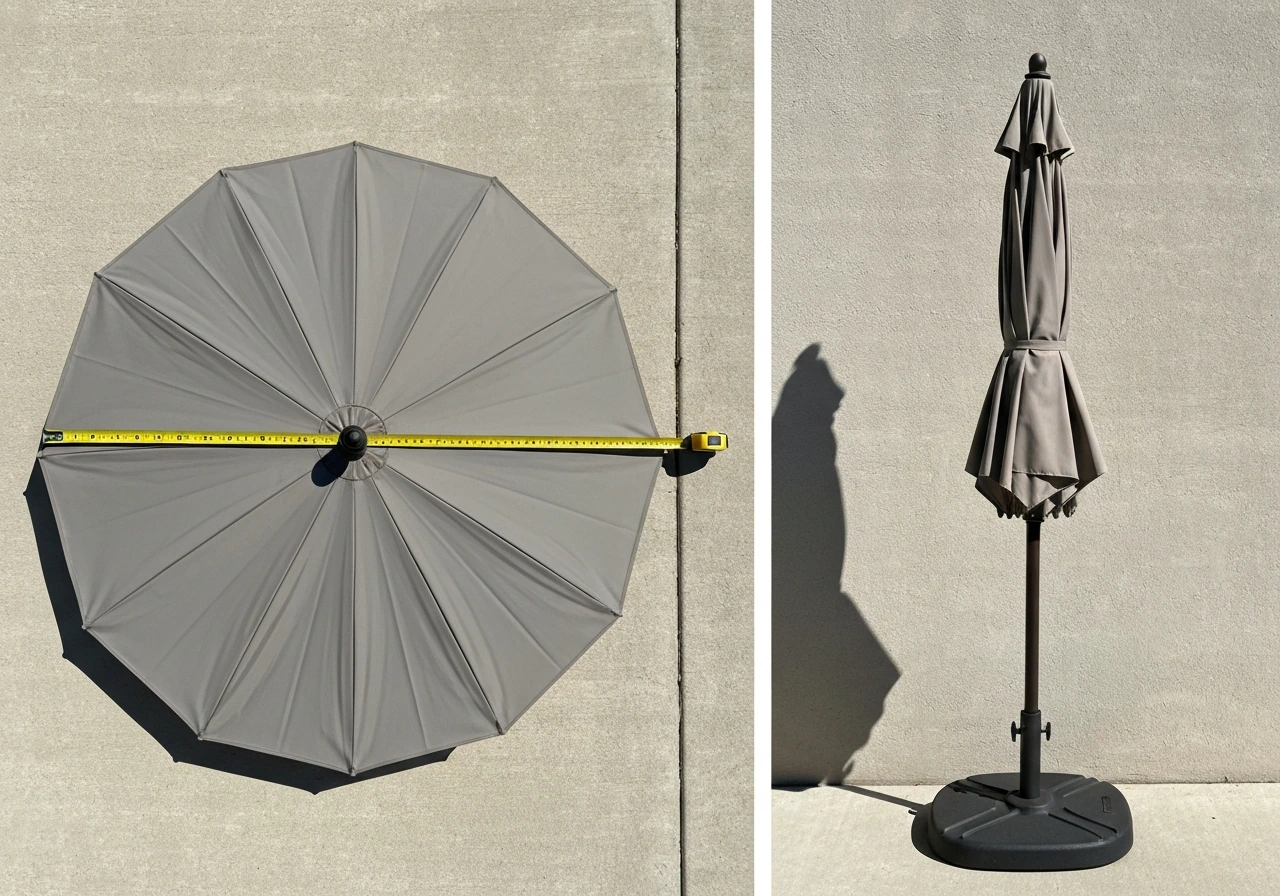
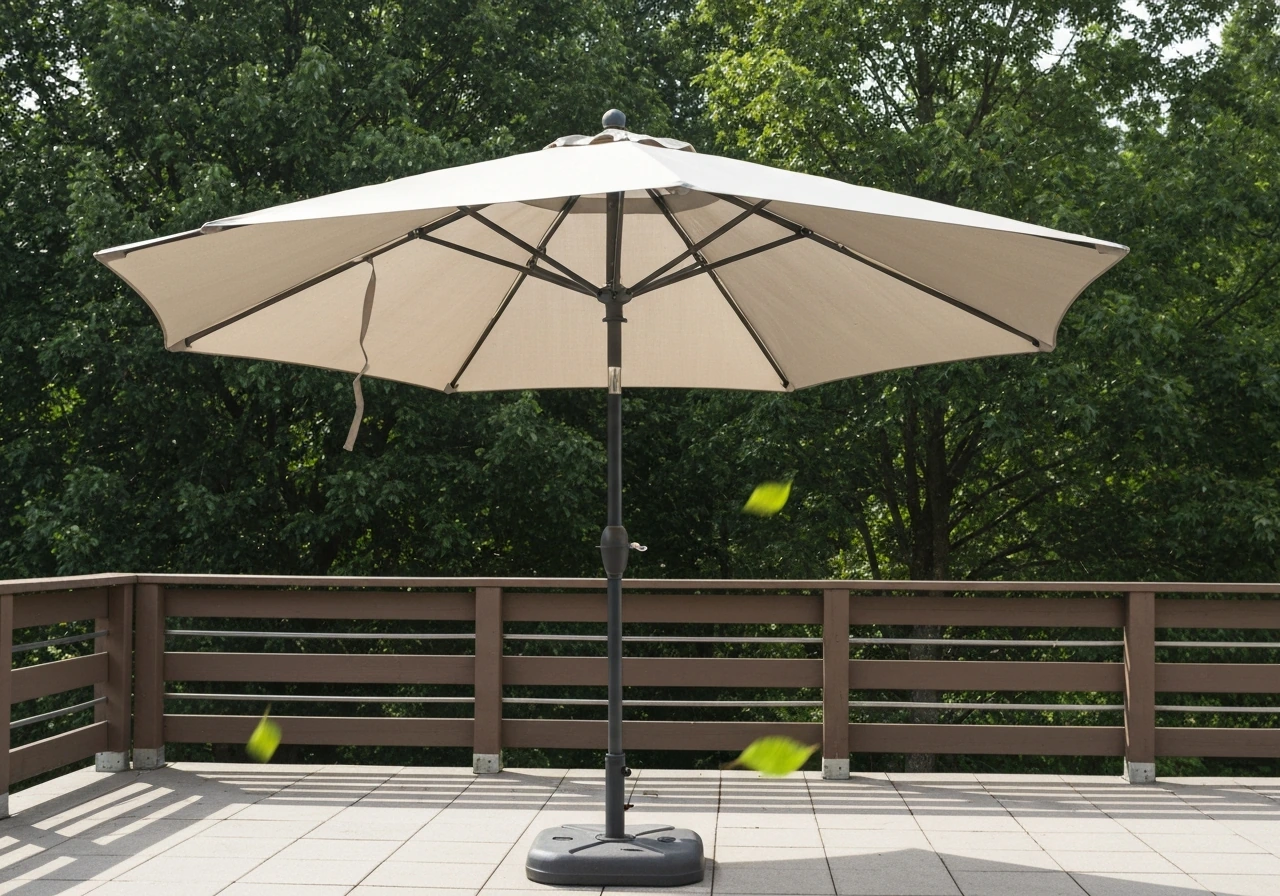
When a manufacturer says "11-foot patio umbrella," that number refers to the canopy diameter measured tip to tip, not the height of the pole or some other dimension. For a round umbrella like the SunVilla 11' Round model, the 11 feet is literally the canopy diameter. For an octagonal market umbrella, it is measured corner to corner across the widest point. That distinction matters because the actual shade footprint you get on the ground is noticeably smaller than 11 feet once you account for the sun's angle.
Actual coverage figures from manufacturers bear this out. A Treasure Garden 11-foot octagonal market umbrella lists 85 square feet of shade coverage. The Terra Outdoor Living Auto-Tilt 11' Market Umbrella, with its 11' x 11' canopy, also lands at about 85 square feet. Cantilever models are similar: the Grand Patio 11FT Cantilever quotes 95 square feet, and the Hampton Bay 11-foot offset states 145 square feet (that higher number likely reflects a more optimistic sun-angle calculation). In real terms, expect roughly 85 to 95 usable square feet of shade, which is enough to cover a 48-inch round dining table with four chairs or a 60-inch oval table comfortably.
If you are comparing sizes and wondering whether to go up or down, a 10-foot umbrella covers a smaller dining set adequately, while 13- or 15-foot options make more sense for large sectional seating areas or pools. If you want similar guidance on dialing in the right canopy size, see the best 10ft patio umbrella options as a related comparison point. If you are choosing the best 15 foot patio umbrella for a larger seating area, measure the shade footprint you need first so you do not end up with uncovered gaps 15-foot patio umbrella. For most four-to-six person patio dining tables, 11 feet is the sweet spot.
Market umbrella vs. cantilever: which style fits an 11-foot canopy better
Both styles are widely available at the 11-foot size, and they solve different problems. A market (center-pole) umbrella has the pole running straight through the middle of the canopy and down into a table hole or freestanding base. A cantilever or offset umbrella has the pole positioned to the side, with the canopy arm extending out over your seating area. Neither is universally better. The right one depends on how your space is arranged.
When a market umbrella makes sense
Choose a market umbrella if your patio table has an umbrella hole, you want a simpler setup, or you are working with a modest budget. The center-pole design is inherently stable because the weight of the base sits directly under the canopy. Treasure Garden recommends an 80-pound-or-heavier base for their 11-foot market umbrella, which is achievable with a standard filled resin base. Market umbrellas also tend to be lighter and easier to move. The trade-off is that the pole sits in the middle of your table, which can make it harder to pass dishes across or seat people facing it.
When a cantilever umbrella makes sense
A cantilever is the better choice when you want an unobstructed seating area, when your table does not have an umbrella hole, or when you need to shade a lounge chair or sectional where a center pole would be in the way. The offset design lets you position shade exactly where you want it and often allows 360-degree rotation, which is useful as the sun moves. The honest downside is the base requirement: because the pole is off to the side, the physics demand much more counterweight. Grand Patio's manual specifies filling the included base with 330 pounds of sand plus 44 pounds of water, for a total of 374 pounds. Patio Kingdom's cantilever has identical specs. That is not a base you are going to drag across the deck every weekend.
| Feature | Market (Center Pole) | Cantilever (Offset) |
|---|---|---|
| Pole position | Center of canopy | Side, arm extends overhead |
| Typical base weight needed | 80+ lbs | 265–374 lbs (filled) |
| Best for | Dining tables with umbrella hole | Lounge areas, tables without hole, poolside |
| Portability | Easier to move | Heavy base, usually stays put |
| Price range | Lower to mid | Mid to high |
| 360° rotation common? | No | Yes, on many models |
| Wind venting | Single or double vent options | Varies by model |
Materials that determine how long it lasts
Canopy fabric
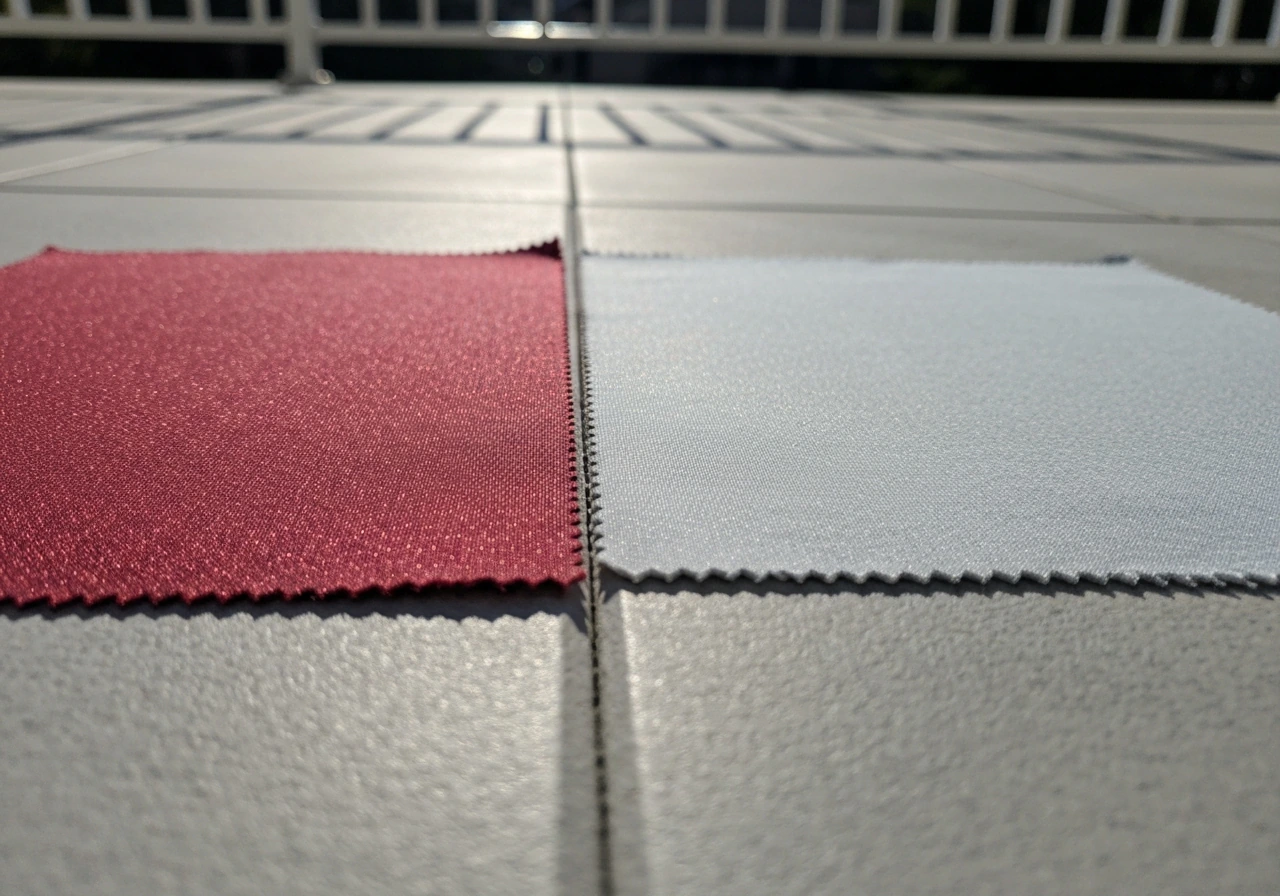
Solution-dyed acrylic, most famously sold under the Sunbrella brand, is the best canopy fabric for an 11-foot umbrella if durability and UV protection are priorities. If you want the best 11 ft patio umbrella, start by choosing solution-dyed acrylic fabric for dependable fade resistance and UV protection. The dye is locked into the fiber during manufacturing rather than applied on top, which is why Sunbrella is described as mold and mildew resistant and resists fading over years of direct sun exposure. Home Depot’s Sunbrella mildew-resistant patio umbrella listings use the “Mildew Resistant” feature to market these umbrellas blank" rel="noopener noreferrer">mold and mildew resistant. It cleans up with mild soap and water, and it can handle a diluted bleach solution for tougher stains without the fabric degrading. The Terra Outdoor Living 11' Market Umbrella uses a Sunbrella canopy and covers about 85 square feet. Solution-dyed acrylic costs more, but for an umbrella that will live outdoors for years in UV-heavy environments, it is worth the premium.
Polyester canopies are the budget alternative. Grand Patio uses a double-coated 250g polyester on their 11FT cantilever, claiming 99% UV blocking and a 3-year fade resistance warranty. That is a reasonable spec for the price, and the double coating adds water resistance. What polyester cannot match is the long-term fade and mildew performance of solution-dyed acrylic, especially in hot, humid climates. If you are in the Pacific Northwest or somewhere with heavy moisture and sun cycling, polyester canopies start to show wear faster.
Frame and pole materials
Aluminum frames are the standard recommendation for most homeowners: lightweight, rust-resistant, and widely available. Powder coating adds a layer of protection against scratches and oxidation. Grand Patio's 11FT cantilever uses a reinforced powder-coated aluminum pole with eight heavy-duty steel ribs, which is a common hybrid approach where the main structural pole is aluminum but the ribs are steel for rigidity. Steel ribs can rust if the coating chips and water gets in, so inspect the ribs at the end of each season and touch up any chips. Fiberglass ribs are the best wind-flex option, found on higher-end models, but less common at this price tier.
Wind stability and how to pick the right umbrella for your conditions
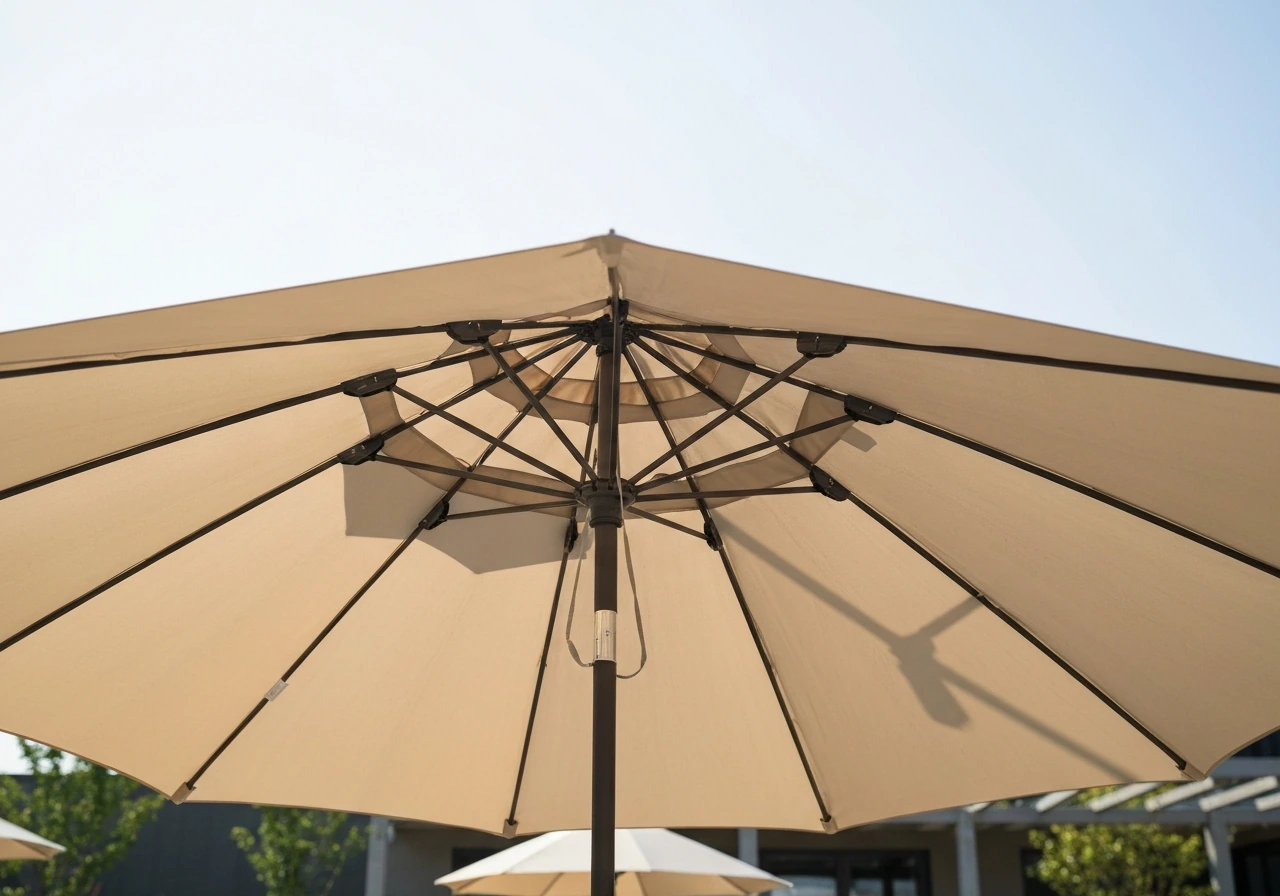
Wind is the main reason 11-foot umbrellas fail prematurely or become dangerous. A large canopy acts like a sail, and at this size you are capturing a lot of wind. The Telescope Casual 11' cantilever is engineered to withstand consistent 25 mph winds and gusts, which is a solid real-world threshold. Most manufacturers do not publish explicit wind ratings, so this is a useful benchmark when comparing models: if a manufacturer does not list any wind resistance spec, treat it as less wind-tested.
Wind venting is a practical feature that significantly reduces the sail effect. Treasure Garden's 11-foot market umbrellas come with either a single wind vent (SWV) or double wind vent (DWV) design. A dual wind vent lets air flow through the top of the canopy rather than pushing it like a parachute. If you live somewhere that gets regular afternoon gusts, pay for the double-vent version. It is not a gimmick. The canopy stays flatter and puts less stress on the ribs and base.
Regardless of how wind-resistant a specific model claims to be, close your umbrella when you are not using it and during storms. Grand Patio's user manual explicitly recommends closing during heavy rainfall. Finbrella's safety guidance suggests closing when gusts exceed 40 kph (about 25 mph). A half-tilted umbrella in wind is especially risky because the tilt linkage gets stressed and the canopy presents an angled surface to the wind, creating more torque on the pole and base.
Base requirements and installation for an 11-foot canopy
Getting the base right is where most buyers underestimate what they need, especially for larger umbrellas. At 11 feet, you are dealing with a canopy that generates significant leverage on the base when wind hits it. The base needs to counteract that force.
Market umbrella bases
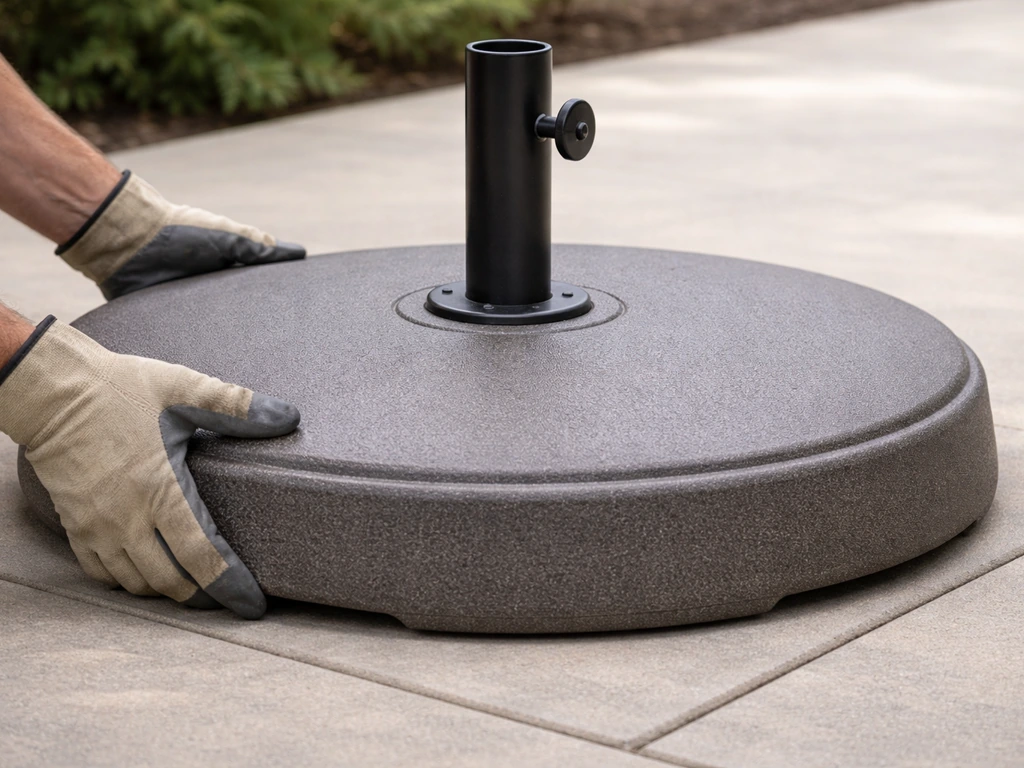
Treasure Garden's recommendation for their 11-foot market umbrella is a base weighing 80 pounds or more. A standard 50-pound resin base is not enough for this size. You want a weighted base, either one you fill with sand or water, or a cast iron/concrete unit. If your table has an umbrella hole, threading the pole through the table and into a cross base under the table helps distribute the load, but you still want a filled base to prevent tipping in a gust. Make sure the pole diameter of the umbrella matches the hole in your table (typically 1.5 inches to 2 inches) before buying.
Cantilever umbrella bases
Cantilever bases are a completely different situation. Because the pole is offset, the physics require dramatically more counterweight. Grand Patio's user manual is specific: fill the base with 330 pounds of sand and 44 pounds of water, for a combined 374 pounds. Patio Kingdom's cantilever has the same spec. The BackyardCity 11-foot offset model includes a sand-filled resin base designed to hold up to 100 pounds of sand, which is below the spec of the heaviest models but reflects the range you will see across price points. If a cantilever model includes a base that fills with less than 200 pounds total, treat it as marginal for anything above light breeze conditions.
Once you set up a properly loaded cantilever base, it stays where it is. Position it on a flat, stable surface, and place it so the base weight is on the side opposite where the canopy extends. Most cantilever systems have a specific orientation for this reason. Follow the assembly manual for your exact model, since arm pivot and base alignment differ between brands.
Quick picks by use case
- Dining table with umbrella hole: Go with an 11-foot market umbrella with a double wind vent, solution-dyed acrylic canopy, and an aluminum frame. Pair it with a base of at least 80 pounds. The Treasure Garden 11-foot DWV round market umbrella is a solid, well-documented choice at this size.
- Windy patio or exposed deck: Prioritize a double-vent market umbrella rated for 25 mph winds, a heavy base (closer to 100 pounds for market style), and look for fiberglass or reinforced steel ribs. Keep it closed when not in use.
- High UV or beach-adjacent space: Solution-dyed acrylic is non-negotiable here. Look for Sunbrella or equivalent solution-dyed acrylic canopies with documented UPF ratings. The Terra Outdoor Living 11' Auto-Tilt Market Umbrella with its Sunbrella canopy fits this use case.
- Poolside or lounge seating area: A cantilever is better because there is no center pole in the way of chairs and loungers. Budget for the full base weight (330 lbs sand + 44 lbs water minimum for Grand Patio-style systems). Look for 360-degree rotation so you can chase the shade as the sun moves.
- Compact patio with a small footprint: A market umbrella in a table-mount setup keeps the visual footprint small. If you go cantilever, the base needs floor space on the side, so measure that space before buying.
- Budget-conscious buyer who still wants durability: A polyester-canopy cantilever with a powder-coated aluminum pole (like the Grand Patio 11FT model) gives solid performance at a lower price point. Just plan to store it properly in the off-season and expect a shorter fade-free lifespan than acrylic.
How to measure your space, compare models, and what to do after you buy
Measuring before you buy
Start by measuring your table or seating area. For a dining table, the general rule is to add 2 feet of clearance on each side of the table to account for chair overhang and comfortable shade coverage. A 48-inch (4-foot) round table needs at least 8 feet of canopy, so 11 feet gives you generous coverage and keeps chairs in the shade. For a 60-inch rectangular table, the same logic applies. If you are covering a lounger or sectional, measure the full footprint of the furniture and compare it against the 85 to 95 square feet of actual shade coverage an 11-foot umbrella delivers.
For cantilever umbrellas, also measure the space on the side where the base will sit. The base and pole arm need clearance, and on a small patio this can be a real constraint. Map it out with tape on the ground before ordering.
Comparing models side by side
When you are narrowing down options, use these five criteria as your filter: canopy material (solution-dyed acrylic vs polyester), frame material (aluminum pole, rib type), wind vent design (single vs double), base weight requirement (and whether a base is included), and warranty length. A 3-year fade warranty on a polyester canopy is standard. Sunbrella-fabric umbrellas typically carry longer fade warranties. Price alone is a poor filter at this size because the base system often costs as much as or more than the umbrella itself.
After your umbrella arrives
Once it is set up, a few habits will extend the life of any 11-foot umbrella significantly. Close it whenever you are not actively using it, not just during storms. UV degradation and wind stress accumulate over hundreds of open hours, and closing the canopy slows both. If the canopy gets wet, Sunvilla's assembly guide recommends letting it dry fully in the open position in sunlight before closing and storing, which prevents mildew buildup. For cleaning, mild soap and water handles most dirt. For Sunbrella fabrics, the manufacturer allows a diluted bleach solution for mold or mildew spots without damaging the fiber. For polyester canopies, skip the bleach and stick to mild soap.
At the end of the season, store the canopy somewhere dry if possible. If you leave the umbrella outside year-round, invest in a protective cover sized for an 11-foot canopy. Check the ribs and joints each spring for corrosion or cracks, touch up any chipped powder coating on the frame, and re-tighten any hardware that has worked loose. A well-maintained 11-foot umbrella with a quality canopy and frame should last five to ten years without major issues. Cutting corners on the base or leaving it open in wind is what usually ends them early.
FAQ
Is an 11-foot patio umbrella really the same as 11 feet of shade coverage?
No. The 11-foot measurement is the canopy diameter, but the usable shade footprint on the ground is smaller due to sun angle. In practice, many 11-foot models land around 85 to 95 square feet of shade, so measure your table footprint and chair overhang rather than assuming full 11-foot coverage.
What’s the biggest mistake people make when buying the best 11 foot patio umbrella?
Underestimating the base. For 11-foot market umbrellas you generally need about 80 pounds or more, and for cantilevers you may need 330 pounds of sand plus water (around 374 pounds total). If the listed base is light or not included, the umbrella may feel “fine” until it hits a gust.
How do I know if I need a market (center-pole) or a cantilever (offset) umbrella for my setup?
Use the pole situation and your layout. Choose a market umbrella if your table has an umbrella hole and you want easier setup and a simpler base requirement. Choose a cantilever if you need unobstructed seating, you do not have a hole, or you are shading lounge chairs or a sectional where a center pole would block movement.
Do I have to buy a matching umbrella base, or can I use any weight?
You should match the system. The umbrella’s pole diameter must fit the table hole (often 1.5 to 2 inches) and the base must support the umbrella type. Cantilever bases also require specific orientation and arm clearance, so “generic heavy” is not always safe or compatible.
What wind conditions are “too windy” for an 11-foot patio umbrella?
If there’s no explicit wind rating from the manufacturer, treat the model as less wind-tested. As a practical safety threshold, many safety guides recommend closing when gusts reach around 25 mph (about 40 kph). When in doubt, close earlier rather than relying on a half-tilted position.
Is a wind vent actually worth it?
Yes, especially on 11-foot umbrellas where the canopy catches wind. Double-vent designs reduce the parachute effect by letting air pass through the top, which helps keep the canopy flatter and reduces stress on ribs and the base during gusts.
Can I leave my 11-foot umbrella open if it’s raining lightly?
Generally no. Even light rain can increase wear, and many manuals recommend closing during heavy rainfall. Close it when it is actively raining or windy, then dry the canopy fully before storing to limit mildew risk.
How should I clean solution-dyed acrylic versus polyester canopies?
Solution-dyed acrylic can handle mild soap and water, and diluted bleach is typically acceptable for stubborn mildew or spots without harming the fiber. Polyester, even if it has water resistance, should usually avoid bleach, so stick to mild soap and water to prevent premature fading or weakening.
If my space is tight, how do I plan for cantilever base clearance?
Measure the side where the base must sit and where the arm pivots. The base plus arm clearance can be the limiting factor on small patios. Map it on the ground with tape before ordering, because cantilever umbrellas often have a specific orientation for safe operation.
How do I store an 11-foot umbrella when I am not using it for months?
Store it in a dry location if possible, and if it stays outside, use a cover sized for an 11-foot canopy. Also inspect the ribs and joints in spring, touch up chipped powder coating, and re-tighten hardware so minor issues do not worsen after winter moisture.
What rib and frame details should I prioritize for longevity?
Look for corrosion-resistant construction. Powder-coated aluminum is common for frames, and steel ribs can rust if coating chips, so inspect and touch up chips each season. Fiberglass ribs are generally more flexible for wind, but they appear more often on higher-end models.