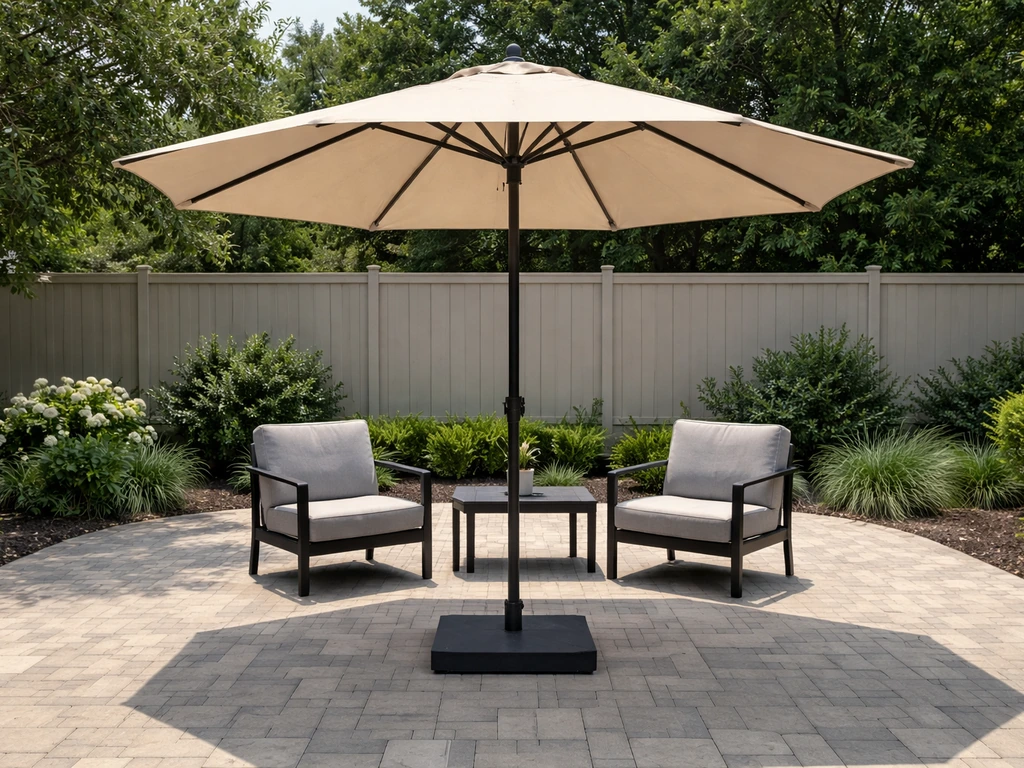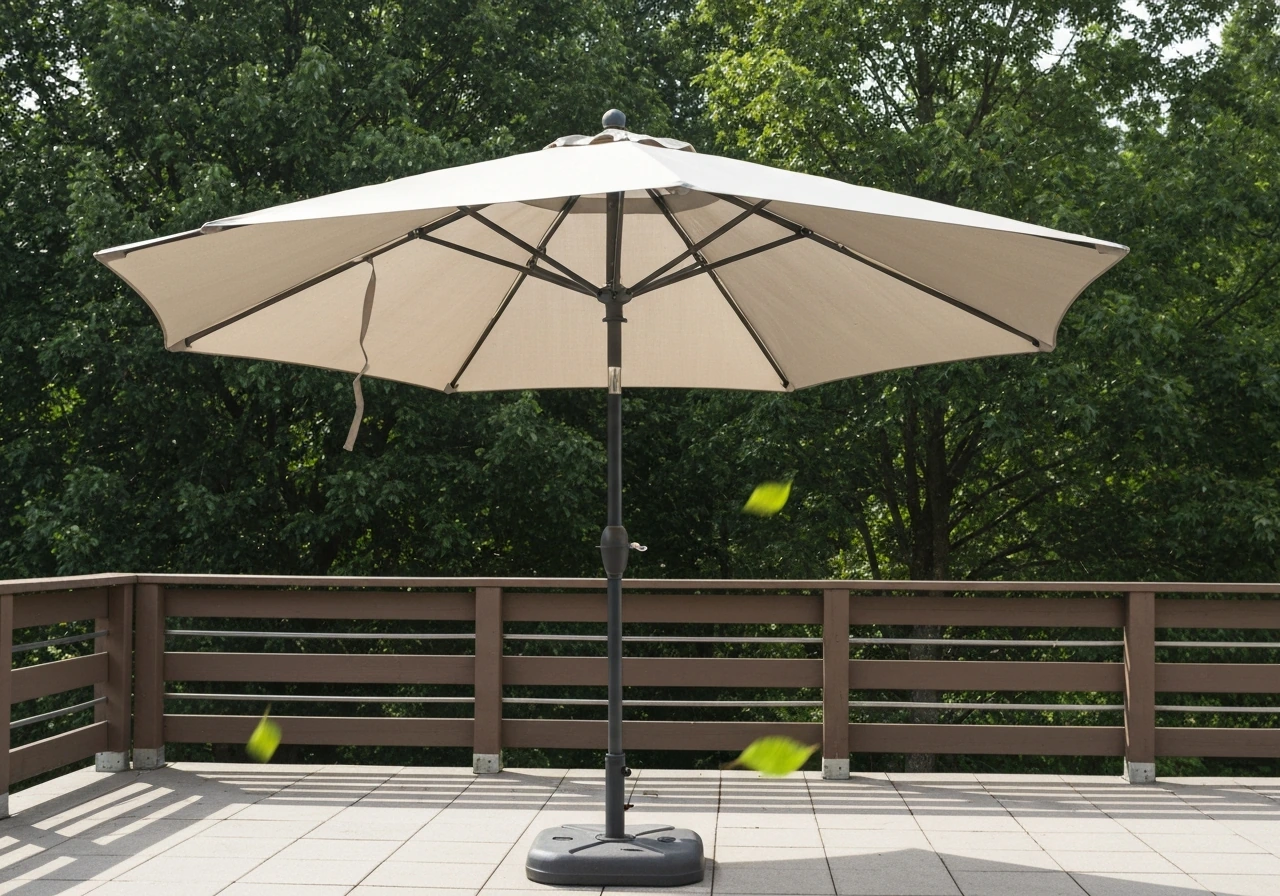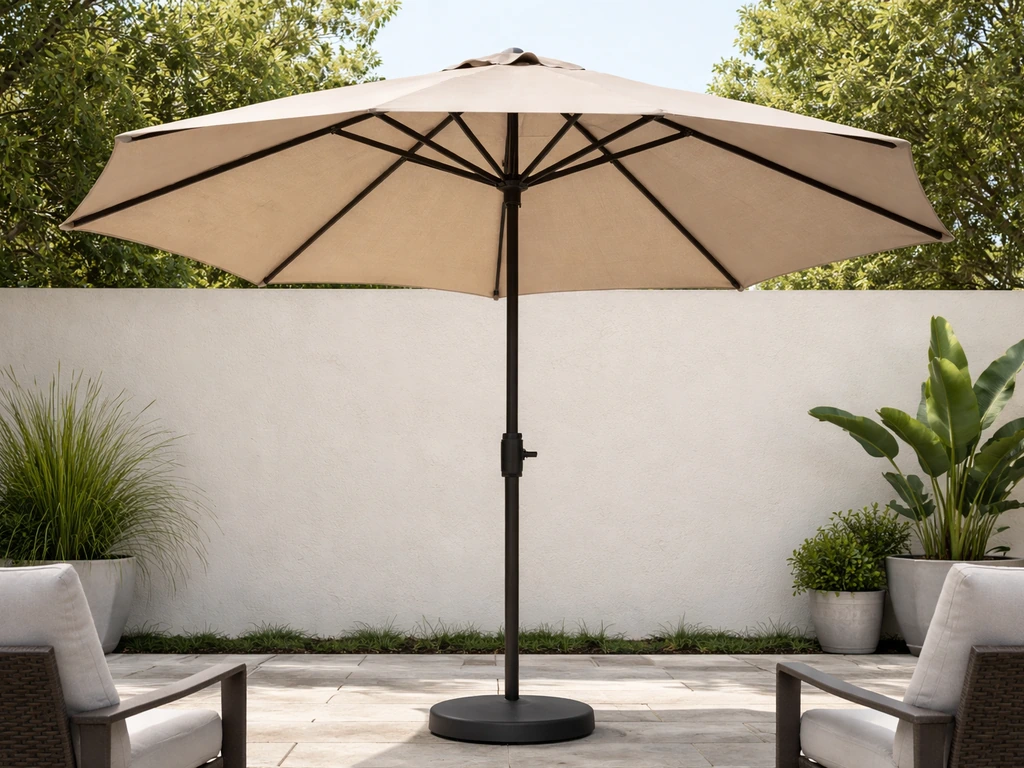
A 15-foot patio umbrella is one of the largest residential options you can buy, and the best overall choice for most people is a cantilever (offset) style with a Sunbrella or solution-dyed acrylic canopy, fiberglass ribs, and a base weighing at least 150 lbs. That combination gives you maximum usable shade, wind resilience, and long-term durability. But whether that's right for your specific space depends on your seating layout, how exposed your patio is to wind, and whether you want the pole out of the way. This guide walks you through everything you need to match the right 15-ft umbrella to your actual setup.
Best 15 Foot Patio Umbrella: Size, Types, Stability Tips

Kent Lang
10 Jun 2026
What '15 foot' actually means in real coverage terms
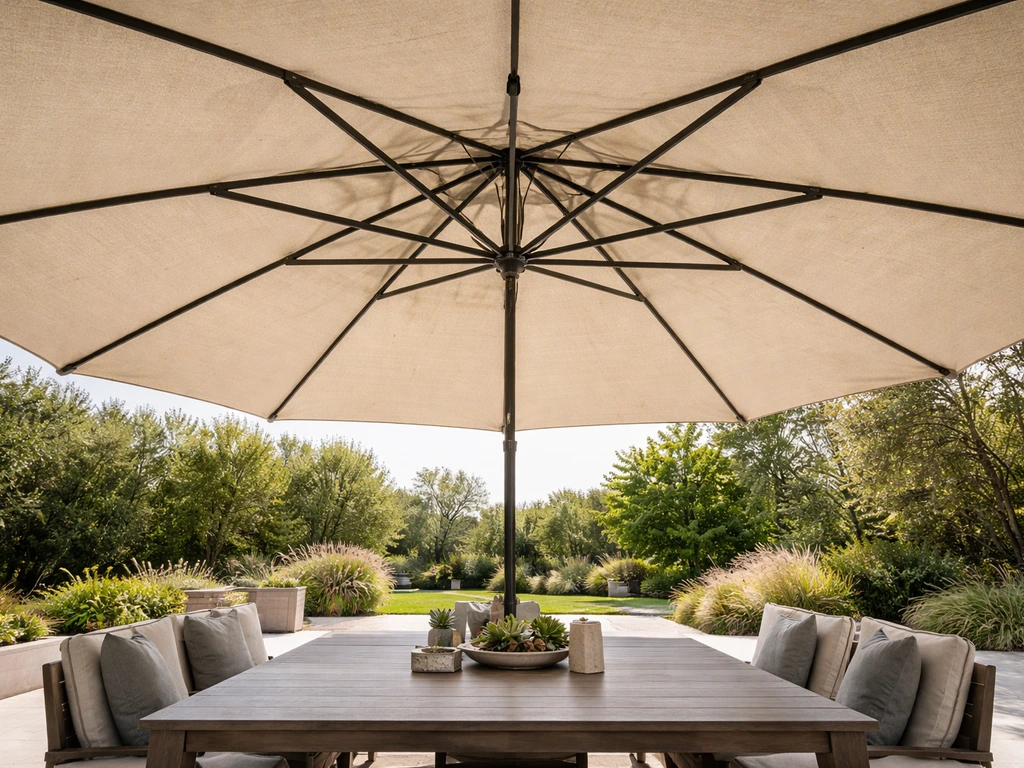
When a brand says '15-foot umbrella,' they're talking about the canopy diameter, not the shadow it casts on your patio. In a perfect world, a 15-ft circular canopy would shade a circle roughly 176 square feet. In practice, you get less. The angle of the sun, the tilt of the canopy, and the shape of the umbrella all shrink the effective shade zone. Some brands (like California Umbrella) actually publish a separate 'shade coverage' figure on their spec sheets that's smaller than what pure geometry would suggest, because they're measuring the real projected area rather than the canopy footprint. So treat the 15-ft label as a frame reference, not a precise shade guarantee.
A 15-ft umbrella is genuinely large. Most residential patios work fine with a 9-ft or 11-ft umbrella, so before you commit to 15 feet, make sure you actually need it. A good rule of thumb is that your umbrella should extend at least 2 feet beyond your table or seating area on each side for proper shade.
That means a 15-ft umbrella is ideal when you have a wide dining table (60 inches or more), a large sectional, or a sprawling lounge area where a smaller canopy just won't reach. If your space is more modest, you might be better served by an 11-ft option and avoid dealing with the heavier base requirements a 15-footer demands.
If you find that 11 feet fits your space better, you may prefer the best 11ft patio umbrella options instead of forcing a 15-footer to work 11-ft option.
Cantilever vs. market vs. offset: which style makes sense at 15 feet
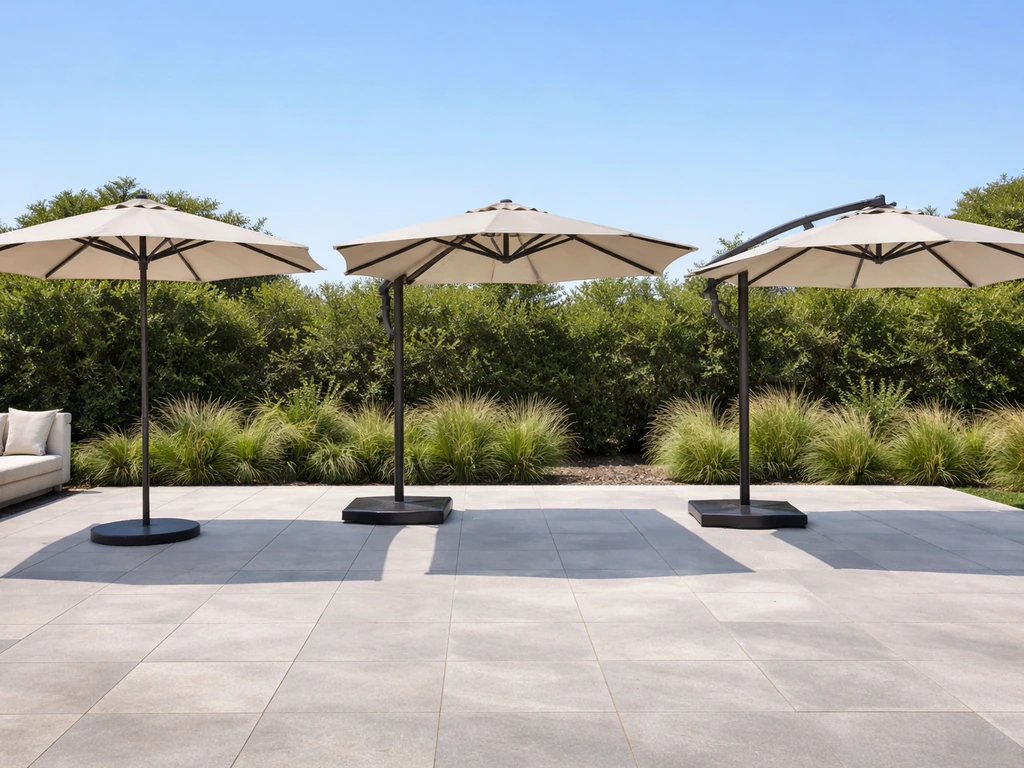
At 15 feet, you're working with a big canopy, and the style you choose has a huge impact on how useful that shade actually is. Here's how the three main styles stack up.
Market (center-pole) umbrellas
A market umbrella has a center pole that runs straight through the middle of the canopy, typically through a hole in your patio table. At 15 feet, that pole is a serious obstacle. It sits right in the middle of your seating area, makes getting in and out awkward, and limits how you arrange chairs. Center-pole designs do tend to be more affordable and mechanically simpler, but for a canopy this large, the pole placement is a real quality-of-life issue.
The Blue Wave Eclipse 15-ft Oval Dual Market Umbrella is a solid example of this category: it uses a 16-rib steel support system and three wind vents for air release, and it works well when you have a purpose-built table with a center hole and don't mind the pole. But most people shopping at this size would do better with a cantilever.
Cantilever and offset umbrellas
A cantilever or offset umbrella positions the pole to the side, so the canopy hangs out over your seating with no pole in the way. This is the go-to choice for 15-ft coverage for good reason: you get full, unobstructed shade over your entire seating area, easier chair movement, and the flexibility to position the canopy exactly where you need it. The trade-off is weight and cost.
Cantilever bases need to be heavy and wide to counterbalance a 15-ft canopy arm, and good ones aren't cheap. Frontgate's Altura LED Cantilever Umbrella, for example, requires twelve 16-inch by 16-inch pavers just to keep it stable, on top of whatever weighted base it sits on. That's a real commitment, but it's also the honest reality of stabilizing a large offset canopy.
The terms 'cantilever' and 'offset' are used almost interchangeably in the residential market, though some commercial contexts draw a finer distinction. For your purposes as a homeowner, they mean the same thing: side-mounted pole, canopy hanging over your space. This is the style I'd recommend for most large patio setups.
Sizing, coverage, and layout planning
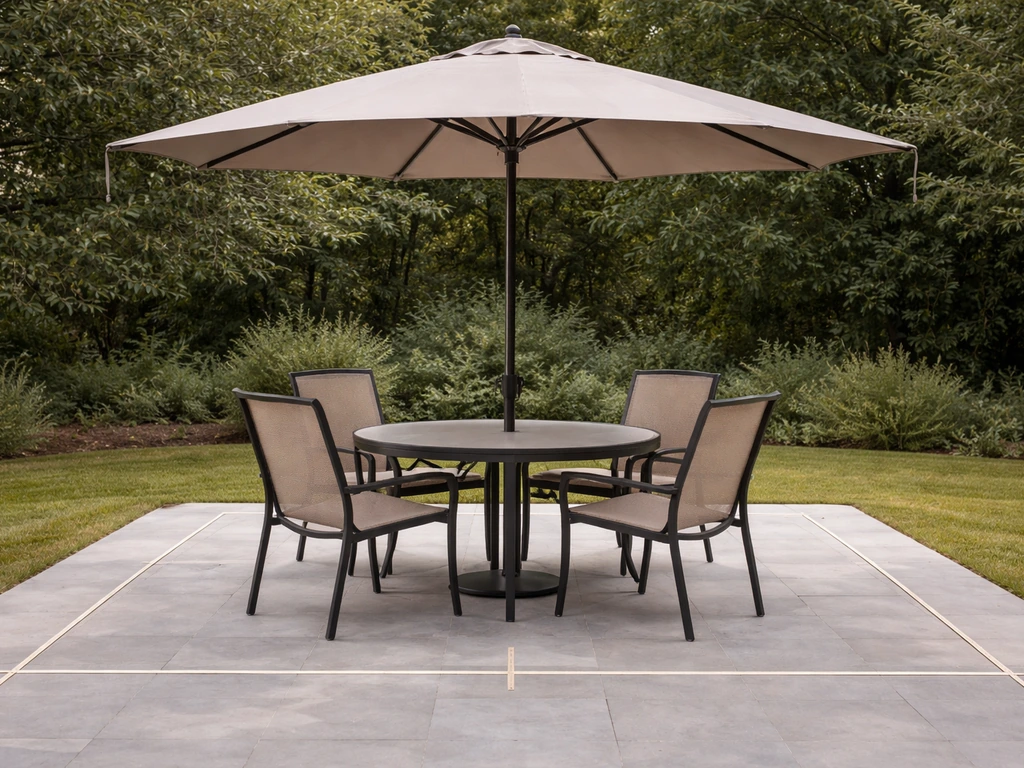
Getting the coverage right starts with measuring your space honestly before you shop. Here's how table size, seating, and umbrella diameter relate at the large end of the market.
| Table / Seating Width | Recommended Umbrella Size | Notes |
|---|---|---|
| 40–44 inches | 9 ft | Compact dining table |
| 48–60 inches | 11 ft | Standard large dining table |
| 60–72 inches or large sectional | 13–15 ft | Oversized dining or lounge area |
| Multiple seating zones | 15 ft cantilever | Offset placement covers wider footprint |
The 2-foot overhang rule matters here. If your table or seating area is 11 feet wide and you buy a 15-ft umbrella, you get about 2 feet of overhang on each side, which is right at the minimum for good shade. If your seating footprint is only 8 or 9 feet across, a 13-ft umbrella would do the job and be easier to manage. Don't overbuy just because bigger feels safer.
Clearance above seating is the other measurement people forget. A canopy-to-ground height of at least 7 feet is standard for comfortable clearance when seated, and 7.5 to 8 feet if people will be standing and moving around underneath. Treasure Garden and other major manufacturers publish canopy-to-ground measurements in their spec sheets, so check this before you buy, especially with cantilever models where the arm geometry can vary.
Materials and construction: what actually holds up
Frames and poles
At 15 feet, your frame material matters more than it does at 9 feet. The canopy is heavier, the leverage on the pole is greater, and the stress on the joints is higher. Aluminum poles are the best all-around choice: they're light, rust-proof, and strong enough for residential use. Steel is heavier and can corrode if the coating chips. Wood looks beautiful but requires regular maintenance and is prone to cracking in wet climates. For a 15-ft umbrella you plan to leave outside through multiple seasons, powder-coated aluminum is the most practical choice.
Ribs and canopy structure
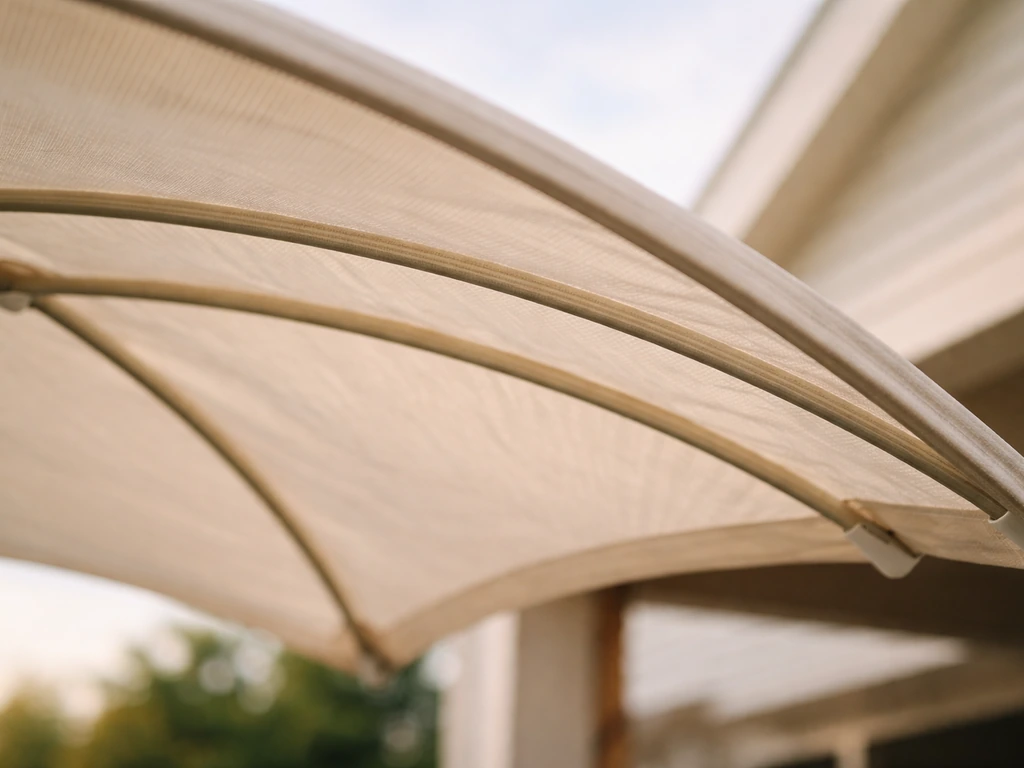
The ribs are what hold the canopy shape under wind load. Fiberglass ribs are genuinely better at this size because they flex under gusts rather than bending permanently or snapping. Steel ribs are fine for calm environments but show fatigue faster in exposed locations. Rib count also matters: a 16-rib system (like the Eclipse 15-ft mentioned above) provides a much more structured, stable canopy than an 8-rib version at the same diameter. More ribs mean the fabric is better supported, less likely to invert in wind, and more evenly tensioned. Look for at least 12 ribs on a 15-ft canopy; 16 is better.
Fabric and UV performance
Sunbrella is the benchmark fabric in this category, and for good reason. It's 100% solution-dyed acrylic, meaning the color is embedded throughout the fiber before weaving rather than applied as a surface coating. This is why Sunbrella fabrics achieve [UPF 50+ without any additional treatment](https://www. bestpatioumbrella.
com/do-umbrellas-block-uv/are-all-umbrellas-uv-protection/), and why the color doesn't fade significantly even after years of direct sun exposure. It's also mildew-resistant and water-resistant, which matters if you live somewhere with humid summers. Frontgate's own replacement canopy language confirms this: solution-dyed Sunbrella 'maintains color year after year,' which is what you actually want from a canopy you're spending serious money on. Budget fabrics use surface dyes that break down within a couple of seasons.
If you're investing in a 15-ft umbrella, don't cut corners on the canopy fabric.
Wind stability and safety: the part most people underestimate
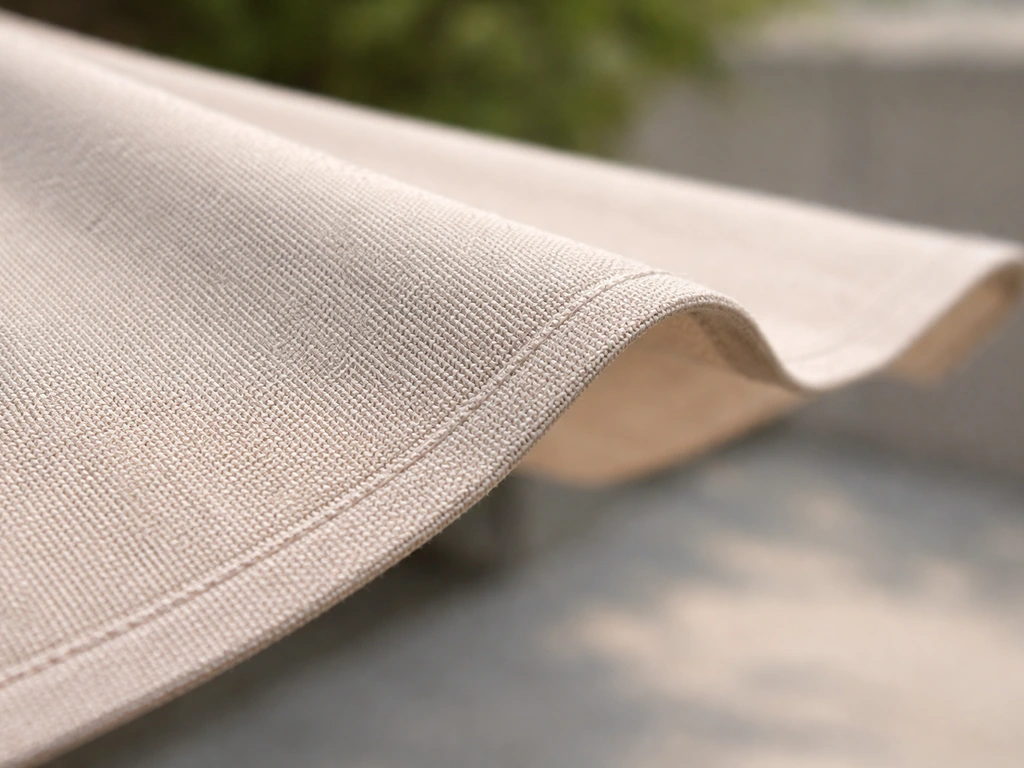
A 15-ft canopy catches a lot of wind. This is the most important practical constraint when shopping at this size, and it's where a lot of buyers get into trouble by underestimating base weight or ignoring wind exposure.
Wind speed limits
For standard residential umbrellas, closing the umbrella when winds reach 15 to 20 mph is the general guidance. A large 15-ft canopy at the upper range of this is particularly vulnerable because the surface area amplifies the force significantly. Cantilever and commercial-grade umbrellas can tolerate somewhat more wind due to their heavier base setups and more engineered construction, but even those have limits. The honest rule is: if you can feel a steady gusty breeze that makes the canopy start to move or flutter, close it. Never leave a 15-ft umbrella open and unattended in uncertain weather. Treasure Garden's own installation documentation puts it plainly: never allow the umbrella to flap in the wind, as it can cause personal injury.
Base weight requirements
The rule of thumb used by umbrella retailers is roughly 10 pounds of base weight per foot of canopy diameter. For a 15-ft umbrella, that means a minimum of 150 lbs of base weight. In practice, for an offset or cantilever design where the canopy is not centered over the pole, you should exceed that.
Treasure Garden's Z-Plate base, for example, weighs 115 lbs on its own and is designed to anchor large umbrellas, but even that may need supplemental paver weight for a 15-ft cantilever in a windy location. Frontgate's Altura cantilever umbrella specifies twelve 16-by-16-inch pavers on top of the base weight, which gives you a sense of what serious stabilization looks like.
If someone tries to sell you a 15-ft umbrella and tells you a 50-lb base is enough, that's a red flag.
Vents and wind-relief design
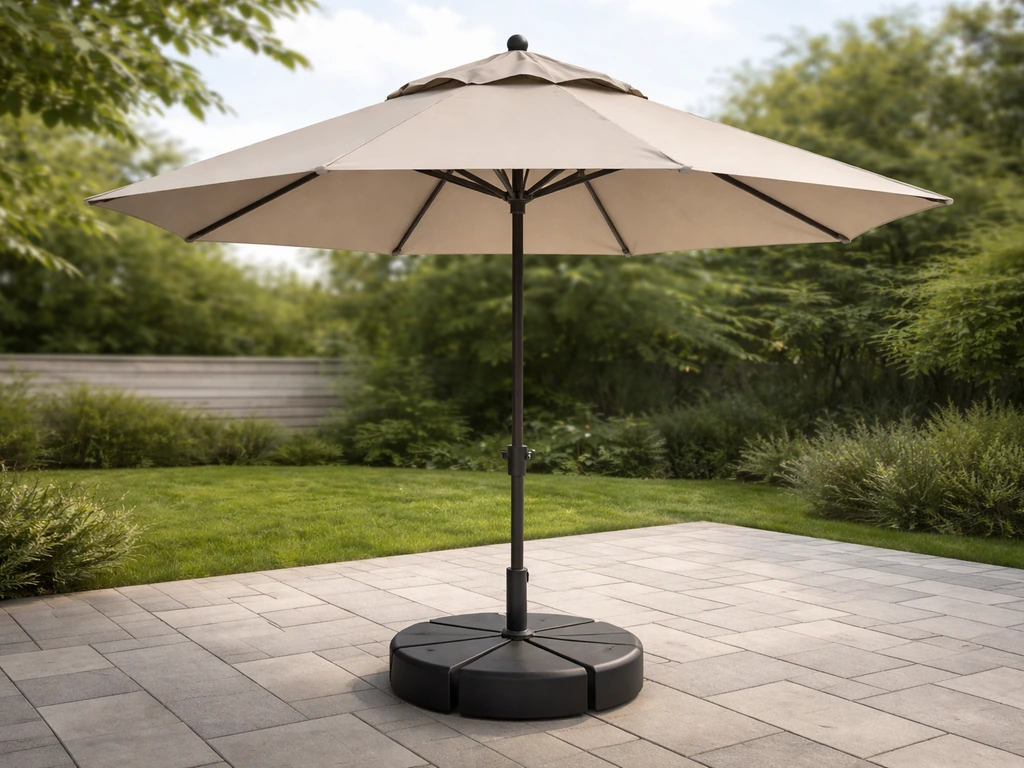
Integrated canopy vents are a real structural benefit, not just a design detail. Vents allow hot air and sudden gusts to escape upward through the canopy rather than lifting it like a sail. Most quality large umbrellas use at least one vent layer; some, like the Blue Wave Eclipse 15-ft, use three wind vents. Double-vent designs (two stacked vent tiers) provide better airflow than a single vent. When you're comparing 15-ft models, check the vent configuration, because it directly affects how the canopy behaves in gusts and how long the structure lasts.
Features worth paying for (and ones that aren't)
Tilt mechanisms
A tilting canopy extends the useful shading window by letting you angle the canopy toward low-angle morning or afternoon sun. At 15 feet, this is genuinely useful: you're covering a large area, and without tilt, parts of it go unshaded as the sun moves. Push-button tilt is convenient but less robust than collar-tilt mechanisms over time. Auto-tilt (which adjusts as you crank the canopy open) is the most seamless option. For a canopy this size, I'd consider tilt a worthwhile feature rather than an optional upgrade.
Crank vs. pulley open systems
A crank-open system is more convenient and easier to operate smoothly than a pulley/cord system, especially for a heavy 15-ft canopy. Look for a crank mechanism that feels solid and doesn't wobble when you turn it. Cheap cranks are one of the first things to fail on budget umbrellas.
LED lighting and other add-ons
Built-in LED lighting (like on the Frontgate Altura) is a legitimately useful feature if you use your patio in the evenings, and it's harder to retrofit than to buy built-in. Solar charging is convenient but inconsistent in cloudy climates, so check whether the model also has a USB or hardwired charging option. Other add-ons like Bluetooth speakers are nice but drive up cost without meaningfully improving the umbrella's core function. Spend your budget on frame quality, fabric, and base weight before extras.
Top picks and who each one is best for
There's no single best 15-ft umbrella for everyone, but these shortlisted picks cover the most common real-world scenarios. Use the 'best for' notes to match the option to your actual setup.
| Pick | Style | Best For | Key Specs to Look For | Watch Out For |
|---|---|---|---|---|
| Premium cantilever with Sunbrella | Cantilever / offset | Large lounge areas, off-center seating, maximum shade flexibility | Solution-dyed Sunbrella canopy, fiberglass ribs, 16-rib minimum, 150+ lb base, dual vents | Base weight and paver costs add up; budget accordingly |
| Heavy-duty market umbrella (e.g., Blue Wave Eclipse 15-ft Oval) | Center-pole market | Purpose-built large dining tables with center hole, calmer wind environments | 16-rib steel canopy, 3 wind vents, aluminum or steel pole | Center pole obstructs seating; not ideal for open lounge layouts |
| Commercial-grade cantilever | Cantilever / offset | Windy patios, coastal locations, high-use outdoor dining areas | Powder-coated aluminum frame, fiberglass ribs, commercial wind rating, heavy weighted base | Higher upfront cost; requires permanent or semi-permanent base setup |
| Budget aluminum market umbrella with tilt | Center-pole market | Covered patios or sheltered spaces where wind is minimal and cost matters | Aluminum pole, crank open, tilt mechanism, basic UV-treated polyester canopy | Polyester canopy fades faster; upgrade to Sunbrella if budget allows |
My honest recommendation for most people: go with a cantilever-style 15-ft umbrella with a Sunbrella canopy and a base system that hits at least 150 lbs total. Yes, it costs more upfront. But a 15-ft market umbrella with a pole in the middle of your table is a frustrating compromise at this size, and a cheap canopy fabric that fades in two summers means you're buying again. Spend the money once on a setup that actually works.
Before you buy: your checklist
- Measure your seating footprint and confirm a 15-ft canopy gives you at least 2 feet of overhang on every side.
- Decide between center-pole (market) and cantilever based on whether a center pole works with your table and layout.
- Calculate your minimum base weight: 10 lbs per foot of canopy diameter, then add extra for cantilever offset designs.
- Check canopy-to-ground clearance in the spec sheet, especially for cantilever models where arm geometry varies.
- Look for fiberglass ribs, at least 12-rib count (16 preferred), and dual canopy vents.
- Confirm the fabric is solution-dyed acrylic (Sunbrella or equivalent) for long-term fade and mildew resistance.
- Plan your close-umbrella habit now: close it when winds hit 15-20 mph and always when you leave the patio.
If you're still deciding whether 15 feet is the right call, it's worth comparing against 11-ft options, which cover a surprisingly large area and are significantly easier to stabilize and store. If you decide 15 feet is too much, a quality 11-foot patio umbrella can be a simpler fit for many standard patios. But if your space genuinely calls for maximum coverage, a well-specified 15-ft cantilever umbrella is one of the most satisfying patio upgrades you can make. If you’re looking for the best 10ft patio umbrella, focus on a size that provides enough overhang for your table, plus a sturdy base and durable fabric.
FAQ
Do I really need a 15-foot patio umbrella, or will a slightly smaller one work just as well?
If your seating area needs consistent coverage all day, 15 feet helps. But if most of your use is midday or you only need shade over one seating zone, an 11- or 13-foot model can deliver similar comfort with less base weight, easier storage, and lower wind stress. Measure the widest part of the area you want fully shaded, then confirm you can maintain the minimum side overhang across that width.
How do I measure the “right” size when my patio table isn’t a standard shape or my seating isn’t centered?
Use the seating footprint you actually sit under (not just the tabletop). For offset cantilevers, position the canopy so your target seats get full overhang, then check clearance to walkways and nearby walls. If your setup is off-center or L-shaped, you may need more than 2 feet of overhang on the farther side to avoid a thin shaded edge.
What wind is safe for a 15-foot cantilever umbrella, and what’s different from standard guidance?
A common guideline is closing around 15 to 20 mph for large residential umbrellas, but cantilevers tend to be more sensitive to gusts because of the leverage created by the offset arm. The safer rule is behavior-based, if you see fluttering fabric, delayed canopy movement, or the arm shifting under gusts, close it and do not leave it unattended.
Should I leave a 15-foot umbrella outside year-round if it’s powder-coated and has solution-dyed fabric?
You can leave it outside, but expect faster wear at hinges, crank components, and the underside of the canopy. For best lifespan, close it in storms, use a fitted cover when not in use, and plan occasional cleaning of debris from the vent area so airflow and fabric tension stay consistent.
How heavy should the base be if my cantilever umbrella has a different arm position or a larger chair set than the typical dining setup?
Minimum base guidance is often given as about 10 pounds per foot of canopy diameter, but that’s for a generic centered load. For offset setups, gust load and leverage increase, so aim higher than the minimum, add pavers if your kit allows it, and verify the manufacturer’s recommended anchor method for your specific model.
What’s the difference between canopy vents, and do double-vent designs really matter at 15 feet?
Vents reduce lift by letting hot air escape and by bleeding pressure through the canopy fabric. At 15 feet, a single vent can still help, but double-vent or multi-vent designs generally stabilize gust behavior better and reduce how hard the canopy fights the wind, which can mean fewer stress cycles on ribs and joints.
Does tilt actually prevent sun exposure on a 15-foot umbrella, or is it mostly a comfort feature?
Tilt improves coverage during low-angle morning and afternoon sun, it doesn’t make the canopy perfect at every sun angle. If your goal is “shade over everything,” confirm your minimum canopy-to-ground height and tilt range, and test whether the tilt direction aligns with how you use the space most (breakfast vs dinner hours).
What canopy height should I target above seating, and what if I have tall people standing or a bar-height counter?
Many setups target around 7 feet to clear seated comfort, and 7.5 to 8 feet if people stand and move underneath. If you have a higher seating tier or a standing bar area, measure from the highest activity point to the closed canopy edge, then also account for how the canopy hangs when tilted.
Are fiberglass ribs always worth it compared to steel for a 15-foot umbrella?
For large canopies, fiberglass ribs usually provide better resilience because they flex under gusts rather than taking permanent bends. Steel can work in calmer areas, but in wind-exposed locations steel ribs are more prone to fatigue over time, so the “best overall” value often favors fiberglass at 15 feet.
What’s the most common reason 15-foot umbrellas fail early, even when the fabric is high quality?
People usually underestimate the combined stress of wind and the offset arm, either by using a base that is too light, skipping added pavers, or not closing when flutter begins. The second most common issue is letting debris collect in vent areas, which can alter airflow and increase fabric strain.
How do I choose between push-button tilt, collar tilt, and auto-tilt on a large canopy?
For frequent use, auto-tilt is often the most convenient and reduces user error, you tend to keep coverage more consistent without stopping to adjust. Collar tilt can be durable but requires correct operation. Push-button tilt is fine, but it’s easier to leave misaligned, which matters more on a 15-foot canopy where unshaded edges are more noticeable.
Should I get LED lighting and Bluetooth speakers, or put the budget into the frame and fabric instead?
If you already have patio lighting, skip extras and invest in the parts that prevent failure, base weight, rib count, and fabric type. LED can be worth it if you regularly use the patio after dark, but confirm wiring safety and that the light housing is weather-sealed, because replacements can be hard and costly.
What should I look for in a crank-open mechanism to avoid early problems?
Test the crank for smoothness, resistance, and wobble while opening and closing the canopy. A good crank should feel solid through the full stroke, and the base should not shift during operation. If the umbrella moves while you crank, it’s a sign the stabilization is insufficient, not just a minor convenience issue.
Can I use my own base or patio weights instead of the manufacturer’s base system?
Sometimes you can add weight, but swapping bases can change how the load transfers to the frame and anchor points. Only use compatible attachment methods and follow the manufacturer’s recommended maximum additions and anchoring options, otherwise you can create uneven stress on the pole and cantilever arm.