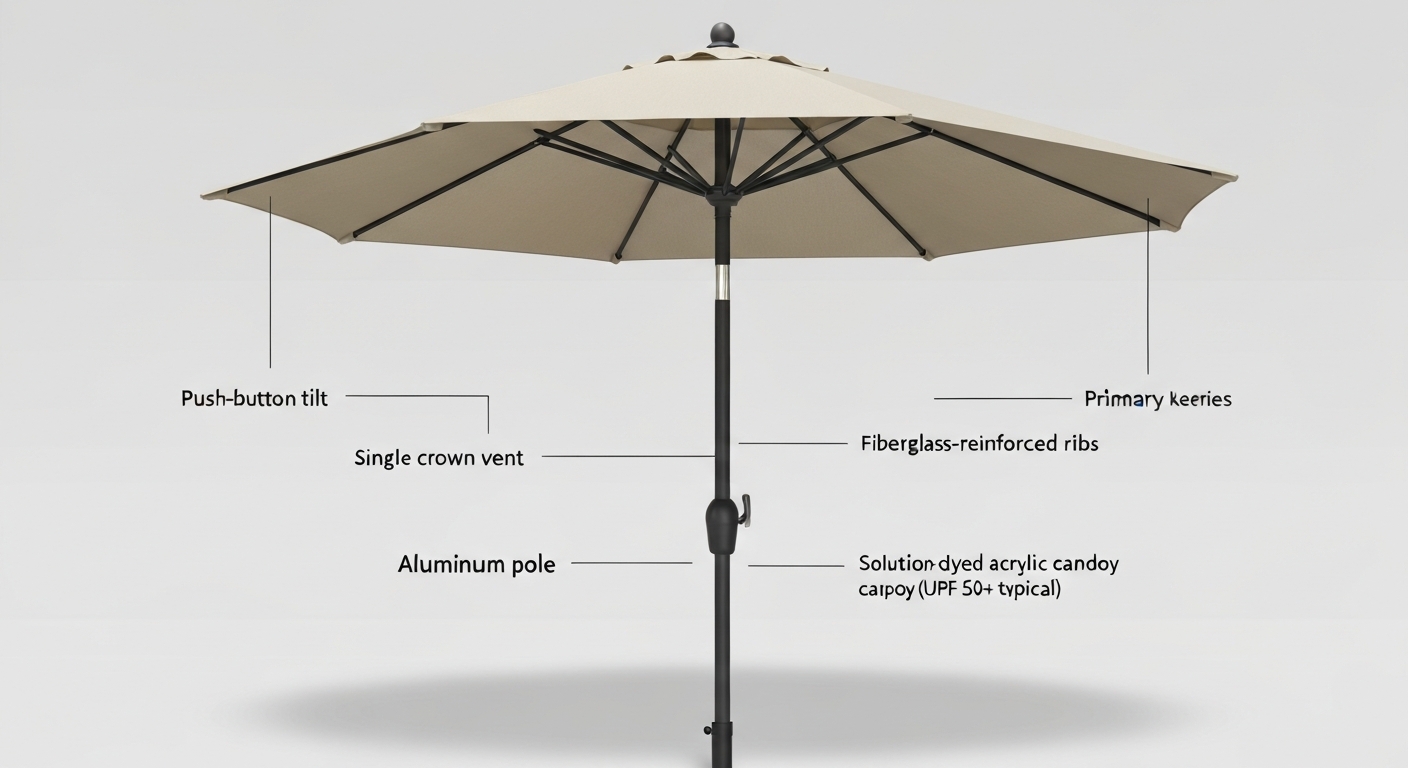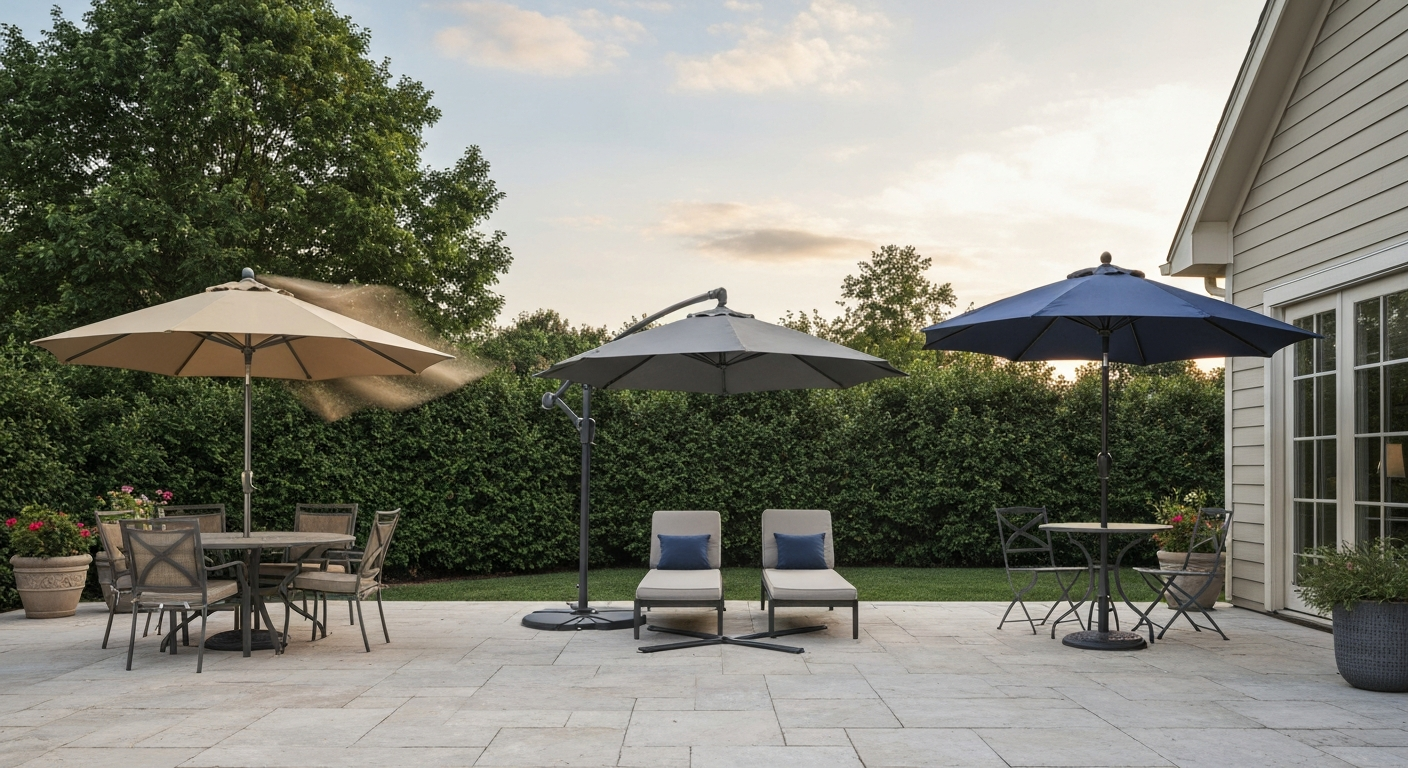
The best overall patio umbrella from the 2020 buying season is the 9-foot Treasure Garden Market Umbrella (auto-tilt, Sunbrella canopy). It earned that spot by combining a solution-dyed acrylic canopy rated UPF 50+ with a sturdy 1.5-inch aluminum pole, a reliable auto-tilt mechanism, and one of the most transparent warranty policies in the category. It handled well across climates, worked with a wide range of bases, and was consistently a top-rated model at major retailers like Lowe's, Home Depot, and Wayfair throughout 2020.
Best Patio Umbrella 2020: Top Picks & Buying Guide

Kent Lang
26 Jul 2026
2020 category winners at a glance
Beyond the overall pick, four categories matter most to shoppers: cantilever/offset, market/most popular, budget, and heavy-duty. Here is who won each in 2020 and the short version of why.
- Best cantilever/offset: Abba Patio 11-ft Cantilever — Cross-base design, 360-degree rotation, vented canopy, and a crank-and-tilt mechanism that held up well in long-term user reviews. Consistently among the top-selling offset umbrellas on Amazon and at Wayfair through 2020.
- Best market/most popular: Treasure Garden 9-ft Auto-Tilt (Sunbrella) — The overall pick; detailed below.
- Best budget: Sunnyglade 10-ft Offset Hanging Umbrella — Under $120 most of 2020, polyester canopy with double-vented top, acceptable for low-wind patios and seasonal use without a large investment.
- Best heavy-duty: AmazonBasics Cantilever Umbrella (11-ft, 55 lb. base) — Earned the heavy-duty nod specifically because it shipped with a weighted base included, used a thicker pole (1.8-inch), and user reviews documented it surviving sustained winds other budget models could not.
Side-by-side comparison of the 2020 winners
| Model | Type | Canopy Material | Size | Wind Rating / Guidance | Price Range (2020) | Best For |
|---|---|---|---|---|---|---|
| Treasure Garden 9-ft Auto-Tilt | Market (center pole) | Sunbrella solution-dyed acrylic | 9 ft | Close at 25+ mph; no manufacturer wind guarantee | $180–$280 | Overall use, durability, UV climates |
| Abba Patio 11-ft Cantilever | Offset/cantilever | Polyester (fade-resistant) | 11 ft | Close at 20+ mph; vented top helps | $150–$220 | Side-seating, dining sets, pools |
| Sunnyglade 10-ft Offset | Offset/cantilever | Polyester | 10 ft | Close at 15–20 mph recommended | $90–$130 | Budget buyers, seasonal use |
| AmazonBasics 11-ft Cantilever | Offset/cantilever | Polyester | 11 ft | Close at 20–25 mph; heavier base helps | $160–$240 (base included) | Windy patios, set-and-forget stability |
Detailed profiles of each 2020 winner
Treasure Garden 9-ft Auto-Tilt (overall pick)
Treasure Garden has been one of the most widely distributed umbrella brands in North America, and the 9-foot auto-tilt version with a Sunbrella canopy was the model that kept appearing at the top of retailer best-seller lists throughout 2020. The Sunbrella fabric is solution-dyed acrylic, meaning the color runs through the fiber rather than sitting on the surface. That matters because it resists UV fading far better than solution-coated polyester, and Sunbrella's own fabric warranty covers fading for three years under normal outdoor use. The 1.5-inch aluminum pole is compatible with most 50-pound concrete bases, which is the minimum weight Treasure Garden recommends. The auto-tilt mechanism activates with a simple crank rotation, and the double-vented canopy lets air escape upward rather than lifting the whole umbrella.
- Pros: Sunbrella canopy with genuine UPF 50+ protection; solution-dyed acrylic holds color for years; reliable auto-tilt; compatible with standard 1.5-inch pole bases; strong warranty coverage on fabric.
- Cons: Canopy-only price is higher than polyester alternatives; pole is aluminum (not fiberglass), so it can dent under severe impact; base sold separately adds $40–$80 to total cost.
- Ideal use: Permanent-season setup on a furnished patio or deck in any U.S. climate, especially high-UV regions like the Southwest.
Abba Patio 11-ft Cantilever (best offset)
Cantilever umbrellas solve a specific problem: you want shade over a dining table or seating arrangement without a pole in the middle of your space. The Abba Patio 11-footer was a consistent top seller in the offset category on Amazon in 2020, largely because it offered 360-degree rotation, a double-vented canopy, and a cross-base that worked on most patio surfaces without additional anchoring. The canopy is polyester rather than acrylic, which is the main trade-off: it will fade more quickly under constant sun exposure, and its UV-protection claims are based on manufacturer testing rather than the rigorous AS/NZS 4399 standard. That said, polyester canopies are significantly easier to replace and cost less when you do.
- Pros: No center pole means full use of the space beneath; 360-degree rotation handles sun angles throughout the day; double vent reduces wind lift; reasonably priced for the size.
- Cons: Polyester canopy fades faster than acrylic; cross-base requires a flat surface; heavier to move than a market umbrella; canopy replacement parts harder to source than major brands.
- Ideal use: Poolside, outdoor dining sets, or any seating arrangement where a center pole would be obstructive.
Sunnyglade 10-ft Offset (best budget)
If your goal is functional shade for a season or two without a large upfront investment, the Sunnyglade 10-ft was one of the most cost-effective options in 2020. At under $120 through most of the year, it delivered a double-vented polyester canopy and a crank mechanism that worked reliably based on aggregated user reviews across Amazon and Wayfair. The trade-off is clear: this is not a long-term umbrella. Polyester fabric under daily sun exposure degrades faster, the pole is thinner (1.5-inch steel rather than aluminum), and the included base weight (around 33 lb.) is below what most manufacturers recommend for a 10-foot canopy. Close it when wind picks up, store it off-season, and treat it as a 2-3 season umbrella.
- Pros: Very low cost for a 10-foot canopy; double vent helps with light breeze; quick setup; decent color variety.
- Cons: Polyester canopy fades and degrades faster; included base is undersized; steel pole less corrosion-resistant than aluminum; limited warranty and parts support.
- Ideal use: Renters, seasonal use, budget-constrained first-time buyers, or anyone needing a short-term solution.
AmazonBasics 11-ft Cantilever (best heavy-duty)
The AmazonBasics 11-foot cantilever earned its heavy-duty designation primarily because it was one of the few 2020 models at its price point that included a 55-pound base in the package. Base weight is the single most important factor in umbrella stability, and most competitors either sold bases separately or included undersized ones. The 1.8-inch steel pole is thicker than most budget competitors, and the cross-base spreads load more evenly. User reviews from 2019 through 2021 (a useful window for capturing 2020 purchase experiences) documented surviving sustained winds that caused lighter umbrellas to tip or break. The canopy is polyester, but for buyers who prioritize structural stability over fabric longevity, this was the 2020 pick.
- Pros: Ships with a 55-lb. base (rare at this price point); thicker pole than budget competitors; stable cross-base; good wind resistance relative to price.
- Cons: Polyester canopy will fade; heavier and bulkier to move; steel components require more maintenance in coastal/humid environments; AmazonBasics brand support can be inconsistent for parts.
- Ideal use: Patios where wind is a regular concern, users who want everything included, or buyers who have lost umbrellas to wind gusts in the past.
How we evaluated these umbrellas
The evaluation method for these 2020 picks combined archived retailer data (Wayback Machine snapshots of Amazon BSR rankings, Lowe's, Home Depot, and Wayfair best-seller pages from the 2020 season), manufacturer spec sheets and warranty documents, independent testing summaries from sources like Consumer Reports and Wirecutter's testing archives (their patio umbrella evaluations ran through multiple updates from 2017 to 2020), and aggregated user review data from the 2019-2021 window to capture real-world failure patterns. Use the Internet Archive Wayback Machine to retrieve snapshots of retailer category and product pages as they appeared in 2020 (see Using The Wayback Machine – Internet Archive Help Center). No single source was treated as definitive; the goal was cross-referencing claims against multiple data points.
Wind resistance
Most patio umbrella manufacturers do not publish a formal wind-speed rating, and for good reason: ASCE 7 wind-load engineering principles make clear that the actual load on an umbrella depends on canopy size, tilt angle, pole height, and local exposure conditions. The practical rule across every model we reviewed: close or secure your umbrella when sustained winds reach 20-25 mph (roughly Beaufort scale 5), and bring it down entirely if gusts are forecast above 30 mph. Vented canopies (double vents are better than single) reduce uplift by allowing air to escape upward, but they do not eliminate it. Treasure Garden's written warranty, for example, explicitly excludes wind damage, and that language is representative of the industry.
UV protection and canopy materials
UPF (Ultraviolet Protection Factor) ratings for umbrella canopies are most meaningful when tested to AS/NZS 4399, the Australian and New Zealand standard that defines both the test methodology and UPF classifications (UPF 15-24: good; 25-39: very good; 40-50+: excellent). Sunbrella and comparable solution-dyed acrylic fabrics reliably test at UPF 50+, blocking over 98% of UV radiation. Polyester canopies vary considerably: some test at UPF 30-40 when new, but UV protection degrades as the fabric breaks down. In high-UV regions where NOAA/EPA UV Index regularly exceeds 10 (midday summer in Phoenix, for example), the gap between an acrylic and a degraded polyester canopy is meaningful. When a manufacturer claims UV protection without citing a test standard, treat it as unverified.
Pole and frame materials
Pole diameter and material are proxies for structural integrity. Aluminum poles (1.5-inch minimum for a 9-foot canopy, 1.8-2.0 inch for 11-foot) resist rust and are lighter to handle, but they can dent and bend under impact or severe wind. Steel poles are heavier and stronger in bending, but they rust without adequate powder coating, especially in coastal environments where salt-spray exposure accelerates corrosion (ASTM B117 salt-spray testing is the reference standard for evaluating finish durability, though few consumer umbrella manufacturers publish those results). Fiberglass ribs are the gold standard for canopy ribs because they flex without snapping, but they appear mostly on higher-end models.
Venting, size, and base requirements
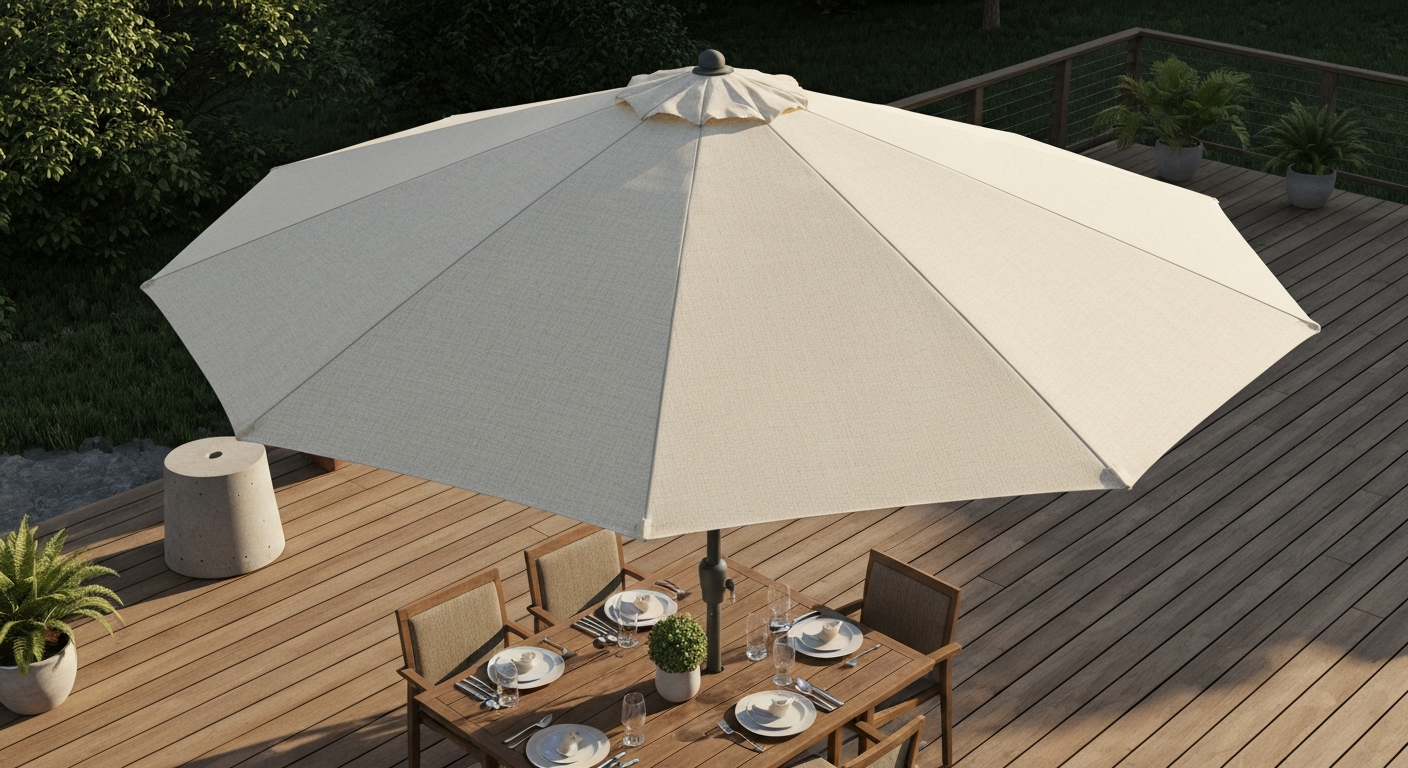
A double-vented canopy is worth paying for. Single vents reduce uplift; double vents do it more reliably in gusting conditions. For canopy size, match the umbrella diameter to your seating area: a 9-foot canopy covers roughly a 4-person table, while 11-foot covers 6-8 seats. Base weight should scale with canopy size and wind exposure: 50 lb. for a 9-foot market umbrella is the working minimum, 75+ lb. for an 11-foot cantilever in an exposed location. Undersized bases are the most common cause of umbrella tip-over injuries, and CPSC/NEISS data on patio umbrella injuries consistently documents base instability as a primary factor.
Durability and maintenance
Solution-dyed acrylic (Sunbrella is the most recognized brand) carries a 3-year warranty against fading and mildew under normal conditions. Polyester canopies typically carry 1-year warranties, if any. Beyond the fabric, the tilt and crank mechanisms are the most common mechanical failure points in user reviews. Keeping hinges and crank gears clean and dry, storing the umbrella closed during rain and off-season, and applying a UV-protectant spray annually (for polyester) are the practical steps that extend lifespan. For marine or coastal environments, rinse aluminum frames with fresh water periodically to remove salt deposits even if the finish looks intact.
Matching the umbrella to your climate and setup
High-UV and hot climates (Arizona and the Southwest)
Phoenix midday UV Index in summer regularly exceeds 11 (NOAA/EPA categorizes anything above 10 as 'Very High' to 'Extreme'). In these conditions, canopy material is not optional: go with solution-dyed acrylic and a verified UPF 50+ rating. Polyester canopies that start life at UPF 30-35 will degrade toward UPF 15 or below within two seasons of daily desert sun. Beyond the canopy, the aluminum or steel frame gets very hot to the touch on summer afternoons, so look for powder-coated frames and avoid bare metal handles. Store the umbrella closed during peak heat when not in use to slow fabric degradation. The Treasure Garden Sunbrella option is the straightforward recommendation here, and it is worth reading our deeper coverage of patio umbrellas for the Arizona climate for region-specific guidance. For specific model and care recommendations tailored to desert conditions, see our guide to the best patio umbrella for Arizona. For updated picks and buying guidance, see our roundup of the best patio umbrella 2023.
Windy locations
If you are in a coastal city, a high-elevation property, or anywhere that NOAA 1991-2020 climate normals show average wind speeds above 12-14 mph, you need to plan for wind differently than someone in a calm suburban backyard. The practical steps: always use a base heavier than the minimum recommendation (75 lb. for a 9-foot market umbrella, 100 lb. for an 11-foot cantilever), choose double-vented canopies, and build the habit of closing the umbrella whenever you step inside. The AmazonBasics heavy-duty pick included a 55-pound base, but even that is marginal for a genuinely exposed coastal site; add a secondary sand or water anchor if the base hardware allows it.
Coastal and salt-air environments
Salt air accelerates corrosion on any metal component, even powder-coated aluminum. In coastal settings, prioritize aluminum over steel for pole and rib material, look for stainless steel hardware at connection points, and commit to a monthly fresh-water rinse of the frame during the season. Avoid leaving the umbrella open overnight if you are within a mile of the ocean. Solution-dyed acrylic canopies resist salt degradation better than polyester, which can absorb and retain salt moisture in the weave. Sunbrella's warranty explicitly calls out salt-water exclusions for specific applications, so read the fine print before assuming full coastal coverage.
Poolside use
Poolside umbrellas face a combination of UV exposure, chlorine splash, and wind from the open area around most pools. The offset/cantilever style works best here because it keeps the pole out of the deck space and lets you position shade exactly where bathers are sitting. A solution-dyed acrylic canopy resists chlorine degradation better than polyester. Canopy colors matter too: darker canopies block more UV but absorb more heat; lighter canopies reflect more. A mid-tone solid like navy or gray is a reasonable compromise. Base placement is critical: never place a cantilever base at the pool edge where a tip-over could injure swimmers.
Small patios and tight spaces
A 9-foot market umbrella with a through-table mount is usually the right choice for compact spaces. It occupies almost no floor area, mounts directly into most patio table center holes (typically 1.5-inch diameter), and can be closed flat when not in use. For balconies or areas too small for a freestanding base, a wall-mount umbrella bracket paired with a market-style umbrella is a workable alternative, though you lose tilt adjustability in most cases. Avoid cantilever umbrellas in tight spaces: the cross-base requires roughly 3-4 feet of clear floor space in every direction, and the arm extends well past the canopy edge.
How the 2020 picks compare to other years
The 2020 list shares some continuity with earlier and later buying seasons, but there are real differences worth knowing. Going back to the 2018 best-sellers, the dominant picks were more heavily weighted toward fiberglass-rib market umbrellas from brands like California Umbrella, with less presence from the cantilever segment. See our roundup of best patio umbrellas 2018 for the full 2018 buying-season list. By 2020, offset umbrellas had grown significantly in retailer best-seller rankings, driven by more competitive pricing and broader base-included packages. Moving forward, the 2021 and 2023 buying seasons saw more emphasis on wind-tested ratings (some manufacturers began publishing specific mph thresholds) and a noticeable expansion of solution-dyed polyester options marketed as acrylic alternatives. For a follow-up roundup focused on that year, see our guide to the best patio umbrella 2021. The core evaluation criteria stayed consistent: fabric quality, pole gauge, base weight, and venting are the same factors that matter across every year's list.
High-authority editorial picks from outlets like the New York Times Wirecutter have long overlapped with what retailer sales data shows at the top: both sources consistently landed on Sunbrella-canopy market umbrellas from established brands as long-term value picks. The main editorial divergence is methodology transparency: retailer best-seller data reflects actual purchase volume, while Wirecutter-style testing emphasizes lab and field durability assessments. Both signal sets are useful, and where they agree (as they did on Sunbrella acrylic and adequate base weight in 2020), the recommendation is on solid ground.
Before you buy: a practical checklist
Run through these decisions before you complete any purchase. Getting them right upfront saves you a return shipment and a summer without shade.
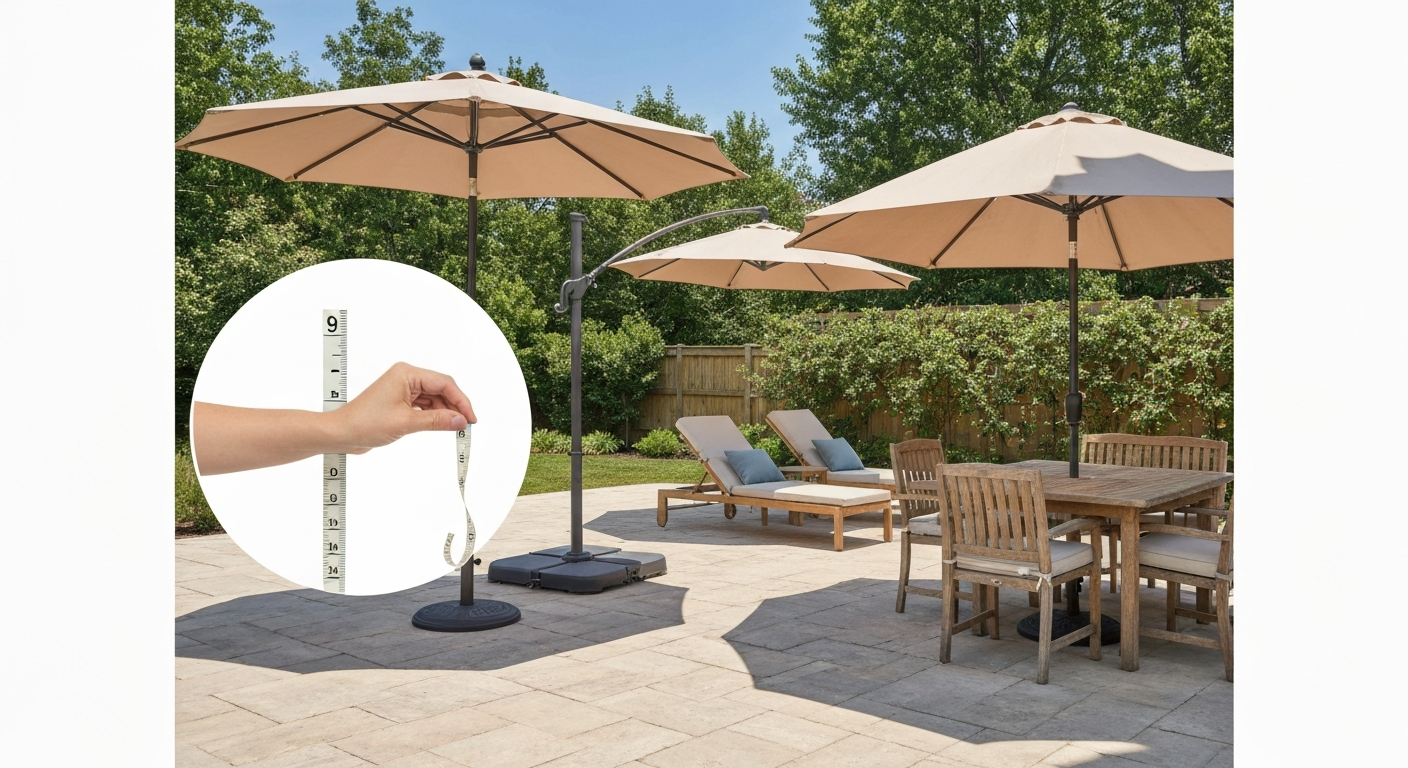
- Size: Measure your seating area first. Add 2 feet of canopy overhang on each side beyond the table edge. A 48-inch round table needs at least a 9-foot umbrella; a 60-inch rectangular table needs 11 feet.
- Style: Market (center pole) for tables with a center hole or a freestanding base; cantilever/offset for open seating areas, pools, or anywhere you want the pole out of the way.
- Budget: Factor in the total cost including base and any accessories. A $150 umbrella with a $60 base is a $210 decision, not a $150 one. Budget for replacement canopies every 2-4 years for polyester, longer for acrylic.
- Base: Match base weight to canopy size. 50 lb. minimum for 9-foot market umbrellas; 75-100 lb. for 11-foot cantilevered models, more in windy locations. Confirm the base pole-hole diameter matches your umbrella pole (typically 1.5 or 1.75 inch).
- Mounting: Decide between through-table mount (uses existing table hole, saves floor space), freestanding base (flexible placement), or in-ground anchor (most stable, least portable). In-ground anchors were not common in 2020 consumer models but are worth considering for permanent installs.
- Warranty: Read the actual warranty text before buying, not just the years advertised. Check specifically for wind-damage exclusions (nearly universal), what counts as normal fading, and whether the warranty transfers if you sell the umbrella. Treasure Garden's 2020 warranty documents were among the clearest available.
- Replacement parts: Confirm you can source replacement canopies, crank hardware, and ribs for the model. Sunbrella-canopy umbrellas have an advantage here: Sunbrella fabric is sold by the yard and can be used for custom replacement canopies. Budget off-brand models often have no parts ecosystem.
- Return policy: In 2020, Home Depot offered 90-day returns on most patio furniture including umbrellas with receipt; Lowe's matched that window; Wayfair's policy was 30 days with some restocking fees on large items. Amazon's 30-day return window applied to most third-party sellers, but check individual seller policies for large items. Confirm your retailer's specific policy before ordering, especially for assembled or opened umbrellas.
- Warranty registration: Most manufacturers including Treasure Garden require product registration within a set window (often 30 days of purchase) to activate the full warranty. Do this immediately after setup, not months later when something fails.
FAQ
What is the primary research objective for an evidence‑based “best patio umbrella 2020” guide?
Define the guide’s scope and decision criteria: identify top overall pick and category winners from 2020, document why each model earned its slot using 2020‑era specs/reviews/retailer data, explain evaluation criteria (wind resistance, UV protection, materials, venting, size, base needs, durability/maintenance), give climate/use recommendations, provide a transparent testing/review methodology, a concise buying/installation checklist, and comparisons to 2018/2021/2023 lists and high‑authority outlets such as NYT/Wirecutter.
Which concrete research questions must be answered to support those objectives?
Key research questions: 1) Which umbrella models were top sellers and top rated in 2020 across major retailers? 2) What were the exact 2020 published specs and warranty terms for each candidate model? 3) How did independent lab tests and trust‑rated outlets (Consumer Reports, Wirecutter) evaluate performance (wind, UV, durability)? 4) What real‑world failure modes (from user reviews, recalls, injury data) occurred for 2019–2021 purchases? 5) How do manufacturer wind/UPF/corrosion claims map to engineering/standards thresholds (ASCE, AS/NZS 4399, ASTM B117)? 6) What regional climate factors (UV index, wind statistics) alter recommendations? 7) How do 2020 picks differ from other years and from lists by high‑authority outlets? 8) What base weights and installation methods are necessary for safe use in different settings?
What historical product snapshots and retailer data are required, and where to get them?
Retrieve 2020 snapshots of retailer category and product pages via the Internet Archive Wayback Machine (captures product specs, photos, top‑seller lists, and promotional claims). Collect 2020 'best sellers' and review aggregates from Amazon, Home Depot, Lowe’s, Wayfair (use Wayback if pages changed). For Amazon specifically, gather historical Best Sellers Rank (BSR) snapshots directly or via third‑party trackers (Keepa, CamelCamelCamel) to reconstruct 2020 sales ranking.
What manufacturer data and documents are essential?
Download 2020 manufacturer product pages, spec sheets and PDF manuals (canopy fabric type, weight, pole/rib materials, diameters, lift/tilt/tilt ranges, venting, base recommendations), plus 2020 warranty texts (fabric and structural warranties, wind exclusions, transferability). Archive these documents with timestamps for transparency (manufacturer support pages often host warranty/spec PDFs).
Which independent test reports and editorial reviews should be collected?
Gather Consumer Reports, Wirecutter/Wirecutter archives, Good Housekeeping and other trusted testing/buying‑guide pieces from 2020 or earlier. Prefer pieces with lab or long‑term field testing covering wind performance, fabric fade, mechanism reliability and base guidance. Archive their conclusions and test methodologies to reference in your methodology section.
Which technical standards and test methods must be referenced to interpret claims?
Cite textile and performance standards for fabrics (ISO 105 family for colourfastness to weathering, AATCC methods for water repellency), UPF standards (AS/NZS 4399 and ARPANSA guidance), corrosion testing practice (ASTM B117 salt spray) and structural wind‑load guidance (ASCE 7) to translate manufacturer claims into practical mph thresholds and durability expectations.