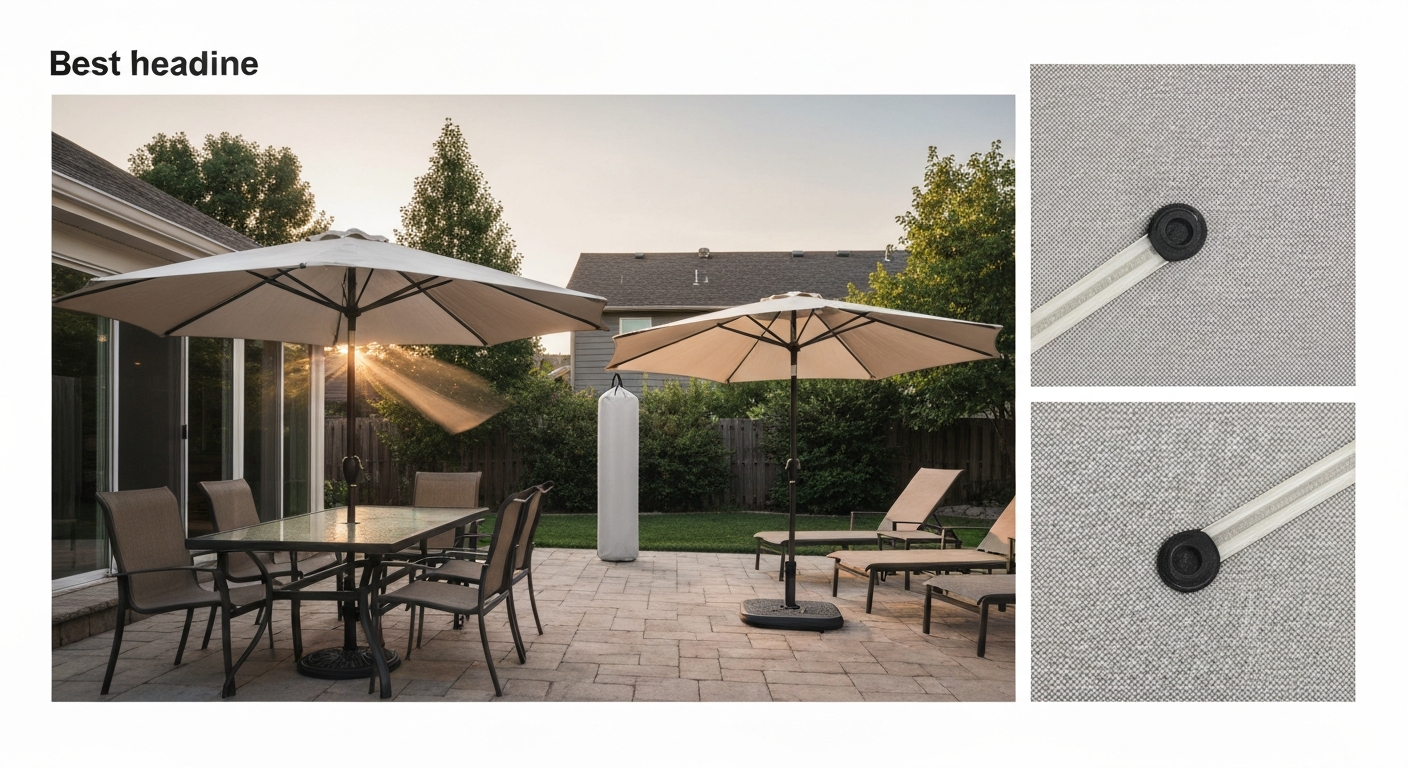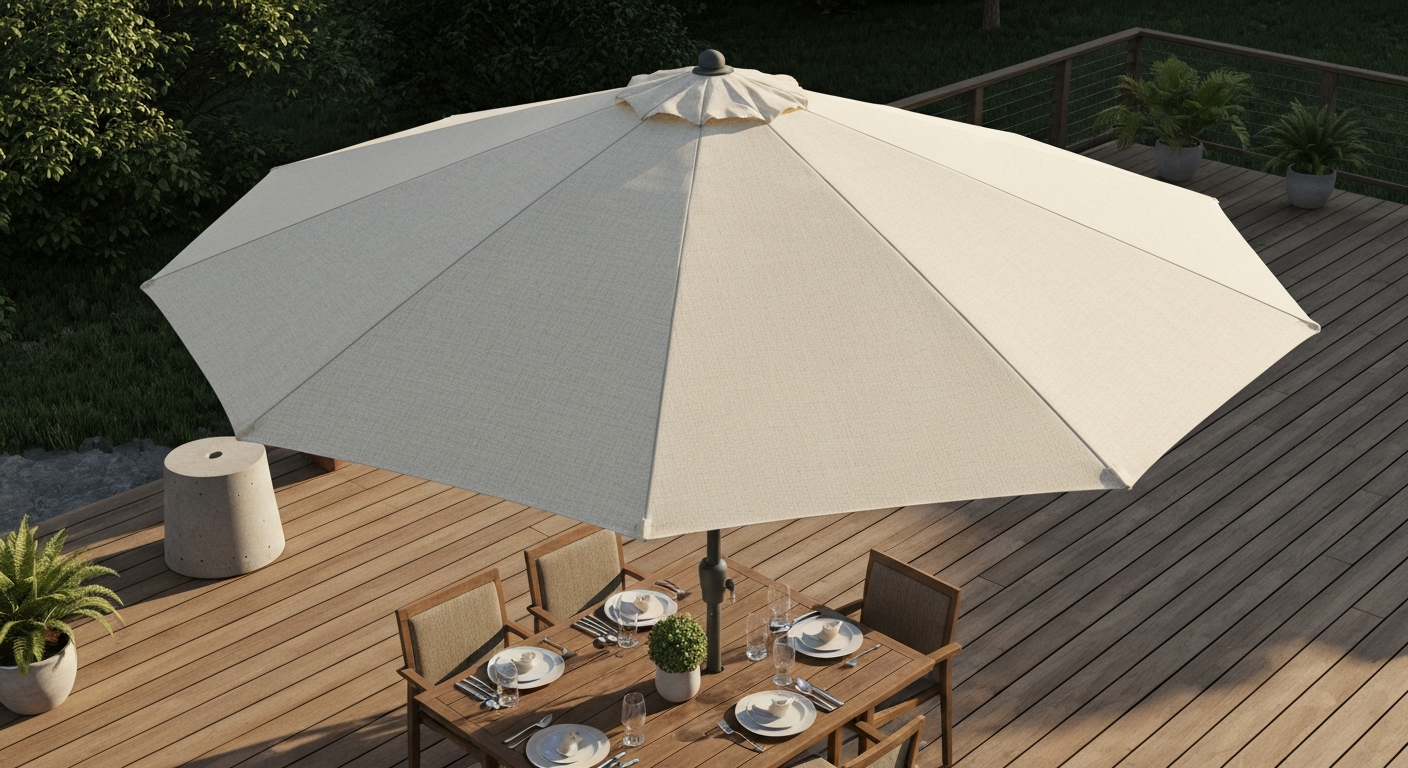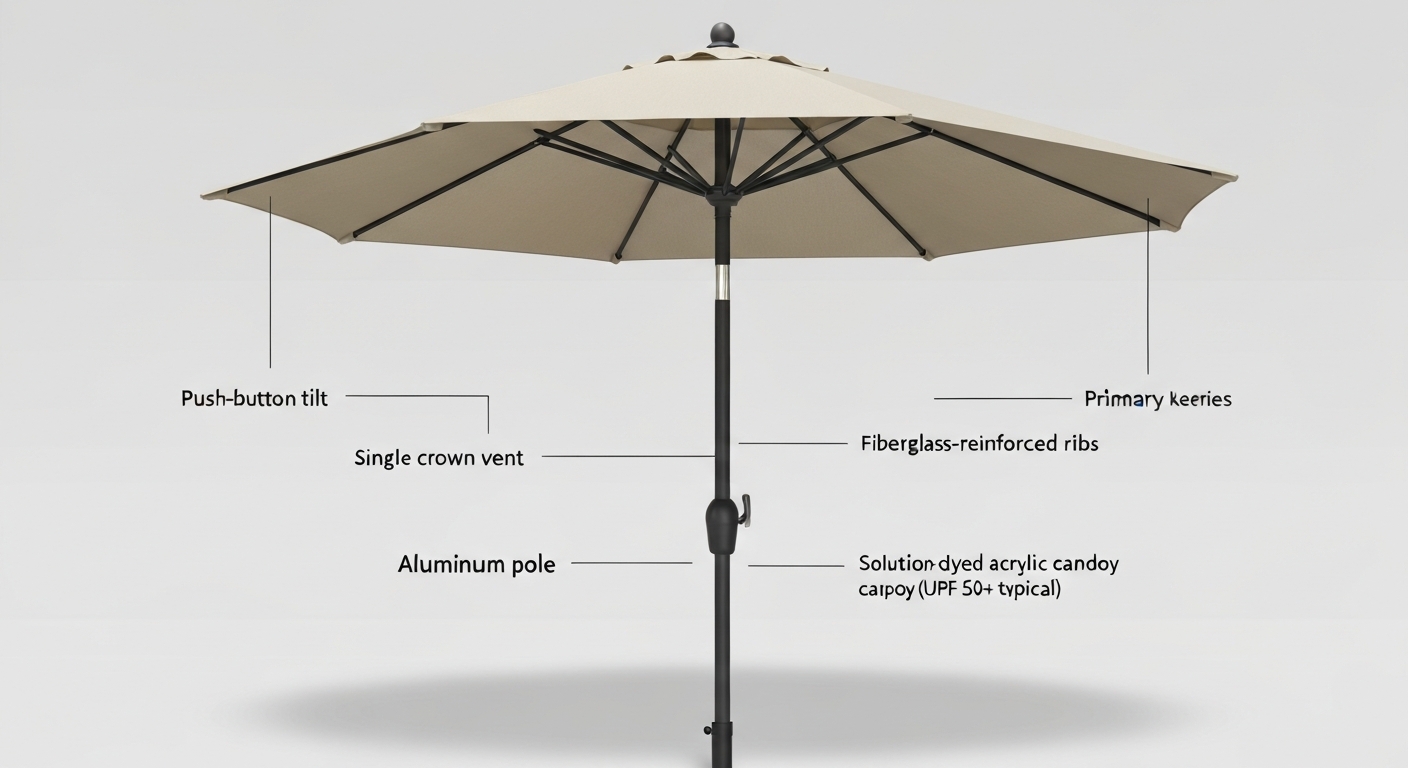
The best patio umbrella you could buy in 2021 for most backyards was the Treasure Garden 9-ft Market Aluminum with a Sunbrella canopy. It held up under real testing, offered genuine UV protection, and came with a frame warranty that budget picks couldn't match. If that was out of budget, the Hampton Bay 9-ft Crank and Tilt from Home Depot at around $99 covered most needs reliably. And if you just needed something cheap and temporary, the Abba Patio 9-ft got the job done without asking much from your wallet.
Best Patio Umbrella 2021: Top Picks by Style & Need
Kent Lang
5 Aug 2026
What this 2021 guide covers and who it's for
This guide is built specifically for homeowners who are researching 2021-era patio umbrella models, whether you're shopping late for a 2021 purchase, comparing a current deal against a 2021-released product, or just trying to understand what separated the good from the mediocre in that year's market. It covers market/center-pole umbrellas and cantilever/offset models, walks through budget, midrange, and premium price tiers, and gives you honest selection criteria you can actually apply: wind resistance, UV protection, frame durability, base weight requirements, canopy materials, and warranty value. If you're in a high-sun climate like Arizona, there's specific guidance for that too. Readers who want to see how 2021 compares to what came before or after will find context alongside picks from 2020 and 2023 era roundups where it matters.
Top 2021 picks at a glance
Here's the ranked shortlist of the best patio umbrellas for 2021, covering the main styles and price tiers. Full details follow in the sections below.
- Treasure Garden 9-ft Market Aluminum with Sunbrella canopy — Best overall market umbrella
- Hampton Bay 9-ft Aluminum Crank and Tilt (Home Depot) — Best midrange market umbrella
- California Umbrella 9-ft Olefin Aluminum Single-Vent Tilt — Best midrange with olefin canopy
- Abba Patio 9-ft Market Umbrella — Best budget market umbrella
- Treasure Garden 11-ft Cantilever/Offset Umbrella — Best overall cantilever
- California Umbrella 11-ft Cantilever with Sunbrella — Best premium cantilever
- Sunnyglade 10-ft Offset Cantilever — Best budget cantilever
2021 picks compared side by side
| Model | Style | Size | Canopy Material | Frame | Approx. 2021 Price | Warranty | Best For |
|---|---|---|---|---|---|---|---|
| Treasure Garden Market w/ Sunbrella | Market/center-pole | 9 ft | Solution-dyed acrylic (Sunbrella) | Aluminum | $250–$400 | Multi-year limited (frame) | Overall best, high-sun climates |
| Hampton Bay Crank and Tilt | Market/center-pole | 9 ft | Polyester | Aluminum | ~$99 | 1-year limited | Midrange, everyday suburban use |
| California Umbrella Olefin Single-Vent | Market/center-pole | 9 ft | Olefin | Aluminum | $120–$180 | Limited | Midrange, better fade resistance than polyester |
| Abba Patio 9-ft Market | Market/center-pole | 9 ft | Polyester | Aluminum/Steel | $30–$80 | Limited (short-term) | Budget, temporary or seasonal use |
| Treasure Garden Cantilever/Offset | Cantilever/offset | 11 ft | Sunbrella or polyester options | Aluminum | $400–$700+ | Multi-year limited (frame) | Premium, shade without center pole |
| California Umbrella Cantilever w/ Sunbrella | Cantilever/offset | 11 ft | Solution-dyed acrylic (Sunbrella) | Aluminum | $350–$600 | Limited | Premium cantilever, UV-heavy climates |
| Sunnyglade 10-ft Offset Cantilever | Cantilever/offset | 10 ft | Polyester | Steel/Aluminum | $80–$150 | Limited (short-term) | Budget cantilever, occasional use |
Best market and center-pole umbrellas of 2021
Market umbrellas, the classic center-pole design, dominated 2021 sales and buyer's guide roundups from outlets like Wirecutter, Realtor. The New York Times also published a 2021 best patio umbrella roundup that is useful for additional comparisons and context new york times best patio umbrella. com, The Spruce, and Good Housekeeping. They work best when your table has a center hole or when you're using a freestanding weighted base. The pole typically runs 1.5 to 1.875 inches in diameter, and the canopy size that hits the sweet spot for most patios is 9 feet, which covers a standard 48-inch round dining table with a few feet of overhang on all sides.
Treasure Garden 9-ft Market Aluminum (Sunbrella canopy)
This was the top pick in Wirecutter's May 2021 testing update for a reason. Treasure Garden's market line uses a push-button tilt mechanism that holds its angle reliably, and when paired with a Sunbrella (solution-dyed acrylic) canopy, it's the most durable option you'll find in a residential market umbrella. Solution-dyed acrylic means the pigment is worked into the fiber during manufacturing, not surface-printed or dip-dyed, so it resists fading and mildew far longer than polyester alternatives. See Treasure Garden Market Umbrella review (Forbes Personal Shopper, notes on Sunbrella fabric use and durability) for testing notes on Sunbrella's solution‑dyed acrylic performance Treasure Garden Market Umbrella review (Forbes Personal Shopper — notes on Sunbrella fabric use and durability). Treasure Garden's manufacturer documentation confirms multi-year limited frame warranties, though exact terms vary by dealer and product line, so read the warranty card before buying. Street pricing in 2021 ran $250 to $400 depending on fabric choice and retailer. That's real money, but if you're in a high-UV area like Arizona or Florida, it earns back the premium over two or three seasons by not needing replacement.
Hampton Bay 9-ft Aluminum Crank and Tilt (Home Depot)
Home Depot's Hampton Bay line (SKU UCA171057 being one of the most commonly sold 9-ft variants in 2021) offered a solid midrange option at roughly $99. The aluminum frame keeps weight manageable, the polyester canopy opens and closes smoothly via crank, and the tilt adjusts with a collar mechanism. It comes with a 1-year limited manufacturer warranty. The honest trade-off here is the polyester canopy: it'll handle a couple of seasons well, but in strong sun it will fade faster than solution-dyed acrylic. For a typical suburban patio where the umbrella goes up in May and comes down in October, this is a very sensible buy.
California Umbrella 9-ft Olefin Aluminum Single-Vent Tilt
California Umbrella is a major manufacturer with wide distribution, and their 9-ft olefin aluminum model appeared on Walmart's site with a May 2021 listing refresh. Olefin fabric sits between polyester and solution-dyed acrylic in performance: it's more fade-resistant than basic polyester and holds up better against moisture and mildew, but it doesn't quite match the longevity of Sunbrella-class acrylic. The single-vent canopy design helps reduce uplift pressure in wind. Aluminum construction keeps corrosion risk low. In the $120 to $180 range, this is a smart midrange pick for buyers who want better-than-entry-level without the premium price jump.
Abba Patio 9-ft Market Umbrella
Wirecutter treated the Abba Patio 9-ft as the budget pick in their 2021 market umbrella test series, and it earned that slot fairly. At $30 to $80 on marketplace sites, you're getting a functional umbrella for short-term or seasonal use. The polyester canopy and mixed aluminum/steel frame are functional, but real-world consumer feedback patterns (including complaint aggregates across retailer reviews) show that budget models in this class are most prone to tilt and crank mechanism failures, rib breakage, and canopy fading after one or two seasons of heavy use. Buy it knowing what it is: a reasonable short-term solution, not a five-year investment.
Best cantilever and offset umbrellas of 2021
Cantilever (also called offset) umbrellas move the pole to the side so there's no center post blocking your seating. They're ideal for lounge chairs, sectionals, and irregular-shaped patios where a center pole would be in the way. The trade-off is weight: cantilever bases need to be significantly heavier than market umbrella bases because the load is distributed asymmetrically. Manufacturer installation manuals generally require specialized multi-module bases or in-ground concrete installation for anything 11 feet and larger.
Treasure Garden 11-ft Cantilever/Offset Umbrella
The Treasure Garden cantilever line offered the most durable construction in this category for 2021. With Sunbrella canopy options available, multi-year limited frame warranties from the manufacturer, and an aluminum pole and arm design built for longevity, this is the premium residential cantilever pick. Prices ranged from about $400 to $700-plus depending on canopy fabric and base configuration. One thing to be clear about: the base sold separately by most dealers for cantilever models is often not sufficient on its own. Treasure Garden's installation guidance (and general industry practice) recommends using the manufacturer-specified base or upgrading to concrete in-ground sleeves for windy locations. Do not leave a cantilever umbrella open unattended without a serious anchoring solution.
California Umbrella 11-ft Cantilever with Sunbrella
California Umbrella's 11-ft cantilever with a Sunbrella canopy option was a well-regarded premium pick in the $350 to $600 range. The combination of an aluminum frame and solution-dyed acrylic fabric makes it a strong performer in UV-heavy climates. If you're in Arizona or another Sun Belt state and investing in a cantilever, this and the Treasure Garden option are the two worth taking seriously for longevity.
Sunnyglade 10-ft Offset Cantilever
The Sunnyglade 10-ft offset umbrella appeared across budget roundups in 2021 in the $80 to $150 range. It offers the cantilever form factor without the premium price. The polyester canopy and mixed steel/aluminum construction are serviceable for a season or two. The same caveats apply here as with any budget model: mechanism reliability and canopy fading are the most reported failure modes over time. For occasional weekend use where you'll close it when not in active use, it's a reasonable starting point. For a deck in Phoenix that sees full sun most of the year, it's not the right tool.
2021 picks by size, material, and price tier
Budget tier (under $100)
In 2021, the budget tier was dominated by 9-ft polyester/steel or polyester/aluminum market umbrellas and 10-ft offset cantilevers. Abba Patio ($30–$80), Sunnyglade ($80–$150 for cantilever), and Best Choice Products sat in this range. These are fine for one or two seasons of moderate use. Expect to replace canopies or the whole unit within two to three years with heavy sun exposure. Crank-and-tilt mechanisms on steel-framed budget models are the most common failure point based on consumer reviews.
Midrange tier ($100–$250)
The midrange was well-covered in 2021. Hampton Bay's 9-ft at roughly $99 and California Umbrella's olefin model at $120 to $180 represent the bulk of this tier. Aluminum frames are standard here, which is a meaningful upgrade from steel in terms of corrosion resistance and weight. Polyester canopies are still common at this price, though some brands like California Umbrella offered olefin for slightly better fade resistance. If you're buying one umbrella for a patio table and expect to use it regularly for three to five years, this is the tier to shop.
Premium tier ($250 and up)
At $250 and above in 2021, you were primarily choosing between Sunbrella canopy market umbrellas (Treasure Garden, California Umbrella) and cantilever systems. The Treasure Garden 9-ft market with Sunbrella at $250 to $400 was the editorial favorite across multiple guides. For cantilevers, the $400 to $700-plus range from Treasure Garden and California Umbrella covered the premium bracket. The primary reason to spend more is the canopy material: solution-dyed acrylic genuinely outlasts polyester by years in direct sun, and multi-year frame warranties from established manufacturers like Treasure Garden mean you have some recourse if hardware fails.
Size guidance: 9 ft vs. 11 ft vs. larger
A 9-ft canopy covers most residential patio dining tables comfortably and is the most practical size for table-hole mounting or a 50-55 lb freestanding base. An 11-ft market umbrella or cantilever is better for larger seating areas or sectional coverage, but it requires proportionally heavier base weight and more clearance. Going larger than 11 ft in a residential setting typically means committing to in-ground mounting or a very heavy permanent base system.
Pros and cons at a glance
| Model | Main Pro | Main Con |
|---|---|---|
| Treasure Garden Market w/ Sunbrella | Best fade and UV resistance; multi-year warranty | High price; Sunbrella adds cost over polyester options |
| Hampton Bay 9-ft Crank and Tilt | Affordable, widely available, easy mechanism | Polyester canopy fades faster in strong sun |
| California Umbrella Olefin 9-ft | Better fade resistance than polyester at midrange price | Not as durable as solution-dyed acrylic long term |
| Abba Patio 9-ft | Very low cost, good for short-term use | Mechanism reliability and canopy longevity are limited |
| Treasure Garden Cantilever 11-ft | Premium durability, no center pole, Sunbrella option | Expensive; base requirements are demanding and costly |
| California Umbrella Cantilever w/ Sunbrella | Strong UV resistance, good for hot climates | Price is high; base still needs careful matching |
| Sunnyglade 10-ft Offset Cantilever | Cantilever form factor at budget price | Polyester canopy, mechanism durability concerns over time |
How to evaluate a 2021-era umbrella before buying
Whether you're shopping a 2021-released model today or comparing it to something newer, the same criteria apply. Here's what to actually look at and how to weigh each factor.
Wind resistance
In November 2021, ASTM International published ASTM F3512-21, a formal test method for evaluating wind safety and durability in market umbrellas. See the ASTM press release on market umbrella safety/durability standard development (F3512‑21) for details. Before this standard, wind-resistance claims from manufacturers were largely informal and inconsistent. When reviewing 2021 models, treat any wind-resistance claims that reference a specific MPH rating as meaningful only if the manufacturer links that claim to a formal test method. For reference, CPSC public guidance on related beach-umbrella anchoring work described thresholds around 30 MPH as a relevant benchmark for patio umbrella anchor/base integrity. In practice, Treasure Garden and the other established manufacturers recommend closing umbrellas when it gets windy, which is still the most honest guidance regardless of rated limits.
UV protection
Canopy UV protection is tested against standards like AATCC TM-183, EN 13758-2, and the stricter UV Standard 801 (which tests fabric when wet, stretched, or worn). A UPF rating on a canopy label is only reliable if it's backed by a test from an ISO/IEC 17025-accredited laboratory. Solution-dyed acrylic fabrics like Sunbrella consistently earn high UPF ratings because the pigment and structure of the fiber both block UV transmission, while standard polyester canopies offer less inherent UV protection and degrade faster with repeated sun exposure. If a manufacturer cites UPF ratings, ask whether they can point to accredited lab documentation.
Durability and materials
The two biggest durability variables in a patio umbrella are canopy material and frame material. On the canopy side, the hierarchy runs: solution-dyed acrylic (best) to olefin (good) to polyester (functional but fades fastest). On the frame side, aluminum outlasts steel in most outdoor conditions, especially in humid or coastal climates where steel corrodes. Powder-coated finishes on aluminum add another layer of protection. Rib construction quality matters too: thinner metal ribs on budget models are the most commonly reported failure point in consumer review threads and complaint aggregates for 2018 through 2023 purchases.
Base weight requirements
This is where a lot of buyers make expensive mistakes. Wirecutter's May 2021 base testing (which included hands-on stability tests with 50 to 55-lb bases) found that for a 9-ft umbrella used at a table, a 50-55 lb base is a practical baseline. But if you plan to leave a freestanding 9-ft umbrella open and unattended, they recommended a base of roughly 90 lbs or more as a conservative guideline. Cantilever and offset umbrellas require specialized bases per manufacturer specification, and using an undersized base with a large-canopy cantilever is one of the most common causes of both property damage and product failure. For in-ground sleeve installation, follow the specific manufacturer depth and concrete specifications.
Warranty
Warranty terms varied meaningfully in 2021. Treasure Garden offered multi-year limited frame warranties through their dealer network, with specific claim-handling procedures documented in dealer-distributed warranty PDFs. Hampton Bay's Home Depot listing documented a 1-year limited manufacturer warranty. Abba Patio and similar budget brands offered limited coverage that was shorter in duration and more restricted in scope. When comparing warranties, look specifically at what's covered (frame vs. canopy vs. mechanism), who handles claims (manufacturer vs. dealer), and whether the warranty requires proof of authorized purchase. Consumer complaint patterns for some DTC and budget brands in 2021 included poor warranty follow-through, so the name behind the warranty matters as much as the term length.
Climate-specific guidance for hot and sunny regions
If you're in Phoenix, Tucson, Las Vegas, or anywhere in the Sun Belt, the stakes on canopy material are higher than in milder climates. Phoenix averages a UV index of 10 to 11 in peak summer months, which is in the "Very High" to "Extreme" range on the standard UV index scale. At those exposure levels, a standard polyester canopy will noticeably degrade within one to two seasons. The recommendations for hot, sunny climates in 2021 were consistent across editorial sources: prioritize solution-dyed acrylic (Sunbrella-class) canopies, choose double-vented canopy designs for better wind pressure relief, specify fully powder-coated aluminum hardware to handle temperature cycling and UV stress on metal finishes, and use heavier permanent bases or in-ground sleeves rather than light removable weighted bases. Readers looking at region-specific guidance specifically for Arizona will find more targeted detail in the dedicated guide on best patio umbrellas for Arizona.
Installation and maintenance basics
Installation boils down to three decisions: table-mounted (pole through hole in table, base underneath), freestanding weighted base, or in-ground sleeve. Table-mounting is the most stable everyday option for market umbrellas. Freestanding weighted bases are versatile but require honest base-weight matching as described above. In-ground sleeves offer the most permanent stability and are the right answer for cantilevers in windy locations. For maintenance, close your umbrella when wind picks up (this applies regardless of price tier), clean canopies with mild soap and water rather than solvents, and store or cover the umbrella during extended off-season periods. Canopy replacement is possible on most established brands, which is another reason to buy from manufacturers like Treasure Garden or California Umbrella rather than no-name imports with proprietary fitting dimensions.
How 2021 picks fit into the broader timeline
The 2021 umbrella market built on a foundation established in earlier years, and the core recommendations didn't change dramatically from 2020 to 2021. The most notable development was institutional: ASTM F3512-21 was published in November 2021, giving the industry a formal wind-safety and durability test method for market umbrellas for the first time. That means any 2021 model claiming a specific wind rating should ideally reference that standard to be taken seriously. If you're comparing a 2021 pick against what guides recommended in 2018 or 2020, the material hierarchy (solution-dyed acrylic over polyester, aluminum over steel) has been consistent throughout that period. The main shift going into 2023 was wider availability of newer materials and expanded cantilever options, but the core picks from established manufacturers like Treasure Garden and California Umbrella remained at the top of editorial roundups through that transition. For historical context, see the roundup of the best patio umbrellas 2018 to compare how recommendations and materials evolved over time. For a current comparison, see our guide to the best patio umbrella 2023. For comparison with the prior year, see our roundup of the best patio umbrella 2020 for the models and recommendations that shaped the 2021 market.
FAQ
Which patio umbrella models were widely recommended as the best in 2021 across styles and budgets?
In 2021 editorial roundups and tests, top recommendations included: Treasure Garden 9-ft Market (Sunbrella or polyester options) as a premium/most‑recommended market umbrella; Abba Patio 9‑ft models as common budget picks for market umbrellas; Hampton Bay 9‑ft market umbrellas (Home Depot) as a solid value/midrange choice; and California Umbrella 9‑ft olefin/aluminum models as another widely distributed midrange option. Cantilever/offset picks varied by dealer, but buyers were advised to choose established manufacturers and heavy bases for those models.
How did reviewers and testers rank umbrellas by style (market vs. cantilever) in 2021?
2021 guidance separated market (center‑pole) and cantilever/offset umbrellas by typical use: market umbrellas were favored for table shading, ease of use and lower base cost; cantilever umbrellas were recommended for open‑plan patios where unobstructed floor space and adjustable shade are needed but require much heavier, dedicated bases or in‑ground sleeves and cost more. Testers prioritized canopy material and frame quality within each style rather than style alone.
What canopy materials were considered best for 2021 and why?
Solution‑dyed acrylic (Sunbrella class) was considered the top canopy material in 2021 for UV resistance, colorfastness and mildew resistance. Polyester was common in midrange and budget models; it performs acceptably short‑term but fades and degrades faster in high UV. Olefin was used by some manufacturers as a midrange outdoor fabric with decent durability. Editorial guidance recommended solution‑dyed acrylic for hot/sunny climates.
What were the key selection and testing criteria recommended in 2021 buyer’s guides?
Key criteria were: canopy material and UPF/UV performance, frame/rib material and corrosion resistance, mechanism reliability (crank/tilt), wind resistance and base requirements, canopy construction (vents/double vents), size and coverage, ease of installation and replacement parts/warranty, and price. Hands‑on tests emphasized mechanism durability and base stability under simulated wind or tipping loads.
How should homeowners choose a base for a 9‑ft market umbrella in 2021?
2021 testing commonly used 50–55‑lb bases as a test cohort for table‑mounted 9‑ft umbrellas, but many guides (and Wirecutter tests) advised heavier bases if the umbrella will be freestanding and left open unattended—roughly ~90 lb or more as a conservative guideline for a 9‑ft market umbrella. Cantilever umbrellas require much heavier multi‑module bases or an in‑ground sleeve per manufacturer instructions.
What wind‑resistance guidance applied in 2021 and how did standards change that year?
Prior to late 2021, wind guidance was largely informal (close umbrellas in wind). In November 2021 ASTM published F3512‑21, a standard test method for market umbrellas intended to create reproducible wind‑safety and durability procedures. That development began shifting numeric wind‑resistance claims toward standardized testing; until manufacturers provide ASTM‑based ratings, follow manufacturer/guide advice to close umbrellas in sustained winds and use appropriate heavy bases or in‑ground installations.