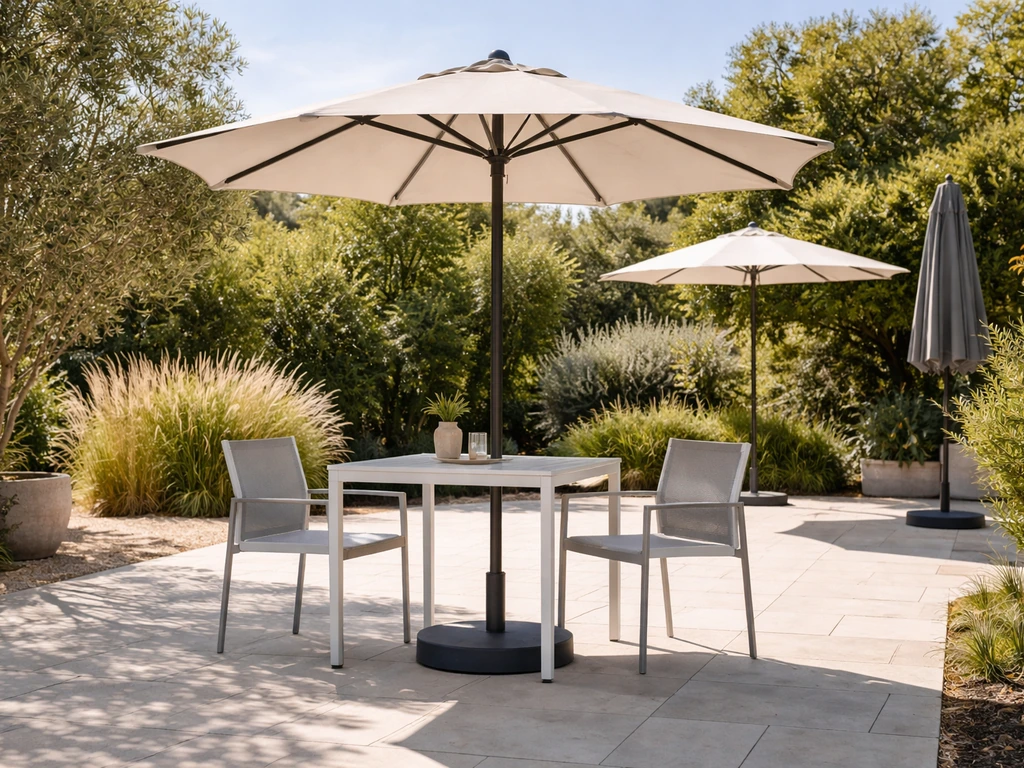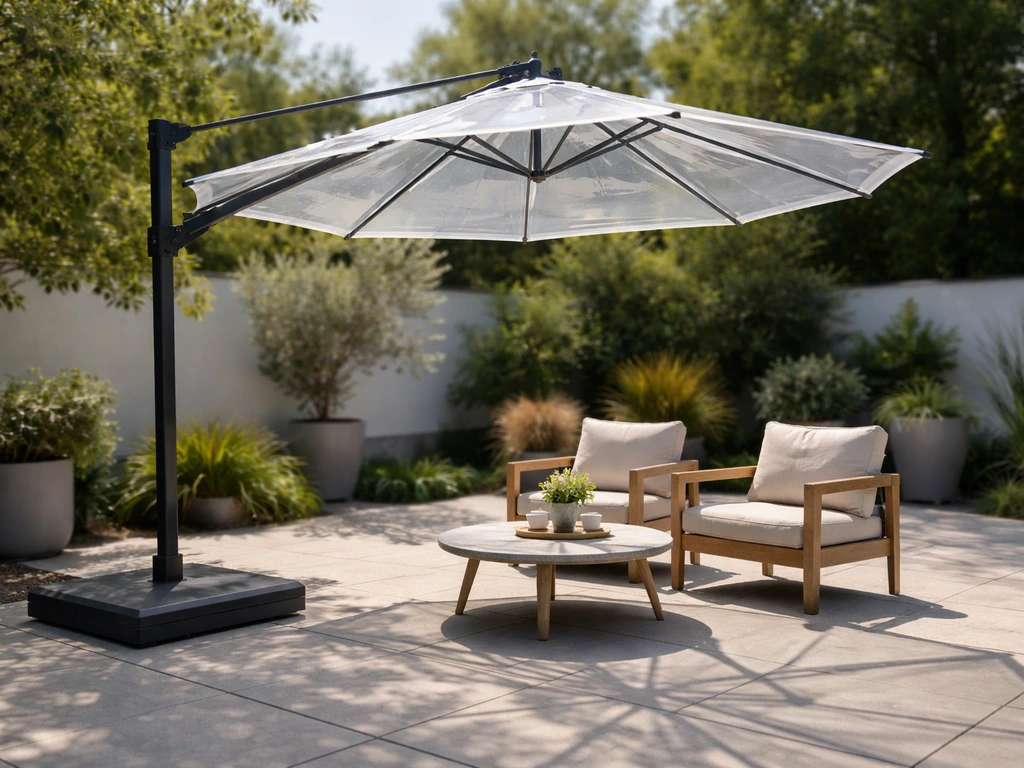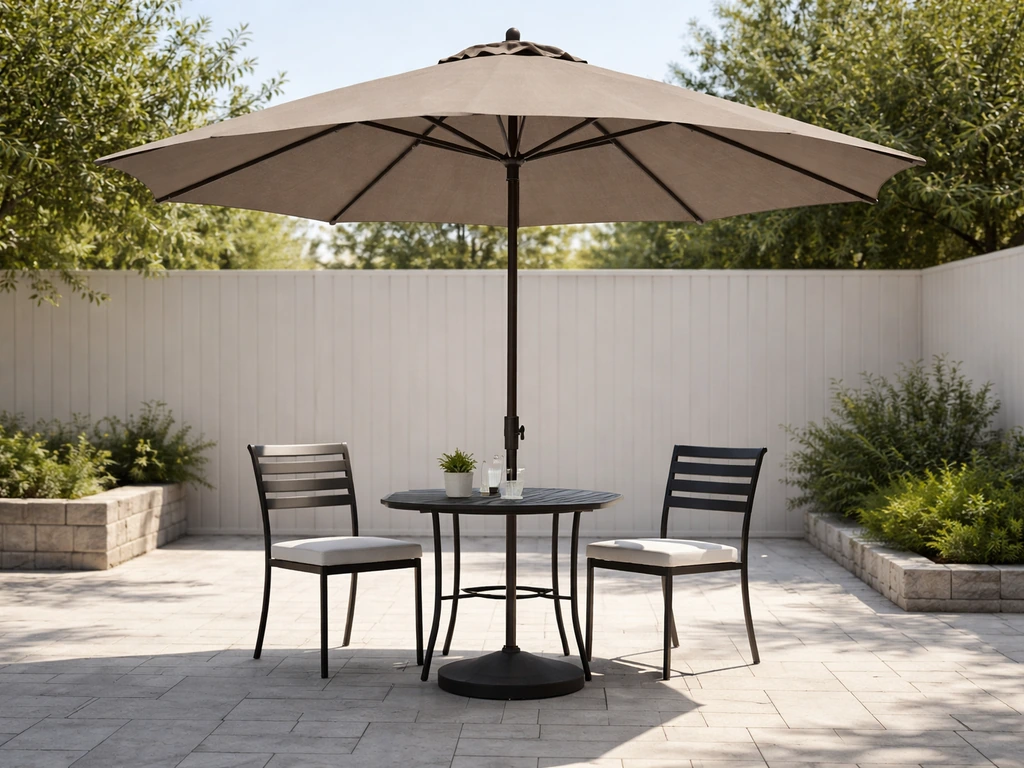
For most people shopping in 2024, the Treasure Garden 9-foot Market Aluminum umbrella is the best patio umbrella to buy. For historical comparison, see our roundup of the best patio umbrella 2022 to track how recommendations and fabric/feature trends have changed. It uses a solution-dyed acrylic canopy (Sunbrella or Outdura fabric options), an 8-rib aluminum frame, and a push-button tilt with crank lift that holds up across multiple seasons far better than anything in the same price range. If you need shade over a larger seating area or a table-free setup, a Grand Patio or Purple Leaf cantilever in the 11–13 ft range is the next best move. This guide covers the full 2024 landscape across every category so you can match the right umbrella to your actual space, budget, and climate.
Best Patio Umbrellas 2024: Top Picks & Cantilever, Windproof Guide

Who this guide is for
This is written for homeowners and renters who are buying a patio umbrella in 2024 and want a practical, evidence-based answer rather than a recycled list of Amazon links. Whether you're replacing a sun-bleached budget umbrella that lasted one season, setting up a new dining patio, or trying to figure out if a cantilever makes sense for your space, this guide walks through every meaningful decision point. It covers market umbrellas, cantilever and offset models, tilting umbrellas, base weights, canopy fabrics, wind ratings, and maintenance, the things that actually determine whether an umbrella lasts two years or ten.
Best patio umbrellas 2024 at a glance
Here are the top picks by category. Each recommendation below gets a fuller treatment in the sections that follow, but if you just need a quick answer before reading further, this table covers it.
| Category | Top Pick | Key Reason | Typical 2024 Price |
|---|---|---|---|
| Best overall | Treasure Garden 9 ft Market Aluminum | Sunbrella canopy, 8-rib aluminum frame, repairable and widely stocked | $150–$220 |
| Best budget | Hampton Bay 9 ft Market (push-button tilt) | Solid entry-level frame, replaceable parts, widely available | $60–$90 |
| Best premium | Treasure Garden 11 ft Cantilever (Sunbrella Grade A) | 10-year fade warranty fabric, heavy-duty frame, full replacement-part ecosystem | $400–$700 |
| Best cantilever / offset | Grand Patio 11–12 ft Curvy Aluminum Cantilever | Powder-coated aluminum mast, 360° rotation, crank lift, deep stable base | $200–$350 |
| Best market umbrella | Treasure Garden 9 ft Market Aluminum | Best long-term durability and repairability in the market segment | $150–$220 |
| Best for wind | Treasure Garden or comparable dual-vent 9–10 ft with fiberglass ribs | Vented canopy + fiberglass rib flex survive 25–35 mph gusts better than steel-rib designs | $180–$300 |
| Best for small spaces / balcony | Purple Leaf 9–10 ft Cantilever (offset arm) | Offset design keeps the base out of tight spaces; compact footprint options available | $150–$250 |
Category winners with pros, cons, and use cases
Best overall: Treasure Garden 9 ft Market Aluminum
Treasure Garden has been the go-to recommendation from rigorous testers like Wirecutter for a reason. The 2024 lineup carries forward the same core strengths: an 8-rib aluminum frame, a smooth crank lift, a push-button tilt mechanism, and canopy options in Sunbrella or Outdura solution-dyed acrylic. Those fabrics carry UPF 50+ ratings and Treasure Garden's Grade A fabric tier backs them with up to 10-year fade warranties when paired with Sunbrella or similar top-tier acrylics. Replacement canopies and OEM parts are sold separately by multiple resellers (AuthenTEAK, OasisGarden, PatioHeatAndShade), so when the canopy eventually fades or tears you can refresh it for $100–$270 instead of buying a whole new umbrella. Pair it with a 50–55 lb base for table use or a 75–90 lb freestanding base if the pole isn't going through a table.
- Pros: Proven multi-season durability, wide fabric selection, full replacement-part availability, UPF 50+ canopy, repairable rather than disposable
- Cons: Costs more upfront than big-box budget models; base sold separately; solution-dyed acrylic options raise price vs. polyester alternatives
- Best for: 4–6 person dining tables, general backyard use, anyone who wants an umbrella that lasts 5–10 years with proper care
Best budget: Hampton Bay 9 ft Market
Hampton Bay's market umbrellas (sold through Home Depot) sit in the $60–$90 range and are a reasonable entry point for renters, seasonal use, or anyone who is not ready to commit to a premium canopy fabric. The frames are aluminum or steel depending on the specific SKU, and the canopies are typically polyester rather than solution-dyed acrylic, which means expect more fading after two to three seasons in full sun. That said, the push-button tilt works reliably and replacement canopies are available. If your umbrella is going to sit in a storage bag six months a year and see moderate use, this tier is defensible. Just don't expect the same color retention you'd get from Sunbrella.
- Pros: Low upfront cost, widely available in-store, basic tilt and crank function works well
- Cons: Polyester canopy fades faster, shorter effective lifespan, frame quality varies by SKU
- Best for: Renters, seasonal/part-time use, those testing an umbrella location before investing in a premium model
Best premium: Treasure Garden cantilever with Grade A fabric
If you want the best patio umbrella money can reasonably buy in 2024, Treasure Garden's 11 ft cantilever models with Sunbrella or Outdura canopies are the answer. The Grade A solution-dyed acrylic fabrics carry a 4–10 year fade warranty depending on grade, the frames are heavy-duty powder-coated aluminum, and the full parts ecosystem (replacement canopies $270–$1,100 depending on size and fabric grade) means this is an investment in a long-term outdoor fixture rather than a seasonal purchase. The 2024 Treasure Garden catalog documents model families across both market and cantilever lines with custom fabric ordering. Expect to spend $400–$700 for the umbrella and another $80–$150 for a quality base.
- Pros: Best-in-class fabric longevity, extensive customization, strong resale/repair ecosystem, UPF 50+ on all Grade A fabrics
- Cons: High upfront cost, requires a properly weighted base (75–90+ lb), lead times on custom fabric orders can stretch weeks
- Best for: Permanent outdoor living spaces, pool decks, anyone wanting a 10-year umbrella rather than a 2-year one
Best cantilever / offset: Grand Patio 11–12 ft Curvy Aluminum
Grand Patio's Deluxe Napoli-style cantilever umbrellas hit a useful middle ground between the budget plastic-post cantilevers and the premium Treasure Garden tier. The 2024 SKUs feature powder-coated aluminum masts at approximately 60 mm diameter, crank or auto-crank lifts, 360-degree rotation, and a filled-base system where the included base reservoir requires 265 lb of sand or water fill for stability on the larger models. That base weight figure is not a suggestion, it's a structural requirement for safe freestanding use. The 3-year canopy and 1-year frame warranty is on the shorter side, but at $200–$350 they represent real value for a covered dining or lounge area.
- Pros: 360° rotation, crank lift, powder-coated aluminum mast, good coverage for the price, widely available at Walmart and Amazon
- Cons: Must fully fill the base (265 lb) for safe use, canopy warranty shorter than premium tiers, steel ribs on some SKUs are less flexible than fiberglass
- Best for: Backyard lounge areas without a center-pole table, pool decks where side clearance matters
Best for wind: dual-vent umbrellas with fiberglass ribs
No specific single brand dominates the wind-resistance category because it depends heavily on the combination of features: a vented (double-vent) canopy, fiberglass ribs, and a properly anchored base. Fiberglass ribs flex under gust load and return to shape, while low-end steel or thin aluminum ribs plastically deform and stay bent. Wind-tunnel and independent testing data generally puts well-designed vented fiberglass-rib umbrellas in the 25–35 mph survivable gust range when properly anchored. Look for Treasure Garden market umbrellas with the vented canopy option, or purpose-built wind-rated models from commercial umbrella brands. Always close and store any patio umbrella when gusts exceed 25 mph regardless of the rating.
- Pros: Vented canopy reduces uplift pressure, fiberglass ribs recover from flex instead of bending permanently
- Cons: Fiberglass-rib models often cost more; no umbrella is safe left open in storms
- Best for: Coastal areas, open yards, or any location with regular afternoon gusts
Best for small spaces / balconies: Purple Leaf offset cantilever
Purple Leaf's 9–11 ft cantilever models work well on smaller patios and balconies because the offset arm keeps the base tucked to one side while the canopy extends over the seating area. The 2024 SKUs use 240 gsm yarn-dyed polyester canopies, 8-rib aluminum frames, and foot-pedal rotation. That canopy weight (240 gsm) is thicker than many budget competitors, though it is still polyester rather than solution-dyed acrylic, so color longevity over five-plus years is not comparable to Sunbrella. The manufacturer lists a 3-year fabric and 1-year component warranty on most SKUs. For a small balcony or tight patio, the offset geometry is genuinely practical in a way a center-pole umbrella simply cannot be.
- Pros: Offset geometry ideal for tight spaces, foot-pedal rotation, decent canopy weight, competitive price
- Cons: Polyester canopy won't outlast acrylic in harsh UV climates, base must be properly weighted
- Best for: Apartment balconies, narrow patios, small seating areas where a center pole is impractical
How to compare umbrellas: the criteria that actually matter
When editorial teams evaluate patio umbrellas, including Consumer Reports' lab program, which tested 19 models using repeatable open/close cycle testing, wind exposure protocols, and weathering observations, the same set of criteria keeps coming up. Here is what each one means in plain terms and why it matters to your buying decision.
| Criterion | What to Look For | Why It Matters |
|---|---|---|
| Wind resistance | Vented canopy, fiberglass ribs, manufacturer gust rating (aim for 25+ mph) | Umbrellas fail mechanically in wind; venting and flexible ribs are the primary engineering fixes |
| UV / UPF rating | UPF 50+ (blocks 98%+ of UV); verified via AATCC TM 183 or equivalent lab test | Direct sun exposure protection for people sitting under the canopy |
| Canopy material | Solution-dyed acrylic (best) > olefin > polyester (budget) | Determines fade resistance, waterproofing, and how long the canopy looks good |
| Frame construction | Powder-coated aluminum or stainless; avoid uncoated steel in humid/coastal areas | Corrosion and mechanical failure are the two main ways frames die |
| Ribs | Fiberglass flex and recover; aluminum/steel ribs may deform permanently in high wind | Rib material determines wind survivability and longevity |
| Venting | Single or double vent at canopy top | Reduces wind uplift; a meaningful safety and longevity feature |
| Tilt mechanism | Push-button or collar tilt; auto-tilt on some premium models | Lets you track the sun without moving furniture |
| Lift mechanism | Crank (most reliable); pulley rope on budget models | Crank lift is more durable and easier to use daily |
| Size / coverage | Match diameter to table/seating footprint; allow 2 ft overhang minimum per side | Undersized umbrella = no useful shade; oversized = stability issues |
| Base compatibility | Pole diameter (1.5 in standard market; ~2.4 in / 60mm on larger cantilevers) | Mismatched pole/base is the most common installation error |
| Warranty | Grade A acrylic: 4–10 year fade; budget polyester: 1–3 year fade; frame: 1–3 year typical | Indicates manufacturer confidence and whether you can get parts later |
Market, tilting, and cantilever: matching the umbrella type to your space
Market umbrellas (center pole)
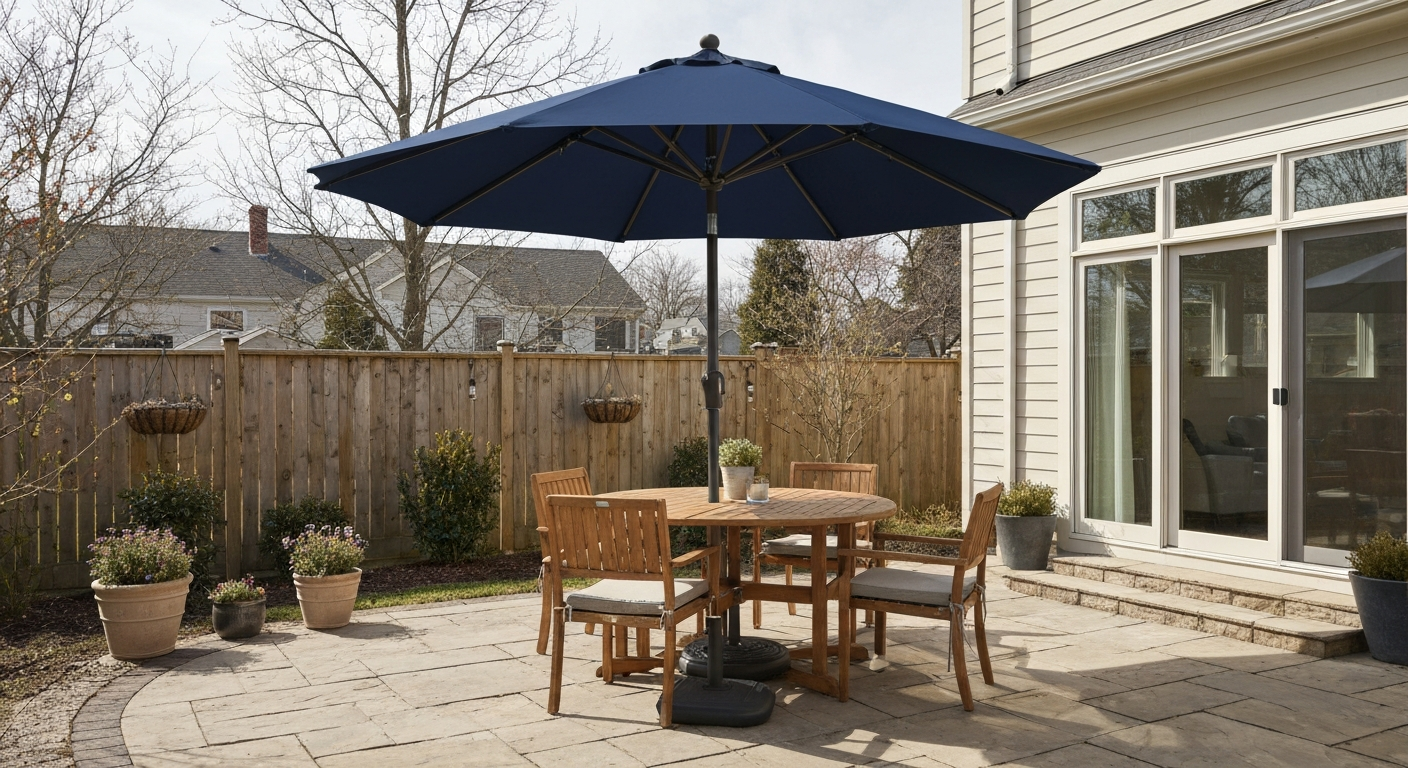
A market umbrella has a vertical center pole that goes either through a hole in your patio table or into a freestanding base. This is the most common, most affordable, and most replaceable style. A standard 9-foot market umbrella with a 1.5-inch pole fits the vast majority of tables sold with umbrella holes. They work best when you have a matching table or when you're okay with the pole being visible in the center of your seating area. For a 4–6 person dining setup, a 9-foot market umbrella is the right default choice.
Tilting umbrellas
Tilting is a feature of market umbrellas, not a separate category. A push-button or collar tilt lets the canopy angle at roughly 30–45 degrees, which is useful for blocking low afternoon sun without needing to move the umbrella. Auto-tilt (found on some premium market umbrellas) integrates the tilt into the crank so you tilt as you raise, which is convenient. For most buyers, push-button tilt is sufficient and more reliable long-term.
Cantilever / offset umbrellas
A cantilever (also called offset) umbrella positions the pole off to the side, with the canopy hanging over the seating area on an arm. There is no center pole in your space, which matters for lounge chairs, pool decks, and small patios where furniture arrangement is constrained. The trade-off is weight and base requirements: cantilever umbrellas require heavier bases (75–90+ lb minimum for smaller models; 265 lb filled base for some Grand Patio large-format models) and cost more for equivalent canopy quality. The rotation feature (360 degrees on most mid-range and premium models) is genuinely useful for tracking the sun without moving the whole umbrella.
Size, coverage, and placement: getting the diameter right
The general rule is to add at least 2 feet of overhang on each side of your table or seating area. For a 4-foot round table, a 9-foot umbrella is the right size. For a 6–8 person rectangular table (roughly 8 feet long), you'll want a 10–11 foot umbrella or two smaller umbrellas. For poolside chaise lounges, a 10–13 foot cantilever gives better lateral coverage. For a small apartment balcony with one or two chairs, a 9-foot offset cantilever or even a 7.5-foot market umbrella is usually sufficient.
| Use Case | Recommended Size | Recommended Style |
|---|---|---|
| 4-person round dining table | 9 ft | Market (center pole through table) |
| 6-person rectangular dining table | 10–11 ft | Market or rectangular market |
| Pool deck / chaise lounges | 10–13 ft | Cantilever / offset |
| Small balcony (1–2 chairs) | 7.5–9 ft | Offset cantilever or small market with freestanding base |
| Large patio / lounge area | 11–13 ft | Cantilever (large base required) |
| Bistro table / 2-person | 7.5 ft | Market with small base |
Octagonal canopies are the standard shape for round tables; rectangular and square canopies better cover rectangular furniture arrangements. When measuring placement, account for clearance on all sides, a 13-foot cantilever arm needs space to rotate without hitting fences, walls, or planters.
Materials and construction: what you're actually paying for
Canopy fabrics
Solution-dyed acrylic is the gold standard. Sunbrella (made by Glen Raven) and Outdura are the most recognized brands, and they carry up to a 10-year limited fade warranty for shade applications because the color is baked into the fiber itself during manufacturing rather than applied as a surface dye. The result is a fabric that resists UV fade, mildew, and water far longer than polyester alternatives. Grade A solution-dyed acrylics from Treasure Garden's catalog (Sunbrella, Outdura, Bella-Dura) sit at the top tier. Grade C fabrics (like O'Bravia, also offered by Treasure Garden) are lower-cost acrylic-blend alternatives with shorter 2–4 year fade warranties.
Polyester canopies dominate the budget segment. They are cheaper to produce, lighter, and adequate for low-UV or seasonal use. Yarn-dyed polyester (like the 240 gsm versions on Purple Leaf models) is better than surface-printed polyester because the color penetrates the weave. Still, expect noticeable fading within 2–3 seasons of full sun exposure. Olefin (polypropylene-based fiber) sits between polyester and acrylic: it is solution-dyed like acrylic, so color is in the fiber, but it is softer and somewhat less UV-stable than acrylic over a decade of use.
Frame materials
Aluminum is the best frame material for most residential patio umbrellas. It does not rust, it is lighter than steel, and powder coating adds a durable protective finish. Look for frames described as powder-coated rather than painted, since powder coating bonds at a molecular level and chips less over time. Steel frames cost less and are common in budget umbrellas, they are fine in dry climates but will rust at weld points and joints in humid or coastal environments within a few seasons. Wood poles (typically teak or eucalyptus) are used in market umbrellas for a traditional aesthetic and are genuinely durable if oiled annually, but they add weight and cost.
Ribs and stitching
The ribs are the structural spines of the canopy. Fiberglass ribs flex under wind load and spring back; aluminum and steel ribs can permanently deform (bend) once a gust exceeds their elastic limit. On budget umbrellas, the ribs are often the first thing to fail in a windstorm. Double-stitched seams and reinforced rib pockets (where the rib attaches to the canopy fabric) add years of life to the canopy. This is a detail worth checking in manufacturer specs or product reviews, torn rib pockets are a common failure point that is hard to see in product photos.
Performance and safety: wind ratings, venting, and anchoring
Wind is the primary way patio umbrellas get damaged or become dangerous. A canopy acts as a sail, and at 20–30 mph gusts, an improperly anchored umbrella can tip, fly, or damage ribs beyond repair. Vented canopies (single or double vent at the apex) reduce the pressure differential that creates uplift, tested fiberglass-rib vented umbrellas survive approximately 25–35 mph gusts when properly anchored. That is real-world useful for most regions, but it is not storm-proof.
- Always close the umbrella when winds exceed 20–25 mph, even if it is rated for those speeds — sustained wind is different from a single gust
- Freestanding bases for 9 ft market umbrellas should weigh a minimum of 50–55 lb for table-mount use; use 75–90 lb for freestanding (no table) setups
- Cantilever umbrellas (especially 11–13 ft models) require heavier bases — Grand Patio's large cantilever specifies 265 lb of sand/water fill for the included base
- In-ground pole anchors and deck-mount flanges offer significantly better wind stability than any portable base
- Store the umbrella during storms: close the canopy, use the tie strap or velcro wrap, and bring it inside or lay it flat in a safe location during any high-wind event
UPF ratings on umbrella canopies are measured using standardized lab methods, primarily AATCC Test Method 183 (Transmittance or Blocking of Erythemally Weighted Ultraviolet Radiation through Fabrics) and referenced against ASTM D6603 for labeling guidance. ASTM D6603, Standard Guide for Labeling of UV‑Protective Textiles (ASTM listing) provides labeling guidance that complements AATCC TM 183 for UPF measurement and consumer-facing claims ASTM D6603 — Standard Guide for Labeling of UV‑Protective Textiles (ASTM listing). A UPF 50+ rating means the fabric blocks 98% or more of UV radiation. Most solution-dyed acrylic canopies (Sunbrella, Outdura) achieve UPF 50+ when new; polyester canopies can also test at UPF 50+ when new, but UV protection degrades faster as the fabric ages and thins. The umbrella's ability to block UV also depends on proper positioning, the canopy must actually be between the sun and the people sitting beneath it.
Bases, mounts, and compatibility
The base is not an afterthought, it is half the safety equation. Most market umbrellas use a 1.5-inch diameter pole, which fits the majority of bases sold in that segment. Cantilever umbrellas typically have larger diameter masts (Grand Patio's cantilevers use approximately a 60 mm / 2.4-inch mast), and the base is usually proprietary to the umbrella's design, you cannot just drop a cantilever pole into a standard market umbrella base.
| Base Type | Typical Weight | Best For | Notes |
|---|---|---|---|
| Table-mounted (umbrella through table hole) | None (table provides stability) | 4–6 person dining tables with umbrella hole | Most stable option for market umbrellas; table must have matching pole diameter hole |
| Weighted freestanding base (sand/water fill) | 50–265 lb depending on umbrella size | Freestanding market and cantilever umbrellas | Must be fully filled to spec; under-filled bases are a leading cause of tip-over |
| In-ground sleeve / anchor | N/A (concrete or soil anchor) | Permanent installations, coastal areas | Most stable portable-to-permanent option; requires planning but excellent wind resistance |
| Deck/wall-mounted flange | N/A (bolted to structure) | Decks, rooftop patios, balconies | Permanent; great stability; requires structural assessment of mounting surface |
| Patio tile weight (umbrella-stand weight set) | 100–200 lb assembled | Hard surfaces where in-ground is not possible | Effective when properly weighted; check for matching pole diameter |
For portable setups on hard surfaces, the most common mistake is buying a base that is too light. A 9-foot market umbrella in a freestanding base (no table) needs 75–90 lb minimum. Going lighter might be fine on a calm day but creates a genuine tip-over hazard in any real wind. Fill water-fill bases completely, not halfway.
Installation, maintenance, and keeping your umbrella alive longer
Setup tips
Read the assembly manual fully before starting. The most common setup error with cantilever umbrellas is skipping the base fill step or underfilling it. With market umbrellas through a table, make sure the pole fits snugly in the table hole and the hole cap is in place to prevent wobble. Once assembled, close the umbrella and give the whole assembly a firm push from the top to test stability before you rely on it with people nearby.
Seasonal care and cleaning
- Clean canopies with mild soap (dish soap or Sunbrella-specific cleaner) and a soft brush; rinse thoroughly and let dry fully before closing
- Never store a wet or damp canopy folded closed — mildew forms within days in enclosed fabric
- At the end of the season, remove the canopy if possible and store it flat or rolled in a breathable bag indoors
- Inspect ribs, rib pockets, and pole joints each spring for cracks, corrosion, or loose hardware before using the umbrella
- Apply a silicone-based lubricant to the crank mechanism and tilt joint annually to prevent seizing
- For wood pole umbrellas (teak, eucalyptus), apply teak oil or an outdoor wood preservative once per season to prevent cracking and greying
Replacing canopies and registering warranties
One of the key practical advantages of buying a quality brand like Treasure Garden is that replacement canopies are available and the part-numbering system is consistent. Replacement canopies for 9-foot market umbrellas typically run $100–$270; large cantilever OEM canopies range from $270 to $800–$1,100 depending on fabric grade and size. Resellers like OasisGarden, PatioHeatAndShade, and AuthenTEAK carry OEM replacement canopies and publish lead times on special orders. Casual Furniture Solutions, Product/fabric grade notes (Sunbrella/Outdura/Obravia warranty notes) summarizes fabric grade and warranty differences and lists replacement‑canopy options for Treasure Garden models Casual Furniture Solutions — Product/fabric grade notes (Sunbrella/Outdura/Obravia warranty notes). Register your warranty at purchase, most brands make this an online step that ties your model and serial number to a purchase date, which matters when you need a warranty replacement.
Where to buy and how to get a good deal
Amazon is the most convenient single place to find patio umbrellas in 2024, and the selection is broad across all price tiers. The pros: fast shipping, easy returns for most items, competitive pricing, and user reviews at scale. The cons: umbrella condition on delivery (large items get damaged in transit more than small ones, inspect before discarding packaging), and the return process for large/heavy items can involve freight return labels and depot drop-off rather than simple front-door pickup. Check whether the return window for the specific product is 30 days or less, especially in spring when demand spikes and return windows can be tighter.
Home Depot and Lowe's are good for budget market umbrellas (Hampton Bay and similar house brands) where you want to see the product in person and return in-store is simpler. Specialty outdoor retailers (PatioHeatAndShade, AuthenTEAK, YardEnvy, and local patio furniture dealers) carry premium brands like Treasure Garden and offer better pre-sale support, replacement-part guidance, and warranty registration assistance. Walmart's online marketplace is where Grand Patio and Purple Leaf's larger cantilever models are frequently listed with competitive pricing.
On price tracking: patio umbrella prices spike in April through June and often drop 20–40% in late July through September as retailers clear inventory. If you are not in a rush, buying in late summer for the following season is a reliable way to save meaningfully on premium models. Always read the warranty fine print before buying: some manufacturer warranties are void if the umbrella is used in a commercial setting or if the canopy is cleaned with bleach-based cleaners.
How to read user reviews and community input without getting misled
Reddit patio and outdoor living threads, Amazon reviews, and forums like GardenWeb are genuinely useful for identifying recurring failure patterns that editorial reviews miss, but they need to be read carefully. A single 1-star review about a DOA crank mechanism tells you less than 30 reviews mentioning rib breakage in the second season. Look for patterns across many reviews, not individual outliers. Recency matters too: a brand may have had quality control issues in 2021 that were corrected for 2024 SKUs, or the reverse. Check if reviewers are discussing the same model year and SKU.
Community discussions on Reddit tend to surface real-world durability information that editorial roundups sometimes overlook because editorial testing periods are short. If multiple forum users report that a specific cantilever's arm welds crack after one season, that is meaningful signal. Cross-reference against the editorial reviews, but don't ignore community consensus on recurring failure modes. The best patio umbrella picks on community forums often align with the same brands that perform well in formal tests, which is itself useful confirmation.
Your practical buying checklist
Work through these steps before placing any order. It takes ten minutes and prevents the most common sizing, compatibility, and base-weight mistakes.
- Measure your table or seating area and add at least 2 feet per side to get your minimum canopy diameter
- Decide: center pole (market) or offset (cantilever)? If you have a table with an umbrella hole, market is simpler; if you need the center clear, go cantilever
- Check your table's pole hole diameter (usually 1.5 in) and match it to your umbrella's pole diameter
- Determine where the base will sit and what type you need: table-mount, freestanding weighted, deck-mount, or in-ground
- Match base weight to umbrella size: 50–55 lb for 9 ft table-mount, 75–90 lb for 9–11 ft freestanding, 200+ lb for large cantilevers
- Choose your canopy fabric: solution-dyed acrylic (Sunbrella/Outdura) for long-term use, polyester if budget is the primary constraint
- Confirm replacement canopies and parts are available for the model you choose before buying
- Check warranty terms: how many years, what is covered (fabric, frame, mechanisms), what voids it
- Verify return policy at your chosen retailer before ordering large items
- Register your warranty online within the window specified by the manufacturer after receiving the product
What to do right after you buy
Once the umbrella arrives, inspect the canopy fabric and frame before discarding the packaging. Assemble it fully and check all mechanical components (crank, tilt, rotation) before the return window closes. Fill the base to the manufacturer-specified weight, not halfway, the full amount. Register your warranty online that same day so the purchase date is locked in. Set a calendar reminder in fall to close and cover the umbrella before the first frost or high-wind season. And keep the model number and reseller contact saved somewhere you can find it in two years when you need to order a replacement canopy, because you will almost certainly want to at some point.
If you are comparing options across different seasons or want a broader view, guidance on 2025 models and updated picks follows as new products enter the market. For historical perspective, see our roundup of the best patio umbrellas 2017 to compare how designs and warranties have evolved. For an updated list, see our roundup of the best patio umbrella 2025. Community roundups and Amazon-specific picks also offer useful secondary angles for cross-referencing prices and availability before you commit to a model.
FAQ
Which patio umbrella is best overall for most homeowners in 2024?
Best-for-most: Treasure Garden market-style umbrella (9–11 ft with solution-dyed acrylic like Sunbrella/Outdura, 8‑rib aluminum frame, crank/tilt). Rationale: proven durability, replaceable canopies/parts, strong UV protection (UPF 50+ with Grade A fabrics) and wide retailer availability. Pair with a 50–90 lb base for freestanding 9–11 ft models depending on use.
What are the top category winners I should consider (budget, premium, cantilever/offset, market/table, wind‑resistant, small‑space)?
Concise picks by category: - Budget: Hampton Bay / Best Choice house-brand 7–9 ft market umbrellas — low cost for table use; expect polyester canopy and shorter warranties. - Premium: Treasure Garden (Sunbrella/Outdura fabric, strong frames, spare parts). - Cantilever/offset: Grand Patio or Purple Leaf 10–13 ft curvy/curved cantilevers — heavy bases required, rotation/tilt features. - Market/table: Treasure Garden 9 ft market aluminum. - Wind‑resistant: Fiberglass‑ribbed models (select Alizé, some Purple Leaf or manufacturer wind‑rated lines) and vented double‑vent canopies. - Small spaces: Compact 6–7 ft tabletop/mini cantilever umbrellas or 7–8 ft market umbrellas with slim poles.
What evaluation criteria should I use to compare patio umbrellas myself?
Key reproducible criteria: canopy fabric and UPF (material, weave, solution‑dyed acrylic vs polyester vs olefin; AATCC/ASTM UPF testing), frame materials and rib construction (fiberglass vs aluminum vs steel), canopy construction (rib count, venting), lift/tilt mechanisms (crank, push-button, auto‑tilt), size/coverage vs footprint, wind resistance (venting, fiberglass ribs, vendor wind claims), base compatibility and recommended filled weights, replaceability (canopy & parts availability), warranty terms (fabric vs frame), and price/retailer returns.
How important is fabric type and what should I choose for longevity and UV protection?
Fabric matters: solution-dyed acrylics (Sunbrella/Outdura/Bella‑Dura) are premium—best fade resistance, UPF 50+, and multi‑year warranties. Polyester/cheap yarn‑dyed options are less expensive but fade and degrade faster (shorter warranties). For long life and best UV protection choose Grade A solution-dyed acrylic.
Do vented canopies and fiberglass ribs really improve wind performance?
Yes. A vented or double‑vent canopy reduces uplift and pressure that flips umbrellas; fiberglass ribs flex and recover (higher elastic limit) and reduce permanent deformation compared with many aluminum/steel ribs. Combined with proper anchoring, these features increase survivable gust speeds; still, no umbrella is storm‑proof—close and secure during high winds.
What base weight do I need for different umbrella sizes and types?
General minimums: - 9 ft table umbrella (through-table): 50–55 lb base. - 9–11 ft freestanding market umbrella: 75–90+ lb filled base. - 10–13 ft cantilever/offset: manufacturer bases often require 150–300+ lb filled (some specify ~265 lb) or concrete‑in‑place mounts. Always follow the umbrella maker’s base-fill spec; heavier is safer, especially for cantilevers.