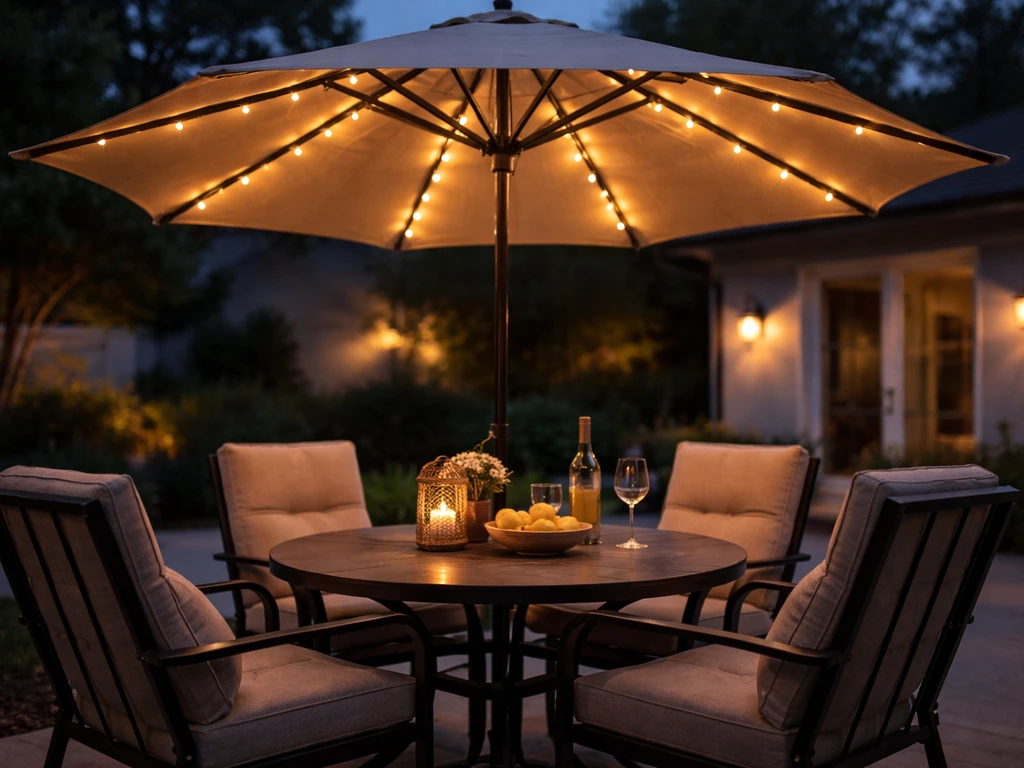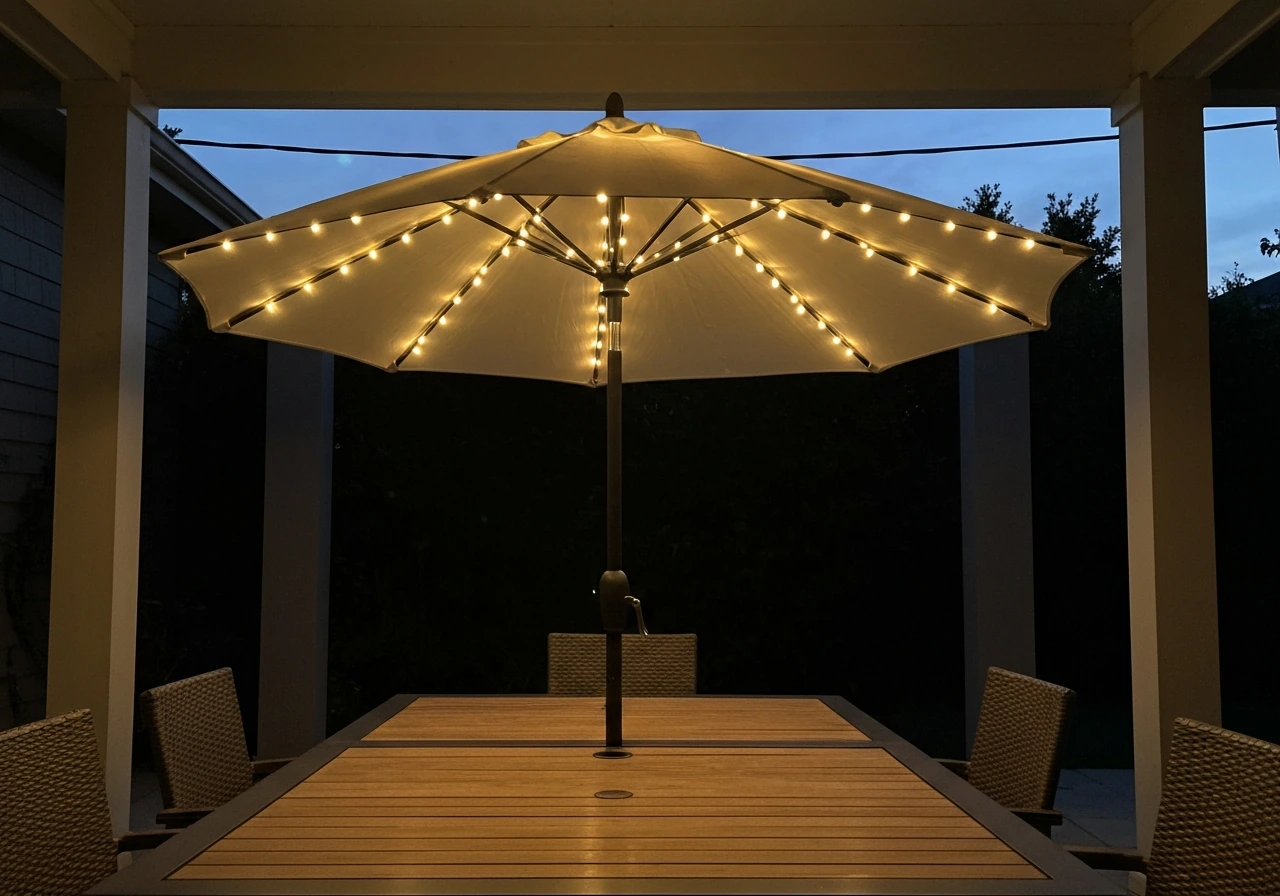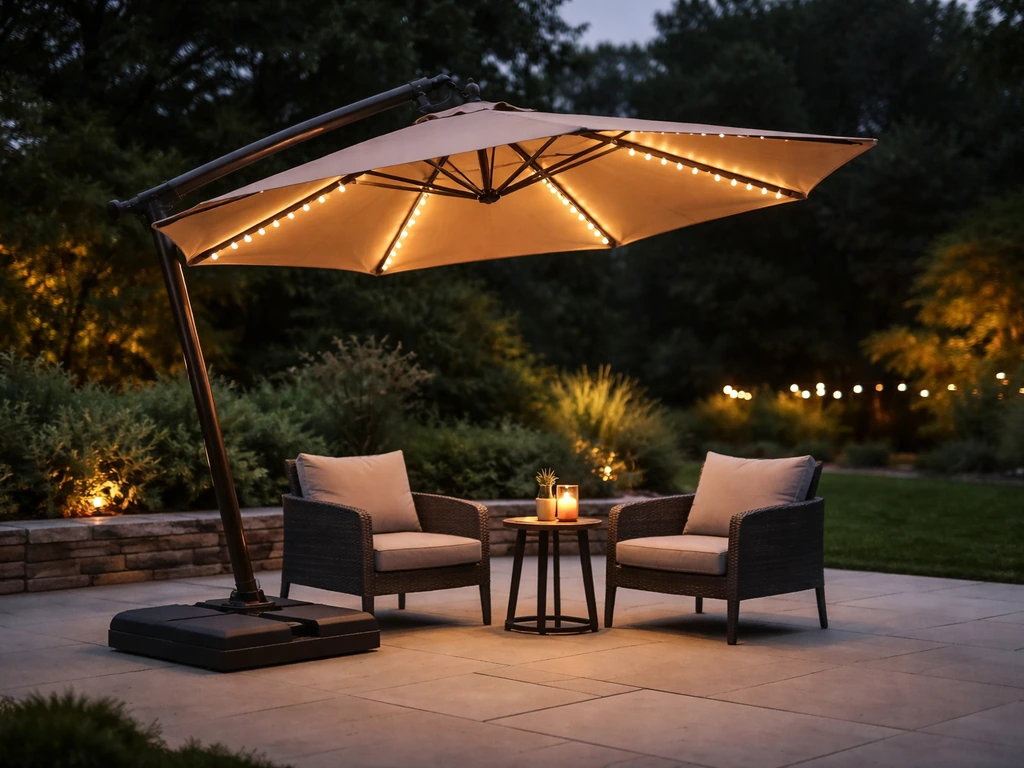
The best solar patio umbrellas combine a solid canopy with a built-in solar panel, a rechargeable battery, and LED lights that actually stay on through the evening. If you want the best patio umbrella with lights, focus on long runtime, strong LED coverage, and weatherproof electrical components so it performs reliably after dark.
Best Solar Patio Umbrellas Buying Guide for 2026

Kent Lang
6 Jun 2026
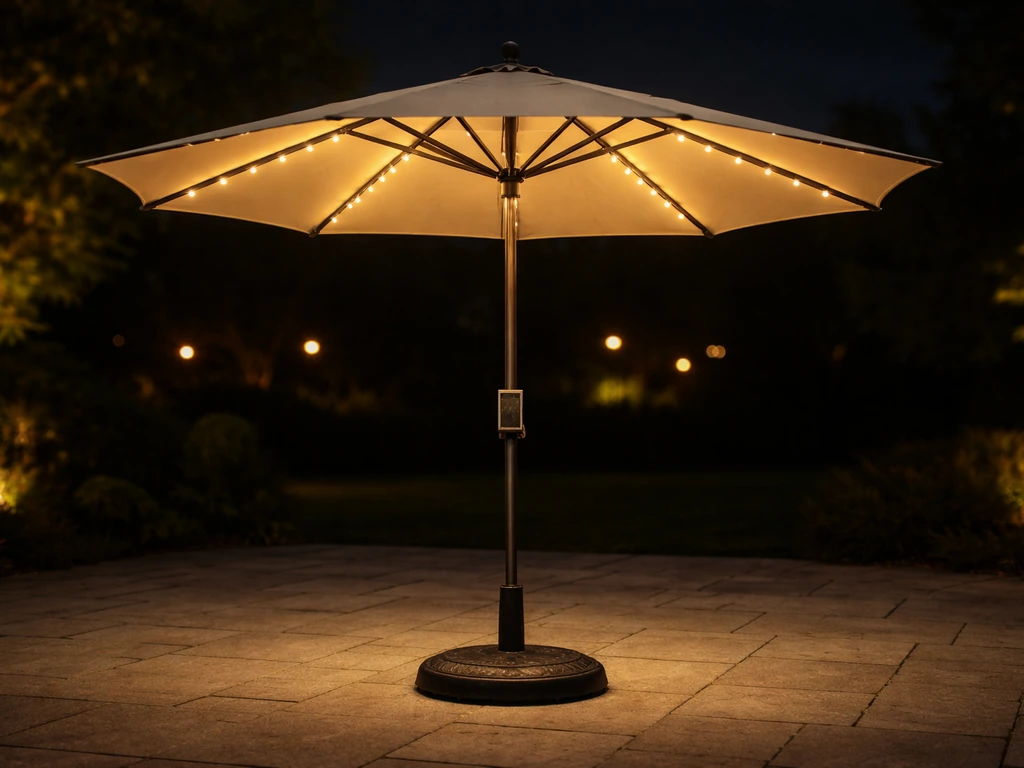
After a full day of sun (roughly 6 to 8 hours of direct exposure), a well-built solar umbrella should give you 6 to 10 hours of ambient light at the table without ever touching an outlet. The ones worth buying have at least 24 to 50 LEDs arranged along the ribs, a battery that holds a useful charge even after a partly cloudy day, and a canopy fabric rated for UV and fade resistance.
The ones not worth buying are any model where the solar system feels like an afterthought stuck onto a cheap umbrella.
What makes a solar patio umbrella actually worth buying
The "solar" label gets slapped on a lot of umbrellas that have almost nothing going on electrically. A genuinely useful solar umbrella has three real components working together: a solar panel (usually mounted at the top of the canopy), a rechargeable internal battery (often lithium-ion), and an LED system wired through the ribs or pole. The panel charges the battery during the day. The battery powers the lights at dusk or whenever you switch them on. That's the whole system, and it either works reliably or it doesn't.
What separates a quality unit from a disappointing one is how well each part is sized and sealed. A panel that's too small can't fully charge the battery even on a perfect sunny day, which means your lights flicker out by 9pm. A battery with too little capacity means the same thing if the day was overcast. And LED systems that aren't properly weatherproofed fail after a season of rain. Before you care about color or style, check that the specs hold up on all three fronts.
One honest caveat: solar umbrellas are not a replacement for hardwired patio lights if you entertain regularly until midnight. They shine at dusk and into the evening, not all night. If you're hosting dinner parties until 11pm three nights a week, pair the solar umbrella with a separate lighting setup. For the more typical use case of relaxing on the patio after dinner, a good solar umbrella is more than enough.
Key specs to compare before you buy
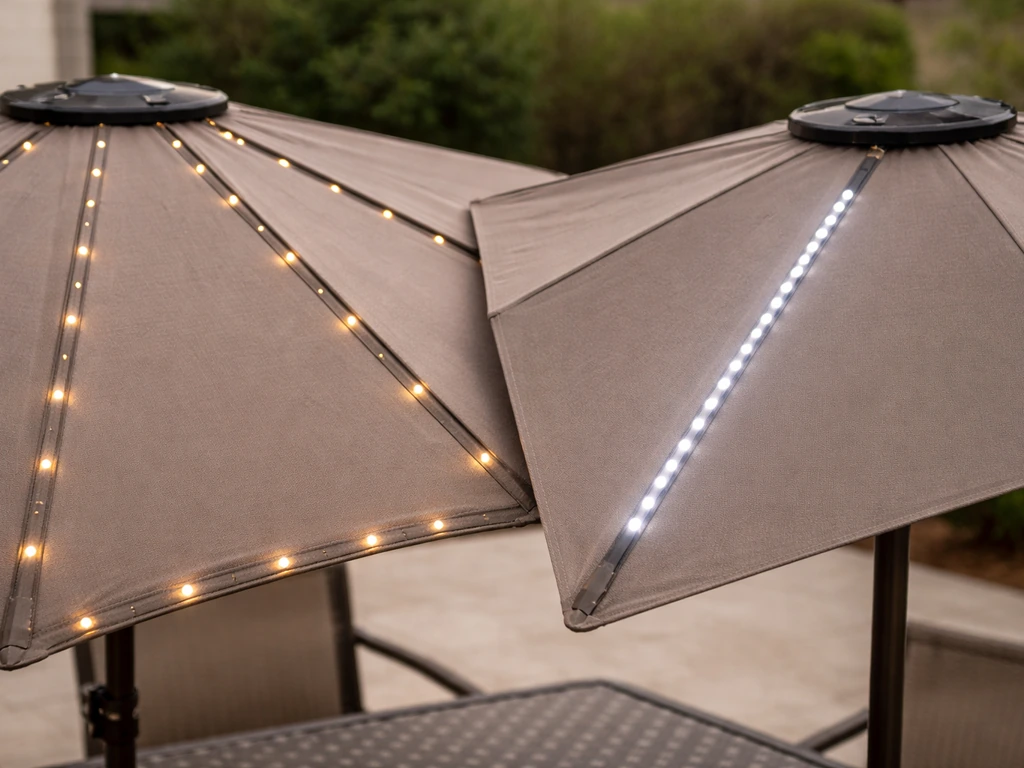
LED count and placement
LED count matters, but placement matters just as much. A lot of listings lead with a big number like 32, 35, or 50 LEDs, but how those are arranged changes the quality of light you get. The best setups run LEDs along each rib so the light fans out downward onto the table and seating area below.
If you want the best lighted patio umbrella, focus on even LED placement and long, reliable runtime after a full day of sun. Some models add a central spotlight at the crown, which adds useful overhead brightness. Listings with 32 LEDs plus a center light, or 50 bulbs along the ribs with a central LED, tend to produce the most even coverage.
Strip-based systems (like 8 LED light strips) can be bright but may cast light unevenly if the strips aren't angled right.
Solar panel size and position
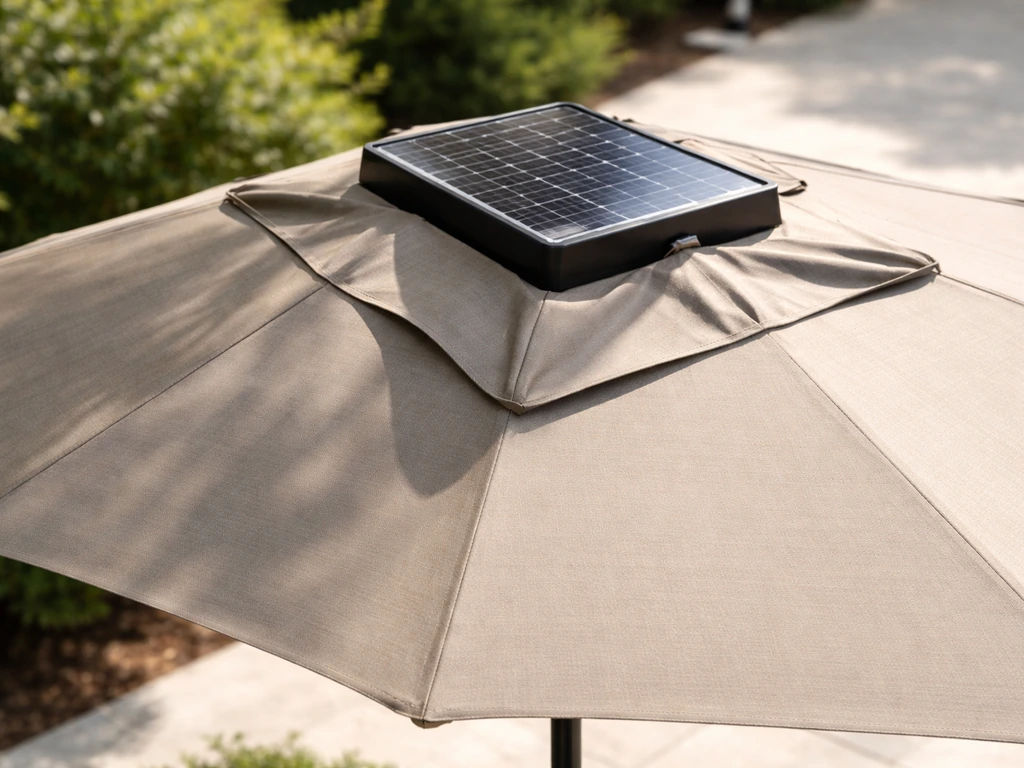
Most solar umbrellas mount the panel at the very top of the canopy, which sounds logical until you realize the canopy itself can shade the panel if the umbrella is tilted. For market-style umbrellas, this is rarely a problem since they sit vertically. For cantilever umbrellas that tilt to block afternoon sun, you can accidentally shade your own solar panel and slow down charging significantly. Look for models where the panel sits proud of the canopy or is positioned to catch sun even when the umbrella is tilted.
Battery capacity and runtime
After 6 to 8 hours of direct sun, a properly sized battery should power the LEDs for at least 6 to 8 hours on a medium brightness setting. Some manufacturers claim 20 to 40 hours of total runtime, but that figure typically applies across multiple charges, not a single one. Runtime also depends on brightness mode: running at full brightness drains the battery faster, while a dim mode stretches it out significantly.
A good illustration of this tradeoff is how some LED lantern systems deliver around 35 lumens for 8 hours or drop to 20 lumens for 16 hours on a single charge. The same principle applies to umbrella systems, so look for models that give you at least two brightness modes.
Weather sealing and connector quality
This is where cheap solar umbrellas fall apart fastest. The wiring runs from the panel through the ribs and down the pole, which means it crosses multiple joints that get flexed, rained on, and baked in the sun. Look for IP-rated LED components, sealed connectors at the rib joints, and a battery compartment that latches securely rather than having an exposed cover. If a listing doesn't mention weatherproofing for the electrical components at all, that's a red flag.
| Spec | Minimum to look for | Better |
|---|---|---|
| LED count | 24 LEDs | 32 to 50+ LEDs with center light |
| LED placement | Canopy edge only | Along each rib + central spotlight |
| Brightness modes | 1 mode | 2 or more (high/low or dimmer) |
| Charge time (full sun) | 6 to 8 hours | Same, but panel stays unshaded when tilted |
| Runtime (medium brightness) | 4 to 6 hours | 6 to 10 hours |
| Weather sealing | Not mentioned | IP-rated LEDs, sealed connectors |
| Battery type | Unspecified | Lithium-ion with removable/replaceable option |
Best umbrella styles for solar setups
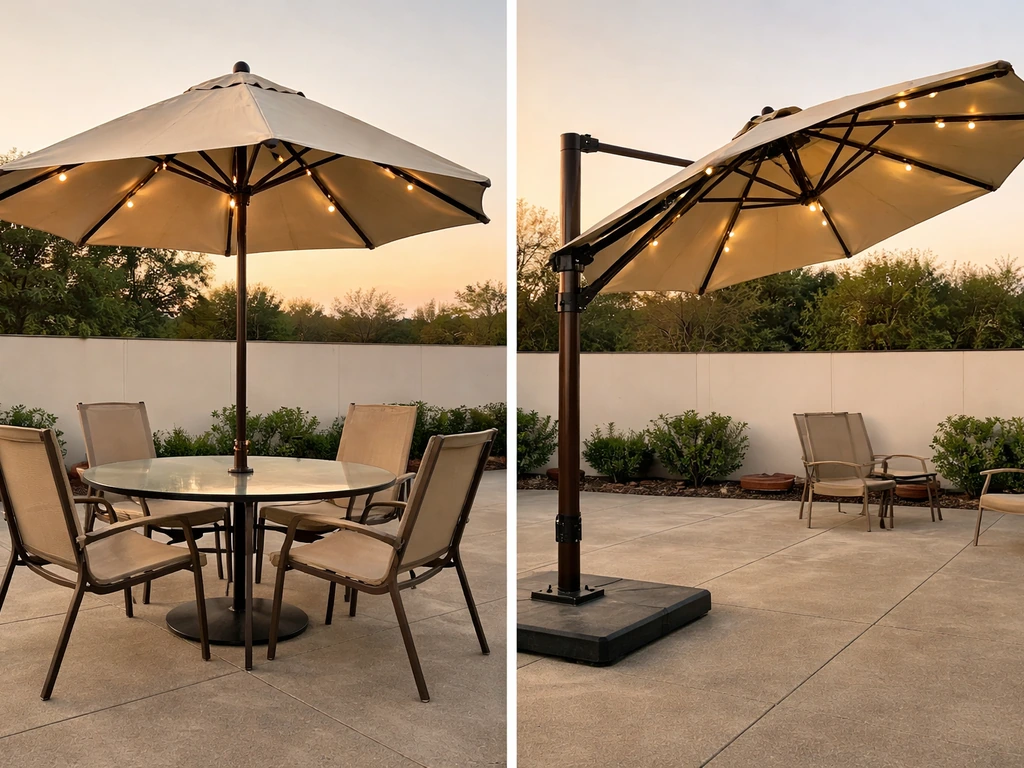
Market umbrellas with solar lights
Market-style umbrellas (the classic center-pole design) are the simplest and cheapest entry point for solar. The pole runs through a hole in your patio table, the umbrella sits straight up, and the solar panel at the crown gets consistent sun all day. The tradeoff is that all your guests sit around a center pole, which can be slightly awkward for larger tables. Market-style solar umbrellas work best for round or square tables up to about 48 inches, where the pole doesn't interrupt the seating too much. If your priority is simple setup and lower cost, start here.
Cantilever and offset umbrellas with solar lights
Cantilever (also called offset) umbrellas are where the solar engineering gets interesting and where most of the premium solar umbrella market lives. The pole sits to the side, the canopy hangs over your seating area with nothing in the middle, and you get unobstructed shade across a larger footprint. They typically cover 10 to 12 feet diagonally and work beautifully over sectional sofas, large dining sets, or pool decks.
The solar challenges here are real though: the canopy tilts to follow the sun, which can shade the panel, and the heavier structure needs a serious base to stay stable. If you're comparing solar umbrella styles, cantilever models tend to have more LED ribs (because they have more ribs to begin with) and produce better lighting coverage below. This is the style you'll find featured most often in solar LED umbrella reviews.
Which style fits your patio best
| Style | Best for | Solar panel challenge | Typical LED count | Price range |
|---|---|---|---|---|
| Market (center pole) | Round/square tables, smaller patios | Low (panel stays upright) | 16 to 32 LEDs | $ to $$ |
| Cantilever/Offset | Sectionals, large dining, pool decks | Moderate (tilt can shade panel) | 24 to 50+ LEDs | $$ to $$$ |
| Double-top cantilever | Large coverage areas, maximum light | Moderate to high | 50+ LEDs + center | $$$ to $$$$ |
Wind resistance, stability, and base requirements
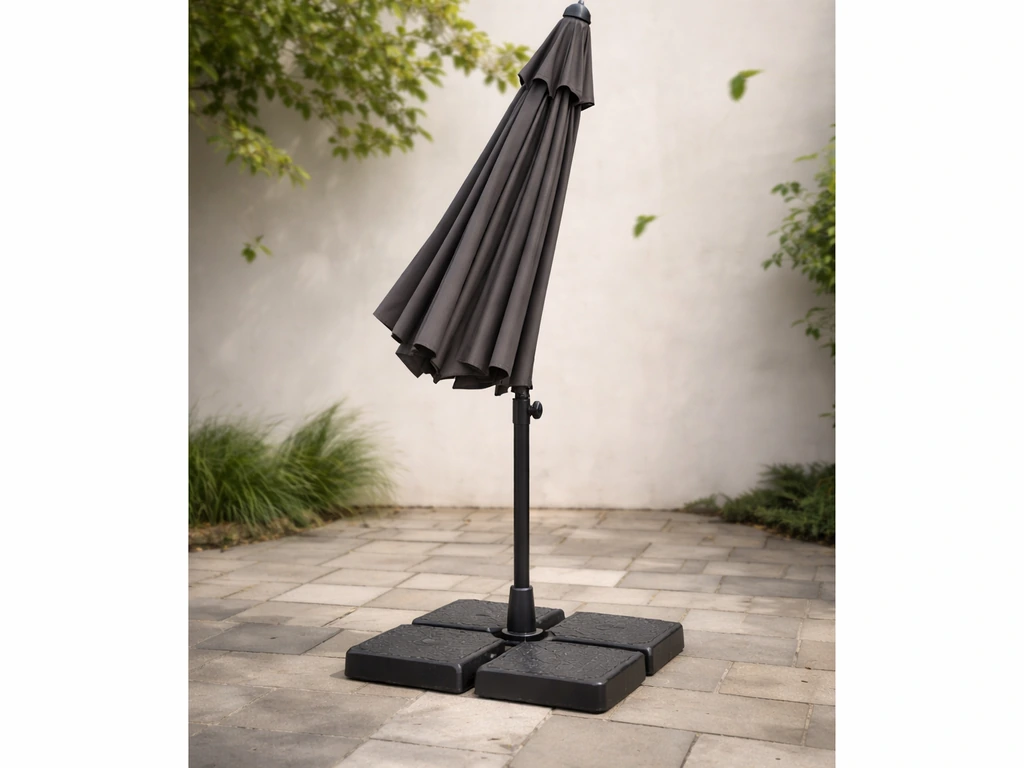
A solar umbrella is a bigger sail than a plain one because the panel and wiring add weight at the top, raising the center of gravity. Wind resistance is not optional here. Quality cantilever solar umbrellas are rated for Beaufort Force 7 (roughly 28 to 38 mph sustained winds), and many feature a vented canopy top that lets air pass through to reduce lateral force rather than catching it like a kite. If you live somewhere with regular afternoon gusts, the vented double-top design is worth the premium.
Base weight is where a lot of buyers underestimate what they need. For a standard 10 to 11 foot cantilever solar umbrella, you need a base rated for at least 100 to 150 lbs of weight, and heavy-duty models often specify 350 lb bases for full stability. Some listings are explicit: one offset solar umbrella spec sheet states it requires four cantilever base weights, not one. Fillable bases (sand or water) are popular for portability but come with a real warning: they hold fine in moderate winds but can tip in strong gusts. If your patio is exposed, use a concrete ballast base or bolt the umbrella system to your deck.
Structural design details matter too. Look for adjustable tilt mechanisms with lock, canopy straps that secure the fabric to the ribs (some use hook-and-loop fasteners), and a base with a cross or star footprint rather than a single-point stand. The most common tip-over cause listed in manuals is simply insufficient base weight, so don't cheap out on the base to save a few dollars on the umbrella.
- Look for Beaufort Force 6 or 7 wind ratings on cantilever models
- Vented canopy top reduces wind pressure and wobble
- Plan for a minimum 100 to 150 lb base for 10 ft umbrellas; 200 to 350 lbs for 11 to 12 ft models
- Four-point cross bases outperform single-stem bases for offset umbrellas
- Fillable bases are portable but not adequate for regularly windy patios
- Hook-and-loop canopy straps and locking tilt add meaningful stability
Materials, UV protection, and weather durability
The canopy fabric is what you'll notice degrading first on a cheap solar umbrella. Low-quality polyester fades fast under direct sun, and once the color goes, the structural integrity of the weave weakens too. The benchmark you're looking for is solution-dyed polyester at 200 grams per square meter or heavier. Solution-dyed means the color goes all the way through the fiber, not just coated on the surface, so it resists fading far longer. Look for fabric tested to the AATCC 16 light fastness standard, which measures how well a fabric holds its color under UV and visible light exposure. Some listings specify "US standard AATCC 16 light fastness" explicitly, which is a good sign the manufacturer actually tested it.
Claims like "99.9% UV resistant" and "3-year fade resistant" appear on a number of listings and are broadly useful as indicators, but AATCC 16 certification gives you a more objective benchmark. For the frame, aluminum poles and ribs are the standard for corrosion resistance. Better models use oxidation spray-painted steel or powder-coated aluminum, which adds another layer of protection against rust. Avoid umbrellas with exposed untreated steel ribs if you live anywhere near a coast or in a high-humidity climate.
The solar and electrical components need their own weather protection. Sealed battery compartments, UV-stable panel housings, and corrosion-resistant wire connections are non-negotiable for a solar umbrella that'll last more than one or two seasons. If those details aren't mentioned in the listing, assume they're not there.
Choosing the right size and placement for your patio
Sizing a patio umbrella is simple: you want the canopy to extend roughly 2 feet beyond your table or seating area on each side. For a standard 48-inch round patio table, a 9-foot market umbrella works well. For a 6-person rectangular dining set, go 10 to 11 feet. For a sectional sofa or large lounge area, a 12-foot cantilever gives you the coverage without a pole in the middle.
Placement for solar charging is a separate consideration from shade placement, and this is the tension that solar umbrella buyers don't always think through. The umbrella needs to shade you in the afternoon, but the solar panel needs direct sun during the day. On most patios, the umbrella will be tilted away from the afternoon sun to cast shade over the seating area, which can also tilt the panel away from direct sun during peak charging hours.
The practical workaround is to angle the umbrella (and panel) toward the sun in the morning when the patio is less occupied, then adjust it for shade in the afternoon once people are outside. Cantilever umbrellas with 360-degree rotation make this adjustment much easier.
If your patio is in partial shade for much of the day due to roof overhangs, trees, or neighboring structures, a solar umbrella will underperform. In that situation, a battery-operated LED umbrella (with a USB-rechargeable battery pack) may be more reliable than a solar-dependent system. If you want the brightest, most consistent results, look for the best patio umbrellas with solar lights. Solar works best when the panel gets at least 4 to 6 hours of unobstructed direct sun per day.
Setup, charging, and maintenance
Getting set up right the first time
Most cantilever solar umbrellas arrive in multiple pieces and require 30 to 60 minutes of assembly. The electrical connections between the ribs and the central hub are the most important step to get right: follow the manufacturer's connector sequence exactly, and make sure every connection is fully seated and locked before you close the canopy. A half-connected LED rib is the most common reason a new solar umbrella lights up on only one side.
Charging habits that extend battery life
Give the battery a full charge cycle before your first evening use. Set it up in direct sun and let it charge for at least 8 hours before turning on the lights. After that, the natural daily cycle of sun exposure and evening use is exactly what lithium-ion batteries like: regular partial charge/discharge cycles beat deep discharges followed by long storage. If you know you won't be using the umbrella for more than two weeks (off on vacation, seasonal slowdown), close the umbrella and bring the battery indoors or put it in a shaded spot. Leaving a lithium-ion battery depleted in the sun for weeks shortens its lifespan.
Cleaning and off-season storage
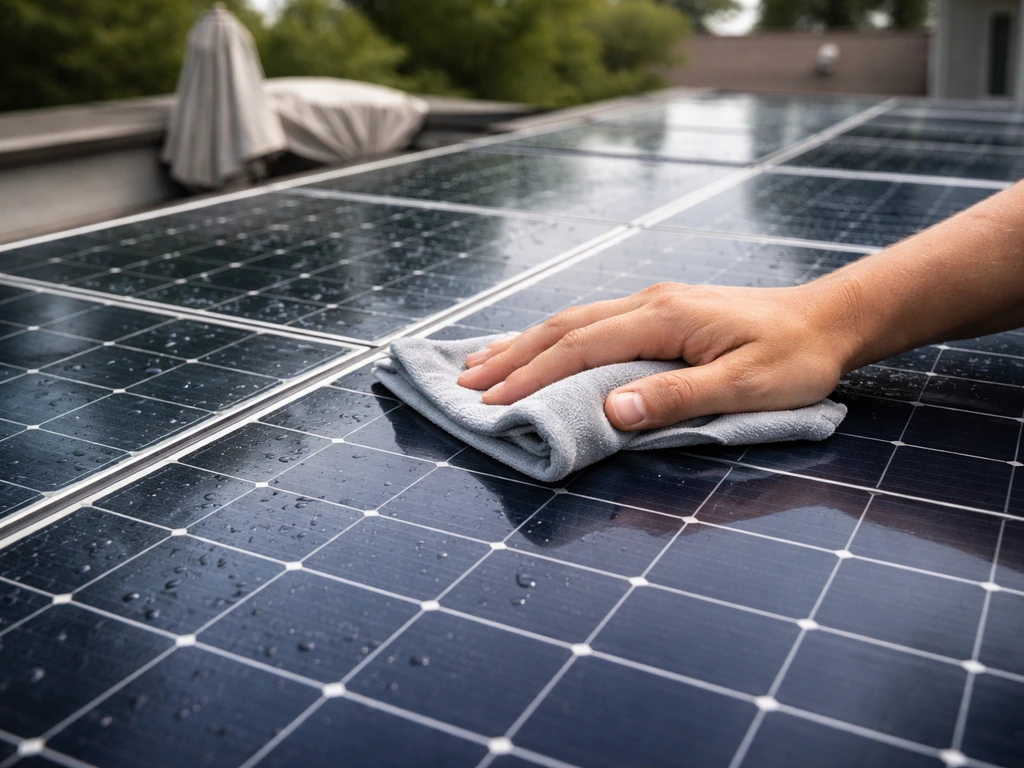
Clean the solar panel surface every few weeks with a damp cloth. Dust, pollen, and bird droppings reduce panel efficiency noticeably, and a clean panel can meaningfully improve charge times. For the fabric, rinse with clean water regularly and spot clean with mild soap. Avoid pressure washing directly on the electrical components or rib connections. When the season ends, close the umbrella, disconnect or remove the battery if the design allows it, and store the whole unit under a protective cover or indoors. This one habit extends the life of both the canopy and the electrical system by several years.
Top picks by budget and need, and what to avoid
Best overall
For most homeowners, the sweet spot is an 11-foot cantilever solar umbrella with 32 to 50 LEDs along the ribs, a center spotlight, a 360-degree rotation base, and AATCC 16-rated 200g solution-dyed polyester. Models in the $200 to $350 range hitting all those marks are the ones that come up most consistently in solar patio umbrella reviews.
If you want a warm, inviting vibe without hardwired wiring, the best outdoor patio umbrella lights can make your space feel like it is already set up for guests. If you're trying to choose the right option, these solar patio umbrella lights reviews can help you compare real-world brightness and runtime. Look for a vented top, a locking tilt mechanism, and explicit mention of sealed or IP-rated LED components.
Best for windy patios
If you're in a consistently windy area, prioritize Beaufort Force 7 wind ratings, a vented double-top canopy, and a heavy cross-base rated for 200 to 350 lbs. The Pellebant-style umbrellas with a 350 lb base weight spec are genuinely built for this. Budget more for the base than the umbrella itself if needed, because a great umbrella on an inadequate base is a liability.
Best for maximum runtime on cloudy days
If your area gets frequent overcast days, look for models that either include a USB backup charging port for the battery (so you can top it off via a power bank or wall outlet), or choose one where the battery is removable and replaceable. Supplementing the solar charge with occasional USB charging keeps the system reliable even through a cloudy stretch. Also choose a model with at least two brightness modes so you can drop to low when you need to stretch the charge.
Best value pick
A 10-foot market-style solar umbrella with 24 LEDs is the most affordable entry point and works well for smaller patios with a center-pole table. You give up the coverage and aesthetic of a cantilever, but the solar panel stays upright all day for reliable charging and the structure is simpler and less expensive to replace. If your budget is under $150, this is the right category to shop.
Best for larger shade areas
For covering a sectional, a large outdoor dining set, or a pool deck, a 12-foot double-top cantilever with 50-plus LEDs is the right call. If you're shopping for the best pool patio umbrella, focus on a wide canopy and a stable base that can handle breezes near the water. These typically run $350 and up with a proper base included. The double canopy both increases shade coverage and gives more surface area to distribute the LEDs, which produces noticeably better lighting quality than a single-canopy model at the same size.
What to avoid
- Any model that doesn't specify LED count, brightness modes, or battery type in the listing
- Umbrellas where the solar panel is embedded inside the canopy fabric rather than mounted on top (almost no charging output in practice)
- Fillable plastic bases for anything larger than 9 feet or any exposed/windy location
- Models with uncoated or untreated steel ribs if you're anywhere near moisture or salt air
- Listings that claim "solar-powered" but don't mention a battery at all (some just have a small panel powering lights directly, which means zero output if a cloud passes)
- Anything without a warranty of at least one year on both the umbrella structure and the electrical components
Solar patio umbrellas sit at the intersection of two product categories that both have a lot of low-quality options: cheap patio umbrellas and cheap solar gadgets. The ones worth your money treat both sides seriously, with a structurally sound, properly warranted umbrella paired with a real solar-and-battery system that's built to survive outdoor conditions. When you compare the best patio parasol options, prioritize an actually usable solar-and-battery system, not just a few decorative LEDs solar patio umbrellas.
Get those fundamentals right and you'll have a patio setup that genuinely earns its keep from the first warm evening of the year. If you want a stylish upgrade, a better homes and gardens patio umbrella with solar lights can be a convenient way to add evening glow without extra wiring.
FAQ
How can I tell if a solar patio umbrella will charge well on my patio, not just on a sunny demo day?
Check the panel location relative to your typical afternoon angle. If your umbrella is usually tilted for shade, pick models where the panel sits high and “faces” the sun even when the canopy is angled. Also look for wording about battery capacity after partial charge (for example, whether it still runs through a dusk period after less than a full sunny day), because some umbrellas only perform after uninterrupted direct sun.
What is the real difference between 24, 32, and 50 LEDs for solar umbrellas?
LED count is only part of the story. Compare how many LEDs are distributed across ribs versus concentrated in one spot, and whether the light is aimed downward. A lower-count design with rib lighting that spreads evenly can look brighter on the table than a high-count unit where many LEDs are shaded by the canopy angle or grouped too tightly.
Do solar patio umbrellas need to be recharged like regular rechargeable devices?
They charge automatically when the panel gets sun, but you should still do an initial full charge cycle before first use (set up in direct light for at least 8 hours). If you store the umbrella for weeks, follow the battery guidance in the article and avoid leaving a battery depleted for long periods, because deep depletion shortens lithium-ion lifespan.
Can I use a solar patio umbrella at night on cloudy days without it dying early?
Yes, but only if the battery is sized well and the umbrella supports at least two brightness modes. Use low brightness for ambiance, then switch to higher only if you need more visibility. If your area gets frequent overcast, consider models that offer USB top-up, because it reduces the “one cloudy day and it is weak” problem.
Why does my umbrella light up on only one side (or unevenly)?
The most common cause is an incomplete or incorrectly sequenced connection between LED ribs and the central hub during assembly. Recheck that every rib connector is fully seated and locked before closing the canopy, and confirm both sides have the same brightness setting and mode selected.
How should I set the brightness mode to avoid wasting battery?
If you want the lights to last into late evening, start at the lower or “ambient” mode and only switch to higher brightness when people arrive. Full brightness drains the battery faster, so it can shorten runtime even when the umbrella was fully charged earlier in the day.
Is it safe to leave a solar patio umbrella outside in the rain?
Only if the electrical components and connections are described as sealed, IP-rated, or weatherproof. If the listing does not explicitly mention weatherproofing for the LED system and wiring paths (panel housing, rib joints, and battery compartment), treat it as a risk. Also keep the battery compartment latched securely, because loose covers expose electronics to moisture.
Will wind damage a solar patio umbrella, and what should I look for in the wind rating?
Wind is often what kills outdoor umbrella systems first, especially with top-heavy solar components. Prioritize a wind rating that matches your conditions, and look for a vented canopy style (double-top or vented) plus a base with a high weight rating. If you routinely see gusts, consider lowering the umbrella at night or securing it per the manual’s guidance.
How much base weight do I really need for a cantilever solar umbrella?
Do not size the base by umbrella diameter alone. Use the umbrella’s specific base rating, for example many 10 to 11 foot cantilevers call for a base in the 100 to 150 lb range, with premium stability sometimes requiring far more. If the product requires multiple bases or specific ballast components, buying a “similar” base weight can still lead to tipping.
Are fillable sand or water bases a bad idea?
They can work in moderate winds and for easier mobility, but they are more likely to tip in stronger gusts or uneven patios. If your deck is exposed, a concrete ballast base or bolted mounting is safer than relying on fill levels alone.
Does tilting my cantilever umbrella for afternoon shade reduce charging too much?
It can. When the canopy tilts, it may shade the solar panel and reduce charging during peak hours. The practical workaround is to position the umbrella toward the sun in the morning, then adjust it for shade later. If the umbrella has 360-degree rotation, it generally makes this adjustment easier.
What should I do if my solar panel gets dirty, and how often should I clean it?
Clean the panel every few weeks (or sooner if you have pollen, dust, or nearby birds). Use a damp cloth for the panel surface, because grime blocks light and slows charging. Avoid pressure washing around electrical components and rib connections, since water intrusion is the bigger risk than a light surface wipe.
What is the safest way to store the umbrella during the off-season?
Close and cover or store it indoors when possible, and if the design allows it, remove or disconnect the battery. Storing the battery properly helps prevent lifespan loss. Also rinse the fabric as needed and spot clean with mild soap, because embedded dirt can increase long-term wear under UV.
Do I need AATCC 16 light fastness and solution-dyed fabric to be happy with the lights?
You do not need those exact certifications for solar lighting to work, but they matter for overall durability. Fading and fabric breakdown can happen before the solar system fully fails, leaving a worn-looking umbrella. Solution-dyed polyester and light fastness testing are strong indicators the canopy will hold up through repeated sun exposure.
What is the best backup plan if my patio is partially shaded most of the day?
If the panel only gets limited direct sun, solar will underperform. The best backup is a battery-powered LED umbrella with a USB-rechargeable pack, or a solar model that can be topped up with USB when the sky is overcast. Either option keeps the evening lighting consistent.