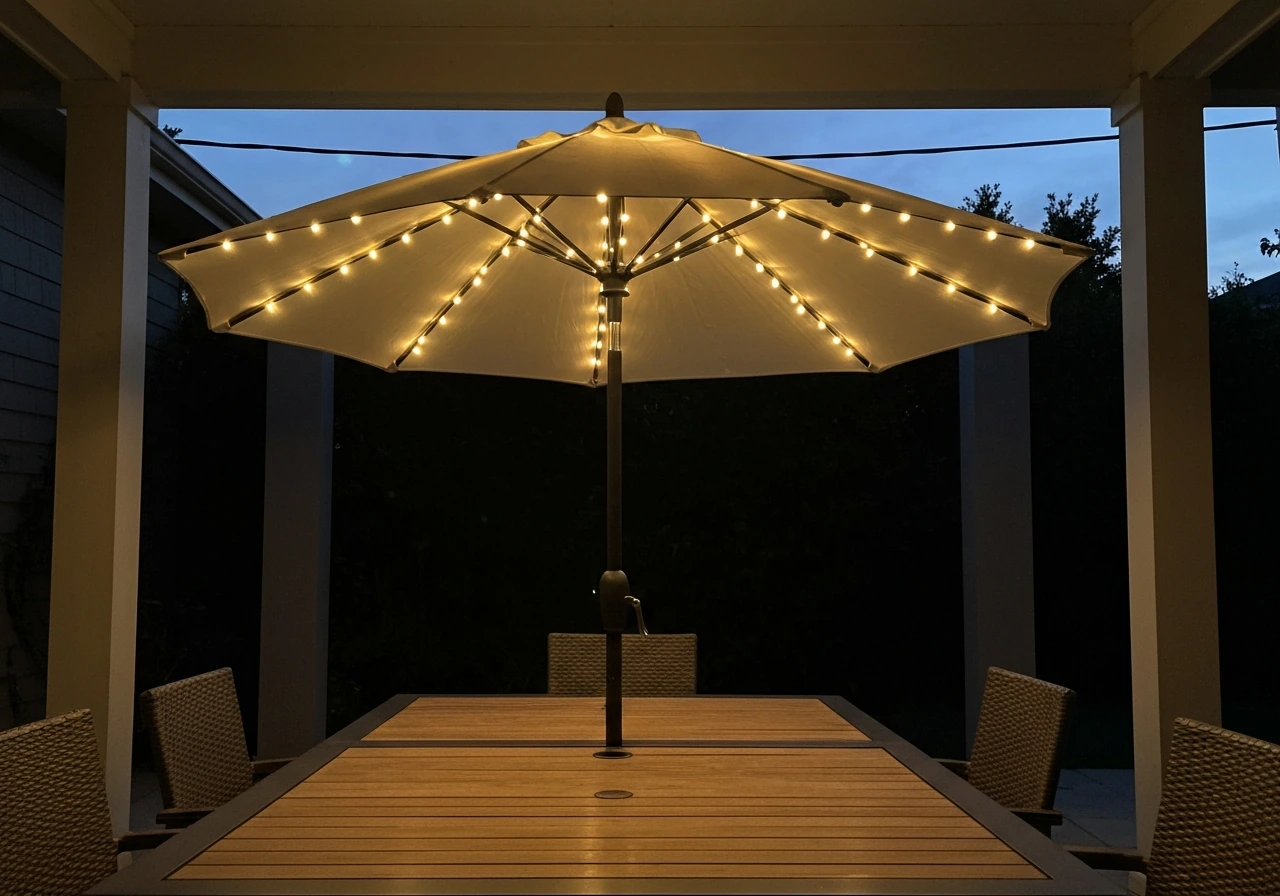
The best patio umbrellas with solar lights combine a genuinely durable canopy with a solar-charging system that delivers at least 6 to 8 hours of usable brightness after a full day of sun. If you want a short answer, look for a model with a built-in lithium-ion battery (not AA cells), an IP65-rated LED assembly, and a fabric rated UPF 50+, ideally solution-dyed acrylic. The tricky part is that the umbrella market is flooded with products that look great in listing photos but have solar setups that fade out before dinner is over. This guide helps you cut through that and find something that actually works.
Best Patio Umbrellas With Solar Lights: Buying Guide

Kent Lang
4 Jun 2026
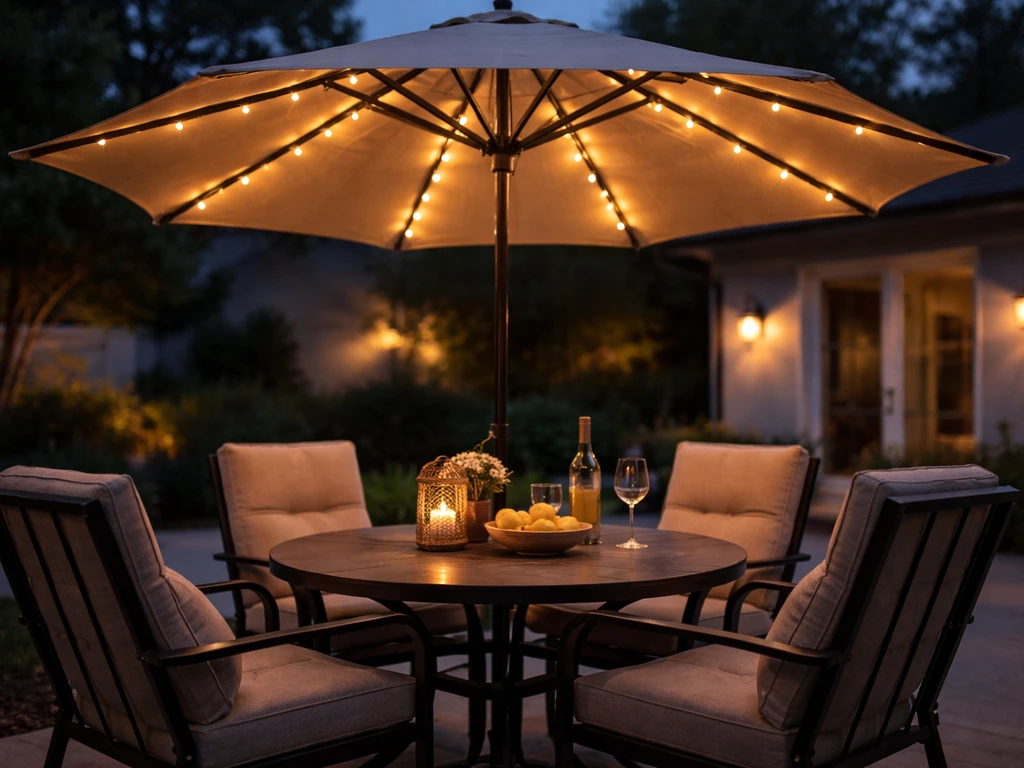
What 'solar-lit' really means: integrated lights vs. add-on systems
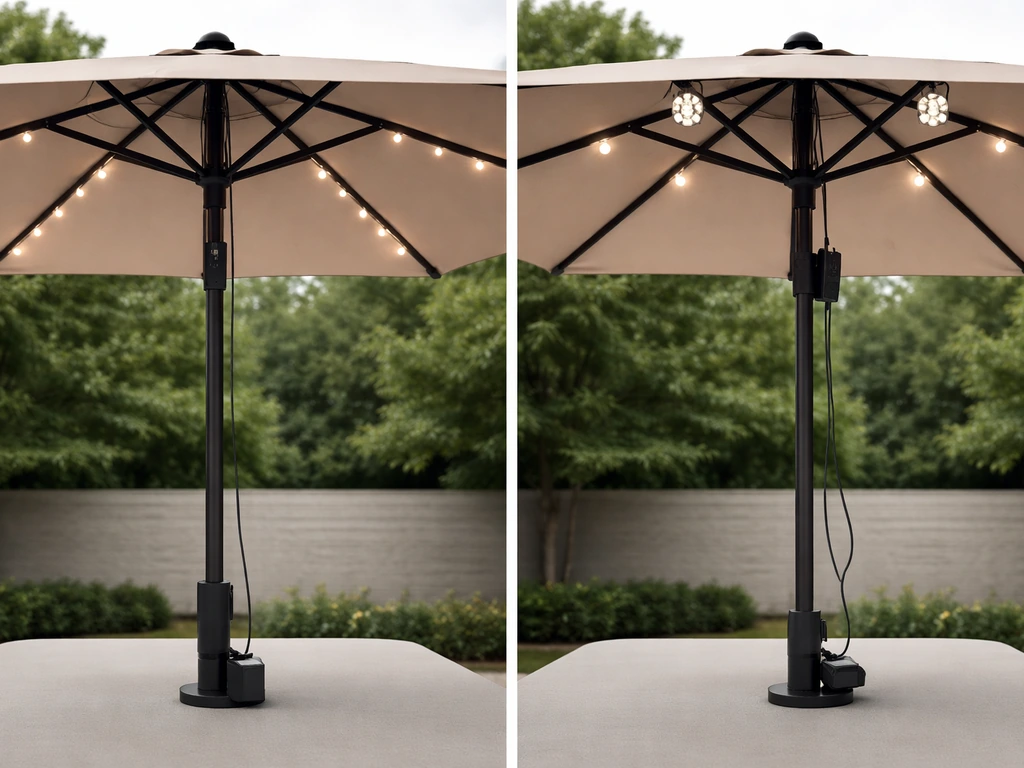
Not all solar umbrellas are built the same way, and knowing the difference will save you a lot of frustration. There are essentially two categories: truly integrated solar systems and add-on solar accessories.
Truly integrated solar umbrellas
A fully integrated umbrella has LEDs built into the canopy ribs or pole, wired to an onboard solar panel and a lithium-ion battery pack. The solar panel is either mounted at the crown of the umbrella or embedded into the ribs or pole structure. Some high-end versions, like those from Archasol, use flexible photovoltaic cells woven directly into the canopy ribs and claim up to 10 hours of illumination from a 38.
For example, Archasol describes its Kasa solar-lit umbrella as using flexible PV cells integrated within the ribs (not an external solar unit) and claims up to 10 hours of nighttime illumination, along with a 38. 4 Ah Li-ion battery value [flexible photovoltaic cells woven directly into the canopy ribs and claim up to 10 hours of illumination from a 38. 4 Ah lithium-ion battery](https://www. archasol.
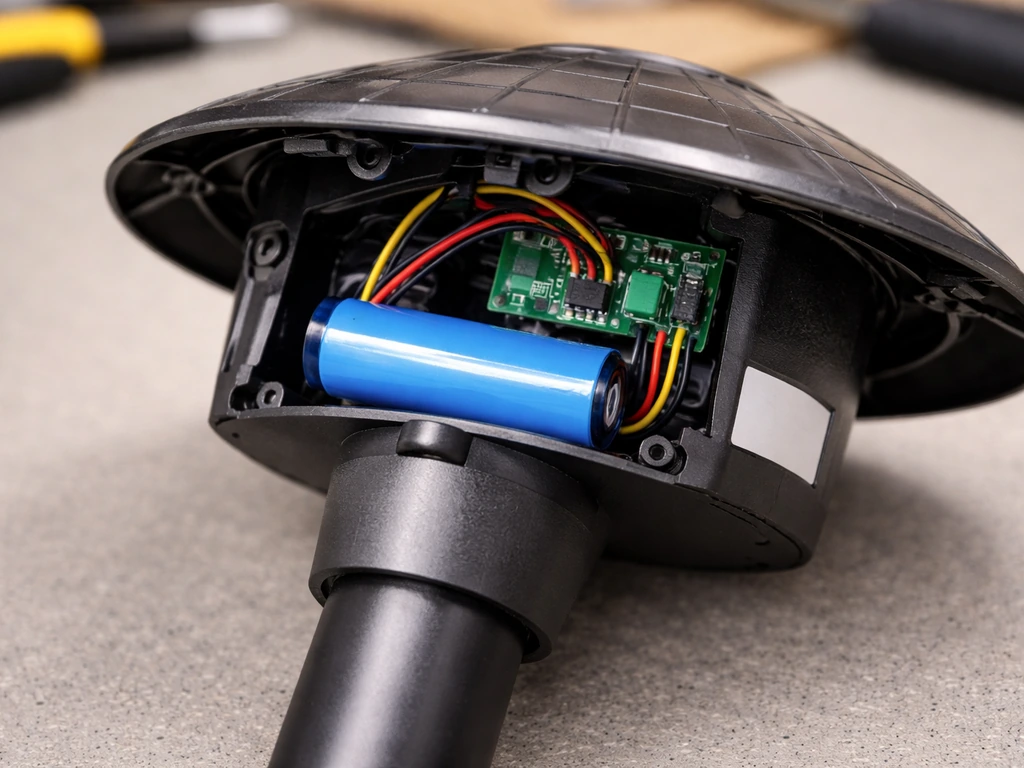
com/product/kasa-solar-lit-umbrella/). 4 Ah lithium-ion battery. Others, like models from GLATZ's Suncomfort line, allow you to recharge via USB when sun is scarce and deliver a more realistic 6 to 8 hours per charge. The key component you want is a charge controller, which is a small regulator between the panel and battery that prevents overcharging.
Better-built umbrellas include this; cheaper ones skip it, and that's usually the first thing to fail. The wiring harness connecting the panel to the battery is another common failure point on budget models, so clean routing through the pole matters.
Add-on solar lights: clip-ons, string lights, and puck-top panels
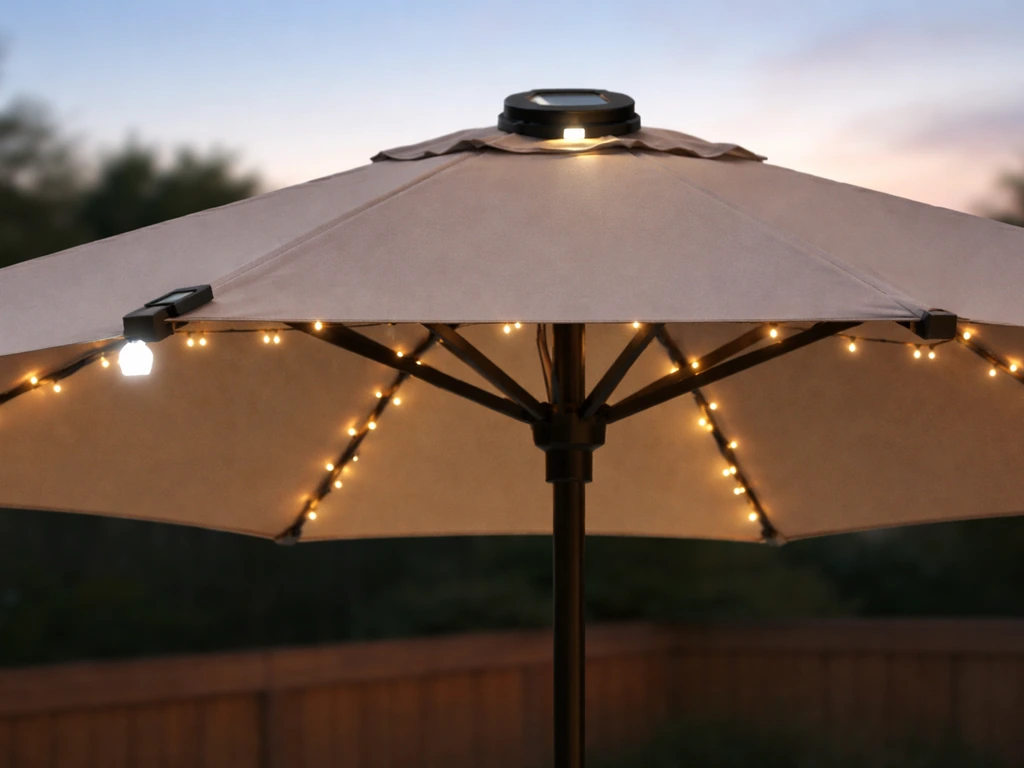
The other category includes aftermarket clip-on LED units that attach to the rib tips, solar string lights draped over the canopy, or a solar puck module bolted to the top of an otherwise standard umbrella pole. These are sold as 'solar patio umbrella lights' and are genuinely useful when you already own a quality umbrella that lacks built-in lighting.
If you want the best lighted patio umbrella setup, prioritize an integrated system for consistent brightness and runtime solar patio umbrella lights. Clip-on lights attach to each rib end and create a nice ambient glow, but the brightness per unit is modest since the individual batteries are tiny. A solar-panel-topped puck, like those seen on certain SunVilla market umbrella models, routes wired LEDs down through the pole to light the canopy from above.
These are a step up from clip-ons but historically have had quality control issues, SunVilla had a recall involving a fire and burn hazard related to exactly this kind of solar/battery module at the top of the umbrella. Worth keeping in mind when you're shopping models with that design. If you want reliable, worry-free lighting, an umbrella with a true integrated system is the better choice over retrofitting.
Top criteria for choosing the best solar umbrella
The lighting system matters, but you're also buying an umbrella. A solar-lit canopy that shreds in a windstorm after one season isn't a deal, it's a problem. Here's what to evaluate on both fronts.
Coverage and size
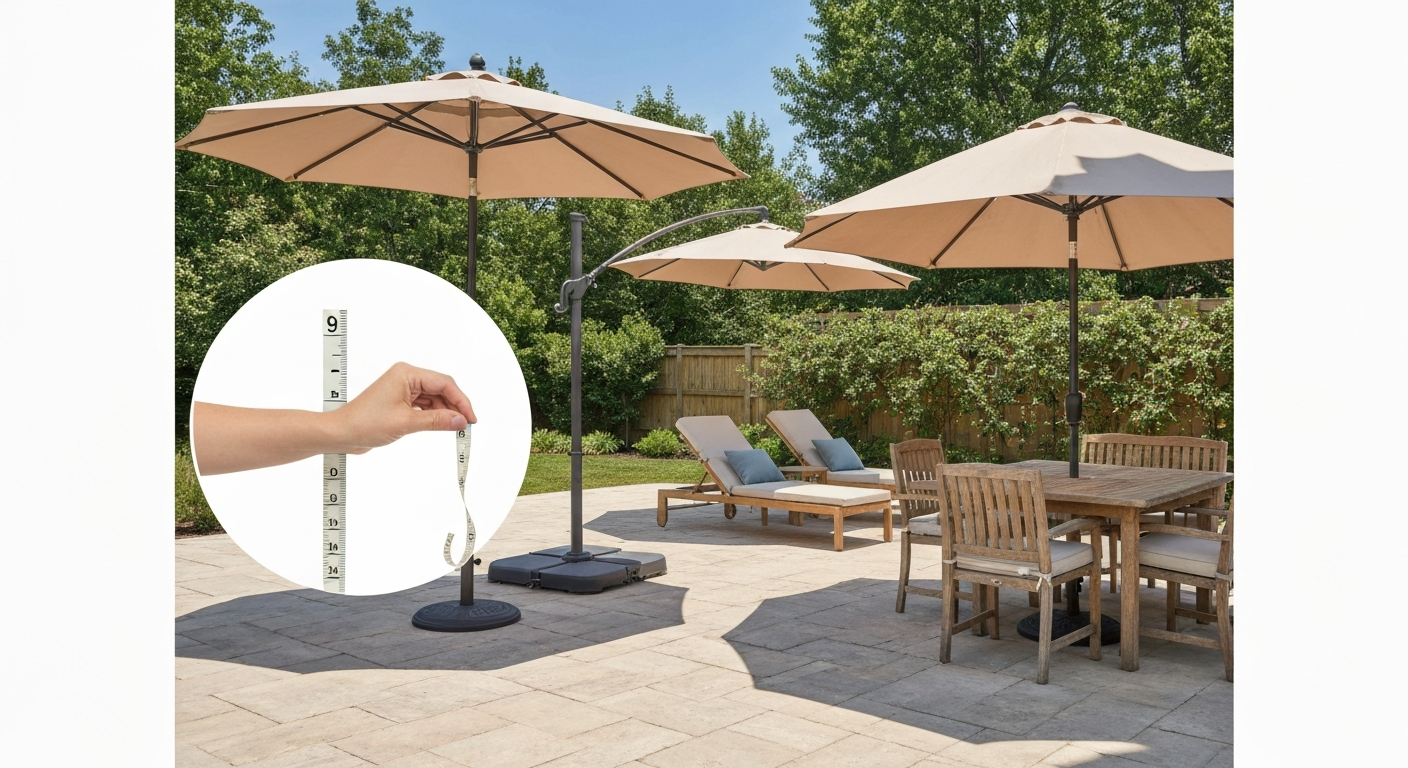
For a standard dining table seating four to six people, a 9-foot market umbrella provides adequate coverage. Bump to 11 feet if you have a larger table or want to cover a full outdoor sofa setup. Cantilever and offset umbrellas (which we'll get into below) typically run 10 to 13 feet and cover more ground because there's no center pole in the way. The coverage spec matters for the lighting too: more ribs usually means more LEDs, which means better light distribution across the table or seating area.
Fabric and UV protection
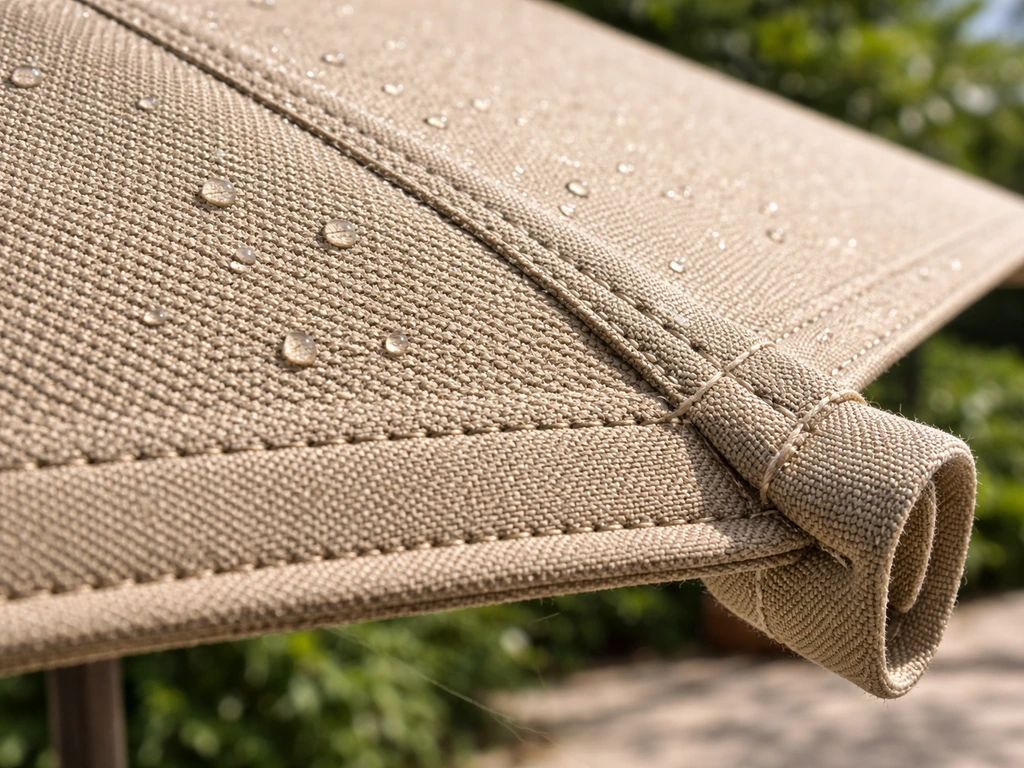
Look for UPF 50+ on the label, but don't stop there. The fabric type determines how long that rating holds up. Solution-dyed acrylic (Sunbrella being the best-known brand) is color-coded all the way through the fiber, not printed on, which means it resists fading far longer than standard polyester. Sunbrella-style fabrics can realistically last 10-plus years in harsh sun conditions. Cheaper polyester umbrellas start to fade and degrade UV protection within a few seasons, which also means the solar panel performance can suffer if it's mounted to a canopy that warps or sags. For a solar-lit umbrella you're investing more in, go solution-dyed acrylic if the budget allows.
Wind resistance and ventilation
A double-vented canopy is the easiest wind resistance upgrade to look for, the vent at the top allows air to pass through and reduce uplift rather than catching the canopy like a sail. Some premium models go further by integrating a wind sensor directly into the solar panel assembly at the crown (Above Umbrella's Height Series does this). For any solar umbrella with a pole-mounted panel or puck, wind loading at the top is a legitimate concern. Always close and secure your umbrella in high winds regardless of design. Manuals consistently warn that wind damage is not covered under warranty.
Hardware and pole durability
Aluminum poles are the standard for most quality solar umbrellas and are a good choice for coastal or humid environments because they don't rust. Fiberglass ribs flex rather than snap in wind, which is why you'll find them on better-built models. Avoid umbrellas with plastic hub connectors at the higher price points, they're the most likely point of mechanical failure. The wiring harness for the solar LED system should be routed cleanly through the pole rather than externally zip-tied, which protects the wires and looks better long-term.
Solar light performance checklist
Before you buy, run through this checklist against the product specs. If the listing doesn't provide these details, that itself is a red flag.
- Battery type and capacity: Look for lithium-ion, not NiMH or AA cells. Capacity should be stated in mAh or Ah. Maanta's Auriga, for example, lists a 2,500 mAh battery. Archasol's Kasa lists 38.4 Ah, which supports its 10-hour runtime claim. If no capacity is listed, assume it's undersized.
- Runtime per full charge: Realistic integrated solar umbrellas deliver 6 to 8 hours. Eight hours is about the ceiling you should expect from a full day's charge. Anything claiming '12 hours' or 'all night' without a battery capacity spec is likely exaggerating.
- Charging time and conditions: Charge time specs should reference direct sunlight at roughly 77°F (25°C) with the panel aimed straight at the sun. Real-world charging under a patio overhang or in partial shade will take significantly longer. Some models supplement with USB charging (like the GLATZ Suncomfort line), which is a useful backup.
- LED output and placement: Look for wattage (around 2W is typical for canopy LEDs) and number of LEDs. Beam angle matters too: a 120-degree beam spreads light more evenly than a narrow spotlight. LEDs placed along the ribs illuminate downward onto the table; a single crown LED creates a spotlight effect that's less useful for dining.
- Dusk-to-dawn sensor or manual switch: Higher-end models include a light sensor that automatically activates the LEDs at dusk. Budget models use a simple on/off rocker switch on the pole. Manual switches are fine but require you to remember to turn them on. A dimmer (like the one on Maanta's Auriga) is a nice bonus for ambiance vs. task lighting.
- IP rating for weather resistance: IP65 is the practical minimum for outdoor LED lighting. It means the assembly is dust-tight and can handle rain and splashed water. Anything below IP65 on a patio umbrella light will likely fail within a season or two.
- Charging mode guidance: SunVilla's manual explicitly states to turn the LEDs off during the day so the solar panel charges the battery rather than powering the lights directly. Follow this — it significantly affects how much runtime you get each evening.
Best picks by umbrella style and patio setup
The right style depends on your patio layout as much as your lighting preference. Here's how each type maps to real-world use cases.
Market (center-pole) umbrellas with solar lights
Market umbrellas are the most common style and the easiest to find with solar lighting built in. They fit through a center-table hole or mount in a freestanding base. Models like the East Oak PTU2300 Series include 40 built-in solar LEDs and a center LED, with base weight requirements of at least 31 lbs through a table or 70 lbs for freestanding use.
This style is best for a traditional round or square patio dining table where you don't need furniture repositioning flexibility. If you want a straightforward comparison of a specific option, see the better homes and gardens patio umbrella with solar lights for how these specs typically translate to real evening coverage.
If you're comparing solar-lit market umbrellas against each other, prioritize rib count (8 ribs is better than 6 for both structure and LED coverage) and whether the solar panel is integrated at the crown vs. If you're comparing solar-lit market umbrellas against each other, prioritize rib count (8 ribs is better than 6 for both structure and LED coverage) and whether the solar panel is integrated at the crown vs.
a clip-on puck, which is a practical way to narrow down the best solar patio umbrellas. a clip-on puck.
Cantilever and offset umbrellas with solar lights
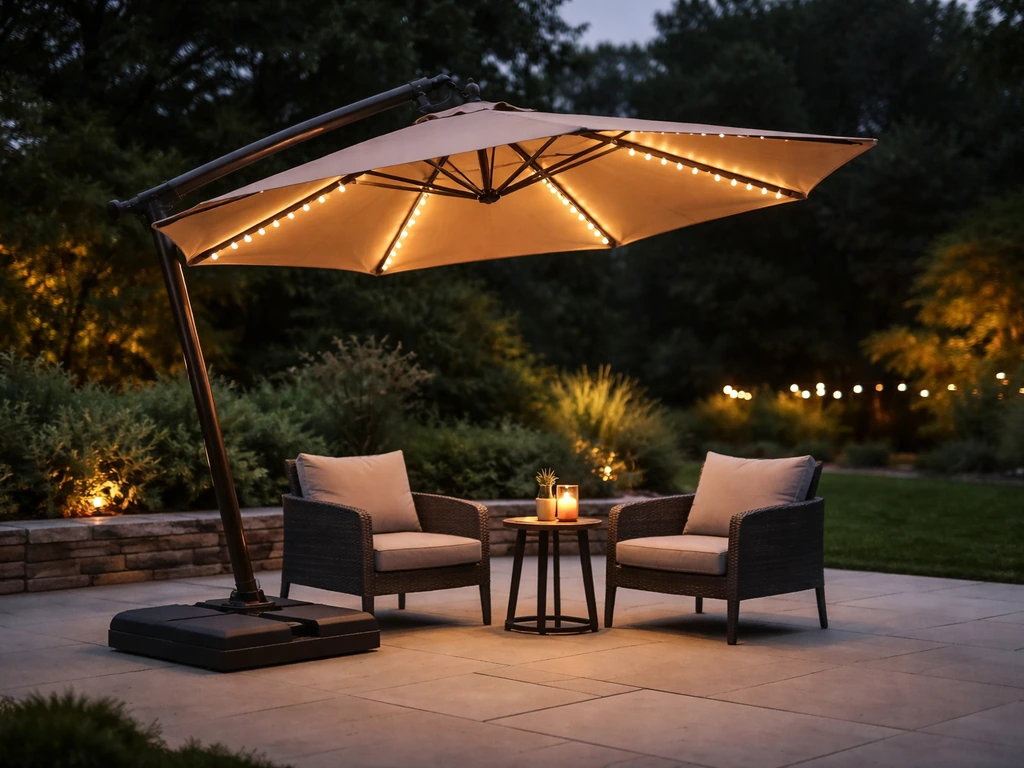
Cantilever (offset) umbrellas are popular for lounge seating, pools, and situations where you don't want a pole interrupting the table. If you're comparing the best pool patio umbrella options, cantilever designs are often favored because they keep the lounging area open without a center pole blocking views or movement cantilever (offset) umbrellas. They're typically larger (10 to 13 feet) and have more ribs, which usually means more LEDs and better light distribution.
Models like Maanta's Auriga cantilever combine a tilting canopy with integrated solar LEDs in the pole assembly, a built-in dimmer, and a magnetic 2-in-1 light feature. The catch with offset umbrellas and solar lighting is stability: these umbrellas are side-loaded, meaning the canopy hangs off to one side of the base, which creates more torque.
The East Oak PBU23001 offset LED umbrella manual, for example, specifies a cross base requiring four individual weights of at least 48 lbs each, that's a minimum of 192 lbs combined. Don't overlook this. An underpowered base on a large lit cantilever is a genuine safety hazard.
Parasol styles and European solar designs
For a more refined look, European parasol designs like GLATZ's Suncomfort Varioflex Solar LED are worth considering. These are higher-cost but typically include USB backup charging, quality aluminum hardware, and fabric options that rival dedicated Sunbrella umbrellas. If you're shopping best patio parasol options and want solar lighting, this category sits above most mass-market offerings in build quality. If you're shopping for the best patio parasol, focus on build quality and realistic solar runtime rather than exaggerated all-night claims. The 6 to 8 hour runtime claim from GLATZ is conservative and honest, which is refreshing compared to the 'all night' claims on budget listings.
| Style | Best for | Typical solar setup | Base requirement | Key tradeoff |
|---|---|---|---|---|
| Market (center-pole) | Dining tables, compact patios | Crown-mounted panel, 30-40 LEDs along ribs | 31 lbs (table) / 70 lbs (freestanding) | Center pole restricts table layout |
| Cantilever / Offset | Lounge areas, pools, sectionals | Panel in pole or crown, dimmer common | 192+ lbs combined (4-weight cross base) | Heavy base required; higher cost |
| Parasol (European style) | Premium décor, smaller footprints | Integrated ribs or pole panel, USB backup | Varies; usually 50-75 lbs freestanding | Higher price; fewer size options |
| Market umbrella + add-on lights | Existing quality umbrella upgrade | Clip-on or pole-puck solar add-ons | Matches umbrella base spec | Less bright; more DIY setup effort |
Placement and setup for reliable evening lighting
Even the best solar umbrella will underperform if you set it up in the wrong spot. Solar charging requires direct sunlight, and umbrella placement is often driven by shade needs during the day, which can create a conflict.
Sun exposure and the shade paradox
The solar panel on most patio umbrellas is at the top of the canopy, which means the panel itself is typically in direct sun even when the canopy is shading your seating area. This is actually the best-case scenario. Problems arise when the umbrella is positioned under a pergola, porch overhang, or large tree that blocks the panel from direct sunlight. If your patio is partially shaded by structure overhead, the solar charging will be significantly reduced.
Charge time specs from manufacturers assume direct exposure at 77°F with the panel aimed straight at the sun, anything short of that, and you should expect less runtime than stated. Placing the umbrella in a location where it gets 6 to 8 hours of direct panel exposure during the day (typically a south or west-facing open patio) is the most reliable setup.
Switch operation and charging discipline
Turn the lights off during the day. This is not optional, it's the difference between 3 hours of dim lighting and a full 6 to 8 hours of bright output. SunVilla's assembly instructions call this out explicitly, and it applies to virtually all solar umbrella systems. The solar panel during the day should be charging the battery, not running the LEDs. If your model has an auto-sensor (dusk-to-dawn), it handles this automatically. If it has a manual rocker switch on the pole, build a habit of switching it off every morning and on at dusk. Some models also include a dimmer switch (usually on the pole), which lets you run at lower brightness to extend runtime further on cloudy days.
Tilt angle and panel orientation
Most quality market and cantilever umbrellas allow you to tilt the canopy, and some users tilt toward the sun during peak hours to maximize panel charging. If your umbrella has a tilt mechanism (push-button or collar tilt), use it during midday charging hours to point the panel more directly at the sun, then adjust back for evening use. It's a small habit that noticeably improves battery top-off on partly cloudy days.
Base, weight, and stability requirements for lit umbrellas
A solar-lit umbrella weighs more than a standard umbrella because of the battery pack and panel assembly, and that extra weight is almost always at the top of the canopy or pole, the worst place for balance. Combined with wind loading, this makes getting the base right non-negotiable.
For a standard market umbrella through a patio table, 31 lbs of base weight is a reasonable minimum for calm conditions (per East Oak's own manual for their LED umbrella), but in windy climates you should go heavier. For a freestanding market umbrella, 70 lbs is the floor. For offset and cantilever models, the base requirements jump significantly because of the side-loading torque, East Oak specifies a combined minimum of 192 lbs across four cross-base weights for their offset LED umbrella, and that's not an exaggeration. Most manuals from Homshade, Outsunny, and others note that the base is not included and must be purchased separately, so factor that into your budget.
Practically speaking: if you're in a region with regular afternoon wind gusts, go 25 to 30 percent heavier than the stated minimum. Use fillable base weights (sand or water-filled) for market umbrellas and purpose-cast concrete or steel plate weights for offset cantilevers. Always close and strap the canopy with the included fastening strap when you're not using the umbrella. Multiple manuals make this clear, and wind damage is specifically excluded from warranty on virtually every solar umbrella brand.
How to compare 'best rated' models: spec vs. reality and red flags to avoid
Most buyers end up comparing solar umbrellas based on Amazon star ratings and product photos, which are genuinely unreliable for this category. Here's a more useful framework.
What the specs should tell you
A listing that provides battery capacity (mAh or Ah), LED count, wattage, IP rating, and runtime is being transparent. Cross-check: a 2,500 mAh battery supporting 8 hours of runtime on 40 LEDs is plausible. A mystery battery capacity claiming '12 hours all night' is not. The charging time claim should also reference test conditions (direct sun, specific temperature). If it just says 'charges in the sun,' that's not useful. IP65 is the minimum for weather resistance, anything unlisted or below IP65 on the LED assembly is a risk in rain.
Red flags to avoid
- No battery capacity listed: If the product page doesn't state battery mAh or Ah, the battery is likely undersized and runtime claims are inflated.
- Polyester canopy on an expensive model: At higher price points, you should expect solution-dyed acrylic or a comparable UV-stable fabric. Polyester UV performance is variable and degrades faster.
- Clip-on or add-on lights marketed as 'integrated': Check whether LEDs are truly wired into the ribs/pole or are removeable attachments. Listings sometimes use 'integrated' loosely to mean 'included in the box.'
- Solar puck or panel mounted externally at the top: While functional, a top-mounted bolt-on panel assembly (as seen on recalled SunVilla units) has more failure points and a documented safety history. Look for panel-in-pole or panel-embedded-in-ribs designs instead.
- Base weight not specified or base included: If the manual or listing doesn't specify a base weight requirement, that's a red flag for safety and quality. If the base IS included with a cantilever umbrella, check its weight — a 30 lb base on a 13-foot offset umbrella is not enough.
- No IP rating listed for the LED assembly: Means the lights may not be weatherproof. Outdoor lights need IP65 at minimum.
- 'Charges through glass or indoors': Solar panels don't charge meaningfully through glass. Any listing or manual suggesting otherwise (as some cheap units imply) is misleading about performance expectations.
Warranty and replacement parts
Solar LED umbrellas have more potential failure points than a plain canopy: the battery, the charge controller, the wiring harness, and the LED strips are all separate components that can degrade independently. Look for brands that sell replacement battery packs and LED assemblies separately. The SunVilla recall situation is a useful reminder that even well-distributed brands can have module-level safety issues, knowing you can get a replacement part (or that a recall process exists) matters more with solar models than with a standard umbrella. Brands that offer USB-backup charging (like GLATZ) are also more practical because you're not completely stranded on cloudy weeks.
If you already own a quality umbrella and the integrated solar option for your style doesn't exist or doesn't impress, adding dedicated clip-on or pole-mounted solar lights is a genuinely viable alternative. Aftermarket clip-on umbrella lights are typically small LED units that clip to umbrella rib tips or edges, which is different from integrated built-in solar umbrella systems aftermarket “clip-on” umbrella lights are described as small LED units that clip to umbrella rib tips/edges.
If you want to compare options beyond solar integration, use the best outdoor patio umbrella lights guide as a related reference for what to look for. Focus on clip-on units with IP65 ratings, lithium-ion batteries, and individual per-rib placement for the best light distribution.
This approach is well worth considering if you've invested in a premium umbrella with Sunbrella fabric and solid hardware, in that case, the umbrella itself will outlast most integrated solar models, and swapping in a new set of clip-on lights every few years costs a fraction of replacing the whole unit.
FAQ
How can I tell if a solar umbrella’s “8 hours” claim is realistic before buying?
Look for a stated test condition, like direct sun exposure, panel orientation, and temperature, plus the battery capacity (Ah or mAh) and LED count. If the listing has runtime but no battery spec, treat it as marketing, especially when the panel is partially shaded for much of the day.
Should I leave the umbrella lights on during the day to test them?
No, keep the LEDs off while the sun is out. Turning them on reduces charging and often makes the evening runtime look worse than it would under normal use. If your model has a dusk-to-dawn sensor, confirm it actually switches off charging behavior correctly.
What is the safest way to check whether the umbrella panel stays charged if it’s often under partial shade?
Do a simple first-week test: fully charge it on a clear day, then note how long it stays bright under your actual patio conditions. If performance drops quickly, prioritize a model whose battery can be replenished via USB backup charging or reposition the umbrella to ensure direct sun on the panel for most of the day.
Do I need to cover or remove the solar battery during winter or heavy rain?
Most solar umbrella systems are intended for outdoor weather, but extended freezing, salt air, or prolonged submersion increases failure risk. If the umbrella manual does not explicitly say it is safe to leave outdoors year-round, store it indoors (or at least remove the battery module if the design allows) during winter.
What does IP65 mean for solar umbrellas, and is it enough for coastal use?
IP65 generally indicates strong protection against dust and water jets, which is a baseline for rain and wet weather. Coastal air is more corrosive, so also look for aluminum hardware and avoid plastic hub connectors, since salt exposure speeds up mechanical wear and corrosion at joints.
How do I prevent the solar wiring harness from failing sooner?
Route and secure the cord inside the pole as designed, avoid pinching it when tilting, and do not add external zip ties that could stress the wires. During setup, confirm the umbrella closes fully without the harness being trapped near hinges or the rib connections.
Can I replace only the battery pack if the LEDs still work?
Only if the brand sells replacement packs or replacement LED assemblies as separate parts. Many solar umbrellas can fail module by module (battery, controller, or LED strip), so check parts availability and warranty coverage before buying, especially for models with a top-mounted puck or crown-mounted electronics.
Are clip-on solar lights worth it compared with an integrated solar umbrella?
They can be a cost-effective upgrade when your umbrella is already premium and you want reliable canopy fabric longevity. The tradeoff is lower brightness per unit because each light has a small battery, and coverage can look uneven if rib count or placement is limited.
What base weight should I actually buy for a cantilever solar umbrella?
Use the manual’s minimum as a starting point, then increase for wind. Cantilever designs create torque on the base, so if gusts are common in your area, plan on 25 to 30 percent heavier than the stated minimum and use the specified weight configuration (number of plates or cross-base weights).
If my solar umbrella tilts toward the sun during the day, will that damage the electronics?
Tilting during midday charging is usually fine if the umbrella uses a designed tilt mechanism and you do not exceed the recommended angles. The bigger risk is leaving the umbrella open and unsecured in wind, which can stress the pole top where the panel and electronics are mounted.
Why does my umbrella glow briefly at dusk, then dim quickly?
Common causes include insufficient direct sun charging, rain or fog affecting the panel, LEDs being left on too long during the day, or an undersized battery relative to LED count. If the listing promises long runtime but omits battery capacity and test conditions, that mismatch is often the culprit.
What maintenance helps solar umbrellas last longer without reducing brightness?
Keep the panel clean (lightly wipe dust and pollen) so charging stays efficient, and periodically check that the LEDs are seated and not loose in the ribs. Also inspect for fraying or exposed wiring after strong storms, since harness damage can reduce charge or cause partial LED failure.